
An Intelligent Condition-Monitoring Framework for Alkaline Water Electrolyzers Based on Hybrid Physics-Informed Health Indicators


Highlights
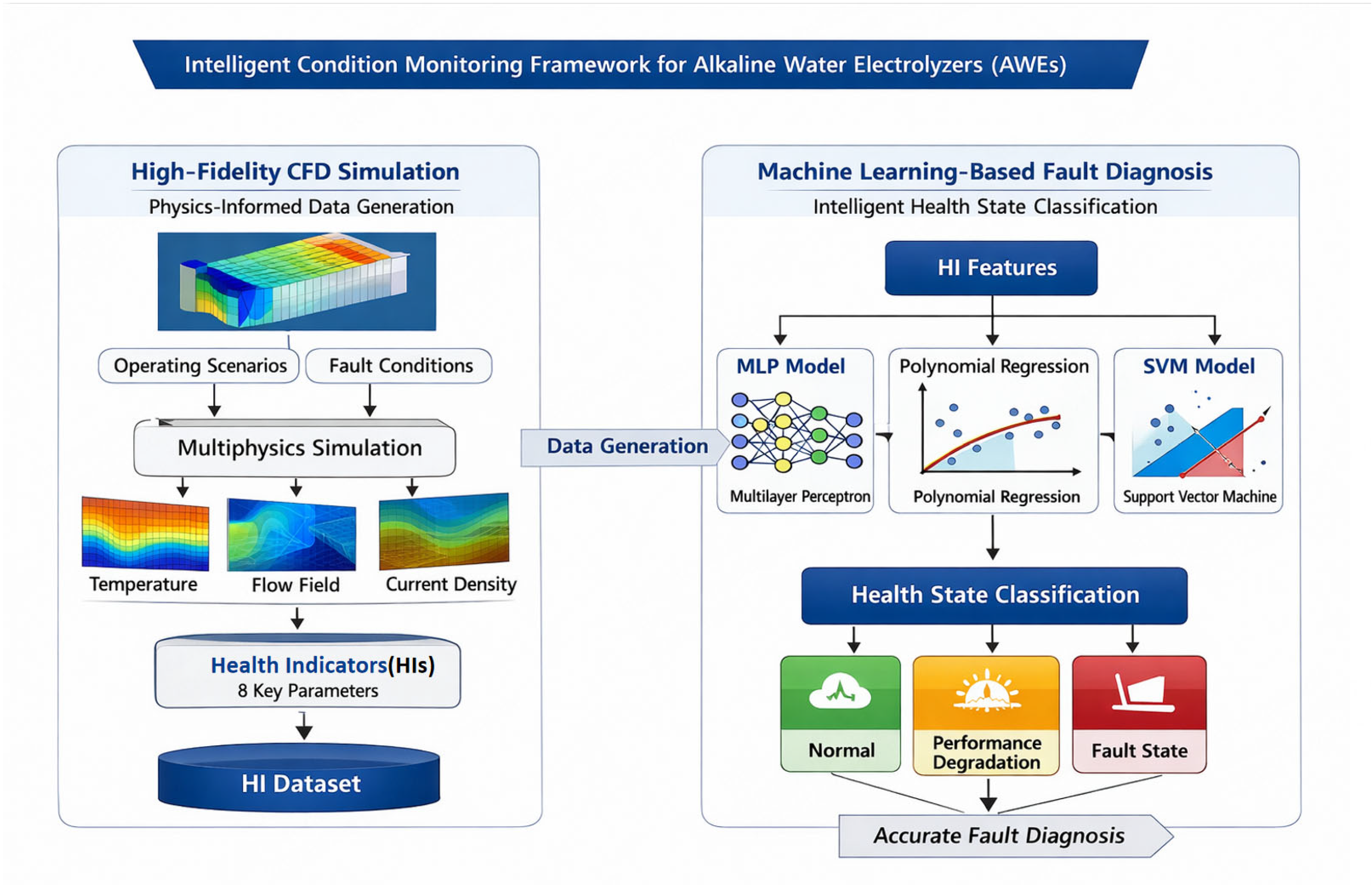
- A hybrid physics-informed machine learning (ML) framework is proposed for constructing Health Indicators (HIs) and enabling intelligent condition monitoring of Alkaline Water Electrolyzers (AWEs).
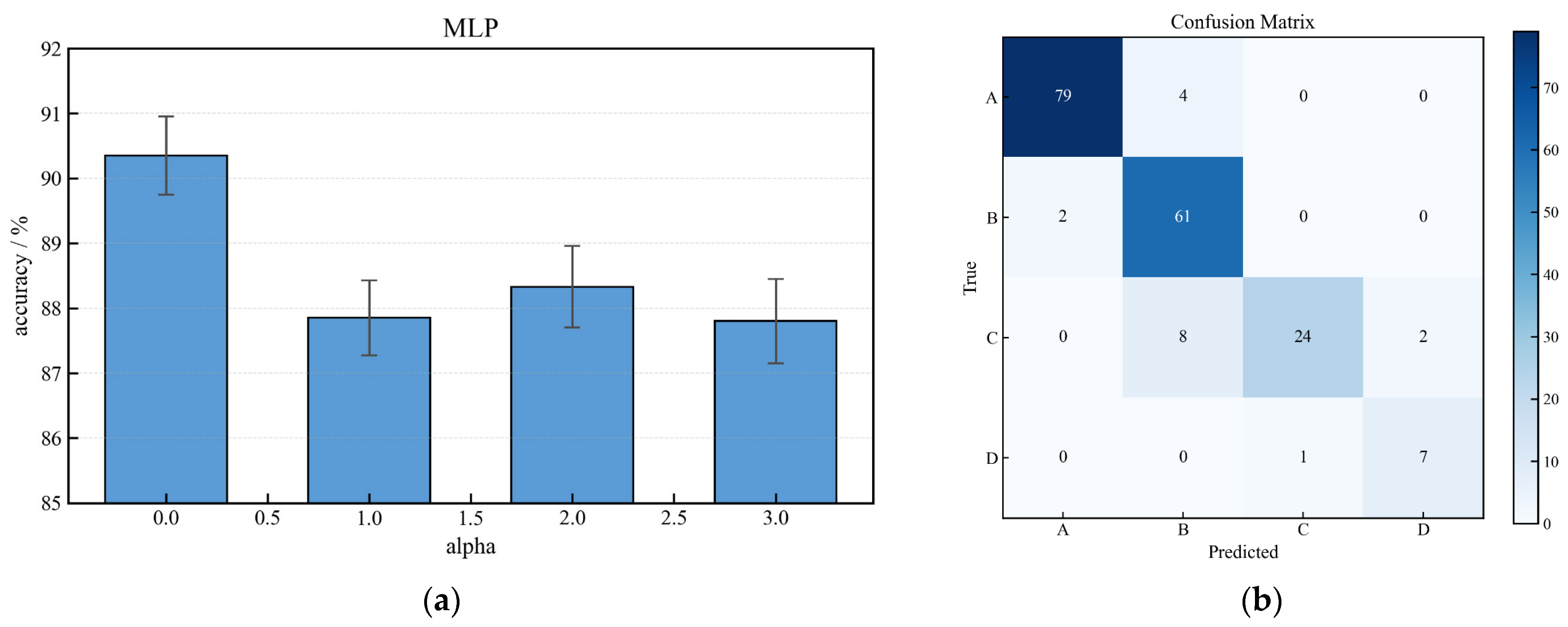
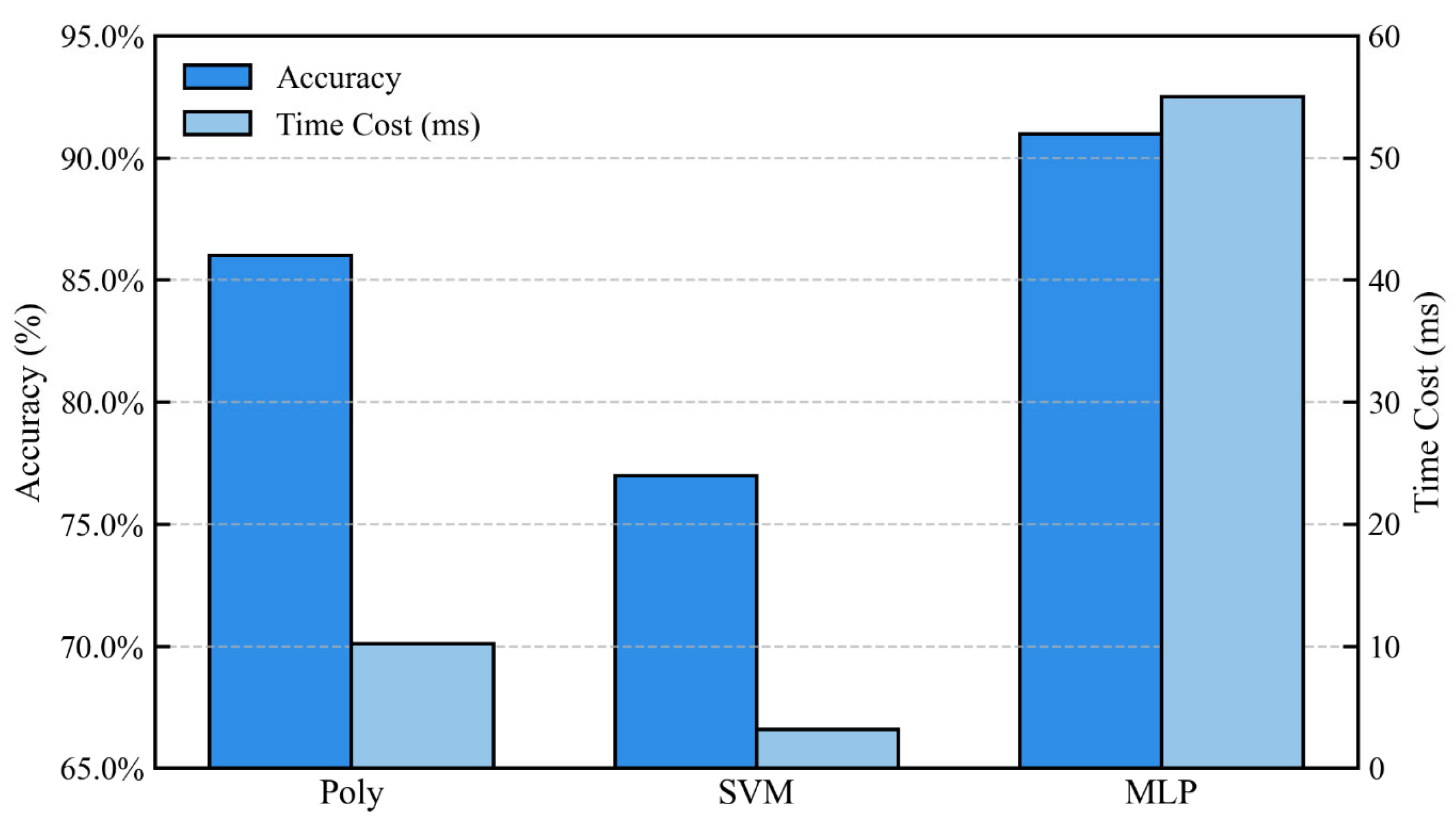
- Trained on a CFD-generated dataset, a Multilayer Perceptron (MLP) model achieves 90.43% accuracy in real-time health state classification, serving as an effective intelligent monitoring agent.
- The proposed methodology provides a practical solution for predictive maintenance of AWEs operating under volatile renewable energy, enhancing system safety and reliability.
- It demonstrates the significant potential of combining mechanistic models with machine learning for intelligent monitoring in complex industrial systems where sensor data is limited.
Abstract
1. Introduction
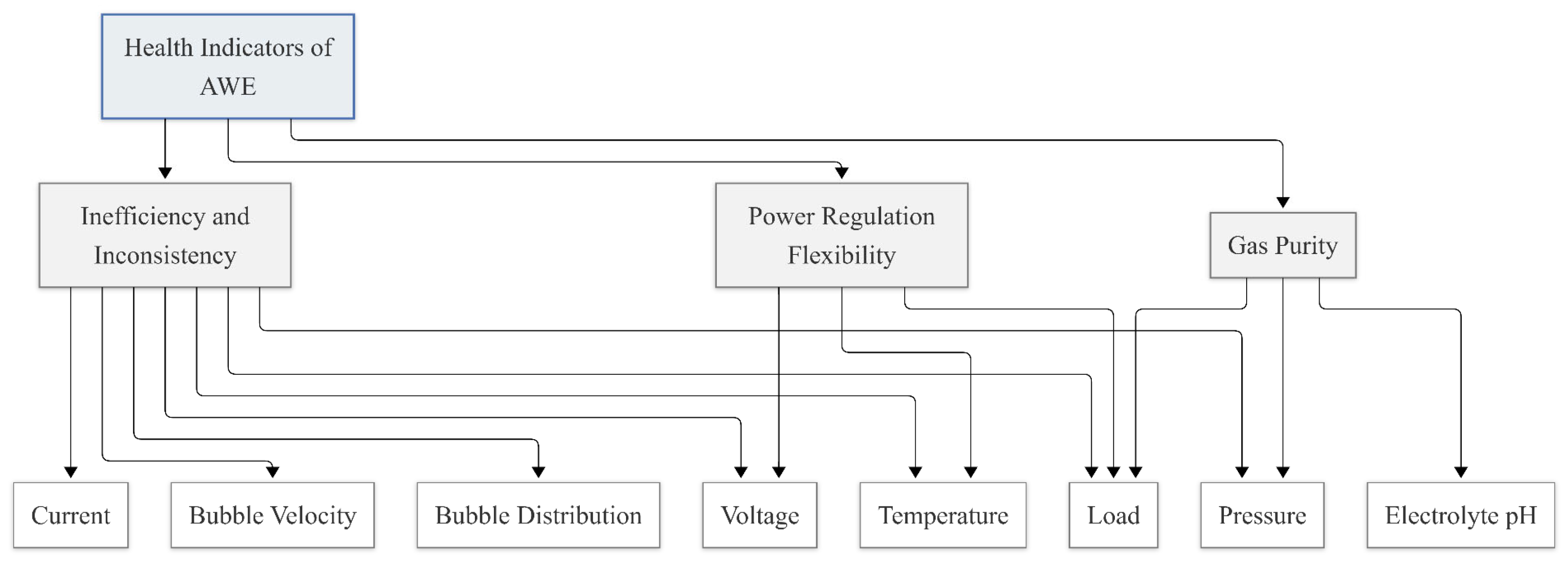
- Development of a Systematic HIs System for AWE: A semi-quantitative health evaluation framework is established based on common AWE failure modes, defining health classes (from excellent to poor) based on thresholds for eight key operational parameters encompassing efficiency, safety, and stability.
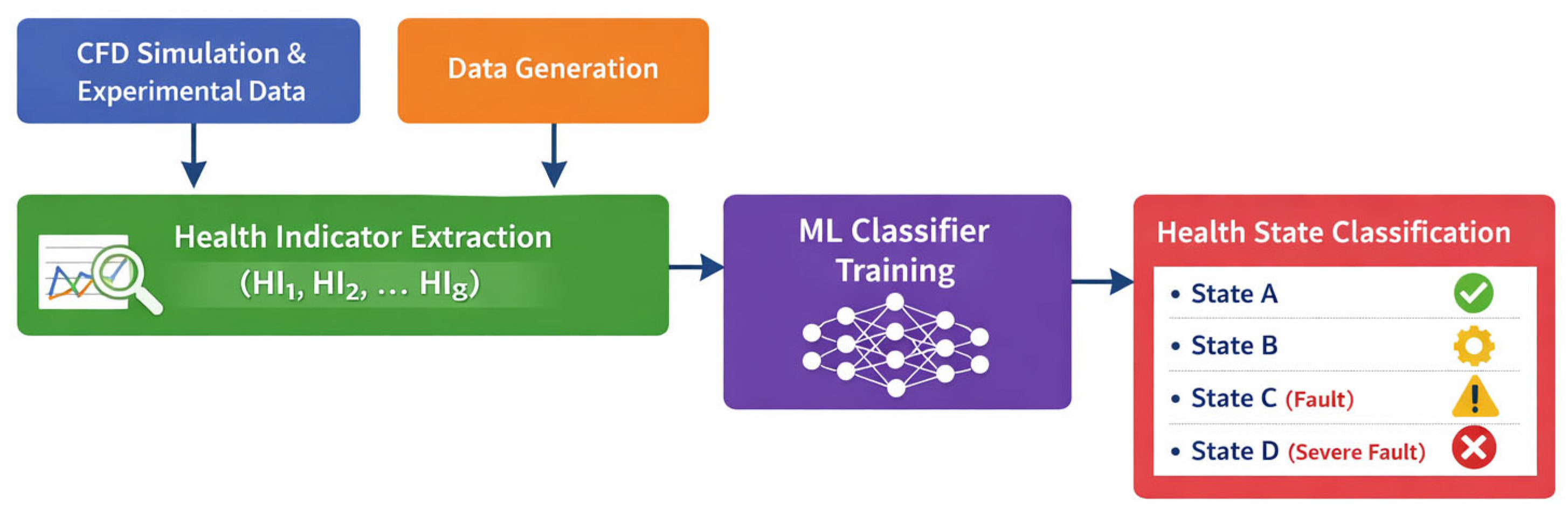
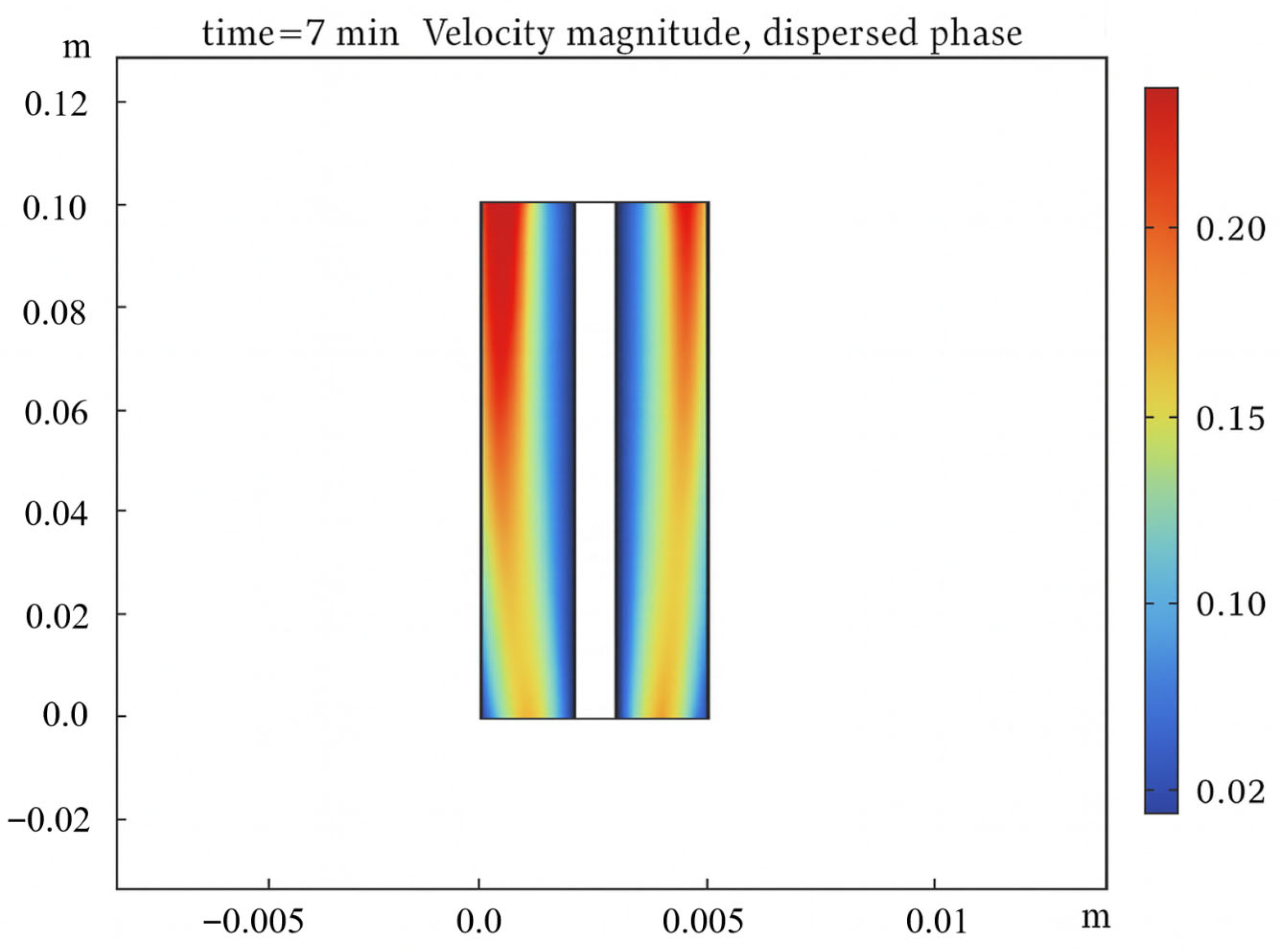
- Generation of a Physics-Informed and Experimentally Validated Dataset: A 2D multiphysics CFD model is developed and experimentally validated. This validated model is then employed to conduct parametric sweeps, creating a comprehensive and physically reliable dataset for ML training.
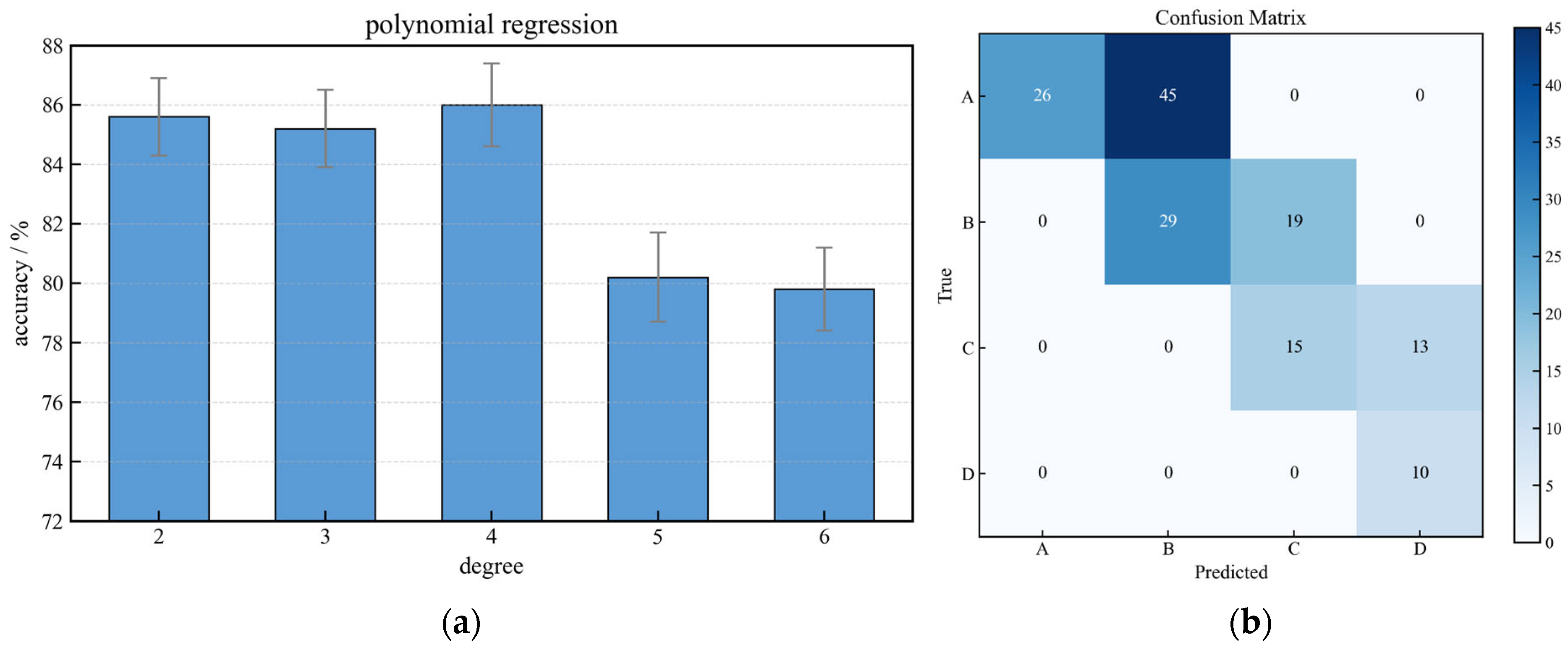
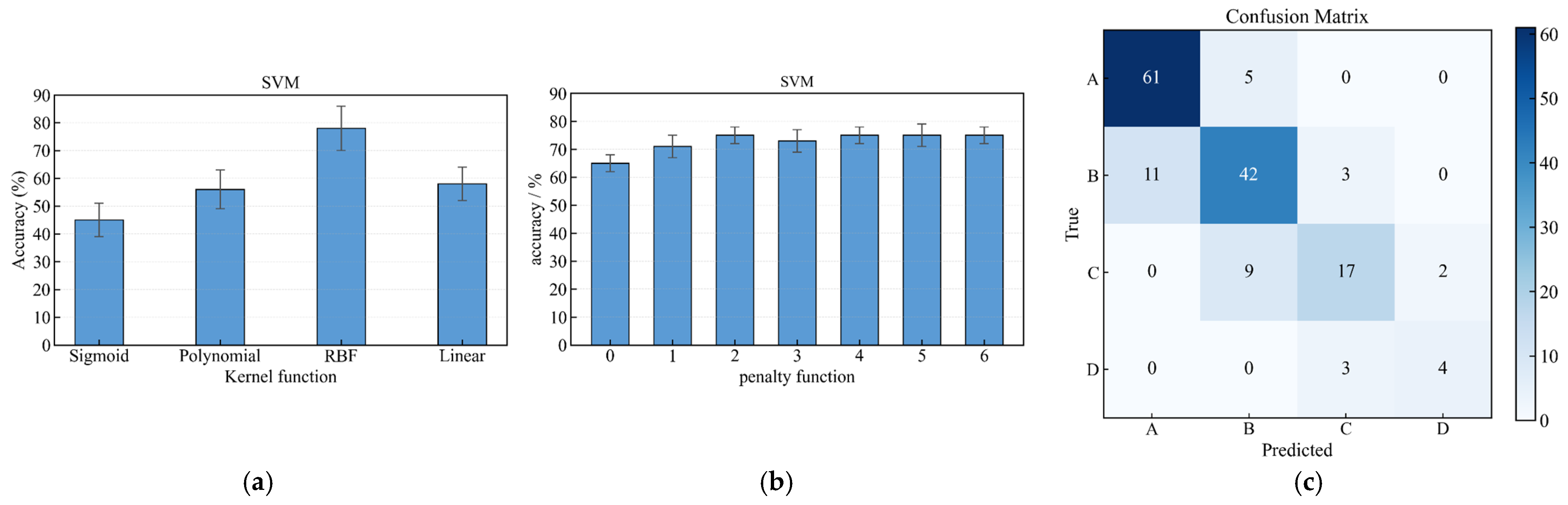
- Benchmarking of ML Algorithms for Intelligent Condition Monitoring: Three distinct ML approaches—Polynomial Regression, SVM, and MLP—are implemented and rigorously compared for the task of classifying the health state of the AWE into the predefined categories. The optimal model is identified based on accuracy, robustness, and computational efficiency.
2. Methodology for the Intelligent Condition-Monitoring Framework
2.1. Definition of the AWE HIs System
- Physical relevance to dominant AWE degradation and failure mechanisms.
- Measurability or inferability under industrial operating conditions.
- Sensitivity to off-design and fault-related operating regimes.
2.2. Physics-Informed Data Generation via CFD Modeling
2.2.1. Electrochemical Reaction Fundamentals
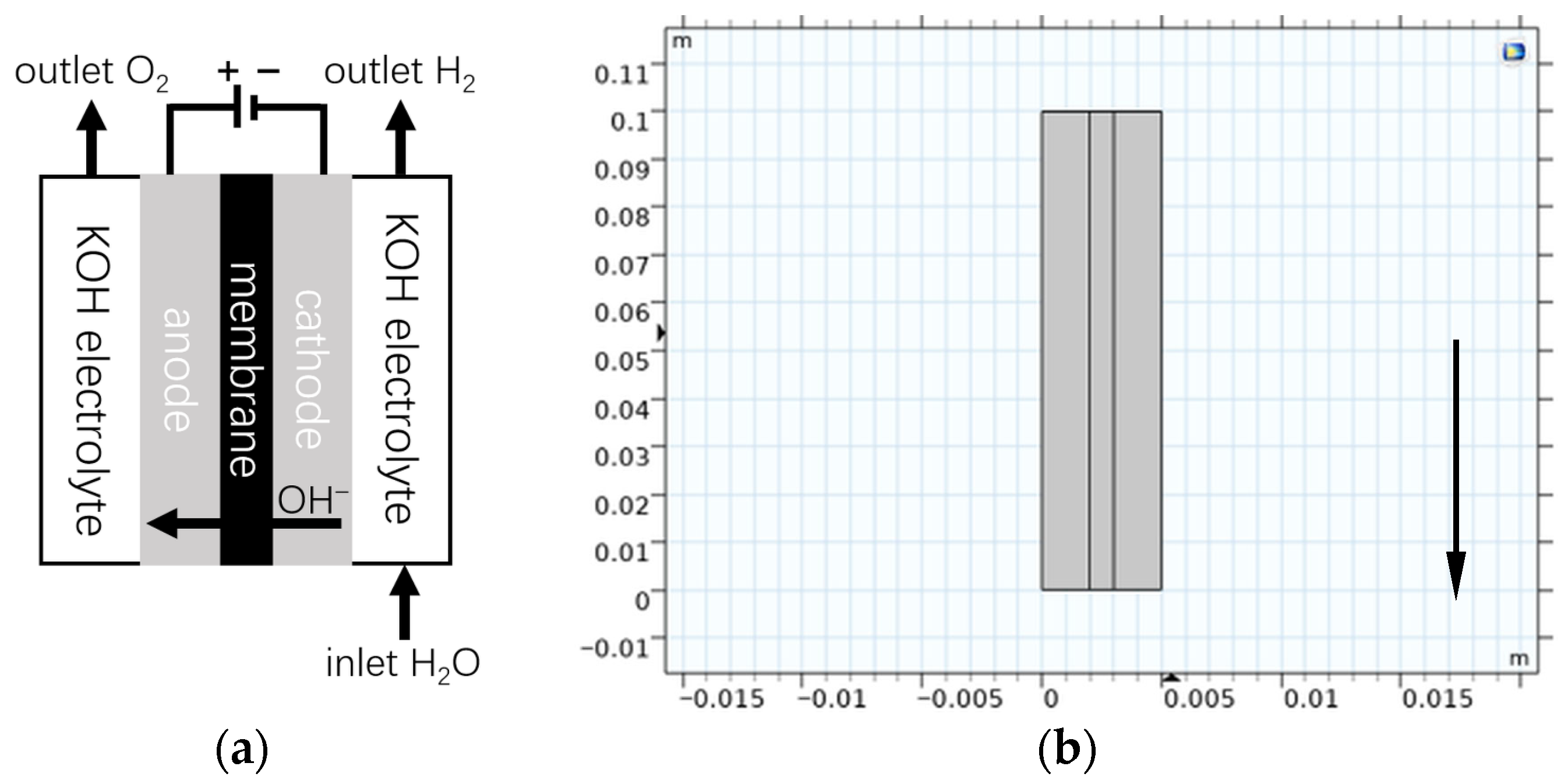
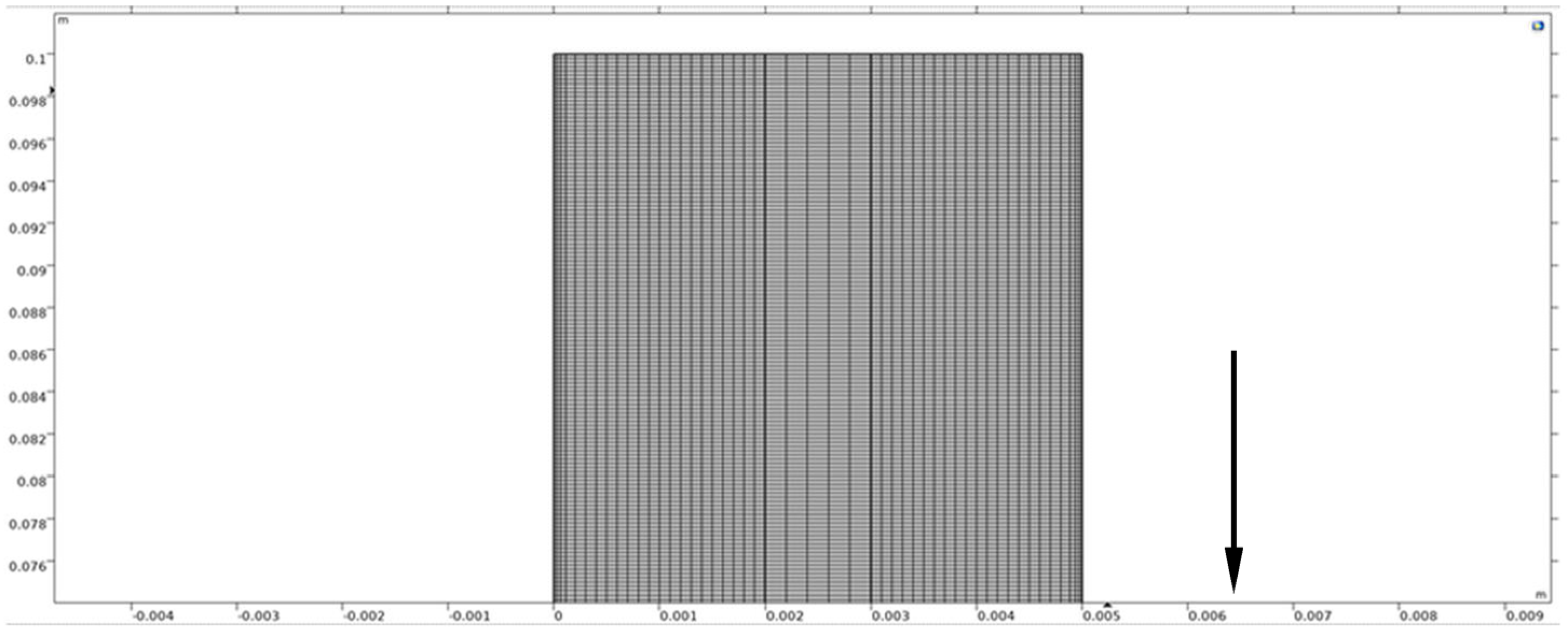
2.2.2. Model Geometry and Mesh Strategy
2.2.3. Mathematical Formulation and Governing Equations
- Electrochemistry and Charge Transport
- 2.
- Multiphase Flow Dynamics
- 3.
- Mass, Species, and Energy Transport
- 4.
- Numerical Methods and Model Purpose
2.2.4. Parametric Sweep for Dataset Generation
2.3. ML Model Development for Intelligent Inference
2.3.1. Data Preprocessing and Feature Engineering
- Handling Missing Values: Removing or imputing samples where CFD simulations failed to converge.
- Normalization/Standardization: Features often have different scales (e.g., volts, °C, atm). Min-max normalization or z-score standardization is applied to improve model convergence and performance. Min-max normalization scales a feature xx to the range [0, 1]:
- Feature Selection/Construction: The input feature vector x is constructed from the most informative and easily measurable parameters. This typically includes the swept input variables (e.g., voltage, temperature) and key calculated outputs from the model that have strong correlations with the health state.
2.3.2. Model Training and Benchmarking Strategy
- Polynomial Regression: Serves as an interpretable baseline. The model’s capacity is controlled by the polynomial degree.
- SVM: A robust classifier effective in high-dimensional spaces. Kernels such as linear, polynomial, and radial basis function (RBF) are evaluated to capture potential non-linear decision boundaries.
- MLP: A flexible feedforward artificial neural network capable of modeling complex, non-linear relationships between inputs and the health state, representing a state-of-the-art approach for pattern recognition.
2.3.3. Model Evaluation Metrics
3. Case Study: Application to a Laboratory-Scale AWE
3.1. System Description and Experimental Setup
3.2. CFD Model Implementation
3.2.1. Geometry and Mesh
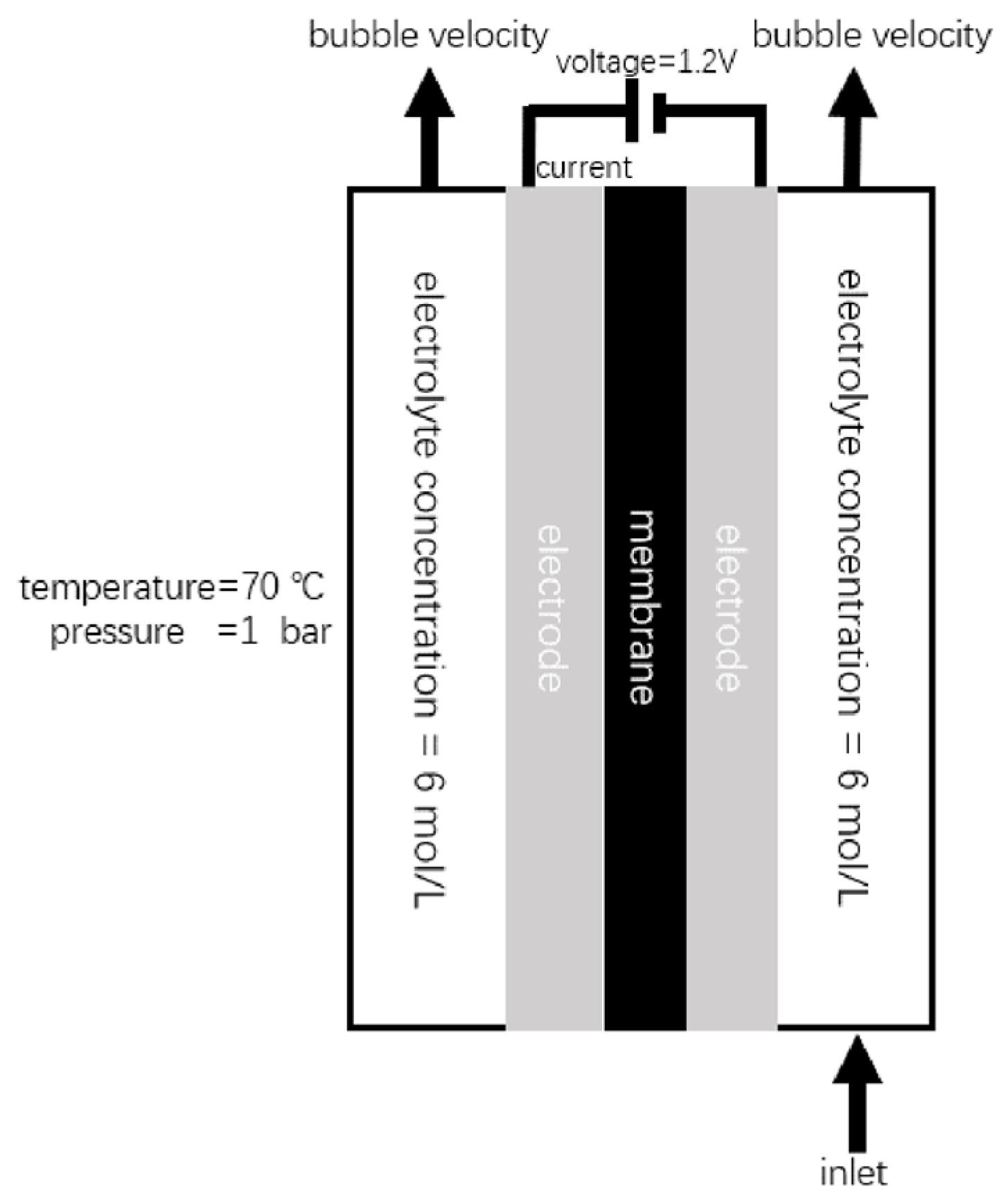
3.2.2. Boundary Conditions, Assumptions, and Global Parameters
3.2.3. Parametric Sweep for Dataset Creation
3.3. ML Model Configuration
4. Results and Discussion
4.1. Validation of the Physics-Informed Dataset
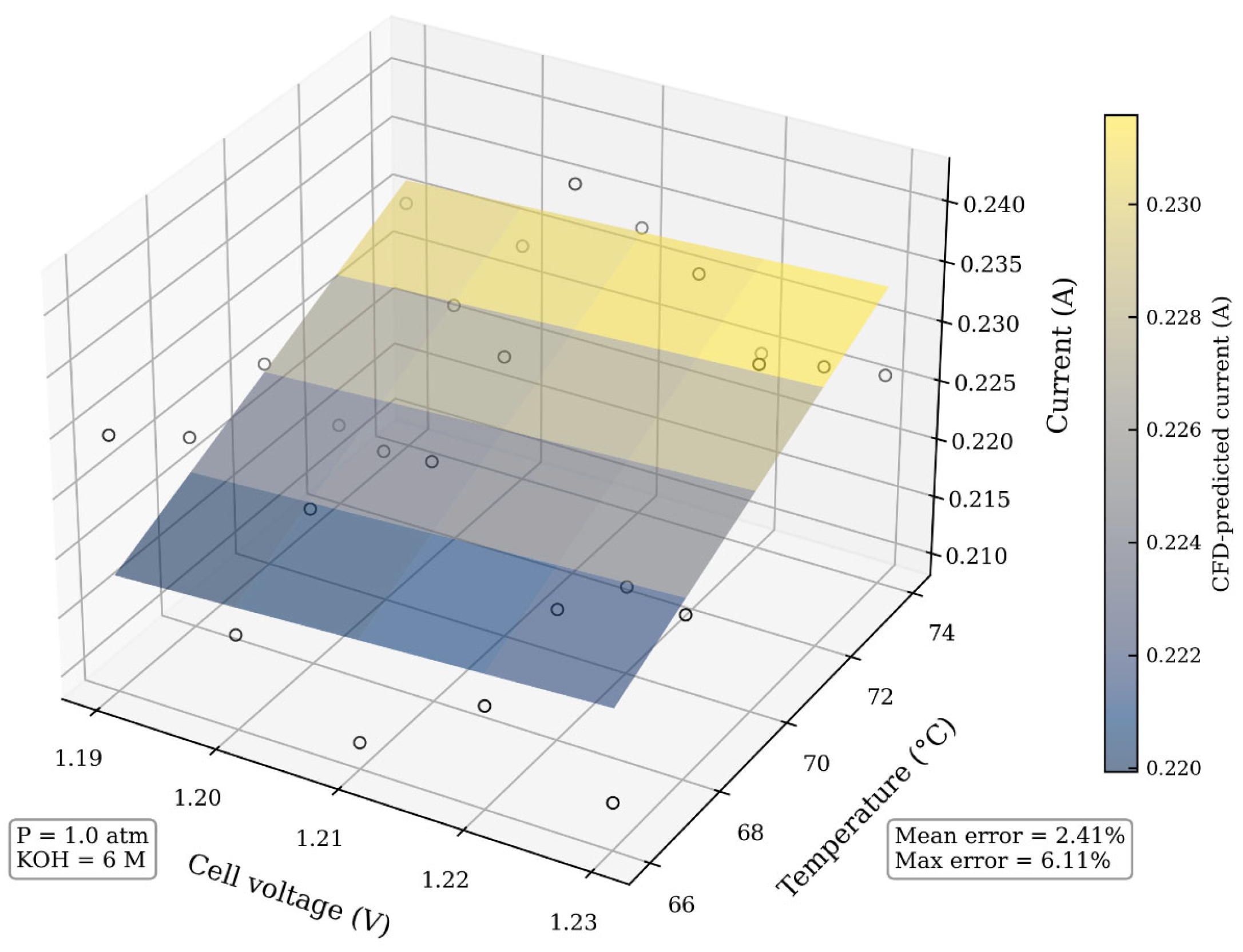
4.1.1. CFD Model Validation Against Experimental Measurements
4.1.2. Physical Consistency and Degradation-Relevance of the Generated HIs
4.2. Performance Benchmarking of Intelligent Monitoring Algorithms
4.2.1. Polynomial Regression: An Interpretable Baseline
4.2.2. SVM: Kernel Selection and Limitations
4.2.3. MLP: A High-Performance Intelligent Agent
4.2.4. Class-Wise Performance Metrics and Safety Implications
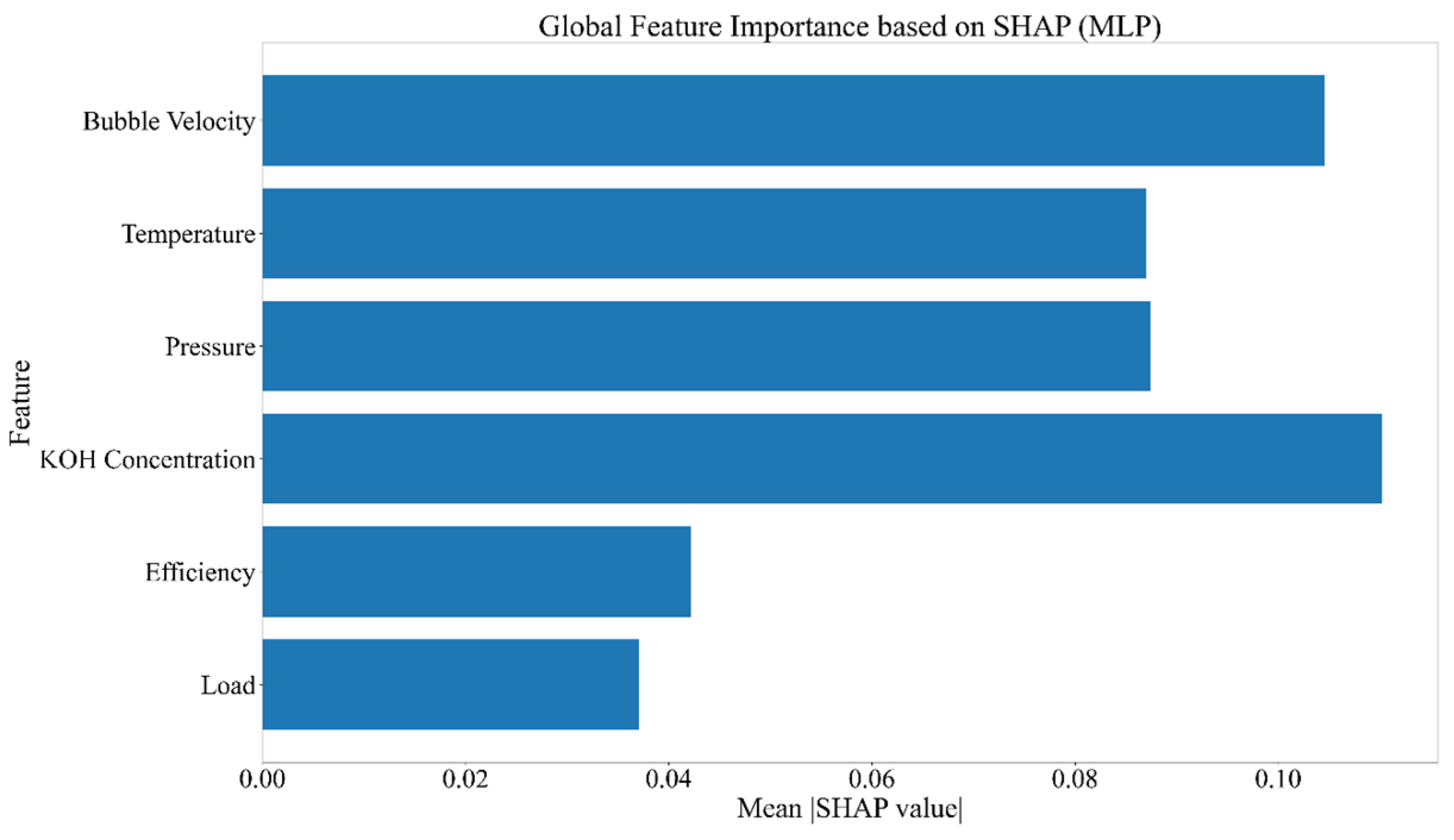
4.2.5. Feature Importance Analysis Using SHAP
4.3. Computational Efficiency and Practical Deployment Considerations
5. Conclusions
- Establishment of a Validated Physics-Based Foundation: A high-fidelity 2D multiphysics CFD model was developed and experimentally validated, serving as a credible “digital testbed.” This ensures that the generated dataset accurately captures key interactions within an AWE, providing a physically consistent knowledge base for training data-driven models.
- Physics-Informed Data Generation for AI Training: The CFD model generated a comprehensive labeled dataset reflecting the electrochemical–thermal–fluid interactions of an AWE. This approach addresses the scarcity of real-world fault data, providing a systematic basis for constructing health indicators and developing data-driven monitoring agents.
- Development of an Accurate Intelligent Monitoring Agent: Using the physics-informed dataset, an MLP model was identified as the optimal surrogate, achieving 90.43% accuracy in health state classification. This model operationalizes the hybrid framework, acting as a fast and interpretable software sensor that infers overall system health from accessible measurements.
Author Contributions
Funding
Institutional Review Board Statement
Informed Consent Statement
Data Availability Statement
Conflicts of Interest
Abbreviations
| AWE | Alkaline Water Electrolyzer |
| HIs | Health Indicators |
| CFD | Computational Fluid Dynamics |
| ML | Machine Learning |
| MLP | Multilayer Perceptron |
| SVM | Support Vector Machine |
| PHM | Prognostics and Health Management |
| CBM | Condition-Based Maintenance |
| DT | Digital Twin |
| RES | Renewable Energy Source(s) |
| HER | Hydrogen Evolution Reaction |
| OER | Oxygen Evolution Reaction |
| RBF | Radial Basis Function |
| SHAP | SHapley Additive exPlanations |
References
- Mingolla, S.; Gabrielli, P.; Manzotti, A.; Robson, M.J.; Rouwenhorst, K.; Ciucci, F.; Sansavini, G.; Klemun, M.M.; Lu, Z. Effects of emissions caps on the costs and feasibility of low-carbon hydrogen in the European ammonia industry. Nat. Commun. 2024, 15, 3753. [Google Scholar] [CrossRef]
- Fan, G.; Zhang, H.; Sun, B.; Pan, F. Economic and environmental competitiveness of multiple hydrogen production pathways in China. Nat. Commun. 2025, 16, 4284. [Google Scholar] [CrossRef]
- Yavari, A.; Harrison, C.J.; Gorji, S.A.; Shafiei, M. Hydrogen 4.0: A Cyber–Physical System for Renewable Hydrogen Energy Plants. Sensors 2024, 24, 3239. [Google Scholar] [CrossRef]
- Tüysüz, H. Alkaline Water Electrolysis for Green Hydrogen Production. Acc. Chem. Res. 2024, 57, 558–567. [Google Scholar] [CrossRef]
- Sebbahi, S.; Assila, A.; Alaoui Belghiti, A.; Laasri, S.; Kaya, S.; Hlil, E.K.; Rachidi, S.; Hajjaji, A. A comprehensive review of recent advances in alkaline water electrolysis for hydrogen production. Int. J. Hydrogen Energy 2024, 82, 583–599. [Google Scholar] [CrossRef]
- Emam, A.S.; Hamdan, M.O.; Abu-Nabah, B.A.; Elnajjar, E. A review on recent trends, challenges, and innovations in alkaline water electrolysis. Int. J. Hydrogen Energy 2024, 64, 599–625. [Google Scholar] [CrossRef]
- Kwon, J.; Choi, S.; Park, C.; Han, H.; Song, T. Critical challenges and opportunities for the commercialization of alkaline electrolysis: High current density, stability, and safety. Mater. Chem. Front. 2024, 8, 41–81. [Google Scholar] [CrossRef]
- Cheng, H.; Xia, Y.; Wei, W.; Zhou, Y.; Zhao, B.; Zhang, L. Safety and efficiency problems of hydrogen production from alkaline water electrolyzers driven by renewable energy sources. Int. J. Hydrogen Energy 2024, 54, 700–712. [Google Scholar] [CrossRef]
- Lee, H.; Gu, J.; Lee, B.; Cho, H.-S.; Lim, H. Prognostics and health management of alkaline water electrolyzer: Techno-economic analysis considering replacement moment. Energy AI 2023, 13, 100251. [Google Scholar] [CrossRef]
- Hu, S.; Chen, H.; Mao, X.; Tian, Z.; Fu, H.; Chen, D.; Xu, X. Analysis of the safe operating boundaries and approaches to expansion in alkaline water electrolysis systems. Int. J. Hydrogen Energy 2025, 191, 152310. [Google Scholar] [CrossRef]
- Diversi, R.; Speciale, N. A Multidimensional Health Indicator Based on Autoregressive Power Spectral Density for Machine Condition Monitoring. Sensors 2024, 24, 4782. [Google Scholar] [CrossRef] [PubMed]
- Bublil, T.; Cohen, R.; Kenett, R.S.; Bortman, J. Machine Health Indicators and Digital Twins. Sensors 2025, 25, 2246. [Google Scholar] [CrossRef]
- Dittmar, F.; Agarwal, H.; Tübke, J. Prognostics and health management (PHM) of proton exchange membrane water electrolyzers: A review-based guideline. Int. J. Hydrogen Energy 2025, 106, 806–824. [Google Scholar] [CrossRef]
- Kenett, R.S. Engineering, Emulators, Digital Twins, and Performance Engineering. Electronics 2024, 13, 1829. [Google Scholar] [CrossRef]
- Wu, Y.; Sicard, B.; Gadsden, S.A. Physics-informed machine learning: A comprehensive review on applications in anomaly detection and condition monitoring. Expert Syst. Appl. 2024, 255, 124678. [Google Scholar] [CrossRef]
- Onyelowe, K.C.; Kamchoom, V.; Hanandeh, S.; Anandha Kumar, S.; Zabala Vizuete, R.F.; Santillán Murillo, R.O.; Zurita Polo, S.M.; Torres Castillo, R.M.; Ebid, A.M.; Awoyera, P.; et al. Physics-informed modeling of splitting tensile strength of recycled aggregate concrete using advanced machine learning. Sci. Rep. 2025, 15, 7135. [Google Scholar] [CrossRef]
- Kapusuzoglu, B.; Mahadevan, S. Information fusion and machine learning for sensitivity analysis using physics knowledge and experimental data. Reliab. Eng. Syst. Saf. 2021, 214, 107712. [Google Scholar] [CrossRef]
- Daoudi, C.; Bounahmidi, T. Overview of alkaline water electrolysis modeling. Int. J. Hydrogen Energy 2024, 49, 646–667. [Google Scholar] [CrossRef]
- Rodríguez, J.; Amores, E. CFD Modeling and Experimental Validation of an Alkaline Water Electrolysis Cell for Hydrogen Production. Processes 2020, 8, 1634. [Google Scholar] [CrossRef]
- Bai, J.; Guan, X.; Yang, N. Three-dimensional CFD simulation of alkaline electrolyzers: Flow pattern and electric field. Chem. Eng. J. 2025, 515, 163908. [Google Scholar] [CrossRef]
- Zarghami, A.; Deen, N.G.; Vreman, A.W. CFD modeling of multiphase flow in an alkaline water electrolyzer. Chem. Eng. Sci. 2020, 227, 115926. [Google Scholar] [CrossRef]
- Kanemoto, R.; Araki, T.; Misumi, R.; Mitsushima, S. Numerical modeling of two-phase flow considering multiple bubble sizes in an alkaline water electrolyzer. Chem. Eng. Sci. 2025, 304, 120986. [Google Scholar] [CrossRef]
- Jacobsen, A.N.; Mahravan, E.; Kragh-Schwarz, M.V.; Catalano, J.; Fooroghi, P. Multiphysics simulations of alkaline water electrolyzer cells—A sensitivity study on the effect of two-phase flow modeling. Electrochim. Acta 2025, 541, 147148. [Google Scholar] [CrossRef]
- Shams, M.H.; Niaz, H.; Na, J.; Anvari-Moghaddam, A.; Liu, J.J. Machine learning-based utilization of renewable power curtailments under uncertainty by planning of hydrogen systems and battery storages. J. Energy Storage 2021, 41, 103010. [Google Scholar] [CrossRef]
- Cheng, G.; Luo, E.; Zhao, Y.; Yang, Y.; Chen, B.; Cai, Y.; Wang, X.; Dong, C. Analysis and prediction of green hydrogen production potential by photovoltaic-powered water electrolysis using machine learning in China. Energy 2023, 284, 129302. [Google Scholar] [CrossRef]
- Babay, M.-A.; Adar, M.; Chebak, A.; Mabrouki, M. Dynamics of Gas Generation in Porous Electrode Alkaline Electrolysis Cells: An Investigation and Optimization Using Machine Learning. Energies 2023, 16, 5365. [Google Scholar] [CrossRef]
- Jensen, V.H.; Moretti, E.R.; Busk, J.; Christiansen, E.H.; Skov, S.M.; Jacobsen, E.; Kraglund, M.R.; Bhowmik, A.; Kiebach, R. Machine learning guided development of high-performance nano-structured nickel electrodes for alkaline water electrolysis. Appl. Mater. Today 2023, 35, 102005. [Google Scholar] [CrossRef]
- Sirat, A.; Ahmad, S.; Ahmad, I.; Ahmed, N.; Ahsan, M. Integrative CFD and AI/ML-based modeling for enhanced alkaline water electrolysis cell performance for hydrogen production. Int. J. Hydrogen Energy 2024, 83, 1120–1131. [Google Scholar] [CrossRef]
- Lee, C.-Y.; Li, S.-C.; Chen, C.-H.; Huang, Y.-T.; Wang, Y.-S. Real-Time Microscopic Monitoring of Flow, Voltage and Current in the Proton Exchange Membrane Water Electrolyzer. Sensors 2018, 18, 867. [Google Scholar] [CrossRef]
- Zhang, Q.; Xu, W.; Xie, L.; Su, H. Dynamic fault detection and diagnosis for alkaline water electrolyzer with variational Bayesian Sparse principal component analysis. J. Process Control 2024, 135, 103173. [Google Scholar] [CrossRef]
- Zhang, Q.; Lu, S.; Xie, L.; Xu, W.; Su, H. Dynamic fault detection and diagnosis of industrial alkaline water electrolyzer process with variational Bayesian dictionary learning. Int. J. Hydrogen Energy 2024, 71, 1492–1506. [Google Scholar] [CrossRef]
- Cheng, H.; Xia, Y.; Wei, W. Self-Optimization Control for Alkaline Water Electrolyzers Considering Electrolyzer Temperature Variations. IEEE Trans. Ind. Electron. 2025, 72, 2700–2711. [Google Scholar] [CrossRef]
- Ursúa, A.; Marroyo, L.; Gubía, E.; Gandía, L.M.; Diéguez, P.M.; Sanchis, P. Influence of the power supply on the energy efficiency of an alkaline water electrolyser. Int. J. Hydrogen Energy 2009, 34, 3221–3233. [Google Scholar] [CrossRef]
- Ursúa, A.; Sanchis, P. Static–dynamic modelling of the electrical behaviour of a commercial advanced alkaline water electrolyser. Int. J. Hydrogen Energy 2012, 37, 18598–18614. [Google Scholar] [CrossRef]
- Abdin, Z.; Webb, C.J.; Gray, E.M. Modelling and simulation of an alkaline electrolyser cell. Energy 2017, 138, 316–331. [Google Scholar] [CrossRef]
- Mohamed Mohsin, H.; Zhuo, Y.; Shen, Y. Eulerian-Eulerian-VOF multifluid modelling of liquid–gas reacting flow for hydrogen generation in an alkaline water electrolyser. Fuel 2024, 373, 132164. [Google Scholar] [CrossRef]
- Haug, P.; Kreitz, B.; Koj, M.; Turek, T. Process modelling of an alkaline water electrolyzer. Int. J. Hydrogen Energy 2017, 42, 15689–15707. [Google Scholar] [CrossRef]
- Lei, Y.; Zhao, J.; Wang, Y.; Xue, C.; Gao, L. Flexible Sensing for Precise Lithium-Ion Battery Swelling Monitoring: Mechanisms, Integration Strategies, and Outlook. Sensors 2025, 25, 7677. [Google Scholar] [CrossRef]



| Faults | Phenomena | Consequences |
|---|---|---|
| Gas Crossover | Increase in HTO (Hydrogen in Oxygen stream)/OTH (Oxygen in Hydrogen stream); Increased bubble velocity. | Risk of explosion if concentration exceeds threshold. |
| Electrode Corrosion | Decrease in electrode thickness; change in surface morphology. | Loss of efficiency, increased overpotential. |
| Hydrogen Leakage | Decrease in hydrogen content at outlet; detected by sensors. | Loss of production, potential explosion hazard. |
| Overheating | Abnormal increase in cell or stack temperature. | Accelerated degradation, thermal stress, potential shutdown. |
| Overpressure | Abnormal increase in system pressure. | Mechanical stress, potential for rupture or seal failure. |
| Control System Failure | Uncommanded changes or drift in key parameters (voltage, current, flow). | Unstable operation, potential to induce other faults. |
| Health State | Threshold Ranges for Health State Classification | |||||
|---|---|---|---|---|---|---|
| Temperature/°C | Pressure/atm | pH | Efficiency% | Bubble Velocity/m·s−1 | Load/W | |
| A | 67 ≤ T < 71 | 0.96 ≤ P < 1.02 | 14.77 ≤ pH < 14.80 | η ≥ 40 | v ≤ 0.15 | p ≥ 0.15 |
| B | 71 ≤ T < 73 | 0.93 ≤ P < 0.96 | pH ≥ 14.80 | 35 ≤ η < 40 | 0.15 < v ≤ 0.18 | 0.10 ≤ p < 0.15 |
| C | T < 67 | 0.90 ≤ P < 0.93 | 14.75 ≤ pH < 14.77 | 30 ≤ η < 35 | 0.18 < v ≤ 2.00 | 0.05 ≤ p < 0.10 |
| D | T ≥ 73 | P < 0.90 | pH < 14.75 | η < 30 | v > 2.00 | p < 0.05 |
| Parameter | Symbol | Value | Unit | Description |
|---|---|---|---|---|
| Compartment Width | W_H2, W_O2 | 2 | mm | Width of H2 and O2 compartments |
| Diaphragm Width | W_sep | 1 | mm | Width of the separator |
| Cell Width | W_cell | 5 | mm | Total cell width (W_H2+W_sep+W_O2) |
| Electrode Height | H_elec | 0.1 | m | Height of the electrodes |
| Temperature | T | 70 | °C | Baseline operating temperature |
| Pressure | p_gas | 1 | atm | Baseline operating pressure |
| Bubble Diameter | d_bubble | 50 | µm | Assumed constant bubble diameter |
| Inlet Velocity | v_in | 0.1 | m/s | Electrolyte inlet velocity |
| Dispersion Factor (H2) | K_H2 | 5 | m/s | H2 bubble dispersion coefficient |
| Dispersion Factor (O2) | K_O2 | 10 | m/s | O2 bubble dispersion coefficient |
| Exchange Current (HER) | i0_ref_H2 | 100 | A/m2 | Reference exchange current density for HER |
| Exchange Current (OER) | i0_ref_O2 | 1 | A/m2 | Reference exchange current density for OER |
| Electrolyte Concentration | c_KOH | 6 | M | KOH molarity |
| Diaphragm Porosity | eps_sep | 0.3 | - | Separator porosity |
| Parameter | Range | Step Size | Unit |
|---|---|---|---|
| Cell Voltage | 1.19–1.23 | 0.01 | V |
| Temperature | 66–74 | 2 | °C |
| Pressure | 0.88–1.00 | 0.03 | Atm |
| KOH Concentration | 5.6–6.4 | 0.2 | M |
| Model | Health State | Precision | Recall | F1-Score |
|---|---|---|---|---|
| Polynomial Regression | A | 1.000 | 0.366 | 0.536 |
| B | 0.392 | 0.604 | 0.475 | |
| C | 0.441 | 0.536 | 0.484 | |
| D | 0.435 | 1.000 | 0.606 | |
| SVM | A | 0.847 | 0.942 | 0.884 |
| B | 0.750 | 0.750 | 0.750 | |
| C | 0.739 | 0.607 | 0.667 | |
| D | 0.667 | 0.571 | 0.615 | |
| MLP | A | 0.975 | 0.952 | 0.963 |
| B | 0.836 | 0.968 | 0.897 | |
| C | 0.960 | 0.706 | 0.814 | |
| D | 0.778 | 0.875 | 0.824 |
Disclaimer/Publisher’s Note: The statements, opinions and data contained in all publications are solely those of the individual author(s) and contributor(s) and not of MDPI and/or the editor(s). MDPI and/or the editor(s) disclaim responsibility for any injury to people or property resulting from any ideas, methods, instructions or products referred to in the content. |
© 2026 by the authors. Licensee MDPI, Basel, Switzerland. This article is an open access article distributed under the terms and conditions of the Creative Commons Attribution (CC BY) license.
Share and Cite
Liu, J.; Wang, Z.; Ma, T.; Chen, X.; Wang, Z.; Huang, C.; Dai, Y. An Intelligent Condition-Monitoring Framework for Alkaline Water Electrolyzers Based on Hybrid Physics-Informed Health Indicators. Sensors 2026, 26, 1090. https://doi.org/10.3390/s26041090
Liu J, Wang Z, Ma T, Chen X, Wang Z, Huang C, Dai Y. An Intelligent Condition-Monitoring Framework for Alkaline Water Electrolyzers Based on Hybrid Physics-Informed Health Indicators. Sensors. 2026; 26(4):1090. https://doi.org/10.3390/s26041090
Chicago/Turabian StyleLiu, Jie, Zhiying Wang, Tingting Ma, Xinyue Chen, Zihao Wang, Chao Huang, and Yiyang Dai. 2026. "An Intelligent Condition-Monitoring Framework for Alkaline Water Electrolyzers Based on Hybrid Physics-Informed Health Indicators" Sensors 26, no. 4: 1090. https://doi.org/10.3390/s26041090
APA StyleLiu, J., Wang, Z., Ma, T., Chen, X., Wang, Z., Huang, C., & Dai, Y. (2026). An Intelligent Condition-Monitoring Framework for Alkaline Water Electrolyzers Based on Hybrid Physics-Informed Health Indicators. Sensors, 26(4), 1090. https://doi.org/10.3390/s26041090