

A Rapid Prediction Method for Underwater Vehicle Radiated Noise Based on Feature Selection and Parallel Residual Neural Network

Abstract
1. Introduction
- (1)
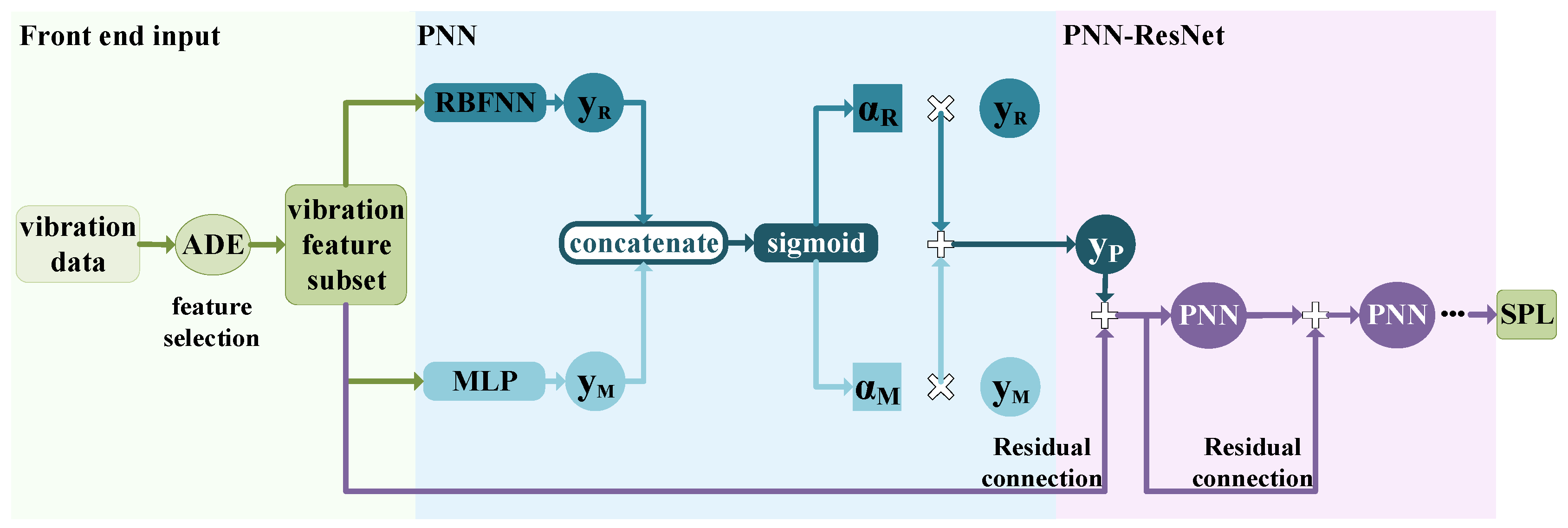
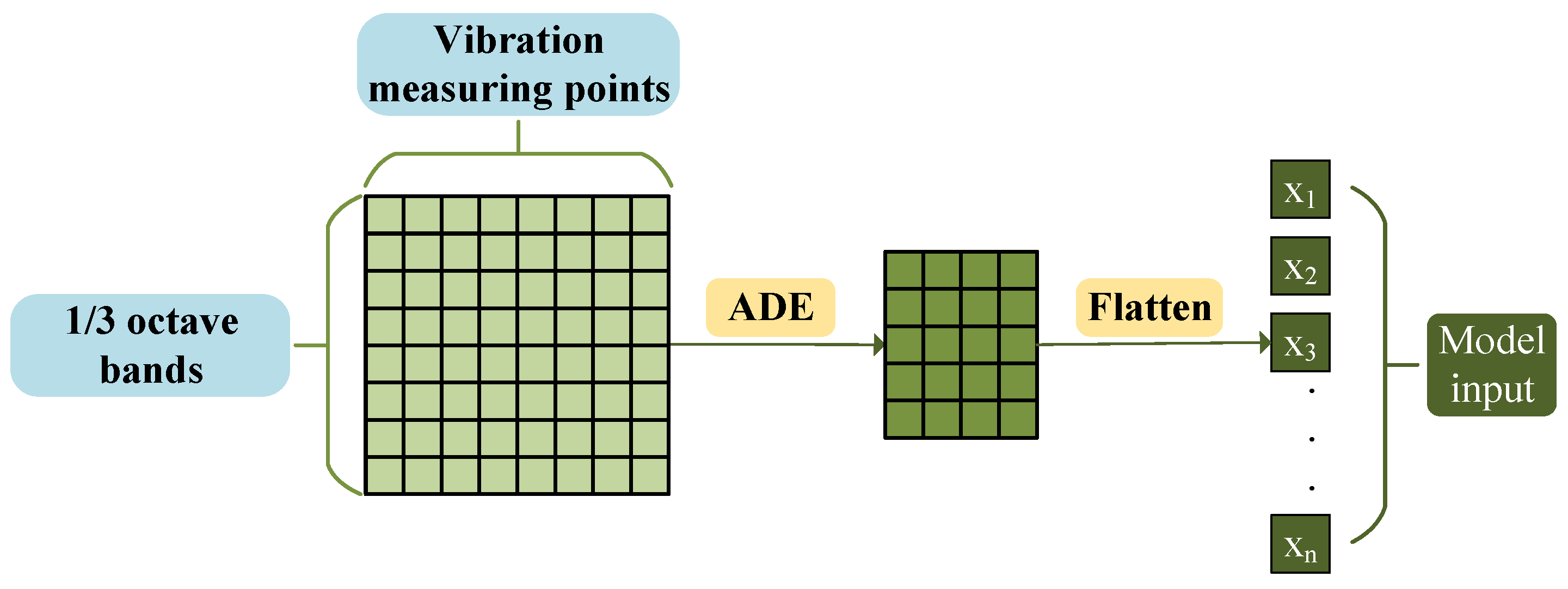
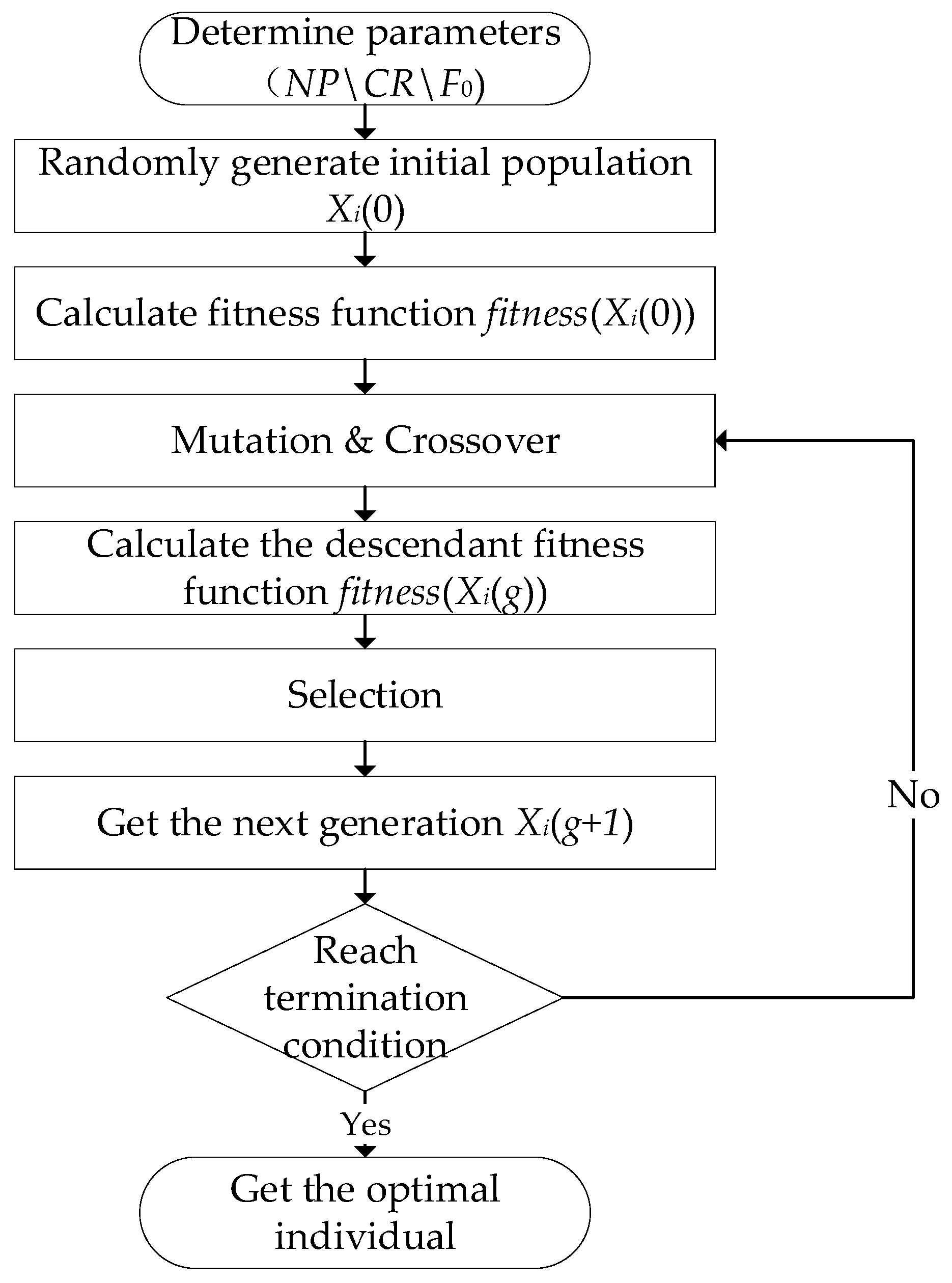
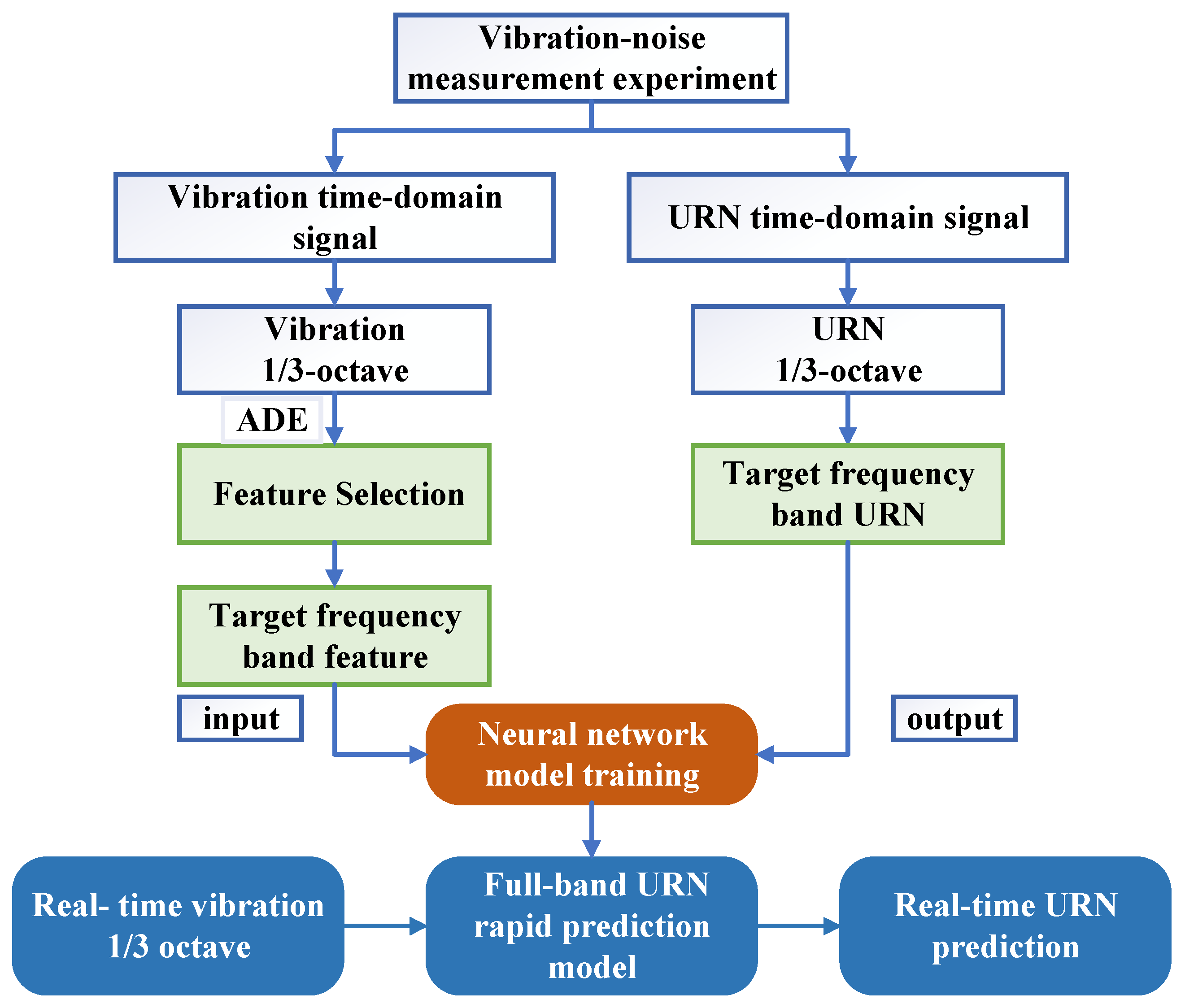
- Aiming at the problems of high dimensionality in underwater vehicle vibration data, as well as model overfitting and poor generalization ability caused by redundant features that weaken data correlation, a feature selection method based on the ADE is proposed. By extracting the optimal feature subset, this method effectively reduces data dimensionality, enhances feature representativeness, and provides high-quality inputs for the subsequent model.
- (2)
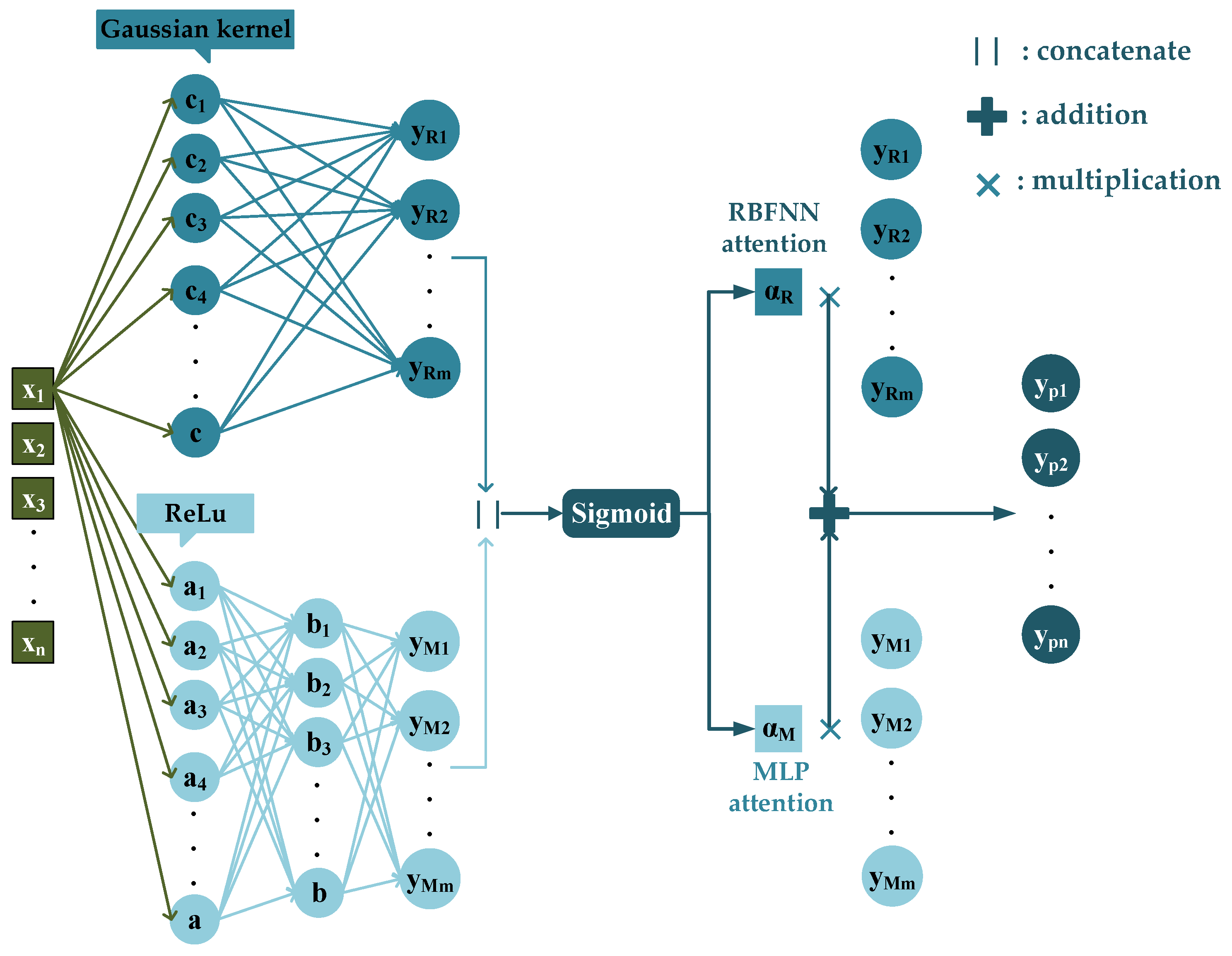
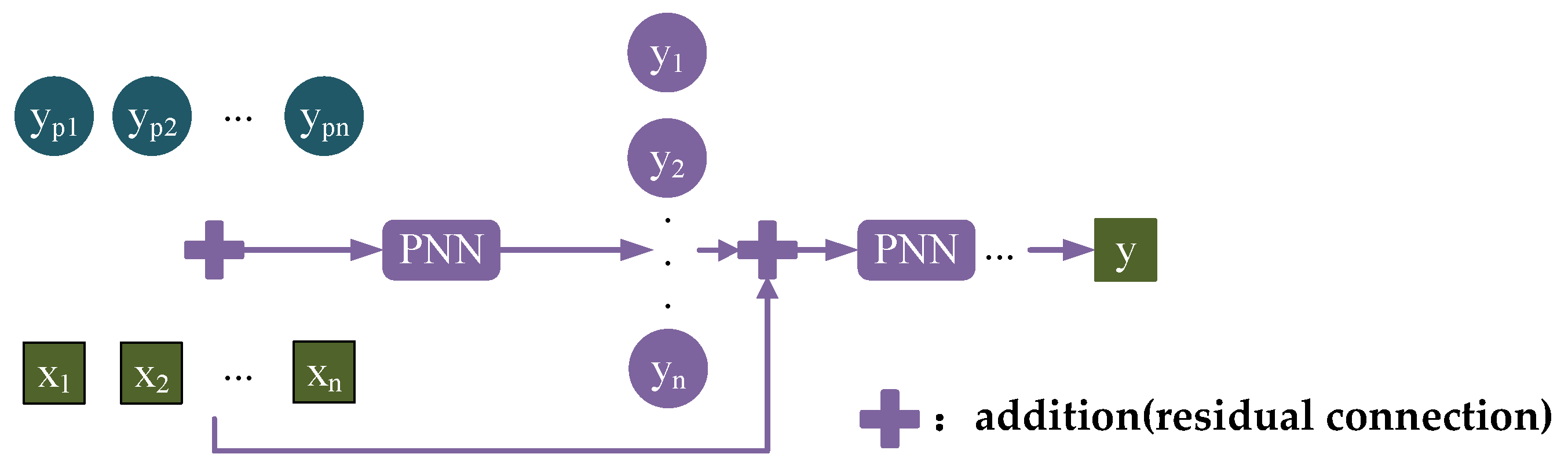
- PNN-ResNet combining RBFNN and MLP in parallel is proposed to model the transfer function between underwater vehicle vibration and radiated noise. The RBFNN captures local nonlinear correlations, while the MLP extracts global complex patterns through feature abstraction. These two networks form a parallel module PNN, which is then stacked in series via residual connections. This design not only enhances the modeling of deep nonlinear mapping relationships but also avoids gradient vanishing, realizing the collaborative complementarity of local and global features.
- (3)
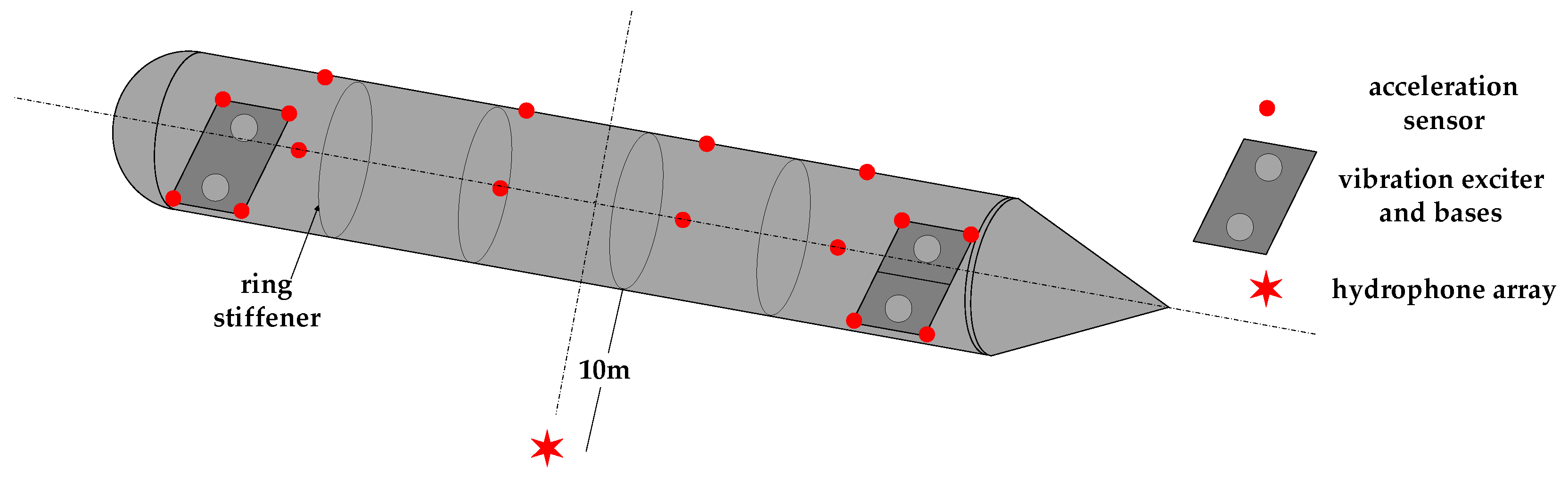
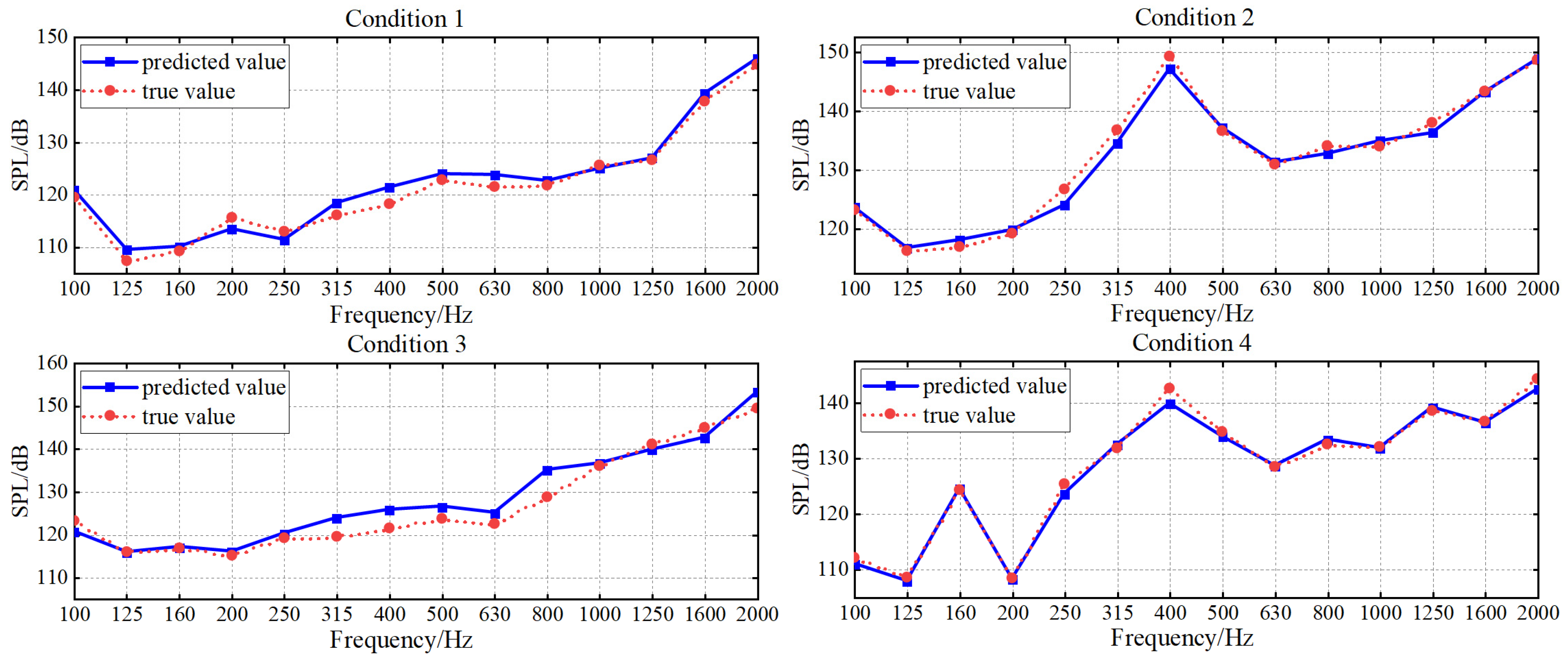
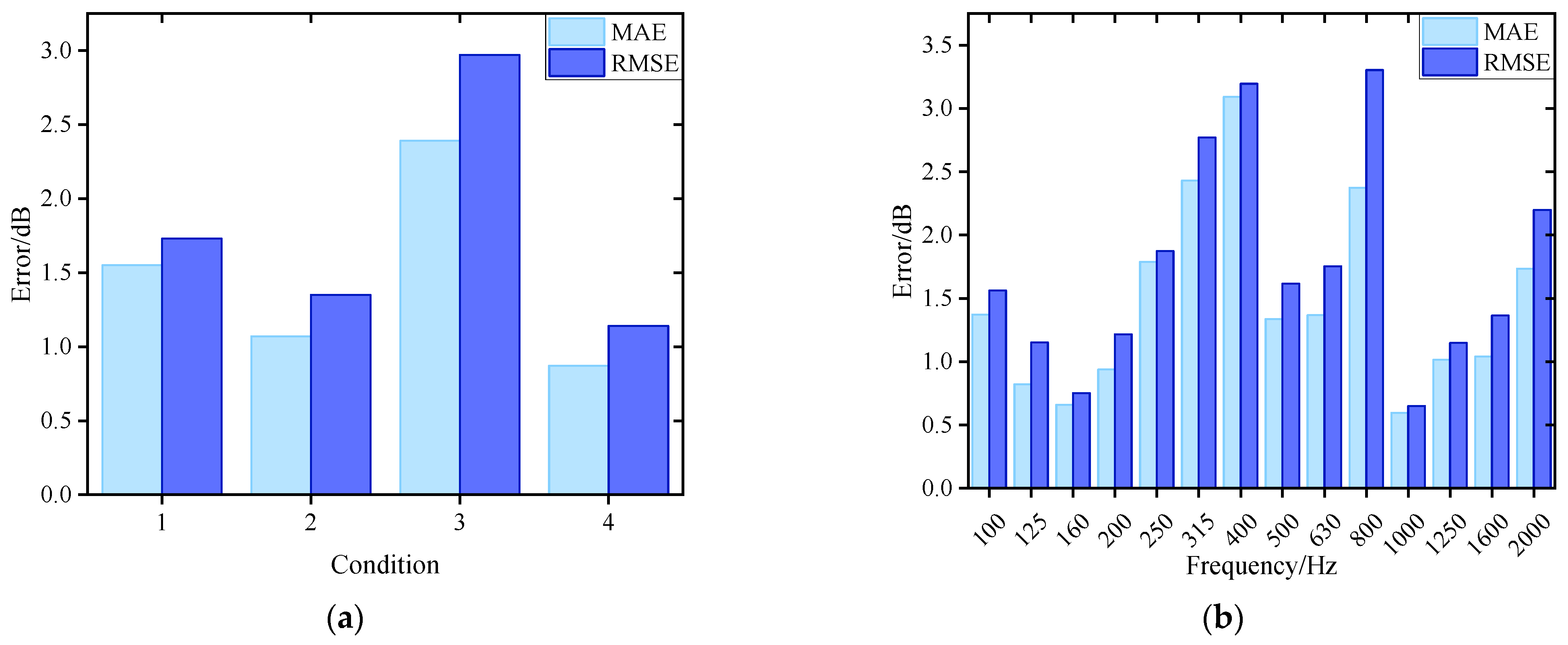
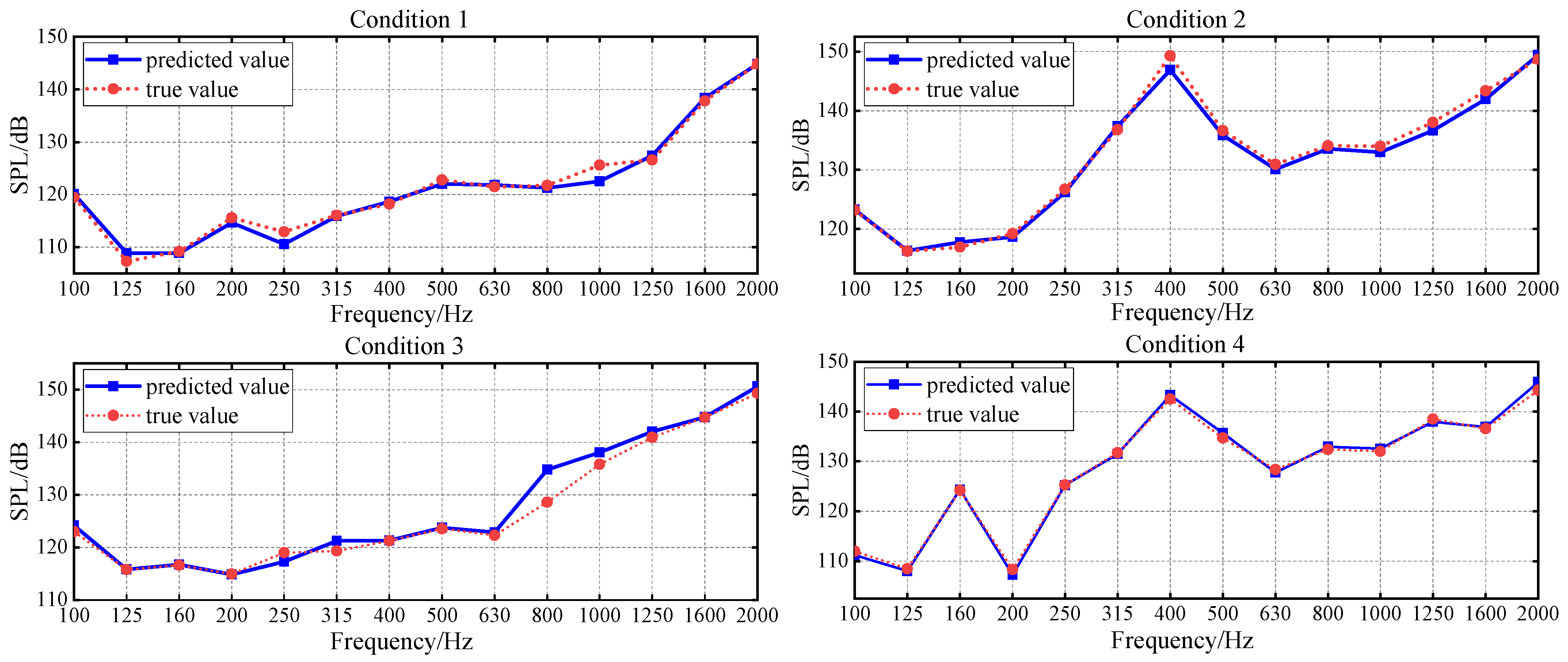
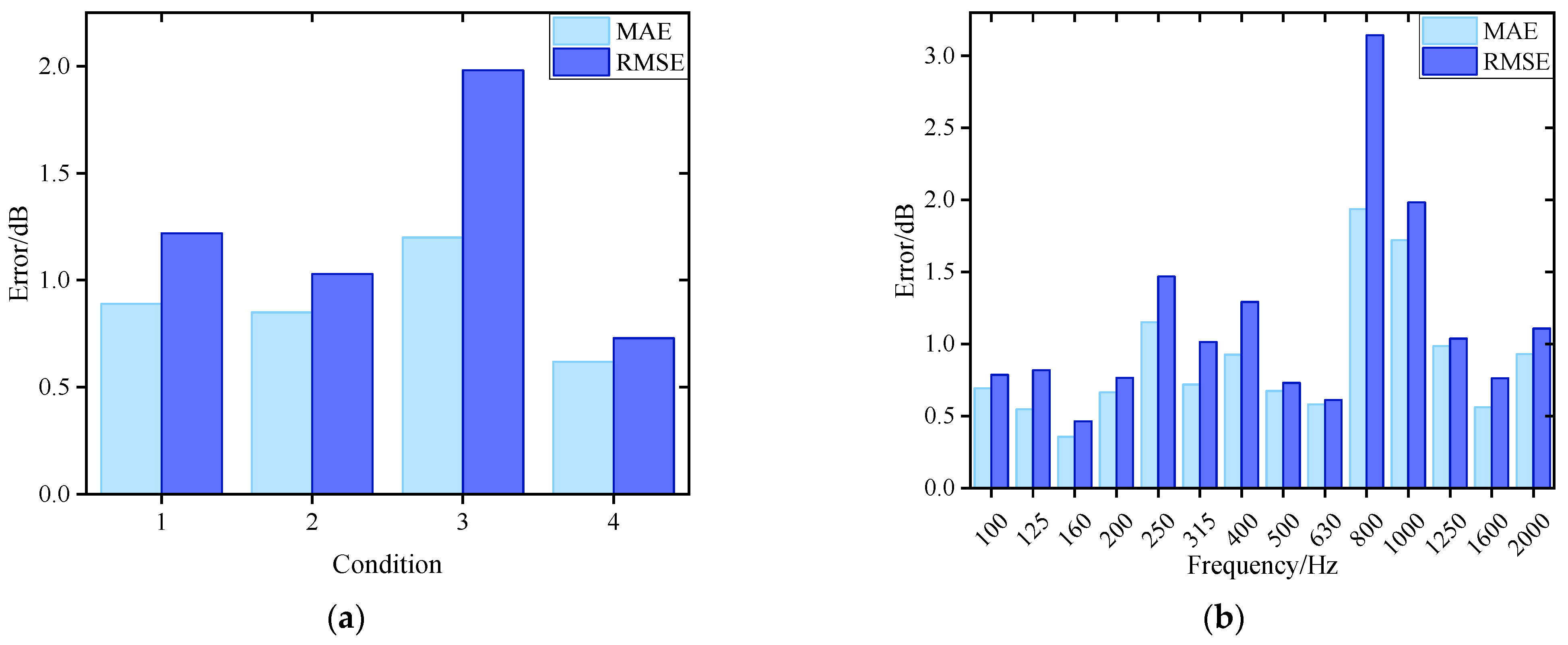
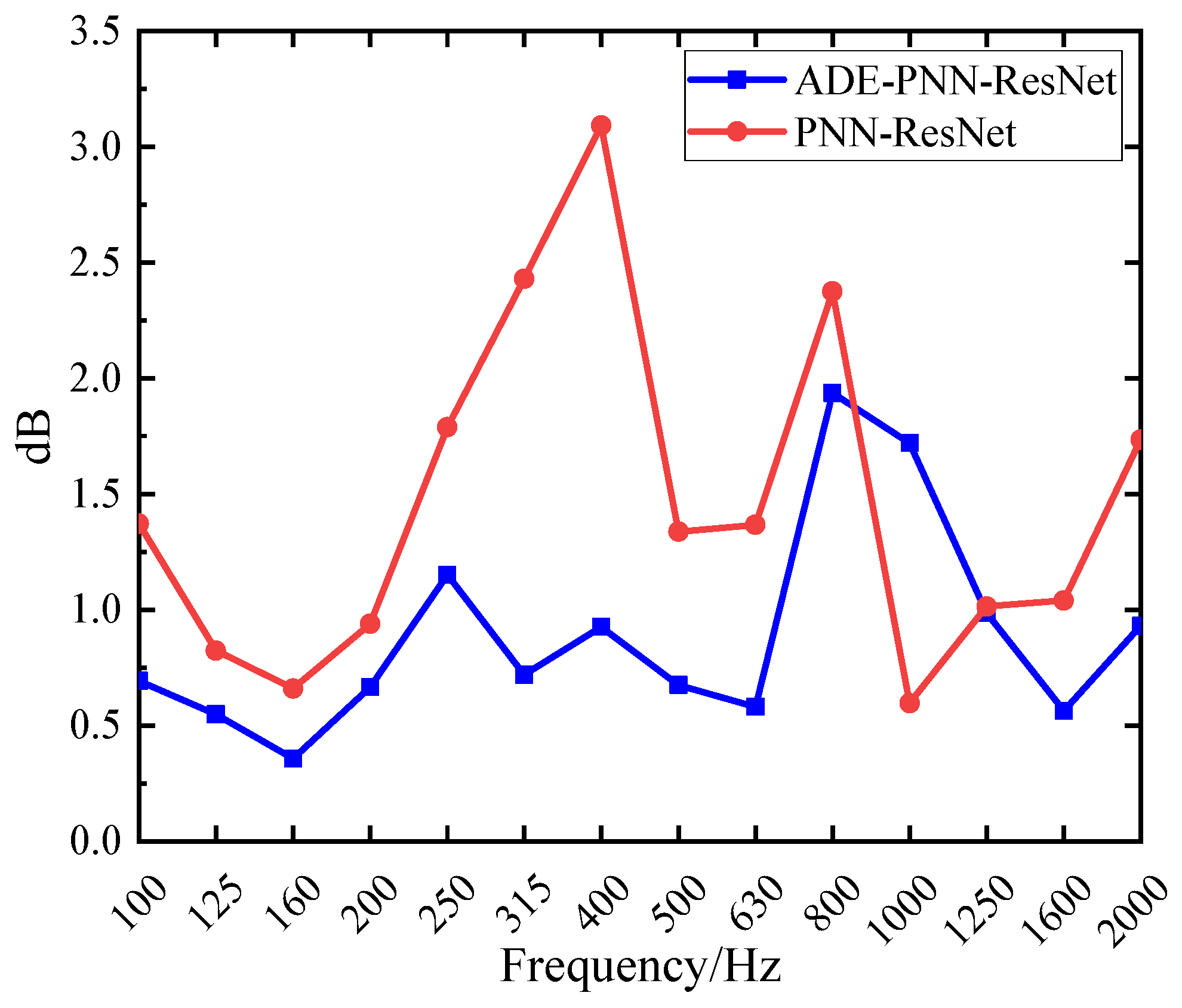
- The proposed prediction method is validated using vibration and noise data collected from lake experiments of a scaled underwater vehicle model. Under four randomly selected validation conditions, the PNN-ResNet model achieves absolute errors below 2 dB in 70% of the 56 one-third-octave bands (100–2000 Hz), and below 3 dB in 91% of them. By integrating ADE at the PNN-ResNet front-end to screen features of the prediction bands, ADE-PNN-ResNet model achieves a notable performance boost: 91% of the bands achieve an absolute error below 2 dB and 96% below 3 dB. This model provides a feasible engineering implementation approach for real-time monitoring of underwater vehicle radiated noise in actual marine environments.
2. Model Construction
2.1. Underwater Vehicle Radiated Noise Prediction Model
2.2. Adaptive Differential Evolution (ADE) Feature Selection Module
2.3. Parallel Residual Connection Neural Network PNN-ResNet
2.3.1. A Neural Network with Parallel Architecture of RBFNN and MLP (PNN)
2.3.2. Residual Connection
3. Data Acquisition and Preprocessing
3.1. Experimental Conditions
3.2. Data Processing Methods
4. Results Analysis
4.1. Dataset Composition and Model Training
4.2. Prediction Results of the Neural Network Model
4.2.1. Prediction Results of PNN-ResNet
4.2.2. Ablation Experiment
4.3. ADE-PNN-ResNet Prediction Results
4.4. Impact of Training Dataset Size on Prediction Accuracy of ADE-PNN-ResNet
5. Conclusions
- (1)
- Traditional numerical methods demand substantial computational resources and are time-consuming, while the OTPA method relies on complex transfer path modeling and comprehensive sensor coverage. This paper replaces traditional physical modeling with a neural network. Addressing the complex nonlinear relationship between underwater structural vibration and radiated noise, the PNN module innovatively integrates RBFNN and MLP in parallel to achieve synergistic complementarity between local details and global trends. Residual connections are further adopted to enhance nonlinear expression capability while avoiding gradient vanishing.
- (2)
- Vibration data from a single frequency band cannot capture the interdependencies among different bands. This paper introduces multi-band vibration feature input, fully considering the synergistic influence of different vibration bands on the target noise. The ADE module is used for joint screening of vibration sensors and frequency bands, extracting features strongly correlated with the target noise bands. This effectively eliminates redundant information and achieves dimensionality reduction, providing high-quality input for subsequent models and enhancing generalization performance.
- (3)
- This study adopts a “single-band model training + full-band integration” modeling strategy. By synergistically combining ADE-based feature selection with the PNN-ResNet architecture, the method achieves high prediction accuracy across the 1/3-octave frequency bands (100–2000 Hz): 96% of the bands exhibit absolute prediction errors below 3 dB. Meanwhile, the average inference time for full-band prediction is only 9 s, meeting the real-time response and accuracy requirements of engineering scenarios.
Author Contributions
Funding
Institutional Review Board Statement
Informed Consent Statement
Data Availability Statement
Conflicts of Interest
References
- Zhang, C.; Li, S.; Shang, D.; Han, Y.; Shang, Y. Prediction of Sound Radiation from Submerged Cylindrical Shell Based on Dominant Modes. Appl. Sci. 2020, 10, 3073. [Google Scholar] [CrossRef]
- Tang, Y.; Jia, F.; Jia, D.; Wang, X.; Liu, Y. Study in the parameter influence on underwater acoustic radiation characteristics of cylindrical shells. Rev. Adv. Mater. Sci. 2022, 61, 405–416. [Google Scholar] [CrossRef]
- Liu, S.; Huo, R.; Wang, L. Vibroacoustic Transfer Characteristics of Underwater Cylindrical Shells Containing Complex Internal Elastic Coupled Systems. Appl. Sci. 2023, 13, 3994. [Google Scholar] [CrossRef]
- Zou, M.; Tang, H.; Liu, S. Modeling and calculation of acoustic radiation of underwater stiffened cylindrical shells treated with local damping. Mar. Struct. 2023, 88, 103366. [Google Scholar] [CrossRef]
- Kim, S.; Kinnas, S.A. Numerical prediction of underwater noise on a flat hull induced by twin or podded propeller systems. J. Sound Vib. 2022, 539, 117256. [Google Scholar] [CrossRef]
- Zou, M.; Yang, Y.; Liu, S. A spherical source distribution method for calculating acoustic radiation of elastic underwater structures. Eng. Anal. Bound. Elem. 2024, 169, 105945. [Google Scholar] [CrossRef]
- Nie, R.; He, T.; Fan, J.; Zhao, K.; Wang, B. Fast prediction of the long-range structural acoustic radiation in the stratified ocean. Ocean Eng. 2024, 314, 119673. [Google Scholar] [CrossRef]
- MacGillivray, A.; De Jong, C. A Reference Spectrum Model for Estimating Source Levels of Marine Shipping Based on Automated Identification System Data. J. Mar. Sci. Eng. 2021, 9, 369. [Google Scholar] [CrossRef]
- Thomas, L.; Johanna, D.; Johan, B.; Max, S. ‘PIANO’: A physics-based semi-empirical source level model for fleet-scale ship URN prediction. In Proceedings of the 8th International Symposium on Marine Propulsors (SMP 2024), Berlin, Germany, 17–20 March 2024. [Google Scholar]
- Pang, F.; Tang, Y.; Li, C.; Zhou, F.; Gao, C.; Li, H. Reconstructed source method for underwater noise prediction of a stiffened cylindrical shell. Ocean Eng. 2024, 310, 118828. [Google Scholar] [CrossRef]
- Tang, Y.; Li, H.; Zhao, Z.; Xie, Y.; Pang, F. Prediction of underwater noise from cylindrical shells: Reconstructed source method. Ocean Eng. 2025, 334, 121680. [Google Scholar] [CrossRef]
- Jiang, C.; Ji, F. The refined transfer matrix method for underwater acoustic radiation of finite-length reinforced cylindrical shells. J. Ship. Mech. 2017, 21, 503–511. [Google Scholar]
- Pang, F.; Wu, C.; Wang, X. An Improved Fine Transfer Matrix Method for the Analysis of Underwater Reinforced Cylindrical Shell Acoustic Radiation Characteristics. J. Vib. Shock. 2017, 36, 131–137. [Google Scholar]
- Wang, X.; Chen, L.; Li, N. An Experimental and Modeling Study on Vibro-Acoustic Response of Double-Walled Steel Cylindrical Shells. Int. J. Steel Struct. 2020, 20, 1081–1099. [Google Scholar] [CrossRef]
- Fragasso, J.; Helal, K.M.; Moro, L. Transfer-path analysis to estimate underwater radiated noise from onboard structure-borne sources. Appl. Ocean Res. 2024, 147, 103979. [Google Scholar] [CrossRef]
- Guo, Q.; Zhang, H.; Yang, B.; Shi, S. Underwater Radiated Noise Prediction Method of Cabin Structures under Hybrid Excitation. Appl. Sci. 2023, 13, 12667. [Google Scholar] [CrossRef]
- Javier, R.F.; Jaime, R.; Pedro, P.; Jesus, C.; Enrique, S. Analysis of the Underwater Radiated Noise Generated by Hull Vibrations of the Ships. Sensors 2023, 23, 1035. [Google Scholar] [CrossRef] [PubMed]
- Zerbs, C.; Pascher, I. Monitoring of Underwater Radiated Sound for Ships Using Transfer Path Analysis Models. In Proceedings of the Name of the International Congress and Exposition on Noise Control Engineering, Hamburg, Germany, 21–24 August 2016. [Google Scholar]
- Katrina, H.J.; Vanessa, M.Z.; Lynne, E.W.H.; Melissa, S.S.; John, A.H.; Kaitlin, E.F. Characterization and modeling source levels of commercial vessels in the Gulf of Mexico. J. Acoust. Soc. Am. 2025, 158, 2250–2268. [Google Scholar] [CrossRef]
- Cintosun, E. Derivations of transfer functions for estimating ship underwater radiated noise from onboard vibrations. Ocean Eng. 2024, 311, 118792. [Google Scholar] [CrossRef]
- Huang, X.; Xu, R.; Li, R. An online prediction method for ship underwater radiated noise based on differential evolution feature optimization and ensemble method. Ocean Eng. 2025, 333, 121517. [Google Scholar] [CrossRef]
- Huang, X.; Xu, R.; Li, R. A Ship Underwater Radiated Noise Prediction Method Based on Semi-Supervised Ensemble Learning. J. Mar. Sci. Eng. 2025, 13, 1303. [Google Scholar] [CrossRef]
- Park, U.; Kang, Y.J. Operational transfer path analysis based on neural network. J. Sound Vib. 2024, 579, 118364. [Google Scholar] [CrossRef]
- Ye, L.; Liu, Y.; Liu, Y. Research on the Generation Method of Rapid Forecast Proxy Model for Underwater Radiative Noise Based on Data Augmentation. China Shipbuild. 2025, 66, 133–145. [Google Scholar]
- Lu, Y.; Luo, Q.; Liao, Y.; Xu, W. Vortex-induced vibration fatigue damage prediction method for flexible cylinders based on RBF neural network. Ocean Eng. 2022, 254, 111344. [Google Scholar] [CrossRef]
- Sharma, A.; Jain, S.K. A Novel Two-Stage Framework for Mid-Term Electric Load Forecasting. IEEE Trans. Ind. Inf. 2024, 20, 247–255. [Google Scholar] [CrossRef]
- Huang, X.; Li, Z.; Dai, Y.; Zhu, X. Application of parallel neural networks (PNN) in predicting and analyzing vehicle attitude during the water exit process. Ocean Eng. 2025, 323, 120602. [Google Scholar] [CrossRef]
- Oliveira, D.S.; Teixeira, E.C.; Donadel, C.B. Novel Approaches for Predicting Efficiency in Helically Coiled Tube Flocculators Using Regression Models and Artificial Neural Networks. Water Environ. J. 2019, 34, 550–562. [Google Scholar] [CrossRef]
- Ma, Y.; Liu, Z.; Shi, Q.; Liu, J.; Geng, X.; Xue, R. Interval prediction of ultimate strength for laminated composite structures using back-propagation neural network. Arch. Appl. Mech. 2022, 92, 1167–1184. [Google Scholar] [CrossRef]
- Xu, G.; Yue, Q.; Liu, X. Identification of historical maximum load on concrete beams based on crack and deformation response using knowledge-embedded machine learning algorithms. Eng. Struct. 2024, 314, 118376. [Google Scholar] [CrossRef]
- Guan, D.; Xie, Y.; Chiew, Y.; Ding, F.; Ferradosa, T.F.; Hong, J. Estimation of local scour around monopile foundations for offshore structures using machine learning models. Ocean Eng. 2024, 296, 116951. [Google Scholar] [CrossRef]
- Miao, K.; Pan, Z.; Chen, A.; Wei, Y.; Zhang, Y. Machine learning-based model for the ultimate strength of circular concrete-filled fiber-reinforced polymer–steel composite tube columns. Constr. Build. Mater. 2023, 394, 132134. [Google Scholar] [CrossRef]
- Dokeroglu, T.; Deniz, A.; Kiziloz, H.E. A comprehensive survey on recent metaheuristics for feature selection. Neurocomputing 2022, 494, 269–296. [Google Scholar] [CrossRef]
- Pant, M.; Zaheer, H.; Garcia-Hernandez, L.; Abraham, A. Differential Evolution: A review of more than two decades of research. Eng. Appl. Artif. Intell. 2020, 90, 103479. [Google Scholar] [CrossRef]
- Gal, Y.; Ghahramani, Z.; Balcan, M.F.; Weinberger, K.Q. Dropout as a Bayesian Approximation: Representing Model Uncertainty in Deep Learning. In Proceedings of the Meeting 33rd International Conference on Machine Learning, New York, NY, USA, 20–22 June 2016. [Google Scholar]
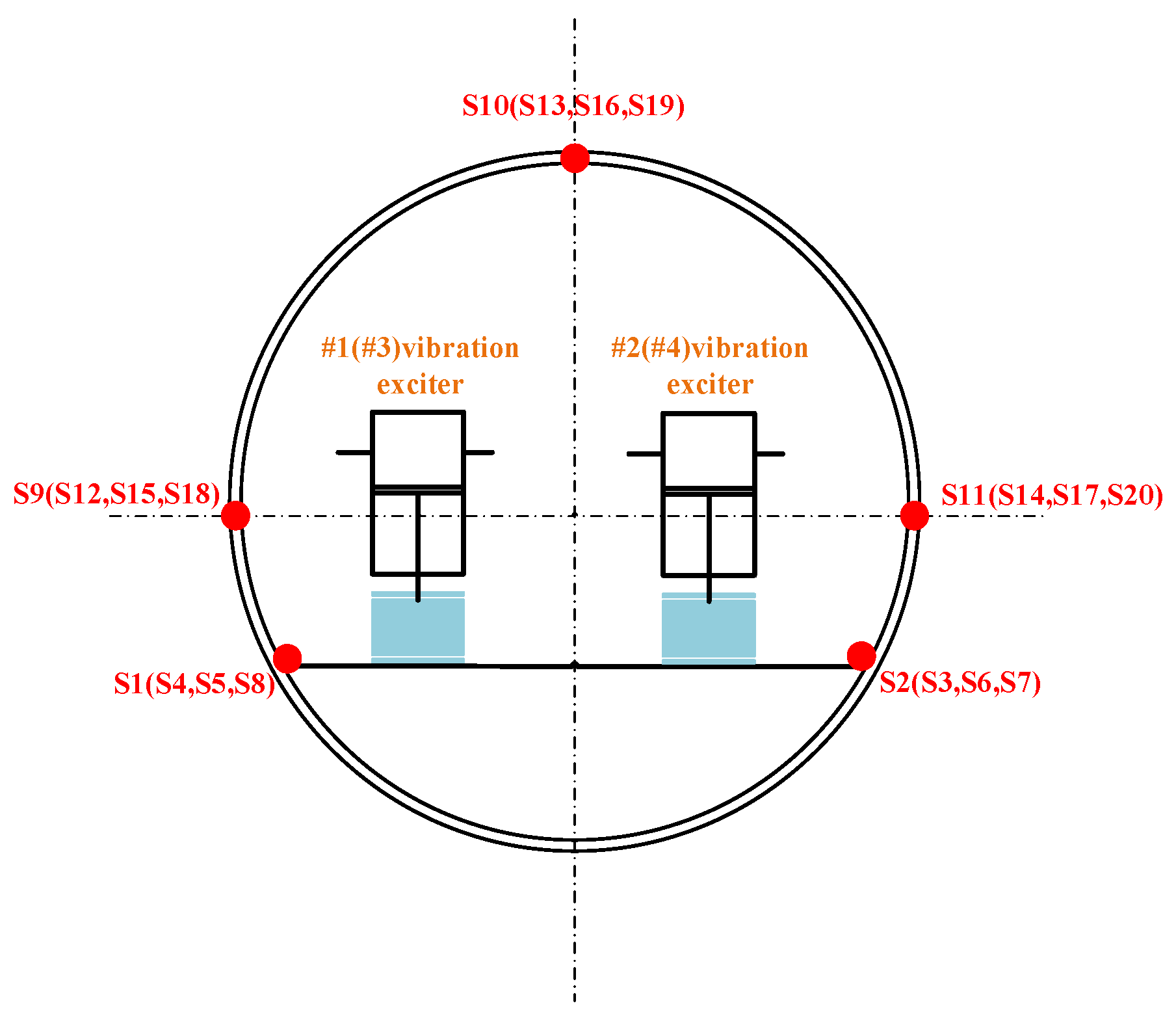
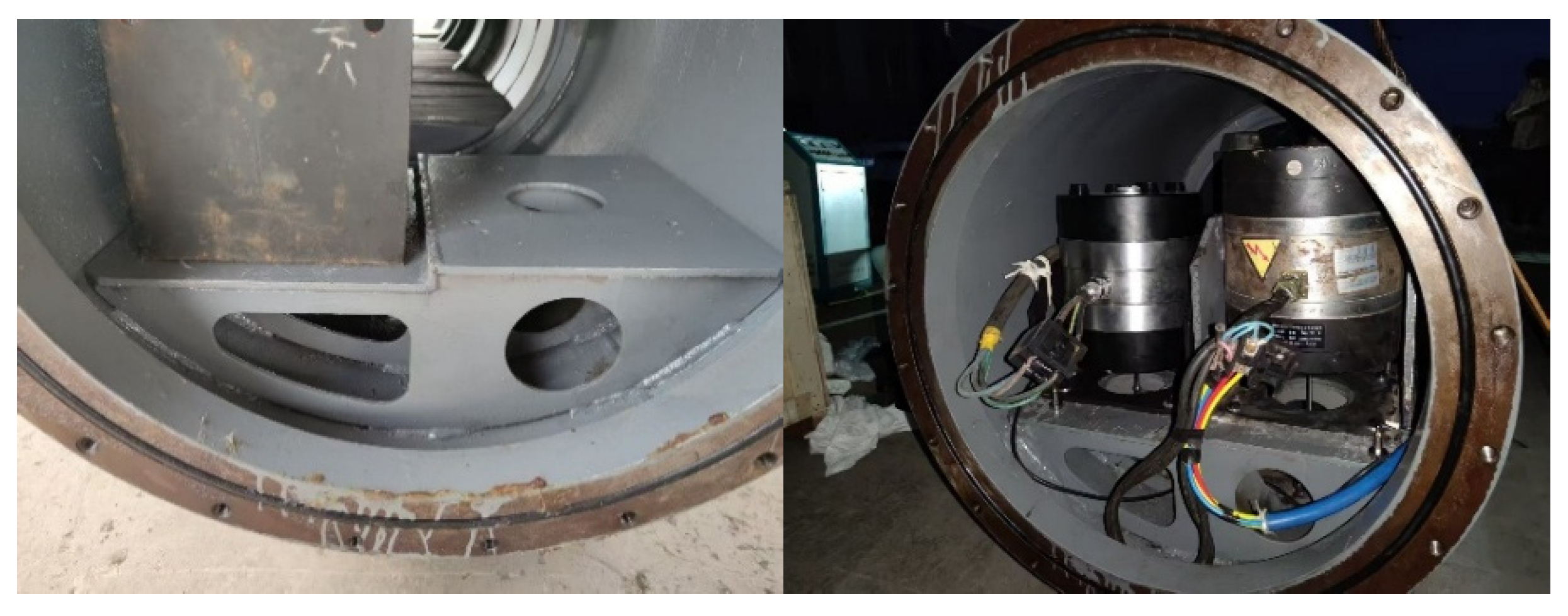

| Exciter | State 1 | State 2 | State 3 | State 4 | State 5 | State 6 |
|---|---|---|---|---|---|---|
| #1 | on | - | on | - | - | - |
| #2 | on | on | - | - | - | - |
| #3 | on | on | on | on | on | - |
| #4 | on | on | on | on | - | on |
| Condition | Model Diving Depth/m | The States of Exciters | Navigational Speed |
|---|---|---|---|
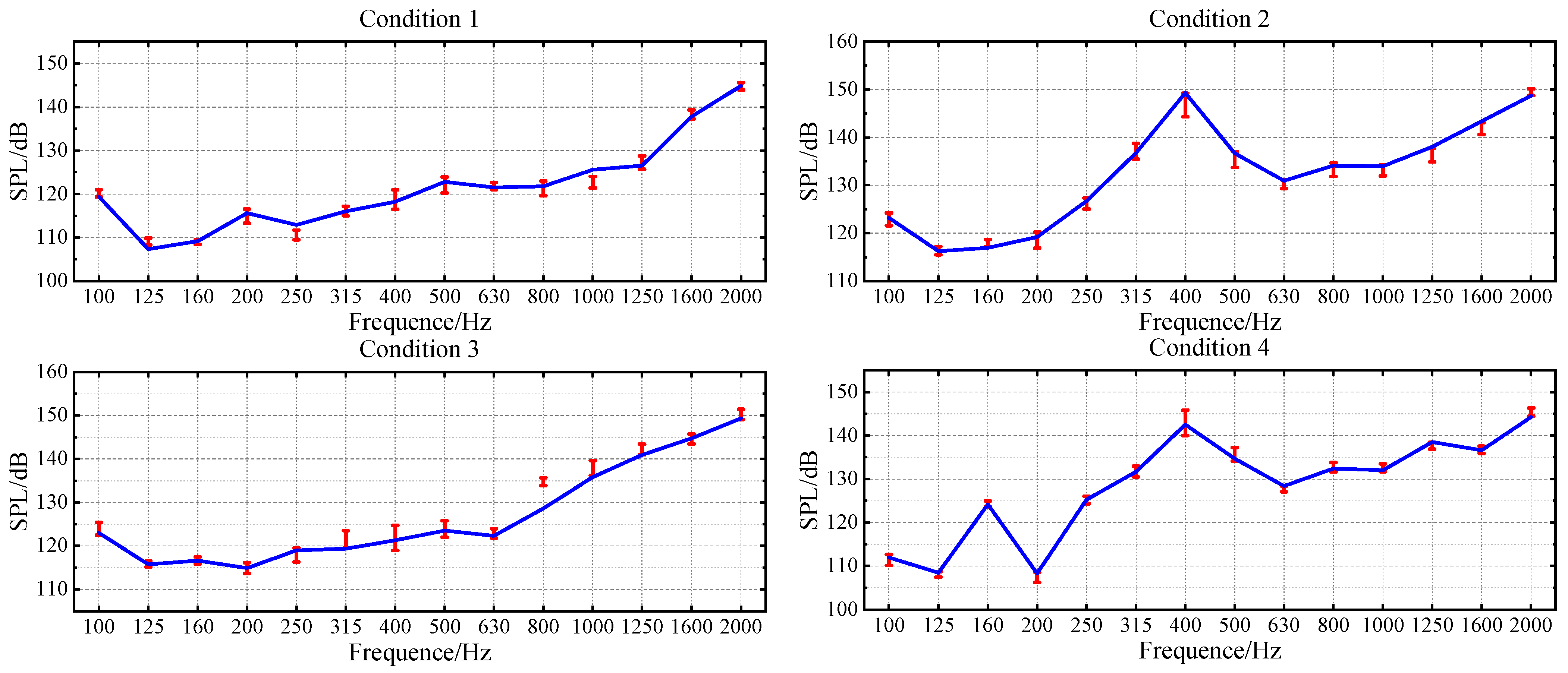
| 1 | 5 | state 2 | low |
| 2 | 13 | state 5 | high |
| 3 | 5 | state 3 | low |
| 4 | 13 | state 6 | medium |
| Condition | MAE (dB) | RMSE (dB) | ||||||||
|---|---|---|---|---|---|---|---|---|---|---|
| PNN-ResNet | PNN | RBFNN | MLP | SVR | PNN-ResNet | PNN | RBFNN | MLP | SVR | |
| 1 | 1.55 | 1.97 | 4.59 | 1.04 | 2.96 | 1.73 | 2.34 | 5.28 | 1.43 | 3.44 |
| 2 | 1.07 | 1.82 | 2.44 | 1.49 | 2.25 | 1.35 | 2.05 | 3.01 | 1.87 | 2.68 |
| 3 | 2.39 | 2.41 | 2.23 | 3.53 | 1.93 | 2.97 | 3.05 | 2.54 | 4.55 | 2.14 |
| 4 | 0.87 | 1.14 | 0.43 | 2.68 | 1.12 | 1.14 | 1.33 | 0.54 | 3.58 | 1.19 |
| Mean | 1.47 | 1.84 | 2.42 | 2.19 | 2.07 | 1.80 | 2.19 | 2.84 | 2.86 | 2.36 |
| Error | PNN-ResNet | PNN | RBFNN | MLP | SVR |
|---|---|---|---|---|---|
| <3 dB | 91% | 86% | 70% | 82% | 78.6% |
| <2 dB | 70% | 64% | 55% | 60% | 59% |
| Vibration Measurement Points | S3 | S4 | S5 | S6 | S7 | S8 | S9 | S11 | S18 | S20 |
| 1/3-Octave Band Center Frequency (Hz) | 200 | 400 | 630 | 1250 | ||||||
Disclaimer/Publisher’s Note: The statements, opinions and data contained in all publications are solely those of the individual author(s) and contributor(s) and not of MDPI and/or the editor(s). MDPI and/or the editor(s) disclaim responsibility for any injury to people or property resulting from any ideas, methods, instructions or products referred to in the content. |
© 2026 by the authors. Licensee MDPI, Basel, Switzerland. This article is an open access article distributed under the terms and conditions of the Creative Commons Attribution (CC BY) license.
Share and Cite
Ji, F.; Li, Z.; Feng, W.; Shi, M.; Ji, X. A Rapid Prediction Method for Underwater Vehicle Radiated Noise Based on Feature Selection and Parallel Residual Neural Network. Sensors 2026, 26, 266. https://doi.org/10.3390/s26010266
Ji F, Li Z, Feng W, Shi M, Ji X. A Rapid Prediction Method for Underwater Vehicle Radiated Noise Based on Feature Selection and Parallel Residual Neural Network. Sensors. 2026; 26(1):266. https://doi.org/10.3390/s26010266
Chicago/Turabian StyleJi, Fang, Ziming Li, Weijia Feng, Mengxi Shi, and Xiang Ji. 2026. "A Rapid Prediction Method for Underwater Vehicle Radiated Noise Based on Feature Selection and Parallel Residual Neural Network" Sensors 26, no. 1: 266. https://doi.org/10.3390/s26010266
APA StyleJi, F., Li, Z., Feng, W., Shi, M., & Ji, X. (2026). A Rapid Prediction Method for Underwater Vehicle Radiated Noise Based on Feature Selection and Parallel Residual Neural Network. Sensors, 26(1), 266. https://doi.org/10.3390/s26010266

