

Proportional Control with Pole-Placement-Tuned Gains for GPS-Based Waypoint Following, Experimentally Validated Against Classical Methods



Abstract
1. Introduction
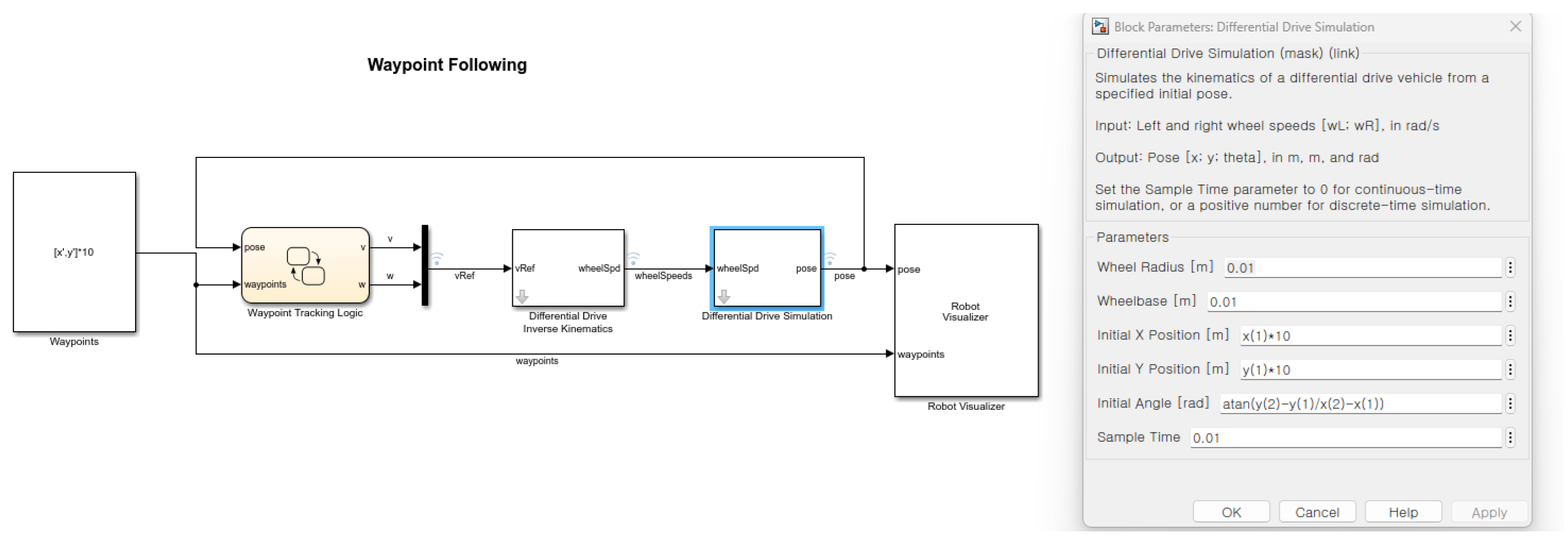
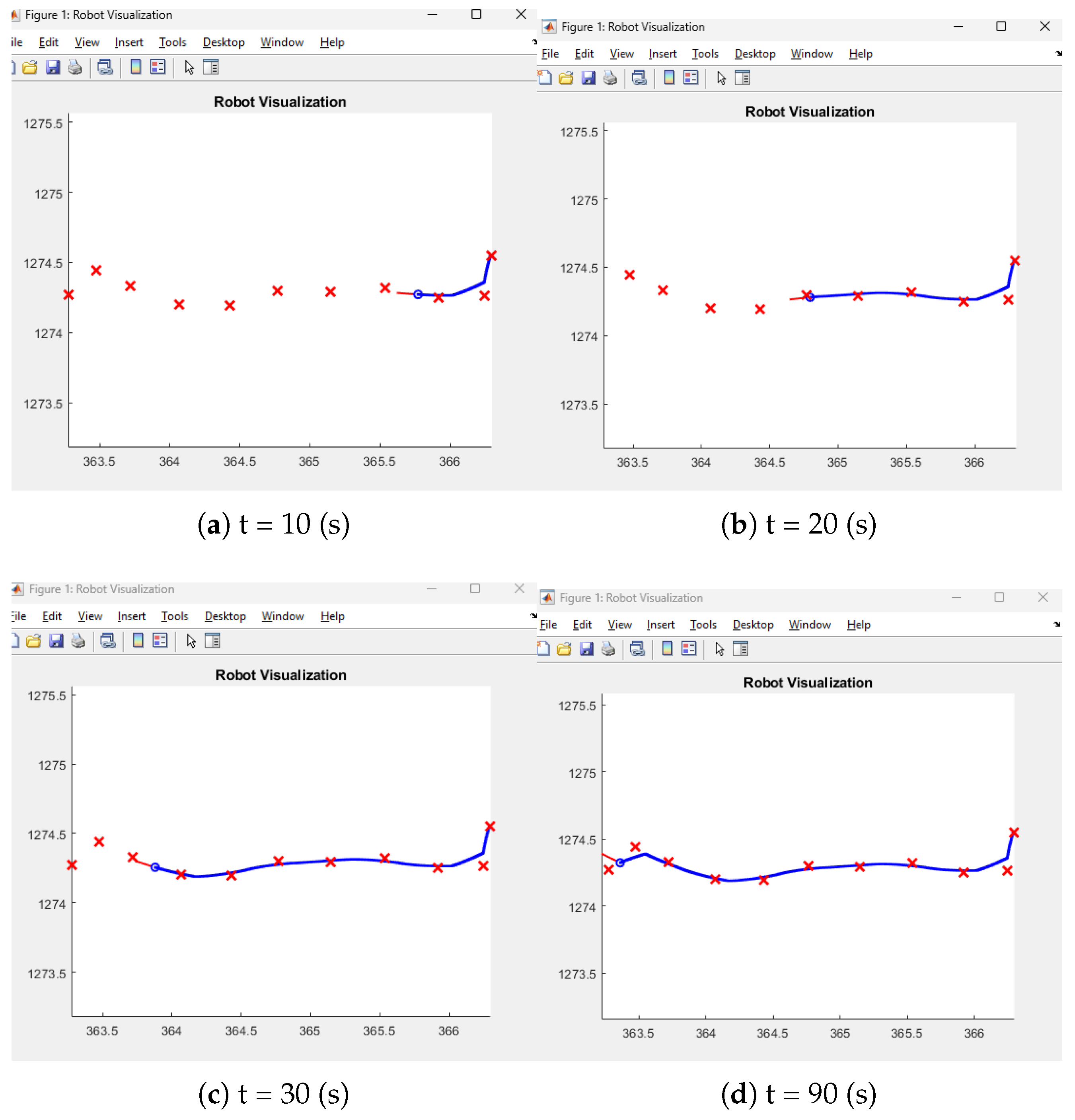
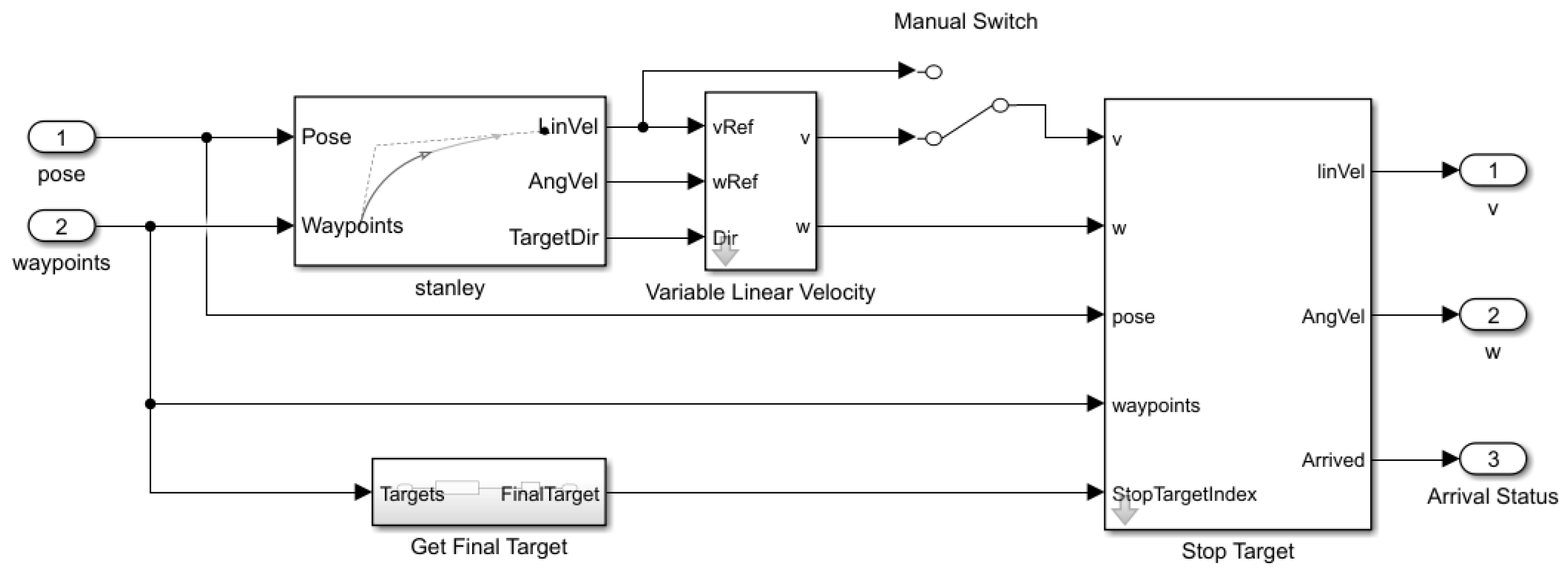
- Despite the various aforementioned control and estimation methods, the experiment was conducted focusing on the waypoint-following logic incorporated into ROS publish and subscribe block introduced in MATLAB/SIMULINK recently.
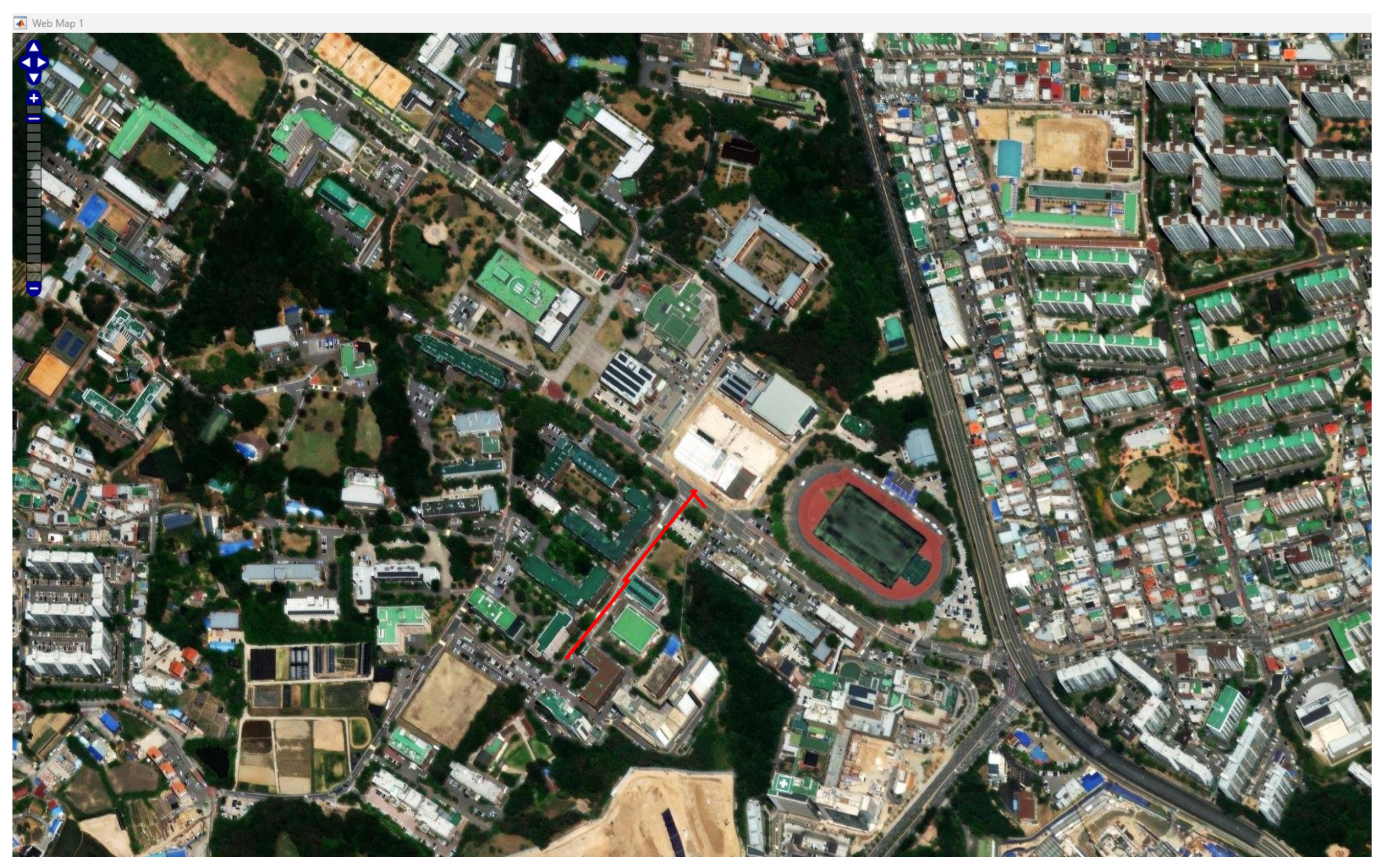
- The real environment experiment is implemented based upon the waypoint from ROS subscribe block.
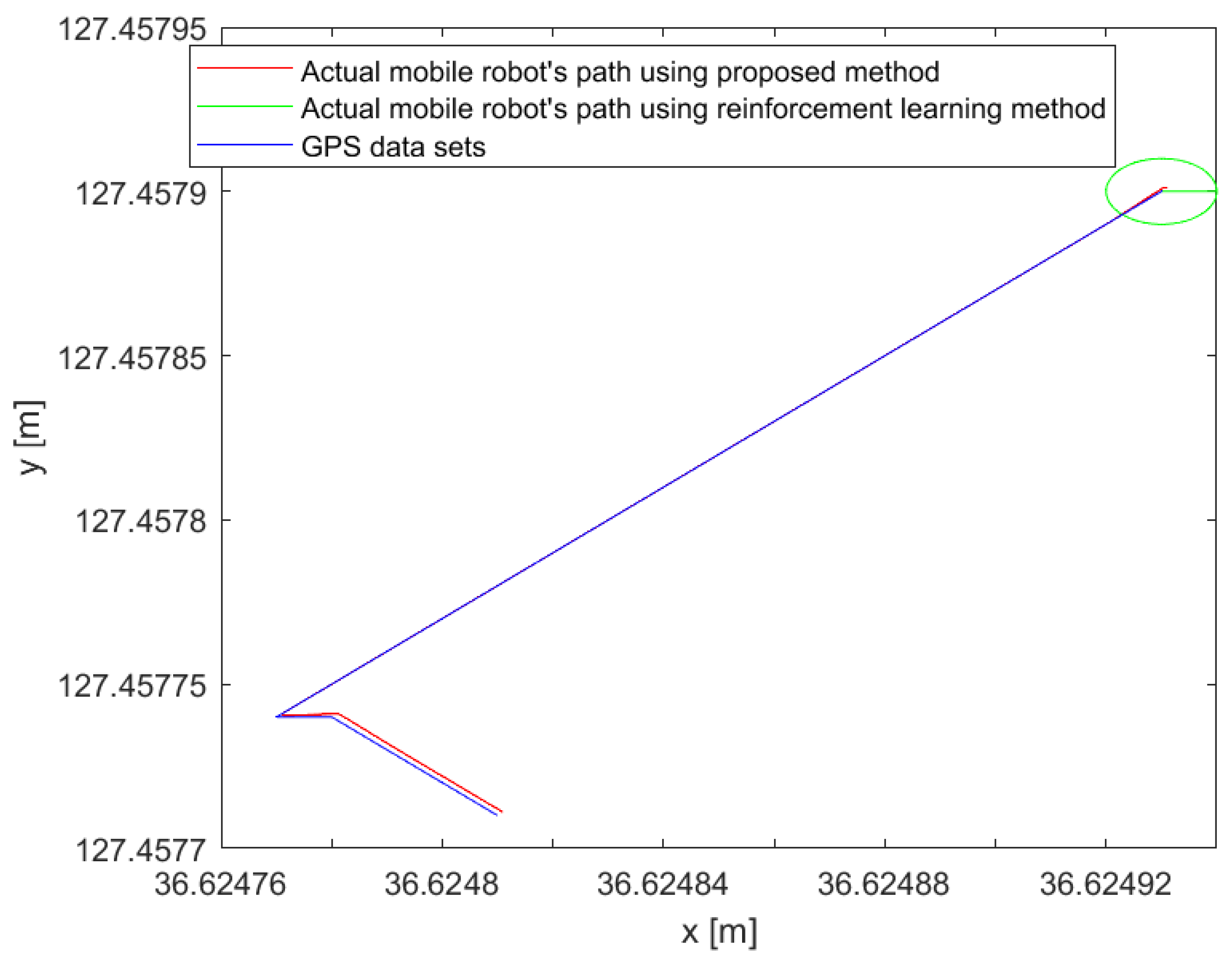
- Furthermore, the trajectory-tracking-like goal-point-following is implemented through simulation and the real mobile platform experiment by defining vectors rather than designated goal-points.
2. The Cornering Complicated Path Using Cornering Index
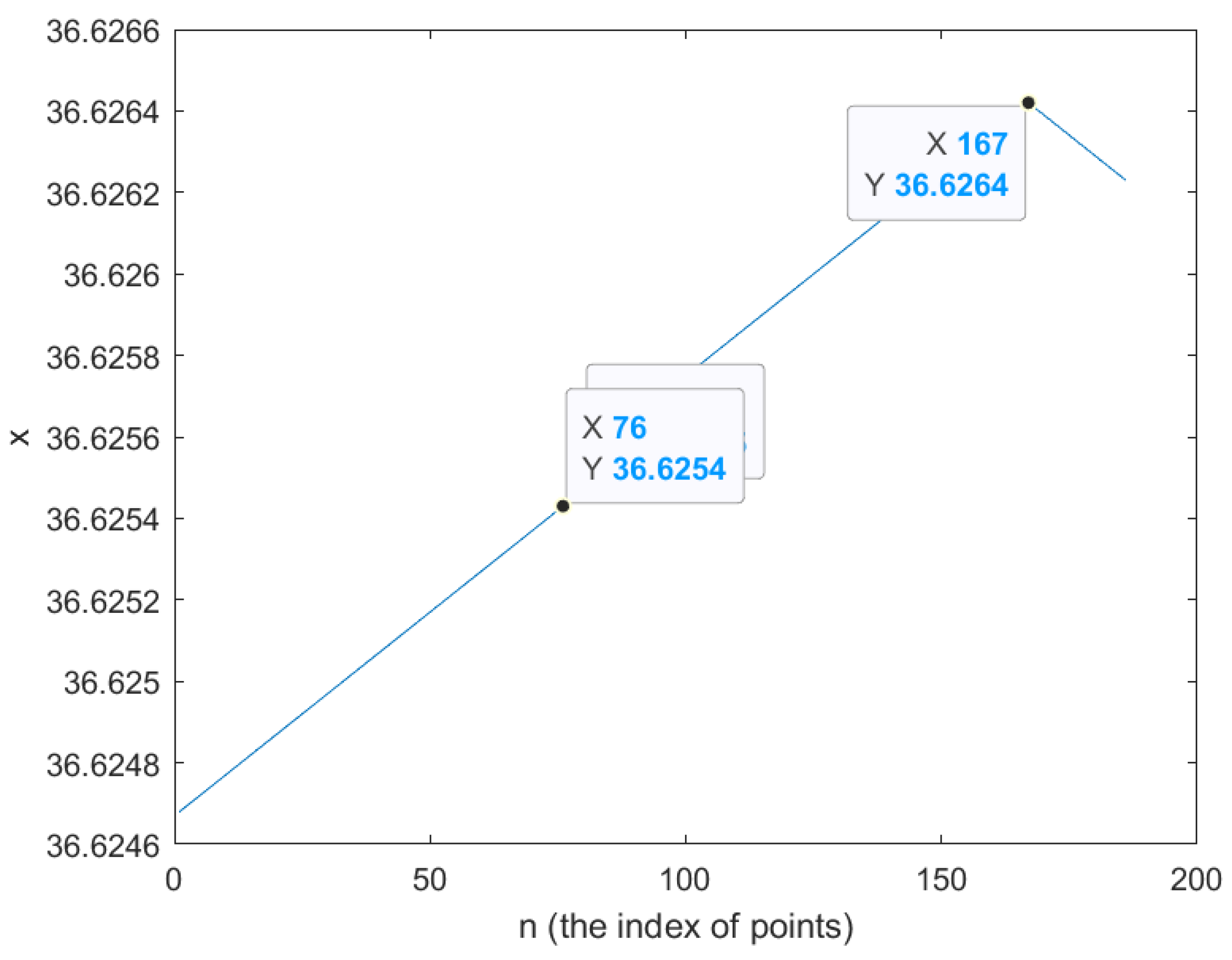
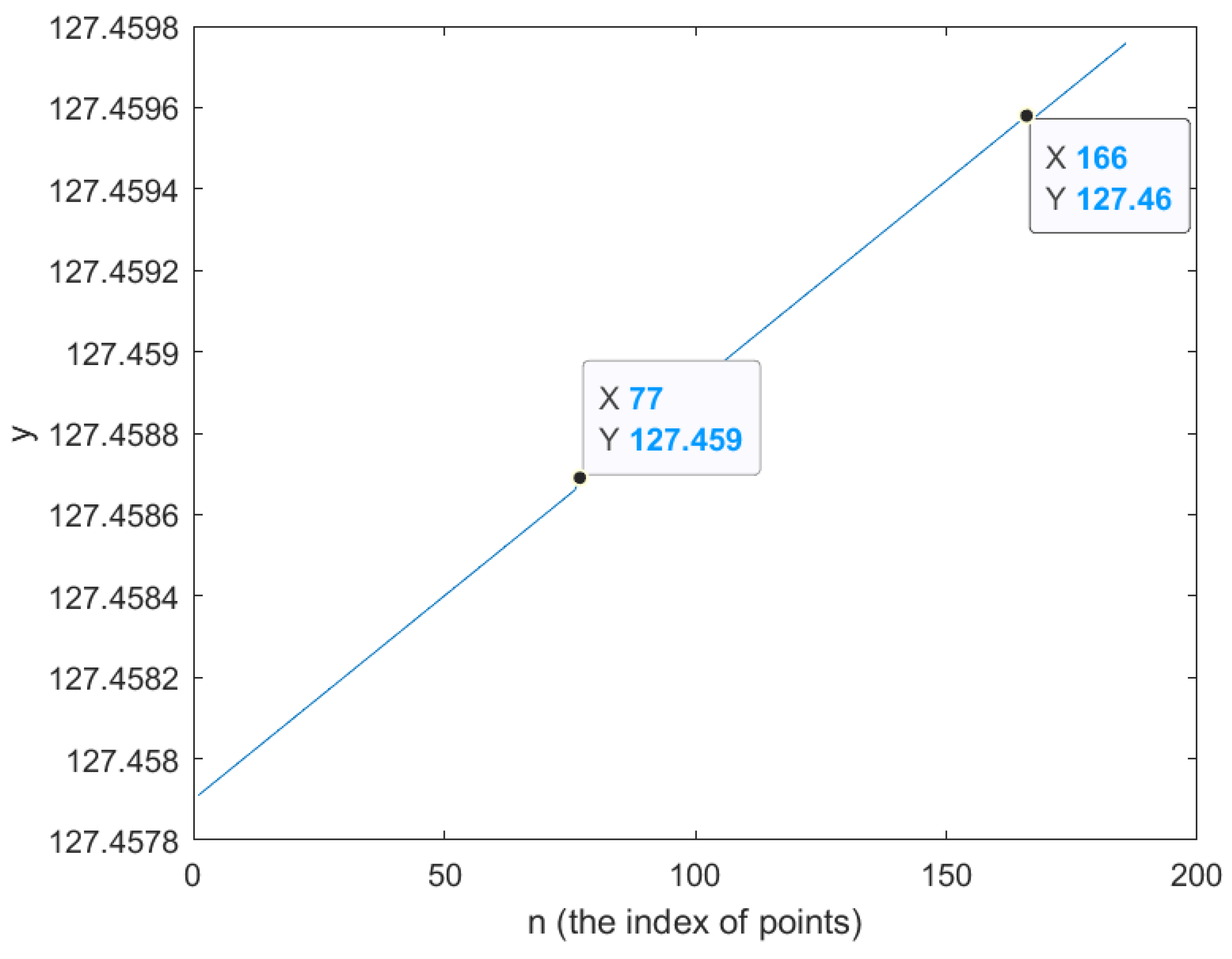
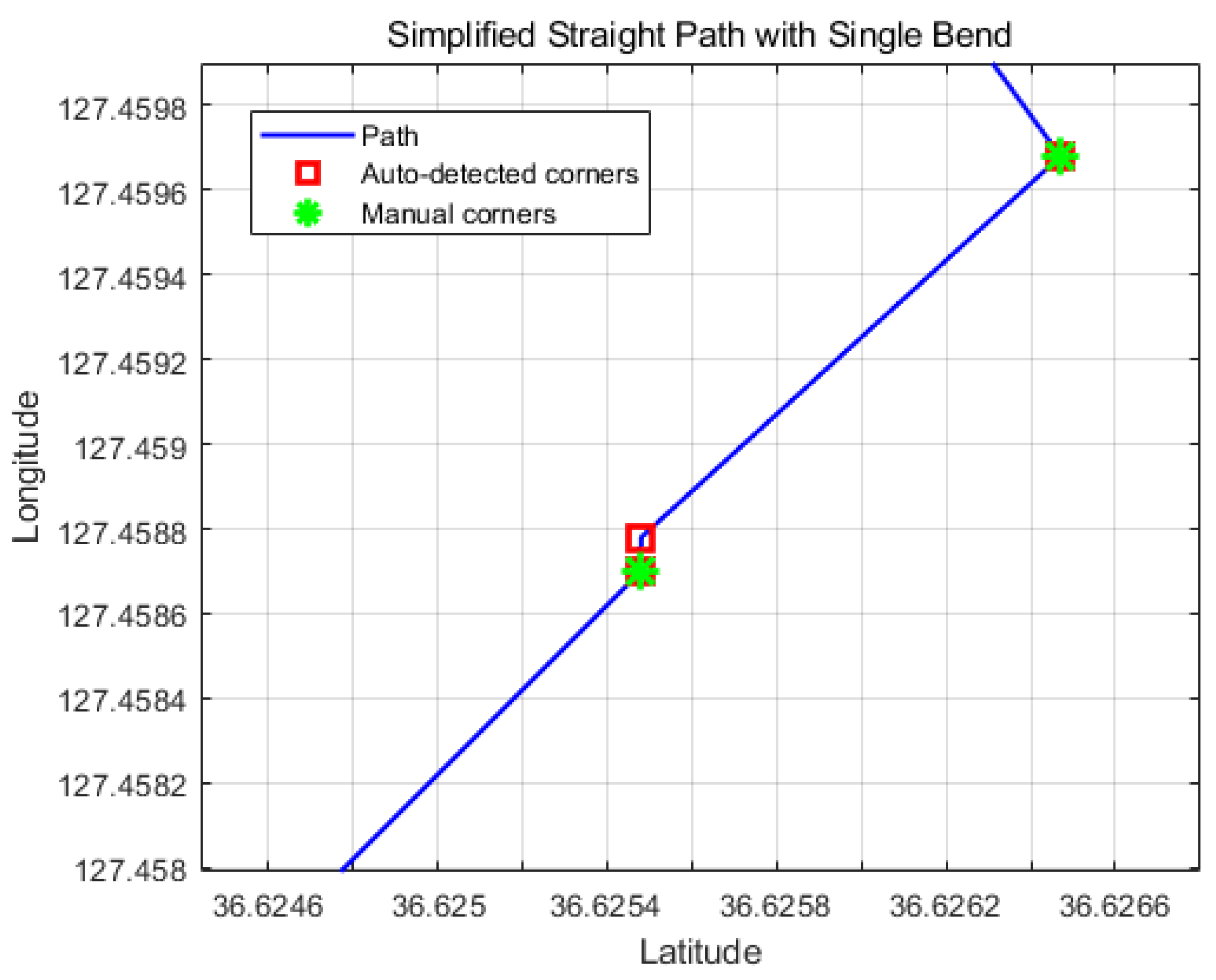
3. Automatic Detection of Cornering Points Using Directional Change Analysis
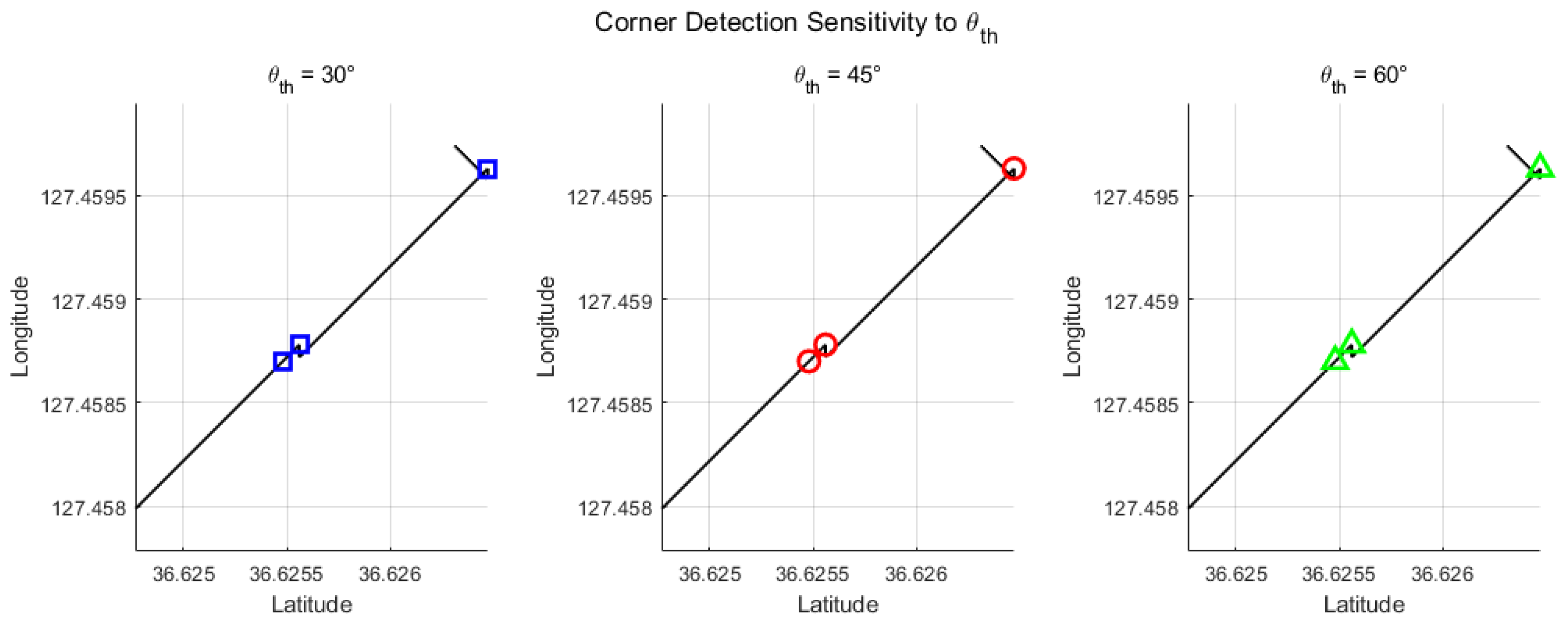
Sensitivity Analysis of Threshold Angle
4. Exact GPS Point Extraction
Design of Goal-Point Follower Based on GPS Point
5. Pole Placement Method for Feedback Gain 1.5 in the Goal-Point-Following Design
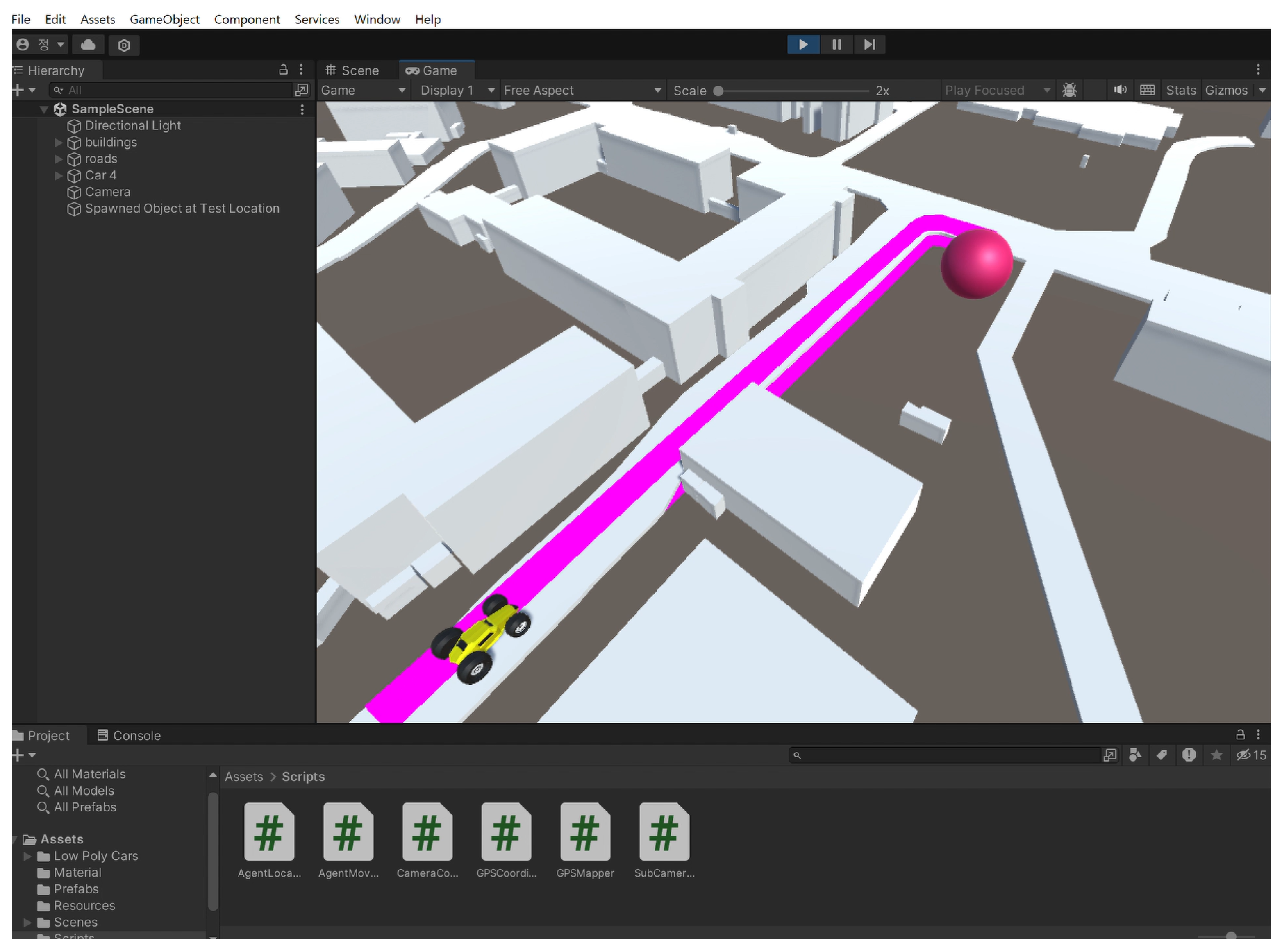
6. Application of the Four-Wheel Mobile Platform Results Using the Aforementioned Method
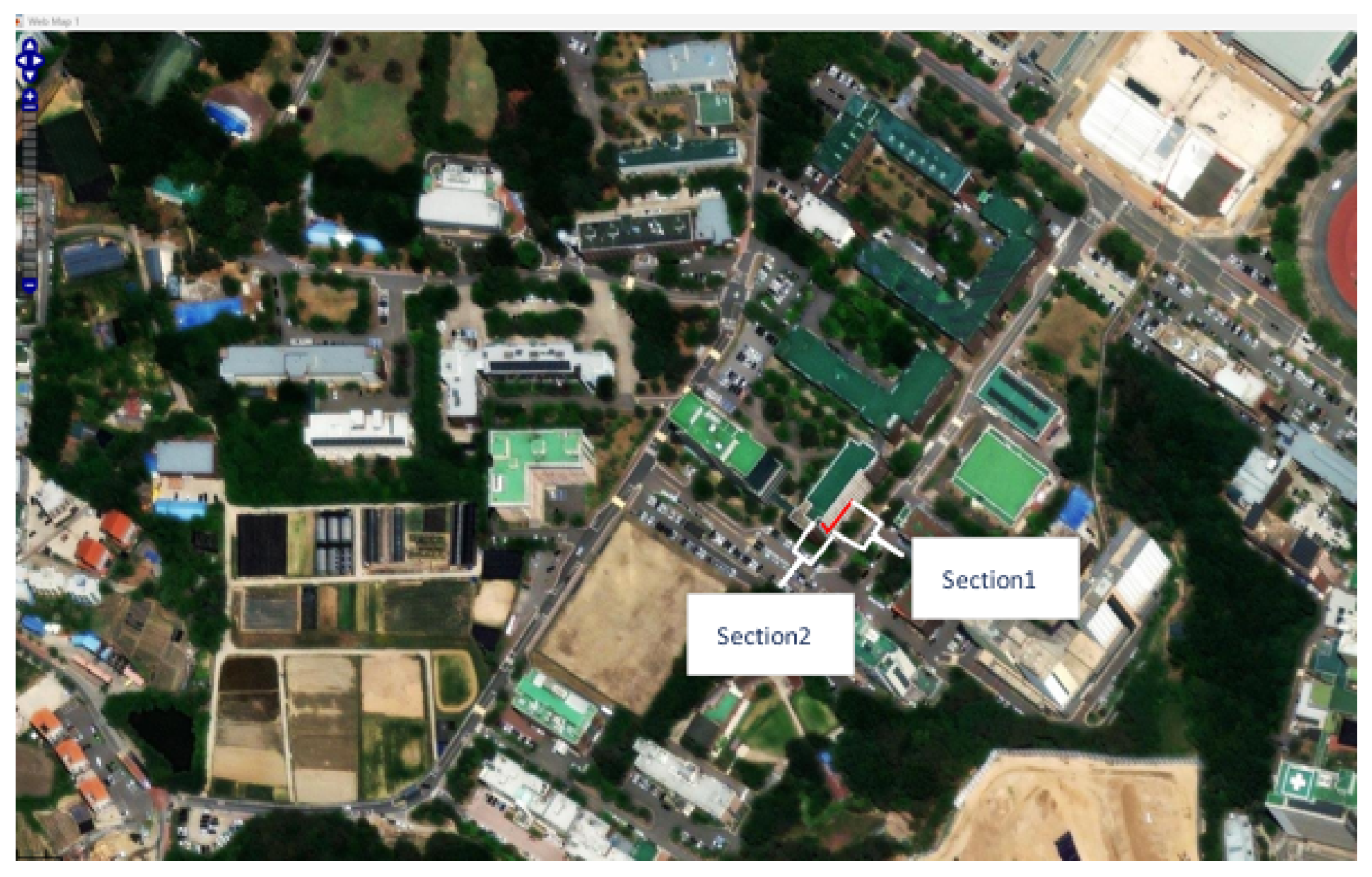
6.1. Experimental Condition
- Dimensions (L × W × H): 738 mm × 500 mm × 338 mm, providing a compact footprint suitable for indoor and outdoor environments.
- Wheelbase: 494 mm; Axle track: 364 mm.
- Maximum Speed: up to 2.6 m/s, which defines the upper limit of the platform’s linear motion in path-following experiments.
- Drive Configuration: Four-wheel drive with independent steering (4 WD).
- Weight: Approximately 135 kg with a single battery; capable of supporting additional payloads depending on configuration.
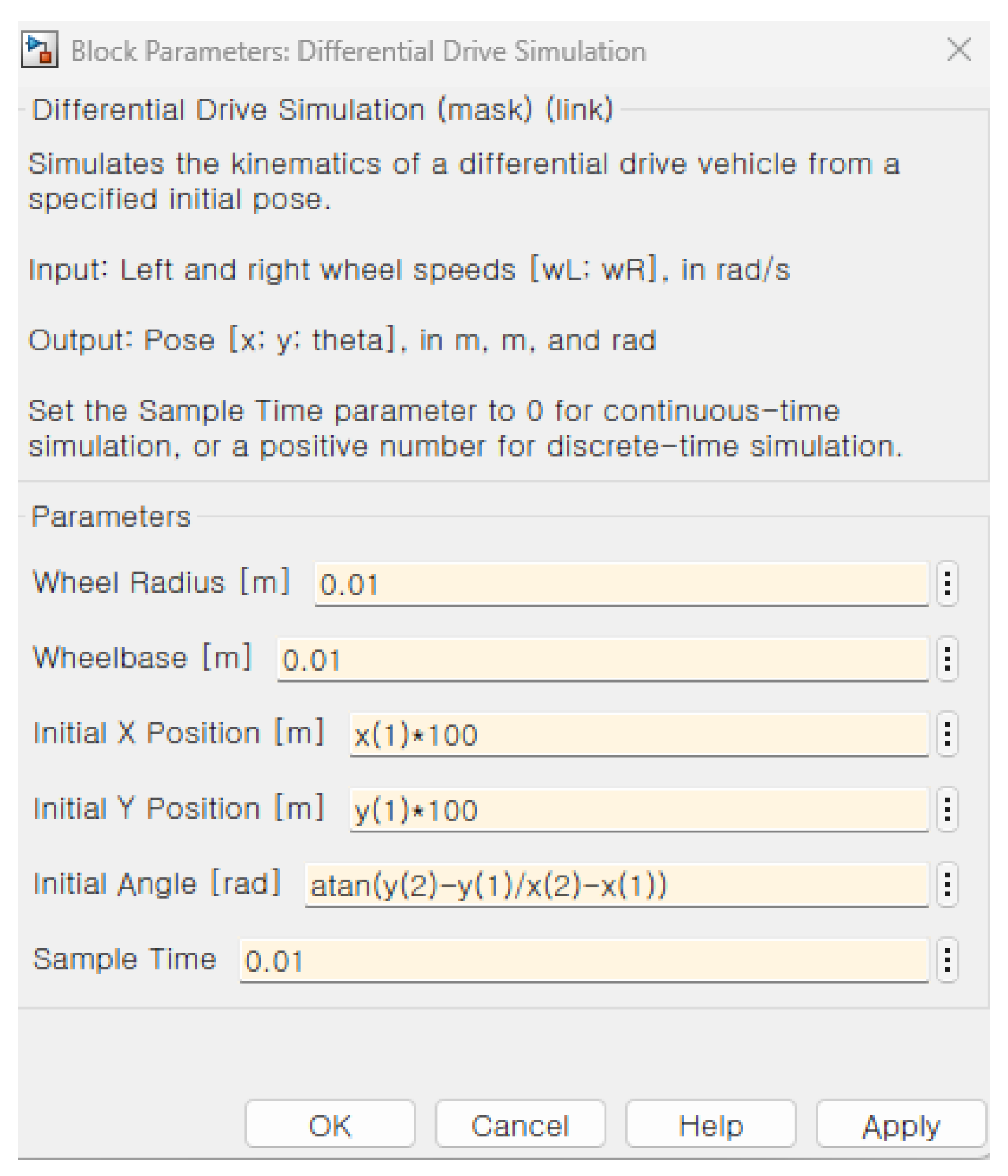
6.2. Design and Methodology
6.3. Clarification of the Proposed Trajectory-Tracking-like Goal-Point-Following
7. Computational Requirements and Runtime Performance
7.1. Computational Complexity
7.2. Runtime Performance
7.3. Comparison with Standard Methods
- Pure Pursuit: Requires geometric look-ahead calculations and curvature estimation.
- Stanley Method: Computes cross-track error and heading error using trigonometric operations.
- Proposed Method: Computes pose error in the robot frame and applies linear feedback control.
8. Applicability and Limitations
8.1. Suitable Environments
- Open areas such as parks or campuses;
- Structured outdoor environments with clear GPS reception.
8.2. Unsuitable Environments
- Urban canyons with tall buildings;
- Indoor environments;
- Dense forests or heavily obstructed areas.
9. Discussion
- GPS signal degradation: The current implementation relies on accurate GPS measurements. In urban environments, GPS dropouts or multipath effects can degrade the positioning accuracy, potentially reducing the performance of the path-following controller. Future work will investigate sensor fusion techniques, such as integrating IMU and wheel odometry, to improve robustness against GPS outages.
- High-speed operation: The mobile platform is modeled as a unicycle-like system, which assumes low-to-moderate speeds. At higher velocities, dynamic effects such as wheel slip, inertia, and actuator limits may violate these assumptions. Extending the control design to account for dynamic models is a potential future direction.
- Environmental complexity: The experiments conducted were limited to structured environments with pre-defined paths. Deploying the method in more complex or cluttered environments will require additional obstacle avoidance strategies and robustness analysis.
- A trajectory-tracking-like goal-point-following formulation is proposed, which bridges conventional goal-point-following and continuous trajectory tracking by defining the reference as a vector of GPS points rather than discrete target points.
- A systematic error dynamics and feedback control law are derived for the proposed formulation, enabling exponential convergence of position and heading errors with analytically selected gains.
- An automated cornering point detection method based on cornering point analysis is introduced, replacing manual waypoint indexing and improving scalability and reproducibility.
10. Conclusions
11. Related Work
Author Contributions
Funding
Institutional Review Board Statement
Informed Consent Statement
Data Availability Statement
Conflicts of Interest
Nomenclature
| GPS | Global positioning system |
| API | Application programming interface |
| DDPG | Deep deterministic policy gradient |
| ROS | Robot operating system |
| v | Linear velocity |
| w | Angular velocity |
| x | Longitude signal information |
| y | Latitude signal information |
| h | heading angle signal information |
| A | System state matrix |
| B | System input matrix |
| C | System output matrix |
| K | Controller gain |
References
- Kamezaki, M.; Kobayashi, A.; Kono, R.; Hirayama, M.; Sugano, S. Dynamic Waypoint Navigation: Model-Based Adaptive Trajectory Planner for Human-Symbiotic Mobile Robots. IEEE Acc. 2022, 8, 81546–81555. [Google Scholar] [CrossRef]
- Khan, S.; Ahmad, K.; Murad, M.; Khan, I. Waypoint Navigation System Implementation via a Mobile Robot Using Global Positioning System (GPS) and Global System for Mobile Communications (GSM) Modems. Int. J. Comput. Eng. Res. 2013, 3, 9–54. [Google Scholar]
- Yoo, H.J.; Choi, S.G. Navigation Path Following Platform for a Greenhouse Shuttle Robot Using the State-flow Method. Math. Probl. Eng. 2024, 2024, 1–16. [Google Scholar] [CrossRef]
- Hong, M.H.; Yoo, H.J.; Choi, S.G. Incorporation of Waypoint Following Logic into ROS Publish and Subscribe Mechanism. In Proceedings of the 26th International Conference on Advanced Communication Technology (ICACT), Pyeong Chang, Republic of Korea, 3–7 February 2024; pp. 373–375. [Google Scholar] [CrossRef]
- Tong, Y.; Jing, H.; Kuang, B.; Wang, G.; Liu, F.; Yang, Z. Trajectory Tracking Control for Four-Wheel Independently Driven Electric Vehicle Based on Model Predictive Control and Sliding Model Control. In Proceedings of the 5th CAA International Conference on Vehicular Control and Intelligence (CVCI), Tianjin, China, 29–31 October 2021; pp. 1–8. [Google Scholar] [CrossRef]
- Wang, J.; Yan, T.; Bai, Y.; Luo, Z.; Li, X.; Yang, B. Assistance Quality Analysis and Robust Control of Electric Vehicle with Differential Drive Assisted Steering System. IEEE Access 2020, 8, 136327–136339. [Google Scholar] [CrossRef]
- Chen, J.; Shuai, Z.; Zhang, H.; Zhao, W. Path Following Control of Autonomous Four-Wheel-Independent-Drive Electric Vehicles via Second-Order Sliding Mode and Nonlinear Disturbance Observer Techniques. IEEE Trans. Ind. Electron. 2021, 68, 2460–2469. [Google Scholar] [CrossRef]
- Huang, Y.; Ding, H.; Zhang, Y. A Motion Planning and Tracking Framework for Autonomous Vehicles Based on Artificial Potential Field Elaborated Resistance Network Approach. IEEE Trans. Ind. Electron. 2020, 67, 1376–1386. [Google Scholar] [CrossRef]
- Mousavi, S.S.; Schukat, M.; Howley, E. A Deep Reinforcement Learning: An Overview. In Proceedings of the SAI Intelligent Systems Conference (IntelliSys), London, UK, 7–8 September 2017; pp. 426–440. [Google Scholar] [CrossRef]
- Cao, Y.; Ni, K.; Jiang, X.; Kuroiwa, T.; Zhang, H.; Kawaguchi, T.; Hashimoto, S.; Jiang, W. Path following for Autonomous Ground Vehicle Using DDPG Algorithm: A Reinforcement Learning Approach. Appl. Sci. 2023, 13, 6847. [Google Scholar] [CrossRef]
- Yoo, H.; Choi, S. Application of the Reinforcement Learning Method for the Mobile Robotics Simulator. In Proceedings of the IEEE International Conference on Consumer Electronics-Asia (ICCE-Asia), Danang, Vietnam, 3–6 November 2024; pp. 1–4. [Google Scholar] [CrossRef]
- Zheng, Y.; Tao, J.; Sun, Q.; Zheng, X.; Sun, H.; Sun, M.; Chen, Z. DDPG-based active disturbance rejection 3D path-following control for powered parafoil under wind disturbances. Nonlinear Dyn. 2023, 111, 11205–11221. [Google Scholar] [CrossRef]
- Almazrouei, K.; Kamel, I.; Rabie, T. Dynamic Obstacle Avoidance and Path Planning through Reinforcement Learning. Appl. Sci. 2023, 13, 8174. [Google Scholar] [CrossRef]
- Yoo, H.; Gajic, Z. New designs of linear observers and observer-based controllers for singularly perturbed linear systems. IEEE Trans. Autom. Control 2018, 63, 3904–3911. [Google Scholar] [CrossRef]
- Yoo, H.; Choi, S. Singularly perturbed system modeling in the kinematic model of the unicycle type mobile platform. In Proceedings of the 15th International Conference on ICT Convergence, Jeju Island, Republic of Korea, 16–18 October 2024; pp. 386–388. [Google Scholar]
- Yoo, H.; Choi, S. Lower-order estimator design for two time-scale system. J. Nonlinear Convex Anal. 2024, 25, 747–765. [Google Scholar]
- Yoo, H.; Choi, S. Enhancing vehicle control: Implementing a Lyapunov position controller for a four-wheel independent steering and driving system. J. Nonlinear Convex Anal. 2024, 25, 1105–1119. [Google Scholar]
- Shaominghe, H.; Hyo-Sang, S.; Antonios, T. Energy-Optimal Waypoint-Following Guidance Considering Autopilot Dynamics. IEEE Trans. Aerosp. Electron. Syst. 2020, 56, 2701–2717. [Google Scholar]



| Initial Points | Way Points | |
|---|---|---|
| Point with index number | ||
| Other condition | Distance 6 m | Sampling time setting: 0.01 |
| Place Dissection | Longitude | Latitude |
|---|---|---|
| Section 1 | ||
| Section 2 |
| Method/Gain | RMSE [cm] | Notes |
|---|---|---|
| Proposed method () | 3.7 | Slightly lower gain |
| Proposed method () | 3.0 | Default, analytically derived |
| Proposed method () | 3.5 | Slightly higher gain |
| Previous work (Ref. [17]) | 7.75 | Baseline reference |
| Pure Pursuit | 14.3 | Standard path-following controller |
| Stanley | 12.8 | Standard path-following controller |
Disclaimer/Publisher’s Note: The statements, opinions and data contained in all publications are solely those of the individual author(s) and contributor(s) and not of MDPI and/or the editor(s). MDPI and/or the editor(s) disclaim responsibility for any injury to people or property resulting from any ideas, methods, instructions or products referred to in the content. |
© 2025 by the authors. Licensee MDPI, Basel, Switzerland. This article is an open access article distributed under the terms and conditions of the Creative Commons Attribution (CC BY) license.
Share and Cite
Yoo, H.; Chung, W. Proportional Control with Pole-Placement-Tuned Gains for GPS-Based Waypoint Following, Experimentally Validated Against Classical Methods. Sensors 2026, 26, 255. https://doi.org/10.3390/s26010255
Yoo H, Chung W. Proportional Control with Pole-Placement-Tuned Gains for GPS-Based Waypoint Following, Experimentally Validated Against Classical Methods. Sensors. 2026; 26(1):255. https://doi.org/10.3390/s26010255
Chicago/Turabian StyleYoo, Heonjong, and Wanyoung Chung. 2026. "Proportional Control with Pole-Placement-Tuned Gains for GPS-Based Waypoint Following, Experimentally Validated Against Classical Methods" Sensors 26, no. 1: 255. https://doi.org/10.3390/s26010255
APA StyleYoo, H., & Chung, W. (2026). Proportional Control with Pole-Placement-Tuned Gains for GPS-Based Waypoint Following, Experimentally Validated Against Classical Methods. Sensors, 26(1), 255. https://doi.org/10.3390/s26010255