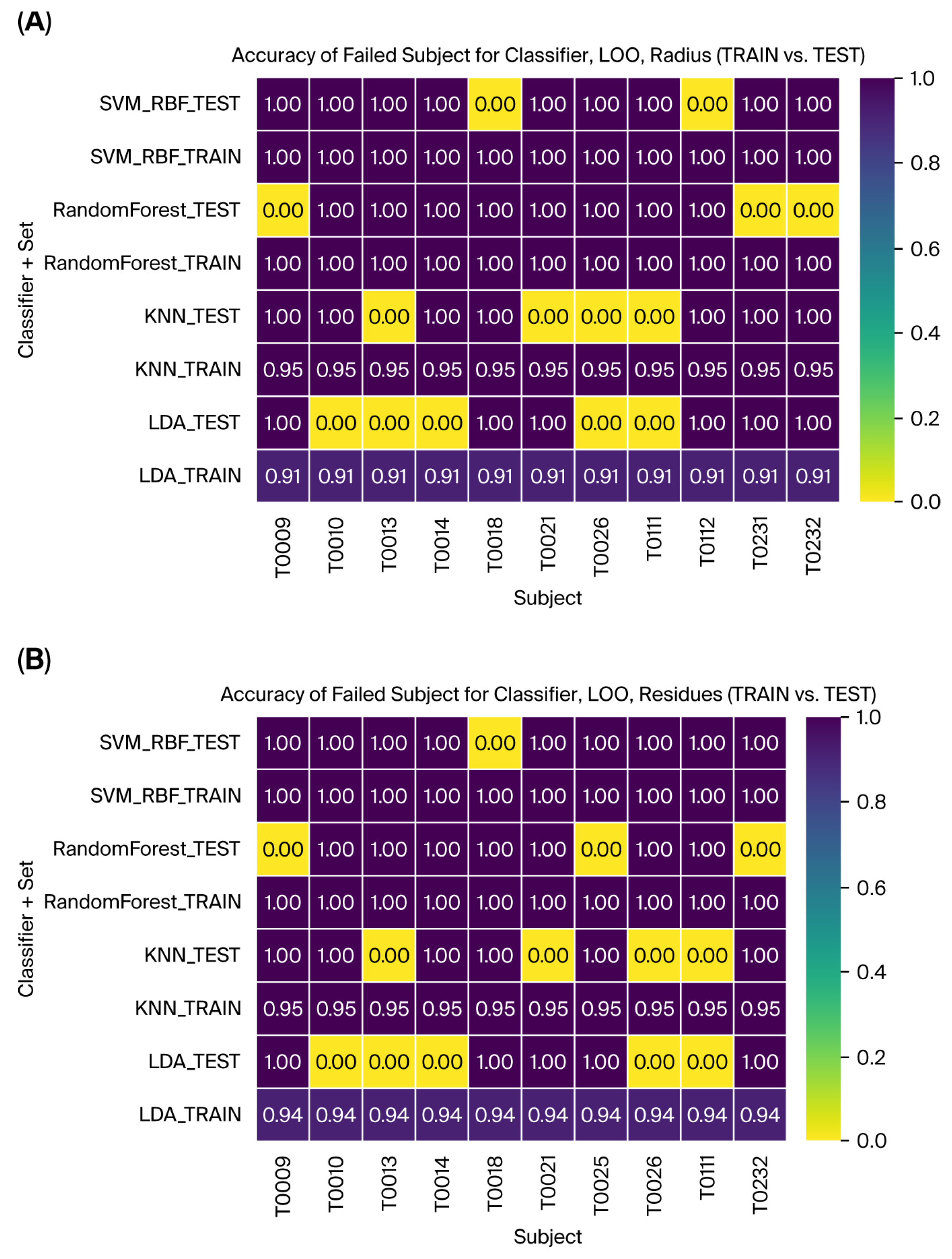
Essential Tremor Severity Assessment Using Handwriting Analysis and Machine Learning

 , and
, and
Abstract
1. Introduction
2. Materials and Methods
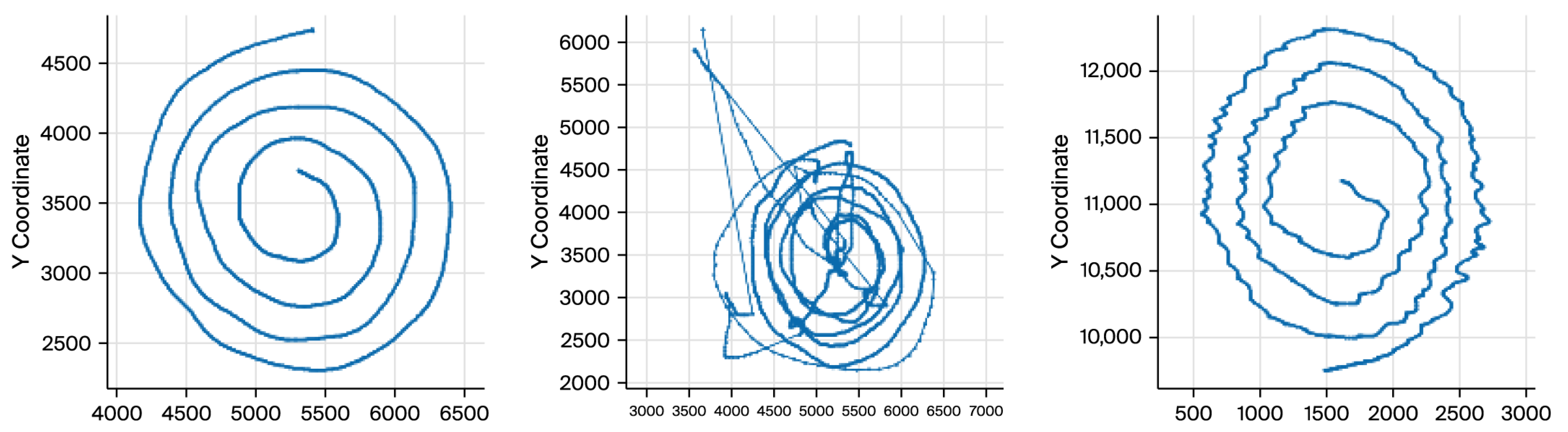
2.1. Data Acquisition
2.2. Demographics and Tremor Severity Distribution
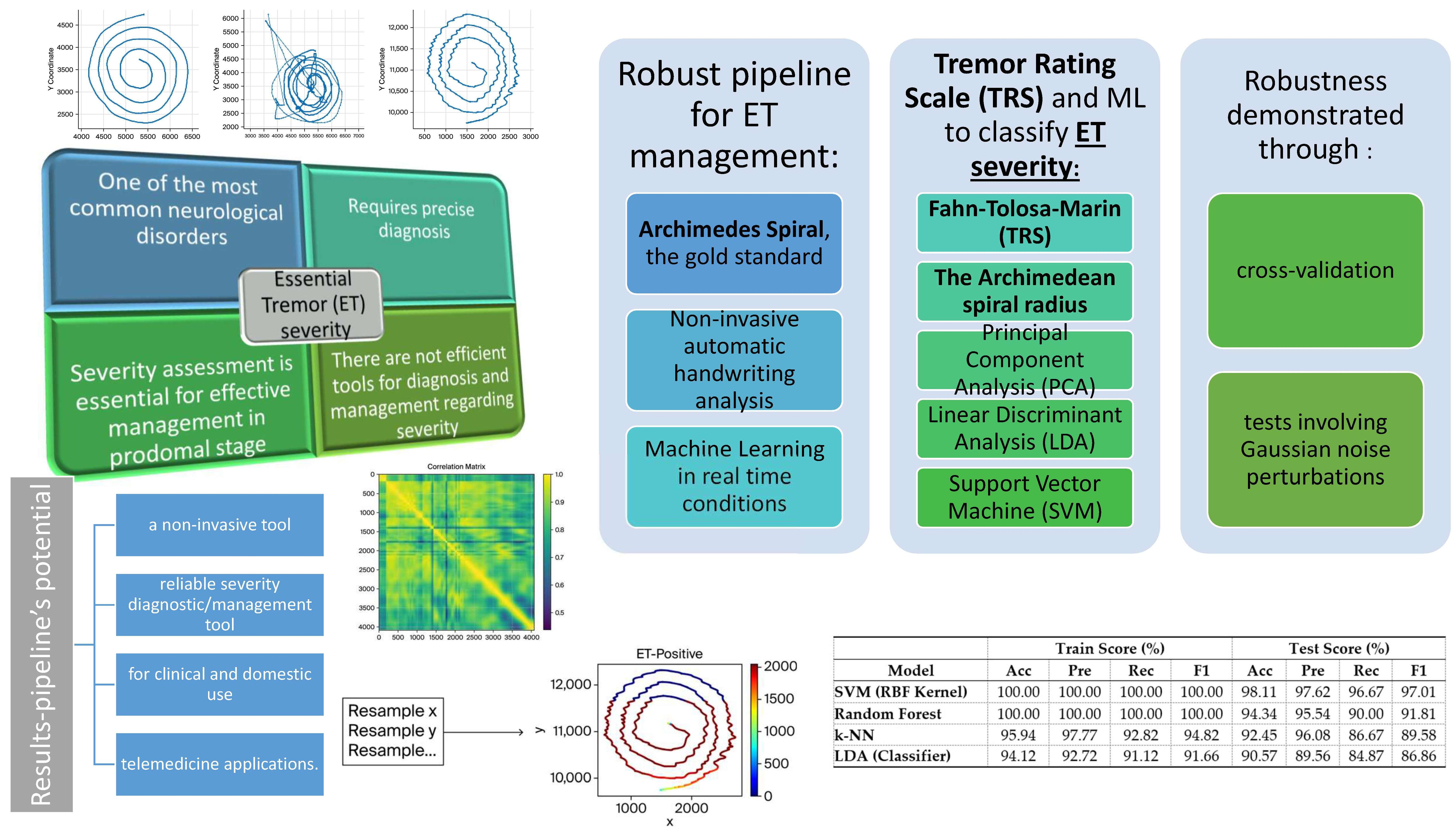
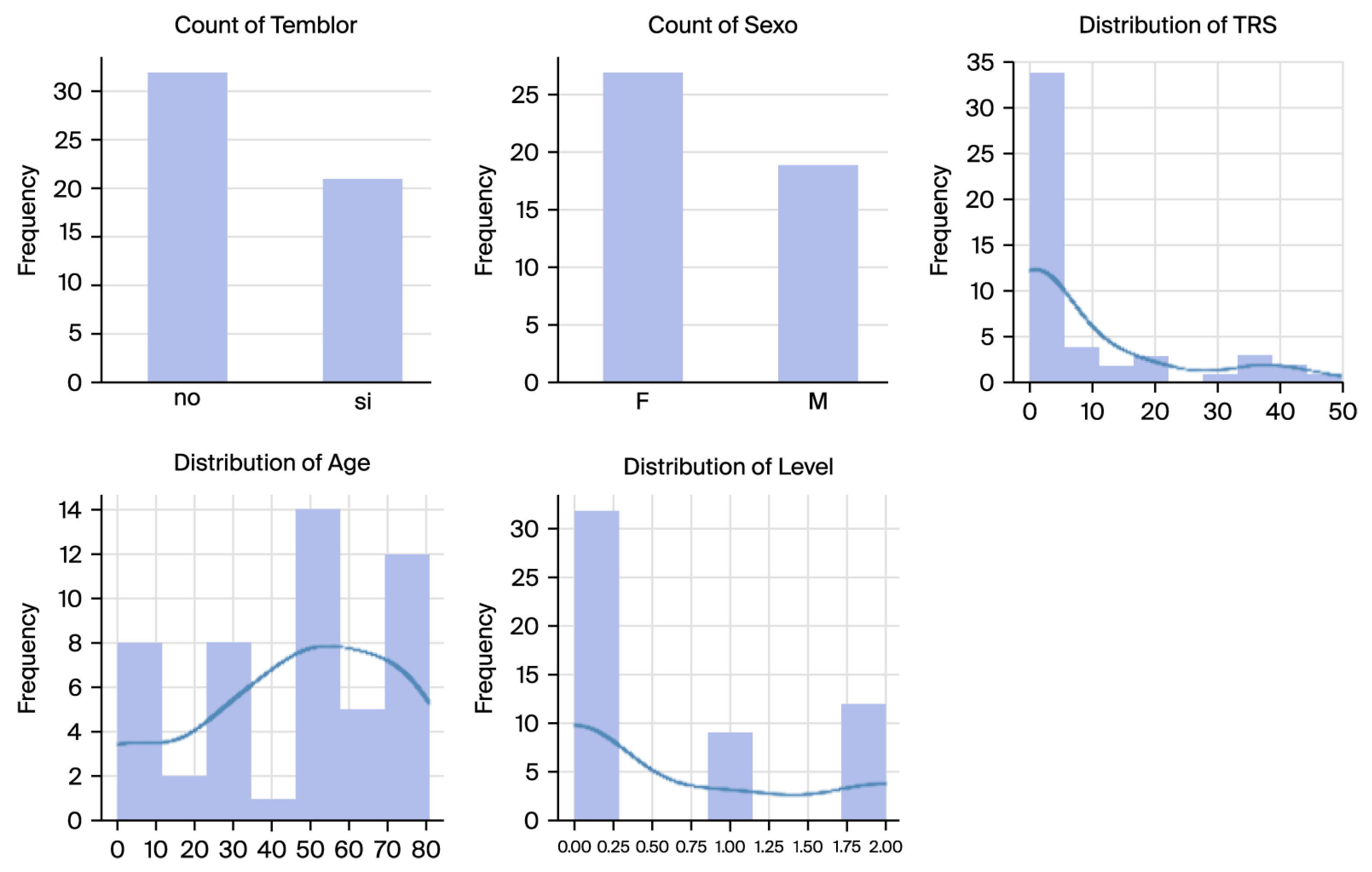
- Tremor Presence: Out of 53 spirals, 24 exhibited tremors (tremor-positive cases), while 29 were tremor-free (controls).
- Gender Distribution: The dataset comprised more female samples than male samples, with 28 females and 25 males.
- Age Distribution: The participants ranged in age from 10 to 80, with a peak distribution between 50 and 70, aligning with the typical ET onset.
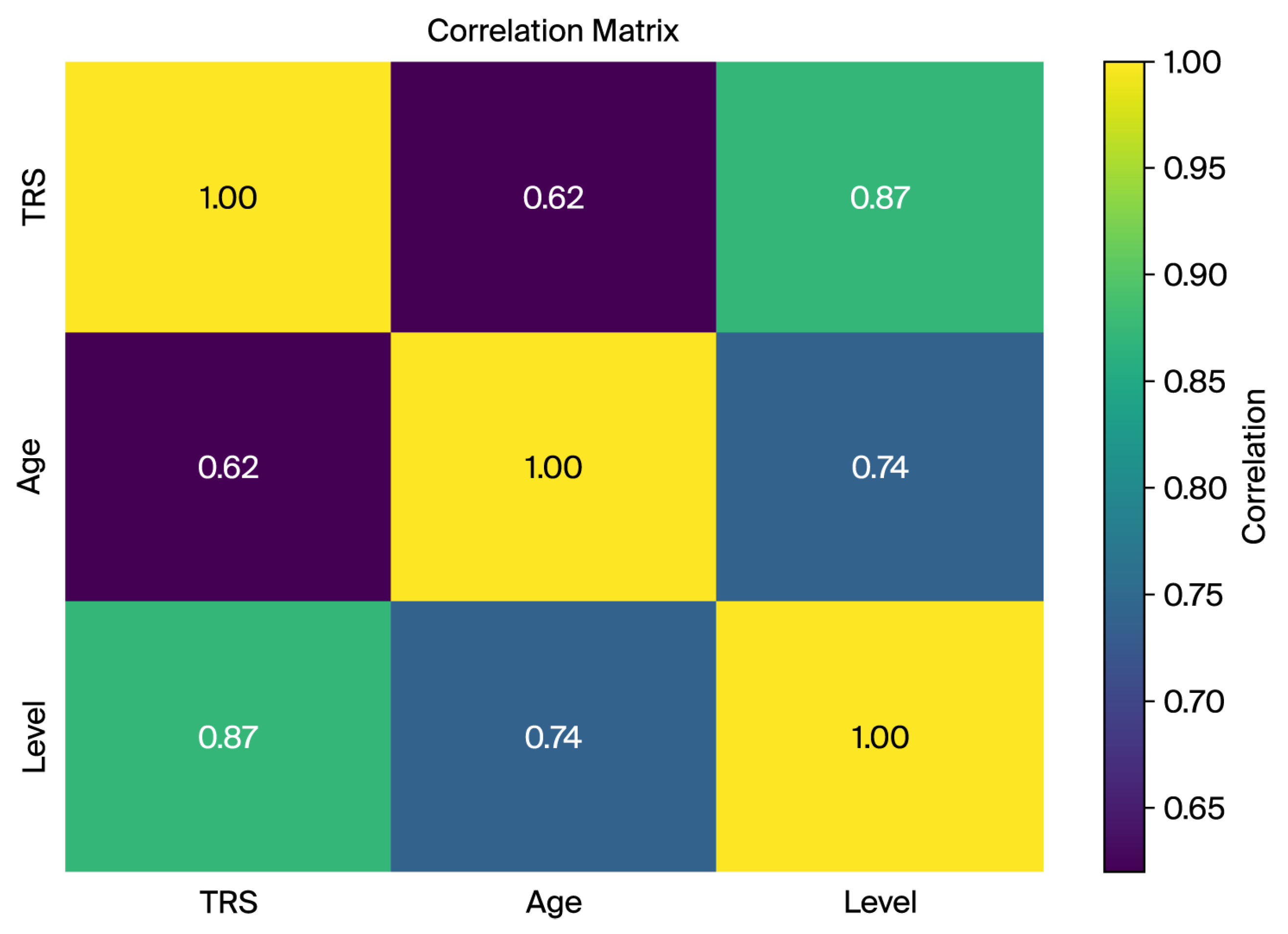
- TRS Scores and Tremor Levels: The TRS scores exhibit a highly skewed distribution, with most subjects having low scores indicative of mild or no tremor. The tremor levels were stratified into three categories: control (level 0), low tremor (level 1), and high tremor (level 2).
2.3. Correlation Analysis of Key Features
2.4. Data Preprocessing
2.5. Feature Extraction
2.5.1. Preprocessing
2.5.2. Dimensionality Reduction in the Pipeline
- Dimensionality Reduction: The high dimensionality of time series (e.g., radius and DCT residue time series) poses computational challenges and increases the risk of overfitting. PCA effectively reduced dimensionality by retaining components that preserved most of the variance in the dataset.
- Noise Reduction: PCA filtered out noise from redundant and irrelevant dimensions by projecting the data into a lower-dimensional subspace. This preprocessing step ensured that LDA could focus on the most informative features for class separation.
- Numerical Stability: LDA’s requirement to invert a covariance matrix becomes unstable in high-dimensional settings. PCA mitigated this by reducing the feature space.
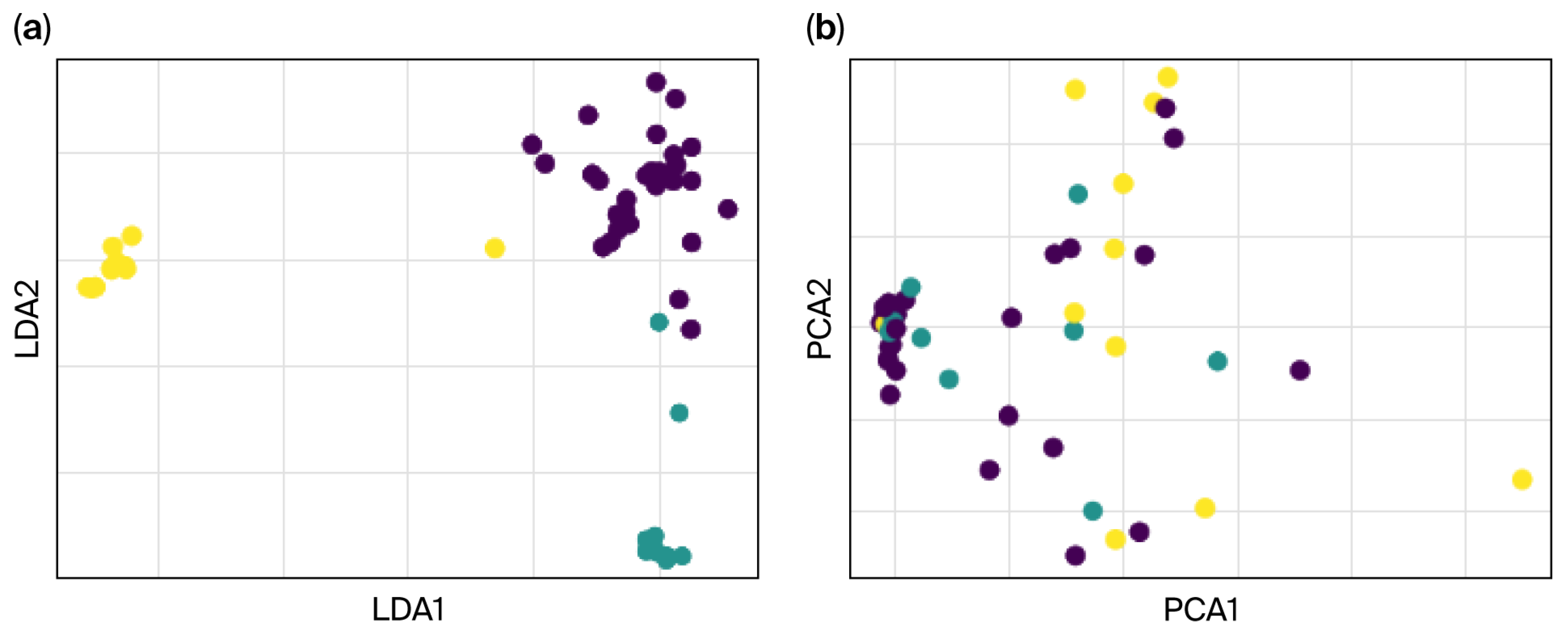
- Discriminative Power: While PCA prioritizes variance preservation, it does not account for class separability. LDA complemented PCA by projecting the reduced components into a space that maximized between-class variance while minimizing within-class variance.
2.6. Classification Pipeline
- PCA: The PCA step reduced the original 4096 features to a manageable number of components while retaining at least 95% of the variance. The number of retained components was determined empirically using cumulative variance analysis.
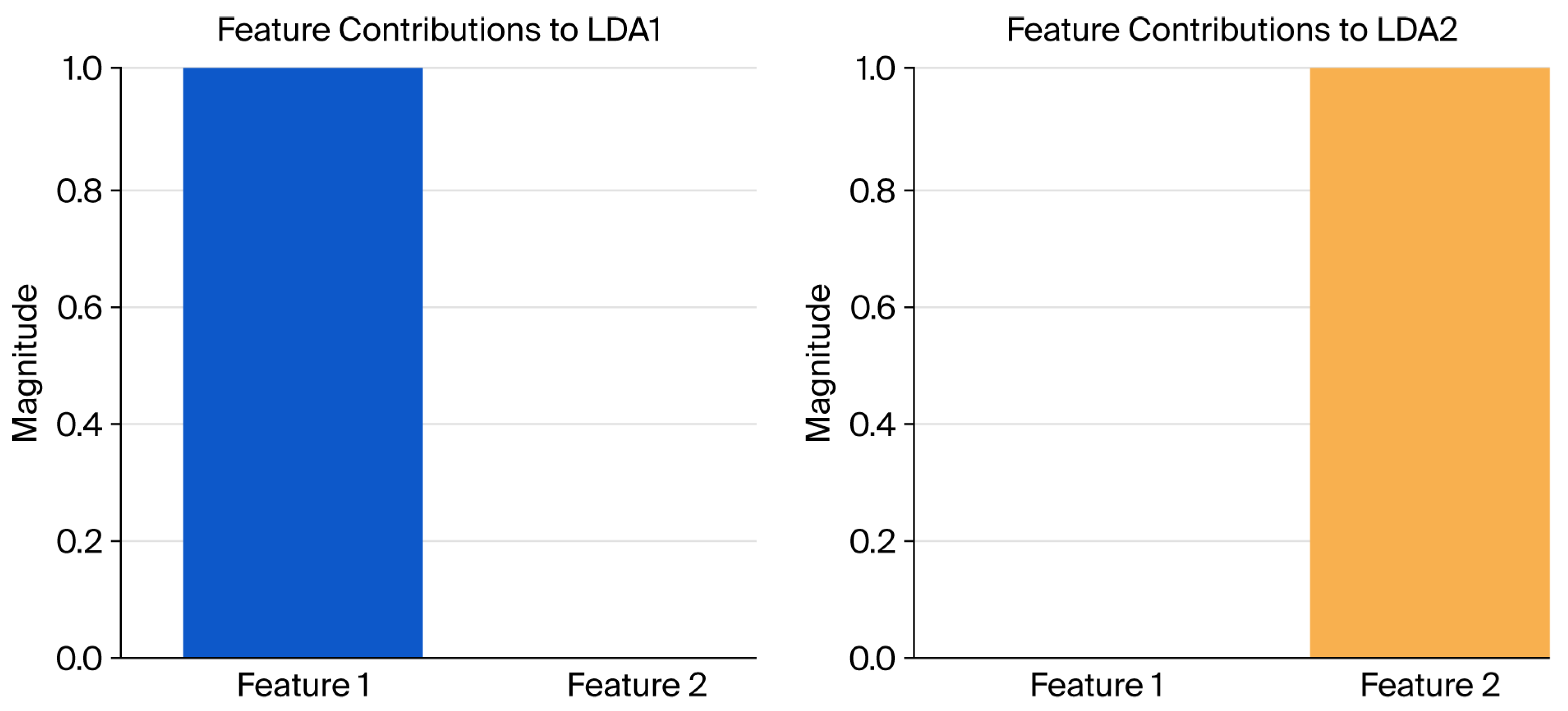
- LDA: The LDA model was applied to the reduced components to enhance class separability. Two linear discriminants (LDA1 and LDA2) were extracted, providing a two-dimensional representation of the data for visualization and classification.
- Classifier Integration: LDA-transformed features were subsequently used as input to the classifiers.
2.7. Statistical Validation
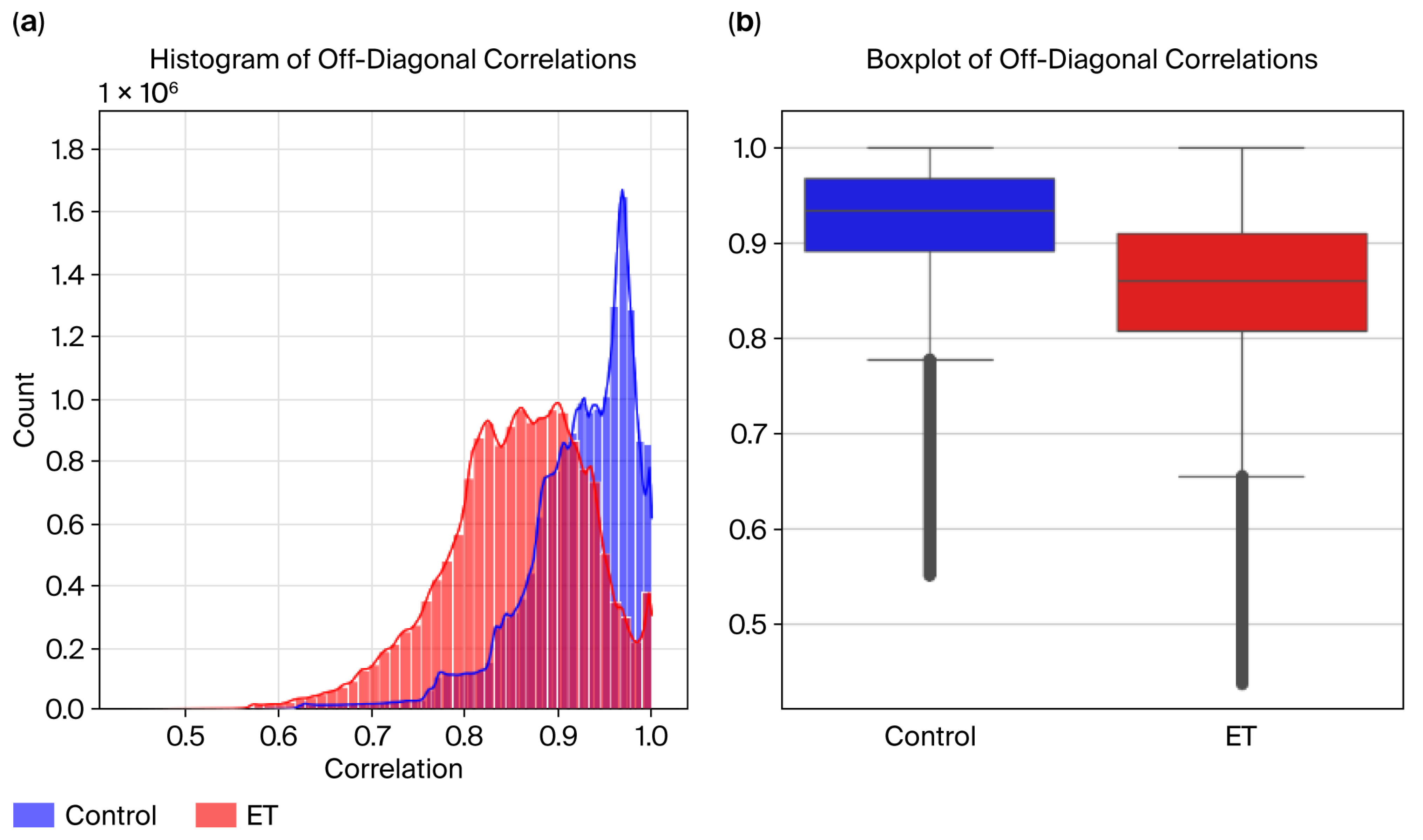
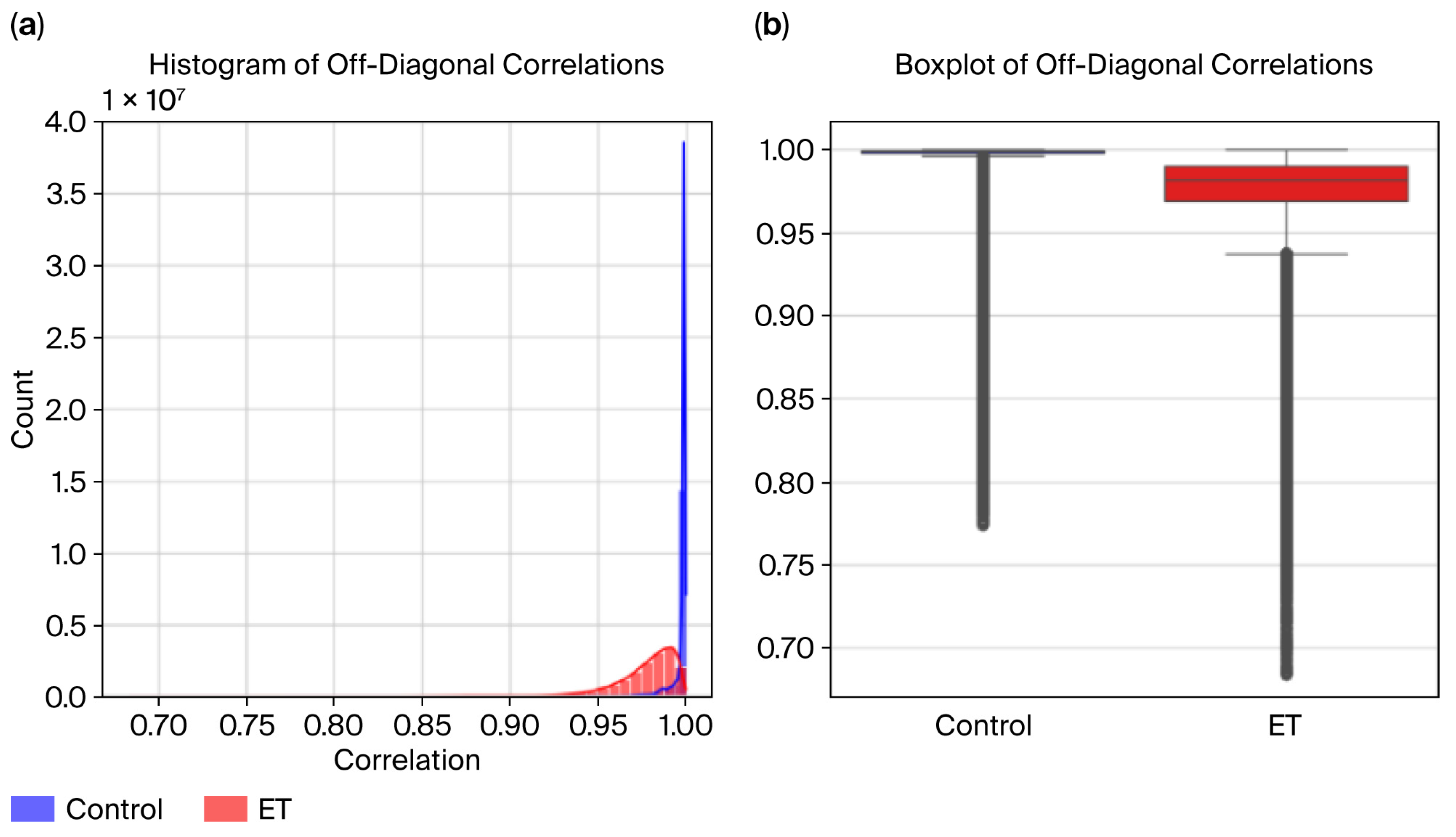
- Histograms were used to display the distribution of correlation values for the ET and control groups.
- Boxplots were used to highlight the groups’ medians, interquartile ranges, and variability differences.
3. Results
3.1. Correlation Matrix
3.2. Statistical Analysis
3.2.1. Radius
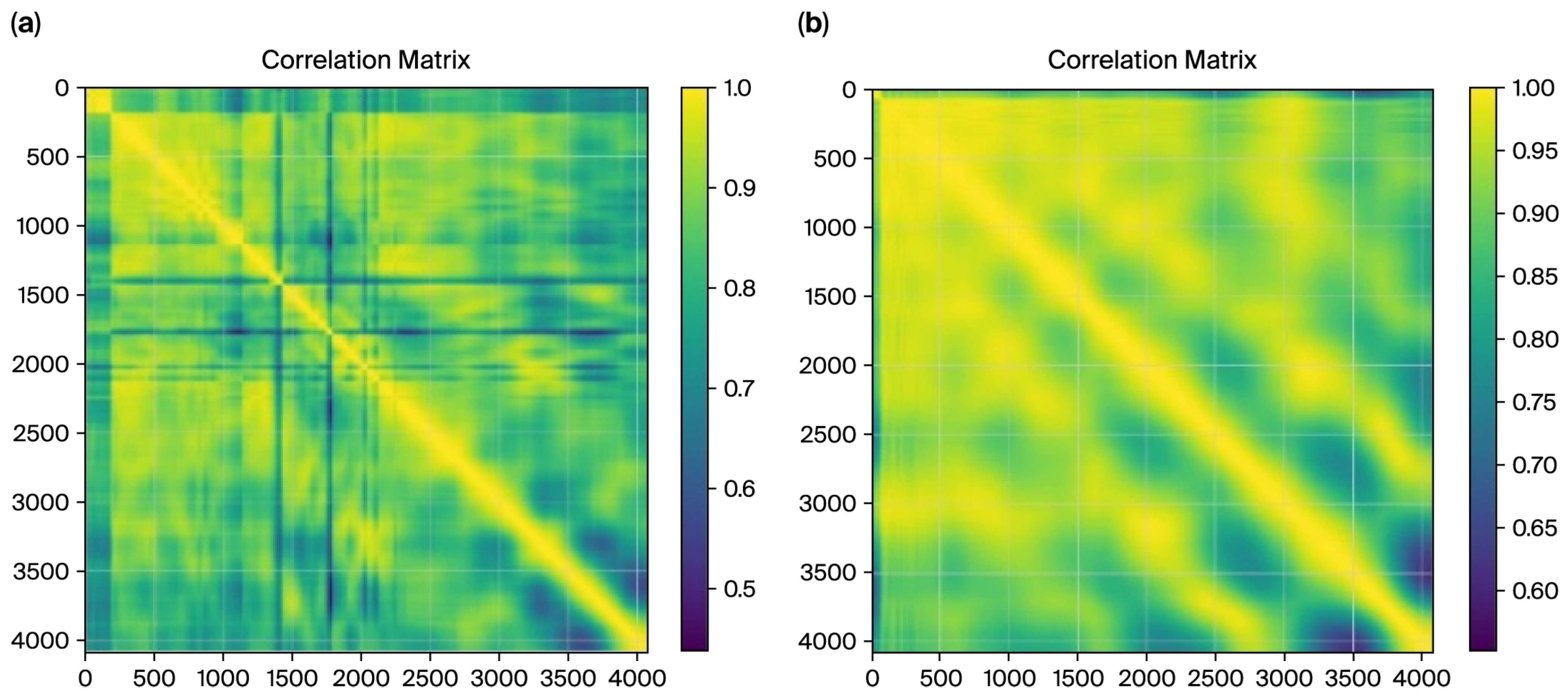
- The average correlation of 0.921 indicates highly consistent and similar radius patterns among the control subjects.
- The standard deviation of 0.061 indicates low variability, reinforcing the uniformity of the radius data in the control group.
- The average correlation of 0.853 was lower than that of the control group, reflecting disruptions and higher variability in the radius time series caused by the tremor.
- The standard deviation of 0.077 suggests higher variability than the control group, indicating irregular patterns in the ET group’s radius data.
- The control group exhibits higher correlation values, peaking near 1.0, indicating consistent and uniform radius patterns.
- The ET group displays a broader distribution, with correlation values across a wider range and many falling below 0.9, reflecting increased variability caused by tremor-induced irregularities.
- While the distributions overlap, the distinct patterns highlight group differences.
- The median correlation for the control group is visibly higher, close to 0.95, reflecting greater consistency in radius data.
- The ET group shows a lower median correlation (~0.88) and a more extensive interquartile range (IQR), indicating higher variability in the radius time series.
3.2.2. DCT Residues
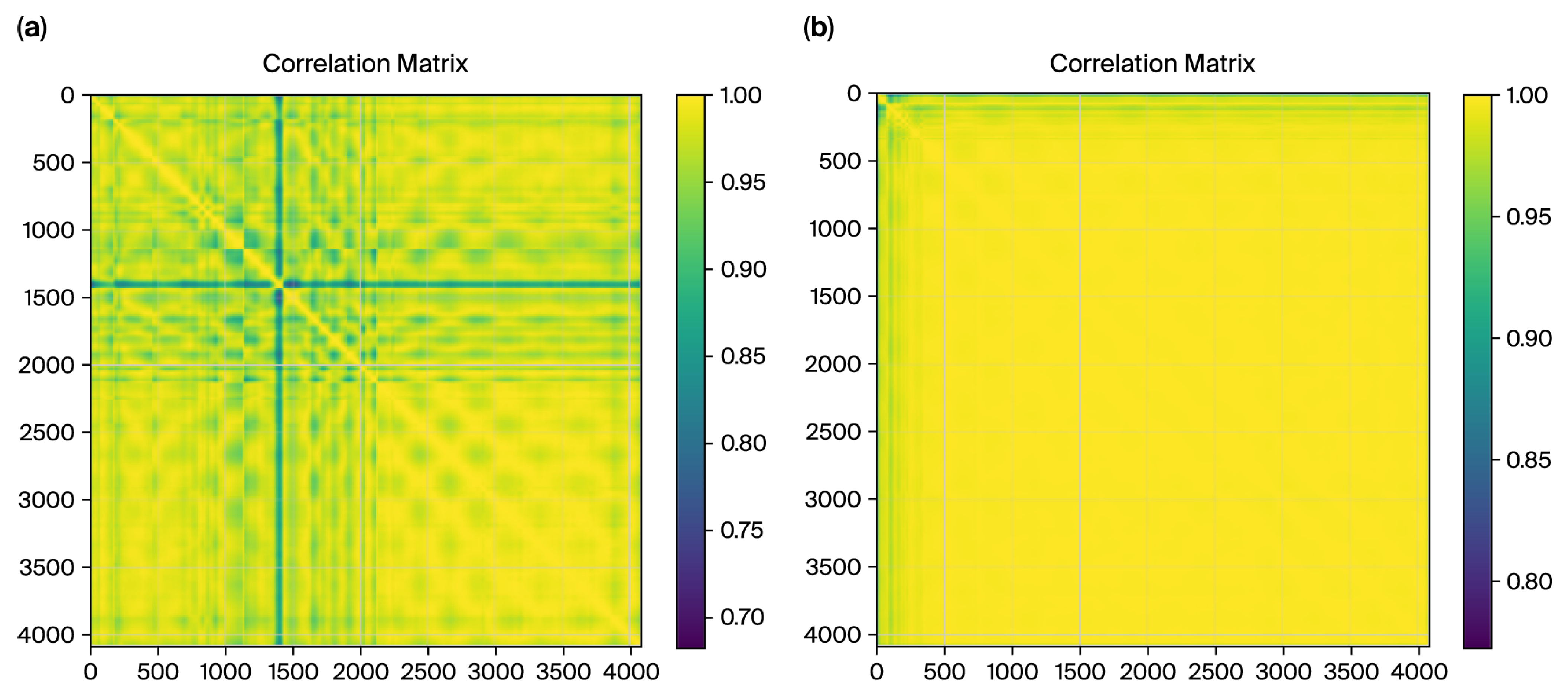
- The average correlation of 0.996 reflects the high consistency and smooth patterns in the frequency domain representation of the control subjects’ movement.
- The standard deviation of 0.008 indicates extremely low variability, underscoring the uniformity of the DCT residues in the control group.
- The average correlation of 0.9754 is lower than that of the control group, highlighting disruptions in the frequency domain due to tremor-induced irregularities.
- The standard deviation of 0.0230 suggests higher variability compared to the control group, indicating less uniformity in the frequency domain representation of the ET subjects.
- The control group exhibits higher correlation values, tightly clustered near 1.0, indicating consistent and uniform frequency domain patterns.
- The ET group shows a broader distribution, with correlation values across a wider range and many falling below 0.99, reflecting tremor-induced irregularities in frequency domain data.
- The median correlation for the control group is nearly 1.0, emphasizing the high consistency of DCT residues in this group.
- The ET group has a visibly lower median correlation (~0.98) and a more extensive interquartile range (IQR), signifying higher variability caused by tremors.
3.3. Dimensionality Reduction
3.4. Classification
4. Discussion
4.1. Interpretation of Results
4.2. Comparison with Existing Work
4.3. Limitations
4.4. Broader Implications
5. Interpretability and Explainability
6. Conclusions
6.1. Concluding Remarks
6.2. Future Directions
- Simplifying Workflows: Eliminating preprocessing steps like DCT, PCA, or LDA, streamlining the pipeline.
- Improving Scalability: Reducing computational costs, making the solution more accessible for industrial and telemedicine applications.
- Enhancing Generalization: Leveraging large datasets to train robust models capable of capturing nuanced patterns beyond the engineered features.
- Facilitating Deployment in Telemedicine: Deep learning models integrated into edge devices or cloud-based platforms can enable real-time classification, making tremor analysis feasible in remote clinical settings.
Author Contributions
Funding
Institutional Review Board Statement
Informed Consent Statement
Data Availability Statement
Acknowledgments
Conflicts of Interest
Abbreviations
| ET | Essential tremor |
| PCA | Principal Component Analysis |
| LDA | Linear discriminant analysis |
| SVM | Support vector machine |
| RF | Random Forest |
| k-NN | K-nearest neighbor |
| TRS | Fahn–Tolosa–Marin Tremor Rating Scale |
| MRI | Magnetic resonance imaging |
| fMRI | Functional magnetic resonance imaging |
| DCT | Discrete cosine transform |
References
- Louis, E.D.; Ferreira, J.J. How Common Is the Most Common Adult Movement Disorder? Update on the Worldwide Prevalence of Essential Tremor. Mov. Disord. 2010, 25, 534–541. [Google Scholar] [CrossRef] [Scilit]
- Bhatia, K.P.; Bain, P.; Bajaj, N.; Elble, R.J.; Hallett, M.; Louis, E.D.; Raethjen, J.; Stamelou, M.; Testa, C.M.; Deuschl, G.; et al. Consensus Statement on the Classification of Tremors. from the Task Force on Tremor of the International Parkinson and Movement Disorder Society. Mov. Disord. 2018, 33, 75–87. [Google Scholar] [CrossRef] [Scilit]
- McGurrin, P.; Vial, F.; Osterholt, T.; Norato, G.; Khan, I.; Haubenberger, D.; Ehrlich, D.; Hallett, M. Physiology of Tremor Reduction by Putting the Hands Together in Essential Tremor. Mov. Disord. Clin. Pract. 2022, 9, 191–197. [Google Scholar] [CrossRef] [Scilit]
- Avecillas-Chasin, J.M.; Poologaindran, A.; Morrison, M.D.; Rammage, L.A.; Honey, C.R. Unilateral Thalamic Deep Brain Stimulation for Voice Tremor. Stereotact. Funct. Neurosurg. 2018, 96, 392–399. [Google Scholar] [CrossRef] [Scilit]
- Louis, E.D. The Evolving Definition of Essential Tremor: What Are We Dealing With? Park. Relat. Disord. 2018, 46, S87–S91. [Google Scholar] [CrossRef] [Scilit] [PubMed]
- Bergareche, A.; Bednarz, M.; Sánchez, E.; Krebs, C.E.; Ruiz-Martinez, J.; De La Riva, P.; Makarov, V.; Gorostidi, A.; Jurkat-Rott, K.; Marti-Masso, J.F.; et al. SCN4A Pore Mutation Pathogenetically Contributes to Autosomal Dominant Essential Tremor and May Increase Susceptibility to Epilepsy. Hum. Mol. Genet. 2015, 24, 7111–7120. [Google Scholar] [CrossRef] [Scilit]
- Pietracupa, S.; Bologna, M.; Tommasin, S.; Berardelli, A.; Pantano, P. The Contribution of Neuroimaging to the Understanding of Essential Tremor Pathophysiology: A Systematic Review. Cerebellum 2022, 21, 1029–1051. [Google Scholar] [CrossRef] [Scilit] [PubMed]
- Shanker, V. Essential Tremor: Diagnosis and Management. BMJ 2019, 366, l4485. [Google Scholar] [CrossRef] [Scilit]
- Medeiros, M.; Pastor-Bernier, A.; Azizi, H.; Schmilovich, Z.; Castonguay, C.-E.; Savadjiev, P.; Poline, J.-B.; St-Onge, E.; Zhang, F.; O’Donnell, L.J.; et al. Brain Imaging Phenotypes Associated with Polygenic Risk for Essential Tremor. Mov. Disord. 2025, 40, 1160–1171. [Google Scholar] [CrossRef] [Scilit] [PubMed]
- Ellis, E.G.; Meyer, G.M.; Kaasinen, V.; Corp, D.T.; Pavese, N.; Reich, M.M.; Joutsa, J. Multimodal Neuroimaging to Characterize Symptom-Specific Networks in Movement Disorders. npj Park. Dis. 2024, 10, 154. [Google Scholar] [CrossRef] [Scilit]
- Pullman, S.L. Spiral Analysis: A New Technique for Measuring Tremor with a Digitizing Tablet. Mov. Disord. 1998, 13, 85–89. [Google Scholar] [CrossRef] [Scilit]
- Hopfner, F.; Tietz, A.; D’Elia, Y.; Pattaro, C.; Becktepe, J.S.; Gögele, M.; Barin, L.; Pramstaller, P.P.; Kuhlenbäumer, G.; Melotti, R. Archimedes Spiral Ratings: Determinants and Population-Based Limits of Normal. Mov. Disord. Clin. Pract. 2024, 11, 1257–1265. [Google Scholar] [CrossRef] [Scilit]
- Wang, S.; Schwirtlich, T.; McLaughlin, D.; Beestrum, M.; Heinemann, A.W. Clinical Applications and Measurement Properties of the Digitized Archimedes Spiral Drawing Test: A Scoping Review. Mov. Disord. Clin. Pract. 2025, 12, 1742–1755. [Google Scholar] [CrossRef] [Scilit]
- López-de-Ipiña, K.; Solé-Casals, J.; Faundez-Zanuy, M.; Calvo, P.M.; Sesa, E.; Martinez de Lizarduy, U.; De La Riva, P.; Marti-Masso, J.F.; Beitia, B.; Bergareche, A. Selection of Entropy Based Features for Automatic Analysis of Essential Tremor. Entropy 2016, 18, 184. [Google Scholar] [CrossRef] [Scilit]
- Haubenberger, D.; Kalowitz, D.; Nahab, F.B.; Toro, C.; Ippolito, D.; Luckenbaugh, D.A.; Wittevrongel, L.; Hallett, M. Validation of Digital Spiral Analysis as Outcome Parameter for Clinical Trials in Essential Tremor. Mov. Disord. 2011, 26, 2073–2080. [Google Scholar] [CrossRef] [Scilit]
- Lopez-de-Ipina, K.; Solé-Casals, J.; Faúndez-Zanuy, M.; Calvo, P.M.; Sesa, E.; Roure, J.; Martinez-de-Lizarduy, U.; Beitia, B.; Fernández, E.; Iradi, J.; et al. Automatic Analysis of Archimedes’ Spiral for Characterization of Genetic Essential Tremor Based on Shannon’s Entropy and Fractal Dimension. Entropy 2018, 20, 531. [Google Scholar] [CrossRef] [Scilit] [PubMed]
- Peng, Y.; Han, S.; Wu, D.; Ma, C.; Zeng, Z.; He, P.; Yuan, T.; Shi, Y.; Li, L.; Yang, W.; et al. A Deep Learning Approach to Remotely Assessing Essential Tremor with Handwritten Images. Sci. Rep. 2025, 15, 10783. [Google Scholar] [CrossRef] [Scilit]
- Otero, J.F.A.; López-de-Ipina, K.; Caballer, O.S.; Marti-Puig, P.; Sánchez-Méndez, J.I.; Iradi, J.; Bergareche, A.; Solé-Casals, J. EMD-Based Data Augmentation Method Applied to Handwriting Data for the Diagnosis of Essential Tremor Using LSTM Networks. Sci. Rep. 2022, 12, 12819. [Google Scholar] [CrossRef] [Scilit] [PubMed]
- De, A.; Bhatia, K.P.; Volkmann, J.; Peach, R.; Schreglmann, S.R. Machine Learning in Tremor Analysis: Critique and Directions. Mov. Disord. 2023, 38, 717–731. [Google Scholar] [CrossRef] [Scilit] [PubMed]
- Hess, C.W.; Pullman, S.L. Tremor: Clinical Phenomenology and Assessment Techniques. Tremor Hyperkinetic Mov. 2012, 2, tre-02-65-365-1. [Google Scholar] [CrossRef] [Scilit]
- Longardner, K.; Shen, Q.; Tang, B.; Wright, B.A.; Kundu, P.; Nahab, F.B. An Algorithm for Automated Measurement of Kinetic Tremor Magnitude Using Digital Spiral Drawings. Digit. Biomark. 2024, 8, 140–148. [Google Scholar] [CrossRef] [Scilit] [PubMed]
- Elble, R.J. The Essential Tremor Rating Assessment Scale. J. Neurol. Neuromedicine 2016, 1, 34–38. [Google Scholar] [CrossRef] [Scilit]
- Ali, S.M.; Arjunan, S.P.; Peters, J.; Perju-Dumbrava, L.; Ding, C.; Eller, M.; Raghav, S.; Kempster, P.; Motin, M.A.; Radcliffe, P.J.; et al. Wearable Sensors during Drawing Tasks to Measure the Severity of Essential Tremor. Sci. Rep. 2022, 12, 5242. [Google Scholar] [CrossRef] [Scilit]
- Marano, G.; Rossi, S.; Marzo, E.M.; Ronsisvalle, A.; Artuso, L.; Traversi, G.; Pallotti, A.; Bove, F.; Piano, C.; Bentivoglio, A.R.; et al. Writing the Future: Artificial Intelligence, Handwriting, and Early Biomarkers for Parkinson’s Disease Diagnosis and Monitoring. Biomedicines 2025, 13, 1764. [Google Scholar] [CrossRef] [Scilit]
- Hollý, P.; Hubená, T.; Čihák, M.; Pavlíková, A.; Kemlink, D.; Ulmanová, O.; Rusz, J.; Jech, R.; Krupička, R.; Růžička, E. Estimating Disability in Patients with Essential Tremor: Comparison of Tremor Rating Scale, Spiral Drawing, and Accelerometric Tremor Power. Mov. Disord. Clin. Pract. 2024, 11, 1582–1586. [Google Scholar] [CrossRef] [Scilit] [PubMed]
- Kovalenko, E.; Talitckii, A.; Anikina, A.; Shcherbak, A.; Zimniakova, O.; Semenov, M.; Bril, E.; Dylov, D.V.; Somov, A. Distinguishing Between Parkinson’s Disease and Essential Tremor Through Video Analytics Using Machine Learning: A Pilot Study. IEEE Sens. J. 2021, 21, 11916–11925. [Google Scholar] [CrossRef] [Scilit]
- Skaramagkas, V.; Andrikopoulos, G.; Kefalopoulou, Z.; Polychronopoulos, P. Towards Differential Diagnosis of Essential and Parkinson’s Tremor via Machine Learning. In Proceedings of the 2020 28th Mediterranean Conference on Control and Automation (MED), Saint-Raphaël, France, 15–18 September 2020; pp. 782–787. [Google Scholar]
- FTM. Fahn-Tolosa-Marin Clinical Rating Scale for Tremor Described in ePROVIDE. Available online: https://eprovide.mapi-trust.org/instruments/fahn-tolosa-marin-clinical-rating-scale-for-tremor (accessed on 19 December 2025).
- Ondo, W.; Hashem, V.; LeWitt, P.A.; Pahwa, R.; Shih, L.; Tarsy, D.; Zesiewicz, T.; Elble, R. Comparison of the Fahn-Tolosa-Marin Clinical Rating Scale and the Essential Tremor Rating Assessment Scale. Mov. Disord. Clin. Pract. 2017, 5, 60–65. [Google Scholar] [CrossRef] [Scilit]
- Li, Q.; Tao, L.; Xiao, P.; Gui, H.; Xu, B.; Zhang, X.; Zhang, X.; Chen, H.; Wang, H.; He, W.; et al. Combined Brain Network Topological Metrics with Machine Learning Algorithms to Identify Essential Tremor. Front. Neurosci. 2022, 16, 1035153. [Google Scholar] [CrossRef] [Scilit]
- Smid, A.; Pauwels, R.W.J.; Elting, J.W.J.; Everlo, C.S.J.; van Dijk, J.M.C.; Oterdoom, D.L.M.; van Laar, T.; Tamasi, K.; van der Stouwe, A.M.M.; Drost, G. A Novel Accelerometry Method to Perioperatively Quantify Essential Tremor Based on Fahn–Tolosa–Marin Criteria. J. Clin. Med. 2023, 12, 4235. [Google Scholar] [CrossRef] [Scilit] [PubMed]
- Stacy, M.A.; Elble, R.J.; Ondo, W.G.; Wu, S.-C.; Hulihan, J.; Group, T.S. Assessment of interrater and intrarater reliability of the Fahn–Tolosa–Marin Tremor Rating Scale in essential tremor. Mov. Disord. 2007, 22, 833–838. [Google Scholar] [CrossRef] [Scilit]
- Lopez-de-Ipina, K.; Solé-Casals, J.; Sánchez-Méndez, J.I.; Romero-Garcia, R.; Fernandez, E.; Requejo, C.; Poologaindran, A.; Faúndez-Zanuy, M.; Martí-Massó, J.F.; Bergareche, A.; et al. Analysis of Fine Motor Skills in Essential Tremor: Combining Neuroimaging and Handwriting Biomarkers for Early Management. Front. Hum. Neurosci. 2021, 15, 648573. [Google Scholar] [CrossRef] [Scilit]
- Solé-Casals, J.; Anchustegui-Echearte, I.; Marti-Puig, P.; Calvo, P.M.; Bergareche, A.; Sánchez-Méndez, J.I.; Lopez-de-Ipina, K. Discrete Cosine Transform for the Analysis of Essential Tremor. Front. Physiol. 2019, 9, 1947. [Google Scholar] [CrossRef] [Scilit]
- Hathaliya, J.J.; Modi, H.; Gupta, R.; Tanwar, S. Deep Learning and Blockchain-Based Essential and Parkinson Tremor Classification Scheme. In Proceedings of the IEEE INFOCOM 2022—IEEE Conference on Computer Communications Workshops (INFOCOM WKSHPS), New York, NY, USA, 2–5 May 2022; pp. 1–6. [Google Scholar]
- LeMoyne, R.; Mastroianni, T.; McCandless, C.; Whiting, D.; Tomycz, N. Evaluation of Machine Learning Algorithms for Classifying Deep Brain Stimulation Respective of ‘On’ and ‘Off’ Status. In Proceedings of the 2019 9th International IEEE/EMBS Conference on Neural Engineering (NER), San Francisco, CA, USA, 20–23 March 2019; pp. 483–488. [Google Scholar]
- Seedat, N.; Aharonson, V.; Schlesinger, I. Automated Machine Vision Enabled Detection of Movement Disorders from Hand Drawn Spirals. In Proceedings of the 2020 IEEE International Conference on Healthcare Informatics (ICHI), Oldenburg, Germany, 30 November–3 December 2020; pp. 1–5. [Google Scholar]
- Fukunaga, K. Introduction to Statistical Pattern Recognition; Academic Press: Cambridge, MA, USA, 1990; ISBN 978-0-08-047865-4. [Google Scholar]
- Balakrishnama, S.; Ganapathiraju, A. Linear Discriminant Analysis—A Brief Tutorial; Mississippi State University: Starkville, MS, USA, 1998; Volume 11. [Google Scholar]
- Gunduz, H. An Efficient Dimensionality Reduction Method Using Filter-Based Feature Selection and Variational Autoencoders on Parkinson’s Disease Classification. Biomed. Signal Process. Control 2021, 66, 102452. [Google Scholar] [CrossRef] [Scilit]
- Anandapadmanabhan, R.; Vishnoi, A.; Raman, G.; Thachan, J.; Gangaraju, B.A.; Radhakrishnan, D.; Vishnu, V.Y.; Kamble, N.; Holla, V.; James, P.; et al. Deep Learning–Based Artificial Intelligence Algorithm to Classify Tremors from Hand-Drawn Spirals. Mov. Disord. 2025, 40, 1172–1181. [Google Scholar] [CrossRef] [Scilit]
- Gui, H.; Xiao, P.; Xu, B.; Zhao, X.; Wang, H.; Tao, L.; Zhang, X.; Li, Q.; Zhang, X.; Chen, H.; et al. Machine Learning Models for Diagnosis of Essential Tremor and Dystonic Tremor Using Grey Matter Morphological Networks. Park. Relat. Disord. 2024, 124, 106985. [Google Scholar] [CrossRef] [Scilit]
- Friedrich, M.U.; Roenn, A.-J.; Palmisano, C.; Alty, J.; Paschen, S.; Deuschl, G.; Ip, C.W.; Volkmann, J.; Muthuraman, M.; Peach, R.; et al. Validation and Application of Computer Vision Algorithms for Video-Based Tremor Analysis. npj Digit. Med. 2024, 7, 165. [Google Scholar] [CrossRef] [Scilit]
- Zhang, Y.; Ling, C. A strategy to apply machine learning to small datasets in materials science. npj Comput. Mater 2018, 4, 25. [Google Scholar] [CrossRef] [Scilit]
- Xu, P.; Ji, X.; Li, M.; Lu, W. Small Data Machine Learning in Materials Science. npj Comput. Mater. 2023, 9, 42. [Google Scholar] [CrossRef] [Scilit]
- Remyes, D.; Nasef, D.; Remyes, S.; Tawfellos, J.; Sher, M.; Nasef, D.; Toma, M. Clinical Applicability and Cross-Dataset Validation of Machine Learning Models for Binary Glaucoma Detection. Information 2025, 16, 432. [Google Scholar] [CrossRef] [Scilit]
- Peng, Y.; Ma, C.; Li, M.; Liu, Y.; Yu, J.; Pan, L.; Zhang, Z. Intelligent Devices for Assessing Essential Tremor: A Comprehensive Review. J. Neurol. 2024, 271, 4733–4750. [Google Scholar] [CrossRef] [Scilit]
- Elble, R.; Bain, P.; João Forjaz, M.; Haubenberger, D.; Testa, C.; Goetz, C.G.; Leentjens, A.F.G.; Martinez-Martin, P.; Pavy-Le Traon, A.; Post, B.; et al. Task Force Report: Scales for Screening and Evaluating Tremor: Critique and Recommendations. Mov. Disord. 2013, 28, 1793–1800. [Google Scholar] [CrossRef] [Scilit] [PubMed]
- Williams, S.C.; Khan, D.Z.; Bano, S.; Blandford, A.; Clarkson, M.J.; Costanza, E.; Mazomenos, E.B.; Stoyanov, D.; McCulloch, P.; Marcus, H.J. A Surgical Approach to Building Impactful Artificial Intelligence. npj Digit. Med. 2025, 8, 709. [Google Scholar] [CrossRef] [Scilit]
- Nicolson, A.; Bradburn, E.; Gal, Y.; Papageorghiou, A.T.; Noble, J.A. The Human Factor in Explainable Artificial Intelligence: Clinician Variability in Trust, Reliance, and Performance. npj Digit. Med. 2025, 8, 658. [Google Scholar] [CrossRef] [Scilit]
- van den Brandhof, E.L.; Tuitert, I.; Madelein van der Stouwe, A.M.; Elting, J.W.J.; Dalenberg, J.R.; Svorenova, T.; Klamer, M.R.; Marapin, R.S.; Biehl, M.; Tijssen, M.A.J. Explainable Machine Learning for Movement Disorders—Classification of Tremor and Myoclonus. Comput. Biol. Med. 2025, 192, 110180. [Google Scholar] [CrossRef] [Scilit] [PubMed]
- Rainio, O.; Teuho, J.; Klén, R. Evaluation Metrics and Statistical Tests for Machine Learning. Sci. Rep. 2024, 14, 6086. [Google Scholar] [CrossRef] [Scilit] [PubMed]
- Wu, J. Essentials of Pattern Recognition: An Accessible Approach. Available online: https://www.cambridge.org/highereducation/books/essentials-of-pattern-recognition/C359D8C9172B1E4070FDCDB89F70B214/distance-metrics-and-data-transformations/35FDA6034418C0152810A371896A538D (accessed on 12 December 2025).



| Method | Key Parameters | Description |
|---|---|---|
| SVM |
| Handles nonlinear separability. Optimized to balance training error and model generalization. |
| k-NN |
| Provides optimal balance between sensitivity and specificity. |
| RF |
| Captures nonlinear patterns. Reduces overfitting and improves generalization through random splits. |
| LDA |
| Effective for linearly separable data. Used both as a classifier and for feature reduction. |
| v | Train Score (%) | Test Score (%) | ||||||
|---|---|---|---|---|---|---|---|---|
| Model | Acc | Pre | Rec | F1 | Acc | Pre | Rec | F1 |
| SVM (RBF Kernel) | 100.00 | 100.00 | 100.00 | 100.00 | 96.23 | 95.56 | 93.33 | 93.92 |
| Random Forest | 100.00 | 100.00 | 100.00 | 100.00 | 94.34 | 92.66 | 90.77 | 91.63 |
| k-NN (k = 5) | 97.68 | 98.69 | 95.90 | 97.14 | 92.45 | 96.08 | 86.67 | 89.58 |
| LDA (Classifier) | 90.89 | 89.91 | 85.42 | 87.34 | 90.57 | 89.56 | 84.87 | 86.86 |
| Train Score (%) | Test Score (%) | |||||||
|---|---|---|---|---|---|---|---|---|
| Model | Acc | Pre | Rec | F1 | Acc | Pre | Rec | F1 |
| SVM (RBF Kernel) | 100.00 | 100.00 | 100.00 | 100.00 | 98.11 | 97.62 | 96.67 | 97.01 |
| Random Forest | 100.00 | 100.00 | 100.00 | 100.00 | 94.34 | 95.54 | 90.00 | 91.81 |
| k-NN | 95.94 | 97.77 | 92.82 | 94.82 | 92.45 | 96.08 | 86.67 | 89.58 |
| LDA (Classifier) | 94.12 | 92.72 | 91.12 | 91.66 | 90.57 | 89.56 | 84.87 | 86.86 |
| Method | Train Score (%) | Test Score (%) | ||||||
|---|---|---|---|---|---|---|---|---|
| PCA → LDA → SVM | Acc | Pre | Rec | F1 | Acc | Pre | Rec | F1 |
| Radius | ||||||||
| SVM-Hold-out | 100.00 | 100.00 | 100.00 | 100.00 | 81.82 | 53.33 | 66.67 | 58.33 |
| SVM-5-CV | 100.00 | 100.00 | 100.00 | 100.00 | 98.18 | 96.67 | 98.33 | 96.83 |
| SVM-St-CV | 100.00 | 100.00 | 100.00 | 100.00 | 98.00 | 97.78 | 96.67 | 96.44 |
| SVM-Noise R | 100.00 | 100.00 | 100.00 | 100.00 | 100.00 | 100.00 | 100.00 | 100.00 |
| DCT residues | ||||||||
| SVM-Hold-out | 100.00 | 100.00 | 100.00 | 100.00 | 90.91 | 91.67 | 83.33 | 84.13 |
| SVM-5-CV | 100.00 | 100.00 | 100.00 | 100.00 | 98.18 | 96.67 | 98.33 | 96.83 |
| SVM-St-CV | 100.00 | 100.00 | 100.00 | 100.00 | 100.00 | 100.00 | 100.00 | 100.00 |
| SVM-Noise R | 100.00 | 100.00 | 100.00 | 100.00 | 100.00 | 100.00 | 100.00 | 100.00 |
Disclaimer/Publisher’s Note: The statements, opinions and data contained in all publications are solely those of the individual author(s) and contributor(s) and not of MDPI and/or the editor(s). MDPI and/or the editor(s) disclaim responsibility for any injury to people or property resulting from any ideas, methods, instructions or products referred to in the content. |
© 2025 by the authors. Licensee MDPI, Basel, Switzerland. This article is an open access article distributed under the terms and conditions of the Creative Commons Attribution (CC BY) license.
Share and Cite
Sánchez Méndez, J.I.; Fernandez, E.; Bergareche, A.; Lopez-de-Ipina, K. Essential Tremor Severity Assessment Using Handwriting Analysis and Machine Learning. Sensors 2026, 26, 244. https://doi.org/10.3390/s26010244
Sánchez Méndez JI, Fernandez E, Bergareche A, Lopez-de-Ipina K. Essential Tremor Severity Assessment Using Handwriting Analysis and Machine Learning. Sensors. 2026; 26(1):244. https://doi.org/10.3390/s26010244
Chicago/Turabian StyleSánchez Méndez, Jose Ignacio, Elsa Fernandez, Alberto Bergareche, and Karmele Lopez-de-Ipina. 2026. "Essential Tremor Severity Assessment Using Handwriting Analysis and Machine Learning" Sensors 26, no. 1: 244. https://doi.org/10.3390/s26010244
APA StyleSánchez Méndez, J. I., Fernandez, E., Bergareche, A., & Lopez-de-Ipina, K. (2026). Essential Tremor Severity Assessment Using Handwriting Analysis and Machine Learning. Sensors, 26(1), 244. https://doi.org/10.3390/s26010244