Enhanced Electromagnetic Ultrasonic Thickness Measurement with Adaptive Denoising and BVAR Spectral Extrapolation


Abstract
1. Introduction
2. Materials and Methods
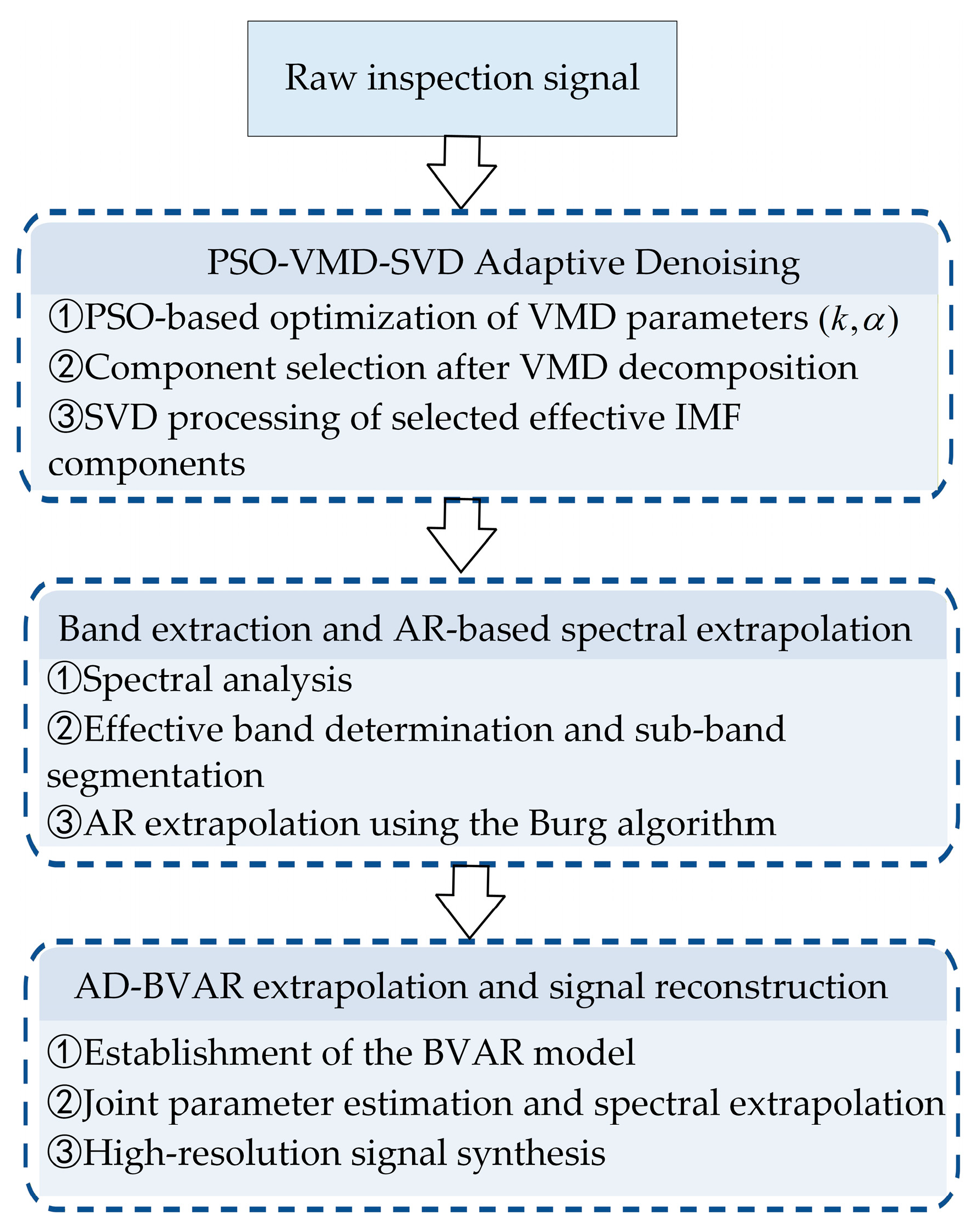
2.1. PSO-VMD-SVD Adaptive Denoising Method
| Algorithm 1: PSO-VMD-SVD Adaptive Denoising Algorithm |
| Input: Raw detection signal , particle swarm size , maximum iteration count , number of modes , penalty factor |
| Step 1: Randomly initialize particle positions and velocities ; |
Step 2: Repeat
|
| Step 3: Until maximum iteration count is reached or convergence criteria are satisfied; |
| Step 4: Perform final VMD-SVD using optimal parameters and output denoised signal . |
2.2. Bayesian Vector Autoregression Model
2.3. AD-BVAR Spectral Extrapolation Method
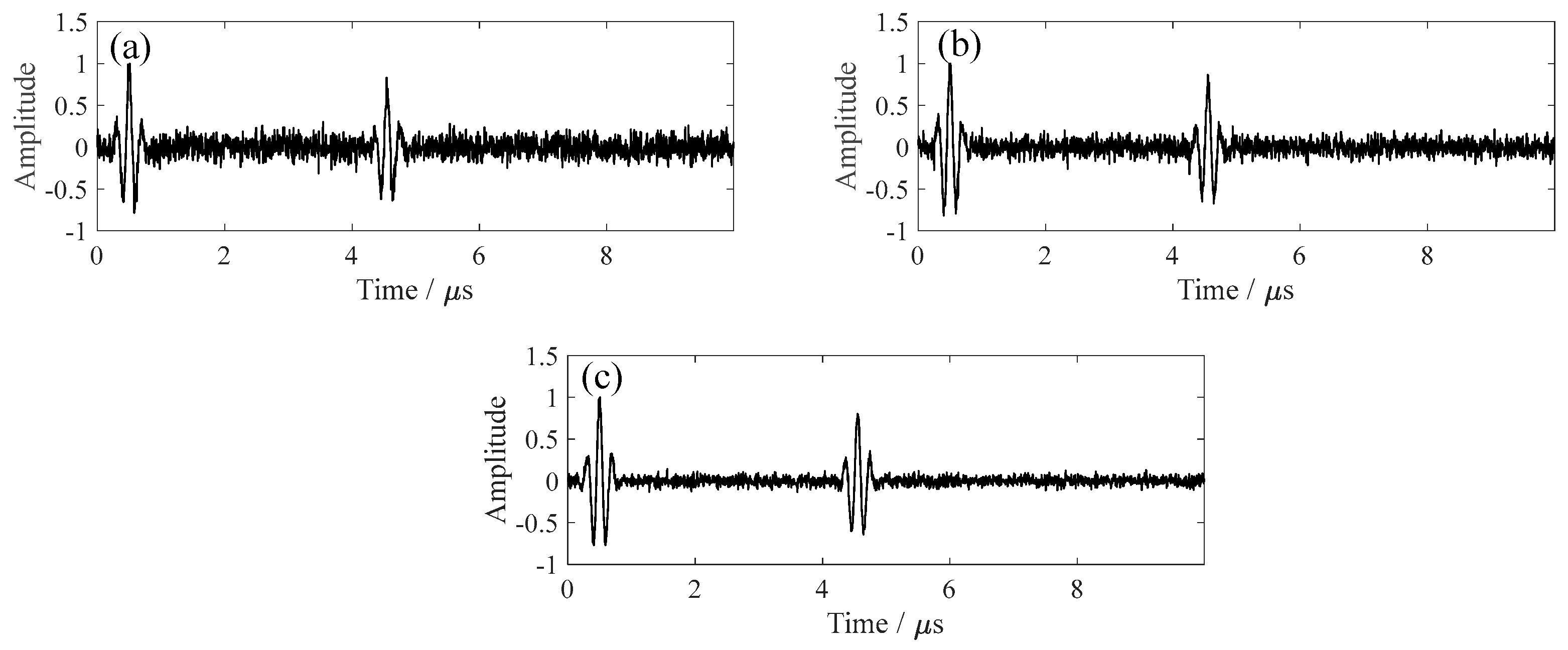
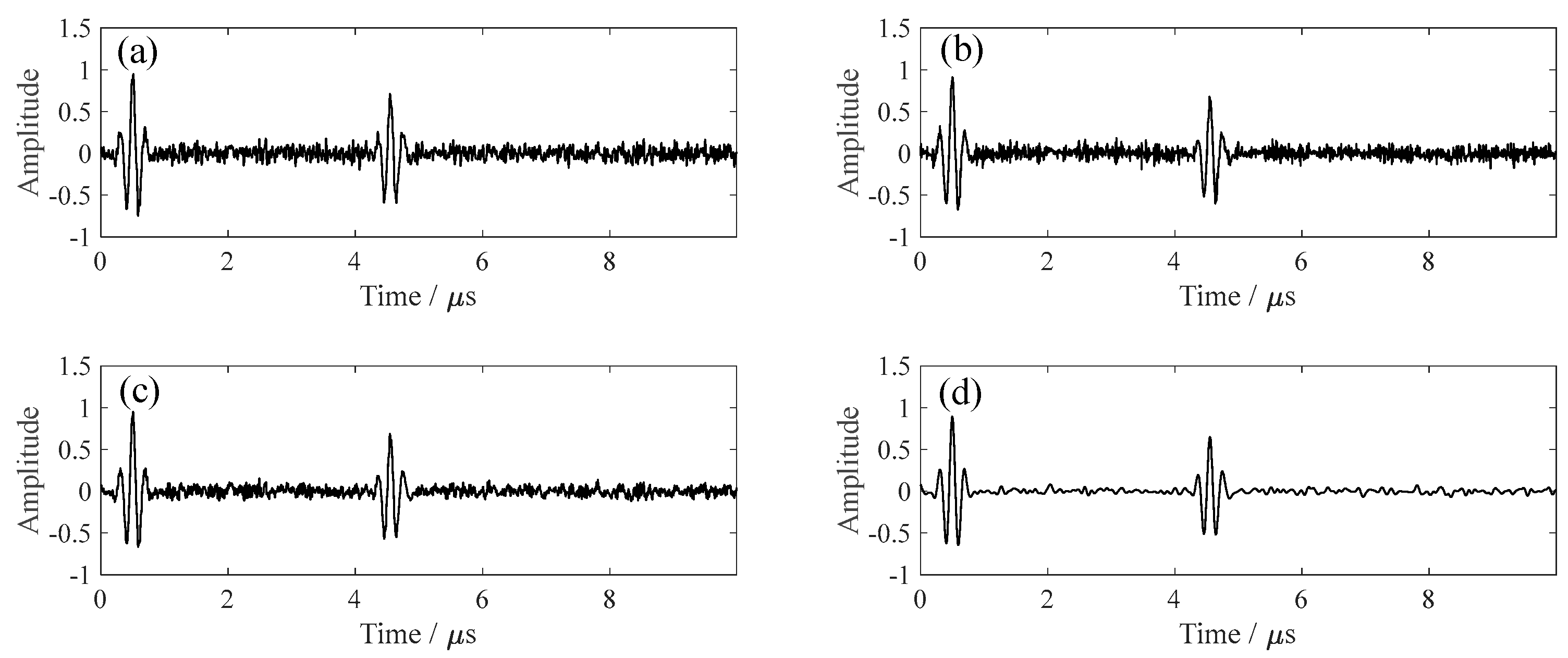
3. Simulation
4. Experiment
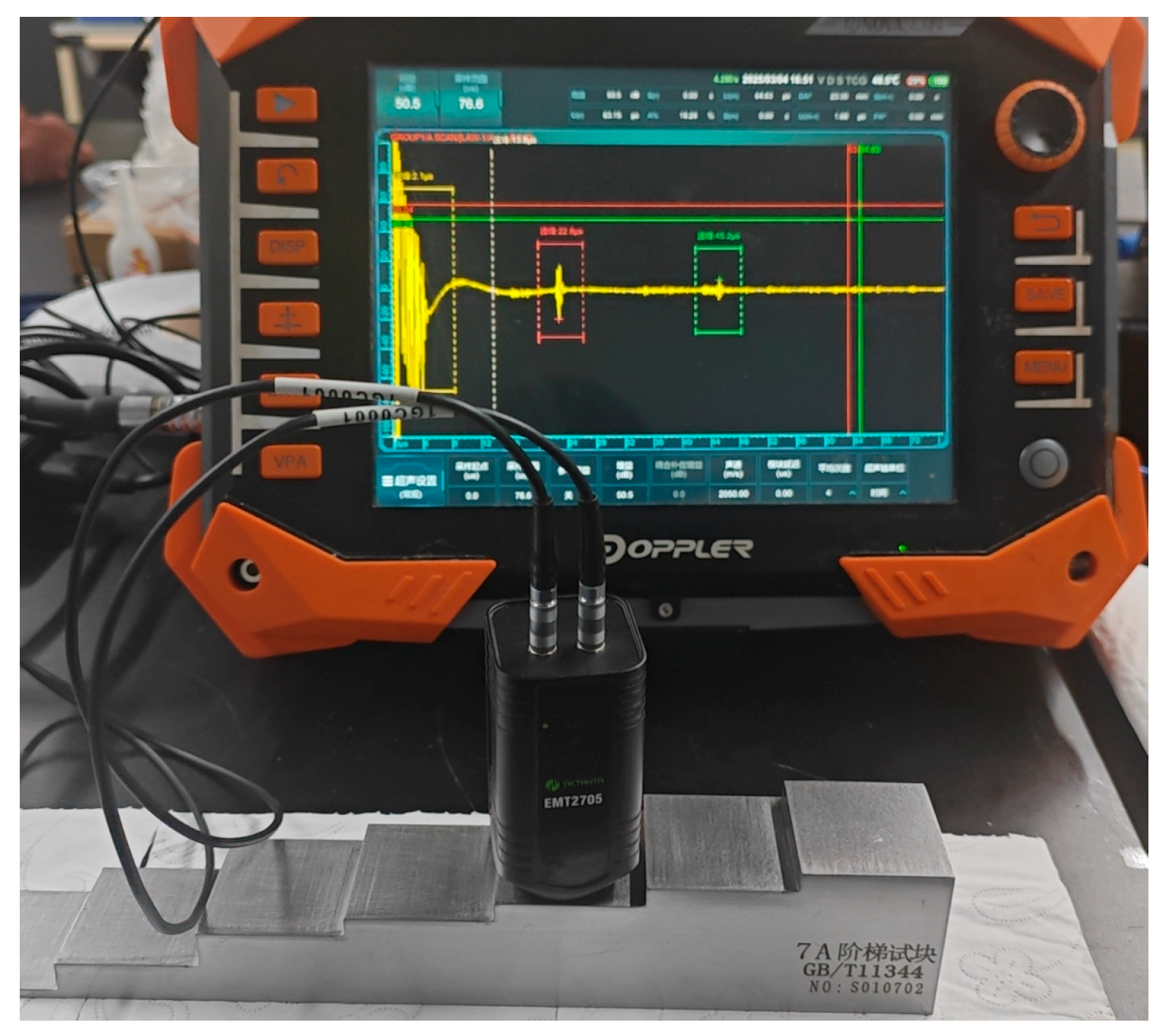
4.1. Experimental Setup
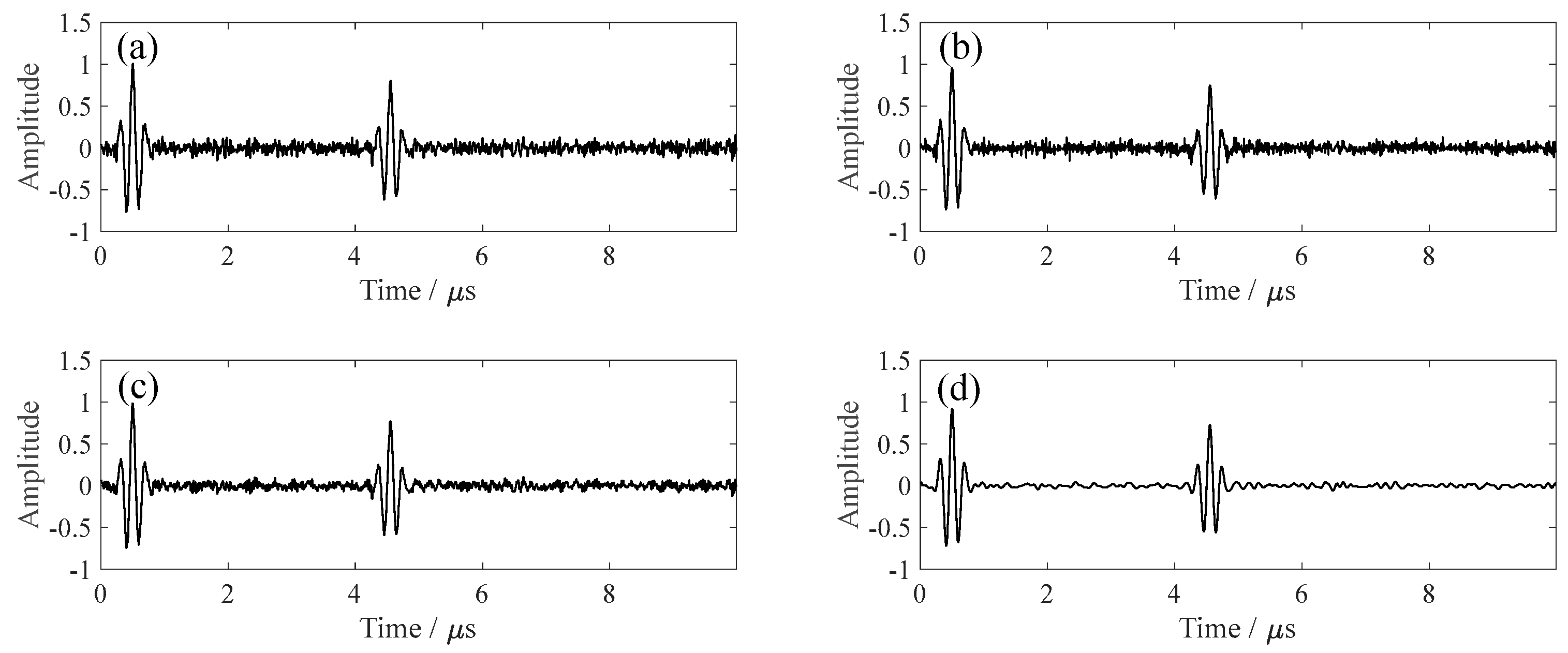
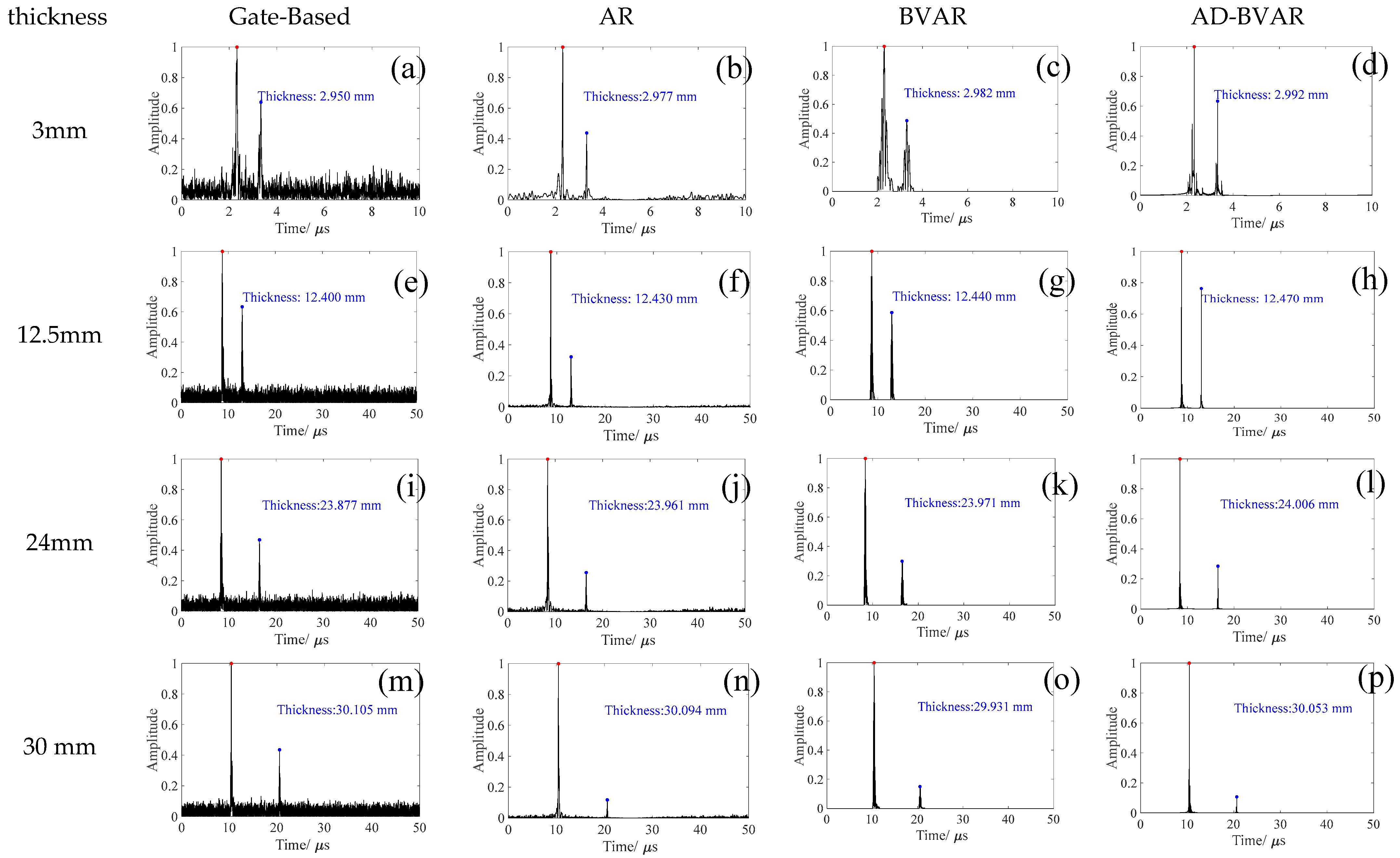
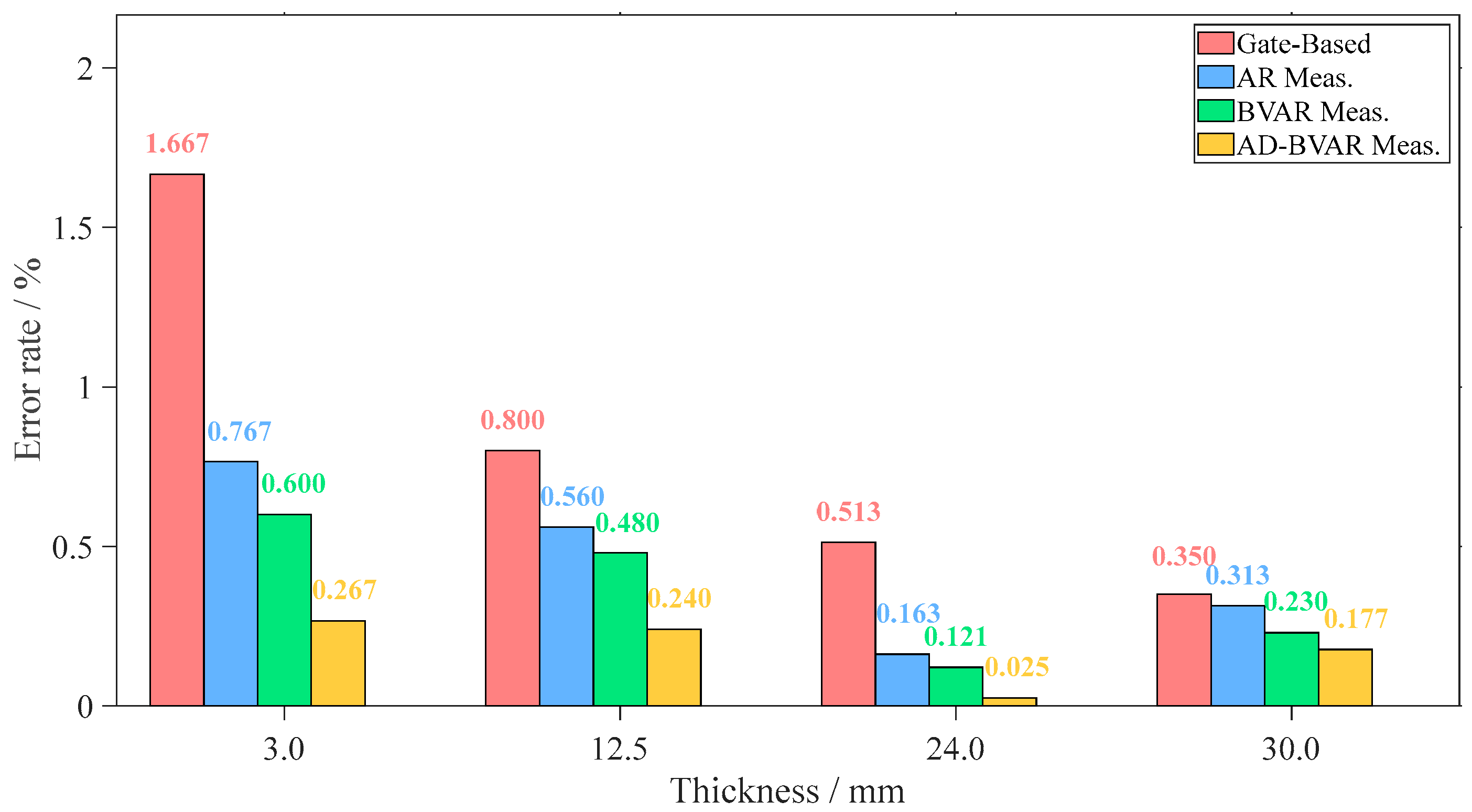
4.2. Experimental Results
5. Conclusions
Author Contributions
Funding
Institutional Review Board Statement
Informed Consent Statement
Data Availability Statement
Conflicts of Interest
Abbreviations
| AD-BVAR | Adaptive Denoising and Bayesian Vector Autoregressive |
| AR | Autoregressive |
| BVAR | Bayesian Vector Autoregressive |
| EMAT | Electromagnetic Acoustic Transducer |
| FIR | Finite Impulse Response |
| GA | Genetic Algorithm |
| IMFs | Intrinsic Mode Functions |
| MPA | Marine Predators Algorithm |
| PSO | Particle Swarm Optimization |
| RMSE | Root Mean Square Error |
| SNR | Signal-to-Noise Ratio |
| SSA | Sparrow Search Algorithm |
| SVD | Singular Value Decomposition |
| VMD | Variational Mode decomposition |
References
- Chen, W.; Lu, C.; Li, X.; Shi, W.; Zhou, Y.; Liu, Y.; Zhang, S. A novel laser-EMAT ultrasonic longitudinal wave resonance method for wall thickness measurement at high temperatures. Ultrasonics 2024, 141, 107340. [Google Scholar] [CrossRef] [PubMed]
- Siegl, A.; Auer, D.; Schweighofer, B.; Hochfellner, A.; Klösch, G.; Wegleiter, H. Sub-MHz EMAR for non-contact thickness measurement: How ultrasonic wave directivity affects accuracy. Sensors 2025, 25, 4746. [Google Scholar] [CrossRef] [PubMed]
- Hirao, M.; Ogi, H. EMATs for Science and Industry: Noncontacting Ultrasonic Measurements; Springer Science & Business Media: Berlin/Heidelberg, Germany, 2013. [Google Scholar]
- Cheng, J.; Xu, L.; Chao, L. A review of two types of non-destructive testing technique for pressure pipelines. Insight-Non-Destr. Test. Cond. Monit. 2021, 63, 326–333. [Google Scholar] [CrossRef]
- Cai, Z.; Lu, Z.; Li, Y.; Zhang, L. Research on the low-cost coating detection method based on electromagnetic acoustic transducer and nonlinear effect. IEEE Sens. J. 2024, 24, 9647–9659. [Google Scholar] [CrossRef]
- Guo, X.; An, J.; Wu, H.; Cai, Z.; Wang, P. Graphene acoustic transducers based on electromagnetic interactions. Ultrasonics 2021, 114, 106420. [Google Scholar] [CrossRef] [PubMed]
- Huang, X.; Xie, Y.; Liu, F.; Li, J.; Jiang, W.; Huang, P.; Sun, H.; Liang, H.; He, S.; Hao, W.; et al. A hybrid denoising method for electromagnetic acoustic detection. IEEE Sens. J. 2024, 24, 25523–25530. [Google Scholar] [CrossRef]
- Kaixing, L.; Jianjian, W.; Xianglong, K.; Yajing, G.; Yunlin, Q. A New Type of SH-Guided Wave EMAT based on Barker Code Pulse Compression Technology with Tone-Burst Excitation. Int. J. Appl. Electromagn. Mech. 2025, 77, 47–65. [Google Scholar] [CrossRef]
- Wang, S.; Yang, R.; Li, Z.; Jiang, J.; Qu, Z.; Li, X.; Jiang, C. Improvement of pulse compression Rayleigh-wave EMATs. NDT E Int. 2025, 155, 103427. [Google Scholar] [CrossRef]
- Cheng, Y.; Shi, W.; Lu, C.; Chen, W.; Zeng, Y.; Hu, B. Research on Laser-EMAT measurement of preload in high-temperature alloy bolts for aerospace applications. NDT E Int. 2026, 159, 103618. [Google Scholar] [CrossRef]
- Han, B.; Jiang, C.; Omer, A.M.; Hamad, K.O.; Shao, T.; He, L.; Ding, X.; Zhang, H.; Fu, J.; Meng, J.; et al. A generic time-frequency analysis-based signal processing and imaging approach for air-coupled ultrasonic testing. NDT E Int. 2024, 144, 103101. [Google Scholar] [CrossRef]
- Zhu, H.; Tu, J.; Cai, C.; Deng, Z.; Wu, Q.; Song, X. A Fast Signal-Processing Method for Electromagnetic Ultrasonic Thickness Measurement of Pipelines Based on UKF and SMO. Energies 2022, 15, 6554. [Google Scholar] [CrossRef]
- Su, L.; Xie, W.; Ming, X.; Gu, J.; Zhao, X.; Li, K.; Pecht, M. High-frequency ultrasonic echo deconvolution and defect detection of flip chip with linear frequency modulated excitation. Acta Acust. 2025, 50, 128–137. [Google Scholar]
- Zhai, M.; Locquet, A.; Roquelet, C.; Ronqueti, L.A.; Citrin, D. Thickness characterization of multi-layer coated steel by terahertz time-of-flight tomography. NDT E Int. 2020, 116, 102358. [Google Scholar] [CrossRef]
- Jin, S.; Sun, X.; Luo, Z.; Ma, T.; Lin, L. Quantitative detection of shallow subsurface cracks in pipeline with time-of-flight diffraction technique. NDT E Int. 2021, 118, 102397. [Google Scholar] [CrossRef]
- Yin, H.; Zhang, T. Fault Feature Signal Extraction Method of Rolling Bearing Based on GA-VMD. Mech. Res. Appl. 2023, 36, 1–5. [Google Scholar]
- Hu, J.; Cao, Y.; Huang, J.; Yu, T.; Yao, J.; Wang, P.; He, Q. Adaptive Signal Reconstruction Based on VMD for Rail Welding Joint Defect Detection. Russ. J. Nondestruct. Test. 2024, 60, 1249–1262. [Google Scholar] [CrossRef]
- Li, Y.; Zhang, Y.; Shen, J.; Wen, X.; Chen, J.; Zhu, W. Transient Electromagnetic Data Noise Suppression Method Based on MPA-VMD-SVD. IEEE Access 2025, 13, 18890–18898. [Google Scholar] [CrossRef]
- Huang, W.; Song, Q.; Huang, Y. Two-stage short-term power load forecasting based on SSA–VMD and feature selection. Appl. Sci. 2023, 13, 6845. [Google Scholar] [CrossRef]
- Peng, Z.; Yu, J.; Meng, X.; Xie, Y.; Xie, Y. Dynamic parameters identification of long-span suspension bridges using enhanced VMD-SVD techniques with GNSS data. Measurement 2025, 254, 117914. [Google Scholar] [CrossRef]



| SNR (dB) | Gate-Based (mm) | AR Meas. (mm) | BVAR Meas. (mm) | AD-BVAR Meas. (mm) |
|---|---|---|---|---|
| 2.000 | 12.141 | 11.937 | 11.966 | 11.996 |
| 5.000 | 12.116 | 12.051 | 11.966 | 11.993 |
| 10.000 | 12.086 | 12.045 | 11.976 | 11.992 |
| Actual Thickness (mm) | Gate-Based (mm) | AR Meas. (mm) | BVAR Meas. (mm) | AD-BVAR Meas. (mm) |
|---|---|---|---|---|
| 3.000 | 2.950 | 2.977 | 2.982 | 2.992 |
| 12.500 | 12.400 | 12.430 | 12.440 | 12.470 |
| 24.000 | 23.877 | 23.961 | 23.971 | 24.006 |
| 30.000 | 30.105 | 30.094 | 29.931 | 30.053 |
Disclaimer/Publisher’s Note: The statements, opinions and data contained in all publications are solely those of the individual author(s) and contributor(s) and not of MDPI and/or the editor(s). MDPI and/or the editor(s) disclaim responsibility for any injury to people or property resulting from any ideas, methods, instructions or products referred to in the content. |
© 2025 by the authors. Licensee MDPI, Basel, Switzerland. This article is an open access article distributed under the terms and conditions of the Creative Commons Attribution (CC BY) license.
Share and Cite
Ma, L.; Guo, X.; Zhou, S.; Li, X.; Ouyang, X. Enhanced Electromagnetic Ultrasonic Thickness Measurement with Adaptive Denoising and BVAR Spectral Extrapolation. Sensors 2026, 26, 216. https://doi.org/10.3390/s26010216
Ma L, Guo X, Zhou S, Li X, Ouyang X. Enhanced Electromagnetic Ultrasonic Thickness Measurement with Adaptive Denoising and BVAR Spectral Extrapolation. Sensors. 2026; 26(1):216. https://doi.org/10.3390/s26010216
Chicago/Turabian StyleMa, Lijun, Xiaoqiang Guo, Shijian Zhou, Xiongbing Li, and Xueming Ouyang. 2026. "Enhanced Electromagnetic Ultrasonic Thickness Measurement with Adaptive Denoising and BVAR Spectral Extrapolation" Sensors 26, no. 1: 216. https://doi.org/10.3390/s26010216
APA StyleMa, L., Guo, X., Zhou, S., Li, X., & Ouyang, X. (2026). Enhanced Electromagnetic Ultrasonic Thickness Measurement with Adaptive Denoising and BVAR Spectral Extrapolation. Sensors, 26(1), 216. https://doi.org/10.3390/s26010216