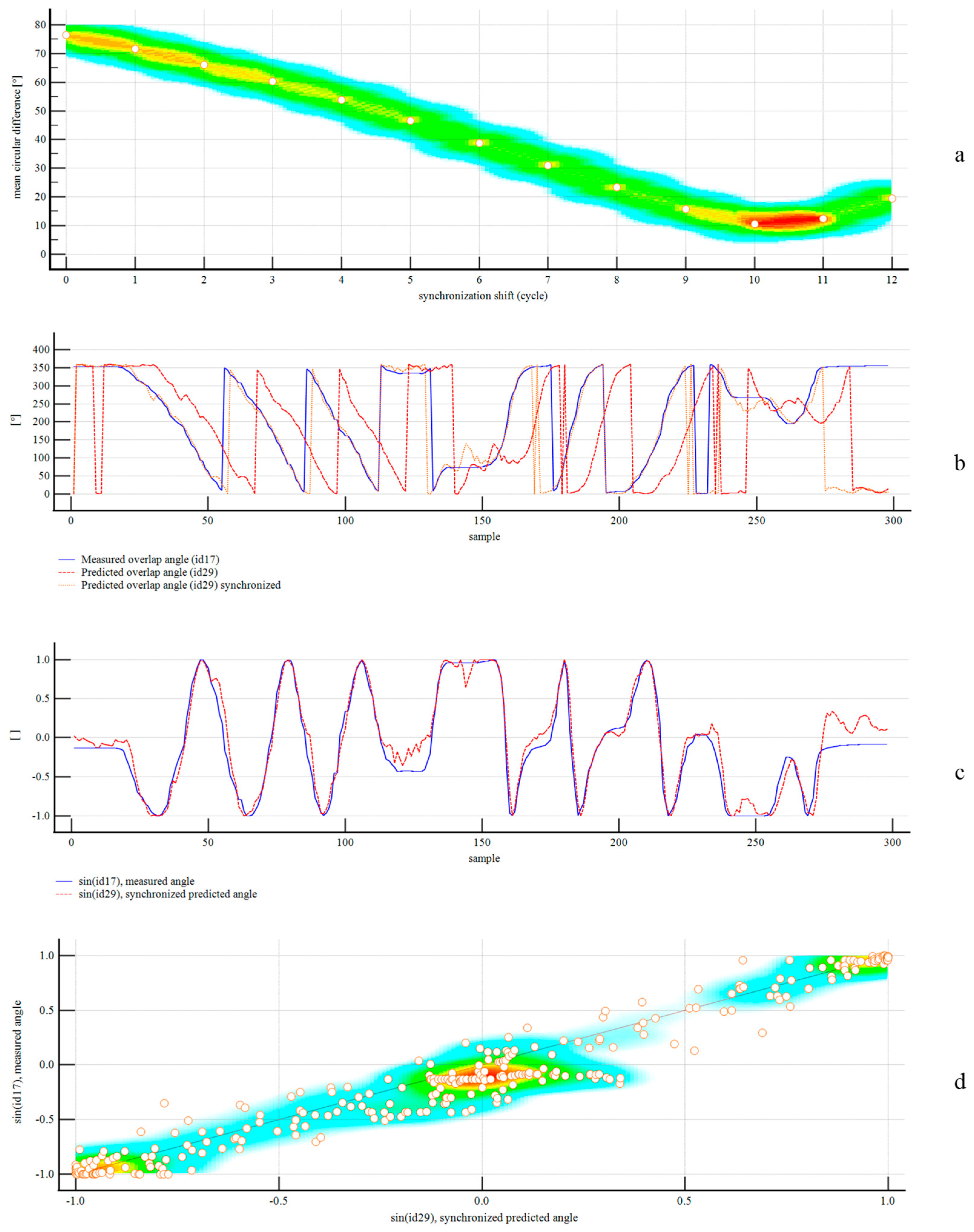
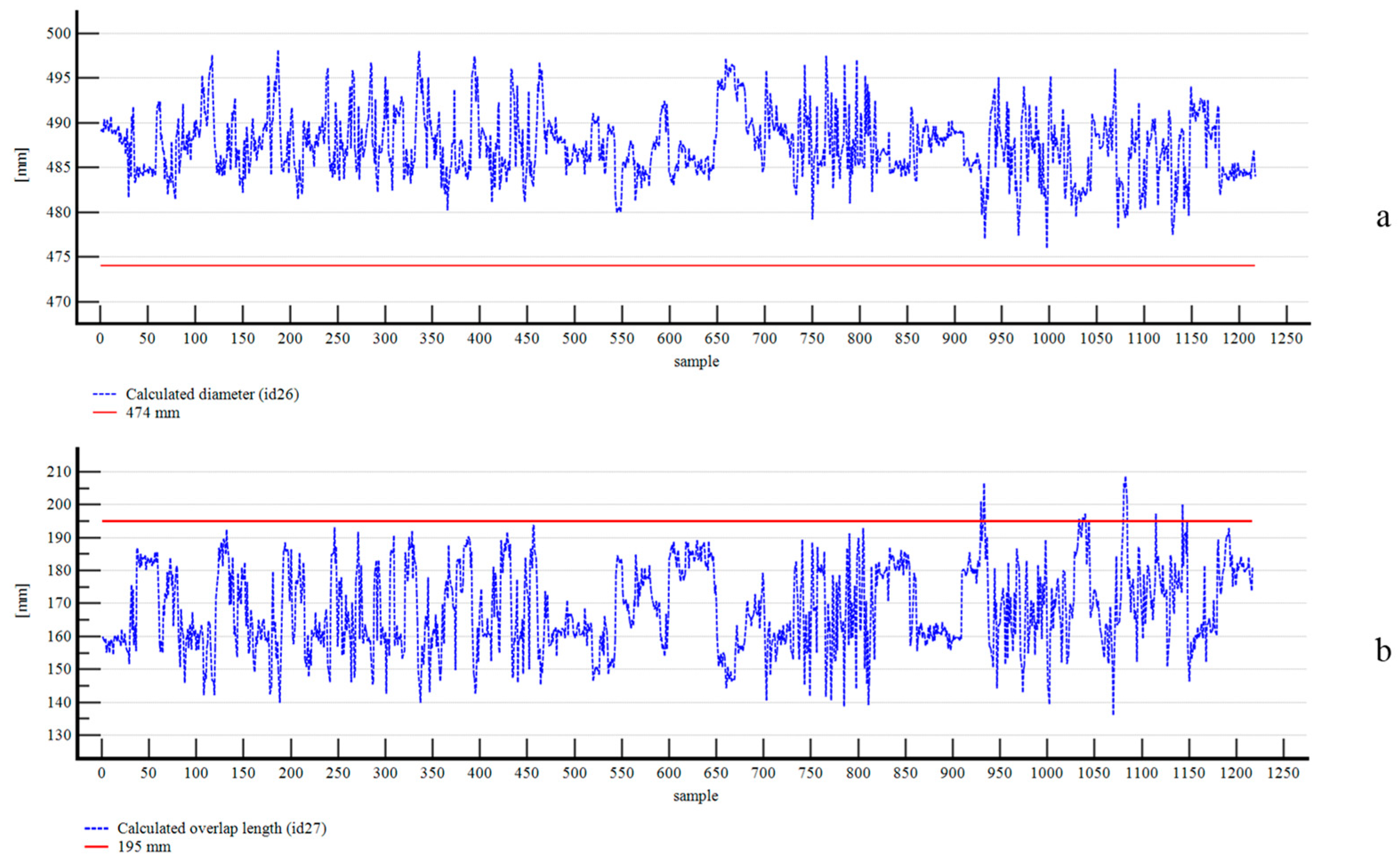
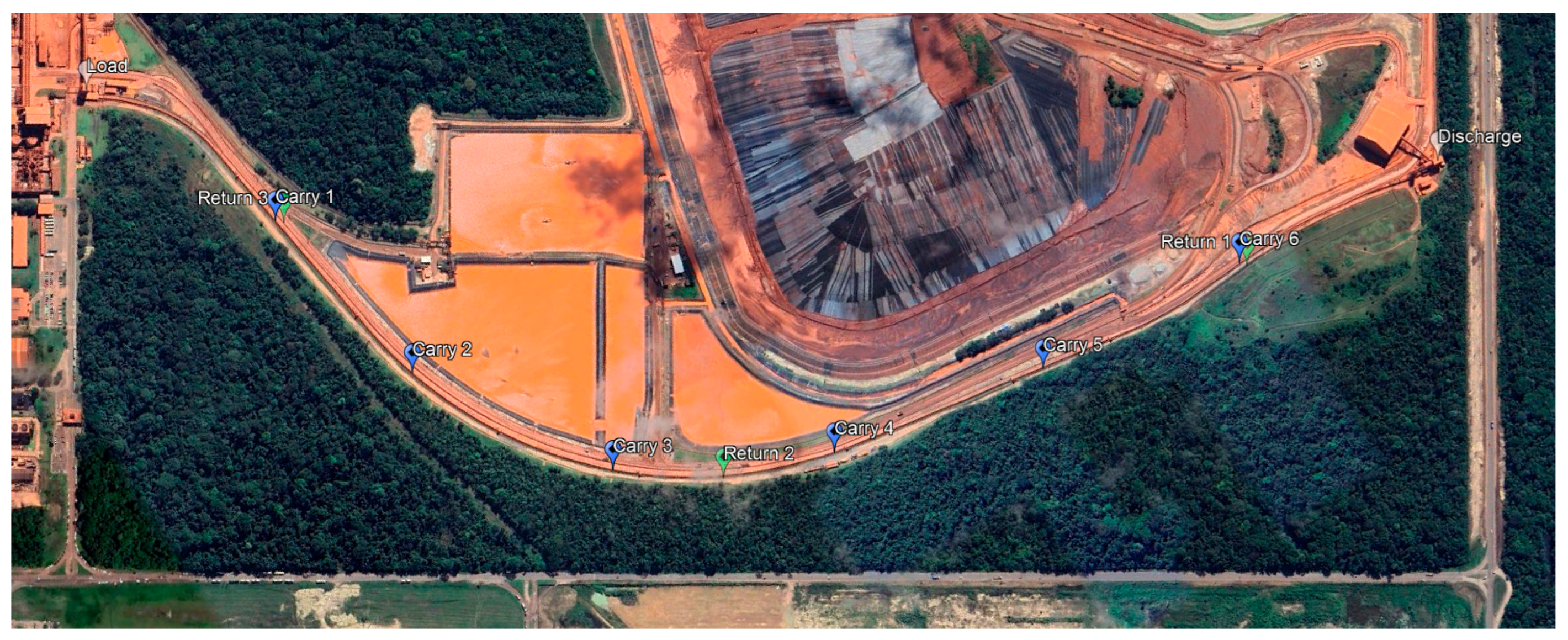
This section presents the systematic approach adopted to implement the proposed framework. We designed and developed a test rig equipped with a belt sample, utilizing a sampling unit to validate the first five hypothesized technology principles. Then, we proposed a criticality-based mathematical model to implement multiple sampling along a pipe conveyor route and demonstrated the calculations in a real-case application.
2.1. Digital Transformation Context
The digitization of belt rotation monitoring in pipe conveyor applications poses significant technological challenges for integrating cyber–physical systems (CPS), IIoT, and GenAI. For instance, the time discrepancy between digital and physical twins could render the framework unfeasible. Frasheri et al. [
34] proposed a co-simulation approach using a digital shadow as a mechanism to detect networking degradation through a case study involving a miniature robot equipped with an indoor positioning system.
In the context of IIoT, latency in data processing is a variable of concern. Liu et al. [
35] highlighted latency issues in traditional architectures dealing with industrial data for cloud storage and processing. The authors proposed the adoption of an IIoT cloud–fog hybrid network (ITCFN) framework and validated their algorithm in a case study of a coke-pushing machine by collecting start–stop signals, positions, and images of push rods. Singh et al. [
36] designed and implemented a system for machine monitoring, addressing various obstacles in integrating IIoT and artificial intelligence (AI) solutions to operational machines, with a higher impact on Small and Midsize Enterprises (SMEs). The custom-prototyped electronic board featured an ESP32 system-on-chip (SoC) module, employed the Message Queuing Telemetry Transport (MQTT) data exchange protocol, and an AI application rule engine for optimizing production planning in real-time.
Moreover, data or labeling scarcity may limit the use of assisted computing with GenAI for mission-critical industrial applications. In a case study utilizing a run-to-failure data repository, Hakami [
37] investigated the impact of scarce failure data, imbalance in run-to-failure datasets, and dependency on mapping temporal patterns when applying machine learning techniques for predictive maintenance. The author generated synthetic data using a Generative Adversarial Network (GAN) [
38] and deployed a Long Short-Term Memory neural network [
39] to learn temporal patterns from the same components over time. Sobreira et al. [
40] implemented a case study to address the scarcity of data in measuring mass flow in conveyor belts. The authors combined motor data of a target feed hopper with real data from a belt scale installed in a downstream conveyor, then successfully applied the machine learning method of Reduced Error Pruning Tree. In turn, Matos et al. [
41] utilized a 2D Lidar for online recognition and classification of bulk solids properties transported via conveyor belts, including rock fragmentation and type. Li et al. [
42] employed a data augmentation approach to overcome data scarcity in detecting failed wires in steel-cord-reinforced belts. Salim et al. [
43] implemented an embedded UHF-RFID sensor in a fabric-reinforced belt to measure the received signal strength indicator in the event of belt cracks. Luo et al. [
44] used the YOLOv5 computer vision model to analyze belt operation videos captured by an inspection robot, enabling the detection of contaminants in troughed belt conveyors. In another case study, Xu et al. [
45] proposed a 3D point cloud-based method using a binocular laser camera to detect and characterize longitudinal rips in troughed belt conveyors.
In GenAI applications, the widespread adoption of autoregressive large-language models (LLMs) has led to multiple solutions for integrating industrial information. Tao et al. [
46] conducted a case study using an LLM-based framework with public datasets for bearing fault diagnosis. The authors created a custom prompting approach based on time and frequency domain features for fine-tuning and output a standardized fault diagnosis classification. In addition, they adopted a reduced temperature to achieve higher stability, as well as an equal number of grouped samples for each failure mode to avoid class imbalance. They froze the attention layers to maintain the pre-trained knowledge of the selected model. Bahr et al. [
47] proposed a knowledge graph-enhanced retrieval-augmented generation (KG-RAG) framework to enhance the capabilities in Failure Mode and Effects Analysis (FMEA). Their case study involved using a custom chatbot to query a comprehensive FMEA knowledge graph database. An LLM was used to preprocess user questions and post-process structured retrieval before providing answers. Specialist participants assessed the quality of the responses generated in terms of correctness, usability, relevance, completeness, and retrieval time. In a comprehensive study of AI’s impact on innovation management, Zhang and Zhang [
48] highlighted that GenAI can improve the efficiency and quality of information integration in anomaly detection and risk mitigation.
Researchers and developers have employed various modeling and prompting techniques to mitigate the effects of class imbalance, model hallucinations, and uncertainty. Even for human-in-the-loop strategies, data annotation for pretraining can lead to a disagreement problem, where differences in opinion or belief between individuals or groups affect qualitative assessments [
49].
Although autoregressive LLMs are increasingly accessible and integrated in industrial processes, the next-token approach poses a challenge in measurement applications. In general, directly outputting a float number representing a dependent variable in LLMs poses a complex challenge in addressing model generalization and loss function sensitivity during fine-tuning, which are not well-suited for continuous values. Yang et al. [
50] introduced the Numerical Understanding and Processing Abilities (NUPA) benchmark to evaluate the numerical reasoning skills of LLMs. The benchmark organizes numeric concepts into different representations, including floating-point numbers, and covers tasks such as elementary arithmetic, comparison, digit recognition, and representation conversion. To provide a more detailed evaluation beyond exact match accuracy, the authors also measured digit match and length. Their results showed that models such as GPT-4o, GPT-4o-mini, and Qwen2 performed reasonably well on elementary tasks involving numbers of up to eight digits; however, their accuracy dropped significantly for larger digit lengths and more complex tasks.
2.2. Research Gap and Hypothesis
To address the challenges of digitizing belt rotation monitoring in pipe conveyor applications, we adopted a rationale for assessing the belt rotation failure mode and its effects to propose technological principles for governing large-scale industrial digitization efforts. The predominant operational scenario for pipe conveyors involves curved routing, which often technically justifies adopting this technology over traditional open-troughed belt conveyors. In pipe conveyors, the belt tends to rotate along curved flights [
51], and belt tracking is not always effective, requiring extensive monitoring to support adjustments to tolerable limits [
52]. This failure mode can lead to persistent downstream belt mistracking in the conveyor’s transition zones, with catastrophic consequences due to belt folding in the conveyor pulleys [
1]. Therefore, every rotation beyond the tolerable limits has the potential to cause relevant operational and financial losses, posing a challenge to collecting labeled data from abnormal belt positioning and ultimately restricting the learning of temporal and spatial information from belt rotation events. Given these characteristics, we proposed adopting an intermediate physical twin to enable unrestricted simulation of rotation scenarios and address the data and labeling scarcity associated with the belt rotation failure mode. This resulted in our first technological principle: physical prototyping for training.
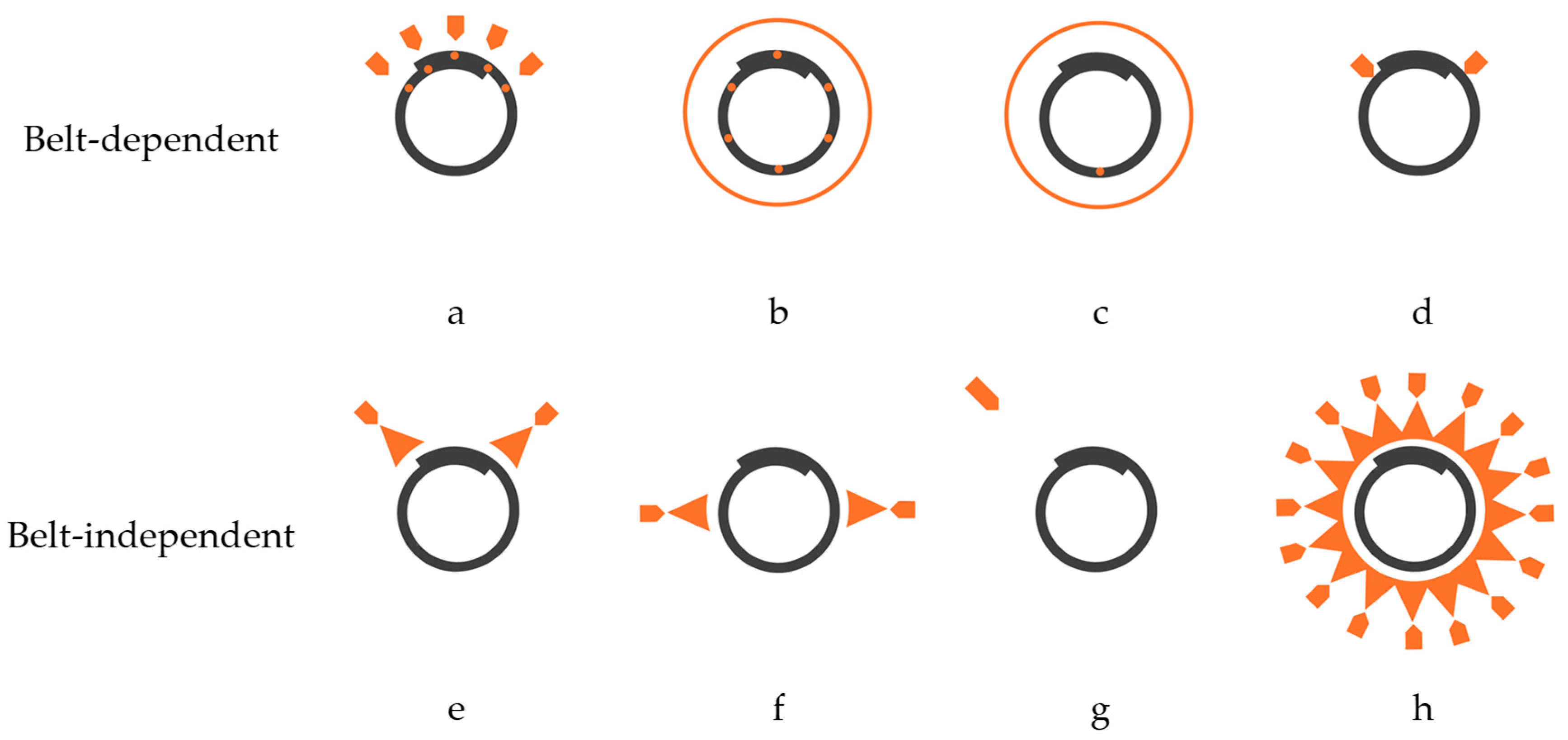
Next, we assessed off-the-shelf and publicly available patented solutions to identify favorable measurement techniques to support this digitization effort and enable large-scale industrial applications. Measurement approaches can be grouped into belt-independent or belt-dependent techniques. The former consists of non-contact measurements using distance sensors or image processing. Conversely, the latter involves embedding magnetic inserts, RFID tags at equidistant intervals along the belt during manufacturing or employing torque sensors in contact with the belt surface [
1]. Here, maintainability is a key element when scaling monitoring applications. Pipe belts are prone to wear and tear, which can occur in various forms, including superficial, transverse, longitudinal, pierced, or at the belt edges. As a collateral effect, the loops embedded in the belt can be damaged or removed during operation or belt section replacements, requiring bypassing the monitoring systems. A similar scenario is recurring in the rip detectors employed in open-troughed belt conveyors. Additionally, the belt is subject to cyclical fatigue, contamination, aging, and weathering. For this reason, we proposed adopting belt-independent measurement techniques as the second technological principle in our digitization framework.
In pipe conveyors, belt rotation may be triggered by numerous factors, including environmental conditions such as strong winds, heavy rain, subzero temperatures, and cumulative exposure to sunlight, ozone, oxygen, and heat. Additional factors, such as prolonged shutdown, hard flowing, dewatered, or deteriorating materials, and unstable filling degrees, also contribute to this failure mode. Other aspects include improper routing, high belt speeds, belt sag, excessive belt cycling, improper belt reinforcement, low B/D ratio, improper transverse bending stiffness, poor structural alignment, heterogeneous hardness along the belt length, vulcanizing and splicing issues, excessive tension during installation, improper tension force, improper belt training, low tension in molding rolls, and missing or seized idler rolls [
1]. As outlined by Zamiralova [
53], this failure mode has yet to be explored, and practical belt-tracking approaches can be ineffective. Therefore, scaling solutions for rotation monitoring demands not only measuring the overlap position. Comprehensive data collection on auxiliary measures, including ambient temperature, light, vibration, and belt-to-diameter ratio, can support a predictive approach. We then proposed adopting multiparameter processing as the third technological principle in our digitization efforts.
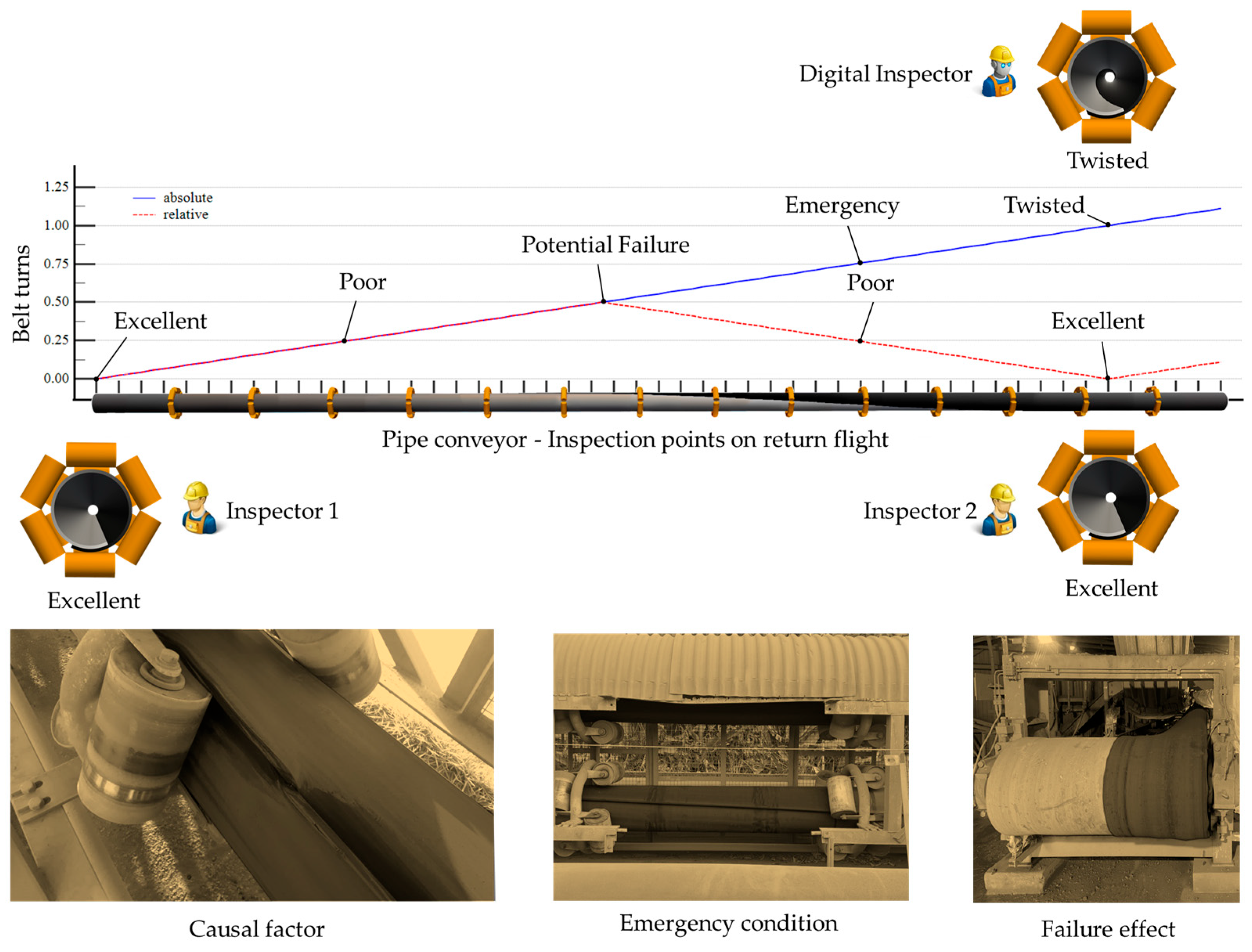
Furthermore, we evaluated the scenario of operational instability, which frequently affects pipe conveyor operations and can lead to twisted belts. Such scenarios can lead to misinterpretations in monitoring systems that rely solely on angle detection, posing a challenge for both human-based and digitized inspections. To exemplify the misinterpretation challenges caused by unstable or twisted belts, which frequently affect pipe conveyor applications, consider a hypothetical scenario involving two maintenance technicians inspecting a twisted belt on the conveyor’s return flight at two distinct points while communicating via radio, as illustrated in
Figure 1. Given that the twisted belt appears at the bottom position at both inspection points, the technicians may erroneously conclude that the belt is in stable condition. Additional factors, such as access constraints, ambient lighting conditions, and human factors, can further contribute to this misinterpretation, potentially leading to delayed intervention decisions or operational incidents related to belt rotation. For this reason, we proposed the monitoring of absolute belt turns as the fourth technological principle in our digitization framework.
The first four technological principles unlock key operational variables for monitoring belt rotation in pipe conveyors. However, two critical challenges need to be addressed: identifying unsafe states and determining the time required to prevent the failure effect. The former demands a comprehensive understanding of predictive measures in pipe conveyor applications, including the target belt overlap position, the admissible number of turns, the critical belt rotation speed, or the optimal B/D ratio. The latter involves dealing with the system detection-response latency, the safe-stop time of the belt with controlled or inertial deceleration, and the length of the conveyor’s transition zone. In this sense, any scalable digitization effort for monitoring belt rotation must ensure the timely detection of unsafe states and prevent belt folding in the conveyor’s pulleys, which constitutes our fifth technological principle.
Finally, we considered the typical operational characteristics of pipe conveyors’ routing, which are often long or topographically complex. This demands frequent inspections along the route, with belt positioning recorded at critical points, mainly in curved flights. This knowledge management approach enables operational and maintenance teams to identify trends and anticipate undesirable scenarios. However, this is often based on unstructured decision-making due to a lack of labeled failure data. In this sense, we advocated adopting a unitary protection distance to estimate the number of devices required to mitigate the need for frequent human inspection satisfactorily. For this reason, we proposed multiple sampling along the route as the sixth technological principle for belt rotation monitoring in pipe conveyor applications, outlined in the following digitization framework:
Principle 1: Physical prototyping for training.
Principle 2: Belt-independent measuring techniques.
Principle 3: Multiparameter processing.
Principle 4: Monitoring absolute belt turns.
Principle 5: Timely detection of unsafe states.
Principle 6: Multiple sampling along the route.
In implementing our digitization framework, enabling technologies play a relevant role. In pipe conveyor applications, belt rotation monitoring can be significantly affected by conveyor routing, structural access, and manpower constraints [
1]. Therefore, scalable solutions need to consider data integration in harsh, remote environments, while also prioritizing maintainability, which favors the adoption of IIoT networking. Additionally, implementation costs and time are sensitive variables, particularly for SMEs, and adopting LLM-assisted computing can support a fast-paced, scalable deployment. Further, the availability of real-time unsafe conditions or predictive metrics, along with data annotation capabilities, incentivizes the adoption of human–machine interfacing for belt rotation monitoring. Therefore, we adopted the following three enabling technologies in our digitization efforts:
Enabling Technology 1: IIoT networking.
Enabling Technology 2: LLM-assisted computing.
Enabling Technology 3: Human–Machine Interfacing.
To establish and assess the performance of our proposed digitization framework relative to existing methods, we defined target features. For publicly available patented solutions, the theoretical basis limits the assessment of measurement accuracy. In turn, off-the-shelf manufacturers do not disclose their system metrics, and the industrial adoption of rotation monitoring solutions in pipe conveyors has yet to be explored [
33]. At a conceptual level, our target features include measures for: the relative and absolute positions of the belt overlap, the belt rotation speed, and the B/D ratio. We then assessed seven typical measurement techniques outlined in the existing methods. We concluded that only the absolute position of the belt overlap is a standard measurement feature, which favors our proposed framework as a promising approach for large-scale application of belt rotation monitoring in pipe conveyors.
Figure 2 illustrates the typical measurement techniques adopted for belt rotation monitoring.
2.3. Implementation of Technological Principles
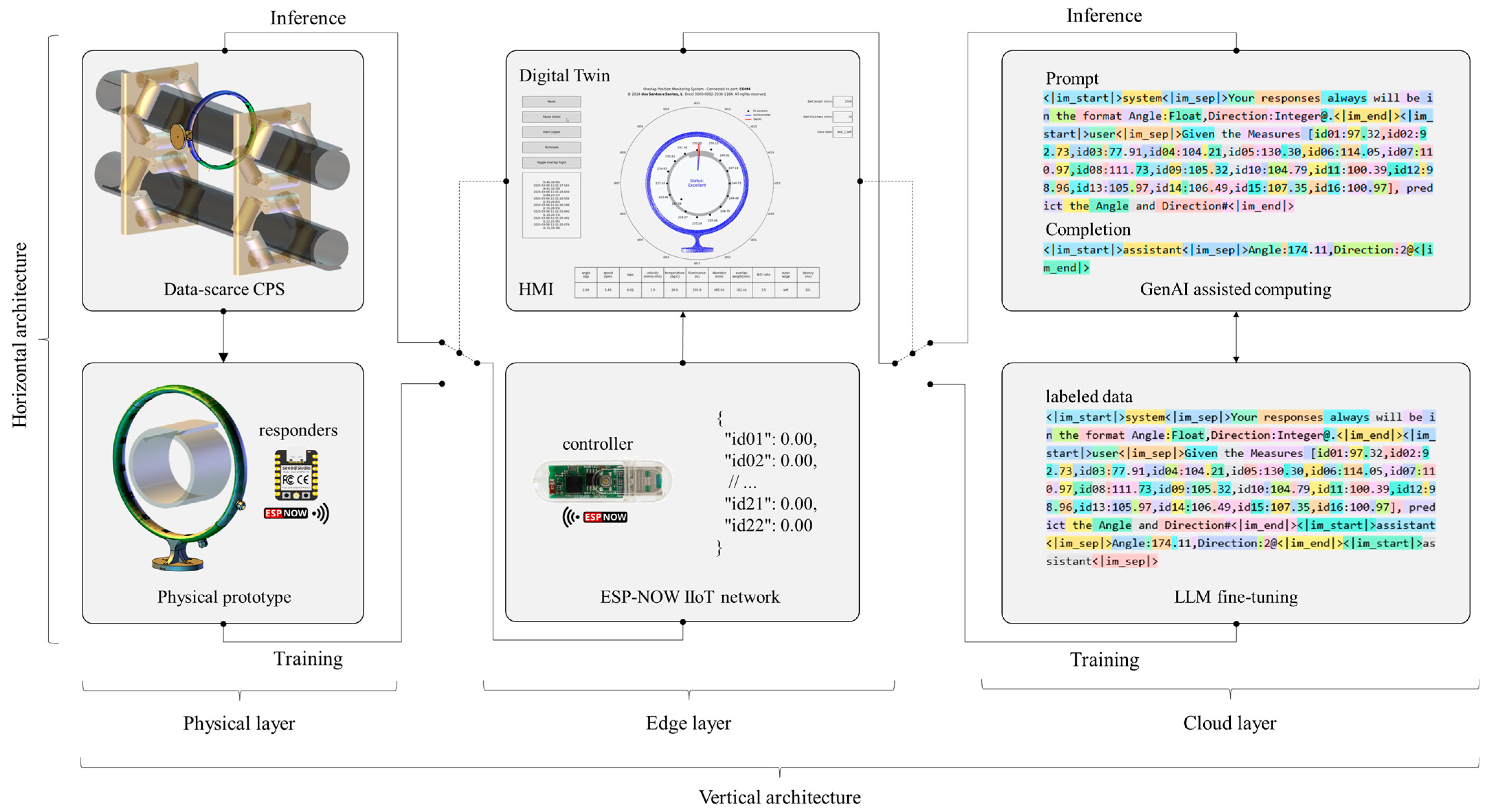
In this study, we designed a vertical network architecture comprising physical, edge, and cloud layers. The physical layer consisted of a theoretical pipe conveyor belt and a real physical prototype, which constituted the observable physical elements. The edge layer comprised an IIoT controller and an HMI, while the cloud layer provided computational resources for assisted computing. Additionally, we established a horizontal architecture that divided the physical and cloud layers between training and inference functions, with the cloud layer operating as a switching mechanism through the implementation of a digital twin framework.
For digitization, the method involved switching to a digital twin and using its HMI to collect labeled data from the physical prototype in the physical layer. The cloud layer was then configured, in the vertical architecture, to fine-tune an LLM using these collected samples. This approach composed the training function in horizontal architecture.
Next, the HMI switched the digital twin to collect data from the operational application in the physical layer while configuring the cloud layer to perform inference using the fine-tuned LLM, thereby enabling monitoring and analysis of belt rotation data. This approach composed the inference function in a horizontal architecture.
Figure 3 illustrates the network architecture for digitizing belt rotation monitoring.
2.3.1. Principle 1: Physical Prototyping for Training
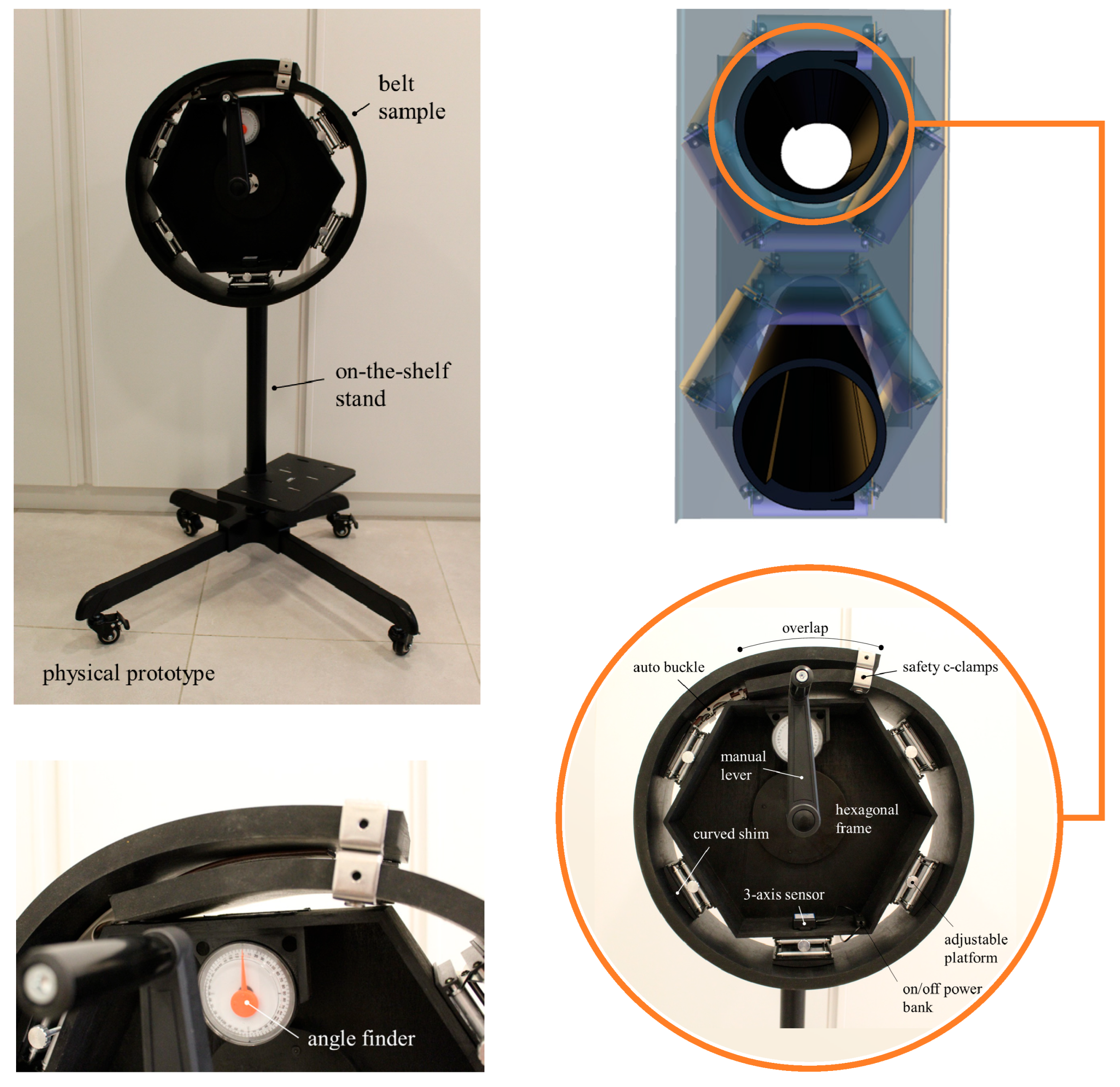
In our implementation, we created an intermediate physical twin to address the data and labeling scarcity associated with the belt rotation failure mode. We designed a hexagonal wooden frame with an apothem of 170 mm, a thickness of 7 mm, and a height of 100 mm. Two wooden disks, each measuring 152 mm in diameter and 12.7 mm thick, were attached to the hexagonal frame and hollowed to accommodate a 300 mm × 16 mm shaft, which was secured using a rigid flange coupling. We then attached the shaft to a movable on-the-shelf stand using a UCF202-16 bearing (FYH Bearing Units, Osaka, Japan), which is a 16 mm bore, 4-bolt square-flanged, cast iron self-lubricating housed bearing. A manual lever was attached to the end of the opposed shaft. The stand was a floor-mounted swivel type with the shaft centerline positioned 970 mm above the floor surface.
To regulate the B/D ratio belt, we attached lifting platforms to five of the six outer faces of the hexagonal frame, each with a 90 mm × 90 mm surface area and height adjustable from 30 to 90 mm. We printed and attached curved shims in PLA with a radius of 180 mm and a maximum height of 10 mm to the lifters’ surfaces to smooth the belt conformation into a tubular shape. We also attached a 360° analog angle finder for visual reference at the 12 o’clock position. To collect 3-axis motion measurements, a Bluetooth sensor module, WT901BLECL (WitMotion, Shenzhen, China), was attached at the 6 o’clock position. This battery-powered module features a 250 mAh battery capacity with a Type-C charging connection, an inclinometer accuracy of 0.05° on both the x and y axes, and a 16-bit gyroscope resolution with a stability of 0.05°/s. A 5000 mAh power bank was attached to the wooden frame and connected to the module using a 300 mm on/off Type-C extension cable.
We used a black neoprene and styrene butadiene rubber (SBR)-blended sheet for the belt sample, which measured 1700 mm in length, 20 mm in thickness, and 150 mm in width. We applied an auto-lock buckle and safety stainless steel C-clamps to secure the B/D ratio and maintain its tubular shape. The sample had a specific gravity of 1.70 ± 0.05 and a hardness of 70 ± 5 Shore A. Its mechanical properties include a minimum tensile strength of 35 kg/cm
2, a minimum elongation at break of 200%, a maximum compression set of 50%, and a minimum angular tear resistance of 15 kg/cm. The blended sheet contained 10% neoprene polymer and demonstrated good resistance to ozone, as well as diluted acids and bases. However, it is not recommended for use with concentrated acids, bases, oils, or solvents. Heat aging tests resulted in a maximum hardness change of 5 points, with changes in tensile strength and elongation at break ranging from +10% to −25%. The operational temperature range spans from −30 °C to +70 °C.
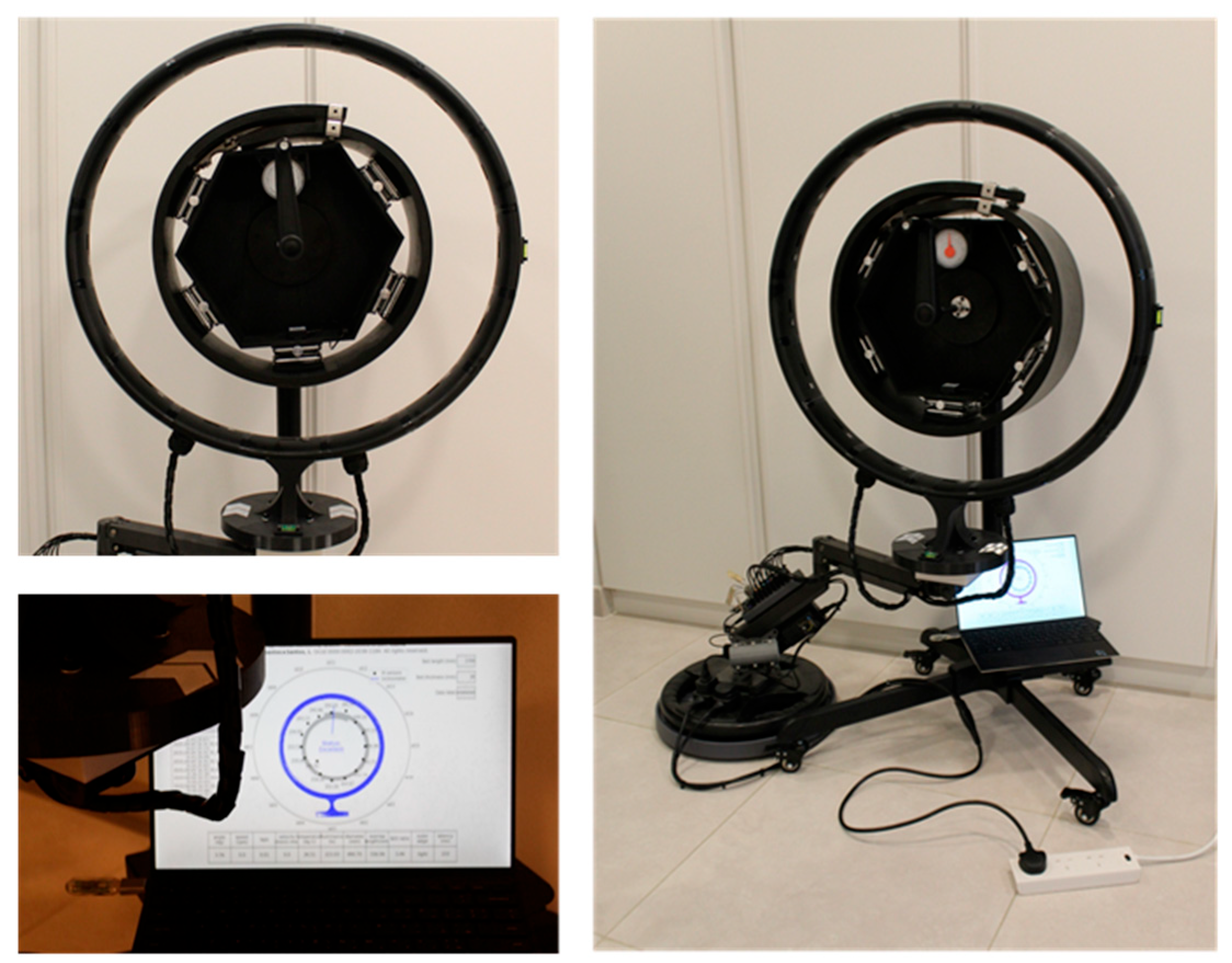
Figure 4 shows the physical prototype of the proposed system. By releasing the auto-buckle and safety C-clamps and adjusting the five lifting platforms, different B/D ratios can be set. The manual lever and stand swivel enabled the reproduction of multiple belt rotation scenarios, providing training data that would be unachievable in a real-world application.
2.3.2. Principle 2: Belt-Independent Measuring Techniques
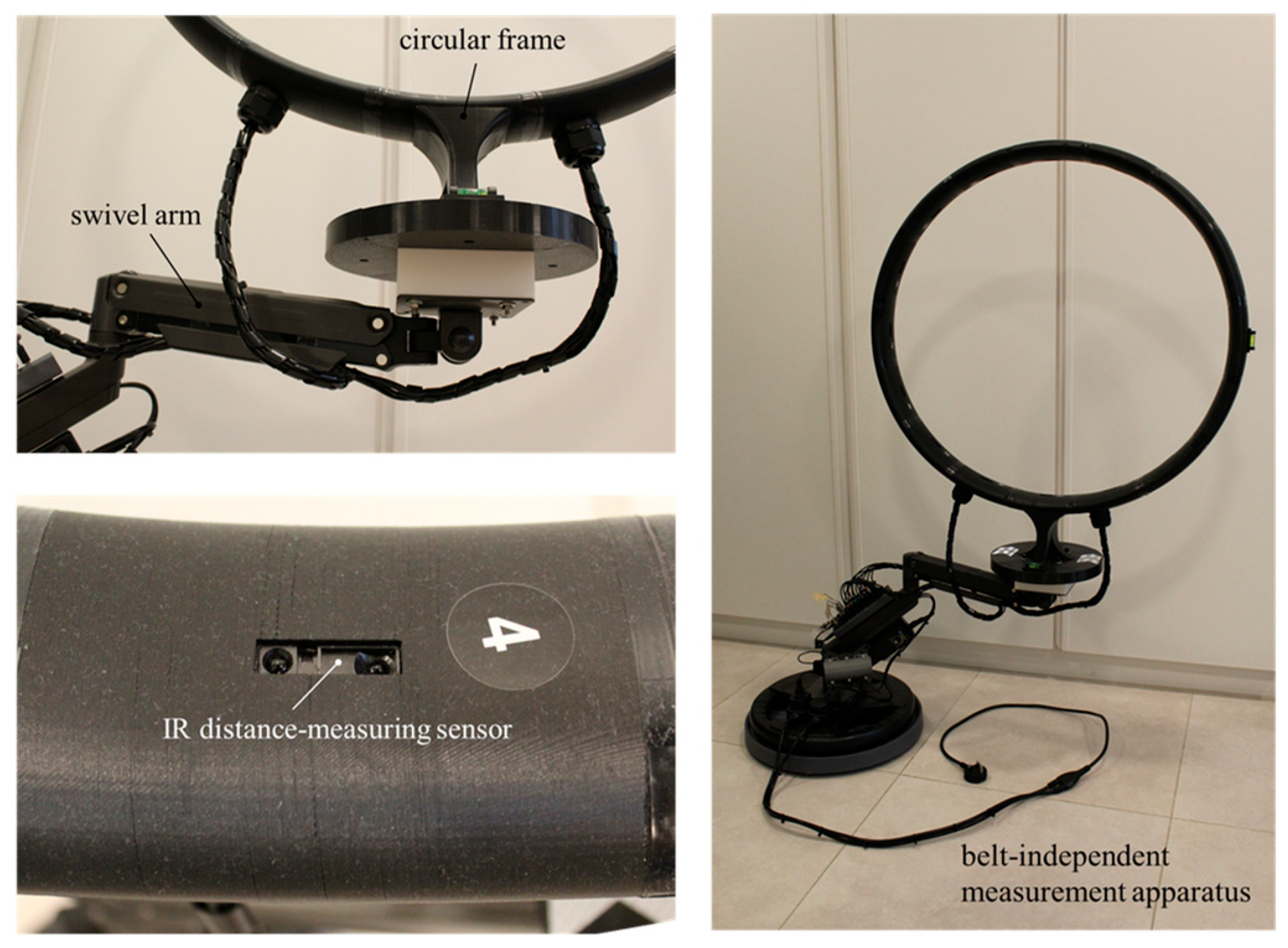
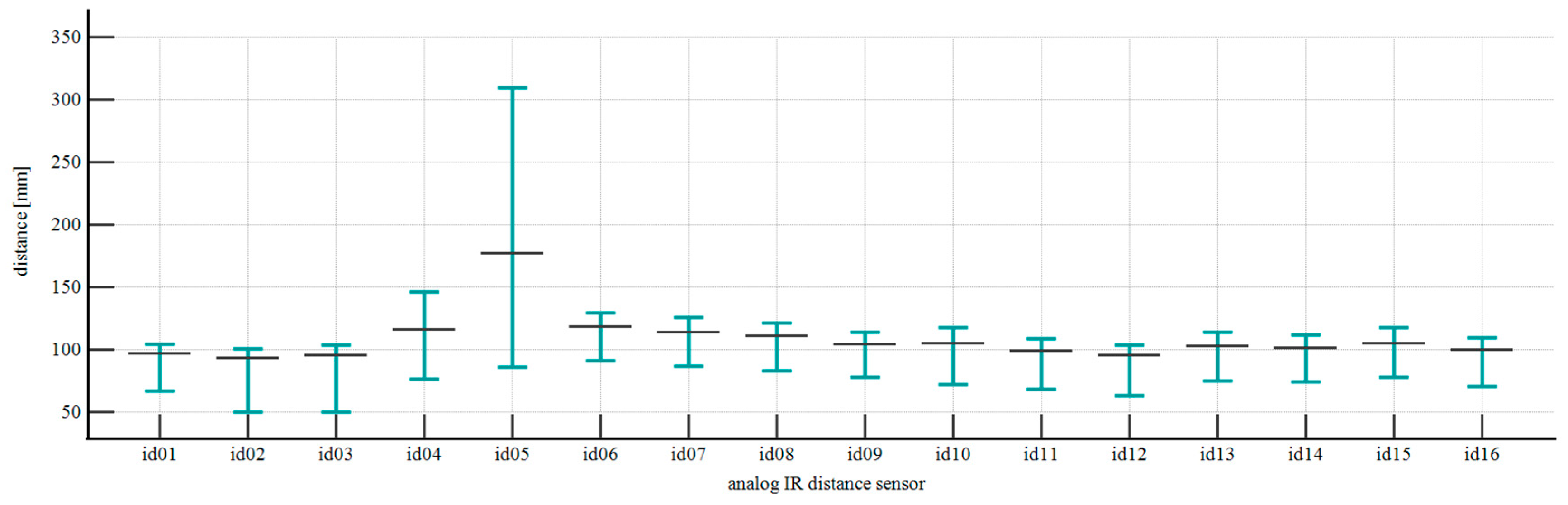
To implement a non-contact measurement system, we designed and printed a 16-part circular frame in PLA with a diameter of 775 mm and an elliptical cross-section measuring 88 mm and 38 mm along the major and minor axes, respectively. The 16 parts were hollowed with a wall thickness of 4 mm. Each part was provided with an embedded analog output-type IR sensor for distance measuring, model Sharp GP2Y0A21YK0F (Sharp Corporation, Osaka, Japan), whose measuring range varied from 100 to 800 mm. This sensor operates within a voltage range of 4.5–5.5 V, uses a 3-pin JST PH connector, and features an update period of 38.3 ± 9.6 ms. We connected the sensors to Seeed Studio XIAO ESP32C3 IIoT (Seeed Studio, Shenzhen, China) development boards and powered the modules using a 20-port USB hub, which was wired via USB-A to USB-C cables.
Next, the measuring frame was attached to an off-the-shelf full-motion gas-spring swivel arm. A 20 kg rubber-coated weight plate was used to stabilize the assembly. The assembly was placed on a 40.3 cm movable plastic round tray. A 90 W, 12 V, 7.5 A power supply was attached to the arm frame, along with additional components used for multiparameter processing.
Figure 5 shows the belt-independent measurement module. The full motion of the apparatus allowed for adjustable positioning relative to the belt sample, thereby expanding the capabilities necessary for further industrial implementation.
2.3.3. Principle 3: Multiparameter Processing
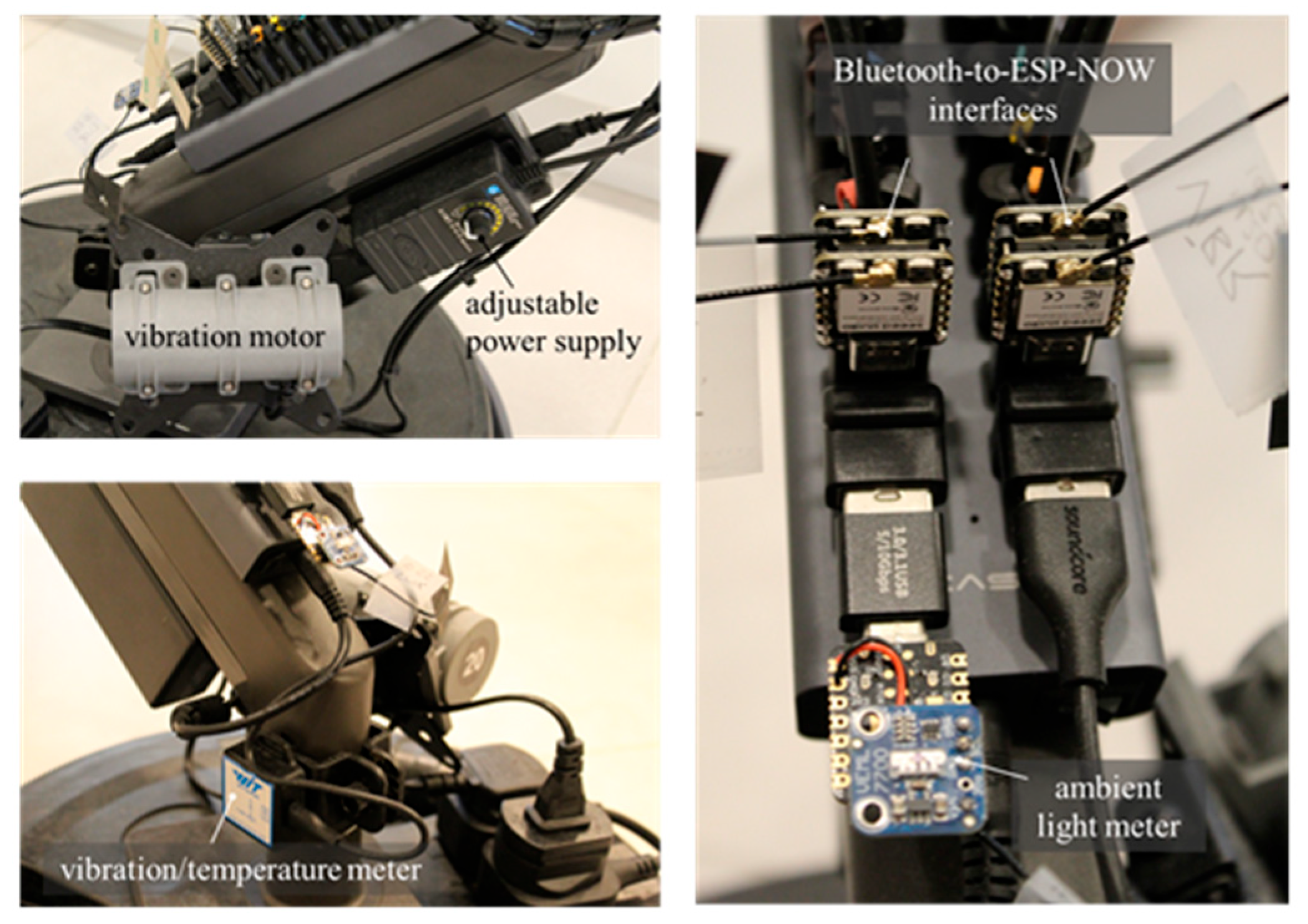
In our implementation, we added a variable-speed SL-3650C Series vibration motor (Shanglinmotor Automations, Dongguan City, China) to simulate the excitation frequencies from the belt and idler rolls, as expected in real-world applications. The device was a double-headed eccentric wheel type, powered by 12 V, with a maximum efficiency of 168.08 g.cm at 3148 RPM. It was attached to the arm frame, along with a 24 W, 3–12 V, 2 A adjustable power supply.
Next, we attached a Bluetooth sensor module, WTVB01-BT50 (WitMotion, Shenzhen, China), to the arm frame. This battery-powered module was used to measure the vibration velocity and room temperature. It features a 260 mAh battery capacity and a Type-C charging connection. The detection cycle and cutoff frequency were 1–100 Hz, with an operating temperature range of −20 to 60 °C. It was connected to a 20-port USB hub via a USB-A to USB-C cable.
Moreover, we customized a Bluetooth-to-ESP-NOW interface to integrate Bluetooth devices into the IIoT network. The employed ESP32 devices (Seeed Studio, Shenzhen, China) shared Bluetooth and Wi-Fi protocols using a single antenna in coexistence mode via coordinated access. However, to achieve low latency in our application, we opted to use a pair of Seeed Studio XIAO ESP32C3 IIoT development boards to process the Bluetooth and Wi-Fi connections separately. This was achieved by interconnecting the universal asynchronous receiver–transmitter (UART) and power pins on paired ESP32 boards without the need for additional wiring. Each pair was directly connected to a 20-port USB hub using USB-A to USB-C adapters.
We then integrated a 16-bit ambient light sensor VEML 7700 (Vishay Intertechnology, Malvern, PA, USA) into a Seeed Studio XIAO ESP32C3 IIoT development board, utilizing the I
2C communication protocol to measure illuminance. A USB adapter (A to C) was employed to connect the assembly directly to a USB 20-port hub while keeping the light transducer facing up at 54°.
Figure 6 shows the variable-speed vibration motor, customized Bluetooth-to-ESP-NOW interfaces, and the ambient light measuring board.
2.3.4. Principle 4: Monitoring Absolute Belt Turns
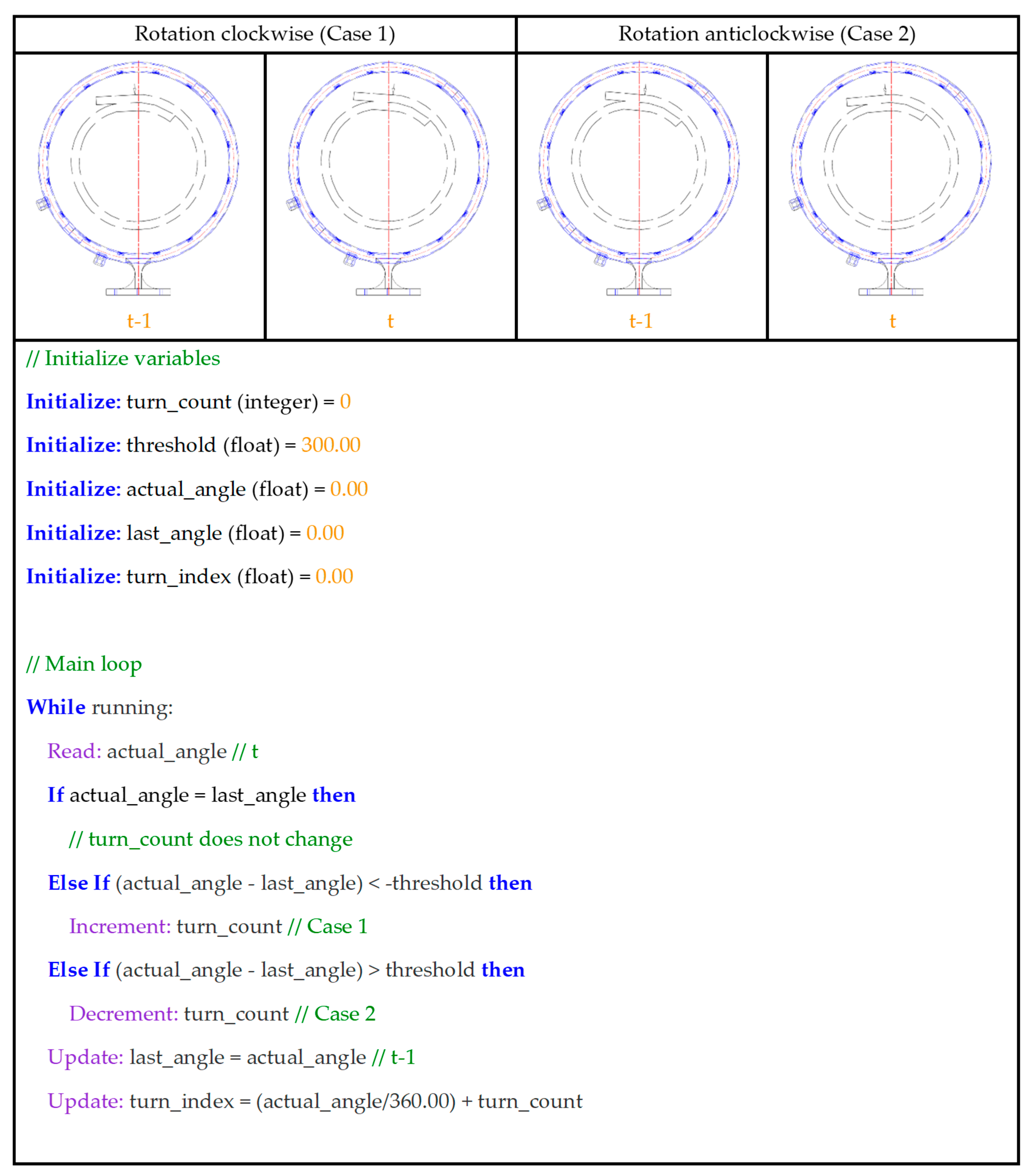
In our study, the number of belt turns was calculated by measuring angle variations over two consecutive measurement cycles. We assumed that the measurement latency was much smaller than the time required for a significant belt rotation in real-world applications. Here, we adopted the prior assumptions employed by dos Santos e Santos et al. [
33], who considered a 180° belt rotation at 10 RPM as the potential failure threshold owing to belt rotation. Therefore, we calculated the relative number of turns as a 2-digit float resulting from the measured or predicted angle divided by 360°, assuming the target position as the top overlap position (0°). To compute the absolute number, we adopted incremental and decremental values for clockwise and anticlockwise rotations, respectively, in relation to the belt’s running direction. We implemented an algorithm to detect when the readings crossed the boundary between 0° and 359.99°. When the variation between consecutive cycles was less than −300° (e.g., from 357° to 2°, resulting in −355°), the rotation was deemed clockwise, and we incremented the turn counter by 1 unit; conversely, when the variation exceeded +300° (e.g., from 1° to 359°, resulting in +358°), the rotation was deemed anticlockwise, requiring decrementing the turn counter by 1 unit.
We implemented these calculations in the network and application layers. The former was employed in the 3-axis motion Bluetooth-to-ESP-NOW interface, specifically the Bluetooth board, to provide training data. The latter was applied to post-process the predicted angle and compute the absolute number of turns required. During inference, we used a weighted moving average filter for the five most recent measurements, with weights ranging from 0.5 to 1.0, which favored newer data. Additionally, we implemented a multithreaded execution to maintain system responsiveness while predicting the overlap angle and the belt’s outer edge position. The adoption of a weighted moving average penalizes measurement synchronization for the benefit of enhanced LLM hallucination mitigation and inference stability.
Figure 7 presents a pseudocode of the adopted approach for monitoring the absolute belt turns.
2.3.5. Principle 5: Timely Detection of Unsafe States
In the application layer, we implemented four predictors of unsafe states: absolute number of turns, B/D ratio, overlap length, and the belt’s outer edge position. We added numeric fields to be populated by the system user with the sample length (belt width) and thickness (mm). We then set the default values to 1700 and 20 mm, which corresponded to the belt sample used in our experiment. Additionally, we utilized an HMI button to toggle the predefined position of the outer edge of the belt.
First, we applied the criterion originally proposed by dos Santos e Santos et al. [
33], which uses the number of turns to indicate the operational stability of the pipe belt as follows: excellent (less than 1/24 turn in either direction), good (between 1/24 and 1/12 turns), fair (between 1/12 and 1/8 turns), poor (between 1/8 and 1/4 turns), critical (between 1/4 and 1/2 turns), and potential failure (more than 1/2 turns). This was applied to both clockwise and counterclockwise rotations. Using the sample length parameter (which represents the belt width, B) and the calculated pipe belt diameter (diameter, D), we computed the B/D ratio. Typically, this ratio ranges between 3.5 and 4 [
51,
57,
58,
59,
60] and can be a good predictor of troughability when compared to the designed or usual operational values. This was achieved by processing 16 distance measures to calculate the pipe diameter. First, we converted the radial distances of the sensor into Cartesian coordinates, considering the device’s radius. Next, we applied least-squares optimization to estimate the center of the belt sample. We then determined the distances between pairs of opposite sensors (e.g., at 0° and 180° or 45° and 225°). Subsequently, we ranked the eight paired values and filtered potential outliers by dismissing the first and last three values. Finally, we applied a 20-sample moving average to ensure measurement stability.
Additionally, measuring the diameter of the belt throughout the lifecycle of a pipe conveyor is a recommended practice. It can also be a good predictor of low troughability during commissioning or excessive tension after the troughing phase. Here, we adopted the empirical assumptions proposed by dos Santos e Santos et al. [
33], in which a 15% reduction in diameter of the belt represents a potential failure threshold owing to increased troughability. It is worth mentioning that the loss of contact forces between the belt and idler rolls, as well as operational stability, are key factors in the analysis and must be considered together by specialist engineers.
Next, we calculated the overlap length, which is a good predictor of suboptimal belt tension. Using the sample length and thickness parameters, along with the measured angle and calculated diameter, we implemented a 1000-step spiral approximation. We used the angle between the start and end of the spiral function to determine the arc length of the overlapping section. Furthermore, we employed Cartesian coordinate transformations and least-squares optimization for positioning the spiral at the Cartesian center. Then, we shifted its position using the estimated center of the belt sample to provide a dynamic visual reference in the HMI.
Finally, we monitored the position of the outer edge of the belt by encoding it as integer values: undefined (0), right-sided (1), or left-sided (2). This is a good detector of overlap alternation resulting from a low belt tension. We implemented this calculation during training in the application layer, using the preset belt outer-edge position as specified in the HMI. We applied a buffered filter to the five most prevalent measurements during the inference process.
Table 1 summarizes the key criteria for detecting unsafe states related to belt rotation in pipe conveyors.
2.3.6. Principle 6: Multiple Sampling Along the Route
In our proposed framework, we theorize the implementation of multiple sampling points along the route of a pipe conveyor to prevent functional failures due to belt rotation. We proposed at least two measuring devices positioned upstream of the drive and return pulleys, to protect the carry and return transition zones of the pipe conveyor as a minimum. These are critical regions where the belt transitions to or from its enclosed shape, guided by reinforced molding rolls of highly concentrated stress on the pipe belt carcass.
We then assign a factor k to differentiate between criticality levels: 2 for long or topographically complex routes and 1.5 for ordinary or highly stable routes. This approach supports the determination of an optimal and cost-effective number of measuring devices. It shall be assessed by designers and specialist engineers, considering project criteria, technical constraints, and operational expertise. This factor indicates how to split the devices between the carry and return flights at a 1:1 and 1:1/2 ratio, respectively.
The rationale for determining the unitary protection distance was to establish a target position for the measurement device, ensuring the belt can safely stop before the rotated section reaches the conveyor’s transition zone in the event of an abnormality. Therefore, four distances were considered. First, the beginning of the longest transition zone was adopted as a conservative target position for ending a safe belt stop. Next, three additional distances were defined based on the belt’s scalar speed and time components. The first component corresponds to the time required for the belt to rotate from the target to a non-tolerable position, expressed in terms of the admissible number of turns and the critical belt rotation speed. The second component represents the detection-response time, that is, the time from anomaly detection until the conveyor begins the safe-stop process. Finally, the third component corresponds to the belt’s safe-stop time under controlled or inertial deceleration.
To calculate the unitary protection distance, we considered the most extended transition zone on the conveyor, the nominal belt speed, the admissible number of turns, the safe-stop time with controlled or inertial deceleration, and the system’s detection-response latency. The smallest successive integer resulting from the division of the developed conveyor length and unitary protection distance indicates the number of devices required, as expressed in (1).
where
is the recommended number of measuring units;
is the criticality factor;
is the developed conveyor length, in m;
is the length of the most extended transition zone, in m;
is the nominal longitudinal speed of the belt, in m/s;
is the admissible number of turns;
is the critical belt rotation speed, in RPM;
is the detection-response latency, in s; and
is the safe-stop time with controlled or inertial deceleration, in s.
2.4. Implementation of Enabling Technologies
To support the implementation of the proposed network architecture, we adopted three enabling technologies to interconnect the physical, edge, and cloud layers. We employed IIoT networking to enable the data collection from the observable physical elements to the digital twin. We then applied LLM-assisted computing to train on the physical prototype data and predict the overlap angle and position of the outer edge of the belt. In turn, we developed an HMI to create a digital twin of the physical entities and to switch the network horizontal layer between training and inference functions.
2.4.1. Enabling Technology 1: IIoT Networking
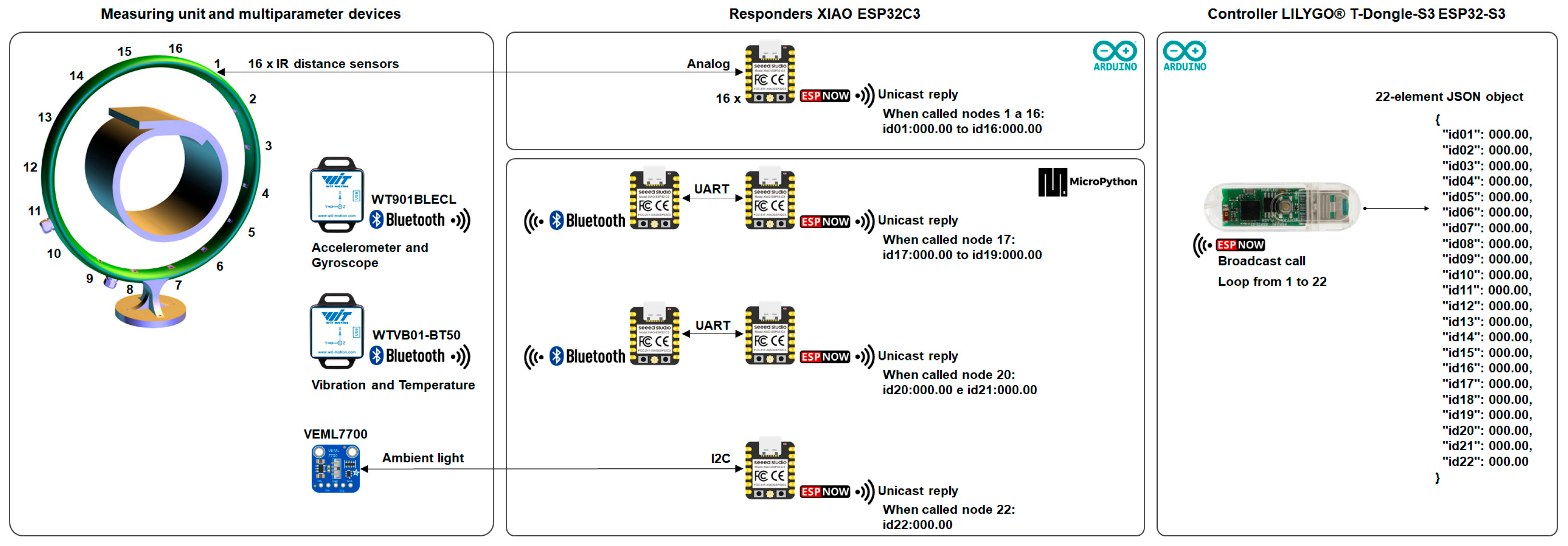
For IIoT networking, we employed the ESP-NOW wireless communication protocol to achieve multiparameter processing and create a deployable sampling unit. We specified a USB IIoT dongle, model LILYGO T-Dongle S3 ESP32-S3 Development Board (LILYGO, Shenzhen, China), as the network controller for the system. The network architecture consisted of one controller and 19 physical nodes, configured as responders. A total of 22 SoCs were employed in the physical layer, owing to the paired ESP32 approach used to measure vibration and 3-axis motion using our custom Bluetooth-to-ESP-NOW interfaces. In the network layer, 22 variables were created.
We employed Arduino libraries to implement algorithms in the network controller, and the responders used to read from the analog IR sensors. Conversely, we used MicroPython modules to program the responders to read the 3-axis motion, vibration, and illuminance measurements. Using Arduino Software IDE version 2.1.0 (Arduino AG, Turin, Italy) and the QuickESPNow library for ESP-NOW network-level functions in version v0.8.1, we implemented an algorithm in the network controller to send broadcast calls (one-to-all) with its MAC address every 10 ms. The call consisted of a recurring incremental loop of 22 integer numbers. We then implemented a callback software function to read the responder’s data asynchronously, allocating the readings in a 22-element JSON object using the ArduinoJson library in version 6.21.2.
The library QuickESPNow was also applied to read from the analog IR sensors, utilizing a similar asynchronous callback function to read the controller’s call and MAC. Using an authentication check, we implemented a periodic loop to send unicast replies (one-to-one). Each reply consisted of a concatenated string composed of the responder ID and related readings. A similar approach was employed to read the 3-axis motion, vibration, and illuminance measurements using the Thonny 4.1.4 IDE (University of Tartu, Tartu, Estonia), Python 3.10.11 (Python Software Foundation, Wilmington, DE, USA) interpreter, and MicroPython modules Network, ESP-NOW, and Time. This implementation maintained the ESP-NOW protocol while leveraging Python’s capabilities for our custom Bluetooth-to-ESP-NOW interfaces.
In the paired ESP32 interfaces, we utilized the MicroPython modules Time, Bluetooth, Struct, and Machine’s UART class. We used UART communication to transmit the readings from the Bluetooth-connected board (the sender) to the ESP-NOW networking board (the receiver). Using configuration data provided by the manufacturer, WitMotion Shenzhen, we implemented functions that handled events through callbacks, processed notifications to extract readings, and monitored the connection status. We also applied automatic reconnection mechanisms when communication timeouts were detected.
Table 2 and
Figure 8 illustrate the IIoT networking employed in this study for monitoring belt rotation in pipe conveyor applications.
2.4.2. Enabling Technology 2: LLM-Assisted Computing
To provide a cost-effective and scalable alternative for supporting digitization in pipe conveyor applications, we employed LLM-assisted computing in this study. The reasons for using this approach include the flexibility of fine-tuning models as a service on remote servers, the continuous reduction in costs per token, and the capability of using a physical prototype, which provided a comprehensive training dataset, favoring model convergence during fine-tuning. To mitigate the known generalization issues in generating floating-point numbers, we selected GPT-4o-mini (OpenAI, San Francisco, CA, USA) as the base model for fine-tuning. We applied truncation to represent distance measures with five digits, consisting of three integer digits and two decimal places, using the findings from Yang et al. [
50] as a reference for framing the experiment.
Following the implementation of the network layer, we programmed the ESP32 USB dongle to parse and print the 22-element JSON object through its serial port. We developed an algorithm in the application layer using Python IDLE 3.10.8 to historicize the measurement readings for LLM fine-tuning. We parsed the JSON-like string using the Orjson library (version 3.9.9) and historicized the data using the built-in CSV module. Additionally, we recorded the Cartesian coordinates from the function calculating the B/D ratio, which served as a calibration measure for the relative positioning between the physical prototype and the measurement apparatus.
To create the structured prompt for training and later inference purposes, we concatenated keywords with the 16 distance measurements (represented as 2-digit floating-point numbers), the overlap angle (also described as 2-digit floating-point numbers), and the belt’s outer edge position (represented as an integer). The prompt structure was designed to utilize the existing knowledge of the pretrained model. We incorporated application-specific keywords, such as “Measures,” “Angle,” and “Direction”, to imply a meaningful relationship between the input data and the desired output, thereby maximizing the use of the model’s attention mechanism. We also added special characters as suffixes and stop sequences (“#, @”) to format the LLM roles, as presented in
Table 3. Finally, the complete string was formatted as a newline-delimited JSON (JSONL) for fine-tuning.
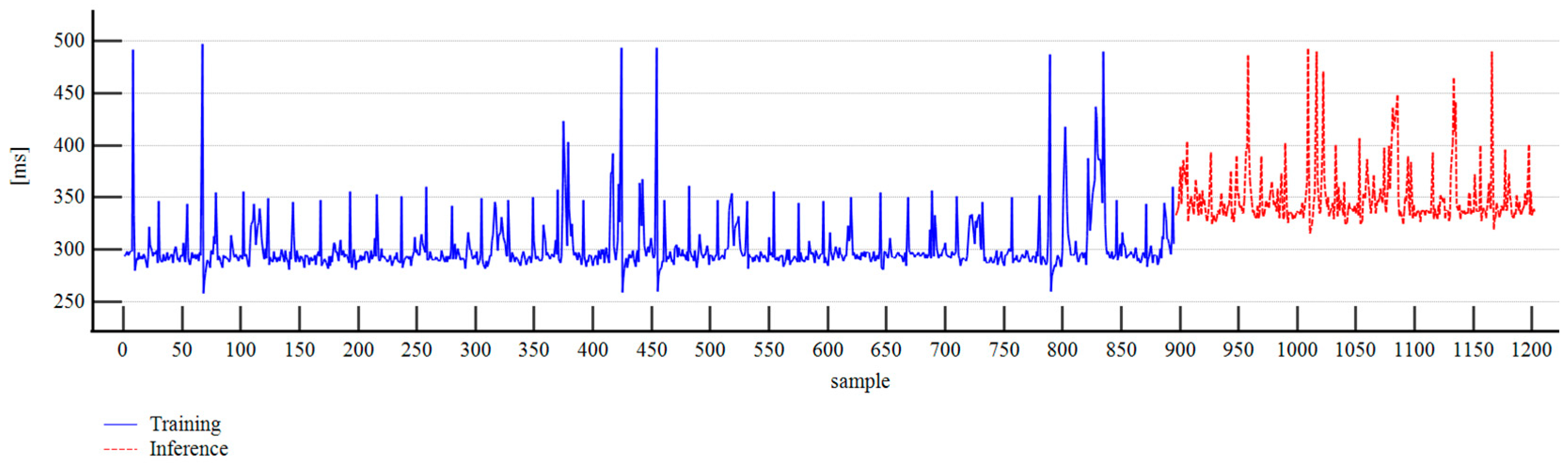
Next, we created a fine-tuning task on OpenAI servers. We used the base model GPT-4o mini, a cost-effective multimodal model released in July 2024, with a knowledge cutoff of October 2023, and intended for focused tasks with reduced latency. Aware of the potential generalization and loss function sensitivity issues caused by the adoption of continuous values in the prompt and completion strings, we validated our fine-tuned model using data collected from the measuring unit, rather than utilizing validation scores from the fine-tuning task. This was a preplanned decision-making process, given that the model was experimentally set to output floating-point numbers, for which differences were expected at the token level, which could lead to inaccurate validation calculations. After training, we implemented an algorithm in the application layer for assisted computing, utilizing API calls to our custom model hosted on OpenAI servers. During inference, the model was prompted with a temperature parameter of 0.2, a maximum response length of 200 tokens, and a request timeout of 200 ms.
2.4.3. Enabling Technology 3: Human–Machine Interfacing
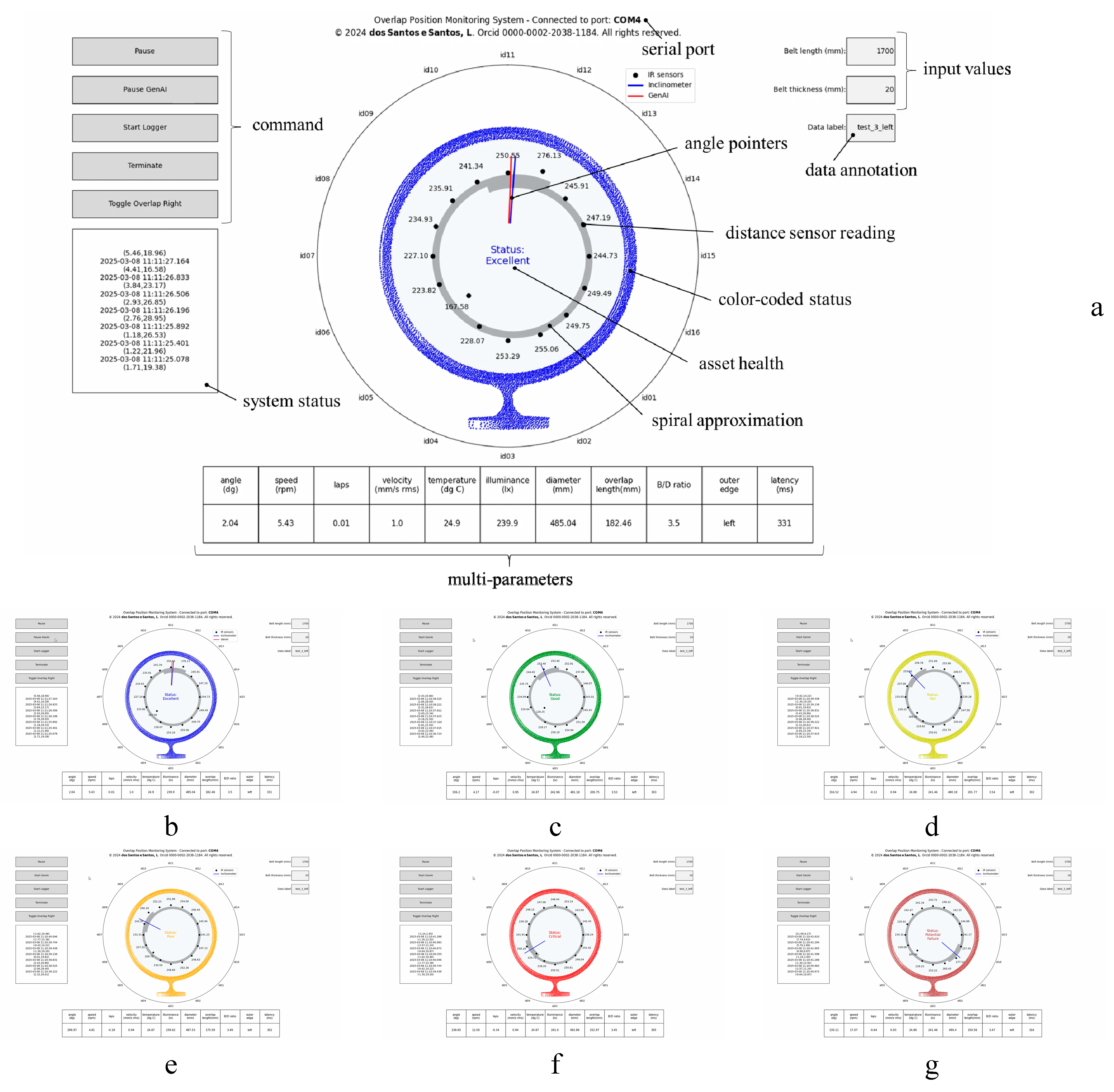
Finally, we implemented an HMI using Python IDLE 3.10.8 to deploy a fully functional sampling unit. The interface comprised command buttons to pause or resume sampling, enable or disable the LLM-assisted computing, historicize in a CSV file, toggle the belt’s edge position, and terminate the application. A status textbox periodically printed the timestamp along with the Cartesian coordinates from the function calculating the B/D ratio. Additionally, each toggled button triggered on-demand status messages in a textbox. We added numeric fields to be populated by the system user with the sample length (belt width) and thickness in mm. We then set the default values to 1700 and 20 mm, corresponding to the belt sample used in our experiment. A free-text field in the HMI allowed system users to annotate data with contextual information.
We plotted a polar chart and added a concentric point cloud to represent the measurement apparatus. This chart displays the 16 distance measures, a 1000-step spiral approximation, and two pointers representing the measured and predicted belt angles. The spiral was populated clockwise or anticlockwise based on the preset or predicted belt’s outer edge position. We also plotted a table with eleven readings, including the angle of the belt overlap (0–359.99°), rotation speed (in rpm), absolute belt turns, vibration velocity (in mm/s RMS), temperature (°C), illuminance (in lx), pipe belt diameter (in mm), overlap length (in mm), B/D ratio, the belt’s outer edge position (if undefined, right- or left-sided), and latency (in milliseconds).
At startup, the program listed the available serial ports and automatically connected to the ESP32 USB dongle, populating its port number in the HMI. We added an asset health status label at the center of the point cloud. Both the image and status labels were color-coded as follows: excellent (blue), good (green), fair (yellow), poor (orange), critical (red), and potential failure (brown).
Figure 9 illustrates the HMI used for information integration.




 ,
,