You are currently viewing a new version of our website. To view the old version click .
Sensors
  • Article
  • Open Access

29 April 2024

LSTM-Autoencoder Based Anomaly Detection Using Vibration Data of Wind Turbines

,
,
,
and
1
Department of Smart Factory Convergence, Sungkyunkwan University, 2066 Seobu-ro, Jangan-gu, Suwon-si 16419, Republic of Korea
2
AI Research Center, 20 Pangyo-ro, Bundang-gu, Gfyhealth, Seongnam-si 13488, Republic of Korea
*
Author to whom correspondence should be addressed.
This article belongs to the Special Issue Deep-Learning-Based Defect Detection for Smart Manufacturing

Abstract

The problem of energy depletion has brought wind energy under consideration to replace oil- or chemical-based energy. However, the breakdown of wind turbines is a major concern. Accordingly, unsupervised learning was performed using the vibration signal of a wind power generator to achieve an outlier detection performance of 97%. We analyzed the vibration data through wavelet packet conversion and identified a specific frequency band that showed a large difference between the normal and abnormal data. To emphasize these specific frequency bands, high-pass filters were applied to maximize the difference. Subsequently, the dimensions of the data were reduced through principal component analysis, giving unique characteristics to the data preprocessing process. Normal data collected from a wind farm located in northern Sweden was first preprocessed and trained using a long short-term memory (LSTM) autoencoder to perform outlier detection. The LSTM Autoencoder is a model specialized for time-series data that learns the patterns of normal data and detects other data as outliers. Therefore, we propose a method for outlier detection through data preprocessing and unsupervised learning, utilizing the vibration signals from wind generators. This will facilitate the quick and accurate detection of wind power generator failures and provide alternatives to the problem of energy depletion.

1. Introduction

At present, mankind is facing environmental and energy issues, of which the shortage in energy supply due to climate change has emerged as a serious problem. Meanwhile, countries worldwide have continued to increase their energy production and use to meet their economic and social demands. Moreover, while traditional non-renewable energy sources, such as oil and coal are being depleted, global countries are facing a decline in energy supply due to increasing energy demands [1]. Accordingly, renewable energy has attracted attention as an alternative energy source to solve these problems [2]. Renewable energy sources are advantageous because they release less carbon dioxide emissions than fossil fuels. In addition, renewable energy as a relatively new industry could create a positive effect on society by providing continuous job opportunities and aiding in economic development [3]. Moreover, with increasing interest in environmental and energy issues, the renewable energy industry is growing rapidly and is attracting global attention from numerous governments and companies that are expanding research, development, and investment in this sector [4].
Wind power generators are a representative means of renewable energy generation and are attracting attention as alternatives to global warming and energy resource depletion [5]. The advantages of wind power generators are as follows. Clean energy production is possible, and wind power generators do not generate air pollutants because they use wind to generate electricity without combustion reactions [6]. Thus, the depletion of energy resources is expected to be alleviated. Unlike energy generation by conventional fossil fuels, wind power generates electricity from natural energy sources. Thus, the problem of energy resource depletion can be alleviated. They can also be used to produce electricity sustainably. Wind power generators generate electricity using wind, which is constantly present on Earth; therefore, sustainable electricity production is possible. In the future, wind generators are expected to develop further and power generation will increase further. Existing wind power plants contain large machines with high power generation capacities and many restrictions on installation sites, but wind power generation is expected to become more efficient because of various technologies, such as miniaturization, advancement, and wind power as a medium [7].
Additionally, wind power generation will play an important role as an environmentally friendly means of power production, even in the face of increasing power demands. However, the availability, reliability, and turbine life of wind energy must be improved to compete with other energy sources. Organizational dynamics require strict cost management as the industry grows [8]. Currently, the problem of wind energy generation failure detection is largely divided into two. The first is accuracy and reliability, and the second is cost. First, it is difficult to measure the sensor due to the vibrations or noise generated by wind power generators, and accurate failure detection is difficult due to a lot of noise. In addition, wind generators must accurately classify each failure situation because various failure phenomena can occur depending on the environmental conditions. Second, for fault detection, many sensors must be installed, data must be collected, and complex algorithms are required. This is expensive for large-scale wind power plants and is difficult to apply in small-scale power plants. The larger the motor, the more frequent the failure; therefore, more attention is required. As the size and number of wind power generators increase, reducing monitoring and repair costs has become increasingly important [9].
Recent work on outlier detection includes [10] used a Kalman filter to generate appropriate residuals evaluated with a predetermined threshold and proposed an adaptive system. Deep learning networks such as data-driven convolutional neural networks (CNN) and stacked denoising autoencoders (SDAE) were also used but did not consider the hidden temporal dependencies of each parameter [11]. Reference [12] proposed an anomaly detection model combining long short-term memory (LSTM) and bidirectional long short term memory (BLSTM) to prevent failures caused by resource contention in cloud environments and demonstrated good experimental results. While existing anomaly detection methods require human intervention and computational complexity, making it difficult to apply in real-world scenarios, [13] showed a lightweight algorithm that can detect anomalies in real time and respond immediately. In [14], the maintenance mode of high-speed rail power equipment is updated with a predictive and proactive approach to accurately predict future maintenance times and solve the problem of data shortage. On the vision side, proactive anomaly detection (PAAD) based on planned movements and current observations is proposed to proactively detect anomalous behaviors in the navigation of mobile robots [15]. A mission-critical services (MCS) overload detection architecture is proposed to improve reliability and self-configuration by predicting service requirements and providing overload notifications in real-time through intelligent connectivity with 5G core networks [16]. In this study, we performed unsupervised learning using a long short-term memory autoencoder (LSTM-AE) with temporal characteristics considering only the normal vibration data of wind turbines. We compared the unsupervised learning methods of isolated forests and LSTM-AE to determine which model is better suited for unsupervised learning outlier detection.
The contributions of this study are as follows:
  • The objective of this study was to diagnose faults using unsupervised learning based on time series vibration data in a noisy environment.
  • In this study, we used wavelet packet decomposition to decompose one signal into multiple bandwidth signals and used a high-frequency filter to emphasize the high-frequency part. We used the filtered signal through principal component analysis to benefit from computing resources and analysis through dimensionality reduction.
  • When applying the preprocessing method proposed in this study, the reconstruction error of learning and predicting the data by unsupervised learning was about 97%, which was better than the reconstruction error (about 94%) when no preprocessing method was previously applied.
  • The preprocessing method proposed in this study has shown that it improves performance even for simple models. The results of this study are expected to be useful in signal and speech processing and will be helpful for new preprocessing methods.
The remainder of this paper is organized as follows: in Section 2, we introduce the technology used for the proposed data preprocessing. Section 3 includes the model structure of the anomaly detection proposed in this study. In Section 4, we describe the experimental results and evaluate the methods used. In Section 5, we conclude and outline implications for follow-up studies.

3. LSTM Autoencoder Based Anomaly Detection

3.1. Model Structure

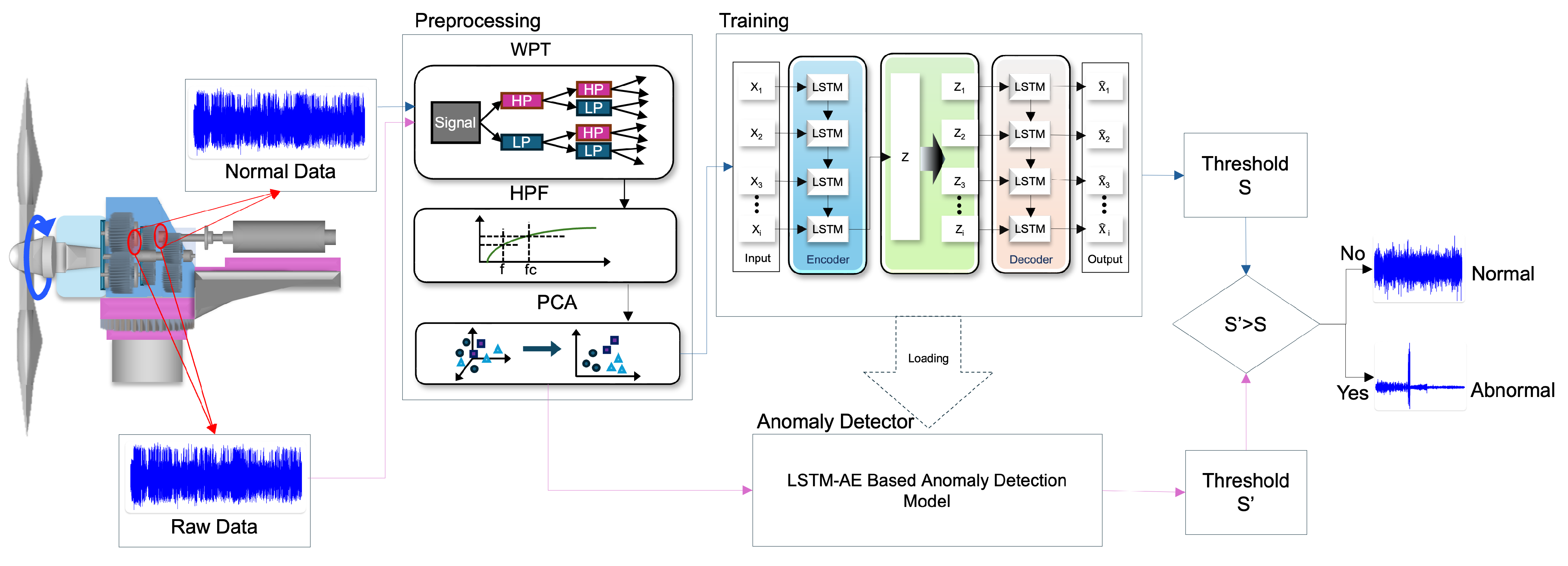
As shown in Figure 4, PCA is a multivariate method based on quadratic statistical characteristics that convert a high-dimensional space into a low-dimensional space using coordinate transformation. PCA efficiently performs information compression and data correlation elimination [45]. Furthermore, reducing three-dimensional data to two dimensions simplifies the visualization of data and makes it easy to grasp the structure and pattern of data, because they can be visualized on two-dimensional planes. This helps in reducing data complexity and computational costs because it extracts the principal components that best preserve the characteristics of the data through dimension reduction. As the principal components are selected based on data variance, the reduction to two dimensions can represent the distribution of the original data. This makes it easier to understand trends and patterns in the data. After performing the process on both normal and abnormal data, autoencoder learning was performed using only the normal data.
Figure 4. The Proposed Model Framework.
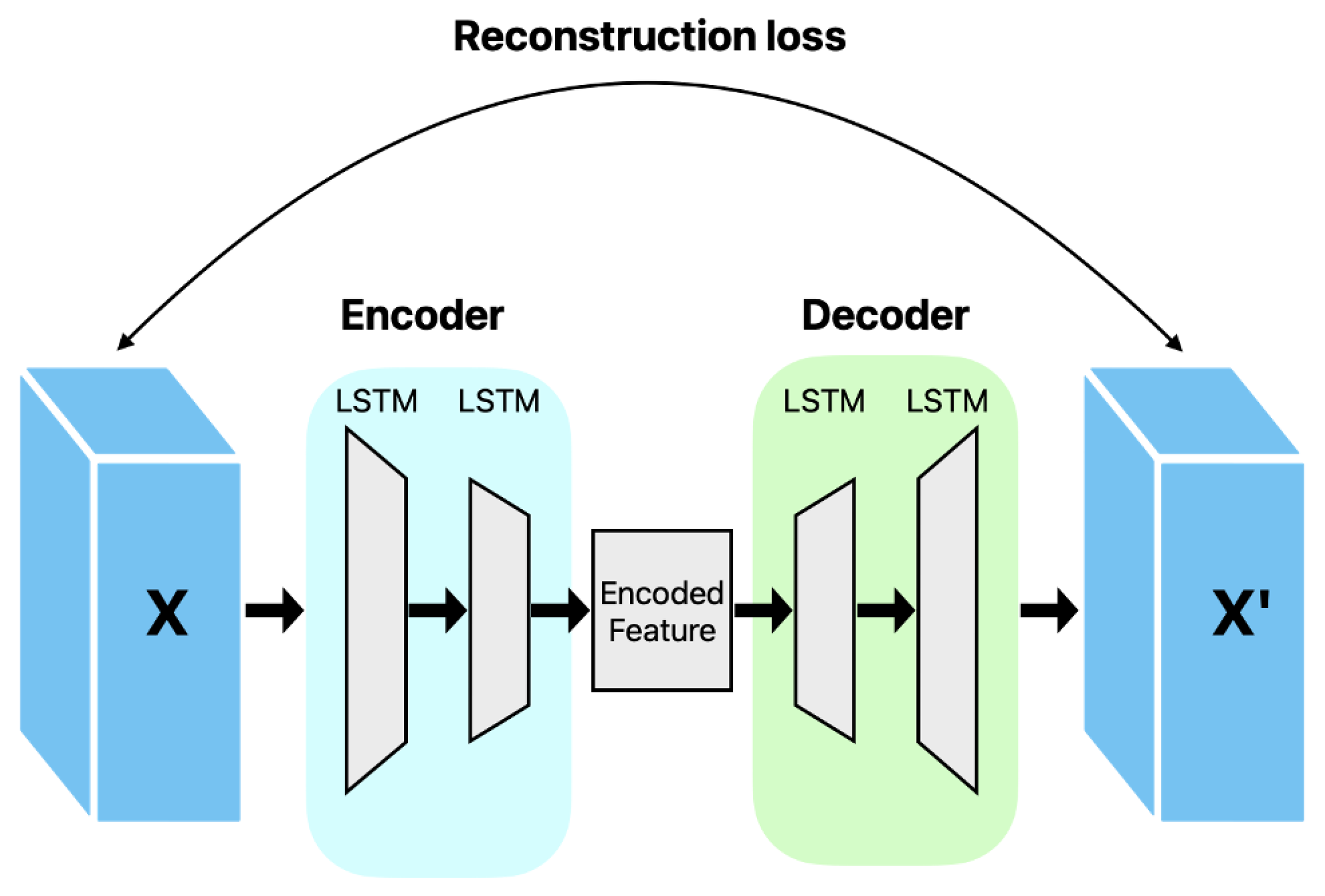
The LSTM-AE was used to detect outliers in the time series data. The model compressed the input data into a low-dimensional latent space and reconstructed the original input data. In this case, the reconstruction loss between the reconstructed and the original data was calculated. The reconstruction loss is a value representing the difference between the input data and reconstructed data; the smaller the loss, the more accurate the reconstruction of the input data. These LSTM-AE models learn normal data, identify patterns in the corresponding data, and detect data with different patterns as abnormal values. Data with large reconstruction losses are classified as outliers because of the large differences between the original and reconstructed data. During model learning, the LSTM-AE was trained using only normal data, and the threshold for reconstruction loss was set. This threshold was set based on the distribution of reconstruction losses for normal data. The test data were evaluated using learned models and thresholds, and data with reconstruction losses greater than these thresholds were judged as outliers. The reconstruction loss of the LSTM-AE was used for outlier detection because the model was trained based on normal data. After the LSTM-AE learned the pattern of the normal data, the outliers had a different pattern from the corresponding pattern; thus, the reconstruction loss was large. Therefore, it is possible to detect outliers through the reconstruction loss, and the careful coordination of outlier detection is possible by adjusting the reconstruction loss threshold.

3.2. Anomaly Detector

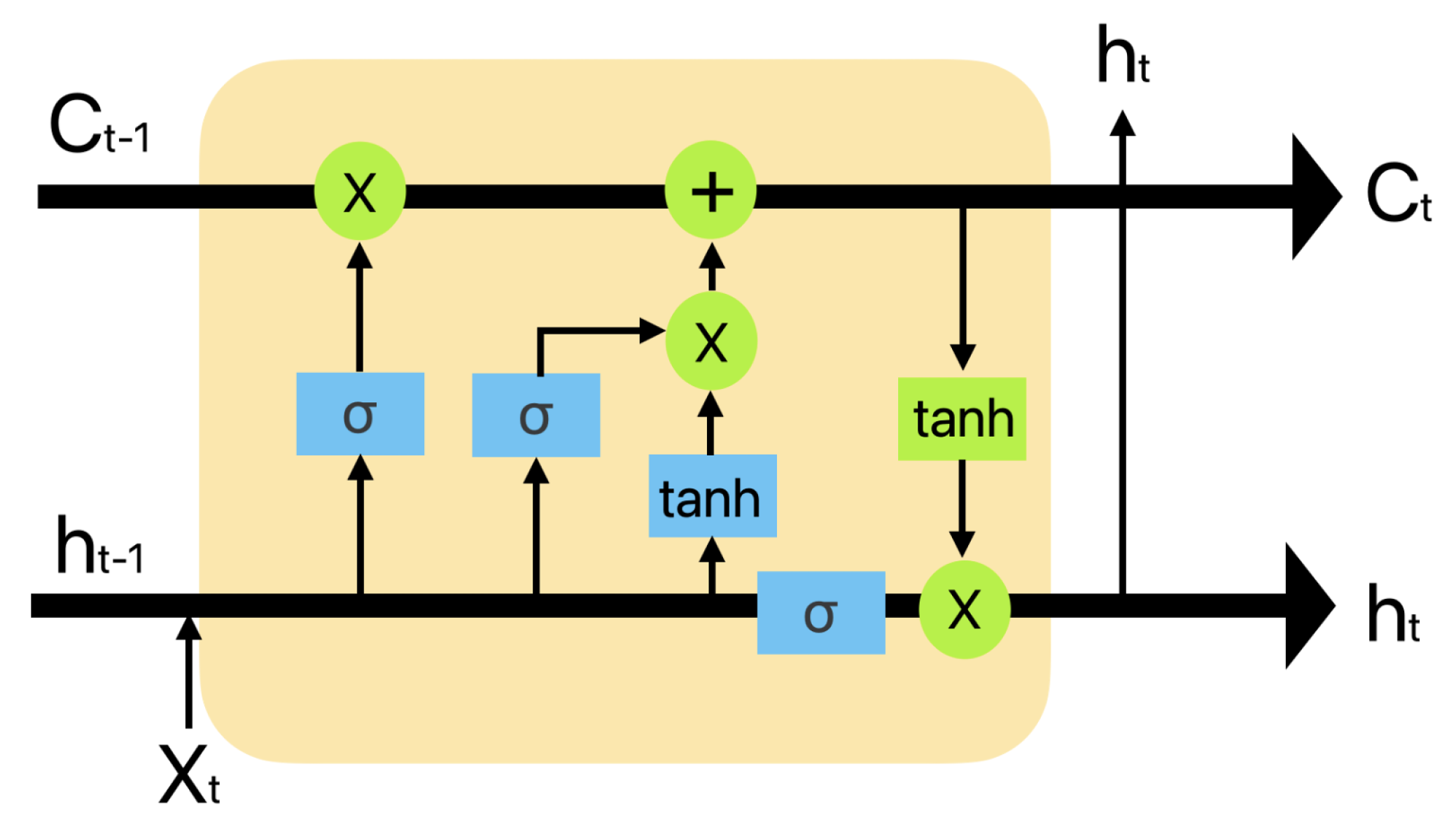
The Isolation Forest and Autoencoder algorithms are used for outlier detection in unsupervised learning. These two algorithms focus on identifying and isolating outliers from the unlabeled data. The Isolation Forest uses data distribution to identify outliers. The algorithm assumes that outliers are rare and independent. The Isolation Forest operates by cutting the data, constructing a tree, and calculating an outlier score by measuring the length of the path in which each sample reaches the terminal node. This algorithm is faster than the autoencoder and has the advantage of being less affected by data dimensions. An autoencoder is a neural network-based algorithm that detects anomalies by minimizing reconstruction errors in the data. The autoencoder compresses the input data into a low-dimensional latent space and reconstructs the original input data. In this case, data with large reconstruction errors were considered as outliers. The autoencoder performed well in learning complex patterns of data and detecting outliers based on them and could be used more effectively to detect outliers by automatically adjusting the thresholds. LSTM-AE is a neural network-based algorithm suitable for time series or sequential data. LSTM is a type of RNN that can learn long-term dependencies [46].
The LSTM-AE uses LSTM cells to learn the complex patterns of the sequence data and because it can detect and remember long-term dependencies of sequential data, it is effective in detecting outliers in sequential data, such as time-series data or natural language processing. For outlier detection, the Isolation Forest and LSTM-AE use their respective methods to analyze the patterns and distributions of the data and identify outliers. Thus, they can be used to detect outliers and improve the data quality in unsupervised learning. LSTM-AE is a type of RNN that can learn long-term dependency, compress input data into a low- dimensional latent space, and then reconstruct the original input data. In this case, data with large reconstruction errors were considered as outliers. LSTM can detect and remember the long-term dependencies of sequential data. Therefore, the LSTM-AE is effective in detecting outliers in sequential data, such as time-series data or natural language processing [47].
The anomaly detector is judged based on the threshold set by the normal data of LSTM-AE, and if the calculated threshold of each data point is higher than the threshold of the normal data, the data point is judged as an anomaly.

3.3. Loss Function

The proposed LSTM-AE model detects outliers that are outside the normal range. As we performed unsupervised training, we used only normal vibration data to train the autoencoder, which requires that the training data consist of normal data that does not contain outliers. When dimensionality reduction is performed, the reconstruction error is calculated, and in this study, we used the mean squared error (MSE) loss function [46,48]. MSE is defined as the average of the squared differences between the actual and predicted values. A smaller MSE value indicates a higher prediction accuracy of the model. The MSE used for reconstruction error is defined as follows.
1 n i = 1 n ( X i X ^ i ) 2
The optimal threshold value is the point where the difference between precision and recall is minimized. There are several loss functions as evaluation indicators, and MSE squares the loss between the actual value and the predicted value and imposes a panel to enable the model to make accurate predictions. The receiver operating char curve (ROC) is used to evaluate the accuracy of outlier detection, visualize the performance of the binary classification models, and for outlier detection. The ROC curve has a True Positive rate (=sensitivity) on the y-axis and a False Positive rate (=1-specificity) on the x-axis. T P r a t e and F P r a t e are defined as follows [49].
T P r a t e = T P A P and F P r a t e = F P A N
The ROC curve represents the performance of the classification model at all thresholds and is a graph showing the change in the sensitivity and specificity of outlier detection when the threshold of reconstruction error changes. The closer the area under the ROC curve (AUC) value is to 1, the better the performance of the model. The minimum value of AUC is 0.5, which means that the model cannot classify classes. In this study, the AUC was calculated using an ROC curve to evaluate the outlier detection performance of the LSTM-AE model, and the accuracy of the model was confirmed [50].

4. Experiment and Results

4.1. Experiment Environments

The development environment of this study is as follows. OS: Mac OS v13.3.1; Python: Python v3.10.12; CPU: AMD EPYC 7B12; Memory: 13,294,252 kB.
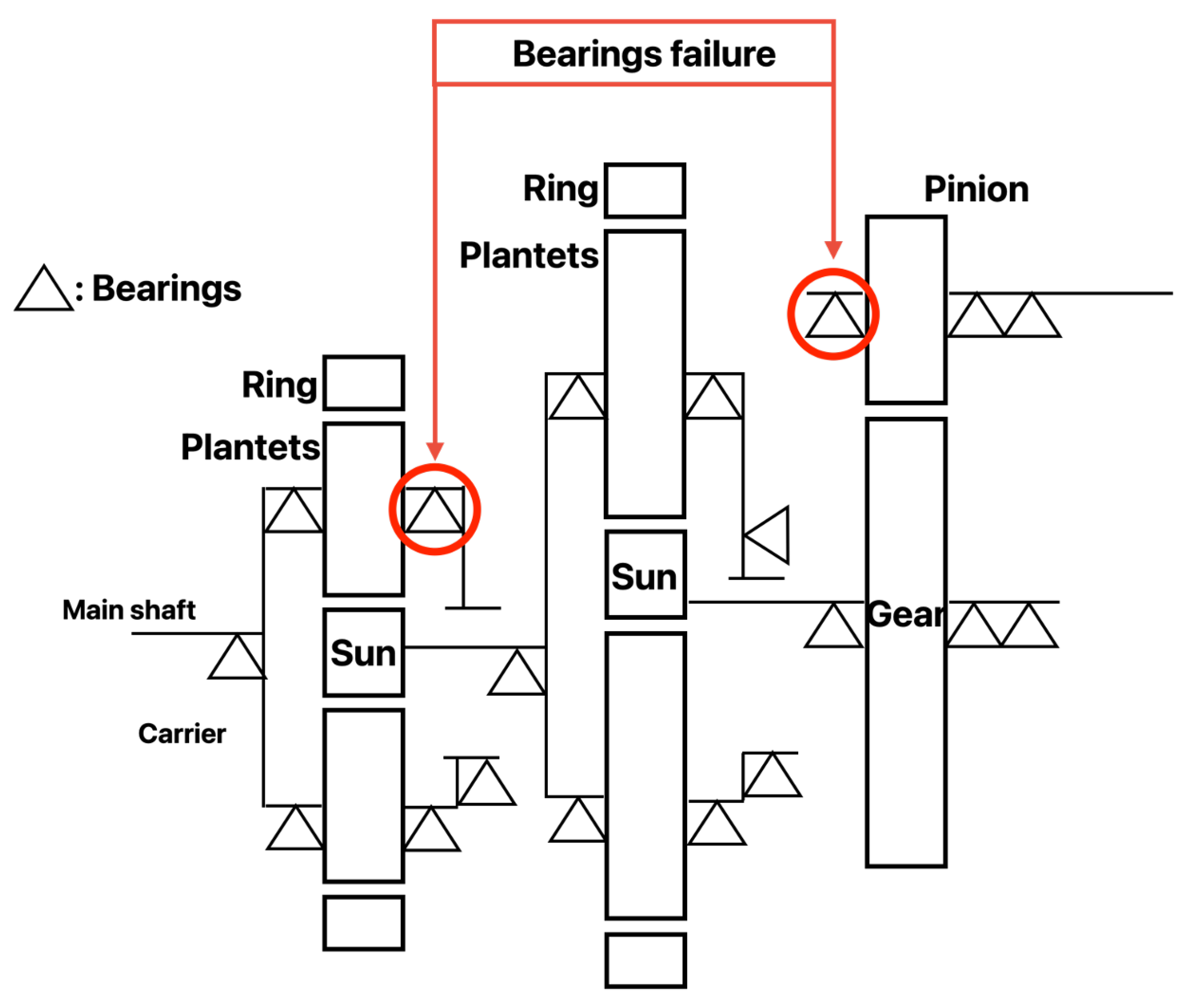
Data were collected from a wind farm in Northern Sweden. The wind turbines were of the same model and included an integrated state-monitoring system that transmitted data to a state-monitoring database, from which the vibration data used in this study were accessed. Each wind turbine had a three-speed gearbox, including two sequential planetary gear stages and a helical gear stage. Each gearbox had four accelerators near the different gear stages. All measurement data corresponded to the axial direction of the accelerometer mounted on the output shaft bearing housing of each turbine. The sampling rate was 12.8 kHz, and the length of each signal segment was 1.28 s (16,384 samples). Signal segments were approximately 12 h apart for 46 consecutive months over the past 10 years [51].
Figure 5 shows the components of each stage, including the support bearing are shown. In this paper, data from one wind turbine with two bearing failures were used as fault data. The illustration highlights the position of the defective bearing.
Figure 5. Gearbox Schematic for Wind Turbines.

4.2. Parameter Setting

The number of units in the LSTM of the encoder portion was set to 515 and 256. Increasing the number of units in the LSTM model allowed it to learn more complex patterns. More units could be used to process more complex time-series data by increasing the capacity of the model. LSTM can learn long-term dependencies, and this model is used to perform reconstruction work on time-series data. Increasing the complexity of the time-series patterns learned makes the model more effective in identifying patterns in normal data and detecting outliers. The learning rate was set as 0.0001. The learning rate determines the rate at which the model updates its weights. Therefore, selecting an appropriate learning rate allows the model to converge quickly to the optimal solution, and determine the optimal loss value. The learning rate determines the weight update size. A learning rate that is too small can slow the learning speed, whereas a learning rate that is too large can make the learning unstable. Therefore, selecting an appropriate learning rate is important. The Adam optimizer combines the ideas of the momentum and RMSProp algorithms to automatically adjust the learning rate used for the weight updates. The Adam optimizer estimates the mean and variance of the gradient using the moving average and performs weight updates accordingly. Thus, the Adam optimizer performs well with various types of data and models. When the optimizer was set to Adam in the compilation step, the weight of the model was updated using the Adam optimizer generated above. In addition, when set to loss, the MSE was used as the loss function. The MSE is a value averaged by squaring the difference between the actual and predicted values and is used to measure the reconstruction loss of the model. The goal is to restore the input data as effectively as possible by minimizing the reconstruction loss [52].

4.3. Comparison of Normal and Abnormal Data

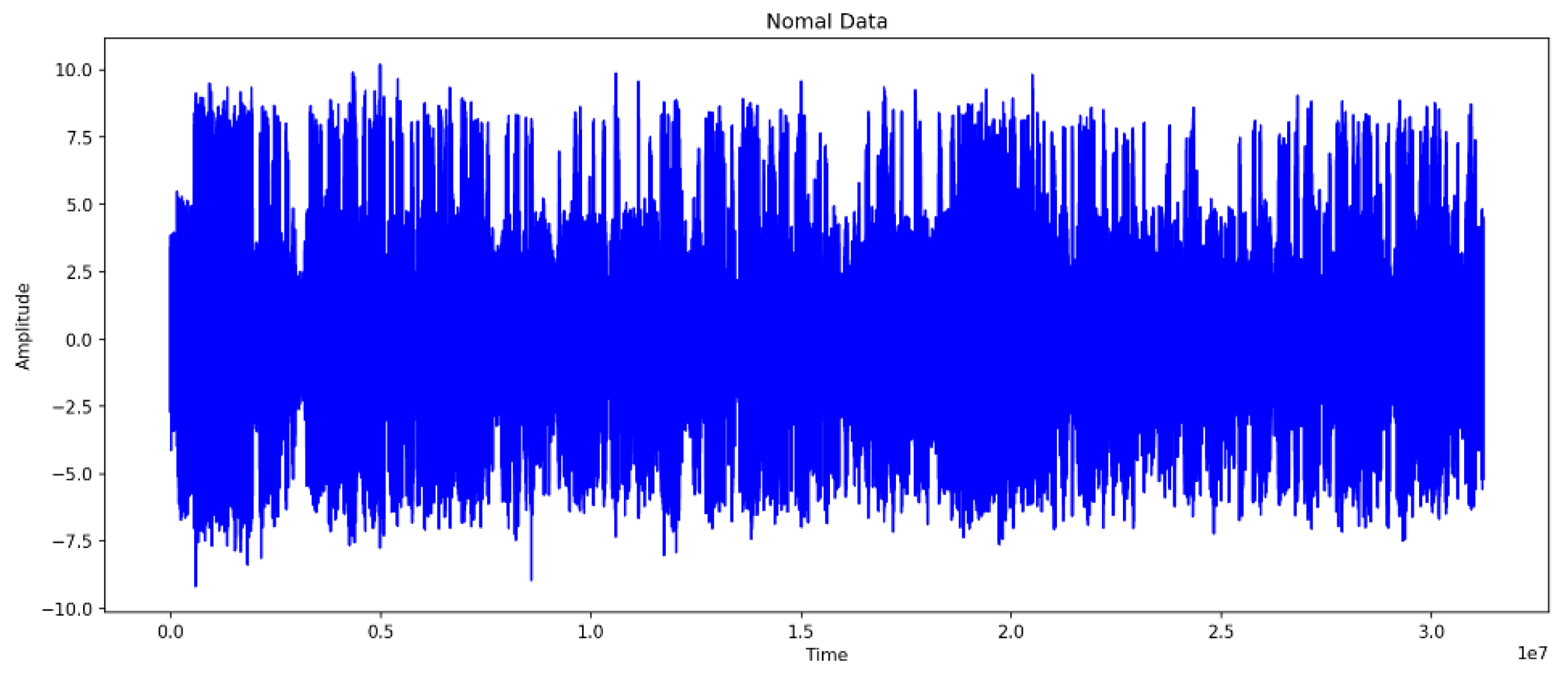
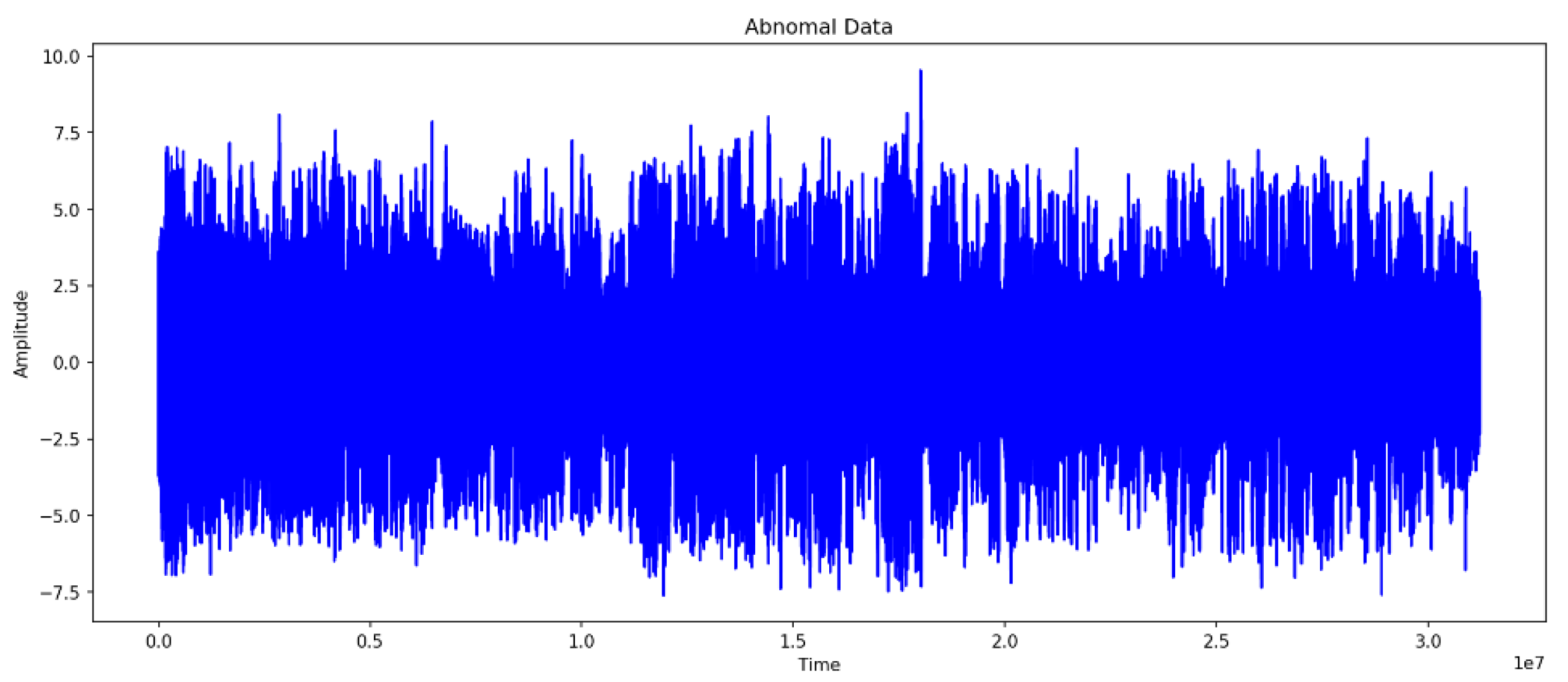
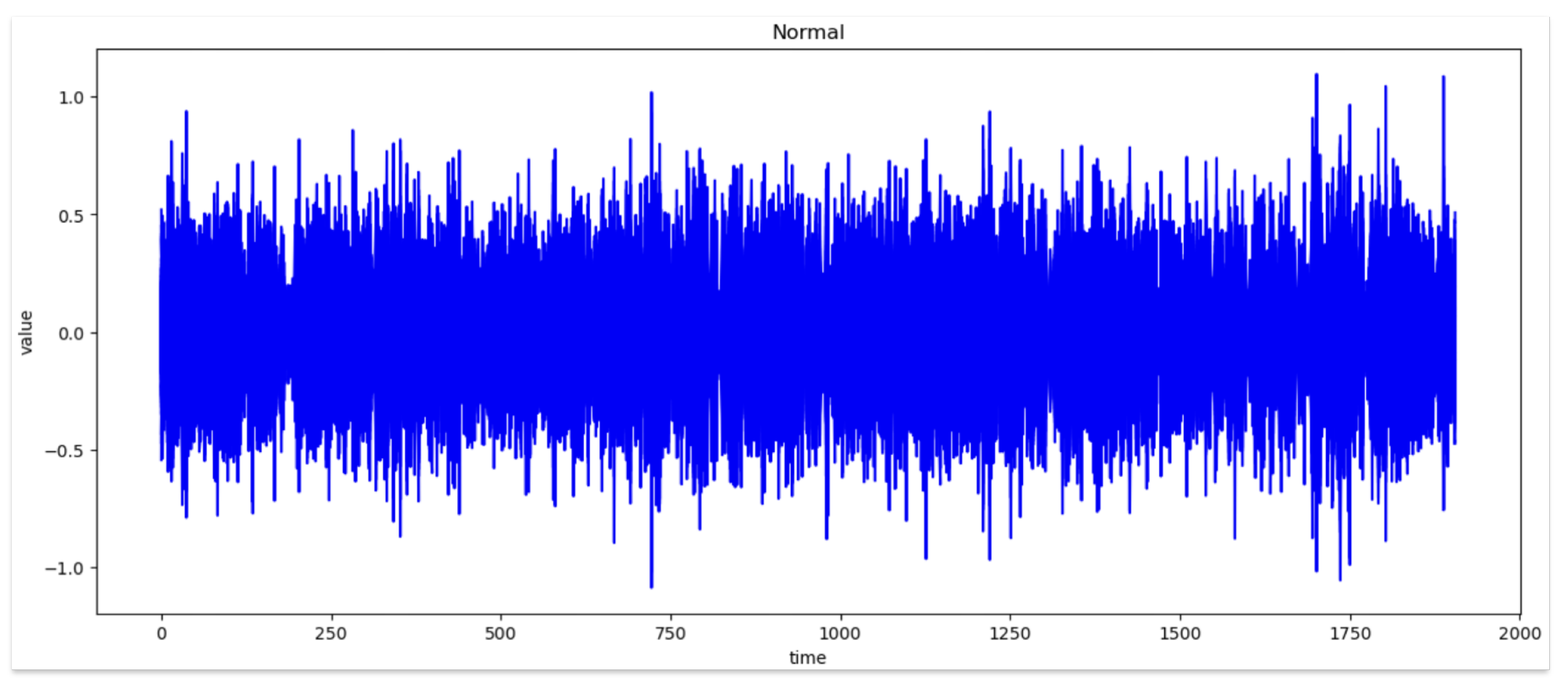
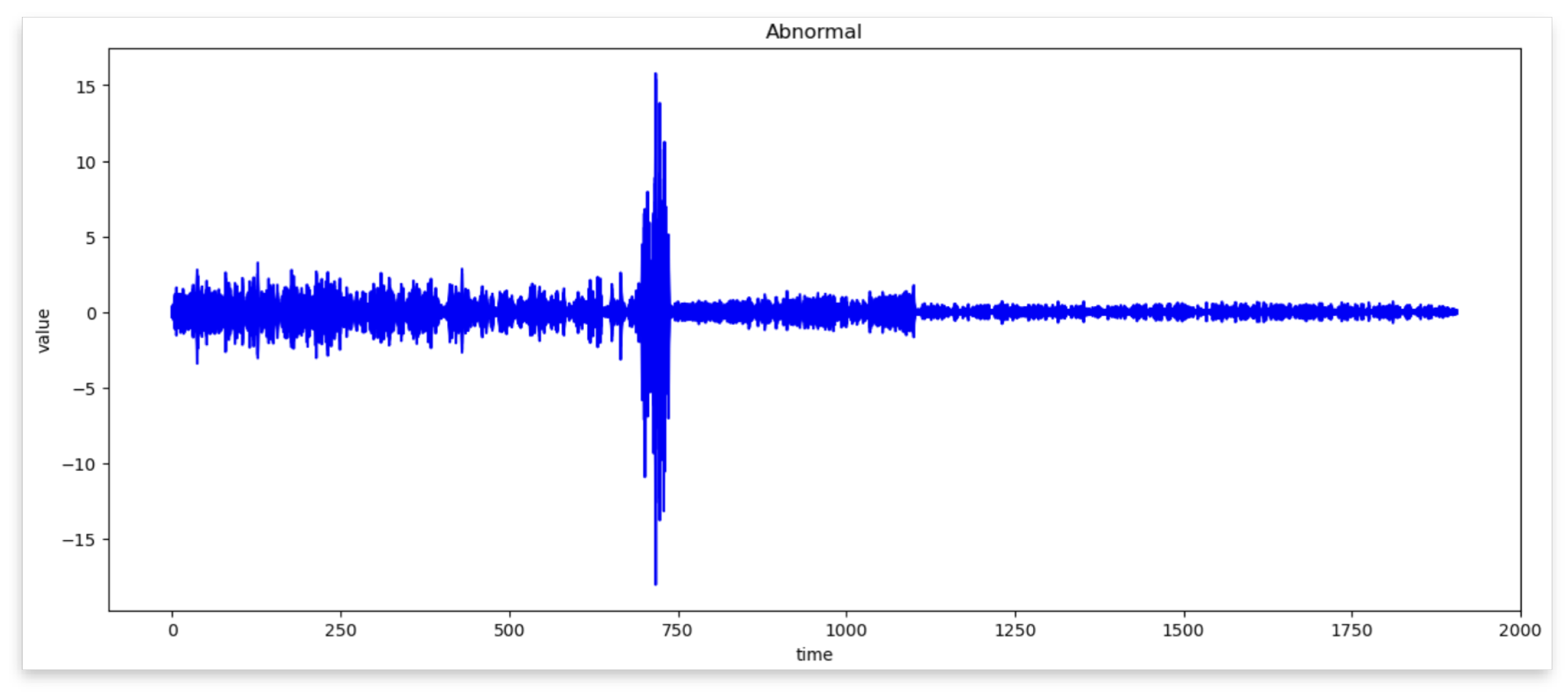
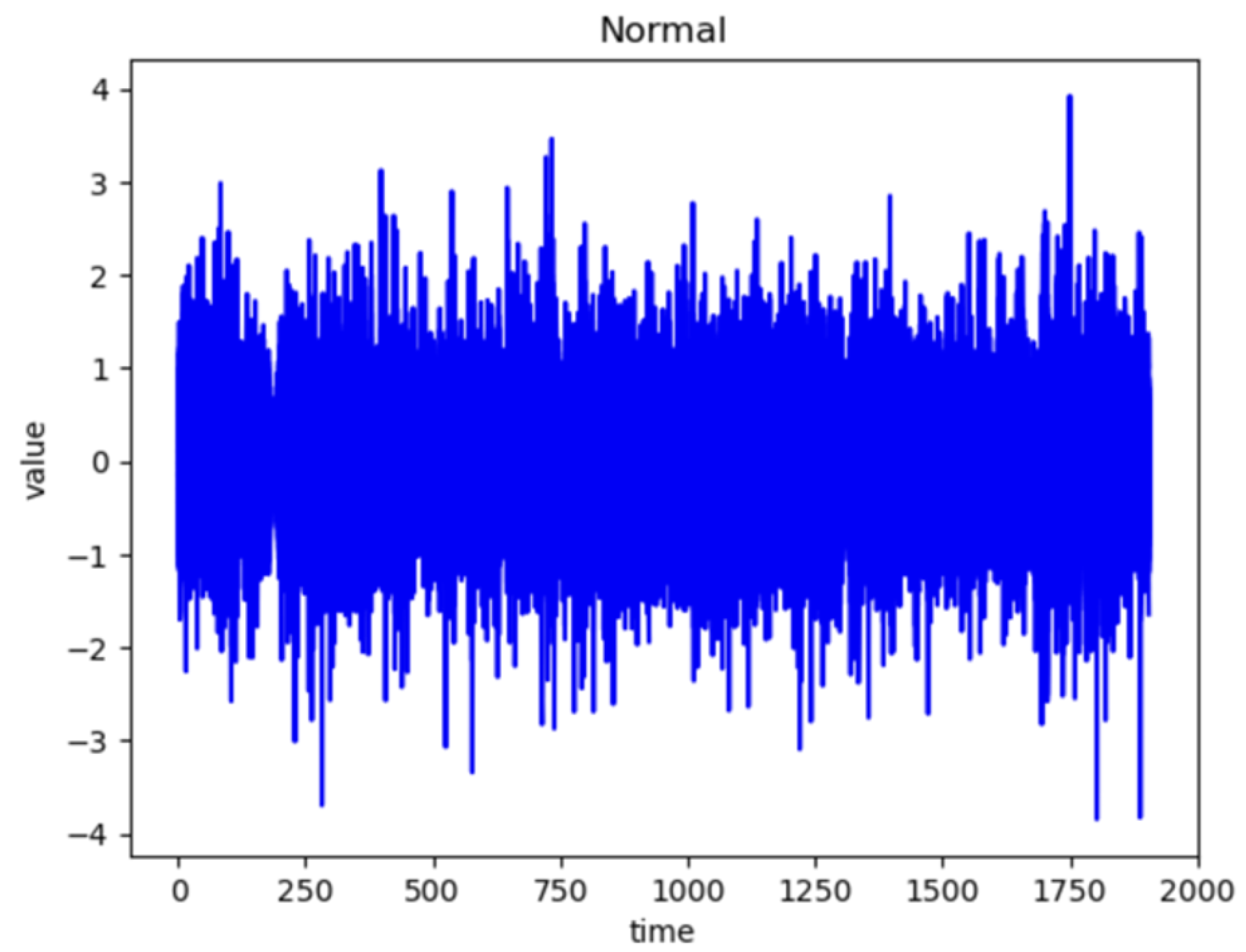
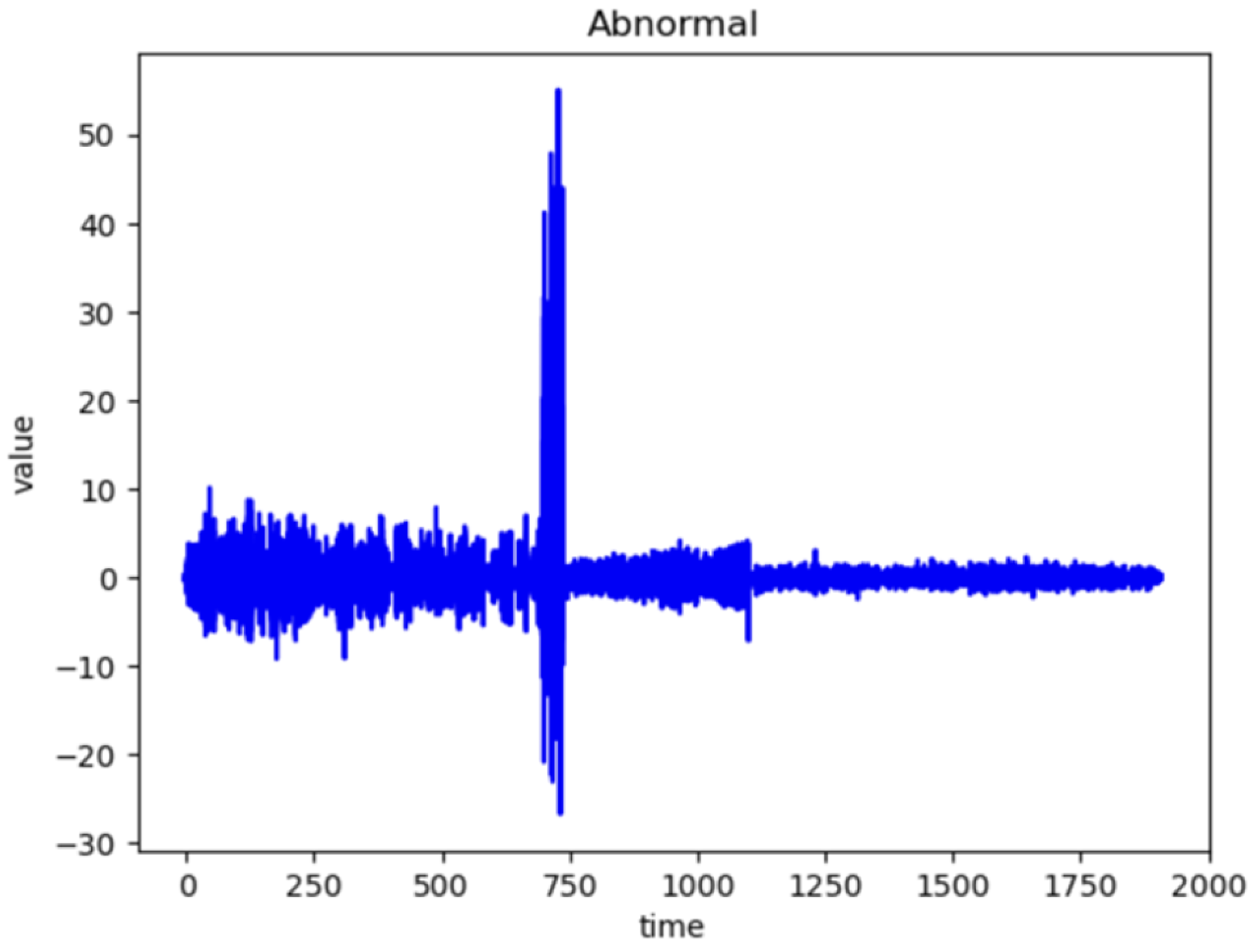
Figure 6 and Figure 7 represent the waveforms of the normal and abnormal data. Considering the raw signal alone, it was difficult to discern the differences between the two datasets. Thus, the waveform was analyzed by decomposing the signal using various frequency bands through the WPT.
Figure 6. Wave of Normal Data.
Figure 7. Wave of Abnormal Data.
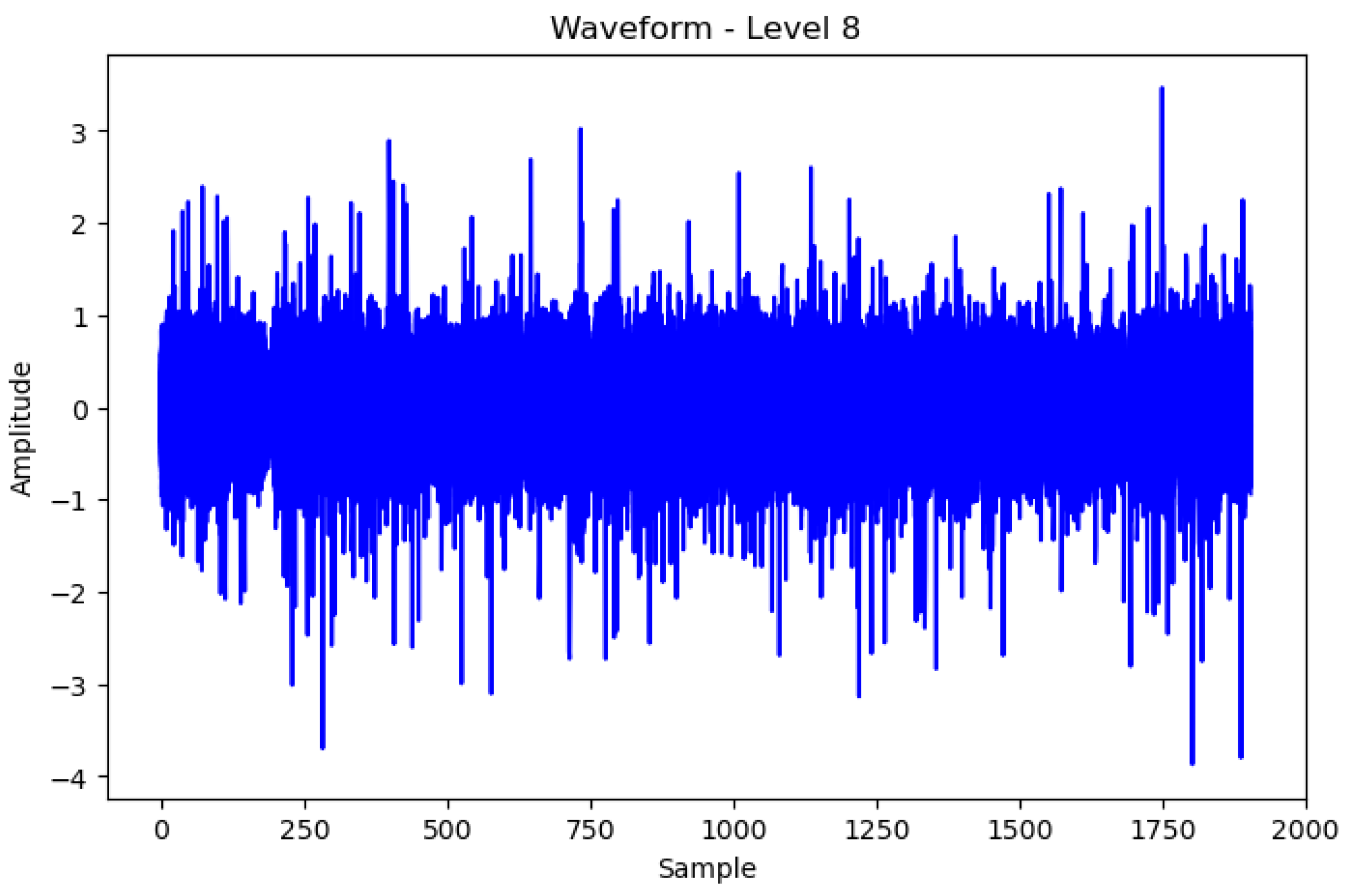
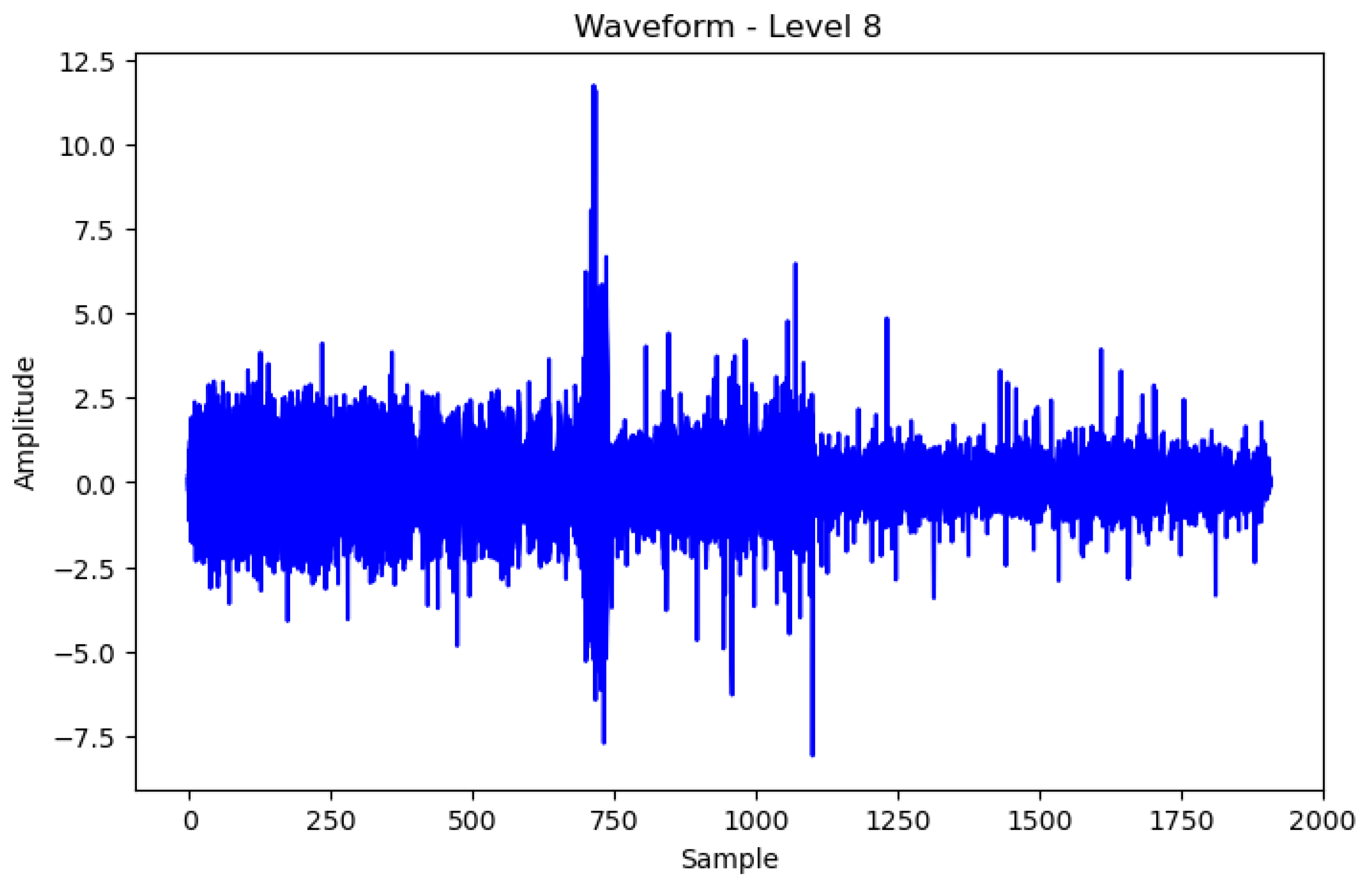
Therefore, by examining the WPT results shown in Figure 8 and Figure 9, the waveform in each frequency band and the difference in the frequency band between normal and abnormal data could be identified. Because the characteristics of the waveforms were different for each frequency band, abnormal data could be identified, or the cause could be inferred by analyzing the characteristics.
Figure 8. Wave of Normal WPT eighth Data.
Figure 9. Wave of Abnormal WPT eighth Data.
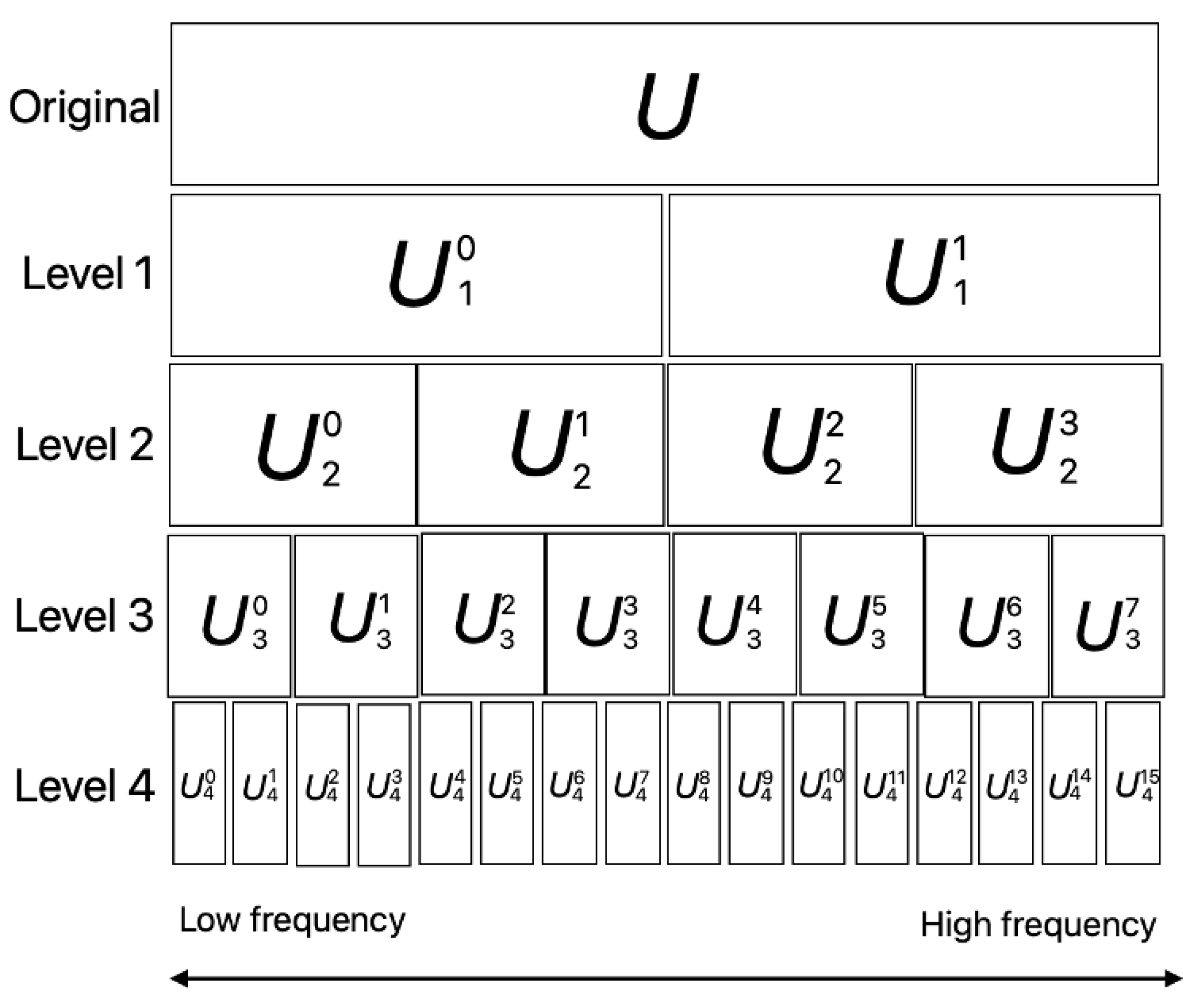
In WPT the sub-bands were generated for each level, and the decomposition at each level was performed using low- and high-pass filters. Each frequency band is represented by a sub-band and the waveform can be examined by selecting a sub-band of a specific frequency band from the given data. In this study, we analyzed the waveforms of the normal and abnormal data by selecting the eighth bandwidth that could be selected by analyzing the given data. This implies that the information related to the characteristics of the corresponding frequency bands must be obtained. When the waveforms of normal and abnormal data were analyzed at the eighth bandwidth, the characteristics and differences in the corresponding frequency bands were confirmed. This facilitated comprehending the difference in frequency bands between normal and abnormal data and discovering unusual patterns or abnormalities in the abnormal data.
Figure 8 Bandwidth of the eighth WPT at normal frequency. Figure 9 Bandwidth of the eighth WPT with abnormal data. In this experiment, 16 waveforms of normal and abnormal data were visualized, which enabled us to visually identify the differences and the singularities between the two datasets. Figure 8 and Figure 9 show the normal and abnormal waveforms of the eighth bandwidth, respectively, that represented the characteristics of the data among the visualized waveforms.
When PCA was performed using the waveform data of the selected bandwidth, the distribution of the data and major fluctuation factors were confirmed. PCA helps highlight key patterns and differences in the data. Therefore, by comparing the PCA results of the normal and abnormal data, the difference and singularity between the two datasets were confirmed. The PCA results for the normal data showed the main patterns and characteristics of the waveform data for the corresponding bandwidth. This represented the consistent behavior of normal data that fits the bandwidth. However, the PCA results of abnormal data represented an outlier or a unique pattern. This indicated unexpected behavior or unusual characteristics in the waveform data of the corresponding bandwidth. Accordingly, data with a singularity were identified by comparing the PCA results of normal and abnormal data. Subsequently, abnormal values or operations occurring in the waveform data of the corresponding bandwidth may be detected. Because PCA is a powerful tool for performing dimensionality reduction and characteristic extraction of data, it facilitated the identification of singularities in data related to bandwidth.
Figure 10 is normal data after HPF and Figure 11 is abnormal data HPF. The HPF enhances the high-frequency signals of normal and abnormal data, removes the low-frequency components from the frequency domain making the components of the signal clearer, and emphasizes the high-frequency components to achieve clearer results. HPF is mainly used in signal or image processing and is useful only when observing components above a specific frequency. HPF can be applied to extract and analyze the desired frequency band. This helps in identifying important frequency components of the data. In addition, removing low-frequency components from the image and highlighting high-frequency components allows for better observation of the details, boundaries, and noise in the image. HPF performs filtering on a given signal or image in the frequency domain; therefore, any component below that frequency is removed and any component above that frequency remains highlighted. This allows the analysis of the frequency characteristics of the data or the extraction of information contained in a specific frequency band.
Figure 10. HPF of Normal Data.
Figure 11. HPF of Abnormal Data.
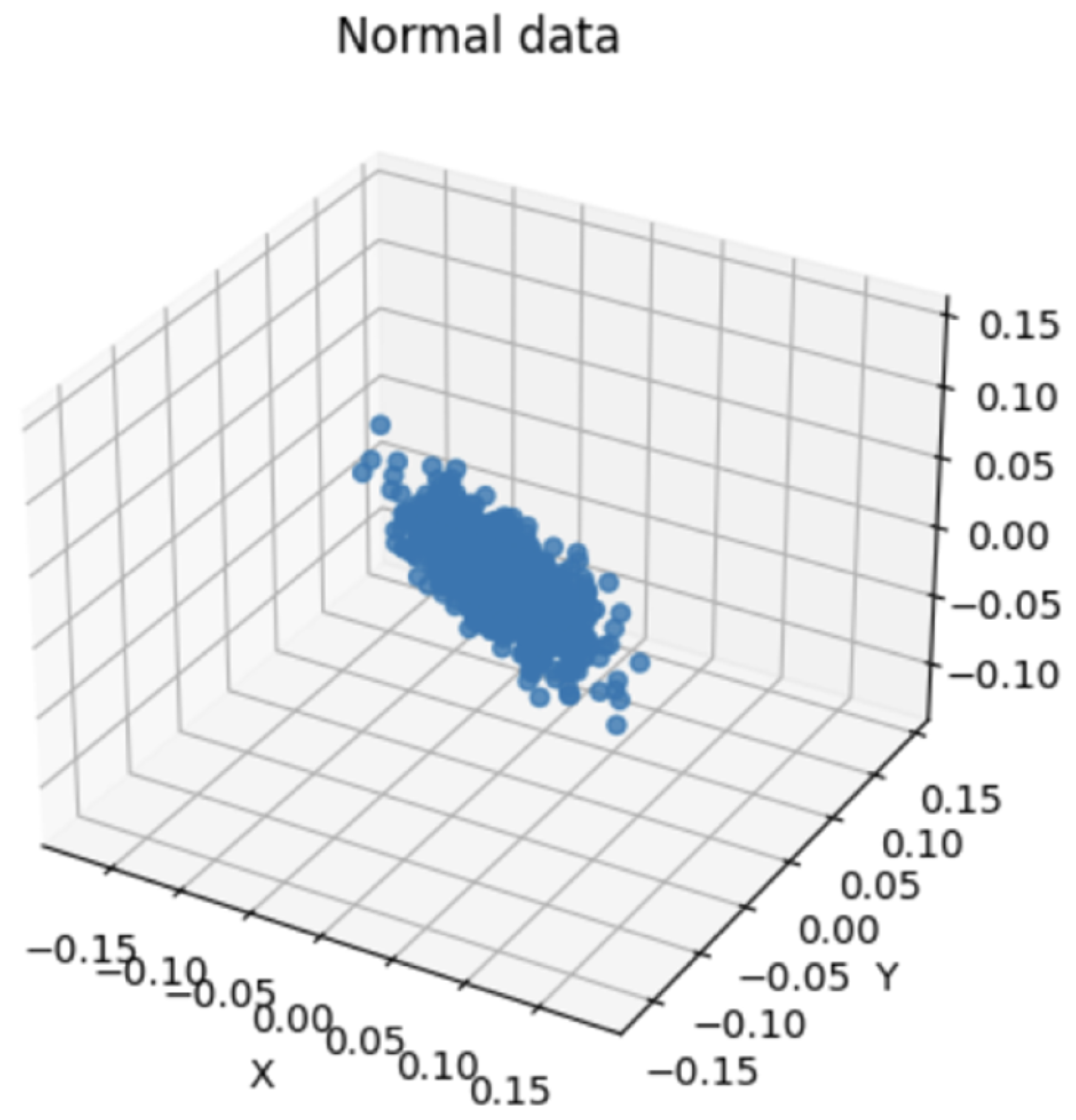
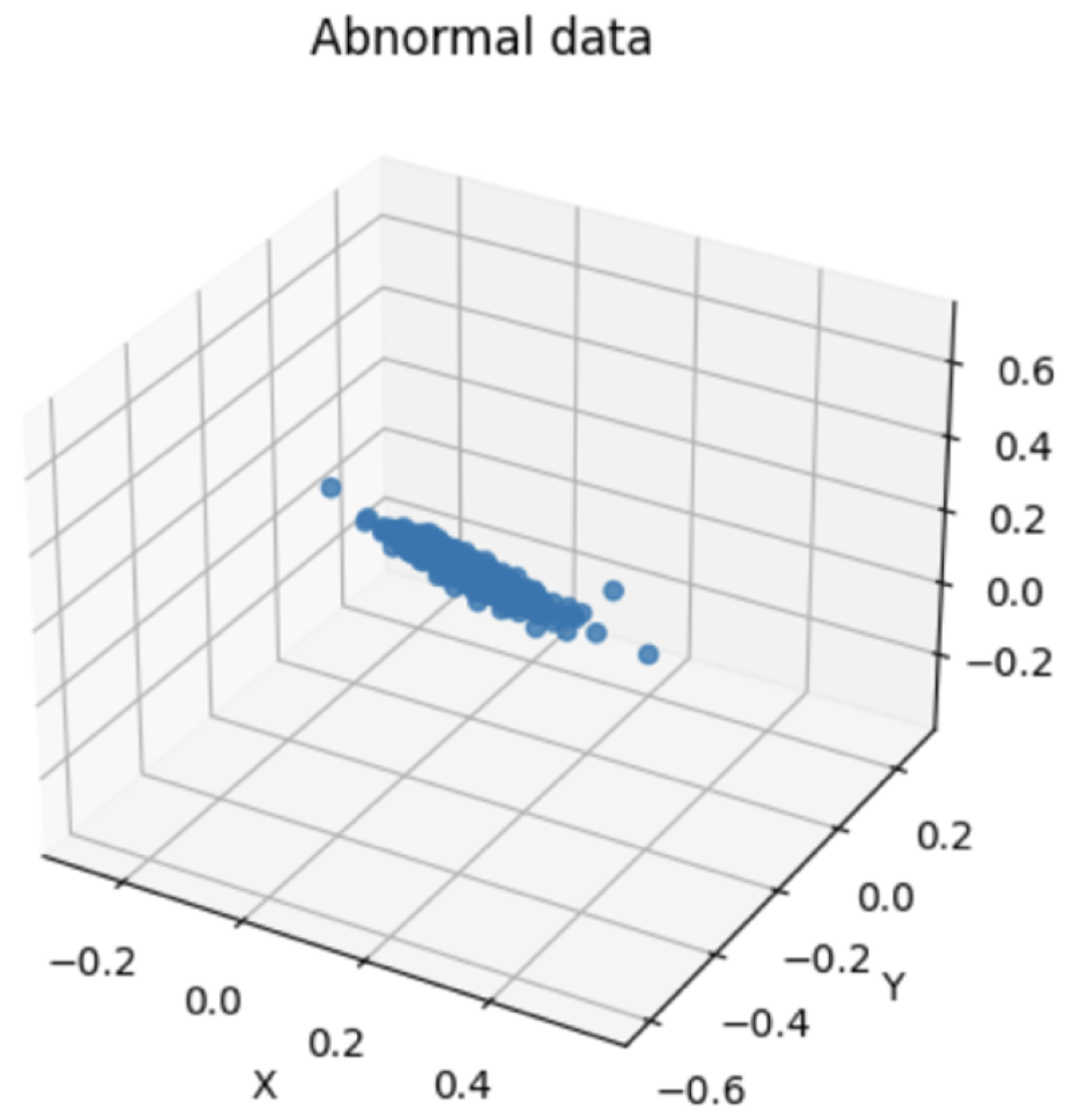
Figure 12 shows a visualization of the bandwidth of normal vibration eighth. Figure 13 shows a visualization of the bandwidth of abnormal vibration eighth. A three-dimensional space was established for the data visualization of a specific bandwidth obtained by performing WPT. First, the variables used for visualization were selected from the dataset to be analyzed. The selected variable corresponds to the axis of the three-dimensional space. The range of each axis was set according to the selected variables. This was determined by considering the minimum and maximum values of the selected variables. Three-dimensional space was used to visualize data based on selected variables. Each data instance was mapped to a specific coordinate in space according to the selected variables. Through this, the distribution and pattern of the data were understood intuitively and analyzed. Figure 12 and Figure 13 are the visualization data mapped onto 3D data with the time and amplitude of each data point.
Figure 12. Bandwidth of Normal Vibration eighth.
Figure 13. Bandwidth of Abnormal Vibration eighth.
Table 1 shows the variance of the data when the dimensions are reduced by the number of corresponding main components. Normal data accounted for 98.9% of the total distribution of data, and abnormal data accounted for 98.5% of the total distribution of data. This ratio aided in selecting the main ingredient. If the principal components were selected in the order in which the Explained Variation Ratio of the principal components was large, the upper principal components that explain most of the variance in the data could be selected. This allowed us to preserve the important features of the data even if the dimensions were reduced. Checking the Explained Variation Ratio from the principal component analysis results helped us evaluate how well we described the variance of the dataset and determined the appropriate level of dimensionality reduction.
Table 1. Data Explained Variance Ratio.
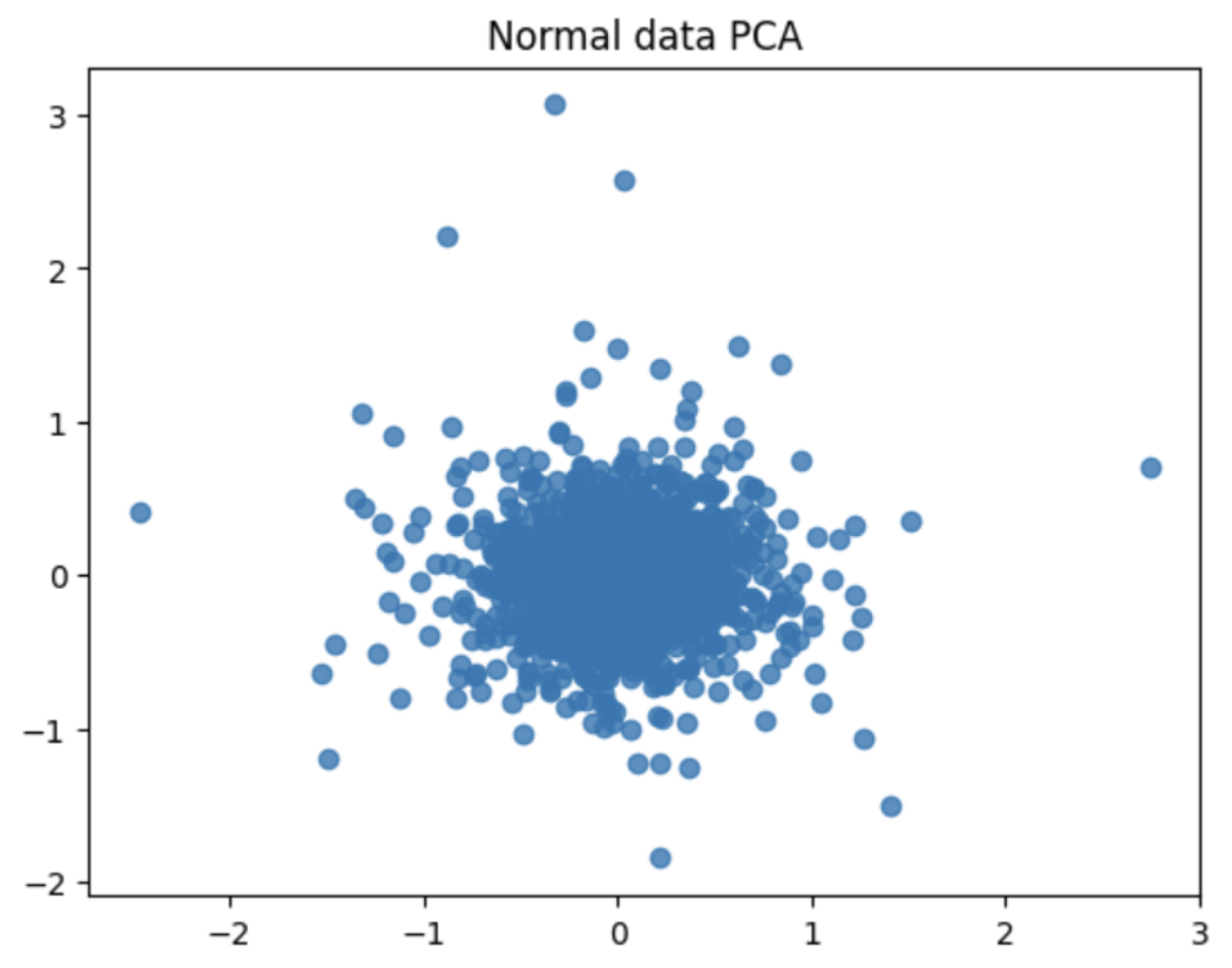
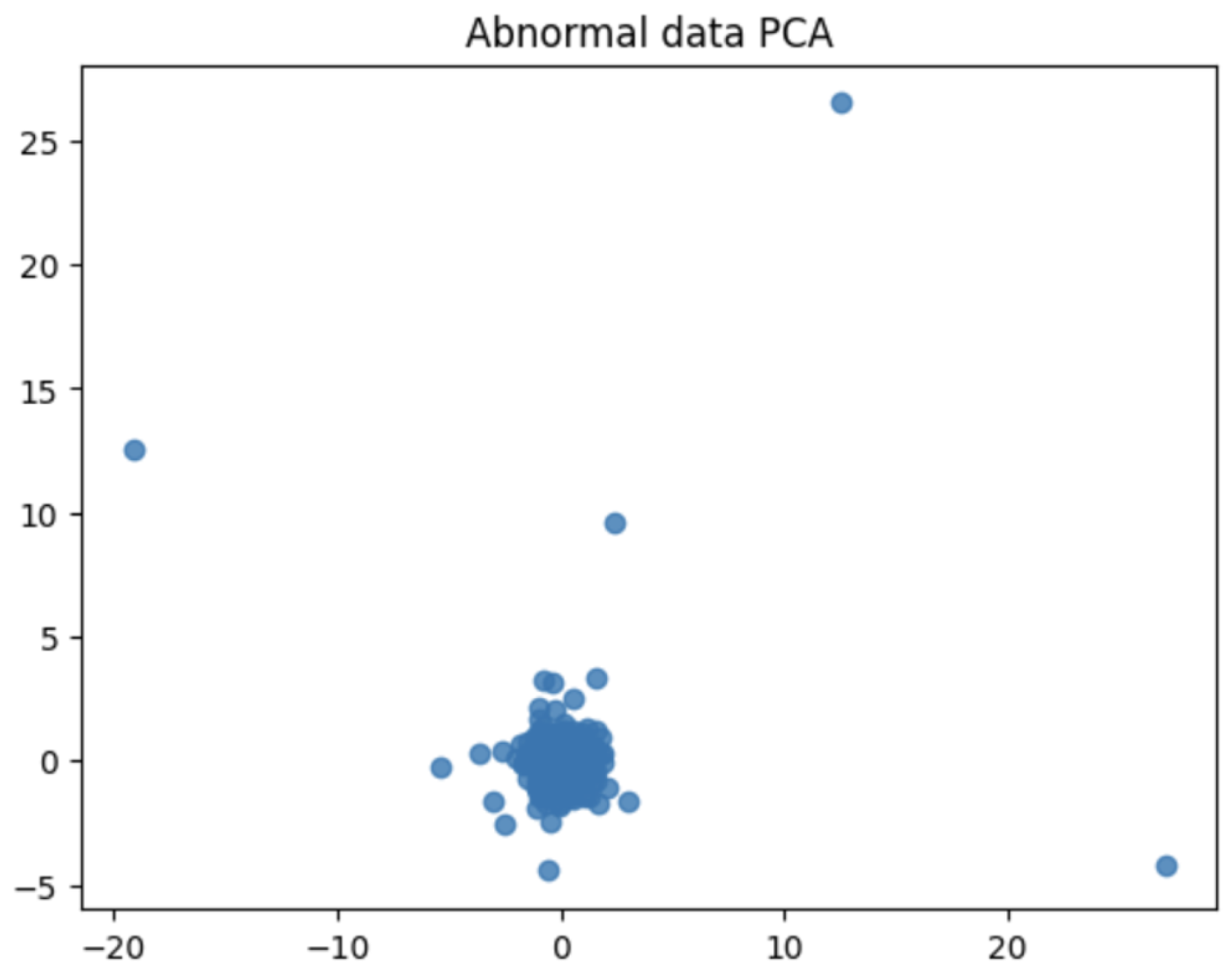
Figure 14 and Figure 15 are visualization graphs that confirm the distribution of data by performing PCA. This process facilitated a better understanding of the trends and patterns in data, and it could be observed that normal and abnormal data have different characteristics and patterns.
Figure 14. PCA of normal data.
Figure 15. PCA of abnormal data.
By representing data in low dimensions using PCA, the distribution and clustering of normal and abnormal data were visually understood. Normal data formed denser clusters, while abnormal data appeared as distinct clusters or isolated data points. The main component obtained from the PCA was the axis that best described the variability of the original data. Therefore, the important data characteristics could be identified through the main components, and the differences between normal and abnormal data could be visualized and confirmed. Based on the value of the main component or projection value of the data, abnormal data were interpreted as deviating from a general pattern.
Figure 16 and Figure 17 are the visualization results of dimension reduction with the main components obtained through the Explained Variation Ratio. Notably, the number of vibration components decreased because dimensional reduction was performed. Compared with Figure 10 and Figure 11, it can be seen that the characteristics of the data are alive.
Figure 16. Dimension reduction for PCA of normal data.
Figure 17. Dimension reduction for PCA of abnormal data.
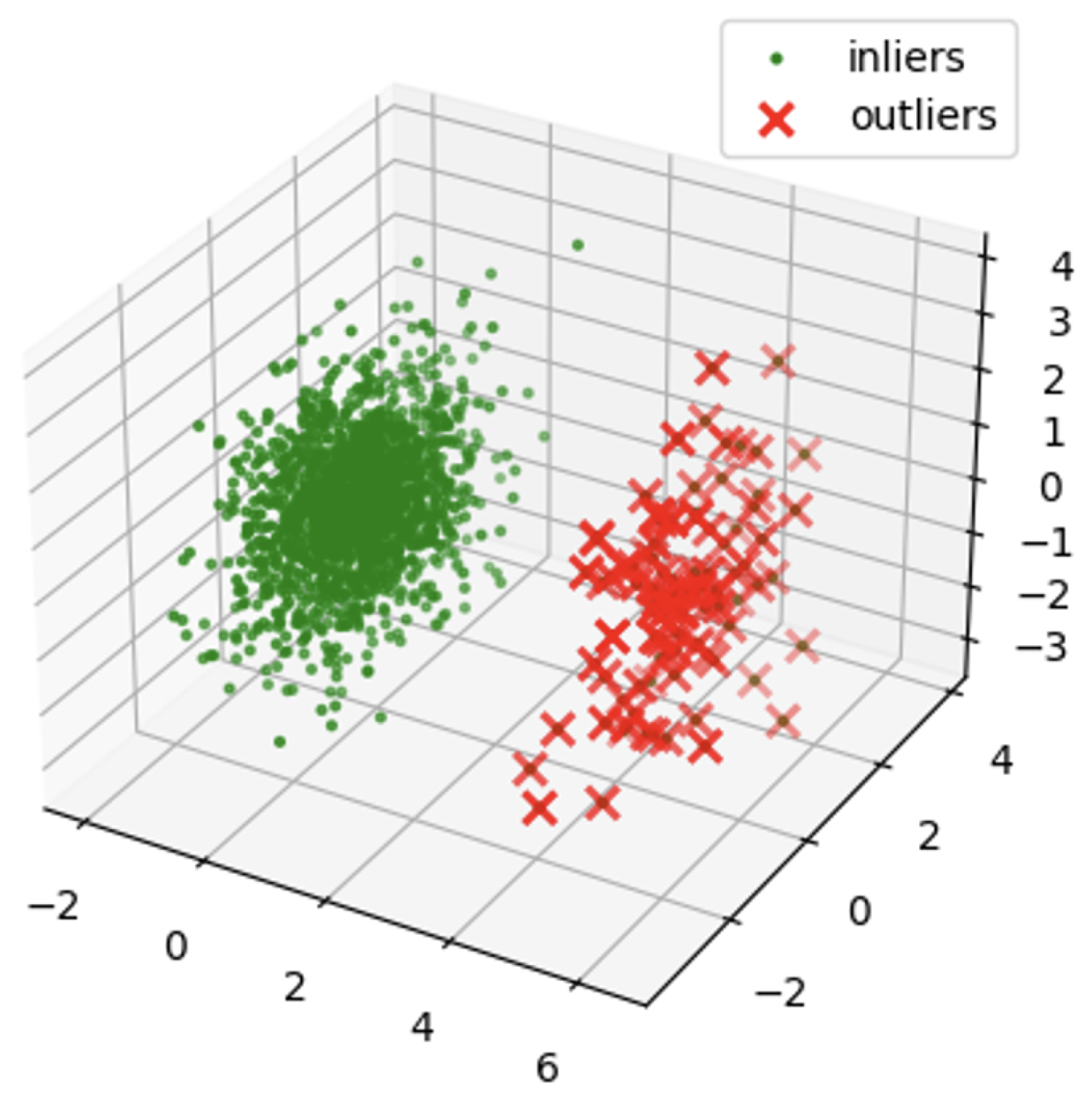
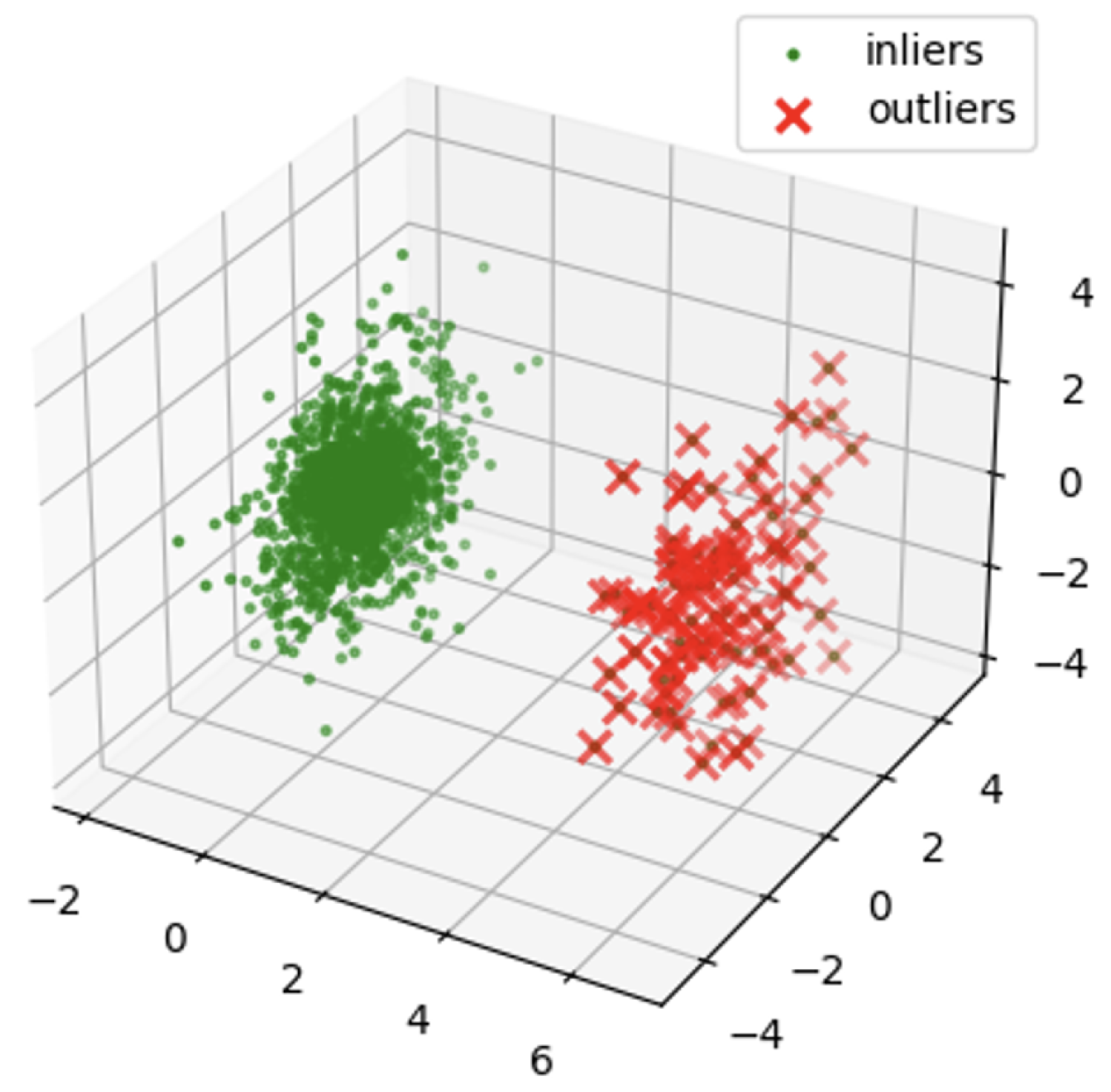
Figure 18 and Figure 19 show the results of detecting outliers and applying the Isolation Forest using the preprocessed data in unsupervised learning. Although there was a difference in the three-dimensional distributions of Figure 18 and Figure 19 with abnormal data, an accurate classification was not made in terms of the number.
Figure 18. Isolation Forest of normal data.
Figure 19. Isolation Forest of abnormal data.
The Isolation Forest works by cutting off the data. The data were divided using a randomly selected segmentation plane, which was repeated to measure the path length through which each data point reached the terminal node of the tree. Outliers tended to have short path lengths, and the outlier score was calculated based on the path length. Because outliers have paths that differ from the general data, they were relatively more likely to have shorter paths. Therefore, even if an Isolation Forest was used in a dataset composed only of normal data, data with a shorter path than the main component were classified as abnormal values. Isolation Forest, which detected anomalies based on the length of the data path, classified anomalies even in datasets composed of only normal vibration data; therefore, it could be used in combination with other anomaly detection algorithms or other techniques, or additional preprocessing or feature extraction methods. In addition, the performance of the algorithm could be evaluated and improved by checking the evaluation index of the classification results.

4.4. Results

We conducted outlier detection using an LSTM-AE to utilize more sophisticated artificial intelligence models. Figure 3 shows the LSTM was compressed with a model in which only normal data were learned and then reconstructed into the form of the original data. When compressed, the data characteristics were extracted, and the loss rate was the reconstruction error rate. An outlier was detected by the difference between the input and output data, and if the reconstruction error rate exceeded the threshold calculated by the model, it was considered an outlier. There were two layers of LSTM in the encoder and two layers in the decoder.
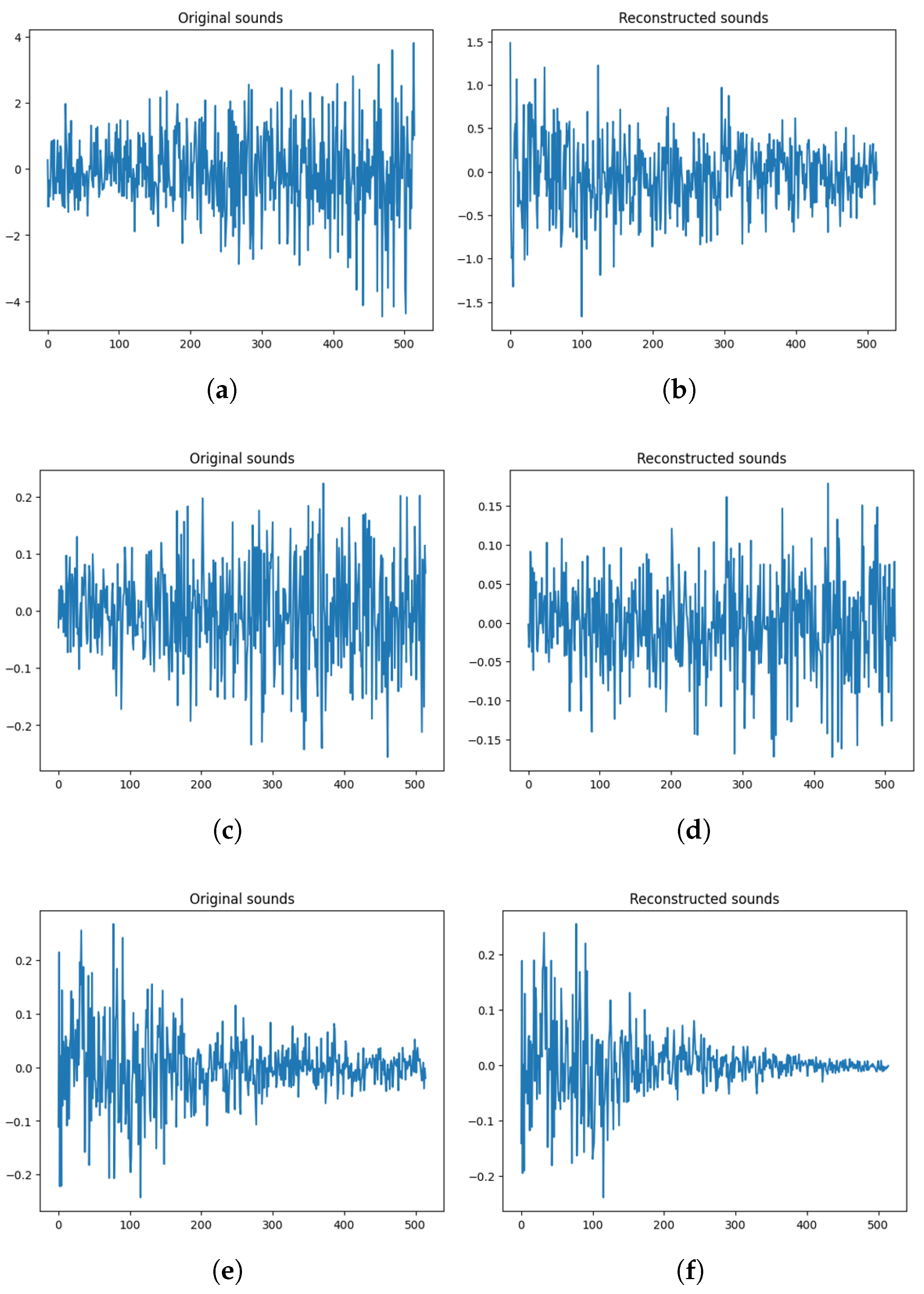
Considering visualization, Figure 20 shows that data processing using the method proposed in this paper makes good use of the characteristics of the most original sound. It was performed in three order: the method of implementing only PCA in the original data, the method of implementing PCA after performing HPF, and the method of implementing PCA through WPT and HPF.
Figure 20. Visualizations of each preprocessing. (a) PCA of raw original data; (b) PCA of raw reconstructed data; (c) HPF-PCA of original data; (d) HPF-PCA of reconstructed data; (e) WPT-HPF-PCA of original data; (f) WPT-HPF-PCA of reconstructed data.
Detailed descriptions of each figure are as follows: (a) Only by PCA on the original raw data, (b) PCA-only data into the LSTM-AE in the original raw data, (c) HPF on the original data and then PCA, (d) HPF on the original data and then PCA performed data into the LSTM-AE, (e) data performed by performing WPT on the source data, HPF at a specific bandwidth, and then PCA, (f) data regenerated by performing WPT on the original data, performing HPF at a specific bandwidth, and then putting the PCA data into the LSTM-AE.
Table 2 shows the model loss based on MSE for each epoch from a minimum of 30 to a maximum of 150 epochs. It can be seen that the WPT-HPF-PCA method, which is the preprocessing method proposed in this study, has the lowest loss.
Table 2. Model loss.
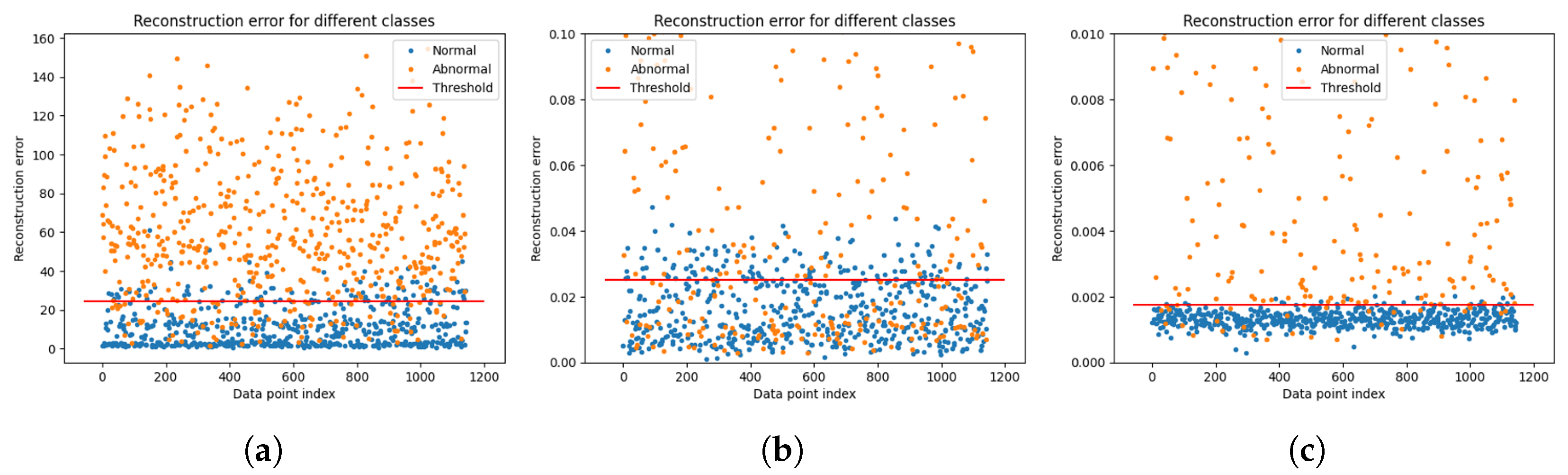
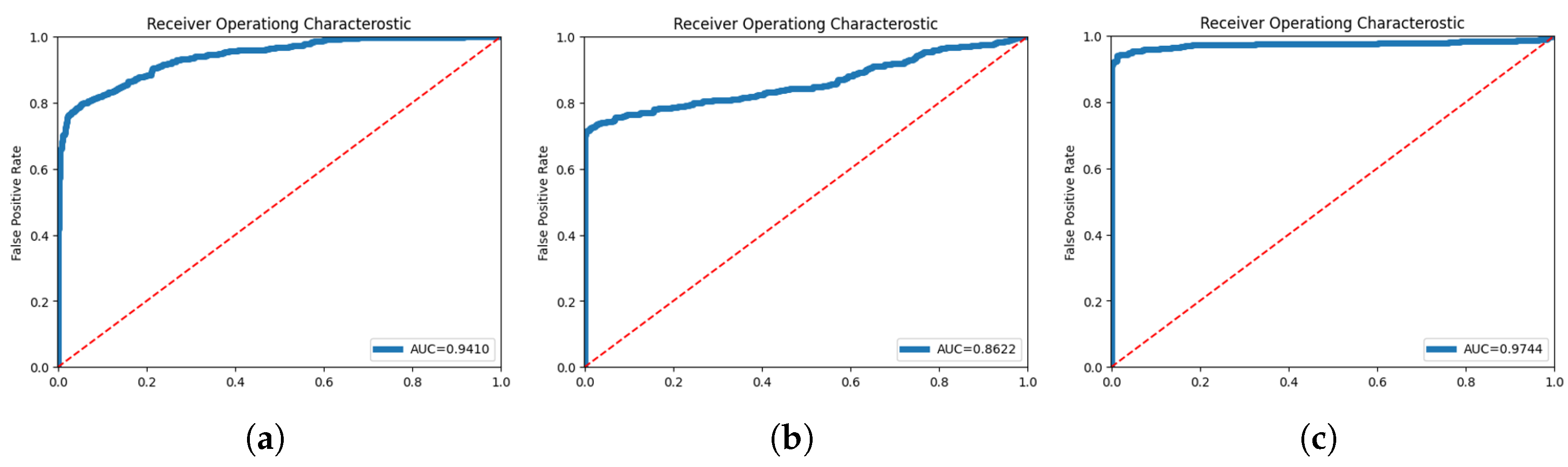
Figure 21 shows the results of the experiments using models of the same structure. Notably, the more preprocessed the data were, the closer the AUC was to 1.
Figure 21. AUC of each data. (a) PCA data; (b) WPT-PCA data; (c) WPT-HPT-PCA data.
Detailed descriptions of each figure are as follows: (a) Only by PCA on the original raw data, (b) PCA-only data into the LSTM-AE in the original raw data, and (c) HPF on the original data and then PCA.
The dataset preprocessing method proposed in this paper showed substantially better results than the raw data. Abnormal detection was performed using raw data. It can be seen that an accuracy of 94.10% was obtained from Table 3, and a higher accuracy of 97.44% was achieved when the pretreatment method proposed in this study was applied. Based on these results, we observed the effect of maximizing the difference between normal and abnormal data in the process of extracting and strengthening data characteristics using WPT and HPF. Through WPT, the data was decomposed into various frequency bands so that the characteristics of the data could be better understood. Afterward, HPF was applied to maximize the difference while strengthening the characteristics of the data. Finally, through principal component analysis, computing could be efficiently performed, and outliers could be identified and classified. Therefore, the dataset preprocessing method proposed in this study shows a higher performance than with raw data, which could substantially improve the accuracy of anomaly detection by extracting and strengthening the characteristics of the data.
Table 3. AUC Value.
In Figure 22, (a) is a visualization of the distribution of the raw data based on the thresholds set by the model trained on the raw data; (b) is a visualization of the distribution of the data that performed WPT-PCA based on the thresholds set by the model trained on the data that performed WPT-PCA; (c) is a visualization of the distribution of data that performed WPT-HPF-PCA based on the thresholds set by the model trained on the data that performed WPT-HPF-PCA.
Figure 22. Distribution and threshold of each data. (a) PCA data; (b) WPT-PCA data; (c) WPT-PCA-HPF data.
The thresholds shown in Figure 22 have different values. This is because the model calculated the optimal thresholds with data processed by different preprocessing methods; (a) shows that there is a relatively large mix of normal and abnormal data within the thresholds, but (c) shows that the abnormal data within the thresholds has decreased significantly compared to (a); (c) shows that the WPT-HPF-PCA performed as the final preprocessing in this study resulted in almost no abnormal data entering the thresholds. This visualization of the data distribution indicates that the model has a good understanding of the reconstruction loss rate threshold for normal data.

4.5. Discussion

The outlier detection performed after the proposed preprocessing method outperformed the outlier detection performed with conventional data. Preprocessing techniques that combine WPT, HPF, and PCA are useful in a variety of data analysis and signal processing applications. Each technique contributes to extracting important characteristics from the data, reducing noise, and reducing dimensionality to facilitate the interpretation of the data. WPT can analyze signals in both the time and frequency domains, allowing important characteristics to be extracted from even complex nonlinear signals. This allows it to better capture information occurring in different frequency bands of the signal. HPF allows you to remove low-frequency noise. This helps to emphasize the high-frequency components of the data, the parts of the data that have the most variation. As mentioned above, both WPT and HPF contribute to reducing noise, and HPF, in particular, can improve the quality of your data by effectively removing low-frequency noise. PCA reduces the dimensionality of the data, preserving key characteristics that are less sensitive to noise. In the process, unnecessary information is removed, improving the signal-to-noise ratio of the data. By reducing the dimensionality of the data with PCA, the amount of computation required for analysis or modeling is reduced. This can save time and resources, especially when dealing with large datasets. Combining these three techniques highlights important characteristics in the data, reduces noise, and reduces dimensionality. As a result, the structure of the data becomes clearer and it becomes easier to identify important patterns or relationships. LSTM, the model used for outlier detection, is very effective at learning long-term dependencies in time series data. By capturing important temporal patterns and dynamic changes in preprocessed data, they can learn temporal characteristics that are essential for outlier detection. The autoencoder (AE) have the ability to efficiently compress (encoder) and reconstruct (decoder) input data. By combining with LSTMs, AEs can learn complex patterns in time series data and reconstruct the structure of normal data based on them. Outliers are characterized by large differences between the normal data structure and the reconstructed data, and this difference can be used to detect outliers. The use of LSTM-AE models for outlier detection provides a powerful way to understand complex data structures, including temporal patterns, based on high-quality preprocessed data, and to effectively identify data points that fall outside the normal range.
Previous studies have required human intervention or had high computational complexity, making them difficult to apply to real-world scenarios. However, the LSTM-AE model used in this study presents a lightweight algorithm that can detect anomalies in real-time and respond immediately. This is a great advantage, especially for preventing unexpected failures in critical infrastructures such as wind turbines. Many anomaly detection studies are based on supervised learning, which encounters the need for sufficient labeled data. In contrast, the proposed method adopts an unsupervised learning approach which can be applied to unlabeled or expensive-to-label data. This is particularly beneficial in real-world industrial settings. In unsupervised learning, it is difficult to evaluate the performance of a model or generalize to other datasets because no labels exist for the data. This limitation is expected to be a useful strategy if labeling can turn unsupervised data into supervised learning. Self-supervised learning using labeled datasets using a classification method with automatic labeling is expected to produce a variety of models. The proposed method can also perform successful outlier detection in noisy and complex vibration data from industrial environments. Unsupervised learning has the advantage of being able to discover the inherent structure of a dataset, but it has the disadvantage of being generally inconsistent and difficult to interpret. In addition, fault classification needs to be performed using datasets containing different types of fault data in order to classify and predict fault types. To demonstrate the superiority of this research, more model comparisons are needed, and we plan to combine them with XAI to obtain reliable results. Also, since this research was conducted on a limited dataset, we plan to demonstrate its validity on various datasets and real-world industrial environments. Continued technical and research efforts to address these issues are expected to open up new possibilities and contribute to the broader field of artificial intelligence.

5. Conclusions

In our proposal, we explored the preprocessing of normal data sets using the WPT-HPF-PCA method and the detection of outliers using the LSTM-AE model. The key idea was to transform the data using WPT and HPF and perform dimensionality reduction using PCA to extract the characteristics of the data. In this study, we first decomposed the data using WPT and applied HPF to extract the signals in the desired frequency range. We then performed PCA to reduce the dimensionality of the data and trained the LSTM-AE model accordingly. The LSTM-AE compressed the input data into a low-dimensional latent space to restore the original data. The trained model was used to calculate the reconstruction loss for normal data, which was used to find the threshold to detect outliers. In the experiments, we trained and evaluated the model using different normal datasets with sequential step preprocessing, and evaluated the performance of the model by comparing the reconstruction loss with the actual outliers. The experimental results showed that the proposed method performed well in detecting outliers in the test data using the threshold obtained by training on normal data only, and achieved good results compared to other outlier detection preprocessing algorithms.

Author Contributions

Conceptualization, Y.L.; methodology, N.K.; software, Y.L.; validation, Y.L. and C.P.; formal analysis, J.A.; investigation, Y.L.; resources, Y.L.; data curation, C.P.; writing—original draft preparation, Y.L. and C.P.; writing—review and editing, Y.L.; visualization, N.K.; supervision, J.J.; project administration, J.J. All authors have read and agreed to the published version of the manuscript.

Funding

This research was supported by the SungKyunKwan University and the BK21 FOUR (Graduate School Innovation) funded by the Ministry of Education (MOE, Korea) and National Research Foundation of Korea (NRF).

Institutional Review Board Statement

Not applicable.

Data Availability Statement

S. Martin del Campo Barraza, F. Sandin, and D. Strömbergsson, ‘Dataset concerning the vibration signals from wind turbines in northern Sweden’. 2018. (https://ltu.diva-portal.org/smash/record.jsf?pid=diva2%3A1244889&dswid=2589 accessed on 3 September 2018).

Acknowledgments

This research was supported by the SungKyunKwan University and the BK21 FOUR (Graduate School Innovation) funded by the Ministry of Education (MOE, Korea) and National Research Foundation of Korea (NRF). Moreover, this research was supported by the MSIT (Ministry of Science and ICT), Korea, under the ICT Creative Consilience Program (IITP-2024-2020-0-01821) supervised by the IITP (Institute for Information & communications Technology Planning & Evaluation).

Conflicts of Interest

The authors declare that they have no known competing financial interests or personal relationships that could have appeared to influence the work reported in this paper.

References

  1. Peng, Z. Modelling and Simulation of Direct Drive Permanent Magnet Wind Power Generation System Based on Simulink. In Proceedings of the IEEE 2021 2nd International Conference on Intelligent Computing and Human-Computer Interaction (ICHCI), Shenyang, China, 17–19 November 2021; pp. 344–350. [Google Scholar]
  2. Sikiru, S.; Oladosu, T.L.; Amosa, T.I.; Olutoki, J.O.; Ansari, M.; Abioye, K.J.; Rehman, Z.U.; Soleimani, H. Hydrogen-powered horizons: Transformative technologies in clean energy generation, distribution, and storage for sustainable innovation. Int. J. Hydrogen Energy 2024, 56, 1152–1182. [Google Scholar] [CrossRef]
  3. Ding, X.; Liu, X. Renewable energy development and transportation infrastructure matters for green economic growth? Empirical evidence from China. Econ. Anal. Policy 2023, 79, 634–646. [Google Scholar] [CrossRef]
  4. Omer, A.M. Energy, environment and sustainable development. Renew. Sustain. Energy Rev. 2008, 12, 2265–2300. [Google Scholar] [CrossRef]
  5. Nguyen, M.P.; Ponomarenko, T.; Nguyen, N. Energy Transition in Vietnam: A Strategic Analysis and Forecast. Sustainability 2024, 16, 1969. [Google Scholar] [CrossRef]
  6. Mandal, D.K.; Bose, S.; Biswas, N.; Manna, N.K.; Cuce, E.; Benim, A.C. Solar Chimney Power Plants for Sustainable Air Quality Management Integrating Photocatalysis and Particulate Filtration: A Comprehensive Review. Sustainability 2024, 16, 2334. [Google Scholar] [CrossRef]
  7. Liang, W.; Liu, W. Key technologies analysis of small scale non-grid-connected wind turbines: A review. In Proceedings of the IEEE 2010 World Non-Grid-Connected Wind Power and Energy Conference, Nanjing, China, 5–7 November 2010; pp. 1–6. [Google Scholar]
  8. Ackermann, T.; Söder, L. Wind energy technology and current status: A review. Renew. Sustain. Energy Rev. 2000, 4, 315–374. [Google Scholar] [CrossRef]
  9. Mary, S.A.J.; Sarika, S. Fault Diagnosis and Control Techniques for Wind Energy Conversion System: A Systematic Review. In Proceedings of the IEEE 2022 Third International Conference on Intelligent Computing Instrumentation and Control Technologies (ICICICT), Kannur, India, 11–12 August 2022; pp. 700–704. [Google Scholar]
  10. Zemali, Z.; Cherroun, L.; Hadroug, N.; Hafaifa, A.; Iratni, A.; Alshammari, O.S.; Colak, I. Robust intelligent fault diagnosis strategy using Kalman observers and neuro-fuzzy systems for a wind turbine benchmark. Renew. Energy 2023, 205, 873–898. [Google Scholar] [CrossRef]
  11. Chen, J.; Li, J.; Chen, W.; Wang, Y.; Jiang, T. Anomaly detection for wind turbines based on the reconstruction of condition parameters using stacked denoising autoencoders. Renew. Energy 2020, 147, 1469–1480. [Google Scholar] [CrossRef]
  12. Gupta, S.; Muthiyan, N.; Kumar, S.; Nigam, A.; Dinesh, D.A. A supervised deep learning framework for proactive anomaly detection in cloud workloads. In Proceedings of the 2017 14th IEEE India Council International Conference (INDICON), Roorkee, India, 15–17 December 2017; pp. 1–6. [Google Scholar]
  13. Lee, M.C.; Lin, J.C.; Gan, E.G. ReRe: A lightweight real-time ready-to-go anomaly detection approach for time series. In Proceedings of the 2020 IEEE 44th Annual Computers, Software, and Applications Conference (COMPSAC), Madrid, Spain, 13–17 July 2020; pp. 322–327. [Google Scholar]
  14. Wang, Q.; Bu, S.; He, Z. Achieving predictive and proactive maintenance for high-speed railway power equipment with LSTM-RNN. IEEE Trans. Ind. Inform. 2020, 16, 6509–6517. [Google Scholar] [CrossRef]
  15. Ji, T.; Sivakumar, A.N.; Chowdhary, G.; Driggs-Campbell, K. Proactive anomaly detection for robot navigation with multi-sensor fusion. IEEE Robot. Autom. Lett. 2022, 7, 4975–4982. [Google Scholar] [CrossRef]
  16. Spantideas, S.; Giannopoulos, A.; Cambeiro, M.A.; Trullols-Cruces, O.; Atxutegi, E.; Trakadas, P. Intelligent Mission Critical Services over Beyond 5G Networks: Control Loop and Proactive Overload Detection. In Proceedings of the IEEE 2023 International Conference on Smart Applications, Communications and Networking (SmartNets), Istanbul, Turkiye, 25–27 July 2023; pp. 1–6. [Google Scholar]
  17. Huang, D.; Zhang, W.A.; Guo, F.; Liu, W.; Shi, X. Wavelet packet decomposition-based multiscale CNN for fault diagnosis of wind turbine gearbox. IEEE Trans. Cybern. 2021, 53, 443–453. [Google Scholar] [CrossRef] [PubMed]
  18. Bhandari, B.; Poudel, S.R.; Lee, K.T.; Ahn, S.H. Mathematical modeling of hybrid renewable energy system: A review on small hydro-solar-wind power generation. Int. J. Precis. Eng. Manuf.-Green Technol. 2014, 1, 157–173. [Google Scholar] [CrossRef]
  19. Jiang, G.; He, H.; Xie, P.; Tang, Y. Stacked multilevel-denoising autoencoders: A new representation learning approach for wind turbine gearbox fault diagnosis. IEEE Trans. Instrum. Meas. 2017, 66, 2391–2402. [Google Scholar] [CrossRef]
  20. Bengio, Y.; Courville, A.C.; Vincent, P. Unsupervised feature learning and deep learning: A review and new perspectives. CoRR abs/1206.5538 2012, 1, 2012. [Google Scholar]
  21. Kuzu, A.; Baran, E.A.; Bogosyan, S.; Gokasan, M.; Sabanovic, A. Wavelet packet transform-based compression for teleoperation. Proc. Inst. Mech. Eng. Part I J. Syst. Control. Eng. 2015, 229, 639–651. [Google Scholar] [CrossRef]
  22. Lotfollahi-Yaghin, M.A.; Koohdaragh, M. Examining the function of wavelet packet transform (WPT) and continues wavelet transform (CWT) in recognizing the crack specification. KSCE J. Civ. Eng. 2011, 15, 497–506. [Google Scholar] [CrossRef]
  23. Prieto, M.; Novo, B.; Manzanedo, F. The Wavelet Packet Transform and its application to identify arc furnace current and voltage harmonics. In Proceedings of the 2008 IEEE Canada Electric Power Conference, Vancouver, BC, Canada, 6–7 October 2008; pp. 1–6. [Google Scholar]
  24. Stein, S.A.M.; Loccisano, A.E.; Firestine, S.M.; Evanseck, J.D. Principal components analysis: A review of its application on molecular dynamics data. Annu. Rep. Comput. Chem. 2006, 2, 233–261. [Google Scholar]
  25. Babu, P.A.; Prasad, K. Removal of ocular artifacts from EEG signals by fast RLS algorithm using wavelet transform. Int. J. Comput. Appl. 2011, 21, 1–5. [Google Scholar] [CrossRef]
  26. Magid, S.A.; Zhang, Y.; Wei, D.; Jang, W.D.; Lin, Z.; Fu, Y.; Pfister, H. Dynamic high-pass filtering and multi-spectral attention for image super-resolution. In Proceedings of the IEEE/CVF International Conference on Computer Vision, Montreal, BC, Canada, 11–17 October 2021; pp. 4288–4297. [Google Scholar]
  27. Kiakojouri, A.; Lu, Z.; Mirring, P.; Powrie, H.; Wang, L. A Novel Hybrid Technique Combining Improved Cepstrum Pre-Whitening and High-Pass Filtering for Effective Bearing Fault Diagnosis Using Vibration Data. Sensors 2023, 23, 9048. [Google Scholar] [CrossRef]
  28. Moharm, K.; Eltahan, M.; Elsaadany, E. Wind speed forecast using LSTM and Bi-LSTM algorithms over gabal El-Zayt wind farm. In Proceedings of the IEEE 2020 International Conference on Smart Grids and Energy Systems (SGES), Perth, Australia, 23–26 November 2020; pp. 922–927. [Google Scholar]
  29. Nguyen, H.D.; Tran, K.P.; Thomassey, S.; Hamad, M. Forecasting and Anomaly Detection approaches using LSTM and LSTM Autoencoder techniques with the applications in supply chain management. Int. J. Inf. Manag. 2021, 57, 102282. [Google Scholar] [CrossRef]
  30. Sagheer, A.; Kotb, M. Unsupervised pre-training of a deep LSTM-based stacked autoencoder for multivariate time series forecasting problems. Sci. Rep. 2019, 9, 19038. [Google Scholar] [CrossRef] [PubMed]
  31. Park, D.; Hoshi, Y.; Kemp, C.C. A multimodal anomaly detector for robot-assisted feeding using an lstm-based variational autoencoder. IEEE Robot. Autom. Lett. 2018, 3, 1544–1551. [Google Scholar] [CrossRef]
  32. Geiger, A.; Liu, D.; Alnegheimish, S.; Cuesta-Infante, A.; Veeramachaneni, K. Tadgan: Time series anomaly detection using generative adversarial networks. In Proceedings of the 2020 IEEE International Conference on Big Data (Big Data), Atlanta, GA, USA, 10–13 December 2020; pp. 33–43. [Google Scholar]
  33. Chen, H.; Liu, H.; Chu, X.; Liu, Q.; Xue, D. Anomaly detection and critical SCADA parameters identification for wind turbines based on LSTM-AE neural network. Renew. Energy 2021, 172, 829–840. [Google Scholar] [CrossRef]
  34. Said Elsayed, M.; Le-Khac, N.A.; Dev, S.; Jurcut, A.D. Network anomaly detection using LSTM based autoencoder. In Proceedings of the 16th ACM Symposium on QoS and Security for Wireless and Mobile Networks, Alicante, Spain, 16–20 November 2020; pp. 37–45. [Google Scholar]
  35. Goldstein, M.; Uchida, S. A comparative evaluation of unsupervised anomaly detection algorithms for multivariate data. PLoS ONE 2016, 11, e0152173. [Google Scholar] [CrossRef] [PubMed]
  36. Aggarwal, C.C.; Yu, P.S. Outlier detection for high dimensional data. In Proceedings of the 2001 ACM SIGMOD International Conference on Management of Data, Santa Barbara, CA, USA, 21–24 May 2001; pp. 37–46. [Google Scholar]
  37. Xiang, G.; Min, W. Applying Semi-supervised cluster algorithm for anomaly detection. In Proceedings of the IEEE 2010 Third International Symposium on Information Processing, Qingdao, China, 15–17 October 2010; pp. 43–45. [Google Scholar]
  38. Kiran, B.R.; Thomas, D.M.; Parakkal, R. An overview of deep learning based methods for unsupervised and semi-supervised anomaly detection in videos. J. Imaging 2018, 4, 36. [Google Scholar] [CrossRef]
  39. Lashgari, E.; Liang, D.; Maoz, U. Data augmentation for deep-learning-based electroencephalography. J. Neurosci. Methods 2020, 346, 108885. [Google Scholar] [CrossRef] [PubMed]
  40. Wulsin, D.; Gupta, J.; Mani, R.; Blanco, J.; Litt, B. Modeling electroencephalography waveforms with semi-supervised deep belief nets: Fast classification and anomaly measurement. J. Neural Eng. 2011, 8, 036015. [Google Scholar] [CrossRef] [PubMed]
  41. Manevitz, L.M.; Yousef, M. One-class SVMs for document classification. J. Mach. Learn. Res. 2001, 2, 139–154. [Google Scholar]
  42. Längkvist, M.; Karlsson, L.; Loutfi, A. A review of unsupervised feature learning and deep learning for time-series modeling. Pattern Recognit. Lett. 2014, 42, 11–24. [Google Scholar] [CrossRef]
  43. Li, J.L.; Zhou, Y.F.; Ying, Z.Y.; Xu, H.; Li, Y.; Li, X. Anomaly Detection Based on Isolated Forests. In Proceedings of the Advances in Artificial Intelligence and Security: 7th International Conference, ICAIS 2021, Dublin, Ireland, 19–23 July 2021; pp. 486–495. [Google Scholar]
  44. Liu, F.T.; Ting, K.M.; Zhou, Z.H. Isolation forest. In Proceedings of the 2008 Eighth IEEE International Conference on Data Mining, Pisa, Italy, 15–19 December 2008; pp. 413–422. [Google Scholar]
  45. He, K.; Li, X. Time–frequency feature extraction of acoustic emission signals in aluminum alloy MIG welding process based on SST and PCA. IEEE Access 2019, 7, 113988–113998. [Google Scholar] [CrossRef]
  46. Xiang, S.; Qin, Y.; Zhu, C.; Wang, Y.; Chen, H. LSTM networks based on attention ordered neurons for gear remaining life prediction. ISA Trans. 2020, 106, 343–354. [Google Scholar] [CrossRef] [PubMed]
  47. Xu, X.; Yoneda, M. Multitask air-quality prediction based on LSTM-autoencoder model. IEEE Trans. Cybern. 2019, 51, 2577–2586. [Google Scholar] [CrossRef] [PubMed]
  48. Yan, H.; Liu, Z.; Chen, J.; Feng, Y.; Wang, J. Memory-augmented skip-connected autoencoder for unsupervised anomaly detection of rocket engines with multi-source fusion. ISA Trans. 2023, 133, 53–65. [Google Scholar] [CrossRef] [PubMed]
  49. Ferris, M.H.; McLaughlin, M.; Grieggs, S.; Ezekiel, S.; Blasch, E.; Alford, M.; Cornacchia, M.; Bubalo, A. Using ROC curves and AUC to evaluate performance of no-reference image fusion metrics. In Proceedings of the IEEE 2015 National Aerospace and Electronics Conference (NAECON), Dayton, OH, USA, 15–19 June 2015; pp. 27–34. [Google Scholar]
  50. Priyanto, C.Y.; Hendry; Purnomo, H.D. Combination of Isolation Forest and LSTM Autoencoder for Anomaly Detection. In Proceedings of the 2021 2nd International Conference on Innovative and Creative Information Technology (ICITech), Salatiga, Indonesia, 23–25 September 2021; pp. 35–38. [Google Scholar] [CrossRef]
  51. Martin-del Campo, S.; Sandin, F.; Strömbergsson, D. Dictionary learning approach to monitoring of wind turbine drivetrain bearings. arXiv 2019, arXiv:1902.01426. [Google Scholar] [CrossRef]
  52. Maleki, S.; Maleki, S.; Jennings, N.R. Unsupervised anomaly detection with LSTM autoencoders using statistical data-filtering. Appl. Soft Comput. 2021, 108, 107443. [Google Scholar] [CrossRef]
Disclaimer/Publisher’s Note: The statements, opinions and data contained in all publications are solely those of the individual author(s) and contributor(s) and not of MDPI and/or the editor(s). MDPI and/or the editor(s) disclaim responsibility for any injury to people or property resulting from any ideas, methods, instructions or products referred to in the content.

Article Metrics

Citations

Article Access Statistics

Multiple requests from the same IP address are counted as one view.