Efficacy of Sensor-Based Training Using Exergaming or Virtual Reality in Patients with Chronic Low Back Pain: A Systematic Review

 ,
,  , and
, and 
Abstract
1. Introduction
2. Materials and Methods
2.1. PICO Question
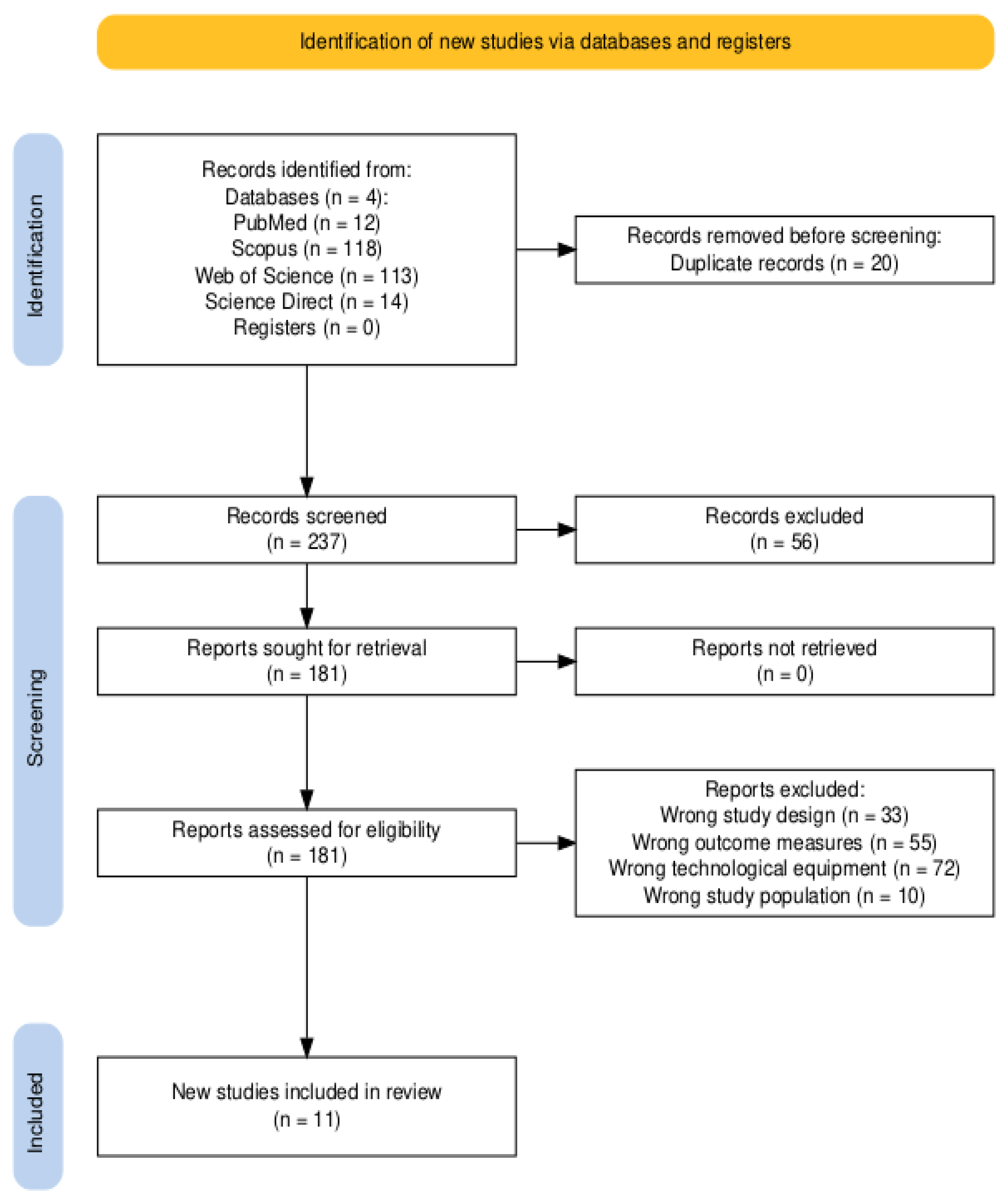
2.2. Search Strategy and Eligibility Criteria
2.3. Data Extraction and Critical Appraisal
2.4. Risk of Bias and Study Quality Assessment
3. Results
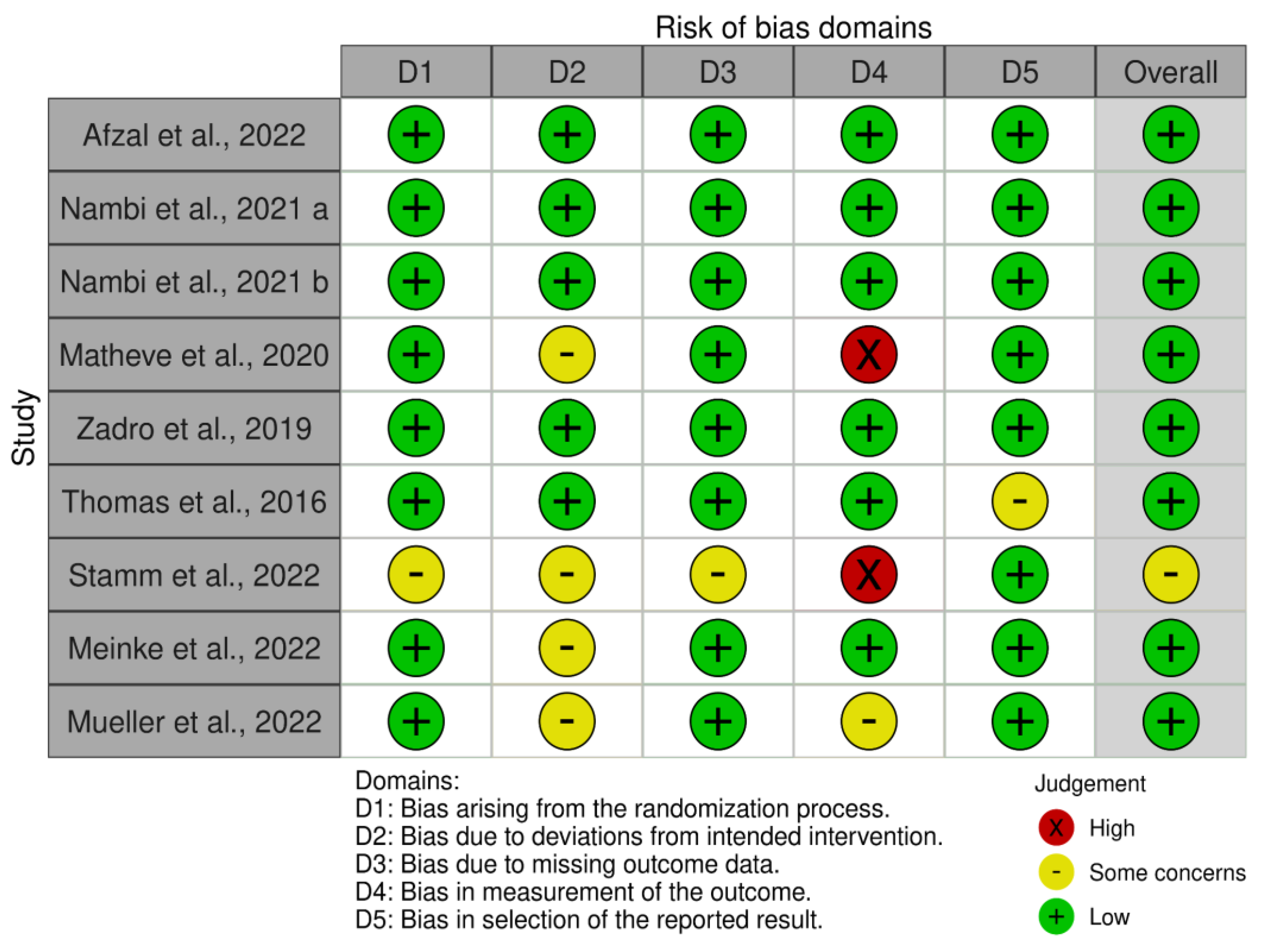
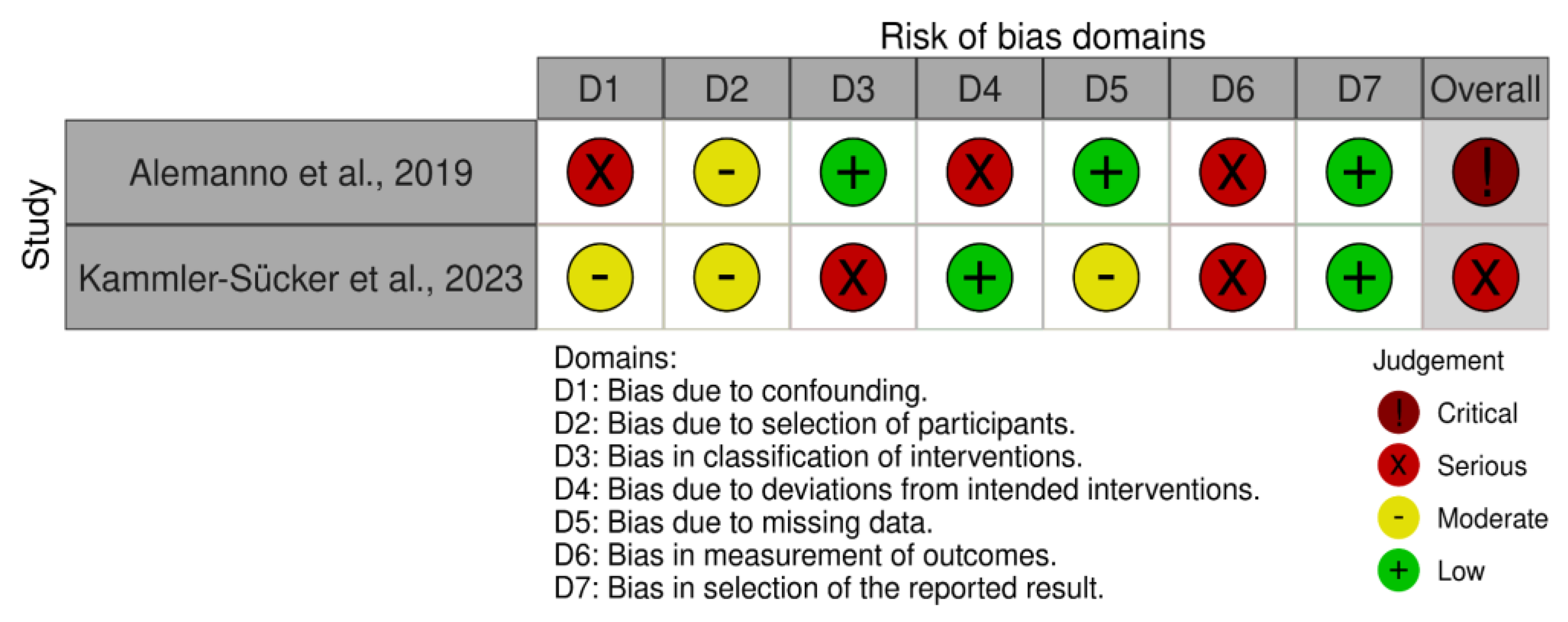
3.1. Assessment of the Quality of Included Studies—The Risk of Bias
3.2. Primary Outcomes
3.3. Secondary Outcomes
3.4. Technological Equipment
3.5. Type of Intervention
4. Discussion
4.1. Sensor-Based Technology
4.2. Treatment Duration, Frequency, and Follow-Up
5. Limitations
6. Conclusions
Author Contributions
Funding
Institutional Review Board Statement
Informed Consent Statement
Data Availability Statement
Conflicts of Interest
References
- Deyo, R.A.; Weinstein, J.N. Low Back Pain. N. Engl. J. Med. 2001, 344, 363–370. [Google Scholar] [CrossRef] [PubMed]
- Maher, C.; Underwood, M.; Buchbinder, R. Non-Specific Low Back Pain. Lancet 2017, 389, 736–747. [Google Scholar] [CrossRef] [PubMed]
- Tagliaferri, S.D.; Miller, C.T.; Owen, P.J.; Mitchell, U.H.; Brisby, H.; Fitzgibbon, B.; Masse-Alarie, H.; Van Oosterwijck, J.; Belavy, D.L. Domains of Chronic Low Back Pain and Assessing Treatment Effectiveness: A Clinical Perspective. Pain Pract. 2020, 20, 211–225. [Google Scholar] [CrossRef] [PubMed]
- Dal Farra, F.; Arippa, F.; Arru, M.; Cocco, M.; Porcu, E.; Tramontano, M.; Monticone, M. Effects of Exercise on Balance in Patients with Non-Specific Low Back Pain: A Systematic Review and Meta-Analysis. Eur. J. Phys. Rehabil. Med. 2021, 58, 423–434. [Google Scholar] [CrossRef]
- Thomas, J.S.; France, C.R.; Applegate, M.E.; Leitkam, S.T.; Walkowski, S. Feasibility and Safety of a Virtual Reality Dodgeball Intervention for Chronic Low Back Pain: A Randomized Clinical Trial. J. Pain 2016, 17, 1302–1317. [Google Scholar] [CrossRef]
- Miyamoto, G.C.; Lin, C.-W.C.; Cabral, C.M.N.; van Dongen, J.M.; van Tulder, M.W. Cost-Effectiveness of Exercise Therapy in the Treatment of Non-Specific Neck Pain and Low Back Pain: A Systematic Review with Meta-Analysis. Br. J. Sports Med. 2019, 53, 172–181. [Google Scholar] [CrossRef]
- Matheve, T.; Brumagne, S.; Timmermans, A.A.A. The Effectiveness of Technology-Supported Exercise Therapy for Low Back Pain: A Systematic Review. Am. J. Phys. Med. Rehabil. 2017, 96, 347–356. [Google Scholar] [CrossRef]
- Brea-Gómez, B.; Torres-Sánchez, I.; Ortiz-Rubio, A.; Calvache-Mateo, A.; Cabrera-Martos, I.; López-López, L.; Valenza, M.C. Virtual Reality in the Treatment of Adults with Chronic Low Back Pain: A Systematic Review and Meta-Analysis of Randomized Clinical Trials. Int. J. Environ. Res. Public Health 2021, 18, 11806. [Google Scholar] [CrossRef]
- Li, R.; Li, Y.; Kong, Y.; Li, H.; Hu, D.; Fu, C.; Wei, Q. Virtual Reality–Based Training in Chronic Low Back Pain: Systematic Review and Meta-Analysis of Randomized Controlled Trials. J. Med. Internet Res. 2024, 26, e45406. [Google Scholar] [CrossRef]
- Gu, C.; Lin, W.; He, X.; Zhang, L.; Zhang, M. IMU-Based Motion Capture System for Rehabilitation Applications: A Systematic Review. Biomim. Intell. Robot. 2023, 3, 100097. [Google Scholar] [CrossRef]
- Gordt, K.; Gerhardy, T.; Najafi, B.; Schwenk, M. Effects of Wearable Sensor-Based Balance and Gait Training on Balance, Gait, and Functional Performance in Healthy and Patient Populations: A Systematic Review and Meta-Analysis of Randomized Controlled Trials. Gerontology 2018, 64, 74–89. [Google Scholar] [CrossRef] [PubMed]
- Page, M.J.; McKenzie, J.E.; Bossuyt, P.M.; Boutron, I.; Hoffmann, T.C.; Mulrow, C.D.; Shamseer, L.; Tetzlaff, J.M.; Akl, E.A.; Brennan, S.E.; et al. The PRISMA 2020 Statement: An Updated Guideline for Reporting Systematic Reviews. BMJ 2021, 372, n71. [Google Scholar] [CrossRef] [PubMed]
- de Morton, N.A. The PEDro Scale Is a Valid Measure of the Methodological Quality of Clinical Trials: A Demographic Study. Aust. J. Physiother. 2009, 55, 129–133. [Google Scholar] [CrossRef] [PubMed]
- Sterne, J.A.C.; Savović, J.; Page, M.J.; Elbers, R.G.; Blencowe, N.S.; Boutron, I.; Cates, C.J.; Cheng, H.-Y.; Corbett, M.S.; Eldridge, S.M.; et al. RoB 2: A Revised Tool for Assessing Risk of Bias in Randomised Trials. BMJ 2019, 366, l4898. [Google Scholar] [CrossRef]
- Sterne, J.A.; Hernán, M.A.; Reeves, B.C.; Savović, J.; Berkman, N.D.; Viswanathan, M.; Henry, D.; Altman, D.G.; Ansari, M.T.; Boutron, I.; et al. ROBINS-I: A Tool for Assessing Risk of Bias in Non-Randomised Studies of Interventions. BMJ 2016, 355, i4919. [Google Scholar] [CrossRef]
- Afzal, M.W.; Ahmad, A.; Mohseni Bandpei, M.A.; Gilani, S.A.; Hanif, A.; Waqas, M.S. Effects of Virtual Reality Exercises and Routine Physical Therapy on Pain Intensity and Functional Disability in Patients with Chronic Low Back Pain. J. Pak. Med. Assoc. 2022, 72, 413–417. [Google Scholar] [CrossRef]
- Nambi, G.; Abdelbasset, W.K.; Alqahatani, B.A. Radiological (Magnetic Resonance Image and Ultrasound) and Biochemical Effects of Virtual Reality Training on Balance Training in Football Players with Chronic Low Back Pain: A Randomized Controlled Study. J. Back Musculoskelet. Rehabil. 2021, 34, 269–277. [Google Scholar] [CrossRef]
- Nambi, G.; Abdelbasset, W.K.; Alrawaili, S.M.; Alsubaie, S.F.; Abodonya, A.M.; Saleh, A.K. Virtual Reality or Isokinetic Training; Its Effect on Pain, Kinesiophobia and Serum Stress Hormones in Chronic Low Back Pain: A Randomized Controlled Trial. Technol. Health Care 2021, 29, 155–166. [Google Scholar] [CrossRef]
- Matheve, T.; Bogaerts, K.; Timmermans, A. Virtual Reality Distraction Induces Hypoalgesia in Patients with Chronic Low Back Pain: A Randomized Controlled Trial. J. Neuroeng. Rehabil. 2020, 17, 55. [Google Scholar] [CrossRef]
- Zadro, J.R.; Shirley, D.; Simic, M.; Mousavi, S.J.; Ceprnja, D.; Maka, K.; Sung, J.; Ferreira, P. Video-Game-Based Exercises for Older People with Chronic Low Back Pain: A Randomized Controlledtable Trial (GAMEBACK). Phys. Ther. 2019, 99, 14–27. [Google Scholar] [CrossRef]
- Stamm, O.; Dahms, R.; Reithinger, N.; Ruß, A.; Müller-Werdan, U. Virtual Reality Exergame for Supplementing Multimodal Pain Therapy in Older Adults with Chronic Back Pain: A Randomized Controlled Pilot Study. Virtual Real. 2022, 26, 1291–1305. [Google Scholar] [CrossRef] [PubMed]
- Meinke, A.; Peters, R.; Knols, R.H.; Swanenburg, J.; Karlen, W. Feedback on Trunk Movements From an Electronic Game to Improve Postural Balance in People with Nonspecific Low Back Pain: Pilot Randomized Controlled Trial. JMIR Serious Games 2022, 10, e31685. [Google Scholar] [CrossRef] [PubMed]
- Mueller, J.; Niederer, D. Dose-Response-Relationship of Stabilisation Exercises in Patients with Chronic Non-Specific Low Back Pain: A Systematic Review with Meta-Regression. Sci. Rep. 2020, 10, 16921. [Google Scholar] [CrossRef] [PubMed]
- Kammler-Sücker, K.I.; Löffler, A.; Flor, H. Effects of Personalized Movement Models in Virtual Reality on Pain Expectancy and Motor Behavior in Patients with Chronic Back Pain: A Feasibility Study. Virtual Real. 2023, 27, 3581–3598. [Google Scholar] [CrossRef]
- Alemanno, F.; Houdayer, E.; Emedoli, D.; Locatelli, M.; Mortini, P.; Mandelli, C.; Raggi, A.; Iannaccone, S. Efficacy of Virtual Reality to Reduce Chronic Low Back Pain: Proof-of-Concept of a Non-Pharmacological Approach on Pain, Quality of Life, Neuropsychological and Functional Outcome. PLoS ONE 2019, 14, e0216858. [Google Scholar] [CrossRef]
- Mueller, J.; Niederer, D.; Tenberg, S.; Oberheim, L.; Moesner, A.; Mueller, S. Acute Effects of Game-Based Biofeedback Training on Trunk Motion in Chronic Low Back Pain: A Randomized Cross-over Pilot Trial. BMC Sports Sci. Med. Rehabil. 2022, 14, 192. [Google Scholar] [CrossRef]
- Li, A.; Montaño, Z.; Chen, V.J.; Gold, J.I. Virtual Reality and Pain Management: Current Trends and Future Directions. Pain Manag. 2011, 1, 147–157. [Google Scholar] [CrossRef]
- Cerritelli, F.; Chiera, M.; Abbro, M.; Megale, V.; Esteves, J.; Gallace, A.; Manzotti, A. The Challenges and Perspectives of the Integration Between Virtual and Augmented Reality and Manual Therapies. Front. Neurol. 2021, 12, 700211. [Google Scholar] [CrossRef]
- Munzert, J.; Lorey, B.; Zentgraf, K. Cognitive Motor Processes: The Role of Motor Imagery in the Study of Motor Representations. Brain Res. Rev. 2009, 60, 306–326. [Google Scholar] [CrossRef]
- Brihmat, N.; Tarri, M.; Quidé, Y.; Anglio, K.; Pavard, B.; Castel-Lacanal, E.; Gasq, D.; De Boissezon, X.; Marque, P.; Loubinoux, I. Action, Observation or Imitation of Virtual Hand Movement Affect Differently Regions of the Mirror Neuron System and the Default Mode Network. Brain Imaging Behav. 2018, 12, 1363–1378. [Google Scholar] [CrossRef]
- Bonanno, M.; Papa, D.; Cerasa, A.; Maggio, M.G.; Calabrò, R.S. Psycho-Neuroendocrinology in the Rehabilitation Field: Focus on the Complex Interplay between Stress and Pain. Medicina 2024, 60, 285. [Google Scholar] [CrossRef] [PubMed]
- Szabo, D.A.; Neagu, N.; Teodorescu, S.; Apostu, M.; Predescu, C.; Pârvu, C.; Veres, C. The Role and Importance of Using Sensor-Based Devices in Medical Rehabilitation: A Literature Review on the New Therapeutic Approaches. Sensors 2023, 23, 8950. [Google Scholar] [CrossRef] [PubMed]
- Milosevic, B.; Leardini, A.; Farella, E. Kinect and Wearable Inertial Sensors for Motor Rehabilitation Programs at Home: State of the Art and an Experimental Comparison. Biomed. Eng. Online 2020, 19, 25. [Google Scholar] [CrossRef] [PubMed]
- Kranzinger, C.; Bernhart, S.; Kremser, W.; Venek, V.; Rieser, H.; Mayr, S.; Kranzinger, S. Classification of Human Motion Data Based on Inertial Measurement Units in Sports: A Scoping Review. Appl. Sci. 2023, 13, 8684. [Google Scholar] [CrossRef]
- Herrero, P.; Ríos-Asín, I.; Lapuente-Hernández, D.; Pérez, L.; Calvo, S.; Gil-Calvo, M. The Use of Sensors to Prevent, Predict Transition to Chronic and Personalize Treatment of Low Back Pain: A Systematic Review. Sensors 2023, 23, 7695. [Google Scholar] [CrossRef]
- van Diest, M.; Stegenga, J.; Wörtche, H.J.; Roerdink, J.B.T.M.; Verkerke, G.J.; Lamoth, C.J.C. Quantifying Postural Control during Exergaming Using Multivariate Whole-Body Movement Data: A Self-Organizing Maps Approach. PLoS ONE 2015, 10, e0134350. [Google Scholar] [CrossRef]
- Giggins, O.M.; Persson, U.M.; Caulfield, B. Biofeedback in Rehabilitation. J. Neuroeng. Rehabil. 2013, 10, 60. [Google Scholar] [CrossRef]
- Sims, J.; Cosby, N.; Saliba, E.N.; Hertel, J.; Saliba, S.A. Exergaming and Static Postural Control in Individuals with a History of Lower Limb Injury. J. Athl. Train. 2013, 48, 314–325. [Google Scholar] [CrossRef]
- Smith, J.A.; Stabbert, H.; Bagwell, J.J.; Teng, H.-L.; Wade, V.; Lee, S.-P. Do People with Low Back Pain Walk Differently? A Systematic Review and Meta-Analysis. J. Sport Health Sci. 2022, 11, 450–465. [Google Scholar] [CrossRef]
- Hayden, J.A.; Ellis, J.; Ogilvie, R.; Stewart, S.A.; Bagg, M.K.; Stanojevic, S.; Yamato, T.P.; Saragiotto, B.T. Some Types of Exercise Are More Effective than Others in People with Chronic Low Back Pain: A Network Meta-Analysis. J. Physiother. 2021, 67, 252–262. [Google Scholar] [CrossRef]
- Hilfiker, R.; Bachmann, L.M.; Heitz, C.A.-M.; Lorenz, T.; Joronen, H.; Klipstein, A. Value of Predictive Instruments to Determine Persisting Restriction of Function in Patients with Subacute Non-Specific Low Back Pain. Systematic Review. Eur. Spine J. 2007, 16, 1755–1775. [Google Scholar] [CrossRef] [PubMed]
- Marčić, M.; Mihalj, M.; Ivica, N.; Pintarić, I.; Titlić, M. How Severe Is Depression in Low Back Pain Patients? Acta Clin. Croat. 2014, 53, 267–271. [Google Scholar] [PubMed]
- Gebauer, S.; Scherrer, J.F.; Salas, J.; Burge, S.; Schneider, F.D. Residency Research Network of Texas Investigators Disability and Disability Benefit Seeking in Chronic Low Back Pain. Occup. Med. 2015, 65, 309–316. [Google Scholar] [CrossRef] [PubMed][Green Version]
- Singhal, K.; Muliyala, K.P.; Pakhare, A.P.; Behera, P.; Santoshi, J.A. Do Patients of Chronic Low Back Pain Have Psychological Comorbidities? Avicenna J. Med. 2021, 11, 145–151. [Google Scholar] [CrossRef]
- Pourahmadi, M.; Negahban, H.; Koes, B.W.; Fernández-de-Las-Peñas, C.; Ebrahimi Takamjani, I.; Bahramian, M. The Effect of Dual-Task Conditions on Postural Control in Adults with Low Back Pain: A Systematic Review and Meta-Analysis. J. Orthop. Surg. Res. 2023, 18, 555. [Google Scholar] [CrossRef]



| Database | Search Query | Filters |
|---|---|---|
| PubMed | ((((inertial measurement unit) OR (sensor-based) AND (virtual reality)) OR (exergame)) AND (low back pain)) | No filters |
| Scopus | inertial measurement unit OR sensor-based AND virtual reality OR exergame AND low back pain | Range time 2016–2024; Articles |
| Science Direct | inertial measurement unit OR sensor-based AND virtual reality OR exergame AND low back pain | No filters |
| WoS | inertial measurement unit OR sensor-based AND virtual reality OR exergame AND low back pain | Range time 2016–2024; Articles |
| Type | Groups | Exercise Group | |
|---|---|---|---|
| Afzal et al., 2022 [16] | Single-blind RCT | 42 exercise group + 42 control group | VR exergame + physical therapy |
| Nambi et al., 2021 (a) [17] | Single-blind RCT | 12 VR group + 12 combined group + 12 control group | VR exergame |
| Nambi et al., 2021 (b) [18] | Double-blind RCT | 20 VR group + 20 isokinetic group + 20 control group | VR exergame |
| Matheve et al., 2020 [19] | RCT | 42 VR group + 42 control group 30 exergame group + 30 control group | VR exergame |
| Zadro et al., 2019 [20] | RCT | 26 VR group + 26 control group | Exergame |
| Thomas et al., 2016 [5] | RCT | 11 intervention group + 11 control group | VR exergame |
| Stamm et al., 2022 [21] | RCT | 10 VR intervention + 10 control group | VR therapy (physical therapy + psychoeducation) |
| Meinke et al., 2022 [22] | Pilot RCT | 20 VR treatment | VR exergame |
| Alemanno et al., 2019 [25] | Proof-of-concept study | 13 VR rehabilitation + 14 control group | VR therapy |
| Kammler-Sücker et al., 2023 [24] | Feasibility study | Imitated an avatar (AVA) N = 17 + videotaped model (VID) N= 16 | Virtual doppelganger avatars in the virtual environment |
| Mueller et al., 2022 [26] | Randomized cross-over pilot trial | 13 VR intervention and control | Game-based real-time feedback intervention |
| PEDro Items | Afzal et al., 2022 [16] | Nambi et al., 2021 [17] | Nambi et al., 2021 [18] | Matheve et al., 2020 [19] | Zadro et al., 2019 [20] | Thomas et al., 2016 [5] | Stamm et al., 2022 [21] | Meinke et al., 2022 [22] | Alemanno et al., 2019 [25] | Muller et al., 2022 [26] | Kammler-Sücker et al., 2023 [24] | |
|---|---|---|---|---|---|---|---|---|---|---|---|---|
| 1 | Eligibility criteria | 1 | 1 | 1 | 1 | 1 | 1 | 1 | 1 | 1 | 1 | 1 |
| 2 | Random allocation | 1 | 1 | 1 | 1 | 1 | 1 | 1 | 1 | 0 | 1 | 1 |
| 3 | Concealed allocation | 1 | 1 | 1 | 1 | 1 | 1 | 0 | 0 | 0 | 1 | 0 |
| 4 | Baseline similarity | 1 | 1 | 1 | 1 | 1 | 1 | 1 | 1 | 0 | 1 | 1 |
| 5 | Blinding of subjects | 0 | 0 | 1 | 0 | 0 | 0 | 0 | 0 | 0 | 0 | 0 |
| 6 | Blinding of therapists | 0 | 0 | 0 | 0 | 0 | 0 | 0 | 0 | 0 | 0 | 0 |
| 7 | Blinding of assessors | 1 | 1 | 1 | 1 | 1 | 1 | 0 | 1 | 0 | 0 | 0 |
| 8 | Measures of key outcomes from more than 85% of subjects | 1 | 0 | 1 | 1 | 0 | 0 | 0 | 0 | 1 | 1 | 1 |
| 9 | Intention to treat analysis | 1 | 1 | 1 | 1 | 1 | 1 | 1 | 1 | 0 | 0 | 0 |
| 10 | Between-group statistical comparisons | 1 | 1 | 1 | 1 | 1 | 1 | 1 | 1 | 0 | 1 | 1 |
| 11 | Point measures and measures of variability | 1 | 1 | 1 | 1 | 1 | 1 | 1 | 1 | 1 | 1 | 1 |
| Total | 8 | 7 | 9 | 8 | 7 | 7 | 6 | 7 | 3 | 7 | 6 |
| Assessment: Baseline End Treatment/Follow-Up | Primary Outcome | Secondary Outcome | |
|---|---|---|---|
| Afzal et al., 2022 [16] | Baseline revaluations: 4th/8th/12th session | VAS, MODI | _ |
| Nambi et al., 2021 (a) [17] | Baseline + evaluation at the end of treatment (4th week) | CSA with RMN + muscle thickness with US (paraspinal ms.) | Inflammatory biochemical parameters |
| Nambi et al., 2021 (b) [18] | Baseline + evaluation at the end of treatment (4 weeks) + follow-up at 6 months | VAS 0–10 TSK | Serum level of stress-related hormones |
| Matheve et al., 2020 [19] | Baseline + evaluation at the end of the treatment (single session) | Difference in pain between baseline and during exercise NPRS, PCS, TSK, RMDS | Difference in pain between baseline and immediately after exercises + time spent thinking about pain during exercises + no. of pelvic tilts performed + motivation for movement and perception of harmfulness |
| Zadro et al., 2019 [20] | Baseline evaluation at 8 weeks (end of treatment) + follow-up at 3/6 months | PSEQ Care seeking RAPA data collected at 8 weeks, 3–6 months | NRS, PSFS, RMDQ, TSK, FES-I (data from these scales collected at 8 weeks) treatment adherence, treatment experience adverse events |
| Thomas et al., 2016 [5] | Baseline + follow-up on day 4 or 6. Only in pre-treatment: also STAI | Expectation of pain or damage: VAS degree of trunk flexion with 3D software | Degree of trunk flexion during exergaming: different levels with successive flexion increments and return to starting position + game experience survey, current pain, and medication RMDQ, MPQ |
| Stamm et al., 2022 [21] | Baseline and anamnesis and interview, orthopedic examination + evaluation at the end of the treatment (4 weeks, with 3 appointments lasting approximately 30 min) | NRS, CPGQ, Ffb-H-R, TSK-11 | TUI, SF-12 |
| Meinke et al., 2022 [22] | Outcomes were evaluated at two points, initially at T1 and T2 before any intervention, followed by assessments at T3 after a fixed 3-week exercise regimen for the intervention group and at T4, which occurred 6 weeks later without a specified exercise schedule | Postural assessment (CoP) and movement task with IMUs, NRS, RMDQ, WHOQOL-Bref, TSK-11 | As secondary outcomes, the movement of the lumbar spine and hip during 2 different movement tasks and participant-reported outcomes were included |
| Alemanno et al., 2019 [25] | Before and after treatment, subjects underwent a comprehensive neuropsychological assessment and a physical therapy examination | ADL, IADL, MMSE, Attentive and Raven Matrices, Token test, semantic fluency, phonemic fluency and naming, word picture matching test, digit span test, Digit Span Backward, Corsi block-tapping test, Rey Complex Figure Test, Trail making test, Stroop test, Wisconsin Card Sorting test, BDI, SF-36, NRS, MPQ, BPI, RMDQ, and kinematic data were measured using the Polhemus G4 tracking system, measuring the maximal and the average trunk’s range of motion during ten consecutive rotations, flexions, extensions, and lateral flexions | |
| Kammler-Sücker et al., 2023 [24] | Participants answered questions at three time points during the experimental sessions; in the beginning, after the movements when still in the virtual environment, and after having left the virtual environment | FABQ, MPI1, NRS, GCPS, HADS, FFbH, FABQ | |
| Mueller et al., 2022 [23] | After receiving an anthropometric (body height (cm) and body mass (kg)) assessment, all participants completed a paper–pencil-based version of the graded chronic pain questionnaire (von Korff), valid to measure the presence of chronic low back pain | Maximum angle (MA°) during left- and right-sided maximum lateral flexion movement while upright standing | Movement velocity (°/s) and duration (s), movement cycle from upright standing to maximum (left- or right-sided) lateral flexion and back to upright standing. Graded pain questionnaire, VAS |
| Technology Description Software Details | Treatment Detail in VR: Exercises + Frequency/Treatment Duration | Results: Variations on Outcomes | |
|---|---|---|---|
| Afzal et al., 2022 (RCT) [16] | Kinetic device, where motion input is incorporated with Time-of-Flight sensor. | Ball and reflex game (reflex ridge); duration of sessions 25 min, with 5 VR+ 20 RPT; total 12 sessions, 3 sessions/week. | Intra-group: in both experimental and control group, ↑ of VAS and MODI. Change in pain and disability pre-post is >per experimental group. In particular, pain score at baseline was similar for both groups (RPT and VR game, respectively) 6.62 + 1.04 and 6.50 + 1.24, which decreased to 3.32 + 0.81 and 1.00 + 0.60, respectively, after the 12th session (p < 0.05). In addition, functional disability score at baseline was 65.08 + 8.94 in RPT group and 69.16 + 9.13 in VR game group, which decreased to 40.56 + 8.59 and 16.04 + 6.82, respectively, after the 12th session (p < 0.05). |
| Nambi et al., 2021 (a) [17] | Platform connected to a screen (ProKinsystem, PK252,NTeco, Body, Italy). | Game based on balance and core stability in a seated position. Duration 30 min, 5 sessions/week for 4 weeks. | Regarding CSA with MRI, ↑ pre- and post-treatment with VRT group compared to other groups; with CPR and control < . CSA measured with US (multifidus), same result. Inflammatory biomarkers, all 3 groups ↑ pre- and post-treatment, but experimental group >. Specifically, the VRT group showed more significant changes in the muscle CSA, rather than control group and CPR (p < 0.001). In addition, several biochemical measures (including tumor necrosis factor and interleukines) also showed significant improvement in the VRT group compared to the other two groups (p < 0.001). |
| Nambi et al., 2021 (b) [18] | The patient is seated on a virtual platform displayed on a screen (ProKinsystem, PK252,NTeco, Body, Italy). | Game based on balance and stability of the core muscles, in a seated position. Duration 30 min, 5 sessions/week for 4 weeks. | VAS: EG and the other two groups ↓ at the end of treatment/follow up; however, in the groups with virtual reality and isokinetics, >. TKS: post intervention > with virtual reality and isokinetics. Serum hormone levels: EG and 2 CG ↑ at 4 weeks; at 6 months glucose/insulin =; the remaining parameters ↑. With glucose/insulin EG > vs. 2 CG. In detail, VRT and isokinetic groups showed significant changes in pain intensity and kinesiophobia in comparison to the control group (p < 0.05). Hormonal measures also showed significant improvement in the VRT group in comparison to the other two groups (p < 0.05). |
| Matheve et al., 2020 [19] | Wiereless motion sensors (Valedo Home; Hocoma, Switzerland), placed with double-sided tape on S2 (+ 1 sensor used for calibration on L1). Measurement accuracy is 0.1° at 50 Hz frequency. | Game based on pelvic tilt movement; the patient is in standing position. Treatment in a single session with 2 repetitions of 2 min interspersed with a 30 s break. | During EG exercises, there was greater pain reduction and less time spent thinking about pain. Pain-related fear/catastrophizing, ↑ pre-/post-treatment intergroup level; = intragroup in EG and CG. EG motivation and perception of little harm (harmfulness). In particular, VR distraction had a hypoalgesic effect during (Cohen’s d = 1.29) and immediately after (Cohen’s d = 0.85) the exercises, and it also reduced the time spent thinking about pain (Cohen’s d = 1.31). |
| Zadro et al., 2019 [20] | Nintendo Wii U technology and Wii-Fit-U software (Redmond, WA, USA). The treatment was home-based. | Patients played games related to physical activity, such as yoga (5′), strengthening exercises (25′), aerobic exercises (10′), and balance exercises (20′); the latter are performed in virtual reality. Total treatment 60 min, 3 times/week, for 8 weeks. | PSEQ ↑ at 6-month follow-up (in comparison with CG), but not at the immediate end of treatment nor at 3-month follow-up. NRS and PSFS ↑ in the immediate post-treatment. Intergroup = disability, fear of movement/re injury, falls efficacy, care seeking, physical activity at 8 weeks and 3 months. Showed willingness to perform flexibility movements at least 1 time/week after 6-month follow-up. Adherence was complete but showed uneven distribution. Patients reported positive experience data; occasional symptoms were experienced at the end of the exercise session. Participants in the video game exercise group had significantly higher pain self-efficacy scores at 6 months compared to the control group (adjusted between-group difference: β = 5.17, 95% CI = 0.52–9.82, p = 0.03). However, there were no significant differences immediately post-intervention or at 3 months. In addition, participants in the intervention group reported significantly greater reductions in pain immediately post-intervention (adjusted between-group difference: β = −1.07, 95% CI = −2.11 to −0.03, p = 0.04). The intervention group also showed significantly greater improvement in function post-intervention (adjusted between-group difference: β = 1.21, 95% CI = 0.10–2.33, p = 0.03). |
| Thomas et al., 2016 [5] | Motion sensors on the head, arm, forearm, hand, trunk, pelvis, thigh, shin, and foot. Both the experiment (exergame) (WorldViz™) and the basic test are performed. | The game is developed with Vizard software. The patient has to play dodgeball against 4 virtual opponents. The treatment consisted of 3 consecutive 15 min days of exergames with dodgeball. | Primary outcome: between the 2 groups at baseline and post-treatment for lumbar flexion and hazard expectancy. Secondary outcome: lumbar flexion ↑ as an outcome of playing levels and impact heights. Follow-up analyses show ↑ of lumbar flexion at each game level. Game experience survey scores/comments: acceptability with high scores of liking reported by patients. No significant effects of group (F(1,50) = 1.96, p = 0.16), day (F(1,50) = 2.24, p = 0.14), or group by day interaction (F(1,50) = 0.21, p = 0.64) for lumbar spine flexion. A significant effect of day for expected pain (F(1,50) = 11.91, p = 0.001, ηp2 = 0.19) but no significant effects of group (F(1,50) = 1.25, p = 0.26) or group by day interaction (F(1,50) = 0.16, p = 0.68). Secondary Outcome: Significant main effects of game level (F(2,22) = 6.54, p < 0.01, ηp2 = 0.37) and impact height (F(4,20) = 33.3, p < 0.001, ηp2 = 0.87), but not day (F(2,22) = 1.45, p = 0.25). A significant day by impact height interaction (F(8,16) = 7.56, p < 0.001, ηp2 = 0.79). |
| Stamm et al., 2022 [21] | HTC Vive VR system (HTC Vive, HTC Europe Co., Ltd., Slough, Berkshire, UK) (consisting of VR headset and two controllers) and a laptop were used. | The developed VR game was composed of two software interfaces, a therapist interface and the VR game, in which the participant performs interactive tasks on a farm (e.g., rowing, turning on light bulbs, or sorting vegetables). | Only a significant improvement in the subjective functional capacity (Ffb-H-R) was achieved after the completion of a four-week multimodal pain therapy in VR. The VR therapy did not reach the pain intensity reduction in the CG (IG: MD = 0.64; CG: MD = 1.64). The functional capacity in the IG improved from Visit 1, x = 73.11% to Visit 2, x = 81.82% (MD = 8.71%; p= 0.026). |
| Kammler-Sücker et al., 2023 [24] | Kinect Sensor, (Microsoft, Redmond, WA) + motion capture with an infrared 12-camera system, (OptiTrack, Corvallis, OR, USA). | The exercises included lateral spine flexion (“bending sideward”), spinal rotation in the horizontal plane, and picking up a crate of water bottles (13 kg) to place it on a chair and then back on the floor (“crate-moving”). This procedure was repeated for all three movement types, with three repetition cycles for the entire sequence, and the order of movement types was randomized between cycles. | Regarding motor performance as measured by the range of motion (ROM), no significant differences were found between the groups, except for rotation in the horizontal plane (RH). For bending sideward (BS), there was no significant group effect or trend. Similarly, self-reports on pain and function after the movements showed no significant differences. |
| Alemanno et al., 2019 [24] | VRRS (Khymeia, Padua, Italy) + computer workstation connected to 6 degrees of freedom (DOF) motion-tracking system (Polhemus G4, Vermont, US), high-resolution LCD displaying the virtual scenarios on a large screen and software processing the motion data. | The aim of the exercises was to regain a correct body image by improving the control of single movements of the trunk. Patients underwent a series of exercises consisting mainly in trunk rotation, flexion, and extension in various positions (standing, sitting, and kneeling). | After six weeks of treatment, all pain scores showed significant reductions, with some exceeding the minimum clinically important difference noted in the literature. This reduction in pain was also accompanied by enhancements in quality of life, certain cognitive functions, and sensorimotor output. The data showed significant reductions in all pain rating scale scores (p < 0.05); significant improvements in quality of life in the domains of physical functioning, physical role functioning, bodily pain, vitality, and social role functioning; improvements in cognitive functions (p < 0.05); improvements in functional scales (p < 0.05) and mood (p = 0.04). |
| Meinke et al., 2022 [22] | The assessments were conducted using the Valedo Pro (Valedo Home; Hocoma, Switzerland), which includes three inertial measurement units (IMUs) and dedicated software. The IMUs were attached with medical adhesive strips at the height of the spinal process of the S1 and L1 vertebrae, and one IMU was placed on the left leg, 20 cm from the lateral femoral condyle. | Participants in the intervention perform upper body and pelvic movements across multiple planes (sagittal, frontal, and transversal for the trunk; sagittal and frontal for the hips). They receive real-time visual feedback on their movement accuracy displayed on a screen, supplemented by auditory cues. The session concludes with a performance ranking that compares their current and previous game outcomes. | Over a span of about 3 weeks, unsupervised home exercises focusing on trunk movements did not improve postural balance in participants with LBP or show significant effects on other measured outcomes. Comparisons between groups indicated a trend toward slightly increased lumbar spine motion during both tasks in the intervention group, contrary to expectations, while the control group showed a slight reduction. Adherence to the exercise program schedule was low, and after the schedule ended, only a few participants continued using the training device regularly without specific guidance. The intention-to-treat analysis found no significant differences in the change in anterior–posterior sway direction between the groups during the intervention period with the specified schedule (T2–T3) (W = 99; p = 0.36; r = 0.07). None of the outcomes aligned with authors’ hypotheses showed a significant change. Participants in the intervention group completed a median of 61% (55/90; range 2−99%) of the exercises in the prescribed training program, with higher adherence observed during the first intervention period under the specified schedule. |
| Mueller et al., 2022 [23] | The game-based real-time biofeedback training was conducted using a medical device designed for digital, home-based back pain therapy (Valedo Home; Hocoma, Switzerland). This system includes two inertial measurement sensors, application-based software, and a tablet or smartphone. | The intervention included a one-minute trunk stabilization task, a magic mirror task with five trunk/pelvis movements, and a movement game focused on lateral flexion through three levels. The entire session lasted 12 min, with an equivalent resting period. | A single session of game-based real-time feedback intervention resulted in changes in secondary movement planes, indicating reduced evasive motion during trunk movements in patients with chronic low back pain. No significant changes were observed in maximum angle or angle reproduction from pre- to post-intervention for any segment in the primary movement plane and lateral flexion (p > 0.05). However, the upper trunk segment showed a significant reduction in MA for trunk extension/flexion from pre- to post-intervention (4.4° ± 4.4° (95% CI 7.06–1.75) to 3.5° ± 1.29° (95% CI 6.22–0.80); p = 0.02, d = 0.20). |
Disclaimer/Publisher’s Note: The statements, opinions and data contained in all publications are solely those of the individual author(s) and contributor(s) and not of MDPI and/or the editor(s). MDPI and/or the editor(s) disclaim responsibility for any injury to people or property resulting from any ideas, methods, instructions or products referred to in the content. |
© 2024 by the authors. Licensee MDPI, Basel, Switzerland. This article is an open access article distributed under the terms and conditions of the Creative Commons Attribution (CC BY) license (https://creativecommons.org/licenses/by/4.0/).
Share and Cite
Morone, G.; Papaioannou, F.; Alberti, A.; Ciancarelli, I.; Bonanno, M.; Calabrò, R.S. Efficacy of Sensor-Based Training Using Exergaming or Virtual Reality in Patients with Chronic Low Back Pain: A Systematic Review. Sensors 2024, 24, 6269. https://doi.org/10.3390/s24196269
Morone G, Papaioannou F, Alberti A, Ciancarelli I, Bonanno M, Calabrò RS. Efficacy of Sensor-Based Training Using Exergaming or Virtual Reality in Patients with Chronic Low Back Pain: A Systematic Review. Sensors. 2024; 24(19):6269. https://doi.org/10.3390/s24196269
Chicago/Turabian StyleMorone, Giovanni, Foivos Papaioannou, Alberto Alberti, Irene Ciancarelli, Mirjam Bonanno, and Rocco Salvatore Calabrò. 2024. "Efficacy of Sensor-Based Training Using Exergaming or Virtual Reality in Patients with Chronic Low Back Pain: A Systematic Review" Sensors 24, no. 19: 6269. https://doi.org/10.3390/s24196269
APA StyleMorone, G., Papaioannou, F., Alberti, A., Ciancarelli, I., Bonanno, M., & Calabrò, R. S. (2024). Efficacy of Sensor-Based Training Using Exergaming or Virtual Reality in Patients with Chronic Low Back Pain: A Systematic Review. Sensors, 24(19), 6269. https://doi.org/10.3390/s24196269