The Contribution of Elastic Wave NDT to the Characterization of Modern Cementitious Media

 ,
,  ,
,  ,
, 


Abstract
1. Introduction
2. Elastic Wave NDT in Cementitious Media
2.1. Acoustic Emission in Fresh Concrete
2.2. Ultrasonic Assessment of Hardened Cementitious Media
- (1)
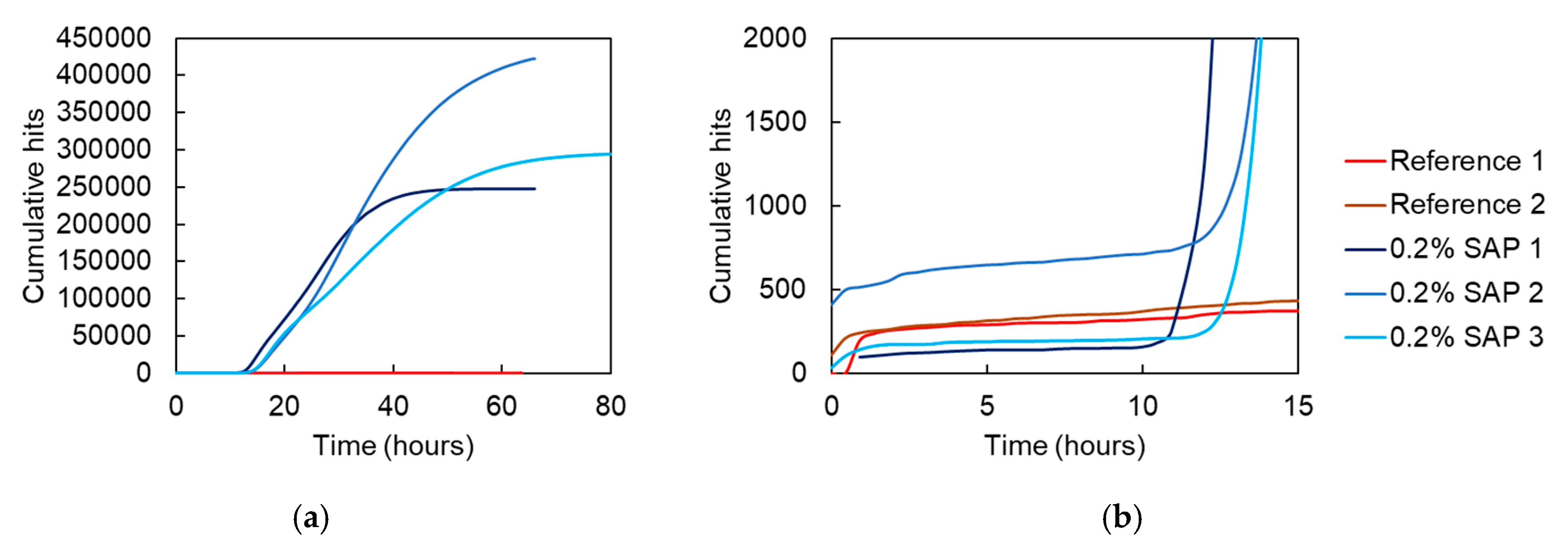
- During the hydration of mortar specimens in order to check the AE activity of the modified and reference mixes and specifically monitor the action of SAPs for the first time in literature;
- (2)
- elastic wave measurements on the sound material after 28 days to check the effect of the microstructure on the elastic properties;
- (3)
- elastic wave measurements during the healing cycles to examine in a simple way if the mechanical properties are restored.
3. Experimental Details
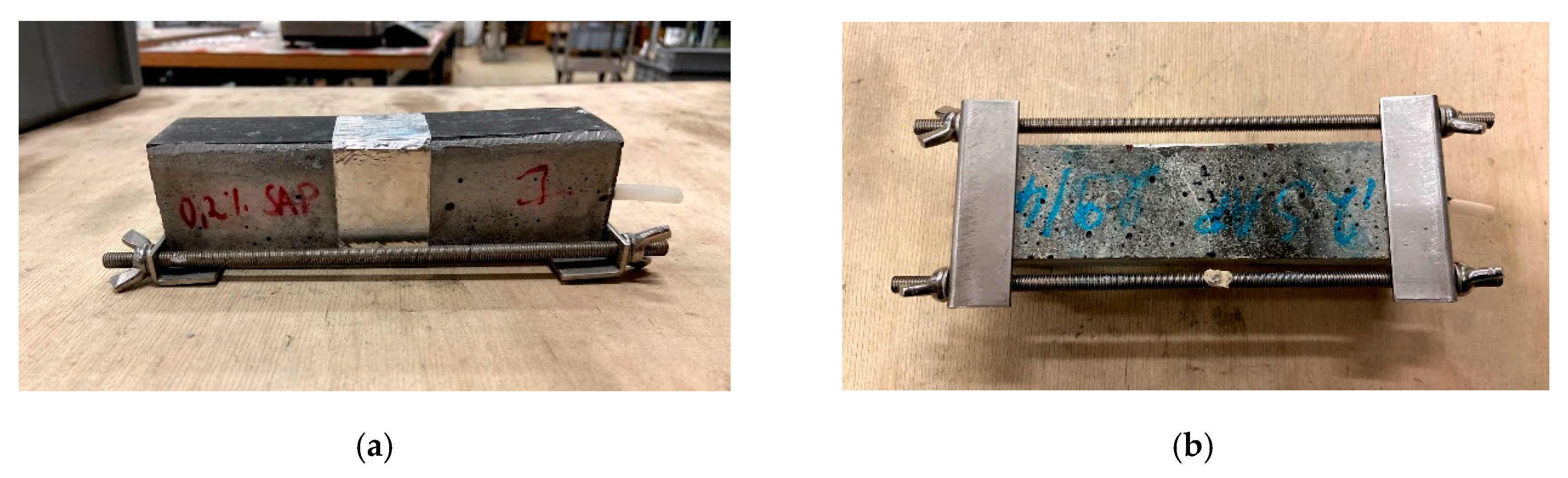
3.1. Materials and Mechanical Testing
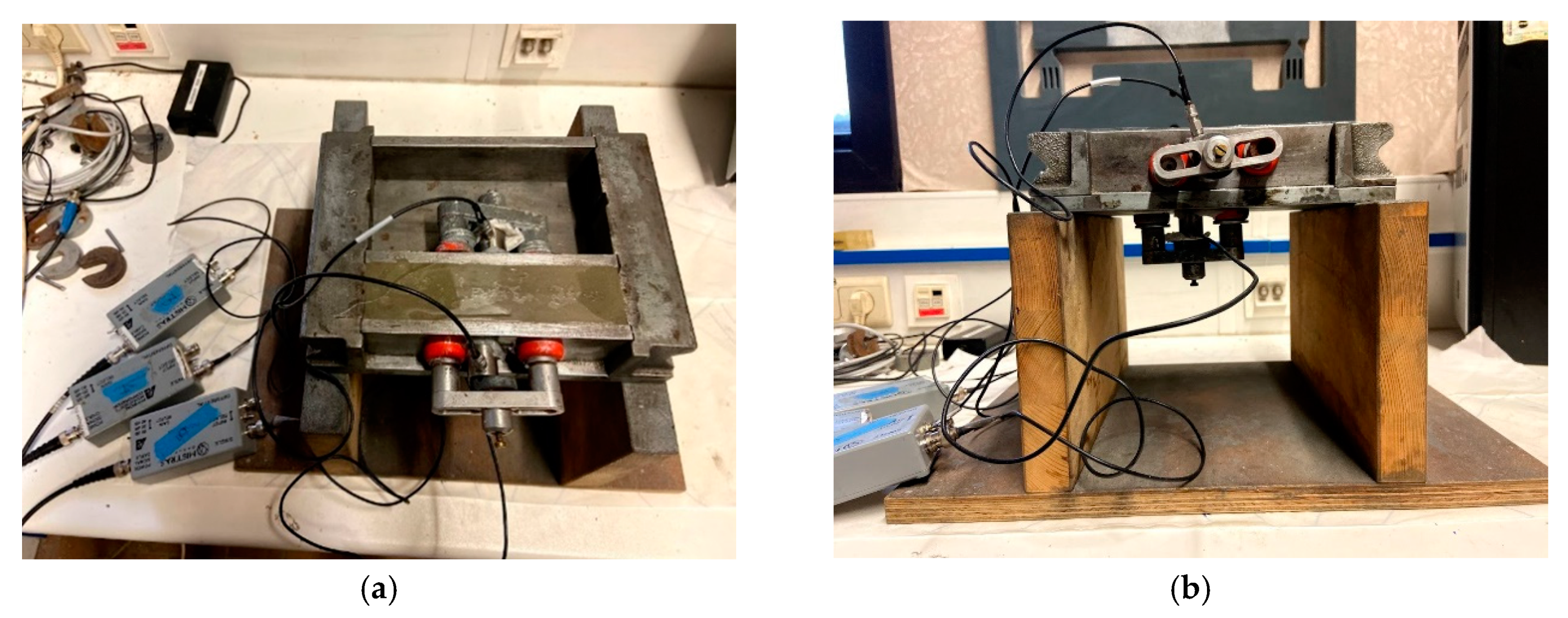
3.2. Acoustic Emission Monitoring
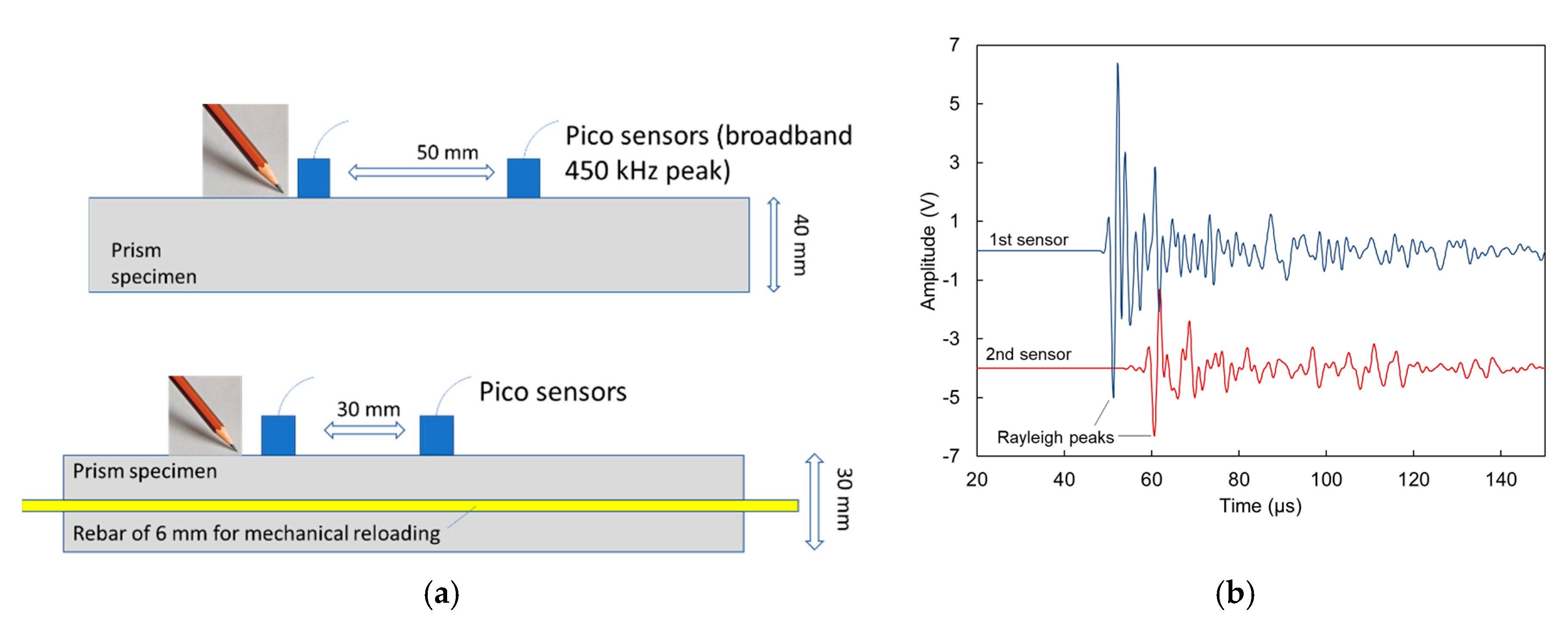
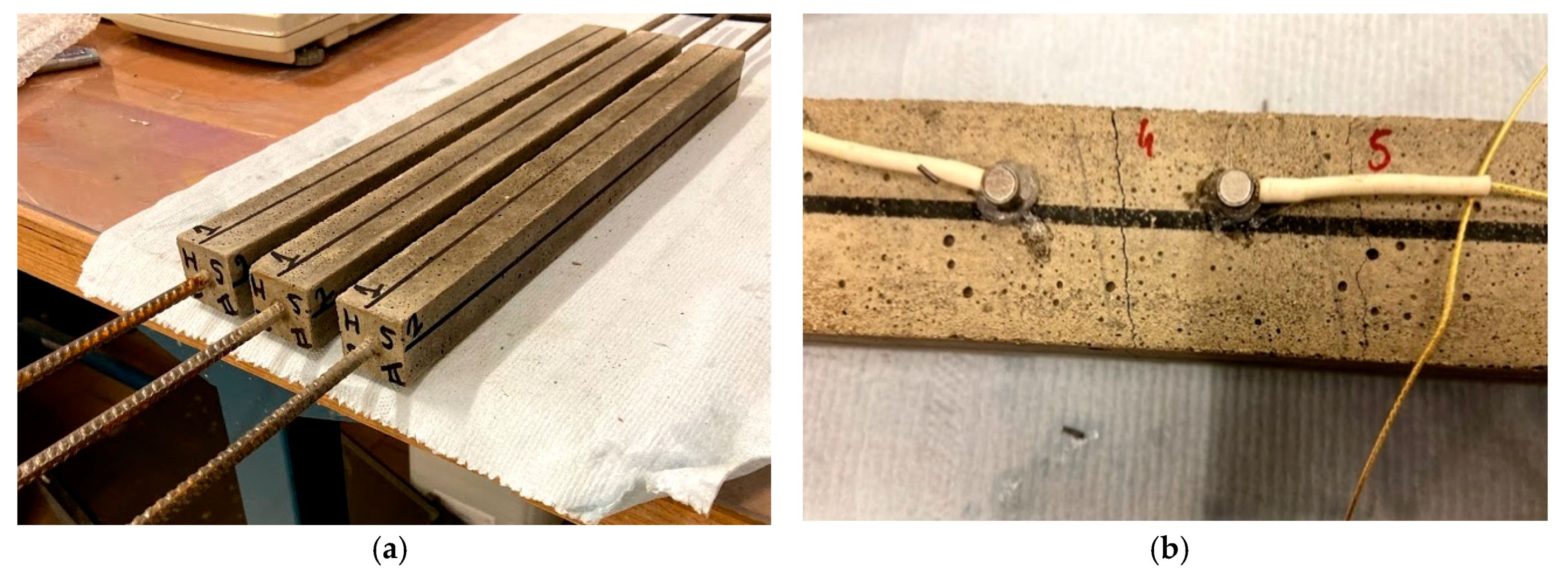
3.3. Surface Wave Measurements
4. Results
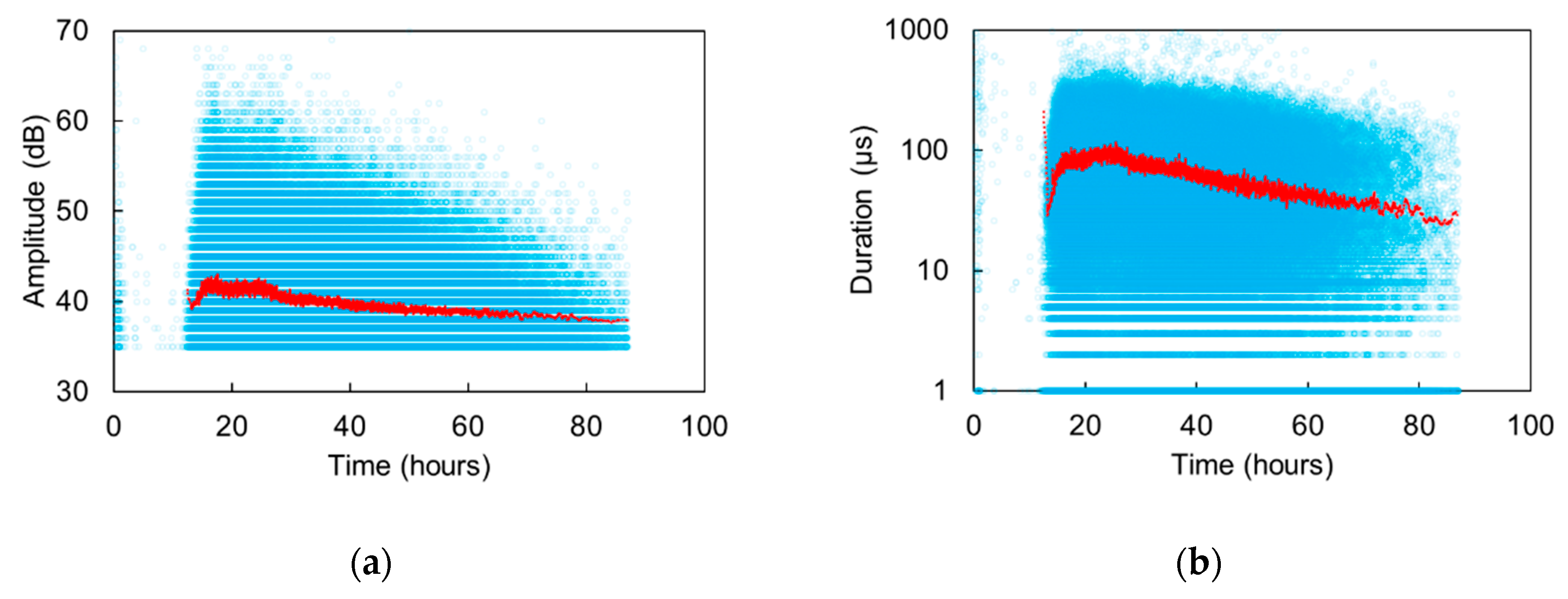
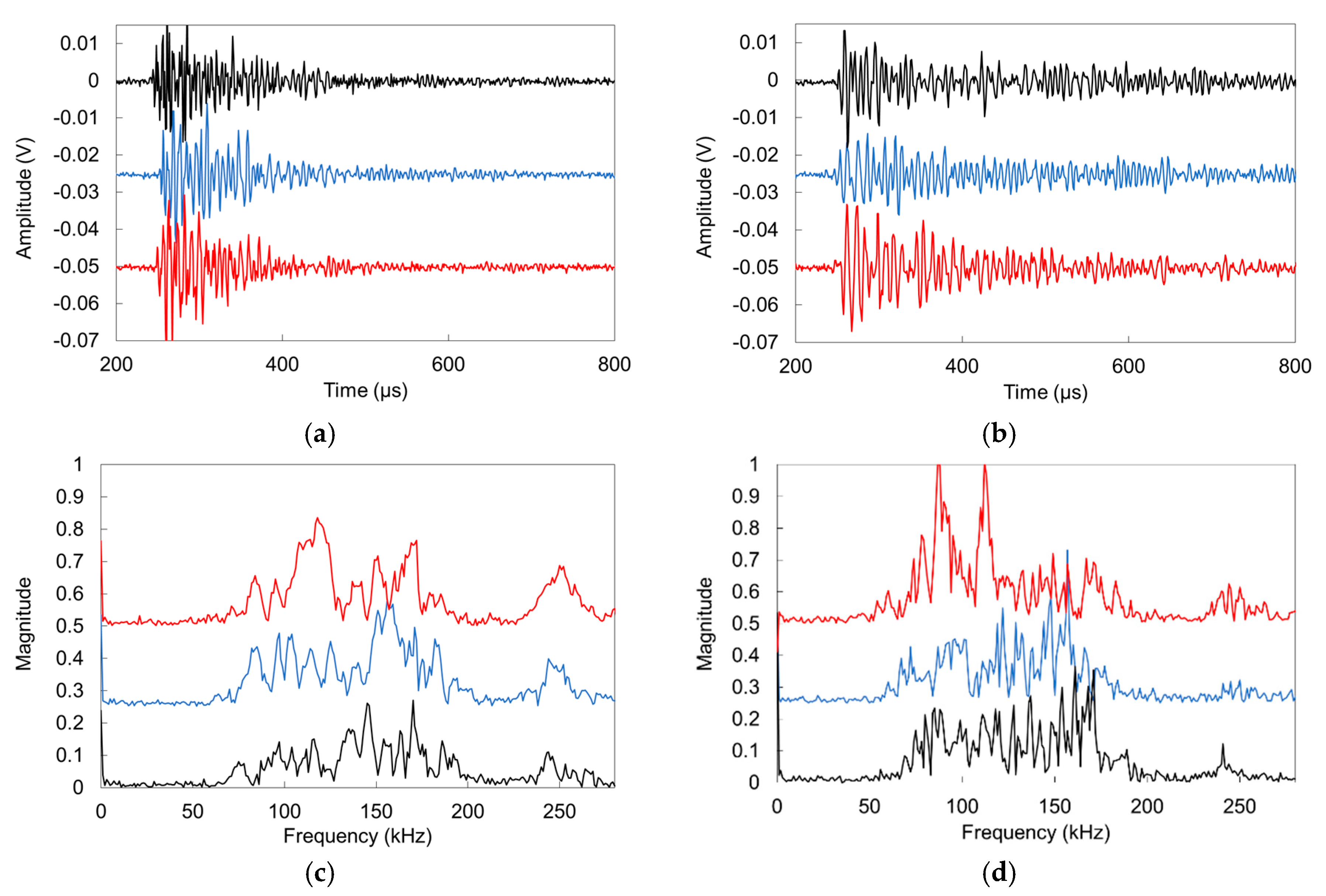
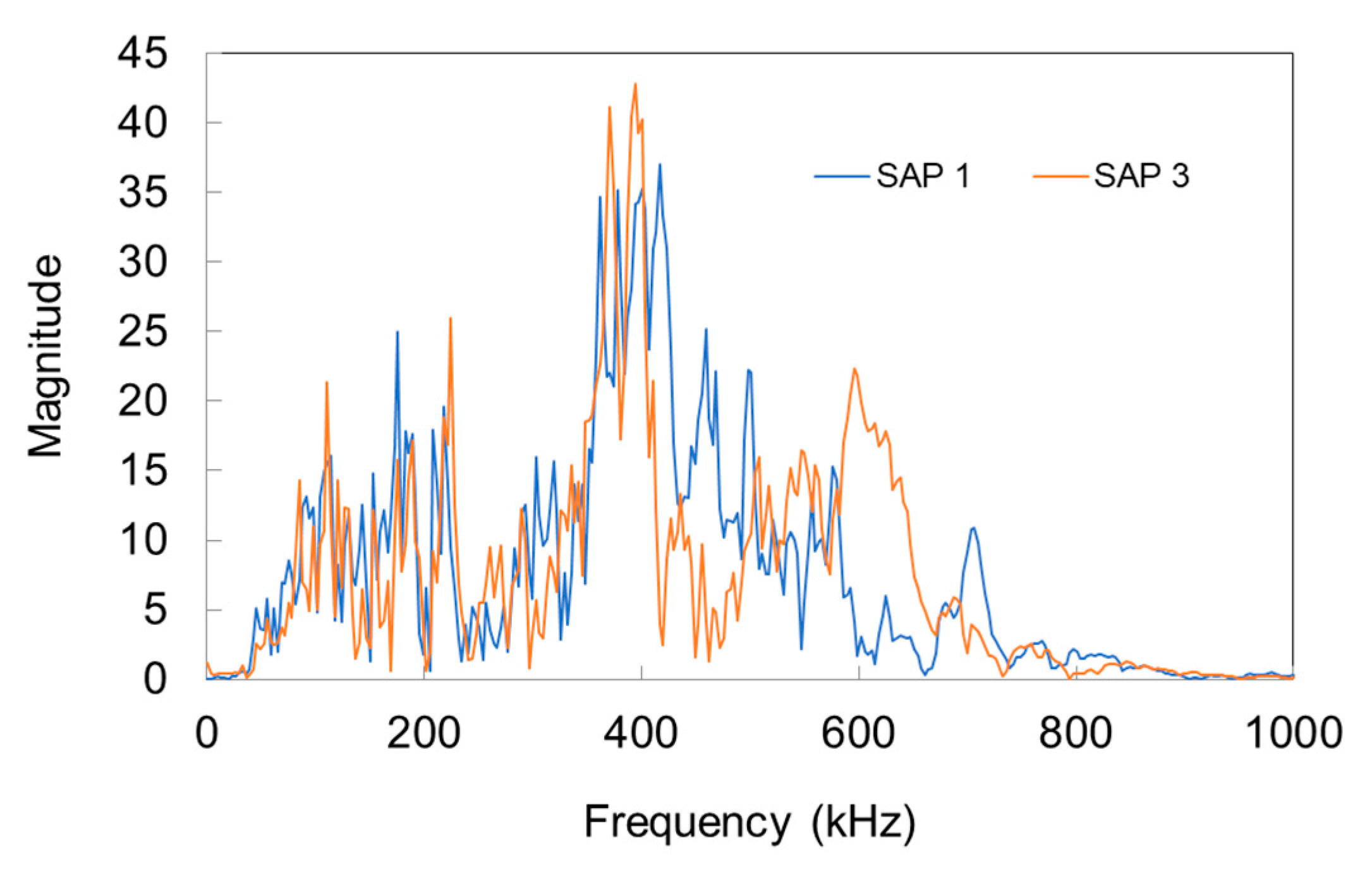
4.1. Acoustic Emission Monitoring During Hydration
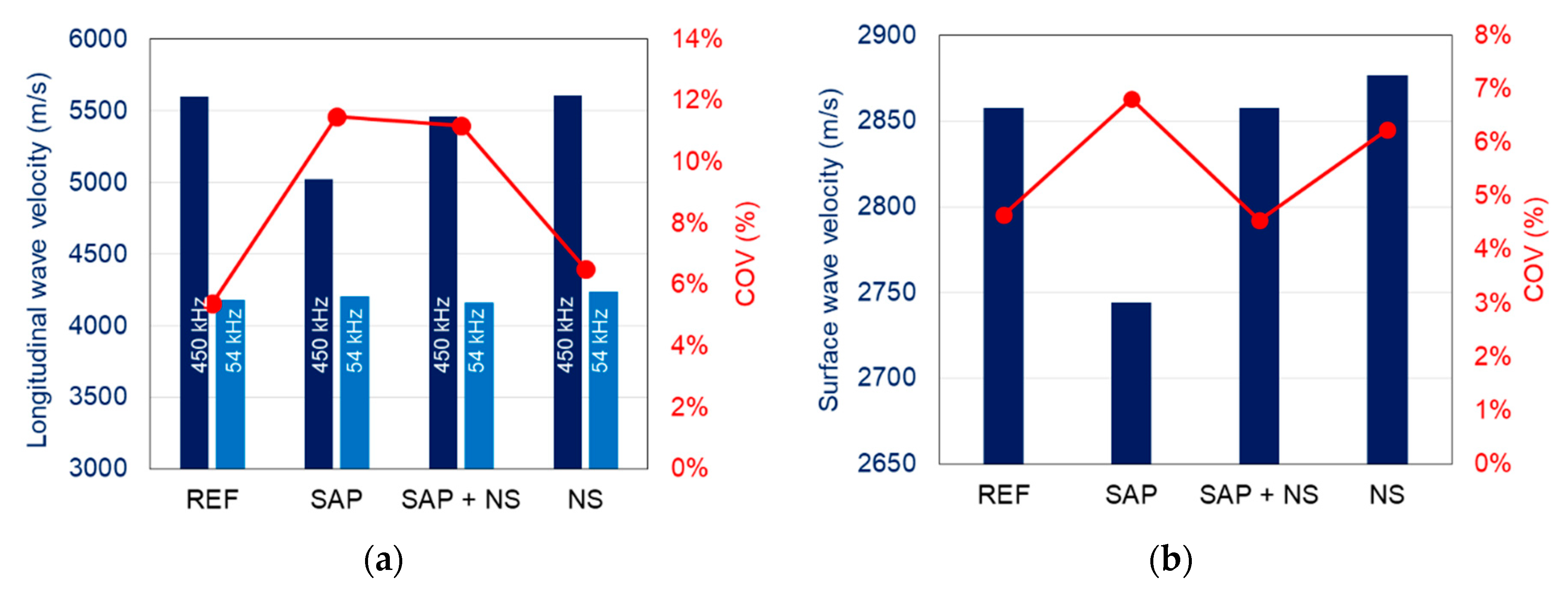
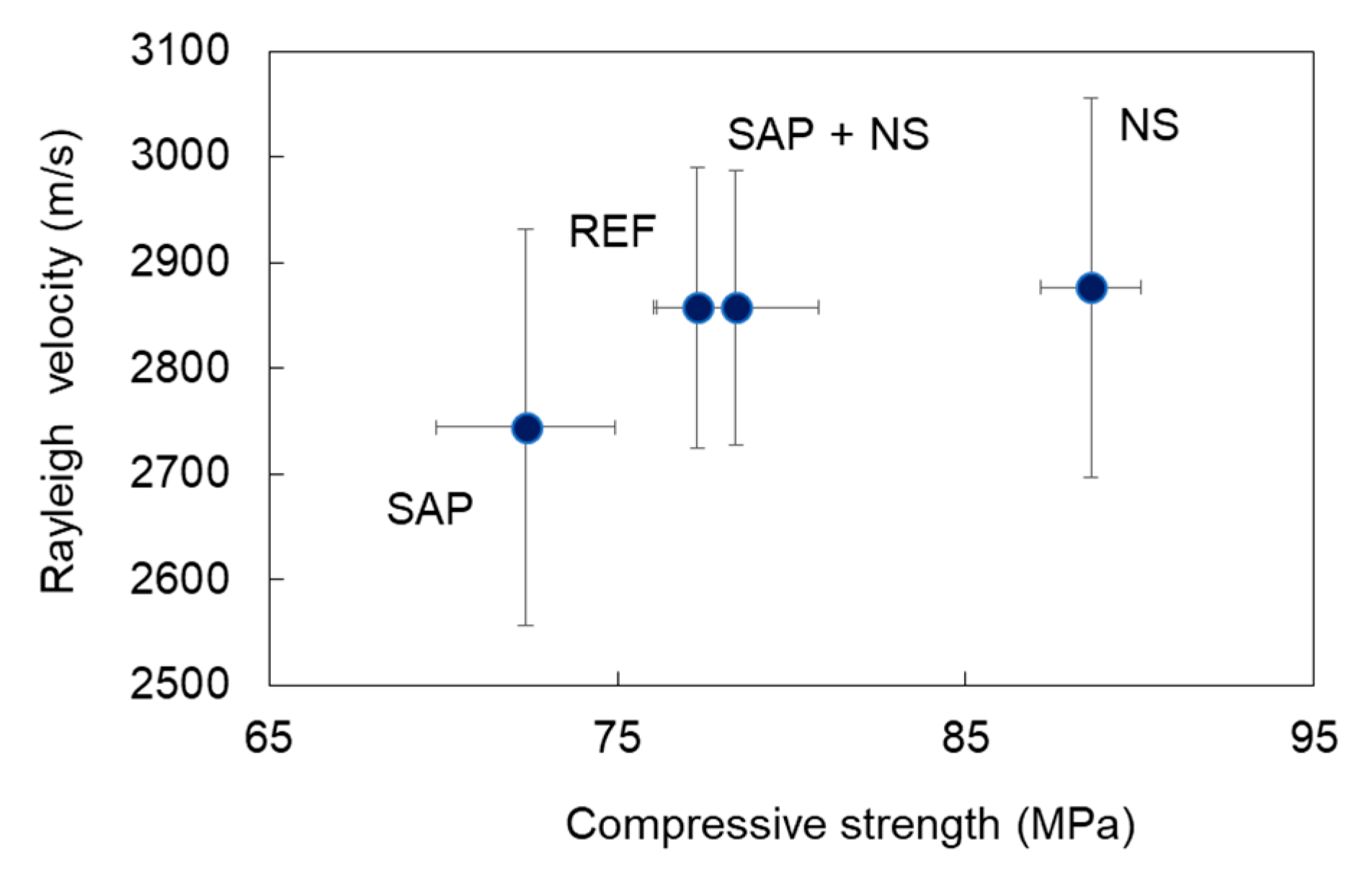
4.2. Ultrasonic Measurements on the Hardened Material
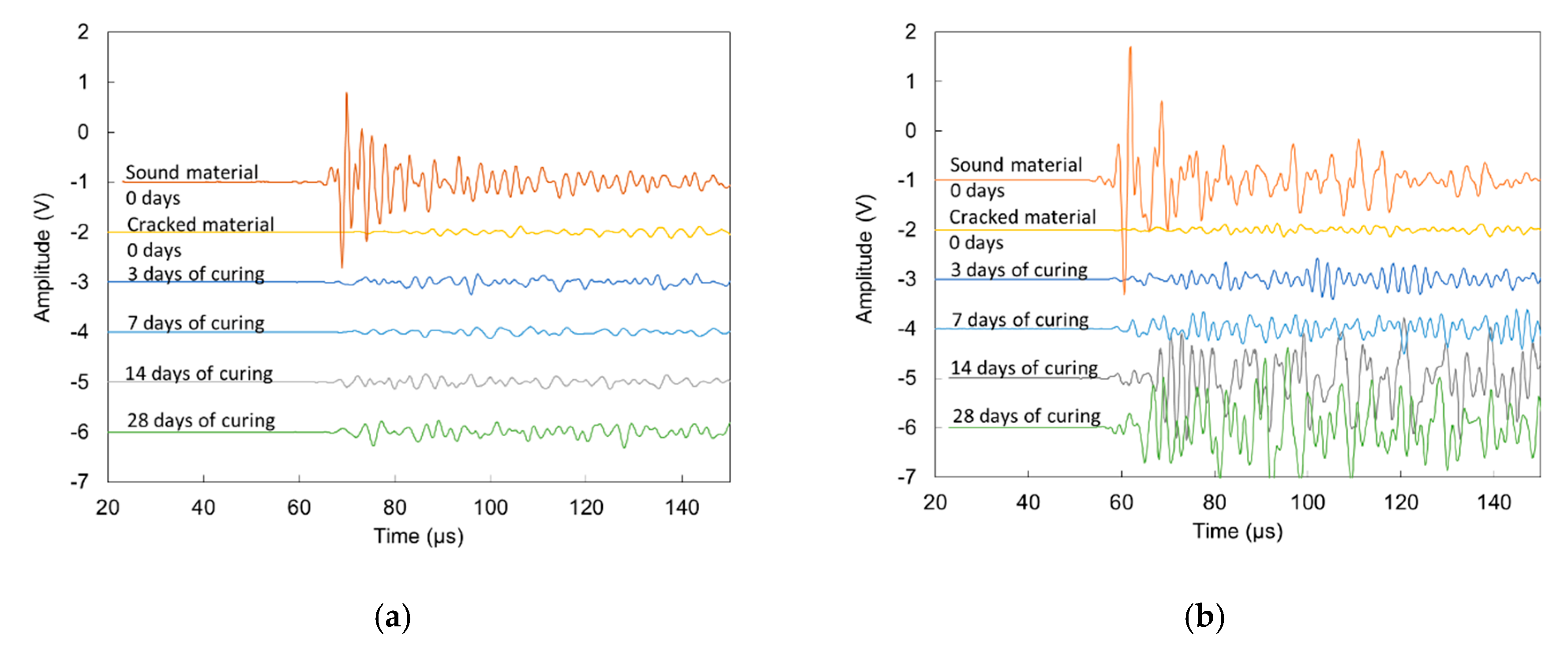
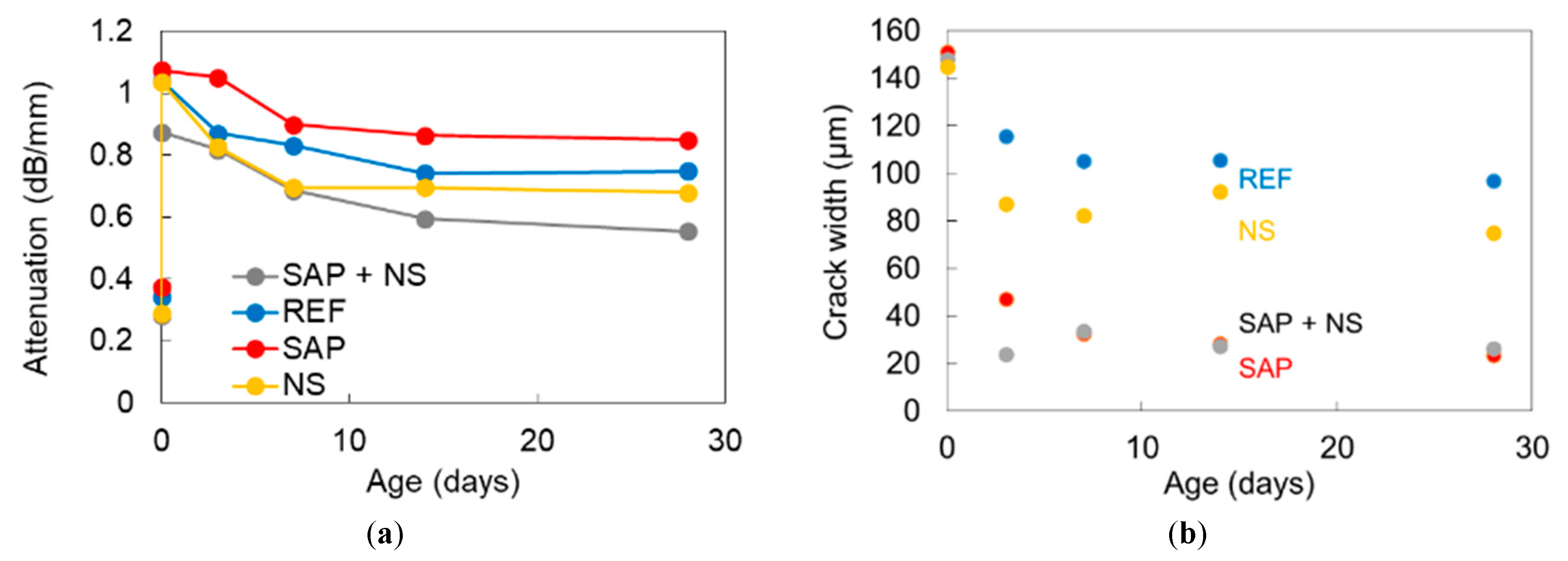
4.3. Drying-Wetting Cycles
5. Conclusions
Author Contributions
Funding
Acknowledgments
Conflicts of Interest
References
- Craeye, B.; Geirnaert, M.; de Schutter, M. Super absorbing polymers as an internal curing agent for mitigation of early-age cracking of high-performance concrete bridge decks. Constr. Build. Mater. 2011, 25, 1–13. [Google Scholar] [CrossRef]
- Schröfl, C.; Mechtcherine, V.; Gorges, M. Relation between the molecular structure and the efficiency of superabsorbent polymers (SAP) as concrete admixture to mitigate autogenous shrinkage. Cem. Concr. Res. 2012, 42, 865–873. [Google Scholar] [CrossRef]
- Mechtherine, V.; Gorges, M.; Schröfl, C.; Assmann, A.; Brameshuber, W.; Ribeiro, A.; Cusson, D.; Custodio, J.; da Silva, E.F.; Ichimiya, K.; et al. Effect of internal curing by using superabsorbent polymers (SAP) on autogenous shrinkage and other properties of a high-performance fine-grained concrete: Results of a RILEM round-robin test. Mater. Struct. 2014, 47, 541–562. [Google Scholar] [CrossRef]
- Snoeck, D.; Jensen, O.; de Belie, N. The influence of superabsorbent polymers on the autogenous shrinkage properties of cement pastes with supplementary cementitious materials. Cem. Concr. Res. 2015, 74, 59–67. [Google Scholar] [CrossRef]
- Shen, D.; Wang, X.; Cheng, D.; Zhang, J.; Jiang, G. Effect of internal curing with super absorbent polymers on autogenous shrinkage of concrete at early age. Constr. Build. Mater. 2016, 106, 512–522. [Google Scholar] [CrossRef]
- Slowik, V.; Schmidt, M.; Fritzsch, R. Capillary pressure in fresh cement-based materials and identification of the air entry value. Cem. Concr. Compos. 2008, 30, 557–565. [Google Scholar] [CrossRef]
- Dzaye, E.; de Schutter, G.; Aggelis, D. Monitoring early-age acoustic emission of cement paste and fly ash paste. Cem. Concr. Res. 2020, 129, 105964. [Google Scholar] [CrossRef]
- Lefever, G.; Tsangouri, E.; Snoeck, D.; Aggelis, D.; de Belie, N.; van Vlierberghe, S.; van Hemelrijck, D. Combined use of superabsorbent polymers and nanosilica for reduction of restrained shrinkage and strength compensation in cementitious mortars. Constr. Build. Mater. 2020, 251, 118966. [Google Scholar] [CrossRef]
- Belgisch Instituut Voor Normalisatie (BIN). Methods of Test for Mortar Masonry—Part 3: Determination of Consistence of Fresh Mortar (by Flow Table); European Committee for Standardization (CEN): Brussels, Belgium, 1999. [Google Scholar]
- Snoeck, D.; Pel, L.; de Belie, N. Superabsorbent polumers to mitigate plastic drying shrinkage in a cement paste as studied by NMR. Cem. Concr. Compos. 2018, 93, 54–62. [Google Scholar] [CrossRef]
- Mignon, A.; Snoeck, D.; D’Halluin, K.; Balcaen, L.; Vanhaecke, F.; Dubruel, P.; van Vlierberghe, S.; de Belie, N. Alginate biopolymers: Counteracting the impact of superabsorbent polymers on mortar strength. Constr. Build. Mater. 2016, 110, 169–174. [Google Scholar] [CrossRef]
- Wehbe, Y.; Ghahremaninezhad, A. Combined effect of shrinkage reducing admixtures (SRA) and superabsorbent polymers (SAP) on the autogenous shrinkage, hydration and properties of cementitious materials. Constr. Build. Mater. 2017, 138, 151–162. [Google Scholar] [CrossRef]
- Jensen, O.; Hansen, P. Water-entrained cement-based materials: I. Principles and theoretical background. Cem. Concr. Res. 2001, 31, 647–654. [Google Scholar] [CrossRef]
- Snoeck, D.; van Tittelboom, K.; Steuperaert, S.; Dubruel, P.; de Belie, N. Self-healing cementitious materials by the combination of microfibres and superabsorbent polymers. J. Intell. Mater. Syst. Struct. 2014, 25, 13–24. [Google Scholar] [CrossRef]
- Snoeck, D. Superabsorbent polymers to seal and heal cracks in cementitious materials. RILEM Tech. Lett. 2018, 3, 32–38. [Google Scholar] [CrossRef]
- Snoeck, D.; de Belie, N. Autogenous healing in strain-hardening cementitious materials with and without superabsorbent polymers: An 8-year study. Front. Mater. 2019, 6, 1–12. [Google Scholar] [CrossRef]
- Snoeck, D.; Pel, L.; de Belie, N. Autogenous healing in cementitious materials with superabsorbent polymers quantified by means of NMR. Sci. Rep. 2020, 10, 642. [Google Scholar] [CrossRef]
- Snoeck, D.; de Belie, N. Repeated autogenous healing in strain-hardening cementitious composites by using superabsorbent polymers. J. Mater. Civ. Eng. 2015, 28, 04015086. [Google Scholar] [CrossRef]
- Hasholt, M.; Jensen, O.; Kovler, K.; Zhutovsky, S. Can superabsorbent polymers mitigate autogenous shrinkage of internally cured concrete without compromising the strength? Constr. Build. Mater. 2012, 31, 226–230. [Google Scholar] [CrossRef]
- Snoeck, D.; Schaubroeck, D.; Dubruel, P.; de Belie, N. Effect of high amounts of superabsorbent polymers and additional water on the workability, microstructure and strength of mortars with a water-to-cement ratio of 0.50. Constr. Build. Mater. 2014, 72, 148–157. [Google Scholar] [CrossRef]
- Lefever, G.; Snoeck, D.; Aggelis, D.; de Belie, N.; van Vlierberghe, S.; van Hemelrijck, D. Evaluation of the self-healing ability of mortar mixtures containing superabsorbent polymers and nanosilica. Materials 2020, 13, 380. [Google Scholar] [CrossRef]
- Snoeck, D.; Pel, L.; de Belie, N. The water kinetics of superabsorbent polymers during cement hydration and internal curing visualized and studied by NMR. Sci. Rep. 2017, 7, 1–14. [Google Scholar] [CrossRef] [PubMed]
- Van den Abeele, K.; Desadeleer, W.; de Schutter, G.; Wevers, M. Active and passive monitoring of the early hydration process in concrete using linear and nonlinear acoustics. Cem. Concr. Res. 2009, 39, 426–432. [Google Scholar] [CrossRef]
- Chotard, T.; Barthelemy, J.; Smith, A.; Gimet-Breart, N.; Huger, M.; Fargeot, D.; Gault, C. Acoustic emission monitoring of calcium aluminate cement setting at the early age. J. Mater. Sci. Lett. 2001, 20, 667–669. [Google Scholar] [CrossRef]
- Assi, L.; Soltangharaei, V.; Anay, R.; Ziehl, P.; Matta, F. Unsupervised and supervised pattern recognition of acoustic emission signals during early hydration of Portland cement paste. Cem. Concr. Res. 2018, 103, 216–226. [Google Scholar] [CrossRef]
- Iliopoulos, S.; el Khattabi, Y.; Aggelis, D. Towards the Establishment of a Continuous Nondestructive Monitoring Technique for Fresh Concrete. J. Nondestruct. Eval. 2016, 35, 37. [Google Scholar] [CrossRef]
- Topolar, L.; Pazdera, L.; Kucharczykova, B.; Smutny, J.; Mikulasek, K. Using Acoustic Emission Methods to Monitor Cement Composites during Setting and Hardening. Appl. Sci. 2017, 7, 451. [Google Scholar] [CrossRef]
- Dzaye, E.; de Schutter, G.; Aggelis, D. Study on mechanical acoustic emission sources in fresh concrete. Arch. Civ. Mech. Eng. 2018, 18, 742–754. [Google Scholar] [CrossRef]
- Aggelis, D.; Grosse, C.; Shiotani, T. Acoustic Emission Characterization of Fresh Cement-Based Materials. In Advanced Techniques for Testing of Cement-Based Materials; Serdar, M., Gabrijel, I., Schlicke, D., Staquet, S., Azenha, M., Eds.; Springer Nature Switzerland AG: Basel, Switzerland, 2020; pp. 1–22. [Google Scholar]
- Komlos, K.; Popovics, S.; Nürnbergerova, T.; Babal, B.; Popovics, J. Ultrasonic pulse velocity test of concrete properties as specified in various standards. Cem. Concr. Compos. 1996, 18, 357–364. [Google Scholar] [CrossRef]
- Kaplan, M. The effects of age and water/cement ratio upon the relation between ultrasonic pulse velocity and compressive strength of concrete. Mag. Concr. Res. 1959, 11, 85–92. [Google Scholar] [CrossRef]
- Philippidis, T.; Aggelis, D. Experimental study of wave dispersion and attenuation in concrete. Ultrasonics 2005, 43, 584–595. [Google Scholar] [CrossRef]
- Chaix, J.-F.; Garnier, V.; Corneloup, G. Ultrasonic wave propagation in heterogeneous solid media: Theoretical analysis and experimental validation. Ultrasonics 2006, 44, 200–210. [Google Scholar] [CrossRef] [PubMed]
- Ju, T.; Achenbach, J.; Jacobs, L.; Guimaraes, M.; Qu, J. Ultrasonic nondestructive evaluation of alkali-silica reaction damage in concrete prism samples. Mater. Struct. 2017, 50, 60. [Google Scholar] [CrossRef]
- Aggelis, D.; Shiotani, T. Exprimental study of surface wave propagation in strongly heterogeneous media. J. Acoust. Soc. Am. 2007, 122, EL151–EL157. [Google Scholar] [CrossRef] [PubMed]
- Selleck, S.; Landis, E.; Peterson, M.; Shah, S.; Achenbach, J. Ultrasonic investigation of concrete with distributed damage. ACI Mater. J. 1998, 95, 27–36. [Google Scholar]
- Aggelis, D.; Shiotani, T.; Polyzos, D. Characterization of surface crack depth and repair evaluation using Rayleigh waves. Cem. Concr. Compos. 2009, 31, 77–83. [Google Scholar] [CrossRef]
- Shiotani, T.; Momoki, S.; Chai, H.; Aggelis, D. Elastic wave validation of large concrete structures repaired by means of cement grouting. Constr. Build. Mater. 2009, 23, 2647–2652. [Google Scholar] [CrossRef]
- Benmeddour, F.; Villain, G.; Abraham, O.; Choinska, M. Development of an ultrasonic experimental device to characterise concrete for structural repair. Constr. Build. Mater. 2012, 37, 934–942. [Google Scholar] [CrossRef]
- Tsangouri, E.; Lelon, J.; Minnebo, P.; Asaue, H.; Shiotani, T.; van Tittelboom, K.; de Belie, N.; Aggelis, D.; van Hemelrijck, D. Feasibility study on real-scale, self-healing concrete slab by developing a smart capsules network and assessed by a plethora of advanced monitoring techniques. Constr. Build. Mater. 2019, 228, 116780. [Google Scholar] [CrossRef]
- Snoeck, D.; Schröfl, C.; Mechtcherine, V. Recommendation of RILEM TC 260-RSC: Testing sorption by superabsorbent polymers (SAP) prior to implementation in cement-based material. Mater. Struct. 2018, 51, 116. [Google Scholar] [CrossRef]
- ASTM International. ASTM Standard C 349-18: Standard Test Method for Compressive Strength of Hydraulic-Cement Mortars (Using Portions of Prisms Broken in Flexure); ASTM Standards: Conshohocken, PA, USA, 2018. [Google Scholar]
- Van Mullem, T.; Gruyaert, E.; Debbaut, B.; Caspeele, R.; de Belie, N. Novel active crack width control technique to reduce the variation on water permeability results for self-healing concrete. Constr. Build. Mater. 2019, 203, 541–551. [Google Scholar] [CrossRef]
- Wang, J.; Snoeck, D.; van Vlierberghe, S.; Verstraete, W.; de Belie, N. Application of hydrogel encapsulated carbonate precipitating bacteria for approaching a realistic self-healing in concrete. Constr. Build. Mater. 2014, 68, 110–119. [Google Scholar] [CrossRef]
- Iliopoulos, S.; Malm, F.; Grosse, C.; Aggelis, D.; Polyzos, D. Concrete wave dispersion interpretation through Mindlin’s strain gradient elastic theory. J. Acoust. Soc. Am. 2017, 142, EL89–EL94. [Google Scholar] [CrossRef] [PubMed]
- Snoeck, D.; de Schryver, T.; de Belie, N. Enhanced impact energy absorption in self-healing strain-hardening cementitious materials with superabsorbent polymers. Constr. Build. Mater. 2018, 191, 13–22. [Google Scholar] [CrossRef]
- Snoeck, D.; Dewanckele, J.; Cnudde, V.; de Belie, N. X-ray computed microtomography to study autogenous healing of cementitious material promoted by superabsorbent polymers. Cem. Concr. Compos. 2016, 65, 83–93. [Google Scholar] [CrossRef]


| Cement | Water | Sand | Superplasticizer | SAP | Dry NS | |
|---|---|---|---|---|---|---|
| Reference | 1 | 0.35 | 2 | 0.004 | ||
| 0.2% SAP | 1 | 0.402 | 2 | 0.004 | 0.002 | |
| 2% NS | 0.98 | 0.35 | 2 | 0.076 | 0.02 | |
| 0.2% SAP + 2% NS | 0.98 | 0.402 | 2 | 0.076 | 0.002 | 0.02 |
| Density (g/cm³) | Compressive Strength (MPa) | |
|---|---|---|
| Reference | 2.16 ± 0.01 | 77.29 ± 1.17 |
| 0.2% SAP | 2.17 ± 0.05 | 72.36 ± 2.55 |
| 2% NS | 2.20 ± 0.01 | 88.60 ± 1.44 |
| 0.2% SAP + 2% NS | 2.16 ± 0.02 | 78.39 ± 2.37 |
© 2020 by the authors. Licensee MDPI, Basel, Switzerland. This article is an open access article distributed under the terms and conditions of the Creative Commons Attribution (CC BY) license (http://creativecommons.org/licenses/by/4.0/).
Share and Cite
Lefever, G.; Snoeck, D.; De Belie, N.; Van Vlierberghe, S.; Van Hemelrijck, D.; Aggelis, D.G. The Contribution of Elastic Wave NDT to the Characterization of Modern Cementitious Media. Sensors 2020, 20, 2959. https://doi.org/10.3390/s20102959
Lefever G, Snoeck D, De Belie N, Van Vlierberghe S, Van Hemelrijck D, Aggelis DG. The Contribution of Elastic Wave NDT to the Characterization of Modern Cementitious Media. Sensors. 2020; 20(10):2959. https://doi.org/10.3390/s20102959
Chicago/Turabian StyleLefever, Gerlinde, Didier Snoeck, Nele De Belie, Sandra Van Vlierberghe, Danny Van Hemelrijck, and Dimitrios G. Aggelis. 2020. "The Contribution of Elastic Wave NDT to the Characterization of Modern Cementitious Media" Sensors 20, no. 10: 2959. https://doi.org/10.3390/s20102959
APA StyleLefever, G., Snoeck, D., De Belie, N., Van Vlierberghe, S., Van Hemelrijck, D., & Aggelis, D. G. (2020). The Contribution of Elastic Wave NDT to the Characterization of Modern Cementitious Media. Sensors, 20(10), 2959. https://doi.org/10.3390/s20102959