Next Article in Journal
Moving towards IoT Based Digital Communication: An Efficient Utilization of Power Spectrum Density for Smart Cities
Next Article in Special Issue
Efficient Resource Allocation for Backhaul-Aware Unmanned Air Vehicles-to-Everything (U2X)
Previous Article in Journal
Fingerprinting-Based Indoor Localization Using Interpolated Preprocessed CSI Phases and Bayesian Tracking
Previous Article in Special Issue
An Online Charging Scheme for Wireless Rechargeable Sensor Networks Based on a Radical Basis Function
Article

Energy-Efficient Industrial Internet of Things Software-Defined Network by Means of the Peano Fractal


1
Escuela Superior de Ingeniería Mecánica y Eléctrica, Instituto Politécnico Nacional, Mexico City 07340, Mexico
2
Escuela Superior de Turismo, Instituto Politécnico Nacional, Mexico City 07630, Mexico
*
Author to whom correspondence should be addressed.
Sensors 2020, 20(10), 2855; https://doi.org/10.3390/s20102855
Received: 11 April 2020 / Revised: 13 May 2020 / Accepted: 13 May 2020 / Published: 18 May 2020
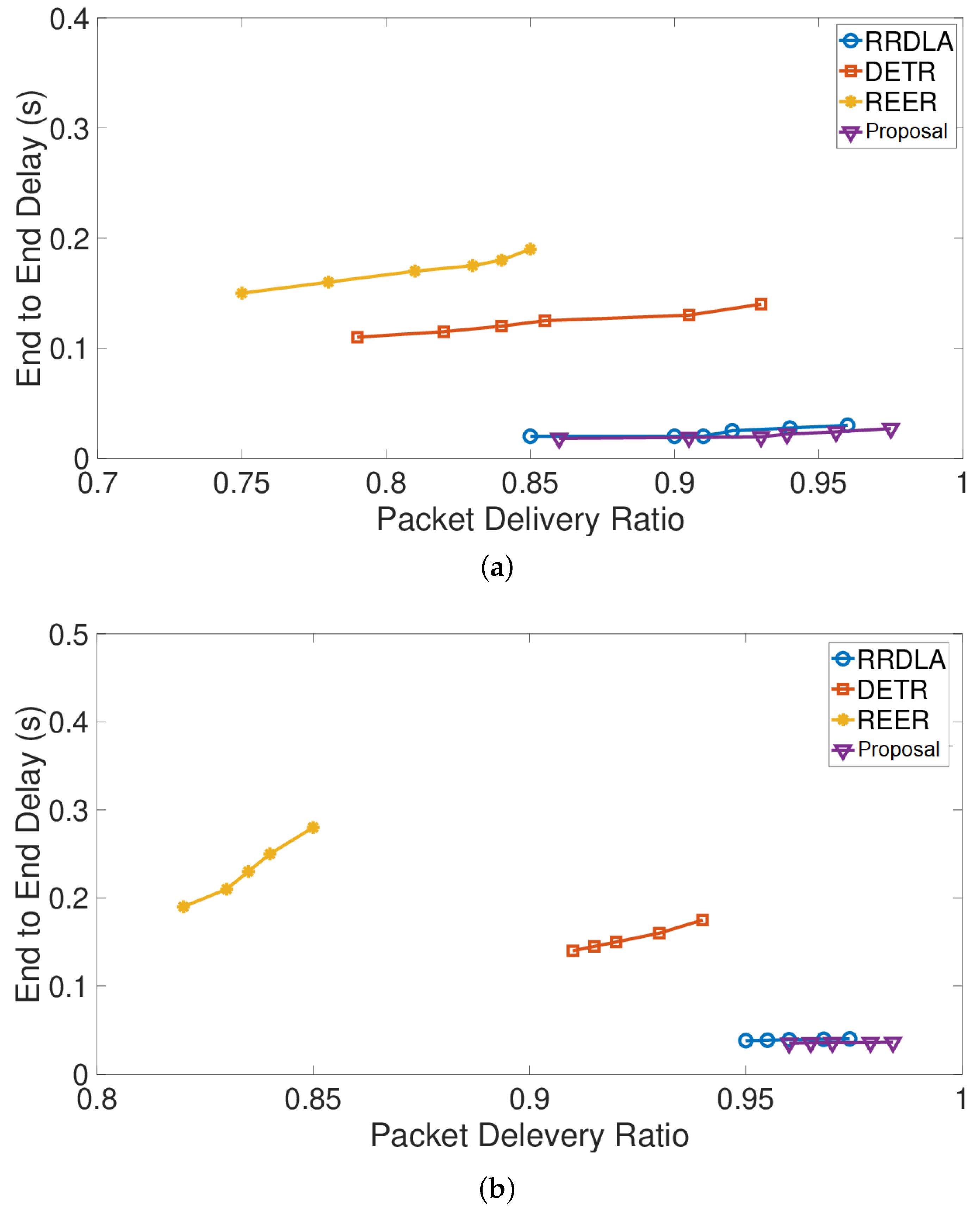
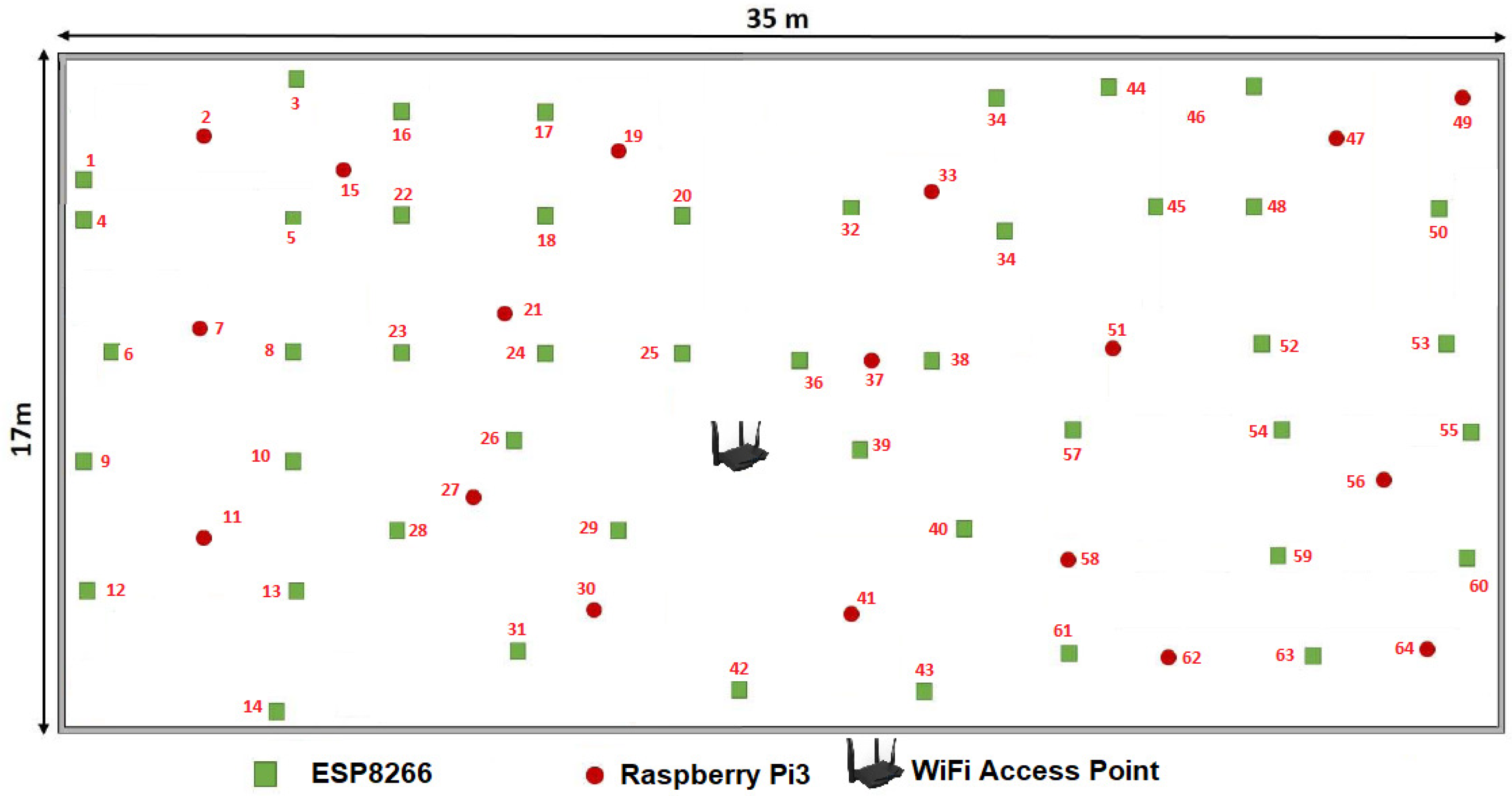
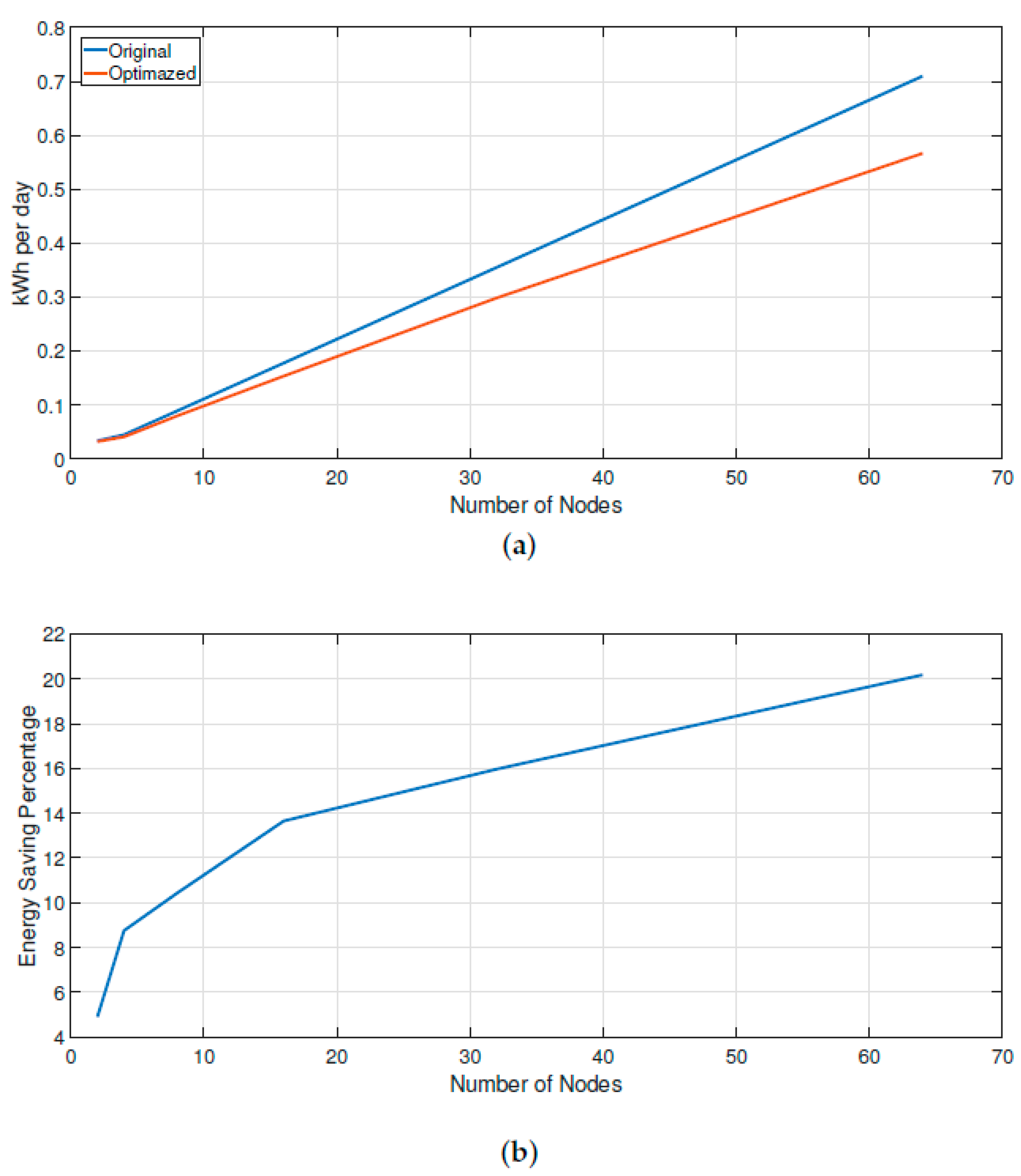
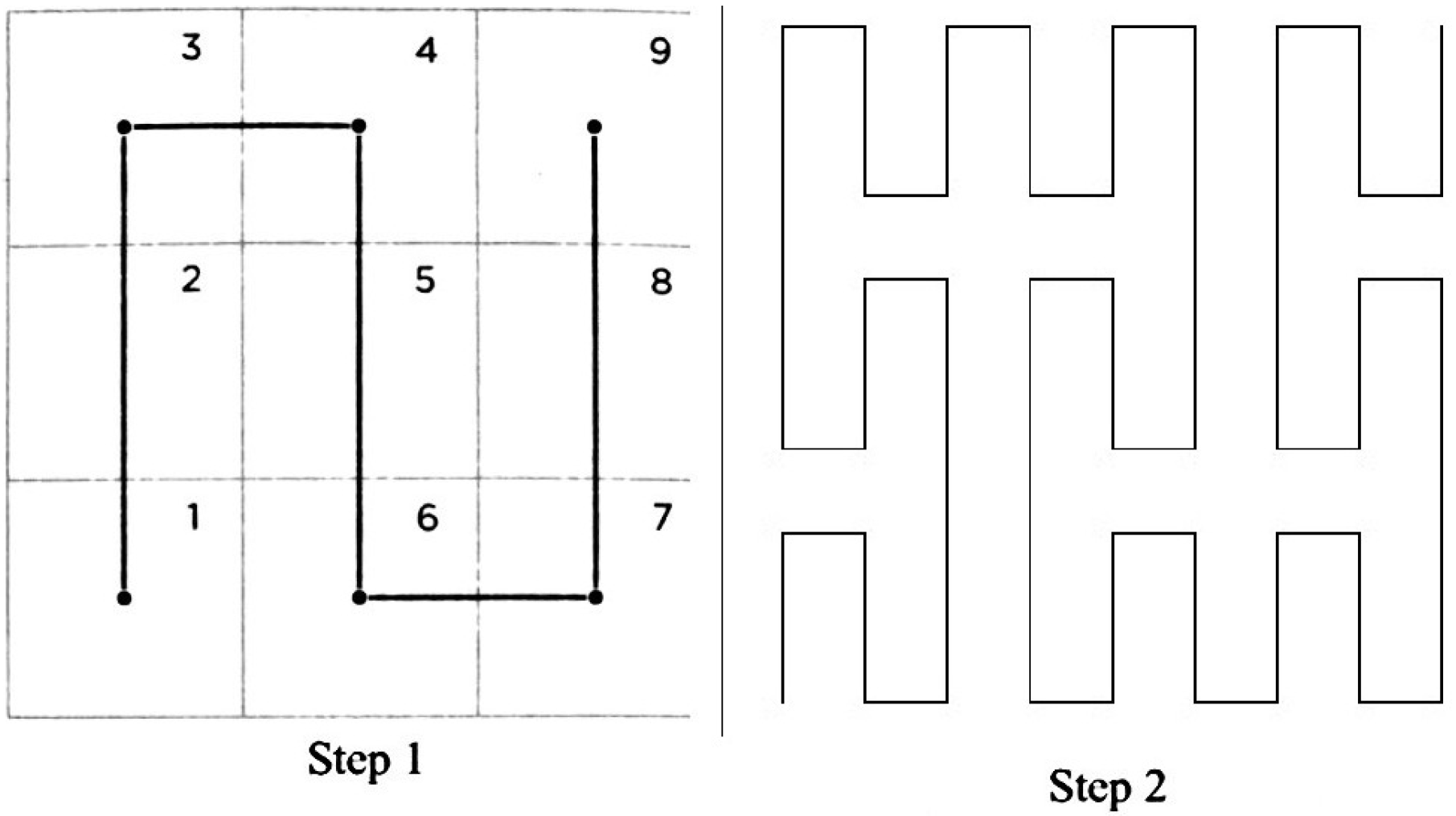
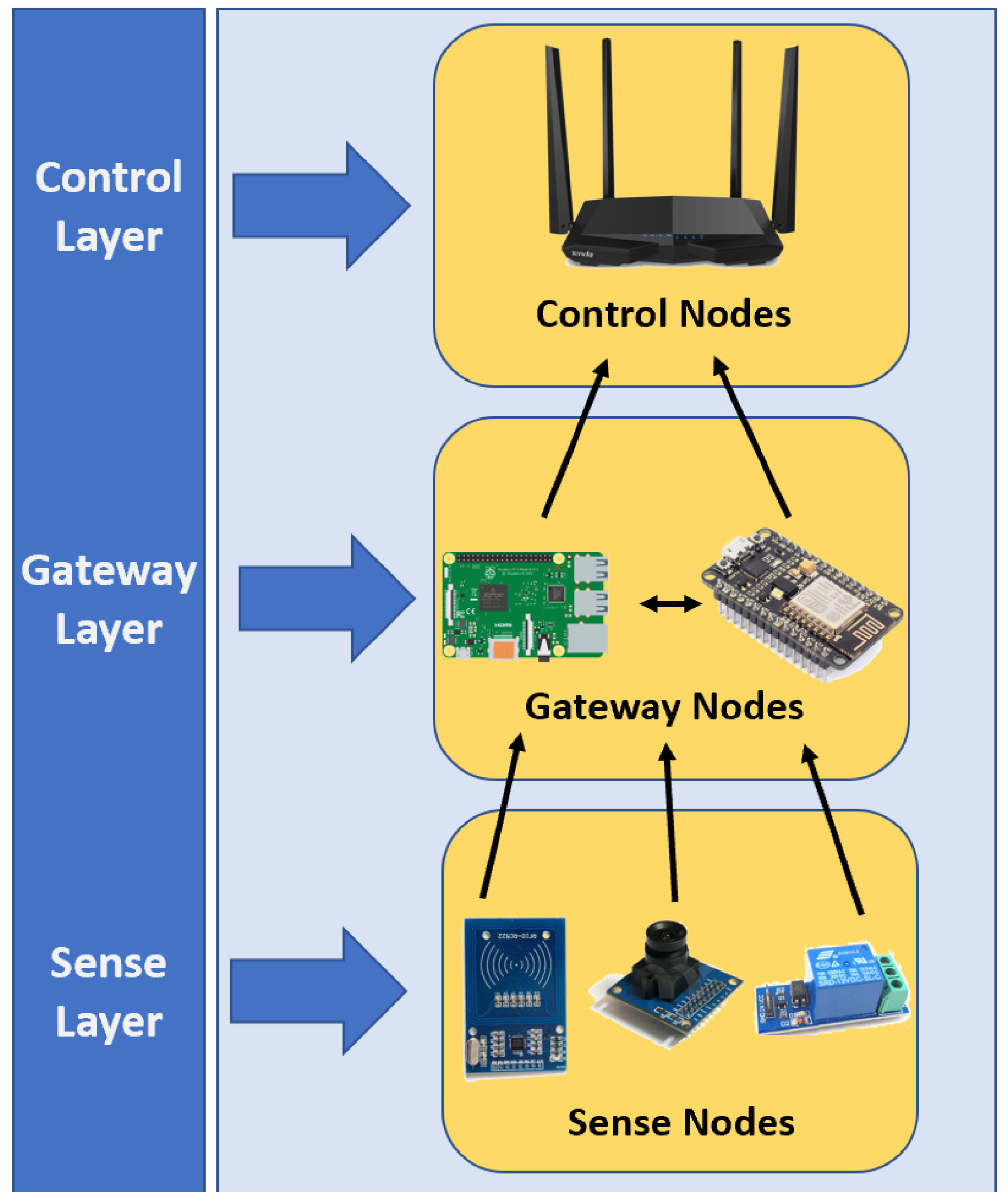
The Industrial Internet of Things (IIoT) network generates great economic benefits in processes, system installation, maintenance, reliability, scalability, and interoperability. Wireless sensor networks (WSNs) allow the IIoT network to collect, process, and share data of different parameters among Industrial IoT sense Node (IISN). ESP8266 are IISNs connected to the Internet by means of a hub to share their information. In this article, a light-diffusion algorithm in WSN to connect all the IISNs is designed, based on the Peano fractal and swarm intelligence, i.e., without using a hub, simply sharing parameters with two adjacent IINSs, assuming that any IISN knows the parameters of the rest of these devices, even if they are not adjacent. We simulated the performance of our algorithm and compared it with other state-of-the-art protocols, finding that our proposal generates a longer lifetime of the IIoT network when few IISNs were connected. Thus, there is a saving-energy of approximately 5% but with 64 nodes there is a saving of more than 20%, because the IIoT network can grow in a 3 n way and the proposed topology does not impact in a linear way but log 3 , which balances energy consumption throughout the IIoT network. View Full-Text
Keywords: energy-efficient systems; industrial Internet of things; software-defined network; peano fractal curve; swarm intelligence energy-efficient systems; industrial Internet of things; software-defined network; peano fractal curve; swarm intelligence
Show Figures

Figure 1

MDPI and ACS Style

Moreno Escobar, J.J.; Morales Matamoros, O.; Lina Reyes, I.; Tejeida-Padilla, R.; Chanona Hernández, L.; Posadas Durán, J.P.F. Energy-Efficient Industrial Internet of Things Software-Defined Network by Means of the Peano Fractal. Sensors 2020, 20, 2855. https://doi.org/10.3390/s20102855

AMA Style

Moreno Escobar JJ, Morales Matamoros O, Lina Reyes I, Tejeida-Padilla R, Chanona Hernández L, Posadas Durán JPF. Energy-Efficient Industrial Internet of Things Software-Defined Network by Means of the Peano Fractal. Sensors. 2020; 20(10):2855. https://doi.org/10.3390/s20102855
Chicago/Turabian Style

Moreno Escobar, Jesus J., Oswaldo Morales Matamoros, Ixchel Lina Reyes, Ricardo Tejeida-Padilla, Liliana Chanona Hernández, and Juan P.F. Posadas Durán. 2020. "Energy-Efficient Industrial Internet of Things Software-Defined Network by Means of the Peano Fractal" Sensors 20, no. 10: 2855. https://doi.org/10.3390/s20102855
Find Other Styles
Note that from the first issue of 2016, MDPI journals use article numbers instead of page numbers. See further details here.

Article Access Map by Country/Region

1
Back to TopTop