Article

Efficient Depth Enhancement Using a Combination of Color and Depth Information


Department of Electrical and Electronic Engineering, Yonsei University, Seoul 03722, Korea
*
Author to whom correspondence should be addressed.
Sensors 2017, 17(7), 1544; https://doi.org/10.3390/s17071544
Submission received: 30 April 2017 / Revised: 12 June 2017 / Accepted: 26 June 2017 / Published: 1 July 2017
(This article belongs to the Special Issue Imaging Depth Sensors—Sensors, Algorithms and Applications)

Abstract

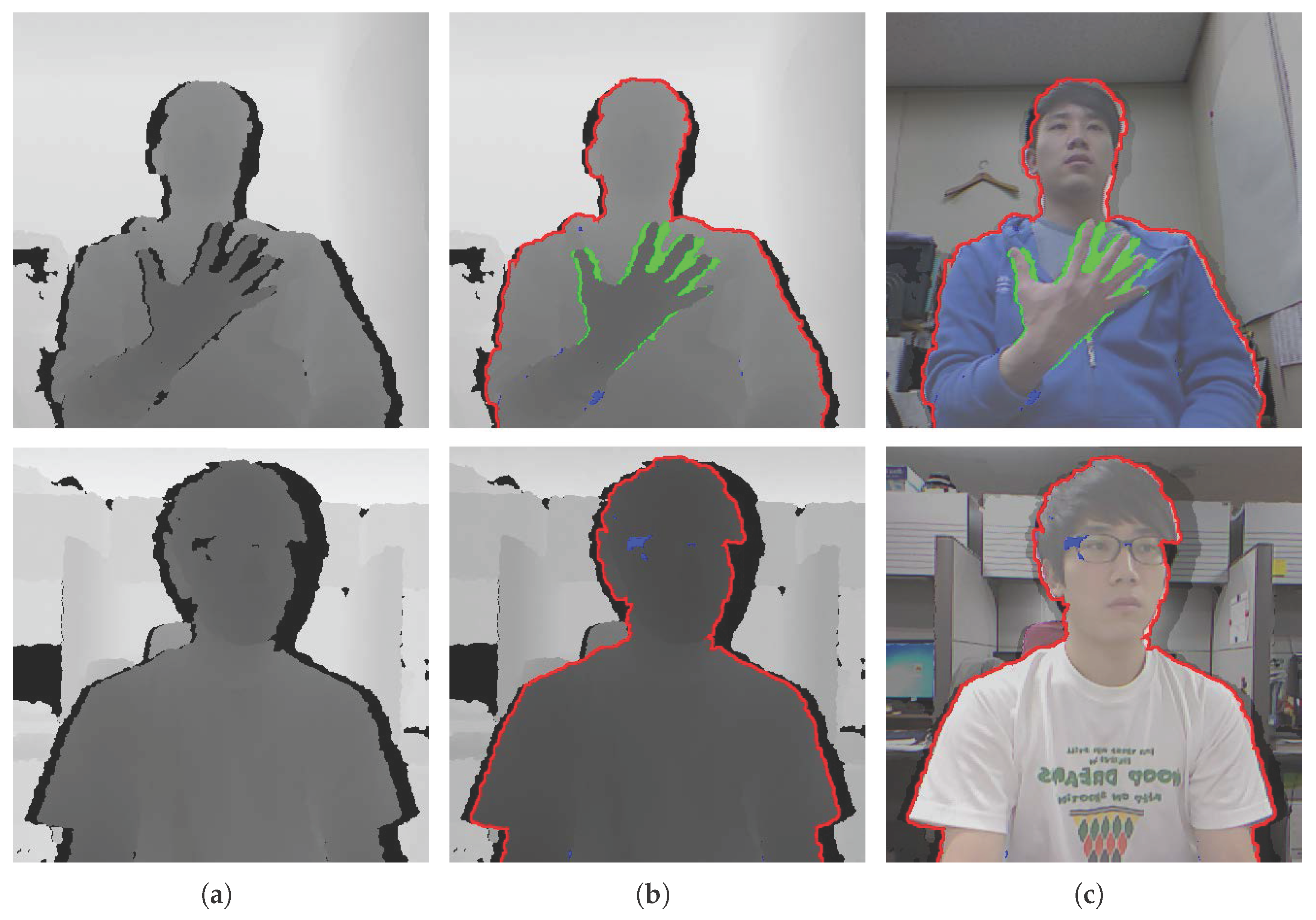
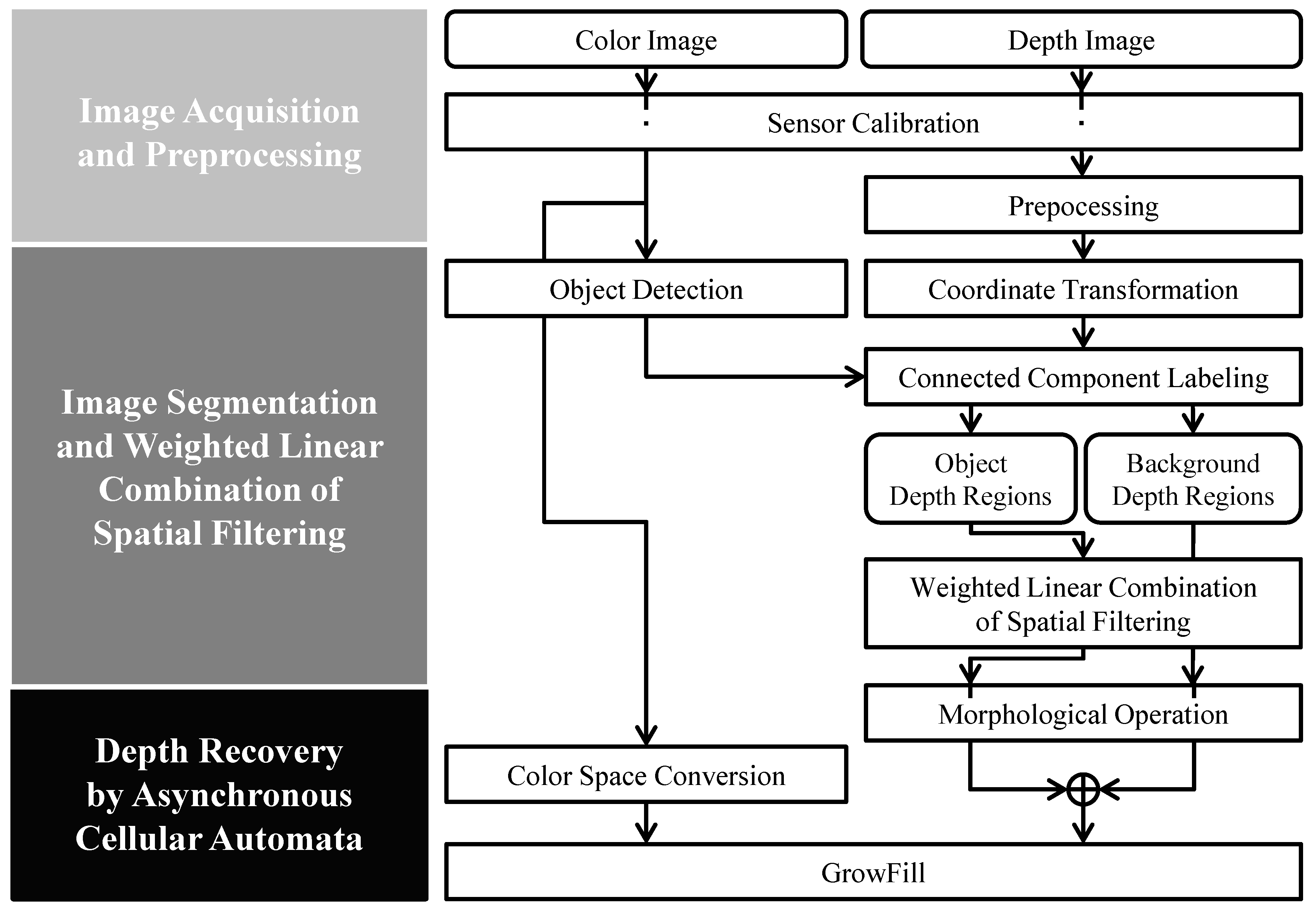
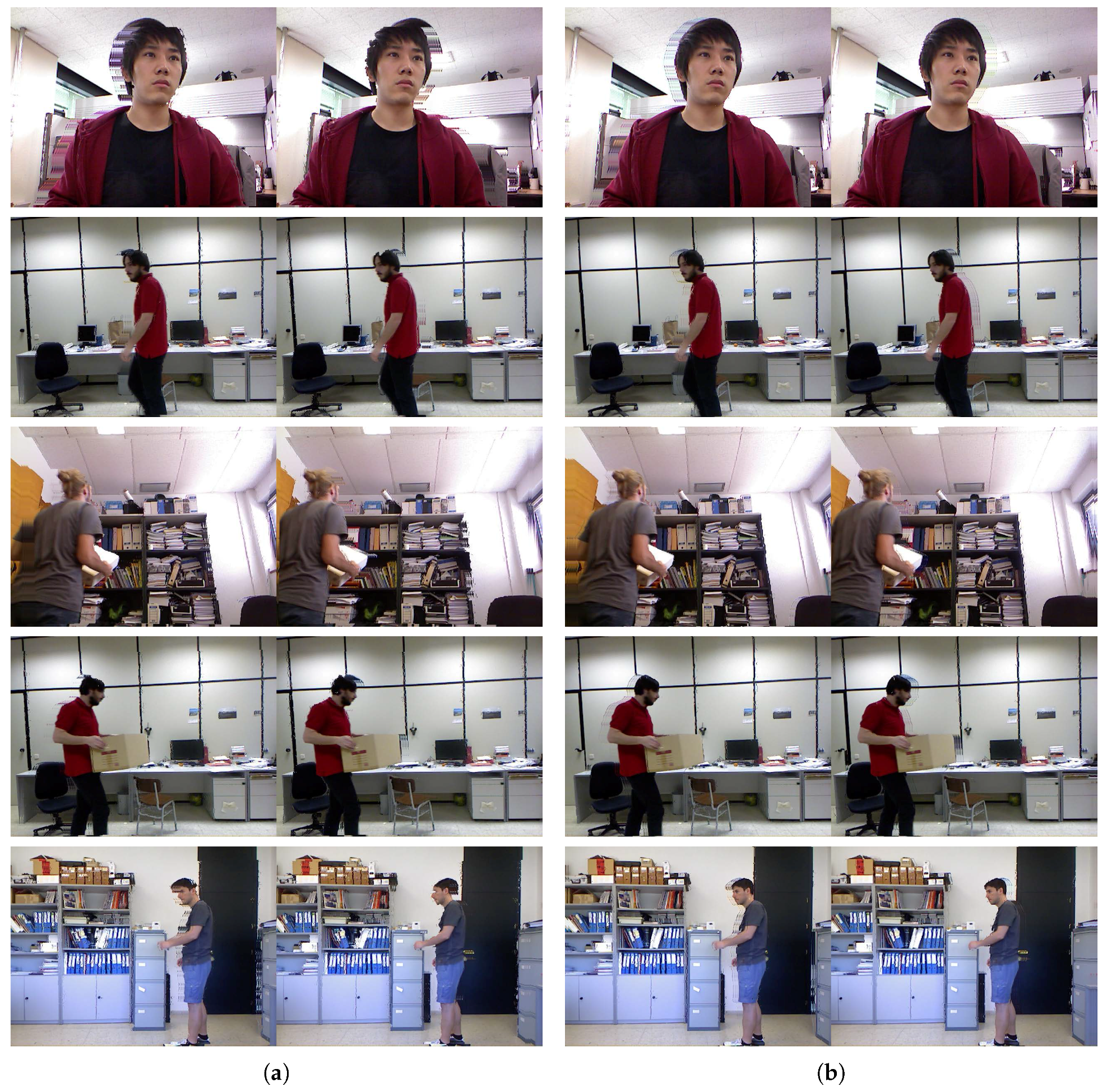
Studies on depth images containing three-dimensional information have been performed for many practical applications. However, the depth images acquired from depth sensors have inherent problems, such as missing values and noisy boundaries. These problems significantly affect the performance of applications that use a depth image as their input. This paper describes a depth enhancement algorithm based on a combination of color and depth information. To fill depth holes and recover object shapes, asynchronous cellular automata with neighborhood distance maps are used. Image segmentation and a weighted linear combination of spatial filtering algorithms are applied to extract object regions and fill disocclusion in the object regions. Experimental results on both real-world and public datasets show that the proposed method enhances the quality of the depth image with low computational complexity, outperforming conventional methods on a number of metrics. Furthermore, to verify the performance of the proposed method, we present stereoscopic images generated by the enhanced depth image to illustrate the improvement in quality.
Keywords: depth enhancement; depth recovery; hole filling; image segmentation; RGB-D sensor depth enhancement; depth recovery; hole filling; image segmentation; RGB-D sensor