Interesting Images

Expanding Insular Presence of the Giant Water Bug Lethocerus patruelis (Stål, 1854) Across the Aegean Islands: New Evidence of an Emerging Archipelagic Distribution


by
Giorgos Stavrianakis
1,*,
Linne Sykora
2,
Edwin van der Veldt
3,
Alexandros D. Kouris
4,
Apostolos Christopoulos
5 and
Yiannis G. Zevgolis
6,*
1
PrecFarm Laboratory, Department of Geography, University of the Aegean, 81132 Mytilene, Greece
2
Independent Researcher, 7211 Eefde, The Netherlands
3
Reinwardt Academy, Amsterdam University of the Arts, 1011 NG Amsterdam, The Netherlands
4
Department of Sustainable Agriculture, University of Patras, 30131 Agrinio, Greece
5
Department of Zoology and Marine Biology, Faculty of Biology, National and Kapodistrian University of Athens, 15772 Athens, Greece
6
Biodiversity Conservation Laboratory, Department of Environment, University of the Aegean, 81132 Mytilene, Greece
*
Authors to whom correspondence should be addressed.
Diversity 2026, 18(1), 31; https://doi.org/10.3390/d18010031
Submission received: 2 December 2025 / Revised: 5 January 2026 / Accepted: 6 January 2026 / Published: 7 January 2026
(This article belongs to the Section Biodiversity Conservation)

Abstract

Lethocerus patruelis (Stål, 1854), the sole European belostomatid, is an apex invertebrate predator in Mediterranean freshwater systems and a species known for its strong flight capacity and growing range expansion record. While its continental distribution in Greece is increasingly well documented, its presence across the Aegean islands has remained poorly characterized, with historical records scattered and often unpublished or fragmentary. Here, we present new, photographically verified records that substantially refine the species’ insular distribution and provide the first coordinated synthesis of its emerging archipelagic footprint. These include the first confirmed live individual from Samothraki and a newly documented specimen from Naxos, recovered beside a nearly desiccated summer stream indicating a very recent arrival. When integrated with additional verified observations from Sifnos, Ikaria, Chios, Euboea, Tilos, and Crete, as well as earlier published records, a coherent spatial pattern emerges. Rather than isolated vagrants, the records align along three longitudinal dispersal axes spanning the northern, central, and southern Aegean. These axes reflect plausible biological and anthropogenic pathways influenced by regional winds, maritime transport, and the distribution of natural and artificial freshwater habitats. Collectively, the evidence indicates that L. patruelis is undergoing a sustained, multi-vector archipelagic expansion, underscoring the importance of integrating citizen-science observations with targeted field documentation to monitor freshwater biodiversity across Mediterranean islands.

The giant water bug Lethocerus patruelis (Stål, 1854) is the sole European representative of Belostomatidae and one of the most influential aquatic predators in Mediterranean freshwater systems. Its large size, raptorial forelegs, and capacity to subdue a wide range of taxa, including aquatic invertebrates, amphibians, fish, and occasionally terrestrial vertebrates, place it among the apex invertebrate predators of Palearctic wetlands [1,2,3]. The species has a broad distributional range extending from the Balkan Peninsula and western Anatolia through the Levant and Middle East, and eastward into Afghanistan, India, and Nepal [4]. Over the past two decades, its documented westward expansion into Italy [5,6,7] has highlighted its high dispersal capacity as well as its tolerance for human-modified aquatic environments.
Throughout its range, L. patruelis typically occupies stagnant or slow-flowing freshwater habitats such as ponds, oxbows, marshes, irrigation basins, livestock tanks, and small artificial reservoirs [8,9]. Its reproductive system, marked by paternal egg guarding on emergent vegetation, provides resilience under fluctuating hydroperiods [3]. At the same time, the species is sensitive to eutrophication and pollution, a combination that has made it both a robust colonizer of small water bodies and a potential indicator of wetland quality. This ecological duality raises the question of how L. patruelis interacts with insular freshwater networks in the Mediterranean, where perennial aquatic habitats are scarce and anthropogenic structures often act as functional substitutes for natural wetlands.
Although L. patruelis has long been known from scattered sites in continental Greece [10,11], confirmed Aegean island records have historically been few. Published occurrences include Thassos, Skiathos, Skyros, Lemnos, Lesvos, Rhodes, and Amorgos [5,11,12], forming an emerging insular distribution that was previously interpreted as fragmentary. However, recent citizen-science platforms and informal reports have documented additional individuals from Sifnos, Ikaria, Chios, Euboea, Tilos, and Crete [13]. When combined with newly verified field observations, these data reveal a far more extensive and structured archipelagic footprint than previously recognized. These verified occurrences hint that L. patruelis may be undergoing an archipelagic expansion across the northeastern Mediterranean. However, many islands remain poorly surveyed, and the apparent pattern of north–south stepping-stone dispersal has yet to be examined systematically [14].
Here, we provide new verified records that substantially expand the known insular range of L. patruelis in the Aegean and offer the first coordinated synthesis of its emerging archipelagic distribution. These observations include the first live confirmed individual from Samothraki, an island previously represented only by a single dead specimen [11,13], and a newly documented specimen from the island of Naxos, recovered dead but intact beside a nearly desiccated ephemeral stream. These observations resulted from incidental encounters during non-targeted fieldwork.
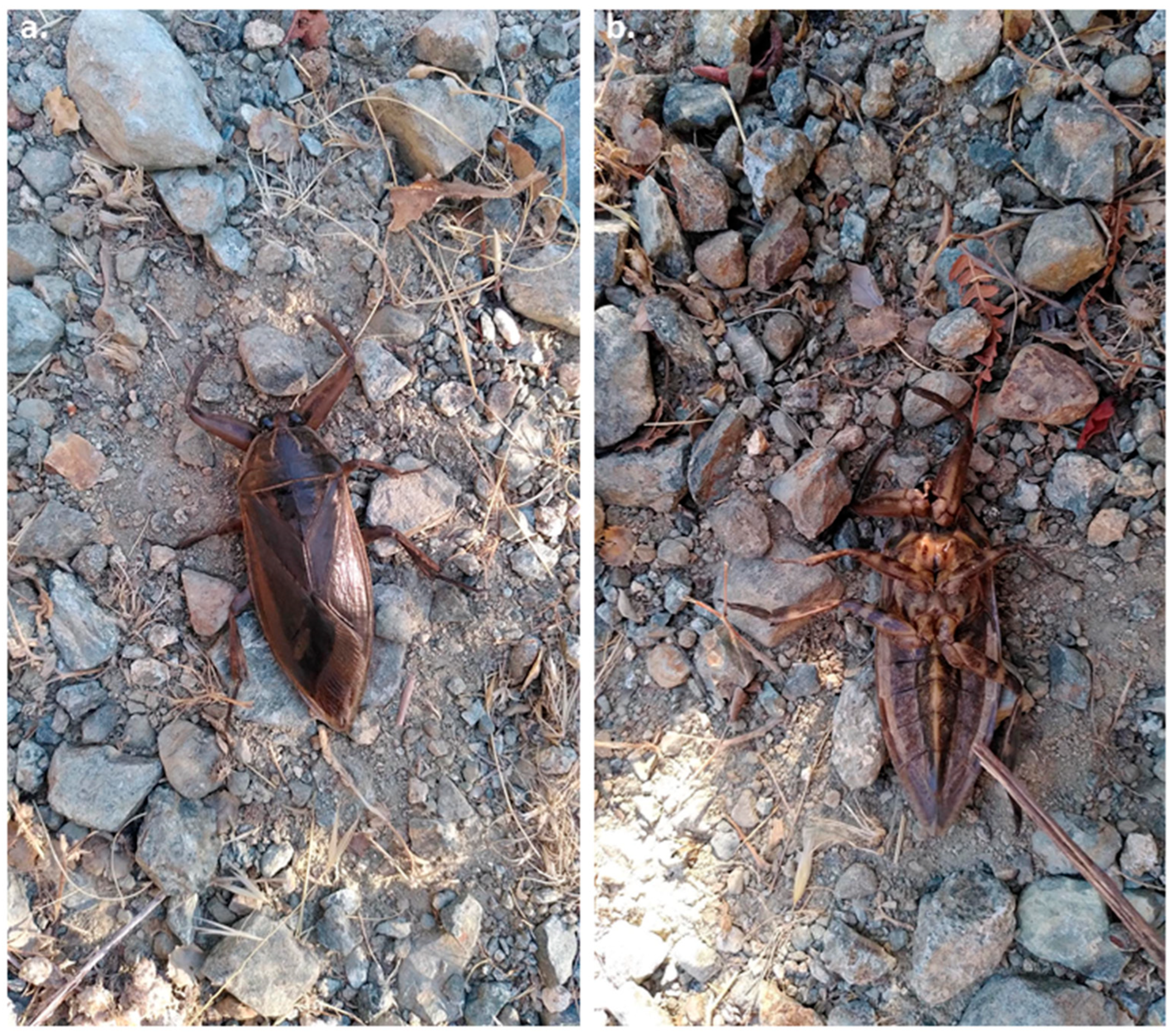
On Samothraki, a live, male, adult L. patruelis (estimated total length: 76.4 mm) was documented on 5 August 2025, by L.S. and E.V.D.V. as it moved slowly along a dirt road bordered by perennial streams, shaded plunge pools, and steep riparian corridors. Its subdued activity allowed for close inspection, and identification was confidently established based on key morphological features, following Novoselsky et al. [8] and the previous experience of the authors [14]. The insect was subsequently released unharmed at the capture site (Figure 1).
Unlike most Aegean islands, Samothraki maintains a unique hydrological system characterized by year-round torrents, waterfalls, and humid ravines; this is a mosaic of freshwater habitats rarely found elsewhere in the archipelago [15,16]. Although Samothraki was previously known only from a single dead specimen collected in 2012 [11], the presence of a surviving, active L. patruelis in this setting provides the first unequivocal evidence that the species can successfully reach and persist, at least temporarily, on an island with both natural hydrological stability and substantial habitat heterogeneity. Given the island’s humid orographic microclimate and network of perennial torrents and plunge-pool systems, unique within the Aegean, Samothraki represents a uniquely favorable insular environment for L. patruelis.
A complementary, yet ecologically contrasting, case originates from the island of Naxos. On 28 August 2025, a dead adult (male, estimated total length: 75.6 mm) was discovered in the northeastern part of the island within a narrow, nearly desiccated ephemeral stream (Glezos, pers. comm.) Although the specimen was dead, its intact condition, absence of decomposition, and location within a freshwater microhabitat strongly suggest recent arrival rather than long-term deposition. As in the previous case, identification was carried out using external morphological characters (color, pattern, body outline, dorsal pigmentation and raptorial forelegs), the Novoselsky et al. [8] key, and the experience of previous authors [14]. Moreover, as noted by Cianferoni & Nardi [5], L. patruelis exhibits substantial morphological overlap with its closely related African congener L. cordofanus Mayr, 1853. Because the posternal keel shows considerable intraspecific variability, definitive species-level discrimination relies primarily on the morphology of the aedeagus [5]. Considering the specimen’s characters, and the documented geographic ranges of L. patruelis and L. cordofanus, and the proximity of Naxos to regions where the species occurs, we confidently assigned the specimen to Lethocerus patruelis (Stål, 1854), the sole European representative of the Belostomatidae [11].
Even though Naxos differs markedly from Samothraki in its hydrological regime, as it lacks the perennial torrents, deep shaded ravines, and year-round surface water that characterize Samothraki, the detection of L. patruelis on both islands reveals an important biogeographical insight: the species is capable of reaching, and potentially exploiting, insular environments spanning the full hydrological gradient of the Aegean Sea [15,16]. Samothraki represents one of the wettest and most hydrologically complex islands in Greece, with perennial torrents and shaded ravines that can support aquatic predators year-round [15,16]. Naxos, by contrast, is characterized by seasonal streams, rapid summer desiccation, and highly localized freshwater refugia [17]. The presence of L. patruelis in such divergent settings suggests that long-distance dispersal events occur frequently enough to allow colonization attempts even on islands where long-term establishment may be uncertain.
Further verified records from Sifnos, Ikaria, Tilos, Chios, Euboea, and Crete strengthen the argument for an ongoing archipelagic expansion rather than isolated vagrancy. Several of these islands offer only limited freshwater features, often restricted to livestock cisterns, seasonal torrents, irrigation networks, or small anthropogenic reservoirs; these are habitats that have been previously documented as suitable for L. patruelis across its range [3]. The species’ recurrent appearance across islands with widely differing hydrological regimes suggests broad ecological tolerance, facilitated dispersal, and a capacity to exploit both natural and human-made aquatic patches.
Beyond this island-level heterogeneity, the emerging distribution of L. patruelis also mirrors the geographic pattern of freshwater availability across the Aegean. Although the archipelago is often perceived as hydrologically limited, many of the islands on which L. patruelis has been confirmed, such as Samothraki, Lesvos, Euboea, and Crete, support persistent or structurally diverse wetland networks, including torrents, springs, seasonal marshes, livestock ponds, and small artificial reservoirs. This aligns with regional assessments indicating that the Aegean islands host a more extensive and ecologically meaningful mosaic of wetlands than is generally appreciated [18,19]. The tendency for records to cluster on islands with such hydrological features suggests that even small, fragmented freshwater patches may function as effective stepping-stones for dispersing individuals.
At the same time, the species also occurs on islands where surface water is scarce, such as Sifnos, Tilos, and Chios, indicating that colonization can occur even where long-term freshwater persistence is limited. This pattern suggests that L. patruelis responds to both ecological opportunities, through islands providing suitable wetland networks, and to its own high dispersal capacity, enabling movement across the full hydrological gradient of the Aegean basin.
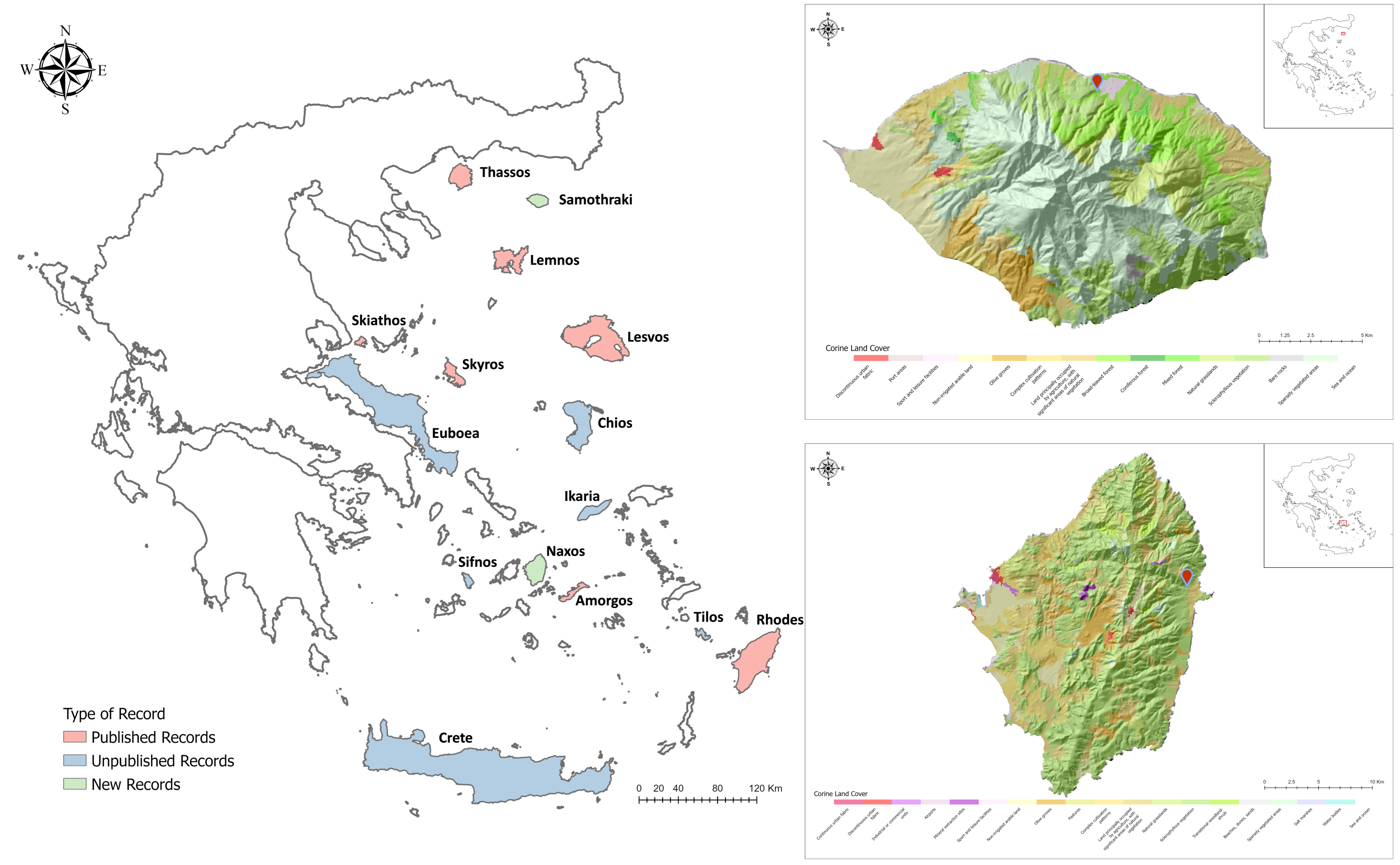
This habitat-based interpretation is consistent with a broader pattern emerging across the Aegean archipelago [11,14]. When integrated with earlier literature-based records (Thassos, Skiathos, Skyros, Lemnos, Lesvos, Rhodes, Amorgos) and newly confirmed citizen-science detections (Euboea, Chios, Sifnos, Ikaria, Tilos, Crete), a clear spatial pattern emerges [11,14]. Rather than isolated, stochastic occurrences, the records form three longitudinally aligned dispersal axes: (1) a northern Thrace–North Aegean axis linking Thassos, Samothraki, Lemnos and Lesvos; (2) a central Aegean axis spanning the Northern Sporades, Euboea, and the central Cyclades; and (3) a southern Dodecanese–Cretan axis anchored by Rhodes, Tilos, Amorgos, and Crete (Figure 2).
These axes reflect realistic biological pathways shaped by regional wind regimes, maritime transport routes, and the distribution of artificial and natural freshwater bodies associated with agriculture. Moreover, the species’ known phototactic behavior further supports the plausibility of ship-assisted dispersal across island chains [20,21]. Their coherence strongly suggests that the spread of L. patruelis is not incidental; rather, the species may be undergoing a sustained, multi-vector expansion across the northeastern Mediterranean. Such an interpretation aligns with its recent westward advance in Italy and with its well-documented propensity for nocturnal flight and phototaxis, both of which enhance long-distance dispersal potential.
The combined evidence across the Aegean islands strongly indicates that L. patruelis is not merely a sporadic colonizer but is engaged in a sustained, multi-vector expansion across the northeastern Mediterranean. This interpretation aligns with its concurrent westward expansion in Italy and reinforces the view of Belostomatidae as highly mobile, broad-niched predators capable of exploiting mosaic freshwater landscapes [7,22]. From a conservation and monitoring perspective, the species’ dual role as a top freshwater predator and a sensitive bioindicator highlights the need for coordinated surveys across island freshwater networks, integrating both structured sampling and citizen-science data. As freshwater habitats on Mediterranean islands continue to undergo hydrological alteration, the presence and spread of L. patruelis offer a unique opportunity to assess ecological connectivity, habitat resilience, and anthropogenic influences across the Aegean archipelago.
In conclusion, the expanded insular record of L. patruelis presented here provides valuable information for the species’ status in the Aegean archipelago. The combination of verified field observations, and citizen-science detections may indicate that the species’ presence on Greek Mediterranean islands is neither accidental nor ephemeral but instead reflects a coherent pattern of archipelagic dispersal shaped by freshwater availability, anthropogenic habitat creation, and intrinsic dispersal capacity. The occurrence of L. patruelis across islands spanning the full hydrological gradient—from permanently watered, topographically complex systems such as Samothraki to seasonally desiccating landscapes such as Naxos—highlights its ecological flexibility. At the same time, it suggests that small, fragmented freshwater habitats have the ability to act as functional stepping-stones. Taken together, these findings support the interpretation of an ongoing, multi-axis expansion across the northeastern Mediterranean. Future monitoring frameworks can use L. patruelis as an informative bioindicator for examining connectivity, resilience, and change within insular freshwater networks of the Aegean Sea.

Author Contributions

Conceptualization, G.S., E.v.d.V. and Y.G.Z.; methodology, L.S., E.v.d.V. and Y.G.Z.; investigation, L.S. and E.v.d.V.; resources, G.S., L.S., E.v.d.V., A.D.K., A.C. and Y.G.Z.; writing—original draft preparation, G.S. and Y.G.Z.; writing—review and editing, G.S., L.S., E.v.d.V., A.D.K., A.C. and Y.G.Z.; visualization, A.D.K. and Y.G.Z. All authors have read and agreed to the published version of the manuscript.

Funding

This research received no external funding.

Institutional Review Board Statement

Not applicable.

Data Availability Statement

The original contributions presented in this study are included in the article. Further inquiries can be directed to the corresponding authors.

Acknowledgments

We would like to thank Stella Sykora, Vera Sykora, and Irene Glezos for their valuable assistance in the documentation efforts. All aspects of this study were conducted in full compliance with Hellenic national law (Presidential Decree 67/81: “On the protection of native flora and wild fauna and the determination of the coordination and control procedure of related research”) on the humane use of animals. No animals were captured, handled, or subjected to experimental procedures.

Conflicts of Interest

The authors declare no conflicts of interest.

References

  1. Christopoulos, A.; Daskalaki, H.; Vlachopoulos, K.; Pafilis, P. Predation of the Balkan Frog Pelophylax kurtmuelleri (Gayda, 1940) (Anura: Ranidae) by the Giant Water Bug Lethocerus patruelis (Stål, 1854) (Hemiptera: Heteroptera: Belostomatidae). Entomol. Sci. 2022, 25, e12499. [Google Scholar] [CrossRef]
  2. Nesemann, H.; Sharma, G. Observations on the Life History of Giant Water Bugs Lethocerus Mayr, 1853 (Heteroptera: Nepomorpha: Belostomatidae) in the Gangetic Plains of India and Nepal. J. Threat. Taxa 2013, 5, 4474–4482. [Google Scholar] [CrossRef]
  3. Ohba, S. Ecology of Giant Water Bugs (Hemiptera: Heteroptera: Belostomatidae). Entomol. Sci. 2019, 22, 6–20. [Google Scholar] [CrossRef]
  4. Sareein, N.; Kang, J.H.; Jung, S.W.; Phalaraksh, C.; Bae, Y.J. Taxonomic Review and Distribution of Giant Water Bugs (Hemiptera: Belostomatidae: Lethocerinae) in the Palearctic, Oriental, and Australian Regions. Entomol. Res. 2019, 49, 462–473. [Google Scholar] [CrossRef]
  5. Cianferoni, F.; Nardi, G. Lethocerus patruelis (Stål, 1855) in Italy: A Recent Introduction or a Natural Westward Spread? (Hemiptera: Heteroptera: Nepomorpha: Belostomatidae). Zootaxa 2013, 3664, 78–84. [Google Scholar] [CrossRef]
  6. Lo Parrino, E. Is Lethocerus patruelis (Stål, 1855) Range Expanding Westward? A New Record for Italy Might Suggest This Trend (Hemiptera: Belostomatidae). Aquat. Insects 2019, 40, 375–379. [Google Scholar] [CrossRef]
  7. Simoncini, A.; Tomasi, F.; Ficetola, G.F.; Lo Parrino, E. Range Expansion of the Giant Water Bug Lethocerus patruelis (Stål, 1854) in Europe. Ecol. Evol. 2025, 15, e72458. [Google Scholar] [CrossRef] [PubMed]
  8. Novoselsky, T.; Chen, P.; Nieser, N. A Review of the Giant Water Bugs (Hemiptera: Heteroptera: Nepomorpha: Belostomatidae) of Israel. Isr. J. Entomol. 2018, 48, 119–141. [Google Scholar] [CrossRef]
  9. Raele, D.A.; Cariglia, M.G.; Grimaldi, S.P.; Dinoi, A.C.; Franco, E.; Cafiero, M.A. Morphological and Molecular Identification of Lethocerus patruelis (Stål, 1854) (Hemiptera: Belostomatidae) Specimen Collected in Close Proximity to Humans in Southern Italy. Insects 2025, 16, 226. [Google Scholar] [CrossRef] [PubMed]
  10. Grozeva, S.; Kuznetsova, V.; Simov, N.; Langourov, M.; Dalakchieva, S. Sex Chromosome Pre-Reduction in Male Meiosis of Lethocerus patruelis (Stål, 1854) (Heteroptera, Belostomatidae) with Some Notes on the Distribution of the Species. ZooKeys 2013, 319, 119–135. [Google Scholar] [CrossRef]
  11. Davranoglou, L.-R.; Karaouzas, I. Further Distributional Records of Lethocerus patruelis (Stål, 1854) (Heteroptera: Belostomatidae) in Greece. Ecol. Monten. 2021, 41, 56–61. [Google Scholar] [CrossRef]
  12. Corsini-Foka, M.; Kondylatos, G.; Katsogiannou, I.; Gritzalis, K.; Insacco, G. On the Occurrence of Lethocerus patruelis (Stål, 1855) (Hemiptera: Heteroptera: Nepomorpha: Belostomatidae) in Rhodes (Eastern Mediterranean Sea). J. Insect Biodivers. 2019, 13, 10–14. [Google Scholar] [CrossRef]
  13. GBIF.org. User Occurrence Download 2025, 4729. Occurrence Dataset. Available online: https://doi.org/10.15468/dl.dvuj3x (accessed on 1 December 2025).
  14. Stavrianakis, G.; Koukoura, A.; Christopoulos, A.; Zevgolis, Y.G. New Insular Record of the Giant Water Bug, Lethocerus patruelis (Hemiptera: Belostomatidae), from the Northeastern Aegean. Diversity 2025, 17, 433. [Google Scholar] [CrossRef]
  15. Fischer-Kowalski, M.; Xenidis, L.; Singh, S.J.; Pallua, I. Transforming the Greek Island of Samothraki into a UNESCO Biosphere Reserve. An Experience in Transdisciplinarity. GAIA-Ecol. Perspect. Sci. Soc. 2011, 20, 181–190. [Google Scholar] [CrossRef]
  16. Pedridis, P. Perceptions, Attitudes and Involvement of Local Residents in the Establishment of a Samothraki Biosphere Reserve, Greece. Eco Mont-J. Prot. Mt. Areas Res. 2012, 4, 59–63. [Google Scholar] [CrossRef]
  17. Stathi, E.; Kastridis, A.; Myronidis, D. Analysis of Hydrometeorological Trends and Drought Severity in Water-Demanding Mediterranean Islands under Climate Change Conditions. Climate 2023, 11, 106. [Google Scholar] [CrossRef]
  18. Christopoulos, A.; Zevgolis, Y.G. A New Invasion of the Common Slider on a Mediterranean Island (Lesvos, Greece): A Potential Threat to Native Terrapin Populations? Diversity 2022, 14, 1018. [Google Scholar] [CrossRef]
  19. Paragamian, K.; Catsadorakis, G. Inventory of the Wetlands of the Aegean Islands: Identity, Ecological Status and Threats; World Wide Fund for Nature—WWF Greece: Athens, Greece, 2007; ISBN 978-960-85918-4-4. [Google Scholar]
  20. Papadopoulou, A.; Knowles, L.L. Species-specific Responses to Island Connectivity Cycles: Refined Models for Testing Phylogeographic Concordance across a Mediterranean Pleistocene Aggregate Island Complex. Mol. Ecol. 2015, 24, 4252–4268. [Google Scholar] [CrossRef] [PubMed]
  21. Karampela, S.; Papapanos, G.; Kizos, T. Perceptions of Agritourism and Cooperation: Comparisons between an Island and a Mountain Region in Greece. Sustainability 2019, 11, 680. [Google Scholar] [CrossRef]
  22. Simoncini, A.; Tomasi, F.; Ficetola, G.F.; Lo Parrino, E. Dream of Mediterranization: Range Expansion of the Giant Water Bug (Lethocerus patruelis) in Europe. ARPHA Prepr. 2024. [Google Scholar] [CrossRef]
Figure 1. In situ documentation of Lethocerus patruelis (Stål, 1854) observed on the side of dirt road (a,b) on the island of Samothraki. Estimated total length: 79.3 mm.
Diversity 18 00031 g001
Figure 2. Archipelagic distribution of Lethocerus patruelis across the Aegean Sea, integrating both published and newly verified records. The upper-right inset marks the precise locality of the first live confirmed specimen from Samothraki, while the lower-right inset depicts the location of the recently documented individual from Naxos.
Diversity 18 00031 g002
Disclaimer/Publisher’s Note: The statements, opinions and data contained in all publications are solely those of the individual author(s) and contributor(s) and not of MDPI and/or the editor(s). MDPI and/or the editor(s) disclaim responsibility for any injury to people or property resulting from any ideas, methods, instructions or products referred to in the content.