Short Note

(4R,4aS,6bR,8aR,12bS,14aS)-2-((E)-2-Bromo-4-chlorobenzylidene)-4,4a,6b,8a,11,11,12b,14a-octamethylicosahydropicen-3(2H)-one


1
College of Materials and Chemical Engineering, Southwest Forestry University, Kunming 650224, China
2
State Key Laboratory of Phytochemistry and Natural Medicines, Kunming Institute of Botany, Chinese Academy of Sciences, Kunming 650201, China
3
Key Laboratory of Structure-Based Drug Design & Discovery, Ministry of Education, School of Traditional Chinese Materia Medica, Shenyang Pharmaceutical University, Shenyang 110016, China
4
University of Chinese Academy of Sciences, Beijing 100049, China
5
Research Unit of Chemical Biology of Natural Anti-Virus Products, Chinese Academy of Medical Sciences, Beijing 100730, China
*
Authors to whom correspondence should be addressed.
These authors contributed equally to this work.
Molbank 2025, 2025(4), M2110; https://doi.org/10.3390/M2110
Submission received: 20 October 2025 / Revised: 3 December 2025 / Accepted: 9 December 2025 / Published: 15 December 2025
(This article belongs to the Section Natural Product Chemistry)

Abstract

Friedelin, a pentacyclic triterpene, has been reported to inhibit potential reactive oxygen species (ROS)-scavenging activity. Accordingly, we modified the structure of this compound with the aim of obtaining derivatives. A new derivative (compound 4), with an α,β-unsaturated ketone moiety, was synthesized via an aldol condensation. Structural characterization of this compound was performed using nuclear magnetic resonance (NMR) spectroscopy and high-resolution electrospray ionization mass spectrometry.

1. Introduction

Natural products (NPs) and their derivatives account for a significant proportion of pharmaceuticals that successfully achieve regulatory approval [1]. Plant-derived NPs, ranging from aspirin to taxol, continue to be a source of novel molecules for medicinal chemistry, providing ongoing inspiration for researchers. Triterpenes constitute a vast and structurally diverse class of NPs and exhibit remarkable pharmaceutical activities. With four triterpenes presently approved for clinical use, three of them have been developed via semi-synthesis [2,3].
ROS are critical mediators, functioning as crucial signaling molecules in normal physiology and are also being implicated in disease etiology [4]. And ROS are integral to numerous physiological processes; their targeted scavenging represents a rational treatment approach for ROS-related diseases. A diverse array of inhibitors, including nonselective scavengers, site-specific ROS inhibitors, and ferroptosis inhibitors, have been reported [5]. Compounds 1 [6] and 2 [7] (Figure 1) share certain structural similarities, notably halogen-substituted phenyl groups that readily access hydrophobic pockets, coupled with a relatively rigid region. Among these, compounds 1 and 2 have previously been identified as monoamine oxidase (MAO) inhibitors.
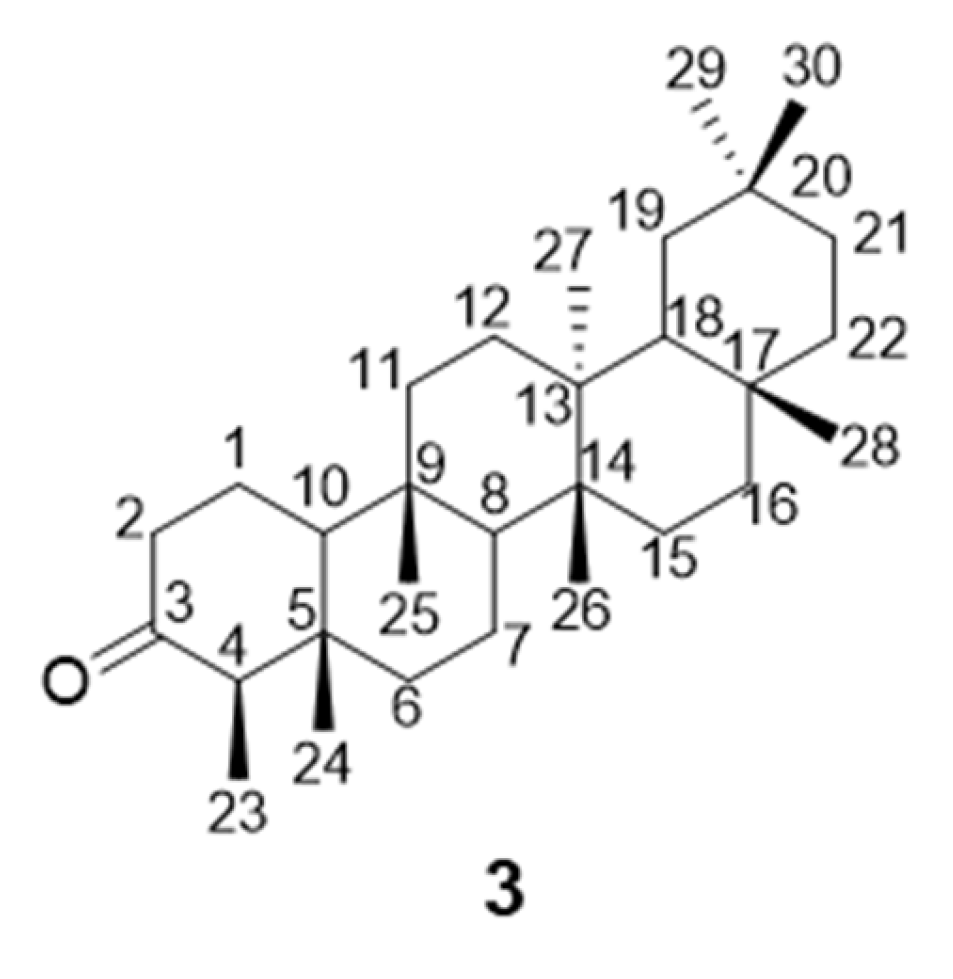
Friedelin (compound 3), a pentacyclic triterpene (Figure 2) first isolated in 1807 [8], has a diverse range of pharmacological activities, including antioxidant [9], antimicrobial [10], and anticancer [11] activities. Christstudas [9] reported that friedelin exhibited potent ROS scavenging activity in vitro and significant hepatoprotective effects in vivo, indicating its potential as a candidate for further structural optimization. Inspired by the structures of the two reported ROS inhibitors and friedelin, we designed an alkali-catalyzed aldol condensation as an efficient method to construct derivatives featuring an α,β-unsaturated ketone moiety in one step.

2. Results and Discussion

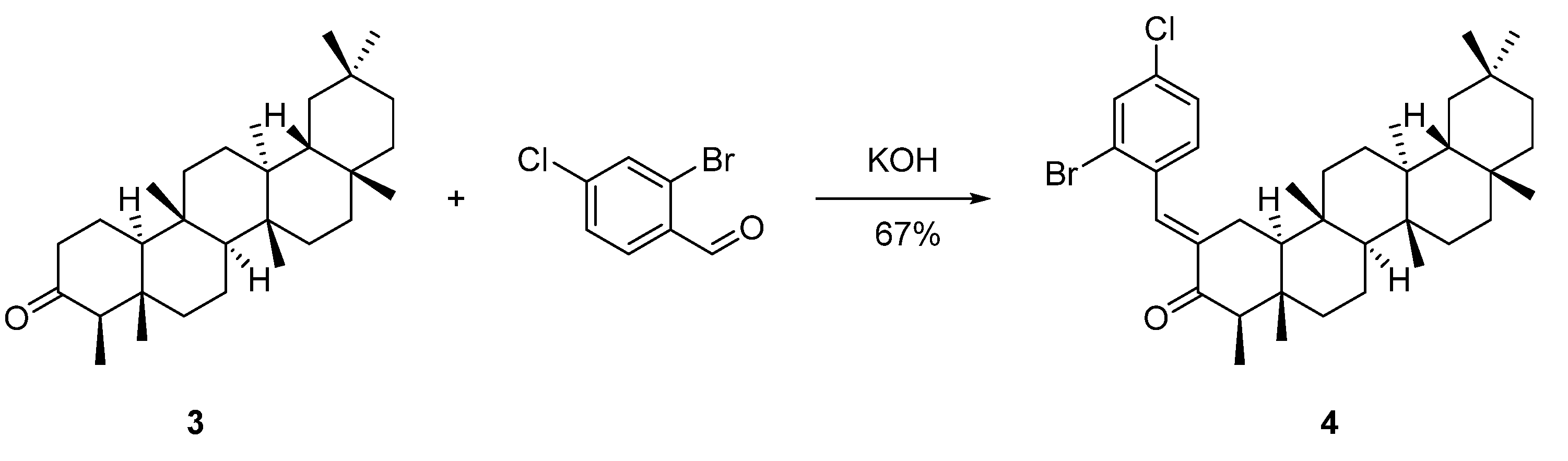
Compound 4 was synthesized via aldol condensation (Scheme 1).

Data Analysis

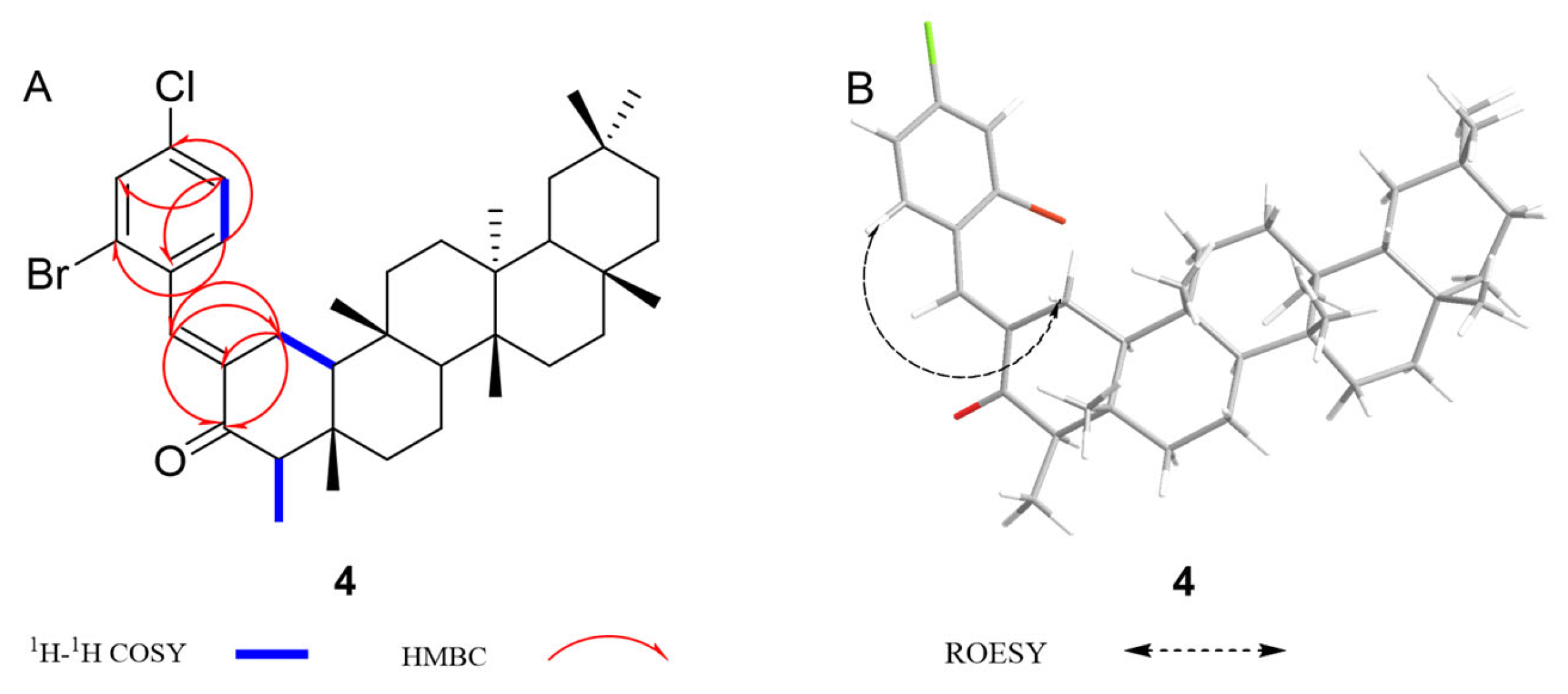
Column chromatography on silica gel (Rf = 0.6 petroleum ether/ethyl acetate = 15/1) provided 4 (12 mg, yielding 67%). Compound 4 was isolated as a white amorphous powder, with the molecular formula C37H52BrClO confirmed by HR-ESI-MS at m/z 627.2970 [M + H]+ (calc. 627.2963). The IR spectra exhibited a characteristic absorption band at 1690 cm−1, which was consistent with the presence of a carbonyl group (δC 204.3). The 1H NMR spectra indicated the presence of 2,4-disubstituted benzene [δH 7.63 (d, J = 2.1 Hz, 1H), 7.30 (dd, J = 8.3, 2.1 Hz, 1H), 7.21 (d, J = 8.3 Hz, 1H)], as well as eight methyl groups [δH 1.17 (s, 3H), 1.05 (m, 3H), 1.01 (s, 3H), 0.99 (s, 3H), 0.98 (s, 3H), 0.93 (s, 3H), 0.92 (s, 3H), 0.85 (s, 3H)]. In contrast to those of friedelin, the signal for H-2 on ring A was absent, which can be attributed to the formation of a new bond. The major variations in the chemical shifts of H-1 (+0.77, +0.71) and H-23 (+0.17) were consistent with a decrease in the electron density around these protons. The chemical shift of C-2 shifted downfield as a result of a new bond formation. Concurrently, seven carbon signals were observed in the range from 125.4 to 134.7 ppm, indicating the introduction of benzene into the molecular structure. The presence of these characteristic structural features was also confirmed through analysis of the 2D NMR analysis. In the 1H-1H COSY spectra (Figure 3), correlations were observed between 2.74 (H-1α), 2.40 (H-1β) with 1.81 (H-6α), and 1.27 (H-6β), between δH 2.28 (H-4) with δH 1.05 (H-23), and between δH 7.30 (H-5′) with δH 7.21 (H-6′). The relative configuration of compound 4 was elucidated by conformational analysis, supported by ROESY spectra (Figure S5). The E-isomer was identified on basis of the ROESY correlations from H-1α (δH 2.74) and H-1β (δH 2.40) to H-6′ (δH 7.21). Additionally, we carried out chemical calculations to obtain further evidence (Figures S11 and S12). The final results were then generated through a DP4+ analysis (Table S1). All results confirmed the E-configuration of compound 4, which was consistent with the evidence from the ROESY spectra.
In the HMBC spectra, the correlations of δH 2.74/2.40 (H-1 α/β) to δC 132.6 (C-7′) and δC 204.3 (C-3), of δH 7.17 (H-7′) to δC 25.4 (C-1) and δC 204.3 (C-3), of δH 7.21 (H-6′) to δC 139.6 (C-2), along with the correlations from δH 2.74 (H-1α) and δH 2.40 (H-1β) to δC 204.3 (C-3) collectively verified that the α,β-unsaturated ketone presented in compound 4 (Figure 3). The remaining chemical shift values were largely unchanged from those of friedelin. All the 1H and 13C NMR data are listed in Table 1.

3. Experimental

3.1. General Experimental Conditions

Infrared spectra were recorded on a Bio-Rad FTS-135 spectrometer (Hercules, CA USA) with samples prepared as KBr pellets. NMR spectra were obtained on Bruker spectrometers (Billerica, MA USA) operating at 600 MHz, using CDCl3 as the solvent. Splitting patterns were denoted using the following conventional abbreviations: s (singlet), d (doublet), t (triplet), q (quartet) and m (multiplet). HR-ESI-MS data were collected on an Agilent triple quadrupole mass spectrometer.
For chromatographic separations, various mesh sizes of silica gel were used: silica gels with mesh sizes of 300–400 mesh (Qingdao Marine Chemical Inc., Qingdao, China); and precoated silica gel GF254 plates (Qingdao Puke Abruption Materials Co., Ltd., Qingdao, China).

3.2. Synthesis of Friedelin Derivative

Friedelin derivative 4 with an α,β-unsaturated ketone was successfully synthesized via an aldol condensation (Scheme 1). Friedelin (20 mg, 46.87 µmol) and potassium hydroxide (5 mg, 89.11 µmol) were added to a mixed solution of dichloromethane (5 mL) and ethanol (5 mL). Then, 2-bromo-4-chlorobenzaldehyde (21 mg, 95.70 µmol) was added into the mixture and stirred it at room temperature. The resulting mixture was concentrated under reduced pressure and purified by flash chromatography to obtain compound 4 (12 mg).

4. Conclusions

Compound 4 is a friedelin derivative that was synthesized via aldol condensation. This reaction can yield products with two distinct configurations, including the Z- and E-isomers [12,13,14]. We successfully determined the structure of compound 4 by HR-ESI-MS and NMR and established its configuration as the E-isomer.

Supplementary Materials

Figure S1. 1H NMR spectrum of compound 4; Figure S2. 13C NMR spectrum of compound 4; Figure S3. DEPT-135, DEPT-90 and 13C NMR spectra of compound 4; Figure S4. 1H-1H COSY NMR spectrum of compound 4; Figure S5. 1H-1H ROESY NMR spectrum of compound 4; Figure S6. 1H-13C HSQC NMR spectrum of compound 4; Figure S7. 1H-13C HMBC NMR spectrum of compound 4; Figure S8. HR-ESI-MS spectrum of compound 4; Figure S9. UV spectrum of compound 4 in methanol (The sample concentration was 0.0410 mg/mL, pathlength = 10 mm); Figure S10. Infrared spectrum of compound 4; Figure S11. 13C NMR linear correlation curves between calculated and experimental data of structure 1 (Z-isomer); Figure S12. 13C NMR linear correlation curves between calculated and experimental data of structure 2 (E-isomer). Table S1. The DP4 + probability analysis of S1(Z-isomer) and S2(E-isomer).

Author Contributions

K.G.: Investigation, Validation, Formal analysis, Writing—original draft. J.Y.: Investigation, methodology. Y.C.: Investigation, Participation in the synthesis of this compound. J.C.: Investigation, methodology. Q.Z.: Investigation, Participation in the isolation and purification of compounds. X.H.: Conceptualization, Funding acquisition, Writing—review and editing. J.X.: Supervision, Writing—review and editing. X.D.: Conceptualization, Data curation, Supervision, Funding acquisition, Writing—review and editing. All authors have read and agreed to the published version of the manuscript.

Funding

This research was supported financially by grants from CAS “Light of West China” Program, CAMS Innovation Fund for Medical Sciences (CIFMS, 2021-I2M-5-004), Key Research and Development Project of Yunnan Province (202203AC100009), Natural Science Foundation of Yunnan Province (202401AS070095 and 202301AT070282), and Yunnan Revitalization Talent Support Program “Young Talent” Project (YNQR-QNRC-2017-086).

Data Availability Statement

The data are contained within the article.

Conflicts of Interest

The authors state that there are no competing financial interests or personal relationships that could have influenced the work reported in this paper.

Abbreviations

The following abbreviations are used in this manuscript:
NMRnuclear magnetic resonance
HRMShigh-resolution mass spectrometry

References

  1. Domingo-Fernández, D.; Gadiya, Y.; Preto, A.J.; Krettler, C.A.; Mubeen, S.; Allen, A.; Healey, D.; Colluru, V. Natural Products Have Increased Rates of Clinical Trial Success throughout the Drug Development Process. J. Nat. Prod. 2024, 87, 1844–1851. [Google Scholar] [CrossRef] [PubMed]
  2. Lee, A. Omaveloxolone: First Approval. Drugs 2023, 83, 725–729. [Google Scholar] [CrossRef] [PubMed]
  3. Lee, A. Ibrexafungerp: First Approval. Drugs 2021, 81, 1445–1450. [Google Scholar] [CrossRef] [PubMed]
  4. Brieger, K.; Schiavone, S.; Miller, F.J., Jr.; Krause, K.-H. Reactive oxygen species: From health to disease. Swiss Med. Wkly. 2012, 142, w13659. [Google Scholar] [CrossRef] [PubMed]
  5. Sassetti, E.; Clausen, M.H.; Laraia, L. Small-Molecule Inhibitors of Reactive Oxygen Species Production. J. Med. Chem. 2021, 64, 5252–5275. [Google Scholar] [CrossRef] [PubMed]
  6. Reis, J.; Cagide, F.; Chavarria, D.; Silva, T.; Fernandes, C.; Gaspar, A.; Uriarte, E.; Remião, F.; Alcaro, S.; Ortuso, F.; et al. Discovery of New Chemical Entities for Old Targets: Insights on the Lead Optimization of Chromone-Based Monoamine Oxidase B (MAO-B) Inhibitors. J. Med. Chem. 2016, 59, 5879–5893. [Google Scholar] [CrossRef] [PubMed]
  7. Tzvetkov, N.T.; Hinz, S.; Küppers, P.; Gastreich, M.; Müller, C.E. Indazole- and Indole-5-carboxamides: Selective and Reversible Monoamine Oxidase B Inhibitors with Subnanomolar Potency. J. Med. Chem. 2014, 57, 6679–6703. [Google Scholar] [CrossRef] [PubMed]
  8. Corey, E.J.; Ursprung, J.J. The Structures of the Triterpenes Friedelin and Cerin1,2. J. Am. Chem. Soc. 1956, 78, 5041–5051. [Google Scholar] [CrossRef]
  9. Sunil, C.; Duraipandiyan, V.; Ignacimuthu, S.; Al-Dhabi, N.A. Antioxidant, free radical scavenging and liver protective effects of friedelin isolated from Azima tetracantha Lam. leaves. Food Chem. 2013, 139, 860–865. [Google Scholar] [CrossRef] [PubMed]
  10. Viswanathan, M.B.; Jeya Ananthi, J.D.; Sathish Kumar, P. Antimicrobial activity of bioactive compounds and leaf extracts in Jatropha tanjorensis. Fitoterapia 2012, 83, 1153–1159. [Google Scholar] [CrossRef] [PubMed]
  11. Dehelean, C.A.; Marcovici, I.; Soica, C.; Mioc, M.; Coricovac, D.; Iurciuc, S.; Cretu, O.M.; Pinzaru, I. Plant-Derived Anticancer Compounds as New Perspectives in Drug Discovery and Alternative Therapy. Molecules 2021, 26, 1109. [Google Scholar] [CrossRef] [PubMed]
  12. Lotfy, G.; El Ashry, E.S.H.; Said, M.M.; Aziz, Y.M.A.; Al-Dhfyan, A.; Al-Majid, A.M.; Barakat, A. Regio- and stereoselective synthesis of new spirooxindoles via 1,3-dipolar cycloaddition reaction: Anticancer and molecular docking studies. J. Photochem. Photobiol. B 2018, 180, 98–108. [Google Scholar] [CrossRef] [PubMed]
  13. Becker, D.; Haddad, N. Steric effects in intramolecular [2+2] photocycloaddition of C C double bonds to cyclohexenones. Tetrahedron 1993, 49, 947–964. [Google Scholar] [CrossRef]
  14. Piacenza, L.P.L.; Pegel, K.H.; Laing, M.; Waight, E.S.; Weeks, C.M.; Gorst-Allman, C.P. A new atisane diterpene: Ent-16α-hydroxyatis-13-en-3-one from Androstachys johnsonii prain. J. Chem. Soc. Perkin Trans. 1985, 703–709. [Google Scholar] [CrossRef]
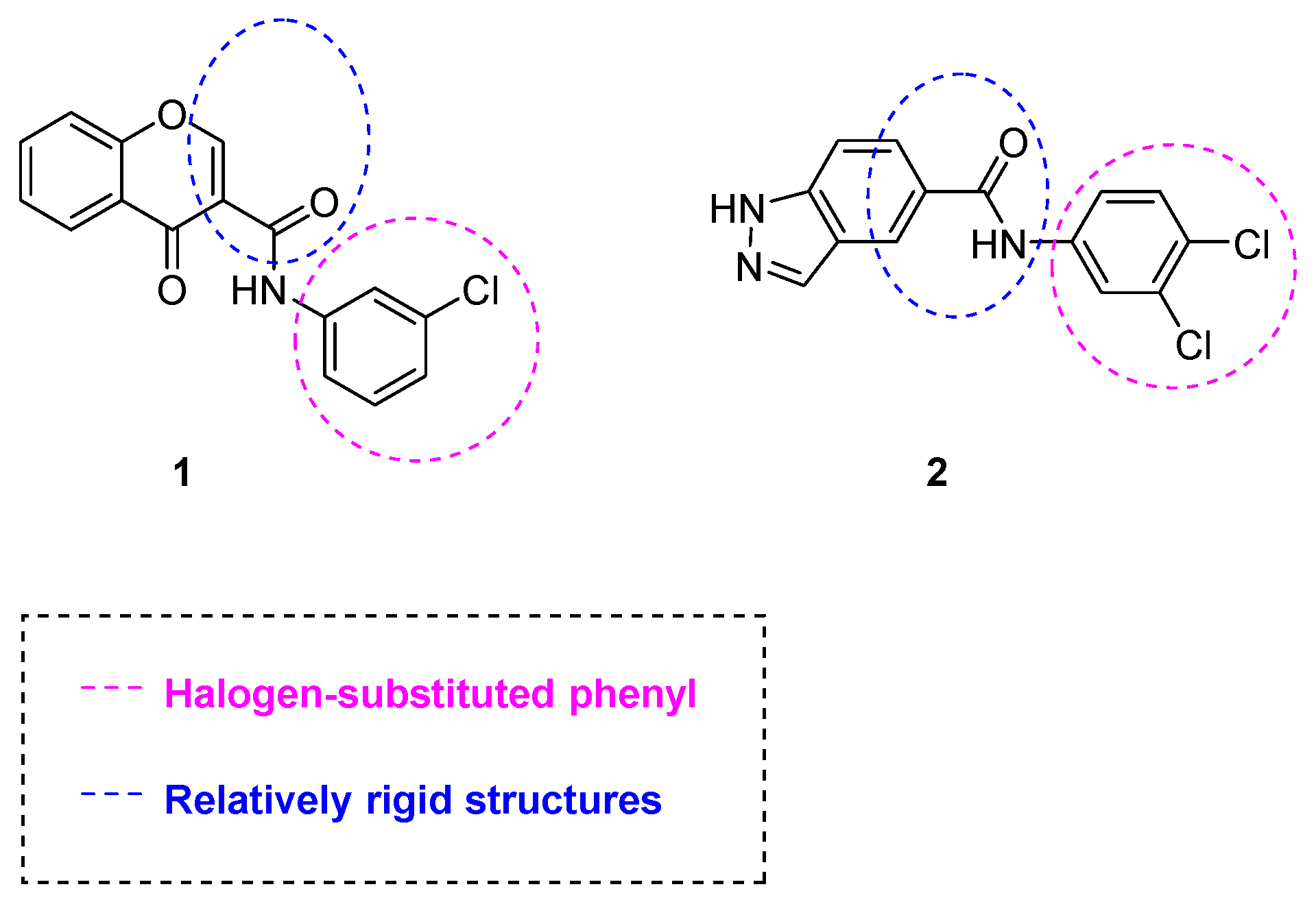
Figure 1. Two reported ROS inhibitors.
Molbank 2025 m2110 g001
Figure 2. The structure of friedelin.
Molbank 2025 m2110 g002
Scheme 1. Synthesis of friedelin derivative 4.
Molbank 2025 m2110 sch001
Figure 3. (A) Key 1H-1H COSY and HMBC correlations for compound 4; (B) Key ROESY correlations for compound 4.
Molbank 2025 m2110 g003
Table 1. 13C NMR and 1H NMR data of compound 4 [δH, ppm, (mult, J in Hz)].
No.13C1HNo.13C1HNo.13C1H
125.42.74 (m), 2.40 (m)1438.3-2718.60.99 (s)
2139.6-1532.31.47 (m), 1.19 (m)2832.01.17 (s)
3204.3-1635.91.52 (m), 1.36 (m)2934.80.93 (s)
458.92.28 (m)1730.0-3031.90.98 (s)
539.5-1842.71.53 (m)1′134.3-
641.31.81 (m), 1.27 (m)1935.01.33 (m), 1.14 (m)2′125.4-
718.11.49 (m), 1.41 (m)2028.1-3′131.17.63
(d, 2.1)
853.01.38 (m)2132.81.45 (m), 1.25 (m)4′134.7-
937.4-2239.11.50 (m), 0.91 (m) 5′127.17.30
(dd, 8.3, 2.1)
1057.21.56 (m)237.61.05 (d)6′131.07.21
(d, 8.3)
1135.21.35 (m) 1.15 (m)2414.80.85 (s)7′132.67.17 (m)
1230.11.29 (m)2517.30.92 (s)
1339.6-2620.21.01 (s)
Disclaimer/Publisher’s Note: The statements, opinions and data contained in all publications are solely those of the individual author(s) and contributor(s) and not of MDPI and/or the editor(s). MDPI and/or the editor(s) disclaim responsibility for any injury to people or property resulting from any ideas, methods, instructions or products referred to in the content.