Short Note

Methyl (1aRS,7aSR)-7-formyl-1a-phenyl-1,1a-dihydroazirino[2,3-b]benzo[e][1,4]thiazine-7a(7H)-carboxylate


by
Ilya P. Filippov
,
Anastasiya V. Agafonova
,
Nikolai V. Rostovskii
and
Mikhail S. Novikov
*
Institute of Chemistry, St. Petersburg State University, 7/9 Universitetskaya Nab., 199034 St. Petersburg, Russia
*
Author to whom correspondence should be addressed.
Molbank 2025, 2025(4), M2101; https://doi.org/10.3390/M2101 (registering DOI)
Submission received: 20 November 2025 / Revised: 1 December 2025 / Accepted: 3 December 2025 / Published: 4 December 2025
(This article belongs to the Section Organic Synthesis and Biosynthesis)

Abstract

The first representative of the aziridine-fused benzo[e][1,4]thiazine series was synthesized from methyl 2-bromo-2-phenyl-2H-azirine-2-carboxylate and benzo[d]thiazole in 74% yield. The reaction proceeds via the SN2′-SN2′-cascade to form the azirinylthiazolium salt followed by a water-induced thiazole ring expansion. The structure of the title compound was established based on 1H, 13C, 2D NMR spectroscopy and high-resolution mass spectrometry, and unambiguously confirmed by X-ray diffraction analysis.

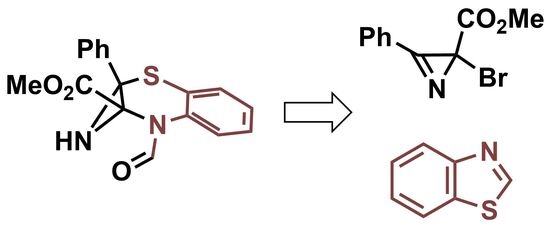
Graphical Abstract

1. Introduction

Heterocyclic compounds containing a benzo[1,4]thiazine moiety have emerged as attractive building blocks in medicinal chemistry. The benzo[1,4]thiazine skeleton alongside its 2,3-hydrogenated and S-oxidized analogues is found in compounds exhibiting anticancer [1], antimicrobial [2], antifungal [3], antiviral [4], antihypertensive [5], anti-inflammatory [6], cardiovascular [7], anti-rheumatic [8], anti-allergic [9], and other biological activities [10,11]. Several synthetic strategies have been developed for the construction of the benzo[1,4]thiazine skeleton, the most common of which rely on cyclocondensation of o-aminothiophenols and related substrates with electrophiles [12]. There is much less information on the synthesis of these heterocycles via cyclization of substituted anilines [13,14], ring contraction of benzothiazocines [15], and ring expansion of benzo[d]thiazoles and benzo[d]thiazolines. In particular, using the latter approach, 3-alkylidene-substituted benzo[1,4]thiazines were prepared via intramolecular oxidative five-membered ring expansion in benzothiazolines [16]. Adib et al. reported intermolecular ring expansion of benzothiazoles using diaroylacetylenes and Meldrum’s acid [17].
Herein, we describe the first synthesis of an aziridine-fused benzo[1,4]thiazine by intermolecular ring expansion of benzo[d]thiazole under the action of methyl 2-bromo-3-phenyl-2H-azirine-2-carboxylate (1) operating as a transannulation agent. Annulation reactions involving mono- and disubstituted azirines are well known and have been widely used in the synthesis of various pyrrolo-fused systems [18,19]. Trisubstituted azirines, in contrast, are inactive in annulation reactions and can react only in four ways: ring opening, ring expansion, addition to the C=N bond, and substitution reaction [20]. The synthesis reported herein represents the first example of a transannulation reaction involving a trisubstituted azirine and provides access to a previously unknown class of azirino-fused benzo[1,4]thiazines.

2. Results and Discussion

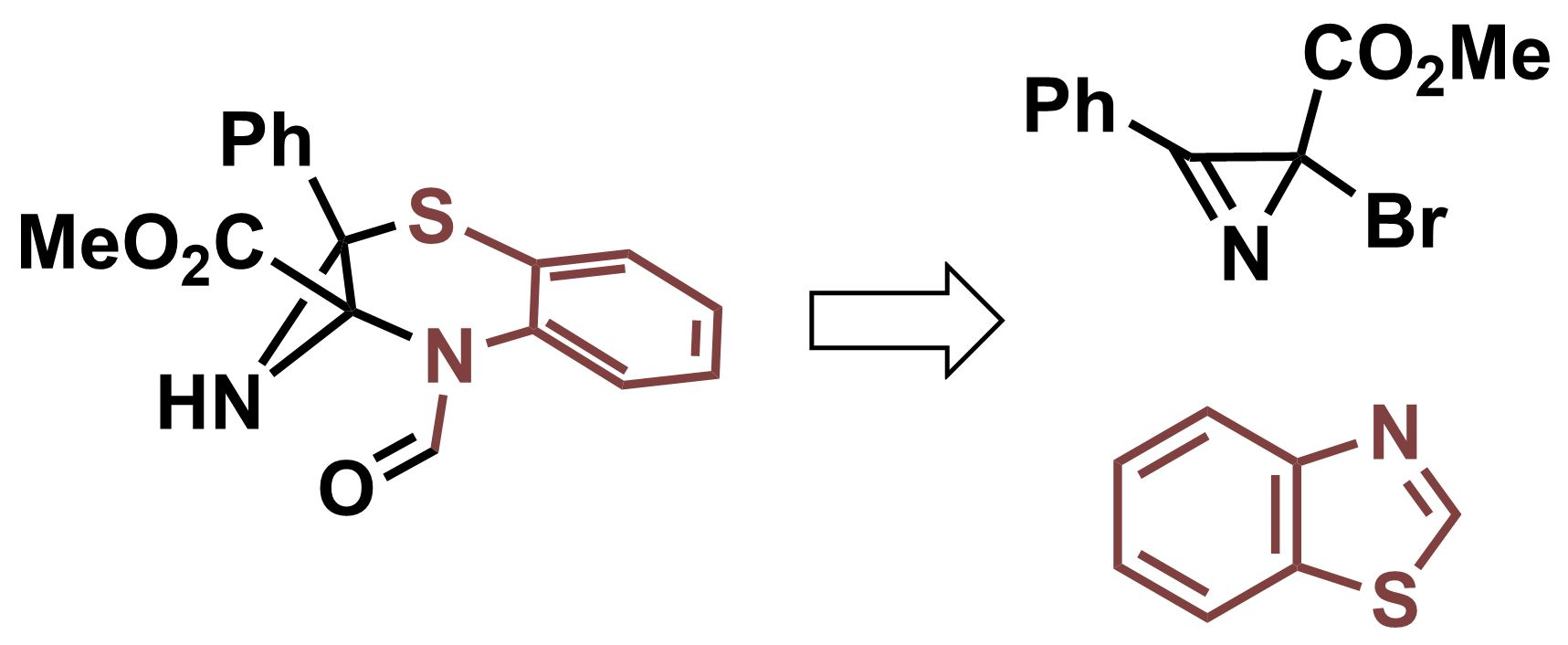
Bromoazirine 1 required for the present study was prepared according to the published procedure [21]. We found that azirine 1 reacts with benzothiazole in acetonitrile at room temperature and is completely consumed within 10 h, yielding a mixture of several difficult to separate products. However, the addition of water dramatically improves the selectivity. When a 3:2 acetonitrile–water mixture was used as the solvent, only one product, aziridinobenzothiazine 2, was observed. The compound was isolated by column chromatography, and subsequent recrystallization from a diethyl ether–hexane mixture provided analytically pure compound 2 (Scheme 1).
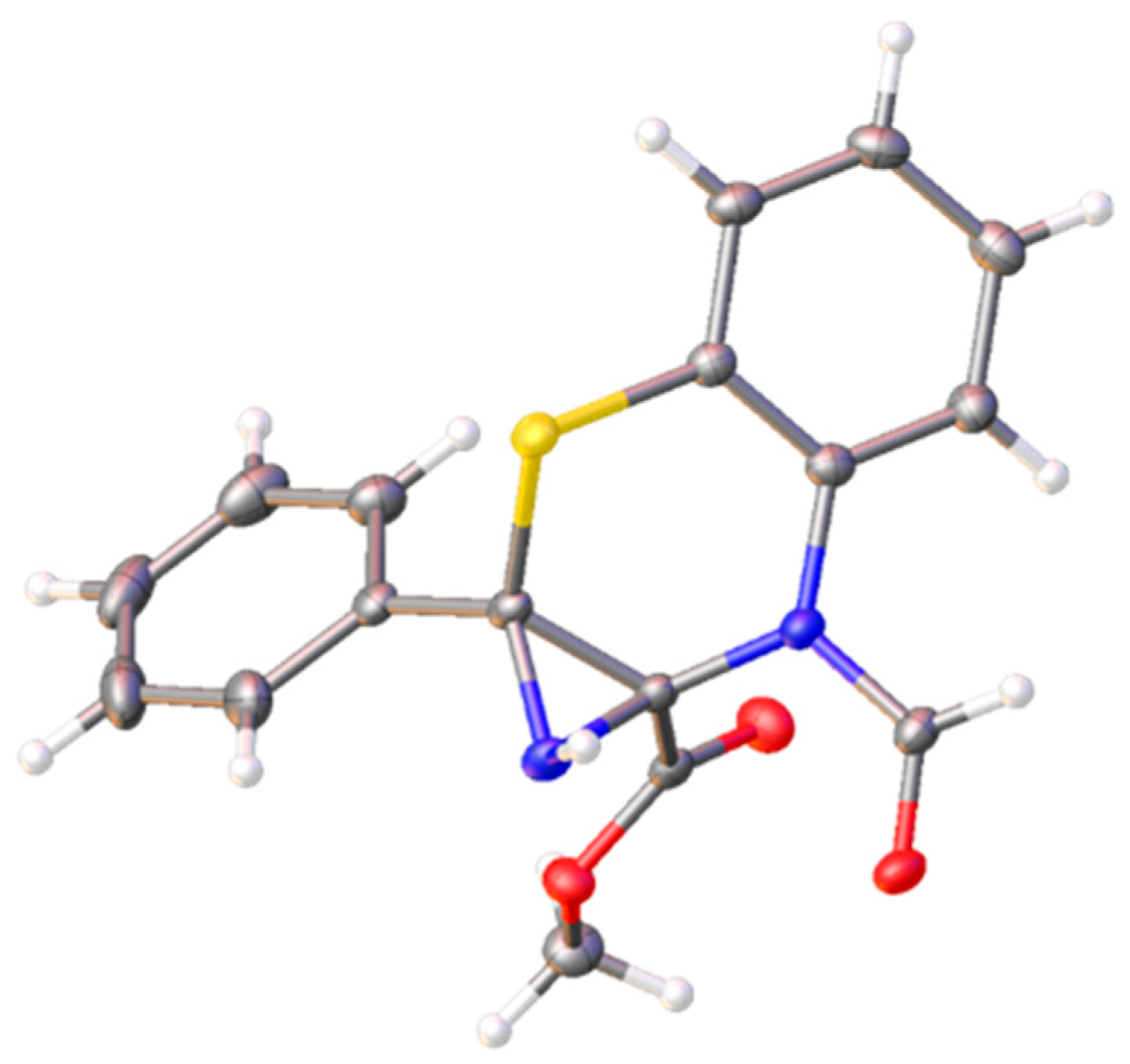
The structure and stereochemistry of product 2 were confirmed by single-crystal X-ray diffraction analysis (Figure 1). A crystal suitable for X-ray crystallography was obtained by slow crystallization from a diethyl ether–hexane–dichloromethane mixture as a clear colourless prism. The crystal structure of compound 2 belongs to the monoclinic system, space group P21/n. According to crystallographic data, the nitrogen atom bearing the formyl group has a hybridization close to sp2, as a result of which all four carbon atoms bound to it lie in the same plane.
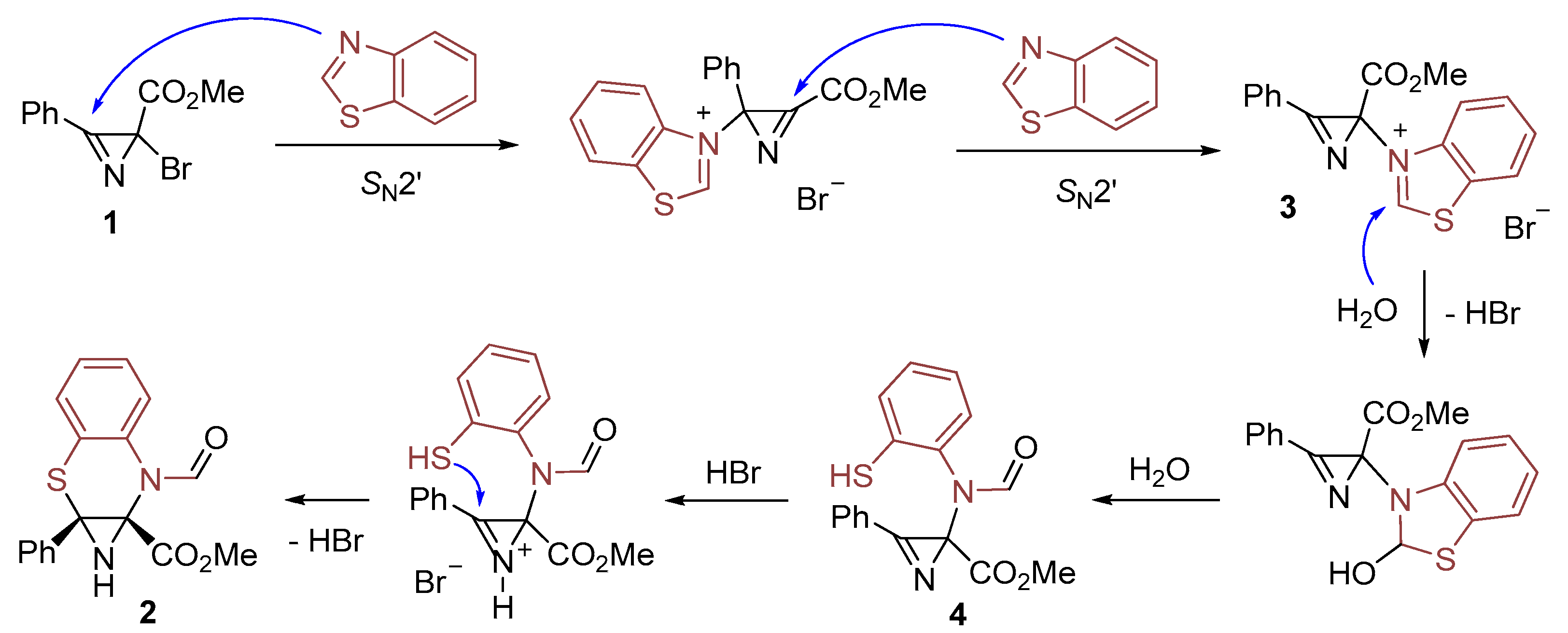
A plausible mechanism for the formation of azirinobenzothiazine 2 is depicted in Scheme 2. The reaction begins with nucleophilic substitution of bromine by benzothiazolium substituent to form salt 3. This exchange proceeds in two stages via an SN2′-SN2′ cascade mechanism and is similar to the known reaction of azirine 1 with pyridines leading to pyridinium salts [22]. Subsequent nucleophilic addition of water to intermediate 3 occurs with elimination of HBr. Opening of the thiazolium ring, most likely promoted by another water molecule, yields thiophenol 4, which undergoes intramolecular HBr-catalyzed cyclization to give the final product 2.

3. Materials and Methods

3.1. General Instrumentation

The melting point was determined on a Stuart SMP30 melting-point apparatus. NMR spectra were recorded on a Bruker Avance 400 spectrometer (Karlsruhe, Germany) in DMSO-d6. 1H and 13C{1H} NMR spectra were calibrated according to the residual signal of DMSO-d6 (δ = 2.50 ppm) and the carbon atom signal of DMSO-d6 (δ = 39.5 ppm), respectively. High-resolution mass spectra were recorded with a Bruker maXis HRMS-QTOF (Bremen, Germany), via electrospray ionization. Thin-layer chromatography (TLC) was conducted on aluminum sheets precoated with SiO2 ALUGRAM SIL G/UV254 (Düren, Germany). Column chromatography was performed on silica gel 60 M (0.04–0.063 mm). Commercially available benzo[d]thiazole was used without further purification. All solvents were distilled and dried prior to use. Single crystals of compound 2 were grown by slow evaporation of its solution in diethyl ether–hexane–dichloromethane mixture. Crystallographic data were collected on a SuperNova, single source at offset/far, HyPix3000 diffractometer (Rigaku, Wroclaw, Poland) using graphite monochromatic Cu–Kα radiation (λ = 1.54184 A). The crystal was kept at 99.9(2) K during data collection. Using the Olex2 version 1.5 (International Union of Crystallography, Chester, England) [23], the structure was solved with the ShelXT (International Union of Crystallography, Chester, England) [24] structure solution programme using the intrinsic phasing method and refined with the ShelXL [25] refinement package using least squares minimization. CCDC 2503941 contains crystallographic data for compound 2. The data can be obtained free of charge from the Cambridge Crystallographic Data Centre via https://www.ccdc.cam.ac.uk/structures (accessed on 19 November 2025).

3.2. Methyl (1aRS,7aSR)-7-formyl-1a-phenyl-1,1a-dihydroazirino[2,3-b]benzo[e][1,4]thiazine-7a(7H)-carboxylate (2)

To a solution of bromoazirine 1 (127 mg, 0.5 mmol) in an MeCN-H2O (3:2, 2.5 mL) mixture, benzo[d]thiazole (135 mg, 1 mmol, 2 equiv) was added, and the resulting mixture was stirred at room temperature for 4.5 h. The product was extracted with ethyl acetate (2 × 5 mL), and the organic layer was dried over Na2SO4. Evaporation of the solvent followed by column chromatography (eluent hexane–ethyl acetate, from 5:1 to 1:1) and recrystallization from the diethyl ether–hexane mixture gave compound 2 (120 mg, 74%) as a colourless solid.
Mp = 157–158 °C. 1H NMR (400 MHz, DMSO-d6), δ, ppm: 8.86 (s, HCO, 1H), 7.64–7.62 (m, Harom., 1H), 7.54–7.52 (m, Harom., 1H), 7.43–7.40 (m, Harom., kl1H), 7.34–7.29 (m, Harom., 6H), 4.74 (s, NH, 1H), 3.31 (s, OCH3, 3H). 13C{1H} NMR (100 MHz, DMSO-d6), δ, ppm: 165.7 (C), 162.6 (CH), 137.2 (C), 135.2 (C), 128.4 (CH), 128.2 (CH), 127.9 (CH), 127.7 (CH), 127.0 (CH), 126.4 (CH), 126.3 (C), 122.1 (CH), 57.1 (C), 55.5 (C), 52.9 (CH3).
HRMS (ESI/Q-TOF) m/z: [M + H]+ Calcd for C17H15N2O3S+ 327.0798; Found 327.0807.

4. Conclusions

The first representative of aziridine-fused benzo[e][1,4]thiazine series was synthesized from methyl 2-phenyl-2-bromo-2H-azirine-2-carboxylate and benzothiazole in 74% yield. The reaction proceeded via an SN2′-SN2′-cascade sequence to form the intermediate azirinylbenzothiazolium salt, followed by water-induced thiazole ring expansion. The structure of the product was established using 1H, 13C, [1H, 13C]-HSQC, [1H, 13C]-HMBC NMR spectroscopy, HRMS, and confirmed by X-ray diffraction analysis.

Supplementary Materials

The following supporting information can be downloaded online. 1H, 13C{1H}, 2D NMR spectra of compound 2; crystallographic data for compound 2.

Author Contributions

Conceptualization, M.S.N. and N.V.R.; methodology I.P.F., A.V.A. and N.V.R.; investigation, I.P.F.; writing—original draft preparation, I.P.F. and A.V.A.; writing—review and editing, A.V.A. and N.V.R.; supervision, M.S.N.; project administration, M.S.N. All authors have read and agreed to the published version of the manuscript.

Funding

The study was supported by the Russian Science Foundation (Grant No. 23-13-00115).

Data Availability Statement

Data are contained within the article or Supplementary Materials.

Acknowledgments

This research used resources of the Magnetic Resonance Research Centre, Chemical Analysis and Materials Research Centre, and Centre for X-ray Diffraction Studies of the Research Park of St. Petersburg State University.

Conflicts of Interest

The authors declare no conflicts of interest.

References

  1. Gupta, R.R.; Jain, M.; Rathore, R.S.; Gupta, A. Synthetic and spectral investigation of fluorinated phenothiazines and 4H-l,4-benzothiazines as potent anticancer agents. J. Fluorine Chem. 1993, 62, 191–200. [Google Scholar] [CrossRef]
  2. Rathore, B.S.; Kumar, M. Synthesis of 7-chloro-5-trifluoromethyl/7-fluoro/7-trifluoromethyl-4H-1,4-benzothiazines as antimicrobial agents. Bioorg. Med. Chem. 2006, 14, 5678–5682. [Google Scholar] [CrossRef]
  3. Macchiarulo, A.; Costantino, G.; Fringuelli, D.; Vecchiarelli, A.; Schiaffella, F.; Fringuelli, R. 1,4-Benzothiazine and 1,4-benzoxazine imidazole derivatives with antifungal activity: A docking study. Bioorg. Med. Chem. 2002, 10, 3415–3423. [Google Scholar] [CrossRef]
  4. Vicente, J.D.; Hendricks, R.T.; Smith, D.B.; Fell, J.B.; Fischer, J.; Spencer, S.R.; Stengel, P.J.; Mohr, P.; Robinson, J.E.; Blake, J.F.; et al. Non-nucleoside inhibitors of HCV polymerase NS5B. Part 2: Synthesis and structure-activity relationships of benzothiazine-substituted quinolinediones. Bioorg. Med. Chem. Lett. 2009, 19, 3642–3646. [Google Scholar] [CrossRef] [PubMed]
  5. Campiani, G.; Garofalo, A.; Fiorini, I.; Botta, M.; Nacci, V.; Tafi, A.; Chiarini, A.; Budriesi, R.; Bruni, G.; Romeo, M.R. Pyrrolo [2,1-c][1,4]benzothiazines synthesis, structure-activity relationships, molecular modeling studies, and cardiovascular activity. J. Med. Chem. 1995, 38, 4393–4410. [Google Scholar] [CrossRef]
  6. Turk, C.F.; Krapcho, J. 4-(3-(Dimethylamin)propyl-3,4-dihydro-2(1-hydroxyethyl)3-phenyl-2H-1,4-benzothiazine and related compounds: A new class of anti-inflammatory agents. J. Med. Chem. 1973, 16, 776–779. [Google Scholar] [CrossRef]
  7. Cecchetti, V.; Calderone, V.; Tabarrini, O.; Sabatini, S.; Filipponi, E.; Testai, L.; Spogli, R.; Martinotti, E.; Fravolini, A. Highly potent 1,4-benzothiazine derivatives as KATP-channel openers. J. Med. Chem. 2003, 46, 3670–3679. [Google Scholar] [CrossRef] [PubMed]
  8. Urakawa, K.; Mihara, M.; Takagi, N.; Kawamura, A.; Akamatsu, K.; Takeda, Y. Polyglutamation of a novel antifolate, MX-68, is not necessary for its anti-arthritic effect. Eur. J. Pharmacol. 2002, 435, 237–244. [Google Scholar] [CrossRef] [PubMed]
  9. Toshiaki, T.; Matsumoto, J.; Tohma, T.; Kanke, T.; Wada, Y.; Nagao, M.; Inagaki, N.; Nagai, H.; Zhang, M.; Timmerman, H. VUF-K-8788, a Periphery-Selective Histamine H1 Antagonist with Anti-pruritic Activities. Jpn. J. Pharmacol. 2001, 86, 55–64. [Google Scholar] [CrossRef]
  10. Ajani, O.O. Functionalized 1,4-Benzothiazine: A Versatile Scaffold with Diverse Biological Properties. Arch. Pharm. 2012, 345, 841–851. [Google Scholar] [CrossRef]
  11. Fringuelli, R.; Milanese, L.; Schiaffella, F. Role of 1,4-Benzothiazine Derivatives in Medicinal Chemistry. Mini-Rev. Med. Chem. 2005, 5, 1061–1073. [Google Scholar] [CrossRef]
  12. Rai, A.; Singh, A.K.; Raj, V.; Saha, S. 1,4-Benzothiazines-A Biologically Attractive Scaffold. Mini-Rev. Med. Chem. 2018, 18, 42–57. [Google Scholar] [CrossRef] [PubMed]
  13. Bakavoli, M.; Nikpour, M.; Rahimizadeh, M.; Saberi, M.R.; Sadeghian, H. Design and synthesis of pyrimido[4,5-b][1,4]benzothiazine derivatives, as potent 15-lipoxygenase inhibitors. Bioorg. Med. Chem. 2007, 15, 2120–2126. [Google Scholar] [CrossRef] [PubMed]
  14. Heravi, M.M.; Nami, N.; Oskooie, H.A.; Hekmatshoar, R. Microwave-assisted synthesis of quinoxalines, benzoxazines, and benzothiazines under solvent-fee conditions. Phosphorus Sulfur Silicon Relat. Elem. 2005, 180, 1873–1878. [Google Scholar] [CrossRef]
  15. Melkonyan, F.; Topolyan, A.; Karchava, A.; Yurovskaya, M. A general synthesis of N-substituted 1, 4-benzoxazine-and 1,4-benzothiazine-2-carboxylates via copper-catalyzed intramolecular amination of arylbromides. Tetrahedron 2011, 67, 6826–6832. [Google Scholar] [CrossRef]
  16. Pi, H.J.; Liu, H.; Du, W.; Deng, W.P. The facile synthesis of benzothiazolylideneacetates and 1,4-benzothiazines through a highly controllable oxidation of benzothiazolylacetates. Tetrahedron Lett. 2009, 50, 4529–4531. [Google Scholar] [CrossRef]
  17. Adib, M.; Sheibani, E.; Zhu, L.G.; Bijanzadeh, H.R. A novel reaction between benzothiazoles and diaroylacetylenes in the presence of Meldrum’s acid: Ring expansion of benzothiazoles to functionalized 1,4-benzothiazines. Tetrahedron Lett. 2009, 50, 4420–4422. [Google Scholar] [CrossRef]
  18. Khlebnikov, A.F.; Novikov, M.S.; Rostovskii, N.V. Advances in 2H-azirine chemistry: A seven-year update. Tetrahedron 2019, 75, 2555–2624. [Google Scholar] [CrossRef]
  19. Xu, F.; Zeng, F.-W.; Luo, W.-J.; Zhang, S.-Y.; Huo, J.-Q.; Li, Y.-P. 2H-Azirines: Recent Progress in Synthesis and Applications. Eur. J. Org. Chem. 2024, 27, e202301292. [Google Scholar] [CrossRef]
  20. Charushin, V.N.; Verbitskiy, E.V.; Chupakhin, O.N.; Vorobyeva, D.V.; Gribanov, P.S.; Osipov, S.N.; Ivanov, A.V.; Martynovskaya, S.V.; Sagitova, E.F.; Dyachenko, V.D.; et al. The chemistry of heterocycles in the 21st century. Russ. Chem. Rev. 2024, 93, RCR5125. [Google Scholar] [CrossRef]
  21. Rostovskii, N.V.; Agafonova, A.V.; Smetanin, I.A.; Novikov, M.S.; Khlebnikov, A.F.; Ruvinskaya, J.O.; Starova, G.L. Metal-Catalyzed Isomerization of 5-Heteroatom-Substituted Isoxazoles as a New Route to 2-Halo-2H-azirines. Synthesis 2017, 49, 4478–4488. [Google Scholar] [CrossRef]
  22. Filippov, I.P.; Agafonova, A.V.; Titov, G.D.; Smetanin, I.A.; Rostovskii, N.V.; Khlebnikov, A.F.; Novikov, M.S. Synthesis of Imidazo[1,2-a]pyridines via Near UV Light-Induced Cyclization of Azirinylpyridinium Salts. J. Org. Chem. 2022, 87, 6514–6519. [Google Scholar] [CrossRef] [PubMed]
  23. Dolomanov, O.V.; Bourhis, L.J.; Gildea, R.J.; Howard, J.A.K.; Puschmann, H. OLEX2: A Complete Structure Solution, Refinement and Analysis Program. J. Appl. Cryst. 2009, 42, 339–341. [Google Scholar] [CrossRef]
  24. Sheldrick, G.M. SHELXT—Integrated space-group and crystal-structure determination. Acta Cryst. 2015, A71, 3–8. [Google Scholar] [CrossRef]
  25. Sheldrick, G.M. Crystal Structure Refinement with SHELXL. Acta Cryst. 2015, C71, 3–8. [Google Scholar] [CrossRef]
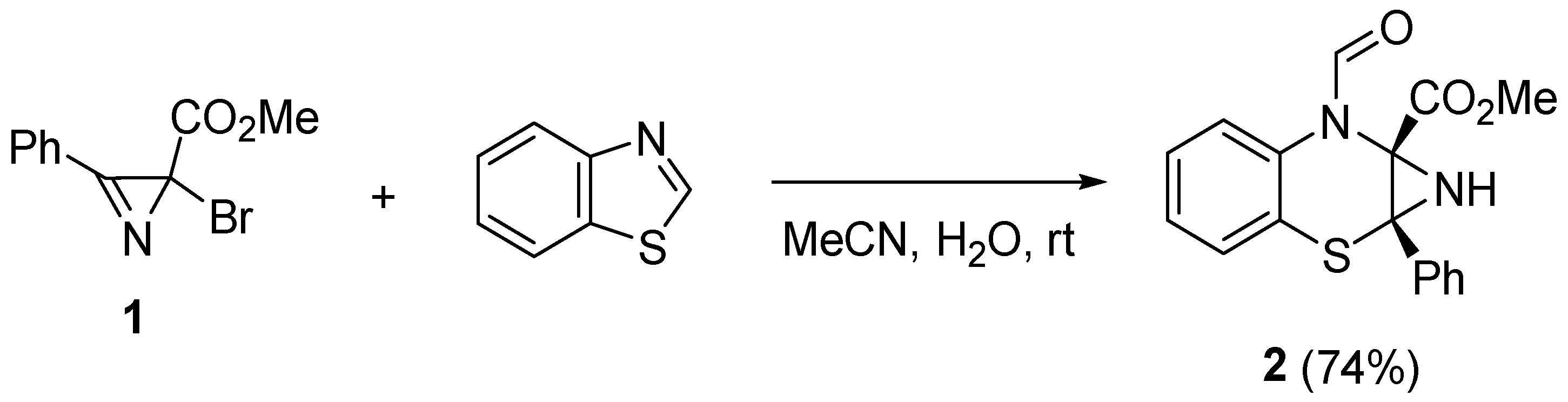
Scheme 1. Synthesis of azirinobenzothiazine 2.
Molbank 2025 m2101 sch001
Figure 1. Molecular structure of azirinobenzothiazine 2; thermal ellipsoids are drawn at a 50% probability level.
Molbank 2025 m2101 g001
Scheme 2. Proposed mechanism for the formation of azirinobenzothiazine 2.
Molbank 2025 m2101 sch002
Disclaimer/Publisher’s Note: The statements, opinions and data contained in all publications are solely those of the individual author(s) and contributor(s) and not of MDPI and/or the editor(s). MDPI and/or the editor(s) disclaim responsibility for any injury to people or property resulting from any ideas, methods, instructions or products referred to in the content.