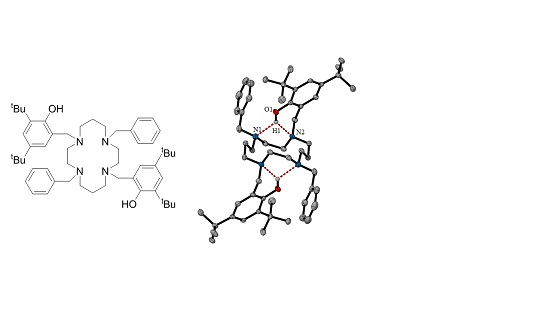
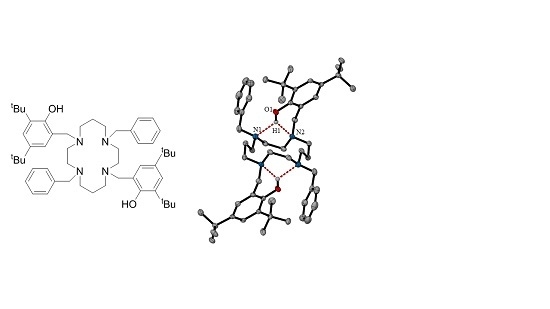
1,8-bis(2-hydroxy-3,5-di-tert-butylbenzyl)-4,11-dibenzyl-1,4,8,11-tetraazacyclotetradecane

 ,
,  ,
, Abstract
Share and Cite
Aranburu Leiva, A.I.; Kaur, M.; Benjamin, S.L.; Jones, A.M.; Langley, S.K.; Mewis, R.E. 1,8-bis(2-hydroxy-3,5-di-tert-butylbenzyl)-4,11-dibenzyl-1,4,8,11-tetraazacyclotetradecane. Molbank 2017, 2017, M963. https://doi.org/10.3390/M963
Aranburu Leiva AI, Kaur M, Benjamin SL, Jones AM, Langley SK, Mewis RE. 1,8-bis(2-hydroxy-3,5-di-tert-butylbenzyl)-4,11-dibenzyl-1,4,8,11-tetraazacyclotetradecane. Molbank. 2017; 2017(4):M963. https://doi.org/10.3390/M963
Chicago/Turabian StyleAranburu Leiva, Ane I., Mandeep Kaur, Sophie L. Benjamin, Alan M. Jones, Stuart K. Langley, and Ryan E. Mewis. 2017. "1,8-bis(2-hydroxy-3,5-di-tert-butylbenzyl)-4,11-dibenzyl-1,4,8,11-tetraazacyclotetradecane" Molbank 2017, no. 4: M963. https://doi.org/10.3390/M963
APA StyleAranburu Leiva, A. I., Kaur, M., Benjamin, S. L., Jones, A. M., Langley, S. K., & Mewis, R. E. (2017). 1,8-bis(2-hydroxy-3,5-di-tert-butylbenzyl)-4,11-dibenzyl-1,4,8,11-tetraazacyclotetradecane. Molbank, 2017(4), M963. https://doi.org/10.3390/M963
 Display in JSmol Viewer