
Abstract
The complex [Cr(3,7diHF)3]·3H2O (3,7diHF is the monoanion of flavonoid 3,7-dihydroxyflavone) was synthetized and characterized by mass spectrometry, thermogravimetry, UV-Vis and FTIR spectroscopies. The data indicated that the coordination of the chromium(III) ion to the flavonoid increased its thermal stability.
1. Introduction
Flavonoids are polyphenolic compounds known for their antioxidant properties. This characteristic depends on the presence of hydrogen-/electron-donating groups, their ability to delocalize the unpaired electron and their potential to coordinated metals [1]. Complexes metal-flavonoids show pharmacological properties, such as antitumoral, anticoagulant and anti-inflammatory [2] and antioxidant activities [3,4,5,6,7,8]. In this work the synthesis and characterization of a new complex containing the flavonoid 3,7-dihydroxyflavone and the chromium(III) ion is presented.
2. Results and Discussion
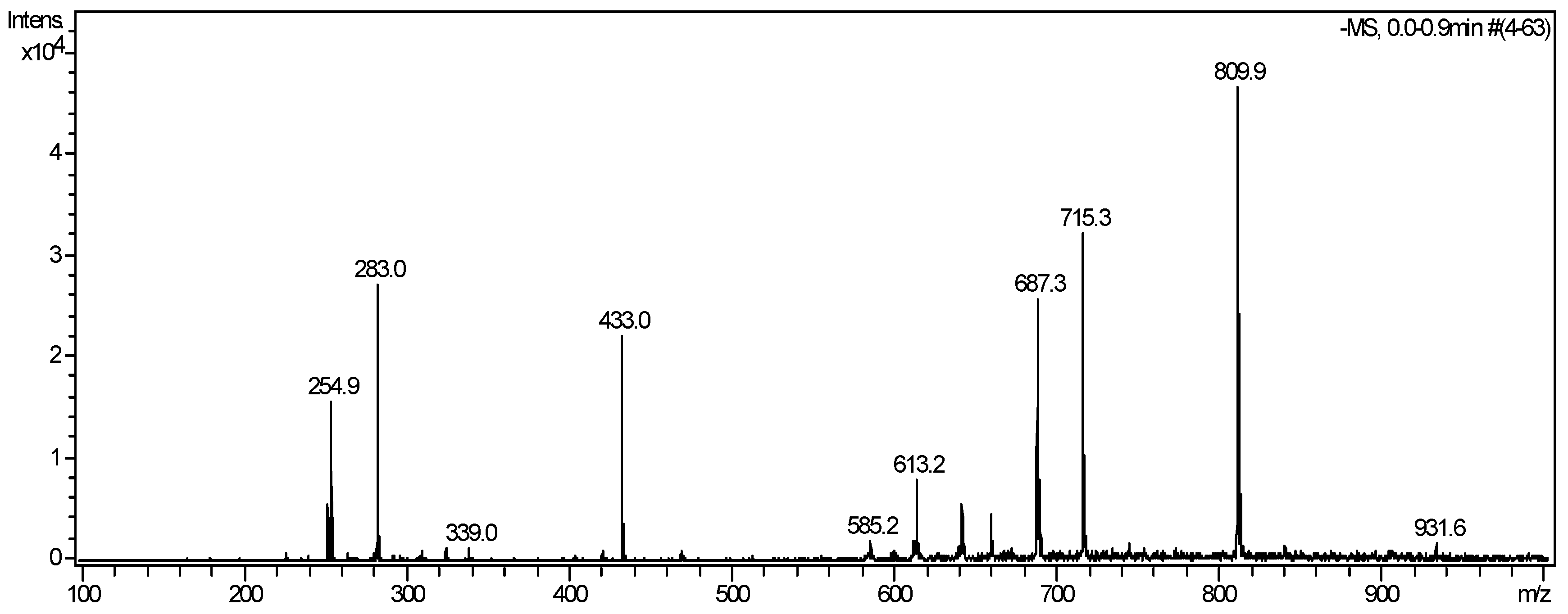
The molecular ion peak at m/z 809.9 which corresponds to the fragment [M−2H]+ was observed in the mass spectrum of the complex [Cr(C15H9O4)3] (Figure 1).
Figure 1.
Mass spectrum of the complex [Cr(C15H9O4)3] in hydroalcoholic solution (90MeOH:10H2O).
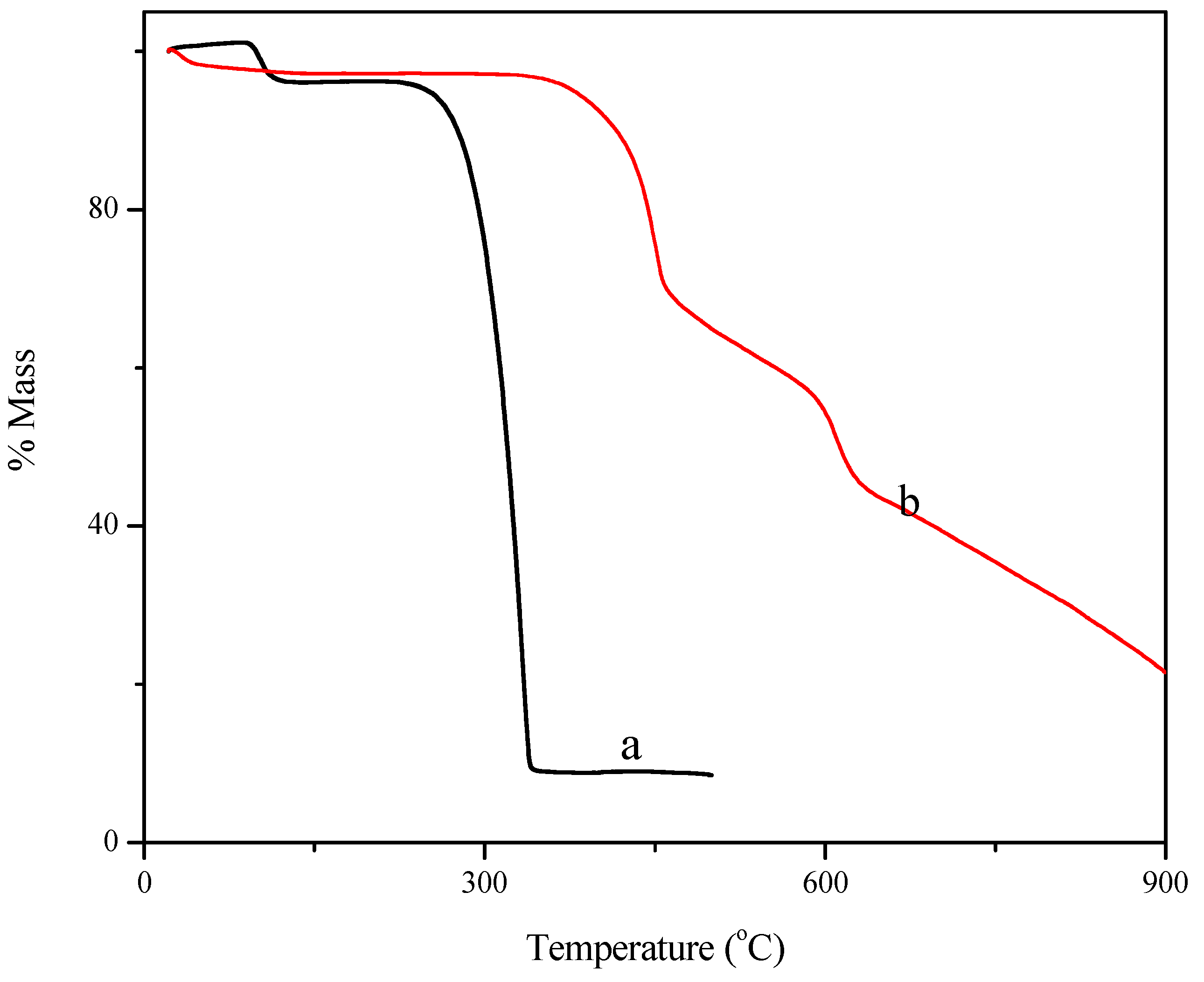
The thermogravimetric curve of the 3,7-dihydroxyflavone (Figure 2) showed a mass loss of 6.2% (calculated 6.6%) in the region of 22 to 197 °C due to loss of one water molecule. In the region of 204 °C to 355 °C the decomposition process of flavonoid occurred with a mass loss of 87%. Contrarily, the hydration water molecules were lost from the complex between 22 and 366°C (mass loss calculated and observed equal 6.2%). The loss of ligands occurred one by one in three phases: the first one from 366 to 482 °C (mass loss observed 29.4%, calculated 29.2%), and the second one from 482 to 717 °C (mass loss observed 29.1%). The third dissociation process started at 717 °C, but it apparently only completed at a temperature higher than 900 °C, therefore outside the measurement region. The data indicated that the coordination process increased the stability of the flavonoid, as decomposition of the complex by ligand loss is only initiated at around 400 °C, whereas the decomposition of free flavonoid is initiated at around 200 °C.
Figure 2.
Thermogravimetric curves of 3,7-dihydroxyflavone (a) and the complex [Cr(C15H9O4)3]·3H2O (b) in N2 flow.
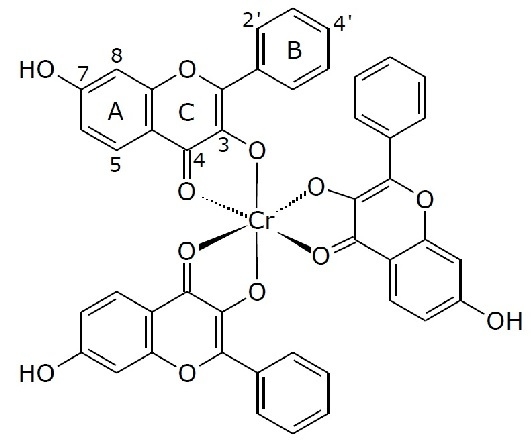
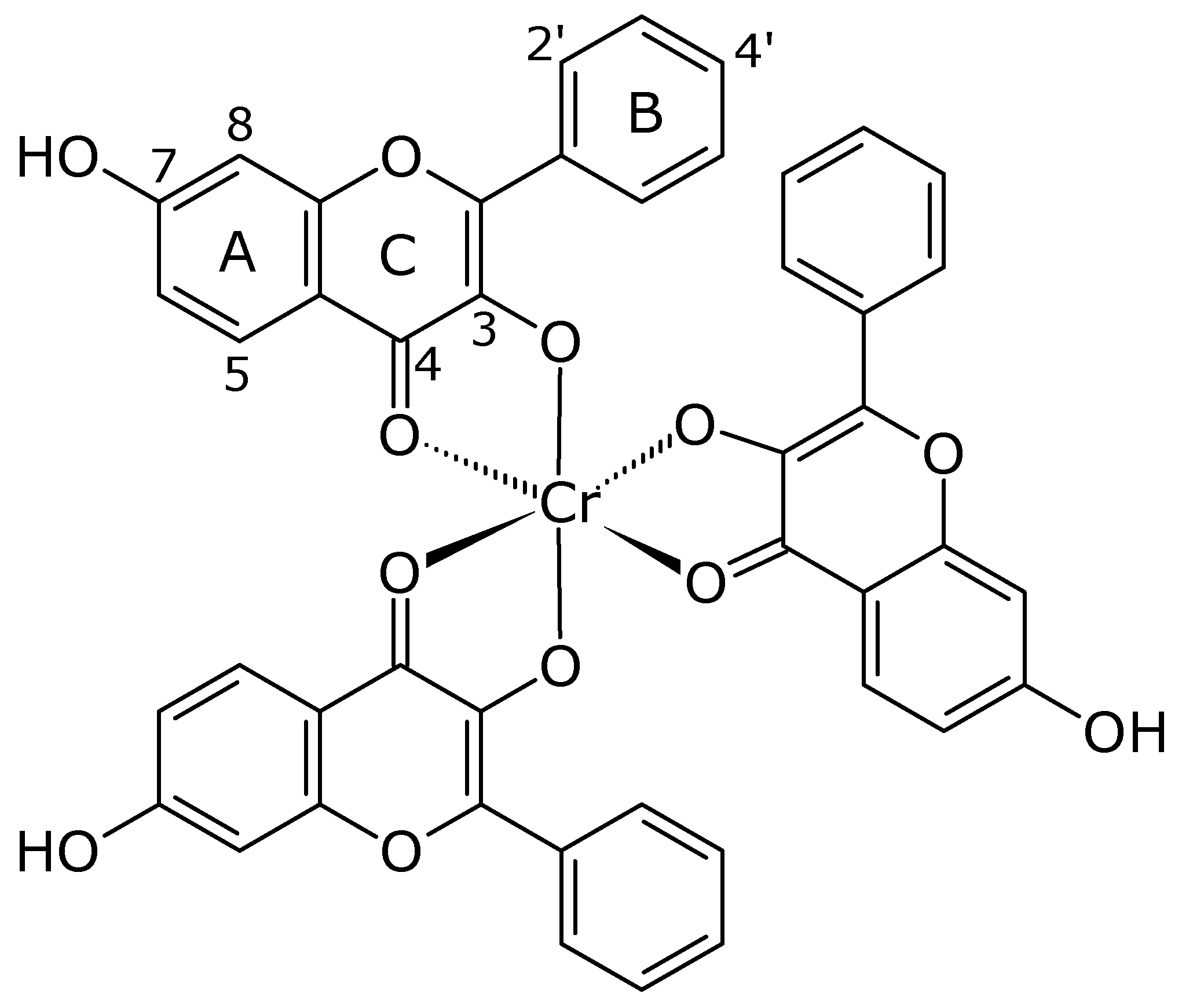
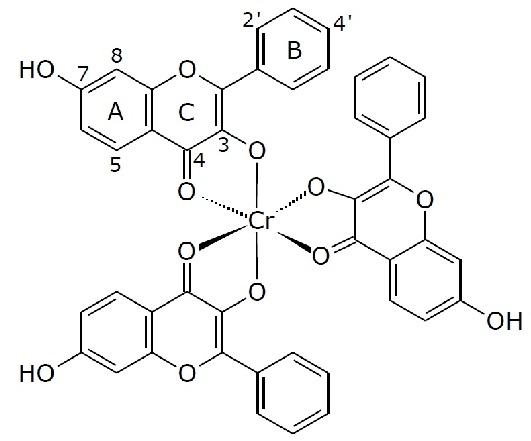
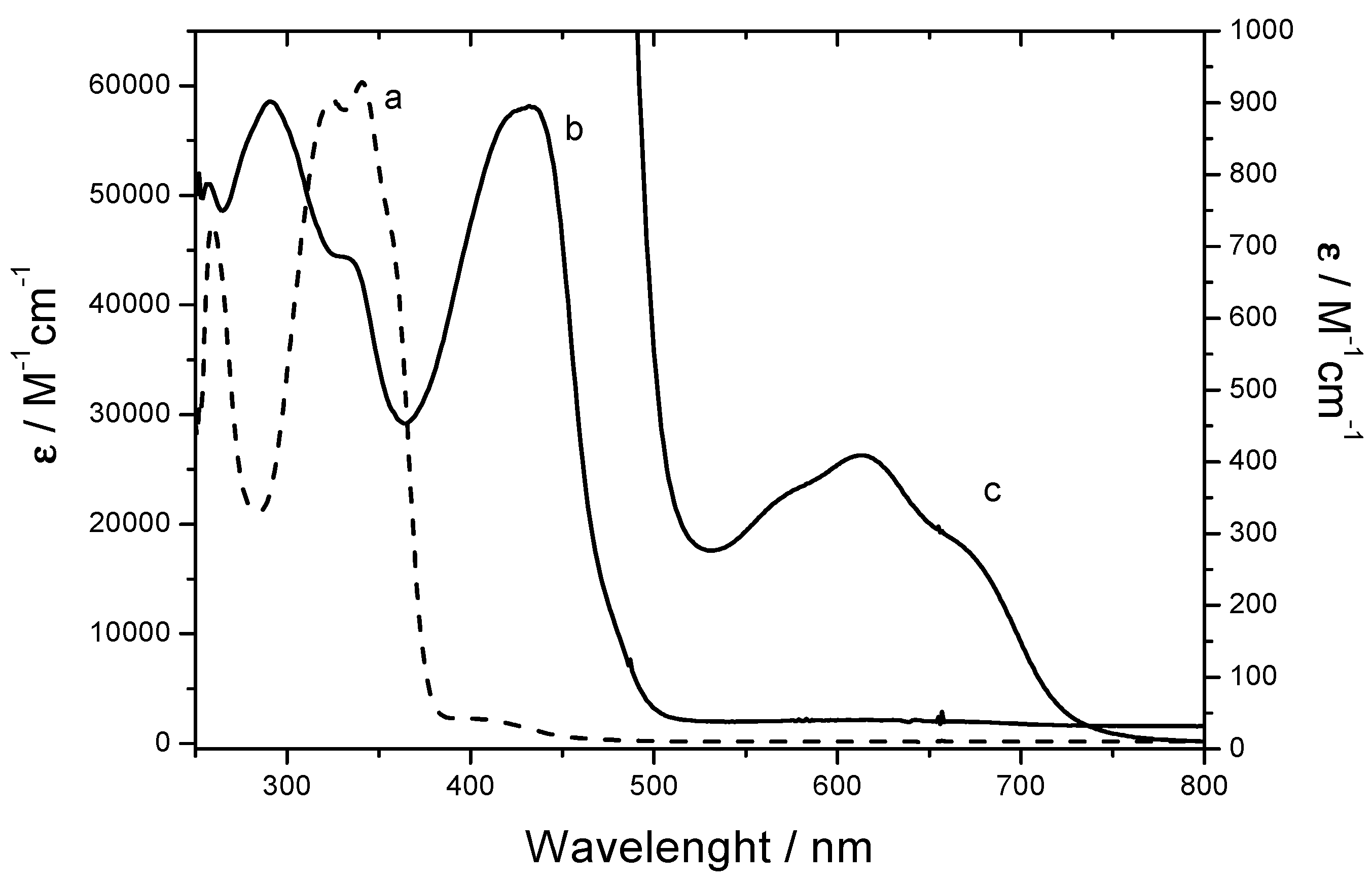
The electronic spectrum of 3,7-dihydroxyflavone (Figure 3a) presented two bands at 341 nm and 260 nm assigned respectively to the cinnamoyl system (B + C rings) and benzoyl moiety (A + C ring) (band II) [9]. After complexation the bands shifted to 432 and 291 nm (Figure 3b) indicating that the coordination occurs through the 3-hydroxy/4-keto groups, generating a complex with octahedral geometry (Figure 4). Similar structures are described in the literature [10,11]. Another band is observed in the complex at 613 nm (Figure 3c) attributed to a ligand field transition of the chromium(III) ion.
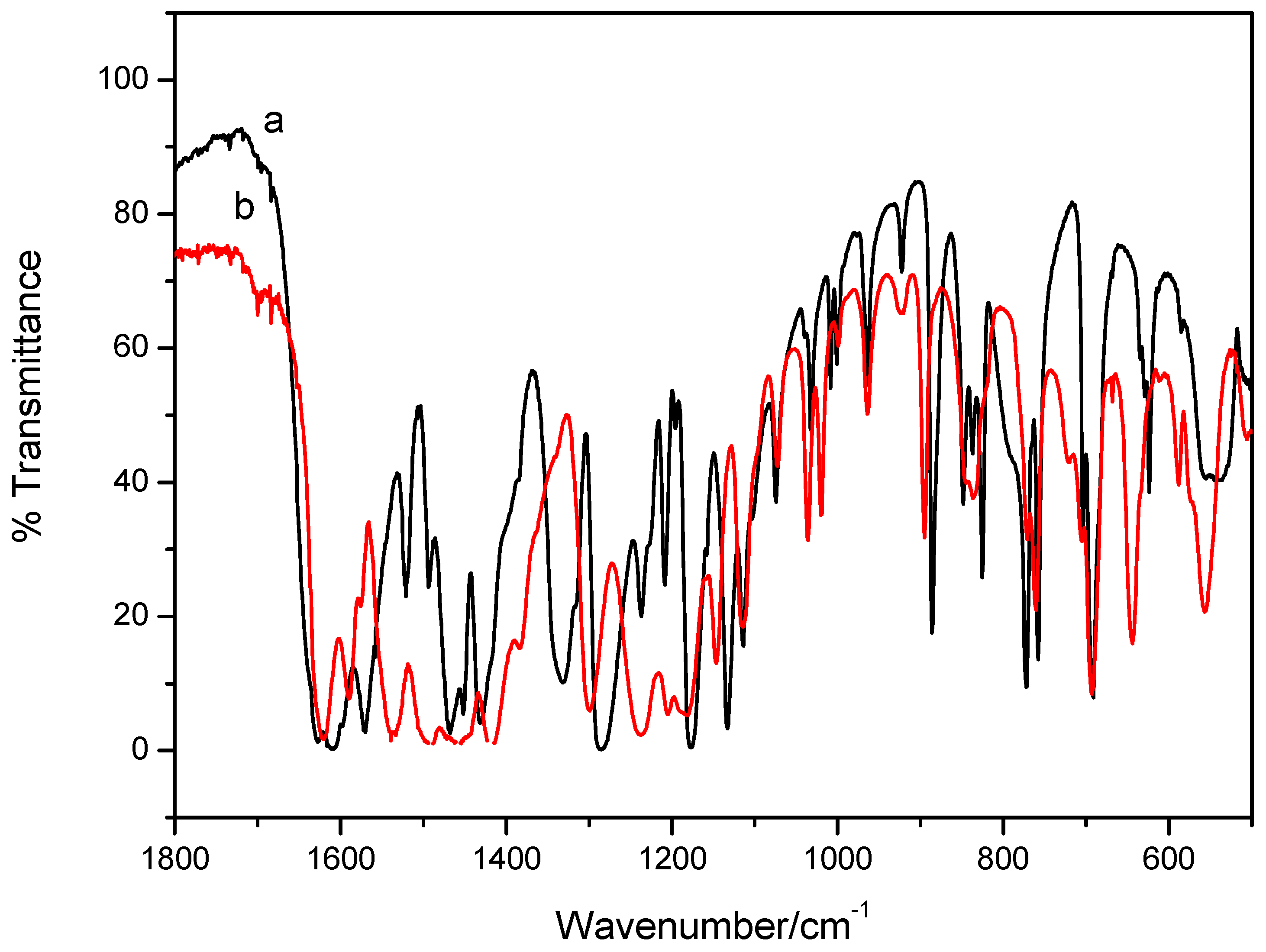
The IR spectrum of 3,7-dihydroxyflavone (Figure 5) showed a band at 1627 cm−1 that was attributed to the carbonyl stretching [12]. This band shifted to 1621 cm−1 in the complex, indicating that the coordination to the chromium occurred with a slight weakening of the C=O bond. The υ(Cr-O) at 557 cm−1 confirmed the presence of chromium in the compound. Other bands observed in the IR spectrum of complex are listed at the end of article.
Figure 3.
UV-Vis spectra of a solution of 3,7-dihydroxyflavone in ethanol (a); a solution of [Cr(3,7-diHF)3] in dimethyl sulfoxide (b,c).
Figure 4.
Schematic representation of the complex [Cr(3,7-diHF)3].
3. Experimental Section
All the reagents and solvents used in this work were purchased from Aldrich (Saint Louis, MO, USA) or similar companies and used without additional purification. Elemental analysis was performed on a Perkin Elmer CHN 2400 analyzer (Llantrisant, Wales, UK). ESI mass spectrum in the positive mode was obtained on a Bruker Daltonics Esquire 3000 (Bremen, Germany). Thermogravimetric analysis were performed with a TA Instruments TGA 2950 Hi-Res thermogravimetric analyzer (New Castle, DE, USA) using 1–3 mg samples in a ceramic crucible, nitrogen flow at 50 mL·min−1, and heating rate of 10 °C·min−1. Electronic absorption spectra in the region of 190–1100 nm were recorded on an Agilent 8453 UV-visible spectrophotometer (Shangai, China), using a quartz cuvette of optical path length 1.0 cm.
Figure 5.
Infrared spectra of 3,7-dihydroxyflavone (a) and the complex [Cr(C15H9O4)3] (b).
Tris(3,7-dihydroxyflavonolate-κO3,O4)chromium(III) Complex Synthesis
Seventy-two milliliters of an ethanolic solution containing 0.41 g (1.5 mmol) of 3,7-dihydroxyflavone and 0.21 g (1.5 mmol) of sodium acetate were kept under stirring and reflux for one hour. To this solution, 0.13 g (0.5 mmol) of chromium(III) chloride (CrCl3·6H2O), dissolved in ethanol were added dropwise and the reaction mixture maintained at room temperature for 24 h, when a precipitate appeared, which was filtered, washed with cold ethanol and dried in vacuo (yield: 39%). Elemental analysis: calcd for C45H33O15Cr ([Cr(C15H9O4)3]·3H2O): C, 62.4; H, 3.84. Found C, 60.6; H, 3.81.
FTIR (main bands): 3210(m,br), 3074(vw), 1621(vs), 1589(sh), 1539(vs), 1419(vs), 1299(sh), 1205(sh), 1182(s), 1147(sh), 1072(w), 1036(m), 895(m), 761(s), 693(s), 557(m).
Supplementary materials
Supplementary File 1Supplementary File 2Supplementary File 3Acknowledgments
Fundo Mackenzie de Pesquisa.
Author Contributions
Denny D. E. Silva performed the experimental work and all authors designed, wrote and edited the paper.
Conflicts of Interest
The authors declare no conflict of interest.
References
- Musialik, M.; Kuzmicz, R.; Pawłowski, T.S.; Litwinienko, G. Acidity of hydroxyl groups: An overlooked influence on antiradical properties of flavonoids. J. Org. Chem. 2009, 74, 2699–2709. [Google Scholar] [PubMed]
- Selvaraj, S.; Krishnaswamy, S.; Devashya, V.; Sethuraman, S.; Krishnan, U.M. Flavonoid-metal ion complexes: A novel class of therapeutic agents. Med. Res. Rev. 2014, 34, 677–702. [Google Scholar] [CrossRef] [PubMed]
- Alexiou, A.D.P.; Decandio, C.C.; Almeida, S.N.; Ferreira, M.J.P.; Romoff, P.; Rocha, R.C. A trinuclear oxo-chromium(III) complex containing the natural flavonoid primuletin: Synthesis, characterization, and antiradical properties. Molecules 2015, 20, 6310–6318. [Google Scholar] [CrossRef] [PubMed]
- Chen, W.; Sun, S.; Cao, W.; Liang, Y.; Song, J. Antioxidant property of quercetin–Cr(III) complex: The role of Cr(III) ion. J. Mol. Struct. 2009, 918, 194–197. [Google Scholar] [CrossRef]
- Li, Y.; Yang, Z.; Li, T. Synthesis, characterization, antioxidative activity and DNA binding properties of the Copper(II), Zinc(II), Nickel(II) complexes with 1,2-Di(4′-iminonaringenin)ethane. Chem. Pharm. Bull. 2008, 56, 1528–1534. [Google Scholar] [CrossRef] [PubMed]
- Pereira, R.M.S.; Andrades, N.E.D.; Paulino, N.; Sawaya, A.C.H.F.; Eberlin, M.N.; Marcucci, M.C.; Favero, G.M.; Novak, E.M.; Bydlowski, S.P. Synthesis and characterization of a metal complex containing naringin and Cu, and its antioxidant, antimicrobial, antiinflammatory and tumor cell cytotoxicity. Molecules 2007, 12, 1352–1366. [Google Scholar] [CrossRef] [PubMed]
- Souza, R.F.V.; Giovani, W.F. Antioxidant properties of complexes of flavonoids with metal ions. Redox Rep. 2004, 9, 97–104. [Google Scholar] [CrossRef] [PubMed]
- Afanas’eva, I.B.; Ostrakhovitch, E.A.; Mikhal’chik, E.V.; Ibragimova, G.A.; Korkina, L.G. Enhancement of antioxidant and anti-inflammatory activities of bioflavonoid rutin by complexation with transition metals. Biochem. Pharmacol. 2001, 61, 677–684. [Google Scholar] [CrossRef]
- Ma, J.; Liu, Y.; Chen, L.; Xie, Y.; Wang, L.Y.; Xie, M.X. Spectroscopic investigation on the interaction of 3,7-dihydroxyflavone with different isomers of human serum albumin. Food Chem. 2012, 132, 663–670. [Google Scholar] [CrossRef] [PubMed]
- Wang, Z. Iron complex nanoparticles synthesized by Eucalyptus leaves. ACS Sustain. Chem. Eng. 2013, 1, 1551–1554. [Google Scholar] [CrossRef]
- Gupta, S.K.; Anjana, C.; Sen, N.; Butcher, R.J.; Jasinski, J.P. Synthesis, crystal structure, DFT and spectroscopic studies of mononuclear chromium(III) complex with bidentate ligand. Polyhedron 2012, 43, 8–14. [Google Scholar] [CrossRef]
- Wang, M.; Teslova, T.; Xu, F.; Spataru, T.; Lombardi, J.R.; Birke, R.L.; Leona, M. Raman and surface enhanced raman scattering of 3-hydroxyflavone. J. Phys. Chem. C 2007, 111, 3038–3043. [Google Scholar] [CrossRef]
© 2016 by the authors; licensee MDPI, Basel, Switzerland. This article is an open access article distributed under the terms and conditions of the Creative Commons by Attribution (CC-BY) license (http://creativecommons.org/licenses/by/4.0/).