AHR/NRF2 Dual Agonist Prediction and Natural Compound Screening Based on Machine Learning: A New Strategy for the Treatment of Atopic Dermatitis


Abstract
1. Introduction
2. Results
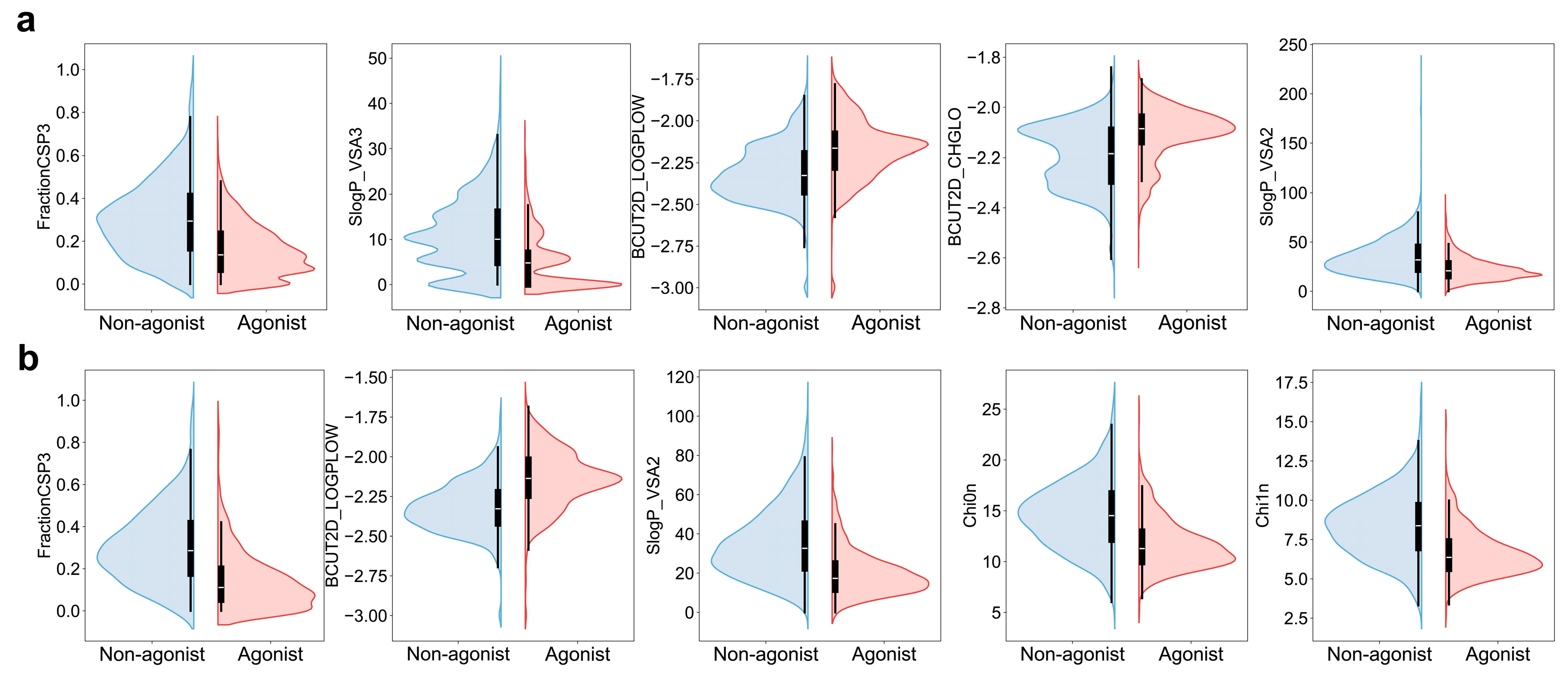
2.1. Statistical Analysis of RDKit Descriptors
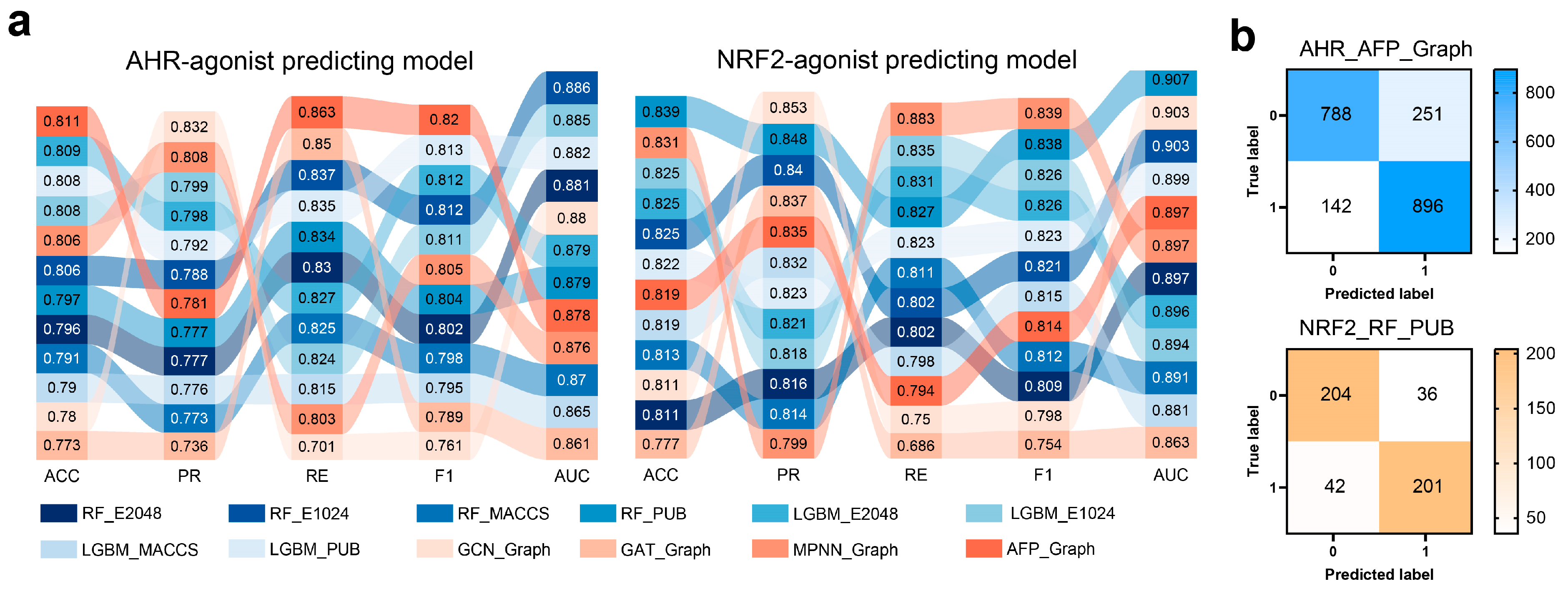
2.2. Prediction Performance of the Classification Models
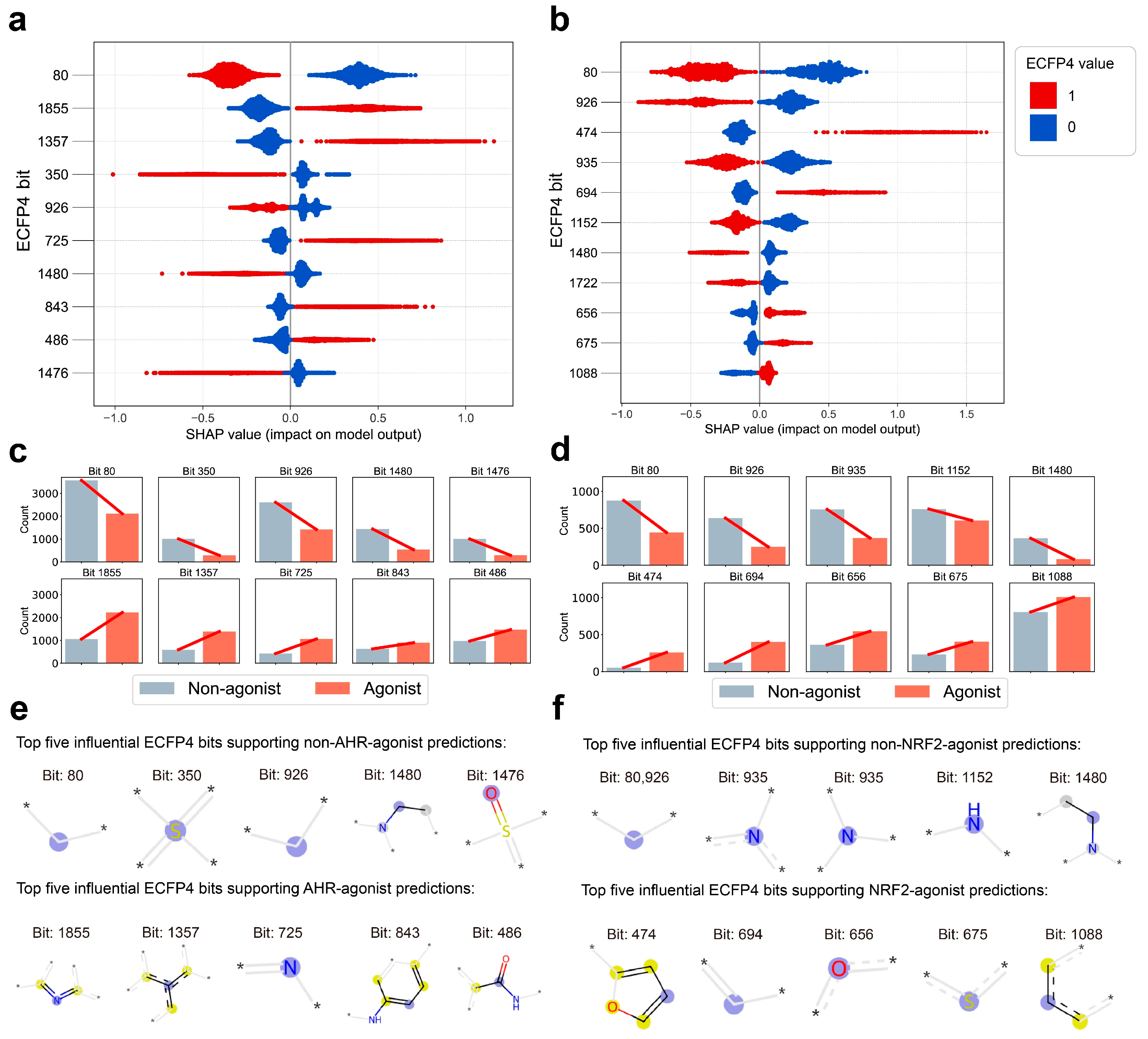
2.3. Shapley Additive Explanations of Molecular Fingerprints
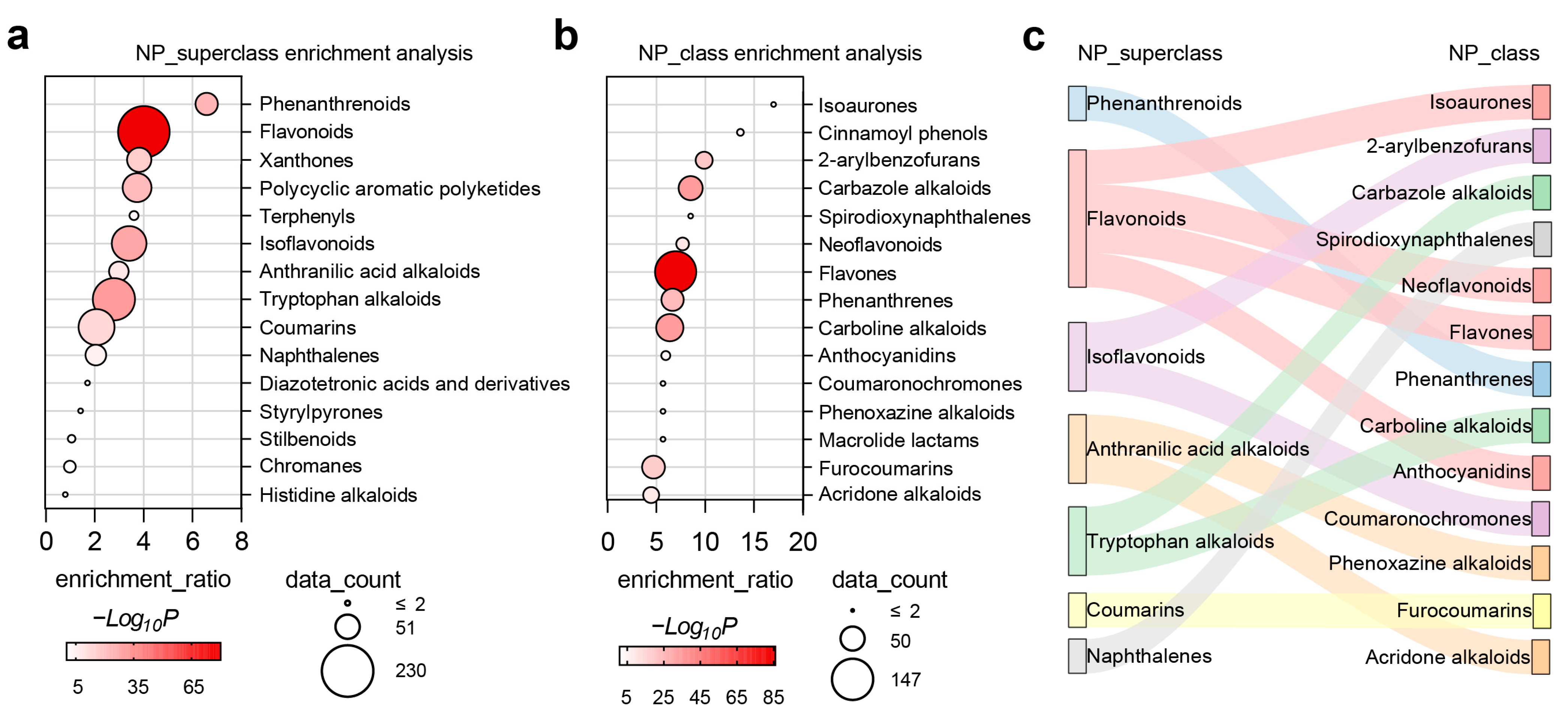
2.4. Potential Dual Agonists of AHR and NRF2 from the Natural Compound Library
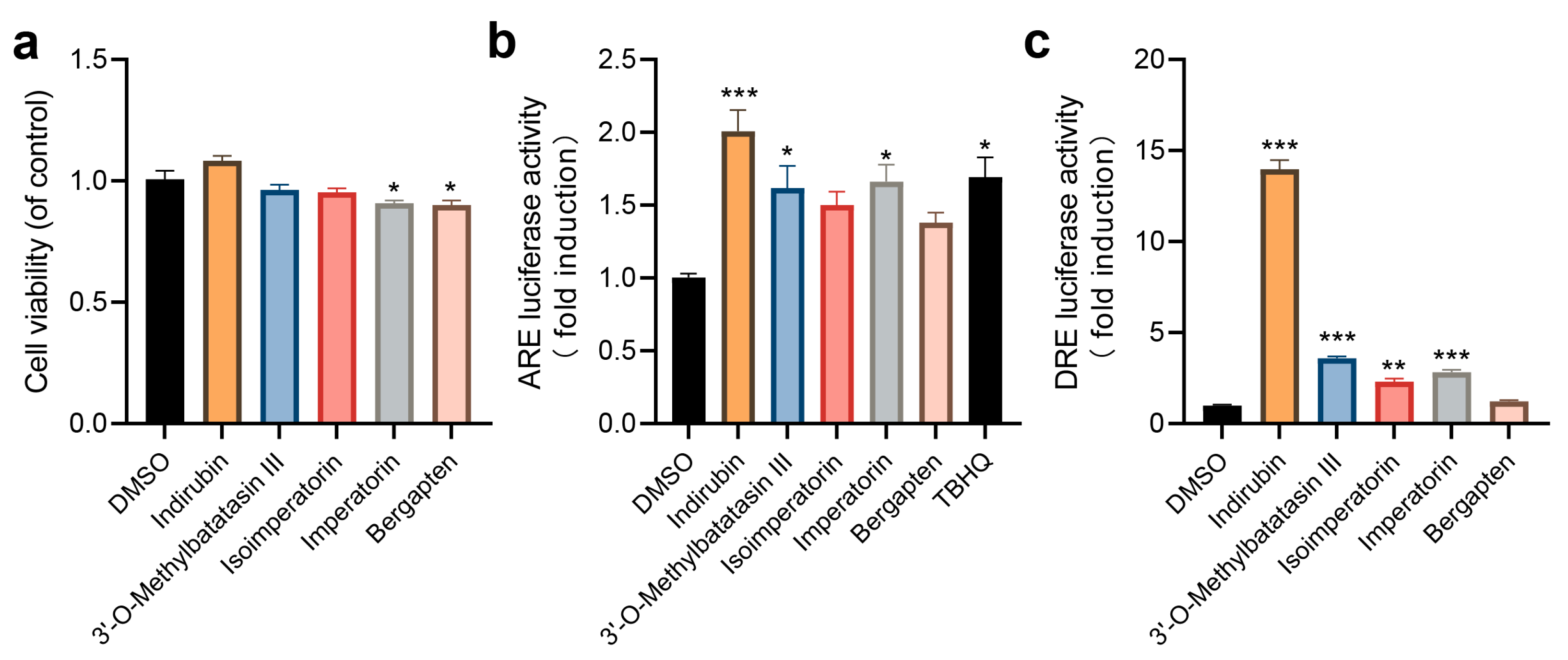
2.5. Experimental Validation of Dual Agonists in HaCaT Cells
3. Discussion
4. Materials and Methods
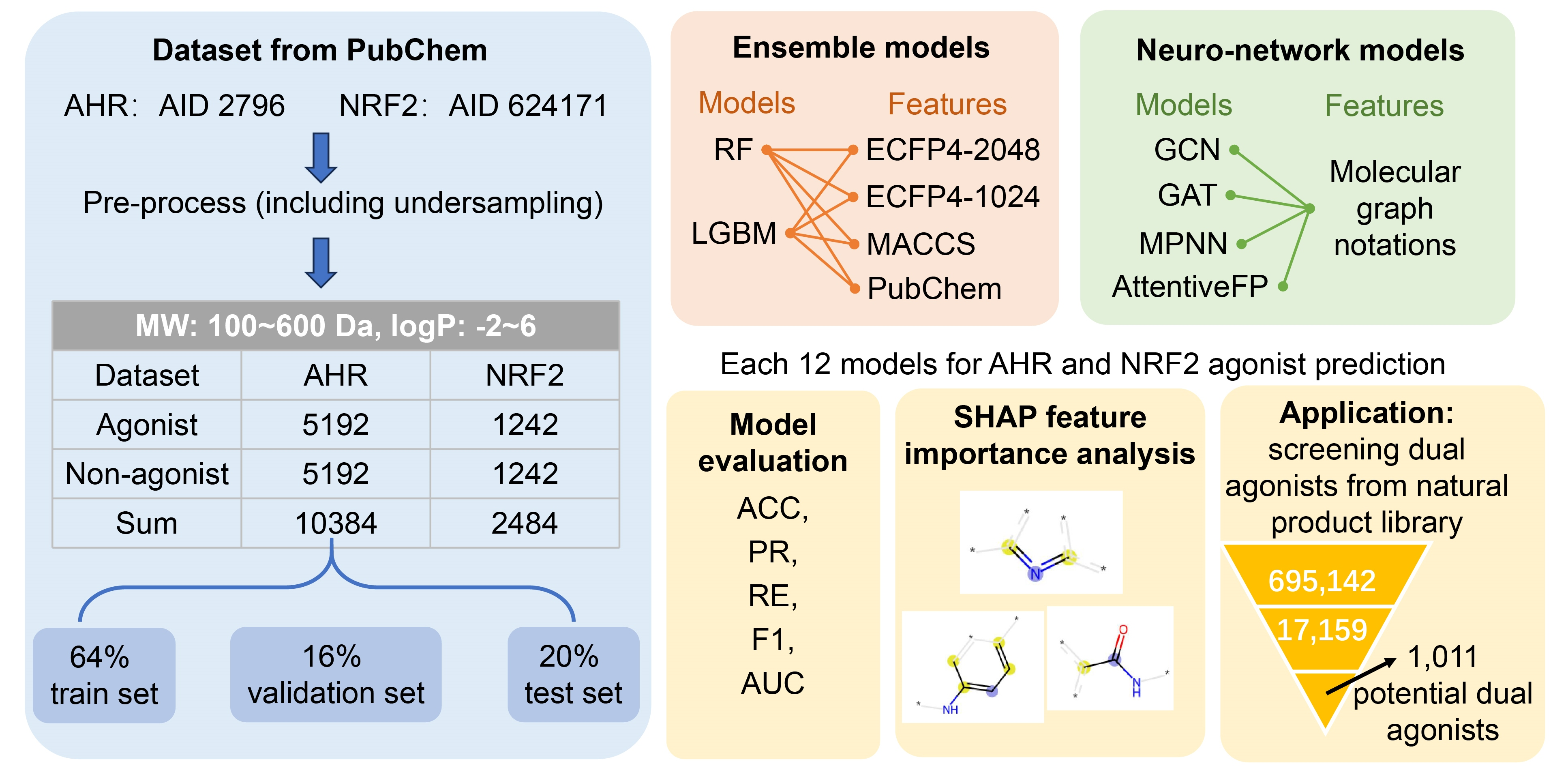
4.1. Dataset
4.2. Machine Learning Model Algorithms
4.3. Cross-Validation and Hyperparameter Search
4.4. Model Evaluation
4.5. Feature Importance Assessment
4.6. Screening of Natural Compound Libraries
4.7. Cell Culture and Reagents
4.8. Cell Viability Assay
4.9. Dual Luciferase Reporter Gene Assay
4.10. Statistics
5. Conclusions
Supplementary Materials
Author Contributions
Funding
Institutional Review Board Statement
Informed Consent Statement
Data Availability Statement
Acknowledgments
Conflicts of Interest
Abbreviations
| AHR | Aryl Hydrocarbon Receptor |
| NRF2 | Nuclear Factor Erythroid 2-Related Factor 2 |
| NQO1 | NAD(P)H Quinone Dehydrogenase 1 |
| HO-1 | Heme Oxygenase-1 |
| GST | Glutathione S-Transferase |
| CAT | Catalase |
| SOD | Superoxide Dismutase |
| CYP1A1 | Cytochrome P450 Family 1 Subfamily A Member 1 |
| IL-4, 8, 13, 33 | Interleukin-4, 8, 13, 33 |
| FLG | Filaggrin |
| STAT6 | Signal Transducer and Activator of Transcription 6 |
| GABAA | Gamma-Aminobutyric Acid Type A Receptor |
| GPCR | G Protein-Coupled Receptor |
| PPAR-δ | Peroxisome Proliferator-Activated Receptor Delta |
| SMILES | Simplified Molecular Input Line Entry System |
| ECFP4 | Extended-Connectivity Fingerprint with a diameter of 4 |
| MACCS | Molecular ACCess System keys |
| NOX2 | Nicotinamide Adenine Dinucleotide Phosphate Oxidase 2 |
References
- Esser, C.; Bargen, I.; Weighardt, H.; Haarmann-Stemmann, T.; Krutmann, J. Functions of the aryl hydrocarbon receptor in the skin. Semin. Immunopathol. 2013, 35, 677–691. [Google Scholar] [CrossRef] [PubMed]
- Alalaiwe, A.; Lin, Y.K.; Lin, C.H.; Wang, P.W.; Lin, J.Y.; Fang, J.Y. The absorption of polycyclic aromatic hydrocarbons into the skin to elicit cutaneous inflammation: The establishment of structure-permeation and In Silico-In Vitro-In Vivo relationships. Chemosphere 2020, 255, 126955. [Google Scholar] [CrossRef] [PubMed]
- Tsuji, G.; Hashimoto-Hachiya, A.; Kiyomatsu-Oda, M.; Takemura, M.; Ohno, F.; Ito, T.; Morino-Koga, S.; Mitoma, C.; Nakahara, T.; Uchi, H.; et al. Aryl hydrocarbon receptor activation restores filaggrin expression via OVOL1 in atopic dermatitis. Cell Death. Dis. 2017, 8, e2931. [Google Scholar] [CrossRef] [PubMed]
- Chen, Z.; Dragan, M.; Sun, P.; Haensel, D.; Vu, R.; Cui, L.; Zhu, P.; Yang, N.; Shi, Y.; Dai, X. The AhR-Ovol1-Id1 regulatory axis in keratinocytes promotes epidermal and immune homeostasis in atopic dermatitis-like skin inflammation. Cell. Mol. Immunol. 2025, 22, 300–315. [Google Scholar] [CrossRef]
- Abbas, S.; Alam, S.; Singh, K.P.; Kumar, M.; Gupta, S.K.; Ansari, K.M. Aryl Hydrocarbon Receptor Activation Contributes to Benzanthrone-Induced Hyperpigmentation via Modulation of Melanogenic Signaling Pathways. Chem. Res. Toxicol. 2017, 30, 625–634. [Google Scholar] [CrossRef]
- Fernández-Gallego, N.; Sánchez-Madrid, F.; Cibrian, D. Role of AHR Ligands in Skin Homeostasis and Cutaneous Inflammation. Cells 2021, 10, 3176. [Google Scholar] [CrossRef]
- Dawe, H.R.; Di Meglio, P. The Aryl Hydrocarbon Receptor (AHR): Peacekeeper of the Skin. Int. J. Mol. Sci. 2025, 26, 1618. [Google Scholar] [CrossRef]
- Salman, S.; Paulet, V.; Hardonnière, K.; Kerdine-Römer, S. The role of NRF2 transcription factor in inflammatory skin diseases. BioFactors 2025, 51, e70013. [Google Scholar] [CrossRef]
- Liu, H.; Hu, Y.; Ji, W.; Wang, S.; Zhu, Y.; Lin, Q.; Zhao, X.; Zhou, H.; Guo, X.; Liu, Y.; et al. Sustained Activation of Nrf2 Antioxidant Pathway by Flexible Liposome Based on Low Phase Transition Temperature to Delay Skin Aging. Adv. Healthc. Mater. 2026, 15, e01696. [Google Scholar] [CrossRef]
- Park, C.; Lee, H.; Noh, J.S.; Jin, C.Y.; Kim, G.Y.; Hyun, J.W.; Leem, S.H.; Choi, Y.H. Hemistepsin A protects human keratinocytes against hydrogen peroxide-induced oxidative stress through activation of the Nrf2/HO-1 signaling pathway. Arch. Biochem. Biophys. 2020, 691, 108512. [Google Scholar] [CrossRef]
- Lu, Y.; Wei, W.; Li, M.; Chen, D.; Li, W.; Hu, Q.; Dong, S.; Liu, L.; Zhao, Q. The USP11/Nrf2 positive feedback loop promotes colorectal cancer progression by inhibiting mitochondrial apoptosis. Cell. Death. Dis. 2024, 15, 873. [Google Scholar] [CrossRef] [PubMed]
- Liang, J.; Lian, L.; Wang, X.; Li, L. Thymoquinone, extract from Nigella sativa seeds, protects human skin keratinocytes against UVA-irradiated oxidative stress, inflammation and mitochondrial dysfunction. Mol. Immunol. 2021, 135, 21–27. [Google Scholar] [CrossRef]
- Ho, C.C.; Ng, S.C.; Chuang, H.L.; Wen, S.Y.; Kuo, C.H.; Mahalakshmi, B.; Huang, C.Y.; Kuo, W.W. Extracts of Jasminum sambac flowers fermented by Lactobacillus rhamnosus inhibit H(2) O(2)–and UVB-induced aging in human dermal fibroblasts. Environ. Toxicol. 2021, 36, 607–619. [Google Scholar] [CrossRef] [PubMed]
- Li, Q.; Bai, D.; Qin, L.; Shao, M.; Zhang, S.; Yan, C.; Yu, G.; Hao, J. Protective effect of d-tetramannuronic acid tetrasodium salt on UVA-induced photo-aging in HaCaT cells. Biomed. Pharmacother. 2020, 126, 110094. [Google Scholar] [CrossRef]
- Zhong, Q.Y.; Luo, Q.H.; Lin, B.; Lin, B.Q.; Su, Z.R.; Zhan, J.Y. Protective effects of andrographolide sodium bisulfate on UV-induced skin carcinogenesis in mice model. Eur. J. Pharm. Sci. 2022, 176, 106232. [Google Scholar] [CrossRef]
- Köhle, C.; Bock, K.W. Activation of coupled Ah receptor and Nrf2 gene batteries by dietary phytochemicals in relation to chemoprevention. Biochem. Pharmacol. 2006, 72, 795–805. [Google Scholar] [CrossRef]
- Marchand, A.; Barouki, R.; Garlatti, M. Regulation of NAD(P)H:quinone oxidoreductase 1 gene expression by CYP1A1 activity. Mol. Pharmacol. 2004, 65, 1029–1037. [Google Scholar] [CrossRef] [PubMed]
- Hwang, J.; Newton, E.M.; Hsiao, J.; Shi, V.Y. Aryl hydrocarbon receptor/nuclear factor E2-related factor 2 (AHR/NRF2) signalling: A novel therapeutic target for atopic dermatitis. Exp. Dermatol. 2022, 31, 485–497. [Google Scholar] [CrossRef]
- Furue, M.; Tsuji, G.; Mitoma, C.; Nakahara, T.; Chiba, T.; Morino-Koga, S.; Uchi, H. Gene regulation of filaggrin and other skin barrier proteins via aryl hydrocarbon receptor. J. Dermatol. Sci. 2015, 80, 83–88. [Google Scholar] [CrossRef]
- van den Bogaard, E.H.; Bergboer, J.G.; Vonk-Bergers, M.; van Vlijmen-Willems, I.M.; Hato, S.V.; van der Valk, P.G.; Schröder, J.M.; Joosten, I.; Zeeuwen, P.L.; Schalkwijk, J. Coal tar induces AHR-dependent skin barrier repair in atopic dermatitis. J. Clin. Investig. 2013, 123, 917–927. [Google Scholar] [CrossRef]
- Furue, M. Regulation of Filaggrin, Loricrin, and Involucrin by IL-4, IL-13, IL-17A, IL-22, AHR, and NRF2: Pathogenic Implications in Atopic Dermatitis. Int. J. Mol. Sci. 2020, 21, 5382. [Google Scholar] [CrossRef]
- Nielsen, J.C.; Hjo Rringgaard, C.; Nygaard, M.M.R.; Wester, A.; Elster, L.; Porsgaard, T.; Mikkelsen, R.B.; Rasmussen, S.; Madsen, A.N.; Schlein, M.; et al. Machine-Learning-Guided Peptide Drug Discovery: Development of GLP-1 Receptor Agonists with Improved Drug Properties. J. Med. Chem. 2024, 67, 11814–11826. [Google Scholar] [CrossRef]
- Xiao, F.; Ding, X.; Shi, Y.; Wang, D.; Wang, Y.; Cui, C.; Zhu, T.; Chen, K.; Xiang, P.; Luo, X. Application of ensemble learning for predicting GABA(A) receptor agonists. Comput. Biol. Med. 2024, 169, 107958. [Google Scholar] [CrossRef] [PubMed]
- Yang, J.; Cai, Y.; Zhao, K.; Xie, H.; Chen, X. Concepts and applications of chemical fingerprint for hit and lead screening. Drug Discov. Today 2022, 27, 103356. [Google Scholar] [CrossRef]
- Li, Z.; Huang, R.; Xia, M.; Patterson, T.A.; Hong, H. Fingerprinting Interactions between Proteins and Ligands for Facilitating Machine Learning in Drug Discovery. Biomolecules 2024, 14, 72. [Google Scholar] [CrossRef]
- Zorn, K.M.; Foil, D.H.; Lane, T.R.; Russo, D.P.; Hillwalker, W.; Feifarek, D.J.; Jones, F.; Klaren, W.D.; Brinkman, A.M.; Ekins, S. Machine Learning Models for Estrogen Receptor Bioactivity and Endocrine Disruption Prediction. Environ. Sci. Technol. 2020, 54, 12202–12213. [Google Scholar] [CrossRef]
- Jabeen, A.; Ranganathan, S. Applications of machine learning in GPCR bioactive ligand discovery. Curr. Opin. Struct. Biol. 2019, 55, 66–76. [Google Scholar] [CrossRef]
- Da’adoosh, B.; Marcus, D.; Rayan, A.; King, F.; Che, J.; Goldblum, A. Discovering highly selective and diverse PPAR-delta agonists by ligand based machine learning and structural modeling. Sci. Rep. 2019, 9, 1106. [Google Scholar] [CrossRef] [PubMed]
- Zhang, Z.; Pan, F.; Chen, Q.; Guo, T.; Song, H. Decoding the quantitative structure-activity relationship and astringency formation mechanism of oxygenated aromatic compounds. Food Res. Int. 2025, 210, 116421. [Google Scholar] [CrossRef] [PubMed]
- Wu, S.; Wang, L.; Schlenk, D.; Liu, J. Machine Learning-Based Toxicological Modeling for Screening Environmental Obesogens. Environ. Sci. Technol. 2024, 58, 18133–18144. [Google Scholar] [CrossRef]
- Zhu, K.; Shen, C.; Tang, C.; Zhou, Y.; He, C.; Zuo, Z. Improvement in the screening performance of potential aryl hydrocarbon receptor ligands by using supervised machine learning. Chemosphere 2021, 265, 129099. [Google Scholar] [CrossRef]
- Wojtyło, P.A.; Łapińska, N.; Bellagamba, L.; Camaioni, E.; Mendyk, A.; Giovagnoli, S. Initial development of automated machine learning-assisted prediction tools for aryl hydrocarbon receptor activators. Pharmaceutics 2024, 16, 1456. [Google Scholar] [CrossRef]
- Gruszczyk, J.; Grandvuillemin, L.; Lai-Kee-Him, J.; Paloni, M.; Savva, C.G.; Germain, P.; Grimaldi, M.; Boulahtouf, A.; Kwong, H.-S.; Bous, J. Cryo-EM structure of the agonist-bound Hsp90-XAP2-AHR cytosolic complex. Nat. Commun. 2022, 13, 7010. [Google Scholar] [CrossRef]
- Jiang, Z.-Y.; Xu, L.L.; Lu, M.-C.; Chen, Z.-Y.; Yuan, Z.-W.; Xu, X.-L.; Guo, X.-K.; Zhang, X.-J.; Sun, H.-P.; You, Q.-D. Structure–activity and structure–property relationship and exploratory in vivo evaluation of the nanomolar Keap1–Nrf2 protein–protein interaction inhibitor. J. Med. Chem. 2015, 58, 6410–6421. [Google Scholar] [CrossRef]
- Diao, X.; Shang, Q.; Guo, M.; Huang, Y.; Zhang, M.; Chen, X.; Liang, Y.; Sun, X.; Zhou, F.; Zhuang, J. Structural basis for the ligand-dependent activation of heterodimeric AHR-ARNT complex. Nat. Commun. 2025, 16, 1282. [Google Scholar] [CrossRef]
- Kwong, H.-S.; Paloni, M.; Grandvuillemin, L.; Sirounian, S.; Ancelin, A.; Lai-Kee-Him, J.; Grimaldi, M.; Carivenc, C.; Lancey, C.; Ragan, T. Structural insights into the activation of human aryl hydrocarbon receptor by the environmental contaminant Benzo [a] pyrene and structurally related compounds. J. Mol. Biol. 2024, 436, 168411. [Google Scholar] [CrossRef]
- Tsuji, G.; Yumine, A.; Kawamura, K.; Takemura, M.; Kido-Nakahara, M.; Yamamura, K.; Nakahara, T. Difamilast, a Topical Phosphodiesterase 4 Inhibitor, Produces Soluble ST2 via the AHR–NRF2 Axis in Human Keratinocytes. Int. J. Mol. Sci. 2024, 25, 7910. [Google Scholar] [CrossRef]
- Tsuji, G.; Takahara, M.; Uchi, H.; Matsuda, T.; Chiba, T.; Takeuchi, S.; Yasukawa, F.; Moroi, Y.; Furue, M. Identification of ketoconazole as an AhR-Nrf2 activator in cultured human keratinocytes: The basis of its anti-inflammatory effect. J. Investig. Dermatol. 2012, 132, 59–68. [Google Scholar] [CrossRef] [PubMed]
- Wang, Y.; Lu, H.; Cheng, L.; Guo, W.; Hu, Y.; Du, X.; Liu, X.; Xu, M.; Liu, Y.; Zhang, Y. Targeting mitochondrial dysfunction in atopic dermatitis with trilinolein: A triacylglycerol from the medicinal plant Cannabis fructus. Phytomedicine 2024, 132, 155856. [Google Scholar] [CrossRef] [PubMed]
- Chen, Y.; Huang, J.-H.; Sun, Y.; Zhang, Y.; Li, Y.; Xu, X. Haplotype-resolved assembly of diploid and polyploid genomes using quantum computing. Cell Rep. Methods 2024, 4, 100754. [Google Scholar] [CrossRef] [PubMed]
- Patel, L.; Shukla, T.; Huang, X.; Ussery, D.W.; Wang, S. Machine learning methods in drug discovery. Molecules 2020, 25, 5277. [Google Scholar] [CrossRef] [PubMed]
- Zhang, W.; Xie, H.Q.; Li, Y.; Zhou, M.; Zhou, Z.; Wang, R.; Hahn, M.E.; Zhao, B. The aryl hydrocarbon receptor: A predominant mediator for the toxicity of emerging dioxin-like compounds. J. Hazard. Mater. 2022, 426, 128084. [Google Scholar] [CrossRef] [PubMed]
- d’Anna, B.; Albinet, A.; Aït-Aïssa, S. In vitro assessment of aryl hydrocarbon, estrogen, and androgen receptor-mediated activities of secondary organic aerosols formed from the oxidation of polycyclic aromatic hydrocarbons and furans. Environ. Res. 2025, 273, 121220. [Google Scholar]
- Polonio, C.M.; McHale, K.A.; Sherr, D.H.; Rubenstein, D.; Quintana, F. The aryl hydrocarbon receptor: A rehabilitated target for therapeutic immune modulation. Nat. Rev. Drug Discov. 2025, 24, 610–630. [Google Scholar] [CrossRef]
- de Almeida, B.P.; Richard, G.; Dalla-Torre, H.; Blum, C.; Hexemer, L.; Pandey, P.; Laurent, S.; Rajesh, C.; Lopez, M.; Laterre, A. A multimodal conversational agent for DNA, RNA and protein tasks. Nat. Mach. Intell. 2025, 7, 928–941. [Google Scholar] [CrossRef]
- Breiman, L. Random Forests. Mach. Learn. 2001, 45, 5–32. [Google Scholar] [CrossRef]
- Ke, G.; Meng, Q.; Finley, T.; Wang, T.; Chen, W.; Ma, W.; Ye, Q.; Liu, T.-Y. Lightgbm: A highly efficient gradient boosting decision tree. In Proceedings of the Advances in Neural Information Processing Systems, Long Beach, CA, USA, 4–9 December 2017. [Google Scholar]
- An, X.; Chen, X.; Yi, D.; Li, H.; Guan, Y. Representation of molecules for drug response prediction. Brief. Bioinf. 2022, 23, bbab393. [Google Scholar] [CrossRef] [PubMed]
- Kipf, T.N.; Welling, M. Semi-supervised classification with graph convolutional networks. In Proceedings of the International Conference on Learning Representations, San Juan, Puerto Rico, 2–4 May 2016. [Google Scholar]
- Veličković, P.; Cucurull, G.; Casanova, A.; Romero, A.; Lio, P.; Bengio, Y. Graph attention networks. In Proceedings of the International Conference on Learning Representations, Vancouver, BC, Canada, 30 April–3 May 2018. [Google Scholar]
- Gilmer, J.; Schoenholz, S.S.; Riley, P.F.; Vinyals, O.; Dahl, G.E. Neural message passing for quantum chemistry. In Proceedings of the 34th International Conference on Machine Learning; PMLR: Cambridge, MA, USA, 2017; pp. 1263–1272. [Google Scholar]
- Xiong, Z.; Wang, D.; Liu, X.; Zhong, F.; Wan, X.; Li, X.; Li, Z.; Luo, X.; Chen, K.; Jiang, H.; et al. Pushing the Boundaries of Molecular Representation for Drug Discovery with the Graph Attention Mechanism. J. Med. Chem. 2020, 63, 8749–8760. [Google Scholar] [CrossRef]
- Anh, P.T.Q.; Thuyet, D.Q.; Kobayashi, Y. Image classification of root-trimmed garlic using multi-label and multi-class classification with deep convolutional neural network. Postharvest Biol. Technol. 2022, 190, 111956. [Google Scholar] [CrossRef]
- Lundberg, S.M.; Lee, S.-I. A unified approach to interpreting model predictions. In Proceedings of the Advances in Neural Information Processing Systems, Long Beach, CA, USA, 4–9 December 2017. [Google Scholar]
- Chandrasekhar, V.; Rajan, K.; Kanakam, S.R.S.; Sharma, N.; Weißenborn, V.; Schaub, J.; Steinbeck, C. COCONUT 2.0: A comprehensive overhaul and curation of the collection of open natural products database. Nucleic Acids Res. 2024, 53, D634–D643. [Google Scholar] [CrossRef]



| Molecular Fingerprints | AHR | NRF2 | ||
|---|---|---|---|---|
| Length (Bits) | Length After FS (Bits) | Length (Bits) | Length After FS (Bits) | |
| E2048 | 2048 | 2048 | 2048 | 2040 |
| E1024 | 1024 | 1024 | 1024 | 1024 |
| MACCS | 167 | 153 | 167 | 154 |
| PUB | 881 | 633 | 881 | 616 |
Disclaimer/Publisher’s Note: The statements, opinions and data contained in all publications are solely those of the individual author(s) and contributor(s) and not of MDPI and/or the editor(s). MDPI and/or the editor(s) disclaim responsibility for any injury to people or property resulting from any ideas, methods, instructions or products referred to in the content. |
© 2026 by the authors. Licensee MDPI, Basel, Switzerland. This article is an open access article distributed under the terms and conditions of the Creative Commons Attribution (CC BY) license.
Share and Cite
Zhen, Y.; Li, Q.; Hu, X.; Liu, X.; Shao, Z.; Xie, H.Q.; Zhao, B.; Xu, L. AHR/NRF2 Dual Agonist Prediction and Natural Compound Screening Based on Machine Learning: A New Strategy for the Treatment of Atopic Dermatitis. Int. J. Mol. Sci. 2026, 27, 3530. https://doi.org/10.3390/ijms27083530
Zhen Y, Li Q, Hu X, Liu X, Shao Z, Xie HQ, Zhao B, Xu L. AHR/NRF2 Dual Agonist Prediction and Natural Compound Screening Based on Machine Learning: A New Strategy for the Treatment of Atopic Dermatitis. International Journal of Molecular Sciences. 2026; 27(8):3530. https://doi.org/10.3390/ijms27083530
Chicago/Turabian StyleZhen, Yu, Qi Li, Xiaoxu Hu, Xiaorui Liu, Zhijie Shao, Heidi Qunhui Xie, Bin Zhao, and Li Xu. 2026. "AHR/NRF2 Dual Agonist Prediction and Natural Compound Screening Based on Machine Learning: A New Strategy for the Treatment of Atopic Dermatitis" International Journal of Molecular Sciences 27, no. 8: 3530. https://doi.org/10.3390/ijms27083530
APA StyleZhen, Y., Li, Q., Hu, X., Liu, X., Shao, Z., Xie, H. Q., Zhao, B., & Xu, L. (2026). AHR/NRF2 Dual Agonist Prediction and Natural Compound Screening Based on Machine Learning: A New Strategy for the Treatment of Atopic Dermatitis. International Journal of Molecular Sciences, 27(8), 3530. https://doi.org/10.3390/ijms27083530