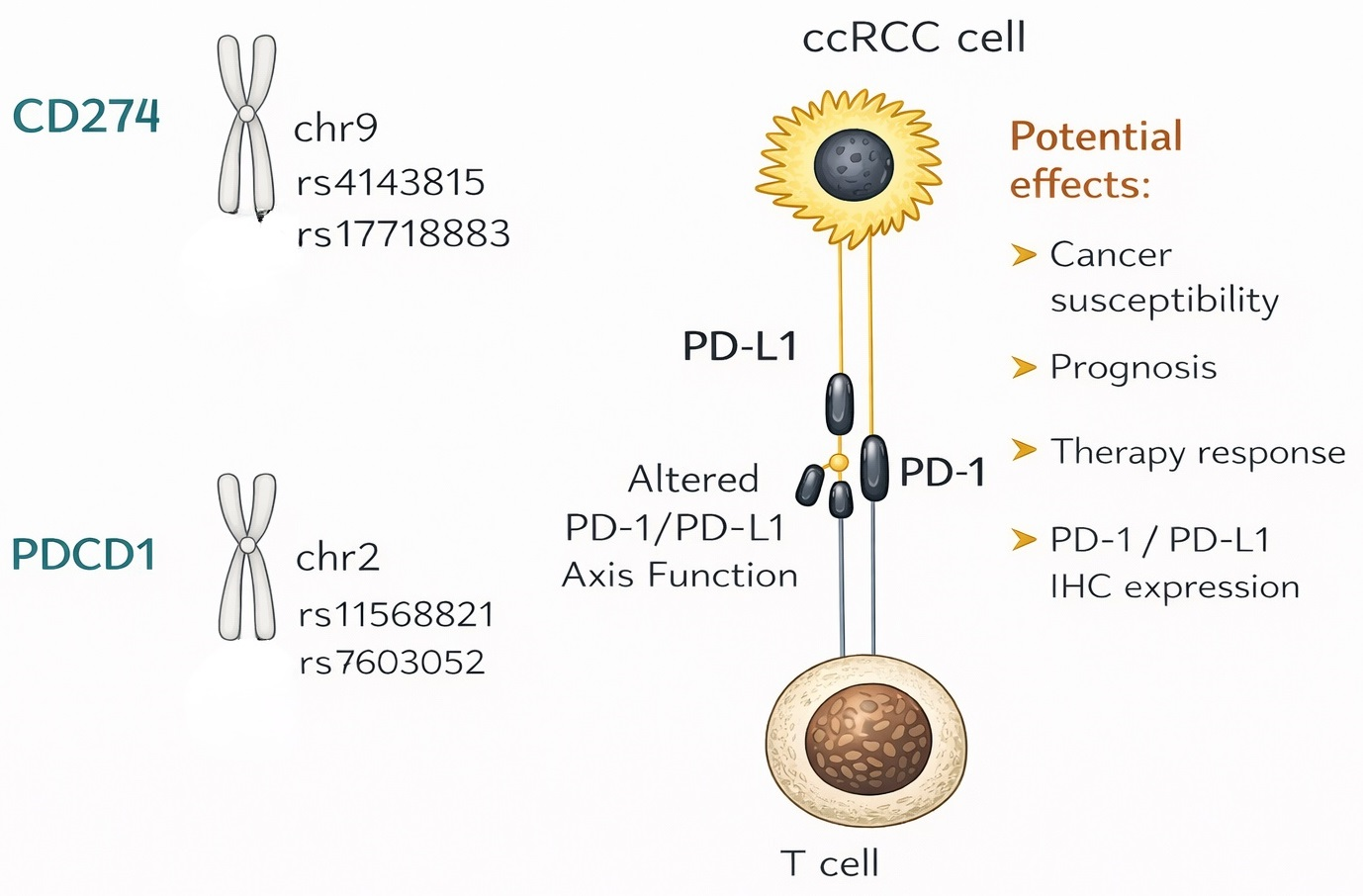
Association Between Polymorphisms in Genes Encoding PD-1/PD-L1 Molecules and Clinicopathological Features in Clear Cell Renal Cell Carcinoma


Abstract
1. Introduction
2. Results
2.1. PDCD1 and CD274 Polymorphisms
2.2. Association of PDCD1 and CD274 Genes Polymorphisms with Clinicopathological Features
2.3. Association of PDCD1 and CD274 Genes Polymorphisms with PD-L1 Immunohistochemical Expression in Tumor-Infiltrating Immune Cells (TIICs)
2.4. Association of PDCD1 and CD274 Genes Polymorphisms with PD-L1 Immunohistochemical Expression in ccRCC Tumor Cells
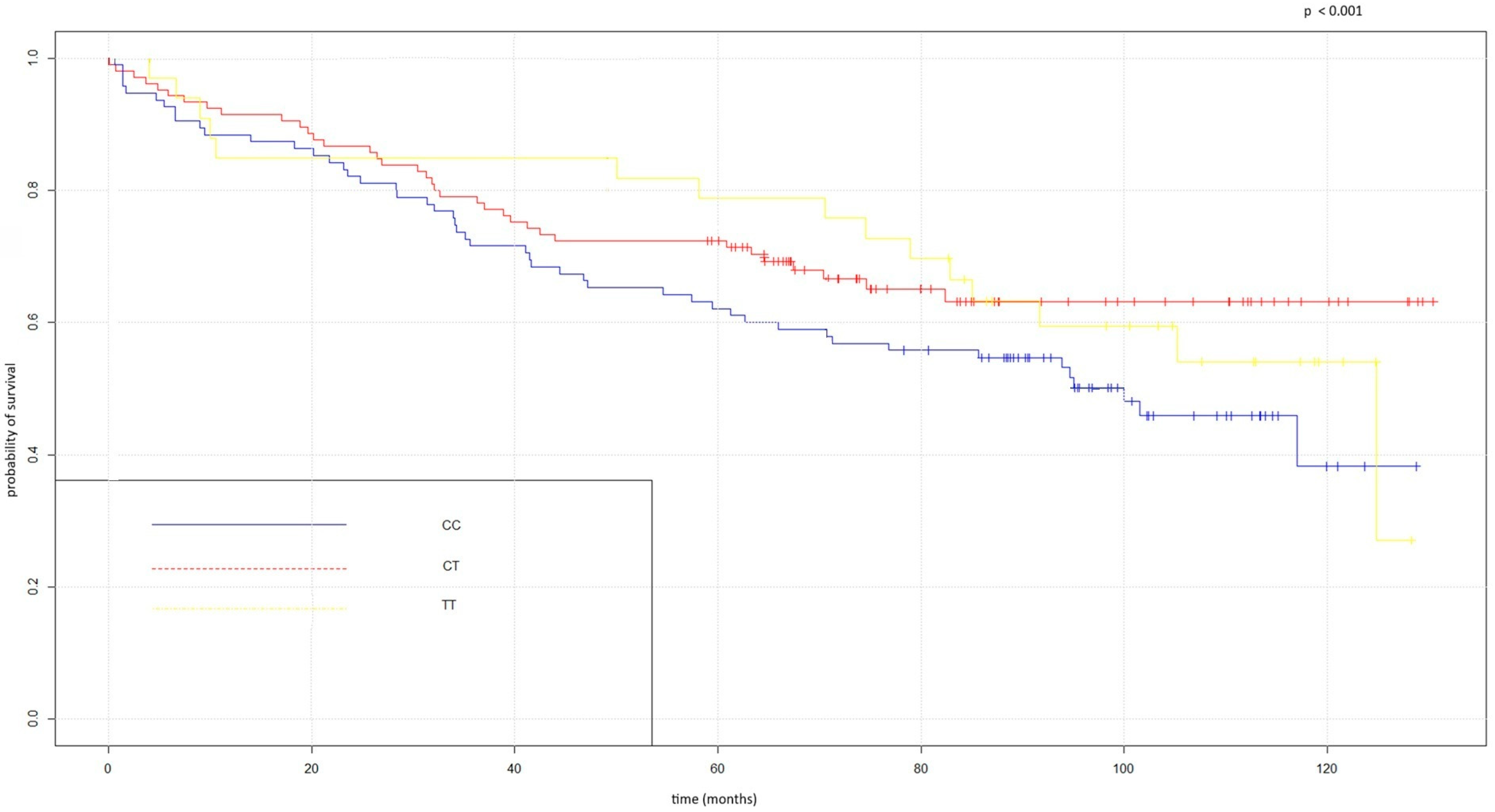
2.5. PDCD1 and CD274 Polymorphisms and Overall Survival (OS) of ccRCC Patients
3. Discussion
4. Materials and Methods
4.1. General Patients Characteristics
4.2. SNP Selection
4.3. DNA Extraction and Genotyping
4.4. PD-L1 Immunohistochemical Staining and Interpretation
4.5. Statistical Analysis
5. Conclusions
Supplementary Materials
Author Contributions
Funding
Institutional Review Board Statement
Informed Consent Statement
Data Availability Statement
Conflicts of Interest
Abbreviations
| PD-1 | programmed death protein 1 |
| PD-L1 | programmed cell death ligand 1 |
| RCC | renal cell carcinoma |
| ccRCC | clear cell renal cell carcinoma |
| SNP | single nucleotide polymorphism |
| TIICs | tumor-infiltrating immune cells |
| OS | overall survival |
| 3′-UTR | 3′-untranslated region |
| miRNA | microRNA |
| FDR | false discovery rate |
| SD | standard deviation |
| ICI | immune checkpoint inhibitor |
References
- Hanahan, D.; Weinberg, R.A. Hallmarks of cancer: The next generation. Cell 2011, 144, 646–674. [Google Scholar] [CrossRef]
- Jiang, X.; Wang, J.; Deng, X.; Xiong, F.; Ge, J.; Xiang, B.; Wu, X.; Ma, J.; Zhou, M.; Li, X.; et al. Role of the tumor microenvironment in PD-L1/PD-1-mediated tumor immune escape. Mol. Cancer 2019, 18, 10. [Google Scholar] [CrossRef] [PubMed]
- Lin, X.; Kang, K.; Chen, P.; Zeng, Z.; Li, G.; Xiong, W.; Yi, M.; Xiang, B. Regulatory mechanisms of PD-1/PD-L1 in cancers. Mol. Cancer 2024, 23, 108. [Google Scholar] [CrossRef] [PubMed]
- Freeman, G.J.; Long, A.J.; Iwai, Y.; Bourque, K.; Chernova, T.; Nishimura, H.; Fitz, L.J.; Malenkovich, N.; Okazaki, T.; Byrne, M.C.; et al. Engagement of the PD-1 immunoinhibitory receptor by a novel B7 family member leads to negative regulation of lymphocyte activation. J. Exp. Med. 2000, 192, 1027–1034. [Google Scholar] [CrossRef] [PubMed]
- Dermani, F.K.; Samadi, P.; Rahmani, G.; Kohlan, A.K.; Najafi, R. PD-1/PD-L1 immune checkpoint: Potential target for cancer therapy. J. Cell. Physiol. 2019, 234, 1313–1325. [Google Scholar] [CrossRef]
- Marletta, S.; Fusco, N.; Munari, E.; Luchini, C.; Cimadamore, A.; Brunelli, M.; Querzoli, G.; Martini, M.; Vigliar, E.; Colombari, R.; et al. Atlas of PD-L1 for Pathologists: Indications, Scores, Diagnostic Platforms and Reporting Systems. J. Pers. Med. 2022, 12, 1073. [Google Scholar] [CrossRef]
- Darvin, P.; Toor, S.M.; Sasidharan Nair, V.; Elkord, E. Immune checkpoint inhibitors: Recent progress and potential biomarkers. Exp. Mol. Med. 2018, 50, 1–11. [Google Scholar] [CrossRef]
- Vuong, L.; Kotecha, R.R.; Voss, M.H.; Hakimi, A.A. Tumor microenvironment dynamics in clear-cell renal cell carcinoma. Cancer Discov. 2019, 9, 1349–1357. [Google Scholar] [CrossRef]
- Wagner, M.; Tupikowski, K.; Jasek, M.; Tomkiewicz, A.; Witkowicz, A.; Ptaszkowski, K.; Karpinski, P.; Zdrojowy, R.; Halon, A.; Karabon, L. SNP–SNP interaction in genes encoding PD-1/PD-L1 axis as a potential risk factor for clear cell renal cell carcinoma. Cancers 2020, 12, 3521. [Google Scholar] [CrossRef]
- Knox, S.S. From ‘omics’ to complex disease: A systems biology approach to gene–environment interactions in cancer. Cancer Cell Int. 2010, 10, 11. [Google Scholar] [CrossRef]
- Zang, X.; Allison, J.P. The B7 family and cancer therapy: Costimulation and coinhibition. Clin. Cancer Res. 2007, 13, 5271–5279. [Google Scholar] [CrossRef]
- Hombach, A.; Sent, D.; Schneider, C.; Heuser, C.; Koch, D.; Pohl, C.; Seliger, B.; Abken, H. T-cell activation by recombinant receptors: CD28 costimulation is required for interleukin 2 secretion and receptor-mediated T-cell proliferation but does not affect receptor-mediated target cell lysis. Cancer Res. 2001, 61, 1976–1982. [Google Scholar] [PubMed]
- Wu, M.; Huang, Q.; Xie, Y.; Wu, X.; Ma, H.; Zhang, Y.; Xia, Y. Improvement of the anticancer efficacy of PD-1/PD-L1 blockade via combination therapy and PD-L1 regulation. J. Hematol. Oncol. 2022, 15, 24. [Google Scholar] [CrossRef] [PubMed]
- Heinrichs, S.; Look, A.T. Identification of structural aberrations in cancer by SNP array analysis. Genome Biol. 2007, 8, 219. [Google Scholar] [CrossRef] [PubMed]
- Tao, L.H.; Zhou, X.R.; Li, F.C.; Chen, Q.; Meng, F.Y.; Mao, Y.; Li, R.; Hua, D.; Zhang, H.J.; Wang, W.P.; et al. A polymorphism in the promoter region of PD-L1 serves as a binding site for SP1 and is associated with PD-L1 overexpression and increased occurrence of gastric cancer. Cancer Immunol. Immunother. 2017, 66, 309–318. [Google Scholar] [CrossRef]
- Al-Harbi, N.; Vaali-Mohammed, M.A.; Al-Omar, S.; Zubaidi, A.; Al-Obeed, O.; Abdulla, M.H.; Mansour, L. Rs10204525 polymorphism of the programmed death (PD-1) gene is associated with increased risk in a Saudi Arabian population with colorectal cancer. Medicina 2022, 58, 1439. [Google Scholar] [CrossRef]
- Zou, J.; Wu, D.; Li, T.; Wang, X.; Liu, Y.; Tan, S. Association of PD-L1 gene rs4143815 C>G polymorphism and human cancer susceptibility: A systematic review and meta-analysis. Pathol. Res. Pract. 2019, 215, 229–234. [Google Scholar] [CrossRef]
- Lee, S.Y.; Jung, D.K.; Choi, J.E.; Jin, C.C.; Hong, M.J.; Do, S.K.; Kang, H.G.; Lee, W.K.; Seok, Y.; Lee, E.B.; et al. PD-L1 polymorphism can predict clinical outcomes of non-small cell lung cancer patients treated with first-line paclitaxel–cisplatin chemotherapy. Sci. Rep. 2016, 6, 25952. [Google Scholar] [CrossRef]
- Nomizo, T.; Ozasa, H.; Tsuji, T.; Funazo, T.; Yasuda, Y.; Yoshida, H.; Yagi, Y.; Sakamori, Y.; Nagai, H.; Hirai, T.; et al. Clinical impact of single nucleotide polymorphism in PD-L1 on response to nivolumab for advanced non-small-cell lung cancer patients. Sci. Rep. 2017, 7, 45124. [Google Scholar] [CrossRef]
- Li, Q.; Zhou, Z.W.; Lu, J.; Luo, H.; Wang, S.N.; Peng, Y.; Deng, M.S.; Song, G.B.; Wang, J.M.; Wei, X.; et al. PD-L1P146R is prognostic and a negative predictor of response to immunotherapy in gastric cancer. Mol. Ther. 2022, 30, 621–631. [Google Scholar] [CrossRef]
- Xie, Q.; Chen, Z.; Xia, L.; Zhao, Q.; Yu, H.; Yang, Z. Correlations of PD-L1 gene polymorphisms with susceptibility and prognosis in hepatocellular carcinoma in a Chinese Han population. Gene 2018, 674, 188–194. [Google Scholar] [CrossRef] [PubMed]
- Wang, S.C.; Lin, C.H.; Li, R.N.; Ou, T.T.; Wu, C.C.; Tsai, W.C.; Liu, H.W.; Yen, J.H. Polymorphisms of genes for programmed cell death 1 ligands in patients with rheumatoid arthritis. J. Clin. Immunol. 2007, 27, 563–567. [Google Scholar] [CrossRef] [PubMed]
- Tessoulin, B.; Moreau-Aubry, A.; Descamps, G.; Gomez-Bougie, P.; Maïga, S.; Gaignard, A.; Chiron, D.; Ménoret, E.; Le Gouill, S.; Moreau, P.; et al. Whole-exon sequencing of human myeloma cell lines shows mutations related to myeloma patients at relapse with major hits in the DNA regulation and repair pathways. J. Hematol. Oncol. 2018, 11, 137. [Google Scholar] [CrossRef] [PubMed]
- Zehir, A.; Benayed, R.; Shah, R.H.; Syed, A.; Middha, S.; Kim, H.R.; Srinivasan, P.; Gao, J.; Chakravarty, D.; Devlin, S.M.; et al. Mutational landscape of metastatic cancer revealed from prospective clinical sequencing of 10,000 patients. Nat. Med. 2017, 23, 703–713, Erratum in Nat. Med. 2017, 23, 1004. [Google Scholar] [CrossRef]
- Prokunina, L.; Castillejo-López, C.; Oberg, F.; Gunnarsson, I.; Berg, L.; Magnusson, V.; Brookes, A.J.; Tentler, D.; Kristjansdóttir, H.; Gröndal, G.; et al. A regulatory polymorphism in PDCD1 is associated with susceptibility to systemic lupus erythematosus in humans. Nat. Genet. 2002, 32, 666–669. [Google Scholar] [CrossRef]
- Moretto, S.L.; Vitiello, G.A.F.; Banin-Hirata, B.K.; Guembarovski, R.L.; Watanabe, M.A.E.; de Oliveira, K.B. PDCD1 gene single nucleotide polymorphisms and haplotypes are associated with higher risk of breast cancer development. Clin. Exp. Immunol. 2025, 219, uxaf071. [Google Scholar] [CrossRef]
- Haghshenas, M.R.; Dabbaghmanesh, M.H.; Miri, A.; Ghaderi, A.; Erfani, N. Association of PDCD1 gene markers with susceptibility to thyroid cancer. J. Endocrinol. Investig. 2017, 40, 481–486. [Google Scholar] [CrossRef]
- Yousefi, A.R.; Karimi, M.H.; Shamsdin, S.A.; Mehrabani, D.; Hosseini, S.V.; Erfani, N.; Bolandparvaz, S.; Bagheri, K. PD-1 gene polymorphisms in Iranian patients with colorectal cancer. Lab. Med. 2013, 44, 241–244. [Google Scholar] [CrossRef]
- Bayram, S.; Akkız, H.; Ülger, Y.; Bekar, A.; Akgöllü, E.; Yıldırım, S. Lack of an association of programmed cell death-1 PD1.3 polymorphism with risk of hepatocellular carcinoma susceptibility in Turkish population: A case-control study. Gene 2012, 511, 308–313. [Google Scholar] [CrossRef]
- Grzywnowicz, M.; Karabon, L.; Karczmarczyk, A.; Zajac, M.; Skorka, K.; Zaleska, J.; Wlasiuk, P.; Chocholska, S.; Tomczak, W.; Bojarska-Junak, A.; et al. The function of a novel immunophenotype candidate molecule PD-1 in chronic lymphocytic leukemia. Leuk. Lymphoma 2015, 56, 2908–2913. [Google Scholar] [CrossRef]
- Ma, Y.; Liu, X.; Zhu, J.; Li, W.; Guo, L.; Han, X.; Song, B.; Cheng, S.; Jie, L. Polymorphisms of co-inhibitory molecules (CTLA-4/PD-1/PD-L1) and the risk of non-small cell lung cancer in a Chinese population. Int. J. Clin. Exp. Med. 2015, 8, 16585–16591. [Google Scholar] [PubMed]
- Piredelkhosh, Z.; Kazemi, T.; Haghshenas, M.R.; Ghayumi, M.A.; Erfani, N. Investigation of programmed cell death-1 (PD-1) gene variations at positions PD1.3 and PD1.5 in Iranian patients with non-small cell lung cancer. Middle East J. Cancer 2018, 9, 13–17. [Google Scholar]
- Boutros, A.; Carosio, R.; Campanella, D.; Spagnolo, F.; Banelli, B.; Morabito, A.; Pistillo, M.; Croce, E.; Cecchi, F.; Pronzato, P.; et al. The predictive and prognostic role of single nucleotide gene variants of PD-1 and PD-L1 in patients with advanced melanoma treated with PD-1 inhibitors. Immunooncol. Technol. 2023, 20, 100408. [Google Scholar] [CrossRef] [PubMed]
- Boutros, A.; Carosio, R.; Campanella, D.; Banelli, B.; Morabito, A.; Pistillo, M.P.; Croce, E.; Queirolo, P.; Tanda, E.T.; Raposio, E.; et al. Association between PD-1 single nucleotide gene variants and the risk of metastatic melanoma. Arch. Dermatol. Res. 2024, 316, 414–425. [Google Scholar] [CrossRef]
- Yang, M.; Liu, Y.; Zheng, S.; Geng, P.; He, T.; Lu, L.; Feng, Y.; Jiang, Q. Associations of PD-1 and PD-L1 gene polymorphisms with cancer risk: A meta-analysis based on 50 studies. Aging 2024, 16, 6068–6097. [Google Scholar] [CrossRef]
- Liu, X. Optimization of Sunitinib Treatment in Metastatic Renal Cell Carcinoma: Pharmacogenetic Evidence and Challenges. Ph.D. Thesis, Leiden University, Leiden, The Netherlands, 2018. [Google Scholar]
- Ryan, B.M.; Robles, A.I.; Harris, C.C. Genetic variation in microRNA networks: The implications for cancer research. Nat. Rev. Cancer 2010, 10, 389–402. [Google Scholar] [CrossRef]
- Bartel, D.P. MicroRNAs: Target recognition and regulatory functions. Cell 2009, 136, 215–233. [Google Scholar] [CrossRef]
- Du, W.; Zhu, J.; Chen, Y.; Zeng, Y.; Shen, D.; Zhang, N.; Ning, W.; Liu, Z.; Huang, J.A. Variant SNPs at the microRNA complementary site in the B7-H1 3′-untranslated region increase the risk of non-small cell lung cancer. Mol. Med. Rep. 2017, 16, 2682–2690. [Google Scholar] [CrossRef]
- Hezave, Y.A.; Sharifi, Z.; Kermani, F.R.; Shahabi, M. Association of the rs4143815 polymorphism of PDL1 gene with HTLV-1 infection and proviral load in asymptomatic blood donors in northeast Iran. Microbiol. Immunol. 2022, 66, 324–329. [Google Scholar] [CrossRef]
- Wang, W.; Sun, J.; Li, F.; Li, R.; Gu, Y.; Liu, C.; Yang, P.; Zhu, M.; Chen, L.; Tian, W.; et al. A frequent somatic mutation in CD274 3′-UTR leads to protein overexpression in gastric cancer by disrupting miR-570 binding. Hum. Mutat. 2012, 33, 480–484. [Google Scholar] [CrossRef]
- Salmaninejad, A.; Farajzadeh Valilou, S.; Gowhari Shabgah, A.; Aslani, S.; Alimardani, M.; Pasdar, A.; Sahebkar, A. PD-1/PD-L1 pathway: Basic biology and role in cancer immunotherapy. J. Cell. Physiol. 2019, 234, 16824–16837. [Google Scholar] [CrossRef]
- Carretero-González, A.; Lora, D.; Martín Sobrino, I.; Sáez Sanz, I.; Bourlon, M.T.; Anido Herranz, U.; Martínez Chanzá, N.; Castellano, D.; de Velasco, G. The value of PD-L1 expression as predictive biomarker in metastatic renal cell carcinoma patients: A meta-analysis of randomized clinical trials. Cancers 2020, 12, 1945. [Google Scholar] [CrossRef]
- Saliby, R.M.; Saad, E.; Kashima, S.; Schoenfeld, D.A.; Braun, D.A. Update on biomarkers in renal cell carcinoma. Am. Soc. Clin. Oncol. Educ. Book 2024, 44, e430734. [Google Scholar] [CrossRef]
- Girolami, I.; Marletta, S.; Fiorentino, V.; Battocchio, S.; Cerbelli, B.; Fiamengo, B.; Gerosa, C.; Gianatti, A.; Morelli, L.; Riva, G.; et al. Effect of Radio-Chemotherapy on PD-L1 Immunohistochemical Expression in Head and Neck Squamous Cell Carcinoma. J. Pers. Med. 2023, 13, 363. [Google Scholar] [CrossRef] [PubMed]
- Koh, Y.; Kato, T.; Yamamichi, G.; Tomiyama, E.; Matsushita, M.; Hatano, K.; Kawashima, A.; Nonomura, N.; Uemura, M. Evaluation of the diagnostic concordance of FDA-approved PD-L1 assays in clear cell renal cell carcinoma. Sci. Rep. 2025, 15, 21253. [Google Scholar] [CrossRef] [PubMed]
- Zhang, W.; Song, Y.; Zhang, X. Relationship of programmed death-1 (PD-1) and programmed death ligand-1 (PD-L1) polymorphisms with overall cancer susceptibility: An updated meta-analysis of 28 studies with 60,612 subjects. Med. Sci. Monit. 2021, 27, e932146. [Google Scholar] [CrossRef] [PubMed]
- Hashemi, M.; Karami, S.; Sarabandi, S.; Moazeni-Roodi, A.; Małecki, A.; Ghavami, S.; Wiechec, E. Association between PD-1 and PD-L1 polymorphisms and the risk of cancer: A meta-analysis of case-control studies. Cancers 2019, 11, 1150. [Google Scholar] [CrossRef]
- Dong, W.; Gong, M.; Shi, Z.; Xiao, J.; Zhang, J.; Peng, J. Programmed cell death-1 polymorphisms decrease the cancer risk: A meta-analysis involving twelve case-control studies. PLoS ONE 2016, 11, e0152448. [Google Scholar] [CrossRef]
- Catalano, C.; da Silva Filho, M.I.; Frank, C.; Jiraskova, K.; Vymetalkova, V.; Levy, M.; Liska, V.; Vycital, O.; Naccarati, A.; Vodickova, L.; et al. Investigation of single and synergic effects of NLRC5 and PD-L1 variants on the risk of colorectal cancer. PLoS ONE 2018, 13, e0192385. [Google Scholar] [CrossRef]
- Tan, D.; Sheng, L.; Yi, Q.H. Correlation of PD-1/PD-L1 polymorphisms and expressions with clinicopathologic features and prognosis of ovarian cancer. Cancer Biomark. 2018, 21, 287–297. [Google Scholar] [CrossRef]
- Chrabańska, M.; Szweda-Gandor, N.; Rynkiewicz, M.; Hraboš, D.; Drozdzowska, B. Association between PD-L1 expression and the prognosis and clinicopathologic features of non-clear cell renal cell carcinoma. Int. J. Mol. Sci. 2024, 25, 3916. [Google Scholar] [CrossRef]


| Gene | Polymorphism | Genotype/Allele | N | % |
|---|---|---|---|---|
| PDCD1 | rs11568821 | CC | 185 | 77.7% |
| CT | 18 | 7.6% | ||
| TT | 35 | 14.7% | ||
| C | 388 | 81.5% | ||
| T | 88 | 18.5% | ||
| rs7603052 | CC | 31 | 13.0% | |
| CT | 100 | 42.0% | ||
| TT | 107 | 45.0% | ||
| C | 162 | 34.0% | ||
| T | 314 | 66.0% | ||
| CD274 | rs4143815 | CC | 28 | 11.8% |
| CG | 93 | 39.1% | ||
| GG | 117 | 49.2% | ||
| C | 149 | 31.3% | ||
| G | 327 | 68.7% | ||
| rs17718883 | CC | 105 | 44.1% | |
| CT | 96 | 40.3% | ||
| TT | 37 | 15.5% | ||
| C | 306 | 64.3% | ||
| T | 170 | 35.7% |
| Gene | Polymorphism | Genotypes | PD-L1 Positive [n (%)] | PD-L1 Negative [n (%)] | p-Value |
|---|---|---|---|---|---|
| PDCD1 | rs11568821 | CC | 91 (38.24%) | 94 (39.50%) | 0.730 |
| CT + TT | 24 (10.08%) | 29 (12.18%) | |||
| rs7603052 | TT | 43 (18.07%) | 64 (26.89%) | 0.033 | |
| TC + CC | 72 (30.25%) | 59 (24.79%) | |||
| CD274 | rs4143815 | GG | 49 (20.59%) | 68 (28.57%) | 0.068 |
| GC + CC | 66 (27.73%) | 55 (23.11%) | |||
| rs17718883 | CC | 59 (24.79%) | 46 (19.33%) | 0.043 |
| Gene | Polymorphism | Genotypes | PD-L1 Positive [n (%)] | PD-L1 Negative [n (%)] | p-Value |
|---|---|---|---|---|---|
| PDCD1 | rs11568821 | CC | 47 (19.75%) | 138 (57.98%) | 0.806 |
| CT + TT | 15 (6.30%) | 38 (15.97%) | |||
| rs7603052 | TT | 27 (11.34%) | 80 (33.61%) | 0.912 | |
| TC + CC | 35 (14.71%) | 96 (40.34%) | |||
| CD274 | rs4143815 | GG | 23 (9.66%) | 94 (39.50%) | 0.039 |
| GC + CC | 39 (16.39%) | 82 (34.45%) | |||
| rs17718883 | CC | 11.34% (n = 27) | 32.77% (n = 78) | 1.000 | |
| CT + TT | 14.71% (n = 35) | 41.18% (n = 98) |
| Gene | Polymorphism | Genotype | Alive [n (%)] | Dead [n (%)] | p-Value |
|---|---|---|---|---|---|
| PDCD1 | rs11568821 | CC | 107 (59.12%) | 74 (40.88%) | 0.099 |
| CT | 6 (33.33%) | 12 (66.67%) | |||
| TT | 19 (54.29%) | 16 (45.71%) | |||
| rs7603052 | CC | 17 (54.84%) | 14 (45.16%) | 0.504 | |
| CT | 58 (59.79%) | 39 (40.21%) | |||
| TT | 58 (54.21%) | 49 (45.79%) | |||
| CD274 | rs4143815 | CC | 15 (53.57%) | 13 (46.43%) | 0.693 |
| CG | 50 (53.76%) | 43 (46.24%) | |||
| GG | 69 (59.48%) | 47 (40.52%) | |||
| rs17718883 | CC | 67 (65.04%) | 36 (36.96%) | <0.001 | |
| CT | 46 (47.91%) | 50 (52.09%) | |||
| TT | 20 (54.05%) | 17 (45.95%) |
| Characteristics | Clear Cell Renal Cell Carcinoma Cases |
|---|---|
| Number of tumor samples [n (%)] | 238 (100.0%) |
| Age, years [mean ± SD] | 63.9 ± 10.0 |
| Sex [n (%)] | |
| Female | 83 (34.9%) |
| Male | 155 (65.1%) |
| Type of operation [n (%)] | |
| Radical nephrectomy | 146 (61.3%) |
| Partial nephrectomy (NSS) | 92 (38.7%) |
| Tumor location [n (%)] | |
| Right kidney | 132 (55.5%) |
| Left kidney | 106 (44.5%) |
| Tumor size, cm (mean ± SD) | 5.4 ± 3.1 |
| Tumor stage [n (%)] | |
| pT1 | 145 (60.9%) |
| pT2 | 20 (8.4%) |
| pT3 | 72 (30.3%) |
| pT4 | 1 (0.4%) |
| WHO/ISUP grading [n (%)] | |
| G1 | 94 (39.5%) |
| G2 | 83 (34.9%) |
| G3 | 27 (11.3%) |
| G4 | 34 (14.3%) |
Disclaimer/Publisher’s Note: The statements, opinions and data contained in all publications are solely those of the individual author(s) and contributor(s) and not of MDPI and/or the editor(s). MDPI and/or the editor(s) disclaim responsibility for any injury to people or property resulting from any ideas, methods, instructions or products referred to in the content. |
© 2026 by the authors. Licensee MDPI, Basel, Switzerland. This article is an open access article distributed under the terms and conditions of the Creative Commons Attribution (CC BY) license.
Share and Cite
Onyszczuk, M.; Szweda-Gandor, N.; Rynkiewicz, M.; Drozdzowska, B. Association Between Polymorphisms in Genes Encoding PD-1/PD-L1 Molecules and Clinicopathological Features in Clear Cell Renal Cell Carcinoma. Int. J. Mol. Sci. 2026, 27, 3435. https://doi.org/10.3390/ijms27083435
Onyszczuk M, Szweda-Gandor N, Rynkiewicz M, Drozdzowska B. Association Between Polymorphisms in Genes Encoding PD-1/PD-L1 Molecules and Clinicopathological Features in Clear Cell Renal Cell Carcinoma. International Journal of Molecular Sciences. 2026; 27(8):3435. https://doi.org/10.3390/ijms27083435
Chicago/Turabian StyleOnyszczuk, Magdalena, Nikola Szweda-Gandor, Magdalena Rynkiewicz, and Bogna Drozdzowska. 2026. "Association Between Polymorphisms in Genes Encoding PD-1/PD-L1 Molecules and Clinicopathological Features in Clear Cell Renal Cell Carcinoma" International Journal of Molecular Sciences 27, no. 8: 3435. https://doi.org/10.3390/ijms27083435
APA StyleOnyszczuk, M., Szweda-Gandor, N., Rynkiewicz, M., & Drozdzowska, B. (2026). Association Between Polymorphisms in Genes Encoding PD-1/PD-L1 Molecules and Clinicopathological Features in Clear Cell Renal Cell Carcinoma. International Journal of Molecular Sciences, 27(8), 3435. https://doi.org/10.3390/ijms27083435