Article

Bronchial and Systemic Relationships of Haemophilus in Chronic Obstructive Pulmonary Disease

by
Eduard Monsó
1,2,*,
Carme Casadevall
2,3,4,
Sara Quero
1,4,
Sergi Pascual-Guàrdia
2,3,4,
César Jésse Enríquez-Rodríguez
2,3,4,
Laura Millares
1,
Concepción Montón
5,6,
Rosa Faner
2,4,7,
Silvia Capilla
8,
Luis Miguel Seijo
4,9,
Ady Castro-Acosta
4,10,
Carlos Alvarez-Martínez
4,10,
Oriol Sibila
2,4,11,
Germán Peces-Barba
4,12,
Borja G. Cosio
4,13,
Alvar Agustí
2,4,11 and
Joaquim Gea
2,3,4
1
Institut d’ Investigació i Innovació Parc Taulí (I3PT-CERCA), 08208 Sabadell, Spain
2
Barcelona Respiratory Network, 08009 Barcelona, Spain
3
Department of Respiratory Medicine, Hospital Del Mar, Hospital Del Mar Research Institute, MELIS, Universitat Pompeu Fabra (UPF), 08003 Barcelona, Spain
4
Centro de Investigación Biomédica en Red, Área de Enfermedades Respiratorias (CIBERES), Instituto de Salud Carlos III, 28029 Madrid, Spain
5
Department of Respiratory Medicine, Hospital Universitari Parc Taulí, Universitat Autònoma de Barcelona, 08208 Sabadell, Spain
6
Health Services Research on Chronic Diseases Network-REDISSEC, 48960 Galdakao, Spain
7
Departament Biomedicina, Fundació Clínic per la Recerca Biomèdica, Universitat de Barcelona, 08036 Barcelona, Spain
8
Department of Microbiology, Hospital Universitari Parc Taulí, Universitat Autònoma de Barcelona, 08208 Sabadell, Spain
9
Department of Respiratory Medicine, Clínica Universidad de Navarra, 28027 Madrid, Spain
10
Department of Respiratory Medicine, Hospital 12 De Octubre, 28041 Madrid, Spain
11
Department of Respiratory Medicine, Institut Clínic de Respiratori, Hospital Clínic, Fundació Clínic per la Recerca Biomèdica, Universitat de Barcelona, 08036 Barcelona, Spain
12
Department of Respiratory Medicine, Fundación Jiménez Díaz, Clínica Universidad de Navarra, Universidad Autónoma de Madrid, 28040 Madrid, Spain
13
Department of Respiratory Medicine, Hospital Son Espases, Instituto de Investigación Sanitaria de Palma (IdISBa), Universitat de Les Illes Balears, 07120 Palma de Mallorca, Spain
*
Author to whom correspondence should be addressed.
Int. J. Mol. Sci. 2026, 27(8), 3416; https://doi.org/10.3390/ijms27083416
Submission received: 30 December 2025 / Revised: 13 March 2026 / Accepted: 31 March 2026 / Published: 10 April 2026
(This article belongs to the Special Issue Novel Insights into Molecular Mechanisms of Pulmonary Pathology)

Abstract

The aim of the study was to assess the microbial composition of bronchial secretions in chronic obstructive pulmonary disease (COPD), focusing on the impact of the exacerbation patterns on the common components of the respiratory flora and their relationship with inflammatory proteins. A total of 72 clinically stable COPD patients provided sputum and blood samples for 16S rRNA gene amplification and peripheral biomarkers. Beta-diversity analyses of the bronchial microbiome showed significant differences between infrequent and frequent (≥2) exacerbators (p = 0.001). Haemophilus was underrepresented in frequent exacerbators (relative abundance [RA] 0.07 [0.003–0.31] vs. 0.24 [0.06–2.36], p = 0.02) while the presence of Pseudomonas was increased (7.70 [0.66–11.68] vs. 1.11 [0.37–2.88], p = 0.01). Eight common taxa, Prevotella, Moryella, Atopobium, Megasphaera, Parvimonas, Veillonella, Bulleidia and Selenomonas, showed significant decreases in their RAs when exacerbations required hospitalization. RAs of Haemophilus and eight common taxa were positively correlated (p < 0.01). Among them, Porphyromonas, Leptotrichia and Selenomonas showed a negative correlation with blood interleukin-8 (IL-8) (p < 0.01) and an equivalent correlation was found for Haemophilus parainfluenzae. Frequent exacerbations cause a decrease in the RA of Haemophilus and have a more extensive impact when hospitalization is required. The RAs of common bronchial bacteria were closely related and some of them were inversely associated with blood IL-8 levels.

1. Introduction

Haemophilus, Prevotella, Rothia, Streptococcus and Veillonella are main components of the respiratory microbiome of chronic obstructive pulmonary disease (COPD) [1,2,3,4,5,6], but significant changes in this microbial flora have been reported in severe patients, who often report frequent exacerbations that require chronic treatment with inhaled corticosteroids [7]. A decline in most of these common components of the respiratory microbiome has been described in this clinical situation [2,4,8], which some authors have associated with an overrepresentation of Haemophilus influenzae in the bronchial microbiome [6,9,10,11]. Haemophilus taxon relative abundances (RAs) below 5% are common in stable COPD patients [2,3,4,5], but some studies have observed significant increases in this taxon in population samples enriched with frequent exacerbators, where Haemophilus attained RAs over 20%, mostly attributable to Haemophilus influenzae [6]. These studies had included a high proportion of patients with three or more exacerbations in the previous year, who may not be representative of the general COPD population.
Haemophilus parainfluenzae is the main Haemophilus taxon in the respiratory microbiome in healthy people and stable COPD patients with moderate disease [12,13,14], and this microorganism has not been associated with a significant bronchial inflammatory response [14,15]. Choi and cols. [16] had analyzed the presence of H. parainfluenzae in the bronchial microbiome of COPD patients, both in clinical stability and during exacerbations, and reported that stable patients showed significantly higher RAs of H. parainfluenzae and Neisseria perflava, and equivalent results have been reported by other authors [17]. The appearance of frequent exacerbations in the natural history of COPD favors a shift between H. parainfluenzae and H. influenzae, with an increase in the abundance of this second microorganism in patients who exacerbate frequently [17]. This shift may be favored by the recurrent antibiotic treatments required by COPD patients with frequent exacerbations, which have a direct impact on H. parainfluenzae, decreasing its abundance in the respiratory tract [13]. Any partial substitution of H. parainfluenzae by H. influenzae would have an impact in bronchial inflammation patterns, considering that H. influenzae is able to induce local cellular inflammation [17], and the release of cytokines such as interleukin-8 (IL-8) in the bronchial tree [11,18,19]. The appearance of H. influenzae in bronchial secretions of COPD patients also determines different changes in the bronchial mucosa that favor the bronchial adherence of the microorganism to the epithelial cells, with biofilm formation [20,21]. H. influenzae is able to express biofilm-formation genes promoting the appearance of epithelial and mucus-binding adhesins [22]. H. influenzae-induced biofilms exhibit extreme tolerance to antimicrobial treatments and favor the chronic colonization of the bronchial tree by the microorganism and other potentially pathogenic bacteria [23], which increase their RAs in the bronchial microbiome. These observations suggest that the effects of H. parainfluenzae and H. influenzae on the inflammatory pathways active in COPD may be different. Accordingly, to investigate the weight of the different Haemophilus species in bronchial secretions of COPD patients, determining the impact of exacerbation patterns on this composition is a relevant topic, considering that the potential impacts of the different Haemophilus species on the local inflammatory response may be different.
The aim of the present study was to examine the effects of moderate and severe exacerbations on the bronchial microbiome of COPD patients, focusing on the common components of the respiratory flora, and, among them, the Haemophilus genus, assessing microbial interactions and their relationships with IL-8 at a systemic level.

2. Results

2.1. Clinical Characteristics, Bronchial Microbiome and Protein Biomarkers

Participants had a mean age of 68 (SD 7.9) years and a median forced expiratory volume in the first second, expressed as percentage from the reference value (FEV1%), of 44 (IQR 33–60). The enrolled patients reported a median of 1 (IQR 0–2) exacerbations and 0 (IQR 0–1) hospitalizations due to their respiratory disease during the previous year (Table 1), and these two clinical variables were significantly correlated (Spearman rho coefficient: 0.81, p < 0.001). All patients reporting ≥2 acute episodes the previous year were considered frequent exacerbators, and required at least one hospitalization (20/20, 100%), but 11/52 (21.2%) participants who suffered only one exacerbation also required an admission for their acute episode, a finding that justifies the independent management of these two variables. Previous exacerbation and hospitalization frequencies were inversely correlated with FEV1% (Spearman rho coefficient: −0.45, p < 0.001; and −0.34, p = 0.003).
Six phyla and 20 genera from the 13 phyla and 156 genera identified in sputum samples showed RAs ≥ 0.1% and appeared in at least 80% of the enrolled patients. These taxa were considered the common bronchial flora of COPD for the purposes of the study and were included in the subsequent analyses (Table 2 and Supplementary Table S1). Forty-seven out of 58 analyzed proteins attained blood values over their limit of detection (Supplementary Table S2).

2.2. Relationships Between Bronchial Microbiome and Clinical Patterns

Beta-diversity analyses considering the bronchial flora as a whole showed a significant difference between frequent and infrequent exacerbators (p = 0.001, PERMANOVA on unweighted UniFrac). Pseudomonas showed higher RA in frequent exacerbators (median [IQR], 7.70 [0.66–11.68] vs. 1.11 [0.37–2.88], p = 0.01, Mann–Whitney U test), while Haemophilus was underrepresented in this subgroup (0.07 [0.00–0.31] vs. 0.24 [0.06–2.36], p = 0.02, Mann–Whitney U test). In LEfSe analyses these differences attained a significant effect size (Figure 1).
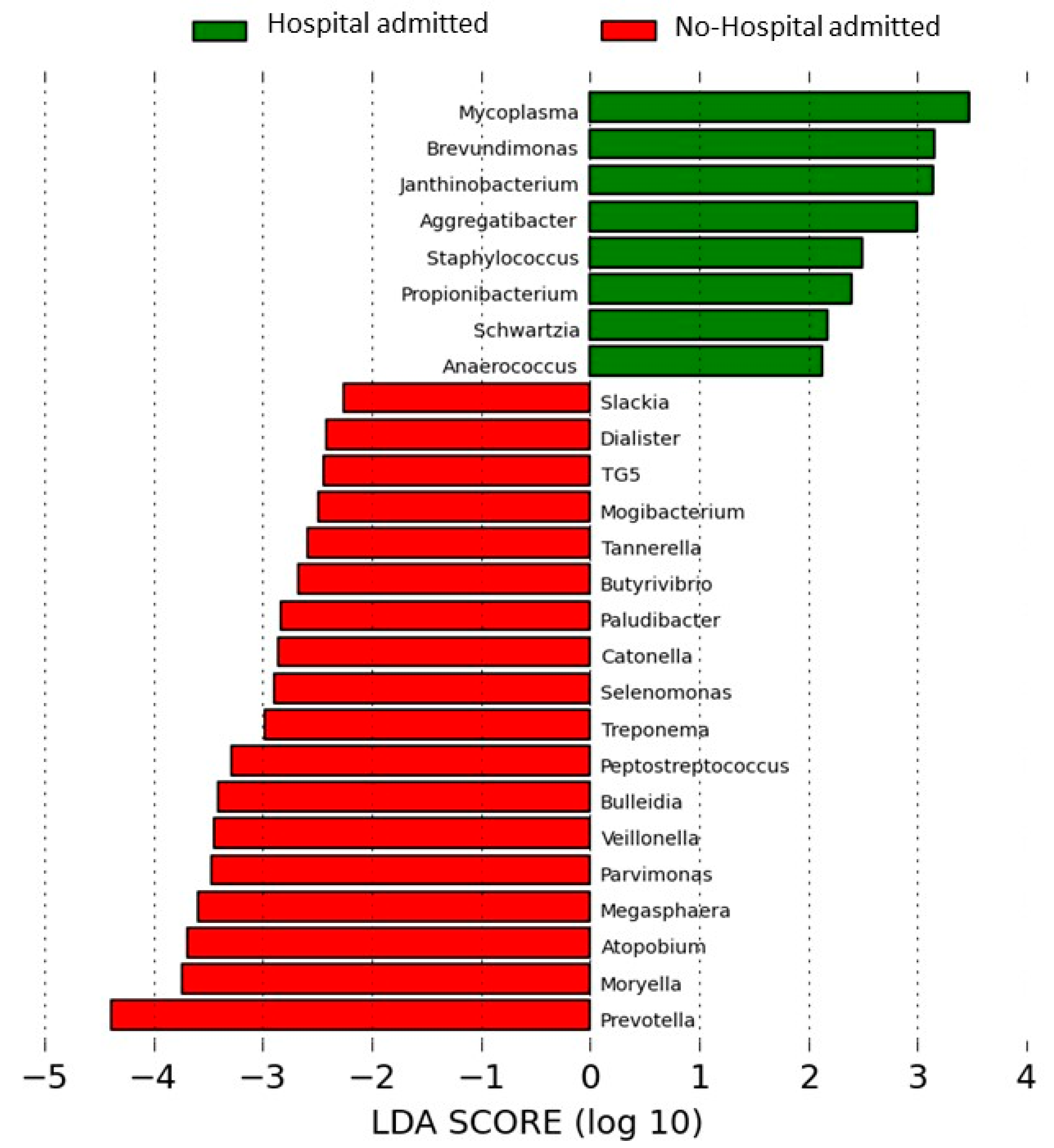
A significant difference in beta-diversities was also observed when admitted and non-admitted patients were compared (p = 0.004, PERMANOVA on unweighted unifrac), with a wide range of common taxa showing significant reductions in their RAs in sputum samples from COPD patients who had required an admission the previous year (Table 3), with a high effect size in LEfSe analysis (Figure 2). These findings confirm the wide effect of admissions on the bronchial flora.

2.3. Interbacterial Relationships in the Bronchial Microbiome

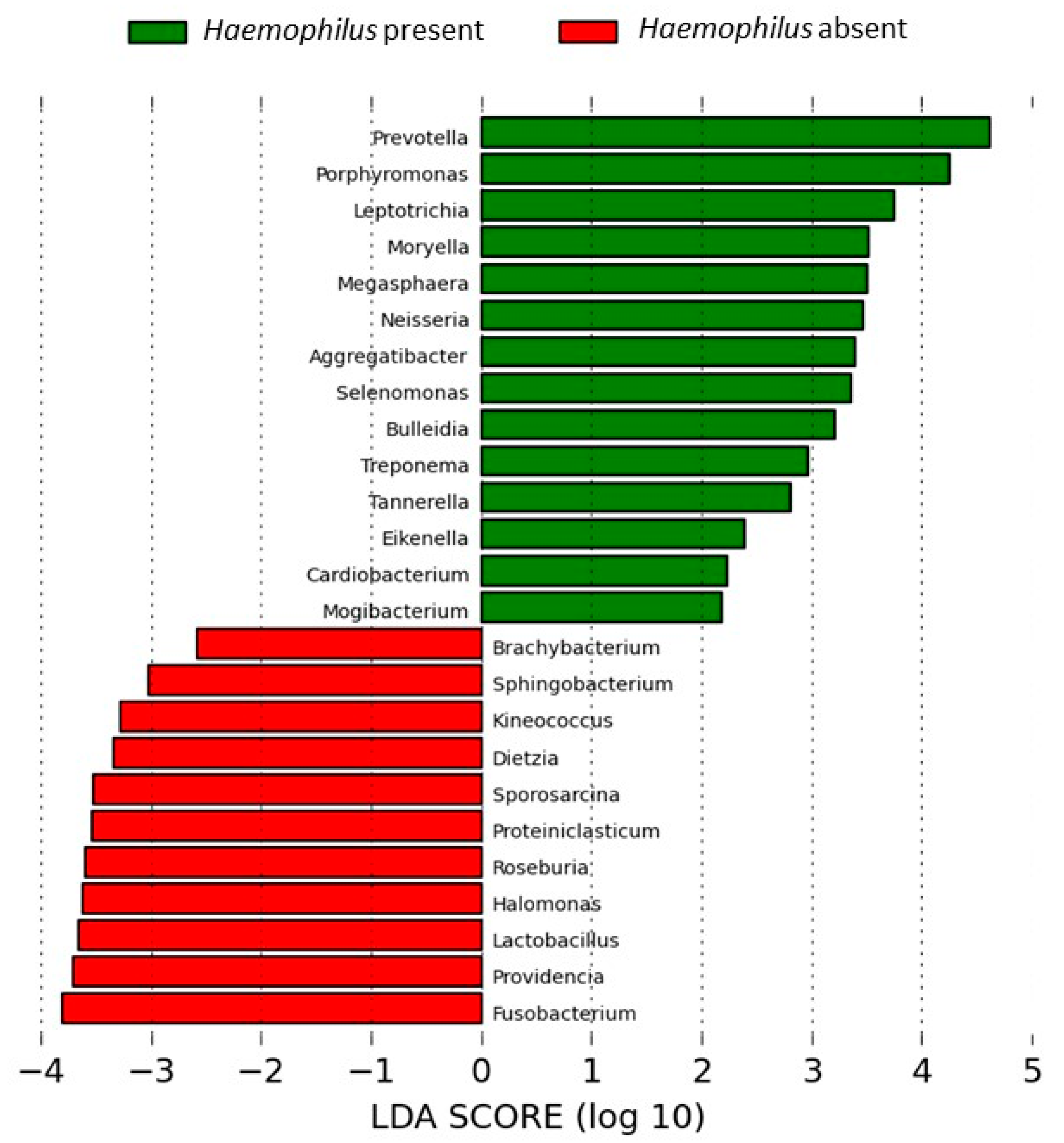
The presence of Haemophilus was significantly associated with higher RAs of Prevotella and six additional taxa from the common bronchial flora (Porphyromonas, Leptotrichia, Moryella, Megasphaera, Selenomonas and Bulleidia) (p < 0.05, Mann–Whitney U test). These overrepresentations showed a significant effect size in LEfSe analysis (Figure 3).
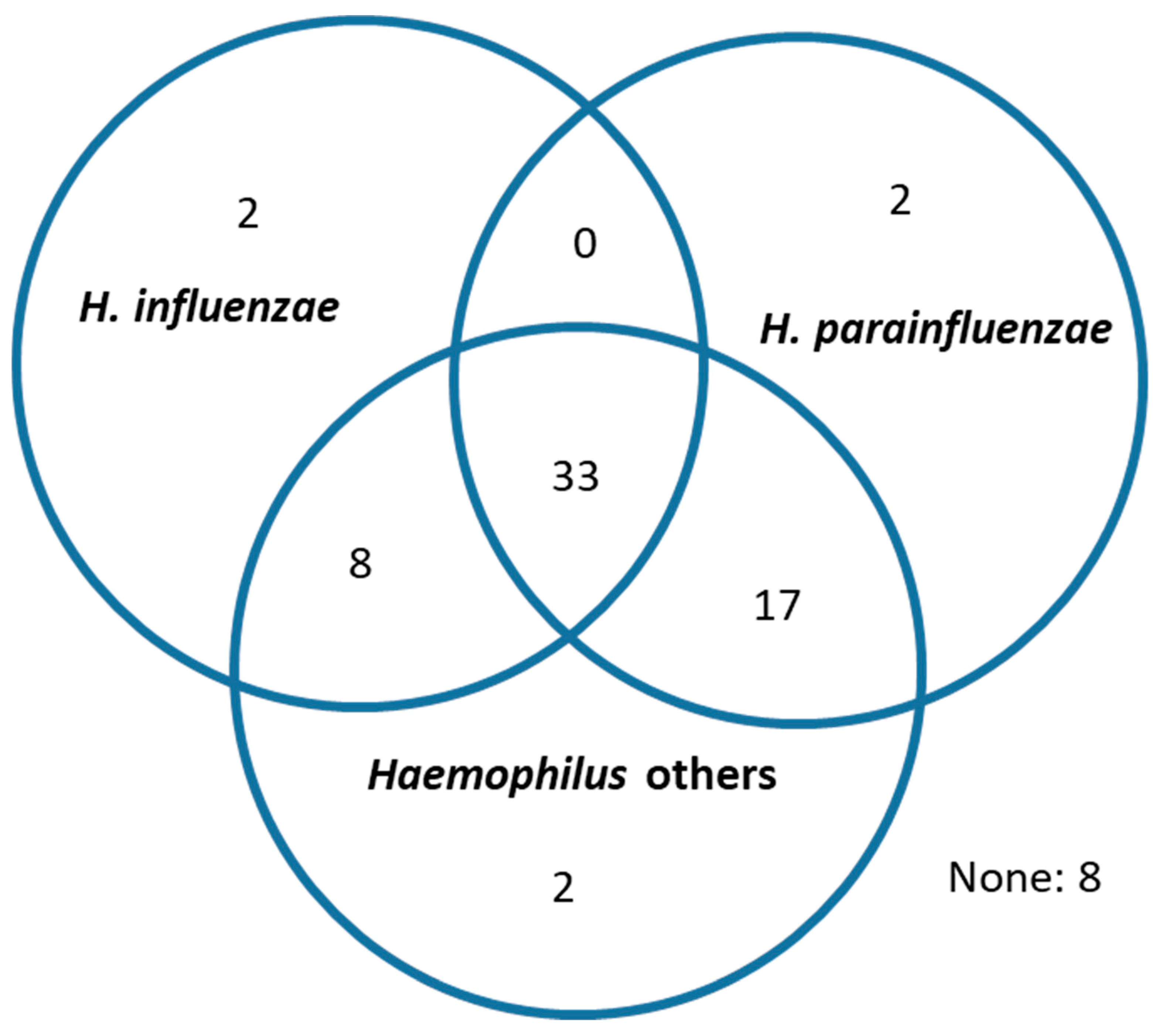
An identification of Haemophilus taxa at species level was partially attained for most patients. Haemophilus influenzae was identified in 43 (59.7%) while H. parainfluenzae and/or a mixture of other Haemophilus taxa was identified in 62 patients (86.1%). The genus was absent in eight of the enrolled patients (Table 4). The different Haemophilus taxa identified were simultaneously present in most patients (Figure 4), and the relationships observed between frequent exacerbations and Haemophilus cannot be specifically attributed to one particular species. The taxa associated with the H. parainfluenzae presence of Haemophilus showed a statistically significant relationship only with (p < 0.01, Mann–Whitney U test), and this relationship attained a significant effect size in LEfSe analysis.

2.4. Haemophilus-Related Taxa and Protein Biomarkers

Haemophilus RA was not significantly related to peripheral IL-8, but a negative and highly significant relationship was found between IL-8 level and the RAs of other components of the common flora such as Porphyromonas, Leptotrichia and Selenomonas (Spearman rho coefficient −0.3145 and −0.3255, p < 0.01, and −0.2658, p < 0.05, respectively). This association was also observed when the analysis of the different Haemophilus taxa was restricted to H. parainfluenzae (Spearman rho coefficient −0.3230, p < 0.01) (Supplementary Table S3).

3. Discussion

In the present COPD study, the clinical pattern of frequent exacerbations has been related to an increase in Pseudomonas RA in bronchial secretions, paralleled by a fall in the Haemophilus RA, while admission for one or more of these episodes was associated with a wider impact on the bronchial microbiome, with reductions in up to eight of the common taxa identified. Beta-diversity analyses confirmed the differences in the microbiomes in these clinical situations. Porphyromonas, Leptotrichia and Selenomonas, from the common genera in bronchial samples of the studied population, had RAs inversely related to IL-8 levels in peripheral blood, and this association was also found for H. parainfluenzae, a finding that may support an anti-inflammatory role for these components of the bronchial microbiome at a systemic level.
The common taxa present in the bronchial microbiome attained an RA approaching 50% in the studied population, with Rothia, Prevotella, Granulicatella, Fusobacterium and Porphyromonas emerging as the most representative genera, and a median RA of 0.19% for Haemophilus. This bronchial microbiome composition has a close similarity with results previously reported in moderate COPD patients [1,2,3,4,5]. Frequent exacerbators showed a significant impact on the bronchial microbiome, mainly attributable to an increase in the Pseudomonas genus and a decrease in the RA of Haemophilus, with significant effect sizes for both taxa in LEfSe analysis. An overrepresentation of Pseudomonas in bronchial secretions of patients reporting two or more exacerbations has been previously attributed to the severity of the disease and/or chronic colonization by this microorganism [25,26], but the relationships between Haemophilus and exacerbation patterns have given contradictory results in previous studies. Although RAs below 5% have been repeatedly reported in stable COPD patients [2,3,4,5], some studies have observed significant increases in this taxon in population samples enriched with frequent exacerbators, where Haemophilus had achieved RAs over 20% [6]. These studies included a high proportion of patients with three or more exacerbations in the previous year who may not be representative of the COPD population, and the characteristics of these population samples probably account for the observed differences.
In the present study a wide effect on the bronchial microbiome was observed in the participants who reported one or more hospital admissions in the previous year. As many as eight common taxa were significantly underrepresented in previously hospitalized patients, and this difference attained a significant effect size in LEfSe analysis. Frequent exacerbators and COPD patients with one or more admissions have been considered as a homogeneous population in previous publications and in some of the available guidelines [24,27], but the present results show that the effect of hospital admission on the bronchial flora is much wider than the changes in the microbiome induced by frequent exacerbations when an admission is not required. This finding suggests that considering frequent exacerbators and patients who require one or more admissions as a single group may be misleading.
Haemophilus was identified in nearly 90% of the participants in the present investigation, and a partial identification at species level was possible for most participants, who showed a predominance of H. parainfluenzae and other Haemophilus taxa over H. influenzae. Studies that have previously reported an overrepresentation of Haemophilus in the bronchial microbiome of COPD have focused on biased COPD populations with very high exacerbation frequencies, and have attributed the increase to H. influenzae [6,9,10]. The present study recruited COPD outpatients from different hospitals with a median exacerbation frequency of one episode in the previous year and included a quarter of frequent exacerbators, in closer similarity to the general COPD population [28]. The fall of Haemophilus taxa in bronchial secretions observed in patients reporting two or more exacerbations in the present analysis may suggest that species different from H. influenzae may first decrease when two or more exacerbations appear in the natural history of COPD patients. This pattern may move towards a progressive substitution by H. influenzae when the exacerbation frequency continues to increase at advanced stages, as suggested by Wang and cols., who have reported this partial substitution of H. parainfluenzae by H. influenzae when the severity of the COPD increases [17].
In the present study Haemophilus was associated with higher RAs of as many as seven common bronchial taxa, in agreement with previous analyses that have also shown a close association between Haemophilus and other genera commonly found in the respiratory system, such as Leptotrichia and Porphyromonas [27]. Various Haemophilus taxa were simultaneously present in most participants in the study, but H. parainfluenzae was the most prevalent and the only one showing a positive relationship with Prevotella, Porphyromonas, Leptotrichia, Moryella, Megasphaera, Selenomonas and Bulleidia, supporting the importance of H. parainfluenzae in the respiratory microbiome in stable COPD.
A negative and highly significant relationship was found between the RA of Porphyromonas, Leptotrichia and Selenomonas and the blood level of IL-8. The RA of Haemophilus in sputum was not significantly related to this protein biomarker, but H. parainfluenzae showed an equivalent correlation. Accordingly, the decline in these common respiratory taxa associated with frequent exacerbations may be associated with an increase in IL-8 in peripheral blood, which will enhance the systemic effects of this cytokine, which is a well-known chemoattractant for inflammatory cells [29]. The negative correlation between H. parainfluenzae and IL-8 levels is consistent with previous observations in bronchial secretions [15,17,30], which may be reversed in patients who change their bronchial microbiome to an overrepresentation of H. influenzae, who would increase their IL-8 levels in sputum [30,31]. Accordingly, any increase in the RA of Haemophilus in bronchial secretions may have opposite effects depending on the predominant species, with a potential protective effect when H. parainfluenzae is more prevalent, identifiable in peripheral samples, and an enhanced inflammatory response when H. influenzae attain an overrepresentation.
The performed analysis has some limitations that need to be pointed out. First, frequent exacerbation is a well-known clinical characteristic of severe COPD that requires chronic treatment with inhaled corticosteroids. Accordingly, the observed effect of frequent exacerbations on the bronchial microbiome may be attributable to the severity of the disease and/or its treatment. The marked collinearity between these variables makes it impossible to independently assess their effects on the bronchial flora. Second, the characterization of the Haemophilus taxon at species level using 16S rRNA gene sequencing, possible in most cases [32], sometimes could be difficult, and a partial misidentification at species level is a possibility that needs to be taken into account [33]. The taxonomy of the genus can be improved through quantitative PCR or culture, when enough sample is available [6,10]. The present study was based on 16S rRNA sequencing, without additional bronchial material available for extended species analyses. Although most of the Haemophilus taxa could be identified at species level, for a fraction of the Haemophilus operational taxonomic units the identification at that level was not attained, and these units were not considered for the analysis focused on the species level. Accordingly, the associations of H. parainfluenzae with the different variables analyzed in the present study must be considered exploratory.

4. Material and Methods

4.1. Study Design and Ethics

This cross-sectional analysis is part of the BIOMEPOC project, a prospective multicenter study described in detail elsewhere [34]. Briefly, the aim of BIOMEPOC is to identify the bronchial microbiome and circulating biomarkers in stable COPD patients to characterize more accurately the relationships between the respiratory flora and the different phenotypes of the disease. The study included a total of 269 patients and 83 controls. The protocol was approved by the local ethics committees from the seven teaching hospitals participating in the study. The investigation was conducted in accord with the Declaration of Helsinki and informed written consent was obtained from all participants.

4.2. Population

The present study was performed in a subsample of 72 consecutive patients enrolled at five of the participating hospitals (Hospital Parc Taulí, Hospital Clínic, Hospital 12 Octubre, Fundación Jimenez Díaz and Hospital Son Espases) from whom spontaneous sputum samples were available for microbiome analyses and blood samples for protein biomarker measurements obtained the same day. This study population comprised a cohort of stable COPD patients who were current or former smokers (≥10 pack-year) and were attending the outpatient clinics of the participating hospitals between 2014 and 2016. Diagnosis of COPD and its severity was established in accordance with the Global Initiative for Chronic Obstructive Lung Disease (GOLD) criteria [24]. Exclusion criteria were age ≤ 40 years, a lifetime diagnosis of asthma, cystic fibrosis, bronchiectasis or cancer, administration of long-term treatment with oral corticosteroids or immunosuppressants, any comorbidity limiting cognitive capabilities, one acute episode severe enough to require more than 30 days of hospitalization in the previous year and/or unstable disease which required short-term antibiotics and/or corticosteroids during the previous three months.

4.3. Variables and Measurements

Sociodemographic data were recorded by specific questionnaires. Lung function values during stability were obtained from the most recently available forced spirometry with reversibility testing performed in accordance with standard techniques. Episodes of increased dyspnea, sputum production and/or purulence during the previous year were identified and considered as exacerbations when treated with antibiotics and/or corticosteroids [35]. Participants who reported ≥2 exacerbations in the previous twelve months were considered as frequent exacerbators [28,36], and exacerbation episodes severe enough to require hospitalization for more than one day were considered hospital admissions.

4.4. Sputum and Blood Collection and Processing

Spontaneous sputum samples were collected and processed within 60 min on the day of the visit. Sputum quality was assessed according to Murray–Washington criteria [37] and only samples with >25 leucocytes per field were considered for the study. Sputum samples were processed for microbiome analysis as described previously [38].
Blood samples were obtained by peripheral venepuncture and placed in K3-ethylenediaminetetraacetic acid tubes for plasma analyses. All tubes were centrifuged at 1500× g for 15 min at 4 °C and supernatants were transferred to new tubes and stored at −80 °C until proteomic analyses, following previously specified protocols [39]. The approach covers 58 distinct protein biomarkers (cytokines, growth factors and acute phase proteins), which were assessed simultaneously [39]. The current study focused on peripheral blood IL-8 levels.
Bacterial 16SrRNA datasets from this study are accessible in the European Nucleotide Archive under the study PRJEB26773 with the sample numbers ERS2486515-609 (https://www.ebi.ac.uk/ena/browser/view/PRJEB26773 (accessed on 17 December 2025)).

4.5. Statistical Analyses

Categorical variables are expressed as absolute and relative frequencies and continuous variables as means and SD when the distribution is normal or as medians and IQRs otherwise. Correlations were assessed by Spearman rho correlation coefficients and comparisons between subgroups were assessed using Mann–Whitney U test for continuous variables. Patients reporting two or more exacerbations were considered frequent exacerbators and participants with one or more previous hospitalizations were considered as admitted patients. Spontaneous sputum samples were considered representative of bronchial secretions, and microbiome analyses were restricted to taxa that were present in ≥80% of the participants and showed RAs ≥ 0.1% [40,41], which were considered common taxa for the purposes of the study. Permutational analysis of variance [PERMANOVA] on unweighted UniFrac was used to compare beta-diversities of the microbial communities, and linear discriminant effect size (LEfSe) with a threshold value of 2.0 was used to explore differentially abundant taxa that explained discrepancies between groups [42,43]. IL-8 quantitation values were log-transformed to decrease their distribution skewness and make them suitable to parametric analysis [38].
Statistical tests used in the study were two-sided, and a p-value ≤ 0.05 was reported as statistically significant. Analyses were performed using the SPSS statistical software package version 29 (SPSS Inc., Chicago, IL, USA).

5. Conclusions

The present study shows that a clinical pattern of frequent exacerbations in COPD is related to a change in the bronchial microbiome, wider when hospital admissions are needed. The presence of Haemophilus was significantly associated with higher RAs of Prevotella, Porphyromonas, Leptotrichia, Moryella, Megasphaera, Selenomonas and Bulleidia, all part of the common bronchial flora. Higher RAs of Porphyromonas, Leptotrichia and Selenomonas were associated with lower IL-8 levels in peripheral blood. This relationship was also found for H. parainfluenzae as the main Haemophilus species identified in the studied COPD population. These findings suggest that part of the common components of the bronchial microbiome may have an anti-inflammatory role at a systemic level, a potential protective effect that would need additional prospective studies to be confirmed.

Supplementary Materials

The following supporting information can be downloaded at: https://www.mdpi.com/article/10.3390/ijms27083416/s1.

Author Contributions

E.M., conceptualization, methodology, formal analysis, investigation, resources, data curation, administration, writing, supervision and funding; C.C., methodology, formal analysis, investigation, data curation and writing; S.Q., methodology, formal analysis, investigation, data curation and writing; S.P.-G., investigation and writing; C.J.E.-R., methodology, formal analysis, investigation, data curation and writing; L.M., methodology, formal analysis, investigation and writing; C.M., investigation and writing; R.F., methodology, investigation, administration and writing; S.C., investigation and writing; L.M.S., investigation and writing; A.C.-A., investigation and writing; C.A.-M., investigation and writing; O.S., investigation, administration and writing; G.P.-B., investigation and writing; B.G.C., investigation and writing; A.A., conceptualization, methodology, resources, writing, supervision and funding; J.G., conceptualization, methodology, formal analysis, resources, administration, writing, supervision and funding. All authors have read and agreed to the published version of the manuscript.

Funding

This study was funded by FIS PI15/00167, PI15/02042 and PI 18/00934 from Instituto de Salud Carlos III (ISCIII), SAF 2014-54371 (FEDER) from Ministerio de Economía y Competitividad, Sociedad Española de Neumología y Cirugía Torácica (SEPAR), Laboratorios Menarini S.A, Fundació Pla Armengol, Centro de Investigación Biomédica en Red Area de Enfermedades Respiratorias (CIBERES). CIBERES is an initiative of the Instituto de Salud Carlos III (ISCIII), and Agència de Gestió d’Ajuts Universitaris i de Recerca—Generalitat de Catalunya. César Jessé Enríquez-Rodríguez held a predoctoral fellowship (PFIS, ref. FI22/00003) awarded by ISCIII and co-funded by the European Union.

Institutional Review Board Statement

The protocol was approved by the local ethics committee of the Hospital Universitari Parc Tauli, Sabadell, as coordinating center for the present analysis (reference 2014662, 21 January 2015), and by the six additional teaching hospitals participating in the study (Hospital Son Espases, Palma; Fundación Jiménez Díaz, Madrid; Hospital Clínic, Barcelona; Hospital Universitario Virgen del Rocío, Seville; Hospital 12 de Octubre; Madrid and Hospital del Mar, Barcelona). The investigation was conducted in accord with the Declaration of Helsinki and informed written consent was obtained from all participants.

Informed Consent Statement

The investigation was conducted in accord with the Declaration of Helsinki and informed written consent was obtained from all participants.

Data Availability Statement

Bacterial 16SrRNA datasets from this study are accessible in the European Nucleotide Archive under the study PRJEB26773 with the sample numbers ERS2486515-609 (https://www.ebi.ac.uk/ena/browser/view/PRJEB26773 (accessed on 17 December 2025)).

Acknowledgments

The authors thank participants for their willingness to contribute to medical research and Michael Maudsley for providing an outline for this manuscript.

Conflicts of Interest

B Cosio declares grants from Chiesi and GSK; personal fees for advisory board activities from Chiesi, GSK, Novartis, Sanofi, Teva, and AstraZeneca; and payment for lectures/speaking engagements from Chiesi, Novartis, GSK, Menarini, AstraZeneca, and Sanofi outside the submitted work. J Gea declares unrestricted grants from Menarini (Spain), GSK (Spain) and Teva (Israel) but has no conflicts of interest related to the present article. G Peces-Barba declares unrestricted grants from Menarini, GSK and Chiesi in the last 3 years, but without conflicts of interest related to the present article. The remaining authors declare that they have no competing interests related to the present article.

References

  1. Galiana, A.; Aguirre, E.; Rodriguez, J.C.; Mira, A.; Santibañez, M.; Candela, I.; Llavero, J.; Garcinuño, P.; López, F.; Ruiz, M.; et al. Sputum microbiota in moderate versus severe patients with COPD. Eur. Respir. J. 2014, 43, 1787–1790. [Google Scholar] [CrossRef] [PubMed]
  2. Ramsheh, M.Y.; Haldar, K.; Esteve-Codina, A.; Purser, L.F.; Richardson, M.; Müller-Quernheim, J.; Greulich, T.; Nowinski, A.; Barta, I.; Stendardo, M.; et al. Lung microbiome composition and bronchial epithelial gene expression in patients with COPD versus healthy individuals: A bacterial 16S rRNA gene sequencing and host transcriptomic analysis. Lancet Microbe 2021, 2, e300–e310. [Google Scholar] [CrossRef]
  3. Pragman, A.A.; Lyu, T.; Baller, J.A.; Gould, T.J.; Kelly, R.F.; Reilly, C.S.; Isaacson, R.E.; Wendt, C.H. The lung tissue microbiota of mild and moderate chronic obstructive pulmonary disease. Microbiome 2018, 6, 7. [Google Scholar] [CrossRef]
  4. Einarsson, G.G.; Comer, D.M.; McIlreavey, L.; Parkhill, J.; Ennis, M.; Tunney, M.M.; Elborn, J.S. Community dynamics and the lower airway microbiota in stable chronic obstructive pulmonary disease, smokers and healthy non-smokers. Thorax 2016, 71, 795–803. [Google Scholar] [CrossRef]
  5. Tangedal, S.; Nielsen, R.; Aanerud, M.; Persson, L.J.; Wiker, H.G.; Bakke, P.S.; Hiemstra, P.S.; Eagan, T.M. Sputum microbiota and inflammation at stable state and during exacerbations in a cohort of chronic obstructive pulmonary disease (COPD) patients. PLoS ONE 2019, 14, e0222449. [Google Scholar] [CrossRef]
  6. Dicker, A.J.; Huang, J.T.J.; Lonergan, M.; Keir, H.R.; Fong, C.J.; Tan, B.; Cassidy, A.J.; Finch, S.; Mullerova, H.; Miller, B.E.; et al. The sputum microbiome, airway inflammation, and mortality in chronic obstructive pulmonary disease. J. Allergy Clin. Immunol. 2021, 147, 158–167. [Google Scholar] [CrossRef]
  7. Viglino, J.; Perea, L.; Garcia-Nuñez, M.; Rodrigo-Troyano, A.; Torrego, A.; Domínguez-Alvarez, M.; Villar, J.; Carrizosa, X.; Quero, S.; Gabaldon, T.; et al. Characterisation of the gut-lung axis microbiome in clinically stable patients with chronic obstructive pulmonary disease. EBioMedicine 2026, 123, 106099. [Google Scholar] [CrossRef]
  8. Leitao Filho, F.S.; Alotaibi, N.M.; Ngan, D.; Tam, S.; Yang, J.; Hollander, Z.; Chen, V.; FitzGerald, J.M.; Nislow, C.; Leung, J.M.; et al. Sputum Microbiome Is Associated with 1-Year Mortality after Chronic Obstructive Pulmonary Disease Hospitalizations. Am. J. Respir. Crit. Care Med. 2019, 199, 1205–1213. [Google Scholar] [CrossRef]
  9. Wilkinson, T.M.A.; Aris, E.; Bourne, S.; Clarke, S.C.; Peeters, M.; Pascal, T.G.; Schoonbroodt, S.; Tuck, A.C.; Kim, V.; Ostridge, K.; et al. A prospective, observational cohort study of the seasonal dynamics of airway pathogens in the aetiology of exacerbations in COPD. Thorax 2017, 72, 919–927. [Google Scholar] [CrossRef] [PubMed]
  10. Wang, Z.; Locantore, N.; Haldar, K.; Ramsheh, M.Y.; Beech, A.S.; Ma, W.; Brown, J.R.; Tal-Singer, R.; Barer, M.R.; Bafadhel, M.; et al. Inflammatory Endotype-associated Airway Microbiome in Chronic Obstructive Pulmonary Disease Clinical Stability and Exacerbations: A Multicohort Longitudinal Analysis. Am. J. Respir. Crit. Care Med. 2021, 203, 1488–1502. [Google Scholar] [CrossRef] [PubMed]
  11. Wilkinson, T.M.A.; Aris, E.; Bourne, S.C.; Clarke, S.C.; Peeters, M.; Pascal, T.G.; Taddei, L.; Tuck, A.C.; Kim, V.L.; Ostridge, K.K.; et al. Drivers of year-to-year variation in exacerbation frequency of COPD: Analysis of the AERIS cohort. ERJ Open Res. 2019, 5, 00248-2018, Erratum in ERJ Open Res. 2019, 5, 00248-2018-AUT. [Google Scholar] [CrossRef] [PubMed]
  12. Kosikowska, U.; Biernasiuk, A.; Korona-Głowniak, I.; Kiciak, S.; Tomasiewicz, K.; Malm, A. The Association of Chronic Hepatitis C with Respiratory Microbiota Disturbance on the Basis of Decreased Haemophilus spp. Colonization. Med. Sci. Monit. 2016, 22, 625–632. [Google Scholar] [PubMed]
  13. Kosikowska, U.; Biernasiuk, A.; Rybojad, P.; Łoś, R.; Malm, A. Haemophilus parainfluenzae as a marker of the upper respiratory tract microbiota changes under the influence of preoperative prophylaxis with or without postoperative treatment in patients with lung cancer. BMC Microbiol. 2016, 16, 62. [Google Scholar] [CrossRef]
  14. Patel, I.S.; Seemungal, T.A.R.; Wilks, M.; Lloyd-Owen, S.J.; Donaldson, G.C.; Wedzicha, J.A. Relationship between bacterial colonisation and the frequency, character, and severity of COPD exacerbations. Thorax 2002, 57, 759–764. [Google Scholar] [CrossRef]
  15. Marin, A.; Monsó, E.; Garcia-Nuñez, M.; Sauleda, J.; Noguera, A.; Pons, J.; Agustí, A.; Morera, J. Variability and effects of bronchial colonisation in patients with moderate COPD. Eur. Respir. J. 2010, 35, 295–302. [Google Scholar]
  16. Choi, Y.J.; Park, H.J.; Kim, C.Y.; Choi, A.; Cho, J.H.; Byun, M.K. Dynamic microbial changes in exacerbation of chronic obstructive pulmonary disease. Front. Microbiol. 2024, 15, 1507090. [Google Scholar] [CrossRef]
  17. Wang, Z.; Liu, H.; Wang, F.; Yang, Y.; Wang, X.; Chen, B.; Stampfli, M.R.; Zhou, H.; Shu, W.; Brightling, C.E.; et al. A Refined View of Airway Microbiome in Chronic Obstructive Pulmonary Disease at Species and Strain-Levels. Front. Microbiol. 2020, 11, 1758. [Google Scholar] [CrossRef]
  18. Cosío, B.G.; Jahn, A.; Iglesias, A.; Shafiek, H.; Busquets, X.; Agustí, A. Haemophilus influenzae induces steroidresistant inflammatory responses in COPD. BMC Pulm. Med. 2015, 15, 157. [Google Scholar] [CrossRef] [PubMed]
  19. Saliu, F.; Rizzo, G.; Bragonzi, A.; Cariani, L.; Cirillo, D.M.; Colombo, C.; Girelli, D.; Rizzetto, S.; Sipione, B.; Cigana, C.; et al. Chronic infection by nontypeable Haemophilus influenzae fuels airway inflammation. ERJ Open Res. 2021, 7, 00614-2020. [Google Scholar]
  20. Short, B.; Carson, S.; Devlin, A.C.; Reihill, J.A.; Crilly, A.; MacKay, W.; Ramage, G.; Williams, C.; Lundy, F.T.; McGarvey, L.P.; et al. Non-typeable Haemophilus influenzae chronic colonization in chronic obstructive pulmonary disease (COPD). Crit. Rev. Microbiol. 2021, 47, 192–205. [Google Scholar] [CrossRef]
  21. Murphy, T.F.; Kirkham, C.; D’Mello, A.; Sethi, S.; Pettigrew, M.M.; Tettelin, H. Adaptation of Nontypeable Haemophilus influenzae in Human Airways in COPD: Genome Rearrangements and Modulation of Expression of HMW1 and HMW2. mBio 2023, 14, e0014023. [Google Scholar] [CrossRef]
  22. Weeks, J.R.; Staples, K.J.; Spalluto, C.M.; Watson, A.; Wilkinson, T.M.A. The Role of Non-Typeable Haemophilus influenzae Biofilms in Chronic Obstructive Pulmonary Disease. Front. Cell. Infect. Microbiol. 2021, 11, 720742. [Google Scholar] [CrossRef]
  23. Miravitlles, M.; Marín, A.; Monsó, E.; Vilà, S.; de la Roza, C.; Hervás, R.; Esquinas, C.; García, M.; Millares, L.; Morera, J.; et al. Efficacy of moxifloxacin in the treatment of bronchial colonisation in COPD. Eur. Respir. J. 2009, 34, 1066–1071. [Google Scholar] [CrossRef]
  24. Global Initiative for Chronic Obstructive Lung Disease. Global Strategy for the Diagnosis, Management, and Prevention of Chronic Obstructive Pulmonary Disease. 2025 Report. Available online: https://www.goldcopd.org/ (accessed on 17 December 2025).
  25. Martinez-García, M.A.; Rigau, D.; Barrecheguren, M.; García-Ortega, A.; Nuñez, A.; Oscullo Yepez, G.; Miravitlles, M. Long-Term Risk of Mortality Associated with Isolation of Pseudomonas aeruginosa in COPD: A Systematic Review and Meta-Analysis. Int. J. Chron. Obstruct. Pulmon. Dis. 2022, 17, 371–382. [Google Scholar] [CrossRef]
  26. Millares, L.; Ferrari, R.; Gallego, M.; Garcia-Nuñez, M.; Pérez-Brocal, V.; Espasa, M.; Pomares, X.; Monton, C.; Moya, A.; Monsó, E. Bronchial microbiome of severe COPD patients colonised by Pseudomonas aeruginosa. Eur. J. Clin. Microbiol. Infect. Dis. 2014, 33, 1101–1111. [Google Scholar] [CrossRef]
  27. Yang, C.-Y.; Li, S.-W.; Chin, C.-Y.; Hsu, C.-W.; Lee, C.-C.; Yeh, Y.-M.; Wu, K.-A. Association of exacerbation phenotype with the sputum microbiome in chronic obstructive pulmonary disease patients during the clinically stable state. J. Transl. Med. 2021, 19, 121. [Google Scholar] [CrossRef] [PubMed]
  28. Hurst, J.R.; Vestbo, J.; Anzueto, A.; Locantore, N.; Müllerova, H.; Tal-Singer, R.; Miller, B.; Lomas, D.A.; Agusti, A.; MacNee, W.; et al. Susceptibility to exacerbation in chronic obstructive pulmonary disease. N. Engl. J. Med. 2010, 363, 1128–1138. [Google Scholar] [CrossRef] [PubMed]
  29. Chung, K.F. Cytokines in chronic obstructive pulmonary disease. Eur. Respir. J. 2001, 34, 50s–59s. [Google Scholar] [CrossRef]
  30. Wang, Z.; Bafadhel, M.; Haldar, K.; Spivak, A.; Mayhew, D.; Miller, B.E.; Tal-Singer, R.; Johnston, S.L.; Ramsheh, M.Y.; Barer, M.R.; et al. Lung microbiome dynamics in COPD exacerbations. Eur. Respir. J. 2016, 47, 1082–1092. [Google Scholar] [CrossRef]
  31. Tufvesson, E.; Bjermer, L.; Ekberg, M. Patients with chronic obstructive pulmonary disease and chronically colonized with Haemophilus influenzae during stable disease phase have increased airway inflammation. Int. J. Chron. Obstruct. Pulmon. Dis. 2015, 10, 881–889. [Google Scholar] [CrossRef]
  32. Zhang, M.; Zhang, Y.; Han, Y.; Zhao, X.; Sun, Y. Characteristics of pathogenic microbes in lung microenvironment of lung cancer patients without respiratory infection. J. BUON 2021, 26, 1862–1870. [Google Scholar]
  33. Norskov-Lauritsen, N. Classification, identification, and clinical significance of Haemophilus and Aggregatibacter species with host specificity for humans. Clin. Microbiol. Rev. 2014, 27, 214–240. [Google Scholar] [CrossRef]
  34. Gea, J.; Pascual, S.; Castro-Acosta, A.; Hernández-Carcereny, C.; Castelo, R.; Márquez-Martín, E.; Montón, C.; Palou, A.; Faner, R.; Furlong, L.I.; et al. The BIOMEPOC Project: Personalized Biomarkers and Clinical Profiles in Chronic Obstructive Pulmonary Disease. Arch. Bronconeumol. 2019, 55, 93–99. [Google Scholar] [CrossRef] [PubMed]
  35. Rodriguez-Roisin, R. Toward a consensus definition for COPD exacerbations. Chest 2000, 117, 398S–401S. [Google Scholar] [CrossRef] [PubMed]
  36. Cheng, Y.; Tu, X.; Pan, L.; Lu, S.; Xing, M.; Li, L.; Chen, X. Clinical characteristics of chronic bronchitic, emphysematous and ACOS phenotypes in COPD patients with frequent exacerbations. Int. J. Chron. Obstruct. Pulmon. Dis. 2017, 12, 2069–2074. [Google Scholar] [CrossRef] [PubMed]
  37. Murray, P.R.; Washington, J.A. Microscopic and baceriologic analysis of expectorated sputum. Mayo Clin. Proc. 1975, 50, 339–344. [Google Scholar] [CrossRef]
  38. Millares, L.; Pascual, S.; Montón, C.; García-Núñez, M.; Lalmolda, C.; Faner, R.; Casadevall, C.; Setó, L.; Capilla, S.; Moreno, A.; et al. Relationship between the respiratory microbiome and the severity of airflow limitation, history of exacerbations and circulating eosinophils in COPD patients. BMC Pulm. Med. 2019, 19, 112. [Google Scholar] [CrossRef]
  39. Enríquez-Rodríguez, C.J.; Casadevall, C.; Faner, R.; Castro-Costa, A.; Pascual-Guàrdia, S.; Seijó, L.; López-Campos, J.L.; Peces-Barba, G.; Monsó, E.; Barreiro, E.; et al. COPD: Systemic proteomic profiles in frequent and infrequent exacerbators. ERJ Open Res. 2024, 10, 00004–2024. [Google Scholar] [CrossRef]
  40. Teo, S.M.; Tang, H.H.F.; Mok, D.; Judd, L.M.; Watts, S.C.; Pham, K.; Holt, B.J.; Kusel, M.; Serralha, M.; Troy, N.; et al. Airway Microbiota Dynamics Uncover a Critical Window for Interplay of Pathogenic Bacteria and Allergy in Childhood Respiratory Disease. Cell Host Microbe 2018, 24, 341–352. [Google Scholar] [CrossRef]
  41. Choo, J.M.; Abell, G.C.J.; Thomson, R.; Morgan, L.; Waterer, G.; Gordon, D.L.; Taylor, S.L.; Leong, L.E.X.; Wesselingh, S.L.; Burr, L.D.; et al. Impact of Long-Term Erythromycin Therapy on the Oropharyngeal Microbiome and Resistance Gene Reservoir in Non-Cystic Fibrosis Bronchiectasis. mSphere 2018, 3, e00103-18. [Google Scholar] [CrossRef]
  42. Hu, Y.-J.; Satten, G.A. A rarefaction-without-resampling extension of PERMANOVA for testing presence-absence associations in the microbiome. Bioinformatics 2022, 38, 3689–3697. [Google Scholar] [CrossRef] [PubMed]
  43. Segata, N.; Izard, J.; Waldron, L.; Gevers, D.; Miropolsky, L.; Garrett, W.S.; Huttenhower, C. Metagenomic biomarker discovery and explanation. Genome Biol. 2011, 12, R60. [Google Scholar] [CrossRef] [PubMed]
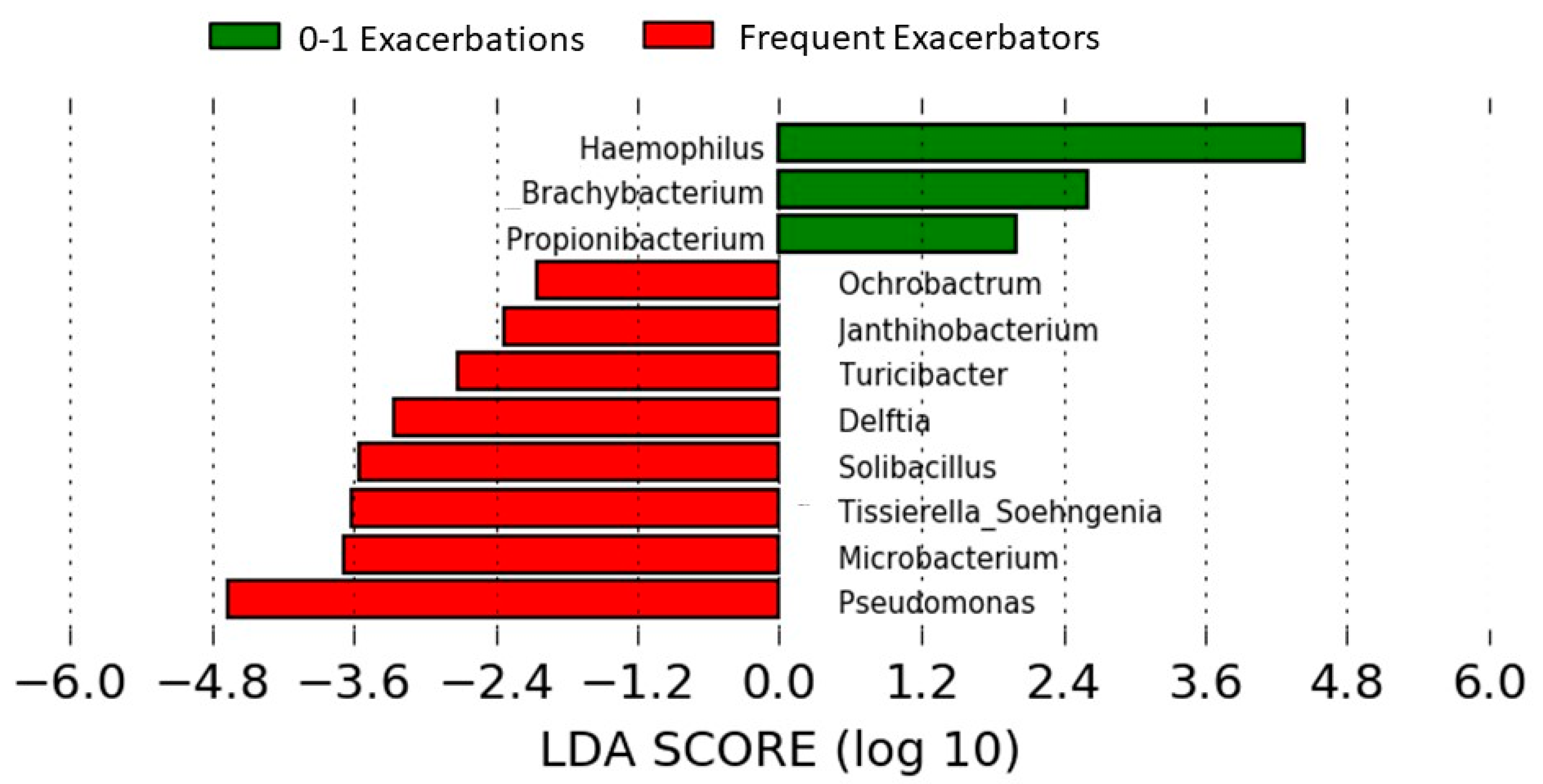
Figure 1. Effect of frequent exacerbations on microbiome diversity. Comparison of patients reporting two or more exacerbations the previous year with infrequent exacerbators. LEfSe analysis.
Ijms 27 03416 g001
Figure 2. Effect of previous hospitalization on microbiome diversity. Comparison of hospital-admitted and non-admitted patients in the previous year. LEfSe analysis.
Ijms 27 03416 g002
Figure 3. Taxa associated with Haemophilus genus. LEfSe analysis.
Ijms 27 03416 g003
Figure 4. Haemophilus taxa present in bronchial secretions. “Haemophilus others” refers to species other than influenzae and parainfluenzae and taxa unidentified at species level (n = 72).
Ijms 27 03416 g004
Table 1. Demographic and clinical characteristics.
n72
Age, mean (SD)68 (7.9)
Gender (male), n (%)64 (88.9)
Cumulative smoking (pack-year), median (IQR)60 (45–80)
Postbronchodilator FEV1%, median (IQR)44 (33–60)
Airflow limitation severity (GOLD criteria) [24], n (%)
   Mild6 (8.3)
   Moderate20 (27.8)
   Severe35 (48.6)
   Very severe11 (15.3)
Clinical pattern (previous year)
   Exacerbations, median [IQR]1 (0–2)
   Frequent exacerbators (≥2/year), n (%)20 (27.8)
   Hospital admissions, median [IQR]0 (0–1)
   Hospital admission (≥1/year), n (%)31 (43)
Table 2. Relative abundance of the genera detected. Only genera appearing with median relative abundances > 0.1% in more than 80% of the participants are shown.
GeneraRelative Abundance, Median [IQR]
Rothia18.20 [9.62–30.08]
Prevotella7.44 [3.27–14.97]
Granulicatella4.42 [2.21–6.57]
Fusobacterium2.23 [0.27–3.85]
Porphyromonas1.97 [0.14–8.13]
Streptococcus1.92 [1.25–3.22]
Actinomyces1.80 [0.56–4.19]
Pseudomonas1.35 [0.43–6.21]
Veillonella1.00 [0.50–1.40]
Atopobium0.69 [0.30–1.51]
Oribacterium0.62 [0.19–1.23]
Leptotrichia0.51 [0.10–1.71]
Moryella0.35 [0.06–0.88]
Campylobacter0.35 [0.10–0.76]
Megasphaera0.25 [0.03–1.15]
Bulleidia0.20 [0.05–0.85]
Haemophilus0.19 [0.05–1.20]
Selenomonas0.18 [0.04–0.61]
Lactobacillus0.12 [0.01–1.03]
Parvimonas0.11 [0.01–0.51]
Table 3. Relative abundances of taxa significantly associated with previous hospital admission in bronchial secretions (median [IQR]). Only taxa with median relative abundances > 0.1 in more than 80% of the participants are considered.
Previous Admission
AbsentPresentMann–Whitney U Test
Prevotella9.32 [4.54–17.23]4.66 [0.93–12.49]0.031
Moryella0.59 [0.12–1.23]0.27 [0–0.68]0.028
Atopobium1.14 [0.42–2.294]0.52 [0.24–1.13]0.007
Megasphaera0.36 [0.084–1.5]0.1 [0–0.51]0.016
Parvimonas0.19 [0.02–0.6]0.04 [0–0.16]0.018
Veillonella1.19 [0.61–1.68]0.77 [0.41–1.17]0.047
Bulleidia0.45 [0.1–1.15]0.08 [0.01–0.34]0.003
Selenomonas0.26 [0.07–0.64]0.09 [0.01–0.36]0.043
Table 4. Prevalence of identified Haemophilus species in the studied population (n = 72). Relative abundance median and interquartile range given for patients with the species present in the sample.
Haemophilus TaxaAbsolute FrequencyRelative Abundance
Median [IQR]
H. influenzae430.74 [0.36–2.52]
H. parainfluenzae520.27 [0.17–0.48]
Other Haemophilus taxa480.32 [0.2–0.54]
Haemophilus species unidentified490.32 [0.22–0.59]
Disclaimer/Publisher’s Note: The statements, opinions and data contained in all publications are solely those of the individual author(s) and contributor(s) and not of MDPI and/or the editor(s). MDPI and/or the editor(s) disclaim responsibility for any injury to people or property resulting from any ideas, methods, instructions or products referred to in the content.