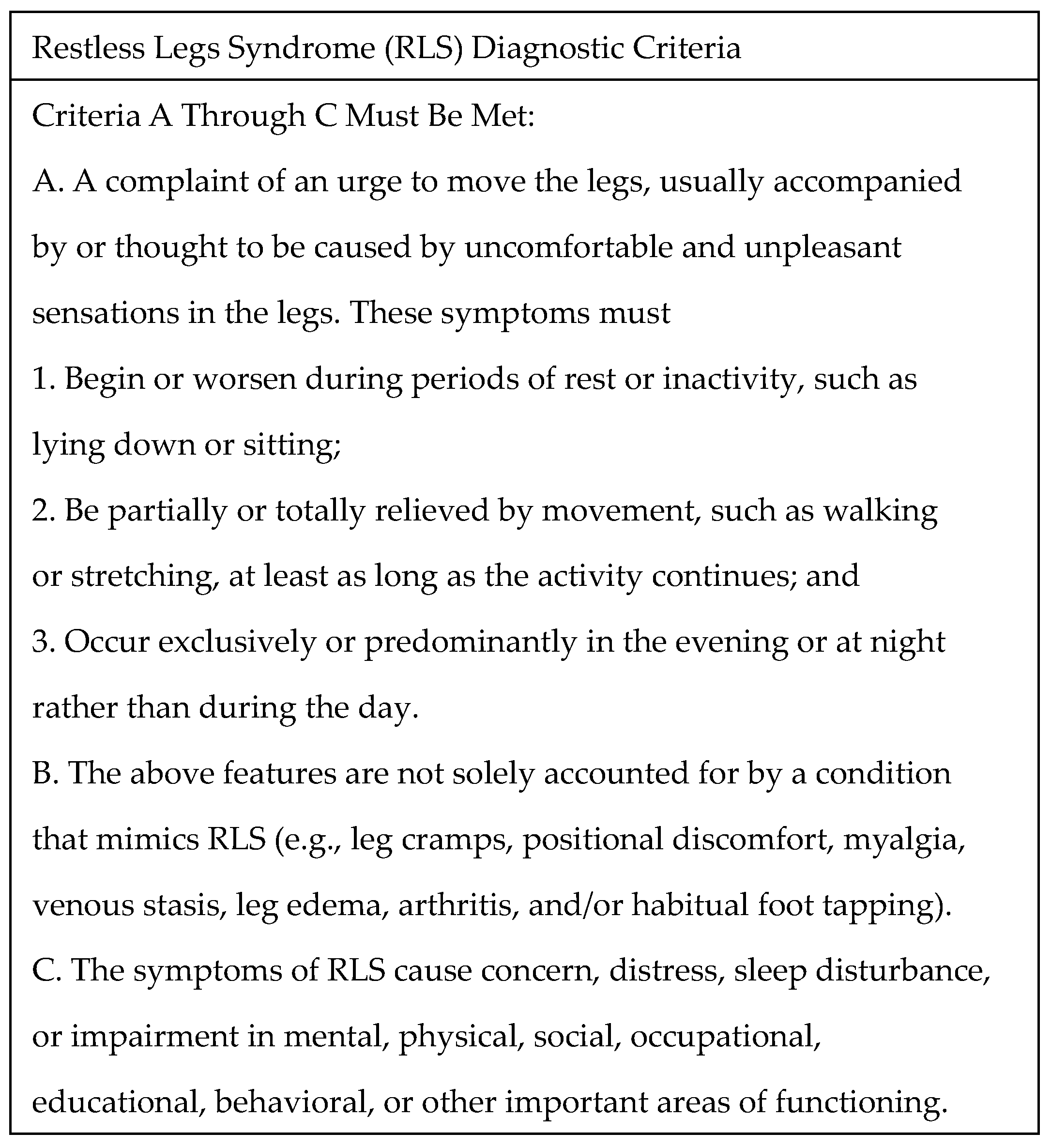
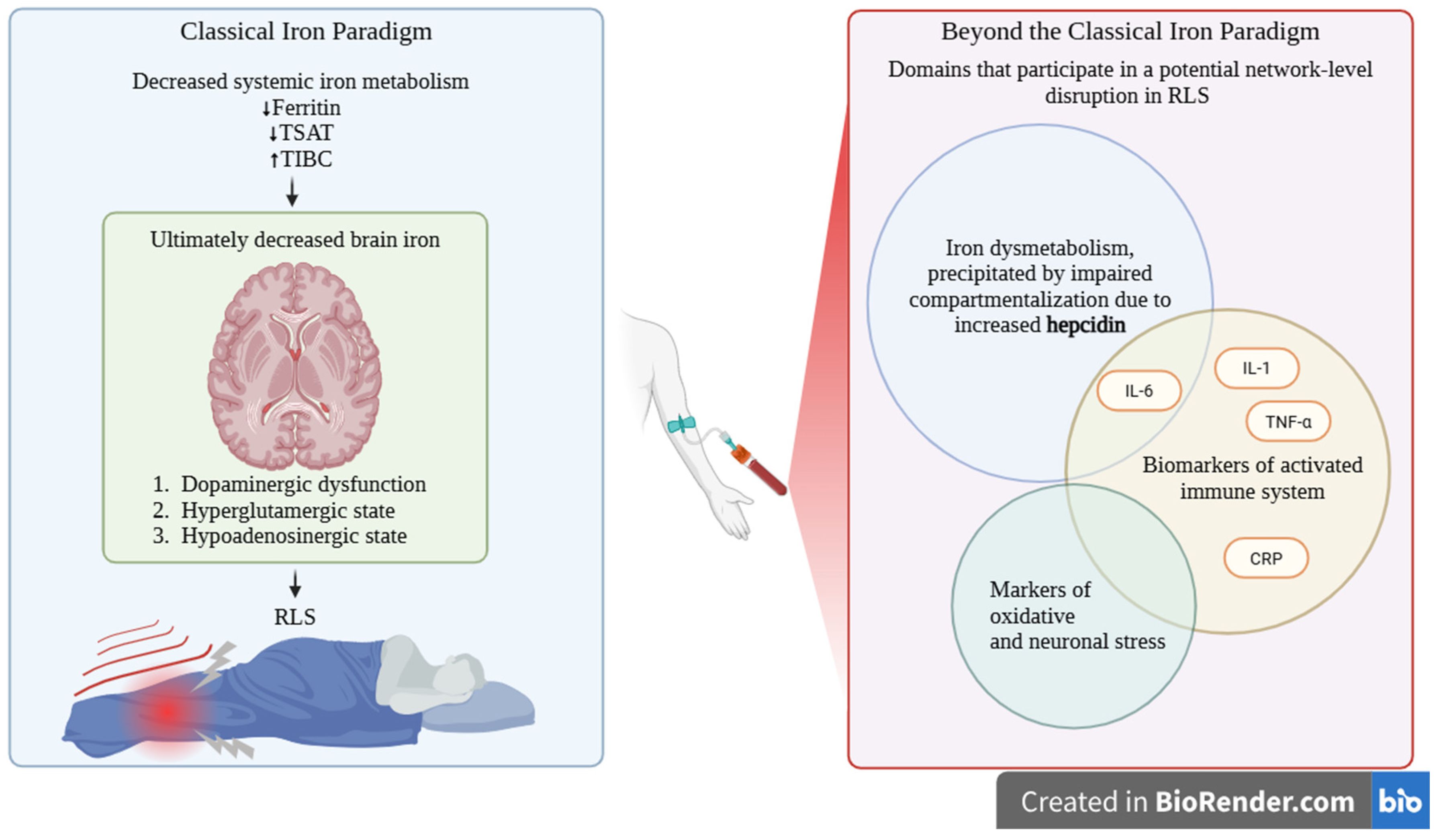
Serum Biomarkers in Restless Legs Syndrome: Beyond the Classical Iron Paradigm—A Scoping Review

Abstract
1. Introduction
2. Methods
2.1. Search Strategy
2.2. Eligibility and Selection of Studies
2.3. Data Charting
3. Results
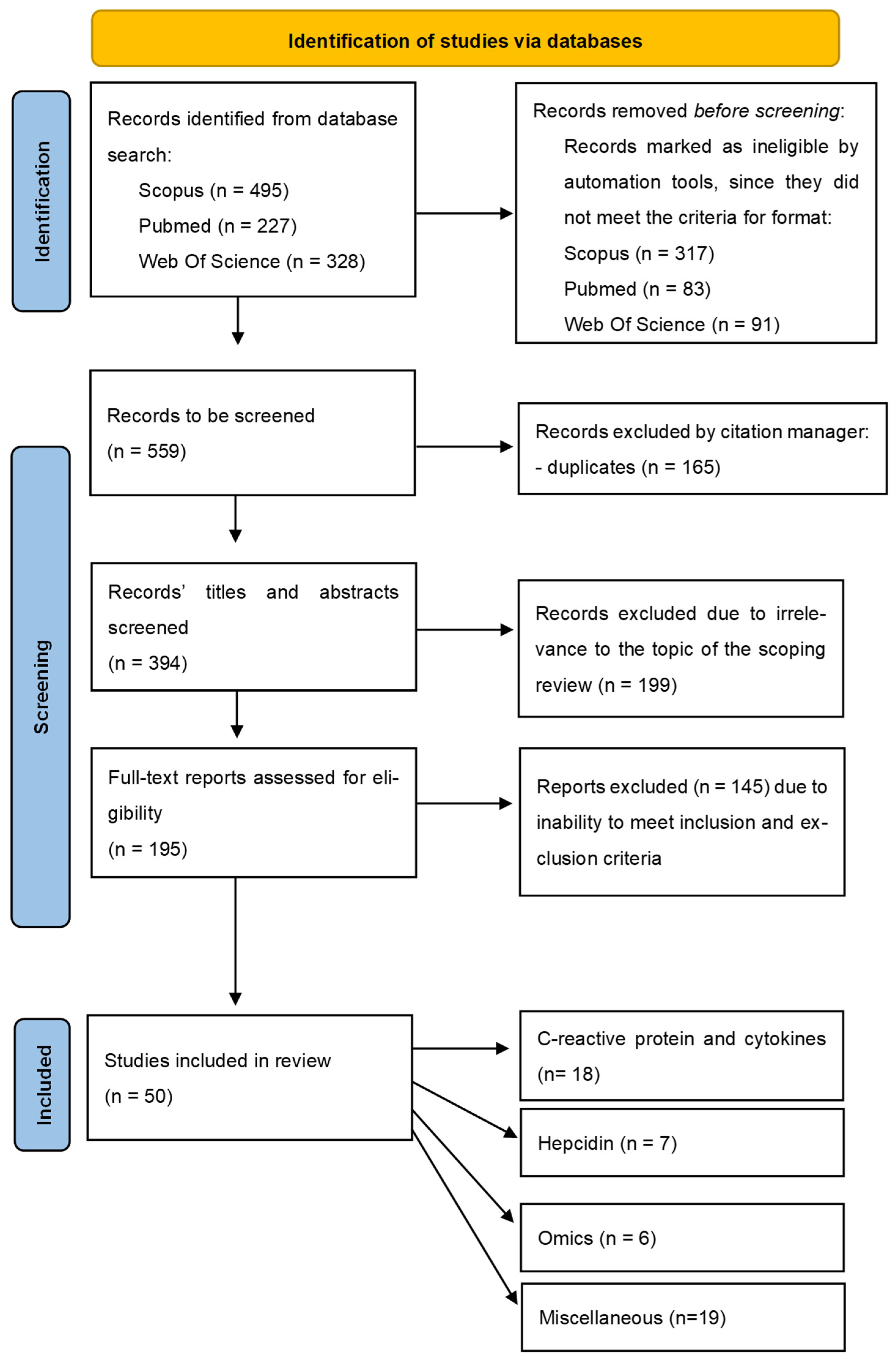
3.1. Selection of Sources
3.2. Characteristics of Sources and Results from Individual Sources
3.3. Synthesis of Results
3.3.1. Beyond Classical Iron Status—Hepcidin as Master Regulator of Iron Metabolism
3.3.2. Inflammation and Cytokines
3.3.3. Oxidative Stress and Other
3.3.4. Neurotrophic Factors
3.3.5. Omics
3.3.6. Miscellaneous
4. Discussion
4.1. Summary of Evidence
4.2. Limitations
4.3. Conclusions
Supplementary Materials
Author Contributions
Funding
Institutional Review Board Statement
Informed Consent Statement
Data Availability Statement
Conflicts of Interest
Abbreviations
| 8-OHdG | 8-hydroxy-2′-deoxyguanosine |
| A1AT | Alpha-1 Antitrypsin |
| A2M | Alpha-2 Macroglobulin |
| AHSG | Alpha-2-HS Glycoprotein |
| AOPPs | Advanced Oxidation Protein Products |
| APOH | Apolipoprotein H |
| BDNF | Brain-Derived Neurotrophic Factor |
| BEST | Biomarkers, EndpointS, and other Tools |
| BMI | Body Mass Index |
| C3 | Complement Component 3 |
| C4A | Complement Component 4A |
| CCL5 | C-C Motif Chemokine Ligand 5 (RANTES) |
| CKD | Chronic Kidney Disease |
| CNS | Central Nervous System |
| CRP | C-reactive Protein |
| DNA | Deoxyribonucleic Acid |
| ELISA | Enzyme-Linked Immunosorbent Assay |
| FDA | Food and Drug Administration |
| GFAP | Glial Fibrillary Acidic Protein |
| hsCRP | High-Sensitivity C-Reactive Protein |
| IL-1β | Interleukin-1 Beta |
| IL-6 | Interleukin-6 |
| IL-17/IL-17A | Interleukin-17/Interleukin-17A |
| IRLS | International Restless Legs Syndrome Rating Scale |
| JBI | Joanna Briggs Institute |
| KNG1 | Kininogen-1 |
| LC-MS/MS | Liquid Chromatography–Tandem Mass Spectrometry |
| LRRK2 | Leucine-Rich Repeat Kinase 2 |
| MALDI-TOF/TOF MS | Matrix-Assisted Laser Desorption–Ionization Time-of-Flight Tandem Mass Spectrometry |
| MAPK | Mitogen-Activated Protein Kinase |
| MDA | Malondialdehyde |
| MEDLINE | Medical Literature Analysis and Retrieval System Online |
| MRI | Magnetic Resonance Imaging |
| NF-κB | Nuclear Factor Kappa-B |
| NfL | Neurofilament Light Chain |
| NIH | National Institutes of Health |
| nEVs | Neuronal Extracellular Vesicles |
| NT-proBNP | N-terminal pro-B-type Natriuretic Peptide |
| OR | Odds Ratio |
| PD | Peritoneal Dialysis |
| PLMs | Periodic Limb Movements |
| PLMI | Periodic Limb Movement Index |
| PLMS | Periodic Limb Movements During Sleep |
| PRISMA-ScR | Preferred Reporting Items for Systematic Reviews and Meta-Analyses Extension for Scoping Reviews |
| QoL | Quality of Life |
| RLS | Restless Legs Syndrome |
| RNA | Ribonucleic Acid |
| ROC | Receiver Operating Characteristic |
| suPAR | Soluble Urokinase-Type Plasminogen Activator Receptor |
| TIBC | Total Iron-Binding Capacity |
| TNF-α | Tumor Necrosis Factor Alpha |
| TORCH | Toxoplasmosis, Other infections, Rubella, Cytomegalovirus, Herpes simplex |
| UPLC-QTOF/MS | Ultra-Performance Liquid Chromatography–Quadrupole Time-of-Flight Mass Spectrometry |
References
- Khan, M. Restless Legs Syndrome and Other Common Sleep-Related Movement Disorders. Continuum 2023, 29, 1130–1148. [Google Scholar] [CrossRef] [PubMed]
- Song, P.; Wu, J.; Cao, J.; Sun, W.; Li, X.; Zhou, T.; Shen, Y.; Tan, X.; Ye, X.; Yuan, C.; et al. The Global and Regional Prevalence of Restless Legs Syndrome among Adults: A Systematic Review and Modelling Analysis. J. Glob. Health 2024, 14, 04113. [Google Scholar] [CrossRef]
- Wipper, B.; Winkelman, J.W. The Long-Term Psychiatric and Cardiovascular Morbidity and Mortality of Restless Legs Syndrome and Periodic Limb Movements of Sleep. Sleep Med. Clin. 2021, 16, 279–288. [Google Scholar] [CrossRef]
- Winkelman, J.W.; Wipper, B. Restless Legs Syndrome: A Review. JAMA 2026, 335, 703–714. [Google Scholar] [CrossRef]
- Pani, T.; Mogavero, M.P.; Ferri, R.; Lanza, G. Unraveling the Pathophysiology of Restless Legs Syndrome from Multimodal MRI Techniques: A Systematic Review. Sleep Med. 2025, 125, 31–56. [Google Scholar] [CrossRef]
- Xu, Y.; Guan, Y.; Lang, B. Unraveling Restless Legs Syndrome: A Comprehensive Review of Current Research and Future Directions. Int. J. Gen. Med. 2025, 18, 4041–4055. [Google Scholar] [CrossRef]
- Manconi, M.; Garcia-Borreguero, D.; Schormair, B.; Videnovic, A.; Berger, K.; Ferri, R.; Dauvilliers, Y. Restless Legs Syndrome. Nat. Rev. Dis. Primers 2021, 7, 80. [Google Scholar] [CrossRef]
- Khachatryan, S.G.; Ferri, R.; Fulda, S.; Garcia-Borreguero, D.; Manconi, M.; Muntean, M.L.; Stefani, A. Restless Legs Syndrome: Over 50 Years of European Contribution. J. Sleep Res. 2022, 31, e13632. [Google Scholar] [CrossRef] [PubMed]
- Paulus, W.; Dowling, P.; Rijsman, R.; Stiasny-Kolster, K.; Trenkwalder, C. Update of the Pathophysiology of the Restless-Legs-Syndrome. Mov. Disord. 2007, 22, S431–S439. [Google Scholar] [CrossRef]
- Rizzo, G.; Li, X.; Galantucci, S.; Filippi, M.; Cho, Y.W. Brain Imaging and Networks in Restless Legs Syndrome. Sleep Med. 2017, 31, 39–48. [Google Scholar] [CrossRef] [PubMed]
- Beliveau, V.; Stefani, A.; Birkl, C.; Kremser, C.; Gizewski, E.R.; Högl, B.; Scherfler, C. Revisiting Brain Iron Deficiency in Restless Legs Syndrome Using Magnetic Resonance Imaging. Neuroimage Clin. 2022, 34, 103024. [Google Scholar] [CrossRef]
- Allen, R.P. Controversies and Challenges in Defining the Etiology and Pathophysiology of Restless Legs Syndrome. Am. J. Med. 2007, 120, S13–S21. [Google Scholar] [CrossRef] [PubMed]
- Hening, W.A. Subjective and Objective Criteria in the Diagnosis of the Restless Legs Syndrome. Sleep Med. 2004, 5, 285–292. [Google Scholar] [CrossRef]
- American Academy of Sleep Medicine. The AASM International Classification of Sleep Disorders, 3rd ed.; Text Revision (ICSD-3-TR); American Academy of Sleep Medicine: Darien, IL, USA, 2023. [Google Scholar]
- Woloshin, S.; Schwartz, L.M. Giving Legs to Restless Legs: A Case Study of How the Media Helps Make People Sick. PLoS Med. 2006, 3, 452–455. [Google Scholar]
- Walters, A.; Hickey, K.; Maltzman, J.; Verrico, T.; Joseph, D.; Hening, W.; Wilson, V.; Chokroverty, S. A Questionnaire Study of 138 Patients with Restless Legs Syndrome: The “Night-Walkers” Survey. Neurology 1996, 46, 92–95. [Google Scholar] [CrossRef]
- Antelmi, E.; Mogavero, M.P.; Lanza, G.; Cartella, S.M.; Ferini-Strambi, L.; Plazzi, G.; Ferri, R.; Tinazzi, M. Sensory Aspects of Restless Legs Syndrome: Clinical, Neurophysiological and Neuroimaging Prospectives. Sleep Med. Rev. 2024, 76, 101949. [Google Scholar] [CrossRef] [PubMed]
- Trenkwalder, C.; Allen, R.; Högl, B.; Paulus, W.; Winkelmann, J. Restless Legs Syndrome Associated with Major Diseases A Systematic Review and New Concept. Neurology 2016, 86, 1336–1343. [Google Scholar] [CrossRef]
- Winkelman, J.W. Periodic Limb Movements in Sleep—Endophenotype for Restless Legs Syndrome? N. Engl. J. Med. 2007, 357, 703–705. [Google Scholar] [CrossRef]
- Ohayon, M.M.; O’Hara, R.; Vitiello, M.V. Epidemiology of Restless Legs Syndrome: A Synthesis of the Literature. Sleep Med. Rev. 2012, 16, 283–295. [Google Scholar] [CrossRef] [PubMed]
- Koo, B.B. Restless Leg Syndrome Across the Globe: Epidemiology of the Restless Legs Syndrome/Willis-Ekbom Disease. Sleep Med. Clin. 2015, 10, 189–205. [Google Scholar]
- Carlos, K.; Prado, L.B.F.; Carvalho, L.B.C.; Prado, G.F. Willis-Ekbom Disease or Restless Legs Syndrome? Sleep Med. 2015, 16, 1156–1159. [Google Scholar] [CrossRef] [PubMed]
- Winkelman, J.W.; Berkowski, J.A.; DelRosso, L.M.; Koo, B.B.; Scharf, M.T.; Sharon, D.; Zak, R.S.; Kazmi, U.; Falck-Ytter, Y.; Shelgikar, A.V.; et al. Treatment of Restless Legs Syndrome and Periodic Limb Movement Disorder: An American Academy of Sleep Medicine Clinical Practice Guideline. J. Clin. Sleep Med. 2025, 21, 137–152. [Google Scholar] [CrossRef]
- Allen, R.P.; Picchietti, D.L.; Auerbach, M.; Cho, Y.W.; Connor, J.R.; Earley, C.J.; Garcia-Borreguero, D.; Kotagal, S.; Manconi, M.; Ondo, W.; et al. Evidence-Based and Consensus Clinical Practice Guidelines for the Iron Treatment of Restless Legs Syndrome/Willis-Ekbom Disease in Adults and Children: An IRLSSG Task Force Report. Sleep Med. 2018, 41, 27–44. [Google Scholar] [CrossRef]
- Silber, M.H.; Buchfuhrer, M.J.; Earley, C.J.; Koo, B.B.; Manconi, M.; Winkelman, J.W.; Becker, P.; Berkowski, J.A.; Clemens, S.; Connor, J.R.; et al. The Management of Restless Legs Syndrome: An Updated Algorithm. Mayo Clin. Proc. 2021, 96, 1921–1937. [Google Scholar] [CrossRef] [PubMed]
- Galy, B.; Conrad, M.; Muckenthaler, M. Mechanisms Controlling Cellular and Systemic Iron Homeostasis. Nat. Rev. Mol. Cell Biol. 2024, 25, 133–155, Correction in Nat. Rev. Mol. Cell Biol. 2024, 25, 671. [Google Scholar] [CrossRef]
- Food and Drug Administration (USA); National Institutes of Health (Bethesda, MD, USA); FDA-NIH Biomarker Working Group. BEST (Biomarkers, EndpointS, and Other Tools). Available online: https://health.uconn.edu/pepper-center/wp-content/uploads/sites/272/2023/12/BEST-Biomarkers-EndpointS-and-other-Tools-Resource.pdf (accessed on 17 January 2026).
- Tricco, A.C.; Lillie, E.; Zarin, W.; O’Brien, K.K.; Colquhoun, H.; Levac, D.; Moher, D.; Peters, M.D.J.; Horsley, T.; Weeks, L.; et al. PRISMA Extension for Scoping Reviews (PRISMA-ScR): Checklist and Explanation. Ann. Intern. Med. 2018, 169, 467–473. [Google Scholar] [CrossRef]
- Peters, M.D.J.; Marnie, C.; Tricco, A.C.; Pollock, D.; Munn, Z.; Alexander, L.; McInerney, P.; Godfrey, C.M.; Khalil, H. Updated Methodological Guidance for the Conduct of Scoping Reviews. JBI Evid. Synth. 2020, 18, 2119–2126. [Google Scholar] [CrossRef]
- Im, H.J.; Kim, J.H.; Yun, C.H.; Kim, D.W.; Oh, J. Changes in Hepcidin Serum Levels Correlate with Clinical Improvement in Idiopathic Restless Legs Syndrome Patients. J. Clin. Med. 2020, 9, 4115. [Google Scholar] [CrossRef]
- Dowsett, J.; Didriksen, M.; Larsen, M.H.; Burgdorf, K.S.; Thørner, L.W.; Sørensen, E.; Erikstrup, C.; Pedersen, O.B.; Ostrowski, S.R.; Ullum, H. No Association between Plasma Hepcidin Levels and Restless Legs Syndrome—Results from the Danish Blood Donor Study. Sleep Med. 2021, 88, 68–73. [Google Scholar] [CrossRef]
- Dauvilliers, Y.; Chenini, S.; Vialaret, J.; Delaby, C.; Guiraud, L.; Gabelle, A.; Lopez, R.; Hirtz, C.; Jaussent, I.; Lehmann, S. Association between Serum Hepcidin Level and Restless Legs Syndrome. Mov. Disord. 2018, 33, 618–627. [Google Scholar] [CrossRef] [PubMed]
- Chenini, S.; Delaby, C.; Rassu, A.L.; Barateau, L.; Vialaret, J.; Hirtz, C.; Dupuy, A.M.; Lehmann, S.; Jaussent, I.; Dauvilliers, Y. Hepcidin and Ferritin Levels in Restless Legs Syndrome: A Case-Control Study. Sci. Rep. 2020, 10, 11914. [Google Scholar] [CrossRef]
- Alaçam Köksal, S.; Boncuk Ulaş, S.; Acar, B.A.; Acar, T.; Güzey Aras, Y.; Köroğlu, M. Evaluation of the Relationship between Idiopathic Restless Legs Syndrome and Serum Hepcidin Levels. Brain Behav. 2023, 13, e3259. [Google Scholar] [CrossRef] [PubMed]
- Tufekci, A.; Kara, E. Relation of Serum Hepcidin Levels and Restless Legs Syndrome in Chronic Hemodialysis Patients. Sleep Breath. 2021, 25, 897–905. [Google Scholar] [CrossRef] [PubMed]
- Guo, Y.; Sang, Y.; Pu, T.; Li, X.; Wang, Y.; Yu, L.; Liang, Y.; Wang, L.; Liu, P.; Tang, L. Relation of Serum Hepcidin Levels and Restless Legs Syndrome in Patients Undergoing Peritoneal Dialysis. Front. Med. 2021, 8, 685601. [Google Scholar] [CrossRef] [PubMed]
- Mogavero, M.P.; Salemi, M.; Lanza, G.; Rinaldi, A.; Marchese, G.; Ravo, M.; Salluzzo, M.G.; Antoci, A.; DelRosso, L.M.; Bruni, O.; et al. Unveiling the Pathophysiology of Restless Legs Syndrome through Transcriptome Analysis. iScience 2024, 27, 109568. [Google Scholar] [CrossRef]
- Cederberg, K.L.J.; Peris Sempere, V.; Lin, L.; Zhang, J.; Leary, E.B.; Moore, H.; Morse, A.M.; Blackman, A.; Schweitzer, P.K.; Kotagal, S.; et al. Proteomic Insights into the Pathophysiology of Periodic Limb Movements and Restless Legs Syndrome. Sleep Health 2024, 10, S161–S169. [Google Scholar] [CrossRef]
- Bellei, E.; Monari, E.; Ozben, S.; Koseoglu Bitnel, M.; Topaloglu Tuac, S.; Tomasi, A.; Bergamini, S. Discovery of Restless Legs Syndrome Plasmatic Biomarkers by Proteomic Analysis. Brain Behav. 2018, 8, e01062. [Google Scholar] [CrossRef]
- Shin, J.W.; Lee, J.H.; Kim, H.; Lee, D.H.; Baek, K.H.; Sunwoo, J.S.; Byun, J.I.; Kim, T.J.; Jun, J.S.; Han, D.; et al. Bioinformatic Analysis of Proteomic Data for Iron, Inflammation, and Hypoxic Pathways in Restless Legs Syndrome. Sleep Med. 2020, 75, 448–455. [Google Scholar] [CrossRef]
- Mondello, S.; Kobeissy, F.H.; Mechref, Y.; Zhao, J.; El Hayek, S.; Zibara, K.; Moresco, M.; Plazzi, G.; Cosentino, F.I.I.; Ferri, R. Searching for Novel Candidate Biomarkers of Rls in Blood by Proteomic Analysis. Nat. Sci. Sleep 2021, 13, 873–883. [Google Scholar] [CrossRef]
- Yang, B.; Yin, H.; Wang, J.; Gan, J.; Li, J.; Han, R.; Pei, M.; Song, L.; Yang, H. A Metabolic Biomarker Panel of Restless Legs Syndrome in Peritoneal Dialysis Patients. Metabolomics 2022, 18, 79. [Google Scholar] [CrossRef]
- Geng, C.; Yang, Z.; Xu, P.; Zhang, H. Possible Association between Vitamin B12 Deficiency and Restless Legs Syndrome. Clin. Neurol. Neurosurg. 2022, 223, 107477. [Google Scholar] [CrossRef]
- Eşel, G.; Olguner Eker, Ö.; Amraliyev, A.; Asdemir, A.; Biçer, E.Ö.; Badur Mermer, D.; Dündar, M.; Eşel, E.; İsmailoğulları, S. Telomere Length in Sleep Disorders. Exp. Gerontol. 2025, 209, 112851. [Google Scholar] [CrossRef] [PubMed]
- Guo, X.; Wang, P.; Huang, Y.; Ma, J. Clinical Feature and Alpha-Synuclein Level of Restless Legs Syndrome with Leucine-Rich Repeat Kinase 2 Encoding Gene Mutation. Park. Relat. Disord. 2025, 138, 107944. [Google Scholar] [CrossRef]
- Baskol, G.; Korkmaz, S.; Erdem, F.; Caniklioglu, A.; Kocyigit, M.; Aksu, M. Assessment of Nitric Oxide, Advanced Oxidation Protein Products, Malondialdehyde, and Thiol Levels in Patients with Restless Legs Syndrome. Sleep Med. 2012, 13, 414–418. [Google Scholar] [CrossRef]
- Higuchi, T.; Abe, M.; Mizuno, M.; Yamazaki, T.; Suzuki, H.; Moriuchi, M.; Oikawa, O.; Okawa, E.; Ando, H.; Okada, K. Association of Restless Legs Syndrome with Oxidative Stress and Inflammation in Patients Undergoing Hemodialysis. Sleep Med. 2015, 16, 941–948. [Google Scholar] [CrossRef] [PubMed]
- Yan, F.; Cheng, Y.; Feng, S. Association between Serum GFAP, BDNF and NfL Levels and Clinical Symptoms in Restless Legs Syndrome: A Case-Control Study. Sleep Med. 2025, 134, 106694. [Google Scholar] [CrossRef] [PubMed]
- Jiménez-Jiménez, F.J.; Amo, G.; Alonso-Navarro, H.; Calleja, M.; Díez-Fairén, M.; Álvarez-Fernández, I.; Pastor, P.; Plaza-Nieto, J.F.; Navarro-Muñoz, S.; Turpín-Fenoll, L.; et al. Serum Vitamin D, Vitamin D Receptor and Binding Protein Genes Polymorphisms in Restless Legs Syndrome. J. Neurol. 2021, 268, 1461–1472, Correction in J. Neurol. 2021, 268, 1473. [Google Scholar] [CrossRef]
- Bellei, E.; Bergamini, S.; Monari, E.; Tomasi, A.; Koseoglu, M.; Topaloglu Tuac, S.; Ozben, S. Evaluation of Potential Cardiovascular Risk Protein Biomarkers in High Severity Restless Legs Syndrome. J. Neural Transm. 2019, 126, 1313–1320. [Google Scholar] [CrossRef]
- Yazar, H.O.; Yazar, T.; Yildirim, T.; Keşkek, A.; Altunkaynak, Y. Assessment of Serum Uric Acid Levels in Patients with Restless Legs Syndrome. Acta Neurol. Belg. 2019, 119, 461–466. [Google Scholar] [CrossRef]
- Dong, X.; Mondello, S.; Kobeissy, F.; Ferri, R.; Mechref, Y. Serum Glycomics Profiling of Patients with Primary Restless Legs Syndrome Using LC-MS/MS. J. Proteome Res. 2020, 19, 2933–2941. [Google Scholar] [CrossRef]
- Gade, K.; Blaschke, S.; Rodenbeck, A.; Becker, A.; Anderson-Schmidt, H.; Cohrs, S. Uremic Restless Legs Syndrome (RLS) and Sleep Quality in Patients with End-Stage Renal Disease on Hemodialysis: Potential Role of Homocysteine and Parathyroid Hormone. Kidney Blood Press. Res. 2013, 37, 458–463. [Google Scholar] [CrossRef]
- Jiménez-Jiménez, F.J.; Ayuso, P.; Alonso-Navarro, H.; Calleja, M.; Díez-Fairén, M.; Álvarez, I.; Pastor, P.; Plaza-Nieto, J.F.; Navarro-Muñoz, S.; Turpín-Fenoll, L.; et al. Serum Trace Elements Concentrations in Patients with Restless Legs Syndrome. Antioxidants 2022, 11, 272. [Google Scholar] [CrossRef] [PubMed]
- Mitchell, U.H.; Obray, J.D.; Hunsaker, E.; Garcia, B.T.; Clarke, T.J.; Hope, S.; Steffensen, S.C. Peripheral Dopamine in Restless Legs Syndrome. Front. Neurol. 2018, 9, 155. [Google Scholar] [CrossRef]
- Huang, Y.X.; Zhang, Q.L.; Huang, C.L.; Wu, W.Q.; Sun, J.W. Association of Decreased Serum BDNF with Restless Legs Syndrome in Parkinson’s Disease Patients. Front. Neurol. 2021, 12, 734570. [Google Scholar] [CrossRef]
- Kucuksayan, E.; Ozben, S.; Topaloglu, S.; Koseoglu, M.; Erel, O.; Neselioglu, S.; Ozben, T. Plasma Thiol/Disulphide Homeostasis Changes in Patients with Restless Legs Syndrome. Clin. Chem. Lab. Med. 2021, 59, 1257–1265. [Google Scholar] [CrossRef]
- Michaud, M.; Dumont, M.; Selmaoui, B.; Paquet, J.; Fantini, M.L.; Montplaisir, J. Circadian Rhythm of Restless Legs Syndrome: Relationship with Biological Markers. Ann. Neurol. 2004, 55, 372–380. [Google Scholar] [CrossRef]
- Topaloglu Tuac, S.; Ozben, S.; Koseoglu Bitnel, M.; Koksal, A.; Kucuksayan, E.; Hanikoğlu, A.; Ozben, T. Plasma Copeptin Levels in Patients with Restless Legs Syndrome. Acta Neurol. Scand. 2018, 137, 316–320. [Google Scholar] [CrossRef]
- Chawla, S.; Gulyani, S.; Allen, R.P.; Earley, C.J.; Li, X.; Van Zijl, P.; Kapogiannis, D. Extracellular Vesicles Reveal Abnormalities in Neuronal Iron Metabolism in Restless Legs Syndrome. Sleep 2019, 42, zsz079. [Google Scholar] [CrossRef]
- Jiménez-Jiménez, F.J.; Alonso-Navarro, H.; García-Martín, E.; Agúndez, J.A.G. Inflammatory Factors and Restless Legs Syndrome: A Systematic Review and Meta-Analysis. Sleep Med. Rev. 2023, 68, 101744. [Google Scholar] [CrossRef] [PubMed]
- Jiménez-Jiménez, F.J.; Ayuso, P.; Alonso-Navarro, H.; Calleja, M.; Álvarez, I.; Pastor, P.; Navarro-Muñoz, S.; Turpín-Fenoll, L.; Millán-Pascual, J.; García-Albea, E.; et al. Serum Concentrations of Cytokines in Patients With Restless Legs Syndrome. J. Sleep Res. 2026, e70293. [Google Scholar] [CrossRef] [PubMed]
- Kaya, T.; Acar, B.A.; Sipahi, S.; Cinemre, H.; Acar, T.; Varim, C.; Tamer, A. Relationships Between Malnutrition, Inflammation, Sleep Quality, and Restless Legs Syndrome in Hemodialysis Patients. Ther. Apher. Dial. 2015, 19, 497–502. [Google Scholar] [CrossRef] [PubMed]
- Nasiri, A.A.; Shahraki Vahed, A.; Shahrakimoghaddam, E. Serum Iron, Hemoglobin, CRP and Calcium in Hemodialysis Patients with and without Restless Legs Syndrome. Sch. Res. Libr. Der Pharm. Lett. 2015, 7, 437–441. [Google Scholar]
- Trotti, L.M.; Rye, D.B.; De Staercke, C.; Hooper, W.C.; Quyyumi, A.; Bliwise, D.L. Elevated C-Reactive Protein Is Associated with Severe Periodic Leg Movements of Sleep in Patients with Restless Legs Syndrome. Brain Behav. Immun. 2012, 26, 1239–1243. [Google Scholar] [CrossRef] [PubMed]
- La Manna, G.; Pizza, F.; Persici, E.; Baraldi, O.; Comai, G.; Cappuccilli, M.L.; Centofanti, F.; Carretta, E.; Plazzi, G.; Col, L.; et al. Restless Legs Syndrome Enhances Cardiovascular Risk and Mortality in Patients with End-Stage Kidney Disease Undergoing Long-Term Haemodialysis Treatment. Nephrol. Dial. Transplant. 2011, 26, 1976–1983. [Google Scholar] [CrossRef][Green Version]
- Mandal, T.; Aydın, Ş.; Kanmaz, D.; Karasulu, A.L.; Aras, G.; Tuncay, E. To What Extent and Why Are COPD and Willis-Ekbom Disease Associated? Sleep Breath. 2016, 20, 1021–1027. [Google Scholar] [CrossRef]
- Kim, K.W.; Yoon, I.Y.; Chung, S.; Shin, Y.K.; Lee, S.B.; Choi, E.A.; Park, J.H.; Kim, J.M. Prevalence, Comorbidities and Risk Factors of Restless Legs Syndrome in the Korean Elderly Population—Results from the Korean Longitudinal Study on Health and Aging. J. Sleep Res. 2010, 19, 87–92. [Google Scholar] [CrossRef]
- Auvinen, P.; Mäntyselkä, P.; Koponen, H.; Kautiainen, H.; Korniloff, K.; Ahonen, T.; Vanhala, M. Elevation of Tumor Necrosis Factor Alpha Levels Is Associated with Restless Legs Symptoms in Clinically Depressed Patients. J. Psychosom. Res. 2018, 115, 1–5. [Google Scholar] [CrossRef]
- Tak, A.Z.A.; Şengül, Y. Evaluation of Inflammation with Neutrophil-to-Lymphocyte Ratio and Platelet-to-Lymphocyte Ratio in Restless Legs Syndrome. Turk. J. Neurol. 2018, 24, 259–263. [Google Scholar] [CrossRef]
- Olgun Yazar, H.; Yazar, T.; Özdemir, S.; Kasko Arici, Y. Serum C-Reactive Protein/Albumin Ratio and Restless Legs Syndrome. Sleep Med. 2019, 58, 61–65. [Google Scholar] [CrossRef]
- Dowsett, J.; Didriksen, M.; von Stemann, J.H.; Larsen, M.H.; Thørner, L.W.; Sørensen, E.; Erikstrup, C.; Pedersen, O.B.; Hansen, M.B.; Eugen-Olsen, J.; et al. Chronic Inflammation Markers and Cytokine-Specific Autoantibodies in Danish Blood Donors with Restless Legs Syndrome. Sci. Rep. 2022, 12, 1672. [Google Scholar] [CrossRef]
- Dowsett, J.; Didriksen, M.; Larsen, M.H.; Dinh, K.M.; Kaspersen, K.A.; Mikkelsen, S.; Thørner, L.W.; Sørensen, E.; Erikstrup, C.; Pedersen, O.B.; et al. Investigating the Inflammation Marker Neutrophil-to-Lymphocyte Ratio in Danish Blood Donors with Restless Legs Syndrome. PLoS ONE 2021, 16, e0259681. [Google Scholar] [CrossRef]
- Çiçekli, E.; Sarıca Darol, E. Investigation of the Albumin/Globulin Ratio as a Biomarker in Restless Legs Syndrome. Cureus 2024, 16, e51671. [Google Scholar] [CrossRef]
- Chandra, S.; Gupta, V.; Chandra, H.; Dhyani, M.; Kotwal, A.; Verma, S.K.; Gupta, R. Serum Interleukin-6 Is Not Linked with Sleep-Quality, Restless Legs Syndrome, and Depression, but with 6-Month Survival in Hematological Malignancies. J. Neurosci. Rural Pract. 2019, 10, 94–100. [Google Scholar] [CrossRef]
- Geng, C.; Chen, C. Association between Inflammatory Cytokines and Disease Severity in Restless Legs Syndrome. Neurol. Sci. 2024, 45, 5765–5770. [Google Scholar] [CrossRef] [PubMed]
- Kokoglu, A.; Engin, A.; Gelmez, M.Y.; Cetin, E.A.; Senel, G.B.; Karadeniz, D.; Deniz, G. Immune Cells and Functions in Patients with Restless Legs Syndrome. Immunol. Lett. 2025, 276, 107056. [Google Scholar] [CrossRef]
- Uslu, F.I.; Demir, E.; Güler, E.M.; Koçyiğit, A. Circulating Levels of Cytokines Are Increased in Restless Legs Syndrome. Sleep Breath. 2021, 25, 1581–1585. [Google Scholar] [CrossRef]
- Benediktsdottir, B.; Janson, C.; Lindberg, E.; Arnardóttir, E.S.; Olafsson, I.; Cook, E.; Thorarinsdottir, E.H.; Gislason, T. Prevalence of Restless Legs Syndrome among Adults in Iceland and Sweden: Lung Function, Comorbidity, Ferritin, Biomarkers and Quality of Life. Sleep Med. 2010, 11, 1043–1048. [Google Scholar] [CrossRef]
- Clardy, S.L.; Wang, X.; Boyer, P.J.; Earley, C.J.; Allen, R.P.; Connor, J.R. Is Ferroportin-Hepcidin Signaling Altered in Restless Legs Syndrome? J. Neurol. Sci. 2006, 247, 173–179. [Google Scholar] [CrossRef]
- You, L.; Yu, P.P.; Dong, T.; Guo, W.; Chang, S.; Zheng, B.; Ci, Y.; Wang, F.; Yu, P.; Gao, G.; et al. Astrocyte-Derived Hepcidin Controls Iron Traffic at the Blood-Brain-Barrier via Regulating Ferroportin 1 of Microvascular Endothelial Cells. Cell Death Dis. 2022, 13, 667. [Google Scholar] [CrossRef] [PubMed]
- Weinstock, L.B.; Walters, A.S.; Paueksakon, P. Restless Legs Syndrome—Theoretical Roles of Inflammatory and Immune Mechanisms. Sleep Med. Rev. 2012, 16, 341–354. [Google Scholar] [CrossRef]



| Authors | Study Subjects | Main Results | Conclusions |
|---|---|---|---|
| Im et al. 2020 [30] | 18 non-anemic, drug-naive idiopathic RLS patients vs. 15 healthy controls; 12 patients reassessed after 12-wk pramipexole | Baseline serum hepcidin was similar between groups; after pramipexole therapy, a greater fall in hepcidin correlated with a larger improvement in IRLS score and QoL; baseline hepcidin was not predictive. | Serum hepcidin decrease predicts treatment response in idiopathic RLS. |
| Dowsett et al. 2021 [31] | Large population-based cohort of 9708 healthy blood donors (466 RLS cases vs. 9242 controls) | Plasma hepcidin levels were identical in cases and controls (~10.5 ng/mL); logistic regression was adjusted for age, sex, alcohol, smoking, etc., and showed no association (OR ≈ 1.00 per 1 ng/mL increase). | No evidence that plasma hepcidin predicts RLS; limitations: diurnal variability of hepcidin (samples collected at different times), plasma rather than serum measurement and few severe RLS cases. |
| Dauvilliers et al. 2018 [32] | In total, 108 drug-free primary RLS patients vs. 45 controls with normal ferritin. | Serum hepcidin and hepcidin/ferritin ratio were higher in RLS patients; hepcidin was positively correlated with periodic leg movements during sleep/wakefulness; a U-shaped relation existed between hepcidin and RLS severity. | Hepcidin may be a prognostic biomarker, but results should be interpreted with caution. |
| Chenini et al. 2020 [33] | In total, 102 drug-free moderate-to-very-severe RLS patients vs. 73 community controls; 34 patients reassessed under dopaminergic therapy. | Ferritin was slightly higher in the RLS group but nonsignificant after BMI adjustment; serum hepcidin was higher in RLS patients (median 18.36 µg/L vs. 11.89 µg/L) and remained higher after excluding low ferritin cases; ROC showed a hepcidin cut-off of 18.1 µg/L (sensitivity 52%, specificity 75%); hepcidin correlated with age, BMI and periodic leg movements and was unaffected by dopaminergic therapy. | Hepcidin appears more informative than ferritin as a biomarker; hepcidin levels are unaffected by treatment or augmentation. |
| Alaçam Köksal et al. 2023 [34] | In total, 40 idiopathic RLS patients vs. 40 age-/sex-matched healthy controls. | RLS patients had higher red-blood-cell count, neutrophil count and hepcidin levels; ferritin and iron were similar across groups; logistic regression identified hepcidin as an independent predictor, and an ROC cut-off of 10.45 ng/mL predicted RLS (sensitivity 87.5% and specificity 55%). | Elevated hepcidin supports its role in RLS pathogenesis. |
| Tufekci & Kara 2021 [35] | In total, 72 chronic hemodialysis patients (36 with RLS vs. 36 without). | RLS patients had higher serum hepcidin, HbA1c and ferritin; hepcidin positively correlated with IRLS severity; multivariate regression identified hepcidin and HbA1c as independent predictors of RLS; hepcidin cut-off at ~165 ng/mL predicted RLS with a sensitivity of 61% and specificity of 78%. | Increased hepcidin associated with RLS in hemodialysis patients; uncontrolled diabetes contributes to this. |
| Guo et al. 2021 [36] | In total, 51 peritoneal dialysis (PD) patients with RLS vs. 102 PD patients without RLS. | The RLS group showed longer PD duration, higher serum hepcidin and calcium, and lower hemoglobin, albumin and residual kidney function; logistic regression identified PD duration (OR ≈ 1.04), hemoglobin, calcium, albumin, hepcidin (OR ≈ 1.02) and residual kidney function as independent determinants; hepcidin > 105.78 ng/mL predicted RLS. | Hepcidin is associated with RLS in PD patients and may serve as a positive predictive biomarker. |
| Authors | Study Subjects | Main Results | Conclusions |
|---|---|---|---|
| Mogavero et al., 2024 [37] | In total, 17 adults with RLS and 18 drug-free controls had venous blood drawn after a 12 h fast. RNA from peripheral blood mononuclear cells was profiled using next-generation sequencing. | Differential expression analysis identified 12,857 transcripts (4932 up-regulated and 3971 down-regulated) between RLS and controls. Enrichment analysis highlighted nine dysregulated network groups (infections, inflammation, immunology, neurodegeneration, cancer, neurotransmission, blood and metabolic mechanisms). Many genes were related to IL-17, transient receptor potential channels, NF-κB, NOD-like receptor, MAPK, p53, mitophagy and ferroptosis signaling. | The authors concluded that genetic predisposition and inflammatory/immune pathways involving mainly neurotropic viruses and TORCH complex may trigger RLS. |
| Cederberg et al., 2024 [38] | In total, 1410 adults from the STAGES cohort (102 screened positive for RLS) underwent plasma proteomic profiling; replication used 697 subjects from a second sleep-clinic cohort (combined n = 2 107). | Multivariate analyses identified 68 proteins associated with the PLM index. Iron-related proteins (hepcidin, ferritin and ferritin light chain) were decreased, and inflammatory/lysosomal proteins (RANTES, cathepsin A, and SULT1A3) were increased. In the combined dataset, the top proteins were hepcidin, cathepsin A, ferritin and RANTES. Comparing RLS vs. controls identified cathepsin Z, heme-oxygenase 2 and interleukin-17A. | The study confirmed that PLM is associated with low iron status and suggested involvement of proteolytic enzymes (e.g., cathepsin A) in PLM/RLS. The authors recommended hepcidin, ferritin and cathepsin A as biomarkers for PLM and emphasized that results for RLS were more variable because few subjects had RLS. |
| Bellei et al., 2018 [39] | Plasma from 34 patients with primary RLS (17 with mild–moderate symptoms and 17 with severe/very severe symptoms) and 17 age- and sex-matched controls was analyzed using 2D gel electrophoresis coupled with LC-MS/MS. | Five proteins (α-1B-glycoprotein, α-1-acid glycoprotein 1, haptoglobin, complement C4-A and immunoglobulin κ constant) were up-regulated in both RLS groups vs. controls. High-severity RLS showed additional increases in kininogen-1, immunoglobulin heavy constant α1 and immunoglobulin λ constant 2 and decreases in α-1-antitrypsin. Complement C3 was down-regulated in all patients. | The authors concluded that plasma proteins associated with inflammation and immune response may underlie RLS; gradual increases in immunoglobulins correlated with symptom severity. They suggested that under-expression of α-1-antitrypsin and up-regulation of kininogen-1 could signal cardiovascular risk in severe RLS. |
| Shin et al., 2020 [40] | Serum from 7 drug-naïve idiopathic RLS patients (30–45 y) and 6 age- and sex-matched healthy controls was analyzed by 2D electrophoresis and MALDI-TOF/TOF MS. | Eight differentially expressed proteins were identified. Complement C3, β-2-glycoprotein I (APOH), inter-α-trypsin inhibitor heavy chain 4 and vitamin D binding protein were up-regulated, whereas complement C4A, coagulation factor XII, α-2-HS glycoprotein (AHSG), and α-2 macroglobulin (A2M) were down-regulated. Network analysis showed that C3, C4A, AHSG and A2M occupy hub positions and are linked to iron-deficiency and inflammation pathways. | The study suggested that complement proteins (C3 and C4A) and acute phase proteins (A2M and AHSG) may serve as biomarkers reflecting iron deficiency and inflammatory processes in RLS. Western blot validation confirmed increased C3 and decreased C4A. |
| Mondello et al., 2021 [41] | Serum from 12 patients with clinical RLS (mean age ≈ 68 y; 8 women) and 10 healthy controls (mean age ≈ 68 y) was analyzed by LC-MS/MS. | Proteomic profiling quantified 272 proteins; 243 were shared between groups. Five proteins (apolipoprotein C-II, leucine-rich α-2-glycoprotein 1, FLJ92374, extracellular matrix protein 1 and FLJ93143) were markedly increased, while nine proteins (vitamin D binding protein, FLJ78071, α-1-antitrypsin, CD5 antigen-like, haptoglobin, fibrinogen α chain, complement factor H-related protein 1, platelet factor 4 and plasma protease C1 inhibitor) were decreased in RLS. | The authors concluded that RLS is a multifactorial disorder involving immune, inflammatory, and oxidative pathways and proposed the identified protein panel as potential biomarkers and therapeutic targets. |
| Yang et al., 2022 [42] | Peritoneal dialysis (PD) patients: discovery set included 27 PD patients with RLS and 30 PD patients without RLS; validation set comprised 51 PD-RLS and 51 PD controls. | Non-targeted UPLC-Q-TOF/MS metabolomics identified 32 differential metabolites; four (hippuric acid, phenylacetylglutamine, N,N,N-trimethyl-L-alanyl-L-proline betaine, and threonic acid) were consistently altered in both discovery and validation sets. A biomarker panel combining these four metabolites achieved an area-under-the-curve > 0.9 for distinguishing PD-RLS from PD controls. | The authors suggested that the four-metabolite panel has good diagnostic and predictive ability for PD-associated RLS and that metabolomics can aid early diagnosis and treatment. They did not explicitly discuss limitations, but the findings are based on PD patients and may not generalize to idiopathic RLS. |
| Authors | Study Subjects | Main Results | Conclusions |
|---|---|---|---|
| Geng et al., 2022 [43] | In total, 80 RLS patients vs. 80 age-/sex-matched controls. Cross-sectional retrospective study. | RLS patients had lower serum vitamin B12 and albumin and higher creatinine and homocysteine vs. controls. Serum vitamin B12 inversely correlated with RLS severity and depression scores; logistic regression showed reduced B12 was independently associated with RLS. | Vitamin B12 deficiency is associated with RLS and symptom severity; suggests monitoring B12 in RLS management. |
| Eşel et al., 2025 [44] | In total, 94 patients; RLS subgroup: 21 patients (14 F/7 M), mean age ~39 yr; controls matched for age/sex. | Telomere length measured by RT-PCR. No significant difference in telomere length between patient groups and controls; the insomnia group had shorter telomeres than the RLS and OSAS groups. Telomere length was positively correlated with sleep efficiency; no association with RLS severity. | Telomere shortening is not a biomarker for RLS. |
| Guo et al., 2025 [45] | In total, 199 idiopathic RLS patients, 114 Parkinson’s disease patients, 273 healthy controls. | Frequencies of LRRK2 variants examined. The G2385R variant is frequent in Parkinson’s disease but not in RLS; logistic regression showed only marginal association of LRRK2 mutations with RLS (OR ≈ 1.85). Plasma α-synuclein levels were higher in LRRK2 carriers with RLS or Parkinson’s disease vs. non-manifesting carriers. | LRRK2 mutations are strongly associated with Parkinson’s disease but only weakly with RLS; elevated plasma α-synuclein suggests a link between RLS and Parkinson’s disease. |
| Baskol et al., 2012 [46] | In total, 22 primary RLS patients vs. 20 age-/gender-matched healthy controls. | RLS patients showed lower nitric oxide and thiol levels and higher advanced oxidation protein products (AOPP) and malondialdehyde (MDA) compared with controls. MDA correlated positively with AOPP; thiol was negatively correlated with AOPP. | Increased oxidative stress markers and reduced antioxidants suggest oxidative stress involvement in RLS pathogenesis. |
| Higuchi et al., 2015 [47] | In total, 159 hemodialysis patients (22% with RLS); cross-sectional multicenter study. | RLS prevalence was 22%. RLS patients had longer dialysis duration; serum hs-CRP, IL-6, ferritin, NT-proBNP and oxidative DNA damage marker 8-OHdG were higher, and transferrin saturation was lower. Regression showed hs-CRP and 8-OHdG as independent risk factors for RLS; 8-OHdG correlated with RLS severity. | Oxidative stress and inflammation are associated with RLS in hemodialysis patients; 8-OHdG may predict RLS severity. |
| Yan et al., 2025 [48] | In total, 108 newly diagnosed, drug-naïve RLS patients vs. 90 age-/sex-matched healthy controls. | Serum glial fibrillary acidic protein (GFAP), brain-derived neurotrophic factor (BDNF) and neurofilament light chain (NfL) were measured via ELISA. RLS patients had higher GFAP and NfL and lower BDNF vs. controls. NfL correlated positively with symptom severity and quality of life; BDNF negatively correlated with severity. | Elevated GFAP and NfL and reduced BDNF may serve as serum biomarkers for RLS and reflect disease severity. |
| Jiménez-Jiménez et al., 2021 [49] | In total, 111 RLS patients and 167 controls. | Serum 25-hydroxyvitamin D levels were higher in RLS patients than controls; vitamin D levels were unrelated to age at onset, disease severity or therapy response. | Increased serum vitamin D concentrations may be associated with RLS. |
| Bellei et al., [50] | In total, 14 high-severity RLS patients vs. 15 healthy controls. | Plasma kininogen-1 (KNG1) and α1-antitrypsin (A1AT) quantified by ELISA. KNG1 levels were significantly higher in high-severity RLS patients, and A1AT levels were lower compared with controls. | Up-regulation of KNG1 and down-regulation of A1AT may link severe RLS to cardiovascular risk; these proteins could be candidate biomarkers for CVD risk in severe RLS. |
| Yazar et al., [51] | In total, 281 RLS patients vs. 237 age-/sex-matched controls; | RLS patients had lower hemoglobin, ferritin and uric acid levels, and higher total iron-binding capacity (TIBC) than controls. Uric acid levels were not affected by disease severity; variables affecting uric acid were age, disease duration and hemoglobin. | Low serum uric acid, a biomarker of oxidative stress, may contribute to RLS pathogenesis. |
| Dong et al., [52] | In total, 12 drug-naïve patients with primary RLS vs. 10 healthy controls. | In total, 24 N-glycan structures differed significantly between RLS and controls. | Specific serum N-glycan and isomer alterations may serve as novel biomarkers for RLS and provide insight into disease mechanisms. |
| Güdel et al., [53] | In total, 52 adults with end-stage renal disease on hemodialysis (26 patients with RLS, 26 age- and sex-matched hemodialysis controls). | Homocysteine levels trended higher in RLS cases, and partial correlation controlling for albumin showed a significant association between homocysteine and RLS occurrence; parathyroid hormone levels were linked with poor sleep quality. | Hyperhomocysteinemia may contribute to uremic RLS; RLS impairs sleep quality in hemodialysis patients. |
| Yang [42] et al. | In total, 159 peritoneal dialysis (PD) patients: discovery cohort of 57 (30 PD without RLS and 27 PD-RLS) | Untargeted UPLC-Q-TOF/MS metabolomics identified a panel of four metabolites—hippuric acid, phenylacetylglutamine, N,N,N-trimethyl-L-alanyl-L-proline betaine, and threonic acid—that discriminated PD-RLS from PD controls with an area under the curve > 0.9. | The four-metabolite panel may aid early diagnosis of PD-associated RLS. |
| Jiménez-Jiménez et al. 2022 [54] | Case–control study of 100 idiopathic RLS patients and 110 age- and sex-matched controls (Spanish Caucasians). | Compared with controls, RLS patients had significantly higher serum calcium, copper, magnesium, and selenium; zinc and other elements did not differ. Correlations between trace elements and age at onset or IRLS scores were weak. | Elevated copper, magnesium, selenium, and calcium may be associated with idiopathic RLS, but causality cannot be inferred. |
| Mitchell et al. [55] | In total, 13 primary RLS subjects (7 on dopaminergic medication, 6 unmedicated) and 12 age-matched healthy controls. | Plasma dopamine was significantly higher in medicated RLS subjects than in unmedicated and control subjects, while epinephrine and norepinephrine did not differ. Flow cytometry revealed down-regulation of dopamine D2 receptor on lymphocytes and monocytes in both medicated and unmedicated RLS subjects vs. controls. | The authors conclude that peripheral D2 receptor down-regulation may serve as a biomarker of RLS and is not normalized by dopaminergic therapy. |
| Huang et al. [56] | In total, 249 Chinese Parkinson’s disease patients (53 with RLS, 196 without) and 326 age-matched controls. | RLS prevalence in Parkinson’s disease was 21.3%. Serum brain-derived neurotrophic factor (BDNF) was significantly lower in Parkinson’s disease with RLS patients compared with Parkinson’s disease without RLS, controls with RLS, and controls without RLS. BDNF levels negatively correlated with IRLS scores, and regression analyses indicated BDNF as an independent contributor to RLS severity. | Decreased serum BDNF may be involved in RLS pathophysiology in Parkinson’s disease and could serve as a biomarker. |
| Küçüksayan et al. [57] | Cross-sectional study with 25 primary RLS patients and 25 age- and sex-matched controls. | RLS patients had lower serum total and native thiol levels and higher disulfide levels; disulfide/native thiol and disulfide/total thiol ratios were increased, while the native/total thiol ratio was decreased. ROC analysis showed high sensitivity and specificity of these markers for distinguishing RLS. | Dynamic thiol/disulfide homeostasis reflects oxidative stress and may serve as a diagnostic biomarker for RLS. |
| Michaud et al. [58] | In total, 7 patients with primary RLS (mean age ~44 years; 3 men, 4 women) and 7 age- and sex-matched healthy controls. | During a 28 h modified constant routine, both groups exhibited circadian rhythms in leg discomfort and periodic leg movements (PLMs). In patients, sensory and motor symptoms peaked around 03:00 h, correlated with low core body temperature and rising salivary melatonin; melatonin secretion preceded symptom exacerbation by about 2 h. | Findings support an intrinsic circadian rhythm of RLS symptoms and implicate melatonin in nocturnal symptom worsening. |
| Topaloğlu Tuac et al. [59] | In total, 41 primary RLS patients and 41 age- and sex-matched healthy controls. | Plasma copeptin levels were significantly higher in RLS patients (mean 0.93 ng/mL) than in controls (0.46 ng/mL). However, copeptin did not correlate with RLS severity, disease duration, or Epworth Sleepiness Scale scores. | Elevated copeptin suggests hypothalamic–pituitary–adrenal axis activation in RLS. Copeptin may not reflect disease severity. |
| Chawla et al. [60] | In total, 20 RLS participants and 28 age- and sex-matched controls; participants were screened via polysomnography and excluded for other neurological, psychiatric or sleep disorders. | Neuronal extracellular vesicles (nEVs) were isolated from serum by immunocapture for neural cell adhesion molecule. Participants with RLS had significantly higher total ferritin in nEVs than controls. Western blots revealed that heavy-chain ferritin, but not light-chain ferritin, was elevated in RLS nEVs. nEV ferritin correlated with serum ferritin and other iron parameters in RLS, but not with MRI-measured brain iron deposition. | This first use of nEVs in RLS suggests increased neuronal heavy-chain ferritin export and dysregulation of iron homeostasis. The technique shows promise for biomarker development but is limited by a small sample size. |
Disclaimer/Publisher’s Note: The statements, opinions and data contained in all publications are solely those of the individual author(s) and contributor(s) and not of MDPI and/or the editor(s). MDPI and/or the editor(s) disclaim responsibility for any injury to people or property resulting from any ideas, methods, instructions or products referred to in the content. |
© 2026 by the authors. Licensee MDPI, Basel, Switzerland. This article is an open access article distributed under the terms and conditions of the Creative Commons Attribution (CC BY) license.
Share and Cite
Avramov, K.; Georgiev, T.; Draganova, A.; Terziyski, K. Serum Biomarkers in Restless Legs Syndrome: Beyond the Classical Iron Paradigm—A Scoping Review. Int. J. Mol. Sci. 2026, 27, 3385. https://doi.org/10.3390/ijms27083385
Avramov K, Georgiev T, Draganova A, Terziyski K. Serum Biomarkers in Restless Legs Syndrome: Beyond the Classical Iron Paradigm—A Scoping Review. International Journal of Molecular Sciences. 2026; 27(8):3385. https://doi.org/10.3390/ijms27083385
Chicago/Turabian StyleAvramov, Krasimir, Todor Georgiev, Aneliya Draganova, and Kiril Terziyski. 2026. "Serum Biomarkers in Restless Legs Syndrome: Beyond the Classical Iron Paradigm—A Scoping Review" International Journal of Molecular Sciences 27, no. 8: 3385. https://doi.org/10.3390/ijms27083385
APA StyleAvramov, K., Georgiev, T., Draganova, A., & Terziyski, K. (2026). Serum Biomarkers in Restless Legs Syndrome: Beyond the Classical Iron Paradigm—A Scoping Review. International Journal of Molecular Sciences, 27(8), 3385. https://doi.org/10.3390/ijms27083385