The Heart–Gut Axis in Heart Failure: The Role of Next-Generation Pharmacological Therapies
 , , , , , , ,
  , and
, and
Abstract
1. Introduction
2. Methods
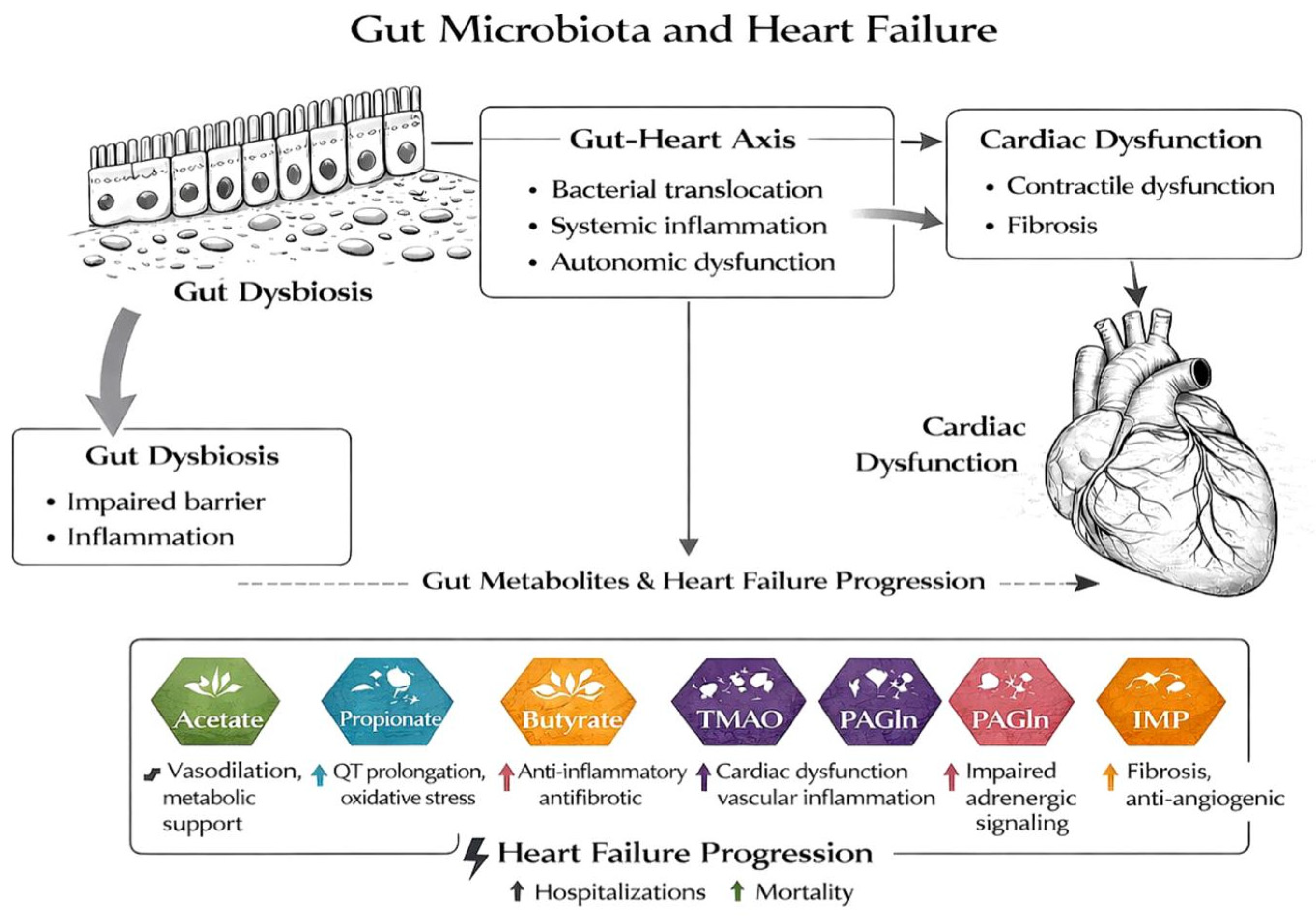
3. The Gut–Heart Axis
3.1. Pathophysiological Basis
3.2. Gut Microbiota Dysbiosis and Cardiovascular Effects
4. Interactions Between Novel Heart Failure Therapies and the Gut Microbiota
4.1. SGLT2 Inhibitors
4.1.1. Murine Studies
4.1.2. Human Studies
4.2. Sacubitril/Valsartan (ARNI)
4.2.1. Murine Studies with ARNI
4.2.2. Murine and Human Studies with RAAS Inhibitors
5. Clinical Implications of Drug–Microbiota Interactions
6. Future Directions
7. Strength of Evidence Across Therapeutic Classes
8. Conclusions
Author Contributions
Funding
Data Availability Statement
Conflicts of Interest
References
- McDonagh, T.A.; Metra, M.; Adamo, M.; Gardner, R.S.; Baumbach, A.; Böhm, M.; Burri, H.; Butler, J.; Čelutkienė, J.; Chioncel, O.; et al. 2021 ESC Guidelines for the diagnosis and treatment of acute and chronic heart failure. Eur. Heart J. 2021, 42, 3599–3726. [Google Scholar] [CrossRef] [PubMed]
- Braunwald, E. Heart failure. JACC Heart Fail. 2013, 1, 1–20. [Google Scholar] [CrossRef]
- Beverborg, N.G.; van der Wal, H.H.; Klip, I.T.; Voors, A.A.; de Boer, R.A.; van Gilst, W.H.; van Veldhuisen, D.J.; Gansevoort, R.T.; Hillege, H.L.; van der Harst, P.; et al. High Serum Erythropoietin Levels are Related to Heart Failure Development in Subjects from the General Population with Albuminuria: Data from PREVEND. Eur. J. Heart Fail. 2016, 18, 814–821. [Google Scholar] [CrossRef]
- Tang, W.H.; Kitai, T.; Hazen, S.L. Gut Microbiota in Cardiovascular Health and Disease. Circ. Res. 2017, 120, 1183–1196. [Google Scholar] [CrossRef] [PubMed]
- Niebauer, J.; Volk, H.D.; Kemp, M.; Dominguez, M.; Schumann, R.R.; Rauchhaus, M.; Poole-Wilson, P.A.; Coats, A.J.; Anker, S.D. Endotoxin and immune activation in chronic heart failure: A prospective cohort study. Lancet 1999, 353, 1838–1842. [Google Scholar] [CrossRef]
- Brown, J.M.; Hazen, S.L. The gut microbial endocrine organ: Bacterially derived signals driving cardiometabolic diseases. Annu. Rev. Med. 2015, 66, 343–359. [Google Scholar] [CrossRef]
- McMurray, J.J.V.; Solomon, S.D.; Inzucchi, S.E.; Køber, L.; Kosiborod, M.N.; Martinez, F.A.; Ponikowski, P.; Sabatine, M.S.; Anand, I.S.; Bělohlávek, J.; et al. DAPA-HF Trial Committees and Investigators. Dapagliflozin in Patients with Heart Failure and Reduced Ejection Fraction. N. Engl. J. Med. 2019, 381, 1995–2008. [Google Scholar] [CrossRef]
- Solomon, S.D.; Vaduganathan, M.; Claggett, B.L.; Packer, M.; Zile, M.; Swedberg, K.; Rouleau, J.; Pfeffer, M.A.; Desai, A.; Lund, L.H.; et al. Sacubitril/Valsartan Across the Spectrum of Ejection Fraction in Heart Failure. Circulation 2020, 141, 352–361. [Google Scholar] [CrossRef]
- Gutiérrez-Calabrés, E.; Ortega-Hernández, A.; Modrego, J.; Gómez-Gordo, R.; Caro-Vadillo, A.; Rodríguez-Bobada, C.; González, P.; Gómez-Garre, D. Gut Microbiota Profile Identifies Transition from Compensated Cardiac Hypertrophy to Heart Failure in Hypertensive Rats. Hypertension 2020, 76, 1545–1554. [Google Scholar] [CrossRef]
- Matsiras, D.; Bezati, S.; Ventoulis, I.; Verras, C.; Parissis, J.; Polyzogopoulou, E. Gut Failure: A Review of the Pathophysiology and Therapeutic Potentials in the Gut-Heart Axis. J. Clin. Med. 2023, 12, 2567. [Google Scholar] [CrossRef]
- Takala, J. Determinants of splanchnic blood flow. Br. J. Anaesth. 1996, 77, 50–58. [Google Scholar] [CrossRef] [PubMed]
- Chou, C.C. Splanchnic and overall cardiovascular hemodynamics during eating and digestion. Fed. Proc. 1983, 42, 1658–1661. [Google Scholar]
- Madan, S.; Mehra, M.R. Gut dysbiosis and heart failure: Navigating the universe within. Eur. J. Heart Fail. 2020, 22, 629–637. [Google Scholar] [CrossRef]
- Nøhr, M.K.; Egerod, K.L.; Christiansen, S.H.; Gille, A.; Offermanns, S.; Schwartz, T.W.; Møller, M. Expression of the short chain fatty acid receptor GPR41/FFAR3 in autonomic and somatic sensory ganglia. Neuroscience 2015, 290, 126–137. [Google Scholar] [CrossRef]
- Nilsson, N.E.; Kotarsky, K.; Owman, C.; Olde, B. Identification of a free fatty acid receptor, FFA2R, expressed on leukocytes and activated by short-chain fatty acids. Biochem. Biophys. Res. Commun. 2003, 303, 1047–1052. [Google Scholar] [CrossRef]
- Pluznick, J.L. Microbial Short-Chain Fatty Acids and Blood Pressure Regulation. Curr. Hypertens. Rep. 2017, 19, 25. [Google Scholar] [CrossRef]
- Melhem, N.J.; Taleb, S. Tryptophan: From Diet to Cardiovascular Diseases. Int. J. Mol. Sci. 2021, 22, 9904. [Google Scholar] [CrossRef]
- Hylemon, P.B.; Zhou, H.; Pandak, W.M.; Ren, S.; Gil, G.; Dent, P. Bile acids as regulatory molecules. J. Lipid Res. 2009, 50, 1509–1520. [Google Scholar] [CrossRef] [PubMed]
- Pathak, P.; Xie, C.; Nichols, R.G.; Ferrell, J.M.; Boehme, S.; Krausz, K.W.; Patterson, A.D.; Gonzalez, F.J.; Chiang, J.Y.L. Intestine farnesoid X receptor agonist and the gut microbiota activate G-protein bile acid receptor-1 signaling to improve metabolism. Hepatology 2018, 68, 1574–1588. [Google Scholar] [CrossRef] [PubMed]
- Yang, W.; Yu, T.; Huang, X.; Bilotta, A.J.; Xu, L.; Lu, Y.; Sun, J.; Pan, F.; Zhou, J.; Zhang, W.; et al. Intestinal microbiota-derived short-chain fatty acids regulation of immune cell IL-22 production and gut immunity. Nat. Commun. 2020, 11, 4457. [Google Scholar] [CrossRef]
- Snelson, M.; RMuralitharan, R.; Liu, C.F.; Markó, L.; Forslund, S.K.; Marques, F.Z.; Tang, W.H.W. Gut-Heart Axis: The Role of Gut Microbiota and Metabolites in Heart Failure. Circ. Res. 2025, 136, 1382–1406. [Google Scholar] [CrossRef]
- Tang, W.H.W.; Li, D.Y.; Hazen, S.L. Dietary metabolism, the gut microbiome, and heart failure. Nat. Rev. Cardiol. 2019, 16, 137–154. [Google Scholar] [CrossRef]
- Guo, S.; Zhang, W.; Cui, X.; Yin, B. The bidirectional regulatory mechanism of gut microbiota metabolites on myocardial injury in heart failure from the perspective of the gut-heart axis: A review. Front. Microbiol. 2025, 16, 1710051. [Google Scholar] [CrossRef] [PubMed]
- Sun, W.; Du, D.; Fu, T.; Han, Y.; Li, P.; Ju, H. Alterations of the Gut Microbiota in Patients with Severe Chronic Heart Failure. Front. Microbiol. 2022, 12, 813289. [Google Scholar] [CrossRef] [PubMed]
- Paraskevaidis, I.; Xanthopoulos, A.; Tsougos, E.; Triposkiadis, F. Human Gut Microbiota in Heart Failure: Trying to Unmask an Emerging Organ. Biomedicines 2023, 11, 2574. [Google Scholar] [CrossRef] [PubMed]
- Cienkowski, K.; Cienkowska, A.; Kupczynska, K.; Bielecka-Dabrowa, A. The Role of Gut Microbiota and Its Metabolites in Patients with Heart Failure. Biomedicines 2024, 12, 894. [Google Scholar] [CrossRef]
- Wang, G.; Kong, B.; Shuai, W.; Fu, H.; Jiang, X.; Huang, H. 3,3-Dimethyl-1-butanol attenuates cardiac remodeling in pressure-overload-induced heart failure mice. J. Nutr. Biochem. 2020, 78, 108341. [Google Scholar] [CrossRef]
- Li, Z.; Wu, Z.; Yan, J.; Liu, H.; Liu, Q.; Deng, Y.; Ou, C.; Chen, M. Gut microbe-derived metabolite trimethylamine N-oxide induces cardiac hypertrophy and fibrosis. Lab. Investig. J. Tech. Methods Pathol. 2019, 99, 346–357. [Google Scholar] [CrossRef]
- Seldin, M.M.; Meng, Y.; Qi, H.; Zhu, W.; Wang, Z.; Hazen, S.L.; Lusis, A.J.; Shih, D.M. Trimethylamine N-Oxide Promotes Vascular Inflammation Through Signaling of Mitogen-Activated Protein Kinase and Nuclear Factor-κB. J. Am. Heart Assoc. 2016, 5, e002767. [Google Scholar] [CrossRef]
- Jin, B.; Ji, F.; Zuo, A.; Liu, H.; Qi, L.; He, Y.; Wang, Q.; Zhao, P. Destructive Role of TMAO in T-Tubule and Excitation-Contraction Coupling in the Adult Cardiomyocytes. Int. Heart J. 2020, 61, 355–363. [Google Scholar] [CrossRef]
- Querio, G.; Antoniotti, S.; Geddo, F.; Levi, R.; Gallo, M.P. Trimethylamine N-Oxide (TMAO) Impairs Purinergic Induced Intracellular Calcium Increase and Nitric Oxide Release in Endothelial Cells. Int. J. Mol. Sci. 2022, 23, 3982. [Google Scholar] [CrossRef]
- Yu, L.; Meng, G.; Huang, B.; Zhou, X.; Stavrakis, S.; Wang, M.; Li, X.; Zhou, L.; Wang, Y.; Wang, M.; et al. A potential relationship between gut microbes and atrial fibrillation: Trimethylamine N-oxide, a gut microbe-derived metabolite, facilitates the progression of atrial fibrillation. Int. J. Cardiol. 2018, 255, 92–98. [Google Scholar] [CrossRef]
- Wang, P.; Mi, Y.; Yu, H.; Teng, X.; Jin, S.; Xiao, L.; Xue, H.; Tian, D.; Guo, Q.; Wu, Y. Trimethylamine-N-oxide aggravated the sympathetic excitation in D-galactose induced aging rats by down-regulating P2Y12 receptor in microglia. Biomed. Pharmacother. 2024, 174, 116549. [Google Scholar] [CrossRef]
- Chen, W.S.; Liu, M.H.; Tsou, Y.L.; Wu, H.P.; Lin, H.C.; Liang, C.Y.; Wang, C.H. Extensive Dysregulation of Phenylalanine Metabolism Is Associated with Stress Hyperphenylalaninemia and 30-Day Death in Critically Ill Patients with Acute Decompensated Heart Failure. J. Am. Heart Assoc. 2024, 13, e035821. [Google Scholar] [CrossRef]
- Tang, W.H.W.; Nemet, I.; Li, X.S.; Wu, Y.; Haghikia, A.; Witkowski, M.; Koeth, R.A.; Demuth, I.; König, M.; Steinhagen-Thiessen, E.; et al. Prognostic value of gut microbe-generated metabolite phenylacetylglutamine in patients with heart failure. Eur. J. Heart Fail. 2024, 26, 233–241. [Google Scholar] [CrossRef]
- Romano, K.A.; Nemet, I.; Prasad Saha, P.; Haghikia, A.; Li, X.S.; Mohan, M.L.; Lovano, B.; Castel, L.; Witkowski, M.; Buffa, J.A.; et al. Gut Microbiota-Generated Phenylacetylglutamine and Heart Failure. Circ. Heart Fail. 2023, 16, e009972. [Google Scholar] [CrossRef] [PubMed]
- Sandek, A.; Bjarnason, I.; Volk, H.D.; Crane, R.; Meddings, J.B.; Niebauer, J.; Kalra, P.R.; Buhner, S.; Herrmann, R.; Springer, J.; et al. Studies on bacterial endotoxin and intestinal absorption function in patients with chronic heart failure. Int. J. Cardiol. 2012, 157, 80–85. [Google Scholar] [CrossRef] [PubMed]
- Molinaro, A.; Nemet, I.; Bel Lassen, P.; Chakaroun, R.; Nielsen, T.; Aron-Wisnewsky, J.; Bergh, P.O.; Li, L.; Henricsson, M.; Køber, L.; et al. Microbially Produced Imidazole Propionate Is Associated with Heart Failure and Mortality. JACC Heart Fail. 2023, 11, 810–821. [Google Scholar] [CrossRef] [PubMed]
- Raju, S.C.; Molinaro, A.; Awoyemi, A.; Jørgensen, S.F.; Braadland, P.R.; Nendl, A.; Seljeflot, I.; Ueland, P.M.; McCann, A.; Aukrust, P.; et al. Microbial-derived imidazole propionate links the heart failure-associated microbiome alterations to disease severity. Genome Med. 2024, 16, 27. [Google Scholar] [CrossRef]
- Dahl, T.B.; Aftab, F.; Prebensen, C.; Berdal, J.E.; Ueland, T.; Barratt-Due, A.; Riise, A.M.D.; Ueland, P.M.; Hov, J.R.; Trøseid, M.; et al. Imidazole propionate is increased in severe COVID-19 and correlates with cardiac involvement. J. Infect. 2025, 90, 106494. [Google Scholar] [CrossRef]
- Yang, M.; Shi, F.H.; Liu, W.; Zhang, M.C.; Feng, R.L.; Qian, C.; Liu, W.; Ma, J. Dapagliflozin Modulates the Fecal Microbiota in a Type 2 Diabetic Rat Model. Front. Endocrinol. 2020, 11, 635. [Google Scholar] [CrossRef]
- Hata, S.; Okamura, T.; Kobayashi, A.; Bamba, R.; Miyoshi, T.; Nakajima, H.; Kitagawa, N.; Hashimoto, Y.; Majima, S.; Senmaru, T.; et al. Gut Microbiota Changes by an SGLT2 Inhibitor, Luseogliflozin, Alters Metabolites Compared with Those in a Low Carbohydrate Diet in db/db Mice. Nutrients 2022, 14, 3531. [Google Scholar] [CrossRef]
- Wang, X.; Wang, Z.; Liu, D.; Jiang, H.; Cai, C.; Li, G.; Yu, G. Canagliflozin Prevents Lipid Accumulation, Mitochondrial Dysfunction, and Gut Microbiota Dysbiosis in Mice with Diabetic Cardiovascular Disease. Front. Pharmacol. 2022, 13, 839640. [Google Scholar] [CrossRef] [PubMed]
- Bao, N.; Liu, X.; Zhong, X.; Jia, S.; Hua, N.; Zhang, L.; Mo, G. Dapagliflozin-affected endothelial dysfunction and altered gut microbiota in mice with heart failure. PeerJ 2023, 11, e15589. [Google Scholar] [CrossRef] [PubMed]
- Kunasol, C.; Maneechote, C.; Apaijai, N.; Thonusin, C.; Parbao, C.; Nawara, W.; Chattipakorn, N.; Chattipakorn, S.C. Dapagliflozin enhances gut barrier function in rats with chronic myocardial infarction by modulating gut microbiota balance. Ann. Transl. Med. 2025, 13, 70. [Google Scholar] [CrossRef]
- Hasanvand, A.; Goudarzi, G.; Hadian, B. Pharmacological modulation of the diabetic gut microbiome with gliflozin drugs:new insights for therapeutic targeting. J. Diabetes Metab. Disord. 2025, 24, 206. [Google Scholar] [CrossRef]
- Wang, L.; Liang, C.; Song, X.; Jia, X.; Wang, X.; Zhang, Y.; Xie, Q.; Zheng, N.; Yuan, H. Canagliflozin alters the gut, oral, and ocular surface microbiota of patients with type 2 diabetes mellitus. Front. Endocrinol. 2023, 14, 1256292. [Google Scholar] [CrossRef]
- van Bommel, E.J.M.; Herrema, H.; Davids, M.; Kramer, M.H.H.; Nieuwdorp, M.; van Raalte, D.H. Effects of 12-week treatment with dapagliflozin and gliclazide on faecal microbiome: Results of a double-blind randomized trials in patients with type 2 diabetes. Diabetes Metab. 2020, 46, 164–168. [Google Scholar] [CrossRef] [PubMed]
- Moskva, K.; Kikhtyak, O.; Kikhtiak, T.; Farmaha, M.; Leshchuk, Y.; Leshchuk, Y. The influence of metformin and empagliflozin administration on gut microbiota in individuals with type 2 diabetes mellitus and hypothyroidism. Int. J. Endocrinol. 2024, 20, 292–296. [Google Scholar] [CrossRef]
- Deng, X.; Zhang, C.; Wang, P.; Wei, W.; Shi, X.; Wang, P.; Yang, J.; Wang, L.; Tang, S.; Fang, Y.; et al. Cardiovascular Benefits of Empagliflozin Are Associated with Gut Microbiota and Plasma Metabolites in Type 2 Diabetes. J. Clin. Endocrinol. Metab. 2022, 107, 1888–1896, Correction in J. Clin. Endocrinol. Metab. 2022, 107, e4330. https://doi.org/10.1210/clinem/dgac506. [Google Scholar] [CrossRef]
- Zhang, Y.; Liu, Y.; Liu, Q.; Zhang, Q.; Zhu, W.; Ma, C.; Zhu, Z.; Fang, Z.; Xu, X. Impact of Dapagliflozin on Gut Microbiota and Plasma Metabolomic Profiles in Patients with Heart Failure. Front. Biosci. Landmark 2025, 30, 46142. [Google Scholar] [CrossRef]
- Kumar, D.; Mukherjee, S.S.; Chakraborty, R.; Roy, R.R.; Pandey, A.; Patra, S.; Dey, S. The emerging role of gut microbiota in cardiovascular diseases. Indian Heart J. 2021, 73, 264–272. [Google Scholar] [CrossRef]
- Do, H.E.; Ha, Y.B.; Kim, J.S.; Suh, M.K.; Kim, H.S.; Eom, M.K.; Lee, J.H.; Park, S.H.; Kang, S.W.; Lee, D.H.; et al. Phocaeicola acetigenes sp. nov., producing acetic acid and iso-butyric acid, isolated faeces from a healthy human. Antonie Van Leeuwenhoek 2024, 117, 30. [Google Scholar] [CrossRef]
- Guan, X.Q.; Wang, C.H.; Cheng, P.; Fu, L.Y.; Wu, Q.J.; Cheng, G.; Guan, L.; Sun, Z.J. Effects of Empagliflozin on Gut Microbiota in Heart Failure with a Preserved Ejection Fraction: The Design of a Pragmatic Randomized, Open-Label Controlled Trial (EMPAGUM). Drug Des. Dev. Ther. 2023, 17, 1495–1502. [Google Scholar] [CrossRef]
- Tang, W.H.; Wang, Z.; Kennedy, D.J.; Wu, Y.; Buffa, J.A.; Agatisa-Boyle, B.; Li, X.S.; Levison, B.S.; Hazen, S.L. Gut microbiota-dependent trimethylamine N-oxide (TMAO) pathway contributes to both development of renal insufficiency and mortality risk in chronic kidney disease. Circ. Res. 2015, 116, 448–455. [Google Scholar] [CrossRef]
- Vich Vila, A.; Collij, V.; Sanna, S.; Sinha, T.; Imhann, F.; Bourgonje, A.R.; Mujagic, Z.; Jonkers, D.M.A.E.; Masclee, A.A.M.; Fu, J.; et al. Impact of commonly used drugs on the composition and metabolic function of the gut microbiota. Nat. Commun. 2020, 11, 362. [Google Scholar] [CrossRef] [PubMed]
- Zimmermann, M.; Zimmermann-Kogadeeva, M.; Wegmann, R.; Goodman, A.L. Mapping human microbiome drug metabolism by gut bacteria and their genes. Nature 2019, 570, 462–467. [Google Scholar] [CrossRef] [PubMed]
- Wang, P.; Guo, R.; Bai, X.; Cui, W.; Zhang, Y.; Li, H.; Shang, J.; Zhao, Z. Sacubitril/Valsartan contributes to improving the diabetic kidney disease and regulating the gut microbiota in mice. Front. Endocrinol. 2022, 13, 1034818. [Google Scholar] [CrossRef] [PubMed]
- Wang, J.; Zhang, H.; Wu, L.; Lu, D. Sacubitril/valsartan mitigated intermittent hypoxia related intestinal microbiota alteration and aortic injury. Sleep Breath. 2023, 27, 1769–1777. [Google Scholar] [CrossRef]
- Jaworska, K.; Koper, M.; Ufnal, M. Gut microbiota and renin-angiotensin system: A complex interplay at local and systemic levels. Am. J. Physiol. Gastrointest. Liver Physiol. 2021, 321, G355–G366. [Google Scholar] [CrossRef]
- Qi, Y.Z.; Jiang, Y.H.; Jiang, L.Y.; Shao, L.L.; Yang, X.S.; Yang, C.H. An Insight Into Intestinal Microbiota of Spontaneously Hypertensive Rats After Valsartan Administration. Dose Response A Publ. Int. Hormesis Soc. 2021, 19, 15593258211011342. [Google Scholar] [CrossRef]
- Xiong, Y.; He, Y.; Chen, Z.; Wu, T.; Xiong, Y.; Peng, Y.; Yang, X.; Liu, Y.; Zhou, J.; Zhou, H.; et al. Lactobacillus induced by irbesartan on spontaneously hypertensive rat contribute to its antihypertensive effect. J. Hypertens. 2024, 42, 460–470. [Google Scholar] [CrossRef]
- Dong, Y.; Wang, P.; Jiao, J.; Yang, X.; Chen, M.; Li, J. Antihypertensive Therapy by ACEI/ARB Is Associated with Intestinal Flora Alterations and Metabolomic Profiles in Hypertensive Patients. Front. Cell Dev. Biol. 2022, 10, 861829. [Google Scholar] [CrossRef] [PubMed]
- Tuteja, S.; Ferguson, J.F. Gut Microbiome and Response to Cardiovascular Drugs. Circ. Genom. Precis. Med. 2019, 12, 421–429. [Google Scholar] [CrossRef]
- Sousa, T.; Paterson, R.; Moore, V.; Carlsson, A.; Abrahamsson, B.; Basit, A.W. The gastrointestinal microbiota as a site for the biotransformation of drugs. Int. J. Pharm. 2008, 363, 1–25. [Google Scholar] [CrossRef] [PubMed]
- Xia, J.; Jin, Y.; Hong, Y.; Zhang, Y.; Li, M.; Huang, H.; Cai, X.; Li, D.; Wang, B.; Xie, Z. Effects of gut microbiota dysbiosis on the metabolism and pharmacokinetics of losartan in rats: From endogenous to ceftriaxone-induced dysbiosis. Front. Microbiol. 2025, 16, 1693247. [Google Scholar] [CrossRef]
- Li, L.; Yang, L.; Liu, M. The effect of high-fiber diet based on gut microbiota in patients with chronic heart failure. Physiol. Genom. 2025, 57, 140–145. [Google Scholar] [CrossRef]
- Lupu, V.V.; Adam Raileanu, A.; Mihai, C.M.; Morariu, I.D.; Lupu, A.; Starcea, I.M.; Frasinariu, O.E.; Mocanu, A.; Dragan, F.; Fotea, S. The Implication of the Gut Microbiome in Heart Failure. Cells 2023, 12, 1158. [Google Scholar] [CrossRef]
- Murgiano, M.; Bartocci, B.; Puca, P.; di Vincenzo, F.; Del Gaudio, A.; Papa, A.; Cammarota, G.; Gasbarrini, A.; Scaldaferri, F.; Lopetuso, L.R. Gut Microbiota Modulation in IBD: From the Old Paradigm to Revolutionary Tools. Int. J. Mol. Sci. 2025, 26, 3059. [Google Scholar] [CrossRef] [PubMed]
- Gupta, A.; Khanna, S. Fecal Microbiota Transplantation. JAMA 2017, 318, 102. [Google Scholar] [CrossRef]
- Chen, A.T.; Zhang, J.; Zhang, Y. Gut microbiota in heart failure and related interventions. iMeta 2023, 2, e125. [Google Scholar] [CrossRef] [PubMed]


| Alteration/Metabolite | Microbial Origin | Main Mechanisms | Cardiovascular Effects | Clinical/Prognostic Relevance |
|---|---|---|---|---|
| Gut microbiota dysbiosis | ↓ Firmicutes and Bacteroidetes; ↑ Proteobacteria and Actinobacteria | Increased intestinal permeability, bacterial translocation, systemic inflammation | HF progression, myocardial damage, adverse remodeling | Associated with HF severity and worse outcomes [23,24,25,26] |
| Trimethylamine N-oxide (TMAO) | Hepatic oxidation of gut-derived trimethylamine from choline/carnitine | Oxidative stress, inflammation, mitochondrial dysfunction, sympathetic activation | Myocardial hypertrophy and fibrosis, endothelial dysfunction, impaired contractility | Strong independent prognostic biomarker in HF [21,23,27,28,29,30,31,32,33] |
| Phenylacetic acid/phenylacetylglutamine | Microbial phenylalanine metabolism | Metabolic dysregulation, reduced adrenergic responsiveness | Reduced inotropic reserve, increased BNP, maladaptive remodeling | Associated with short-term mortality and adverse prognosis [34,35,36] |
| Lipopolysaccharide (LPS) | Translocation of Gram-negative bacteria | Immune activation, chronic low-grade inflammation | Myocardial injury, worsening HF | Inversely correlated with cardiac function [23,37] |
| Short-chain fatty acids (SCFAs) | Fermentation of dietary fibers | Anti-inflammatory effects, metabolic regulation, epigenetic modulation | Cardioprotective effects, improved myocardial function (especially butyrate) | Reduced circulating levels in HF patients [23] |
| Imidazole propionate (IMP) | Gut-microbial histidine metabolism | Energy metabolism reprogramming, fibrosis, anti-angiogenic effects | LV dysfunction, adverse remodeling, impaired perfusion | Independent predictor of mortality and disease severity [38,39,40] |
| Pharmacological Molecule | Evidence Level | Microbiota/Metabolite Changes | Proposed Mechanisms | Potential Clinical Implications |
|---|---|---|---|---|
| SGLT2 inhibitors (class effect) | Preclinical (non-HF) and exploratory human studies | Modulation of gut microbiota composition; variable changes in Firmicutes/Bacteroidetes ratio; possible increase in SCFA-producing bacteria | Effects on metabolic pathways, systemic inflammation, and intestinal environment | May contribute to cardio-renal and metabolic benefits; findings remain heterogeneous |
| Dapagliflozin | Preclinical HF and non-HF models; exploratory human HF study | Increased microbial diversity; enrichment of Akkermansia and other taxa; reduced TMAO and increased butyrate (preclinical data) | Coupled vascular and microbiota remodeling; improvement in endothelial function and inflammatory profile | Supports pleiotropic mechanisms beyond glucose lowering; clinical relevance remains to be confirmed [41,44,45,49,50] |
| Luseogliflozin | Preclinical (non-HF murine metabolic model) | Modulation of amino acid-related microbial pathways; changes in specific taxa (e.g., Syntrophomonadaceae) | Improvement in amino acid metabolism and muscle-related pathways | Potential relevance for metabolic dysfunction and sarcopenic phenotypes; indirect implications for HF [42] |
| Canagliflozin | Preclinical (T2DM + CVD model) | Partial restoration of Firmicutes/Bacteroidetes balance; reduction in dysbiosis | Reduced inflammation, oxidative stress, and lipid accumulation; improved mitochondrial function | Suggests cardiometabolic benefit possibly mediated by microbiota modulation [43] |
| Empagliflozin | Exploratory human studies and ongoing clinical trials (HFpEF) | Increased SCFA-producing bacteria; reshaping of microbial composition; longitudinal assessment ongoing | Potential modulation of metabolic and inflammatory pathways; interaction with host–microbiota signaling | May clarify temporal associations between therapy and microbiota changes; causal relationships remain to be established [54] |
| Sacubitril/valsartan (ARNI) | Preclinical (non-HF and renal/vascular models) | Increased beneficial bacteria taxa (e.g., Lactobacillus, Parabacteroides); reduction in pro-inflammatory signatures | Improvement in intestinal barrier integrity, modulation of RAAS, and reduction in systemic inflammation | Suggests a potential role in gut–heart axis modulation; evidence currently limited to preclinical studies [58,59] |
| RAAS inhibitors (ACEi/ARB) | Preclinical and exploratory human studies (non-HF populations) | Increased beneficial taxa (e.g., Lactobacillus spp., Odoribacter); reduction in pathogenic bacteria (e.g., Enterobacter, Klebsiella); modulation of SCFAs | Modulation of local intestinal RAAS signaling; improved intestinal perfusion, reduced oxidative stress, and enhanced barrier integrity suggest potential class effect on gut microbiota; relevance in heart failure remains indirect and not specifically established | Potential class effect on gut microbiota; relevance in heart failure remains indirect and not specifically established [61,62,63] |
Disclaimer/Publisher’s Note: The statements, opinions and data contained in all publications are solely those of the individual author(s) and contributor(s) and not of MDPI and/or the editor(s). MDPI and/or the editor(s) disclaim responsibility for any injury to people or property resulting from any ideas, methods, instructions or products referred to in the content. |
© 2026 by the authors. Licensee MDPI, Basel, Switzerland. This article is an open access article distributed under the terms and conditions of the Creative Commons Attribution (CC BY) license.
Share and Cite
Salerno, E.N.M.; Fumarulo, I.; Mendicino, C.; Vaccarella, M.; Garramone, B.; Gallo, F.; Volzone, G.; Cammuso, A.; Della Candelora, V.; Scaldaferri, F.; et al. The Heart–Gut Axis in Heart Failure: The Role of Next-Generation Pharmacological Therapies. Int. J. Mol. Sci. 2026, 27, 2913. https://doi.org/10.3390/ijms27062913
Salerno ENM, Fumarulo I, Mendicino C, Vaccarella M, Garramone B, Gallo F, Volzone G, Cammuso A, Della Candelora V, Scaldaferri F, et al. The Heart–Gut Axis in Heart Failure: The Role of Next-Generation Pharmacological Therapies. International Journal of Molecular Sciences. 2026; 27(6):2913. https://doi.org/10.3390/ijms27062913
Chicago/Turabian StyleSalerno, Elia Nunzio Maria, Isabella Fumarulo, Claudia Mendicino, Marcello Vaccarella, Barbara Garramone, Francesco Gallo, Gerardo Volzone, Andrea Cammuso, Vincenzo Della Candelora, Franco Scaldaferri, and et al. 2026. "The Heart–Gut Axis in Heart Failure: The Role of Next-Generation Pharmacological Therapies" International Journal of Molecular Sciences 27, no. 6: 2913. https://doi.org/10.3390/ijms27062913
APA StyleSalerno, E. N. M., Fumarulo, I., Mendicino, C., Vaccarella, M., Garramone, B., Gallo, F., Volzone, G., Cammuso, A., Della Candelora, V., Scaldaferri, F., Lopetuso, L. R., Gasbarrini, A., Burzotta, F., & Aspromonte, N. (2026). The Heart–Gut Axis in Heart Failure: The Role of Next-Generation Pharmacological Therapies. International Journal of Molecular Sciences, 27(6), 2913. https://doi.org/10.3390/ijms27062913