Sulforaphane in Cancer Prevention and Therapy: A State-of-the-Art Review of Epidemiological Evidence, Molecular Mechanisms, and Translational Challenges


Abstract
1. Introduction
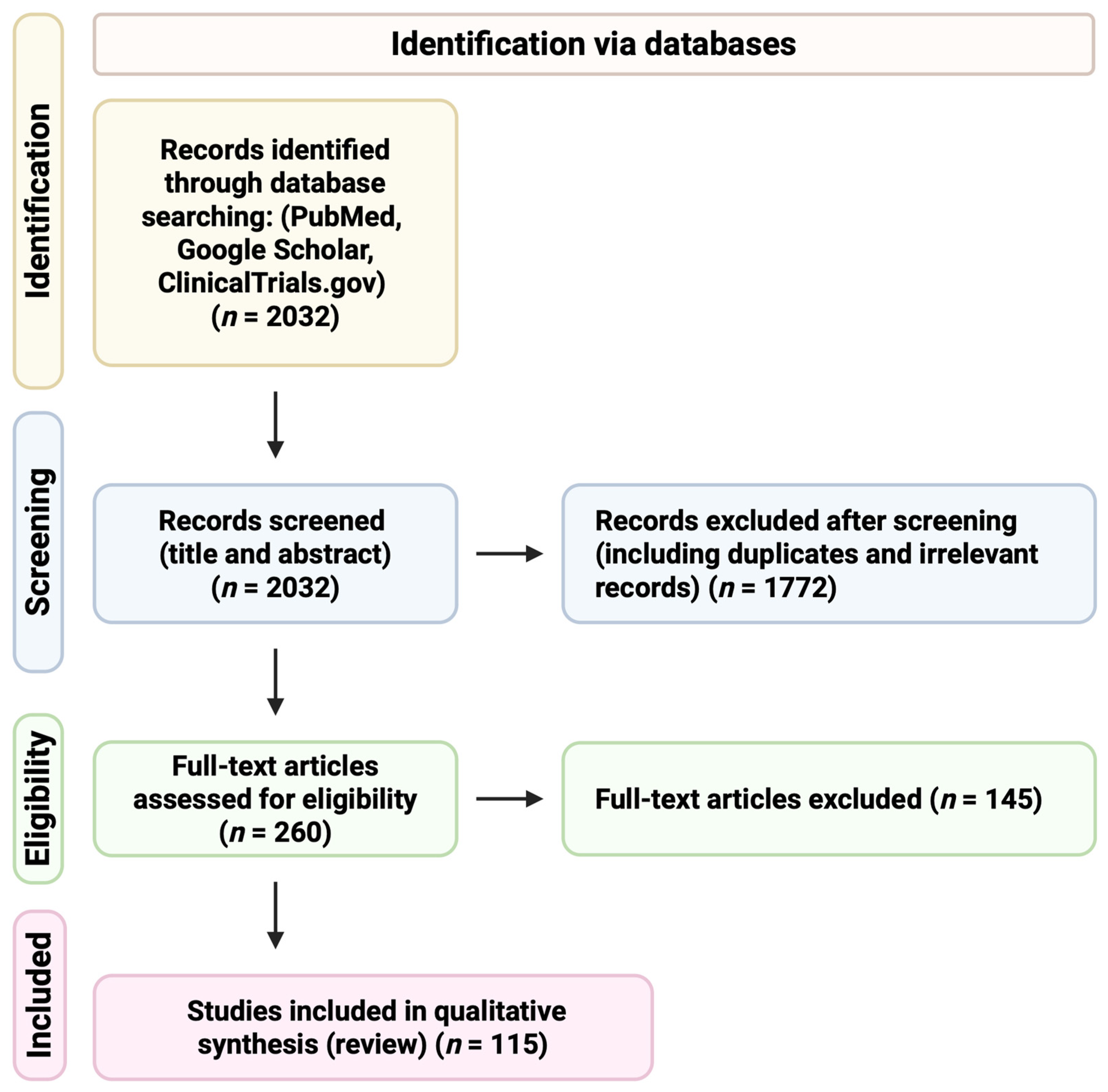
2. Literature Search Strategy and Study Selection
3. Chemistry, Metabolism, and Bioavailability
3.1. Glucoraphanin-to-SFN Conversion
3.2. Human Metabolism and the Mercapturic Acid Pathway
3.3. Determinants of SFN Bioavailability in Humans
4. Molecular Mechanisms of SFN
4.1. Nrf2–ARE Activation
4.2. Epigenetic Modulation
4.3. Cell Death and Anticancer Signaling
4.4. Additional Antitumor Mechanisms of SFN
5. Preclinical and Clinical Evidence
5.1. Preclinical Summary
5.1.1. Prostate Cancer
5.1.2. Breast Cancer
5.1.3. Colorectal Cancer
5.2. Clinical Studies
6. Challenges, Translational Barriers, and Future Perspectives
6.1. Bioavailability-Related Variability and Translational Barriers
6.2. Biomarker-Guided and Mechanism-Driven Clinical Trial Design
6.3. Advanced Delivery Systems and Combination Strategies
6.4. Long-Term Safety Considerations for Chronic SFN Administration
7. Conclusions
Author Contributions
Funding
Institutional Review Board Statement
Informed Consent Statement
Data Availability Statement
Conflicts of Interest
Abbreviations
| AKT | Protein kinase B |
| AMPK | AMP-activated protein kinase |
| AP-1 | Activator protein 1 |
| ARE | Antioxidant response element |
| CKMT2-AS1 | Creatine kinase, mitochondrial 2 antisense RNA 1 |
| DNMT | DNA methyltransferase |
| GPX4 | Glutathione peroxidase 4 |
| G2/M | G2/M phase of the cell cycle |
| HDAC | Histone deacetylase |
| HO-1 | Heme oxygenase 1 |
| IL-1β | Interleukin-1 beta |
| IL-6 | Interleukin-6 |
| Keap1 | Kelch-like ECH-associated protein 1 |
| MAPK | Mitogen-activated protein kinase |
| mTOR | Mechanistic target of rapamycin |
| NADPH | Nicotinamide adenine dinucleotide phosphate |
| NF-κB | Nuclear factor kappa-light-chain-enhancer of activated B cells |
| NQO1 | NAD(P)H quinone dehydrogenase 1 |
| Nrf2 | Nuclear factor erythroid 2–related factor 2 |
| PI3K | Phosphoinositide 3-kinase |
| ROS | Reactive oxygen species |
| SFN | Sulforaphane |
| STAT3 | Signal transducer and activator of transcription 3 |
| TRAMP | Transgenic adenocarcinoma of mouse prostate |
References
- Briones-Herrera, A.; Eugenio-Pérez, D.; Reyes-Ocampo, J.G.; Rivera-Mancía, S.; Pedraza-Chaverri, J. New highlights on the health-improving effects of sulforaphane. Food Funct. 2018, 9, 2589–2606. [Google Scholar] [CrossRef]
- Bessetti, R.N.; Litwa, K.A. Broccoli for the brain: A review of the neuroprotective mechanisms of sulforaphane. Front. Cell. Neurosci. 2025, 19, 1601366. [Google Scholar] [CrossRef]
- Treasure, K.; Harris, J.; Williamson, G. Exploring the anti-inflammatory activity of sulforaphane. Immunol. Cell Biol. 2023, 101, 805–828. [Google Scholar] [CrossRef]
- Conzatti, A.; Colombo, R.; Siqueira, R.; Campos-Carraro, C.; Turck, P.; de Castro, A.L.; Belló-Klein, A.; da Rosa Araujo, A.S. Sulforaphane improves redox homeostasis and right ventricular contractility in a model of pulmonary hypertension. J. Cardiovasc. Pharmacol. 2024, 83, 612–620. [Google Scholar] [CrossRef] [PubMed]
- Lei, P.; Tian, S.; Teng, C.; Huang, L.; Liu, X.; Wang, J.; Zhang, Y.; Li, B.; Shan, Y. Sulforaphane improves lipid metabolism by enhancing mitochondrial function and biogenesis in vivo and in vitro. Mol. Nutr. Food Res. 2019, 63, 1800795, Erratum in Mol. Nutr. Food Res. 2021, 65, e2170023. [Google Scholar] [CrossRef] [PubMed]
- Mahn, A.; Castillo, A. Potential of sulforaphane as a natural immune system enhancer: A review. Molecules 2021, 26, 752. [Google Scholar] [CrossRef] [PubMed]
- Merchant, H.J.; Forteath, C.; Gallagher, J.R.; Dinkova-Kostova, A.T.; Ashford, M.L.; McCrimmon, R.J.; McNeilly, A.D. Activation of the Nrf2 pathway by sulforaphane improves hypoglycaemia-induced cognitive impairment in a rodent model of type 1 diabetes. Antioxidants 2025, 14, 308. [Google Scholar] [CrossRef]
- Qin, K.; Liang, W.; Fragoulis, A.; Yan, W.; Zhang, X.; Zhao, Q.; Ma, C.; He, Z.; Buhl, E.M.; Li, Y.; et al. Sulforaphane regulates hepatic autophagy and apoptosis by modulating Kupffer cells’ polarization via Nrf2/HO-1 pathway in the murine hemorrhagic shock/resuscitation model. Eur. J. Trauma Emerg. Surg. 2025, 51, 218. [Google Scholar] [CrossRef]
- Wang, P.; Wang, Z.; Jin, X.; Zhang, M.; Shen, M.; Li, D. Oral sulforaphane intervention protects against diabetic cardiomyopathy in db/db Mice: Focus on cardiac lipotoxicity and substrate metabolism. Antioxidants 2025, 14, 603. [Google Scholar] [CrossRef]
- Masoumvand, M.; Ramezani, E.; Eshaghi Milasi, Y.; Baradaran Rahimi, V.; Askari, V.R. New horizons for promising influences of sulforaphane in the management of metabolic syndrome: A mechanistic review. Naunyn Schmiedebergs Arch. Pharmacol. 2025, 398, 4933–4946. [Google Scholar] [CrossRef]
- Sharma, S.; Sharma, R.; Verma, A.K. Sulforaphane and gut-brain axis: An overview of its impact on intestinal inflammation, microbiota composition, and neurodegeneration. ACS Food Sci. Technol. 2025, 5, 3645–3661. [Google Scholar] [CrossRef]
- Reihani, A.; Mohammadi, E.; Amiri, F.T.; Seyedabadi, M.; Shaki, F. Sulforaphane attenuates oxidative stress, senescence, and ferroptosis induced by cigarette smoke extract in vitro and in vivo via upregulating the expression of SIRT1. Res. Pharm. Sci. 2025, 20, 853–865. [Google Scholar] [CrossRef]
- Dana, A.-H.; Alejandro, S.-P. Role of sulforaphane in endoplasmic reticulum homeostasis through regulation of the antioxidant response. Life Sci. 2022, 299, 120554. [Google Scholar] [CrossRef] [PubMed]
- Wang, Q.; Li, D.; Liu, L.; Shan, Y.; Bao, Y. Dietary isothiocyanates and anticancer agents: Exploring synergism for improved cancer management. Front. Nutr. 2024, 11, 1386083. [Google Scholar] [CrossRef]
- Sundaram, M.K.; Preetha, R.; Haque, S.; Akhter, N.; Khan, S.; Ahmad, S.; Hussain, A. Dietary isothiocyanates inhibit cancer progression by modulation of epigenome. Semin. Cancer Biol. 2022, 83, 353–376. [Google Scholar] [CrossRef] [PubMed]
- Liu, P.; Zhang, B.; Li, Y.; Yuan, Q. Potential mechanisms of cancer prevention and treatment by sulforaphane, a natural small molecule compound of plant-derived. Mol. Med. 2024, 30, 94. [Google Scholar] [CrossRef]
- Zhao, Z.; Chen, Q.; Qiao, X.; Wang, J.; Ali, Z.T.A.; Li, J.; Yin, L. Sulforaphane in cancer precision medicine: From biosynthetic origins to multiscale mechanisms and clinical translation. Front. Immunol. 2025, 16, 1702860. [Google Scholar] [CrossRef] [PubMed]
- Wang, D.-x.; Zou, Y.-j.; Zhuang, X.-b.; Chen, S.-x.; Lin, Y.; Li, W.-l.; Lin, J.-j.; Lin, Z.-q. Sulforaphane suppresses EMT and metastasis in human lung cancer through miR-616-5p-mediated GSK3β/β-catenin signaling pathways. Acta Pharmacol. Sin. 2017, 38, 241–251. [Google Scholar] [CrossRef]
- Bernkopf, D.B.; Daum, G.; Brückner, M.; Behrens, J. Sulforaphane inhibits growth and blocks Wnt/β-catenin signaling of colorectal cancer cells. Oncotarget 2018, 9, 33982–33994. [Google Scholar] [CrossRef]
- Mordecai, J.; Ullah, S.; Ahmad, I. Sulforaphane and its protective role in prostate cancer: A mechanistic approach. Int. J. Mol. Sci. 2023, 24, 6979. [Google Scholar] [CrossRef]
- Kuran, D.; Pogorzelska, A.; Wiktorska, K. Breast cancer prevention-is there a future for sulforaphane and its analogs? Nutrients 2020, 12, 1559. [Google Scholar] [CrossRef] [PubMed]
- ElKhalifa, D.; Al-Ziftawi, N.; Awaisu, A.; Alali, F.; Khalil, A. Efficacy and tolerability of sulforaphane in the therapeutic management of cancers: A systematic review of randomized controlled trials. Front. Oncol. 2023, 13, 1251895. [Google Scholar] [CrossRef] [PubMed]
- Russo, M.; Spagnuolo, C.; Russo, G.L.; Skalicka-Woźniak, K.; Daglia, M.; Sobarzo-Sánchez, E.; Nabavi, S.F.; Nabavi, S.M. Nrf2 targeting by sulforaphane: A potential therapy for cancer treatment. Crit. Rev. Food Sci. Nutr. 2018, 58, 1391–1405. [Google Scholar] [CrossRef]
- Atwell, L.L.; Beaver, L.M.; Shannon, J.; Williams, D.E.; Dashwood, R.H.; Ho, E. Epigenetic regulation by sulforaphane: Opportunities for breast and prostate cancer chemoprevention. Curr. Pharmacol. Rep. 2015, 1, 102–111. [Google Scholar] [CrossRef]
- Cho, Y.; Park, M.N.; Choi, M.; Upadhyay, T.K.; Kang, H.N.; Oh, J.M.; Min, S.; Yang, J.-U.; Kong, M.; Ko, S.-G. Sulforaphane regulates cell proliferation and induces apoptotic cell death mediated by ROS-cell cycle arrest in pancreatic cancer cells. Front. Oncol. 2024, 14, 1442737. [Google Scholar] [CrossRef]
- Herman-Antosiewicz, A.; Johnson, D.E.; Singh, S.V. Sulforaphane causes autophagy to inhibit release of cytochrome C and apoptosis in human prostate cancer cells. Cancer Res. 2006, 66, 5828–5835. [Google Scholar] [CrossRef]
- Greco, G.; Schnekenburger, M.; Catanzaro, E.; Turrini, E.; Ferrini, F.; Sestili, P.; Diederich, M.; Fimognari, C. Discovery of sulforaphane as an inducer of ferroptosis in U-937 leukemia cells: Expanding its anticancer potential. Cancers 2021, 14, 76. [Google Scholar] [CrossRef]
- Coutinho, L.d.L.; Junior, T.C.T.; Rangel, M.C. Sulforaphane: An emergent anti-cancer stem cell agent. Front. Oncol. 2023, 13, 1089115. [Google Scholar] [CrossRef]
- Kim, D.H.; Sung, B.; Kang, Y.J.; Hwang, S.Y.; Kim, M.J.; Yoon, J.-H.; Im, E.; Kim, N.D. Sulforaphane inhibits hypoxia-induced HIF-1α and VEGF expression and migration of human colon cancer cells. Int. J. Oncol. 2015, 47, 2226–2232. [Google Scholar] [CrossRef]
- Page, M.J.; McKenzie, J.E.; Bossuyt, P.M.; Boutron, I.; Hoffmann, T.C.; Mulrow, C.D.; Shamseer, L.; Tetzlaff, J.M.; Akl, E.A.; Brennan, S.E.; et al. The PRISMA 2020 statement: An updated guideline for reporting systematic reviews. BMJ 2021, 372, n71. [Google Scholar] [CrossRef] [PubMed]
- Zhang, Y.; Tang, L. Discovery and development of sulforaphane as a cancer chemopreventive phytochemical 1. Acta Pharmacol. Sin. 2007, 28, 1343–1354. [Google Scholar] [CrossRef]
- Fahey, J.W.; Holtzclaw, W.D.; Wehage, S.L.; Wade, K.L.; Stephenson, K.K.; Talalay, P. Sulforaphane bioavailability from glucoraphanin-rich broccoli: Control by active endogenous myrosinase. PLoS ONE 2015, 10, e0140963. [Google Scholar] [CrossRef]
- Dmytriv, T.R.; Lushchak, O.; Lushchak, V.I. Glucoraphanin conversion into sulforaphane and related compounds by gut microbiota. Front. Physiol. 2025, 16, 1497566. [Google Scholar] [CrossRef]
- Baldelli, S.; Lombardo, M.; D’Amato, A.; Karav, S.; Tripodi, G.; Aiello, G. Glucosinolates in human health: Metabolic pathways, bioavailability, and potential in chronic disease prevention. Foods 2025, 14, 912. [Google Scholar] [CrossRef]
- Men, X.; Han, X.; Oh, G.; Im, J.-H.; Lim, J.S.; Cho, G.H.; Choi, S.-I.; Lee, O.-H. Plant sources, extraction techniques, analytical methods, bioactivity, and bioavailability of sulforaphane: A review. Food Sci. Biotechnol. 2024, 33, 539–556, Corrected in Food Sci. Biotechnol. 2025, 35, 723–727. https://doi.org/10.1007/s10068-025-02061-0. [Google Scholar] [CrossRef] [PubMed]
- Girisha, R.; Pandav, A.K.; Satheesh, S.; Devi, R.A.; Gatla, S. Impact of different technologies and methods to increase the shelf life and maintain the sulforaphane content in broccoli: A review. J. Adv. Biol. Biotechnol. 2024, 27, 900–912. [Google Scholar] [CrossRef]
- Bouranis, J.A.; Beaver, L.M.; Wong, C.P.; Choi, J.; Hamer, S.; Davis, E.W.; Brown, K.S.; Jiang, D.; Sharpton, T.J.; Stevens, J.F. Sulforaphane and sulforaphane-nitrile metabolism in humans following broccoli sprout consumption: Inter-individual variation, association with gut microbiome composition, and differential bioactivity. Mol. Nutr. Food Res. 2024, 68, 2300286. [Google Scholar] [CrossRef] [PubMed]
- Egner, P.A.; Kensler, T.W.; Chen, J.-G.; Gange, S.J.; Groopman, J.D.; Friesen, M.D. Quantification of sulforaphane mercapturic acid pathway conjugates in human urine by high-performance liquid chromatography and isotope-dilution tandem mass spectrometry. Chem. Res. Toxicol. 2008, 21, 1991–1996. [Google Scholar] [CrossRef] [PubMed]
- Agrawal, S.; Winnik, B.; Buckley, B.; Mi, L.; Chung, F.-L.; Cook, T.J. Simultaneous determination of sulforaphane and its major metabolites from biological matrices with liquid chromatography–tandem mass spectroscopy. J. Chromatogr. B Analyt. Technol. Biomed. Life Sci. 2006, 840, 99–107. [Google Scholar] [CrossRef]
- Al Janobi, A.A.; Mithen, R.F.; Gasper, A.V.; Shaw, P.N.; Middleton, R.J.; Ortori, C.A.; Barrett, D.A. Quantitative measurement of sulforaphane, iberin and their mercapturic acid pathway metabolites in human plasma and urine using liquid chromatography-tandem electrospray ionisation mass spectrometry. J. Chromatogr. B. Analyt. Technol. Biomed. Life Sci. 2006, 844, 223–234. [Google Scholar] [CrossRef]
- Egner, P.A.; Chen, J.G.; Wang, J.B.; Wu, Y.; Sun, Y.; Lu, J.H.; Zhu, J.; Zhang, Y.H.; Chen, Y.S.; Friesen, M.D. Bioavailability of sulforaphane from two broccoli sprout beverages: Results of a short-term, cross-over clinical trial in Qidong, China. Cancer Prev. Res. 2011, 4, 384–395. [Google Scholar] [CrossRef]
- Clarke, J.D.; Hsu, A.; Riedl, K.; Bella, D.; Schwartz, S.J.; Stevens, J.F.; Ho, E. Bioavailability and inter-conversion of sulforaphane and erucin in human subjects consuming broccoli sprouts or broccoli supplement in a cross-over study design. Pharmacol. Res. 2011, 64, 456–463. [Google Scholar] [CrossRef]
- Fahey, J.W.; Liu, H.; Batt, H.; Panjwani, A.A.; Tsuji, P. Sulforaphane and brain health: From pathways of action to effects on specific disorders. Nutrients 2025, 17, 1353. [Google Scholar] [CrossRef] [PubMed]
- Savic, N.; Markelic, M.; Stancic, A.; Velickovic, K.; Grigorov, I.; Vucetic, M.; Martinovic, V.; Gudelj, A.; Otasevic, V. Sulforaphane prevents diabetes-induced hepatic ferroptosis by activating Nrf2 signaling axis. BioFactor 2024, 50, 810–827. [Google Scholar] [CrossRef] [PubMed]
- Dinkova-Kostova, A.T.; Fahey, J.W.; Kostov, R.V.; Kensler, T.W. KEAP1 and done? Targeting the NRF2 pathway with sulforaphane. Trends Food Sci. Technol. 2017, 69, 257–269. [Google Scholar] [CrossRef]
- Ma, C.; Gu, C.; Lian, P.; Wazir, J.; Lu, R.; Ruan, B.; Wei, L.; Li, L.; Pu, W.; Peng, Z.; et al. Sulforaphane alleviates psoriasis by enhancing antioxidant defense through KEAP1-NRF2 pathway activation and attenuating inflammatory signaling. Cell Death Dis. 2023, 14, 768. [Google Scholar] [CrossRef]
- Yang, L.; Palliyaguru, D.L.; Kensler, T.W. Frugal chemoprevention: Targeting Nrf2 with foods rich in sulforaphane. Semin. Oncol. 2016, 43, 146–153. [Google Scholar] [CrossRef]
- Taguchi, K.; Yamamoto, M. The KEAP1-NRF2 system in cancer. Front. Oncol. 2017, 7, 85. [Google Scholar] [CrossRef]
- Asif Ali, M.; Khan, N.; Kaleem, N.; Ahmad, W.; Alharethi, S.H.; Alharbi, B.; Alhassan, H.H.; Al-Enazi, M.M.; Razis, A.F.A.; Modu, B.; et al. Anticancer properties of sulforaphane: Current insights at the molecular level. Front. Oncol. 2023, 13, 1168321. [Google Scholar] [CrossRef] [PubMed]
- Dashwood, R.H.; Ho, E. Dietary agents as histone deacetylase inhibitors: Sulforaphane and structurally related isothiocyanates. Nutr. Rev. 2008, 66, S36–S38. [Google Scholar] [CrossRef]
- Dashwood, R.H.; Ho, E. Dietary histone deacetylase inhibitors: From cells to mice to man. Semin. Cancer Biol. 2007, 17, 363–369. [Google Scholar] [CrossRef]
- Clarke, J.D.; Hsu, A.; Yu, Z.; Dashwood, R.H.; Ho, E. Differential effects of sulforaphane on histone deacetylases, cell cycle arrest and apoptosis in normal prostate cells versus hyperplastic and cancerous prostate cells. Mol. Nutr. Food Res. 2011, 55, 999–1009. [Google Scholar] [CrossRef] [PubMed]
- Su, X.; Jiang, X.; Meng, L.; Dong, X.; Shen, Y.; Xin, Y. Anticancer activity of sulforaphane: The epigenetic mechanisms and the Nrf2 signaling pathway. Oxid. Med. Cell. Longev. 2018, 2018, 5438179. [Google Scholar] [CrossRef] [PubMed]
- Zhang, C.; Su, Z.-Y.; Khor, T.O.; Shu, L.; Kong, A.-N.T. Sulforaphane enhances Nrf2 expression in prostate cancer TRAMP C1 cells through epigenetic regulation. Biochem. Pharmacol. 2013, 85, 1398–1404. [Google Scholar] [CrossRef]
- Zhou, J.W.; Wang, M.; Sun, N.X.; Qing, Y.; Yin, T.F.; Li, C.; Wu, D. Sulforaphane-induced epigenetic regulation of Nrf2 expression by DNA methyltransferase in human Caco-2 cells. Oncol. Lett. 2019, 18, 2639–2647. [Google Scholar] [CrossRef]
- Adtani, P.N.; Al-Bayati, S.A.A.F.; Elsayed, W.S. Sulforaphane from brassica oleracea induces apoptosis in oral squamous carcinoma cells via p53 activation and mitochondrial membrane potential dysfunction. Pharmaceuticals 2025, 18, 393. [Google Scholar] [CrossRef]
- Joshi, H.; Rani, I.; Sharma, V.; Sharma, U.; Dimri, T.; Kumar, M.; Chauhan, R.; Chauhan, A.; Kaur, D.; Haque, S. Sulforaphane: A natural organosulfur having potential to modulate apoptosis and survival signalling in cancer. Discov. Oncol. 2025, 16, 2049. [Google Scholar] [CrossRef]
- Ren, Z.; Feng, J.; Yang, M.; Feng, D.; Wang, X.; Liu, W. Mechanism of sulforaphane in treatment of pancreatic cancer cell based on network pharmacology and in vitro experiments. Bioorg. Chem. 2025, 163, 108754. [Google Scholar] [CrossRef]
- Lu, Z.; Ren, Y.; Yang, L.; Jia, A.; Hu, Y.; Zhao, Y.; Zhao, W.; Yu, B.; Zhao, W.; Zhang, J. Inhibiting autophagy enhances sulforaphane-induced apoptosis via targeting NRF2 in esophageal squamous cell carcinoma. Acta Pharm. Sin. B 2021, 11, 1246–1260. [Google Scholar] [CrossRef]
- Yan, Y.; Zhou, Y.; Li, J.; Zheng, Z.; Hu, Y.; Li, L.; Wu, W. Sulforaphane downregulated fatty acid synthase and inhibited microtubule-mediated mitophagy leading to apoptosis. Cell Death Dis. 2021, 12, 917. [Google Scholar] [CrossRef] [PubMed]
- Iida, Y.; Okamoto-Katsuyama, M.; Maruoka, S.; Mizumura, K.; Shimizu, T.; Shikano, S.; Hikichi, M.; Takahashi, M.; Tsuya, K.; Okamoto, S. Effective ferroptotic small-cell lung cancer cell death from SLC7A11 inhibition by sulforaphane. Oncol. Lett. 2021, 21, 71. [Google Scholar] [CrossRef]
- Hu, B.; Cao, P.; Wang, J.-h.; Feng, W.; Zhang, Y.; Yang, H. Sulforaphane triggers Sirtuin 3-mediated ferroptosis in colorectal cancer cells via activating the adenosine 5 ‘-monophosphate (AMP)-activated protein kinase/mechanistic target of rapamycin signaling pathway. Hum. Exp. Toxicol. 2024, 43, 9603271241266106. [Google Scholar] [CrossRef] [PubMed]
- Sah, D.K.; Arjunan, A.; Park, S.Y.; Lee, B.; Jung, Y.D. Sulforaphane inhibits IL-1β-induced IL-6 by suppressing ROS production, AP-1, and STAT3 in colorectal cancer HT-29 cells. Antioxidants 2024, 13, 406. [Google Scholar] [CrossRef] [PubMed]
- Chen, Y.; Chen, J.Q.; Ge, M.M.; Zhang, Q.; Wang, X.Q.; Zhu, J.Y.; Xie, C.F.; Li, X.T.; Zhong, C.Y.; Han, H.Y. Sulforaphane inhibits epithelial-mesenchymal transition by activating extracellular signal-regulated kinase 5 in lung cancer cells. J. Nutr. Biochem. 2019, 72, 108219. [Google Scholar] [CrossRef] [PubMed]
- Otoo, R.A.; Allen, A.R. Sulforaphane’s multifaceted potential: From neuroprotection to anticancer action. Molecules 2023, 28, 6902. [Google Scholar] [CrossRef]
- Liu, P.-T.; Zhang, B.; Liu, C.; Wang, T.; Li, M.-M.; Han, Y.-Z.; Xu, Q.-M.; Lu, R.-H.; Xu, K.; Wang, Y.-D. Sulforaphane targets STAT3-CKMT2-AS1 to suppress gastric cancer via PSMB8 downregulation and AIMP1 stabilization. Phytomedicine 2025, 148, 157428. [Google Scholar] [CrossRef]
- Saavedra-Leos, M.Z.; Jordan-Alejandre, E.; Puente-Rivera, J.; Silva-Cázares, M.B. Molecular pathways related to sulforaphane as adjuvant treatment: A nanomedicine perspective in breast cancer. Medicina 2022, 58, 1377. [Google Scholar] [CrossRef]
- Zhang, Y.; Lu, Q.; Li, N.; Xu, M.; Miyamoto, T.; Liu, J. Sulforaphane suppresses metastasis of triple-negative breast cancer cells by targeting the RAF/MEK/ERK pathway. NJP Breast Cancer 2022, 8, 40. [Google Scholar] [CrossRef]
- Shankar, S.; Ganapathy, S.; Srivastava, R.K. Sulforaphane enhances the therapeutic potential of TRAIL in prostate cancer orthotopic model through regulation of apoptosis, metastasis, and angiogenesis. Clin. Cancer Res. 2008, 14, 6855–6866, Erratum in Clin. Cancer Res. 2020, 26, 312. [Google Scholar] [CrossRef]
- Singh, K.B.; Kim, S.H.; Hahm, E.R.; Pore, S.K.; Jacobs, B.L.; Singh, S.V. Prostate cancer chemoprevention by sulforaphane in a preclinical mouse model is associated with inhibition of fatty acid metabolism. Carcinogenesis 2018, 39, 826–837. [Google Scholar] [CrossRef]
- Xuan, Y.; Xu, J.; Que, H.; Zhu, J. Effects of sulforaphane on prostate cancer stem cells-like properties: In vitro and molecular docking studies. Arch. Biochem. Biophys. 2024, 762, 110216. [Google Scholar] [CrossRef]
- Hung, C.M.; Tsai, T.H.; Lee, K.T.; Hsu, Y.C. Sulforaphane-induced cell mitotic delay and inhibited cell proliferation via regulating CDK5R1 upregulation in breast cancer cell lines. Biomedicines 2023, 11, 966. [Google Scholar] [CrossRef]
- Castro, N.P.; Rangel, M.C.; Merchant, A.S.; MacKinnon, G.; Cuttitta, F.; Salomon, D.S.; Kim, Y.S. Sulforaphane suppresses the growth of triple-negative breast cancer stem-like cells in vitro and in vivo. Cancer Prev. Res. 2019, 12, 147–158. [Google Scholar] [CrossRef] [PubMed]
- Hao, Q.; Wang, M.; Sun, N.X.; Zhu, C.; Lin, Y.M.; Li, C.; Liu, F.; Zhu, W.W. Sulforaphane suppresses carcinogenesis of colorectal cancer through the ERK/Nrf2-UDP glucuronosyltransferase 1A metabolic axis activation. Oncol. Rep. 2020, 43, 1067–1080. [Google Scholar] [CrossRef]
- Wang, F.; Sun, Y.; Huang, X.; Qiao, C.; Zhang, W.; Liu, P.; Wang, M. Sulforaphane inhibits self-renewal of lung cancer stem cells through the modulation of sonic Hedgehog signaling pathway and polyhomeotic homolog 3. AMB Express 2021, 11, 121. [Google Scholar] [CrossRef] [PubMed]
- Park, M.J.; Kim, Y.H. Anti-cancer effect of sulforaphane in human pancreatic cancer cells Mia PaCa-2. Cancer Rep. 2024, 7, e70074. [Google Scholar] [CrossRef] [PubMed]
- Huang, L.; Wang, J.; Wang, X.; Zheng, S.; Liang, K.; Kang, Y.E.; Chang, J.W.; Koo, B.S.; Liu, L.; Gal, A.; et al. Sulforaphane suppresses bladder cancer metastasis via blocking actin nucleation-mediated pseudopodia formation. Cancer lett. 2024, 601, 217145. [Google Scholar] [CrossRef]
- The Effects of Sulforaphane in Patients with Biochemical Recurrence of Prostate Cancer. 2010. Available online: https://clinicaltrials.gov/study/NCT01228084 (accessed on 29 December 2025).
- Alumkal, J.J.; Slottke, R.; Schwartzman, J.; Cherala, G.; Munar, M.; Graff, J.N.; Beer, T.M.; Ryan, C.W.; Koop, D.R.; Gibbs, A.; et al. A phase II study of sulforaphane-rich broccoli sprout extracts in men with recurrent prostate cancer. Investig. New Drugs 2015, 33, 480–489. [Google Scholar] [CrossRef]
- Chemoprevention of Prostate Cancer, HDAC Inhibition and DNA Methylation. 2010. Available online: https://clinicaltrials.gov/study/NCT01265953 (accessed on 29 December 2025).
- Zhang, Z.; Garzotto, M.; Davis, E.W., 2nd; Mori, M.; Stoller, W.A.; Farris, P.E.; Wong, C.P.; Beaver, L.M.; Thomas, G.V.; Williams, D.E.; et al. Sulforaphane bioavailability and chemopreventive activity in men presenting for biopsy of the prostate gland: A randomized controlled trial. Nutr. Cancer 2020, 72, 74–87. [Google Scholar] [CrossRef]
- Sulforaphane: A Dietary Histone Deacetylase (HDAC) Inhibitor in Ductal Carcinoma in Situ (DCIS). 2009. Available online: https://clinicaltrials.gov/study/NCT00843167 (accessed on 29 December 2025).
- Atwell, L.L.; Zhang, Z.; Mori, M.; Farris, P.; Vetto, J.T.; Naik, A.M.; Oh, K.Y.; Thuillier, P.; Ho, E.; Shannon, J. Sulforaphane bioavailability and chemopreventive activity in women scheduled for breast biopsy. Cancer Prev. Res. 2015, 8, 1184–1191. [Google Scholar] [CrossRef]
- Zhang, Z.; Atwell, L.L.; Farris, P.E.; Ho, E.; Shannon, J. Associations between cruciferous vegetable intake and selected biomarkers among women scheduled for breast biopsies. Public Health Nutr. 2016, 19, 1288–1295. [Google Scholar] [CrossRef] [PubMed]
- Evaluating the Effect of Broccoli Sprouts (Sulforaphane) on Cellular Proliferation, an Intermediate Marker of Breast Cancer Risk. 2009. Available online: https://clinicaltrials.gov/study/NCT00982319 (accessed on 29 December 2025).
- Randomized Clinical Trial of Lung Cancer Chemoprevention with Sulforaphane in Former Smokers. 2017. Available online: https://clinicaltrials.gov/study/NCT03232138 (accessed on 29 December 2025).
- Barba, F.J.; Nikmaram, N.; Roohinejad, S.; Khelfa, A.; Zhu, Z.; Koubaa, M. Bioavailability of glucosinolates and their breakdown products: Impact of processing. Front. Nutr. 2016, 3, 24. [Google Scholar] [CrossRef]
- Fahey, J.W.; Wade, K.L.; Stephenson, K.K.; Panjwani, A.A.; Liu, H.; Cornblatt, G.; Cornblatt, B.S.; Ownby, S.L.; Fuchs, E.; Holtzclaw, W.D.; et al. Bioavailability of sulforaphane following ingestion of glucoraphanin-rich broccoli sprout and seed extracts with active myrosinase: A pilot study of the effects of proton pump inhibitor administration. Nutrients 2019, 11, 1489. [Google Scholar] [CrossRef]
- Li, X.; Wang, Y.; Zhao, G.; Liu, G.; Wang, P.; Li, J. Microorganisms-an effective tool to intensify the utilization of sulforaphane. Foods 2022, 11, 3775. [Google Scholar] [CrossRef] [PubMed]
- Baralić, K.; Živanović, J.; Marić, Đ.; Bozic, D.; Grahovac, L.; Antonijević Miljaković, E.; Ćurčić, M.; Buha Djordjevic, A.; Bulat, Z.; Antonijević, B.; et al. Sulforaphane-a compound with potential health benefits for disease prevention and treatment: Insights from pharmacological and toxicological experimental studies. Antioxidants 2024, 13, 147. [Google Scholar] [CrossRef] [PubMed]
- Saito, A.; Ishikawa, S.; Yang, K.; Sawa, A.; Ishizuka, K. Sulforaphane as a potential therapeutic agent: A comprehensive analysis of clinical trials and mechanistic insights. J. Nutr. Sci. 2025, 14, e65. [Google Scholar] [CrossRef]
- Zhang, Y.; Zhang, W.; Zhao, Y.; Peng, R.; Zhang, Z.; Xu, Z.; Simal-Gandara, J.; Yang, H.; Deng, J. Bioactive sulforaphane from cruciferous vegetables: Advances in biosynthesis, metabolism, bioavailability, delivery, health benefits, and applications. Crit. Rev. Food Sci. Nutr. 2025, 65, 3027–3047. [Google Scholar] [CrossRef]
- Zhu, W.; Cremonini, E.; Mastaloudis, A.F.; Mitchell, A.E.; Bornhorst, G.M.; Oteiza, P.I. Optimization of sulforaphane bioavailability from a glucoraphanin-rich broccoli seed extract in a model of dynamic gastric digestion and absorption by Caco-2 cell monolayers. Food Funct. 2025, 16, 314–328. [Google Scholar] [CrossRef]
- Mangla, B.; Javed, S.; Sultan, M.H.; Kumar, P.; Kohli, K.; Najmi, A.; Alhazmi, H.A.; Al Bratty, M.; Ahsan, W. Sulforaphane: A review of its therapeutic potentials, advances in its nanodelivery, recent patents, and clinical trials. Phytother. Res. 2021, 35, 5440–5458. [Google Scholar] [CrossRef]
- Houghton, C.A. Sulforaphane: Its “coming of age” as a clinically relevant nutraceutical in the prevention and treatment of chronic disease. Oxid. Med. Cell. Longev. 2019, 2019, 2716870. [Google Scholar] [CrossRef]
- Redha, A.A.; Torquati, L.; Bows, J.R.; Gidley, M.J.; Cozzolino, D. Microencapsulation of broccoli sulforaphane using whey and pea protein: In vitro dynamic gastrointestinal digestion and intestinal absorption by Caco-2-HT29-MTX-E12 cells. Food Funct. 2025, 16, 71–86. [Google Scholar] [CrossRef]
- Yuan, J.M.; Kensler, T.W.; Dacic, S.; Hartman, D.J.; Wang, R.; Balogh, P.A.; Sufka, P.; Turner, M.A.; Fuhrer, K.; Seigh, L.; et al. Randomized phase II clinical trial of sulforaphane in former smokers at high risk for lung cancer. Cancer Prev. Res. 2025, 18, 335–345. [Google Scholar] [CrossRef]
- Gu, H.F.; Mao, X.Y.; Du, M. Metabolism, absorption, and anti-cancer effects of sulforaphane: An update. Crit. Rev. Food Sci. Nutr. 2022, 62, 3437–3452. [Google Scholar] [CrossRef]
- Alshammari, A.N.; Alfawaz, M.S.; Alenezi, Y.M.; Al-Ghafari, A.B.; Al Doghaither, H.A.; Elmorsy, E.M.; Atta, M.M.F.; El-Raghi, A.A. Nanoliposome-mediated delivery of sulforaphane suppresses Ehrlich ascites carcinoma growth and improves liver integrity and therapeutic outcomes in a murine model. BMC Cancer 2025, 25, 1838. [Google Scholar] [CrossRef] [PubMed]
- Li, R.; Zhu, Y. Encapsulation of sulforaphane from cruciferous vegetables in mPEG-PLGA nanoparticles enhances cadmium’s inhibitory effect on HepG2 cells. Nanomaterials 2025, 15, 615. [Google Scholar] [CrossRef] [PubMed]
- Alhazmi, N.; Subahi, A. Impact of sulforaphane on breast cancer progression and radiation therapy outcomes: A systematic review. Cureus 2025, 17, e78060. [Google Scholar] [CrossRef] [PubMed]
- Sailo, B.L.; Liu, L.; Chauhan, S.; Girisa, S.; Hegde, M.; Liang, L.; Alqahtani, M.S.; Abbas, M.; Sethi, G.; Kunnumakkara, A.B. Harnessing sulforaphane potential as a chemosensitizing agent: A comprehensive review. Cancers 2024, 16, 244. [Google Scholar] [CrossRef]
- Clack, G.; Moore, C.; Ruston, L.; Wilson, D.; Koch, A.; Webb, D.; Mallard, N. A phase 1 randomized, placebo-controlled study evaluating the safety, tolerability, and pharmacokinetics of enteric-coated stabilized sulforaphane (SFX-01) in male participants. Adv. Ther. 2025, 42, 216–232. [Google Scholar] [CrossRef]
- Calabrese, E.J. Hormesis: Path and progression to significance. Int. J. Mol. Sci. 2018, 19, 2871. [Google Scholar] [CrossRef]



| Cancer Type | Models (In Vitro/In Vivo) | Key Findings | Major Mechanisms | Refs. |
|---|---|---|---|---|
| Prostate cancer | LNCaP, 22Rv1 cells (in vitro) | ↓: ACC1, FASN, CPT1A, SREBP1 | ↓: fatty-acid synthesis pathway | [70] |
| TRAMP mice (in vivo) | ↓: total free fatty acids, total phospholipids, acetyl-CoA, ATP, neutral lipid droplets | ↓: fatty-acid metabolism ↑: Nrf2-mediated cytoprotective signaling | [70] | |
| PC-3 CSC-like cells (in vitro) | ↓: tumor sphere formation, PCSC markers (CD44, ALDH1, Oct4, Nanog) | ↓: Wnt/β-catenin & Hedgehog pathways ↑: apoptosis | [71] | |
| Breast cancer | MDA-MB-231 (in vitro) | ↓: RAF family proteins (ARAF, BRAF, and CRAF), MEK, p-ERK | ↓: metastasis signaling | [68] |
| MDA-MB-231, ZR-75-1 cells (in vitro) | ↓: Cyclin B1, CDC2, CDC25C ↑: MPM-2 activity, CDK5R1, CDK5 | ↓: proliferation ↑: apoptosis, mitotic arrest (G2/M) | [72] | |
| MDA-MB-231-Luc-D3H1 CSC-like cells (in vitro) | ↓: mammosphere formation (1, 2, 3), CSC population (CD44+/CD24−/CD49f+), CSC-associated stemness signaling (CR1, CR3, WNT3, NOTCH4, FOXD3) | ↓: stemness pathway, self-renewal capacity | [73] | |
| MDA-MB-231-Luc-D3H1 xenograft (in vivo) | ↓: tumor volume, Cripto-1 protein expression (CR1/CR3; IHC trend) | ↓: CSC-driven tumor growth | [73] | |
| Colorectal cancer | HCT116 cells (in vitro) | ↓: cell viability, SLC7A11 ↑: ROS, MDA, intracellular iron | ↑: SIRT3–AMPK–mTOR axis–mediated ferroptosis | [62] |
| HT-29 cells (in vitro) | ↓: IL-6 mRNA, IL-6 secretion, IL-6 promoter activity, ROS, p-p38 MAPK, p-STAT3, p-c-Jun/AP-1, invasion, migration | ↓: ROS–p38 MAPK–AP-1/STAT3 inflammatory signaling | [63] | |
| HT-29, SW480 cells (in vitro) | ↓: cell viability, colony formation, EdU proliferation, migration (wound healing & transwell) ↑: ROS, G0/G1 arrest, apoptosis, p-ERK/ERK ratio, Nrf2, UGT1A | ↑: ERK–Nrf2–UGT1A metabolic detoxification pathway | [74] | |
| Lung cancer | A549, H460 CD133+ cells (in vitro) | ↓: cell viability, tumorsphere formation, SHH signaling (Shh, Smo, Gli1), PHC3 | ↓: Sonic Hedgehog signaling and PHC3-associated self-renewal | [75] |
| Pancreatic cancer | Mia PaCa-2 cells (in vitro) | ↓: cell viability, p-NF-κB p65, NF-κB p65, NF-κB p50, c-Myc, BCL-2 ↑: p-GSK-3β, β-catenin, cleaved caspase-3 and PARP | ↑: apoptosis via modulation of the GSK-3β/β-catenin pathway | [76] |
| Bladder cancer | T24, UMUC3 cells (in vitro) | ↓: pseudopodia formation (lamellipodia, filopodia, invadopodia), cell migration and invasion, CTTN (cortactin), WASL, ACTR2/ARP2, ATP production, ECAR, OCR | ↓: actin nucleation–driven pseudopodia formation (CTTN–WASL–ARP2/3, AKT1-ATP axis) | [77] |
| T24-luc tail-vein metastasis model (in vivo) | ↓: lung metastatic burden, metastatic tumor growth, Actr2s/Arp2 and CTTN expression in metastatic lung tissue | ↓: pseudopodia-dependent metastatic colonization | [77] |
| Cancer Type | Phase | Study Design | Key Baseline Characteristics | Main Outcomes | Clinical Trial ID | Refs. |
|---|---|---|---|---|---|---|
| Prostate cancer | Phase 2 | Single-arm interventional study | n = 20; biochemical recurrence; SFN-rich broccoli sprout extract | ≥50% PSA decline achieved in 1 of 20 patients | NCT01228084 | [78,79] |
| Not applicable | Interventional biopsy window study | n = 98; men scheduled for prostate biopsy; SFN-rich broccoli sprout extract capsules | Increase in urinary SFN metabolites | NCT01265953 | [80,81] | |
| Breast cancer | Phase 2 | Randomized, placebo-controlled presurgical window study | n = 54; presurgical breast cancer; SFN-yielding broccoli sprout preparation | HDAC activity decreased in breast tissue | NCT00843167 | [82,83,84] |
| Phase 2 | Interventional breast tissue biomarker study | n = 34; women scheduled for breast biopsy; SFN-rich broccoli sprout preparation | Cancer-related biomarkers showed changes in breast tissue | NCT00982319 | [85] | |
| Lung cancer risk (former smokers) | Phase 2 | Randomized, placebo-controlled lung tissue biomarker study | n = 43; former smokers at high lung cancer risk; SFN | Modulation of bronchial dysplasia index and Ki-67 proliferation marker over 12 months | NCT03232138 | [86] |
| System | Representative Example | Stability | PK Features | Key Advantage | Key Limitation | Refs. |
|---|---|---|---|---|---|---|
| Free SFN | Pure SFN | Low | Short half-life; high inter-individual variability | Simple formulation | Instability; rapid metabolism | [37,38,41] |
| Microencapsulation | Protein-based matrix | ↑ | Delayed release; increased bioaccessibility | Improved stability | Limited human PK data | [96] |
| Enzyme-stabilized formulations | Glucoraphanin + active myrosinase | ↑↑ | Reproducible in situ SFN generation | Reduced PK variability | Enzyme dependence | [32,88] |
| Nanotechnology-based carriers | Liposomes/polymeric nanoparticles | ↑↑↑ | Prolonged exposure; enhanced uptake * | Targeted delivery potential | Limited clinical translation | [99,100] |
Disclaimer/Publisher’s Note: The statements, opinions and data contained in all publications are solely those of the individual author(s) and contributor(s) and not of MDPI and/or the editor(s). MDPI and/or the editor(s) disclaim responsibility for any injury to people or property resulting from any ideas, methods, instructions or products referred to in the content. |
© 2026 by the authors. Licensee MDPI, Basel, Switzerland. This article is an open access article distributed under the terms and conditions of the Creative Commons Attribution (CC BY) license.
Share and Cite
Jang, J.Y.; Kim, D.; Lee, N.K.; Im, E.; Kim, N.D. Sulforaphane in Cancer Prevention and Therapy: A State-of-the-Art Review of Epidemiological Evidence, Molecular Mechanisms, and Translational Challenges. Int. J. Mol. Sci. 2026, 27, 2028. https://doi.org/10.3390/ijms27042028
Jang JY, Kim D, Lee NK, Im E, Kim ND. Sulforaphane in Cancer Prevention and Therapy: A State-of-the-Art Review of Epidemiological Evidence, Molecular Mechanisms, and Translational Challenges. International Journal of Molecular Sciences. 2026; 27(4):2028. https://doi.org/10.3390/ijms27042028
Chicago/Turabian StyleJang, Jung Yoon, Donghwan Kim, Na Kyeong Lee, Eunok Im, and Nam Deuk Kim. 2026. "Sulforaphane in Cancer Prevention and Therapy: A State-of-the-Art Review of Epidemiological Evidence, Molecular Mechanisms, and Translational Challenges" International Journal of Molecular Sciences 27, no. 4: 2028. https://doi.org/10.3390/ijms27042028
APA StyleJang, J. Y., Kim, D., Lee, N. K., Im, E., & Kim, N. D. (2026). Sulforaphane in Cancer Prevention and Therapy: A State-of-the-Art Review of Epidemiological Evidence, Molecular Mechanisms, and Translational Challenges. International Journal of Molecular Sciences, 27(4), 2028. https://doi.org/10.3390/ijms27042028