From Bench to Bedside: Ethical and Clinical Best Practices for Genome Editing Applications

 ,
,  ,
,  , ,
, ,  ,
,  and
and 
Abstract
1. Introduction
2. GE Achievements and Potential
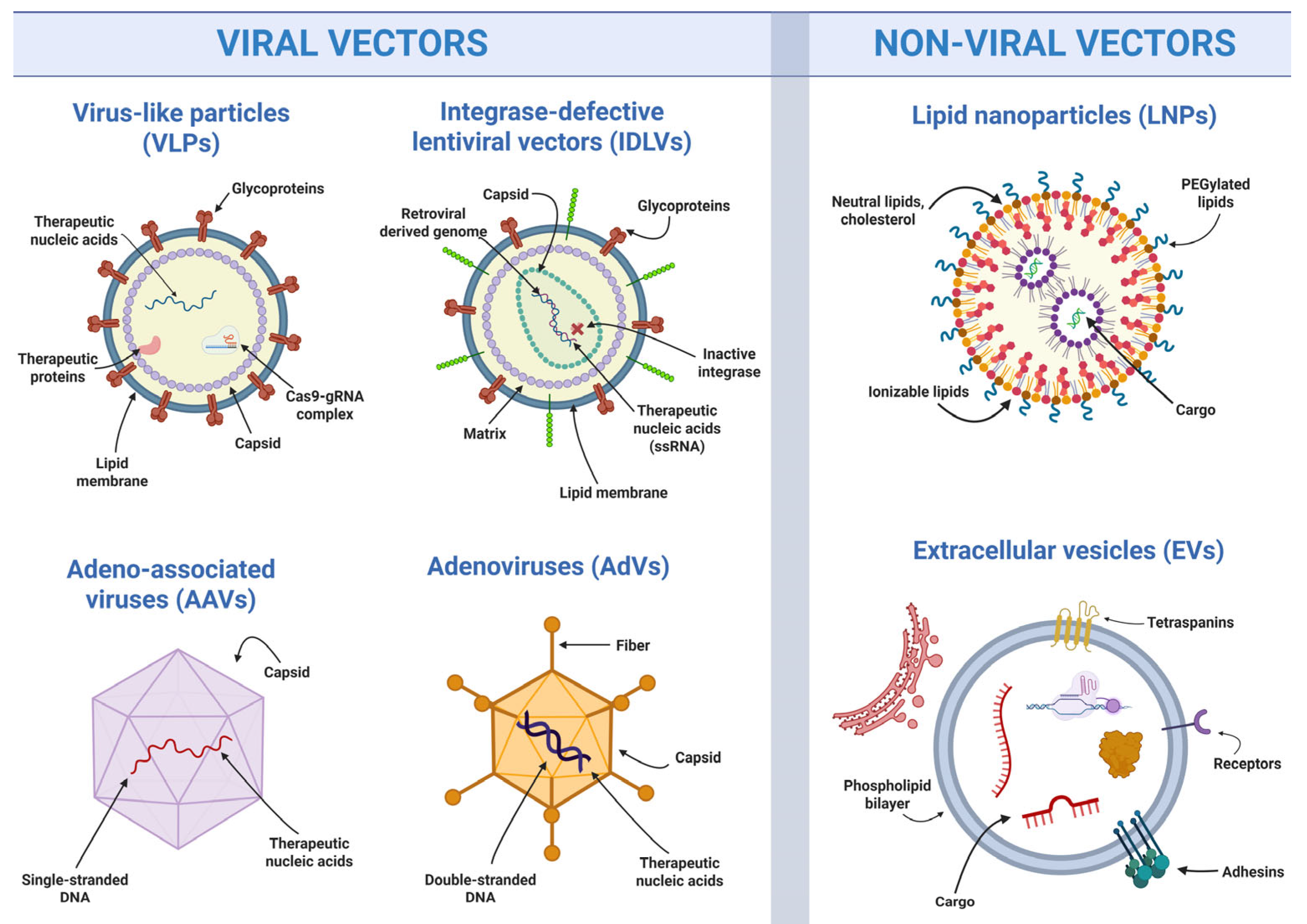
| AAV (Adeno-Associated Virus): Vectors with strong tissue tropism and non-integrative profiles, widely used in vivo despite limited cargo capacity. AdV (Adenoviral Vectors): Vectors with large payload capacity and transient expression, suited for ex vivo and HSPC-targeted in vivo applications despite potential immunogenicity. Base editor: Fusion of Cas nickase and deaminase, enabling single-nucleotide transitions independent of double-strand breaks. Cas endonuclease: Fully active Cas enzyme (e.g., Cas9, Cas12a) capable of introducing double-strand breaks for classical gene disruption or template-based precision repair at targets determined by a guide RNA. Cas nickase: Modified Cas9 with one active nuclease domain—typically the D10A mutation in the RuvC domain (nCas9-D10A) or H840A mutation in the HNH domain (nCas9-H840A)—inducing single-strand nicks to reduce DSB-related genotoxicity and potentially enhance base or prime editing. High-fidelity Cas9 variants: Engineered Cas9 nucleases that improve specificity, though usually with some reduction in on-target activity, e.g., by alanine substitutions to replace positively charged residues and reduce unspecific DNA interactions (R780, K848, K855, H982 → eSpCas9) or by aspartic-acid substitutions to disrupt a mismatch stabilizing RuvC-domain loop (Y515, N517, L518, Q519, R520, F522, Y523 → SuperFi-Cas9). CRISPR/Cas: RNA-guided nuclease system adapted from bacterial immunity, enabling speedily designed, programmable, and scalable GE. DSB (DNA double-strand break): Introduced by first-generation genome editors as trigger for genome modification. Electroporation/Nucleofection: Electrical permeabilization methods enabling intracellular introduction of RNPs or nucleic acids, standard in ex vivo protocols. EV (Extracellular Vesicle): Naturally secreted vesicle investigated for low-immunogenicity delivery of GE cargos. | Ex vivo editing: Isolation, genetic modification, and reinfusion of patient-derived cells, commonly used in cell-based therapies. gRNA (guide RNA): DNA-binding component of CRISPR-based editors for target recognition by Watson–Crick base pairing. HDR (Homology Directed Repair): Precise DSB repair mechanism that uses a homologous DNA sequence as a template to accurately repair or insert genetic material. IDLV (Integrase-Defective Lentiviral Vectors): Vectors used for transient delivery, minimizing genomic integration risks. In vivo editing: Direct delivery of editing systems into the patient, typically via viral vectors or lipid nanoparticles. LNP (Lipid Nanoparticle): Nanosized particle composed mainly of lipids that encapsulate mRNA or RNPs, validated for systemic CRISPR delivery. NHEJ (Non-Homologous End Joining): Predominant error-prone DSB repair pathway resulting in insertions/deletions (indels) or chromosomal rearrangement, used for targeted gene disruption. Off-target: Locus of unintended genomic modifications based on sequence similarity to the intended target sequence; a major safety concern in clinical editing. On-target: Genomic locus of intended modification, based on specificity conferred by the DNA-binding component of the genome editor. PAM (Protospacer Adjacent Motif): Short DNA motif required for Cas enzyme recognition and cleavage (e.g., 5′-NGG-3′ for SpCas9), defining permissible editing sites. Prime editor: Cas nickase fused to reverse transcriptase and guided by pegRNA, enabling insertions, deletions, or substitutions independent of donor DNA or DSBs. TALEN (Transcription Activator-Like Effector Nucleases): Dimeric nucleases that recognize single nucleotides via modular repeats, offering targeting flexibility with a clear amino-acid code for DNA binding, based on cloning-based re-targeting. ZFN (Zinc Finger Nucleases): Dimeric engineered nucleases guided by zinc-finger DNA-binding domains, based on empirical design and cloning-based re-targeting. |
3. Efficiency and Safety Concerns
3.1. Delivery Systems for GE
3.2. Consideration of Immune Responses
3.3. In Vivo Delivery of GE Systems
3.4. Safety and Efficiency Assessment for Basic Editor Designs
3.5. Engineering Advanced Editing Systems
4. Regulatory Issues
4.1. Best Practices and Regulatory Guidelines for Responsible GE
4.1.1. FDA Regulatory Considerations
4.1.2. EMA Regulatory Considerations
4.1.3. EMA and FDA with a Broad Regulatory Consensus for GE
|
|
4.2. Challenges, Risks and Potential Solutions
5. Methodology
6. Conclusions
Author Contributions
Funding
Institutional Review Board Statement
Informed Consent Statement
Data Availability Statement
Acknowledgments
Conflicts of Interest
Abbreviations
| GE | Genome Editing |
| ZFN | Zinc-Finger Nuclease |
| TALEN | Transcription Activator-Like Effector Nucleases |
| CRISPR | Clustered Regularly Interspaced Short Palindromic Repeats |
| Cas | CRISPR-Associated Proteins |
| FDA | Food and Drug Administration of the United States |
| U.S. | United States |
| EMA | European Medicines Agency |
| DNA | Deoxyribonucleic Acid |
| RNA | Ribonucleic Acid |
| RNP | Ribonucleoprotein |
| CPS1 | Carbamoyl-Phosphate Synthetase 1 |
| DSB | Double-Strand Breaks |
| NK | Natural Killer |
| KRAS | Kirsten Rat Sarcoma Viral Oncogene Homolog |
| HSPC | Hematopoietic Stem and Progenitor Cell |
| IDLV | Integrase-Defective Lentiviral Vector |
| AAV | Adeno-Associated Virus Vector |
| VLP | Virus-Like Particle |
| LNP | Lipid Nanoparticle |
| EV | Extracellular Vesicle |
| gRNA | guide RNA |
| PAM | Protospacer Adjacent Motif |
| CMC | Chemistry, Manufacturing and Controls |
| IND | Investigational New Drug |
| CAT | Committee for Advanced Therapies |
| EU | European Union |
| ATMP | Advanced Therapy Medicinal Product |
| RMAT | Regenerative Medicine Advanced Therapy |
| RPD | Rare Pediatric Disease |
| OD | Orphan Drug |
| HTA | Health Technology Assessment |
| EMRN | European Network of Regulatory Experts |
| GMP | Good Manufacturing Practice |
References
- Morgan, M.; Schambach, A. Successful Treatment of Transfusion-Dependent β-Thalassemia: Multiple Paths to Reach Potential Cure. Signal Transduct. Target. Ther. 2025, 10, 55. [Google Scholar] [CrossRef] [PubMed]
- Musunuru, K.; Grandinette, S.A.; Wang, X.; Hudson, T.R.; Briseno, K.; Berry, A.M.; Hacker, J.L.; Hsu, A.; Silverstein, R.A.; Hille, L.T.; et al. Patient-Specific In Vivo Gene Editing to Treat a Rare Genetic Disease. N. Engl. J. Med. 2025, 392, 2235–2243. [Google Scholar] [CrossRef] [PubMed]
- Zheng, Y.; Li, Y.; Zhou, K.; Li, T.; VanDusen, N.J.; Hua, Y. Precise Genome-Editing in Human Diseases: Mechanisms, Strategies and Applications. Signal Transduct. Target. Ther. 2024, 9, 47. [Google Scholar] [CrossRef] [PubMed]
- Kalter, N.; Fuster-García, C.; Silva, A.; Ronco-Díaz, V.; Roncelli, S.; Turchiano, G.; Gorodkin, J.; Cathomen, T.; Benabdellah, K.; Lee, C.; et al. Off-Target Effects in CRISPR-Cas Genome Editing for Human Therapeutics: Progress and Challenges. Mol. Ther. Nucleic Acids 2025, 36, 102636. [Google Scholar] [CrossRef]
- Naiisseh, B.; Papasavva, P.L.; Papaioannou, N.Y.; Tomazou, M.; Koniali, L.; Felekis, X.; Constantinou, C.G.; Sitarou, M.; Christou, S.; Kleanthous, M.; et al. Context Base Editing for Splice Correction of IVSI-110 β-Thalassemia. Mol. Ther. Nucleic Acids 2024, 35, 102183. [Google Scholar] [CrossRef]
- Komor, A.C.; Kim, Y.B.; Packer, M.S.; Zuris, J.A.; Liu, D.R. Programmable Editing of a Target Base in Genomic DNA without Double-Stranded DNA Cleavage. Nature 2016, 533, 420–424. [Google Scholar] [CrossRef]
- Anzalone, A.V.; Randolph, P.B.; Davis, J.R.; Sousa, A.A.; Koblan, L.W.; Levy, J.M.; Chen, P.J.; Wilson, C.; Newby, G.A.; Raguram, A.; et al. Search-and-Replace Genome Editing without Double-Strand Breaks or Donor DNA. Nature 2019, 576, 149–157. [Google Scholar] [CrossRef]
- Chauhan, V.P.; Sharp, P.A.; Langer, R. Engineered Prime Editors with Minimal Genomic Errors. Nature 2025, 646, 1254–1260. [Google Scholar] [CrossRef]
- Cavazza, A.; Hendel, A.; Bak, R.O.; Rio, P.; Güell, M.; Lainšček, D.; Arechavala-Gomeza, V.; Peng, L.; Hapil, F.Z.; Harvey, J.; et al. Progress and Harmonization of Gene Editing to Treat Human Diseases: Proceeding of COST Action CA21113 GenE-HumDi. Mol. Ther. Nucleic Acids 2023, 34, 102066. [Google Scholar] [CrossRef]
- Mandrioli, M. Genome Editing among Bioethics and Regulatory Practices. Biomolecules 2022, 12, 13. [Google Scholar] [CrossRef]
- Khirallah, J.; Eimbinder, M.; Li, Y.; Xu, Q. Clinical Progress in Genome-Editing Technology and in Vivo Delivery Techniques. Trends Genet. 2023, 39, 208–216. [Google Scholar] [CrossRef]
- Koniali, L.; Lederer, C.W.; Kleanthous, M. Therapy Development by Genome Editing of Hematopoietic Stem Cells. Cells 2021, 10, 1492. [Google Scholar] [CrossRef]
- Pavani, G.; Laurent, M.; Fabiano, A.; Cantelli, E.; Sakkal, A.; Corre, G.; Lenting, P.J.; Concordet, J.P.; Toueille, M.; Miccio, A.; et al. Ex Vivo Editing of Human Hematopoietic Stem Cells for Erythroid Expression of Therapeutic Proteins. Nat. Commun. 2020, 11, 3778, Correction in Nat. Commun. 2020, 11, 4146. https://doi.org/10.1038/s41467-020-18036-0. [Google Scholar] [CrossRef] [PubMed]
- Cavazza, A.; Molina-Estévez, F.J.; Reyes, Á.P.; Ronco, V.; Naseem, A.; Malenšek, Š.; Pečan, P.; Santini, A.; Heredia, P.; Aguilar-González, A.; et al. Advanced Delivery Systems for Gene Editing: A Comprehensive Review from the GenE-HumDi COST Action Working Group. Mol. Ther. Nucleic Acids 2025, 36, 102457. [Google Scholar] [CrossRef] [PubMed]
- Pavlovic, K.; Tristán-Manzano, M.; Maldonado-Pérez, N.; Cortijo-Gutierrez, M.; Sánchez-Hernández, S.; Justicia-Lirio, P.; Carmona, M.D.; Herrera, C.; Martin, F.; Benabdellah, K. Using Gene Editing Approaches to Fine-Tune the Immune System. Front. Immunol. 2020, 11, 570672. [Google Scholar] [CrossRef] [PubMed]
- Zhang, J.; Hu, Y.; Yang, J.; Li, W.; Zhang, M.; Wang, Q.; Zhang, L.; Wei, G.; Tian, Y.; Zhao, K.; et al. Non-Viral, Specifically Targeted CAR-T Cells Achieve High Safety and Efficacy in B-NHL. Nature 2022, 609, 369–374. [Google Scholar] [CrossRef]
- Glaser, V.; Flugel, C.; Kath, J.; Du, W.; Drosdek, V.; Franke, C.; Stein, M.; Pruß, A.; Schmueck-Henneresse, M.; Volk, H.D.; et al. Combining Different CRISPR Nucleases for Simultaneous Knock-in and Base Editing Prevents Translocations in Multiplex-Edited CAR T Cells. Genome Biol. 2023, 24, 89, Correction in Genome Biol. 2025, 26, 71. https://doi.org/10.1186/s13059-025-03548-z. [Google Scholar] [CrossRef]
- Ren, J.; Liao, X.; Lewis, J.M.; Chang, J.; Qu, R.; Carlson, K.R.; Foss, F.; Girardi, M. Generation and Optimization of Off-the-Shelf Immunotherapeutics Targeting TCR-Vβ2+ T Cell Malignancy. Nat. Commun. 2024, 15, 519. [Google Scholar] [CrossRef]
- Álvarez-Pérez, J.C.; Sanjuán-Hidalgo, J.; Arenas, A.M.; Hernández-Navas, I.; Benitez-Cantos, M.S.; Andrades, A.; Calabuig-Fariñas, S.; Jantus-Lewintre, E.; Paz-Ares, L.; Ferrer, I.; et al. High-Fidelity Cas9-Mediated Targeting of KRAS Driver Mutations Restrains Lung Cancer in Preclinical Models. Nat. Commun. 2025, 16, 7080. [Google Scholar] [CrossRef]
- Noormohamadi, H.; Soleimani Samarkhazan, H.; Kargar, M.; Maroufi, F.; Servatian, N.; Davami, F. CRISPR/Cas Technologies in Pancreatic Cancer Research and Therapeutics: Recent Advances and Future Outlook. Discov. Oncol. 2025, 16, 1530. [Google Scholar] [CrossRef]
- Du, J.; Gong, X.; Huang, R.; Zheng, B.; Chen, C.; Yang, Z. Harnessing CRISPR/Cas9 to Overcome Targeted Therapy Resistance in Non-small Cell Lung Cancer: Advances and Challenges (Review). Oncol. Rep. 2025, 54, 111. [Google Scholar] [CrossRef]
- Müller, A. Rare Adverse Events of CAR T-Cell Therapy. Heal. TIMES Oncol. Hematol. 2024, 19, 42–49. [Google Scholar] [CrossRef]
- Nienhuis, A.W.; Dunbar, C.E.; Sorrentino, B.P. Genotoxicity of Retroviral Integration in Hematopoietic Cells. Mol. Ther. 2006, 13, 1031–1049. [Google Scholar] [CrossRef] [PubMed]
- ARRIGE 2025 ARRIGE Annual Meeting IGBMC, Strasbourg (France) & Online. Meeting Summary & Statement. Available online: https://www.arrige.org/wp-content/uploads/2025/12/ARRIGE_annual_2025_meeting_statement.pdf (accessed on 14 January 2026).
- Wang, H.; Germond, A.; Li, C.; Gil, S.; Kim, J.; Kiem, H.-P.; Lieber, A. In Vivo HSC Transduction in Rhesus Macaques with an HDAd5/3+ Vector Targeting Desmoglein 2 and Transiently Overexpressing Cxcr4. Blood Adv. 2022, 6, 4360–4372. [Google Scholar] [CrossRef] [PubMed]
- Li, C.; Georgakopoulou, A.; Paschoudi, K.; Anderson, A.K.; Huang, L.; Gil, S.; Giannaki, M.; Vlachaki, E.; Newby, G.A.; Liu, D.R.; et al. Introducing a Hemoglobin G-Makassar Variant in HSCs by in Vivo Base Editing Treats Sickle Cell Disease in Mice. Mol. Ther. 2024, 32, 4353–4371. [Google Scholar] [CrossRef] [PubMed]
- Jinek, M.; Chylinski, K.; Fonfara, I.; Hauer, M.; Doudna, J.A.; Charpentier, E. A Programmable Dual-RNA-Guided DNA Endonuclease in Adaptive Bacterial Immunity. Science 2012, 337, 816–821. [Google Scholar] [CrossRef]
- Charlesworth, C.T.; Deshpande, P.S.; Dever, D.P.; Camarena, J.; Lemgart, V.T.; Cromer, M.K.; Vakulskas, C.A.; Collingwood, M.A.; Zhang, L.; Bode, N.M.; et al. Identifications of Preexisting Adaptive Immunity to Cas9 Proteins in Humans. Nat. Med. 2019, 25, 249–254. [Google Scholar] [CrossRef]
- Toral, M.A.; Charlesworth, C.T.; Ng, B.; Chemudupati, T.; Homma, S.; Nakauchi, H.; Bassuk, A.G.; Porteus, M.H.; Mahajan, V.B. Investigation of Cas9 Antibodies in the Human Eye. Nat. Commun. 2022, 13, 1053, Correction in Nat. Commun. 2022, 13, 2109. https://doi.org/10.1038/s41467-022-29844-x. [Google Scholar] [CrossRef]
- Wagner, D.L.; Amini, L.; Wendering, D.J.; Burkhardt, L.-M.; Akyüz, L.; Reinke, P.; Volk, H.-D.; Schmueck-Henneresse, M. High Prevalence of Streptococcus Pyogenes Cas9-Reactive T Cells within the Adult Human Population. Nat. Med. 2018, 25, 242–248. [Google Scholar] [CrossRef]
- Simhadri, V.L.; McGill, J.; McMahon, S.; Wang, J.; Jiang, H.; Sauna, Z.E. Prevalence of Pre-Existing Antibodies to CRISPR-Associated Nuclease Cas9 in the USA Population. Mol. Ther. Methods Clin. Dev. 2018, 10, 105–112. [Google Scholar] [CrossRef]
- Vertex Pharmaceuticals Incorporated Vertex Presents New Data on CASGEVY. Available online: https://news.vrtx.com/news-releases/news-release-details/vertex-presents-new-data-casgevyr-including-first-ever-data (accessed on 12 December 2025).
- Essawi, K.; Hakami, W.; Naeem Khan, M.B.; Martin, R.; Zeng, J.; Chu, R.; Uchida, N.; Bonifacino, A.C.; Krouse, A.E.; Linde, N.S.; et al. Pre-Existing Immunity Does Not Impair the Engraftment of CRISPR-Cas9-Edited Cells in Rhesus Macaques Conditioned with Busulfan or Radiation. Mol. Ther. Methods Clin. Dev. 2023, 29, 483–493. [Google Scholar] [CrossRef]
- Chen, K.; Han, H.; Zhao, S.; Xu, B.; Yin, B.; Lawanprasert, A.; Trinidad, M.; Burgstone, B.W.; Murthy, N.; Doudna, J.A. Lung and Liver Editing by Lipid Nanoparticle Delivery of a Stable CRISPR-Cas9 Ribonucleoprotein. Nat. Biotechnol. 2025, 43, 1445–1457. [Google Scholar] [CrossRef] [PubMed]
- Wang, M.; Zhang, Z.; Wang, X.; Zhang, L.; Chen, X.; Li, N.; Sun, Q.; Lu, Y.; He, Z.; Yang, H.; et al. Optimized in Vivo Base Editing Restores Auditory Function in a DFNA15 Mouse Model. Nat. Commun. 2025, 16, 8322. [Google Scholar] [CrossRef] [PubMed]
- Botchkarev, V.V.; Harrington, S.; Stoppato, M.; Justen, A.; Kimber, C.; Kapuria, A.; Gibson, K.M.; Chu, C.S.; Xu, Y.; Haugh, K.; et al. In Vivo Gene Editing of Human Hematopoietic Stem and Progenitor Cells Using Envelope-Engineered Virus-like Particles. Nat. Biotechnol. 2025. [Google Scholar] [CrossRef] [PubMed]
- Wilson, R.C.; Gilbert, L.A. The Promise and Challenge of in Vivo Delivery for Genome Therapeutics. ACS Chem. Biol. 2018, 13, 376–382. [Google Scholar] [CrossRef]
- Cavazza, A.; Santilli, G. The Future of Ex Vivo Hematopoietic Stem Cell Gene Editing: What’s next. Regen. Med. 2025, 20, 73–76. [Google Scholar] [CrossRef]
- Monckton, D.G. Manage Risk of Accidental Gene Editing of Germline. Nature 2019, 568, 458. [Google Scholar] [CrossRef]
- Raguram, A.; Banskota, S.; Liu, D.R. Therapeutic in Vivo Delivery of Gene Editing Agents. Cell 2022, 185, 2806–2827. [Google Scholar] [CrossRef]
- Ewaisha, R.; Anderson, K.S. Immunogenicity of CRISPR Therapeutics—Critical Considerations for Clinical Translation. Front. Bioeng. Biotechnol. 2023, 11, 1138596. [Google Scholar] [CrossRef]
- Stigzelius, V.; Cavallo, A.L.; Chandode, R.K.; Nitsch, R. Peeling Back the Layers of Immunogenicity in Cas9-Based Genomic Medicine. Mol. Ther. 2025, 33, 4714–4730. [Google Scholar] [CrossRef]
- Raghavan, R.; Friedrich, M.J.; King, I.; Chau-Duy-Tam Vo, S.; Strebinger, D.; Lash, B.; Kilian, M.; Platten, M.; Macrae, R.K.; Song, Y.; et al. Rational Engineering of Minimally Immunogenic Nucleases for Gene Therapy. Nat. Commun. 2025, 16, 105. [Google Scholar] [CrossRef] [PubMed]
- Kawaguchi, Y.; Kimura, M.; Karaki, T.; Tanaka, H.; Ono, C.; Ishida, T.; Matsuura, Y.; Hirai, T.; Akita, H.; Shimizu, T.; et al. Modulating Immunogenicity and Reactogenicity in MRNA-Lipid Nanoparticle Vaccines through Lipid Component Optimization. ACS Nano 2025, 19, 27977–28001. [Google Scholar] [CrossRef] [PubMed]
- Clarissa, E.M.; Karmacharya, M.; Choi, H.; Kumar, S.; Cho, Y.K. Nature Inspired Delivery Vehicles for CRISPR-Based Genome Editing. Small 2025, 2409353. [Google Scholar] [CrossRef] [PubMed]
- Tsuchida, C.A.; Wasko, K.M.; Hamilton, J.R.; Doudna, J.A. Targeted Nonviral Delivery of Genome Editors in Vivo. Proc. Natl. Acad. Sci. USA 2024, 121, e2307796121. [Google Scholar] [CrossRef]
- Cromwell, C.R.; Sung, K.; Park, J.; Krysler, A.R.; Jovel, J.; Kim, S.K.; Hubbard, B.P. Incorporation of Bridged Nucleic Acids into CRISPR RNAs Improves Cas9 Endonuclease Specificity. Nat. Commun. 2018, 9, 1448. [Google Scholar] [CrossRef]
- Gasiunas, G.; Young, J.K.; Karvelis, T.; Kazlauskas, D.; Urbaitis, T.; Jasnauskaite, M.; Grusyte, M.M.; Paulraj, S.; Wang, P.H.; Hou, Z.; et al. A Catalogue of Biochemically Diverse CRISPR-Cas9 Orthologs. Nat. Commun. 2020, 11, 5512. [Google Scholar] [CrossRef]
- Cradick, T.J.; Qiu, P.; Lee, C.M.; Fine, E.J.; Bao, G. COSMID: A Web-Based Tool for Identifying and Validating CRISPR/Cas off-Target Sites. Mol. Ther. Nucleic Acids 2014, 3, e214. [Google Scholar] [CrossRef]
- Concordet, J.P.; Haeussler, M. CRISPOR: Intuitive Guide Selection for CRISPR/Cas9 Genome Editing Experiments and Screens. Nucleic Acids Res. 2018, 46, W242–W245. [Google Scholar] [CrossRef]
- Tsai, S.Q.; Zheng, Z.; Nguyen, N.T.; Liebers, M.; Topkar, V.V.; Thapar, V.; Wyvekens, N.; Khayter, C.; Iafrate, A.J.; Le, L.P.; et al. GUIDE-Seq Enables Genome-Wide Profiling of off-Target Cleavage by CRISPR-Cas Nucleases. Nat. Biotechnol. 2015, 33, 187–198. [Google Scholar] [CrossRef]
- Tsai, S.Q.; Nguyen, N.T.; Malagon-Lopez, J.; Topkar, V.V.; Aryee, M.J.; Joung, J.K. CIRCLE-Seq: A Highly Sensitive in Vitro Screen for Genome-Wide CRISPR-Cas9 Nuclease off-Targets. Nat. Methods 2017, 14, 607–614, Corrigendum in Nat. Methods 2018, 15, 394. https://doi.org/10.1038/nmeth0518-394c. [Google Scholar] [CrossRef]
- Turchiano, G.; Andrieux, G.; Klermund, J.; Blattner, G.; Pennucci, V.; el Gaz, M.; Monaco, G.; Poddar, S.; Mussolino, C.; Cornu, T.I.; et al. Quantitative Evaluation of Chromosomal Rearrangements in Gene-Edited Human Stem Cells by CAST-Seq. Cell Stem Cell 2021, 28, 1136–1147.e5. [Google Scholar] [CrossRef] [PubMed]
- Corsi, G.I.; Gadekar, V.P.; Gorodkin, J.; Seemann, S.E. CRISPRroots: On-and off-Target Assessment of RNA-Seq Data in CRISPR-Cas9 Edited Cells. Nucleic Acids Res. 2022, 50, e20. [Google Scholar] [CrossRef] [PubMed]
- Haeussler, M.; Schönig, K.; Eckert, H.; Eschstruth, A.; Mianné, J.; Renaud, J.B.; Schneider-Maunoury, S.; Shkumatava, A.; Teboul, L.; Kent, J.; et al. Evaluation of Off-Target and on-Target Scoring Algorithms and Integration into the Guide RNA Selection Tool CRISPOR. Genome Biol. 2016, 17, 148. [Google Scholar] [CrossRef]
- Bae, S.; Park, J.; Kim, J.S. Cas-OFFinder: A Fast and Versatile Algorithm That Searches for Potential off-Target Sites of Cas9 RNA-Guided Endonucleases. Bioinformatics 2014, 30, 1473–1475. [Google Scholar] [CrossRef]
- Oliveros, J.C.; Franch, M.; Tabas-Madrid, D.; San-León, D.; Montoliu, L.; Cubas, P.; Pazos, F. Breaking-Cas-Interactive Design of Guide RNAs for CRISPR-Cas Experiments for ENSEMBL Genomes. Nucleic Acids Res. 2016, 44, W267–W271. [Google Scholar] [CrossRef] [PubMed]
- Hunt, J.M.T.; Samson, C.A.; du Rand, A.; Sheppard, H.M. Unintended CRISPR-Cas9 Editing Outcomes: A Review of the Detection and Prevalence of Structural Variants Generated by Gene-Editing in Human Cells. Hum. Genet. 2023, 142, 705. [Google Scholar] [CrossRef]
- Leibowitz, M.L.; Papathanasiou, S.; Doerfler, P.A.; Blaine, L.J.; Sun, L.; Yao, Y.; Zhang, C.-Z.; Weiss, M.J.; Pellman, D. Chromothripsis as an On-Target Consequence of CRISPR–Cas9 Genome Editing. Nat. Genet. 2021, 53, 895–905. [Google Scholar] [CrossRef]
- Boutin, J.; Fayet, S.; Marin, V.; Bergès, C.; Riandière, M.; Toutain, J.; Lamrissi-Garcia, I.; Thibault, C.; Cappellen, D.; Dabernat, S.; et al. Single-Cell Multiplex Approaches Deeply Map ON-Target CRISPR-Genotoxicity and Reveal Its Mitigation by Palbociclib and Long-Term Engraftment. Nat. Commun. 2026. [Google Scholar] [CrossRef]
- Cullot, G.; Aird, E.J.; Schlapansky, M.F.; Yeh, C.D.; van de Venn, L.; Vykhlyantseva, I.; Kreutzer, S.; Mailänder, D.; Lewków, B.; Klermund, J.; et al. Genome Editing with the HDR-Enhancing DNA-PKcs Inhibitor AZD7648 Causes Large-Scale Genomic Alterations. Nat. Biotechnol. 2025, 43, 1778–1782. [Google Scholar] [CrossRef]
- Atkins, A.; Chung, C.H.; Allen, A.G.; Dampier, W.; Gurrola, T.E.; Sariyer, I.K.; Nonnemacher, M.R.; Wigdahl, B. Off-Target Analysis in Gene Editing and Applications for Clinical Translation of CRISPR/Cas9 in HIV-1 Therapy. Front. Genome Ed. 2021, 3, 673022. [Google Scholar] [CrossRef]
- Liang, S.Q.; Liu, P.; Smith, J.L.; Mintzer, E.; Maitland, S.; Dong, X.; Yang, Q.; Lee, J.; Haynes, C.M.; Zhu, L.J.; et al. Genome-Wide Detection of CRISPR Editing in Vivo Using GUIDE-Tag. Nat. Commun. 2022, 13, 437. [Google Scholar] [CrossRef]
- EMA. Available online: https://www.ema.europa.eu/en/events/committee-advanced-therapies-cat-workshop-gene-editing (accessed on 14 December 2025).
- FDA Guidance, Compliance & Regulatory Information (Biologics). Available online: https://www.fda.gov/vaccines-blood-biologics/guidance-compliance-regulatory-information-biologics (accessed on 14 December 2025).
- Vos, P.D.; Gandadireja, A.P.; Rossetti, G.; Siira, S.J.; Mantegna, J.L.; Filipovska, A.; Rackham, O. Mutational Rescue of the Activity of High-Fidelity Cas9 Enzymes. Cell Rep. Methods 2024, 4, 100756. [Google Scholar] [CrossRef] [PubMed]
- Ran, F.A.; Cong, L.; Yan, W.X.; Scott, D.A.; Gootenberg, J.S.; Kriz, A.J.; Zetsche, B.; Shalem, O.; Wu, X.; Makarova, K.S.; et al. In Vivo Genome Editing Using Staphylococcus Aureus Cas9. Nature 2015, 520, 186–191. [Google Scholar] [CrossRef] [PubMed]
- Paul, B.; Montoya, G. CRISPR-Cas12a: Functional Overview and Applications. Biomed. J. 2020, 43, 8–17. [Google Scholar] [CrossRef] [PubMed]
- Pedrazzoli, E.; Demozzi, M.; Visentin, E.; Ciciani, M.; Bonuzzi, I.; Pezzè, L.; Lucchetta, L.; Maule, G.; Amistadi, S.; Esposito, F.; et al. CoCas9 Is a Compact Nuclease from the Human Microbiome for Efficient and Precise Genome Editing. Nat. Commun. 2024, 15, 3478. [Google Scholar] [CrossRef] [PubMed]
- Silverstein, R.A.; Kim, N.; Kroell, A.S.; Walton, R.T.; Delano, J.; Butcher, R.M.; Pacesa, M.; Smith, B.K.; Christie, K.A.; Ha, L.L.; et al. Custom CRISPR–Cas9 PAM Variants via Scalable Engineering and Machine Learning. Nature 2025, 643, 539–550. [Google Scholar] [CrossRef]
- Kulcsár, P.I.; Tálas, A.; Ligeti, Z.; Krausz, S.L.; Welker, E. SuperFi-Cas9 Exhibits Remarkable Fidelity but Severely Reduced Activity yet Works Effectively with ABE8e. Nat. Commun. 2022, 13, 6858. [Google Scholar] [CrossRef]
- Slaymaker, I.M.; Gao, L.; Zetsche, B.; Scott, D.A.; Yan, W.X.; Zhang, F. Rationally Engineered Cas9 Nucleases with Improved Specificity. Science 2016, 351, 84–88. [Google Scholar] [CrossRef]
- Bravo, J.P.K.; Liu, M.S.; Hibshman, G.N.; Dangerfield, T.L.; Jung, K.; McCool, R.S.; Johnson, K.A.; Taylor, D.W. Structural Basis for Mismatch Surveillance by CRISPR-Cas9. Nature 2022, 603, 343–347, Correction in Nature 2022, 604, E10. https://doi.org/10.1038/s41586-022-04655-8. [Google Scholar] [CrossRef]
- Lopes, R.; Prasad, M.K. Beyond the Promise: Evaluating and Mitigating off-Target Effects in CRISPR Gene Editing for Safer Therapeutics. Front. Bioeng. Biotechnol. 2024, 11, 1339189. [Google Scholar] [CrossRef]
- Ran, F.A.A.; Hsu, P.D.P.D.; Lin, C.-Y.; Gootenberg, J.S.; Konermann, S.; Trevino, A.E.; Scott, D.A.D.A.D.A.; Inoue, A.; Matoba, S.; Zhang, Y.; et al. Double Nicking by RNA-Guided CRISPR Cas9 for Enhanced Genome Editing Specificity. Cell 2013, 154, 1380–1389. [Google Scholar] [CrossRef] [PubMed]
- Torella, L.; Klermund, J.; Bilbao-Arribas, M.; Tamayo, I.; Andrieux, G.; Chmielewski, K.O.; Vales, A.; Olagüe, C.; Moreno-Luqui, D.; Raimondi, I.; et al. Efficient and Safe Therapeutic Use of Paired Cas9-Nickases for Primary Hyperoxaluria Type 1. EMBO Mol. Med. 2024, 16, 112–131. [Google Scholar] [CrossRef] [PubMed]
- Vakulskas, C.A.; Dever, D.P.; Rettig, G.R.; Turk, R.; Jacobi, A.M.; Collingwood, M.A.; Bode, N.M.; McNeill, M.S.; Yan, S.; Camarena, J.; et al. A High-Fidelity Cas9 Mutant Delivered as a Ribonucleoprotein Complex Enables Efficient Gene Editing in Human Hematopoietic Stem and Progenitor Cells. Nat. Med. 2018, 24, 1216–1224. [Google Scholar] [CrossRef] [PubMed]
- Cheng, L. Topology-Engineered Guide RNAs for Programmable Control of CRISPR/Cas Activity. Angew. Chem. Int. Ed. 2025, 64, e202511756. [Google Scholar] [CrossRef]
- Joseph, A.M.; Karas, M.; Ramadan, Y.; Joubran, E.; Jacobs, R.J. Ethical Perspectives of Therapeutic Human Genome Editing from Multiple and Diverse Viewpoints: A Scoping Review. Cureus 2022, 14, e31927. [Google Scholar] [CrossRef]
- Chatterjee, G.; Singh, K.K.; Chatterjee, G.; Singh, K.K. Editing the Future: Ethical Challenges of Therapeutic Use, Germline Modification and Human Enhancement with CRISPR; IntechOpen Ltd.: London, UK, 2025. [Google Scholar] [CrossRef]
- Peters, T. Flashing the Yellow Traffic Light: Choices Forced upon Us by Gene Editing Technologies. Theol. Sci. 2019, 17, 79–89. [Google Scholar] [CrossRef]
- Smyth, S.J.; Wesseler, J. The Future of Genome Editing Innovations in the EU. Trends Biotechnol. 2022, 40, 1–3. [Google Scholar] [CrossRef]
- Patange, S.; Maragh, S. Fire Burn and Cauldron Bubble: What Is in Your Genome Editing Brew? Biochemistry 2023, 62, 3500–3511. [Google Scholar] [CrossRef]
- Subica, A.M. CRISPR in Public Health: The Health Equity Implications and Role of Community in Gene-Editing Research and Applications. Am. J. Public Health 2023, 113, 874–882. [Google Scholar] [CrossRef]
- Skantharajah, N.; Baichoo, S.; Boughtwood, T.F.; Casas-Silva, E.; Chandrasekharan, S.; Dave, S.M.; Fakhro, K.A.; Falcon de Vargas, A.B.; Gayle, S.S.; Gupta, V.K.; et al. Equity, Diversity, and Inclusion at the Global Alliance for Genomics and Health. Cell Genom. 2023, 3, 100386. [Google Scholar] [CrossRef]
- Lee, T.L.; Sawai, T. Navigating Equity in Global Access to Genome Therapy Expanding Access to Potentially Transformative Therapies and Benefiting Those in Need Requires Global Policy Changes. Front. Genet. 2024, 15, 1381172. [Google Scholar] [CrossRef] [PubMed]
- Reckelbus, M.; Mohan, R.; Locquet, P.; Van Steijvoort, E.; Huys, I.; Borry, P. Disparities in Access to Gene Therapy in the European Union: Ethical and Regulatory Challenges. J. Law Biosci. 2025, 12, lsaf018. [Google Scholar] [CrossRef] [PubMed]
- Munung, N.S.; Nnodu, O.E.; Moru, P.O.; Kalu, A.A.; Impouma, B.; Treadwell, M.J.; Wonkam, A. Looking Ahead: Ethical and Social Challenges of Somatic Gene Therapy for Sickle Cell Disease in Africa. Gene Ther. 2023, 31, 202–208. [Google Scholar] [CrossRef]
- Desine, S.; Hollister, B.M.; Abdallah, K.E.; Persaud, A.; Hull, S.C.; Bonham, V.L. The Meaning of Informed Consent: Genome Editing Clinical Trials for Sickle Cell Disease. AJOB Empir. Bioeth. 2020, 11, 195–207. [Google Scholar] [CrossRef]
- Bittlinger, M.; Hoffmann, D.; Sierawska, A.K.; Mertz, M.; Schambach, A.; Strech, D. Risk Assessment in Gene Therapy and Somatic Genome-Editing: An Expert Interview Study. Gene Genome Ed. 2022, 3–4, 100011. [Google Scholar] [CrossRef]
- Kohn, D.B.; Porteus, M.H.; Scharenberg, A.M. Ethical and Regulatory Aspects of Genome Editing. Blood 2016, 127, 2553–2560. [Google Scholar] [CrossRef]
- Braun, M.; Dabrock, P. Mind the Gaps! Towards an Ethical Framework for Genome Editing. EMBO Rep. 2018, 19, 197–200. [Google Scholar] [CrossRef]
- Ceasar, A. Genome-Editing in Millets: Current Knowledge and Future Perspectives. Mol. Biol. Rep. 2022, 49, 773–781. [Google Scholar] [CrossRef]
- Cellular & Gene Therapy Products|FDA. Available online: https://www.fda.gov/vaccines-blood-biologics/cellular-gene-therapy-products (accessed on 22 September 2025).
- Advanced Therapy Medicinal Products: Overview|European Medicines Agency (EMA). Available online: https://www.ema.europa.eu/en/human-regulatory-overview/advanced-therapy-medicinal-products-overview (accessed on 22 September 2025).
- EU Innovation Network (EU-IN)|European Medicines Agency (EMA). Available online: https://www.ema.europa.eu/en/committees/working-parties-other-groups/eu-innovation-network-eu (accessed on 22 September 2025).
- Delgadillo, J.; Martin, F.; Carmona, G.; Canals, J.M.; Rio, P.; Eguizabal, C.; Prosper, F.; Avendaño-Solá, C. Regulatory Strategies for Accelerating the Translation of Gene Therapies to Clinical Practice: Focus on GMO Considerations. Hum. Gene Ther. 2025, 36, 1154–1158. [Google Scholar] [CrossRef]
- First Gene Therapy to Treat Severe Haemophilia A. Available online: https://www.ema.europa.eu/en/news/first-gene-therapy-treat-severe-haemophilia (accessed on 8 December 2025).
- FDA Approves First Gene Therapy for Adults with Severe Hemophilia A. Available online: https://web.archive.org/web/20230629221215/https:/www.fda.gov/news-events/press-announcements/fda-approves-first-gene-therapy-adults-severe-hemophilia (accessed on 8 December 2025).
- FDA Gets out Its Red Pen Again, Rejecting BioMarin’s Gene Therapy Valrox amid Durability Worries. Available online: https://www.fiercebiotech.com/biotech/fda-gets-out-its-red-pen-again-rejecting-biomarin-s-gene-therapy-valrox-amid-durability (accessed on 8 December 2025).
- Elsallab, M.; Gillner, S.; Bourgeois, F.T. Comparison of Clinical Evidence Submitted to the FDA and EMA for Cell and Gene Therapies. JAMA Intern. Med. 2025, 185, 468–471. [Google Scholar] [CrossRef] [PubMed]
- Hanaizi, Z.; Kweder, S.; Thor, S.; Ribeiro, S.; Marcal, A. Considering Global Development? Insights from Applications for FDA Breakthrough Therapy and EMA PRIME Designations. Ther. Innov. Regul. Sci. 2023, 57, 321–328. [Google Scholar] [CrossRef]
- Doudna, J.A.; Charpentier, E. The New Frontier of Genome Engineering with CRISPR-Cas9. Science 2014, 346, 1258096. [Google Scholar] [CrossRef] [PubMed]
- Rueda, J.; de Miguel Beriain, I.; Montoliu, L. Affordable Pricing of CRISPR Treatments Is a Pressing Ethical Imperative. Cris. J. 2024, 7, 220–226. [Google Scholar] [CrossRef] [PubMed]
- Liu, W.; Li, L.; Jiang, J.; Wu, M.; Lin, P. Applications and Challenges of CRISPR-Cas Gene-Editing to Disease Treatment in Clinics. Precis. Clin. Med. 2021, 4, 179–191. [Google Scholar] [CrossRef] [PubMed]
- Blattner, G.; Cavazza, A.; Thrasher, A.J.; Turchiano, G. Gene Editing and Genotoxicity: Targeting the Off-Targets. Front. Genome Ed. 2020, 2, 613252. [Google Scholar] [CrossRef]
- Mohammadian Farsani, A.; Mokhtari, N.; Nooraei, S.; Bahrulolum, H.; Akbari, A.; Farsani, Z.M.; Khatami, S.; Ebadi, M.S.; Ahmadian, G. Lipid Nanoparticles: The Game-Changer in CRISPR-Cas9 Genome Editing. Heliyon 2024, 10, e24606. [Google Scholar] [CrossRef]
- Beam Therapeutics Beam Therapeutics Announces U.S. FDA Orphan Drug Designation Granted to BEAM-302 for the Treatment of Alpha-1 Antitrypsin Deficiency (AATD). Available online: https://investors.beamtx.com/news-releases/news-release-details/beam-therapeutics-announces-us-fda-orphan-drug-designation (accessed on 17 October 2025).
- Intellia Therapeutics Intellia Therapeutics Announces First Patient Dosed in the HAELO Phase 3 Study of NTLA-2002, an Investigational In Vivo CRISPR Gene Editing Treatment for Hereditary Angioedema. Available online: https://ir.intelliatx.com/news-releases/news-release-details/intellia-therapeutics-announces-first-patient-dosed-haelo-phase#xd_co_f=NzRhNzcxNjUtNGNmZS00ZGNjLWEzOWItNTJlMWJiZDE1YWJl~ (accessed on 17 October 2025).
- Sana Biotechnology Ex Vivo Cell Engineering; Hypoimmune Technology: Donor-Derived. Available online: https://sana.com/our-pipeline/ (accessed on 17 October 2025).
- Center for Biologics Evaluation and Research Considerations for the Development of Chimeric Antigen Receptor (CAR) T Cell Products. Available online: https://www.fda.gov/regulatory-information/search-fda-guidance-documents/considerations-development-chimeric-antigen-receptor-car-t-cell-products (accessed on 17 October 2025).
- McGrath, E.; Machalik, P. The Regulatory Framework for CAR-T Cells in Europe: Current Status and Foreseeable Changes and Centre Qualification by Competent Authorities and Manufacturers. In The EBMT/EHA CAR-T Cell Handbook; Springer International Publishing: Cham, Switzerland, 2022; pp. 191–198. [Google Scholar] [CrossRef]
- European Medicines Agency. EU/3/24/2979—Orphan Designation for Treatment of Hereditary Angioedema. Available online: https://www.ema.europa.eu/en/medicines/human/orphan-designations/eu-3-24-2979 (accessed on 23 October 2025).
- Intellia Therapeutics Intellia Therapeutics Receives U.S. FDA Orphan Drug Designation for NTLA-2002, an Investigational CRISPR Therapy for the Treatment of Hereditary Angioedema. Available online: https://ir.intelliatx.com/news-releases/news-release-details/intellia-therapeutics-receives-us-fda-orphan-drug-designation-1 (accessed on 17 October 2025).
- European Medicines Agency. EU/3/17/1928—Orphan Designation for Treatment of Leber’s Congenital Amaurosis. Available online: https://www.ema.europa.eu/en/medicines/human/orphan-designations/eu-3-17-1928 (accessed on 17 October 2025).
- FDA Clears Prime Editors for Testing in Humans. Nat. Biotechnol. 2024, 42, 691. [CrossRef]
- Karen O’Hanlon Cohrt First-Ever Prime-Editing Therapy Shows Safety and Efficacy in Patient with Chronic Granulomatous Disease. Available online: https://crisprmedicinenews.com/news/first-ever-prime-editing-therapy-shows-safety-and-efficacy-in-patient-with-chronic-granulomatous-dis/ (accessed on 17 October 2025).
- Beam Therapeutics Beam Therapeutics Announces U.S. FDA Orphan Drug Designation Granted to BEAM-101 for the Treatment of Sickle Cell Disease. Available online: https://investors.beamtx.com/news-releases/news-release-details/beam-therapeutics-announces-us-fda-orphan-drug-designation-0 (accessed on 17 October 2025).
- Frangoul, H.; Hanna, R.; McKinney, C.; Pineiro, L.; Mapara, M.; Dalal, J.; Chang, K.-H.; Jaskolka, M.; Kim, K.; Farrington, D.L.; et al. AsCas12a Gene Editing of HBG1/2 Promoters with Edit-301 Results in Early and Sustained Normalization of Hemoglobin and Increased Fetal Hemoglobin in Patients with Severe Sickle Cell Disease and Transfusion-Dependent Beta-Thalassemia. Transplant. Cell. Ther. 2024, 30, S238–S239. [Google Scholar] [CrossRef]
- Editas Medicine Editas Medicine Granted FDA Regenerative Medicine Advanced Therapy (RMAT) Designation for EDIT-301 for the Treatment of Severe Sickle Cell Disease. Available online: https://ir.editasmedicine.com/news-releases/news-release-details/editas-medicine-granted-fda-regenerative-medicine-advanced (accessed on 17 October 2025).
- Editas Medicine Editas Medicine Receives FDA Orphan Drug Designation for EDIT-301 for the Treatment of Sickle Cell Disease. Available online: https://ir.editasmedicine.com/news-releases/news-release-details/editas-medicine-receives-fda-orphan-drug-designation-edit-301-0 (accessed on 17 October 2025).
- U.S. Food & Drug Administration. FDA Approves First Gene Therapies to Treat Patients with Sickle Cell Disease. Available online: https://www.fda.gov/news-events/press-announcements/fda-approves-first-gene-therapies-treat-patients-sickle-cell-disease (accessed on 17 October 2025).
- Pharmaceutical Technology FDA Grants Orphan Drug Designation to Editas’ Beta Thalassemia Therapy. Available online: https://www.pharmaceutical-technology.com/news/fda-orphan-drug-editas/ (accessed on 17 October 2025).
- Editas Medicine Editas Medicine Reports Updated Clinical Data from the RUBY Trial of Reni-Cel in Patients with Severe Sickle Cell Disease at the American Society of Hematology (ASH) Annual Meeting. Available online: https://ir.editasmedicine.com/news-releases/news-release-details/editas-medicine-reports-updated-clinical-data-ruby-trial-reni (accessed on 17 October 2025).
- European Medicines Agency Casgevy. Available online: https://www.ema.europa.eu/en/medicines/human/EPAR/casgevy (accessed on 17 October 2025).
- Ensoma Ensoma Receives Rare Pediatric Disease and Orphan Drug Designations for EN-374 for Treatment of Chronic Granulomatous Disease. Available online: https://ensoma.com/press-release/ensoma-receives-rare-pediatric-disease-and-orphan-drug-designations-for-en-374-for-treatment-of-chronic-granulomatous-disease/ (accessed on 17 October 2025).
- Ensoma Ensoma Announces FDA Clearance of IND Application for First In Vivo HSC-Directed Gene Insertion Therapy. Available online: https://ensoma.com/press-release/ensoma-announces-fda-clearance-of-ind-application-for-first-in-vivo-hsc-directed-gene-insertion-therapy/ (accessed on 17 October 2025).
- Sinclair, F.; Begum, A.A.; Dai, C.C.; Toth, I.; Moyle, P.M. Recent Advances in the Delivery and Applications of Nonviral CRISPR/Cas9 Gene Editing. Drug Deliv. Transl. Res. 2023, 13, 1500–1519. [Google Scholar] [CrossRef]
- Lee, N.K.; Chang, J.W. Manufacturing Cell and Gene Therapies: Challenges in Clinical Translation. Ann. Lab. Med. 2024, 44, 314–323. [Google Scholar] [CrossRef]
- Davies, B. The Technical Risks of Human Gene Editing. Hum. Reprod. 2019, 34, 2104–2111. [Google Scholar] [CrossRef]


| Tool | Approach Type * | Description/Advantages |
|---|---|---|
| COSMID | In silico (computational) | Scans the genome for potential off-target sites using the guide sequence, including small differences, insertions, or deletions. It also suggests DNA fragments for precise analysis in the lab [49]. |
| CRISPOR | In silico | Helps design efficient CRISPR guides, predicts off-target sites, and scores guide efficiency across multiple genomes, reducing experimental errors [55]. |
| Cas-OFFinder | In silico | Identifies potential CRISPR off-target sites without limitations on mismatches and considers PAM sequence variations, helping minimize off-target effects by design [56]. |
| Breaking-Cas | In silico | Helps design efficient CRISPR guides, predicts and shows off-target sites in genomic locations, and allows any ENSEMBL build or current and future Cas parameters [57]. |
| CRISPRroots | In silico (machine learning-based) | Combines CRISPR/Cas9 edits with RNA-seq data to detect on-target and potential off-target effects, using gene expression changes, guide RNA binding, and sequence variants [54]. |
| GUIDE-seq | Experimental (cell-based) | Detects CRISPR/Cas9 off-target sites in living cells by incorporating a detectable sequence tag at double-strand breaks, allowing sensitive mapping and quantification [51]. |
| CIRCLE-seq | Experimental (in vitro) | Uses circularized DNA and sequencing to detect genome-wide off-target effects rapidly and reproducibly, without requiring living cells or reference genomes [52]. |
| Aspect | FDA | EMA |
|---|---|---|
| Definition | Human GE is the targeted addition, deletion, modification, or replacement of DNA sequences at defined sites in human somatic cells, performed either ex vivo or in vivo, through technologies that may rely on nucleases or operate independently of them. | GE is part of gene therapy products; regulatory guidance follows a risk-based approach addressing DNA modifications in human somatic cells ex vivo or in vivo. |
| Delivery/Methods | Emphasizes delivery strategies—viral or non-viral—the type and extent of genomic modification, and the specific editing components, noting that the chosen method directly influences both safety and efficacy. | Considers delivery and editing components as part of process development; personalized therapies may affect batch testing and release strategies. |
| Off-target/On-target Risks | Highlights off-target and on-target editing errors; recommends multiple complementary detection methods (in vivo, in vitro, in silico) with reporting of sensitivity, specificity, and clinical relevance. | Stresses identification of on- and off-target effects; errors include point mutations, insertions, deletions, translocations; recommends multiple unbiased methods (e.g., GUIDE-seq, CIRCLE-seq) and scaling risk mapping according to product profile. |
| CMC/Quality | Provides guidance on Chemistry, Manufacturing, and Controls (CMC), including GE component design, manufacture, testing, and drug product testing for in vivo and ex vivo products. | CMC follows a risk-based approach; comparability requires careful assessment, may need additional non-clinical/clinical data; batch testing for personalized products can be burdensome; on-/off-target modifications included in characterization. |
| Clinical Considerations | Recommends assessing product and GE-specific risks, defining patient population, safe administration, safety/efficacy endpoints, and long-term follow-up; includes special considerations for children. | Similar considerations; emphasize risk-based clinical trial design, early adult cohorts before pediatric enrollment, and long-term monitoring; off-/on-target effects integrated into safety assessment. |
| Disorder 1 | Target Gene | Editing/Delivery Approach 2 | Therapeutic Goal | FDA Status 3 | EMA Status 4 | Product |
|---|---|---|---|---|---|---|
| AATD | SERPINA1 | In vivo Adenine BE (LNP) | Correct the Pi*Z variant to restore functional AAT | OD (2025-05) | no OD; no MA | Beam BEAM-302 [108] |
| ATTR A | TTR | In vivo CRISPR/Cas9 knockout (LNP to liver) | Reduce circulating TTR to treat ATTR | OD (2021-10) | OD (2021-03) | Intellia NTLA-2001 [109] |
| B-cell AID (αCD19) | TRAC, B2M, CIITA, (+CD47) | Ex vivo CRISPR hypoimmune | Kill pathogenic B cells | FT | no OD | Sana SC291 [110,111,112] |
| B-cell M (αCD22) | TRAC, B2M, CIITA, (+CD47) | Ex vivo CRISPR hypoimmune | Kill CD22+ malignant B cells | IND | no OD | Sana SC262 [110,111,112] |
| HAE | KLKB1 | In vivo CRISPR/Cas9 knockout (LNP to liver) | Lower Kallikrein to prevent HAE attacks | OD (2022-09); RMAT | OD designated | Intellia NTLA-2002 [113,114] |
| LCA10 | CEP290 | In vivo AAV-delivered CRISPR/Cas9 (dual gRNA) | Restore photoreceptor function | IND (2018-04); RPD (2024-01) | OD (2018-01) | Editas EDIT-101 [115] |
| CGD | NCF1 | Ex vivo aHSPC EP for PE as RNA | Correct NCF1 to restore NADPH oxidase | OD + RPD (2025-05); IND (2024-05) | no OD | Prime Medicine PM359 [116,117] |
| SCD | HBG1/HBG2 promoters | Ex vivo aHSPC EP for ABE | Reactivate HbF | OD (May/Jun 2025); RMAT | no OD | Beam BEAM-101 [118] |
| SCD | HBG1/HBG2 promoters | Ex vivo aHSPC EP for AsCas12a | Reactivate HbF | OD (2023-04); RMAT (2023-10) | no OD | Editas reni-cel/EDIT-301 [119,120,121] |
| SCD | BCL11A | Ex vivo aHSPC EP for CRISPR/Cas9 | Reactivate HbF | MA (2023-08) | MA (2024-02) | Vertex/CRISPRTX CASGEVY/exa-cel [122] |
| TDBT | HBG1/HBG2 promoters | Ex vivo aHSPC EP for AsCas12a | Reactivate HbF | OD (2023-01); RPD (2020-08) | no OD | Editas reni-cel/EDIT-301 [119,120,121,123,124] |
| TDBT | BCL11A | Ex vivo aHSPC EP for CRISPR/Cas9 | Reactivate HbF | MA (2024-01) | MA (2024-02) | Vertex/CRISPRTX CASGEVY/exa-cel [122,125] |
| X-CGD | CYBB gene insertion | In vivo HSPC via VLP/HDAd to insert CYBB | Restore NADPH oxidase in neutrophils | RPD (2025-02); IND (2025-05) | no OD | Ensoma EN-374 [126,127] |
Disclaimer/Publisher’s Note: The statements, opinions and data contained in all publications are solely those of the individual author(s) and contributor(s) and not of MDPI and/or the editor(s). MDPI and/or the editor(s) disclaim responsibility for any injury to people or property resulting from any ideas, methods, instructions or products referred to in the content. |
© 2026 by the authors. Licensee MDPI, Basel, Switzerland. This article is an open access article distributed under the terms and conditions of the Creative Commons Attribution (CC BY) license.
Share and Cite
Ortiz-Bueno, M.; Zinghirino, F.; Serra, P.P.; Paschoudi, K.; Montoliu, L.; Atilla, E.; Luo, Y.; Cavazza, A.; Lederer, C.W.; Benabdellah, K. From Bench to Bedside: Ethical and Clinical Best Practices for Genome Editing Applications. Int. J. Mol. Sci. 2026, 27, 1484. https://doi.org/10.3390/ijms27031484
Ortiz-Bueno M, Zinghirino F, Serra PP, Paschoudi K, Montoliu L, Atilla E, Luo Y, Cavazza A, Lederer CW, Benabdellah K. From Bench to Bedside: Ethical and Clinical Best Practices for Genome Editing Applications. International Journal of Molecular Sciences. 2026; 27(3):1484. https://doi.org/10.3390/ijms27031484
Chicago/Turabian StyleOrtiz-Bueno, María, Federica Zinghirino, Pilar Puig Serra, Kyriaki Paschoudi, Lluis Montoliu, Erden Atilla, Yonglun Luo, Alessia Cavazza, Carsten W. Lederer, and Karim Benabdellah. 2026. "From Bench to Bedside: Ethical and Clinical Best Practices for Genome Editing Applications" International Journal of Molecular Sciences 27, no. 3: 1484. https://doi.org/10.3390/ijms27031484
APA StyleOrtiz-Bueno, M., Zinghirino, F., Serra, P. P., Paschoudi, K., Montoliu, L., Atilla, E., Luo, Y., Cavazza, A., Lederer, C. W., & Benabdellah, K. (2026). From Bench to Bedside: Ethical and Clinical Best Practices for Genome Editing Applications. International Journal of Molecular Sciences, 27(3), 1484. https://doi.org/10.3390/ijms27031484