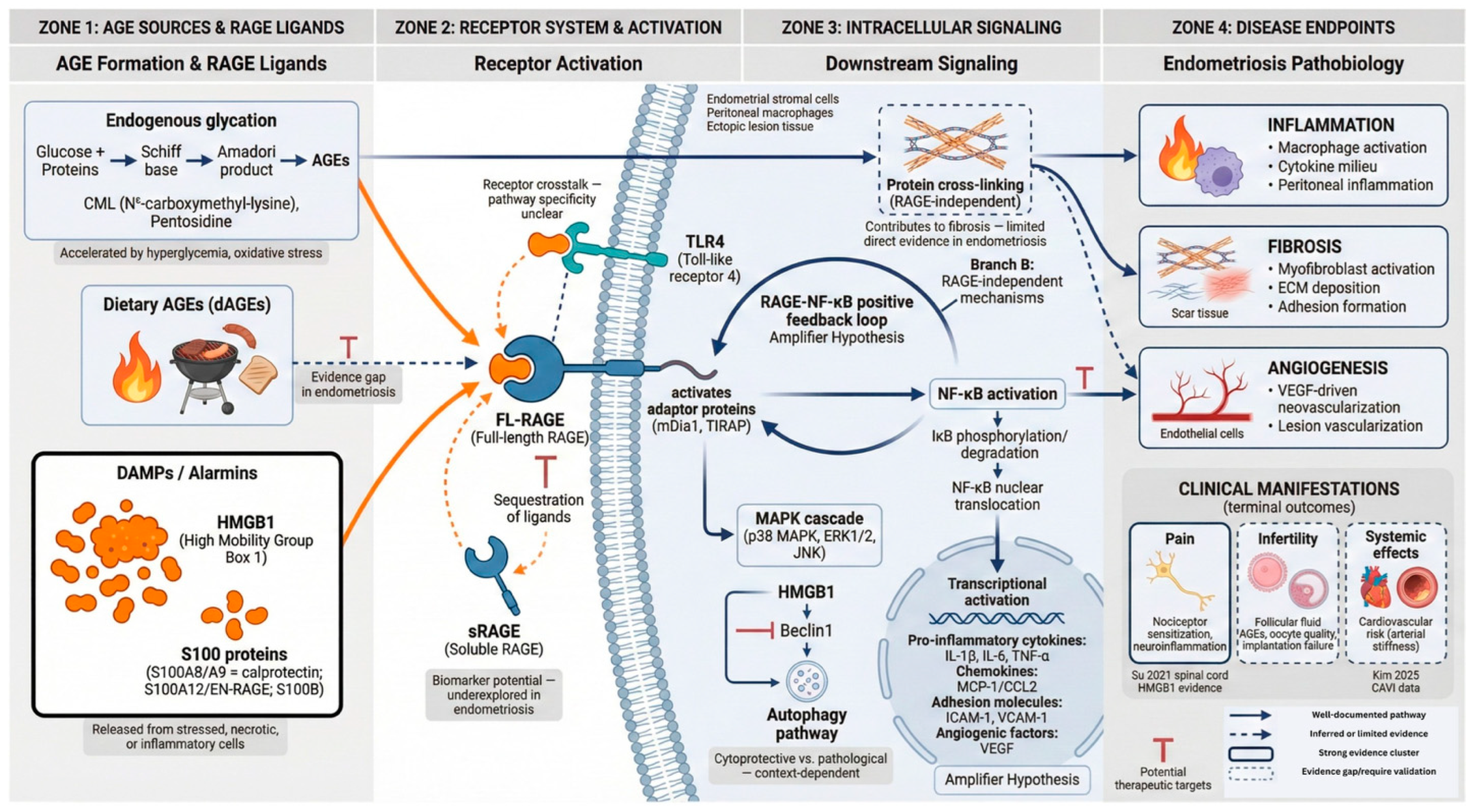
The AGE–RAGE Pathway in Endometriosis: A Focused Mechanistic Review and Structured Evidence Map

 ,
,  ,
,  ,
,  and
and
Abstract
1. Introduction
2. Materials and Methods
2.1. Search Strategy
2.2. Eligibility Criteria
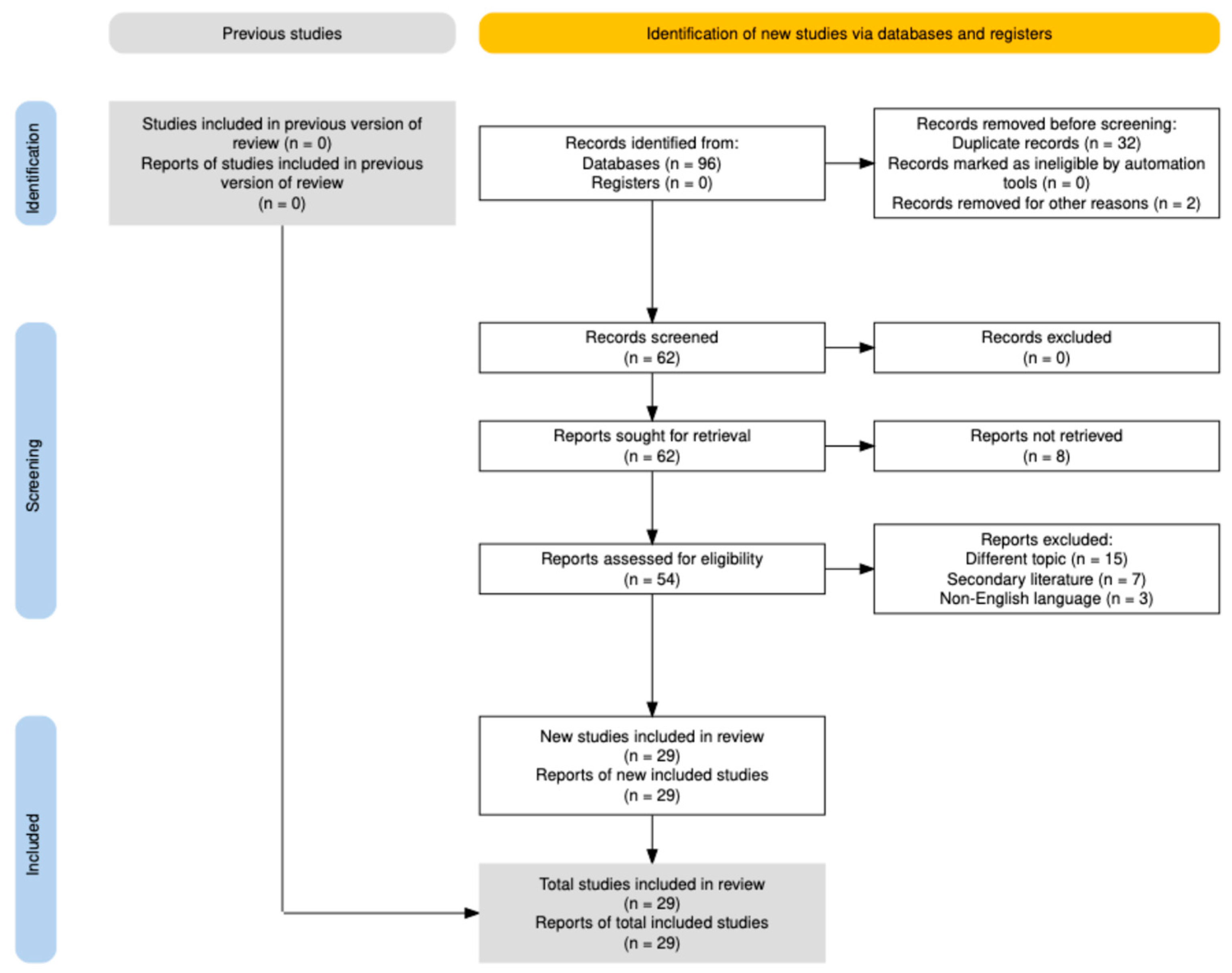
2.3. Screening and Selection
2.4. Data Synthesis
3. Results
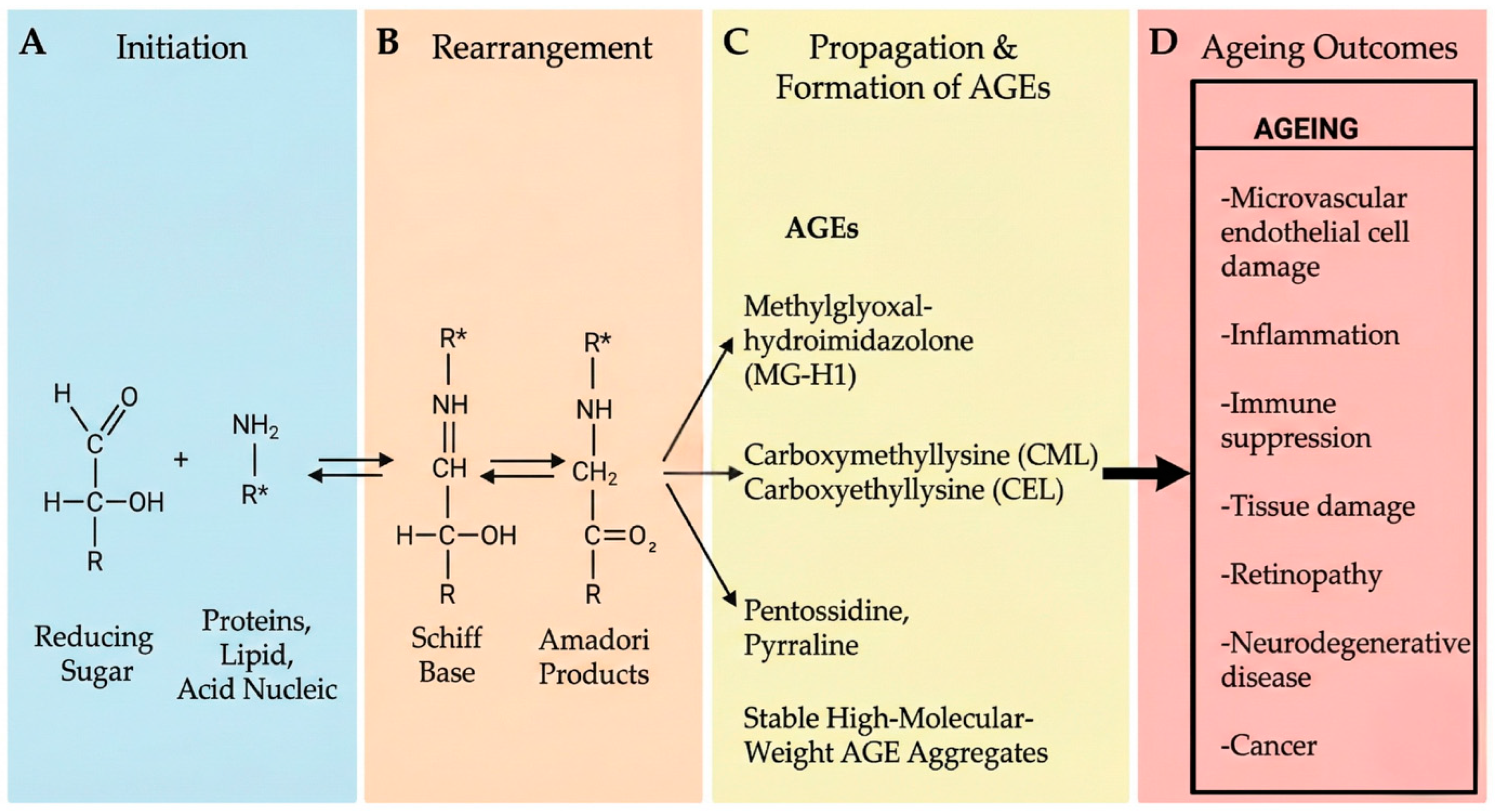
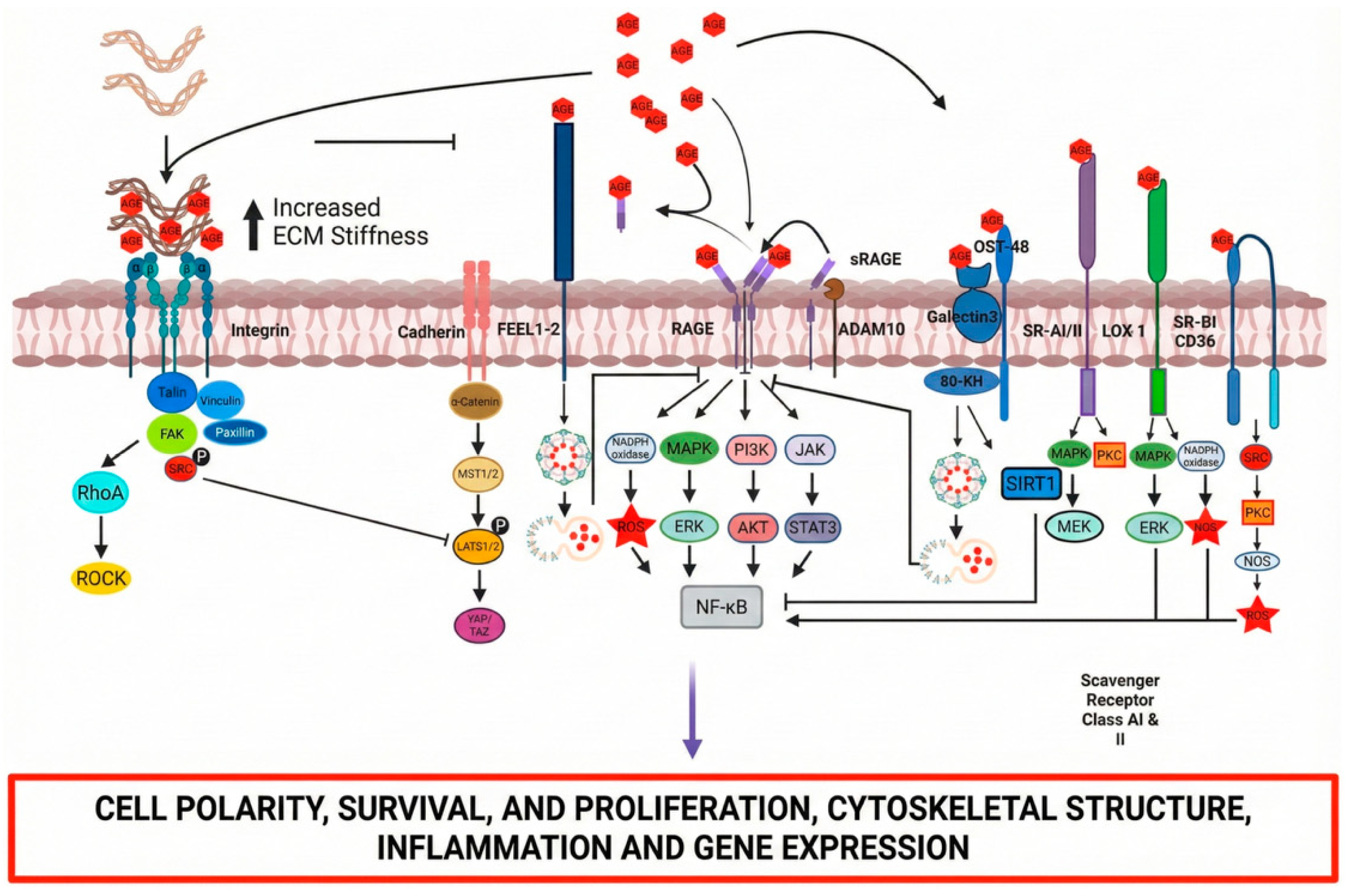
3.1. Molecular Biology of the AGE–RAGE Pathway
3.2. The AGE–RAGE Pathway in Endometriosis
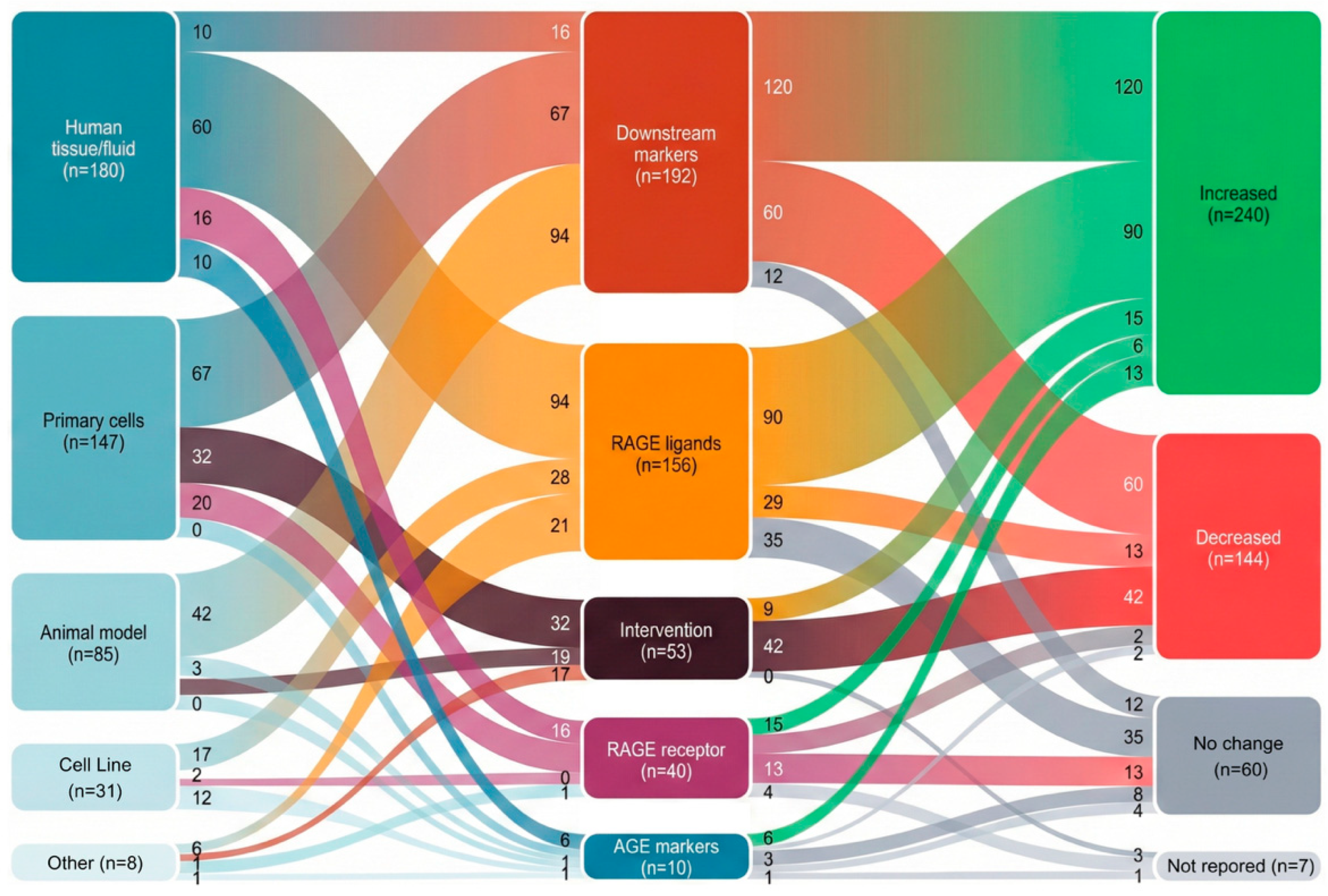
3.2.1. Characteristics of Included Studies
3.2.2. Evidence for AGE Burden in Endometriosis
3.2.3. RAGE Expression and Localization in Endometriosis
3.2.4. RAGE–Fibrosis Association and Lesion Maturation
3.2.5. Immune-Cell RAGE and Disease Severity
3.2.6. Soluble RAGE in Reproductive and Peritoneal Compartments
3.2.7. HMGB1 as a Central RAGE Ligand Candidate in Endometriosis
3.2.8. Pharmacologic Modulation of the HMGB1-Inflammatory Axis
3.2.9. S100 Family Ligands and the Broader RAGE Ligand Landscape
3.2.10. Downstream Signaling Pathways Repeatedly Linked to AGE–RAGE Biology
3.2.11. Integration Across Models and Disease Domains
4. Discussion
5. Conclusions
Supplementary Materials
Author Contributions
Funding
Data Availability Statement
Conflicts of Interest
References
- Martinelli, C.; Vidali, A.; Di Chiara, F.; Mazzarotti, G.; El Messaoudi, S.; Alfano, L.; Ercoli, A.; Giordano, A. Endometriosis: A cancer-mimicking disease and the need for a translational perspective. Ann. Res. Oncol. 2025, 5, 75. [Google Scholar] [CrossRef] [Scilit]
- Hearn-Yeates, F.; Edgley, K.; Horne, A.W.; O’Mahony, S.M.; Saunders, P.T.K. Dietary Modification and Supplement Use For Endometriosis Pain. JAMA Netw. Open 2025, 8, e253152. [Google Scholar] [CrossRef] [Scilit]
- Esposito, T.; Pentimalli, F.; Giordano, A.; Cortellino, S. Vitamins and dietary supplements in cancer treatment: Is there a need for increased usage? Expert Rev. Anticancer Ther. 2025, 25, 687–710. [Google Scholar] [CrossRef] [Scilit]
- Schwartz, A.S.K.; Gross, E.; Geraedts, K.; Rauchfuss, M.; Wölfler, M.M.; Häberlin, F.; von Orelli, S.; Eberhard, M.; Imesch, P.; Imthurn, B.; et al. The use of home remedies and complementary health approaches in endometriosis. Reprod. Biomed. Online 2019, 38, 260–271. [Google Scholar] [CrossRef] [Scilit]
- Abousifein, M.E.; Leyland, N. The Financial Toxicity of Endometriosis: Unseen Costs and Policy Gaps. J. Obstet. Gynaecol. Can. 2025, 48, 103188. [Google Scholar] [CrossRef] [Scilit]
- Marotto, D.; Martinelli, C.; Maiorano, P.; Fioravanti, A.; Amato, P.; Baglio, G.; Calugi, G.; Fiorillo, A.; Franchina, T.; Gimigliano, F.; et al. Onco-rheumatology: From rags to riches, a transdisciplinary evolution. Rheumatol. Adv. Pract. 2025, 9, rkaf053. [Google Scholar] [CrossRef] [Scilit] [PubMed]
- Martinelli, C.; Ercoli, A.; Vizzielli, G.; Burk, S.R.; Cuomo, M.; Satasiya, V.; Kacem, H.; Braccia, S.; Mazzarotti, G.; Miriello, I.; et al. Liquid biopsy in gynecological cancers: A translational framework from molecular insights to precision oncology and clinical practice. J. Exp. Clin. Cancer Res. 2025, 44, 140, Erratum in J. Exp. Clin. Cancer Res. 2025, 44, 166. https://doi.org/10.1186/s13046-025-03429-0. [Google Scholar] [CrossRef] [Scilit] [PubMed]
- Fryer, J.; Mason-Jones, A.J.; Woodward, A. Understanding diagnostic delay for endometriosis: A scoping review using the social-ecological framework. Health Care Women Int. 2025, 46, 335–351. [Google Scholar] [CrossRef] [Scilit]
- Havers-Borgersen, E.; Hartwell, D.; Ekelund, C.; Butt, J.H.; Østergaard, L.; Holgersson, C.; Schou, M.; Køber, L.; Fosbøl, E.L. Endometriosis and long-term cardiovascular risk: A nationwide Danish study. Eur. Heart J. 2024, 45, 4734–4743. [Google Scholar] [CrossRef] [Scilit]
- Rahman, S.; Park, Y.; Hosseinirad, H.; Shin, J.-H.; Jeong, J.-W. The interplay between endometriosis and obesity. Trends Endocrinol. Metab. 2025, 36, 1140–1153. [Google Scholar] [CrossRef] [Scilit]
- Huang, L.; Shi, L.; Li, M.; Yin, X.; Ji, X. Oxidative stress in endometriosis: Sources, mechanisms and therapeutic potential of antioxidants (Review). Int. J. Mol. Med. 2025, 55, 72. [Google Scholar] [CrossRef] [Scilit]
- Naz, M.S.G.; Noroozzadeh, M.; Ardebili, S.N.; Mousavi, M.; Azizi, F.; Tehrani, F.R. Cardio-Metabolic Risk Profile of Women with Endometriosis: A Population-Based Study. Endocrinol. Diabetes Metab. 2024, 7, e70008. [Google Scholar] [CrossRef] [Scilit]
- Iacobini, C.; Vitale, M.; Pesce, C.; Pugliese, G.; Menini, S. Diabetic Complications and Oxidative Stress: A 20-Year Voyage Back in Time and Back to the Future. Antioxidants 2021, 10, 727. [Google Scholar] [CrossRef] [Scilit] [PubMed]
- Bansal, S.; Burman, A.; Tripathi, A.K. Advanced glycation end products: Key mediator and therapeutic target of cardiovascular complications in diabetes. World J. Diabetes 2023, 14, 1146–1162. [Google Scholar] [CrossRef] [Scilit] [PubMed]
- Sparvero, L.J.; Asafu-Adjei, D.; Kang, R.; Tang, D.; Amin, N.; Im, J.; Rutledge, R.; Lin, B.; Amoscato, A.A.; Zeh, H.J.; et al. RAGE (Receptor for Advanced Glycation Endproducts), RAGE Ligands, and their role in Cancer and Inflammation. J. Transl. Med. 2009, 7, 17. [Google Scholar] [CrossRef] [Scilit] [PubMed]
- Huang, J.; Chen, X.; Lv, Y. HMGB1 Mediated Inflammation and Autophagy Contribute to Endometriosis. Front. Endocrinol. 2021, 12, 616696. [Google Scholar] [CrossRef] [Scilit]
- Perricos, A.; Husslein, H.; Kuessel, L.; Gstoettner, M.; Weinhaeusel, A.; Eiwegger, T.; Beikircher, G.; Wenzl, R. Does the Use of the “Proseek® Multiplex Inflammation I Panel” Demonstrate a Difference in Local and Systemic Immune Responses in Endometriosis Patients with or without Deep-Infiltrating Lesions? Int. J. Mol. Sci. 2023, 24, 5022. [Google Scholar] [CrossRef] [Scilit]
- Smyk, J.M.; Danielecka, Z.; Kotowska, M.; Zawadka, M.; Andruszkiewicz, P.; Grąt, M.; Główczyńska, R.; Grabowski, M.; Gąsecka, A.; Romejko-Wolniewicz, E. Cardiovascular risks and endothelial dysfunction in reproductive-age women with endometriosis. Sci. Rep. 2024, 14, 24127. [Google Scholar] [CrossRef] [Scilit]
- Turnbull, D.; Chugh, R.; Luck, J. Systematic-narrative hybrid literature review: A strategy for integrating a concise methodology into a manuscript. Soc. Sci. Humanit. Open 2023, 7, 100381. [Google Scholar] [CrossRef] [Scilit]
- Twarda-Clapa, A.; Olczak, A.; Białkowska, A.M.; Koziołkiewicz, M. Advanced Glycation End-Products (AGEs): Formation, Chemistry, Classification, Receptors, and Diseases Related to AGEs. Cells 2022, 11, 1312. [Google Scholar] [CrossRef] [Scilit]
- Jansen, F.A.; Fogliano, V.; Rubert, J.; Hoppenbrouwers, T. Dietary Advanced Glycation End products interacting with the intestinal epithelium: What do we really know? Mol. Metab. 2023, 73, 101734. [Google Scholar] [CrossRef] [Scilit] [PubMed]
- Li, M.; Shen, M.; Lu, J.; Yang, J.; Huang, Y.; Liu, L.; Fan, H.; Xie, J.; Xie, M. Maillard reaction harmful products in dairy products: Formation, occurrence, analysis, and mitigation strategies. Food Res. Int. 2022, 151, 110839. [Google Scholar] [CrossRef] [Scilit]
- Negre-Salvayre, A.; Coatrieux, C.; Ingueneau, C.; Salvayre, R. Advanced lipid peroxidation end products in oxidative damage to proteins. Potential role in diseases and therapeutic prospects for the inhibitors. Br. J. Pharmacol. 2008, 153, 6–20. [Google Scholar] [CrossRef] [Scilit]
- Luo, Y.; Li, S.; Ho, C.-T. Key Aspects of Amadori Rearrangement Products as Future Food Additives. Molecules 2021, 26, 4314. [Google Scholar] [CrossRef] [Scilit]
- Poulsen, M.W.; Hedegaard, R.V.; Andersen, J.M.; de Courten, B.; Bügel, S.; Nielsen, J.; Skibsted, L.H.; Dragsted, L.O. Advanced glycation endproducts in food and their effects on health. Food Chem. Toxicol. 2013, 60, 10–37. [Google Scholar] [CrossRef] [Scilit] [PubMed]
- Vlassara, H.; Uribarri, J. Advanced glycation end products (AGE) and diabetes: Cause, effect, or both? Curr. Diabetes Rep. 2014, 14, 453. [Google Scholar] [CrossRef] [Scilit] [PubMed]
- Sant, S.; Wang, D.; Agarwal, R.; Dillender, S.; Ferrell, N. Glycation alters the mechanical behavior of kidney extracellular matrix. Matrix Biol. Plus 2020, 8, 100035. [Google Scholar] [CrossRef] [Scilit]
- Svensson, R.B.; Smith, S.T.; Moyer, P.J.; Magnusson, S.P. Effects of maturation and advanced glycation on tensile mechanics of collagen fibrils from rat tail and Achilles tendons. Acta Biomater. 2018, 70, 270–280. [Google Scholar] [CrossRef] [Scilit]
- Goh, S.Y.; Cooper, M.E. Clinical review: The role of advanced glycation end products in progression and complications of diabetes. J. Clin. Endocrinol. Metab. 2008, 93, 1143–1152. [Google Scholar] [CrossRef] [Scilit]
- Fournet, M.; Bonté, F.; Desmoulière, A. Glycation Damage: A Possible Hub for Major Pathophysiological Disorders and Aging. Aging Dis. 2018, 9, 880–900. [Google Scholar] [CrossRef] [Scilit]
- Salahuddin, P.; Rabbani, G.; Khan, R.H. The role of advanced glycation end products in various types of neurodegenerative disease: A therapeutic approach. Cell. Mol. Biol. Lett. 2014, 19, 407–437. [Google Scholar] [CrossRef] [Scilit]
- Nogami, M.; Hoshi, T.; Toukairin, Y.; Arai, T.; Nishio, T. Immunohistochemistry of advanced glycation end product Nε-(carboxymethyl)lysine in coronary arteries in relation to cardiac fibrosis and serum N-terminal-pro basic natriuretic peptide in forensic autopsy cases. BMC Res. Notes 2020, 13, 239. [Google Scholar] [CrossRef] [Scilit]
- Rabbani, N.; Thornalley, P.J. Advanced glycation end products in the pathogenesis of chronic kidney disease. Kidney Int. 2018, 93, 803–813. [Google Scholar] [CrossRef] [Scilit]
- Ashraf, J.M.; Ahmad, S.; Choi, I.; Ahmad, N.; Farhan, M.; Tatyana, G.; Shahab, U. Recent advances in detection of AGEs: Immunochemical, bioanalytical and biochemical approaches. IUBMB Life 2015, 67, 897–913. [Google Scholar] [CrossRef] [Scilit] [PubMed]
- Niwa, T. Dialysis-related amyloidosis: Pathogenesis focusing on AGE modification. Semin. Dial. 2001, 14, 123–126. [Google Scholar] [CrossRef] [Scilit]
- Machahua, C.; Montes-Worboys, A.; Llatjos, R.; Escobar, I.; Dorca, J.; Molina-Molina, M.; Vicens-Zygmunt, V. Increased AGE-RAGE ratio in idiopathic pulmonary fibrosis. Respir. Res. 2016, 17, 144. [Google Scholar] [CrossRef] [Scilit]
- Sell, D.R.; Monnier, V.M. Molecular basis of arterial stiffening: Role of glycation—A mini-review. Gerontology 2012, 58, 227–237. [Google Scholar] [CrossRef] [Scilit]
- Lapolla, A.; Piarulli, F.; Sartore, G.; Ceriello, A.; Ragazzi, E.; Reitano, R.; Baccarin, L.; Laverda, B.; Fedele, D. Advanced glycation end products and antioxidant status in type 2 diabetic patients with and without peripheral artery disease. Diabetes Care 2007, 30, 670–676. [Google Scholar] [CrossRef] [Scilit]
- Cepas, V.; Collino, M.; Mayo, J.C.; Sainz, R.M. Redox Signaling and Advanced Glycation Endproducts (AGEs) in Diet-Related Diseases. Antioxidants 2020, 9, 142. [Google Scholar] [CrossRef] [Scilit] [PubMed]
- Maurelli, M.; Gisondi, P.; Girolomoni, G. Advanced Glycation End Products and Psoriasis. Vaccines 2023, 11, 617. [Google Scholar] [CrossRef] [Scilit] [PubMed]
- Egaña-Gorroño, L.; López-Díez, R.; Yepuri, G.; Ramirez, L.S.; Reverdatto, S.; Gugger, P.F.; Shekhtman, A.; Ramasamy, R.; Schmidt, A.M. Receptor for Advanced Glycation End Products (RAGE) and Mechanisms and Therapeutic Opportunities in Diabetes and Cardiovascular Disease: Insights from Human Subjects and Animal Models. Front. Cardiovasc. Med. 2020, 7, 37. [Google Scholar] [CrossRef] [Scilit]
- Teodorowicz, M.; Hendriks, W.H.; Wichers, H.J.; Savelkoul, H.F.J. Immunomodulation by Processed Animal Feed: The Role of Maillard Reaction Products and Advanced Glycation End-Products (AGEs). Front. Immunol. 2018, 9, 2088. [Google Scholar] [CrossRef] [Scilit]
- Zhao, Y.; Luo, C.; Chen, J.; Sun, Y.; Pu, D.; Lv, A.; Zhu, S.; Wu, J.; Wang, M.; Zhou, J.; et al. High glucose-induced complement component 3 up-regulation via RAGE-p38MAPK-NF-κB signalling in astrocytes: In vivo and in vitro studies. J. Cell. Mol. Med. 2018, 22, 6087–6098. [Google Scholar] [CrossRef] [Scilit] [PubMed]
- Teissier, T.; Boulanger, É. The receptor for advanced glycation end-products (RAGE) is an important pattern recognition receptor (PRR) for inflammaging. Biogerontology 2019, 20, 279–301. [Google Scholar] [CrossRef] [Scilit] [PubMed]
- Oczypok, E.A.; Perkins, T.N.; Oury, T.D. All the “RAGE” in lung disease: The receptor for advanced glycation endproducts (RAGE) is a major mediator of pulmonary inflammatory responses. Paediatr. Respir. Rev. 2017, 23, 40–49. [Google Scholar] [CrossRef] [Scilit]
- Gaens, K.H.; Goossens, G.H.; Niessen, P.M.; van Greevenbroek, M.M.; van der Kallen, C.J.; Niessen, H.W.; Rensen, S.S.; Buurman, W.A.; Greve, J.W.M.; Blaak, E.E.; et al. Nε-(carboxymethyl)lysine-receptor for advanced glycation end product axis is a key modulator of obesity-induced dysregulation of adipokine expression and insulin resistance. Arter. Thromb. Vasc. Biol. 2014, 34, 1199–1208. [Google Scholar] [CrossRef] [Scilit]
- Taguchi, K.; Fukami, K. RAGE signaling regulates the progression of diabetic complications. Front. Pharmacol. 2023, 14, 1128872. [Google Scholar] [CrossRef] [Scilit]
- Prabhudas, M.R.; Baldwin, C.L.; Bollyky, P.L.; Bowdish, D.M.E.; Drickamer, K.; Febbraio, M.; Herz, J.; Kobzik, L.; Krieger, M.; Loike, J.; et al. A Consensus Definitive Classification of Scavenger Receptors and Their Roles in Health and Disease. J. Immunol. 2017, 198, 3775–3789. [Google Scholar] [CrossRef] [Scilit]
- Scavello, F.; Zeni, F.; Tedesco, C.C.; Mensà, E.; Veglia, F.; Procopio, A.D.; Bonfigli, A.R.; Olivieri, F.; Raucci, A. Modulation of soluble receptor for advanced glycation end-products (RAGE) isoforms and their ligands in healthy aging. Aging 2019, 11, 1648–1663. [Google Scholar] [CrossRef] [Scilit]
- Kelesidis, T.; Kendall, M.A.; Danoff, A.; Aberg, J.A.; Currier, J.S.; Schmidt, A.M. Soluble levels of receptor for advanced glycation endproducts and dysfunctional high-density lipoprotein in persons infected with human immunodeficiency virus: ACTG NWCS332. Medicine 2018, 97, e10955. [Google Scholar] [CrossRef] [Scilit]
- Dozio, E.; Vianello, E.; Sitzia, C.; Ambrogi, F.; Benedini, S.; Gorini, S.; Rampoldi, B.; Rigolini, R.; Tacchini, L.; Romanelli, M.M.C. Circulating Irisin and esRAGE as Early Biomarkers of Decline of Metabolic Health. J. Clin. Med. 2020, 9, 454. [Google Scholar] [CrossRef] [Scilit]
- Juranek, J.; Mukherjee, K.; Kordas, B.; Załęcki, M.; Korytko, A.; Zglejc-Waszak, K.; Szuszkiewicz, J.; Banach, M. Role of RAGE in the Pathogenesis of Neurological Disorders. Neurosci. Bull. 2022, 38, 1248–1262. [Google Scholar] [CrossRef] [Scilit] [PubMed]
- Ahmad, S.; Khan, H.; Siddiqui, Z.; Khan, M.Y.; Rehman, S.; Shahab, U.; Godovikova, T.; Silnikov, V.; Moinuddin. AGEs, RAGEs and s-RAGE; friend or foe for cancer. Semin. Cancer Biol. 2018, 49, 44–55. [Google Scholar] [CrossRef] [Scilit]
- Sanajou, D.; Haghjo, A.G.; Argani, H.; Aslani, S. AGE-RAGE axis blockade in diabetic nephropathy: Current status and future directions. Eur. J. Pharmacol. 2018, 833, 158–164. [Google Scholar] [CrossRef] [Scilit] [PubMed]
- Kelley, N.; Jeltema, D.; Duan, Y.; He, Y. The NLRP3 Inflammasome: An Overview of Mechanisms of Activation and Regulation. Int. J. Mol. Sci. 2019, 20, 3328. [Google Scholar] [CrossRef] [Scilit] [PubMed]
- Yu, W.; Tao, M.; Zhao, Y.; Hu, X.; Wang, M. 4′-Methoxyresveratrol Alleviated AGE-Induced Inflammation via RAGE-Mediated NF-κB and NLRP3 Inflammasome Pathway. Molecules 2018, 23, 1447. [Google Scholar] [CrossRef] [Scilit]
- Gąsiorowski, K.; Brokos, B.; Echeverria, V.; Barreto, G.E.; Leszek, J. RAGE-TLR Crosstalk Sustains Chronic Inflammation in Neurodegeneration. Mol. Neurobiol. 2018, 55, 1463–1476. [Google Scholar] [CrossRef] [Scilit]
- Guerrero-Hernández, A.; Leon-Aparicio, D.; Chavez-Reyes, J.; Olivares-Reyes, J.A.; DeJesus, S. Endoplasmic reticulum stress in insulin resistance and diabetes. Cell Calcium 2014, 56, 311–322. [Google Scholar] [CrossRef] [Scilit]
- Nowotny, K.; Jung, T.; Höhn, A.; Weber, D.; Grune, T.; Nowotny, K.; Jung, T.; Höhn, A.; Weber, D.; Grune, T. Advanced Glycation End Products and Oxidative Stress in Type 2 Diabetes Mellitus. Biomolecules 2015, 5, 194–222. [Google Scholar] [CrossRef] [Scilit]
- Hurrle, S.; Hsu, W.H. The etiology of oxidative stress in insulin resistance. Biomed. J. 2017, 40, 257–262. [Google Scholar] [CrossRef] [Scilit]
- Gautieri, A.; Passini, F.S.; Silván, U.; Guizar-Sicairos, M.; Carimati, G.; Volpi, P.; Moretti, M.; Schoenhuber, H.; Redaelli, A.; Berli, M.; et al. Advanced glycation end-products: Mechanics of aged collagen from molecule to tissue. Matrix Biol. 2017, 59, 95–108. [Google Scholar] [CrossRef] [Scilit]
- Mancini, A.; Gentile, M.T.; Pentimalli, F.; Cortellino, S.; Grieco, M.; Giordano, A. Multiple aspects of matrix stiffness in cancer progression. Front Oncol. 2024, 14, 1406644. [Google Scholar] [CrossRef] [Scilit]
- Stolarczyk, A.; Sarzyńska, S.; Gondek, A.; Cudnoch-Jędrzejewska, A. Influence of diabetes on tissue healing in orthopaedic injuries. Clin. Exp. Pharmacol. Physiol. 2018, 45, 619–627. [Google Scholar] [CrossRef] [Scilit] [PubMed]
- Ellingson, A.; Pancheri, N.; Schiele, N. Regulators of collagen crosslinking in developing and adult tendons. Eur. Cells Mater. 2022, 43, 130–152. [Google Scholar] [CrossRef] [Scilit] [PubMed]
- Vasishta, S.; Umakanth, S.; Adiga, P.; Joshi, M.B. Extrinsic and intrinsic factors influencing metabolic memory in type 2 diabetes. Vasc. Pharmacol. 2022, 142, 106933. [Google Scholar] [CrossRef] [Scilit]
- Puzianowska-Kuźnicka, M.; Owczarz, M.; Wieczorowska-Tobis, K.; Nadrowski, P.; Chudek, J.; Slusarczyk, P.; Skalska, A.; Jonas, M.; Franek, E.; Mossakowska, M. Interleukin-6 and C-reactive protein, successful aging, and mortality: The PolSenior study. Immun. Ageing 2016, 13, 21. [Google Scholar] [CrossRef] [Scilit] [PubMed]
- Stowe, R.P.; Peek, M.K.; Cutchin, M.P.; Goodwin, J.S. Plasma cytokine levels in a population-based study: Relation to age and ethnicity. J. Gerontol. Ser. A Biomed. Sci. Med. Sci. 2010, 65, 429–433. [Google Scholar] [CrossRef] [Scilit]
- Katakami, N. Mechanism of Development of Atherosclerosis and Cardiovascular Disease in Diabetes Mellitus. J. Atheroscler. Thromb. 2018, 25, 27–39. [Google Scholar] [CrossRef] [Scilit]
- Son, S.; Hwang, I.; Han, S.H.; Shin, J.-S.; Shin, O.S.; Yu, J.-W. Advanced glycation end products impair NLRP3 inflammasome–mediated innate immune responses in macrophages. J. Biol. Chem. 2017, 292, 20437–20448. [Google Scholar] [CrossRef] [Scilit]
- Muñoz, N.; Pedreañez, A.; Mosquera, J. Angiotensin II Induces Increased Myocardial Expression of Receptor for Advanced Glycation End Products, Monocyte/Macrophage Infiltration and Circulating Endothelin-1 in Rats with Experimental Diabetes. Can. J. Diabetes 2020, 44, 651–656. [Google Scholar] [CrossRef] [Scilit]
- Yue, Q.; Song, Y.; Liu, Z.; Zhang, L.; Yang, L.; Li, J. Receptor for Advanced Glycation End Products (RAGE): A Pivotal Hub in Immune Diseases. Molecules 2022, 27, 4922. [Google Scholar] [CrossRef] [Scilit] [PubMed]
- Lemarchand, M.; Thouin, K.; De Serres-Bérard, T.; Bellenfant, S.; Cadau, S.; Berthod, F. In vitro glycation of a tissue-engineered wound healing model to mimic diabetic ulcers. Biotechnol. Bioeng. 2023, 120, 1657–1666. [Google Scholar] [CrossRef] [Scilit]
- Guan, S.-S.; Sheu, M.-L.; Yang, R.-S.; Chan, D.-C.; Wu, C.-T.; Yang, T.-H.; Chiang, C.-K.; Liu, S.-H. The pathological role of advanced glycation end products-downregulated heat shock protein 60 in islet β-cell hypertrophy and dysfunction. Oncotarget 2016, 7, 23072–23087. [Google Scholar] [CrossRef] [Scilit]
- Kopytek, M.; Ząbczyk, M.; Mazur, P.; Undas, A.; Natorska, J. Accumulation of advanced glycation end products (AGEs) is associated with the severity of aortic stenosis in patients with concomitant type 2 diabetes. Cardiovasc. Diabetol. 2020, 19, 92. [Google Scholar] [CrossRef] [Scilit] [PubMed]
- Bettiga, A.; Fiorio, F.; Di Marco, F.; Trevisani, F.; Romani, A.; Porrini, E.; Salonia, A.; Montorsi, F.; Vago, R. The Modern Western Diet Rich in Advanced Glycation End-Products (AGEs): An Overview of Its Impact on Obesity and Early Progression of Renal Pathology. Nutrients 2019, 11, 1748. [Google Scholar] [CrossRef] [Scilit]
- Vitek, M.P.; Bhattacharya, K.; Glendening, J.M.; Stopa, E.; Vlassara, H.; Bucala, R.; Manogue, K.; Cerami, A. Advanced glycation end products contribute to amyloidosis in Alzheimer disease. Proc. Natl. Acad. Sci. USA 1994, 91, 4766–4770. [Google Scholar] [CrossRef] [Scilit] [PubMed]
- Kothandan, D.; Singh, D.S.; Yerrakula, G.; Backkiyashree, D.; Pratibha, N.; Vincy Santhana Sophia, B.; Ramya, A.; Sapthami Ramya, V.G.; Keshavini, S.; Jagadheeshwari, M. Advanced Glycation End Products-Induced Alzheimer’s Disease and Its Novel Therapeutic Approaches: A Comprehensive Review. Cureus 2024, 16, e61373. [Google Scholar] [CrossRef] [Scilit]
- Pinto-Junior, D.C.; Silva, K.S.; Michalani, M.L.; Yonamine, C.Y.; Esteves, J.V.; Fabre, N.T.; Thieme, K.; Catanozi, S.; Okamoto, M.M.; Seraphim, P.M.; et al. Advanced glycation end products-induced insulin resistance involves repression of skeletal muscle GLUT4 expression. Sci. Rep. 2018, 8, 8109. [Google Scholar] [CrossRef] [Scilit]
- Sergi, D.; Angelini, S.; Spaggiari, R.; Castaldo, F.; Zuliani, G.; Sanz, J.M.; Passaro, A. Advanced glycation end-product intake predicts insulin resistance in a sex-dependent fashion. Eur. J. Nutr. 2025, 64, 162. [Google Scholar] [CrossRef] [Scilit]
- Cozzolino, M.; Ciceri, P.; Galassi, A. Hyperphosphatemia: A novel risk factor for mortality in chronic kidney disease. Ann. Transl. Med. 2019, 7, 55. [Google Scholar] [CrossRef] [Scilit]
- Steenbeke, M.; De Bruyne, S.; De Buyzere, M.; Lapauw, B.; Speeckaert, R.; Petrovic, M.; Delanghe, J.R.; Speeckaert, M.M. The role of soluble receptor for advanced glycation end-products (sRAGE) in the general population and patients with diabetes mellitus with a focus on renal function and overall outcome. Crit. Rev. Clin. Lab. Sci. 2021, 58, 113–130. [Google Scholar] [CrossRef] [Scilit]
- Liu, R.; Mori, S.; Wake, H.; Zhang, J.; Liu, K.; Izushi, Y.; Takahashi, H.; Peng, B.; Nishibori, M. Establishment of in vitro binding assay of high mobility group box-1 and S100A12 to receptor for advanced glycation endproducts: Heparin’s effect on binding. Acta Med. Okayama 2009, 63, 203–211. [Google Scholar] [CrossRef] [Scilit]
- Le Bagge, S.; Fotheringham, A.K.; Leung, S.S.; Forbes, J.M. Targeting the receptor for advanced glycation end products (RAGE) in type 1 diabetes. Med. Res. Rev. 2020, 40, 1200–1219. [Google Scholar] [CrossRef] [Scilit]
- Gupta, S.; Dominguez, M.; Golestaneh, L. Diabetic Kidney Disease: An Update. Med. Clin. N. Am. 2023, 107, 689–705. [Google Scholar] [CrossRef] [Scilit]
- Chen, S.; Chen, J.; Li, S.; Guo, F.; Li, A.; Wu, H.; Chen, J.; Pan, Q.; Liao, S.; Liu, H.-F.; et al. High-Fat Diet-Induced Renal Proximal Tubular Inflammatory Injury: Emerging Risk Factor of Chronic Kidney Disease. Front. Physiol. 2021, 12, 786599. [Google Scholar] [CrossRef] [Scilit]
- Lentini, P.; Zanoli, L.; Ronco, C.; Benedetti, C.; Previti, A.; Laudadio, G.; Vienna, F.; Andrighetto, S.; Fuso, V.; Gambaro, G. The Vascular Disease of Diabetic Kidney Disease. Cardiorenal Med. 2023, 13, 202–210. [Google Scholar] [CrossRef] [Scilit]
- Wu, X.-Q.; Zhang, D.-D.; Wang, Y.-N.; Tan, Y.-Q.; Yu, X.-Y.; Zhao, Y.-Y. AGE/RAGE in diabetic kidney disease and ageing kidney. Free. Radic. Biol. Med. 2021, 171, 260–271. [Google Scholar] [CrossRef] [Scilit] [PubMed]
- Donaghue, K.C.; Chiarelli, F.; Trotta, D.; Allgrove, J.; Dahl-Jorgensen, K. Microvascular and macrovascular complications associated with diabetes in children and adolescents. Pediatr. Diabetes 2009, 10, 195–203. [Google Scholar] [CrossRef] [Scilit] [PubMed]
- Bikbova, G.; Oshitari, T.; Bikbov, M. Diabetic Neuropathy of the Retina and Inflammation: Perspectives. Int. J. Mol. Sci. 2023, 24, 9166. [Google Scholar] [CrossRef] [Scilit]
- Yamagishi, S.-I.; Amano, S.; Inagaki, Y.; Okamoto, T.; Koga, K.; Sasaki, N.; Yamamoto, H.; Takeuchi, M.; Makita, Z. Advanced glycation end products-induced apoptosis and overexpression of vascular endothelial growth factor in bovine retinal pericytes. Biochem. Biophys. Res. Commun. 2002, 290, 973–978. [Google Scholar] [CrossRef] [Scilit] [PubMed]
- Chen, B.-H.; Jiang, D.-Y.; Tang, L.-S. Advanced glycation end-products induce apoptosis involving the signaling pathways of oxidative stress in bovine retinal pericytes. Life Sci. 2006, 79, 1040–1048. [Google Scholar] [CrossRef] [Scilit]
- Guan, Y.; Wu, X.; Meng, H. Indirect competitive ELISA based on monoclonal antibody for the detection of 5-hydroxymethyl-2-furfural in milk, compared with HPLC. J. Dairy Sci. 2013, 96, 4885–4890. [Google Scholar] [CrossRef] [Scilit]
- Ren, X.; Ren, L.; Wei, Q.; Shao, H.; Chen, L.; Liu, N. Advanced glycation end-products decreases expression of endothelial nitric oxide synthase through oxidative stress in human coronary artery endothelial cells. Cardiovasc. Diabetol. 2017, 16, 52. [Google Scholar] [CrossRef] [Scilit]
- La Sala, L.; Prattichizzo, F.; Ceriello, A. The link between diabetes and atherosclerosis. Eur. J. Prev. Cardiol. 2019, 26, 15–24. [Google Scholar] [CrossRef] [Scilit]
- Yang, P.-S.; Lee, S.H.; Park, J.; Kim, T.-H.; Uhm, J.-S.; Joung, B.; Lee, M.-H.; Chang, B.-C.; Pak, H.-N. Atrial tissue expression of receptor for advanced glycation end-products (RAGE) and atrial fibrosis in patients with mitral valve disease. Int. J. Cardiol. 2016, 220, 1–6. [Google Scholar] [CrossRef] [Scilit] [PubMed]
- Robles-Rivera, K.; Rivera-Paredez, B.; Quezada-Sanchéz, A.D.; Velázquez-Cruz, R.; Salmerón, J. Advanced glycation end products are associated with cardiovascular risk in the Mexican population. Nutr. Metab. Cardiovasc. Dis. 2023, 33, 826–834. [Google Scholar] [CrossRef] [Scilit] [PubMed]
- Julián, M.T.; de Oca, A.P.-M.; Julve, J.; Alonso, N. The double burden: Type 1 diabetes and heart failure—A comprehensive review. Cardiovasc. Diabetol. 2024, 23, 65. [Google Scholar] [CrossRef] [Scilit] [PubMed]
- Herrmann, K.L.; McCulloch, A.D.; Omens, J.H. Glycated collagen cross-linking alters cardiac mechanics in volume-overload hypertrophy. Am. J. Physiol.-Heart Circ. Physiol. 2003, 284, H1277–H1284. [Google Scholar] [CrossRef] [Scilit]
- Alzayadneh, E.M.; Shatanawi, A.; Caldwell, R.W.; Caldwell, R.B. Methylglyoxal-Modified Albumin Effects on Endothelial Arginase Enzyme and Vascular Function. Cells 2023, 12, 795. [Google Scholar] [CrossRef] [Scilit]
- Berg, T.J.; Snorgaard, O.; Faber, J.; A Torjesen, P.; Hildebrandt, P.; Mehlsen, J.; Hanssen, K.F. Serum levels of advanced glycation end products are associated with left ventricular diastolic function in patients with type 1 diabetes. Diabetes Care 1999, 22, 1186–1190. [Google Scholar] [CrossRef] [Scilit]
- Petrova, R.; Yamamoto, Y.; Muraki, K.; Yonekura, H.; Sakurai, S.; Watanabe, T.; Li, H.; Takeuchi, M.; Makita, Z.; Kato, I.; et al. Advanced glycation endproduct-induced calcium handling impairment in mouse cardiac myocytes. J. Mol. Cell. Cardiol. 2002, 34, 1425–1431. [Google Scholar] [CrossRef]
- Goldin, A.; Beckman, J.A.; Schmidt, A.M.; Creager, M.A. Advanced glycation end products: Sparking the development of diabetic vascular injury. Circulation 2006, 114, 597–605. [Google Scholar] [CrossRef] [Scilit]
- Schäfer, S.; Huber, J.; Wihler, C.; Rütten, H.; Busch, A.E.; Linz, W. Impaired left ventricular relaxation in type 2 diabetic rats is related to myocardial accumulation of N(epsilon)-(carboxymethyl) lysine. Eur. J. Heart Fail. 2006, 8, 2–6. [Google Scholar] [CrossRef] [Scilit]
- Brunvand, L.; Heier, M.; Brunborg, C.; Hanssen, K.F.; Fugelseth, D.; Stensaeth, K.H.; Dahl-Jørgensen, K.; Margeirsdottir, H.D. Advanced glycation end products in children with type 1 diabetes and early reduced diastolic heart function. BMC Cardiovasc. Disord. 2017, 17, 133. [Google Scholar] [CrossRef] [Scilit] [PubMed]
- Vaitkevicius, P.V.; Lane, M.; Spurgeon, H.; Ingram, D.K.; Roth, G.S.; Egan, J.J.; Vasan, S.; Wagle, D.R.; Ulrich, P.; Brines, M.; et al. A cross-link breaker has sustained effects on arterial and ventricular properties in older rhesus monkeys. Proc. Natl. Acad. Sci. USA 2001, 98, 1171–1175. [Google Scholar] [CrossRef] [Scilit]
- Little, W.C.; Zile, M.R.; Kitzman, D.W.; Hundley, W.G.; O’Brien, T.X.; Degroof, R.C. The effect of alagebrium chloride (ALT-711), a novel glucose cross-link breaker, in the treatment of elderly patients with diastolic heart failure. J. Card. Fail. 2005, 11, 191–195. [Google Scholar] [CrossRef] [Scilit] [PubMed]
- Ng, M.L.; Ang, X.; Yap, K.Y.; Ng, J.J.; Goh, E.C.H.; Khoo, B.B.J.; Richards, A.M.; Drum, C.L. Novel Oxidative Stress Biomarkers with Risk Prognosis Values in Heart Failure. Biomedicines 2023, 11, 917. [Google Scholar] [CrossRef] [Scilit] [PubMed]
- Sakata, N.; Noma, A.; Yamamoto, Y.; Okamoto, K.; Meng, J.; Takebayashi, S.; Nagai, R.; Horiuchi, S. Modification of elastin by pentosidine is associated with the calcification of aortic media in patients with end-stage renal disease. Nephrol. Dial. Transplant. 2003, 18, 1601–1609. [Google Scholar] [CrossRef] [Scilit]
- Adji, A.; O’Rourke, M.F.; Namasivayam, M. Arterial stiffness, its assessment, prognostic value, and implications for treatment. Am. J. Hypertens. 2011, 24, 5–17. [Google Scholar] [CrossRef] [Scilit]
- Luo, W.; He, Y.; Ding, F.; Nie, X.; Li, X.; Song, H.; Li, G. Study on the levels of glycosylated lipoprotein in patients with coronary artery atherosclerosis. J. Clin. Lab. Anal. 2019, 33, e22650. [Google Scholar] [CrossRef] [Scilit]
- Younis, N.; Sharma, R.; Soran, H.; Charlton-Menys, V.; Elseweidy, M.; Durrington, P.N. Glycation as an atherogenic modification of LDL. Curr. Opin. Infect. Dis. 2008, 19, 378–384. [Google Scholar] [CrossRef] [Scilit]
- Tian, Z.; Chen, S.; Shi, Y.; Wang, P.; Wu, Y.; Li, G. Dietary advanced glycation end products (dAGEs): An insight between modern diet and health. Food Chem. 2023, 415, 135735. [Google Scholar] [CrossRef] [Scilit]
- Shu, M.; Cheng, W.; Jia, X.; Bai, X.; Zhao, Y.; Lu, Y.; Zhu, L.; Zhu, Y.; Wang, L.; Shu, Y.; et al. AGEs promote atherosclerosis by increasing LDL transcytosis across endothelial cells via RAGE/NF-κB/Caveolin-1 pathway. Mol. Med. 2023, 29, 113. [Google Scholar] [CrossRef] [Scilit]
- Antsiferova, Y.; Sotnikova, N.; Parfenyuk, E. Different Effects of the Immunomodulatory Drug GMDP Immobilized onto Aminopropyl Modified and Unmodified Mesoporous Silica Nanoparticles upon Peritoneal Macrophages of Women with Endometriosis. BioMed Res. Int. 2013, 2013, 924362. [Google Scholar] [CrossRef] [Scilit]
- Bakun, O.V.; Muzyka, N.Y.; Semenenko, S.B.; Savchuk, T.P. Molecular-genetic characteristics of hmgb1 mrna expression in blood of women with endometriosis associated with infertility. Wiad. Lek. 2024, 77, 1916–1921. [Google Scholar] [CrossRef] [Scilit]
- Bakun, O.; Koval, H.; Muzyka, N.; DuBuske, L.; Slobodian, K. Pathogenetic justification of the use of probiotics in preparation programs for assisted reproductive technologies in women with endometriosis based on studying indicators of the level of mesothelin, mRNA IL1β, HMGB1, NLRP3-inflammasome. Proc. Shevchenko Sci. Soc. Med Sci. 2024, 76, 1–22. [Google Scholar] [CrossRef] [Scilit]
- Cao, Y.; Liu, X.; Guo, S.-W. Plasma High Mobility Group Box 1 (HMGB1), Osteopontin (OPN), and Hyaluronic Acid (HA) as Admissible Biomarkers for Endometriosis. Sci. Rep. 2019, 9, 9272. [Google Scholar] [CrossRef] [Scilit]
- Chen, J.; Qin, P.; Sun, Y.; Han, S. Histone lactylation promotes cell proliferation, migration and invasion through targeting HMGB1 in endometriosis. J. Biomed. Res. 2023, 37, 470–478. [Google Scholar] [CrossRef] [Scilit] [PubMed]
- Fujii, E.Y.; Nakayama, M.; Nakagawa, A. Concentrations of Receptor for Advanced Glycation End Products, VEGF and CML in Plasma, Follicular Fluid, and Peritoneal Fluid in Women with and Without Endometriosis. Reprod. Sci. 2008, 15, 1066–1074. [Google Scholar] [CrossRef] [Scilit]
- Huang, J.; Chen, X.; Liu, J. High mobility group box 1 promotes endometriosis under hypoxia by regulating inflammation and autophagy in vitro and in vivo. Int. Immunopharmacol. 2024, 127, 111397. [Google Scholar] [CrossRef] [Scilit] [PubMed]
- Ikeda, M.; Negishi, Y.; Akira, S.; Morita, R.; Takeshita, T. Inflammation related to high-mobility group box-1 in endometrial ovarian cyst. J. Reprod. Immunol. 2021, 145, 103292. [Google Scholar] [CrossRef] [Scilit] [PubMed]
- Kim, H.I.; Kim, K.H.; Cho, S.; Choi, Y.S.; Lee, B.S.; Chon, S.J.; Yun, B.H. HMGB-1 Increases Proinflammatory Reaction via TLR4 in Human Granulosa Cells of Endometriosis. J. Clin. Med. 2025, 14, 7532. [Google Scholar] [CrossRef] [Scilit]
- Li, Y.; Lv, X.; Jiang, M.; Jin, Z. Sitagliptin ameliorates hypoxia-induced damages in endometrial stromal cells: An implication in endometriosis. Bioengineered 2022, 13, 800–809. [Google Scholar] [CrossRef] [Scilit]
- Lin, X.; Dai, Y.; Tong, X.; Xu, W.; Huang, Q.; Jin, X.; Li, C.; Zhou, F.; Zhou, H.; Lin, X.; et al. Excessive oxidative stress in cumulus granulosa cells induced cell senescence contributes to endometriosis-associated infertility. Redox Biol. 2020, 30, 101431. [Google Scholar] [CrossRef] [Scilit]
- Sasamoto, N.; Ngo, L.H.; Vitonis, A.F.; Dillon, S.T.; Aziz, M.; Shafrir, A.L.; Missmer, S.A.; Libermann, T.A.; Terry, K.L. Prospective evaluation of plasma proteins in relation to surgical endometriosis diagnosis in the Nurses’ Health Study II. eBioMedicine 2025, 115, 105688. [Google Scholar] [CrossRef] [Scilit]
- Sharma, I.; Dhawan, V.; Mahajan, N.; Saha, S.C.; Dhaliwal, L.K. In vitro effects of atorvastatin on lipopolysaccharide-induced gene expression in endometriotic stromal cells. Fertil. Steril. 2010, 94, 1639–1646.e1. [Google Scholar] [CrossRef] [Scilit]
- Sharma, I.; Dhawan, V.; Saha, S.C.; Rashmi, B.; Dhaliwal, L.K. Implication of the RAGE–EN-RAGE axis in endometriosis. Int. J. Gynecol. Obstet. 2010, 110, 199–202. [Google Scholar] [CrossRef] [Scilit]
- Sharma, I.; Dhawan, V.; Saha, S.C.; Dhaliwal, L.K. In vitro effects of peroxisome proliferator–activated receptor-γ ligands on gene expression in lipopolysaccharide-induced endometrial and endometriotic stromal cells. Fertil. Steril. 2011, 95, 829–831.e5. [Google Scholar] [CrossRef] [Scilit]
- Shimizu, K.; Kamada, Y.; Sakamoto, A.; Matsuda, M.; Nakatsuka, M.; Hiramatsu, Y. High Expression of High-Mobility Group Box 1 in Menstrual Blood: Implications for Endometriosis. Reprod. Sci. 2017, 24, 1532–1537. [Google Scholar] [CrossRef] [Scilit] [PubMed]
- Shiraishi, T.; Ikeda, M.; Watanabe, T.; Negishi, Y.; Ichikawa, G.; Kaseki, H.; Akira, S.; Morita, R.; Suzuki, S. Downregulation of pattern recognition receptors on macrophages involved in aggravation of endometriosis. Am. J. Reprod. Immunol. 2024, 91, e13812. [Google Scholar] [CrossRef] [Scilit] [PubMed]
- Su, W.; Cui, H.; Wu, D.; Yu, J.; Ma, L.; Zhang, X.; Huang, Y.; Ma, C. Suppression of TLR4-MyD88 signaling pathway attenuated chronic mechanical pain in a rat model of endometriosis. J. Neuroinflamm. 2021, 18, 65. [Google Scholar] [CrossRef] [Scilit] [PubMed]
- Sun, Y.; Wang, Q.; Wang, M.; Sun, F.; Qiao, P.; Jiang, A.; Ren, C.; Yu, Z.; Yang, T. CHIP induces ubiquitination and degradation of HMGB1 to regulate glycolysis in ovarian endometriosis. Cell. Mol. Life Sci. 2023, 80, 13, Erratum in Cell. Mol. Life Sci. 2023, 80, 94. https://doi.org/10.1007/s00018-023-04732-9. [Google Scholar] [CrossRef] [Scilit]
- Uehara, M.; Hiraike, O.; Hirano, M.; Harada, M.; Koga, K.; Yoshimura, N.; Tanaka, S.; Osuga, Y. Evaluation of atherosclerosis-related biomarkers during perimenopause: A prospective cohort study in women with endometriosis. J. Obstet. Gynaecol. Res. 2022, 48, 3160–3170. [Google Scholar] [CrossRef] [Scilit]
- Wang, H.; Zhou, G.; Zhuang, M.; Wang, W.; Fu, X. Utilizing network pharmacology and molecular docking to explore the underlying mechanism of Guizhi Fuling Wan in treating endometriosis. PeerJ 2021, 9, e11087. [Google Scholar] [CrossRef] [Scilit]
- Wei, X.; Su, Y.; Tian, W.; Cheng, L.; Yin, L.; He, X. IGF2BP1 promotes endometriosis by enhancing m6A modification stability of HMGB1. J. Obstet. Gynaecol. Res. 2025, 51, e16242. [Google Scholar] [CrossRef] [Scilit] [PubMed]
- Ye, C.; Ma, P.; Li, N.; Zhang, R.; Wang, J.; Zhou, Z.; Wu, J.; Liu, D.; Sun, J.; Pan, W.; et al. Eutopic macrophages facilitate endometriosis progression via ferroptosis-mediated release of S100A9. Mol. Hum. Reprod. 2025, 31, gaaf027. [Google Scholar] [CrossRef] [Scilit]
- Yun, B.H.; Chon, S.J.; Choi, Y.S.; Cho, S.H.; Lee, B.S.; Seo, S.K. Pathophysiology of Endometriosis: Role of High Mobility Group Box-1 and Toll-Like Receptor 4 Developing Inflammation in Endometrium. PLoS ONE 2016, 11, e0148165, Erratum in PLoS ONE 2018, 13, e0203741. https://doi.org/10.1371/journal.pone.0203741. [Google Scholar] [CrossRef] [Scilit]
- Zhu, G.; Kong, J.; Fu, X.; Liu, F.; Huang, H.; Hong, L.; Wang, K. Identification of differentially expressed proteins associated with recurrence in ovarian endometriotic cysts. Syst. Biol. Reprod. Med. 2020, 66, 59–69. [Google Scholar] [CrossRef] [Scilit] [PubMed]



| Author | Year | Journal | Study Design | N (E/C) | Phenotype | Biological Samples | Axis Components | Focus |
|---|---|---|---|---|---|---|---|---|
| Antsiferova [114] | 2013 | Biomed Res Int | In Vitro | 40/NR | Not specified | PF | RAGE | Mechanistic |
| Bakun [115] | 2024 | Wiad Lek | Human | 88/68 | Infertility-associated | Blood | HMGB1 | Infertility |
| Bakun [116] | 2024 | Proc Shevchenko Sci Soc | Human | 20/10 | Infertility-associated | Blood, PF, Tissue | HMGB1, Downstream | Infertility |
| Cao [117] | 2019 | Sci Rep | Human, In Vivo | 30/20 | Ovarian (OMA) | Plasma, Tissue, Animal | RAGE, HMGB1, Downstream | Mechanistic |
| Chen [118] | 2023 | J Biomed Res | Human, In Vitro | 10/10 | Not specified | Tissue | HMGB1, Downstream, Intervention | Mechanistic |
| Fujii [119] | 2008 | Reprod Sci | Human | NR/NR | Ovarian (OMA) | Plasma, PF, FF, Tissue | AGE, RAGE, Downstream | Infertility |
| Huang [16] | 2021 | Front Endocrinol | Human, In Vitro | 58/20 | Ovarian (OMA) | Tissue, Primary Cells | HMGB1, Downstream, Intervention | Infertility |
| Huang [11] | 2022 | Int J Mol Sci | Human, In Vitro, In Vivo | 28/15 | Ovarian (OMA) | Serum, Tissue, Primary Cells, Cell Line | HMGB1 | Mechanistic |
| Huang [120] | 2024 | Int Immunopharmacol | Human, In Vitro, In Vivo | 28/9 | Ovarian (OMA) | Tissue, Primary Cells, Animal | HMGB1, Downstream, Intervention | Mechanistic |
| Ikeda [121] | 2021 | J Reprod Immunol | Human, In Vitro | 14/8 | Ovarian (OMA) | Serum, Tissue | RAGE, HMGB1, Downstream, Intervention | Mechanistic |
| Kim [122] | 2025 | J Clin Med | In Vitro | NR/NR | Infertility-associated | Other | HMGB1, Downstream | Infertility |
| Li [123] | 2022 | Bioengineered | In Vitro | NR/NR | Not specified | Primary Cells | HMGB1, Downstream, Intervention | Mechanistic |
| Lin [124] | 2020 | Redox Biol | Human, In Vitro, In Vivo | 131/127 | DIE | FF, Tissue, Cell Line, Animal | RAGE | Infertility |
| Perricos [17] | 2023 | Int J Mol Sci | Human | 51/30 | Ovarian (OMA) | Plasma, PF, Animal | S100 | Mechanistic |
| Sasamoto [125] | 2025 | eBioMedicine | Human | 200/200 | Ovarian (OMA) | Plasma | S100 | Mechanistic |
| Sharma [126] | 2010 | Fertil Steril | In Vitro | 15/10 | Ovarian (OMA) | Tissue, Primary Cells | RAGE, S100 | Mechanistic |
| Sharma [127] | 2010 | Int J Gynaecol Obstet | Human | 28/20 | Ovarian (OMA) | Tissue, Primary Cells | RAGE, S100, Downstream | Infertility |
| Sharma [128] | 2011 | Fertil Steril | In Vitro | 15/10 | Ovarian (OMA) | Tissue, Primary Cells | RAGE, S100 | Mechanistic |
| Shimizu [129] | 2017 | Reprod Sci | Human, In Vitro | 84/55 | Ovarian (OMA) | Serum, PF, Tissue, Primary Cells | RAGE, HMGB1, Downstream | Mechanistic |
| Shiraishi [130] | 2024 | J Reprod Immunol | Human | 27/6 | Ovarian (OMA) | PF | RAGE, HMGB1, S100, Downstream, Intervention | Mechanistic |
| Smyk [18] | 2024 | Sci Rep | Human | 21/24 | Ovarian (OMA) | Other | AGE, Downstream | Cardiovascular |
| Su [131] | 2021 | J Neuroinflammation | In Vivo | NR/NR | Mixed/Other | Other | HMGB1, Downstream, Intervention | Pain |
| Sun [132] | 2023 | Cell Mol Life Sci | Human, In Vitro, In Vivo | 50/50 | Ovarian (OMA) | PF, Tissue, Primary Cells, Cell Line | HMGB1, Downstream, Intervention | Mechanistic |
| Uehara [133] | 2022 | J Obstet Gynaecol Res | Human | 207/NR | Mixed/Other | Serum | AGE | Cardiovascular |
| Wang [134] | 2021 | PeerJ | In Silico, In Vitro | NR/NR | Not specified | Tissue, Primary Cells, Cell Line | Downstream | Mechanistic |
| Wei [135] | 2025 | J Obstet Gynaecol Res | Human, In Vitro, In Vivo | 11/6 | Ovarian (OMA) | PF, Tissue, Animal | HMGB1, Downstream, Intervention | Mechanistic |
| Ye [136] | 2025 | Mol Hum Reprod | Human, In Vitro, In Vivo | NR/NR | Ovarian (OMA) | Other | S100, Downstream, Intervention | Mechanistic |
| Yun [137] | 2016 | PLoS ONE | Human, In Vitro | 33/37 | Not specified | Tissue, Primary Cells | RAGE, HMGB1, Downstream | Mechanistic |
| Zhu [138] | 2020 | Syst Biol Reprod Med | Human | 56/37 | Ovarian (OMA) | Tissue | S100 | Mechanistic |
Disclaimer/Publisher’s Note: The statements, opinions and data contained in all publications are solely those of the individual author(s) and contributor(s) and not of MDPI and/or the editor(s). MDPI and/or the editor(s) disclaim responsibility for any injury to people or property resulting from any ideas, methods, instructions or products referred to in the content. |
© 2026 by the authors. Licensee MDPI, Basel, Switzerland. This article is an open access article distributed under the terms and conditions of the Creative Commons Attribution (CC BY) license.
Share and Cite
Martinelli, C.; Ercoli, A.; De Seta, F.; Barbarino, M.; Giordano, A.; Cortellino, S. The AGE–RAGE Pathway in Endometriosis: A Focused Mechanistic Review and Structured Evidence Map. Int. J. Mol. Sci. 2026, 27, 1396. https://doi.org/10.3390/ijms27031396
Martinelli C, Ercoli A, De Seta F, Barbarino M, Giordano A, Cortellino S. The AGE–RAGE Pathway in Endometriosis: A Focused Mechanistic Review and Structured Evidence Map. International Journal of Molecular Sciences. 2026; 27(3):1396. https://doi.org/10.3390/ijms27031396
Chicago/Turabian StyleMartinelli, Canio, Alfredo Ercoli, Francesco De Seta, Marcella Barbarino, Antonio Giordano, and Salvatore Cortellino. 2026. "The AGE–RAGE Pathway in Endometriosis: A Focused Mechanistic Review and Structured Evidence Map" International Journal of Molecular Sciences 27, no. 3: 1396. https://doi.org/10.3390/ijms27031396
APA StyleMartinelli, C., Ercoli, A., De Seta, F., Barbarino, M., Giordano, A., & Cortellino, S. (2026). The AGE–RAGE Pathway in Endometriosis: A Focused Mechanistic Review and Structured Evidence Map. International Journal of Molecular Sciences, 27(3), 1396. https://doi.org/10.3390/ijms27031396