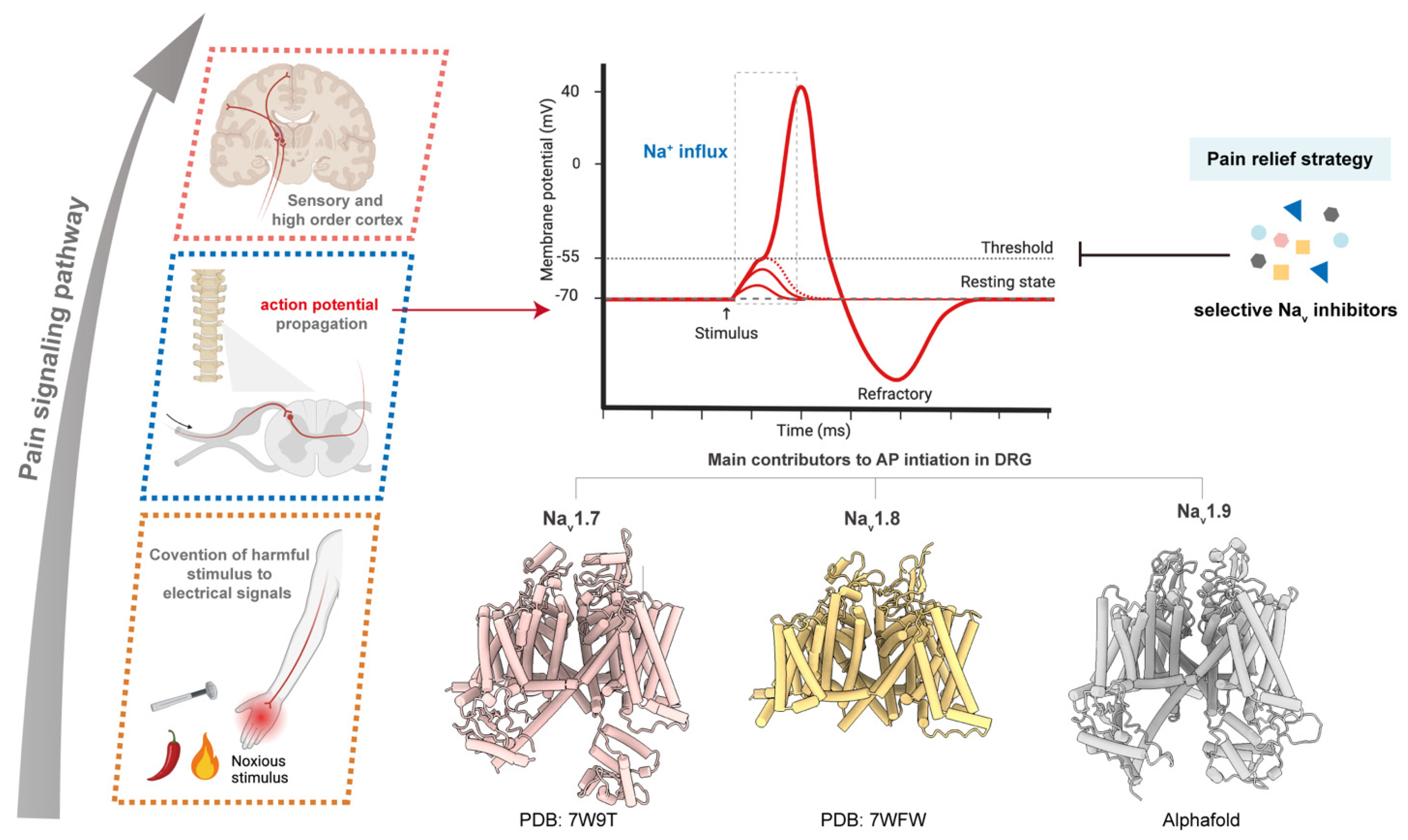
Targeting Nav Channels for Pain Relief: Structural Insights and Therapeutic Opportunities

Abstract
1. Introduction
2. Methodology
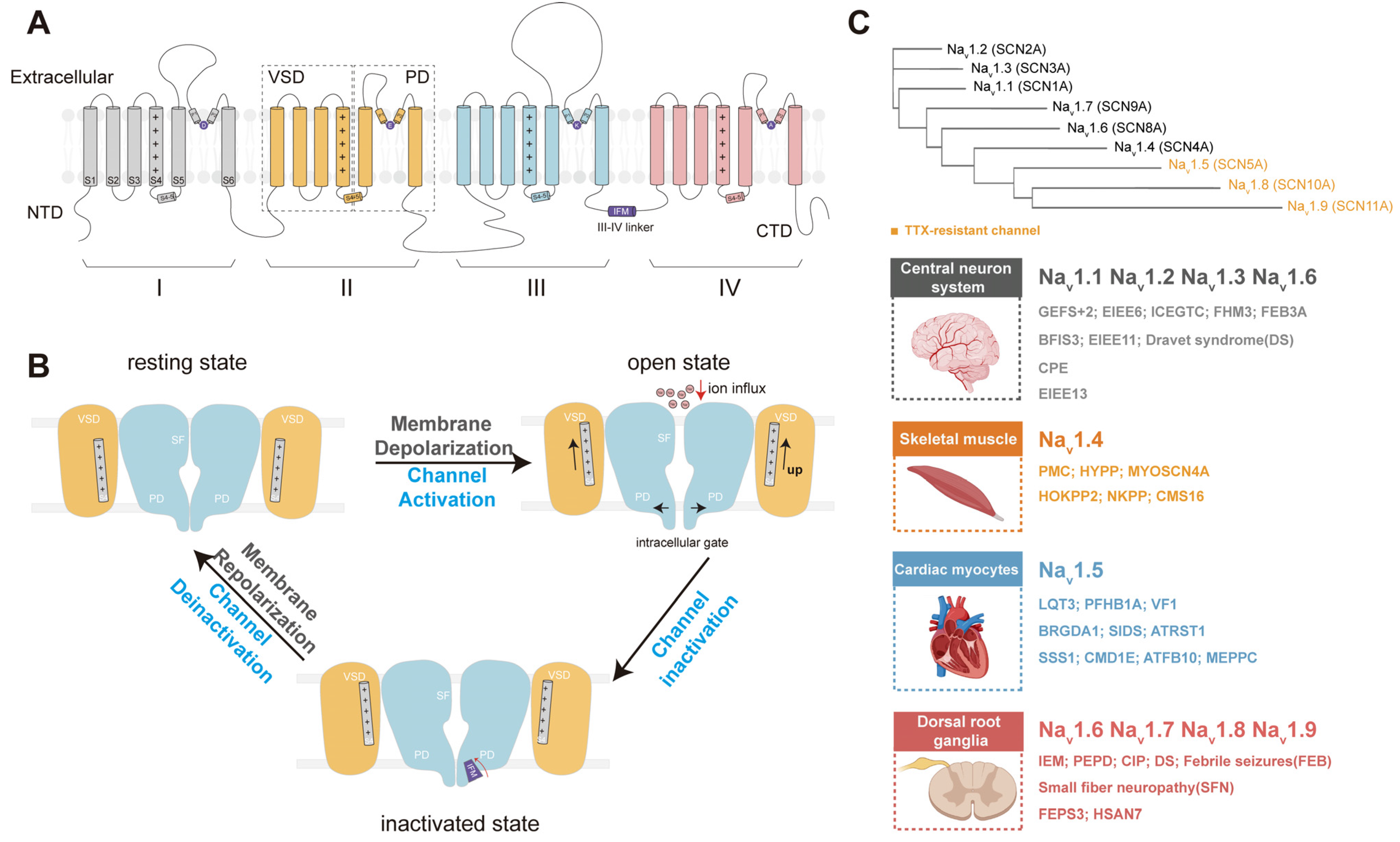
3. VGSC Family Overview
4. Overview of Peripheral VGSC Isoforms and Nociception
5. Nav1.7: Pathophysiological Role and Structural Basis
5.1. Physiological Function and Disease Mutations
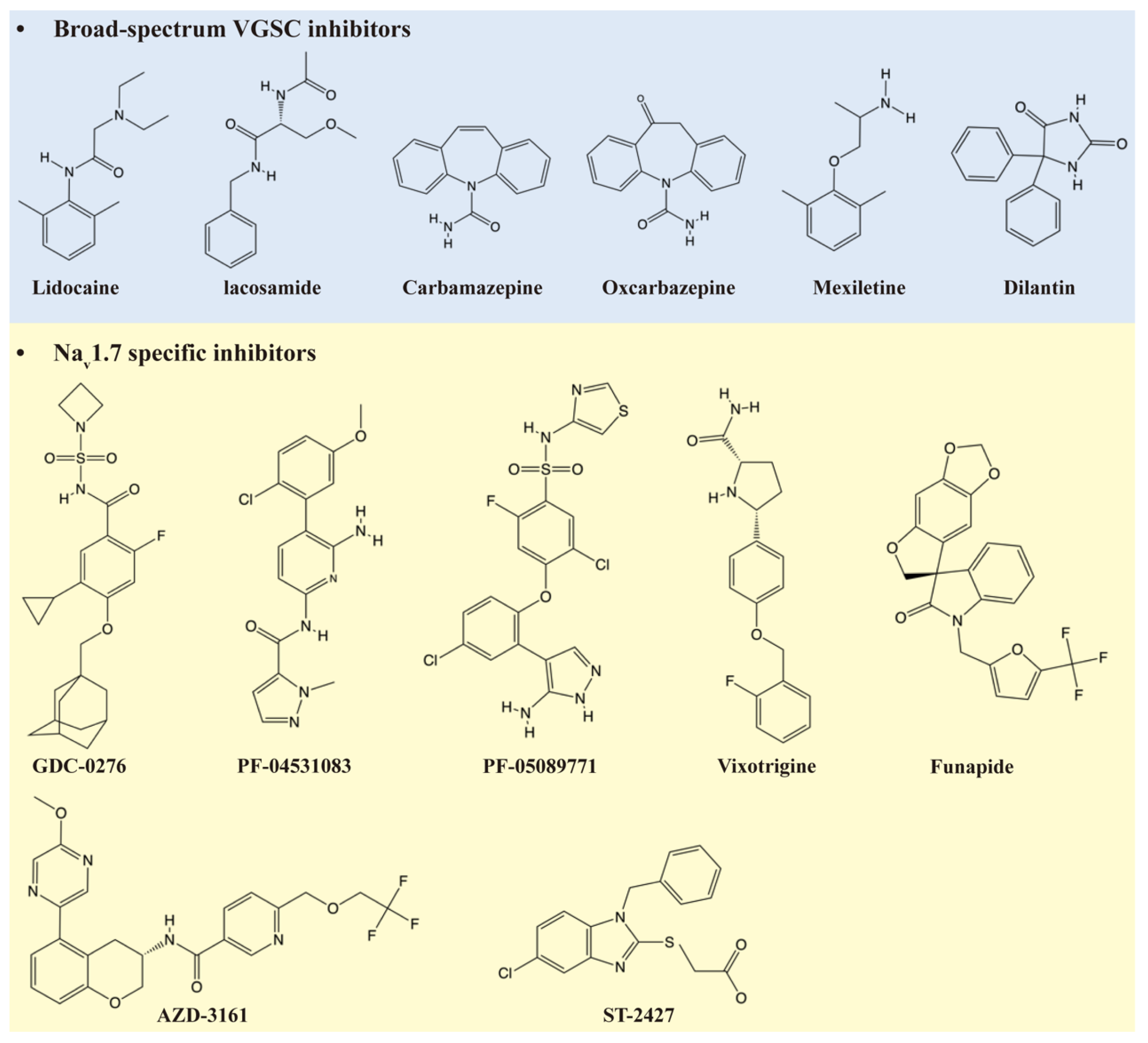
5.2. Channel Modulators
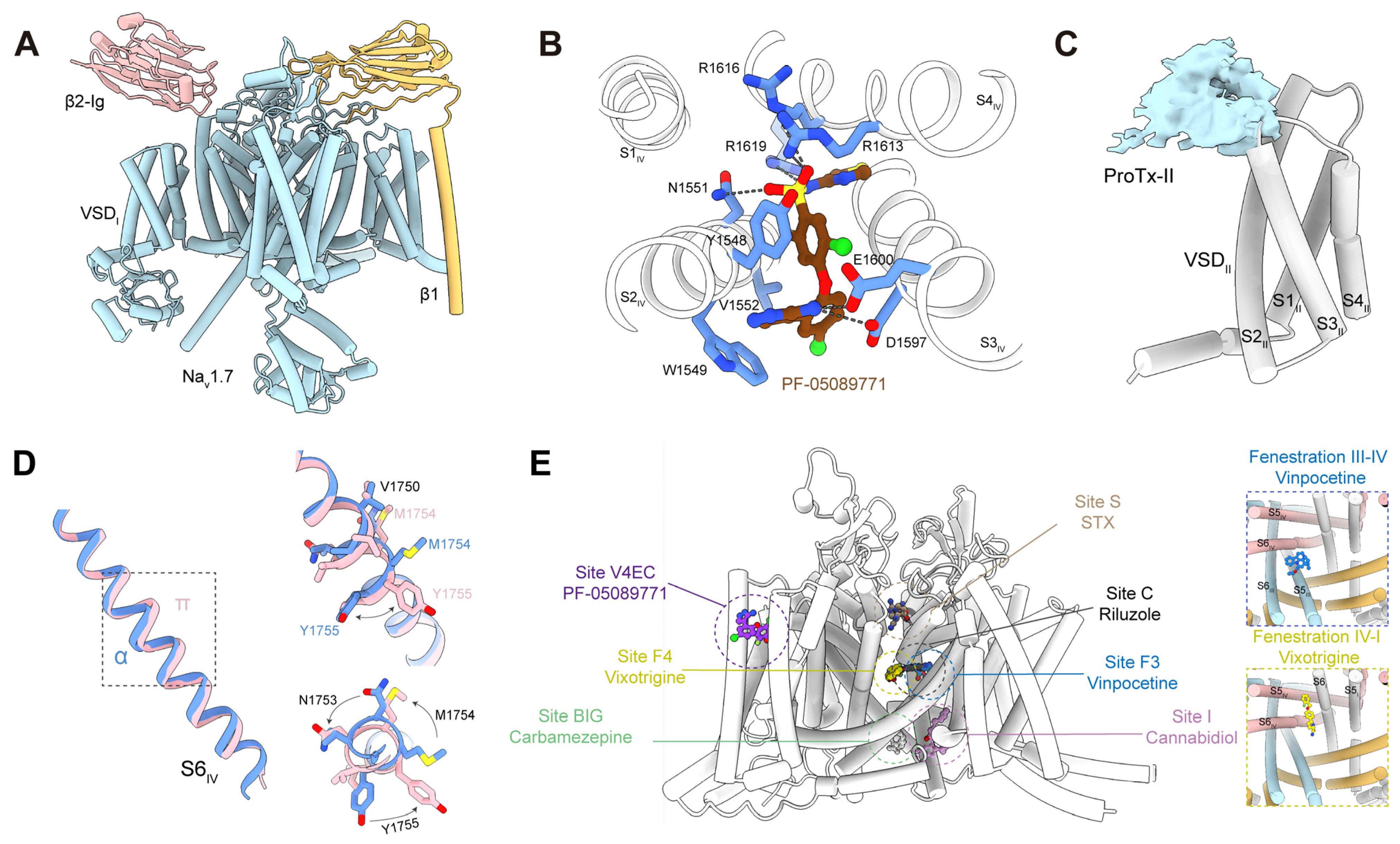
5.3. Structural Insights into Drug Targeting and Remaining Challenges
6. Nav1.8
6.1. Physiological Function, Disease Mutations, and Channel Modulators
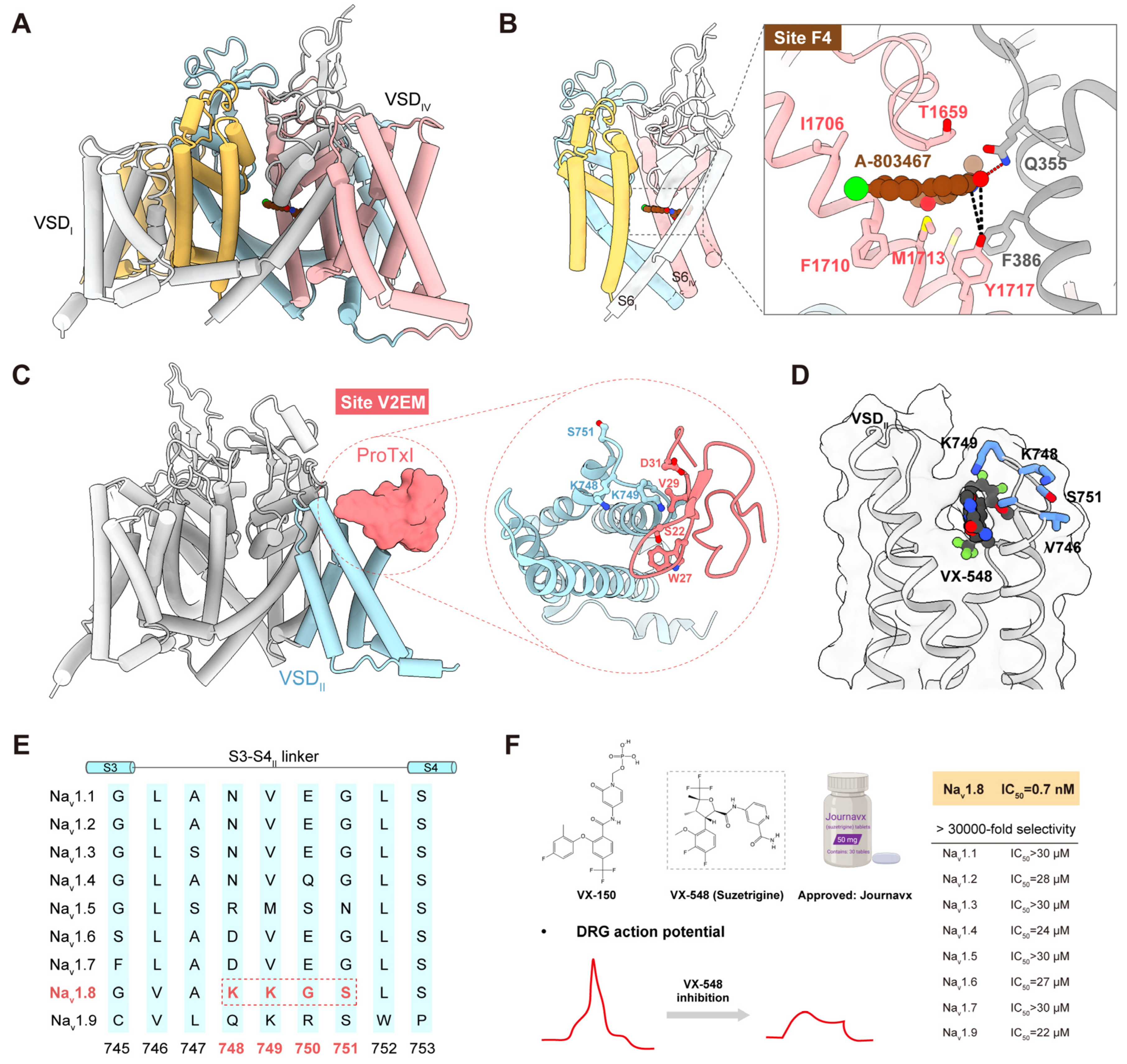
6.2. Structural Insights into Drug Targeting
7. Nav1.9
7.1. Physiological Function, Disease Mutations, and Inflammatory Pain
7.2. Development of Channel Modulators Targeting Nav1.9
8. Future Directions and Limitations
8.1. Challenges and Opportunities
8.2. Limitations of This Review
9. Conclusions
Author Contributions
Funding
Data Availability Statement
Conflicts of Interest
Abbreviations
| ATFB10 | Familial atrial fibrillation, type 10 |
| ATRST1 | Atrial standstill, type 1 |
| BFIS3 | Benign familial infantile seizures, type 3 |
| BRGDA1 | Brugada syndrome, type 1 |
| CIP | Congenital insensitivity to pain |
| CIPN | Chemotherapy-induced peripheral neuropathy |
| CMS16 | Congenital myasthenic syndrome, type 16 |
| CMD1E | Dilated cardiomyopathy, type 1E |
| CNS | Central nervous system |
| CPE | Cryptogenic partial epilepsy |
| DEKA | Asp–Glu–Lys–Ala |
| DRG | Dorsal root ganglia |
| DS | Dravet syndrome |
| EIEE6 | Epileptic encephalopathy, early infantile, 6 |
| EIEE11 | Epileptic encephalopathy, early infantile, 11 |
| EIEE13 | Epileptic encephalopathy, early infantile, 13 |
| FEB | Febrile seizures |
| FEB3A | Familial febrile seizures, type 3A |
| FEPS3 | Familial episodic pain syndrome, type 3 |
| FHM3 | Familial hemiplegic migraine, type 3 |
| FDA | Food and Drug Administration |
| GEFS+2 | Generalized epilepsy with febrile seizures plus 2 |
| GOF | Gain-of-function |
| GMTs | Gating-modifier toxins |
| HSAN7 | Hereditary sensory and autonomic neuropathy, type 7 |
| HOKPP2 | Periodic paralysis, hypokalemic, type 2 |
| HYPP | Periodic paralysis, hyperkalemic |
| IBD | Inflammatory bowel disease |
| IEM | Inherited erythromelalgia |
| ICEGTC | Intractable childhood epilepsy with generalized tonic–clonic seizures |
| IFM | Ile–Phe–Met |
| IV | Intravenous |
| LQT3 | Long QT syndrome, type 3 |
| LOF | Loss-of-function |
| MEPPC | Multifocal ectopic Purkinje-related premature contraction |
| MYOSCN4A | Myotonia SCN4A-related |
| NDA | New drug application |
| NMDA receptor | N-methyl-D-aspartate receptor |
| NSAIDs | Non-steroidal anti-inflammatory drugs |
| NKPP | Periodic paralysis, normokalemic |
| PD | Pore domain |
| PEPD | Paroxysmal extreme pain disorder |
| PFHB1A | Progressive familial heart block, type 1A |
| PHN | Postherpetic neuralgia |
| PNA | Peptide nucleic acid |
| PMC | Paramyotonia congenita of von Eulenburg |
| PKC | Protein kinase C |
| PNS | Peripheral nervous system |
| ProTx-II | Protoxin II |
| SFN | Small fiber neuropathy |
| SIDS | Sudden infant death syndrome |
| SSS1 | Sick sinus syndrome, type 1 |
| STX | Saxitoxin |
| TTX | Tetrodotoxin |
| VF1 | Familial paroxysmal ventricular fibrillation, type 1 |
| VGSC | Voltage-gated sodium channel |
| VSD | Voltage-sensing domain |
References
- Kumar, K.H.; Elavarasi, P. Definition of pain and classification of pain disorders. J. Adv. Clin. Res. Insights 2016, 3, 87–90. [Google Scholar] [CrossRef]
- Świeboda, P.; Filip, R.; Prystupa, A.; Drozd, M. Assessment of pain: Types, mechanism and treatment. Ann. Agric. Environ. Med. 2013, 1, 2–7. [Google Scholar]
- Cao, B.; Xu, Q.; Shi, Y.; Zhao, R.; Li, H.; Zheng, J.; Liu, F.; Wan, Y.; Wei, B. Pathology of pain and its implications for therapeutic interventions. Signal Transduct. Target. Ther. 2024, 9, 155. [Google Scholar] [CrossRef]
- Nijs, J.; De Baets, L.; Hodges, P. Phenotyping nociceptive, neuropathic, and nociplastic pain: Who, how, & why? Braz. J. Phys. Ther. 2023, 27, 100537. [Google Scholar] [CrossRef]
- Alorfi, N.M. Pharmacological Methods of Pain Management: Narrative Review of Medication Used. Int. J. Gen. Med. 2023, 16, 3247–3256. [Google Scholar] [CrossRef] [PubMed]
- Hang Kong, A.Y.; Tan, H.S.; Habib, A.S. VX-548 in the treatment of acute pain. Pain. Manag. 2024, 14, 477–486. [Google Scholar] [CrossRef]
- Wang, J.; Doan, L.V. Clinical pain management: Current practice and recent innovations in research. Cell Rep. Med. 2024, 5, 101786. [Google Scholar] [CrossRef] [PubMed]
- Bennett, D.L.; Clark, A.J.; Huang, J.; Waxman, S.G.; Dib-Hajj, S.D. The Role of Voltage-Gated Sodium Channels in Pain Signaling. Physiol. Rev. 2019, 99, 1079–1151. [Google Scholar] [CrossRef] [PubMed]
- Chen, R.; Liu, Y.; Qian, L.; Yi, M.; Yin, H.; Wang, S.; Xiang, B. Sodium channels as a new target for pain treatment. Front. Pharmacol. 2025, 16, 1573254. [Google Scholar] [CrossRef]
- Hodgkin, A.L.; Huxley, A.F. A quantitative description of membrane current and its application to conduction and excitation in nerve. J. Physiol. 1952, 117, 500–544. [Google Scholar] [CrossRef]
- Catterall, W.A. Ion Channel Voltage Sensors: Structure, Function, and Pathophysiology. Neuron 2010, 67, 915–928. [Google Scholar] [CrossRef]
- Hartshorne, R.P.; Catterall, W.A. Purification of the saxitoxin receptor of the sodium channel from rat brain. Proc. Natl. Acad. Sci. USA 1981, 78, 4620–4624. [Google Scholar] [CrossRef] [PubMed]
- Catterall, W.A. Neurotoxins that Act on Voltage-Sensitive Sodium Channels in Excitable Membranes. Annu. Rev. Pharmacol. Toxicol. 1980, 20, 15–43. [Google Scholar] [CrossRef]
- Noda, M.; Shimizu, S.; Tanabe, T.; Takai, T.; Kayano, T.; Ikeda, T.; Takahashi, H.; Nakayama, H.; Kanaoka, Y.; Minaminot, N.; et al. Primary structure of Electrophorus electricus sodium channel deduced from eDNA sequence. Nature 1984, 312, 121–127. [Google Scholar] [CrossRef] [PubMed]
- Noda, M.; Numa, S. Structure and Function of Sodium Channel. J. Recept. Res. 1987, 7, 467–497. [Google Scholar] [CrossRef] [PubMed]
- Huang, J.; Pan, X.; Yan, N. Structural biology and molecular pharmacology of voltage-gated ion channels. Nat. Rev. Mol. Cell Biol. 2024, 25, 904–925, Erratum in Nat. Rev. Mol. Cell Biol. 2024, 25, 947. [Google Scholar] [CrossRef]
- Payandeh, J.; Scheuer, T.; Zheng, N.; Catterall, W.A. The crystal structure of a voltage-gated sodium channel. Nature 2011, 475, 353–358. [Google Scholar] [CrossRef]
- Favre, I.; Moczydlowski, E.; Schild, L. On the structural basis for ionic selectivity among Na+, K+, and Ca2+ in the voltage-gated sodium channel. Biophys. J. 1996, 71, 3110–3125. [Google Scholar] [CrossRef]
- Fouda, M.A.; Ghovanloo, M.; Ruben, P.C. Late sodium current: Incomplete inactivation triggers seizures, myotonias, arrhythmias, and pain syndromes. J. Physiol. 2022, 600, 2835–2851. [Google Scholar] [CrossRef]
- González-Cano, R.; Ruiz-Cantero, M.C.; Santos-Caballero, M.; Gómez-Navas, C.; Tejada, M.Á.; Nieto, F.R. Tetrodotoxin, a Potential Drug for Neuropathic and Cancer Pain Relief? Toxins 2021, 13, 483. [Google Scholar] [CrossRef]
- Jiang, D.; Zhang, J.; Xia, Z. Structural Advances in Voltage-Gated Sodium Channels. Front. Pharmacol. 2022, 13, 908867. [Google Scholar] [CrossRef] [PubMed]
- Wang, J.; Ou, S.-W.; Wang, Y.-J. Distribution and function of voltage-gated sodium channels in the nervous system. Channels 2017, 11, 534–554. [Google Scholar] [CrossRef]
- Goodwin, G.; McMahon, S.B. The physiological function of different voltage-gated sodium channels in pain. Nat. Rev. Neurosci. 2021, 22, 263–274. [Google Scholar] [CrossRef]
- Ho, C.; O’Leary, M.E. Single-cell analysis of sodium channel expression in dorsal root ganglion neurons. Mol. Cell. Neurosci. 2011, 46, 159–166. [Google Scholar] [CrossRef]
- Dib-Hajj, S.D.; Cummins, T.R.; Black, J.A.; Waxman, S.G. Sodium Channels in Normal and Pathological Pain. Annu. Rev. Neurosci. 2010, 33, 325–347. [Google Scholar] [CrossRef]
- Strickland, I.T.; Martindale, J.C.; Woodhams, P.L.; Reeve, A.J.; Chessell, I.P.; McQueen, D.S. Changes in the expression of NaV 1.7, NaV 1.8 and NaV 1.9 in a distinct population of dorsal root ganglia innervating the rat knee joint in a model of chronic inflammatory joint pain. Eur. J. Pain 2008, 12, 564–572. [Google Scholar] [CrossRef]
- Black, J.A.; Frézel, N.; Dib-Hajj, S.D.; Waxman, S.G. Expression of Nav1.7 in DRG Neurons Extends from Peripheral Terminals in the Skin to Central Preterminal Branches and Terminals in the Dorsal Horn. Mol. Pain 2012, 8, 82. [Google Scholar] [CrossRef] [PubMed]
- Ma, R.S.Y.; Kayani, K.; Oshodi, D.W.; Whyte Oshodi, A.; Nachiappan, N.; Gnanarajah, S.; Mohammed, R. Voltage gated sodium channels as therapeutic targets for chronic pain. J. Pain Res. 2019, 12, 2709–2722. [Google Scholar] [CrossRef]
- Cummins, T.R.; Sheets, P.L.; Waxman, S.G. The roles of sodium channels in nociception: Implications for mechanisms of pain. Pain 2007, 131, 243–257. [Google Scholar] [CrossRef] [PubMed]
- Alsaloum, M.; Higerd, G.P.; Effraim, P.R.; Waxman, S.G. Status of peripheral sodium channel blockers for non-addictive pain treatment. Nat. Rev. Neurol. 2020, 16, 689–705. [Google Scholar] [CrossRef]
- Heinle, J.W.; Dalessio, S.; Janicki, P.; Ouyang, A.; Vrana, K.E.; Ruiz-Velasco, V.; Coates, M.D. Insights into the voltage-gated sodium channel, NaV1.8, and its role in visceral pain perception. Front. Pharmacol. 2024, 15, 1398409. [Google Scholar] [CrossRef]
- Theys, M.; De Waele, J.; Garud, S.; Willegems, K.; Van Petegem, F.; Bosmans, F. A robust expression system reveals distinct gating mechanisms and calmodulin regulation of NaV 1.9 channels. Sci. Adv. 2025, 11, eadt9799. [Google Scholar] [CrossRef]
- Alexandrou, A.J.; Brown, A.R.; Chapman, M.L.; Estacion, M.; Turner, J.; Mis, M.A.; Wilbrey, A.; Payne, E.C.; Gutteridge, A.; Cox, P.J.; et al. Subtype-Selective Small Molecule Inhibitors Reveal a Fundamental Role for Nav1.7 in Nociceptor Electrogenesis, Axonal Conduction and Presynaptic Release. PLoS ONE 2016, 11, e0152405. [Google Scholar] [CrossRef] [PubMed]
- Fertleman, C.R.; Baker, M.D.; Parker, K.A.; Moffatt, S.; Elmslie, F.V.; Abrahamsen, B.; Ostman, J.; Klugbauer, N.; Wood, J.N.; Gardiner, R.M.; et al. SCN9A Mutations in Paroxysmal Extreme Pain Disorder: Allelic Variants Underlie Distinct Channel Defects and Phenotypes. Neuron 2006, 52, 767–774. [Google Scholar] [CrossRef] [PubMed]
- Lee, S.; Hoeijmakers, J.G.J.; Faber, C.G.; Merkies, I.S.J.; Lauria, G.; Waxman, S.G. The small fiber neuropathy NaV1.7 I228M mutation: Impaired neurite integrity via bioenergetic and mitotoxic mechanisms, and protection by dexpramipexole. J. Neurophysiol. 2020, 123, 645–657. [Google Scholar] [CrossRef] [PubMed]
- Hoeijmakers, J.G.J.; Han, C.; Merkies, I.S.J.; Macala, L.J.; Lauria, G.; Gerrits, M.M.; Dib-Hajj, S.D.; Faber, C.G.; Waxman, S.G. Small nerve fibres, small hands and small feet: A new syndrome of pain, dysautonomia and acromesomelia in a kindred with a novel NaV1.7 mutation. Brain 2012, 135, 345–358. [Google Scholar] [CrossRef]
- Faber, C.G.; Hoeijmakers, J.G.J.; Ahn, H.; Cheng, X.; Han, C.; Choi, J.; Estacion, M.; Lauria, G.; Vanhoutte, E.K.; Gerrits, M.M.; et al. Gain of function Nav1.7 mutations in idiopathic small fiber neuropathy. Ann. Neurol. 2012, 71, 26–39. [Google Scholar] [CrossRef]
- Labau, J.I.R.; Estacion, M.; Tanaka, B.S.; De Greef, B.T.A.; Hoeijmakers, J.G.J.; Geerts, M.; Gerrits, M.M.; Smeets, H.J.M.; Faber, C.G.; Merkies, I.S.J.; et al. Differential effect of lacosamide on Nav1.7 variants from responsive and non-responsive patients with small fibre neuropathy. Brain 2020, 143, 771–782. [Google Scholar] [CrossRef]
- Emery, E.C.; Luiz, A.P.; Wood, J.N. Nav 1.7 and other voltage-gated sodium channels as drug targets for pain relief. Expert Opin. Ther. Targets 2016, 20, 975–983. [Google Scholar] [CrossRef]
- Cox, J.J.; Reimann, F.; Nicholas, A.K.; Thornton, G.; Roberts, E.; Springell, K.; Karbani, G.; Jafri, H.; Mannan, J.; Raashid, Y.; et al. An SCN9A channelopathy causes congenital inability to experience pain. Nature 2006, 444, 894–898. [Google Scholar] [CrossRef]
- MacDonald, D.I.; Sikandar, S.; Weiss, J.; Pyrski, M.; Luiz, A.P.; Millet, Q.; Emery, E.C.; Mancini, F.; Iannetti, G.D.; Alles, S.R.A.; et al. A central mechanism of analgesia in mice and humans lacking the sodium channel NaV1.7. Neuron 2021, 109, 1497–1512.e6. [Google Scholar] [CrossRef]
- Pereira, V.; Millet, Q.; Aramburu, J.; Lopez-Rodriguez, C.; Gaveriaux-Ruff, C.; Wood, J.N. Analgesia linked to Nav1.7 loss of function requires µ- and δ-opioid receptors. Wellcome Open Res. 2018, 3, 101. [Google Scholar] [CrossRef]
- Iseppon, F.; Kanellopoulos, A.H.; Tian, N.; Zhou, J.; Caan, G.; Chiozzi, R.; Thalassinos, K.; Çubuk, C.; Lewis, M.J.; Cox, J.J.; et al. Sodium channels Nav1.7, Nav1.8 and pain; two distinct mechanisms for Nav1.7 null analgesia. Neurobiol. Pain 2024, 16, 100168. [Google Scholar] [CrossRef]
- Baker, M.D.; Nassar, M.A. Painful and painless mutations of SCN9A and SCN11A voltage-gated sodium channels. Pflüg. Arch. Eur. J. Physiol. 2020, 472, 865–880. [Google Scholar] [CrossRef] [PubMed]
- Eagles, D.A.; Chow, C.Y.; King, G.F. Fifteen years of NaV 1.7 channels as an analgesic target: Why has excellent in vitro pharmacology not translated into in vivo analgesic efficacy? Br. J. Pharmacol. 2022, 179, 3592–3611. [Google Scholar] [CrossRef] [PubMed]
- Kitano, Y.; Shinozuka, T. Inhibition of Nav1.7: The possibility of ideal analgesics. RSC Med. Chem. 2022, 13, 895–920. [Google Scholar] [CrossRef]
- Wu, Q.; Huang, J.; Fan, X.; Wang, K.; Jin, X.; Huang, G.; Li, J.; Pan, X.; Yan, N. Structural mapping of Nav1.7 antagonists. Nat. Commun. 2023, 14, 3224. [Google Scholar] [CrossRef] [PubMed]
- Osteen, J.D.; Immani, S.; Tapley, T.L.; Indersmitten, T.; Hurst, N.W.; Healey, T.; Aertgeerts, K.; Negulescu, P.A.; Lechner, S.M. Pharmacology and Mechanism of Action of Suzetrigine, a Potent and Selective NaV1.8 Pain Signal Inhibitor for the Treatment of Moderate to Severe Pain. Pain Ther. 2025, 14, 655–674. [Google Scholar] [CrossRef]
- Bertoch, T.; D’Aunno, D.; McCoun, J.; Solanki, D.; Taber, L.; Urban, J.; Oswald, J.; Swisher, M.W.; Tian, S.; Miao, X.; et al. Suzetrigine, a Nonopioid Na V 1.8 Inhibitor for Treatment of Moderate-to-severe Acute Pain: Two Phase 3 Randomized Clinical Trials. Anesthesiology 2025, 142, 1085–1099. [Google Scholar] [CrossRef]
- Jones, J.; Correll, D.J.; Lechner, S.M.; Jazic, I.; Miao, X.; Shaw, D.; Simard, C.; Osteen, J.D.; Hare, B.; Beaton, A.; et al. Selective Inhibition of NaV1.8 with VX-548 for Acute Pain. N. Engl. J. Med. 2023, 389, 393–405. [Google Scholar] [CrossRef]
- Kingwell, K. NaV1.8 inhibitor poised to provide opioid-free pain relief. Nat. Rev. Drug Discov. 2024, 24, 3–5. [Google Scholar] [CrossRef] [PubMed]
- Jemincare. A Phase 2, Multicenter, Randomized, Double-Blind, Placebo and Active Drug-Controlled Trial to Evaluate the Ef-ficacy and Safety of JMKX000623 in Participants with Diabetic Peripheral Neuropathic Pain [Internet]. Available online: https://clinicaltrials.gov/study/NCT06221241 (accessed on 31 October 2025).
- Latigo Biotherapeutics. Latigo Biotherapeutics Doses First Participant in Phase 1 Clinical Trial of LTG-305 for Non-Opioid Treatment of Pain—Latigo Biotherapeutics [Internet]. 2024. Available online: https://latigobio.com/latigo-biotherapeutics-doses-first-participant-in-phase-1-clinical-trial-of-ltg-305-for-non-opioid-treatment-of-pain/ (accessed on 31 October 2025).
- May, M. New approaches to opioid-free pain treatment. Nat. Med. 2025, 31, 1372–1373. [Google Scholar] [CrossRef]
- Brazil, R. Peptide Nucleic Acids Promise New Therapeutics and Gene Editing Tools. ACS Cent. Sci. 2023, 9, 3–6. [Google Scholar] [CrossRef]
- Su, M.; Ouyang, X.; Zhou, P.; Dong, L.; Shao, L.; Wang, K.; Liu, Y. Inhibition of TTX-S Na+ currents by a novel blocker QLS-278 for antinociception. J. Pharmacol. Exp. Ther. 2025, 392, 100030. [Google Scholar] [CrossRef]
- Rothenberg, M.E.; Tagen, M.; Chang, J.H.; Boyce-Rustay, J.; Friesenhahn, M.; Hackos, D.H.; Hains, A.; Sutherlin, D.; Ward, M.; Cho, W. Safety, Tolerability, and Pharmacokinetics of GDC-0276, a Novel NaV1.7 Inhibitor, in a First-in-Human, Single- and Multiple-Dose Study in Healthy Volunteers. Clin. Drug Investig. 2019, 39, 873–887, Erratum in Clin. Drug Investig. 2019, 39, 889–890. https://doi.org/10.1007/s40261-019-00832-2. [Google Scholar] [CrossRef]
- SiteOne Therapeutics, Inc. A Phase 1, Randomized, Double-Blind, Placebo-Controlled Single Ascending Dose Study to Evaluate the Safety, Tolerability, and Pharmacokinetics of ST-2427 IV Infusion in Healthy Subjects [Internet]. Available online: https://clinicaltrials.gov/study/NCT04475198 (accessed on 31 October 2025).
- Vishnu, P.N. SiteOne Therapeutics Begins Trial of Non-Opioid Analgesic for Acute Pain. Clinical Trials Arena. 21 April 2021. Available online: https://www.clinicaltrialsarena.com/news/siteone-trial-acute-pain/?cf-view&cf-closed (accessed on 11 January 2026).
- Dormer, A.; Narayanan, M.; Schentag, J.; Achinko, D.; Norman, E.; Kerrigan, J.; Jay, G.; Heydorn, W. A Review of the Therapeutic Targeting of SCN9A and Nav1.7 for Pain Relief in Current Human Clinical Trials. J. Pain Res. 2023, 16, 1487–1498. [Google Scholar] [CrossRef]
- Shin, Y.; Lee, H.-G.; Kwon, M.; Kim, S.-Y.; Han, J.; Park, C. Safety, Tolerability and Pharmacokinetics/Pharmacodynamic Evaluation of Properties of IN1011-N17 after Oral Administration in Healthy Volunteers with Effect Comparison of Solubility Enhanced Formulation. Osteoarthr. Cartil. 2022, 30, S65–S66. [Google Scholar] [CrossRef]
- Siebenga, P.; van Amerongen, G.; Hay, J.L.; McDonnell, A.; Gorman, D.; Butt, R.; Groeneveld, G.J. Lack of Detection of the Analgesic Properties of PF-05089771, a Selective Nav1.7 Inhibitor, Using a Battery of Pain Models in Healthy Subjects. Clin. Transl. Sci. 2020, 13, 318–324. [Google Scholar] [CrossRef] [PubMed]
- McDonnell, A.; Collins, S.; Ali, Z.; Iavarone, L.; Surujbally, R.; Kirby, S.; Butt, R.P. Efficacy of the Nav1.7 blocker PF-05089771 in a randomised, placebo-controlled, double-blind clinical study in subjects with painful diabetic peripheral neuropathy. Pain 2018, 159, 1465–1476. [Google Scholar] [CrossRef]
- Dunbar, J.; Versavel, M.; Zhao, Y.; Tate, S.; Morisset, V.; Giblin, G.M.P.; Palmer, J.; Tidemann-Miller, B.; Naik, H. Evaluation of the Pharmacokinetic Interaction Between the Voltage- and Use-Dependent Nav1.7 Channel Blocker Vixotrigine and Carbamazepine in Healthy Volunteers. Clin. Pharmacol. Drug Dev. 2020, 9, 62–73. [Google Scholar] [CrossRef] [PubMed]
- Zakrzewska, J.M.; Palmer, J.; Bendtsen, L.; Di Stefano, G.; Ettlin, D.A.; Maarbjerg, S.; Obermann, M.; Morisset, V.; Steiner, D.; Tate, S.; et al. Challenges recruiting to a proof-of-concept pharmaceutical trial for a rare disease: The trigeminal neuralgia experience. Trials 2018, 19, 704. [Google Scholar] [CrossRef] [PubMed]
- Naik, H.; Steiner, D.J.; Versavel, M.; Palmer, J.; Fong, R. Safety, Tolerability and Pharmacokinetics of Single and Repeat Doses of Vixotrigine in Healthy Volunteers. Clin. Transl. Sci. 2021, 14, 1272–1279. [Google Scholar] [CrossRef]
- Price, N.; Namdari, R.; Neville, J.; Proctor, K.J.W.; Kaber, S.; Vest, J.; Fetell, M.; Malamut, R.; Sherrington, R.P.; Pimstone, S.N.; et al. Safety and Efficacy of a Topical Sodium Channel Inhibitor (TV-45070) in Patients With Postherpetic Neuralgia (PHN): A Randomized, Controlled, Proof-of-Concept, Crossover Study, With a Subgroup Analysis of the Nav1.7 R1150W Genotype. Clin. J. Pain 2017, 33, 310–318. [Google Scholar] [CrossRef] [PubMed]
- Goldberg, Y.; Pimstone, S.; Namdari, R.; Price, N.; Cohen, C.; Sherrington, R.; Hayden, M. Human Mendelian pain disorders: A key to discovery and validation of novel analgesics. Clin. Genet. 2012, 82, 367–373. [Google Scholar] [CrossRef]
- Bagal, S.K.; Chapman, M.L.; Marron, B.E.; Prime, R.; Storer, R.I.; Swain, N.A. Recent progress in sodium channel modulators for pain. Bioorg. Med. Chem. Lett. 2014, 24, 3690–3699. [Google Scholar] [CrossRef] [PubMed]
- Kamei, T.; Ishibashi, F.; Takada, Y.; Ohno, A.; Tani, N.; Ikeda, K.; Oyamada, Y. A novel Nav1.7, Nav1.8, and Nav1.9 blocker, ANP-230, has broad analgesic efficacy in preclinical pain models with favorable safety margins. Biochem. Biophys. Res. Commun. 2025, 777, 152197. [Google Scholar] [CrossRef]
- Kamei, T.; Kudo, T.; Yamane, H.; Ishibashi, F.; Takada, Y.; Honda, S.; Maezawa, Y.; Ikeda, K.; Oyamada, Y. Unique electrophysiological property of a novel Nav1.7, Nav1.8, and Nav1.9 sodium channel blocker, ANP-230. Biochem. Biophys. Res. Commun. 2024, 721, 150126. [Google Scholar] [CrossRef]
- Okuda, H.; Inoue, S.; Oyamada, Y.; Koizumi, A.; Youssefian, S. Reduced pain sensitivity of episodic pain syndrome model mice carrying a Nav1.9 mutation by ANP-230, a novel sodium channel blocker. Heliyon 2023, 9, e15423. [Google Scholar] [CrossRef]
- de Abreu, M.M.; Binda, N.S.; Reis, M.P.F.C.A.; Diniz, D.M.; Cordeiro, M.d.N.; Borges, M.H.; de Lima, M.E.; Ribeiro, F.M.; Gomez, M.V.; da Silva, J.F. Spinal antinociceptive effect of the PnTx4(5-5) peptide is possibly mediated by the NMDA autoreceptors. J. Venom. Anim. Toxins Trop. Dis. 2024, 30, e20230103. [Google Scholar] [CrossRef]
- Lopez-Mateos, D.; Harris, B.J.; Hernández-González, A.; Yarov-Yarovoy, V.; Wulff, H. Recent advances in the pharmacology of voltage-gated ion channels. Pharmacol. Rev. 2025, 77, 100090. [Google Scholar] [CrossRef]
- Goldlust, S.A.; Kavoosi, M.; Nezzer, J.; Kavoosi, M.; Korz, W.; Deck, K. Tetrodotoxin for Chemotherapy-Induced Neuropathic Pain: A Randomized, Double-Blind, Placebo-Controlled, Parallel-Dose Finding Trial. Toxins 2021, 13, 235. [Google Scholar] [CrossRef]
- Kavoosi, M.; O’Reilly, T.E.; Kavoosi, M.; Chai, P.; Engel, C.; Korz, W.; Gallen, C.C.; Lester, R.M. Safety, Tolerability, Pharmacokinetics, and Concentration-QTc Analysis of Tetrodotoxin: A Randomized, Dose Escalation Study in Healthy Adults. Toxins 2020, 12, 511. [Google Scholar] [CrossRef] [PubMed]
- Lago, J.; Rodríguez, L.P.; Blanco, L.; Vieites, J.M.; Cabado, A.G. Tetrodotoxin, an Extremely Potent Marine Neurotoxin: Distribution, Toxicity, Origin and Therapeutical Uses. Mar. Drugs 2015, 13, 6384–6406. [Google Scholar] [CrossRef]
- Tran, P.; Tran, H.N.T.; McMahon, K.L.; Deuis, J.R.; Ragnarsson, L.; Norman, A.; Sharpe, S.J.; Payne, R.J.; Vetter, I.; Schroeder, C.I. Changes in Potency and Subtype Selectivity of Bivalent NaV Toxins are Knot-Specific. Bioconjug. Chem. 2023, 34, 1072–1083. [Google Scholar] [CrossRef]
- Fan, X.; Chen, J.; Huang, X.; Hou, Z.; Xie, Y.; Li, Z.; Yan, N.; Huang, J. Phrixotoxin-3 binds to three distinct antagonistic sites on human Nav1.6. Cell Res. 2025, 35, 610–613. [Google Scholar] [CrossRef]
- Tran, H.N.T.; Tran, P.; Deuis, J.R.; Agwa, A.J.; Zhang, A.H.; Vetter, I.; Schroeder, C.I. Enzymatic Ligation of a Pore Blocker Toxin and a Gating Modifier Toxin: Creating Double-Knotted Peptides with Improved Sodium Channel NaV1.7 Inhibition. Bioconjug. Chem. 2020, 31, 64–73. [Google Scholar] [CrossRef]
- Emerich, B.L.; Ferreira, R.C.M.; Machado-de-Avila, R.A.; Resende, J.M.; Duarte, I.D.G.; de Lima, M.E. PnAn13, an antinociceptive synthetic peptide inspired in the Phoneutria nigriventer toxin PnTx4(6-1) (δ-Ctenitoxin-Pn1a). Toxicon X 2020, 7, 100045. [Google Scholar] [CrossRef]
- Mintz, M.; Badner, V.; Feldman, L.K.; Mintz, P.; Saraghi, M.; Diaz, J.; Mezhebovsky, I.; Axelrod, I.; Gleeson, J.; Liu, C.; et al. Lidocaine Ineffectiveness Suggests New Psychopharmacology Drug Target. Psychopharmacol. Bull. 2022, 52, 20–30. [Google Scholar] [CrossRef]
- Resch, F.J.; Heber, S.; Shahi, F.; Zauner, M.; Ciotu, C.I.; Gleiss, A.; Sator, S.; Fischer, M.J.M. Human cold pain: A randomized crossover trial. Pain 2025, 166, 1406–1417. [Google Scholar] [CrossRef] [PubMed]
- Jirachaipitak, S.; Euasobhon, P.; Cenpakdee, S.; Wangnamthip, S.; Rushatamukayanunt, P. Intravenous Lidocaine Response as a Predictor for Oral Oxcarbazepine Efficacy in Neuropathic Pain Syndrome: A Prospective Cohort Study. Med. Sci. Monit. Int. Med. J. Exp. Clin. Res. 2024, 30, e945612. [Google Scholar] [CrossRef] [PubMed]
- Xiao, H.; Ma, K.; Huang, D.; Liu, X.-G.; Liu, T.-H.; Liu, Q.; Liu, G.-Z.; Song, T.; Tao, W.; Wu, D.-S.; et al. Expert consensus of the Chinese Association for the Study of Pain on ion channel drugs for neuropathic pain. World J. Clin. Cases 2021, 9, 2100–2109. [Google Scholar] [CrossRef]
- Marin-Gracia, M.; Cantero-Lozano, D.; Garces-Anton, E.; Lopez-Bravo, A.; Garrido-Fernandez, A.; Navarro-Perez, M.P.; Santos-Lasaosa, S.; Garces-Redondo, M. Lacosamide associated with high-degree block in a patient with trigeminal neuralgia. Rev. Neurol. 2018, 66, 189–192. [Google Scholar]
- García-Escrivá, A.; López-Hernández, N.; Gil-Cortés, C. Treatment of neuropathic pain with lacosamide. Rev. Neurol. 2012, 54, 167–172. [Google Scholar]
- Ghisa, M.; Barbuscio, I.; Bonazzi, E.; Fassan, M.; Barberio, B.; Senzolo, M.; Savarino, E.V. Mexiletine-Induced Esophageal Ulceration: Two Case Reports and a Review of the Literature. Reports 2025, 8, 9. [Google Scholar] [CrossRef]
- Fassoulaki, A.; Sarantopoulos, C.; Melemeni, A.; Hogan, Q. Regional block and mexiletine: The effect on pain after cancer breast surgery. Reg. Anesth. Pain Med. 2001, 26, 223–228. [Google Scholar] [CrossRef] [PubMed]
- Iseki, M.; Yamamoto, T.; Ogawa, Y.; Majima, Y.; Abe, Y.; Watanabe, D.; Amaya, F.; Hasegawa, T.; Inafuku, K.; Kosugi, T.; et al. Efficacy and safety of intravenous fosphenytoin for patients with acute herpes zoster-associated pain: A placebo-controlled randomized trial. J. Dermatol. 2024, 51, 234–242. [Google Scholar] [CrossRef] [PubMed]
- Shkodina, A.D.; Bardhan, M.; Chopra, H.; Anyagwa, O.E.; Pinchuk, V.A.; Hryn, K.V.; Kryvchun, A.M.; Boiko, D.I.; Suresh, V.; Verma, A.; et al. Pharmacological and Non-pharmacological Approaches for the Management of Neuropathic Pain in Multiple Sclerosis. CNS Drugs 2024, 38, 205–224. [Google Scholar] [CrossRef] [PubMed]
- Hille, B. Local anesthetics: Hydrophilic and hydrophobic pathways for the drug-receptor reaction. J. Gen. Physiol. 1977, 69, 497–515. [Google Scholar] [CrossRef]
- Paganelli, M.A.; Popescu, G.K. Actions of bupivacaine, a widely used local anesthetic, on NMDA receptor responses. J. Neurosci. Off. J. Soc. Neurosci. 2015, 35, 831–842. [Google Scholar] [CrossRef]
- Dasta, J.; Ramamoorthy, S.; Patou, G.; Sinatra, R. Bupivacaine liposome injectable suspension compared with bupivacaine HCl for the reduction of opioid burden in the postsurgical setting. Curr. Med. Res. Opin. 2012, 28, 1609–1615. [Google Scholar] [CrossRef]
- Hansen, T.G. Ropivacaine: A pharmacological review. Expert Rev. Neurother. 2004, 4, 781–791. [Google Scholar] [CrossRef]
- McClure, J.H. Ropivacaine. Br. J. Anaesth. 1996, 76, 300–307. [Google Scholar] [CrossRef] [PubMed]
- Dick, I.E.; Brochu, R.M.; Purohit, Y.; Kaczorowski, G.J.; Martin, W.J.; Priest, B.T. Sodium channel blockade may contribute to the analgesic efficacy of antidepressants. J. Pain 2007, 8, 315–324. [Google Scholar] [CrossRef] [PubMed]
- Horishita, T.; Yanagihara, N.; Ueno, S.; Okura, D.; Horishita, R.; Minami, T.; Ogata, Y.; Sudo, Y.; Uezono, Y.; Sata, T.; et al. Antidepressants inhibit Nav1.3, Nav1.7, and Nav1.8 neuronal voltage-gated sodium channels more potently than Nav1.2 and Nav1.6 channels expressed in Xenopus oocytes. Naunyn. Schmiedebergs Arch. Pharmacol. 2017, 390, 1255–1270. [Google Scholar] [CrossRef] [PubMed]
- Moore, R.A.; Derry, S.; Aldington, D.; Cole, P.; Wiffen, P.J. Amitriptyline for neuropathic pain in adults. Cochrane Database Syst. Rev. 2015, 2015, CD008242. [Google Scholar] [CrossRef]
- Shen, H.; Liu, D.; Wu, K.; Lei, J.; Yan, N. Structures of human Nav 1.7 channel in complex with auxiliary subunits and animal toxins. Science 2019, 363, 1303–1308. [Google Scholar] [CrossRef]
- Huang, G.; Liu, D.; Wang, W.; Wu, Q.; Chen, J.; Pan, X.; Shen, H.; Yan, N. High-resolution structures of human Nav1.7 reveal gating modulation through α-π helical transition of S6IV. Cell Rep. 2022, 39, 110735. [Google Scholar] [CrossRef]
- Wisedchaisri, G.; Gamal El-Din, T.M.; Zheng, N.; Catterall, W.A. Structural basis for severe pain caused by mutations in the S4-S5 linkers of voltage-gated sodium channel NaV 1.7. Proc. Natl. Acad. Sci. USA 2023, 120, e2219624120. [Google Scholar] [CrossRef]
- Mulcahy, J.V.; Pajouhesh, H.; Beckley, J.T.; Delwig, A.; Du Bois, J.; Hunter, J.C. Challenges and Opportunities for Therapeutics Targeting the Voltage-Gated Sodium Channel Isoform NaV 1.7. J. Med. Chem. 2019, 62, 8695–8710. [Google Scholar] [CrossRef]
- Kang, C.Y.; Been, K.W.; Kang, M.-H.; Choi, M.S.; Kang, R.H.; Hur, J.W.; Hur, J.K. Advances in Therapeutic Applications of CRISPR Genome Editing for Spinal Pain Management. Neurospine 2025, 22, 421–440. [Google Scholar] [CrossRef]
- Yang, J.; Xie, Y.-F.; Smith, R.; Ratté, S.; Prescott, S.A. Discordance between preclinical and clinical testing of NaV1.7–selective inhibitors for pain. Pain 2025, 166, 481–501. [Google Scholar] [CrossRef]
- Minett, M.S.; Pereira, V.; Sikandar, S.; Matsuyama, A.; Lolignier, S.; Kanellopoulos, A.H.; Mancini, F.; Iannetti, G.D.; Bogdanov, Y.D.; Santana-Varela, S.; et al. Endogenous opioids contribute to insensitivity to pain in humans and mice lacking sodium channel Nav1.7. Nat. Commun. 2015, 6, 8967. [Google Scholar] [CrossRef]
- Shields, S.D.; Ahn, H.-S.; Yang, Y.; Han, C.; Seal, R.P.; Wood, J.N.; Waxman, S.G.; Dib-Hajj, S.D. Nav1.8 expression is not restricted to nociceptors in mouse peripheral nervous system. Pain 2012, 153, 2017–2030. [Google Scholar] [CrossRef] [PubMed]
- Han, C.; Estacion, M.; Huang, J.; Vasylyev, D.; Zhao, P.; Dib-Hajj, S.D.; Waxman, S.G. Human Nav 1.8: Enhanced persistent and ramp currents contribute to distinct firing properties of human DRG neurons. J. Neurophysiol. 2015, 113, 3172–3185. [Google Scholar] [CrossRef] [PubMed]
- Faber, C.G.; Lauria, G.; Merkies, I.S.J.; Cheng, X.; Han, C.; Ahn, H.-S.; Persson, A.-K.; Hoeijmakers, J.G.J.; Gerrits, M.M.; Pierro, T.; et al. Gain-of-function Nav 1.8 mutations in painful neuropathy. Proc. Natl. Acad. Sci. USA 2012, 109, 19444–19449. [Google Scholar] [CrossRef] [PubMed]
- Garrison, S.R.; Weyer, A.D.; Barabas, M.E.; Beutler, B.A.; Stucky, C.L. A gain-of-function voltage-gated sodium channel 1.8 mutation drives intense hyperexcitability of A- and C-fiber neurons. Pain 2014, 155, 896–905. [Google Scholar] [CrossRef]
- Xie, Y.-F. Nav1.8 and Chronic Pain: From Laboratory Animals to Clinical Patients. Biomolecules 2025, 15, 694. [Google Scholar] [CrossRef]
- Coates, M.D.; Walter, V.; Stuart, A.; Small, J.; Dalessio, S.; Carkaci-Salli, N.; Ouyang, A.; Clarke, K.; Tinsley, A.; Williams, E.D.; et al. Impact of SCN10A Polymorphism on Abdominal Pain Perception and Visceral Hypoalgesia in Crohn’s Disease and Ulcerative Colitis. Clin. Transl. Gastroenterol. 2024, 15, e00778. [Google Scholar] [CrossRef]
- Kapur, M.M.; Soliman, M.; Blanke, E.N.; Herold, P.B.; Janicki, P.K.; Vrana, K.E.; Coates, M.D.; Ruiz-Velasco, V. Heterologous expression of the human wild-type and variant NaV 1.8 (A1073V) in rat sensory neurons. Neurogastroenterol. Motil. 2024, 36, e14748. [Google Scholar] [CrossRef]
- Wang, H.; Huang, J.; Zang, J.; Jin, X.; Yan, N. Drug discovery targeting Nav1.8: Structural insights and therapeutic potential. Curr. Opin. Chem. Biol. 2024, 83, 102538, Erratum in Curr. Opin. Chem. Biol. 2025, 84, 102546. [Google Scholar] [CrossRef]
- Stewart, R.G.; Osorno, T.; Fujita, A.; Jo, S.; Ferraiuolo, A.; Carlin, K.; Bean, B.P. Modulation of human dorsal root ganglion neuron firing by the Nav1.8 inhibitor suzetrigine. Proc. Natl. Acad. Sci. USA 2025, 122, e2503570122. [Google Scholar] [CrossRef] [PubMed]
- Huang, X.; Jin, X.; Huang, G.; Huang, J.; Wu, T.; Li, Z.; Chen, J.; Kong, F.; Pan, X.; Yan, N. Structural basis for high-voltage activation and subtype-specific inhibition of human Nav 1.8. Proc. Natl. Acad. Sci. USA 2022, 119, e2208211119. [Google Scholar] [CrossRef] [PubMed]
- Wood, J.N.; Yan, N.; Huang, J.; Zhao, J.; Akopian, A.; Cox, J.J.; Woods, C.G.; Nassar, M.A. Sensory neuron sodium channels as pain targets; from cocaine to Journavx (VX-548, suzetrigine). J. Gen. Physiol. 2025, 157, e202513778. [Google Scholar] [CrossRef]
- Neumann, B.; McCarthy, S.; Gonen, S. Structural basis of inhibition of human NaV1.8 by the tarantula venom peptide Protoxin-I. Nat. Commun. 2025, 16, 1459. [Google Scholar] [CrossRef]
- Vaelli, P.; Fujita, A.; Jo, S.; Zhang, H.X.B.; Osorno, T.; Ma, X.; Bean, B.P. State-Dependent Inhibition of Nav1.8 Sodium Channels by VX-150 and VX-548. Mol. Pharmacol. 2024, 106, 298–308. [Google Scholar] [CrossRef]
- Fang, X.; Djouhri, L.; Black, J.A.; Dib-Hajj, S.D.; Waxman, S.G.; Lawson, S.N. The Presence and Role of the Tetrodotoxin-Resistant Sodium Channel Nav 1.9 (NaN) in Nociceptive Primary Afferent Neurons. J. Neurosci. 2002, 22, 7425–7433. [Google Scholar] [CrossRef] [PubMed]
- Rugiero, F.; Mistry, M.; Sage, D.; Black, J.A.; Waxman, S.G.; Crest, M.; Clerc, N.; Delmas, P.; Gola, M. Selective Expression of a Persistent Tetrodotoxin-Resistant Na+ Current and NaV 1.9 Subunit in Myenteric Sensory Neurons. J. Neurosci. 2003, 23, 2715–2725. [Google Scholar] [CrossRef]
- Blum, R.; Kafitz, K.W.; Konnerth, A. Neurotrophin-evoked depolarization requires the sodium channel NaV1.9. Nature 2002, 419, 687–693. [Google Scholar] [CrossRef]
- Jeong, S.-Y.; Goto, J.; Hashida, H.; Suzuki, T.; Ogata, K.; Masuda, N.; Hirai, M.; Isahara, K.; Uchiyama, Y.; Kanazawa, I. Identification of a Novel Human Voltage-Gated Sodium Channel α Subunit Gene, SCN12A. Biochem. Biophys. Res. Commun. 2000, 267, 262–270. [Google Scholar] [CrossRef]
- Dib-Hajj, S.D.; Black, J.A.; Waxman, S.G. NaV1.9: A sodium channel linked to human pain. Nat. Rev. Neurosci. 2015, 16, 511–519. [Google Scholar] [CrossRef]
- Brackx, W.; Collaço, R.D.C.; Theys, M.; Vander Cruyssen, J.; Bosmans, F. Understanding the physiological role of NaV1.9: Challenges and opportunities for pain modulation. Pharmacol. Ther. 2023, 245, 108416. [Google Scholar] [CrossRef]
- Huang, J.; Vanoye, C.G.; Cutts, A.; Goldberg, Y.P.; Dib-Hajj, S.D.; Cohen, C.J.; Waxman, S.G.; George, A.L. Sodium channel NaV1.9 mutations associated with insensitivity to pain dampen neuronal excitability. J. Clin. Investig. 2017, 127, 2805–2814. [Google Scholar] [CrossRef] [PubMed]
- Maingret, F.; Coste, B.; Padilla, F.; Clerc, N.; Crest, M.; Korogod, S.M.; Delmas, P. Inflammatory Mediators Increase Nav1.9 Current and Excitability in Nociceptors Through a Coincident Detection Mechanism. J. Gen. Physiol. 2008, 131, 211–225. [Google Scholar] [CrossRef] [PubMed]
- Amaya, F.; Wang, H.; Costigan, M.; Allchorne, A.J.; Hatcher, J.P.; Egerton, J.; Stean, T.; Morisset, V.; Grose, D.; Gunthorpe, M.J.; et al. The Voltage-Gated Sodium Channel Nav 1.9 Is an Effector of Peripheral Inflammatory Pain Hypersensitivity. J. Neurosci. 2006, 26, 12852–12860. [Google Scholar] [CrossRef] [PubMed]
- Vanoye, C.G.; Kunic, J.D.; Ehring, G.R.; George, A.L. Mechanism of sodium channel NaV1.9 potentiation by G-protein signaling. J. Gen. Physiol. 2013, 141, 193–202. [Google Scholar] [CrossRef]
- Zhang, F.; Wang, Y.; Liu, Y.; Han, H.; Zhang, D.; Fan, X.; Du, X.; Gamper, N.; Zhang, H. Transcriptional Regulation of Voltage-Gated Sodium Channels Contributes to GM-CSF-Induced Pain. J. Neurosci. 2019, 39, 5222–5233. [Google Scholar] [CrossRef]
- Sibomana, O.; Okereke, M.; Hakayuwa, C. Suzetrigine Approval Breaks a 25-Year Silence: A New Era in Non-Opioid Acute Pain Management. J. Pain Res. 2025, 18, 2805–2808. [Google Scholar] [CrossRef]
- Haroun, R.; Gossage, S.J.; Luiz, A.P.; Arcangeletti, M.; Sikandar, S.; Zhao, J.; Cox, J.J.; Wood, J.N. Chemogenetic Silencing of NaV 1.8-Positive Sensory Neurons Reverses Chronic Neuropathic and Bone Cancer Pain in FLEx PSAM4-GlyR Mice. Eneuro 2023, 10, ENEURO.0151-23.2023. [Google Scholar] [CrossRef]
- Li, Y.; Ji, R.-R. Gene therapy for chronic pain management. Cell Rep. Med. 2024, 5, 101756. [Google Scholar] [CrossRef]
- Pereira, A.F.M.; Cavalcante, J.S.; Angstmam, D.G.; Almeida, C.; Soares, G.S.; Pucca, M.B.; Ferreira Junior, R.S. Unveiling the Pain Relief Potential: Harnessing Analgesic Peptides from Animal Venoms. Pharmaceutics 2023, 15, 2766. [Google Scholar] [CrossRef]



| Drugs | Companies | Targets | Mechanisms of Action | Clinical Development | Comments | Ref. |
|---|---|---|---|---|---|---|
| Selective Inhibitors | ||||||
| Suzetrigine/Journavx (VX-548) | Vertex Pharmaceuticals | Nav1.8 | Highly selective Nav1.8 blockers | Phase 3 COMPLETED (NDA submitted) | First-in-class Nav1.8 selective inhibitor. Demonstrated significant pain reduction vs. placebo in post-surgical acute pain. Non-opioid with potential for chronic pain applications | [48,49,50] |
| VX-993 | Vertex Pharmaceuticals | Nav1.8 | Next-gen Nav1.8 selective blocker | Phase 2 failed | Vertex is developing additional Nav1.8 candidates (e.g., VX-993) as follow-ons to VX-548 | [51] |
| JMKX-000623 | Shanghai Jemincare | Nav1.8 | Selective Nav1.8 blocker | Phase 2 | Evaluated the efficacy and safety of JMKX-000623 in participants with diabetic peripheral neuropathic pain | [51,52] |
| LTG-305 | Latigo Bio | Nav1.8 | - | Phase 1 | LTG-305, a potential best-in-class non-opioid therapeutic candidate for the treatment of chronic pain | [51,53] |
| HBW-004285 | Hyperway | Nav1.8 | Nav1.8 blocker | Phase 2 | Indication for pain, less information about clinical efficacy | [51] |
| STC-004 | SiteOne (Lilly) | Nav1.8 | - | Phase 1 COMPLETED | A novel inhibitor in development for the non-opioid treatment of pain | [54] |
| OLP-1002 | Olipass | Nav1.7 | Nav1.7 selective down-regulatory effect PNA | Phase 2 | Currently in an Australian phase 2a clinical trial for treating osteoarthritis | [51,55] |
| QLS-278 | Research Compound | Nav1.7 selective (TTX-sensitive) | Inactivation- and concentration-dependent Nav1.7 blockade; hyperpolarization shift of inactivation | Preclinical (2024) | IC50 1.2 ± 0.2 μM; effective in neuropathic and inflammatory pain models | [56] |
| GDC-0276 | Genentech/Roche | Nav1.7 | Selective Nav1.7 voltage-gated sodium channel blockade | DISCONTINUED (Phase 1 terminated) | Dose-limiting hypotension and liver toxicity, discontinued in 2019 | [57] |
| ST-2427 | SiteOne (Lilly) | Nav1.7 | - | DISCONTINUED (Phase 1 terminated) | Indication for pain, less information about clinical efficacy | [51,58,59] |
| iN1011-N17 | iN Therapeutics | Nav1.7 | Nav1.7 channel blocker | Phase 1 COMPLETED | Indication for pain, relatively safe in phase 1 trials. | [60,61] |
| PF-05089771 | Pfizer | Nav1.7 | Selective Nav1.7 sodium channel blockade | DISCONTINUED (Phase 2 failed) | Showed some efficacy in trigeminal neuralgia but failed broader neuropathic pain trials. Well-tolerated up to 450 mg bis in die | [62,63] |
| Vixotrigine (BIIB074/CNV1014802) | Biogen/Convergence | Nav1.7 | Voltage- and use-dependent Nav1.7 channel blocker | DISCONTINUED (Phase 2/3 failed) | Developed for trigeminal neuralgia and peripheral neuropathic pain. Discontinued due to insufficient efficacy | [64,65,66] |
| Funapide (XEN402/TV-45070) | Xenon Pharmaceuticals | Nav1.7 | Voltage-dependent Nav1.7 blockade (topical) | DISCONTINUED (Phase 2 failed) | Topical formulation for postherpetic neuralgia. Some responder subgroups identified, particularly Nav1.7 R1150W genetic carriers (63% vs. 35% response) | [67,68] |
| AZD-3161 | AstraZeneca | Nav1.7 | - | DISCONTINUED | Part of the Nav1.7 inhibitor failures; discontinued | [69] |
| PF-04531083 | Pfizer | Nav1.7 | Selective Nav1.7 sodium channel blockade | DISCONTINUED | Part of Pfizer’s Nav1.7 program alongside PF-05089771 | [69] |
| Multi-Target Nav Channel Blockers | ||||||
| ANP-230/DSP-2230 | Anest/Nippon Pharma | Nav1.7, Nav1.8, Nav1.9 | Equipotent blockade of three pain-related Nav channels; peripheral selectivity | Early Clinical Development | Innovative multi-target approach; addresses potential redundancy between Nav subtypes | [70,71,72] |
| PnTx4(5-5) | Academic Research | Nav1.2–Nav1.6 + NMDA receptors | Dual mechanism-sodium channel blockade + NMDA autoreceptor modulation | Preclinical | P. nigriventer spider venom. More potent than MK-801; no motor impairment | [73] |
| ATX01 | AlgoTherapeutix | Nav1.7, Nav1.8 and Nav1.9 | Nav1.7, Nav1.8, Nav1.9 triple blocker | Phase 2 COMPLETED | Indicated for CIPN, locally delivered to the nerve endings where pain signals originate and propagate | [74] |
| Tetrodotoxin (TTX) | WEX Pharmaceuticals | Non-selective VGSC (especially Nav1.7, Nav1.8) | Highly specific voltage-gated sodium channel blocker; peripherally acting | Phase 2 COMPLETED | Positive trends in chemotherapy-induced neuropathic pain; natural neurotoxin from pufferfish | [75,76,77] |
| Engineered Peptides & Biotechnology | ||||||
| Pro[LPATG6]Sx | Academic Research | Nav1.7 dual-site | Bivalent design: ProTx-II + SxIIIC fusion (gating modifier + pore blocker) | Research Tool | Engineering innovation: Sortase A ligation, combined mechanisms | [78] |
| PaurTx3 | Academic Research | Nav1.2 and Nav1.7 | Blockade by inducing a depolarizing shift in gating kinetics | Research Tool | Tarantula Phrixotrichus auratus venom. PaurTx3 exhibits a slower inhibition on Nav1.7 compared to Nav1.4 and Nav1.5 | [78,79,80] |
| PnAn13 | Academic Research | Multi-target | δ-Ctenitoxin derivative with cannabinoid system involvement | Preclinical | Synthetic optimization of spider toxin, multiple pain models | [81] |
| Approved Agents | ||||||
| Lidocaine | Multiple (Generic) | Non-selective VGSC (Nav1.1–Nav1.9) | Use-dependent sodium channel blockade; prevents action potential propagation | FDA Approved | Gold standard for local and neuropathic pain; topical patches for PHN, IV infusion | [82,83,84] |
| Carbamazepine | Multiple (Generic) | Nav1.2, Nav1.3, Nav1.6 primarily | Use-dependent sodium channel blockade; stabilizes inactivated state | FDA Approved | First-line for trigeminal neuralgia; well-established efficacy | [84,85] |
| Oxcarbazepine | Multiple (Generic) | Nav1.2, Nav1.3, Nav1.6 primarily | Similar to carbamazepine but better tolerability profile | FDA Approved | Better tolerability than carbamazepine; second-generation anticonvulsant | [84,85] |
| Lacosamide | UCB/Pfizer | Non-selective VGSC | Slow inactivation enhancement (vs. fast inactivation blockade) | FDA Approved | Unique mechanism. Approved for epilepsy, off-label neuropathic pain. Cardiac monitoring required | [86,87] |
| Mexiletine | Multiple (Generic) | Nav1.5 (cardiac) + peripheral Navs | Class IB antiarrhythmic; use-dependent sodium channel blockade | FDA Approved | Limited efficacy in pain studies; off-label pain use; significant side effects; originally antiarrhythmic | [88,89] |
| Dilantin/Phenytoin | Multiple (Generic) | Multiple VGSC subtypes | Voltage-dependent sodium channel blockade; multiple mechanisms | FDA Approved | Some evidence for acute zoster pain (IV fosphenytoin); limited chronic pain applications | [90,91] |
| Bupivacaine | Multiple (Pfizer Inc., Marcaine® and Generic) | Non-selective VGSC (Nav1.1–Nav1.9) | Direct Nav blocker for regional anesthesia | FDA Approved | Canonical anesthesia. Blocks nerve impulses by increasing the threshold for nerve excitation, preventing pain signals from reaching the brain. Adverse effects (e.g., cardiotoxicity) linked to cardiac Nav1.5 inhibition | [92,93,94] |
| Ropivacaine | Glenmark Pharmaceuticals Inc. (Generic), AstraZeneca (Naropin) | Broad Nav block (Nav1.1–Nav1.9) | Non-selective Nav blocker, similar site as bupivacaine with lower affinity for cardiac Nav1.5 | FDA Approved | Canonical anesthetic Nav blocker with reduced cardiotoxicity compared to bupivacaine | [95,96] |
| Amitriptyline | Multiple (original: Merck & Co, Elavil®) | Non-selective VGSC (Nav1.1–Nav1.9) | Use-dependent block of Nav channels in addition to potent SERT/NET inhibition | FDA Approved | Canonical anesthesia. Indirect cardiac effects via multiple channels | [97,98,99] |
Disclaimer/Publisher’s Note: The statements, opinions and data contained in all publications are solely those of the individual author(s) and contributor(s) and not of MDPI and/or the editor(s). MDPI and/or the editor(s) disclaim responsibility for any injury to people or property resulting from any ideas, methods, instructions or products referred to in the content. |
© 2026 by the authors. Licensee MDPI, Basel, Switzerland. This article is an open access article distributed under the terms and conditions of the Creative Commons Attribution (CC BY) license.
Share and Cite
Xie, Y.; Huang, X.; Lu, F.; Huang, J. Targeting Nav Channels for Pain Relief: Structural Insights and Therapeutic Opportunities. Int. J. Mol. Sci. 2026, 27, 1180. https://doi.org/10.3390/ijms27031180
Xie Y, Huang X, Lu F, Huang J. Targeting Nav Channels for Pain Relief: Structural Insights and Therapeutic Opportunities. International Journal of Molecular Sciences. 2026; 27(3):1180. https://doi.org/10.3390/ijms27031180
Chicago/Turabian StyleXie, Yuzhen, Xiaoshuang Huang, Fangzhou Lu, and Jian Huang. 2026. "Targeting Nav Channels for Pain Relief: Structural Insights and Therapeutic Opportunities" International Journal of Molecular Sciences 27, no. 3: 1180. https://doi.org/10.3390/ijms27031180
APA StyleXie, Y., Huang, X., Lu, F., & Huang, J. (2026). Targeting Nav Channels for Pain Relief: Structural Insights and Therapeutic Opportunities. International Journal of Molecular Sciences, 27(3), 1180. https://doi.org/10.3390/ijms27031180