1. Introduction
Nitrogen is a fundamental macronutrient required for plant growth and development, and its application through fertilization remains a cornerstone of modern agriculture to ensure high and stable crop yields [
1,
2,
3]. However, while intensified nitrogen use has significantly enhanced crop productivity, it has also resulted in considerable environmental challenges, with nitrogen losses from agricultural systems emerging as a major contributor to pollution [
1,
4,
5]. These losses primarily occur through nitrate (NO
3−) leaching (including surface runoff in rice systems), ammonia (NH
3) volatilization, and nitrous oxide (N
2O) emissions [
6,
7,
8]. Each year, NH
3 volatilization alone accounts for approximately 4.2–5.8 million tons of nitrogen loss (as elemental nitrogen), representing 15–20% of total agricultural nitrogen fertilizer applications [
9]. Once in the atmosphere, NH
3 can react with nitrogen oxides (NO
x) and sulfur dioxide (SO
2) to form ammonium nitrate (NH
4NO
3) and ammonium sulfate ((NH
4)
2SO
4), key components of PM2.5 (Particulate Matter ≤ 2.5 μm), which contribute significantly to haze formation [
10].
NH
3 volatilization originates primarily from both the soil surface and crop canopies, with the latter functioning as a dynamic interface that can both emit and absorb atmospheric NH
3 [
11,
12]. During the wheat growing season, canopy NH
3 volatilization typically ranges from 0.8 to 1.5 kg ha
−1, accounting for approximately 15–20% of total NH
3 emissions from wheat fields [
13]. In rice, canopy NH
3 volatilization has been shown to be significantly and negatively correlated with nitrogen-use efficiency [
14]. Studies further indicate that at the peak of leaf area development, corn canopies can absorb up to 76% of NH
3 volatilized from the soil [
15], while during the booting to anthesis stages in winter wheat, 23–40% of soil-emitted NH
3 is absorbed by the canopy [
16]. These findings highlight the critical role of canopy–atmosphere NH
3 exchange in regulating nitrogen-use efficiency and mitigating agricultural NH
3 losses.
The NH
3 compensation point of crops is a critical factor regulating canopy–atmosphere NH
3 exchange [
17]. This compensation point refers to the atmospheric NH
3 partial pressure at which there is no net flux of NH
3 between the plant and the atmosphere, effectively corresponding to the intercellular NH
3 partial pressure. When the plant’s NH
3 compensation point is lower than the ambient atmospheric NH
3 concentration, the plant absorbs NH
3 from the air. Conversely, when the compensation point exceeds the surrounding NH
3 concentration, the plant emits NH
3 into the atmosphere.
Crop growth stage and nitrogen application rate have a significant impact on the NH
3 compensation point. In winter wheat, the leaf NH
3 compensation point peaks at approximately 60 nmol mol
−1 during anthesis and the late grain-filling stages. Leaves from nitrogen-treated plants exhibit significantly higher NH
3 compensation points than those from non-fertilized plants. At other growth stages, compensation points typically range from 1.3 to 16.0 nmol mol
−1 [
13]. Furthermore, studies have shown that barley cultivars with high glutamine synthetase (GS) activity have markedly lower leaf NH
3 compensation points compared to cultivars with lower GS activity [
18].
GS is a key enzyme responsible for NH
4+ assimilation in plants, and is closely associated with crop canopy–atmosphere NH
3 exchange. Extensive studies have shown that enhancing leaf GS activity facilitates cellular NH
4+ assimilation, thereby lowering apoplastic NH
4+ concentrations and reducing the leaf NH
3 compensation point. This, in turn, promotes atmospheric NH
3 uptake and mitigates canopy NH
3 volatilization [
16,
19,
20]. Furthermore, treatment with methionine sulfoximine (MSO), a GS-specific inhibitor, almost completely suppresses GS activity in plants [
21].
In plants, GS is categorized based on subcellular localization into cytosolic GS (GS1) and plastidic GS (GS2) [
22]. In wheat,
TaGS genes comprise a family of 12 members, which are classified into four isoenzyme groups based on phylogenetic relationships: TaGS1;1, TaGS1;2, TaGS1;3, and TaGS2. Previous functional analyses of these isoenzymes have demonstrated notable differences in their enzymatic properties, tissue-specific localization, and expression patterns, highlighting their distinct roles in wheat nitrogen metabolism [
23,
24,
25].
TaGS1;1 exhibits the highest affinity for NH
4+ and is predominantly localized in leaf vascular tissues and mesophyll cells. Its expression markedly increases during leaf senescence, facilitating the re-assimilation of NH
4+ released through protein degradation [
23,
24,
25]. TaGS1;2, characterized by low NH
4+ affinity but activation by its product glutamine, is primarily found in vascular bundles and plays a role in nitrogen re-translocation by assimilating NH
3 derived from urea degradation [
26]. Although TaGS1;3 shows relatively low expression in mesophyll cells, it demonstrates a high NH
4+ assimilation capacity, with its expression induced by elevated NH
4+ levels, suggesting a function in detoxifying excess NH
4+ in mesophyll tissues [
24,
25]. TaGS2 is the dominant GS isoenzyme in leaves, localized in chloroplasts of mesophyll cells, where it re-assimilates NH
4+ produced from photorespiration and assimilates NH
4+ generated via NO
3− reduction [
24,
27]. Notably, TaGS2 expression declines sharply during leaf senescence, contributing significantly to the reduction in overall GS activity [
28]. These findings underscore the distinct functional roles of the four TaGS isoenzymes in leaf nitrogen metabolism. However, their specific contributions to canopy–atmosphere ammonia exchange in wheat, and the identity of the isoenzyme most responsible for regulating this process, remain unresolved.
This study utilized previously identified wheat cultivars with contrasting nitrogen-use efficiencies in field experiments under varying nitrogen application levels [
3,
29]. Measurements included canopy–atmosphere ammonia exchange, leaf TaGS isoenzyme expression, nitrogen metabolic intermediate contents, and key enzyme activities. The relationships among TaGS isoenzyme expression patterns, nitrogen metabolism, and canopy NH
3 exchange were analyzed across cultivars. The objective was to investigate the correlation between the four TaGS isoenzymes and canopy NH
3 exchange in wheat. Findings aim to provide potential molecular targets for reducing agricultural NH
3 volatilization, advancing green cultivation practices, and breeding nitrogen-efficient wheat varieties.
3. Discussion
3.1. Leaf Ammonia Compensation Point as the Key Factor Influencing Wheat Canopy Ammonia Exchange
When atmospheric NH
3 concentration is below the leaf NH
3 compensation point, the canopy releases NH
3; conversely, when atmospheric NH
3 concentration exceeds the compensation point, the canopy absorbs NH
3 [
30,
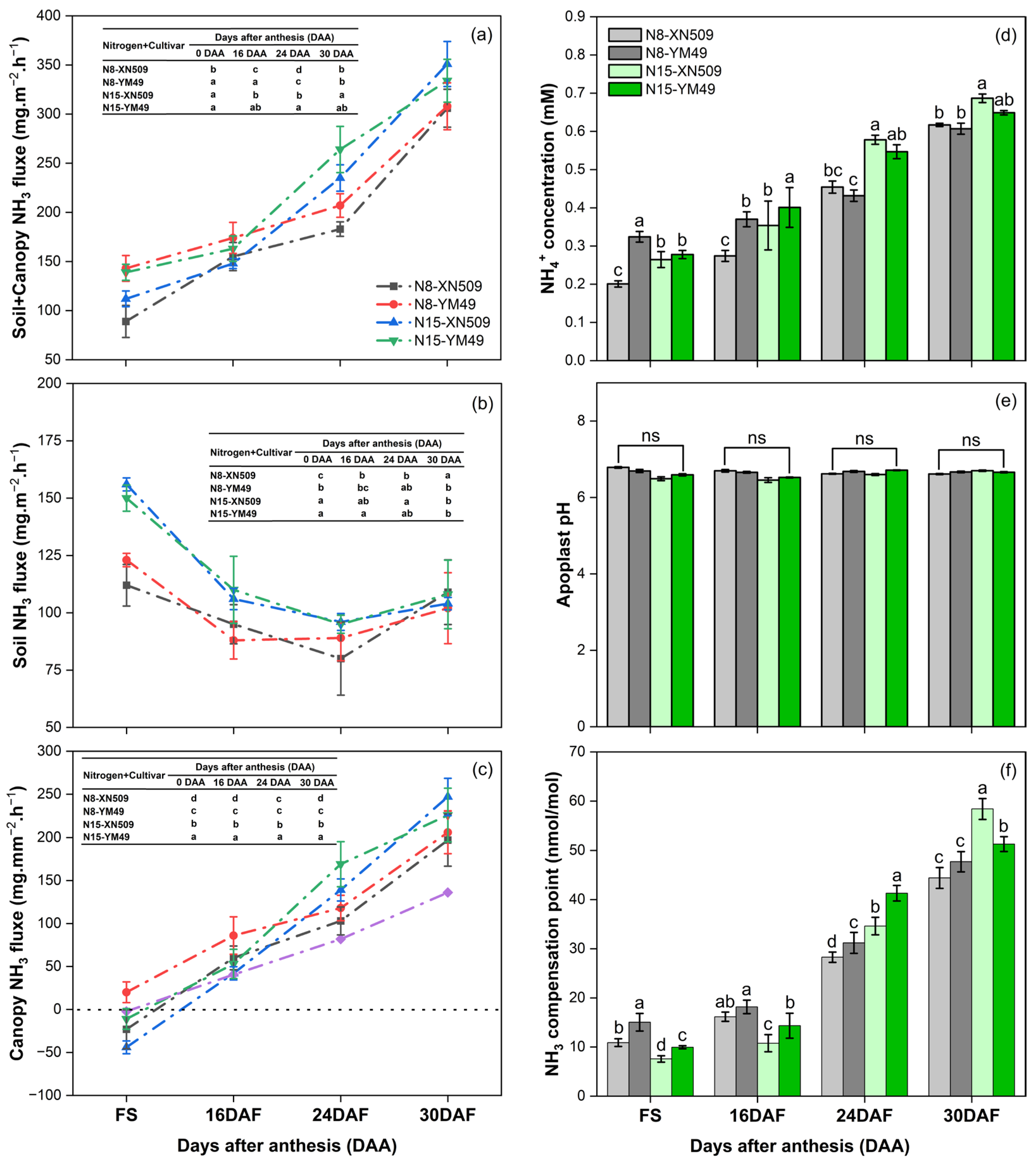
31]. Based on analyses across developmental stages, nitrogen treatments, and cultivars, this study confirms that the leaf NH
3 compensation point is the primary factor determining both the direction and magnitude of canopy NH
3 exchange.
Given that the apoplastic pH remained within a stable and narrow range (6.4–6.7) across all treatments, its direct influence on modulating the NH
3 compensation point appears to have been limited under these specific conditions. Consequently, the observed variations in the leaf NH
3 compensation point were likely driven predominantly by changes in the apoplastic NH
4+ content, which showed a close correspondence with the compensation point trends. These findings align with those of Mattsson and Schjoerring, who reported that variations in apoplastic NH
4+ concentration directly explain differences in plant NH
3 volatilization under different nitrogen regimes [
16]. Changes in apoplastic NH
4+ concentration reflect the balance between NH
3 production and assimilation within leaf cells, processes jointly regulated by plant developmental stage, nitrogen nutritional status, and genotype [
32].
Importantly, the wheat leaf NH3 compensation point increased significantly with developmental progression, consistent with a shift in canopy NH3 exchange from net absorption to net release. This dynamic change highlights a substantial transformation in plant NH3 metabolic regulation across developmental stages and is crucial for understanding nitrogen metabolism and transport during crop growth.
3.2. Stage-Specific Transformation of Wheat Leaf Ammonia Sources
This study revealed dynamic shifts in wheat leaf NH3 sources during grain filling. During early grain filling, leaf NH3 primarily originated from photorespiration and nitrate reduction, whereas during late grain filling, it mainly derived from the degradation of amino acids, proteins, and other nitrogen-containing organic compounds. These transformations closely reflect changes in plant physiological functions.
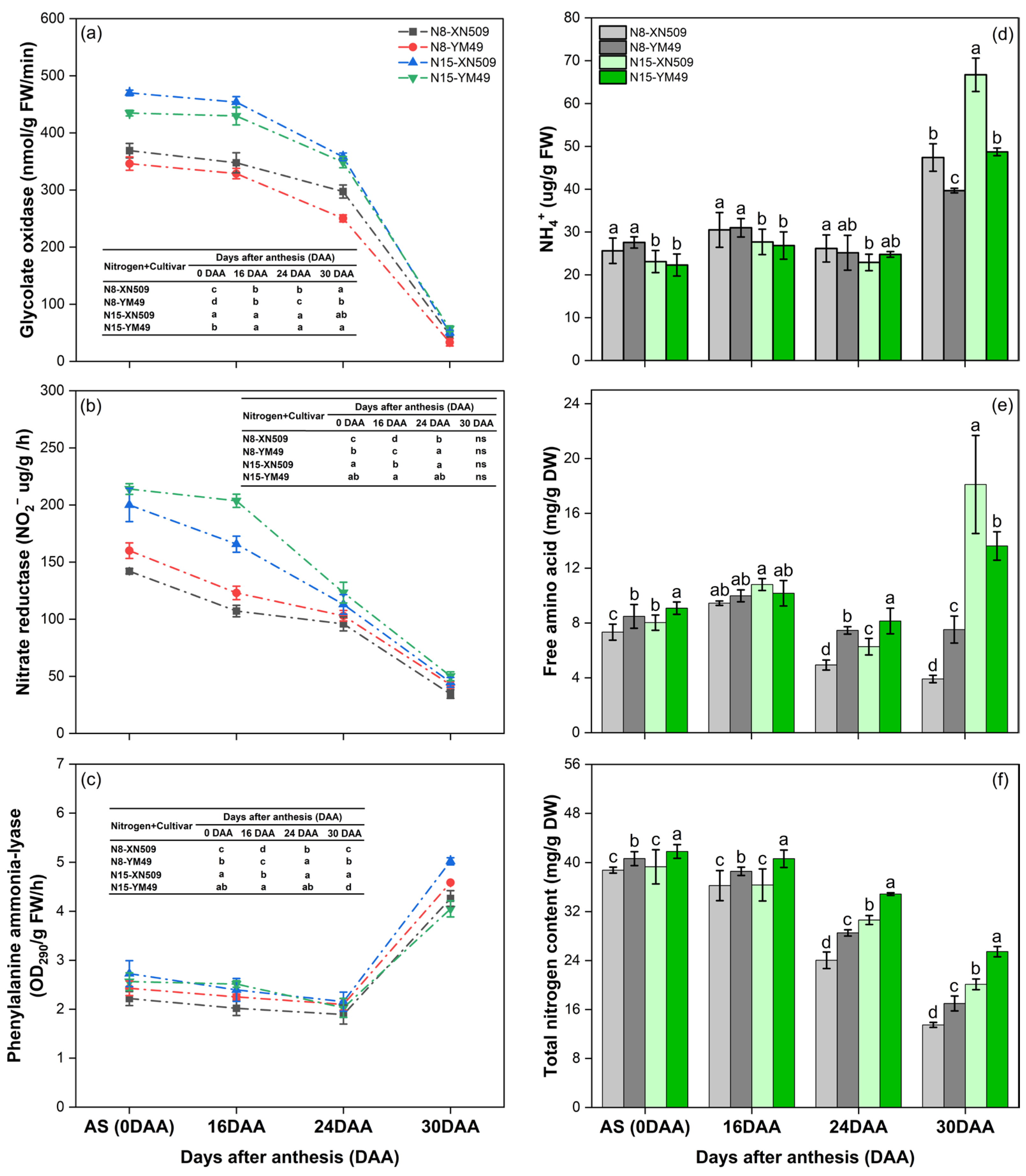
In early grain filling, GO and NR activities were high, indicating active photosynthetic and nitrogen metabolic processes. Photorespiration is a major NH
3 source in C
3 plant leaves, with its inhibition strongly suppressing nitrate assimilation [
33]. NR-catalyzed nitrate reduction also releases substantial NH
3, especially under high nitrogen supply [
34]. NH
3 produced by these processes is primarily localized within chloroplasts or organelles closely associated with chloroplasts.
During late grain filling, GO and NR activities declined significantly, while phenylalanine ammonia-lyase activity increased sharply, coinciding with substantial rises in leaf free NH
4+ and amino acid contents. This indicates that as leaves senesce, protein and nitrogen-containing macromolecule degradation become the main NH
3 sources. Up to 90% of proteins in senescing leaves are degraded, and most of the nitrogen derived from this degradation is transported to growing organs via xylem and phloem. [
35]. NH
3 produced during this phase is primarily localized in the cytoplasm, contrasting with earlier chloroplast localization.
Nitrogen supply significantly influenced the dynamics of leaf NH
3 sources. High nitrogen treatment (N15) sustained greater NR activity and photorespiratory capacity, while also promoting the accumulation and subsequent degradation of nitrogen-containing organic compounds during late grain filling. These findings align with Xu, who reported nitrogen supply effects on plant nitrogen metabolic enzymes and nitrogen redistribution [
34]. Cultivar differences were also evident in NH
3 production pathways, likely related to variations in photosynthetic efficiency, nitrogen uptake and utilization efficiency, and nitrogen transport capacity [
36].
3.3. Spatiotemporal Coordination Between TaGS Isoenzyme Expression and Ammonia Sources as the Molecular Basis for Maintaining Nitrogen Metabolic Balance
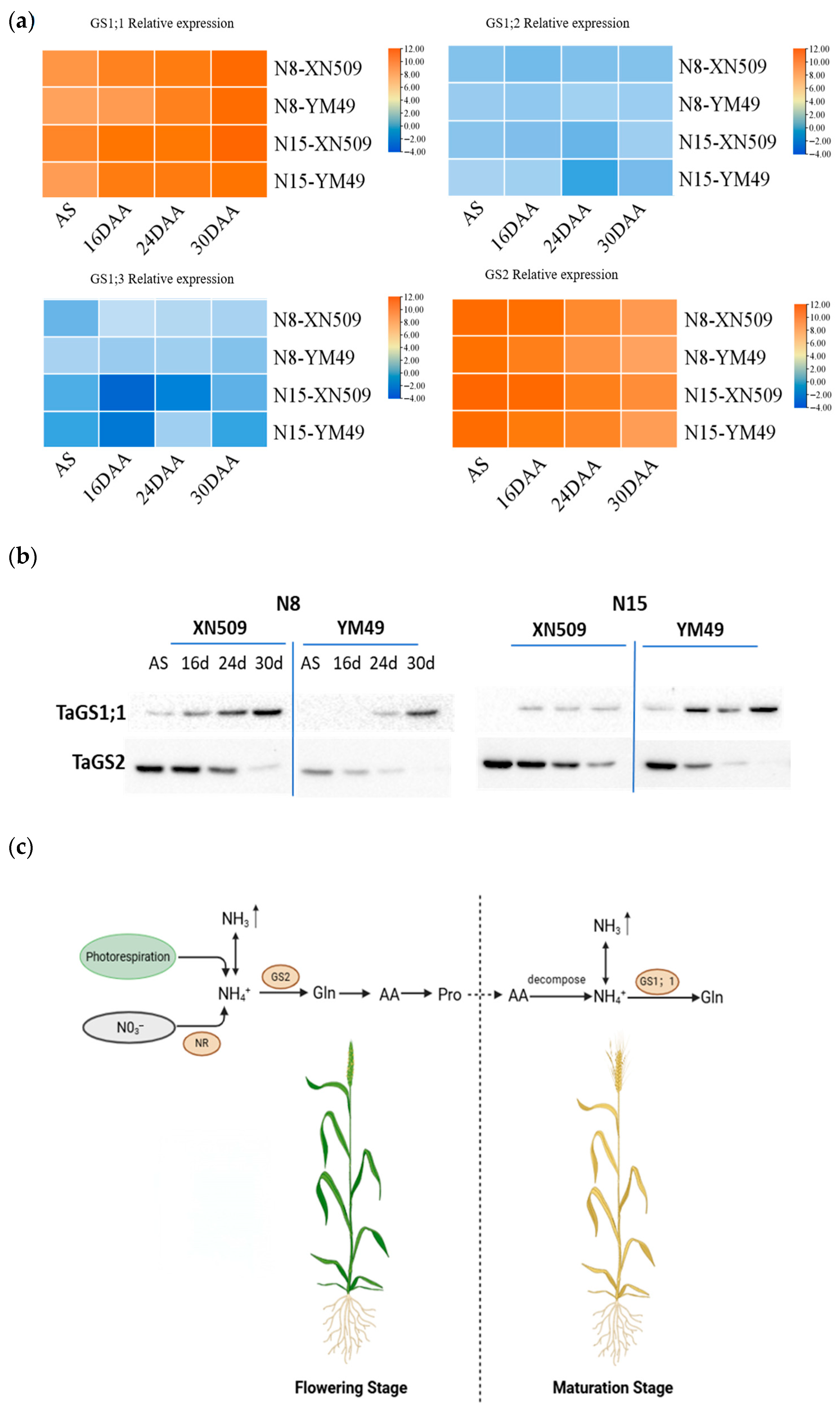
A core finding of this study is the significant spatiotemporal coordination between wheat TaGS expression and leaf NH3 sources. During early grain filling, TaGS2 expression was highest. Since TaGS2 is primarily localized in chloroplasts, it spatially coincides with NH3 produced from photorespiration and nitrate reduction. Conversely, during late grain filling, TaGS1;1 expression increased significantly. TaGS1;1, predominantly localized in the cytoplasm, spatially corresponds to NH3 released from the degradation of nitrogen-containing organic compounds.
This precise spatiotemporal coordination reflects sophisticated plant regulatory mechanisms for assimilating NH
3 from distinct sources. GS2 is the principal enzyme that assimilates NH
3 produced via photorespiration and nitrate reduction within chloroplasts [
37]. GS2-deficient mutants exhibit severe growth inhibition and accumulation of photorespiratory intermediates under normal atmospheric conditions. In contrast, multiple GS1 isoenzymes show diverse spatiotemporal expression and functions in plants [
22]. Our findings that TaGS1;1 expression significantly increases during leaf senescence align with the observed role of its homolog in maize [
38], suggesting that TaGS1;1 primarily assimilates NH
3 released from protein degradation during senescence.
Notably, although TaGS1;1 expression increases during late grain filling, it remains insufficient to fully assimilate NH
3 generated from extensive organic nitrogen degradation, leading to free NH
4+ accumulation and elevated apoplastic NH
4+ content. This imbalance likely underlies the increased canopy NH
3 volatilization observed during late grain filling. The imbalance between NH
3 production and assimilation in leaves is a key determinant of NH
3 volatilization intensity [
32]. This imbalance is especially pronounced in senescing leaves due to extensive protein degradation coupled with declining overall GS activity [
39].
Wheat cultivars exhibited significant differences in TaGS isoenzyme expression patterns. Cultivar XN509 showed generally higher TaGS isoenzyme expression, particularly TaGS2 during early grain filling and TaGS1;1 during late grain filling, compared to YM49. These differences likely stem from genetic background and nitrogen utilization strategy [
40]. Previous research indicates that high nitrogen-use efficiency cultivars typically possess enhanced nitrogen assimilation capacity and more coordinated nitrogen metabolic regulation mechanisms [
41]. These genotypic variations offer important molecular targets for wheat cultivar improvement.
3.4. Relationships Between TaGS Isoenzyme Expression and Canopy Ammonia Exchange and Agricultural Application Significance
This study confirmed a close relationship between TaGS isoenzyme expression and canopy NH
3 exchange. Higher TaGS isoenzyme expression levels facilitate assimilation of leaf-produced NH
3, maintaining lower apoplastic NH
4+ content and leaf ammonia compensation point, thereby reducing leaf NH
3 volatilization or promoting NH
3 absorption. These findings align with previous studies; for example, reported that barley cultivars with high GS activity exhibited significantly lower leaf NH
3 compensation points compared to cultivars with low GS activity [
42]. Similarly, demonstrated that GS1-overexpressing transgenic rice showed reduced ammonia compensation points and decreased NH
3 volatilization [
19].
However, this study also revealed complexities in the relationship between TaGS isoenzyme expression and canopy NH
3 exchange. During late grain filling, even XN509, which exhibited higher TaGS isoenzyme expression, showed significant NH
3 volatilization under high nitrogen conditions. This indicates that when NH
3 production exceeds assimilation capacity, elevated TaGS expression alone cannot fully suppress NH
3 volatilization. This observation is consistent with previous research emphasizing the decisive role of nitrogen metabolic balance in regulating NH
3 volatilization [
30].
These results carry important implications for agricultural practices. First, cultivating and selecting wheat cultivars with high TaGS isoenzyme expression and strong nitrogen assimilation capacity may lower leaf ammonia compensation points, reduce canopy NH
3 volatilization, and enhance nitrogen-use efficiency. Thomsen highlighted that improving crop GS expression through marker-assisted selection or genetic engineering is an effective strategy for boosting nitrogen-use efficiency [
22].
Second, optimizing nitrogen fertilizer management is critical to minimizing wheat canopy NH3 volatilization. While high nitrogen supply (N15) enhanced TaGS isoenzyme expression, it simultaneously promoted extensive degradation of nitrogen-containing organic compounds during late grain filling, ultimately increasing NH3 volatilization. This underscores the importance of controlling nitrogen inputs and avoiding excessive late-stage nitrogen applications.
Finally, the findings suggest that balancing NH3 production and assimilation in wheat is essential for effective regulation of canopy NH3 exchange. Beyond enhancing TaGS isoenzyme expression, strategies such as moderating protein and nitrogen-containing macromolecule degradation during late grain filling or promoting efficient nitrogen transport may further reduce NH3 volatilization losses. These approaches offer promising directions for future wheat cultivar improvement and cultivation management optimization.
Several methodological limitations should be considered in this study. First, the use of a static acrylic chamber for in-situ NH3 flux measurement may lead to a slight underestimation of flux due to NH3 adsorption onto the chamber walls. Second, the canopy flux separation procedure involving plant removal may temporarily alter the local microenvironment, introducing uncertainty into flux calculations. Additionally, the NH3 compensation points reported here are model-based estimates derived from apoplastic NH4+ and pH. Their calculation relies on specific assumptions and may be influenced by dynamic field conditions, which carry inherent uncertainty. Despite these potential limitations, the consistent and significant treatment responses observed in both flux and biochemical data strongly support the robustness of the key comparative conclusions drawn regarding cultivar differences and nitrogen management effects.
4. Materials and Methods
4.1. Experimental Design
Field experiments were conducted at the Xuchang Science and Education Park, Henan Agricultural University, using a split-plot design with two factors: nitrogen levels and wheat cultivars. The basic soil fertility was as follows: organic matter 2.53%, total nitrogen 1.2 mg/g, total phosphorus 0.7 mg/g, total potassium 18.6 mg/g, available phosphorus 1.1 mg/kg, and available potassium 192 mg/kg. The main plots comprised two nitrogen levels: 120 kg N ha−1 (N8) and 225 kg N ha−1 (N15). Nitrogen was supplied in the form of urea (46% N), corresponding to urea application rates of 260.87 kg ha−1 for the N8 treatment and 489.13 kg ha−1 for the N15 treatment. In addition, a basal fertilizer dressing was applied uniformly across all plots, consisting of 857.14 kg ha−1 of superphosphate (14% P2O5) and 200 kg ha−1 of potassium chloride (60% K2O). Subplots included two wheat cultivars: Yumai 49-198 (YM49) and Xinong 509 (XN509). Each plot measured 7.5 m × 12 m, and treatments were replicated three times. Sowing was done on October 15 at a seeding rate of 150 kg ha−1 with 20 cm row spacing. All other agronomic practices followed standard high-yield management protocols.
4.2. Sampling and Monitoring Methods
Sampling and measurements were performed at anthesis, as well as at 16, 24, and 30 days after anthesis (DAA). Climate information during the wheat growing season is presented in
Supplementary Figure S1. No rainfall was recorded at the sampling time points of the anthesis, as well as at 16, 24, and 30 days after anthesis (DAA), and the corresponding climate details are listed in
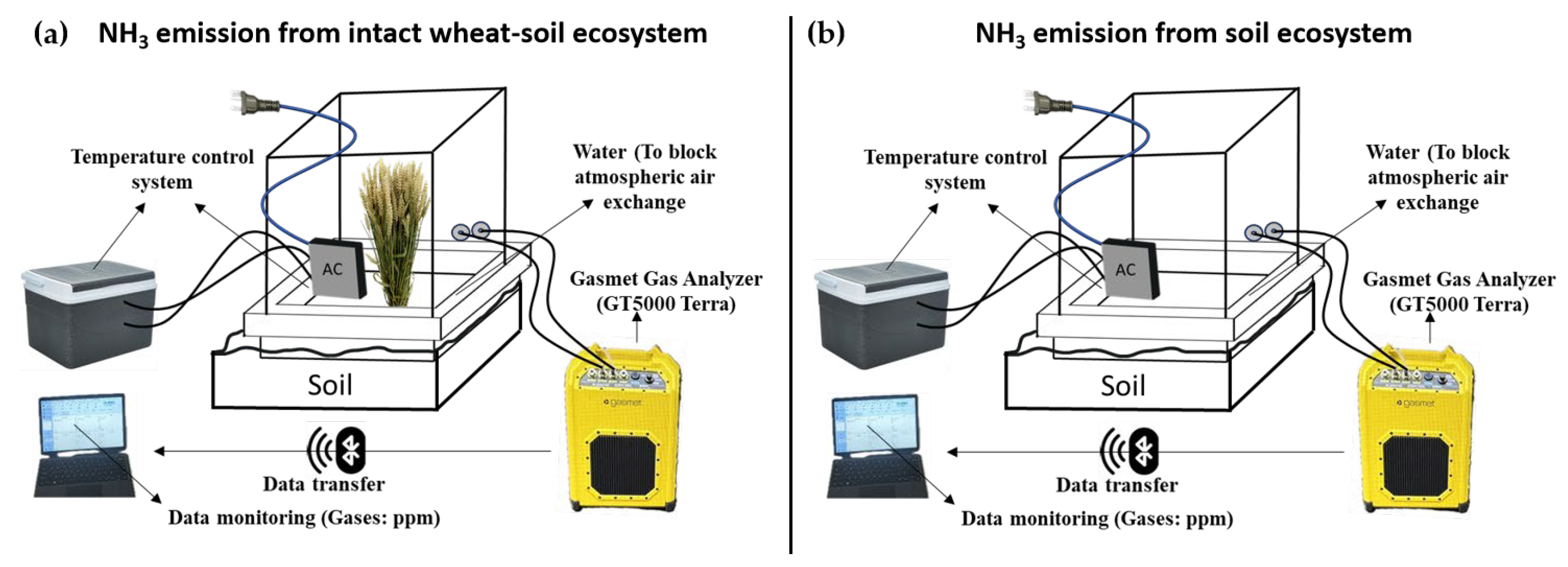
Supplementary Table S1. To account for meteorological conditions during the wheat growth period, representative rainless days were carefully selected for sampling and monitoring. The measurements were performed daily between 10:00 a.m. and 5:00 p.m. Ammonia exchange between the canopy and the atmosphere, along with soil ammonia volatilization, were measured using a Gasmet GT5000 Terra Fourier Transform Infrared (FTIR) GHG analyzer (Gasmet Technologies Oy, Vantaa, Finland) and a clear, cubic acrylic chamber (0.5 m × 0.5 m × 0.5 m) within a closed system, with a 1 Hz sampling rate (
Figure 1). The GT5000 Terra can simultaneously detect multiple gases (NH
3, H
2O, CO, CO
2, N
2O) by scanning the full infrared spectrum and calculating the concentration of each gas based on its absorption, with a precision of ±3%. FTIR technology allows for the identification of distinct peaks and regions within the measurement spectrum, reducing the risk of cross-interference between gases. Zero-point calibration with nitrogen (N
2) was conducted immediately before and after each measurement to minimize any background signals or measurement offsets. The base of the chamber is a 0.6 m × 0.6 m metal frame, which was buried 10 cm into the soil three days prior to ammonia measurements. The chamber was ventilated before each measurement and placed on top of the base, then sealed using a water seal. Following chamber placement, measurements were taken over a 5-min period to capture a stable change in gas concentration. During the measurement process, an external gas cooling device was used to maintain the temperature inside the chamber in alignment with the ambient temperature.
In each plot, three monitoring points were randomly selected along the seeding rows. Initially, total ammonia flux was measured with the chamber placed over intact wheat plants (
Figure 4a). Subsequently, the aboveground wheat biomass within the chamber area was removed, and soil ammonia volatilization was measured under the same conditions (
Figure 4b). Canopy ammonia flux was then calculated by subtracting soil ammonia volatilization from the total ammonia flux recorded with plant coverage.
Aboveground wheat parts removed from the chamber coverage areas were collected, and functional or flag leaves were selected for analysis. Intact fresh leaves were used to determine apoplastic NH4+ concentration and apoplastic pH. The leaf NH3 compensation point was calculated based on these measurements and corresponding meteorological data. Remaining leaf samples were immediately flash-frozen in liquid nitrogen and stored at −80 °C for subsequent analyses. These included the expression profiling of TaGS isoenzymes, nitrate reductase (NR), phenylalanine NH3 lyase, and glycolate oxidase (GO); quantification of total nitrogen, NH4+, NO3−, and free amino acid contents; and measurement of GS activity.
4.3. Leaf Apoplastic Solution Extraction
Rinse fresh leaves with deionized water and blot them dry with filter paper. Weigh approximately 5 g of the leaves, place them in a 200 mL syringe, block the water outlet, and add 150 mL of 280 mmol/L sorbitol solution. Make most parts of the leaves turn dark green through processes such as aspiration, liquid discharge, and squeezing. Remove the leaves, blot the surface liquid dry, then centrifuge at 1000×
g for 10 min at 4 °C to obtain the apoplastic extract. Determine the pH value of the apoplastic solution using a pH meter, and measure the NH
4+ concentration by the indophenol blue colorimetry method [
43].
4.4. Wheat Leaf Ammonia Compensation Point Calculation
When K
d≪[H^+ ]_apo (apoplastic H
+ concentration), the calculation formula for leaf NH
3 compensation point at 25 °C is:
where X
s is leaf NH
3 compensation point; α is the ratio of apoplast NH
4+ concentration to apoplastic H
+ concentration; K
H and K
d are thermodynamic constants, 10
−1·76 L mol
−1 and 10
−9·25 L mol
−1, respectively, at 25 °C.
Leaf NH
3 compensation point at actual temperature was calculated using:
where X
T is leaf NH
3 compensation point at actual temperature; X
s is leaf NH
3 compensation point at 25 °C; ΔH
0dis is NH
4+ dissociation enthalpy (52.21 kJ mol
−1); ΔH
0vap is vaporization enthalpy (34.18 kJ mol
−1); R is gas constant (0.00831 kJ K
−1 mol
−1); T
ref is 298.15 K (25 °C); T is actual temperature (K) during field sampling [
44].
4.5. Free Ammonium Nitrogen Content Determination
Place approximately 0.2 g of leaf samples ground with liquid nitrogen into a 2 mL centrifuge tube, add 1 mL of 1% acetic acid, vortex to mix thoroughly, shake for extraction at 4 °C for 15 min, and then centrifuge at 13,000× g at 4 °C for 15 min. Pipette 0.8 mL of the supernatant into a 10 mL centrifuge tube, then add 7 mL of distilled water, 1 mL of color developing reagent, 200 μL of sodium hypochlorite solution, and 200 μL of 10 g/L sodium nitroprusside solution in sequence, mix well, and react at room temperature for 1 h. For the blank control, replace 0.8 mL of the supernatant with 0.8 mL of distilled water in the above reaction system. Pipette 0.20 mL of the reaction solution into a 96-well microplate, set up at least 3 replicates for each sample, and measure the absorbance value at 697 nm using a microplate reader.
4.6. Nitrate Nitrogen Content Determination
Place approximately 0.2 g of leaf samples ground with liquid nitrogen into a 5 mL centrifuge tube, add 2 mL of 10% trichloroacetic acid (TCA), vortex to mix thoroughly, shake for extraction at room temperature for 20 min, and then centrifuge at 13,000× g for 15 min. Pipette 0.5 mL of the supernatant into a 10 mL centrifuge tube, add 0.3 mL of salicylic acid solution, mix well, and react at room temperature for 20 min. Next, add 7 mL of 2 mol/L NaOH, mix thoroughly, and cool to room temperature. For the blank control, replace 0.5 mL of the supernatant with 0.5 mL of 10% TCA in the above operation process. Pipette 0.20 mL of the reaction solution into a 96-well microplate, set up at least 3 replicates for each sample, and measure the absorbance value at 410 nm using a microplate reader.
4.7. Free Amino Acid Content Determination
Place approximately 0.2 g of leaf samples ground with liquid nitrogen into a 2 mL centrifuge tube, add 1 mL of 10% acetic acid, vortex to mix thoroughly, shake for extraction on ice for 10 min, and then centrifuge at 13,000× g at 4 °C for 10 min. Pipette 0.15 mL of the supernatant into a 10 mL centrifuge tube. Next, prepare the reaction system by mixing acetic acid buffer solution, ninhydrin solution, and 0.4% ascorbic acid solution at a ratio of 2:3:0.1; after mixing well, pipette 5.1 mL of this system into the 10 mL centrifuge tube, heat it in a boiling water bath for 15 min, and then cool it to room temperature. For the blank control, replace 0.15 mL of the supernatant with 0.15 mL of distilled water in the above reaction solution. Pipette 0.20 mL of the reaction solution into a 96-well microplate, set up at least 3 replicates for each sample, and measure the absorbance value at 570 nm using a microplate reader.
4.8. Total Nitrogen Content Determination
Weigh 0.1 g of the dried sample (accurate to 0.0001 g), add 5 mL of sulfuric acid with a concentration of 1.84 g/mL, and let it stand overnight. The next day, digest the sample in a digestion furnace at 380 °C until it turns dark brown. Add 10 drops of hydrogen peroxide, and after digesting for 20 min, add another 7–8 drops of hydrogen peroxide. Observe the color of the sample in the digestion tube until it becomes clear. After the final addition of hydrogen peroxide, continue digesting for another 30 min. Allow the digested sample to cool to room temperature, dilute it to a constant volume of 50 mL with distilled water, and then let it stand for 10 min. Pipette 1 mL of the supernatant, mix it with 3 mL of distilled water in a 5 mL centrifuge tube, and then analyze the mixture using an AA3 flow analyzer (SEAL, Norderstedt, Germany) [
28].
4.9. Determination of Total GS Activity in Wheat Leaf
Take approximately 0.5 g of fresh tissue samples ground into powder with liquid nitrogen, add 1.5 mL of extraction buffer (100 mM Tris-HCl, 1 mM EDTA, 1 mM MgCl2, 10 mM β-mercaptoethanol, and 1 mM PMSF, pH 7.6), vortex to mix thoroughly, and extract at low temperature for 20 min. After centrifuging at 13,000× g and 4 °C for 30 min, collect the supernatant, which is the crude enzyme solution. Transfer 200 µL of the crude enzyme solution into a 5 mL centrifuge tube, and add the following components of the reaction system in sequence: 0.6 mL of imidazole-HCl buffer (0.25 M, pH 7.0), 0.4 mL of sodium glutamate (0.3 M, pH 7.0), 0.4 mL of ATP-Na2 (30 mM, pH 7.0), 0.2 mL of MgSO4 (0.5 M), and 0.2 mL of Tris-HCl (0.1 M, pH 7.6). After mixing well, incubate in a water bath at 25 °C for 5 min. Add 0.2 mL of hydroxylamine (prepared by mixing 1 M hydroxylamine hydrochloride and 1 M NaOH in equal volumes), and incubate in a water bath at 25 °C for 15 min. Finally, add 0.8 mL of FeCl3 reagent, mix thoroughly to terminate the reaction. Then, centrifuge the reaction mixture at 13,000× g for 5 min at room temperature, and measure the absorbance at a wavelength of 540 nm.
4.10. Nitrate Reductase, Phenylalanine Ammonia-Lyase, and Glycolate Oxidase Activity Determination
NR activity was determined using the same crude enzyme extract as used for glutamine synthetase (GS) activity, with NR activity measured via the sulfanilamide colorimetric method.
For phenylalanine ammonia-lyase (PAL) activity, PAL catalyzes the conversion of L-phenylalanine to trans-cinnamic acid. The latter has a characteristic absorption peak at 290 nm, and the activity of PAL can be determined by the production of trans-cinnamic acid. A total of 0.2 g of liquid nitrogen-ground sample was extracted with 1 mL of 5 mmol L
−1 mercaptoethanol borate buffer, shaken, and centrifuged at 4 °C, 9500×
g for 15 min. The supernatant served as a crude enzyme extract. Two 5 mL centrifuge tubes were prepared: the test contained 0.5 mL extract, 1 mL 20 mmol L
−1 phenylalanine, and 2 mL distilled water; the control used 1 mL of 50 mmol L
−1 borate buffer (pH 8.8) instead of phenylalanine. Both were incubated at 30 °C in the dark for 30 min. After adding 0.1 mL of 5 mol L
−1 HCl to stop the reaction, tubes were centrifuged at room temperature (9500×
g, 5 min), and absorbance at 290 nm was recorded. PAL activity was expressed as absorbance change per hour at 290 nm [
45].
GO activity was measured following the instructions of a commercial kit (Suzhou Grace Biotechnology Co., Ltd., Suzhou, China), based on the absorbance of glyoxylate phenylhydrazone at 324 nm. GO activity was expressed as enzyme units catalyzing the formation of 1 nmol glyoxylate phenylhydrazone per gram tissue per minute.
4.11. TaGS Gene Expression Analysis
Total RNA was extracted from plant tissue using HiPure HP Plant RNA Kit B (Guangzhou Magen Biotechnology Co., Ltd., Guangzhou, China). cDNA was synthesized using the RTIII Super Mix with dsDNase (Monad Biotech Co., Ltd., Shanghai, China). Quantitative real-time PCR (qPCR) was performed on a Step One Real-Time PCR System (Life Technologies Corporation, Carlsbad, CA, USA) with SYBR Green qPCR Mix (Monad) for the assay. All primers (Sangon Biotech Co., Ltd., Shanghai, China) used are shown in
Supplementary Table S2. The qPCR mix was composed of 10 µL SYBR Green qPCR Mix (Monad), 5 µL diluted cDNA 1:10 (
v/
v), 0.5 µL and 10 µM forward and reverse primers, respectively, and 4 µL of sterile nuclease-free water. Reactions proceeded according to the following program: 95 °C for 10 min, followed by 40 cycles of 95 °C for 15 s, 58 °C for 15 s, and 72 °C for 20 s. Fluorescence readings were taken during the elongation step (72 °C). Melting curves were obtained from 60 to 95 °C with a 0.5 °C increase every 15 s. Relative expression levels of genes were calculated using
TaATPases (
Ta54227) and
TaTEF (
Ta53964) genes as internal control [
46].
4.12. TaGS Isoenzyme Western Blot Analysis
Western blot analysis of TaGS was performed as previously described [
24]. Approximately 0.3 g of the fine homogeneous powder was mixed with 0.9ml of Extraction buffer (100 mM Tris, 1 mM EDTA, 1 mM MgCl2, 1 mM phenylmethanesulfonyl fluoride (PMSF), and 10 mM β-mercaptoethanol; pH 7.6) by shaking at 4 °C for 10 min. The extract was centrifuged at 12,000×
g at 4 °C for 30 min. The supernatant was then prepared for further experiments.
A total of 5 μg of soluble proteins extracted from the grain were loaded onto each lane. Proteins were separated in 12.5% (w/v) polyacrylamide gel and electrophoretically transferred to a 0.45 μm pore-size PVDF membrane (Merck Millipore Ltd., Darmstadt, Germany) in transfer buffer (25 mM Tris-base and 192 mM Gly, 10% methanol) at 200 mA for 50 min. The membranes were blocked with TBST (20 mM Tris-base, 150 mM NaCl, and 0.05% (v/v) Tween 20, pH 7.4) containing 5% skimmed milk at 4 °C overnight. The membrane was incubated at 20 °C for 1.5 h with the TaGS1;1, TaGS1;2, TaGS1;3, and TaGS2 antibodies, respectively, and the dilution ratios of antibody is 1:10,000, 1:30,000, 1:30,000, 1:10,000, and 1:50,000, respectively. In previous studies, the specificity of four TaGS isoenzyme antibodies has been validated. After three times washing with TBST, the membrane was incubated at room temperature for 1 h with horseradish peroxidase-conjugated goat anti-rabbit IgG (ABclonal Biotechnology Co., Ltd., Wuhan, China) at 1:25,000. After several washes with TBST, the membrane was incubated at room temperature for 5 min using Clarity Western ECL reagent (Bio-Rad, Hercules, CA, USA), and the signals were detected by ChemiDocTM XRS+ Imaging System (Bio-Rad).




 ,
,