


Abstract
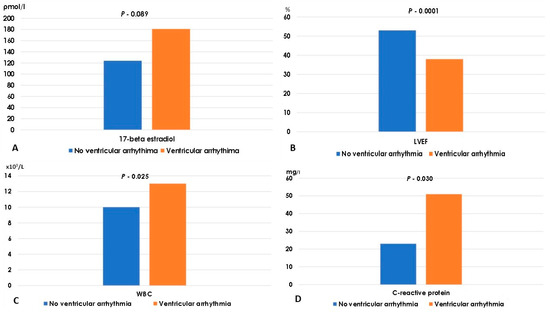
Despite the evidence from experimental studies that endogenous hormones have sex-related effects on action potential duration, the relationship between gonadal steroids and ventricular repolarization in acute myocardial infarction (AMI) is not clear. We tested the hypothesis that endogenous 17β-estradiol (E2) and 17β-estradiol-to-testosterone ratio (E2/T) are associated with inflammation, influencing the occurrence of early ventricular arrhythmia (VA) in AMI. Electrocardiographic (ECG) repolarization indices, including resting heart rate (HR), corrected QT (QTc) interval, QTc minimum (QTcmin), QTc maximum (QTcmax), and QTc dispersion (QTcd), along with E2, total T, and the ratio of E2 to T (E2/T), were measured and analyzed after percutaneous coronary intervention in 86 patients (36 women, 41.9%). In a non-specific sex analysis, the incidence of early VA in the course of AMI was determined by the ejection fraction of the left ventricle (OR 0.876, p = 0.054), and by the peak levels of plasma C-reactive protein (OR 1.026, p = 0.077). Endogenous plasma 17β-estradiol tended to be higher in cases with early ventricular arrhythmia (124.5 ± 79 vs. 181 ± 192.8, p = 0.089). 17β-estradiol levels were significantly predicted by C-reactive protein (OR 1.050, p = 0.042). This study found that reduced systolic function of the left ventricle and higher peak CRP levels are associated with endogenous plasma 17β-estradiol in the acute phase of MI, and predicted the risk of early in-hospital ventricular arrhythmia.
1. Introduction
Comparing the electrocardiographic characteristics of middle-aged healthy subjects reveals sex-based differences in cardiovascular electrophysiology. In general, women have faster resting heart rates and longer rate-corrected QT intervals, which are measures of myocardial repolarization on surface electrocardiograms [1,2,3].
Prolongation of the corrected QTc interval occurs as a result of acute ischemia [4]. In population-based studies and among patients with coronary disease, a prolonged QTc interval is associated with an increased risk of adverse cardiovascular events and all-cause mortality [5], with some studies suggesting that the strength of this association is influenced by sex [5,6]. QT interval dispersion (QTd) is a non-invasive method of measuring regional inhomogeneities in ventricular refractoriness [7], with higher values of dispersion related to increased incidence of ventricular arrhythmias, nonfatal myocardial infarction, and noncardiac death [8]. QTd has also been demonstrated to increase during myocardial ischemia and decrease with the reversal of the ischemic state following angioplasty [5,9]. In the chronic phase of myocardial infarction, QT dispersion is significantly increased in patients with the highest risk for sudden cardiac death [4] and future ischemic heart attacks [10]. In addition, healthy men have greater QTd values and are more likely to experience ventricular arrhythmias than women [11].
The progression of heart failure also follows sex-specific models [12], and abnormalities in ventricular repolarization are valuable in sex-specific prediction of acute episodes of heart failure [12]. The pathology of acute coronary disease is influenced by biological sex, with sex-specific models demonstrating better discriminative power for predicting outcomes after AMI [13]. In addition, studies on patients with coronary artery disease have shown that women have lower rates of inducible sustained ventricular arrhythmia (VA) than men and are less likely to experience ventricular arrhythmia than men in cases of ischemic cardiomyopathy [14,15,16].
Studies showed that the hearts of female individuals of different mammalian species showed significantly lower IKr and IKs densities compared to those of males [17], with cardiomyocytes in female humans expressing lower levels of various genes responsible for cardiac repolarization [17]. In addition, hormonal differences between males and females have been shown to directly influence the QT interval and risk of TdP [17,18,19]. High estradiol concentrations prolong the action potential duration (APD) in a concentration-dependent manner by altering ICaL, IKr, IK, Ito, and IK1 ionic currents, while testosterone within the physiological range rapidly decreases the APD, primarily by enhancing IKs and suppressing ICaL [18]. The maximum QTc interval and the risk of particular arrhythmias are decreased in pregnancy, with hormonal status being one probable explanation [20]. In addition, the progesterone reduction and estrogen increase that occur in the postpartum period may contribute to arrhythmogenic effects in vulnerable LQTS patients [21]. Contraceptive medications (first- and second-generation oral contraceptives) produce hormonal changes that predispose users to shorter QTc intervals compared to non-users (high progesterone-to-estrogen ratios) [22]. Moreover, modifying the levels of endogenous sex hormones during therapy for certain cancers has also been shown to affect the QT interval duration [23,24]. Female sex is known to be an independent risk factor for the development of TdP in individuals with congenital long QT syndrome and acquired long QT syndrome (LQTS). However, the lower beta-adrenergic receptor density and reduced activity of protein kinase A signal transduction in the hearts of females have been found to limit the positive inotropic effect under beta-adrenergic stimulation, which may explain why women are less prone to severe arrhythmias [18].
The alternating levels of sex hormones during inflammatory disease correlate with an increase in aromatase activity in adipose tissue. Acute myocardial infarction (AMI) is characterized by a significant surge in the levels of inflammatory molecules and oxidative stress compounds in the systemic circulation [25,26], and acute cardiomyocyte necrosis in the infarcted heart activates cell signaling systems, triggering an intense inflammatory response [26]. Current knowledge about the relationship of gonadal steroids with ventricular repolarization and the risk of tachycardia in AMI is limited, despite widely known sex-related differences in repolarization in healthy individuals. Our hypothesis is that early ventricular arrhythmia in AMI is associated with 17β-estradiol levels regardless of biologic sex and is associated with systemic inflammatory molecules and mediators.
Objectives
The objective of this study was to analyze the association between E2 and the E2/T ratio with inflammatory molecules, indices of ventricular repolarization, and the rate of early ventricular arrhythmia in patients with acute myocardial infarction.
2. Results
In total, 11 cases of arrhythmia were detected (12.8%), with a VT incidence of 8.6% (n = 7). Recurrences of continuous VT necessitating specific anti-arrhythmic therapy with amiodarone were only found in three cases. The characteristics of the patients are presented in Table 1.
Table 1.
Demographic profile, comorbidities, and laboratory test results of patients.
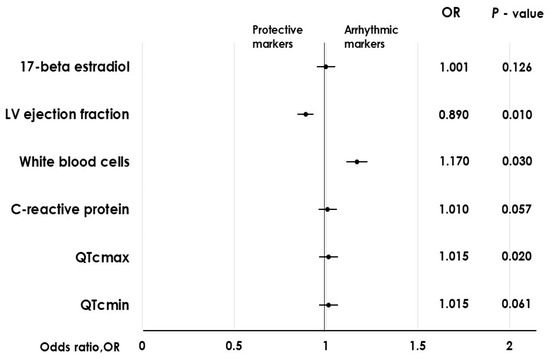
The incidence of VA in the early course of AMI was found to be correlated with the ejection fraction of the left ventricle and the peak plasma concentrations of CRP, which serves as an inflammatory marker (Table 2; Figure 1 and Figure 2). Endogenous plasma 17β-estradiol exhibited an association with the incidence of early ventricular arrhythmia (Table 2).
Table 2.
Association of heart rate and repolarization indices with endogenous 17β-estradiol, inflammatory markers, and oxLDL, and with VA incidence.
Figure 1.
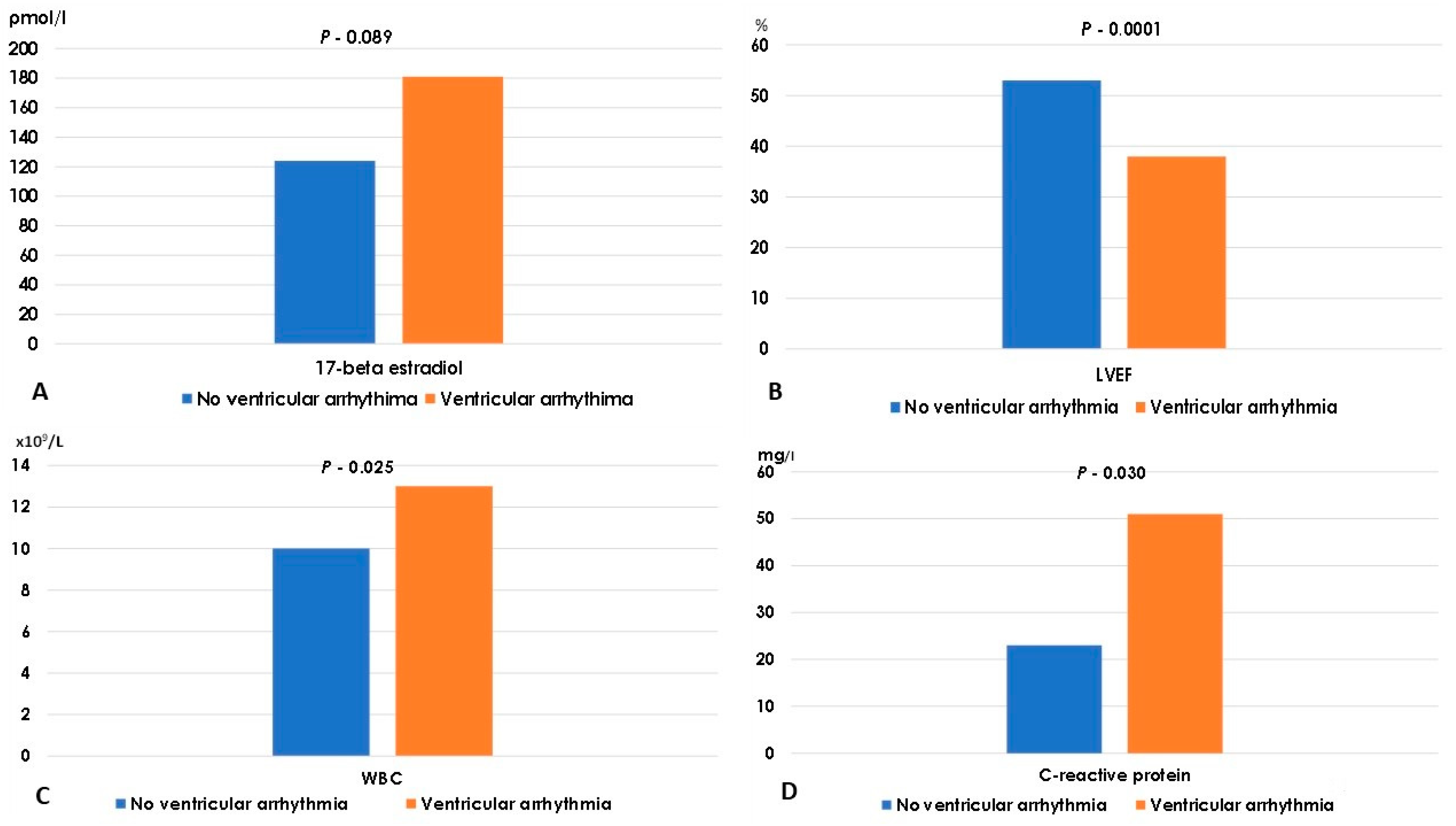
Difference in 17β-estradiol (panel (A)), left ventricular ejection fraction (panel (B)), white blood cell count (panel (C)) and C-reactive protein (panel (D)) in patients without ventricular arrhythmia versus patients with ventricular arrhythmia. Legend: LVEF, left ventricular ejection fraction; WBC, white blood cell count.
Figure 2.
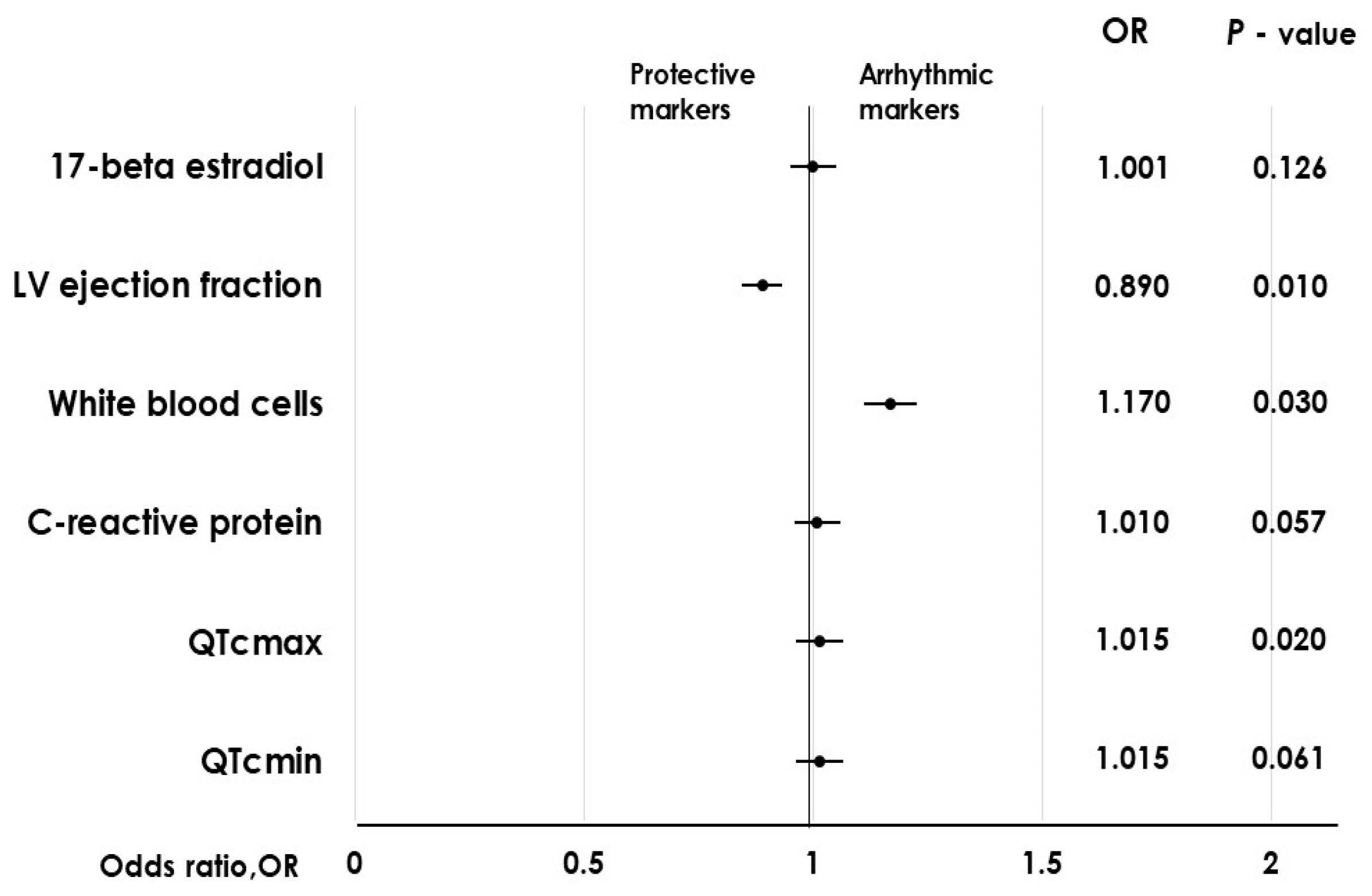
Early ventricular arrhythmia and its covariates. Legend: LV, left ventricular ejection fraction; QTcmax, maximum QTc; QTcmin, minimum QTc.
EF was inversely associated with 17β-estradiol, the Gensini score, peak WBC, peak CRP, and peak cardiac enzymes, but was only correlated with the severity of CAD (in general) after adjusting for significant covariates (Table 3).
Table 3.
Variables indicating reduced LV ejection fraction.
CRP was positively related to cardiac enzymes and was predicted to lead to peak CK-MB levels in the multivariate analysis (Table 4).
Table 4.
Variables indicating extreme values of CRP.
The highest peak plasma C-reactive protein concentrations were an independent marker of the highest 17β-estradiol levels in the acute phase of MI (Table 5).
Table 5.
Relationships between variables for 17β-estradiol.
Neither E2 nor inflammation, LVEF and CAD extent predicted the longest maximal repolarization duration in the non-sex-specific analysis of the presented group of patients with AMI (Table 6).
Table 6.
Relationships between variables for QTc max.
The levels of E2 and E/T were significantly different only for the group with stable coronary disease (AMI vs. stable CAD: age, 66.8 ± 12.2 vs. 68.9 ± 13.5 years, p = 0.541; E2: 130.6 ± 96.1 vs. 99.3 ± 33.4 pmol/L, p = 0.017; E2/T: 0.15 ± 0.51 vs. 0.04 ± 0.04, p = 0.048). In general, the control individuals were younger and had insignificantly lower E2 compared to the patients with AMI (AMI vs. controls: age, 66.8 ± 12.2 vs. 60.1 ± 12.3 years, p = 0.086; E2: 130.6 ± 96.1 vs. 112.4 ± 102.1 pmol/L; E2/T: 0.15 ± 0.51 vs. 0.18 ± 0.45).
3. Discussion
In the non-sex-specific analysis, the incidence of early VA in the course of AMI exhibited a correlation with the systolic function of the left ventricle and the peak levels of plasma C-reactive protein. In general, endogenous plasma 17β-estradiol was higher in the cases with early ventricular arrhythmia. 17β-estradiol levels in the acute phase of MI were associated with (but not an independent indicator of) the lowest EFs. 17β-estradiol levels were predicted by the peak plasma concentrations of the C-reactive protein.
In our study, the longer initial maximal duration of repolarization, a correlate of ventricular arrhythmia in AMI, is predicted neither by E2 nor by other characteristics of acute CAD (Gensini score, peaks in white blood cell count and in hsTnT).
Previous studies have shown that in patients with documented ventricular arrhythmia, women are more likely to have nonischemic cardiomyopathy, and men are more likely to have coronary disease and ischemic cardiomyopathy [14]. These sex-specific characteristics of cardiovascular pathology can be explained by the earlier development of coronary disease in men than in women [27]; this is associated with the antioxidative effect of estradiol up to menopause, which is unique to women [28]. Our results suggest that there is a relationship between estradiol, inflammatory markers, and the incidence of ventricular arrhythmia in the context of acute coronary disease. However, this is a small observational study, so the results are only hypothesis-generating.
A few recent studies on VA demonstrate a link between aging, estradiol receptor modulation, and an altered myocardial state after cessation of gonadal hormone secretion. A recent study on VA concluded that during experimental AMI, the increased rate of ischemia-driven early VA in AMI was caused by decreased myocardial estrogen receptor antioxidant activity. Fulvestrant, an ER downregulator, was effective in reducing early ventricular arrhythmia in an age- and sex-specific manner [29]. The antiarrhythmic effect of fulvestrant has been proven, with studies showing that it inhibits hyperactivated L-type calcium channels during heart failure [29,30]. Oxidative stress contributes to cardiac arrhythmia through at least two mechanisms: by increasing functional heterogeneities secondary to changed cardiac myocyte metabolic activity (1) and via abnormal conduction induced by inflammatory pathways (2) [31]. A possible reason for this issue is that estradiol substitution after ovariectomy changes myocardial lipid metabolism in a way that significant increases triglyceride content in the myocardium, despite no increase in body weight [32]. Our results do not suggest that oxLDL is associated with repolarization indices. However, these results are statistically underpowered due to the relatively small number of patients whose oxLDL levels were measured and the impossibility of conducting a sex-specific sub analysis.
Many basic studies have demonstrated that inflammatory cytokines (TNF-alpha, IL-1, and IL-6) induced by reactive oxygen species lead to changes in the expression and function of potassium and calcium channels, predisposing patients to a prolonged action potential duration and re-entry ventricular arrhythmias [33,34]. Circulating inflammatory cytokine levels are correlated with QTc duration in a variety of acute and chronic conditions, including AMI [25,26], rheumatoid arthritis [35,36], COVID-19 infection, and neoplastic diseases [37,38,39,40]. In our study, although E2 levels were increased in parallel with the intensity of the inflammatory response to the infarcted myocardium, E2 was not associated with prolonged ventricular repolarization. Thus, E2 appears to be a surrogate marker of the severity of AMI and systemic inflammation, rather than an independent arrhythmogenic factor, in absence of statistically significant association.
A small number of studies suggest that the contribution of E2 to the occurrence of ventricular arrhythmia is complex and genetically determined. Several mutations in the potassium channel, which lead to altered stoichiometry of its subunits, alter IK currents and are associated with LQTS [41]. E2 inhibits the same complex of subunits of the human potassium channel (Kv7.1/KCNE1), further altering IK currents, and some LQTS-associated mutations lead to substantial loss of potassium channel function upon E2 exposure. In contrast, Kv7.1/KCNE1’s reduced or lack of response to E2 in other LQTS-associated mutations suggests that E2 may not be an additional QT-prolonging factor [41].
Limitations
The limitations of this study are the small cohort size and the small number of cases with ventricular arrhythmia, which diminishes the statistical power of the analysis and precludes analyses on additional variables related to ventricular arrhythmia (e.g., medications, PCI). Several conclusions rely on p-values in the 0.05–0.10 range in a small cohort. Thus, there is high risk of type I error. In the view of only 11 patients who have experienced VA, our multivariable models should be interpreted as exploratory only, not as confirmatory. Another limitation is that the changes over time in hormone and inflammatory markers were not evaluated.
4. Materials and Methods
The resting heart rate (HR), corrected QT (QTc) interval, QTc minimum (QTcmin), QTc maximum (QTcmax), QTc dispersion (QTcd), and plasma concentrations of endogenous sex steroids (total 17β-estradiol (E2, Elecsys Estradiol II ECLIA kit, Roche Diagnostics GmbH, Mannheim, Germany), total testosterone (T, Elecsys Testosterone II ECLIA kit, Roche Diagnostics GmbH, Mannheim, Germany) and the plasma levels of oxidized low-density lipoproteins (oxLDLs, OxiSelect Human Oxidized LDL ELISA Kit, Cell Biolabs, Inc., San Diego, CA, USA) and inflammatory markers (white blood cell count [WBC] and C-reactive protein [CRP], CRPHS, Cardiac C-Reactive Protein (Latex) High Sensitive, Roche Diagnostics GmbH, Mannheim, Germany) were measured in 86 (44.5% women) patients after percutaneous coronary intervention (PCI, 88.3%, n = 76) or conservative therapy. The patients were admitted to University Hospital ‘Alexandrovska’ with a diagnosis of AMI from 2011 to 2014, and electrocardiographic (ECG) markers were assessed at hospital admission prior to PCI or conservative therapy.
Cases of ventricular arrhythmia (VA) were defined as recurrent continuous or non-continuous ventricular tachycardia, or ventricular premature complexes (Lown class III). Cases were detected during conventional electrocardiographic monitoring using PCI and during patients’ stay in the intensive care unit. No patients were monitored using cardiac monitor placement or a Holter ECG monitoring system.
The exclusion criteria included a diagnosis of bundle-branch block, left ventricular hypertrophy, paced rhythm, and/or a QTc interval that cannot be measured by all ECG leads. Patients diagnosed with secondary hypogonadism or diseases of the adrenal and pituitary glands were also excluded. Additional exclusion criteria included diagnosis with acute infectious diseases, chronic inflammatory disease, known or suspected neoplastic processes, surgical procedures, and trauma experienced within two weeks before hospital admission. Participants were required to refrain from using hormone or immune therapies for six months prior to and during the study. All women in the study are with postmenopausal status. The hormone and inflammatory marker sampling have been carried out within 6 h of PCI or in the cases of nonobstructive CAD within the first 48 h of the hospital stay.
A total of 15 patients in whom coronary disease was excluded by coronary angiography and 15 patients with stable ischemic heart disease served as control patients.
This study complies with the Declaration of Helsinki and was approved by the ethics committee of Medical University, Sofia. All patients and controls provided written informed consent to participate in the study. The study was registered in the UK’s clinical study registry, ISRCT, registration number ISRCTN62480360.
4.1. ECG Analysis
The heart rate and average QTc interval were assessed using automatic records (ECG system; Schiller AT-100), and QTcmin and QTcmax were measured manually by one investigator.
Standard 12-lead ECGs were recorded at a paper speed of 25 mm/s and achieved a gain of 10 mm/mV. The QT interval was measured via the standardized technique [42] and corrected with Bazett’s formula [4]. The corrected QT dispersion was calculated as the difference between the maximum and minimum corrected QT intervals [42].
The mean absolute difference between the first and second measurements of one investigator was 1.0 ± 41.3 ms, with a correlation coefficient of 0.605 (p = 0.005) for QTcmin, 4.0 ± 31.5 ms (p = 0.003, r = 0.627) for QTcmax, and 2.0 ± 37.2 ms (p = 0.107; r = 0.371) for QTc dispersion.
4.2. Immunologic Methods
Venous blood samples were drawn after 12 h of fasting, added to EDTA sample tubes, centrifuged at 5000 rpm for 20 min, and stored at −20 °C until analysis. An electrochemiluminescent immunoassay (ECLIA) was used to measure sex hormones in plasma [43]. An enzyme-linked immune assay (ELISA) was used for quantitation of the plasma concentrations of oxLDL [44].
4.3. Statistical Analysis
The trial data were managed using SPSS software for Windows version 19.0 and MedCalc statistical software version 23.2.0 (MedCalc Software Ltd., Ostend, Belgium). The results are expressed as the means ± SDs and percentages, and statistical significance was defined as a difference of less than 0.05. The statistical analysis included a χ2 test, Fischer’s exact test, paired- and unpaired-sample t tests, a Mann–Whitney U test, and correlation and regression analyses.
5. Conclusions
This study found that reduced systolic function of the left ventricle and higher peak CRP levels are both correlates of endogenous plasma 17β-estradiol in the acute phase of MI, and predicted the risk of early in-hospital ventricular arrhythmia.
Author Contributions
Conceptualization, N.E.S.; methodology, A.T. and V.L.; software, N.E.S.; validation, N.E.S., A.T., V.L., D.D., and P.I.A.; formal analysis, A.T. and V.L.; investigation, N.E.S., A.T., V.L., D.D., and P.I.A.; resources, N.E.S., A.T., and V.L.; data curation, N.E.S., A.T., and V.L.; writing—original draft preparation, N.E.S.; writing—review and editing, N.E.S., A.T., V.L., D.D. and P.I.A.; visualization, N.E.S.; supervision, A.T. and V.L.; project administration, N.E.S.; funding acquisition, N.E.S. All authors have read and agreed to the published version of the manuscript.
Funding
This research was funded by the Medical University of Sofia; grant numbers: 5-D/2012 and 5-D/2013 (project No 35-D/2012 and 6-D/2013).
Institutional Review Board Statement
This study was conducted in accordance with the Declaration of Helsinki and approved by the Ethics Committee of the Medical University of Sofia (protocol codes: 81/5 May 2012 and 262/7 May 2013).
Informed Consent Statement
Written informed consent was obtained from all subjects involved in this study for analysis and publication of the data.
Data Availability Statement
The original contributions presented in this study are included in the article. Further inquiries can be directed to the corresponding author.
Acknowledgments
Thank you to all, not yet acknowledged, who played role in the completion of this article.
Conflicts of Interest
The authors declare no conflicts of interest.
Abbreviations
The following abbreviations are used in this manuscript:
| AMI | acute myocardial infarction |
| STEMI | acute myocardial infarction with persistent ST elevation |
| NSTEMI | acute myocardial infarction with non-persistent ST elevation |
| CAD | coronary artery disease |
| PCI | percutaneous coronary intervention |
| HR | heart rate |
| QTcmin | minimal corrected repolarization period |
| QTcmax | maximal corrected repolarization period |
| QTcd | dispersion of coronary repolarization |
| CK | creatine kinase |
| CPK-MB | muscle–brain fraction of CK |
| hs TnT | high-sensitivity troponin T |
| E2 | total 17β-estradiol |
| E2/T | total 17β-estradiol-to-total testosterone ratio |
| CRP | C-reactive protein |
| oxLDL | oxidized low-density lipoproteins |
| HDL | high-density lipoprotein |
| LDL | low-density lipoprotein |
| TG | triglycerides |
| oxLDL | oxidized low-density lipoprotein |
| WBC | white blood cell |
| EF | ejection fraction |
References
- Bazett, H.C. An analysis of the time relations of electrocardiograms. Heart 1920, 7, 353–370. [Google Scholar] [CrossRef] [Scilit]
- Rautaharju, P.M.; Zhou, S.H.; Gregg, R.E.; Startt-Selvester, R.H. Electrocardiographic estimates of action potential durations and transmural repolarization time gradients in healthy subjects and in acute coronary syndrome patients—Profound differences by sex and by presence vs absence of diagnostic ST elevation. J. Electrocardiol. 2011, 44, 309–319. [Google Scholar] [CrossRef] [Scilit] [PubMed]
- Duijyenboden, S.; Ramirez, J.; Young, W.J.; Orini, M.; Mifsud, B.; Tinker, A.; Lambiase, P.D.; Munroe, P. Genomic and pleiotropic analyses of resting QT interval identifies novel loci and overlap with atrial electrical disorders. Hum. Mol. Genet. 2021, 30, 2513–2523. [Google Scholar] [CrossRef] [Scilit]
- Davey, P. QT interval and mortality from coronary artery disease. Prog. Cardiovasc. Dis. 2000, 42, 359–384. [Google Scholar] [CrossRef] [Scilit]
- Nielsen, J.B.; Graff, C.; Rasmussen, P.V.; Pietersen, A.; Lind, B.; Olesen, M.S.; Struijk, J.J.; Haunsø, S.; Svendsen, J.H.; Køber, L.; et al. Risk prediction of cardiovascular death based on the QTc interval: Evaluating age and gender difference in a large primary care population. Eur. Heart J. 2014, 35, 1335–1344. [Google Scholar] [CrossRef] [Scilit]
- Williams, E.S.; Thomas, K.L.; Broderick, S.; Shaw, L.K.; Velazquez, E.J.; Al-Khatib, S.M.; Daubert, J.P. Race and gender variation in the QT interval and its association with mortality in patients with coronary artery disease: Results from the Duke Databank for Cardiovascular Disease (DDCD). Am. Heart J. 2012, 164, 434–441. [Google Scholar] [CrossRef] [Scilit]
- Higham, P.D.; Furniss, S.S.; Campbell, R.W. QT dispersion and components of the QT interval in ischaemia and infarction. Br. Heart J. 1995, 73, 32–36. [Google Scholar] [CrossRef] [Scilit]
- Ikonomidis, I.; Athanassopoulos, G.; Karatasakis, G.; Manolis, A.S.; Marinou, M.; Economou, A.; Cokkinos, D.V. Dispersion of ventricular repolarization is determined by the presence of myocardial viability in patients with old myocardial infarction. Eur. Heart J. 2000, 21, 446–456. [Google Scholar] [CrossRef] [Scilit] [PubMed]
- Merri, M.; Benhorin, J.; Alberti, M.; Locati, E.; Moss, A.J. Electrocardiographic quantitation of ventricular repolarisation. Circulation 1989, 80, 1301–1308. [Google Scholar] [CrossRef] [Scilit]
- Ueda, H.; Hayashi, T.; Tsumura, K.; Kaitani, K.; Yoshumaru, K.; Nakayama, Y.; Yoshiyama, M. QT dispersion and prognosis after coronary stent placement in acute myocardial infarction. Clin. Cardiol. 2007, 30, 229–233. [Google Scholar] [CrossRef] [Scilit]
- Kassotis, J.; Costeas, C.; Bedi, A.K.; Tolat, A.; Reiffel, J. Effects of aging and gender on QT dispersion in an overtly healthy population. Pacing Clin. Electrophysiol. 2000, 23, 1121–1126. [Google Scholar] [CrossRef] [Scilit] [PubMed]
- Rautaharju, P.M.; Prineas, R.J.; Wood, J.; Zhang, Z.; Crow, R.; Heiss, G. Electrocardiographic predictors of new-onset heart failure in men and in women free of coronary heart disease (from the Atherosclerosis in Communities [ARIC] Study). Am. J. Cardiol. 2007, 100, 1437–1441. [Google Scholar] [CrossRef] [Scilit] [PubMed]
- Singh, M.; Hamzi, K.; Toupin, S.; Dillinger, J.G.; Henry, P.; Cayla, G.; Schiele, F.; Ferrieres, J.; Simon, T.; Danchin, N.; et al. Sex-specific models to predict 5-year mortality after ST-elevation myocardial infarction using machine learning: Insight from FAST-MI registry. Eur. Heart J. 2024, 45, ehae666.1564. [Google Scholar] [CrossRef] [Scilit]
- Warnock, R.K.; Modi, R.D.; Westerman, S.B. Sex and gender differences in ventricular arrhythmias. US Cardiol. Rev. 2023, 17, e12. [Google Scholar] [CrossRef] [Scilit]
- Zaman, S.; Deshmukh, T.; Aslam, A.; Martin, C.; Kovoor, P. Sex differences in electrophysiology, ventricular tachyarrhythmia, cardiac arrest and sudden cardiac death following acute myocardial infarction. Heart Lung Circ. 2020, 29, 1025–1031. [Google Scholar] [CrossRef] [Scilit]
- Saxena, S.; Goldenberg, I.; McNitt, S.; Hsich, E.; Kutyifa, V.; Bragazzi, N.L.; Polonsky, B.; Aktas, M.K.; Huang, D.T.; Rosero, S.; et al. Sex differences in the risk of first and recurrent ventricular tachyarrhythmias among patients receiving an implantable cardioverter-defibrillator for primary prevention. JAMA Netw. Open 2022, 5, e2217153. [Google Scholar] [CrossRef] [Scilit]
- Prajapati, C.; Koivumäki, J.; Pekkanen-Mattila, M.; Aalto-Setälä, K. Sex differences in heart: From basics to clinics. Eur. J. Med. Res. 2022, 27, 241. [Google Scholar] [CrossRef] [Scilit]
- Zhang, Y.; Ouyang, P.; Post, W.S.; Dalal, D.; Vaidya, D.; Blasco-Colmenares, E.; Soliman, E.Z.; Tomaselli, G.F.; Guallar, E. Sex-steroid hormones and electrocardiographic QT-interval duration: Findings from the Third National Health and Nutrition Examination Survey and the Multi-Ethnic Study of Atherosclerosis. Am. J. Epidemiol. 2011, 174, 403–411. [Google Scholar] [CrossRef] [Scilit]
- Gillis, A.M. Atrial fibrillation and ventricular arrhythmias: Sex differences in electrophysiology, epidemiology, clinical presentation, and clinical outcomes. Circulation 2017, 135, 593–608. [Google Scholar] [CrossRef] [Scilit]
- Tanindi, A.; Akgun, N.; Pabuccu, E.G.; Gursoy, A.Y.; Yüce, E.; Tore, H.F.; Duvan, C.I. Electrocardiographic P-wave duration, QT Interval, T peak to end interval and Tp-e/QT Ratio in pregnancy with respect to trimesters. Ann. Noninvasive Electrocardiol. 2016, 21, 169–174. [Google Scholar] [CrossRef] [Scilit]
- Odening, K.E.; Choi, B.-R.; Liu, G.X.; Hartmann, K.; Ziv, O.; Chaves, L.; Schofield, L.; Centracchio, J.; Zehender, M.; Peng, X.; et al. Estradiol promotes sudden cardiac death in transgenic long QT type 2 rabbits while progesterone is protective. Heart Rhythm 2012, 9, 823–832. [Google Scholar] [CrossRef] [Scilit]
- Sedlak, T.; Shufelt, C.; Iribarren, C.; Lyon, L.L.; Bairey Merz, N.C. Oral contraceptive use and the ECG: Evidence of an adverse QT effect on corrected QT interval. Ann. Noninvasive Electrocardiol. 2013, 18, 389–398. [Google Scholar] [CrossRef] [Scilit]
- Grouthier, V.; Lebrun-Vignes, B.; Glazer, A.M.; Touraine, P.; Funck-Brentano, C.; Pariente, A.; Courtillot, C.; Bachelot, A.; Roden, D.M.; Moslehi, J.J.; et al. Increased long QT and torsade de pointes reporting on tamoxifen compared with aromatase inhibitors. Heart 2018, 104, 1859–1863. [Google Scholar] [CrossRef] [Scilit]
- Maison, O.; la Gastine, B.; Dayot, L.; Goutelle, S. Prevalence and risk factors of drug-associated corrected QT prolongation in elderly hospitalized patients: Results of a retrospective analysis of data obtained over 6 months. Drugs Aging 2017, 34, 545–553. [Google Scholar] [CrossRef] [Scilit]
- Semerdzhieva, N.E.; Tsakova, A.T.; Lozanova, V.V. Sex-Specific impact of 17β-estradiol and testosterone levels oninflammation and injury in acute myocardialinfarction—Preliminary results. Biomedicines 2025, 13, 1466. [Google Scholar] [CrossRef] [Scilit]
- Fang, L.; Moore, X.; Dart, A.M.; Wang, L. Systemic inflammatory response following acute myocardial infarction. J. Geritar Cardiol. 2015, 12, 305–312. [Google Scholar]
- Regitz-Zagrosek, V. Sex and gender differences in heart failure. Int. J. Heart Fail. 2020, 2, 157–181. [Google Scholar] [CrossRef] [Scilit] [PubMed]
- Haas, M.J.; Feng, V.; Gonzales, K.; Onstead-Haas, L.; Mooradian, A.D. High-throughput analysis identifying drugs that reduce oxidative and ER stress in human coronary artery endothelial cells. Eur. J. Pharmacol. 2020, 879, 173119. [Google Scholar] [CrossRef] [Scilit]
- Bozdogan, O.; Bozcaarmutlu, A.; Kaya, S.T.; Sapmaz, C.; Ozarslan, T.O.; Eksioglu, D.; Yasar, S. Decreasing myocardial estrogen receptors and antioxidant activity may be responsible for increasing ischemia- and reperfusion-induced ventricular arrhythmia in older female rats. Life Sci. 2021, 271, 119190. [Google Scholar] [CrossRef] [Scilit] [PubMed]
- Medvedev, R.Y.; Sanchez-Alonso, J.L.; Mansfield, C.A.; Judina, A.; Francies, A.J.; Pagiatakis, C.; Trayanova, N.; Glukhov, A.V.; Miragoli, M.; Faggian, G.; et al. Local hyperactivation of L-type Ca2+ channels increases spontaneous Ca2+ release activity and cellular hypertrophy in right ventricular myocytes from heart failure rats. Sci. Rep. 2021, 11, 4840. [Google Scholar] [CrossRef] [Scilit]
- Rennison, J.H.; Van Wagoner, D.R. Impact of dietary fatty acids on cardiac arrhythmogenesis. Circ. Arrhythm. Electrophysiol. 2009, 2, 460–469. [Google Scholar] [CrossRef] [Scilit]
- Pitha, J.; Huttl, M.; Malinska, H.; Miklanova, D.; Bartuskova, H.; Hlinka, T.; Markova, I. Cardiovascular, metabolic and inflammatory changes after ovariectomy and estradiol substitution in hereditary hypertriglyceridemic rats. Int. J. Mol. Sci. 2022, 23, 2825. [Google Scholar] [CrossRef] [Scilit]
- Petkova-Kirova, P.S.; Gursoy, E.; Mehdi, H.; McTiernan, C.F.; London, B.; Salama, G. Electrical remodeling of cardiac myocytes from mice with heart failure due to the overexpression of tumor necrosis factor-alpha. Am. J. Physiol. Heart Circ. Physiol. 2006, 290, H2098-107. [Google Scholar] [CrossRef] [Scilit]
- Li, Y.H.; Rozanski, G.J. Effects of human recombinant interleukin-1 on electrical properties of guinea pig ventricular cells. Cardiovasc. Res. 1993, 27, 525–530. [Google Scholar] [CrossRef] [Scilit] [PubMed]
- Adlan, A.M.; Panoulas, V.F.; Smith, J.P.; Fisher, J.P.; Kitas, G.D. Association between corrected QT interval and inflammatory cytokines in rheumatoid arthritis. J. Rheumatol. 2015, 42, 421–428. [Google Scholar] [CrossRef] [Scilit] [PubMed]
- Lazzerini, P.E.; Cantara, S.; Bertolozzi, I.; Accioli, R.; Salvini, V.; Cartocci, A.; C’Errico, A.; Sestini, F.; Bisogno, S.; Cevenini, G.; et al. Transient hypogonadism is associated with heart rate-corrected QT prolongation and Torsades de Pointes risk during active systemic inflammation in men. J. Am. Heart Assoc. 2022, 11, e023371. [Google Scholar] [CrossRef] [Scilit] [PubMed]
- Gulletta, S.; Della Bella, P.; Pannone, L.; Falasconi, G.; Cianfanelli, L.; Altizio, S.; Cinel, E.; Da Prat, V.; Napolano, A.; D’Angelo, G.; et al. QTc interval prolongation, inflammation, and mortality in patients with COVID 19. J. Interv. Cardiac. Electrophysiol. 2022, 63, 441–448. [Google Scholar] [CrossRef] [Scilit]
- Infante, M.; Pieri, M.; Lupisella, S.; D’Amore, L.; Bernardini, S.; Fabbri, A.; Iannetta, M.; Andreoni, M.; Morello, M. Low testosterone levels and high estradiol to testosterone ratio are associated with hyperinflammatory state and mortality in hospitalized men with COVID-19. Eur. Rev. Med. Pharm. Sci. 2021, 25, 5889–5903. [Google Scholar]
- Carleton, N.; Zou, J.; Lee, S.; Sheeba, D.J.; Mary, J.; Li, R.; Atkinson, J.; Huang, Z.; Osmanbeyoglu, H.; Lucas, P.; et al. Age-related remodeling of the systemic and breast microenvironment promotes a tumor-permissive locale for ER+ breast cancer in older women. Cancer Res. 2024, 84, PO1-14-09. [Google Scholar] [CrossRef] [Scilit]
- Vermeulen, A.; Deslypere, J.P.; Paridaens, R.; Leclercq, G.; Roy, F.; Heuson, J.C. Aromatase, 17β-hydroxysteroid dehydrogenase and intratissular sex hormone concentrations in cancerous and normal glandular breast tissue in postmenopausal women. Eur. J. Cancer Clin. Oncol. 1986, 22, 515–525. [Google Scholar] [CrossRef] [Scilit]
- Erlandsdotter, L.; Giammarino, L.; Halili, A.; Nikesjö, J.; Gréen, H.; Odening, K.E.; Liin, S.I. Long-QT mutations in KCNE1 modulate the 17β-estradiol response of Kv7.1/KCNE1. Sci. Adv. 2023, 9, eade7109. [Google Scholar] [CrossRef] [Scilit]
- Rautaharju, P.M.; Surawics, B.; Gettes, L.S. AHA/ACCF/HRS recommendations for the standardization and interpretation of the electrocardiogram: Part IV: The ST segment, T and U waves, and the QT interval. J. Am. Coll. Cardiol. 2009, 53, 982–991. [Google Scholar] [CrossRef] [Scilit] [PubMed]
- Prieto, B.; Miguel, D.; Costa, M.; Coto, D.; Alvarez, F.V. New quantitative eletrochemiluminescence method (ECLIA) for interleukin-6 (IL-6) measurement. Clin. Chem. Lab. Med. 2010, 48, 835–838. [Google Scholar] [CrossRef] [Scilit] [PubMed]
- Fraley, A.E.; Tsimikas, S. Clinical applications of circulating oxidized low-density lipoprotein biomarkers in cardiovascular disease. Curr. Opin. Lipidol. 2006, 17, 502–509. [Google Scholar] [CrossRef] [Scilit] [PubMed]

Disclaimer/Publisher’s Note: The statements, opinions and data contained in all publications are solely those of the individual author(s) and contributor(s) and not of MDPI and/or the editor(s). MDPI and/or the editor(s) disclaim responsibility for any injury to people or property resulting from any ideas, methods, instructions or products referred to in the content. |
© 2026 by the authors. Licensee MDPI, Basel, Switzerland. This article is an open access article distributed under the terms and conditions of the Creative Commons Attribution (CC BY) license.