

Distinct Serum MicroRNA Signatures and mRNA Decay Pathway Dysregulation in NSAID-Exacerbated Chronic Urticaria

 , , , , , , ,
Abstract
1. Introduction
2. Results
2.1. Demographic and Clinical Characteristics
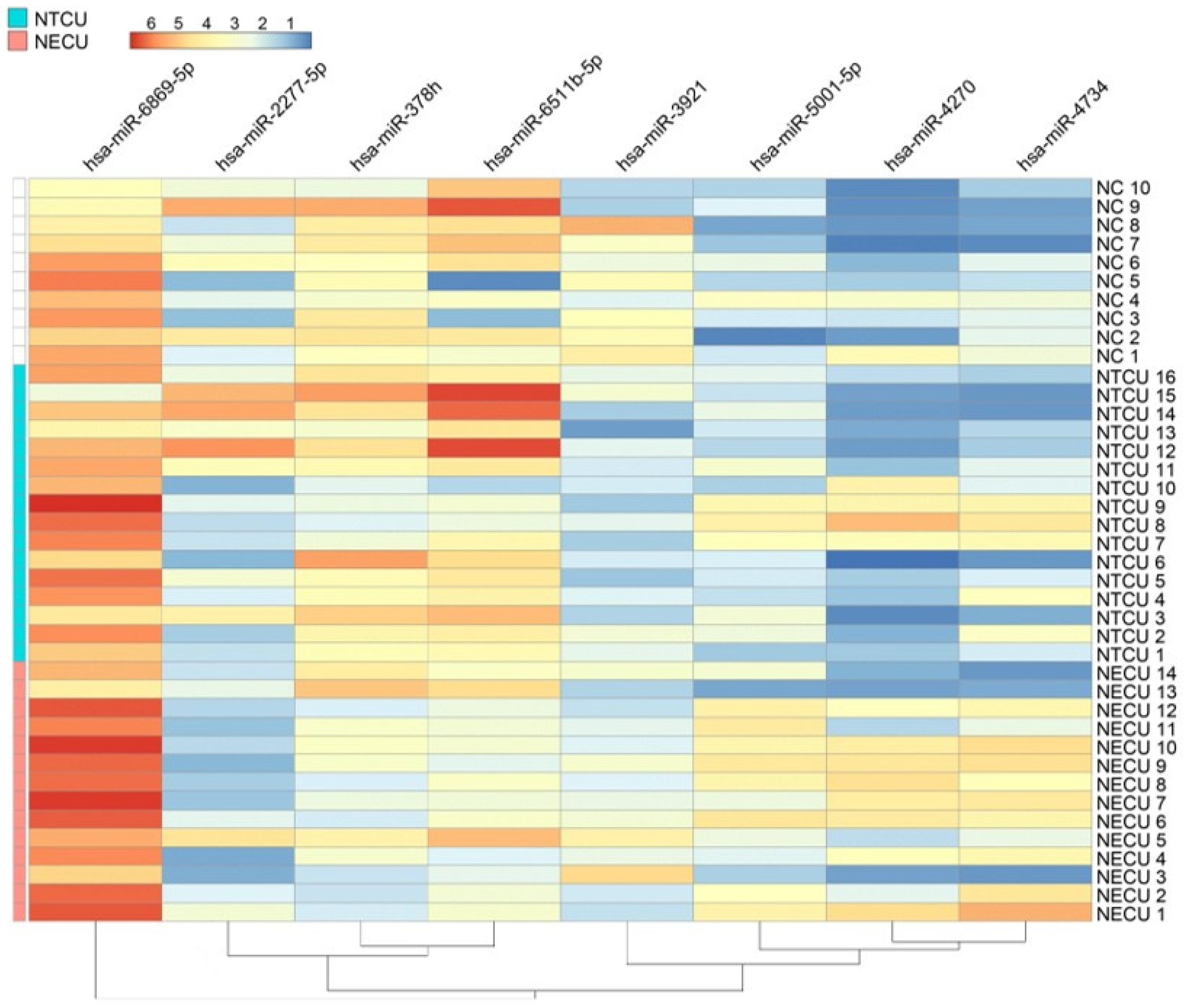
2.2. DEMs
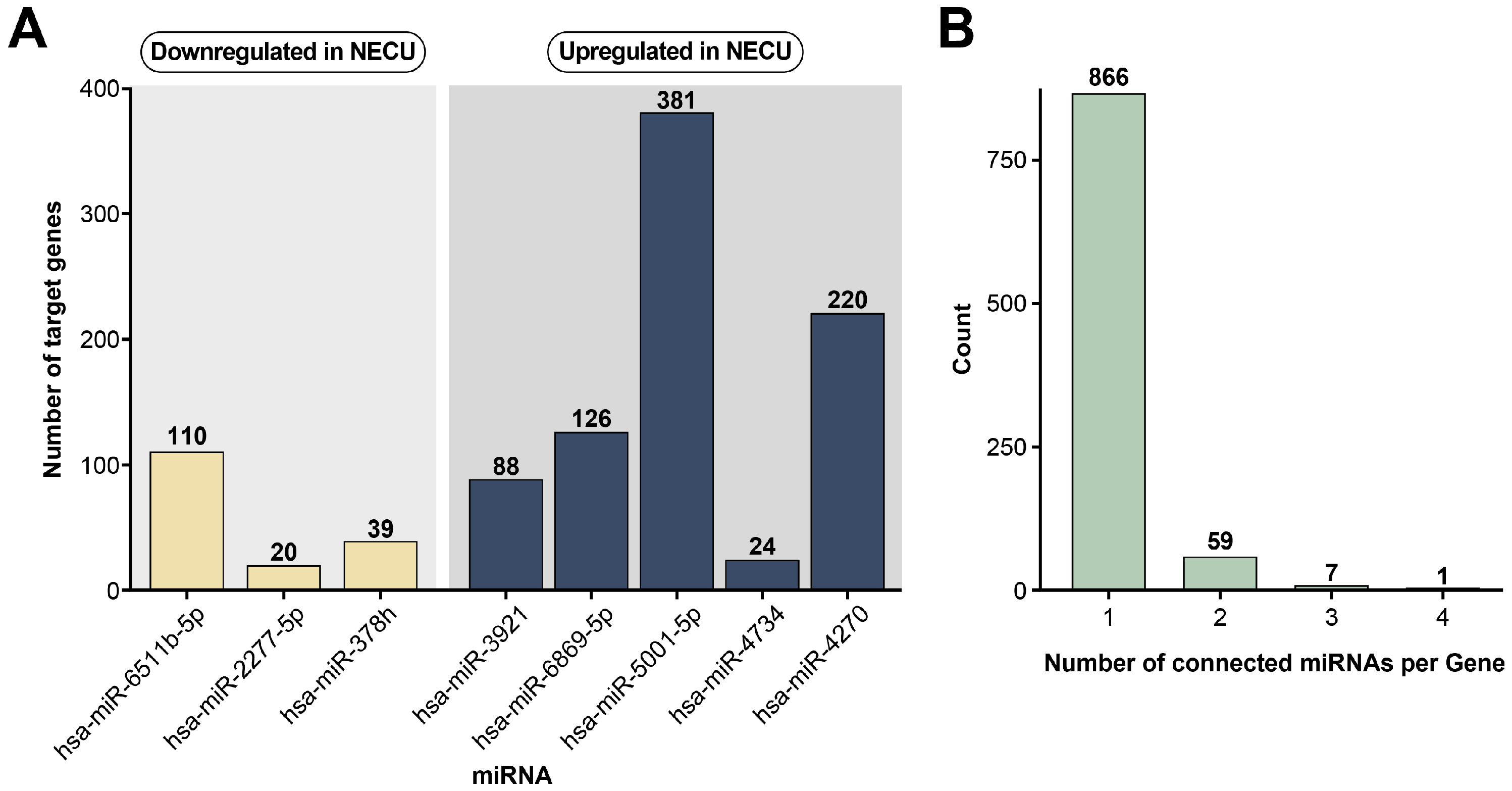
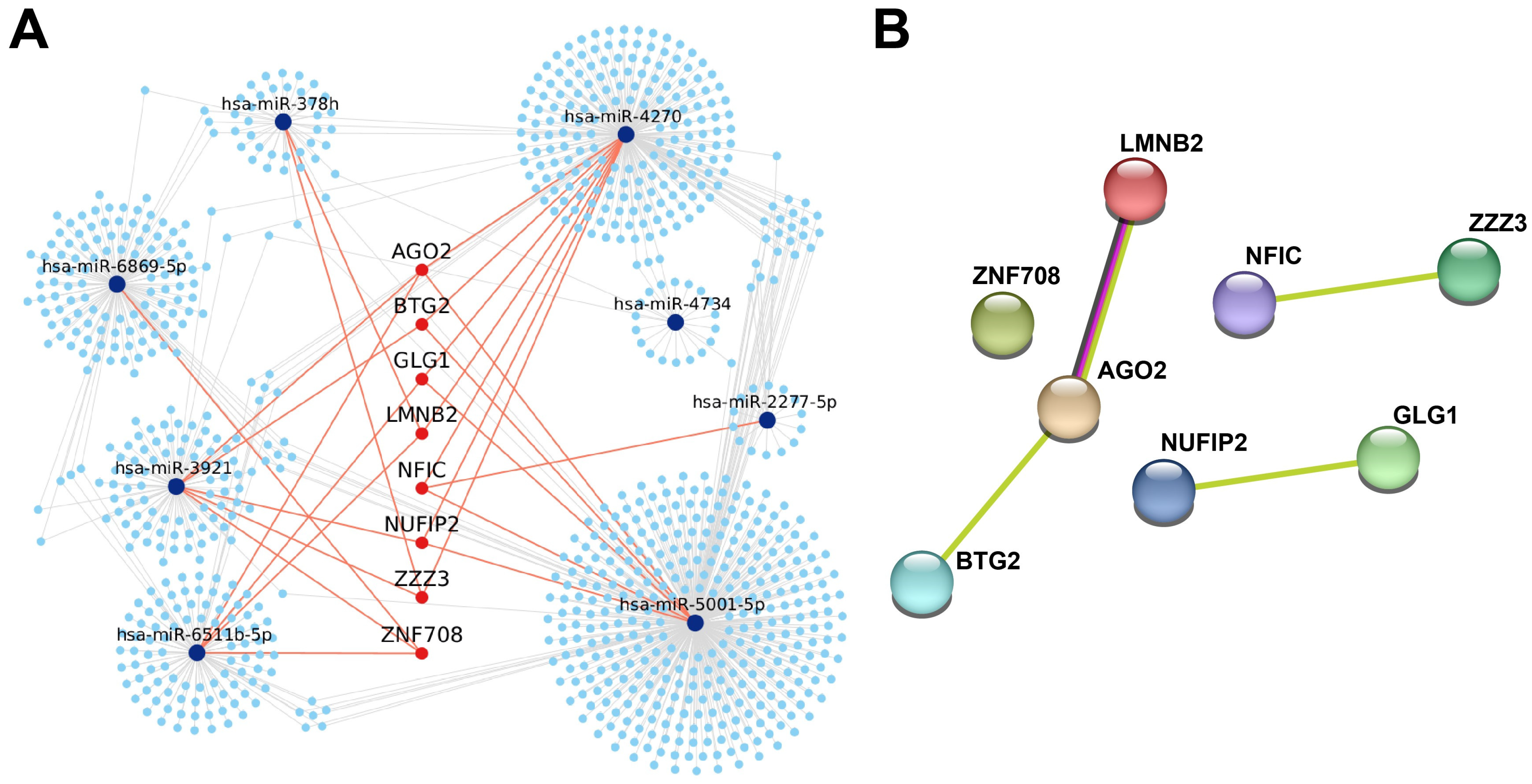
2.3. Potential mRNA Targets of DEMs
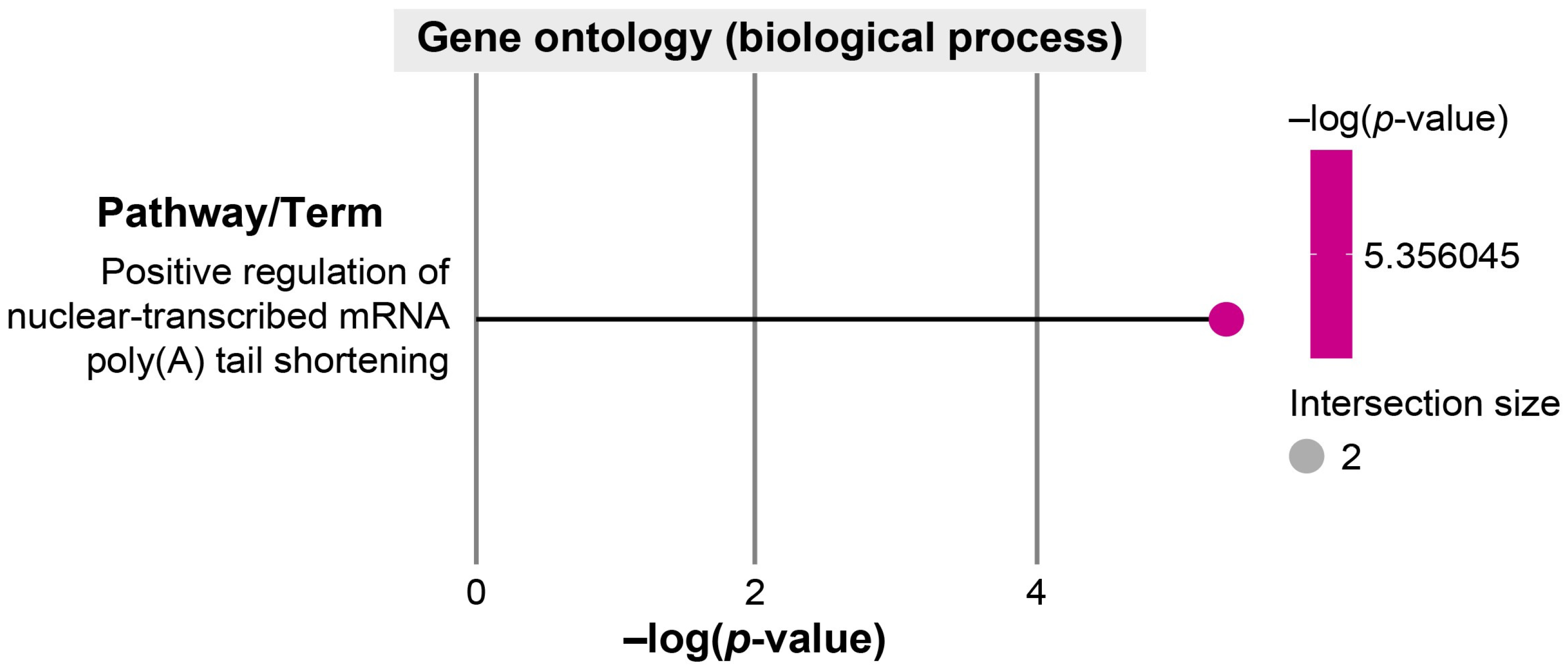
2.4. Functional Annotation of Hub Genes in NECU
3. Discussion
4. Materials and Methods
4.1. Study Participants and Clinical Assessment
4.2. Serum Preparation and miRNA Extraction
4.3. miRNA Microarray and Data Analysis
4.4. Target Gene Prediction and Functional Analysis
4.5. Statistical Analysis
5. Conclusions
Supplementary Materials
Author Contributions
Funding
Institutional Review Board Statement
Informed Consent Statement
Data Availability Statement
Conflicts of Interest
Abbreviations
| CU | Chronic urticaria |
| NSAIDs | Nonsteroidal anti-inflammatory drugs |
| NECU | NSAID-exacerbated chronic urticaria |
| NTCU | NSAID-tolerant CU |
| miRNA | MicroRNA |
| DEMs | Differentially expressed miRNAs |
| GO | Gene Ontology |
| AGO2 | Argonaute 2 |
| BTG2 | BTG anti-proliferation factor 2 |
| LMNB2 | Lamin B2 |
| COX-1 | Cyclooxygenase-1 |
| PGE2 | Prostaglandin E2 |
| NFIC | Nuclear factor 1C |
| ZZZ3 | ZZ-type zinc-finger-containing protein 3 |
| NUFIP2 | Nuclear fragile X mental retardation protein-interacting protein 2 |
| GLG1 | Golgi glycoprotein 1 |
References
- Kowalski, M.L.; Asero, R.; Bavbek, S.; Blanca, M.; Blanca-Lopez, N.; Bochenek, G.; Brockow, K.; Campo, P.; Celik, G.; Cernadas, J.; et al. Classification and practical approach to the diagnosis and management of hypersensitivity to nonsteroidal anti-inflammatory drugs. Allergy 2013, 68, 1219–1232. [Google Scholar] [CrossRef]
- Kowalski, M.L.; Makowska, J.S. Seven steps to the diagnosis of NSAIDs hypersensitivity: How to apply a new classification in real practice? Allergy Asthma Immunol. Res. 2015, 7, 312–320. [Google Scholar] [CrossRef]
- Laidlaw, T.M.; Cahill, K.N. Current knowledge and management of hypersensitivity to aspirin and NSAIDs. J. Allergy Clin. Immunol. Pract. 2017, 5, 537–545. [Google Scholar] [CrossRef]
- Rebelo Gomes, E.; Geraldes, L.; Gaspar, Â.; Malheiro, D.; Cadinha, S.; Abreu, C.; Chambel, M.; Almeida, E.; Faria, E.; Portuguese Society of Allergology and Clinical Immunology (SPAIC) Drug Allergy Interest Group. Hypersensitivity reactions to nonsteroidal anti-inflammatory drugs among adults: Clinical features and risk factors for diagnosis confirmations. Int. Arch. Allergy Immunol. 2016, 171, 269–275. [Google Scholar] [CrossRef] [PubMed]
- Ye, Y.M.; Kim, J.E.; Nahm, D.I.; Kim, S.H.; Suh, C.H.; Nahm, D.H.; Park, H.S. Comparison of clinical characteristics and prognosis of chronic urticaria according to the aspirin sensitivity. Korean J. Asthma Allergy Clin. Immunol. 2005, 25, 194–199. [Google Scholar]
- Mastalerz, L.; Setkowicz, M.; Szczeklik, A. Mechanism of chronic urticaria exacerbation by aspirin. Curr. Allergy Asthma Rep. 2005, 5, 277–283. [Google Scholar] [CrossRef] [PubMed]
- Asero, R. Nonsteroidal anti-inflammatory drugs hypersensitivity in chronic spontaneous urticaria in the light of its pathogenesis. Eur. Ann. Allergy Clin. Immunol. 2022, 54, 189–191. [Google Scholar] [CrossRef] [PubMed]
- Losol, P.; Yoo, H.S.; Park, H.S. Molecular genetic mechanisms of chronic urticaria. Allergy Asthma Immunol. Res. 2014, 6, 13–21. [Google Scholar] [CrossRef]
- Palikhe, N.S.; Kim, S.H.; Park, H.S. What do we know about the genetics of aspirin intolerance? J. Clin. Pharm. Ther. 2008, 33, 465–472. [Google Scholar] [CrossRef]
- Palikhe, N.S.; Sin, H.J.; Kim, S.H.; Sin, H.J.; Hwang, E.K.; Ye, Y.M.; Park, H.S. Genetic variability of prostaglandin E2 receptor subtype EP4 gene in aspirin-intolerant chronic urticaria. J. Hum. Genet. 2012, 57, 494–499. [Google Scholar] [CrossRef]
- Bae, J.S.; Kim, S.H.; Ye, Y.M.; Yoon, H.J.; Suh, C.H.; Nahm, D.H.; Park, H.S. Significant association of FcepsilonRIalpha promoter polymorphisms with aspirin-intolerant chronic urticaria. J. Allergy Clin. Immunol. 2007, 119, 449–456. [Google Scholar] [CrossRef] [PubMed]
- Ye, Y.M.; Hur, G.Y.; Park, H.J.; Kim, S.H.; Kim, H.M.; Park, H.S. Association of specific IgE to staphylococcal superantigens with the phenotype of chronic urticaria. J. Korean Med. Sci. 2008, 23, 845–851. [Google Scholar] [CrossRef] [PubMed]
- Zembowicz, A.; Mastalerz, L.; Setkowicz, M.; Radziszewski, W.; Szczeklik, A. Safety of cyclooxygenase 2 inhibitors and increased leukotriene synthesis in chronic idiopathic urticaria with sensitivity to nonsteroidal anti-inflammatory drugs. Arch. Dermatol. 2003, 139, 1577–1582. [Google Scholar] [CrossRef] [PubMed]
- Woo, S.D.; Luu, Q.Q.; Park, H.S. NSAID-exacerbated respiratory disease (NERD): From pathogenesis to improved care. Front. Pharmacol. 2020, 11, 1147. [Google Scholar] [CrossRef]
- Ye, Y.M.; Park, J.W.; Kim, S.H.; Ban, G.Y.; Kim, J.H.; Shin, Y.S.; Lee, H.Y.; Park, H.S.; PRANA Group. Prognostic factors for chronic spontaneous urticaria: A 6-month prospective observational study. Allergy Asthma Immunol. Res. 2016, 8, 115–123. [Google Scholar] [CrossRef]
- Asero, R.; Tedeschi, A.; Lorini, M. Autoreactivity is highly prevalent in patients with multiple intolerances to NSAIDs. Ann. Allergy Asthma Immunol. 2002, 88, 468–472. [Google Scholar] [CrossRef]
- Erbagci, Z. Multiple NSAID intolerance in chronic idiopathic urticaria is correlated with delayed, pronounced and prolonged autoreactivity. J. Dermatol. 2004, 31, 376–382. [Google Scholar] [CrossRef]
- Shin, Y.S.; Suh, D.H.; Yang, E.M.; Ye, Y.M.; Park, H.S. Serum specific IgE to thyroid peroxidase activates basophils in aspirin intolerant urticaria. J. Korean Med. Sci. 2015, 30, 705–709. [Google Scholar] [CrossRef]
- Karstarli Bakay, O.S.; Demir, B.; Cicek, D.; Erol, D.; Toraman, Z.A.; Gural, Y.; Maurer, M. In chronic spontaneous urticaria, IgE and C-reactive protein are linked to distinct microRNAs and interleukin-31. Clin. Transl. Allergy 2023, 13, e12290. [Google Scholar] [CrossRef]
- Gajewski, A.; Bekier, A.; Frachowicz-Guereirro, K.; Drożdż, I.; Ćwikliński, R.; Kurowski, M.; Kowalski, M.L.; Baumann, R.; Schmidt-Weber, C.; Chaker, A.M.; et al. Analysis of miRNA expression in patients with NSAID-exacerbated respiratory disease. Allergy Asthma Immunol. Res. 2025, 17, 226–240. [Google Scholar] [CrossRef]
- Saul, M.J.; Emmerich, A.C.; Steinhilber, D.; Suess, B. Regulation of eicosanoid pathways by microRNAs. Front. Pharmacol. 2019, 10, 824. [Google Scholar] [CrossRef]
- Deng, Q.; Yao, X.; Fang, S.; Sun, Y.; Liu, L.; Li, C.; Li, G.; Guo, Y.; Liu, J. Mast cell-mediated microRNA functioning in immune regulation and disease pathophysiology. Clin. Exp. Med. 2025, 25, 38. [Google Scholar] [CrossRef] [PubMed]
- Dopytalska, K.; Czaplicka, A.; Szymańska, E.; Walecka, I. The essential role of microRNAs in inflammatory and autoimmune skin diseases—A review. Int. J. Mol. Sci. 2023, 24, 9130. [Google Scholar] [CrossRef]
- Brancaccio, R.; Murdaca, G.; Casella, R.; Loverre, T.; Bonzano, L.; Nettis, E.; Gangemi, S. miRNAs’ cross-involvement in skin allergies: A new horizon for the pathogenesis, diagnosis and therapy of atopic dermatitis, allergic contact dermatitis and chronic spontaneous urticaria. Biomedicines 2023, 11, 1266. [Google Scholar] [CrossRef] [PubMed]
- Lin, C.K.E.; Kaptein, J.S.; Sheikh, J. Differential expression of microRNAs and their possible roles in patients with chronic idiopathic urticaria and active hives. Allergy Rhinol. 2017, 8, e67–e80. [Google Scholar] [CrossRef] [PubMed]
- Giménez-Arnau, A.; Curto-Barredo, L.; Nonell, L.; Puigdecanet, E.; Yelamos, J.; Gimeno, R.; Rüberg, S.; Santamaria-Babi, L.; Pujol, R.M. Transcriptome analysis of severely active chronic spontaneous urticaria shows an overall immunological skin involvement. Allergy 2017, 72, 1778–1790. [Google Scholar] [CrossRef]
- Ying, S.; Kikuchi, Y.; Meng, Q.; Kay, A.B.; Kaplan, A.P. TH1/TH2 cytokines and inflammatory cells in skin biopsy specimens from patients with chronic idiopathic urticaria: Comparison with the allergen-induced late-phase cutaneous reaction. J. Allergy Clin. Immunol. 2002, 109, 694–700. [Google Scholar] [CrossRef]
- Friedman, E.A.; Ogletree, M.L.; Haddad, E.V.; Boutaud, O. Understanding the role of prostaglandin E2 in regulating human platelet activity in health and disease. Thromb. Res. 2015, 136, 493–503. [Google Scholar] [CrossRef]
- Jurado-Escobar, R.; Doña, I.; Bogas-Herrera, G.; Pérez-Sánchez, N.; Salas, M.; Laguna, J.J.; Muñoz-Cano, R.; Mayorga, C.; Torres, M.J.; Cornejo-García, J.A. Platelet-adherent leukocytes associated with cutaneous cross-reactive hypersensitivity to nonsteroidal anti-inflammatory drugs. Front. Pharmacol. 2020, 11, 594427. [Google Scholar] [CrossRef]
- Dobrican-Băruța, C.T.; Deleanu, D.M.; Muntean, I.A.; Nedelea, I.; Bălan, R.G.; Filip, G.A.; Procopciuc, L.M. The alarmin triad—IL-25, IL-33, and TSLP—Serum levels and their clinical implications in chronic spontaneous urticaria. Int. J. Mol. Sci. 2024, 25, 2026. [Google Scholar] [CrossRef]
- Choi, B.Y.; Ye, Y.M. Role of platelet-activating factor in the pathogenesis of chronic Spontaneous Urticaria. Int. J. Mol. Sci. 2024, 25, 12143. [Google Scholar] [CrossRef] [PubMed]
- Rayner, D.G.; Liu, M.; Chu, A.W.L.; Chu, X.; Guyatt, G.H.; Oykhman, P.; Cao, D.J.; Moellman, J.; Ben-Shoshan, M.; Baker, D.R.; et al. Leukotriene receptor antagonists as add-on therapy to antihistamines for urticaria: Systematic review and meta-analysis of randomized clinical trials. J. Allergy Clin. Immunol. 2024, 154, 996–1007. [Google Scholar] [CrossRef] [PubMed]
- Meister, G.; Tuschl, T. Mechanisms of gene silencing by double-stranded RNA. Nature 2004, 431, 343–349. [Google Scholar] [CrossRef] [PubMed]
- Pavanello, L.; Hall, M.; Winkler, G.S. Regulation of eukaryotic mRNA deadenylation and degradation by the Ccr4-Not complex. Front. Cell Dev. Biol. 2023, 11, 1153624. [Google Scholar] [CrossRef]
- Doidge, R.; Mittal, S.; Aslam, A.; Winkler, G.S. Deadenylation of cytoplasmic mRNA by the mammalian Ccr4-Not complex. Biochem. Soc. Trans. 2012, 40, 896–901. [Google Scholar] [CrossRef]
- Sun, J.; Ye, L.; Shi, Y.; Wang, X.; Zhao, X.; Ren, S.; Fan, J.; Shao, H.; Qin, B. MiR-6511b-5p suppresses metastasis of pMMR colorectal cancer through methylation of CD44 by directly targeting BRG1. Clin. Transl. Oncol. 2022, 24, 1940–1953. [Google Scholar] [CrossRef]
- Topsakal, M.; Kaçar, N.; Demirkan, N.; Aybek, H.; Tosun Yıldırım, H.; İmren, I.G.; Özden, M.G. Osteopontin in chronic urticaria: Elevated plasma levels and significantly increased osteopontin expression in patients’ skin samples compared to controls. Dermatol. Ther. 2020, 33, e13328. [Google Scholar] [CrossRef]
- Nagasaka, A.; Matsue, H.; Matsushima, H.; Aoki, R.; Nakamura, Y.; Kambe, N.; Kon, S.; Uede, T.; Shimada, S. Osteopontin is produced by mast cells and affects IgE-mediated degranulation and migration of mast cells. Eur. J. Immunol. 2008, 38, 489–499. [Google Scholar] [CrossRef]



| Features | NECU (n = 14) | NTCU (n = 16) | p-Value |
|---|---|---|---|
| Female sex (%) | 9 (64.3) | 6 (37.5) | 0.272 |
| Age (years) | 37.1 ± 9.8 | 38.6 ± 10.1 | 0.700 |
| Presence of angioedema (%) | 12 (85.7) | 5 (31.3) | 0.008 |
| UAS7 | 31.8 ± 8.7 | 28.1 ± 12.3 | 0.501 |
| H1AH responders (%) | 5 (35.7) | 8 (50.0) | 0.676 |
| Up-dosed H1AH (%) | 10 (71.4) | 6 (37.5) | 0.081 |
| LTRA use (%) | 10 (71.4) | 4 (25.0) | 0.026 |
| Omalizumab responders (%) | 4/8 (50.0) | 5/7 (71.4) | 0.608 |
| Systemic steroid use (%) | 13 (92.9) | 7/6 (43.8) | 0.007 |
| Cyclosporine use (%) | 5 (35.7) | 4 (25.0) | 0.694 |
| miRNA | NECU (n = 14) | NTCU (n = 16) | Fold Difference | p-Value |
|---|---|---|---|---|
| hsa-miR-3921 | 2.80 ± 0.8 | 2.19 ± 0.6 | 1.53 increase | 0.025 |
| hsa-miR-6869-5p | 5.73 ± 0.7 | 5.09 ± 0.9 | 1.56 increase | 0.047 |
| hsa-miR-5001-5p | 3.26 ± 1.0 | 2.61 ± 0.7 | 1.57 increase | 0.040 |
| hsa-miR-4734 | 3.27 ± 1.5 | 2.32 ± 1.2 | 1.94 increase | 0.029 |
| hsa-miR-4270 | 3.00 ± 1.4 | 1.88 ± 1.4 | 2.17 increase | 0.029 |
| hsa-miR-6511b-5p | 3.25 ± 0.7 | 4.26 ± 1.2 | 2.02 decrease | 0.011 |
| hsa-miR-2277-5p | 2.07 ± 0.9 | 2.98 ± 1.4 | 1.87 decrease | 0.048 |
| hsa-miR-378h | 3.01 ± 0.9 | 3.81 ± 0.9 | 1.74 decrease | 0.018 |
Disclaimer/Publisher’s Note: The statements, opinions and data contained in all publications are solely those of the individual author(s) and contributor(s) and not of MDPI and/or the editor(s). MDPI and/or the editor(s) disclaim responsibility for any injury to people or property resulting from any ideas, methods, instructions or products referred to in the content. |
© 2026 by the authors. Licensee MDPI, Basel, Switzerland. This article is an open access article distributed under the terms and conditions of the Creative Commons Attribution (CC BY) license.
Share and Cite
Ye, Y.-M.; Noh, J.Y.; Kim, S.H.; Yoon, J.; Moon, D.-H.; Choi, B.; Park, S.-M.; Park, K.-W.; Kim, J.; Woo, H.G. Distinct Serum MicroRNA Signatures and mRNA Decay Pathway Dysregulation in NSAID-Exacerbated Chronic Urticaria. Int. J. Mol. Sci. 2026, 27, 904. https://doi.org/10.3390/ijms27020904
Ye Y-M, Noh JY, Kim SH, Yoon J, Moon D-H, Choi B, Park S-M, Park K-W, Kim J, Woo HG. Distinct Serum MicroRNA Signatures and mRNA Decay Pathway Dysregulation in NSAID-Exacerbated Chronic Urticaria. International Journal of Molecular Sciences. 2026; 27(2):904. https://doi.org/10.3390/ijms27020904
Chicago/Turabian StyleYe, Young-Min, Jin Young Noh, Seung Ho Kim, Jiwon Yoon, Da-Hye Moon, Boyoun Choi, Se-Min Park, Kun-Woo Park, Jungmo Kim, and Hyun Goo Woo. 2026. "Distinct Serum MicroRNA Signatures and mRNA Decay Pathway Dysregulation in NSAID-Exacerbated Chronic Urticaria" International Journal of Molecular Sciences 27, no. 2: 904. https://doi.org/10.3390/ijms27020904
APA StyleYe, Y.-M., Noh, J. Y., Kim, S. H., Yoon, J., Moon, D.-H., Choi, B., Park, S.-M., Park, K.-W., Kim, J., & Woo, H. G. (2026). Distinct Serum MicroRNA Signatures and mRNA Decay Pathway Dysregulation in NSAID-Exacerbated Chronic Urticaria. International Journal of Molecular Sciences, 27(2), 904. https://doi.org/10.3390/ijms27020904