Molecular Regulation of Secondary Hair Follicle Stem Cell by S100a4 in Cashmere Goat
 ,
,
Abstract
1. Introduction
2. Results
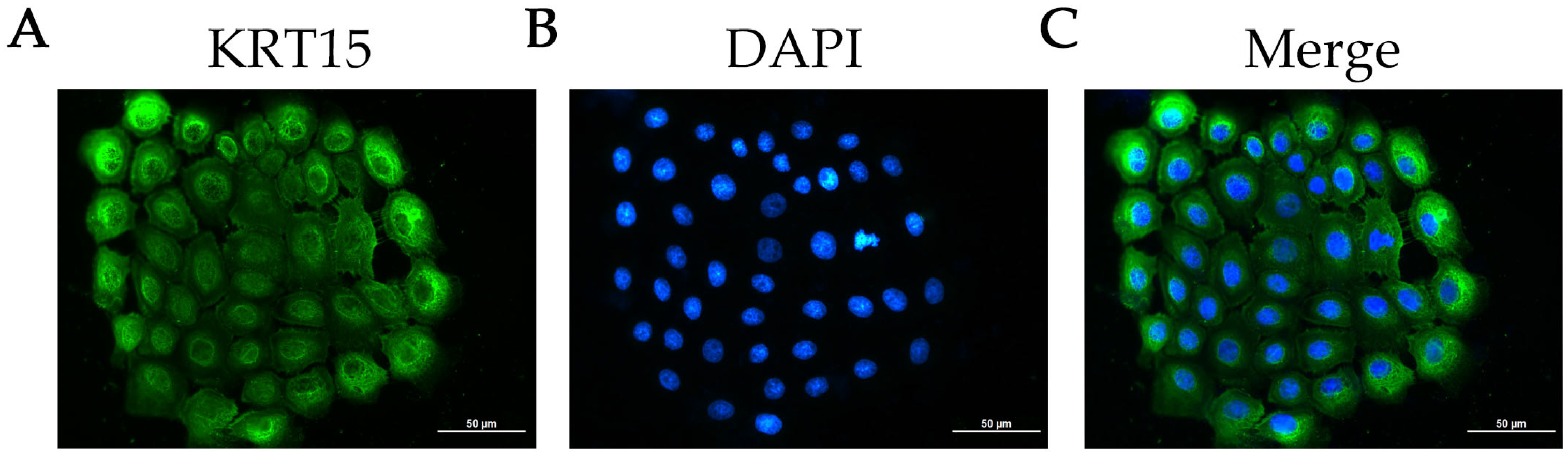
2.1. Isolation and Culture of Secondary Hair Follicle Stem Cells from Cashmere Goats
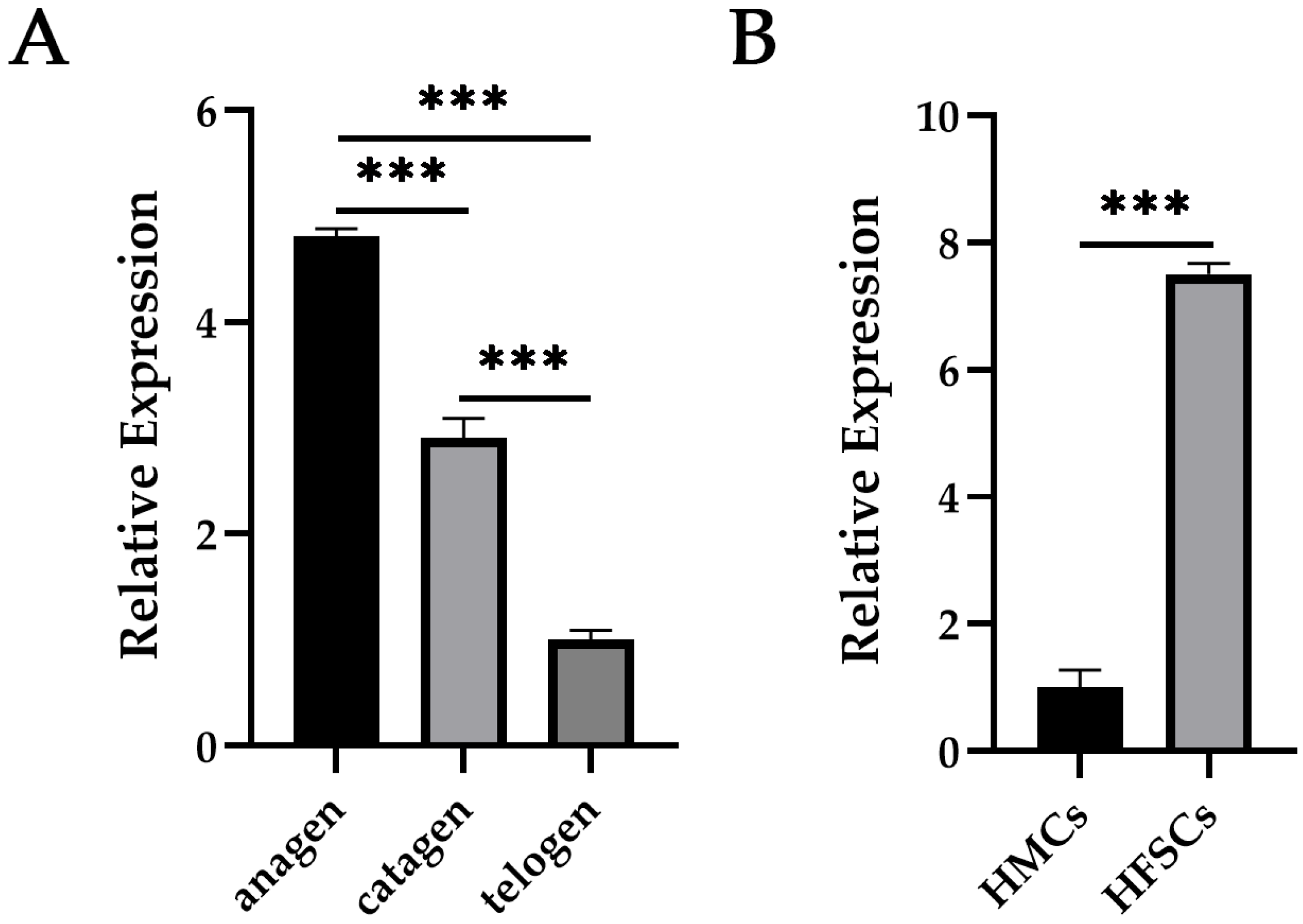
2.2. S100a4 Is Highly Expressed During Anagen and Enriched in Secondary HFSCs
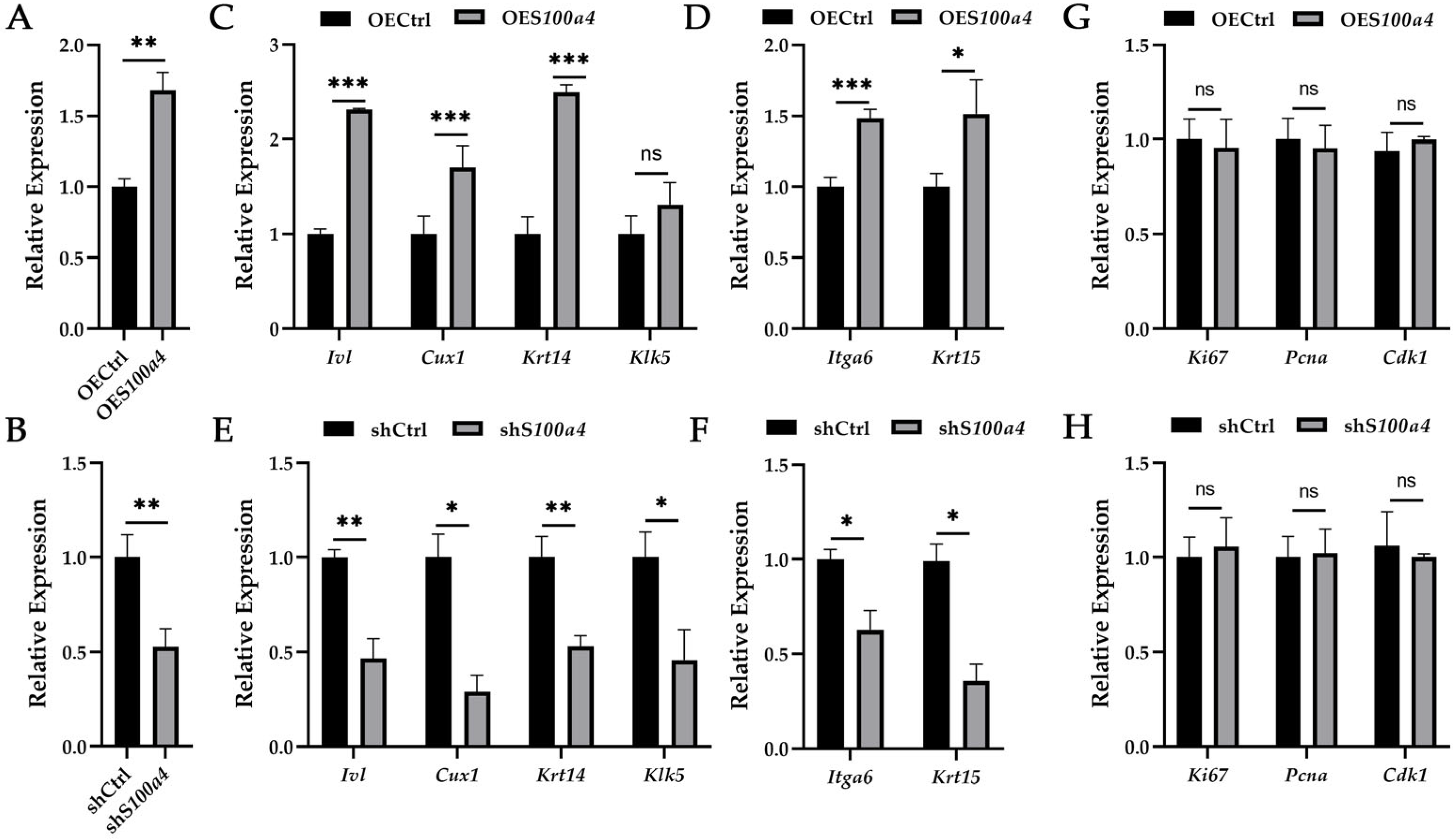
2.3. S100a4 Activates Secondary HFSCs and Facilitates Differentiation
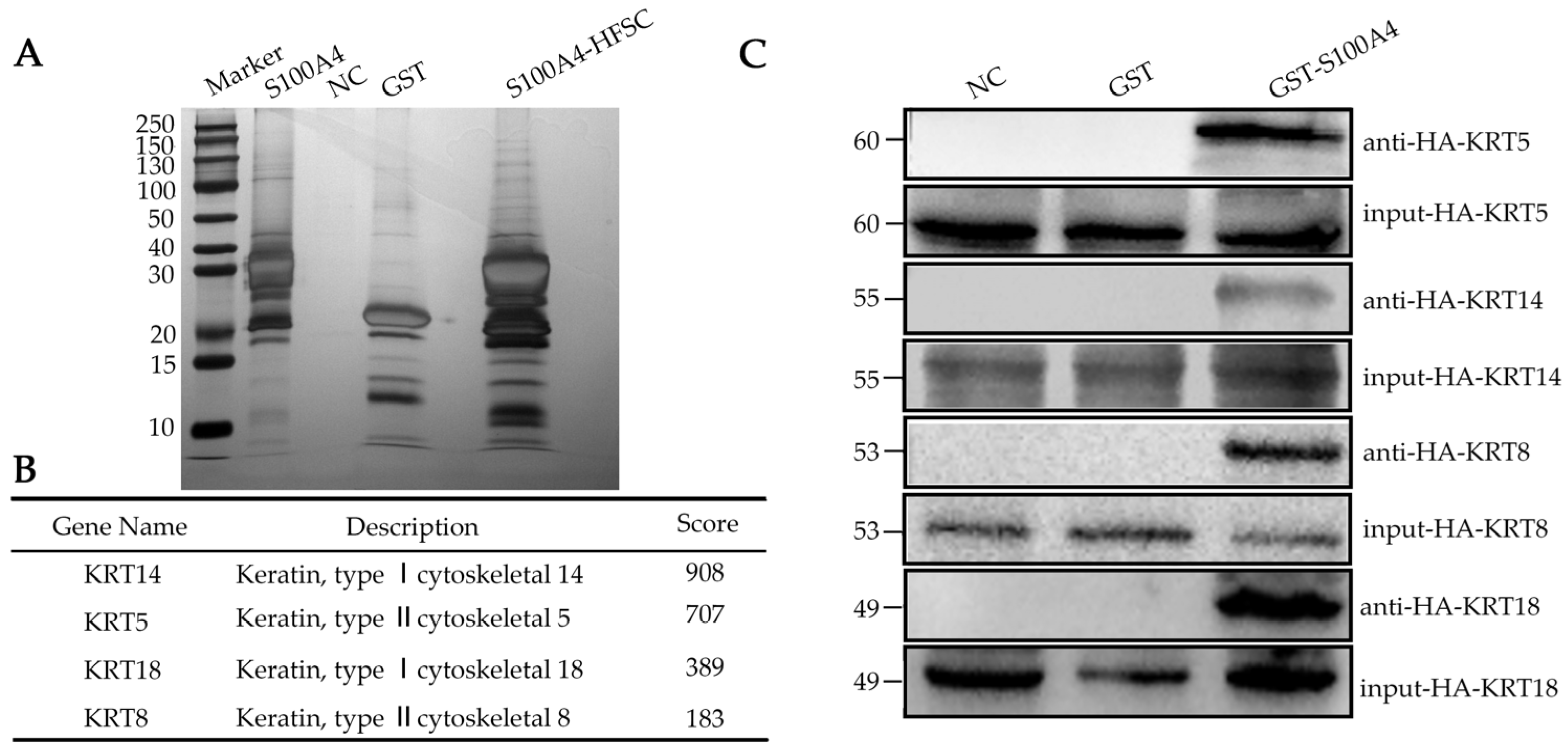
2.4. S100A4 Modulates and Interacts with Keratins Involved in Hair Follicle and Epidermal Development
3. Discussion
4. Materials and Methods
4.1. Experimental Animals
4.2. Cell Isolation and Culture
4.3. Immunofluorescence Assay of Secondary HFSCs
4.4. Cell Culture and Treatment
4.5. Quantitative Real-Time PCR
4.6. GST Pull-Down Assay and LC-MS/MS Analysis
4.7. Statistical Analysis
5. Conclusions
Supplementary Materials
Author Contributions
Funding
Institutional Review Board Statement
Informed Consent Statement
Data Availability Statement
Acknowledgments
Conflicts of Interest
References
- Wang, M.; Dai, H.; Sheng, S.; Liu, Y.; Zhang, S.; Bai, W.; Xue, H. Discovery and Functional Analysis of Secondary Hair Follicle miRNAs during Annual Cashmere Growth. Int. J. Mol. Sci. 2023, 24, 1063. [Google Scholar] [CrossRef] [PubMed]
- Liu, Y.; Wang, M.; Liu, Z.; Liang, X.; Sheng, S.; Dai, H.; Zhang, J.; Zhang, S.; Zhang, X.; Xue, H. Transcriptional signatures of secondary hair follicles during annual cashmere growth. Sci. Data 2024, 11, 1427. [Google Scholar] [CrossRef] [PubMed]
- Dahlmann, M.; Kobelt, D.; Walther, W.; Mudduluru, G.; Stein, U. S100A4 in Cancer Metastasis: Wnt Signaling-Driven Interventions for Metastasis Restriction. Cancers 2016, 8, 59. [Google Scholar] [CrossRef]
- Schäfer, B.W.; Heizmann, C.W. The S100 family of EF-hand calcium-binding proteins: Functions and pathology. Trends Biochem. Sci. 1996, 21, 134–140. [Google Scholar] [CrossRef] [PubMed]
- Kiss, B.; Duelli, A.; Radnai, L.; Kékesi, K.A.; Katona, G.; Nyitray, L. Crystal structure of the S100A4-nonmuscle myosin IIA tail fragment complex reveals an asymmetric target binding mechanism. Proc. Natl. Acad. Sci. USA 2012, 109, 6048–6053. [Google Scholar] [CrossRef]
- Helfman, D.M.; Kim, E.J.; Lukanidin, E.; Grigorian, M. The metastasis associated protein S100A4: Role in tumour progression and metastasis. Br. J. Cancer 2005, 92, 1955–1958. [Google Scholar] [CrossRef]
- Fei, F.; Qu, J.; Zhang, M.; Li, Y.; Zhang, S. S100A4 in cancer progression and metastasis: A systematic review. Oncotarget 2017, 8, 73219–73239. [Google Scholar] [CrossRef]
- Fei, F.; Qu, J.; Li, C.; Wang, X.; Li, Y.; Zhang, S. Role of metastasis-induced protein S100A4 in human non-tumor pathophysiologies. Cell Biosci. 2017, 7, 64. [Google Scholar] [CrossRef]
- Zou, M.; Al-Baradie, R.S.; Al-Hindi, H.; Farid, N.R.; Shi, Y. S100A4 (Mts1) gene overexpression is associated with invasion and metastasis of papillary thyroid carcinoma. Br. J. Cancer 2005, 93, 1277–1284. [Google Scholar] [CrossRef]
- Herwig, N.; Belter, B.; Wolf, S.; Haase-Kohn, C.; Pietzsch, J. Interaction of extracellular S100A4 with RAGE prompts prometastatic activation of A375 melanoma cells. J. Cell. Mol. Med. 2016, 20, 825–835. [Google Scholar] [CrossRef]
- Jenkinson, S.R.; Barraclough, R.; West, C.R.; Rudland, P.S. S100A4 regulates cell motility and invasion in an in vitro model for breast cancer metastasis. Br. J. Cancer 2004, 90, 253–262. [Google Scholar] [CrossRef]
- Ito, M.; Kizawa, K. Expression of calcium-binding S100 proteins A4 and A6 in regions of the epithelial sac associated with the onset of hair follicle regeneration. J. Investig. Dermatol. 2001, 116, 956–963. [Google Scholar] [CrossRef][Green Version]
- Trinh-Minh, T.; Györfi, A.H.; Tomcik, M.; Tran-Manh, C.; Zhou, X.; Dickel, N.; Tümerdem, B.S.; Kreuter, A.; Burmann, S.N.; Borchert, S.V.; et al. Effect of Anti-S100A4 Monoclonal Antibody Treatment on Experimental Skin Fibrosis and Systemic Sclerosis-Specific Transcriptional Signatures in Human Skin. Arthritis Rheumatol. 2024, 76, 783–795. [Google Scholar] [CrossRef]
- Zibert, J.R.; Skov, L.; Thyssen, J.P.; Jacobsen, G.K.; Grigorian, M. Significance of the S100A4 protein in psoriasis. J. Investig. Dermatol. 2010, 130, 150–160. [Google Scholar] [CrossRef]
- Toivola, D.M.; Boor, P.; Alam, C.; Strnad, P. Keratins in health and disease. Curr. Opin. Cell Biol. 2015, 32, 73–81. [Google Scholar] [CrossRef] [PubMed]
- Ruiz García, S.; Deprez, M.; Lebrigand, K.; Cavard, A.; Paquet, A.; Arguel, M.J.; Magnone, V.; Truchi, M.; Caballero, I.; Leroy, S.; et al. Novel dynamics of human mucociliary differentiation revealed by single-cell RNA sequencing of nasal epithelial cultures. Development 2019, 146, dev177428. [Google Scholar] [CrossRef] [PubMed]
- Ho, M.; Thompson, B.; Fisk, J.N.; Nebert, D.W.; Bruford, E.A.; Vasiliou, V.; Bunick, C.G. Update of the keratin gene family: Evolution, tissue-specific expression patterns, and relevance to clinical disorders. Hum. Genom. 2022, 16, 1. [Google Scholar] [CrossRef]
- Schweizer, J.; Bowden, P.E.; Coulombe, P.A.; Langbein, L.; Lane, E.B.; Magin, T.M.; Maltais, L.; Omary, M.B.; Parry, D.A.; Rogers, M.A.; et al. New consensus nomenclature for mammalian keratins. J. Cell Biol. 2006, 174, 169–174. [Google Scholar] [CrossRef] [PubMed]
- Shi, R.; Liu, L.; Wang, F.; He, Y.; Niu, Y.; Wang, C.; Zhang, X.; Zhang, X.; Zhang, H.; Chen, M.; et al. Downregulation of cytokeratin 18 induces cellular partial EMT and stemness through increasing EpCAM expression in breast cancer. Cell. Signal. 2020, 76, 109810. [Google Scholar] [CrossRef]
- Le Henaff, C.; Faria Da Cunha, M.; Hatton, A.; Tondelier, D.; Marty, C.; Collet, C.; Zarka, M.; Geoffroy, V.; Zatloukal, K.; Laplantine, E.; et al. Genetic deletion of keratin 8 corrects the altered bone formation and osteopenia in a mouse model of cystic fibrosis. Hum. Mol. Genet. 2016, 25, 1281–1293. [Google Scholar] [CrossRef]
- Du, H.; Wang, X.; Dong, R.; Hu, D.; Xiong, Y. miR-601 inhibits proliferation, migration and invasion of prostate cancer stem cells by targeting KRT5 to inactivate the Wnt signaling pathway. Int. J. Clin. Exp. Pathol. 2019, 12, 4361–4379. [Google Scholar]
- Li, Z.H.; Bresnick, A.R. The S100A4 metastasis factor regulates cellular motility via a direct interaction with myosin-IIA. Cancer Res. 2006, 66, 5173–5180. [Google Scholar] [CrossRef] [PubMed][Green Version]
- Donato, R.; Cannon, B.R.; Sorci, G.; Riuzzi, F.; Hsu, K.; Weber, D.J.; Geczy, C.L. Functions of S100 proteins. Curr. Mol. Med. 2013, 13, 24–57. [Google Scholar] [CrossRef]
- Zhang, W.; Gunst, S.J. S100A4 is activated by RhoA and catalyses the polymerization of non-muscle myosin, adhesion complex assembly and contraction in airway smooth muscle. J. Physiol. 2020, 598, 4573–4590. [Google Scholar] [CrossRef]
- Xue, T.; Song, Y.; Zhao, J.; Fan, G.; Liu, Z. Inhibition of S100A4 decreases neurotoxic astrocyte reactivity and attenuates neuropathic pain via the TLR4/NF-κB pathway in a rat model of spinal nerve ligation. J. Headache Pain 2025, 26, 97. [Google Scholar] [CrossRef]
- Goebeler, M.; Roth, J.; van den Bos, C.; Ader, G.; Sorg, C. Increase of calcium levels in epithelial cells induces translocation of calcium-binding proteins migration inhibitory factor-related protein 8 (MRP8) and MRP14 to keratin intermediate filaments. Biochem. J. 1995, 309, 419–424. [Google Scholar] [CrossRef] [PubMed]
- Andersen, K.; Smith-Sørensen, B.; Pedersen, K.B.; Hovig, E.; Myklebost, O.; Fodstad, Ø.; Maelandsmo, G.M. Interferon-gamma suppresses S100A4 transcription independently of apoptosis or cell cycle arrest. Br. J. Cancer 2003, 88, 1995–2001. [Google Scholar] [CrossRef][Green Version]
- Lee, C.Y.; Hsin, M.C.; Chen, P.N.; Lin, C.W.; Wang, P.H.; Yang, S.F.; Hsiao, Y.H. Arctiin Inhibits Cervical Cancer Cell Migration and Invasion through Suppression of S100A4 Expression via PI3K/Akt Pathway. Pharmaceutics 2022, 14, 365. [Google Scholar] [CrossRef]
- Zhang, G.; Yin, Y.; Hu, H.; Tian, M.; Ding, C.; Yu, S. S100A4 regulates ferroptosis to suppress cell proliferation via the SLC7A11-GSH axis but facilitates Brucella infection in RAW264.7 macrophages. Int. J. Biol. Macromol. 2025, 333, 148831. [Google Scholar] [CrossRef]
- Mishra, S.K.; Siddique, H.R.; Saleem, M. S100A4 calcium-binding protein is key player in tumor progression and metastasis: Preclinical and clinical evidence. Cancer Metastasis Rev. 2012, 31, 163–172. [Google Scholar] [CrossRef] [PubMed]
- Hou, S.; Tian, T.; Qi, D.; Sun, K.; Yuan, Q.; Wang, Z.; Qin, Z.; Wu, Z.; Chen, Z.; Zhang, J. S100A4 promotes lung tumor development through β-catenin pathway-mediated autophagy inhibition. Cell Death Dis. 2018, 9, 277. [Google Scholar] [CrossRef]
- Klingelhöfer, J.; Møller, H.D.; Sumer, E.U.; Berg, C.H.; Poulsen, M.; Kiryushko, D.; Soroka, V.; Ambartsumian, N.; Grigorian, M.; Lukanidin, E.M. Epidermal growth factor receptor ligands as new extracellular targets for the metastasis-promoting S100A4 protein. FEBS J. 2009, 276, 5936–5948. [Google Scholar] [CrossRef]
- Ito, M.; Kizawa, K.; Toyoda, M.; Morohashi, M. Label-retaining cells in the bulge region are directed to cell death after plucking, followed by healing from the surviving hair germ. J. Investig. Dermatol. 2002, 119, 1310–1316. [Google Scholar] [CrossRef]
- Rittié, L.; Stoll, S.W.; Kang, S.; Voorhees, J.J.; Fisher, G.J. Hedgehog signaling maintains hair follicle stem cell phenotype in young and aged human skin. Aging Cell 2009, 8, 738–751. [Google Scholar] [CrossRef]
- Li, Y.; Li, W.; Zhang, J.; Ji, D.; Zhang, G.; Yang, B. Identification of genes influencing formation of the Type III Brush Hair in Yangtze River Delta white goats by differential display of mRNA. Gene 2013, 526, 205–209. [Google Scholar] [CrossRef] [PubMed]
- Biri-Kovács, B.; Kiss, B.; Vadászi, H.; Gógl, G.; Pálfy, G.; Török, G.; Homolya, L.; Bodor, A.; Nyitray, L. Ezrin interacts with S100A4 via both its N- and C-terminal domains. PLoS ONE 2017, 12, e0177489. [Google Scholar] [CrossRef] [PubMed]
- Ryan, D.G.; Taliana, L.; Sun, L.; Wei, Z.G.; Masur, S.K.; Lavker, R.M. Involvement of S100A4 in stromal fibroblasts of the regenerating cornea. Investig. Ophthalmol. Vis. Sci. 2003, 44, 4255–4262. [Google Scholar] [CrossRef] [PubMed][Green Version]
- Fuchs, E.; Cleveland, D.W. A structural scaffolding of intermediate filaments in health and disease. Science 1998, 279, 514–519. [Google Scholar] [CrossRef]
- McGinn, O.; Ward, A.V.; Fettig, L.M.; Riley, D.; Ivie, J.; Paul, K.V.; Kabos, P.; Finlay-Schultz, J.; Sartorius, C.A. Cytokeratin 5 alters β-catenin dynamics in breast cancer cells. Oncogene 2020, 39, 2478–2492. [Google Scholar] [CrossRef]
- Blanpain, C.; Fuchs, E. Epidermal stem cells of the skin. Annu. Rev. Cell Dev. Biol. 2006, 22, 339–373. [Google Scholar] [CrossRef]
- Fuchs, E. Scratching the surface of skin development. Nature 2007, 445, 834–842. [Google Scholar] [CrossRef] [PubMed]
- Liu, G.; Liu, R.; Tang, X.; Cao, J.; Zhao, S.; Yu, M. Expression profiling reveals genes involved in the regulation of wool follicle bulb regression and regeneration in sheep. Int. J. Mol. Sci. 2015, 16, 9152–9166. [Google Scholar] [CrossRef]
- Moll, R.; Divo, M.; Langbein, L. The human keratins: Biology and pathology. Histochem. Cell Biol. 2008, 129, 705–733. [Google Scholar] [CrossRef] [PubMed]
- Li, Y.; Jin, M.; Gao, Y.; Lu, L.; Cao, J.; Liu, Y.; Chen, Y.; Wang, X. Efficient establishment of an optimized culture condition for cashmere goat primary hair follicle stem cells. J. Anim. Sci. 2023, 101, skad235, Erratum in J. Anim. Sci. 2024, 102, skad212.. [Google Scholar] [CrossRef] [PubMed]


Disclaimer/Publisher’s Note: The statements, opinions and data contained in all publications are solely those of the individual author(s) and contributor(s) and not of MDPI and/or the editor(s). MDPI and/or the editor(s) disclaim responsibility for any injury to people or property resulting from any ideas, methods, instructions or products referred to in the content. |
© 2026 by the authors. Licensee MDPI, Basel, Switzerland. This article is an open access article distributed under the terms and conditions of the Creative Commons Attribution (CC BY) license.
Share and Cite
Liang, X.; Liu, B.; Wang, J.; Liu, Y.; Wei, Y.; Yu, H.; Zhang, J.; Zhang, S.; Xue, H. Molecular Regulation of Secondary Hair Follicle Stem Cell by S100a4 in Cashmere Goat. Int. J. Mol. Sci. 2026, 27, 849. https://doi.org/10.3390/ijms27020849
Liang X, Liu B, Wang J, Liu Y, Wei Y, Yu H, Zhang J, Zhang S, Xue H. Molecular Regulation of Secondary Hair Follicle Stem Cell by S100a4 in Cashmere Goat. International Journal of Molecular Sciences. 2026; 27(2):849. https://doi.org/10.3390/ijms27020849
Chicago/Turabian StyleLiang, Xinyue, Bohan Liu, Jiayi Wang, Yanlei Liu, Yiping Wei, Hongji Yu, Junpeng Zhang, Shuyi Zhang, and Huiling Xue. 2026. "Molecular Regulation of Secondary Hair Follicle Stem Cell by S100a4 in Cashmere Goat" International Journal of Molecular Sciences 27, no. 2: 849. https://doi.org/10.3390/ijms27020849
APA StyleLiang, X., Liu, B., Wang, J., Liu, Y., Wei, Y., Yu, H., Zhang, J., Zhang, S., & Xue, H. (2026). Molecular Regulation of Secondary Hair Follicle Stem Cell by S100a4 in Cashmere Goat. International Journal of Molecular Sciences, 27(2), 849. https://doi.org/10.3390/ijms27020849