From Emissions to Assets: Sustainable Technologies for CO2 Capture, Conversion, and Integrated Strategies

 , and
, and 
Abstract
1. Introduction
2. Sustainable CO2 Capture and Conversion
Sustainability Criteria and Strategic Role of Integrated CO2 Capture–Conversion Technologies
3. CO2 Capture
Molecular Design and Structure–Property Relationships in CO2 Capture Materials
4. CO2 Conversion
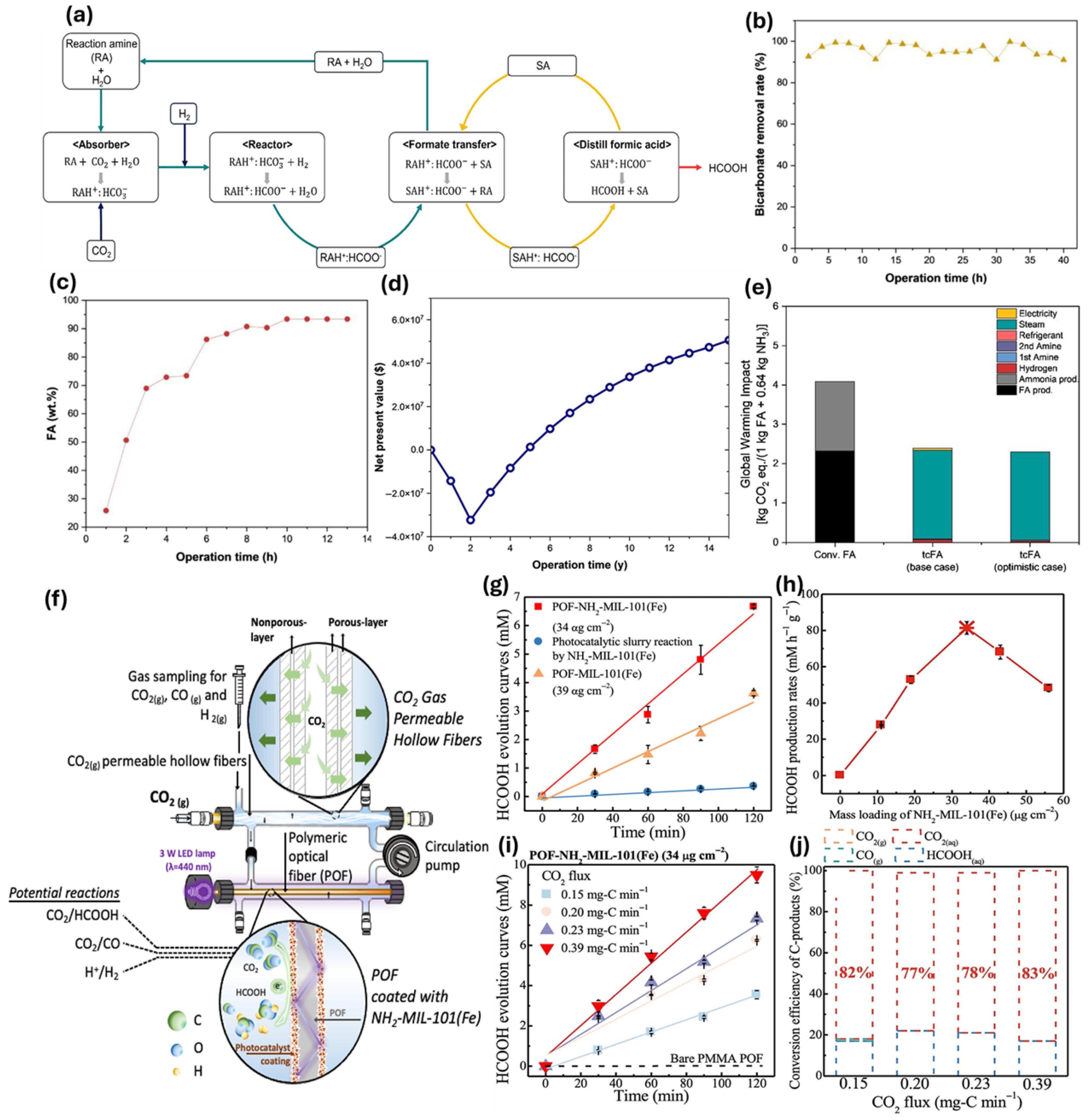
4.1. CO2 Conversion into Formic Acid
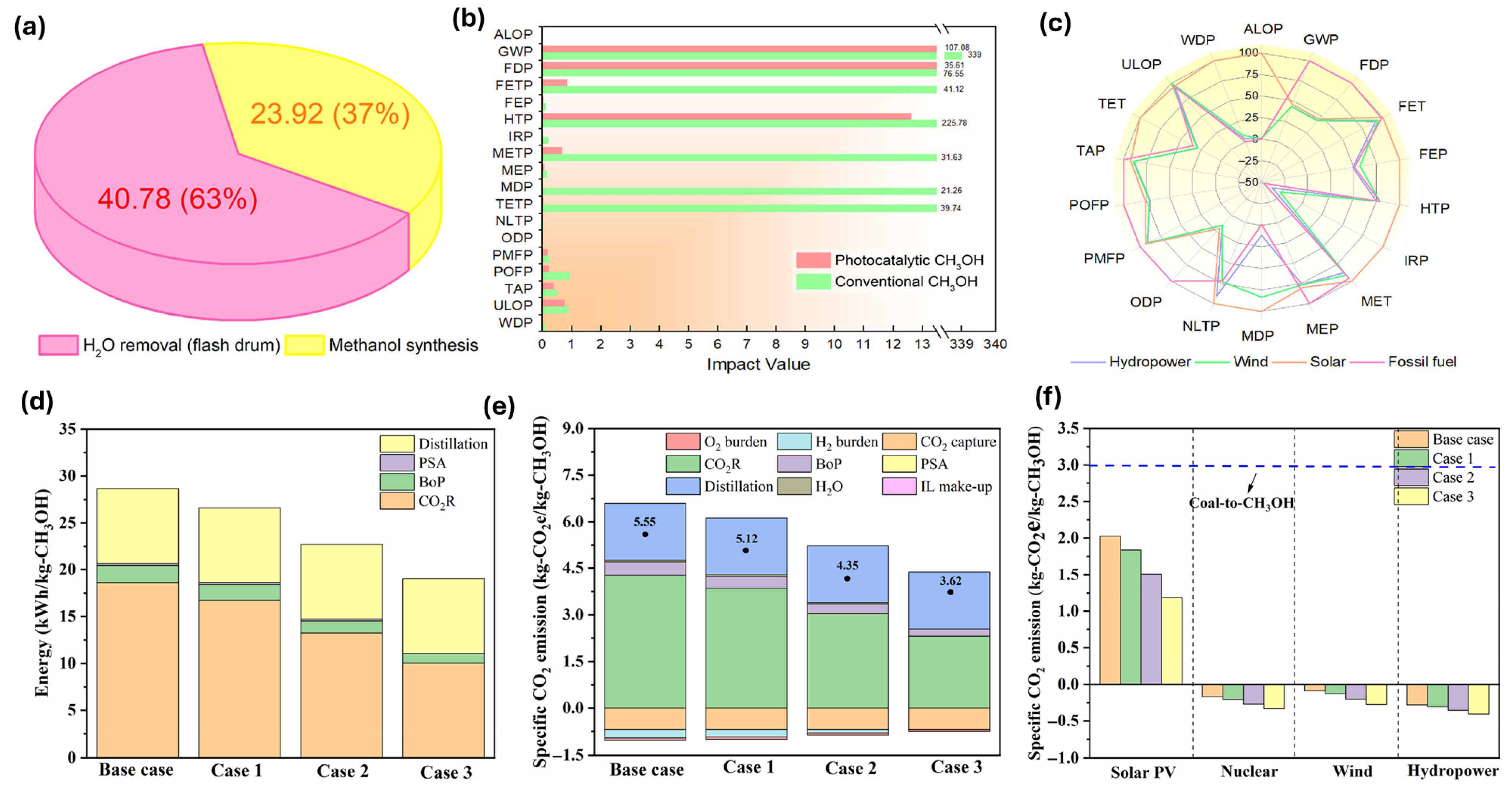
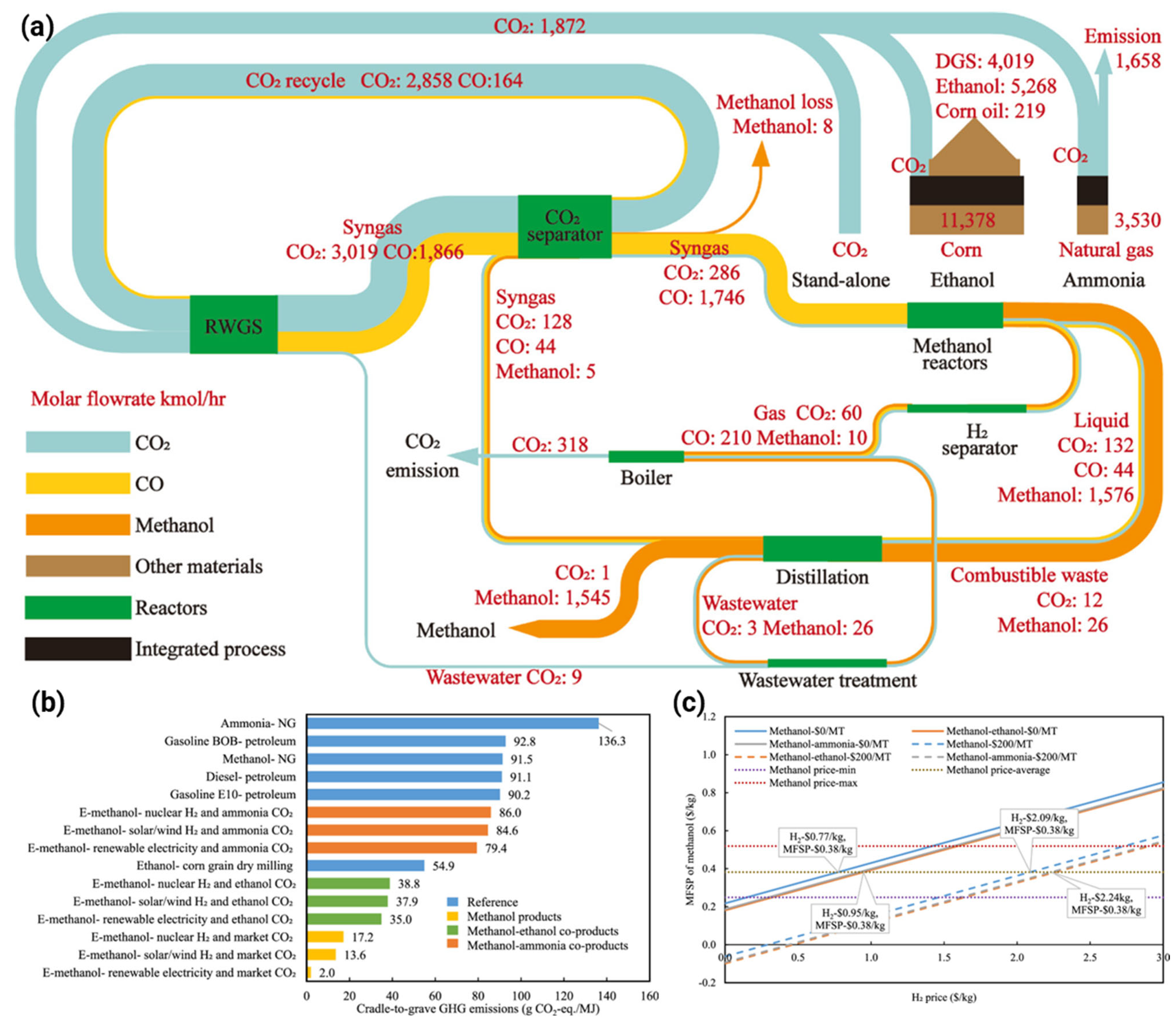
4.2. CO2 Conversion into Methanol
4.3. Molecular Mechanisms and Active Sites in Catalytic CO2 Conversion
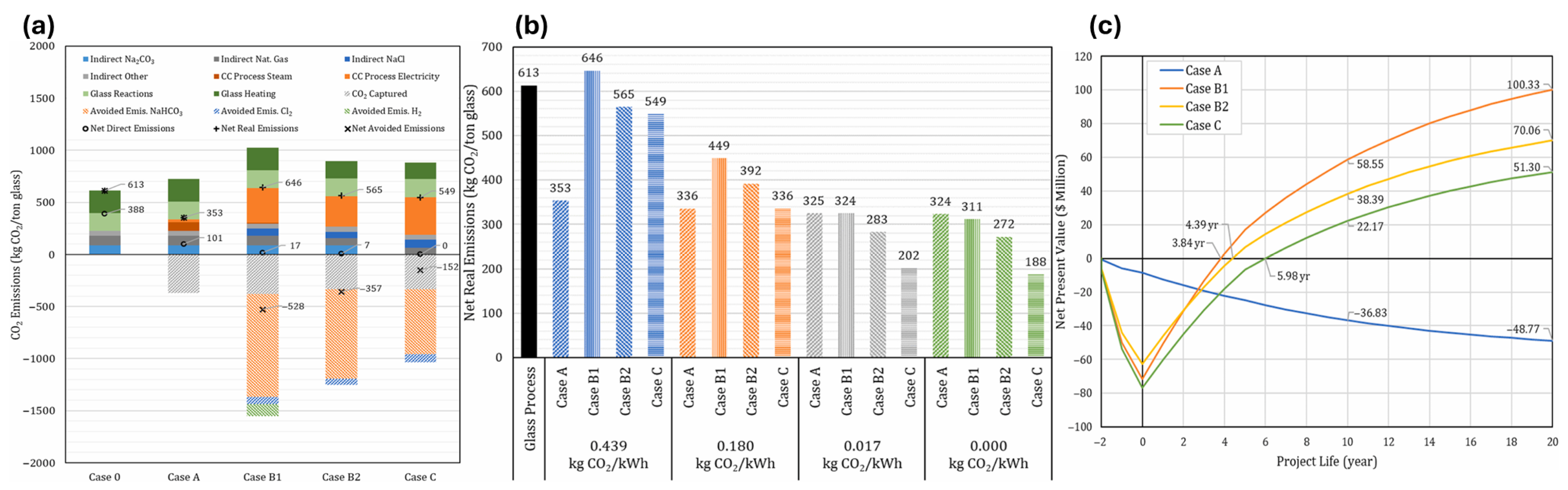
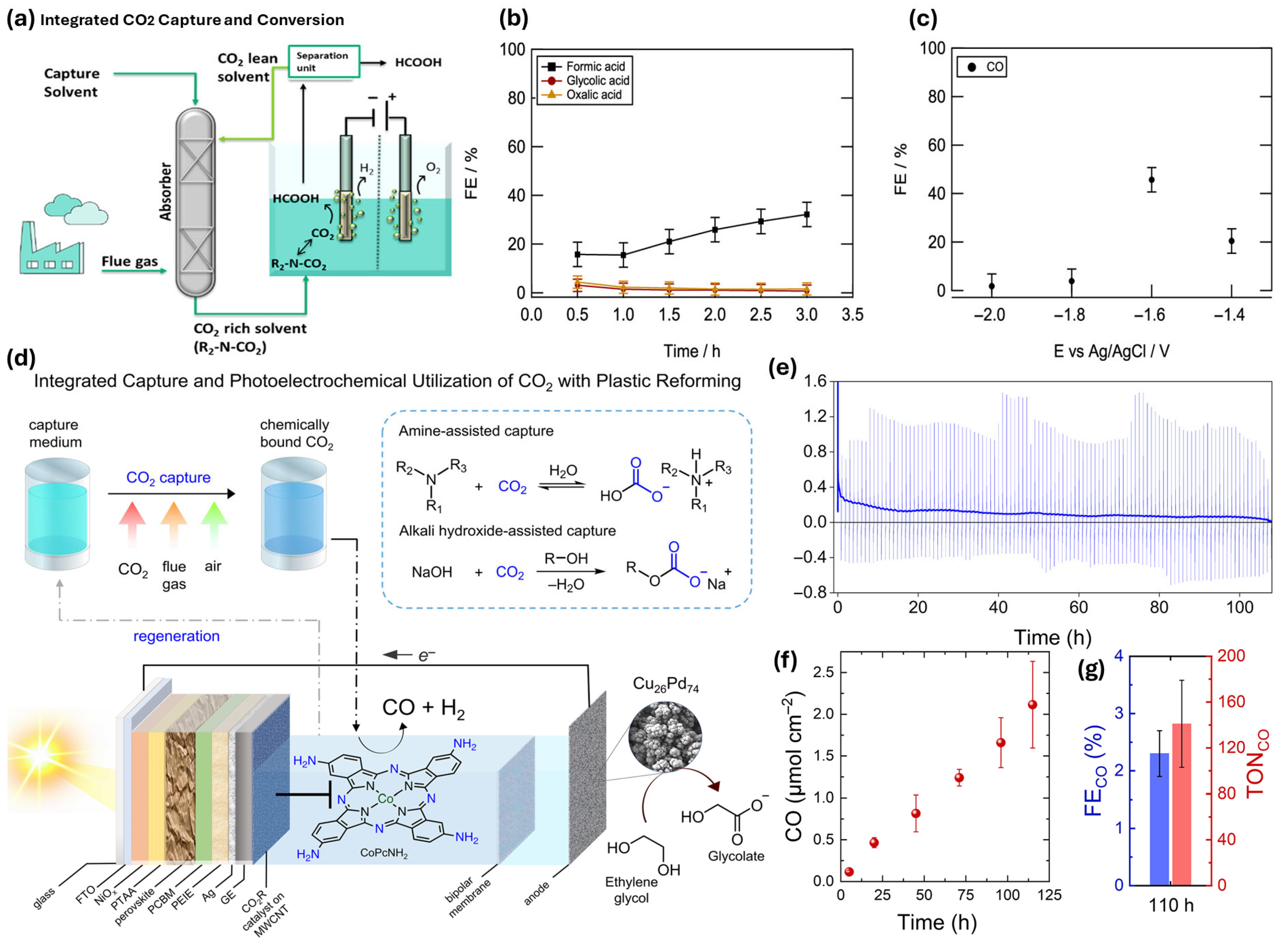
5. Integrated Carbon Capture and Conversion/Utilization (ICCC/ICCU)
Molecular Synergies in Dual-Function Materials (DFMs) for ICCU
6. Conclusions
Author Contributions
Funding
Institutional Review Board Statement
Informed Consent Statement
Data Availability Statement
Conflicts of Interest
References
- Swaminathan, S.; Singh, M.R. Advancements in Emulsion Technologies for Efficient and Sustainable CO2 Capture and Gas Absorption. ACS Sustain. Chem. Eng. 2025, 13, 11717–11732. [Google Scholar] [CrossRef]
- Wu, C.; Huang, Q.; Xu, Z.; Sipra, A.T.; Gao, N.; Vandenberghe, L.P.d.S.; Vieira, S.; Soccol, C.R.; Zhao, R.; Deng, S.; et al. A comprehensive review of carbon capture science and technologies. Carbon Capture Sci. Technol. 2024, 11, 100178. [Google Scholar] [CrossRef]
- Rahimi, M.; Khurram, A.; Hatton, T.A.; Gallant, B. Electrochemical carbon capture processes for mitigation of CO2 emissions. Chem. Soc. Rev. 2022, 51, 8676–8695. [Google Scholar] [CrossRef] [PubMed]
- Prašnikar, A.; Linec, M.; Jurković, D.L.; Bajec, D.; Sarić, M.; Likozar, B. Understanding membrane-intensified catalytic CO2 reduction reactions to methanol by structure-based multisite micro-kinetic model. J. Clean. Prod. 2024, 463, 142480. [Google Scholar] [CrossRef]
- Ozden, A. CO2 Capture via Electrochemical pH-Mediated Systems. ACS Energy Lett. 2025, 10, 1550–1576. [Google Scholar] [CrossRef]
- Jeffry, L.; Ong, M.Y.; Nomanbhay, S.; Mofijur, M.; Mubashir, M.; Show, P.L. Greenhouse gases utilization: A review. Fuel 2021, 301, 121017. [Google Scholar] [CrossRef]
- Olajire, A.A. Synthesis chemistry of metal-organic frameworks for CO2 capture and conversion for sustainable energy future. Renew. Sustain. Energy Rev. 2018, 92, 570–607. [Google Scholar] [CrossRef]
- Jiang, W.; Loh, H.; Low, B.Q.L.; Zhu, H.; Low, J.; Heng, J.Z.X.; Tang, K.Y.; Li, Z.; Loh, X.J.; Ye, E.; et al. Role of oxygen vacancy in metal oxides for photocatalytic CO2 reduction. Appl. Catal. B 2023, 321, 122079. [Google Scholar] [CrossRef]
- Centi, G.; Quadrelli, E.A.; Perathoner, S. Catalysis for CO2 conversion: A key technology for rapid introduction of renewable energy in the value chain of chemical industries. Energy Environ. Sci. 2013, 6, 1711–1731. [Google Scholar] [CrossRef]
- Yaashikaa, P.R.; Senthil Kumar, P.; Varjani, S.J.; Saravanan, A. A review on photochemical, biochemical and electrochemical transformation of CO2 into value-added products. J. CO2 Util. 2019, 33, 131–147. [Google Scholar] [CrossRef]
- Wu, J.; Huang, Y.; Ye, W.; Li, Y. CO2 Reduction: From the Electrochemical to Photochemical Approach. Adv. Sci. 2017, 4, 1700194. [Google Scholar] [CrossRef]
- Rasheed, T.; Shafi, S.; Anwar, M.T.; Rizwan, K.; Ahmad, T.; Bilal, M. Revisiting photo and electro-catalytic modalities for sustainable conversion of CO2. Appl. Catal. A Gen. 2021, 623, 118248. [Google Scholar] [CrossRef]
- Fang, S.; Rahaman, M.; Bharti, J.; Reisner, E.; Robert, M.; Ozin, G.A.; Hu, Y.H. Photocatalytic CO2 reduction. Nat. Rev. Methods Primers 2023, 3, 1–21. [Google Scholar] [CrossRef]
- Masoumi, Z.; Tayebi, M.; Tayebi, M.; Masoumi Lari, S.A.; Sewwandi, N.; Seo, B.; Lim, C.-S.; Kim, H.-G.; Kyung, D. Electrocatalytic Reactions for Converting CO2 to Value-Added Products: Recent Progress and Emerging Trends. Int. J. Mol. Sci. 2023, 24, 9952. [Google Scholar] [CrossRef] [PubMed]
- Somoza-Tornos, A.; Guerra, O.J.; Crow, A.M.; Smith, W.A.; Hodge, B.-M. Process modeling, techno-economic assessment and life cycle assessment of the electrochemical reduction of CO2: A review. iScience 2021, 24, 102813. [Google Scholar] [CrossRef]
- Desport, L.; Selosse, S. An overview of CO2 capture and utilization in energy models. Resour. Conserv. Recycl. 2022, 180, 106150. [Google Scholar] [CrossRef]
- Cabrera, C.R.; Abruña, H.D. Electrocatalysis of CO2 reduction at surface modified metallic and semiconducting electrodes. J. Electroanal. Chem. Interfacial Electrochem. 1986, 209, 101–107. [Google Scholar] [CrossRef]
- Cuéllar-Franca, R.M.; Azapagic, A. Carbon capture, storage and utilisation technologies: A critical analysis and comparison of their life cycle environmental impacts. J. CO2 Util. 2015, 9, 82–102. [Google Scholar] [CrossRef]
- Von Der Assen, N.; Jung, J.; Bardow, A. Life-cycle assessment of carbon dioxide capture and utilization: Avoiding the pitfalls. Energy Environ. Sci. 2013, 6, 2721–2734. [Google Scholar] [CrossRef]
- Bareschino, P.; Mancusi, E.; Urciuolo, M.; Paulillo, A.; Chirone, R.; Pepe, F. Life cycle assessment and feasibility analysis of a combined chemical looping combustion and power-to-methane system for CO2 capture and utilization. Renew. Sustain. Energy Rev. 2020, 130, 109962. [Google Scholar] [CrossRef]
- Chung, W.; Jeong, W.; Lee, J.; Kim, J.; Roh, K.; Lee, J.H. Electrification of CO2 conversion into chemicals and fuels: Gaps and opportunities in process systems engineering. Comput. Chem. Eng. 2023, 170, 108106. [Google Scholar] [CrossRef]
- Leung, D.Y.C.; Caramanna, G.; Maroto-Valer, M.M. An overview of current status of carbon dioxide capture and storage technologies. Renew. Sustain. Energy Rev. 2014, 39, 426–443. [Google Scholar] [CrossRef]
- Clift, R.; Doig, A.; Finnveden, G. The Application of Life Cycle Assessment to Integrated Solid Waste Management: Part 1—Methodology. Process Saf. Environ. Prot. 2000, 78, 279–287. [Google Scholar] [CrossRef]
- da Cruz, T.T.; Perrella Balestieri, J.A.; de Toledo Silva, J.M.; Vilanova, M.R.N.; Oliveira, O.J.; Ávila, I. Life cycle assessment of carbon capture and storage/utilization: From current state to future research directions and opportunities. Int. J. Greenh. Gas Control 2021, 108, 103309. [Google Scholar] [CrossRef]
- Zhang, Z.; Pan, S.-Y.; Li, H.; Cai, J.; Ghani Olabi, A.; Anthony, E.J.; Manovic, V. Recent advances in carbon dioxide utilization. Renew. Sustain. Energy Rev. 2020, 125, 109799. [Google Scholar] [CrossRef]
- Elkamel, A.; Ba-Shammakh, M.; Douglas, P.; Croiset, E. An Optimization Approach for Integrating Planning and CO2 Emission Reduction in the Petroleum Refining Industry. Ind. Eng. Chem. Res. 2008, 47, 760–776. [Google Scholar] [CrossRef]
- Wang, J.Q.; Liu, X.J.; Ma, J.J.; Zhang, S.; Liu, H.R.; Dong, Y.L.; Yang, Q.-Y. Prospective life cycle assessment of CO2 conversion by photocatalytic reaction. Green Chem. Eng. 2024, 5, 383–389. [Google Scholar] [CrossRef]
- Jiang, L.; Liu, W.; Wang, R.Q.; Gonzalez-Diaz, A.; Rojas-Michaga, M.F.; Michailos, S.; Pourkashanian, M.; Zhang, X.; Font-Palma, C. Sorption direct air capture with CO2 utilization. Prog. Energy Combust. Sci. 2023, 95, 101069. [Google Scholar] [CrossRef]
- Arellano-Treviño, M.A.; Kanani, N.; Jeong-Potter, C.W.; Farrauto, R.J. Bimetallic catalysts for CO2 capture and hydrogenation at simulated flue gas conditions. Chem. Eng. J. 2019, 375, 121953. [Google Scholar] [CrossRef]
- Mauerhofer, A.M.; Fuchs, J.; Müller, S.; Benedikt, F.; Schmid, J.C.; Hofbauer, H. CO2 gasification in a dual fluidized bed reactor system: Impact on the product gas composition. Fuel 2019, 253, 1605–1616. [Google Scholar] [CrossRef]
- Shao, B.; Zhang, Y.; Sun, Z.; Li, J.; Gao, Z.; Xie, Z.; Hu, J.; Liu, H. CO2 capture and in-situ conversion: Recent progresses and perspectives. Green Chem. Eng. 2022, 3, 189–198. [Google Scholar] [CrossRef]
- Kim, S.M.; Abdala, P.M.; Broda, M.; Hosseini, D.; Copéret, C.; Müller, C. Integrated CO2 Capture and Conversion as an Efficient Process for Fuels from Greenhouse Gases. ACS Catal. 2018, 8, 2815–2823. [Google Scholar] [CrossRef]
- Sun, H.; Sun, S.; Liu, T.; Zeng, J.; Wang, Y.; Yan, Z.; Wu, C. Integrated CO2 Capture and Utilization: Selection, Matching, and Interactions between Adsorption and Catalytic Sites. ACS Catal. 2024, 14, 15572–15589. [Google Scholar] [CrossRef]
- Choe, C.; Cheon, S.; Kim, H.; Lim, H. Mitigating climate change for negative CO2 emission via syngas methanation: Techno-economic and life-cycle assessments of renewable methane production. Renew. Sustain. Energy Rev. 2023, 185, 113628. [Google Scholar] [CrossRef]
- Wilberforce, T.; Baroutaji, A.; Soudan, B.; Al-Alami, A.H.; Olabi, A.G. Outlook of carbon capture technology and challenges. Sci. Total Environ. 2019, 657, 56–72. [Google Scholar] [CrossRef]
- Koytsoumpa, E.I.; Bergins, C.; Kakaras, E. The CO2 economy: Review of CO2 capture and reuse technologies. J. Supercrit. Fluids 2018, 132, 3–16. [Google Scholar] [CrossRef]
- Song, C.; Liu, Q.; Ji, N.; Deng, S.; Zhao, J.; Li, Y.; Song, Y.; Li, H. Alternative pathways for efficient CO2 capture by hybrid processes—A review. Renew. Sustain. Energy Rev. 2018, 82, 215–231. [Google Scholar] [CrossRef]
- Liu, C.M.; Sandhu, N.K.; McCoy, S.T.; Bergerson, J.A. A life cycle assessment of greenhouse gas emissions from direct air capture and Fischer–Tropsch fuel production. Sustain. Energy Fuels 2020, 4, 3129–3142. [Google Scholar] [CrossRef]
- Brethomé, F.M.; Williams, N.J.; Seipp, C.A.; Kidder, M.K.; Custelcean, R. Direct air capture of CO2 via aqueous-phase absorption and crystalline-phase release using concentrated solar power. Nat. Energy 2018, 3, 553–559. [Google Scholar] [CrossRef]
- García-Bordejé, E.; González-Olmos, R. Advances in process intensification of direct air CO2 capture with chemical conversion. Prog. Energy Combust. Sci. 2024, 100, 101132. [Google Scholar] [CrossRef]
- Anderson, R.; Rodgers, J.; Argueta, E.; Biong, A.; Gómez-Gualdrón, D.A. Role of Pore Chemistry and Topology in the CO2 Capture Capabilities of MOFs: From Molecular Simulation to Machine Learning. Chem. Mater. 2018, 30, 6325–6337. [Google Scholar] [CrossRef]
- Yu, Z.; Cao, X.; Wang, S.; Cui, H.; Li, C.; Zhu, G. Research Progress on the Water Stability of a Metal-Organic Framework in Advanced Oxidation Processes. Water Air Soil. Pollut. 2021, 232, 18. [Google Scholar] [CrossRef]
- Postweiler, P.; Engelpracht, M.; Rezo, D.; Gibelhaus, A.; von der Assen, N. Environmental process optimisation of an adsorption-based direct air carbon capture and storage system. Energy Environ. Sci. 2024, 17, 3004–3020. [Google Scholar] [CrossRef]
- Hu, J.; Gu, X.; Lin, L.C.; Bakshi, B.R. Toward Sustainable Metal-Organic Frameworks for Post-Combustion Carbon Capture by Life Cycle Assessment and Molecular Simulation. ACS Sustain. Chem. Eng. 2021, 9, 12132–12141. [Google Scholar] [CrossRef]
- Deutz, S.; Bardow, A. Life-cycle assessment of an industrial direct air capture process based on temperature–vacuum swing adsorption. Nat. Energy 2021, 6, 203–213. [Google Scholar] [CrossRef]
- Zhang, C.; Hao, X.; Wang, J.; Ding, X.; Zhong, Y.; Jiang, Y.; Wu, M.; Long, R.; Gong, W.; Liang, C.; et al. Concentrated Formic Acid from CO2 Electrolysis for Directly Driving Fuel Cell. Angew. Chem. Int. Ed. 2024, 63, e202317628. [Google Scholar] [CrossRef]
- Kim, C.; Park, K.; Lee, H.; Im, J.; Usosky, D.; Tak, K.; Park, D.; Chung, W.; Han, D.; Yoon, J.; et al. Accelerating the net-zero economy with CO2-hydrogenated formic acid production: Process development and pilot plant demonstration. Joule 2024, 8, 693–713. [Google Scholar] [CrossRef]
- Gao, D.; Arán-Ais, R.M.; Jeon, H.S.; Roldan Cuenya, B. Rational catalyst and electrolyte design for CO2 electroreduction towards multicarbon products. Nat. Catal. 2019, 2, 198–210. [Google Scholar] [CrossRef]
- Xia, Q.; Zhang, K.; Zheng, T.; An, L.; Xia, C.; Zhang, X. Integration of CO2 Capture and Electrochemical Conversion. ACS Energy Lett. 2023, 8, 2840–2857. [Google Scholar] [CrossRef]
- Banu, A.; Mir, N.; Ewis, D.; El-Naas, M.H.; Amhamed, A.I.; Bicer, Y. Formic acid production through electrochemical reduction of CO2: A life cycle assessment. Energy Convers. Manag. X 2023, 20, 100441. [Google Scholar] [CrossRef]
- Ding, P.; Zhao, H.; Li, T.; Luo, Y.; Fan, G.; Chen, G.; Gao, S.; Shi, X.; Lu, S.; Sun, X. Metal-based electrocatalytic conversion of CO2 to formic acid/formate. J. Mater. Chem. A 2020, 8, 21947–21960. [Google Scholar] [CrossRef]
- Markewitz, P.; Kuckshinrichs, W.; Leitner, W.; Linssen, J.; Zapp, P.; Bongartz, R.; Schreiber, A.; Müller, T.E. Worldwide innovations in the development of carbon capture technologies and the utilization of CO2. Energy Environ. Sci. 2012, 5, 7281–7305. [Google Scholar] [CrossRef]
- Kortlever, R.; Shen, J.; Schouten, K.J.P.; Calle-Vallejo, F.; Koper, M.T.M. Catalysts and Reaction Pathways for the Electrochemical Reduction of Carbon Dioxide. J. Phys. Chem. Lett. 2015, 6, 4073–4082. [Google Scholar] [CrossRef]
- Jhong, H.R.M.; Ma, S.; Kenis, P.J. Electrochemical conversion of CO2 to useful chemicals: Current status, remaining challenges, and future opportunities. Curr. Opin. Chem. Eng. 2013, 2, 191–199. [Google Scholar] [CrossRef]
- García de Arquer, F.P.; Dinh, C.T.; Ozden, A.; Wicks, J.; McCallum, C.; Kirmani, A.R.; Nam, D.-H.; Gabardo, C.; Seifitokaldani, A.; Wang, X.; et al. CO2 electrolysis to multicarbon products at activities greater than 1 A cm−2. Science 2020, 367, 661–666. [Google Scholar] [CrossRef]
- Rabinowitz, J.A.; Kanan, M.W. The future of low-temperature carbon dioxide electrolysis depends on solving one basic problem. Nat. Commun. 2020, 11, 5231. [Google Scholar] [CrossRef]
- Chae, O.B.; Lucht, B.L. Interfacial Issues and Modification of Solid Electrolyte Interphase for Li Metal Anode in Liquid and Solid Electrolytes. Adv. Energy Mater. 2023, 13, 2203791. [Google Scholar] [CrossRef]
- Wang, T.H.; Lai, Y.J.S.; Tsai, C.K.; Fu, H.; Doong, R.A.; Westerhoff, P.; Rittmann, B.E. Efficient CO2 Conversion through a Novel Dual-Fiber Reactor System. Environ. Sci. Technol. 2024, 58, 13717–13725. [Google Scholar] [CrossRef]
- Melo Bravo, P.; Debecker, D.P. Combining CO2 capture and catalytic conversion to methane. Waste Dispos. Sustain. Energy 2019, 1, 53–65, Correction in Waste Dispos. Sustain. Energy 2021, 3, 255–256. https://doi.org/10.1007/s42768-021-00078-9. [Google Scholar] [CrossRef]
- Pérez-Fortes, M.; Schöneberger, J.C.; Boulamanti, A.; Tzimas, E. Methanol synthesis using captured CO2 as raw material: Techno-economic and environmental assessment. Appl. Energy 2016, 161, 718–732. [Google Scholar] [CrossRef]
- Wang, Y.; Chen, E.; Tang, J. Insight on Reaction Pathways of Photocatalytic CO2 Conversion. ACS Catal. 2022, 12, 7300–7316. [Google Scholar] [CrossRef]
- Ali Khan, M.H.; Daiyan, R.; Neal, P.; Haque, N.; MacGill, I.; Amal, R. A framework for assessing economics of blue hydrogen production from steam methane reforming using carbon capture storage & utilisation. Int. J. Hydrogen Energy 2021, 46, 22685–22706. [Google Scholar] [CrossRef]
- Kiss, A.A.; Pragt, J.J.; Vos, H.J.; Bargeman, G.; de Groot, M.T. Novel efficient process for methanol synthesis by CO2 hydrogenation. Chem. Eng. J. 2016, 284, 260–269. [Google Scholar] [CrossRef]
- Olah, G.A.; Prakash, G.K.S.; Goeppert, A. Anthropogenic chemical carbon cycle for a sustainable future. J. Am. Chem. Soc. 2011, 133, 12881–12898. [Google Scholar] [CrossRef]
- Ling, G.Z.S.; Foo, J.J.; Tan, X.Q.; Ong, W.J. Transition into Net-Zero Carbon Community from Fossil Fuels: Life Cycle Assessment of Light-Driven CO2 Conversion to Methanol Using Graphitic Carbon Nitride. ACS Sustain. Chem. Eng. 2023, 11, 5547–5558. [Google Scholar] [CrossRef]
- Li, F.; Chang, F.; Lundgren, J.; Zhang, X.; Liu, Y.; Engvall, K.; Ji, X. Energy, Cost, and Environmental Assessments of Methanol Production via Electrochemical Reduction of CO2 from Biosyngas. ACS Sustain. Chem. Eng. 2023, 11, 2810–2818. [Google Scholar] [CrossRef]
- Zang, G.; Sun, P.; Elgowainy, A.; Wang, M. Technoeconomic and Life Cycle Analysis of Synthetic Methanol Production from Hydrogen and Industrial Byproduct CO2. Environ. Sci. Technol. 2021, 55, 5248–5257. [Google Scholar] [CrossRef] [PubMed]
- Yu, K.; Kumar, N.; Aho, A.; Roine, J.; Heinmaa, I.; Murzin, D.Y.; Ivaska, A. Determination of acid sites in porous aluminosilicate solid catalysts for aqueous phase reactions using potentiometric titration method. J. Catal. 2016, 335, 117–124. [Google Scholar] [CrossRef]
- Nitopi, S.; Bertheussen, E.; Scott, S.B.; Liu, X.; Engstfeld, A.K.; Horch, S.; Seger, B.; Stephens, I.E.L.; Chan, K.; Hahn, C.; et al. Progress and Perspectives of Electrochemical CO2 Reduction on Copper in Aqueous Electrolyte. Chem. Rev. 2019, 119, 7610–7672. [Google Scholar] [CrossRef] [PubMed]
- Wang, N.; Zhou, J.; Ren, J. Recent advances in CO2 capture and utilization: From the perspective of process integration and optimization. Renew. Sustain. Energy Rev. 2025, 216, 115688. [Google Scholar] [CrossRef]
- Chen, J.; Xu, Y.; Liao, P.; Wang, H.; Zhou, H. Recent Progress in Integrated CO2 Capture and Conversion Process Using Dual Function Materials: A State-of-the-Art Review. Carbon Capture Sci. Technol. 2022, 4, 100052. [Google Scholar] [CrossRef]
- Xuan Law, Z.; Pan, Y.T.; Tsai, D.H. Calcium looping of CO2 capture coupled to syngas production using Ni-CaO-based dual functional material. Fuel 2022, 328, 125202. [Google Scholar] [CrossRef]
- Caudle, B.; Taniguchi, S.; Nguyen, T.T.H.; Kataoka, S. Integrating carbon capture and utilization into the glass industry: Economic analysis of emissions reduction through CO2 mineralization. J. Clean. Prod. 2023, 416, 137846. [Google Scholar] [CrossRef]
- Pérez-Gallent, E.; Vankani, C.; Sánchez-Martínez, C.; Anastasopol, A.; Goetheer, E. Integrating CO2capture with electrochemical conversion using amine-based capture solvents as electrolytes. Ind. Eng. Chem. Res. 2021, 60, 4269–4278. [Google Scholar] [CrossRef]
- Kar, S.; Rahaman, M.; Andrei, V.; Bhattacharjee, S.; Roy, S.; Reisner, E. Integrated capture and solar-driven utilization of CO2 from flue gas and air. Joule 2023, 7, 1496–1514. [Google Scholar] [CrossRef]
- Zhang, K.; Guo, D.; Wang, X.; Qin, Y.; Hu, L.; Zhang, Y.; Zou, R.; Gao, S. Sustainable CO2 management through integrated CO2 capture and conversion. J. CO2 Util. 2023, 72, 102493. [Google Scholar] [CrossRef]



| Capture Method | Typical Process/Sorbent | Capture Efficiency | Energy Demand | Scalability Potential | TRL * | Key Challenges |
|---|---|---|---|---|---|---|
| Amine-based Absorption | Aqueous amines (e.g., MEA, DEA) | 85–95% | High (2–4 GJ/ton CO2) | Very High (commercial scale in power plants) | 8–9 | Solvent degradation, corrosion, high regeneration cost |
| Solid Sorbents | Zeolites, MOFs, activated carbons | 70–90% | Moderate (1–2.5 GJ/ton) | High (modular design possible) | 5–7 | Moisture sensitivity, limited long-term stability |
| Membrane Separation | Polymeric, ceramic, hybrid membranes | 60–85% | Moderate (depends on pressure) | Moderate to High | 5–7 | Selectivity vs. permeability trade-off, scaling cost |
| Cryogenic Separation | Cooling & liquefaction of CO2 | >95% | Very High (>5 GJ/ton) | Low–Moderate | 4–6 | Energy-intensive, suitable mainly for high CO2 streams |
| Calcium Looping | CaO/CaCO3 cycle (high-temp sorbent) | 85–95% | High (3–4 GJ/ton) | High (integrates with power plants) | 6–7 | Sorbent sintering, large reactor footprint |
| Direct Air Capture (DAC) | Solid sorbents or alkaline solutions | 50–70% | Very High (5–8 GJ/ton) | Moderate (scaling under development) | 4–6 | High cost ($200–600/ton), infrastructure needs |
| Biological Capture | Algae cultivation, biochar | Variable (30–70%) | Low–Moderate | Moderate (depends on land/water use) | 3–5 | Land footprint, low CO2 uptake rate |
| Product | Main Conversion Method(s) | Energy Source/Input | Typical Efficiency | Scalability Potential | TRL * | Key Challenges |
|---|---|---|---|---|---|---|
| Formic Acid (HCOOH) | Electrochemical reduction, homogeneous catalysis | Renewable electricity, H2 | 40–60% (lab scale) | Moderate (chemical feedstock, fuel cell use) | 4–5 | Catalyst stability, high energy cost |
| Methanol (CH3OH) | Catalytic hydrogenation, electrochemical | H2 from renewable electrolysis | 50–70% | High (fuels, plastics, chemicals) | 6–7 | High green H2 demand, need CO2 capture |
| Syngas (CO + H2) | Reverse water–gas shift (RWGS), plasma catalysis | High-temp heat + H2 | ~50% | Very High (precursor for fuels/chemicals) | 6–7 | Energy-intensive, requires efficient H2 |
| Carbon Monoxide (CO) | Electrochemical CO2 reduction, RWGS | Renewable electricity, H2 | 40–60% | High (intermediate for Fischer–Tropsch, methanol) | 5–6 | Selectivity, catalyst degradation |
| Urea | Reaction with NH3 (from Haber–Bosch) | CO2 + NH3 (energy-intensive) | 60–70% | High (fertilizer industry) | 8–9 | NH3 needs green H2 |
| Polymers/Carbonates | Chemical fixation (epoxides, alcohols) | Mild heat, catalysts | High (60–90%) | Moderate (niche polymers) | 5–6 | Market size limited, catalyst cost |
| Mineralization (Ca/Mg Carbonates) | Direct reaction with minerals/industrial wastes | Heat, pressure (sometimes ambient) | 70–90% | Very High (cement, construction) | 7–9 | Slow kinetics, energy for mineral processing |
| System Type | Main Approach | Energy/Input | Typical Efficiency | TRL | Advantages | Key Challenges |
|---|---|---|---|---|---|---|
| Integrated Absorption & Mineralization | CO2 absorbed by amines + mineral reaction | Heat, solvent, CaO | 70–90% | 7 | Permanent CO2 storage, scalable, low cost | Slow kinetics, solvent degradation, mineral processing energy |
| Integrated Absorption & Methanolization | CO2 captured in amines → methanol | Renewable H2, heat, catalyst | 50–70% | 6 | Produces fuel/chemical directly, integrated process | High H2 demand, catalyst/separation issues |
| Integrated Membrane & Thermocatalysis | CO2-permeable membrane + catalytic conversion | Heat, membrane, catalyst | 40–60% | 5–6 | Compact, continuous operation | Membrane stability, CO2 flux, scale-up |
| Integrated Membrane & Electrocatalysis | Membrane separation + electrochemical CO2 reduction | Renewable electricity, H2 | 40–60% | 5 | Modular, renewable-powered | Low CO2 concentration, Faradaic efficiency, catalyst durability |
| Integrated Adsorption & Photocatalysis | Adsorbents + light-driven conversion | Solar light, adsorbents | 30–50% | 4–5 | Solar-driven, modular | Limited light absorption, low scale, catalyst degradation |
| Integrated Adsorption & High-Value Conversion | Ionic liquids capture + selective conversion | Heat, catalysts, ILs | 40–60% | 4–5 | High selectivity, dual-use of CO2 | High IL cost, selectivity, scale-up |
| Chemical Looping CO2 Capture & In Situ Conversion | Redox solids capture + catalytic conversion | Heat, catalyst, reactive solids | 60–80% | 6–7 | Energy-efficient, compact, integrated | Material degradation, reactor integration, scaling |
Disclaimer/Publisher’s Note: The statements, opinions and data contained in all publications are solely those of the individual author(s) and contributor(s) and not of MDPI and/or the editor(s). MDPI and/or the editor(s) disclaim responsibility for any injury to people or property resulting from any ideas, methods, instructions or products referred to in the content. |
© 2026 by the authors. Licensee MDPI, Basel, Switzerland. This article is an open access article distributed under the terms and conditions of the Creative Commons Attribution (CC BY) license.
Share and Cite
Masoumilari, S.; Masoumi, Z.; Shamsabadi, A.M.; Kyung, D.; Tayebi, M. From Emissions to Assets: Sustainable Technologies for CO2 Capture, Conversion, and Integrated Strategies. Int. J. Mol. Sci. 2026, 27, 847. https://doi.org/10.3390/ijms27020847
Masoumilari S, Masoumi Z, Shamsabadi AM, Kyung D, Tayebi M. From Emissions to Assets: Sustainable Technologies for CO2 Capture, Conversion, and Integrated Strategies. International Journal of Molecular Sciences. 2026; 27(2):847. https://doi.org/10.3390/ijms27020847
Chicago/Turabian StyleMasoumilari, Shokouh, Zohreh Masoumi, Alireza Mahvelati Shamsabadi, Daeseung Kyung, and Meysam Tayebi. 2026. "From Emissions to Assets: Sustainable Technologies for CO2 Capture, Conversion, and Integrated Strategies" International Journal of Molecular Sciences 27, no. 2: 847. https://doi.org/10.3390/ijms27020847
APA StyleMasoumilari, S., Masoumi, Z., Shamsabadi, A. M., Kyung, D., & Tayebi, M. (2026). From Emissions to Assets: Sustainable Technologies for CO2 Capture, Conversion, and Integrated Strategies. International Journal of Molecular Sciences, 27(2), 847. https://doi.org/10.3390/ijms27020847