
The Candidate Effector Cgmas2 Orchestrates Biphasic Infection of Colletotrichum graminicola in Maize by Coordinating Invasive Growth and Suppressing Host Immunity

 , , , and
Abstract
1. Introduction
2. Results
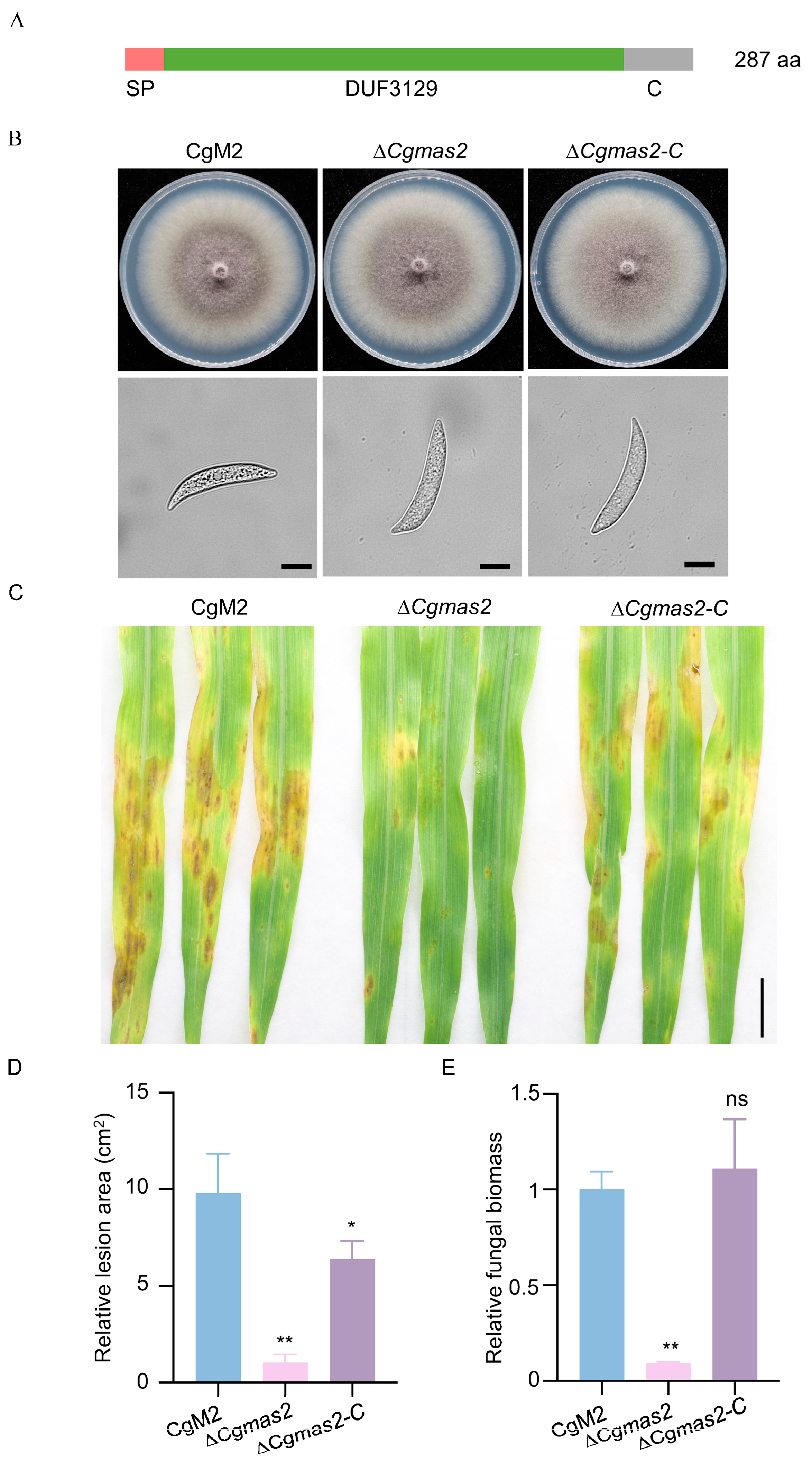
2.1. CgMas2 Is Required for Full Virulence of C. graminicola
2.2. Functional Validation of the CgMas2 Signal Peptide
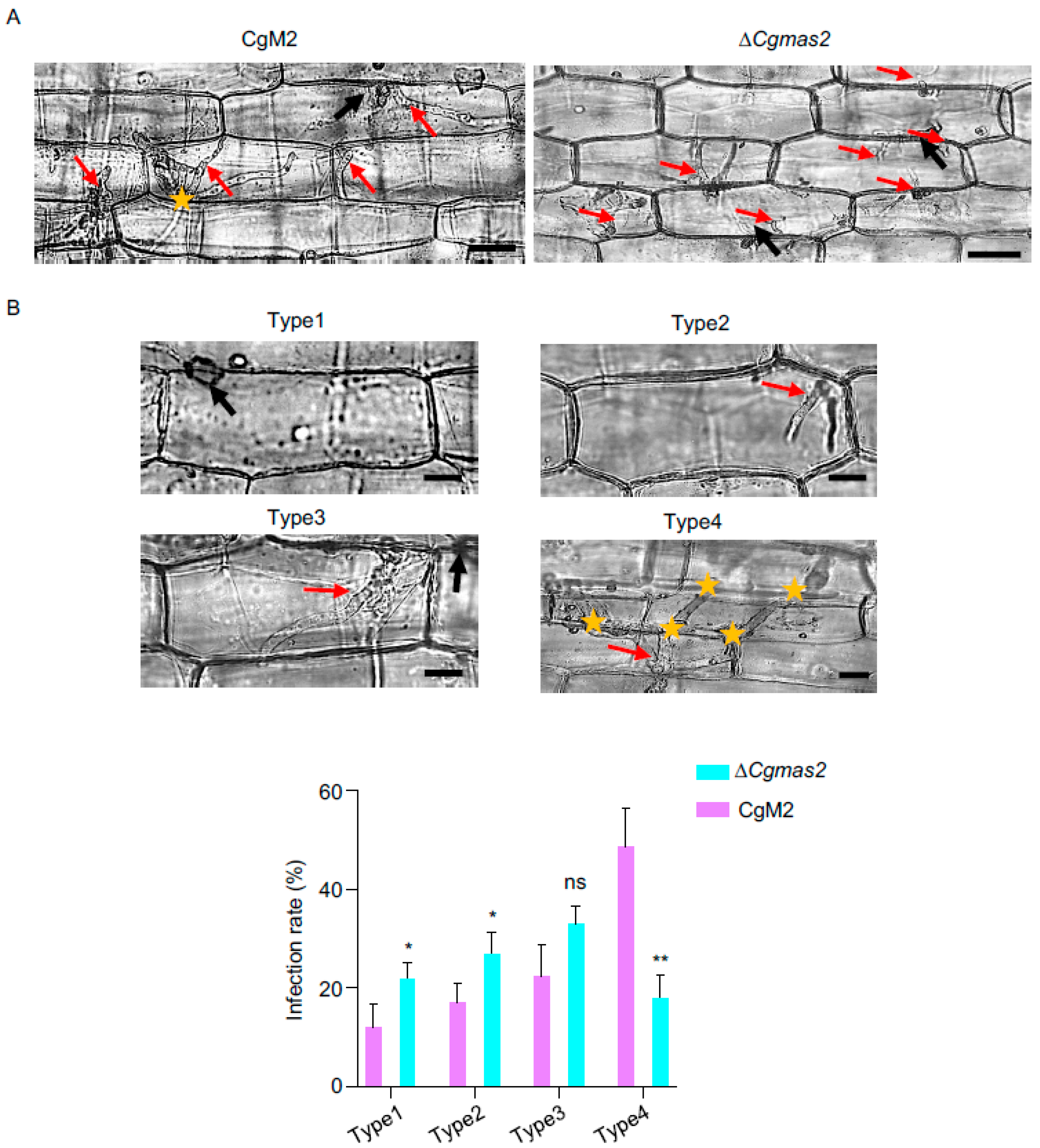
2.3. The ΔCgmas2 Mutant Is Defective in Biotrophic Growth
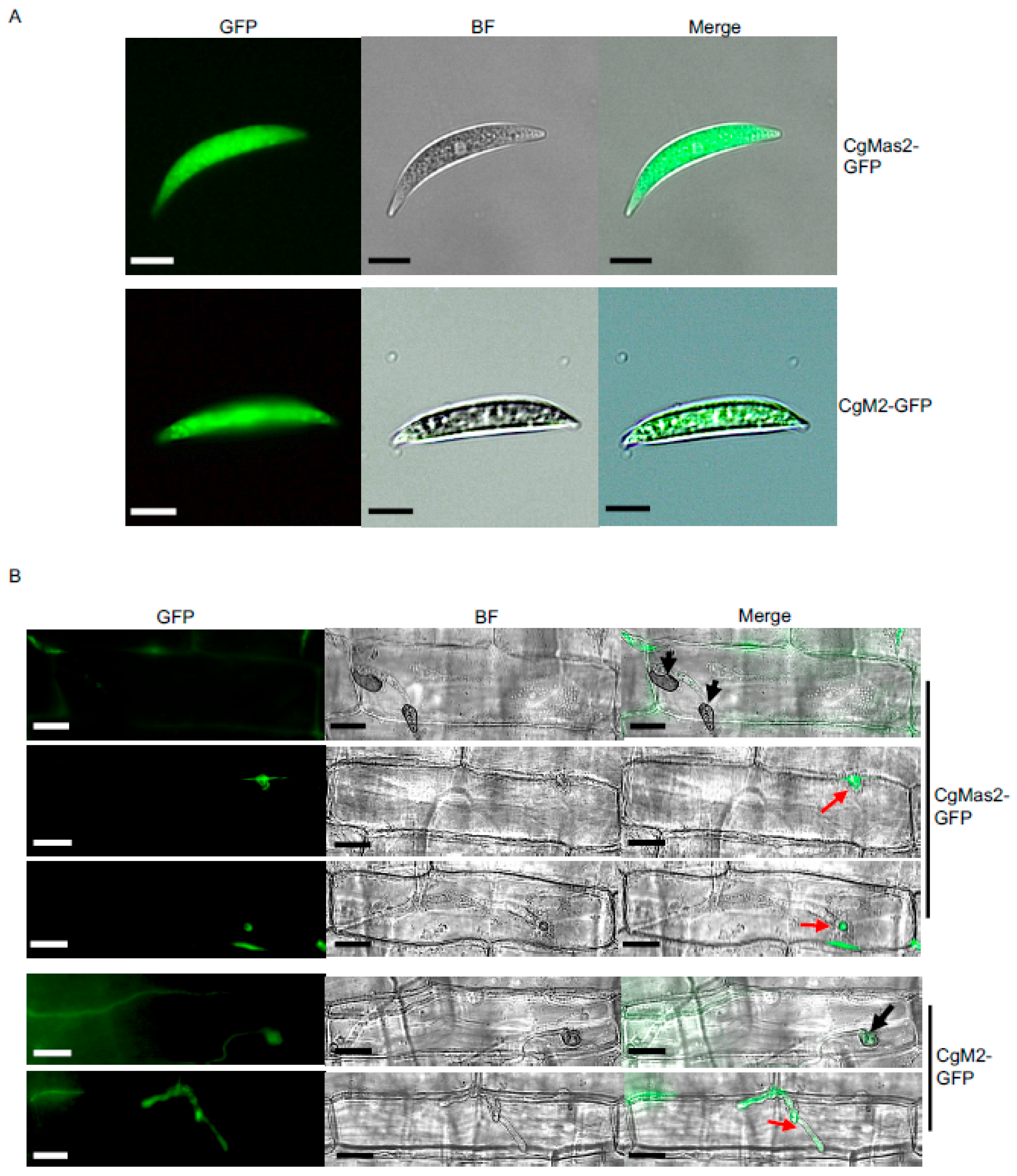
2.4. CgMas2 Localizes to the Conidia Cytoplasm and Initial Segment of the Primary Invasive Hyphae
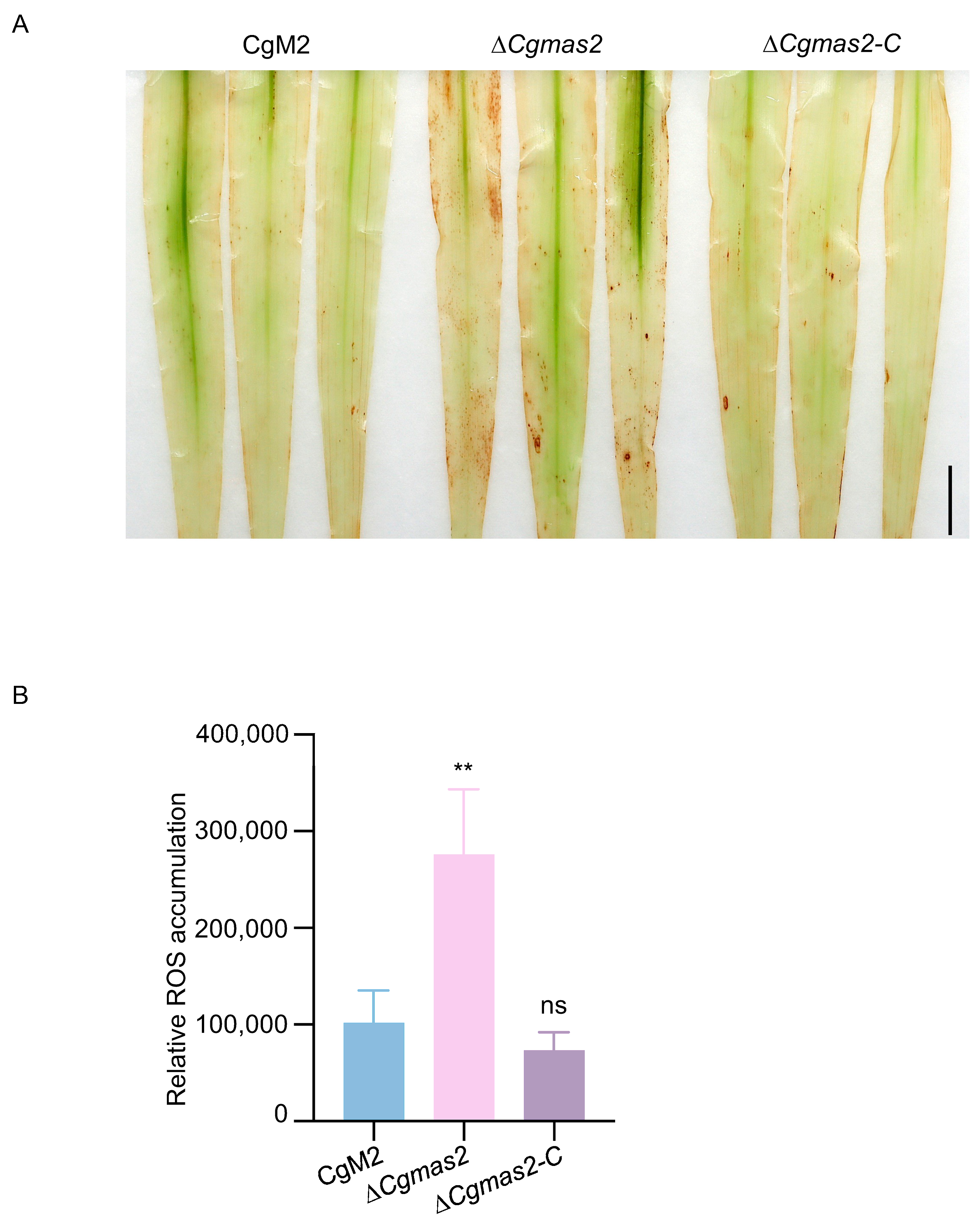
2.5. Disruption of CgMAS2 Leads to Accumulation of ROS in Host
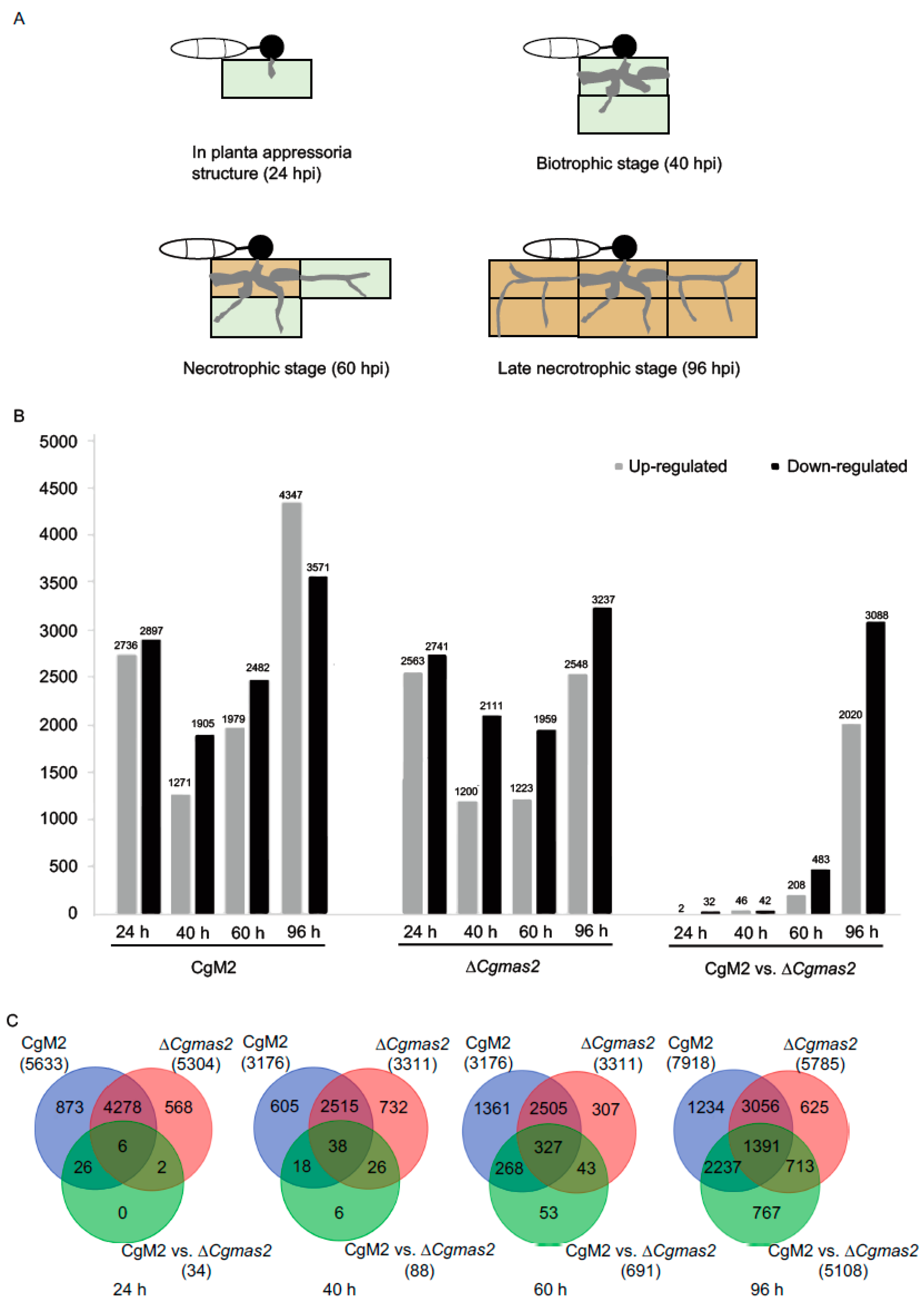
2.6. The Differentially Expressed Genes in Maize Infected by CgM2 and ∆Cgmas2 Strain
2.7. Gene Ontology Enrichment Analysis
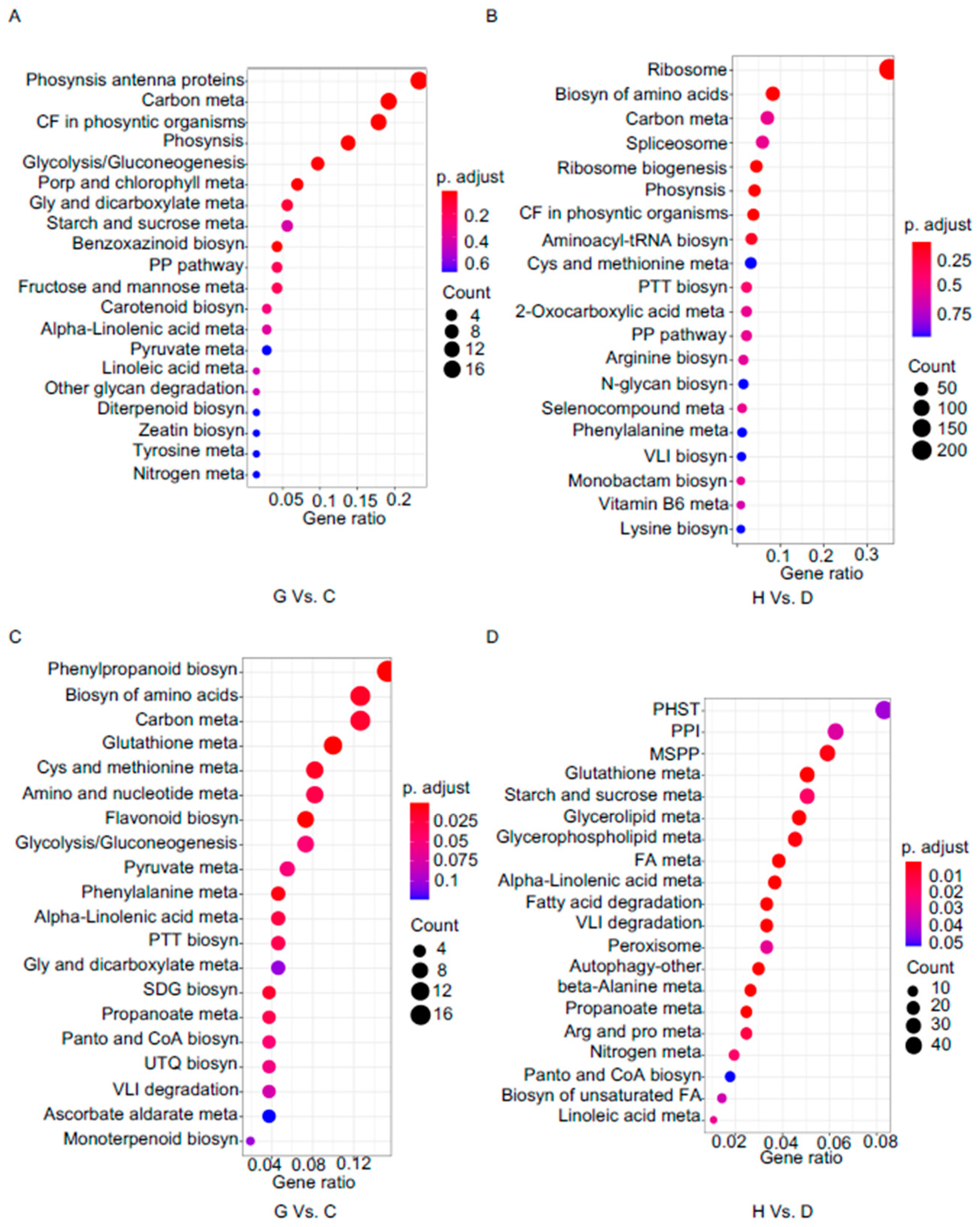
2.8. KEGG Enrichment Analysis
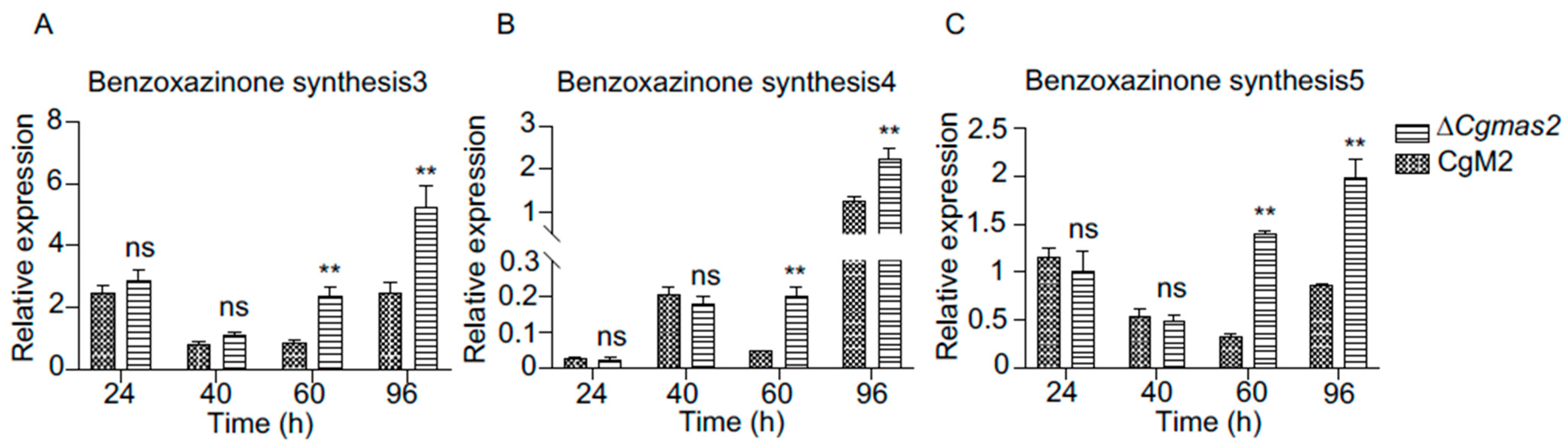
2.9. Benzoxazinone Biosynthesis Genes Were Up-Regulated in ∆Cgmas2-Infected Maize Leaves
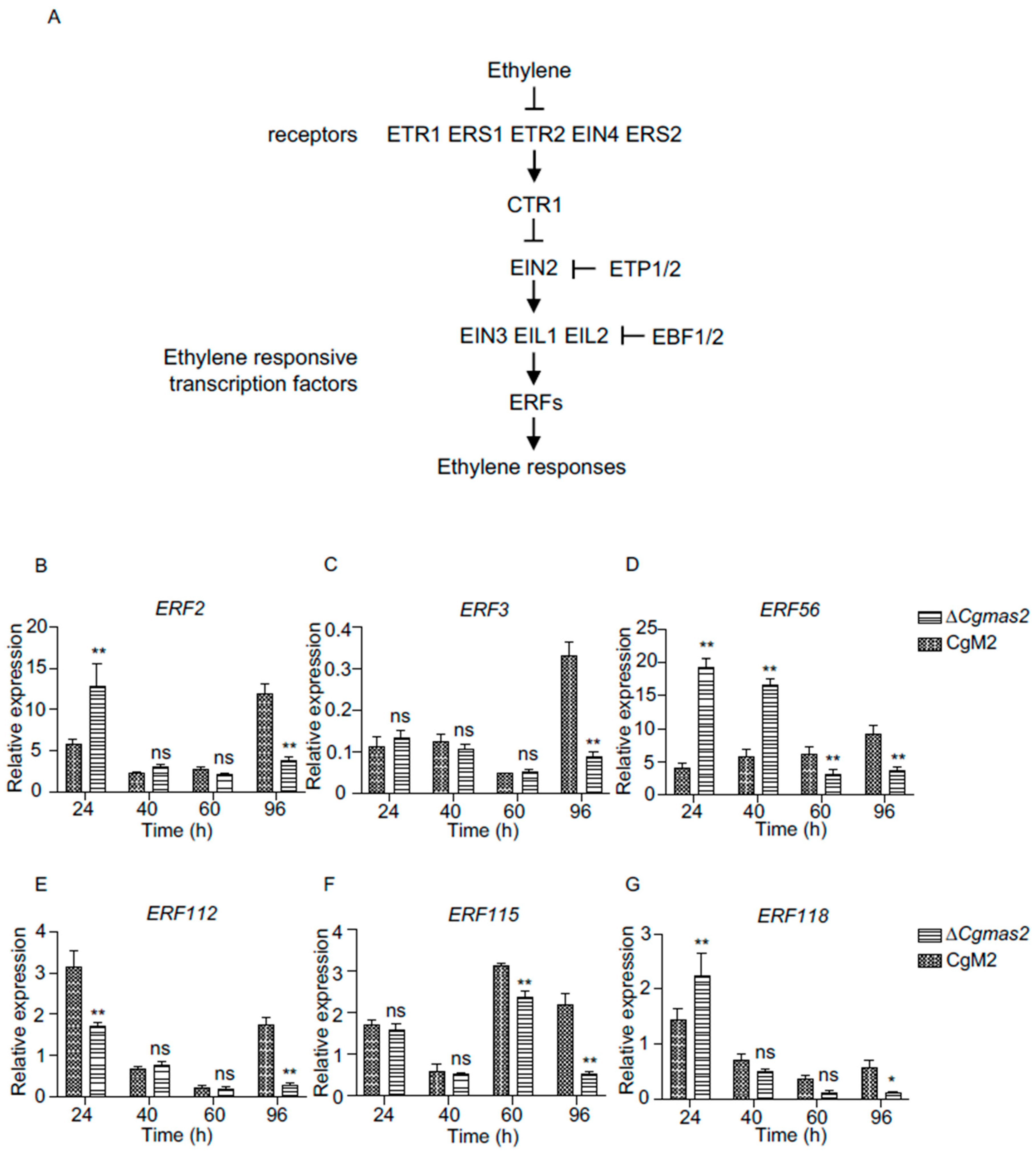
2.10. Most of the Genes Related to the Ethylene Signaling Pathways Were Down-Regulated
3. Discussion
4. Materials and Methods
4.1. Fungal Strain and Culture Conditions
4.2. Deletion of CgMAS2 Gene
4.3. Analysis of Colony and Conidial Morphology
4.4. Yeast Secretion Trap Assay
4.5. Plant Material and Spray Inoculation
4.6. Maize Leaf Sheath Infection Assay
4.7. EGFP Construct Preparation
4.8. Sample Preparation, Library Construction, and RNA-Seq Analysis
4.9. Identification and Enrichment Analysis of Differentially Expressed Genes
4.10. Validation of DEGs by qRT-PCR
4.11. Bioinformatics Analysis
5. Conclusions
Supplementary Materials
Author Contributions
Funding
Institutional Review Board Statement
Informed Consent Statement
Data Availability Statement
Conflicts of Interest
Abbreviations
| Hpi | hours post inoculation |
| Dpi | days post inoculation |
| IH | invasive hyphae |
| ET | ethylene |
| AUX | auxin |
| DEGs | differentially expressed genes |
| uDGs | upregulated differentially expressed genes |
| dDGs | downregulated differentially expressed genes |
| PCA | principal component analysis |
| FPKM | fragments per kilobase per million mapped reads |
| Go | Gene Ontology |
| KEGG | Kyoto Encyclopedia of Genes and Genomes |
References
- Talhinhas, P.; Baroncelli, R. Colletotrichum species and complexes: Geographic distribution, host range and conservation status. Fungal Divers. 2021, 110, 109–198. [Google Scholar] [CrossRef]
- Frey, T.J.; Weldekidan, T.; Colbert, T.; Wolters, P.J.C.C.; Hawk, J.A. Fitness Evaluation of Rcg1, a Locus that Confers Resistance to Colletotrichum graminicola (Ces.) G.W. Wils. Using Near-Isogenic Maize Hybrids. Crop Sci. 2011, 51, 1551–1563. [Google Scholar] [CrossRef]
- Mei, J.; Li, Z.; Zhou, S.; Chen, X.L.; Wilson, R.A.; Liu, W. Effector secretion and stability in the maize anthracnose pathogen Colletotrichum graminicola requires N-linked protein glycosylation and the ER chaperone pathway. New Phytol. 2023, 240, 1449–1466. [Google Scholar] [CrossRef] [PubMed]
- Perfect, S.E.; Hughes, H.B.; O’Connell, R.J.; Green, J.R. Colletotrichum: A model genus for studies on pathology and fungal-plant interactions. Fungal Genet. Biol. 1999, 27, 186–198. [Google Scholar] [CrossRef] [PubMed]
- O’Connell, R.J.; Thon, M.R.; Hacquard, S.; Amyotte, S.G.; Kleemann, J.; Torres, M.F.; Damm, U.; Buiate, E.A.; Epstein, L.; Alkan, N.; et al. Lifestyle transitions in plant pathogenic Colletotrichum fungi deciphered by genome and transcriptome analyses. Nat. Genet. 2012, 44, 1060–1065. [Google Scholar] [CrossRef]
- Xu, Y.; Fan, Y.; Liu, L.; Cao, J.; Zhou, J.; Liu, E.; Li, R.; Ma, P.; Yao, W.; Wu, J.; et al. Enhancing maize resistance to Fusarium verticillioides through modulation of cell wall structure and components by ZmXYXT2. J. Adv. Res. 2025, 78, 111–128. [Google Scholar] [CrossRef]
- Lu, L.; Fang, J.; Xia, N.; Zhang, J.; Diao, Z.; Wang, X.; Liu, Y.; Tang, D.; Li, S. Phosphorylation of the transcription factor OsNAC29 by OsMAPK3 activates diterpenoid genes to promote rice immunity. Plant Cell 2024, 37, koae320. [Google Scholar] [CrossRef]
- Stergiopoulos, I.; de Wit, P.J. Fungal effector proteins. Annu. Rev. Phytopathol. 2009, 47, 233–263. [Google Scholar] [CrossRef]
- Fang, Y.; Chen, J. Changing the script: A Phytophthora sojae effector hijacks RNA-binding proteins to reprogram plant immunity. Plant Physiol. 2023, 191, 820–822. [Google Scholar] [CrossRef]
- Ökmen, B.; Jaeger, E.; Schilling, L.; Finke, N.; Klemd, A.; Lee, Y.J.; Wemhöner, R.; Pauly, M.; Neumann, U.; Doehlemann, G. A conserved enzyme of smut fungi facilitates cell-to-cell extension in the plant bundle sheath. Nat. Commun. 2022, 13, 6003. [Google Scholar] [CrossRef]
- Wang, Z.; Gerstein, M.; Snyder, M. RNA-Seq: A revolutionary tool for transcriptomics. Nat. Rev. Genet. 2009, 10, 57–63. [Google Scholar] [CrossRef]
- Van Verk, M.C.; Hickman, R.; Pieterse, C.M.; Van Wees, S.C. RNA-Seq: Revelation of the messengers. Trends Plant Sci. 2013, 18, 175–179. [Google Scholar] [CrossRef] [PubMed]
- Liu, M.; Gao, J.; Yin, F.; Gong, G.; Qin, C.; Ye, K.; Zhang, M.; Sun, X.; Zhou, Y.; Zhang, Y. Transcriptome analysis of maize leaf systemic symptom infected by Bipolaris zeicola. PLoS ONE 2015, 10, e0119858. [Google Scholar] [CrossRef]
- Schnable, P.S.; Ware, D.; Fulton, R.S.; Stein, J.C.; Wei, F.; Pasternak, S.; Liang, C.; Zhang, J.; Fulton, L.; Graves, T.A.; et al. The B73 maize genome: Complexity, diversity, and dynamics. Science 2009, 326, 1112–1115. [Google Scholar] [CrossRef]
- Davidson, R.M.; Hansey, C.N.; Gowda, M.; Childs, K.L.; Lin, H.; Vaillancourt, B.; Sekhon, R.S.; de Leon, N.; Kaeppler, S.M.; Jiang, N.; et al. Utility of RNA Sequencing for Analysis of Maize Reproductive Transcriptomes. Plant Genome 2011, 4, 191–203. [Google Scholar] [CrossRef]
- Li, P.; Ponnala, L.; Gandotra, N.; Wang, L.; Si, Y.; Tausta, S.L.; Kebrom, T.H.; Provart, N.; Patel, R.; Myers, C.R.; et al. The developmental dynamics of the maize leaf transcriptome. Nat. Genet. 2010, 42, 1060–1067. [Google Scholar] [CrossRef] [PubMed]
- Xue, C.; Park, G.; Choi, W.; Zheng, L.; Dean, R.A.; Xu, J.R. Two novel fungal virulence genes specifically expressed in appressoria of the rice blast fungus. Plant Cell 2002, 14, 2107–2119. [Google Scholar] [CrossRef]
- Gong, Z.; Ning, N.; Li, Z.; Xie, X.; Wilson, R.A.; Liu, W. Two Magnaporthe appressoria-specific (MAS) proteins, MoMas3 and MoMas5, are required for suppressing host innate immunity and promoting biotrophic growth in rice cells. Mol. Plant Pathol. 2022, 23, 1290–1302. [Google Scholar] [CrossRef]
- Hanssen, I.M.; van Esse, H.P.; Ballester, A.R.; Hogewoning, S.W.; Parra, N.O.; Paeleman, A.; Lievens, B.; Bovy, A.G.; Thomma, B.P. Differential tomato transcriptomic responses induced by pepino mosaic virus isolates with differential aggressiveness. Plant Physiol. 2011, 156, 301–318. [Google Scholar] [CrossRef]
- Kangasjärvi, S.; Neukermans, J.; Li, S.; Aro, E.M.; Noctor, G. Photosynthesis, photorespiration, and light signalling in defence responses. J. Exp. Bot. 2012, 63, 1619–1636. [Google Scholar] [CrossRef]
- Kangasjärvi, S.; Tikkanen, M.; Durian, G.; Aro, E.M. Photosynthetic light reactions—An adjustable hub in basic production and plant immunity signaling. Plant Physiol. Biochem. 2014, 81, 128–134. [Google Scholar] [CrossRef] [PubMed]
- Jelenska, J.; Yao, N.; Vinatzer, B.A.; Wright, C.M.; Brodsky, J.L.; Greenberg, J.T. A J domain virulence effector of Pseudomonas syringae remodels host chloroplasts and suppresses defenses. Curr. Biol. 2007, 17, 499–508. [Google Scholar] [CrossRef] [PubMed]
- Belhaj, K.; Lin, B.; Mauch, F. The chloroplast protein RPH1 plays a role in the immune response of Arabidopsis to Phytophthora brassicae. Plant J. 2009, 58, 287–298. [Google Scholar] [CrossRef] [PubMed]
- de Bruijn, W.J.C.; Gruppen, H.; Vincken, J.P. Structure and biosynthesis of benzoxazinoids: Plant defence metabolites with potential as antimicrobial scaffolds. Phytochemistry 2018, 155, 233–243. [Google Scholar] [CrossRef]
- Ahmad, S.; Veyrat, N.; Gordon-Weeks, R.; Zhang, Y.; Martin, J.; Smart, L.; Glauser, G.; Erb, M.; Flors, V.; Frey, M.; et al. Benzoxazinoid metabolites regulate innate immunity against aphids and fungi in maize. Plant Physiol. 2011, 157, 317–327. [Google Scholar] [CrossRef]
- Schullehner, K.; Dick, R.; Vitzthum, F.; Schwab, W.; Brandt, W.; Frey, M.; Gierl, A. Benzoxazinoid biosynthesis in dicot plants. Phytochemistry 2008, 69, 2668–2677. [Google Scholar] [CrossRef]
- Zhang, S.; Luo, M.; Deng, R.; Cai, Y.; Qi, J.; Ma, C.; Mei, J.; Li, W.; Liu, W.; Wang, G.; et al. ZmPP2C45 and ZmBELL4 suppress maize biochemical defense against insect herbivores. New Phytol. 2025, 248, 793–806. [Google Scholar] [CrossRef]
- Sorg, A.; Luo, Z.W.; Li, Q.B.; Roy, K.; Basset, G.J.; Kim, J.; Hunter, C.; Chapple, C.; Rering, C.; Block, A.K. The airborne herbivore-induced plant volatile indole is converted to benzoxazinoid defense compounds in maize plants. New Phytol. 2025, 246, 718–728. [Google Scholar] [CrossRef]
- Qiao, H.; Chang, K.N.; Yazaki, J.; Ecker, J.R. Interplay between ethylene, ETP1/ETP2 F-box proteins, and degradation of EIN2 triggers ethylene responses in Arabidopsis. Genes. Dev. 2009, 23, 512–521. [Google Scholar] [CrossRef]
- Binder, B.M. Ethylene signaling in plants. J. Biol. Chem. 2020, 295, 7710–7725. [Google Scholar] [CrossRef]
- An, F.; Zhao, Q.; Ji, Y.; Li, W.; Jiang, Z.; Yu, X.; Zhang, C.; Han, Y.; He, W.; Liu, Y.; et al. Ethylene-induced stabilization of ETHYLENE INSENSITIVE3 and EIN3-LIKE1 is mediated by proteasomal degradation of EIN3 binding F-box 1 and 2 that requires EIN2 in Arabidopsis. Plant Cell 2010, 22, 2384–2401. [Google Scholar] [CrossRef]
- Shigenaga, A.M.; Argueso, C.T. No hormone to rule them all: Interactions of plant hormones during the responses of plants to pathogens. Semin. Cell Dev. Biol. 2016, 56, 174–189. [Google Scholar] [CrossRef]
- Kim, J.G.; Stork, W.; Mudgett, M.B. Xanthomonas type III effector XopD desumoylates tomato transcription factor SlERF4 to suppress ethylene responses and promote pathogen growth. Cell Host Microbe 2013, 13, 143–154. [Google Scholar] [CrossRef]
- Almagro Armenteros, J.J.; Tsirigos, K.D.; Sønderby, C.K.; Petersen, T.N.; Winther, O.; Brunak, S.; von Heijne, G.; Nielsen, H. SignalP 5.0 improves signal peptide predictions using deep neural networks. Nat. Biotechnol. 2019, 37, 420–423. [Google Scholar] [CrossRef]
- Yin, W.; Wang, Y.; Chen, T.; Lin, Y.; Luo, C. Functional Evaluation of the Signal Peptides of Secreted Proteins. Bio Protoc. 2018, 8, e2839. [Google Scholar] [CrossRef] [PubMed]
- Love, M.I.; Huber, W.; Anders, S. Moderated estimation of fold change and dispersion for RNA-seq data with DESeq2. Genome Biol. 2014, 15, 550. [Google Scholar] [CrossRef] [PubMed]
- Haynes, W. Benjamini–Hochberg Method. In Encyclopedia of Systems Biology; Dubitzky, W., Wolkenhauer, O., Cho, K.-H., Yokota, H., Eds.; Springer: New York, NY, USA, 2013; p. 78. [Google Scholar]
- Young, M.D.; Davidson, N.M.; Wakeeld, M.J.; Smyth, G.K.; Oshlack, A. goseq: Gene Ontology Testing for RNA-Seq Datasets. R Bioconduct. 2012, 8, 1–25. [Google Scholar]
- Bu, D.; Luo, H.; Huo, P.; Wang, Z.; Zhang, S.; He, Z.; Wu, Y.; Zhao, L.; Liu, J.; Guo, J.; et al. KOBAS-i: Intelligent prioritization and exploratory visualization of biological functions for gene enrichment analysis. Nucleic Acids Res. 2021, 49, W317–W325. [Google Scholar] [CrossRef] [PubMed]


Disclaimer/Publisher’s Note: The statements, opinions and data contained in all publications are solely those of the individual author(s) and contributor(s) and not of MDPI and/or the editor(s). MDPI and/or the editor(s) disclaim responsibility for any injury to people or property resulting from any ideas, methods, instructions or products referred to in the content. |
© 2026 by the authors. Licensee MDPI, Basel, Switzerland. This article is an open access article distributed under the terms and conditions of the Creative Commons Attribution (CC BY) license.
Share and Cite
Gong, Z.; Yao, J.; Ma, Y.; Xia, X.; Zhang, K.; Mei, J.; Sun, T.; Wang, Y.; Li, Z. The Candidate Effector Cgmas2 Orchestrates Biphasic Infection of Colletotrichum graminicola in Maize by Coordinating Invasive Growth and Suppressing Host Immunity. Int. J. Mol. Sci. 2026, 27, 845. https://doi.org/10.3390/ijms27020845
Gong Z, Yao J, Ma Y, Xia X, Zhang K, Mei J, Sun T, Wang Y, Li Z. The Candidate Effector Cgmas2 Orchestrates Biphasic Infection of Colletotrichum graminicola in Maize by Coordinating Invasive Growth and Suppressing Host Immunity. International Journal of Molecular Sciences. 2026; 27(2):845. https://doi.org/10.3390/ijms27020845
Chicago/Turabian StyleGong, Ziwen, Jinai Yao, Yuqing Ma, Xinyao Xia, Kai Zhang, Jie Mei, Tongjun Sun, Yafei Wang, and Zhiqiang Li. 2026. "The Candidate Effector Cgmas2 Orchestrates Biphasic Infection of Colletotrichum graminicola in Maize by Coordinating Invasive Growth and Suppressing Host Immunity" International Journal of Molecular Sciences 27, no. 2: 845. https://doi.org/10.3390/ijms27020845
APA StyleGong, Z., Yao, J., Ma, Y., Xia, X., Zhang, K., Mei, J., Sun, T., Wang, Y., & Li, Z. (2026). The Candidate Effector Cgmas2 Orchestrates Biphasic Infection of Colletotrichum graminicola in Maize by Coordinating Invasive Growth and Suppressing Host Immunity. International Journal of Molecular Sciences, 27(2), 845. https://doi.org/10.3390/ijms27020845