Article

Denitrifiers Make Great Contribution to Antibiotic Resistance Genes Dissemination in the Gut of Earthworms

by
Maria Rafraf Ali
1,2,
Yongjing Chen
1,2,
Mingjun Li
3,
Muhammad Jafir
1,
Mamona Rafraf Ali
4,5,
Guowei Zhou
1,2,* and
Qingye Sun
1,2,*
1
Anhui Province Engineering Laboratory for Mine Ecological Remediation, School of Resources and Environmental Engineering, Anhui University, Hefei 230039, China
2
Anhui Province Key Laboratory of Wetland Ecological Protection and Restoration, School of Resources and Environmental Engineering, Anhui University, Hefei 230039, China
3
Shandong Key Laboratory of Water Pollution Control and Resource Reuse, School of Environmental Science & Engineering, Shandong University, Qingdao 266237, China
4
School of Energy Science and Engineering, University of Science and Technology of China, Hefei 230026, China
5
Guangzhou Institute of Energy Conversion, Chinese Academy of Sciences, CAS Key Laboratory of Renewable Energy, Guangdong Provincial Key Laboratory of New and Renewable Energy Research and Development, Guangzhou 510640, China
*
Authors to whom correspondence should be addressed.
Int. J. Mol. Sci. 2026, 27(2), 797; https://doi.org/10.3390/ijms27020797
Submission received: 24 November 2025 / Revised: 5 January 2026 / Accepted: 9 January 2026 / Published: 13 January 2026
(This article belongs to the Section Molecular Microbiology)

Abstract

Antibiotic resistance genes (ARGs) pose a serious threat to the environment worldwide. The guts of soil animals are a hotspot for ARGs and denitrification in soils. However, it is unclear how denitrification affects the spread of ARG in the earthworm’s gut. In this study, the typical soil earthworm Pheretima guillelmi was employed, and was used for performing anoxic incubation with gut content amended with nitrate and nitrite. To analyze the data, a combination of chemical analysis, 16S rRNA-based Illumina sequencing, and high-throughput qPCR were employed. Nitrate treatments, particularly at 5 mM, caused substantial reductions in nitrate concentrations, with a corresponding increase in nitrite, nitrous oxide (N2O), and nitric oxide (NO) emissions compared to the treatments with the addition of 1 and 2 mM nitrate. Nitrite (0.2, 0.5 and 1 mM) amendments also enhanced the accumulation of nitrogen intermediates. Organic acid production, including acetate and pyruvate, was the highest under the 5 mM nitrate treatment. This treatment also promoted the highest level of glucose utilization, suggesting that glucose metabolism supports enhanced organic acid production. Both nitrate and nitrite treatments exhibited the pronounced enrichment in ARGs, particularly for beta-lactam and multidrug resistance genes. Denitrifying bacteria such as Aeromonas, Bacillus, Raoultella, and Enterobacter were identified as key hosts for these ARGs. These results emphasized that denitrifying bacteria play a pivotal role in the horizontal transfer of ARGs, underscoring the need for careful nitrogen management in agricultural practices to control the spread of antibiotic resistance in natural environments.

1. Introduction

Antibiotic resistance genes (ARGs) are an emerging threat to human and environmental health. The entire ecosystem is being disturbed by the excessive use of antibiotics and fertilizers [1,2,3]. The use of these fertilizers results in noticeable alterations in soil chemistry and microbial composition [4]. The accumulation of excessive nitrogen, mainly as nitrates and nitrites, disrupts the normal nitrogen cycle and causes changes in the distribution of microbial populations [5]. Such conditions promote the activity and proliferation of denitrifiers, which play a critical role in the nitrogen cycle. However, these microbes not only contribute to nitrogen removal but also serve as reservoirs for antibiotic resistance genes. These genes spread into the environment, contaminating soil, water, and even the digestive systems of animals [6,7]. ARGs can move between environments and along food webs, posing a significant risk to public health, agriculture, and the environment [8,9,10,11]. Antibiotic resistance genes (ARGs) have significant potential for widespread transmission [12]. The primary mechanism responsible for the swift spread of ARGs is horizontal gene transfer, which is facilitated by mobile genetic elements (MGEs). This process accelerates the emergence and global spread of antibiotic resistance [13,14], positioning antibiotic resistance as one of the most pressing threats to human health in the 21st century. Researchers have documented that long-term fertilization promotes the dissemination of ARGs in soils and in certain soil fauna, such as earthworms [15].
Earthworms play a crucial role in maintaining soil health. The gut microbes of the earthworm play a vital role in promoting soil health by enhancing soil fertility and structure [16,17]. In addition to these benefits, the intestinal microflora is involved in the degradation of organic matter, which further contributes to nutrient cycling and soil enrichment. The gut contains a wide variety of denitrifiers within an anoxic environment [18]. Nitrate addition can stimulate specific microbial processes, such as denitrification, which may alter the composition of the microbial community within the earthworm gut. Previous studies highlighted that the gut nitrate reduction processes, coupled with nitrate reducing bacteria, shape the gut microbial community structure and exert a selective pressure on gut microbes [19]. Microbial populations assimilate ARGs because some organisms are able to survive in nitrate rich environments and possess the trait of incorporating or enhancing resistance. Hence, varied microbial activity in the presence of nitrate in the gut may alter the dynamics of ARGs.
The earthworm gut, serving as a unique microbial habitat, represents a potential reservoir for ARGs [20]. It is worth noting that earthworms can also ingest ARGs from their diet, and these ARGs can subsequently be incorporated into the gut microbes of these organisms [18,19,20]. However, natural microbes in the gut can block the flow of some of these genes [21]. It has been previously established that the gut of the earthworm is enriched with a greater number of ARGs than the surrounding surface soil [22]. However, earthworms can either suppress or amplify resistance depending on the circumstances, for example, ref. [23] demonstrated that the microbes within the gut of the earthworm could minimize the risk of ARGs spread. Recent studies also have considered earthworms a possible carrier to transfer ARGs between the soil and the gut bacteria [17,21,24], yet, the role of gut microbiota in this process remains elusive [25]. Therefore, further studies are required to explore how the gut environment of earthworms, particularly in relation to denitrifying bacteria, may contribute to the accumulation and spread of ARGs.
The ability of denitrifying bacteria in the nitrogen cycle is well established. However, more recent studies show these bacteria may also contribute to the persistence and propagation of ARGs in the environment. Some studies indicate that these microorganisms may enable horizontal gene transfer, thereby increasing the dissemination of ARGs and integrating the spread of resistance with the removal of contaminants [26]. This reflects the importance of denitrifiers as potential carriers of ARGs in both engineered and natural systems. To date, a small number of studies have investigated the denitrifier-mediated transfer of ARGs in soils and aquatic systems, but their role in microbiomes associated with animals remains mostly unexplored.
As a mobile anoxic mini-environment, the earthworm gut has a big potential for denitrification and provides an ideal habitat for denitrifiers [27]. These denitrifiers, which are mainly members of the phyla Proteobacteria and Firmicutes, are essential to nitrogen cycling in these ecosystems, but their interaction with mobile genetic elements (MGEs) raises serious concerns about the spread of ARGs [28]. It is becoming more and more evident that denitrifiers may act as vectors for the spread of ARGs [29,30,31]. Several denitrifying bacterial species are known to be able to acquire and spread ARGs through horizontal gene transfer (HGT) mechanisms, especially in gut microbiomes [30,31,32]. Mobile genetic elements (MGEs), such as plasmids and transposons, which facilitate the transfer of resistance traits between bacterial genera, play a crucial role in the dissemination of ARGs [31,32,33]. Considering denitrifiers potential hosts of ARGs within the gut of earthworms is a unique ecological approach. This perspective may aid understanding in the field of nitrogen-transforming bacteria as concealed pathways of antibiotic resistance and underscores the originality and ecological importance of denitrifiers in gut-associated ecosystems [27]. The ability of denitrifiers to transport ARGs poses a risk to ecosystems and public health as they colonize a variety of gut environments. However, the contribution of denitrifiers to the hosts of ARGs and then accelerating ARG enrichment is underexplored.
In this study, we examined dissemination of ARGs within the earthworm gut after adding nitrate and nitrite as substrates during the anoxic incubation. Combining chemical analysis, 16S rRNA-based Illumina sequencing and high-throughput qPCR, we aim to achieve the following: (1) investigate the impact of denitrification on ARG enrichment in the earthworm gut; (2) identify the abundances and bacterial composition of denitrifiers involving in ARG dissemination. Hence, this study will increase the understanding of antibiotic resistance development in connection to environmental nitrogen cycling in soils.

2. Results

2.1. Time Course of Nitrate, Nitrite, Nitrous Oxide, and Nitric Oxide During the Incubation

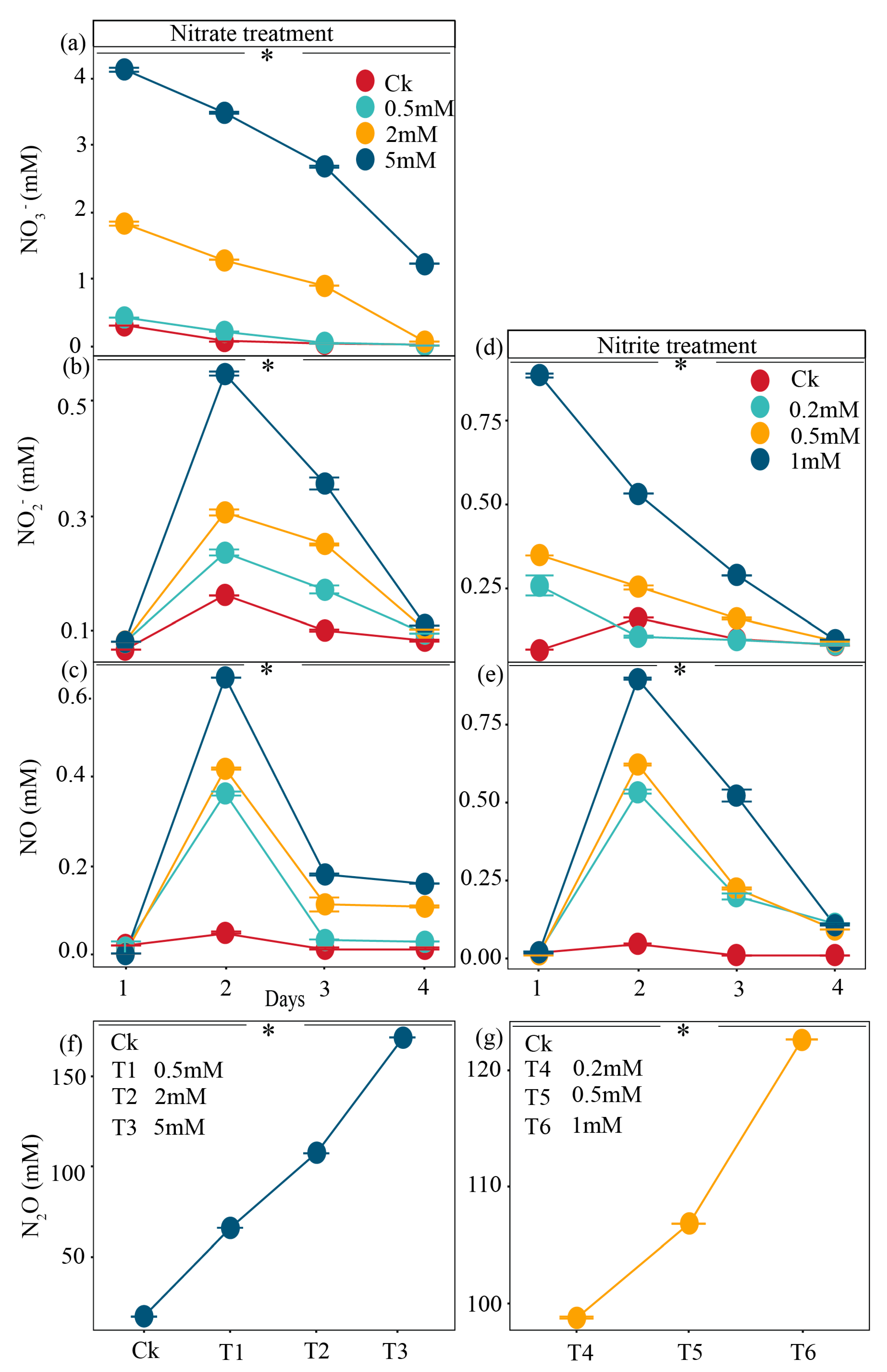
For the nitrate treatments, the decrease in NO3 concentrations exhibited dose- and time-dependent trends across all treatments with nitrate (Figure 1a). The 5 mM nitrate treatment exhibited the most substantial depletion, declining from an initial concentration of approximately 4.0 mM to nearly 1.2 mM by the end of the incubation period (Figure 1a). In the 0.5 mM and 2 mM treatments, nitrate was almost completely consumed within the first several days (Figure 1a). Concurrently, nitrite (NO2) accumulation was observed as a transient intermediate during nitrate reduction (Figure 1b). The 2 mM and 5 mM nitrate treatments led to a notable increase in nitrite, peaking at around 0.5 mM and 0.3 mM on day 2, respectively, before declining toward the end of the incubation (Figure 1b). In contrast, the 0.5 mM treatment and the control showed minimal nitrite accumulation (Figure 1b). Nitrous oxide (N2O) and nitric oxide (NO) emissions were also influenced by nitrate amendment (Figure 1c,f). After transient accumulation on day 2, NO was rapidly consumed during the incubation (Figure 1c). N2O production was significantly enhanced in the 5 mM and 2 mM nitrate treatments, reaching maximum values of around 170 mM and 110 mM, respectively (Figure 1f).
In terms of the nitrite treatments, the decreases in NO2 concentrations were also dose- and time-dependent across all treatments with (Figure 1d). Furthermore, the trends in N2O and NO concentrations in the nitrite treatments were with those in the nitrate treatments (Figure 1). Statistical analysis using one-way ANOVA revealed significant differences among the treatment groups (p < 0.05; Figure 1). The asterisk (*) in the figure indicates that the overall treatment effect was statistically significant, as confirmed by the ANOVA results.

2.2. Turnover of Organic Acids During Incubation with the Earthworm Gut

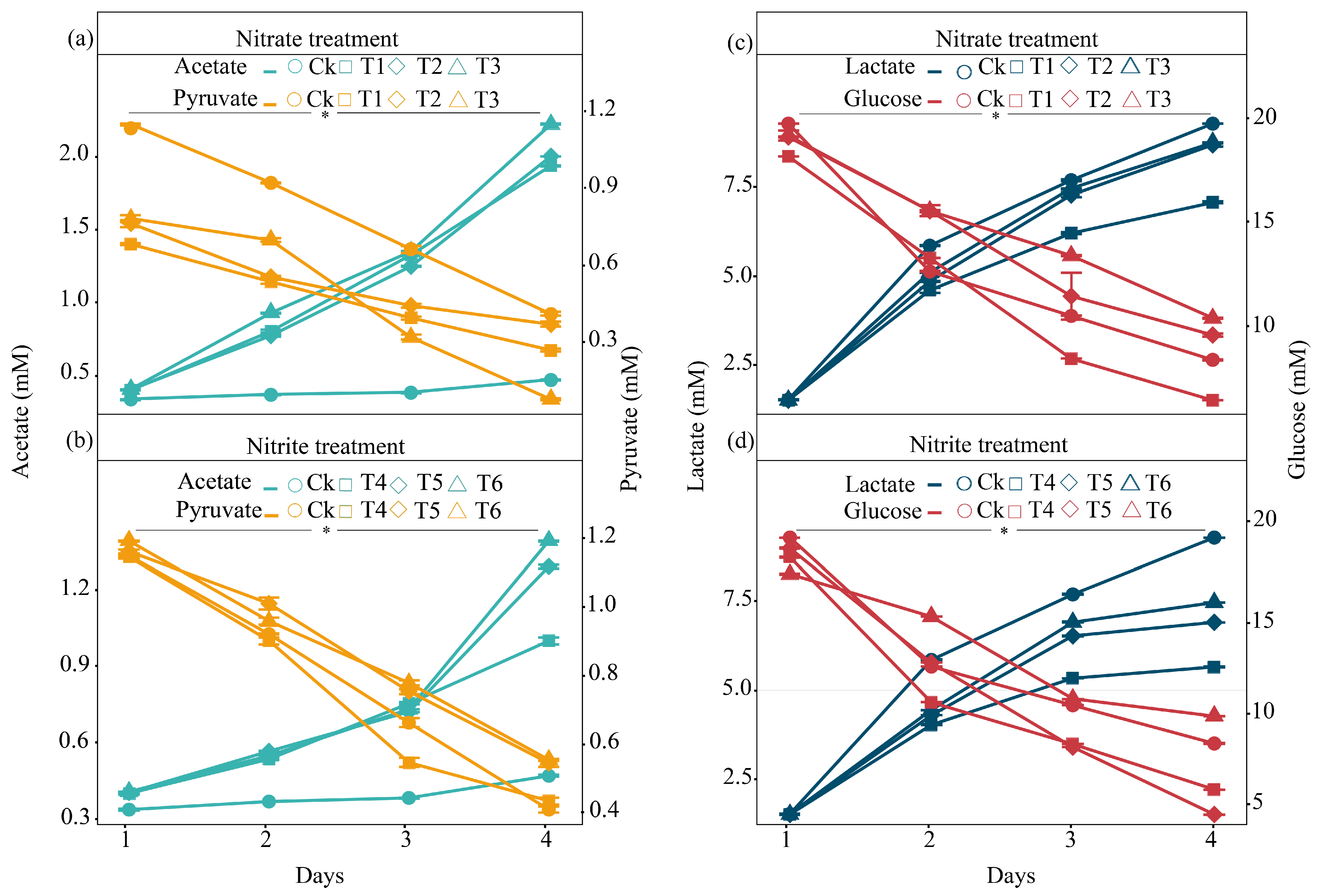
The production of organic acids exhibited distinct trends over the four-day period. Acetate production increased progressively, reaching its maximum on day 4 under the 5 mM nitrate treatment. In contrast, pyruvate production declined between day 1 and day 4, with the highest levels recorded on day 4 under the 1 mM nitrite treatment (Figure 2a,b). Glucose production followed a similar trend, peaking on day 1 and decreasing on subsequent days in the 1 mM nitrite treatment. The 5 mM nitrate treatment yielded the highest glucose concentration on day 3, followed by a slight decline on day 4 (Figure 2c). Overall, while most organic acids showed an increasing trend over time, and this increase was not uniform across all compounds, nitrate treatments, particularly at higher concentrations, consistently yielded the highest levels of organic acids (Figure 2). Statistical analysis using one-way ANOVA revealed significant differences among the treatment groups (p < 0.05; Figure 2). The asterisk (*) in the figure indicates that the treatment effect was statistically significant.

2.3. ARG Dissemination in the Earthworm’s Gut: Variations Among the Control, and the Nitrate and Nitrite Amendments

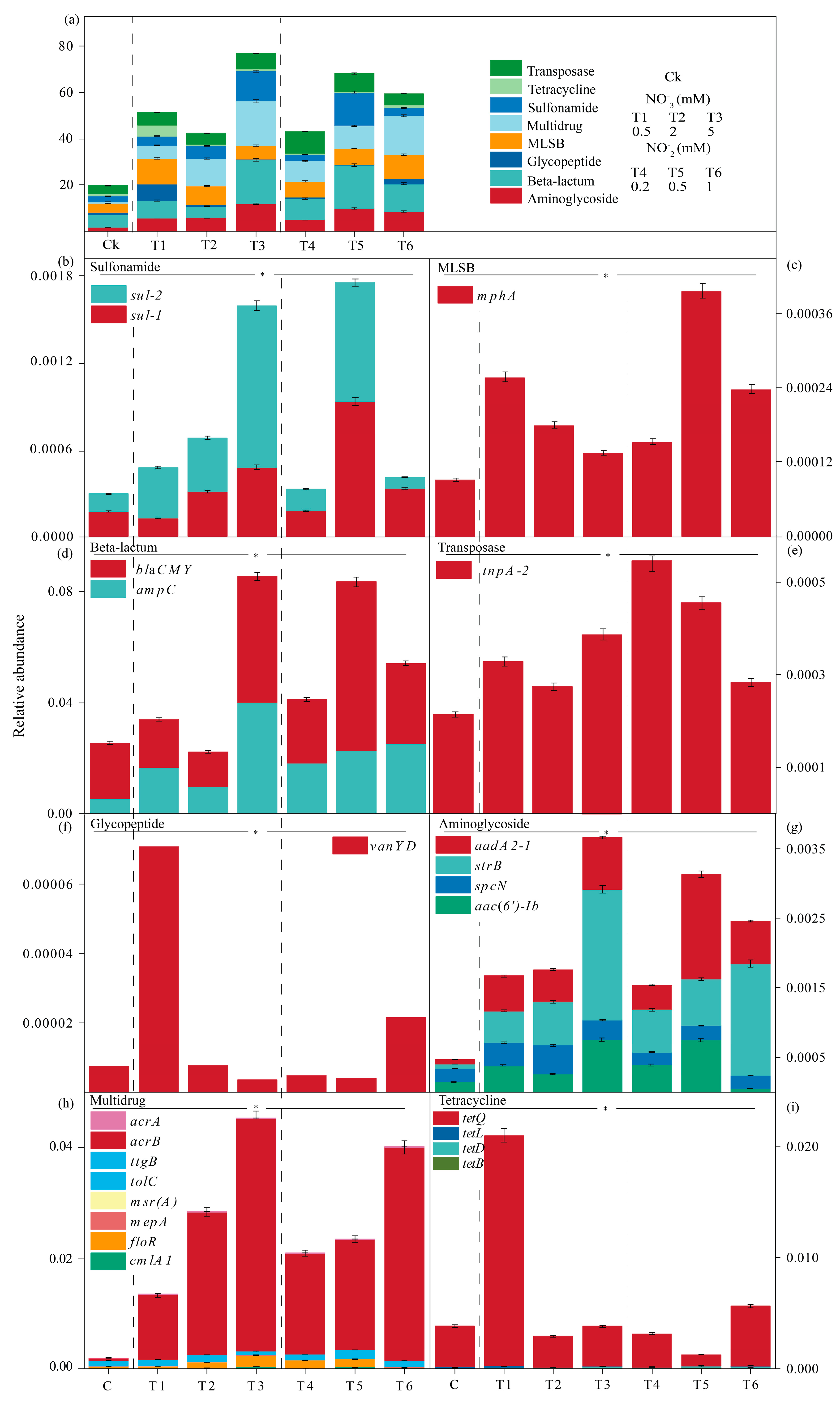
A total of 23 antibiotic resistance genes (ARGs) from eight different categories were studied in earthworm gut microcosms. Statistical analysis using one-way ANOVA revealed significant differences among the treatment groups (p < 0.05; Figure 3). The asterisk (*) in the figure indicates that the overall treatment effect was statistically significant. Sulfonamide resistance (Figure 3b) was significantly affected by both nitrate and nitrite treatments. Sul-1 and sul-2 showed a marked increase, especially under nitrite treatments. In 1 mM nitrite treatment, sul-1 expression increased notably compared to that in the control (Figure 3b). In terms of the beta-lactam resistance, ampC and blaCMY displayed considerable upregulation in both nitrate and nitrite treatments (Figure 3d). The gene ampC showed the highest expression in the 1 mM nitrite treatment, while blaCMY reached its peak expression level in the 0.5 nitrite treatment (Figure 3d). Transposases such as tnpA-2 were highly upregulated in both the nitrate and nitrite treatments, with the strongest increase observed under 0.2 mM nitrite (Figure 3e). In aminoglycoside resistance, aac(6′)-Ib, spcN, and strB exhibited significant upregulation across all treatments (Figure 3g). The most pronounced increase was observed for aac(6′)-Ib, which peaked in the 1 mM nitrite treatment (Figure 3g). Similarly, strB reached its highest expression under 5 mM nitrate, reflecting a dose-dependent response (Figure 3g). Nitrite amendments, especially at higher concentrations, were particularly effective in promoting aminoglycoside resistance. The multidrug resistance category showed a clear dose-dependent increase in acrA, acrB, and floR expression, with the highest relative abundance observed under 5 mM nitrate and 1 mM nitrite (Figure 3h). Tetracycline resistance genes, including tetB, tetD, tetL, and tetQ, also demonstrated an increase, especially in 0.5 mM and 1 mM (Figure 3i). The relative abundance of tetB was particularly enhanced, with higher levels observed under nitrite amendments than that under nitrate amendments (Figure 3i). In addition, categories with less significant roles in ARG expression included glycopeptide resistance (Figure 3f) and MLSB resistance (Figure 3c), while vanYD and mphA showed slight increases, particularly in 1 mM nitrite treatments, and their upregulation was less pronounced compared to other categories (Figure 3c,f). Similarly, cmlA1 displayed stable expression across all treatments, with minor increases in both nitrate and nitrite treatments (Figure 3h).

2.4. Molecular Profile of Nitrogen Reduction Pathways in the Earthworm’s Gut

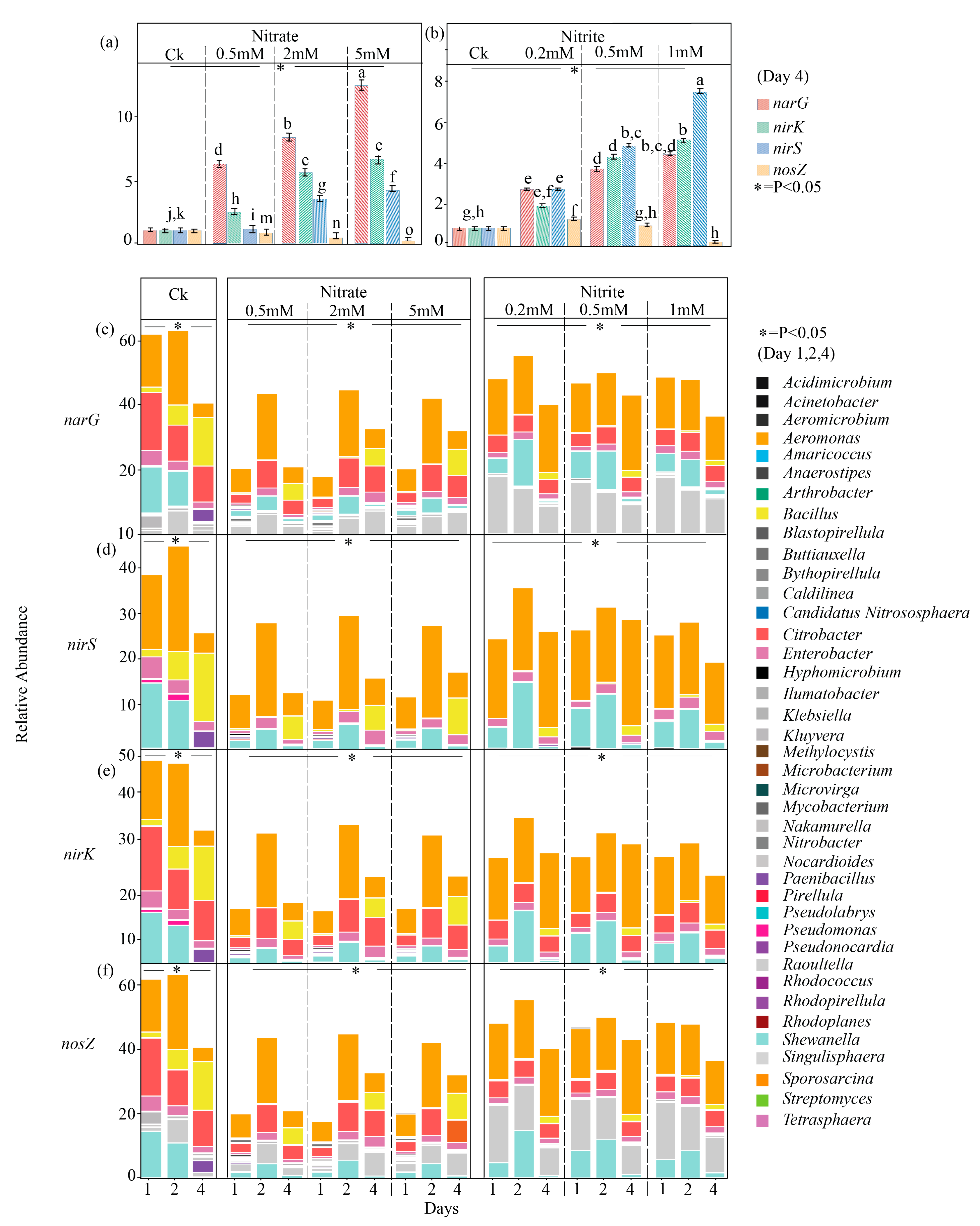
The gene narG, associated with nitrate reduction, showed a gradual increase across both nitrate and nitrite treatments, with the highest abundance observed under 5 mM nitrate (Figure 4a). However, the abundances of nirK showed significant variation across treatments (Figure 4). Moreover, nirS followed a similar pattern, with the highest expression in the treatment with 1 mM nitrite (Figure 4b). The abundance of the gene nosZ demonstrated a contrasting tendency to that of nirK and nirS (Figure 4) in the nitrate and nitrite treatments (Figure 4). There were 40 genera identified as the potential denitrifying bacteria in the nitrate and nitrite treatments (Figure 4c–f). Statistical analysis using ANOVA revealed significant differences among the treatment groups (p < 0.05; Figure 4a–f).
Among the denitrifying bacteria, Aeromonas, Bacillus, Rautella, Shewanella, Paenibacillus, and Enterobacter were the dominant denitrifying genera, potentially harboring narG, nirK, nirS and nosZ (Figure 4c–f). In summary, nitrate treatments promote the abundances of Aeromonas and Shewanella, while nitrite treatments favor increases in the abundances of Raoultella and Shewanella, with Bacillus and Paenibacillus, showing minimal variation (Figure 4c–f). In detail, for Aeromonas, its abundance was highest on day 2 and day 4 under the nitrate and nitrite treatments during the incubation, respectively (Figure 4c–f). The genus Enterobacter showed a notable increase in abundance during the incubation compared to the during the incubation, displaying a positive response to both nitrate and nitrite treatments (Figure 4c–f). Similarly, Bacillus abundance was promoted in both nitrate and nitrite treatments, being the highest on day 4 during the incubation (Figure 4c–f). Raoultella showed a significant increase in nitrite treatments, especially at 0.2 mM and 0.5 mM, whereas Paenibacillus remained at consistently low concentrations across both treatments (Figure 4c–f). The abundances of Shewanella peaked on day 2 in the 2 mM and 5 mM nitrate treatments and remained abundant in the nitrite treatments, particularly at 1 mM, with only a slight decrease on day 4 (Figure 4c–f). The LEFSe analysis confirmed the notable increase in these denitrifying genera under selective pressure, emphasizing their dual role. The LEFSe analysis also confirmed the notable increase in these denitrifying genera under selective pressure, emphasizing their vital function (Figure S3).

2.5. Understanding the Microbial-ARG Network: Composition and Interactions

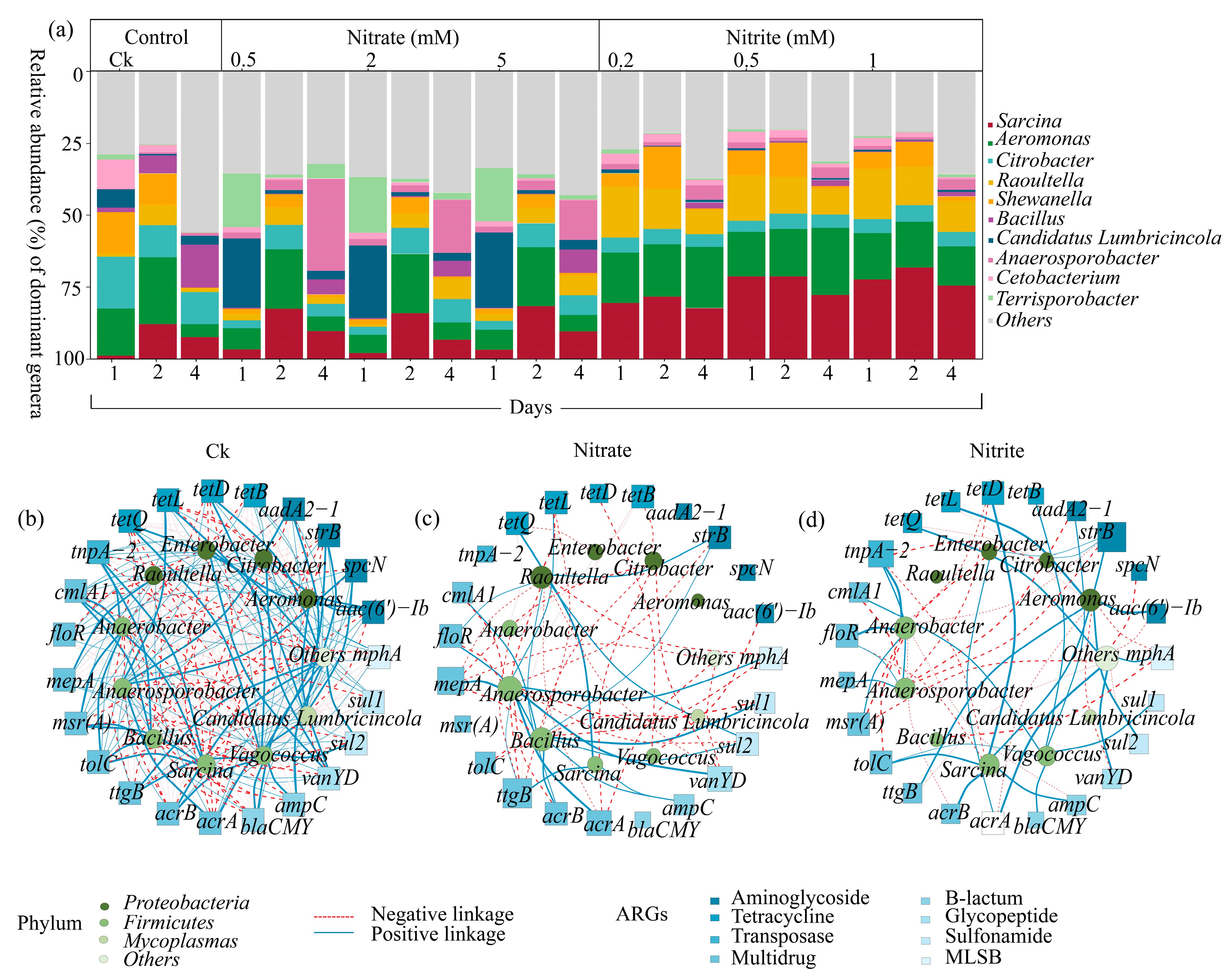
The microbial communities among treatments were clearly separated according to the NMDS analysis (Figure S1b,c). In nitrate treatments, Firmicutes exhibited a similar pattern to Proteobacteria, the abundance of which increased on day 2 but decreased on day 4. In contrast to the control and nitrate treatments, nitrite treatments resulted in a rise in Firmicutes and a fall in Proteobacteria abundance (Figure 5a and Figure S1a). All treatments had the lowest index on day 2, while nitrate had the highest value among most of the index on day 4 (Figure S2).
In the control condition, sul1 and sul2 showed weak positive correlations with Citrobacter and Enterobacter, though they were non-significant (Figure 5b). The beta-lactam resistance gene ampC had negative correlations with Bacillus and Raoultella (Figure 5). The aminoglycoside resistance gene aac(6′)-Ib showed strong positive correlations with Aeromonas, Citrobacter, and Enterobacter (Figure 5b). Other genes like acrA and mepA showed non-significant trends in multi-drug resistance (Figure 5b). Under nitrate treatment, sul1 and sul2 had strong positive correlations with Bacillus, while Raoultella showed a minor role in sulfonamide resistance (Figure 5c). The gene ampC correlated significantly with Bacillus (Figure 5c). Aminoglycoside resistance, particularly that conferred by the strB gene, showed significant correlations with Bacillus (correlation = 0.683) and Raoultella (correlation = 0.750) (Figure 5c). Multidrug resistance genes such as acrA, acrB, and floR showed significant positive correlations with Bacillus, and Raoultella (Figure 5c). In the nitrite treatment, sul1 and blaCMY showed strong positive correlations with Aeromonas, while acrA and strB correlated with both Bacillus and Raoultella, highlighting their roles in beta-lactam resistance (Figure 5d). Multi-drug resistance genes exhibited strong positive correlations with both genera, particularly acrA and acrB, and ttgB (Figure 5d). Spearman correlation analysis confirmed that these correlations were significant. TnpA-2-displayed notable associations with multiple resistance genes among the various genera, highlighting its role in gene transfer (Figure S4).

2.6. Denitrifying Taxa as an ARG Host: Correlation with Environmental Factors and Microbial Genera

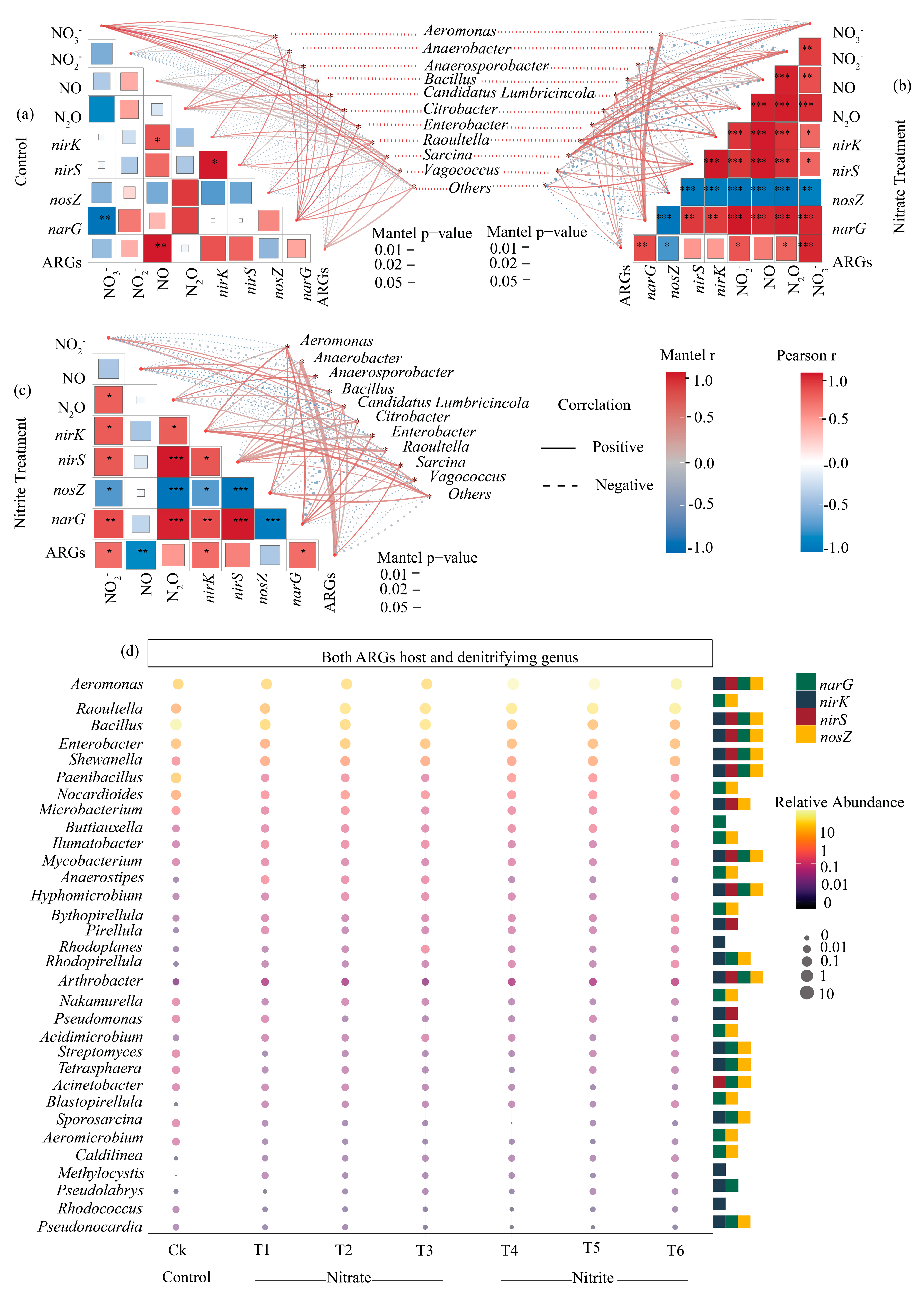
There were 10 genera significantly correlated with denitrification-related intermediate concentrations and gene abundances (Figure 6c). Statistical significance is indicated by asterisks, where p < 0.05: * = ≤0.05, ** = ≤0.01, and *** = ≤0.001. For the abundance of Aeromonas, positive associations were observed with the concentrations of NO2 and NO, as was the case for the abundances of nirK, nirS, and narG under both the nitrate and nitrite treatments (Figure 6b,c). In addition, it resulted in positive associations between the abundance of Bacillus and the concentrations of NO2, NO, and N2O, as well as between the former and nosZ abundance (Figure 6b). Under nitrite treatment, however, the associations shifted, with significant correlations found with NO3, N2O, nirS, nosZ, and narG (Figure 6c). In comparison, Enterobacter showed positive associations with NO, nosZ, and narG in the nitrate treatments (Figure 6b). However, it led to stronger associations with NO2, N2O, nirK, nirS, nosZ, and narG in nitrite treatments (Figure 6c).

3. Discussion

3.1. Earthworm Gut Has Big Potential for Denitrification

Both nitrate and nitrite are crucial substrates in the denitrification process. In this study, reductions of nitrate into nitrite and then of nitrite into NO and N2O were detected in both the nitrate and nitrite treatments (Figure 1), indicating the occurrence of denitrification in the gut of the earthworm. Consistently, the abundances of denitrification-related genes such as narG, nirK, nirS, and nosZ showed dose- and time-dependent trends in both nitrate and nitrite treatments, sharing the same characteristics with nitrate and nitrite during incubation [34] (Figure 4) This implies that microbial communities were actively reducing nitrate into nitrite and subsequently into N2O. In detail, abundant microorganisms were identified to be involved in denitrification during incubation (Figure. 4). Among them, the genera, including Aeromonas [35], Bacillus [36], Shewanella [37], Paenibacillus, and Enterobacter [38], carry all of the denitrification-linked genes containing narG, nirK, nirS, and nosZ (Figure 4). Most of them displayed the highest abundances on day 2 in the treatments with nitrate during incubation (Figure 4), corresponding to the time course of nitrate concentrations. This further indicates the reduction of nitrate into nitrite, NO, N2O, and even N2 during incubation. Likewise, these genera were also abundant in the nitrite amendments (Figure 4), showing a similar composition and tendency to the genera in the nitrate setups. Although the total abundances of denitrifiers in the nitrate/nitrite treatments were lower than those in the control, they still accounted for as high as 35~50% (Figure 4). Moreover, the nitrate and nitrite treatments showed a strong correlation between Aeromonas, Bacillus, and Enterobacter, as well as the genes associated with denitrification (nirK, nirS, nosZ, and narG) (Figure 6). These findings suggest that the earthworm gut was the hotspot for denitrification and harbored abundant denitrifying bacteria, consistent with the results of the previous study [39,40,41].

3.2. Denitrification Process Stimulates ARG Dissemination

With increasing concentrations of nitrate and nitrate, the total abundances of the detected ARGs were elevated during the incubation, especially in the nitrate treatments (Figure 3). Furthermore, significant relationships were found between ARG abundances and concentrations of NO3/NO2/NO/N2O in the nitrate treatments (Figure 6). These indicated the stimulative impact of denitrification on ARG enrichments. Furthermore, the abundances of sulfonamide, beta-lactam, aminoglycoside, transposase, multidrug-involving genes, were markedly enriched during the incubation (Figure 3). The variations in bacterial growth of these categories of ARG hosts (such as Bacillus and Aeromonas) for nitrate treatment were concentration-dependent (Figure 4), with each species responding differently. As indicated in previous research, Bacillus species are known for their denitrification capabilities, which are optimized under higher nitrate concentrations. This metabolic activity of denitrification can lead to increased oxidative stress. It has been well documented that high nitrate concentrations can lead to increased oxidative stress and the production of reactive oxygen species (ROS) during denitrification processes [42]. This stress can activate bacterial defense mechanisms, including a relative abundance of ARGs and the prompting of bacteria to acquire ARGs as well [42,43]. In addition, high nitrate concentrations can favor the proliferation of Bacillus strains, which could contribute to an increased prevalence of ARGs in the microbial community [44]. However, the abundances of MLSB, glycopeptide and tetracycline-linked ARGs exhibited different patterns, with Pirellula hosting MLSB, Methylocystis hosting MLSB and glycopeptide, and Pseudomonas hosting tetracycline-linked ARGs in these categories (Figure 3). The genera Pirellula, Methylocystis, and Pseudomonas showed a concentration-dependent decline with increasing nitrate levels due to nitrite stress [45]. Elevated nitrate concentrations can cause toxic nitrite accumulation, leading to physiological stress and competition among these nitrate-reducing microbes, thus potentially contributing to a reduction in the abundance of these ARGs Caldilinea, which exhibits complex responses to nitrate and may also be affected by shifts in microbial community dynamics that influence the distribution of these resistance genes [46]. Thus, changes in microbial composition due to varying nitrate levels can disrupt denitrification and alter both nitrogen cycling and ARG profiles [47]. Meanwhile, the increase in transposase-associated ARGs reflected that the dissemination of ARGs in the earthworm gut may be mediated via horizontal gene transfer during the incubation.
In contrast to the control and the nitrate treatment, the nitrite amendment induced a wider range of resistance genes (Figure 3). Because nitrite is an intermediate in the denitrification process, it may contribute to the microbial community’s capacity to harbor an increased number of resistance mechanisms [48,49]. Research by Wonoputri et al. supports the assertion that nitrite can cause cell membrane deterioration [50]. Their findings indicated that treatment of certain microbial cultures with nitrite resulted in membrane disruption, characterized by increased cell surface roughness and degradation due to lipid peroxidation [50]. Earthworms, specifically Eisenia fetida, are susceptible to these agents within their gut microbiome, leading to potential ARG mobilization during stress induced by nitrite toxicity [51]. In the microbial community, the nitrite reduction pathway from nitrite to N2O was active, and multidrug resistance genes like acrB and mepA were strongly positively correlated with Sarcina and Anaerosporobacter [52]. The greater diversity of ARGs observed in this treatment was due to the involvement of these genera in nitrite reduction (Figure 4). This result is consistent with that of earlier research, which indicates that nitrite exposure might promote the spread of resistance genes, perhaps as a result of the microbial community’s enhanced metabolic adaptability to nitrite stress [30].

3.3. Most Denitrification Taxa Contribute to ARG Enrichment and Dissemination

As demonstrated in the results, the abundance of denitrification-related bacteria in the earthworm gut was influenced by both nitrate and nitrite treatments. Denitrifiers such as Aeromonas, Raoultella, Enterobactor and Bacillus were abundant in the gut microbiome under nitrate and nitrite amendments (Figure 4 and Figure 5). In particular, genera such as Aeromonas and Bacillus showed strong correlations with resistance to aminoglycosides and glycopeptides (Figure 4 and Figure 5). This indicates that they not only play key roles in nitrogen cycling but also serve as hosts for various ARGs, facilitating their spread within the gut environment. This aligns with findings that the coexistence of ARGs and nitrate reduction genes supports denitrifiers in enhancing antibiotic resistance to environmental stress [44]. This connection is consistent with the mechanism of co-selection, where exposure to nitrite causes shifts in microbial community structure and ARG abundance due to increased horizontal gene transfer (Figure S4). In the nitrite amended gut, such selection would favor denitrifiers that also contain nitrogen cycle genes and ARGs. Because of its genomic fluidity and relatively higher abundance of the mobile genetic element, Bacillus could be a critical center in adaptive modifications in ARGs [53]. In addition, Proteobacteria, the dominant phylum in the earthworm gut across all treatments, was found to be significantly enriched under the nitrate and nitrite treatments [54]. These genera have been previously associated with both nitrogen reduction and ARG propagation [13,55,56]. The potential of denitrifying genera was highlighted by their strong associations with a number of ARGs, including vanYd (glycopeptide) and aac(6′)-Ib (aminoglycoside) [34,57]. This finding is consistent with earlier research, which found these genera to be important in the spread of ARGs, particularly in settings with high nitrogen concentrations [53]. Denitrifying bacteria by acquiring ARGs in the earthworm gut confers a defensive advantage and allows them to resist environmental stress and maintain nitrogen cycling. Moreover, nitrite-induced reactive nitrogen species trigger nitrosative stress [51,58]. This stress, coupled with nitrate-induced increases in cell membrane permeability, probably further facilitate the dissemination of ARGs [59,60]. This co-existence of denitrification genes and ARGs enables denitrifiers in the earthworm gut to adapt to and maintain their function under nitrate and nitrite stress, facilitating their survival in nitrogen-enriched environments.

4. Materials and Methods

4.1. Collection of Earthworms and Microcosms

Pheritima gullelmi earthworm adults were collected from Tongling, China. The average local temperature was 25–32 °C, and P. guillelmi were collected from soil at a depth of 10–30 cm. Earthworms were collected from this site because of the dense vegetation, farmyards, and frequent fertilizer use, all of which are known to contribute to the spread of antibiotic resistance genes. The process we followed for collecting and analyzing earthworm gut content adhered to the guidelines provided by Schulz (2015) [61]. To ensure clean samples, earthworms were first carefully washed and rinsed with ice-cold deionized water to remove any outside impurities. The specimens were immersed in pure ethanol for one minute in order to sterilize them. Following their exposure to ethanol, the earthworms were rinsed three times with phosphate buffer (0.01 M, pH 7.2) in order to remove any last bits of soil and microorganisms from their bodies.
The earthworms were carefully incised with sterile scissors to obtain the gut contents, which were then placed in 50 mL sterile serum bottles with 10 mL of sterile nitrogen-purged anoxic sodium phosphate buffer (0.1 M). The homogenate of gut contents (from about 40 earthworms) was added to 50 mL serum bottles and stirred well. Three replicates were set up for each comparison to verify the repeatability of the results. The serum bottles were then capped with butyl rubber stoppers, and incubated under dark conditions at 30 °C for 3 days to allow them to become depleted of residual oxygen. This whole process was set up to work under sterile conditions.
Homogenized gut content aliquots (4 mL) were transferred into three 120 mL serum bottles containing 40 mL of evacuated basic medium (N2/CO2, 80/20%). The basic medium (pH 6.8–7.2) contained MgCl2.6H2O (0.4 g L−1), CaCl2.H2O (0.1 g L−1), NH4Cl (0.027 g L−1), KH2PO4 (0.6 g L−1), vitamin solution (1 mL L−1), trace element solutions (1 mL L−1), and bicarbonate buffer (30 mM, to maintain the pH). The vitamin solution, trace elements and bicarbonate buffer were added from stock solutions [62] and were filtered with 0.22 μm filters. All serum bottles were incubated in a precisely controlled 30 °C incubator in the dark. Incubation was further divided into three setups. Glucose was added to the basic medium as an exogenous source of organic carbon.
Four treatments were established: (1) the control, in which only the guts were added to basic media (Ck), (2) the nitrate amendment, in three concentrations (T1 = 0.5 mM, T2 = 2 mM, T3 = 5 mM), and (3) the nitrite amendment, in three concentrations (T4 = 0.1 mM, T5 = 0.5 mM, T6 = 1 mM). Microcosms were set up in triplicate and incubated at 28 °C in the dark for four days. Sampling was undertaken on days 1, 2, 3, and 4.

4.2. Analytical Methods

The concentrations of nitrate, nitrite, and organic acid in the samples were analyzed using ion chromatography Dionex ICS-3000 ion chromatography system (Thermo Fisher Scientific), Sunnyvale, California, USA [63]. The serum vials were shaken for a minute, and then filtered through a 0.22 um filter. The filtered samples were diluted with sterile deionized water in a 1:4 (w/v) ratio. Glucose quantification was performed using the anthrone method [64], with meticulous modifications to the original protocol. In the improved method, glucose was first dried at 80 °C for 6 h to achieve a constant weight. Following this, a standard solution was prepared. For the anthrone reagent, 50 mg of anthrone was weighed and dissolved in 70% concentrated sulfuric acid by volume. This meticulous procedure ensured enhanced accuracy in determining glucose concentration. Nitrous oxide (N2O) was detected using gas chromatography [65]. Before determination, all serum vials were shaken vigorously for 1 min to ensure gas homogeneity before analysis.

4.3. Bacterial 16S rRNA Gene Amplification, Illumina Sequencing and Data Processing

Genomic DNA was extracted from samples using the TIANamp DNA kit (TIANamp DNA kit (TianGen Biotech, Beijing, China)) according to the manufacturer’s protocol. The quality of the DNA was assessed with a NanoDrop ND-1000 (Thermo Scientific, Wilmington, DE, USA). For PCR amplification, a reaction mix (25 μL) was meticulously prepared. The V4 and V5 regions of bacterial 16S rRNA genes were amplified. The forward primer was 515F (5′-GTGCCAGCMGCCGCGG-3′), and the reverse primer consisted of a six bp barcode and 907R (5′-CCGTCAATTCMTTTRAGTTT-3′). The amplification process started with initial denaturation at 95 °C for 2 min, followed by denaturation (30 cycles) for 30 s at 95 °C, annealing at 55 °C for 30 s, and extension at 72 °C for 30 s. The final step of extension occurred at 72 °C for 10 min. The amplicons were purified, quantified, pooled, and subsequently sequenced on an Illumina Novseq 6000 platform at Shanghai Biozeron Technology Co., Ltd. (Shanghai, China).

4.4. qPCR Amplification

The denitrification genes (narG, nirK, nirS and nosZ) were quantified. The qPCR protocol was performed in a Fast Optical 96-well plate format. Each biological sample was run in triplicate to assess the quality of the results. The primer sequences of the target genes were chosen from a published study [66]. In particular, narG was amplified by using the narG1960f/QICNarG-2650r primer pair (5-TAY GTS GGS CAR GAR AA-3 for the forward primer and 5-TTY TCR TAC CAB GTA GC-3 for the reverse primer) and nosZ was amplified using nosZF/nosZR primers (5-CCCGCTGCACACCRCCTTCGA-3 and 5-CGTCGCCSGAGATGTCGATCA-3) [67,68,69,70] (Table S1).
The reaction mixture for qPCR amounted to 20 μL with 10 μL of 2× SuperReal PreMix Plus, 0.7 μL of primer (10 μM of each primer), 0.7 μL of 50× ROX Reference Dye, 2 μL of templates DNA and 6.2 μL of ddH2O. Preliminary denaturation at 95 °C was performed for 8 min, after which 35 cycles of amplification were performed. The cycles consisted of denaturation at 95 °C for 1 min, annealing at a temperature specific to the gene for 30 s, and elongation at 72 °C for 2 min. The extension of the terminals was performed at 72 °C and took 10 min. The annealing temperatures differed by gene: the temperature for narG was 55 °C, that for nosZ was 58 °C, that for nirK was 57 °C, and that for nirS was 54 °C. A final extension was performed at 72 °C after the 5 min amplification cycles. These standard curves were used to automatically determine the abundance of nirK, nirS, narG, and nosZ, and the 16S rDNA gene served as a reference gene.

4.5. ARGs Quantification

The abundance of ARGs and transposase in the gut was estimated using qPCR, with a reactor from Qubit®. A total of 48 primer pairs, each meticulously designed to target specific ARGs, were used. All amplifications were performed in triplicate. The detection limit is 31 for the threshold cycle (Ct). The relative abundances of functional genes were calculated after normalization by 16S rRNA gene copy numbers, i.e., the functional gene copy number divided by the 16S rRNA gene copy number. A total of 23 ARGs were quantified and mentioned in this work (Table S2). Denitrification taxa were identified using the NCBI database to analyze the host taxa of the ARGs.

4.6. Statistical Analysis

Analysis of variance (ANOVA) was carried out with SPSS version 18.0 (SPSS Inc., Chicago, IL, USA). Statistical significance was evaluated by ANOVA (p < 0.05). Plots were generated using OriginPro 2024 (OriginLab Corporation, Northampton, MA, USA), R software, with the ggplot2 package. Bubble figure and correlation analysis was performed using Mantel analysis, with significance denoted at p < 0.05 in R 4.3.1, via the linkET package. The igraph package was used for network analysis. Statistical significance of the diversity and relative abundances of bacterial communities and ARGs between samples were determined using a one-way analysis of variance and Tukey’s HSD test.

5. Conclusions

In conclusion, both nitrate and nitrite amendments significantly influenced the dissemination of antibiotic resistance genes (ARGs) in the earthworm gut. Among the treatments, nitrite amendments, particularly at 1 mM, demonstrated a greater role in promoting ARG dissemination compared to nitrate amendments. There was a marked increase in the relative abundance of sulfonamide, beta-lactam, and aminoglycoside resistance genes in the nitrite treatment during the incubation. In addition, the 5 mM nitrate treatment exhibited the highest abundances of denitrifiers, including Aeromonas, Bacillus, and Enterobacter, which acted as co-hosts for ARGs, particularly under elevated nitrate conditions. Denitrifying taxa including Aeromonas, Anaerosporobacter, Raoultella, and Sarcina have been identified as important players in the spread of ARGs. Our results indicated that the coexistence of denitrifiers and ARGs triggers the bacterial defense mechanism. Nitrate and nitrite amendments activate the stress response with the upregulation of antibiotic resistance genes and the activation of transposases. The presence of denitrifiers with antibiotic resistance genes further supports the idea that they are significant hosts of antibiotic resistance genes. The findings underscore the role of denitrifying bacteria as key mediators of ARG dissemination, with nitrate and nitrite acting as critical factors in shaping both nitrogen cycling and ARG spread in soils.

Supplementary Materials

The following supporting information can be downloaded at https://www.mdpi.com/article/10.3390/ijms27020797/s1.

Author Contributions

Conceptualization, G.Z., Q.S. and M.R.A. (Maria Rafraf Ali); methodology, M.R.A. (Maria Rafraf Ali), Y.C., M.L. and M.J.; software, M.R.A. (Maria Rafraf Ali) and M.R.A. (Mamona Rafraf Ali); validation, M.R.A. (Maria Rafraf Ali); formal analysis, M.R.A. (Maria Rafraf Ali); investigation, M.R.A. (Maria Rafraf Ali); resources, Q.S. and M.R.A. (Maria Rafraf Ali); data curation, M.R.A. (Maria Rafraf Ali); writing—original draft preparation, M.R.A. (Maria Rafraf Ali); writing—review and editing, M.R.A. (Maria Rafraf Ali) and G.Z.; visualization, M.R.A. (Maria Rafraf Ali) and M.R.A. (Mamona Rafraf Ali); supervision, Q.S. and G.Z.; project administration, G.Z. and Q.S.; funding acquisition, Q.S. All authors have read and agreed to the published version of the manuscript.

Funding

The authors acknowledge the financial support received for the research, authorship, and/or publication of this article. This research was funded by the Higher Education Institution Collaborative Innovation Project of Anhui Province, China (No.GXXT-2021–061). Additional funding was provided by the China Scholarship Council (CSC): 2019GXZ014635 to Maria Rafraf Ali.

Institutional Review Board Statement

Not applicable.

Informed Consent Statement

Not applicable.

Data Availability Statement

Data have been uploaded to the NCBI, with the accession no. PRJNA1370075.

Acknowledgments

We sincerely thank the China Scholarship Council and Anhui University, Hefei, China, for their financial support and provision of the necessary instrumentation for this study.

Conflicts of Interest

The authors declare no conflicts of interest.

References

  1. Barrios, R.E.; Bartelt-Hunt, S.L.; Li, Y.; Li, X. Modeling the vertical transport of antibiotic resistance genes in agricultural soils following manure application. Environ. Pollut. 2021, 285, 117480. [Google Scholar] [CrossRef]
  2. Mahjoory, Y.; Aliasgharzad, N.; Moghaddam, G.; Bybordi, A. Long-term application of manure alters culturable soil microbial populations and leads to occurrence of antibiotic resistant bacteria. Soil Sediment Contam. Int. J. 2022, 31, 1105–1116. [Google Scholar] [CrossRef]
  3. Meyers, M.A.; Durso, L.M.; Gilley, J.E.; Waldrip, H.M.; Castleberry, L.; Millmier-Schmidt, A. Antibiotic resistance gene profile changes in cropland soil after manure application and rainfall. J. Environ. Qual. 2020, 49, 607–615. [Google Scholar] [CrossRef]
  4. Ouyang, Y.; Norton, J.M. Short-term nitrogen fertilization affects microbial community composition and nitrogen mineralization functions in an agricultural soil. Appl. Environ. Microbiol. 2020, 86, e02278-19. [Google Scholar] [CrossRef]
  5. Du, L.; Zhong, H.; Guo, X.; Li, H.; Xia, J.; Chen, Q. Nitrogen fertilization and soil nitrogen cycling: Unraveling the links among multiple environmental factors, functional genes, and transformation rates. Sci. Total Environ. 2024, 951, 175561. [Google Scholar] [CrossRef] [PubMed]
  6. Gao, X.; Zhang, H.; Xu, L.; Wang, L.; Li, X.; Jiang, Y.; Zhu, G. Impact of earthworms on antibiotic resistance genes removal in ampicillin-contaminated soil through bacterial community alteration. J. Environ. Qual. 2024, 53, 521–534. [Google Scholar] [CrossRef] [PubMed]
  7. Drane, K.; Sheehan, M.; Whelan, A.; Ariel, E.; Kinobe, R. The role of wastewater treatment plants in dissemination of antibiotic resistance: Source, measurement, removal and risk assessment. Antibiotics 2024, 13, 668. [Google Scholar] [CrossRef] [PubMed]
  8. Xiang, Q.; Chen, Q.; Yang, X.; Li, G.; Zhu, D. Microbial multitrophic communities drive the variation of antibiotic resistome in the gut of soil woodlice (Crustacea: Isopoda). Environ. Sci. Technol. 2022, 56, 15034–15043. [Google Scholar] [CrossRef]
  9. Huang, J.; Mi, J.; Yan, Q.; Wen, X.; Zhou, S.; Wang, Y.; Ma, B.; Zou, Y.; Liao, X.; Wu, Y. Animal manures application increases the abundances of antibiotic resistance genes in soil-lettuce system associated with shared bacterial distributions. Sci. Total Environ. 2021, 787, 147667. [Google Scholar] [CrossRef]
  10. Xue, Z.; Qiao, M.; Su, J.-Q.; Wang, Y.; Cao, Z.-H.; Cheng, W.-D.; Zhu, Y.-G. Turning pig manure into biochar can effectively mitigate antibiotic resistance genes as organic fertilizer. Sci. Total Environ. 2018, 649, 902–908. [Google Scholar] [CrossRef]
  11. Yin, Q.; Yue, D.; Peng, Y.; Liu, Y.; Xiao, L. Occurrence and distribution of antibiotic-resistant bacteria and transfer of resistance genes in Lake Taihu. Microbes Environ. 2013, 28, 479–486. [Google Scholar] [CrossRef]
  12. Martínez, J.L.; Coque, T.M.; Baquero, F. What is a resistance gene? Ranking risk in resistomes. Nat. Rev. Microbiol. 2015, 13, 116–123. [Google Scholar] [CrossRef]
  13. Qiu, M.; Wu, Z.; Song, J.; Zheng, C.; Zhan, X.; Shan, M.; Cui, M.; Chen, L.; Zhang, L.; Yu, Y.; et al. Chlorothalonil drives the antibiotic resistome in earthworm guts. J. Hazard. Mater. 2024, 463, 132831. [Google Scholar] [CrossRef]
  14. Soucy, S.M.; Huang, J.; Gogarten, J.P. Horizontal gene transfer: Building the web of life. Nat. Rev. Genet. 2015, 16, 472–482. [Google Scholar] [CrossRef] [PubMed]
  15. Li, Y.; Kong, F.; Li, S.; Wang, J.; Hu, J.; Chen, S.; Chen, Q.; Li, Y.; Ha, X.; Sun, W. Insights into the driving factors of vertical distribution of antibiotic resistance genes in long-term fertilized soils. J. Hazard. Mater. 2023, 456, 131706. [Google Scholar] [CrossRef]
  16. Joseph, P. Efficacy of different substrates on vermicompost production: A biochemical analysis. In Organic Fertilizers; IntechOpen: London, UK, 2019. [Google Scholar] [CrossRef]
  17. Al-Maliki, S.; Al-Taey, D.K.; Al-Mammori, H.Z. Earthworms and eco-consequences: Considerations to soil biological indicators and plant function: A review. Acta Ecol. Sin. 2021, 41, 512–523. [Google Scholar] [CrossRef]
  18. Ihssen, J.; Horn, M.A.; Matthies, C.; Gößner, A.; Schramm, A.; Drake, H.L. N2O-producing microorganisms in the gut of the earthworm Aporrectodea caliginosa are indicative of ingested soil bacteria. Appl. Environ. Microbiol. 2003, 69, 1655–1661. [Google Scholar] [CrossRef] [PubMed]
  19. Zhou, G.-W.; Yang, X.-R.; Sun, A.-Q.; Li, H.; Lassen, S.B.; Zheng, B.-X.; Zhu, Y.-G. Mobile incubator for iron(III) reduction in the gut of the soil-feeding earthworm Pheretima guillelmi and interaction with denitrification. Environ. Sci. Technol. 2019, 53, 4215–4223. [Google Scholar] [CrossRef]
  20. Zhu, D.; Delgado-Baquerizo, M.; Su, J.-Q.; Ding, J.; Li, H.; Gillings, M.R.; Peñuelas, J.; Zhu, Y.-G. Deciphering potential roles of earthworms in mitigation of antibiotic resistance in the soils from diverse ecosystems. Environ. Sci. Technol. 2021, 55, 7445–7455. [Google Scholar] [CrossRef]
  21. Li, Z.; Chen, C.; Zhang, K.; Zhang, Z.; Zhao, R.; Han, B.; Yang, F.; Ding, Y. Response of antibiotic resistance genes and related microorganisms to arsenic during vermicomposting of cow dung. Int. J. Environ. Res. Public Health 2022, 19, 14475. [Google Scholar] [CrossRef]
  22. Wang, K.; Yuan, N.; Zhou, J.; Ni, H. Comparative analysis of bacterial community structures in earthworm skin, gut, and habitat soil across typical temperate forest. Microorganisms 2024, 12, 1673. [Google Scholar] [CrossRef]
  23. Chao, H.; Zheng, X.; Xia, R.; Sun, M.; Hu, F. Incubation trial indicated the earthworm intestinal bacteria as promising biodigestor for mitigating tetracycline resistance risk in anthropogenic disturbed forest soil. Sci. Total Environ. 2021, 798, 149337. [Google Scholar] [CrossRef]
  24. Fang, J.W.; Wang, B.N.; Fang, K.; Liu, T.; Yan, S.H.; Wang, X.G. Assessing the bioavailability and biotoxicity of spiromesifen and its main metabolite spiromesifen-enol (M01) reveals the defense mechanisms of earthworms (Eisenia fetida). Sci. Total Environ. 2022, 813, 151910. [Google Scholar] [CrossRef]
  25. Lejoly, J.; Quideau, S.; Laganière, J.; Karst, J.; Martineau, C.; Swallow, M.; Norris, C.; Samad, A. Earthworm-invaded boreal forest soils harbour distinct microbial communities. Soil 2023, 9, 461–478. [Google Scholar] [CrossRef]
  26. Yang, C.; Wang, L.; Wang, H.; Zhang, H.; Wang, F.; Zhou, H.; Tan, Z.; Chen, Y. Dynamics of antibiotic resistance genes and microbial community in shortcut nitrification–denitrification process under antibiotic stresses. Environ. Sci. Pollut. Res. 2022, 29, 46848–46858. [Google Scholar] [CrossRef]
  27. Horn, M.A.; Schramm, A.; Drake, H.L. The earthworm gut: An ideal habitat for ingested N2O-producing microorganisms. Appl. Environ. Microbiol. 2003, 69, 1662–1669. [Google Scholar] [CrossRef] [PubMed]
  28. Zheng, X.; Xu, D.; Yan, J.; Qian, M.; Wang, P.; Zaeim, D.; Han, J.; Qu, D. Mobile genetic elements facilitate the transmission of antibiotic resistance genes in multidrug-resistant Enterobacteriaceae from duck farms. Food Sci. Hum. Wellness 2024, 13, 729–735. [Google Scholar] [CrossRef]
  29. Song, Y.; Yin, J.; Shi, D.; Li, H.; Chen, T.; Wang, Y.; Jin, M.; Li, J.; Yang, D. Decoding the SCFA-CpxAR-OMP axis as a dietary checkpoint against antimicrobial resistance transmission across gut-environment interfaces. ISME J. 2025, 19, wraf156. [Google Scholar] [CrossRef]
  30. Zheng, F.; Bi, Q.; Giles, M.; Neilson, R.; Chen, Q.-L.; Lin, X.-Y.; Zhu, Y.-G.; Yang, X.-R. Fates of antibiotic resistance genes in the gut microbiome from different soil fauna under long-term fertilization. Environ. Sci. Technol. 2021, 55, 423–432. [Google Scholar] [CrossRef]
  31. Wang, X.; Zhang, H.; Long, X.; Xu, X.; Ren, H.; Mao, D.; Alvarez, P.J.J.; Luo, Y. Global increase of antibiotic resistance genes in conjugative plasmids. Microbiol. Spectr. 2023, 11, e04478-22. [Google Scholar] [CrossRef] [PubMed]
  32. Alsultan, A.; Alsallami, D.; Al-Saadi, A. Antibiotic resistance genes in farm animal slaughterhouse wastes in Al-Dewanyiah Province, Iraq. Vet. Integr. Sci. 2023, 21, 577–586. [Google Scholar] [CrossRef]
  33. Checcucci, A.; Trevisi, P.; Luise, D.; Modesto, M.; Blasioli, S.; Braschi, I.; Mattarelli, P. Exploring the animal waste resistome: The spread of antimicrobial resistance genes through the use of livestock manure. Front. Microbiol. 2020, 11, 1416. [Google Scholar] [CrossRef] [PubMed]
  34. Che, Y.; Xia, Y.; Liu, L.; Li, A.-D.; Yang, Y.; Zhang, T. Mobile antibiotic resistome in wastewater treatment plants revealed by nanopore metagenomic sequencing. Microbiome 2019, 7, 44. [Google Scholar] [CrossRef]
  35. Vishnyakova, A.; Popova, N.; Artemiev, G.; Botchkova, E.A.; Litti, Y.; Safonov, A. Effect of mineral carriers on biofilm formation and nitrogen removal activity by an indigenous anammox community from cold groundwater ecosystem alone and bioaugmented with biomass from a “warm” anammox reactor. Biology 2022, 11, 1421. [Google Scholar] [CrossRef]
  36. Chen, S.; Wang, F.; Zhang, Y.; Qin, S.; Wei, S.; Wang, S.; Wang, S.; Hu, C.; Liu, B. Organic carbon availability limiting microbial denitrification in the deep vadose zone. Environ. Microbiol. 2018, 20, 980–992. [Google Scholar] [CrossRef]
  37. Qin, F.; Wan, S.; Liu, B.; Wang, R.; Zheng, P. Efficiency determination and mechanism investigation of autotrophic denitrification strain F1 to promote low-carbon development. Water 2022, 14, 3353. [Google Scholar] [CrossRef]
  38. Li, M.; Wei, M.; Fan, X.; Zhou, G. Underestimation about the contribution of nitrate reducers to iron cycling indicated by Enterobacter strain. Molecules 2022, 27, 5581. [Google Scholar] [CrossRef]
  39. Cartwright, M.; Hess, L. Isolation of a denitrifying bacterium from earthworm guts and evaluation of its relationship to oxygen. Humboldt J. 2012, 14, 1. [Google Scholar]
  40. Jin, B.-J.; Liu, X.-P.; Zhang, M.; Hu, Y.; Sun, C.-L.; Li, G.; Zhu, Y.-G.; Lin, X.-Y. Earthworms enhance the inhibition efficiency of 3,4-dimethylpyrazole phosphate on soil nitrification by altering soil AOB communities and gut denitrifier communities. Biol. Fertil. Soils 2023, 59, 747–761. [Google Scholar] [CrossRef]
  41. Wu, J.; Bai, Y.; Lu, B.; Zhao, W.; Forstner, C.; Menzies, N.W.; Bertsch, P.M.; Wang, P.; Kopittke, P.M. Silver sulfide nanoparticles reduce nitrous oxide emissions by inhibiting denitrification in the earthworm gut. Environ. Sci. Technol. 2020, 54, 11146–11154. [Google Scholar] [CrossRef] [PubMed]
  42. Hayatgheib, N.; Calvez, S.; Fournel, C.; Pineau, L.; Pouliquen, H.; Moreau, E. Antimicrobial susceptibility profiles and resistance genes in genus Aeromonas spp. isolated from the environment and rainbow trout of two fish farms in France. Microorganisms 2021, 9, 1201. [Google Scholar] [CrossRef]
  43. Xue, J.; Lu, X.; Wei, L.; Zha, X.; Xu, W. Enhanced removal of nitrate and tetracycline by Bacillus cereus W2 immobilized on biochar. Water 2025, 17, 380. [Google Scholar] [CrossRef]
  44. Hu, J.; Chen, Q.; Zhong, S.; Liu, Y.; Gao, Q.; Graham, E.B. Insight into co-hosts of nitrate reduction genes and antibiotic resistance genes in an urban river of the Qinghai-Tibet Plateau. Water Res. 2022, 225, 119189. [Google Scholar] [CrossRef]
  45. He, Q.; He, Z.; Joyner, D.; Joachimiak, M.; Price, M.N.; Yang, Z.K.; Yen, H.-C.B.; Hemme, C.L.; Chen, W.; Fields, M.M.; et al. Impact of elevated nitrate on sulfate-reducing bacteria: A comparative study of Desulfovibrio vulgaris. ISME J. 2010, 4, 1386–1397. [Google Scholar] [CrossRef]
  46. Chao, H.; Zhong, L.; Schaefer, I.; Sun, M.; Junggebauer, A.; Hu, F.; Scheu, S. Litter quality modulates changes in bacterial and fungal communities during the gut transit of earthworm species of different ecological groups. ISME Commun. 2024, 5, ycae171. [Google Scholar] [CrossRef]
  47. Depkat-Jakob, P.S.; Brown, G.G.; Tsai, S.M.; Horn, M.A.; Drake, H.L. Emission of nitrous oxide and dinitrogen by diverse earthworm families from Brazil and resolution of associated denitrifying and nitrate-dissimilating taxa. FEMS Microbiol. Ecol. 2012, 83, 375–391. [Google Scholar] [CrossRef]
  48. Garrido-Amador, P.; Stortenbeker, N.; Wessels, H.J.C.T.; Speth, D.R.; Garcia-Heredia, I.; Kartal, B. Enrichment and characterization of a nitric oxide-reducing microbial community in a continuous bioreactor. Nat. Microbiol. 2023, 8, 1574–1586, Erratum in Nat. Microbiol. 2024, 9, 1631. [Google Scholar] [CrossRef]
  49. Wang, X.; Zhang, G.; Ding, A.; Zheng, L.; Xie, E.; Yuan, D.; Tan, Q.; Xing, Y.; Wu, H. Nitrite-resistance mechanisms on wastewater treatment in denitrifying phosphorus removal systems. Environ. Pollut. 2023, 315, 121549. [Google Scholar] [CrossRef]
  50. Wonoputri, V.; Gunawan, C.; Liu, S.; Barraud, N.; Yee, L.H.; Lim, M.; Amal, R. Copper complex in poly (vinyl chloride) as a nitric oxide-generating catalyst for the control of nitrifying bacterial biofilms. ACS Appl. Mater. Interfaces 2015, 7, 22148–22156. [Google Scholar] [CrossRef]
  51. Huang, H.; Feng, G.; Wang, M.; Liu, C.; Wu, Y.; Dong, L.; Feng, L.; Zheng, X.; Chen, Y. Nitric oxide: A neglected driver for the conjugative transfer of antibiotic resistance genes among wastewater microbiota. Environ. Sci. Technol. 2022, 56, 6466–6478. [Google Scholar] [CrossRef]
  52. Zeibich, L.; Schmidt, O.; Drake, H.L. Protein- and RNA-enhanced fermentation by gut microbiota of the earthworm Lumbricus terrestris. Appl. Environ. Microbiol. 2018, 84, e00657-18. [Google Scholar] [CrossRef] [PubMed]
  53. Huang, H.; Lin, L.; Bu, F.; Su, Y.; Zheng, X.; Chen, Y. Reductive stress boosts the horizontal transfer of plasmid-borne antibiotic resistance genes: The neglected side of the intracellular redox spectrum. Environ. Sci. Technol. 2022, 56, 15594–15606. [Google Scholar] [CrossRef]
  54. Cui, G.; Bhat, S.A.; Li, W.; Wei, Y.; Kui, H.; Fu, X.; Gui, H.; Wei, C.; Li, F. Gut digestion of earthworms significantly attenuates cell-free and associated antibiotic resistance genes in excess activated sludge by affecting bacterial profiles. Sci. Total Environ. 2019, 691, 644–653. [Google Scholar] [CrossRef]
  55. Hao, X.; Zhang, W.; Zhao, L.; Shen, L.; Zhu, L.; Zeng, B.; Jiang, D.; Bai, L. Bacillus subtilis reduces antibiotic resistance genes of animal sludge in vermicomposting by improving heat stress tolerance of Eisenia foetida and bacterial community adjustment. Environ. Res. 2023, 219, 115088. [Google Scholar] [CrossRef]
  56. Feng, J.; Wu, C.; Zhou, D.; Hu, L.; Mu, K.; Yin, Z. Insights into incompatible plasmids in multidrug-resistant Raoultella superbugs. BMC Microbiol. 2025, 25, 55. [Google Scholar] [CrossRef]
  57. Dekić, S.; Puljko, A.; Karkman, A.; Virta, M.; Udiković-Kolić, N. Bacterial hosts of clinically significant beta-lactamase genes in Croatian wastewaters. FEMS Microbiol. Ecol. 2024, 100, fiae081. [Google Scholar] [CrossRef]
  58. Wei, L.; Han, Y.; Zheng, J.; Xu, X.; Zhu, L. Accelerated dissemination of antibiotic-resistant genes via conjugative transfer driven by deficient denitrification in biochar-based biofiltration systems. Sci. Total Environ. 2024, 934, 173268. [Google Scholar] [CrossRef]
  59. Yu, Z.; Wang, Y.; Henderson, I.R.; Guo, J. Artificial sweeteners stimulate horizontal transfer of extracellular antibiotic resistance genes through natural transformation. ISME J. 2022, 16, 543–554. [Google Scholar] [CrossRef]
  60. Luo, T.; Dai, X.; Chen, Z.; Wu, L.; Wei, W.; Xu, Q.; Ni, B.J. Different microplastics distinctively enriched the antibiotic resistance genes in anaerobic sludge digestion through shifting specific hosts and promoting horizontal gene flow. Water Res. 2023, 228, 119356. [Google Scholar] [CrossRef] [PubMed]
  61. Schulz, K.; Hunger, S.; Brown, G.G.; Tsai, S.M.; Cerri, C.C.; Conrad, R.; Drake, H.L. Methanogenic food web in the gut contents of methane-emitting earthworm Eudrilus eugeniae from Brazil. ISME J. 2015, 9, 1778–1792. [Google Scholar] [CrossRef] [PubMed]
  62. Lovley, D.R.; Phillips, E.J. Novel mode of microbial energy metabolism: Organic carbon oxidation coupled to dissimilatory reduction of iron or manganese. Appl. Environ. Microbiol. 1988, 54, 1472–1480. [Google Scholar] [CrossRef]
  63. Altundag, H.; Agar, S.; Altıntıg, E.; Ates, A.; Sivrikaya, S. Use of ion chromatography method on the determination of some anions in the water collected from Sakarya, Turkey. J. Chem. Metrol. 2019, 13, 14–20. [Google Scholar] [CrossRef]
  64. Leng, F.; Sun, S.; Jing, Y.; Wang, F.; Wei, Q.; Wang, X.; Zhu, X. A rapid and sensitive method for determination of trace amounts of glucose by anthrone-sulfuric acid method. Bulg. Chem. Commun. 2016, 48, 109–113. [Google Scholar]
  65. Molstad, L.; Dörsch, P.; Bakken, L.R. Robotized incubation system for monitoring gases (O2, NO, N2O, and N2) in denitrifying cultures. J. Microbiol. Methods 2007, 71, 202–211. [Google Scholar] [CrossRef]
  66. Zhang, L.; Zeng, G.; Zhang, J.; Chen, Y.; Yu, M.; Lu, L.; Li, H.; Huang, A.; He, L.; Yuan, Y. Response of denitrifying genes coding for nitrite (nirK or nirS) and nitrous oxide (nosZ) reductases to different physico-chemical parameters during agricultural waste composting. Appl. Microbiol. Biotechnol. 2015, 99, 4059–4070. [Google Scholar] [CrossRef]
  67. Philippot, L.; Piutti, S.; Martin-Laurent, F.; Hallet, S.; Germon, J.C. Molecular analysis of the nitrate-reducing community from unplanted and maize-planted soils. Appl. Environ. Microbiol. 2002, 68, 6121–6128. [Google Scholar] [CrossRef]
  68. Braker, G.; Fesefeldt, A.; Witzel, K.P. Development of PCR primer systems for amplification of nitrite reductase genes (nirK and nirS) to detect denitrifying bacteria in environmental samples. Appl. Environ. Microbiol. 1998, 64, 3769–3775. [Google Scholar] [CrossRef] [PubMed]
  69. Yan, T.; Fields, M.W.; Wu, L.; Zu, Y.; Tiedje, J.M.; Zhou, J. Molecular diversity and characterization of nitrite reductase gene fragments (nirK and nirS) from nitrate- and uranium-contaminated groundwater. Environ. Microbiol. 2003, 5, 13–24. [Google Scholar] [CrossRef] [PubMed]
  70. Throbäck, I.N.; Enwall, K.; Jarvis, A.; Hallin, S. Reassessing PCR primers targeting nirS, nirK, and nosZ genes for community surveys of denitrifying bacteria with DGGE. FEMS Microbiol. Ecol. 2004, 49, 401–417. [Google Scholar] [CrossRef] [PubMed]
Figure 1. Dynamics of the concentrations of (a) NO3, (b,d) NO2, (c,e) NO, and (f,g) N2O during microcosmic incubation with nitrate and nitrite treatments. The concentrations of NO3, NO2, and NO were measured over days 1, 2, 3, and 4, while the concentration of N2O was measured at day 4. Data points represent the mean ± standard deviation (n = 3), as indicated by error bars, and statistical significance was assessed using ANOVA (p < 0.05). The asterisk (*) in the figure indicates that the overall treatment effect was statistically significant. Treatments T1, T2, and T3 correspond to nitrate concentrations of 0.5 mM, 2 mM, and 5 mM, respectively, while T4, T5, and T6 correspond to nitrite concentrations of 0.2 mM, 0.5 mM, and 1 mM, respectively.
Ijms 27 00797 g001
Figure 2. Temporal changes in the organic acid concentrations under nitrate and nitrite treatments during microcosmic incubation. (a,b) Acetate and pyruvate concentrations in (a) nitrate and (b) nitrite treatments over a 4-day period. (c,d) Lactate and glucose concentrations in (c) nitrate and (d) nitrite treatments. Data points represent the mean values ± standard deviation (n = 3), as indicated by error bars. Statistical analysis using one-way ANOVA revealed significant differences among the treatment groups (p < 0.05; Figure 2). The asterisk (*) in the figure indicates that the treatment effect was statistically significant.
Ijms 27 00797 g002
Figure 3. Relative abundance of antibiotic resistance genes (ARGs) and transposase across different categories under nitrate and nitrite treatments. (a) Overall abundance of ARG categories, (b) sulfonamide, (c) MLSB, (d) beta-lactam, (e) transposase, (f) glycopeptide, (g) aminoglycoside, (h) multidrug, and (i) tetracycline. Mean ± standard deviation, presented with error bars. Statistical analysis using one-way ANOVA revealed significant differences among the treatment groups (p < 0.05; Figure 3). The asterisk (*) in the figure indicates that the overall treatment effect was statistically significant, as confirmed by the ANOVA results.
Ijms 27 00797 g003
Figure 4. Relative abundance of denitrifying gene targets across nitrate and nitrite treatments during microcosmic incubation. (a,b) Gene abundance of narG, nirK, nirS, and nosZ in (a) nitrate and (b) nitrite treatments at day 4. Letters indicate significant differences among treatments. The figure shows the mean ± standard deviation, represented by the error bars. (cf) Temporal changes in the abundance of denitrifier taxa, as quantified by 16S rRNA sequencing for (c) narG, (d) nirS, (e) nirK, and (f) nosZ over days 1, 2, and 4. The stacked bar plots show the relative abundance of different denitrifier genera, with the genera color-coded in the legend. Treatments are indicated by the following: Ck (control), T1-T3 (nitrate concentrations of 0.5 mM, 2 mM, and 5 mM, respectively), and T4-T6 (nitrite concentrations of 0.2 mM, 0.5 mM, and 1 mM, respectively). Statistical analysis using ANOVA revealed significant differences among the treatment groups (p < 0.05; Figure 4). The asterisk (*) in the figure indicates that the overall treatment effect was statistically significant.
Ijms 27 00797 g004
Figure 5. Genus variation and network analysis of antibiotic resistance genes (ARGs) across nitrate and nitrite treatments during microcosmic incubation. (a) Relative abundance of dominant genera on days 1, 2, and 4 across treatments: control (Ck), nitrate (0.5 mM, 2 mM, 5 mM), and nitrite (0.2 mM, 0.5 mM, 1 mM). The stacked bar plot shows the relative abundance (%) of dominant genera, with the genera color-coded, as indicated in the legend. (bd) Spearman network analysis showing the correlation between genera and ARGs under (b) control, (c) nitrate, and (d) nitrite treatments. Nodes represent genera (green) and ARGs (blue), with positive linkages shown by solid lines and negative linkages indicated by dashed lines. These significant associations were determined based on spearman correlation analysis (p < 0.05), demonstrating significant correlations between genera and antibiotic resistance genes (ARGs), including aminoglycoside, tetracycline, transposase, multidrug, β-lactam, glycopeptide, sulfonamide, and MLSB.
Ijms 27 00797 g005
Figure 6. Mantel correlation analysis and co-occurrence of denitrifying genera and antibiotic resistance genes (ARGs) under nitrate and nitrite treatments. (b,c) Mantel correlation analysis showing the relationships between environmental factors and denitrifying genera across (a) the control, and the (b) nitrate and (c) nitrite treatments. Positive correlations are shown in red, while negative correlations are shown in blue. Statistical significance is indicated by asterisks (p < 0.05) * = ≤0.05, ** = ≤0.01, *** ≤ 0.001. (d) Bubble plot depicting the co-host of denitrifying genera and ARGs. The plot displays the relative abundance of genera (represented by bubble size and color intensity) that harbor both denitrifying genes and ARGs across treatments (Ck, T1–T3 for nitrate, and T4–T6 for nitrite). The color scale represents relative abundance, ranging from 0 to 10, with darker shades indicating higher abundance.
Ijms 27 00797 g006
Disclaimer/Publisher’s Note: The statements, opinions and data contained in all publications are solely those of the individual author(s) and contributor(s) and not of MDPI and/or the editor(s). MDPI and/or the editor(s) disclaim responsibility for any injury to people or property resulting from any ideas, methods, instructions or products referred to in the content.