1. Introduction
Rice (
Oryza sativa L.) is a major global crop and a staple food for more than half of the world’s population [
1]. However, it is subjected to numerous stresses, including abiotic and biotic stresses, throughout its growth cycle, including both abiotic and biotic stresses [
2]. Among these stresses, rice blast, caused by the filamentous ascomycete
Magnaporthe oryzae, is one of the most devastating diseases affecting rice production [
3].
Rice blast can manifest at various growth stages of rice, infecting leaves, internodes, and panicle necks [
4], It leads to substantial annual yield losses that typically range from 10% to 30% on a global scale, with the potential for total crop failure in severe outbreak years [
5,
6]. Current management relies mainly on the application of fungicides and the cultivation of resistant rice varieties [
7]. However, the extensive use of fungicides poses several challenges, including adverse effects on beneficial microorganisms [
8], accelerated pathogen resistance development, and environmental contamination such as residual toxicity in grains, soil degradation, and ecosystem disruption [
9]. Moreover, the high mutation rate of
M. oryzae frequently leads to the breakdown of resistance in rice cultivars, further complicating disease management in agricultural production [
10]. Given these limitations, exploring sustainable, environmentally friendly strategies to enhance rice blast resistance is urgently needed. Consequently, this pursuit has become a major focus of contemporary research.
Tetramycin is a novel 26-membered tetraene macrolide antibiotic produced by
Streptomyces var. Beijing. Its molecular structure comprises two primary bioactive components, namely, tetramycins A and B [
11,
12]. As a broad-spectrum agricultural antibiotic, tetramycin exhibits potent inhibitory activity against various plant pathogens. These pathogens include
M. oryzae (the causal agent of rice blast),
Botrytis cinerea,
Colletotrichum spp. (the causal agents of anthracnose),
Phytophthora capsici (the causal agent of pepper phytophthora), and
Penicillium spp. (the causal agents of yellow mold) [
13,
14].
Notably, growing evidence indicates that certain antibiotics employ a dual mode of action in plant disease control: beyond direct antimicrobial effects, they can enhance plant immunity, thereby conferring induced resistance. Early studies identified R-5 a bioactive strain isolated from azalea. This strain produces actinomycete-derived polyene antibiotics that induce systemic resistance in plants [
15]. Subsequent research demonstrated that in cucumber, metabolites from strain HD-087 considerably enhance host resistance to
Fusarium oxysporum by upregulating the activities of key defense-related enzymes, including peroxidase (POD), phenylalanine ammonia lyase (PAL), and β-1,3-glucanase [
16]. Furthermore, studies have shown that the combined application of tetramycin with tebuconazole and myclobutanil can synergistically activate the defense enzyme system in
Pseudostellaria heterophylla. This activation enhances nutrient transport activity and markedly improves disease resistance [
17]. Collectively these findings provide a theoretical foundation for the potential application of tetramycin in inducing plant immunity. However, whether tetramycin can effectively induce resistance in rice against blast disease, which is caused by
M oryzae, remains unclear and has not been systematically investigated. Therefore, our present study aims to elucidate the role and mechanism underlying tetramycin-induced resistance in rice against blast disease, thereby providing a basis for its improved application in agricultural practices.
3. Discussion
Tetramycin, a polyene macrolide antibiotic produced by
Streptomyces spp., exhibits broad-spectrum fungicidal activity [
14,
19]. Similarly to other
Streptomyces metabolites, tetramycin provides dual protection: the direct suppression of pathogens via antimicrobial action and induction of host defenses through biochemical signaling [
19,
20]. In vitro and in vivo assays have shown that tetramycin strongly inhibits the growth, spore germination and appressorium formation of
M. oryzae [
14]. Biochemical studies on related pathogens have demonstrated that tetramycin causes membrane damage and ergosterol depletion, consistent with typical polyene antibiotic action [
14]. Notably, tetramycin’s mode of action is considered unique and unlikely to engender pathogen resistance [
19], a feature that distinguishes it from numerous conventional fungicides.
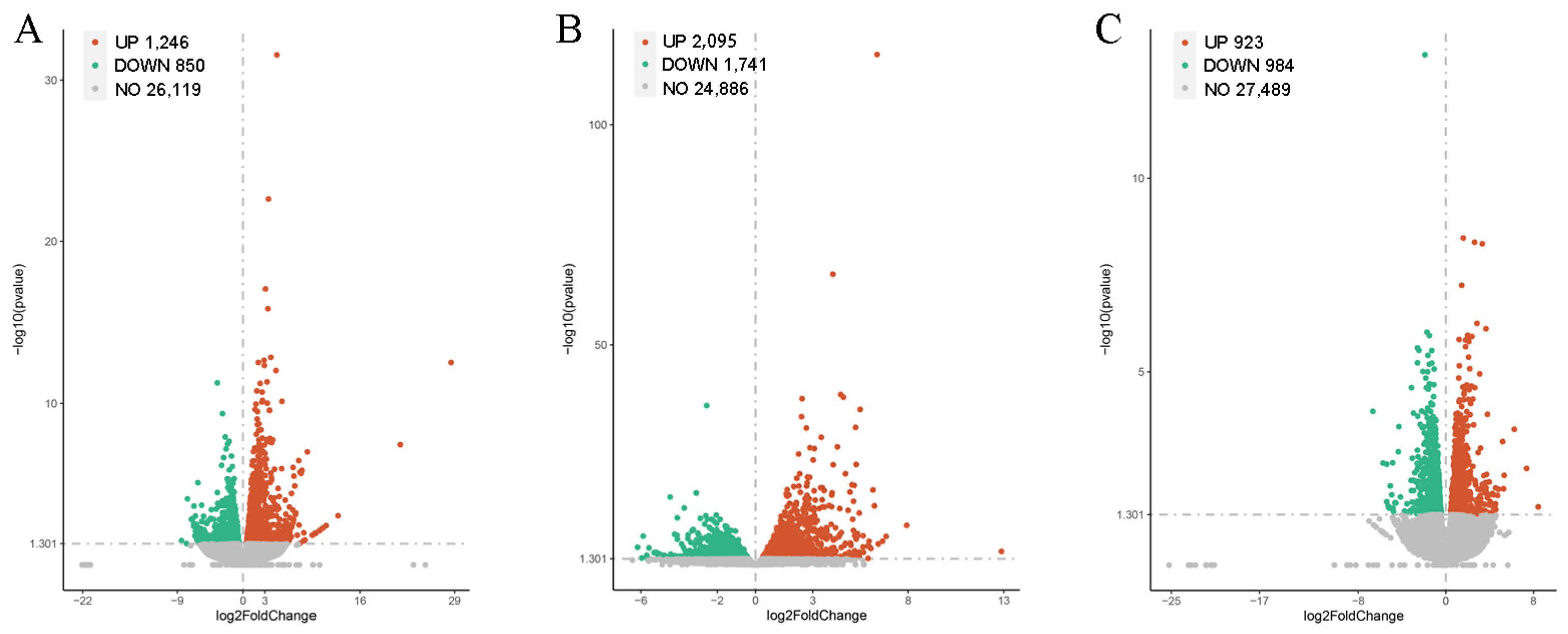
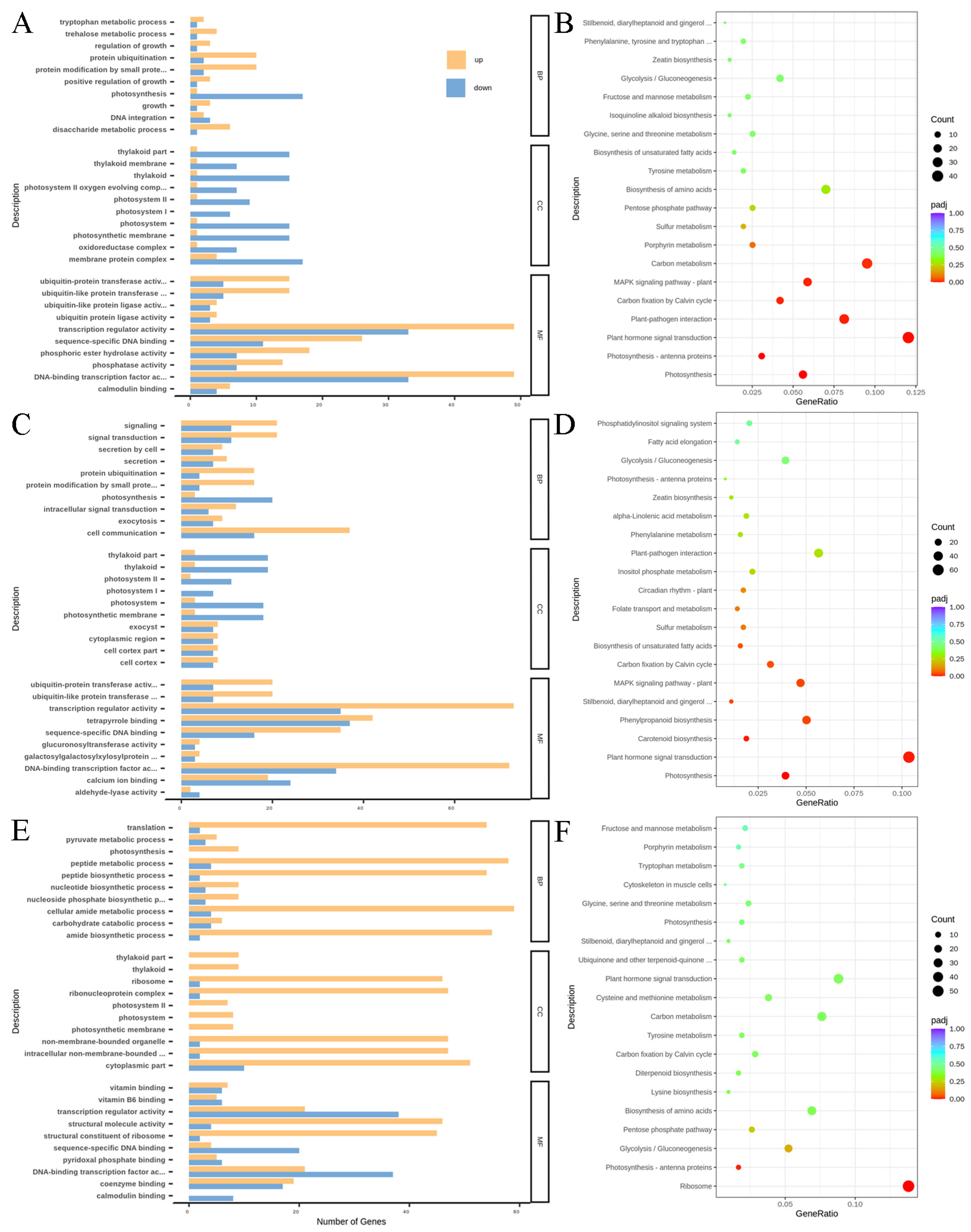
Beyond its direct antibiotic properties, tetramycin markedly enhances rice immune responses. Transcriptomic analysis revealed that tetramycin treatment substantially upregulates genes involved in plant hormone signal transduction and other defense-related pathways. This result aligns with the established paradigm of plant immunity, wherein chemical elicitors trigger complex signaling networks to activate defense mechanisms [
21,
22]. Notably, exogenous JA application alone is known to induce similar changes: In rice, JA application induces OsAOS2, OsLOX3, and OsJAZs along with the SA pathway regulators OsPR1a and OsWRKY45 and even upregulates the NADPH oxidase OsRbohB and peroxidase OsPOX1 [
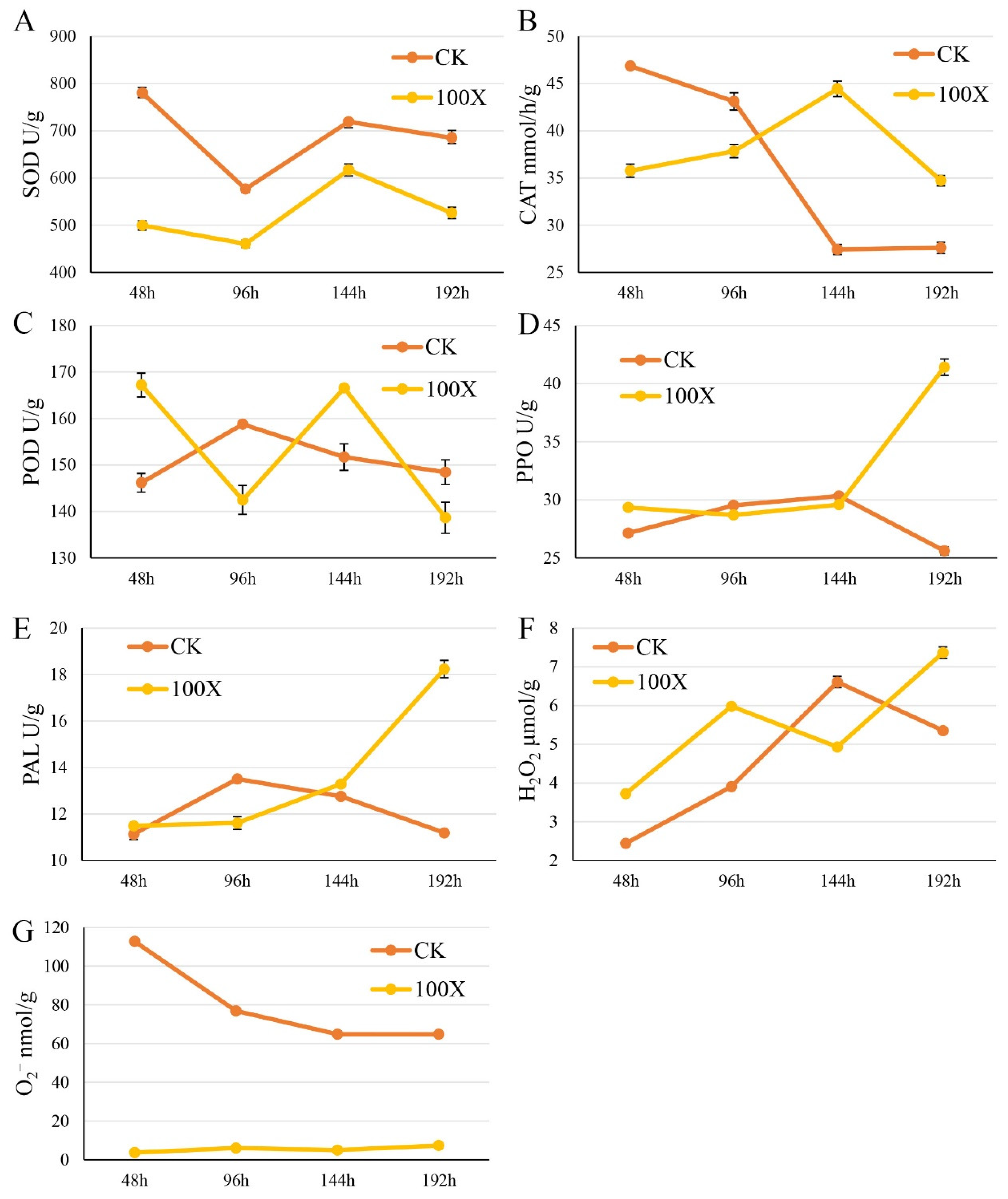
23]. The tetramycin-elicited increase in the activity of enzymes including PAL, POD, PPO and SOD, implies that rice plants perceive tetramycin as an elicitor, thereby activating inducible defense gene networks. Consistent with this mechanism, other actinomycete-derived elicitors, such as ningnanmycin, have been shown to boost PAL, POD, and SOD expression and SA biosynthesis, triggering systemic acquired resistance [
24].
The analysis of phytohormone dynamics provides further insight into the immunomodulatory role of tetramycin in rice [
6,
25]. Previous studies have established JA as a crucial hormone for blast resistance. Rice mutants with JA biosynthesis deficiency exhibit enhanced susceptibility to
M. oryzae, whereas those overexpressing JA-biosynthetic genes show promoted pathogenesis-related gene expression during infection [
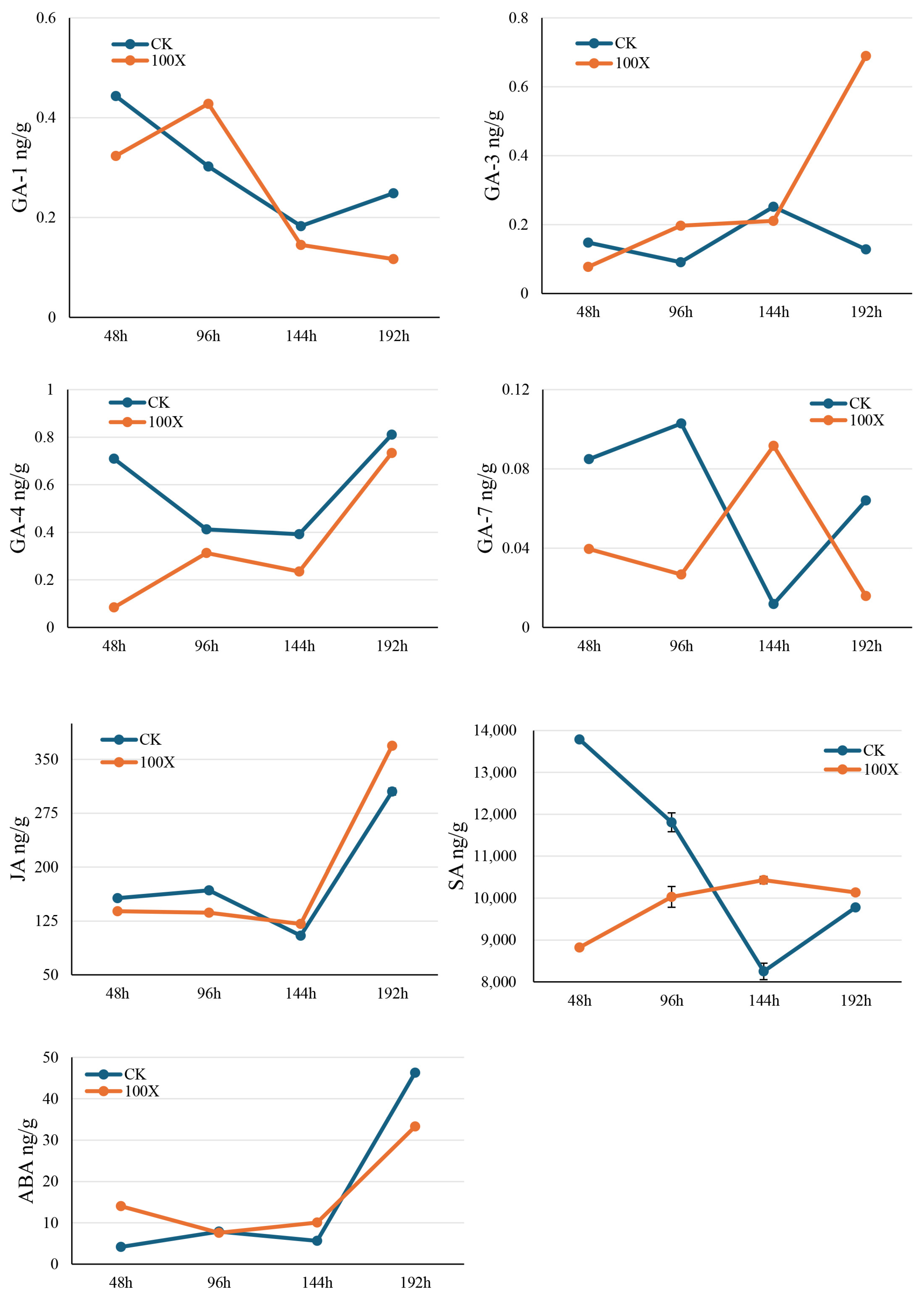
25]. In our study, tetramycin treatment led to marked increases in endogenous JA and JA–Ile levels, as well as the accumulation of SA at 48 h posttreatment. Interestingly, rice plants typically do not elevate SA levels upon
M. oryzae attack; indeed, a defense response in rice usually requires exogenous SA application [
6]. In this context, tetramycin’s effects resemble those of the synthetic SA analog BTH, which strongly activates SA-dependent defenses including WRKY45 and other PR genes [
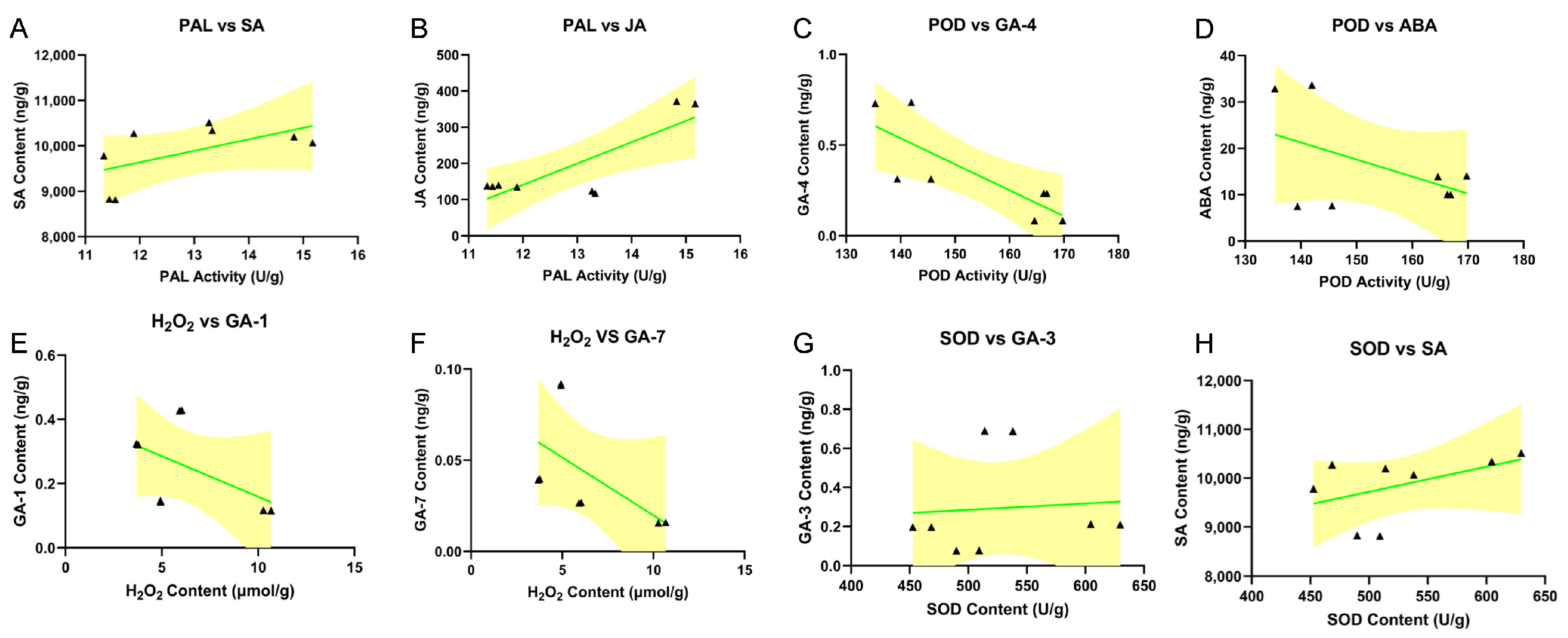
6]. However, in contrast to BTH, tetramycin simultaneously activates the JA pathway, as evidenced by the synergistic induction of JA-responsive transcripts together with SA markers. This JA–SA coactivation aligns with rice’s unique hormone interplay and is likely key to a broad-spectrum defense. While our study demonstrates that tetramycin activates JA and SA signaling pathways, the upstream sensors or receptors that perceive the tetramycin signal remain unknown. Future work should focus on identifying the direct molecular targets of tetramycin in rice cells to elucidate fully the mechanism by which it triggers these defense cascades.
A hallmark of plant immune activation is the oxidative burst. We detected a rapid burst of ROS in tetramycin-treated rice, including elevations of O
2− and H
2O
2. Early ROS production represents a common feature of pattern-triggered immunity. However, it is often described as atypical during
M. oryzae infection [
6]. ROS serve dual functions: at high concentrations, they can directly inhibit invading pathogens, whereas at controlled levels, they act as signaling molecules to activate downstream defense responses [
6,
26]. Our experiments revealed the strong upregulation of both ROS-scavenging and ROS-producing enzymes. SOD activity increased, consistent with the conversion of O
2− into H
2O
2. Similarly, POD and PPO activities rose markedly; these enzymes utilize H
2O
2 to catalyze lignin and phenolic cross-linking in the cell wall, reinforcing barriers against pathogen ingress. PAL activity also increased, feeding into the phenylpropanoid pathway that produces phytoalexins and SA. These changes mirror those seen with other immune elicitors: for example, the treatment of plants with
Streptomyces-derived ningnanmycin or with chitosan considerably boosts PAL, POD, and SOD activities as part of induced resistance [
6,
26]. Collectively, the surge in ROS coupled with enhanced antioxidant enzyme activities suggests that tetramycin triggers a controlled redox signaling cascade and thus resembles classic elicitors of plant immunity.
By contrast, tetramycin integrates direct antimicrobial activity with plant immune activation. At low concentrations, tetramycin can eliminate
M. oryzae inoculum and simultaneously vaccinate rice plants, an effect unattainable with BTH alone. Chitosan, an oligosaccharide elicitor, also induces SAR and defense enzymes [
24]. However, it has a broad mode of action that is broader, encompassing microbial membrane disruption and nutrient chelation, thereby acting in part as a direct antimicrobial agent [
24]. Nevertheless, the antimicrobial efficacy of chitosan is generally lower than that of specialized antibiotics. Quantitative analysis indicates that its antimicrobial activity is highly dependent on molecular weight, with optimal activity typically occurring within a critical range of 4–10 kDa [
27]. Tetramycin’s well-defined chemical structure and potent bioactivity distinguish it from other elicitors. Furthermore, other actinomycete-derived bioactive compounds (e.g., aminoglycosides like kasugamycin, or lipopeptides like fengycins) have been shown to elicit defenses, but few have documented direct antifungal properties against rice blast coupled with immune induction. Tetramycin’s tetraene macrolide framework thus represents a distinctive mode: it targets the pathogen’s membrane integrity while also engaging the host’s JA/SA/ROS machinery for an amplified response.
Collectively, our findings reveal the mechanism underlying tetramycin-induced resistance in rice. This dual action—direct fungicidal activity and plant immunomodulation—creates a potent synergistic effect. Tetramycin directly targets M. oryzae, reducing the initial pathogen load. In addition, it primes rice innate immunity by triggering a rapid ROS burst, upregulating JA and SA pathways, and enhancing the activity of key defense enzymes (SOD, POD, PPO, and PAL). These changes result in the enhanced fortification of cell walls and accumulation of antimicrobial phenolics. The transcriptomic shifts we observed align with an early-wave defense reminiscent of effector-triggered immunity, albeit triggered here by a chemical agent rather than a pathogen effector. From a biological standpoint, these insights advance our understanding of how chemical elicitors can modulate rice blast resistance, highlighting potential for designing new inducers that exploit similar dual mechanisms.
4. Materials and Methods
4.1. Test Materials
The rice blast fungus (M. oryzae) used in this study was obtained from the Liaoning Microbial Strain Preservation Center. The rice cultivar employed was CO39 (O. sativa ssp indica cultivar). A 0.15% aqueous solution of tetramycin (Wuningmycin, PD20171878) supplied by Liaoning Weike Biotechnology Co., Ltd. (Shenyang, Liaoning, China) served as the chemical treatment.
4.2. Rice Cultivation and Treatment Conditions
Rice seedlings were established by using a hydroponic pot system and the nutrient solution recipe from the International Rice Research Institute (composition detailed in
Table 1). Uniform seedlings (at the 4–5 leaf stage) were divided into two treatment groups with 30 plants per replicate (three replicates per treatment). Throughout the experiment, rice plants were maintained under the controlled conditions of 22 °C ± 1 °C, 90–95% relative humidity, and 16/8 h (light/dark) photoperiod. One group of plants received a foliar application of tetramycin (7.68 mg/L), whereas the control group was treated with an equivalent volume of sterile water. Both treatments were administered 48 h prior to inoculation. Following inoculation, all plants were placed in the dark for 24 h to facilitate pathogen infection. The in vitro antifungal activity of tetramycin against
M. oryzae was determined by using the mycelial growth rate method. The half-maximal effective concentration was calculated to be 7.68 mg/L from the resulting dose–response curve.
4.3. Preparation of P. oryzae Conidial Suspension
For inoculum preparation, cryopreserved
P. oryzae was first activated and cultured on oatmeal–tomato juice agar at 25–28 °C until a dense mycelial mat formed. Forty-eight hours before inoculation, the surface mycelia were gently removed by scraping and rinsing with sterile water. Cultures were subsequently incubated under high humidity and continuous light for 1–2 days to induce conidiation. A conidial suspension was obtained by washing the culture surface with 100 mL of sterile water, filtering through a double layer of sterile gauze, and adjusting the concentration to approximately 30 conidia per 120× microscopic field [
18].
4.4. Inoculation, Incubation, and Sampling Procedures
Inoculation was conducted by uniformly spraying the conidial suspension onto the foliage of rice seedlings. Treatments were separated by plastic barriers to prevent cross-contamination. After inoculation, plants were maintained in a high-humidity environment (e.g., in a shaded growth chamber) for 24 h, then returned to standard growth conditions. Leaf samples (the fourth and fifth leaves) were collected at 48, 96, 144, and 192 hpi. All collected samples were immediately frozen at −20 °C until further analysis.
4.5. cDNA Library Construction, Sequencing, and Bioinformatics Analysis
Total RNA was extracted from rice leaves by using the RNAprep Pure Plant Plus Kit (TIANGEN, Beijing, China). Its integrity of the total RNA was then verified by employing an Agilent 2100 Bioanalyzer (Agilent Technologies, Santa Clara, CA, USA). After RNA quality was confirmed, Hieff NGS® Ultima Dual-mode RNA Library Prep Kit (premixed version) (Yeasen, Shanghai, China) was utilized for transcriptome library construction, strictly following the instructions regarding recommended reagents and consumables. For sequencing on the DNBSEQ-T7 platform, double-stranded products from the cDNA were denatured, circularized, and digested to generate single-stranded circular cDNA, which was used to prepare DNA nanoballs. After the libraries are qualified, sequencing was performed on the DNBSEQ platform in accordance with effective library concentrations and data output requirements.
The raw sequencing reads contained low-quality and adapter-contaminated reads. Therefore, quality control was performed by using the default parameters of fastp (v0.23.2) to filter substandard reads. Clean reads were quickly and accurately aligned to the
O sativa L. reference genome (FA download link:
https://www.ncbi.nlm.nih.gov/datasets/genome/GCF_034140825.1/ (accessed on 20 July 2025); GFF3 download link:
https://www.ncbi.nlm.nih.gov/datasets/gene/GCF_034140825.1/ (accessed on 20 July 2025)) by utilizing HISAT2 software to obtain information on the positioning of reads on the reference genome. The transcripts of each sample were assembled by employing StringTie software (
http://ccb.jhu.edu/software/stringtie/index.shtml (accessed on 20 July 2025)), and then merged into a set of transcript sets. The Fragments Per Kilobase of transcript per Million fragments mapped method was applied to measure the expression of a gene or transcript by StringTie with the maximum flow algorithm. Criteria for DEGs were set as fold change ≥ 2 and FDR < 0.05. Finally, GO and KEGG enrichment analyses were performed on the DEGs identified in all groups (
http://geneontology.org (accessed on 25 August 2025);
http://www.genome.jp/kegg/ (accessed on 25 August 2025)).
4.6. Measurement of Physiological Parameters
The activities of SOD and POD were determined by using the nitroblue tetrazolium photochemical reduction method and guaiacol methods, respectively. The activities of CAT and PPO were assessed via the catalytic decomposition of hydrogen peroxide ammonium molybdate. PAL activity was determined by monitoring the increase in absorbance at 290 nm resulting from the formation of trans-cinnamic acid through L-phenylalanine deamination. H2O2 and O2− contents were determined by utilizing the titanium sulfate (titanium chloride), hydroxylamine hydrochloride paminobenzene sulfonic acid-α-naphthylamine colorimetric method, and the thiobarbituric acid colorimetric methods. All physiological parameters were analyzed by Wuhan ProNets Testing Technology Co., Ltd., Wuhan, China. Related enzymes activities between different groups were statistically analyzed by using Student’s t-test. A p < 0.05 was considered to be statistically significant.
4.7. Assays of the Different Phytohormones in Rice Leaves
Rice leaf samples (200–500 mg) were collected and ground into a fine powder in liquid nitrogen. The contents of the phytohormones gibberellins (GA-1, GA-3, GA-4, and GA-7), JA, SA, and ABA were quantified by using high-performance liquid chromatography–tandem mass spectrometry with a SCIEX QTRAP 5500 system (AB Sciex, Framingham, MA, USA). The powdered sample was mixed with acetonitrile solution (v/v), which contained 20 ng of deuterium-labeled internal standard per sample, extracted at 4 °C overnight, then centrifuged at 12,000 rpm for 5 min. The resulting supernatant was collected. The precipitate was re-extracted with acetonitrile, and the resulting supernatant was combined with the first extract. The combined supernatant was loaded onto a C18 Sep-Pak solid-phase extraction column. The column was vortexed for 30 s, and the flow-through was collected. The purified extract was dried under a gentle nitrogen stream and reconstituted in 100% methanol. The final extract was transferred to HPLC vials and analyzed through liquid chromatography (LC)–mass spectrometry (MS) on a SCIEX-6500QTRAP LC/MS/MS system (AB Sciex, Framingham, MA, USA) equipped with an electrospray ionization (ESI) turbo ion-spray interface. The contents of all phytohormones were determined by Wuhan ProNets Testing Technology Co., Ltd., Wuhan, China Chromatographic separation was performed by using a Waters XSelect® HSS T3 column (Waters Corporation, Milford, MA, USA). The mobile phase consisted of (A) 0.1% formic acid in water and (B) acetonitrile. The flow rate was set at 0.35 mL/min, and the column temperature was maintained at 30 °C. An injection volume of 5 μL was used for analysis. Separation was achieved by employing a gradient elution program. Analysis was conducted with an electrospray ionization (ESI) source operating in positive and negative ionization modes. The key parameters were set as follows: curtain gas of 35 psi; ion spray voltage of +4500 V/−4500 V; nebulizing gas pressure of 60 psi; auxiliary gas pressure of 60 psi; and turbo spray temperature of 500 °C). Hormone contents between different groups were statistically analyzed by using Student’s t-test. p < 0.05 was considered to be statistically significant.



 ,
,