Untargeted Metabolomic and Lipidomic Profiling Reveals Distinct Biochemical Patterns in Treated Biotinidase Deficiency

 , , , ,
  and
and
Abstract
1. Introduction
2. Results
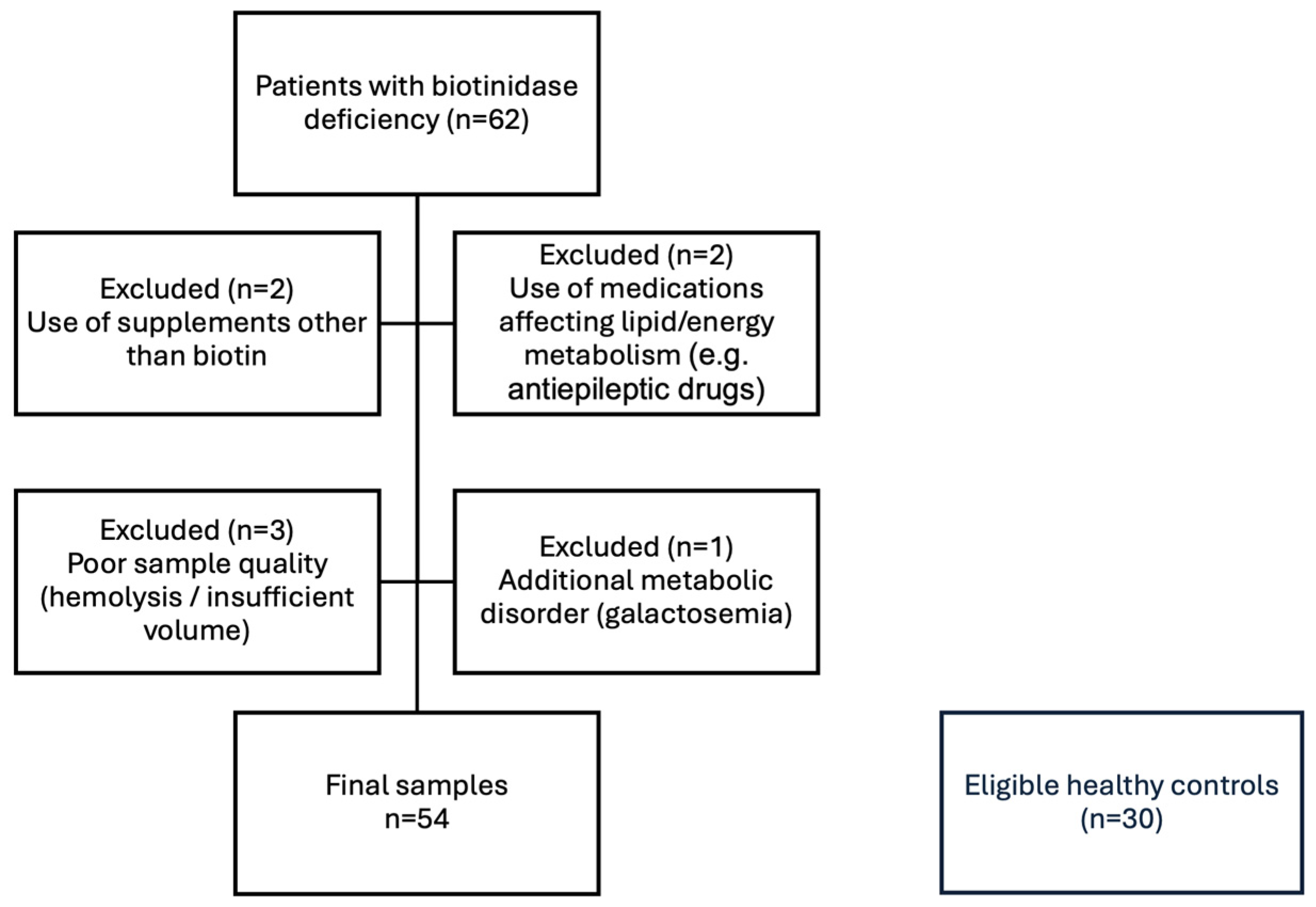
2.1. Demographic and Baseline Characteristics
2.2. Metabolomic and Lipidomic Profiles
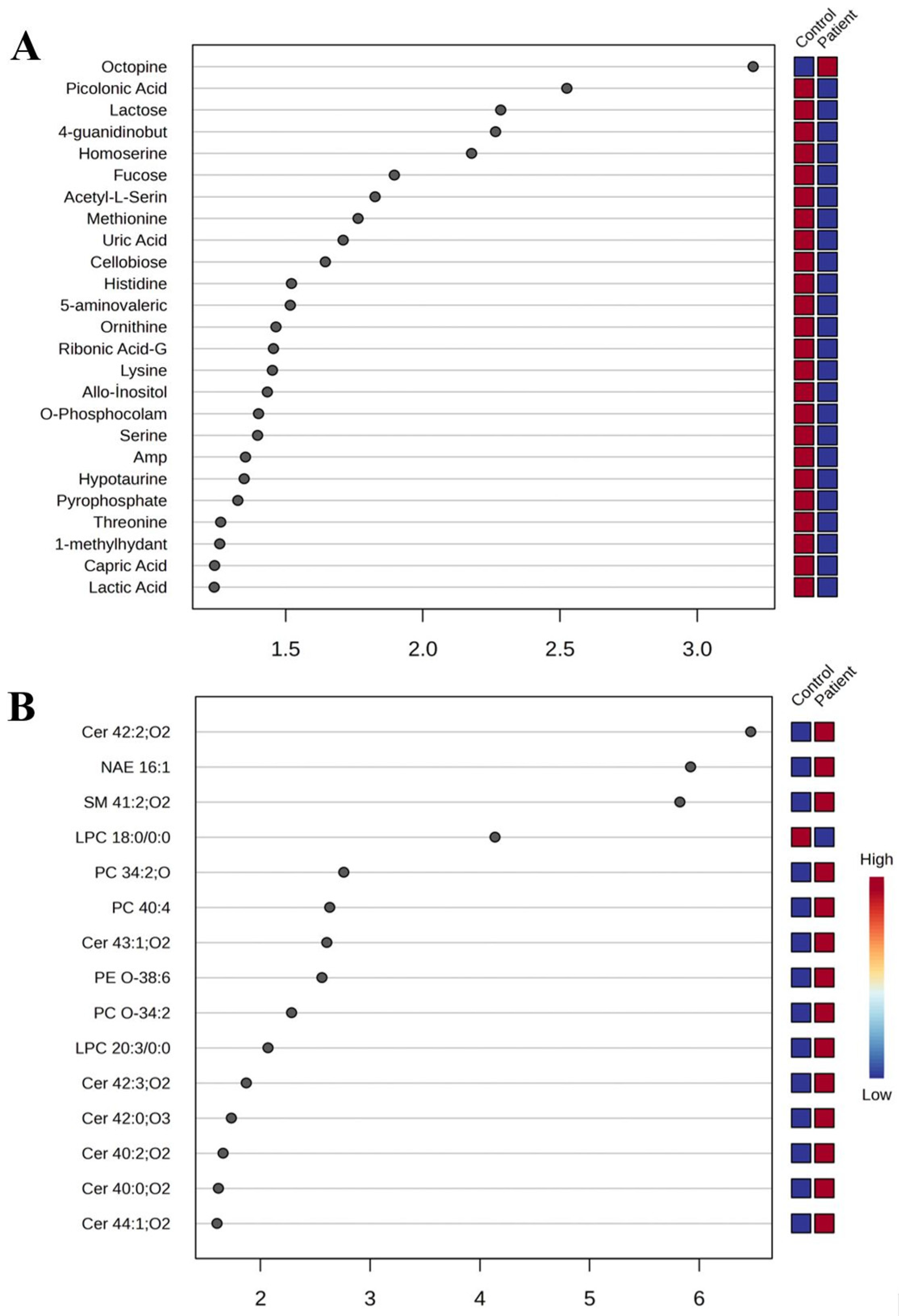
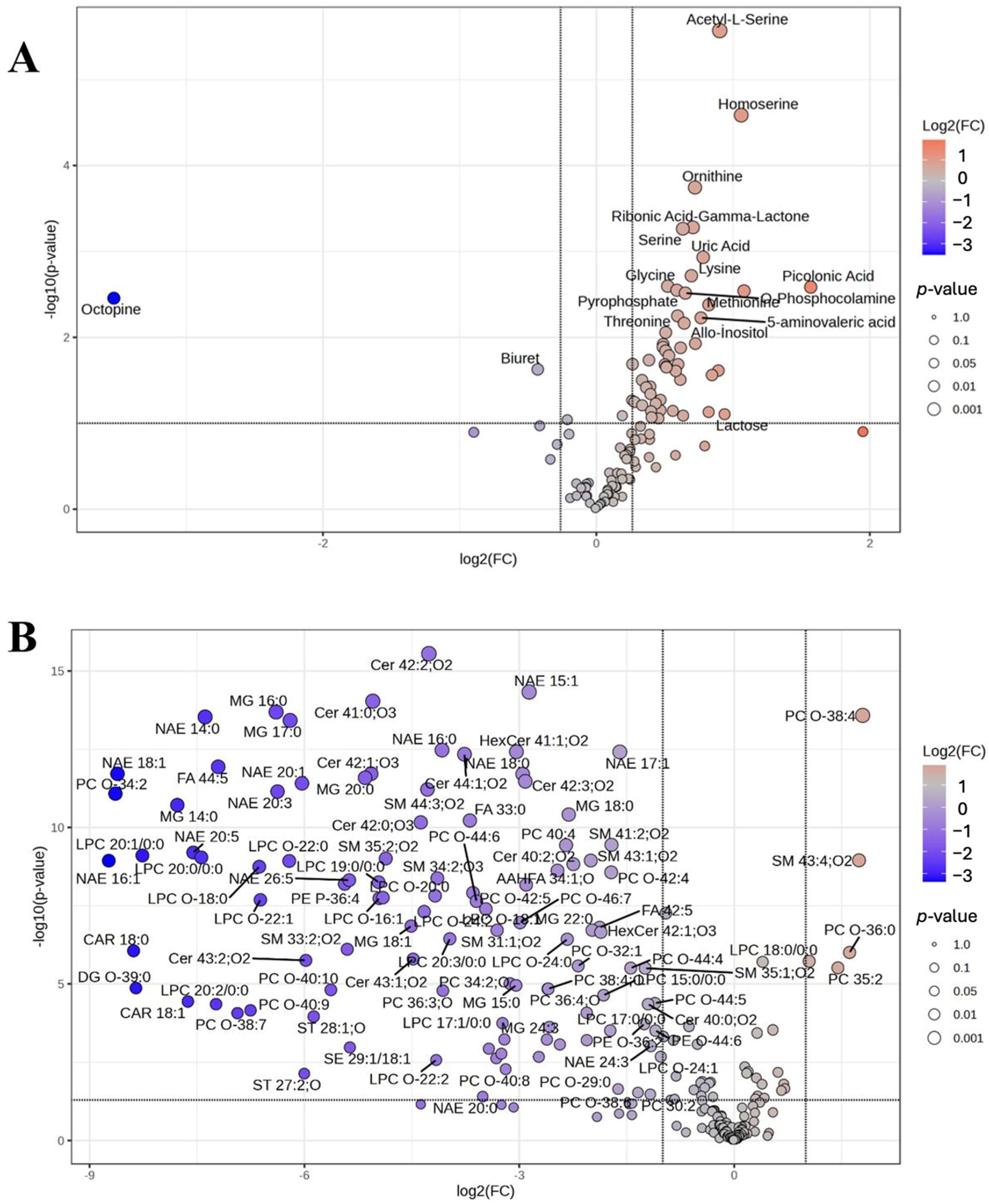
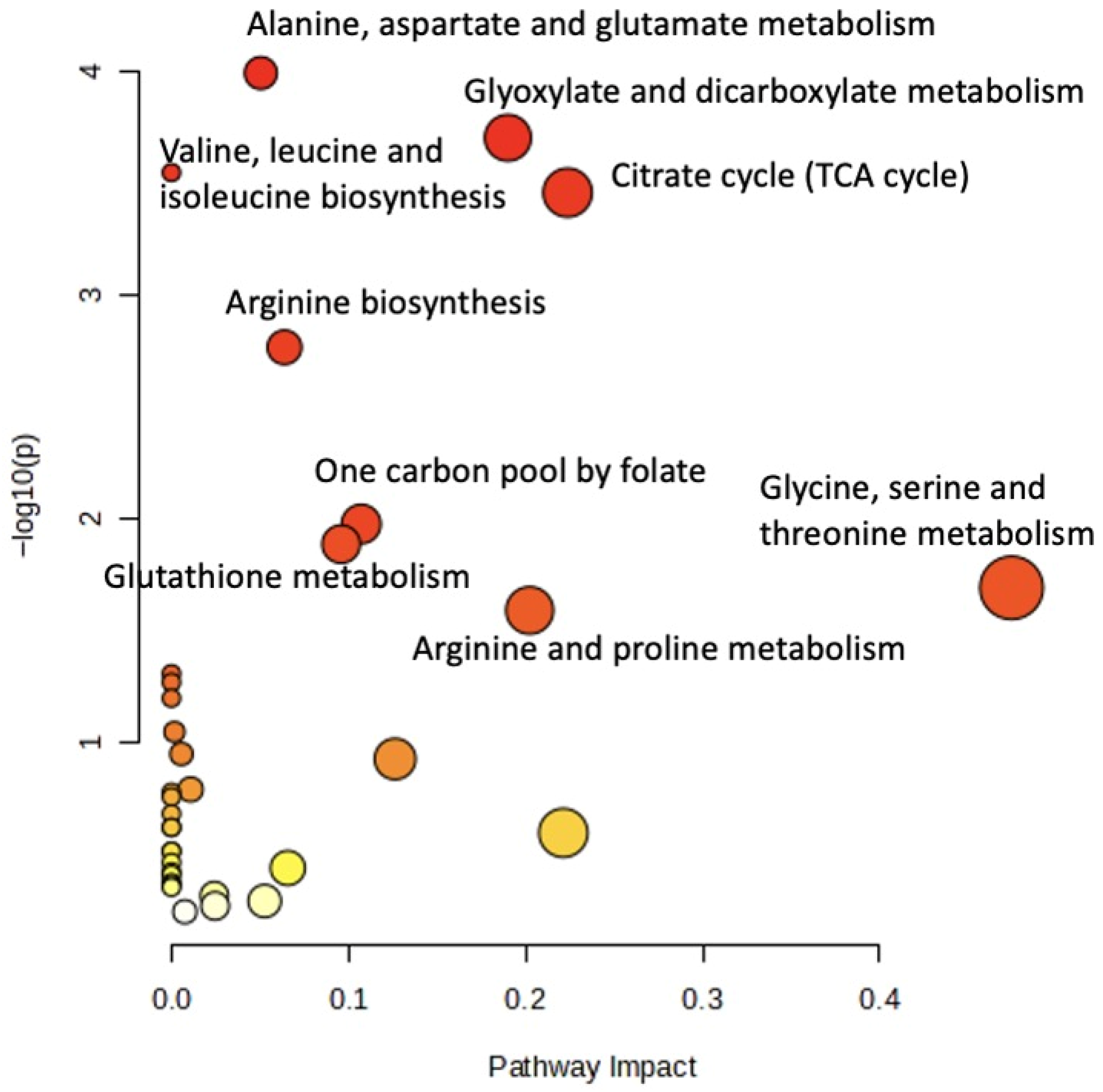
2.2.1. Metabolomic Profile Alterations with Biotinidase Deficiency
Amino Acid Metabolism
Energy Metabolism
Carbon and Nitrogen Metabolism
Organic Acids and Derivatives
Other Organic Acids
Sugars and Carbohydrate Metabolism
2.2.2. Lipidomic Profile Alterations with Biotinidase Deficiency
3. Discussion
4. Materials and Methods
4.1. Sample Collection and Preparation
4.2. Metabolomic and Lipidomic Analyses
4.3. Data Interpretation and Bioinformatics Analysis
4.4. Statistical Analysis
5. Conclusions
Supplementary Materials
Author Contributions
Funding
Institutional Review Board Statement
Informed Consent Statement
Data Availability Statement
Conflicts of Interest
Abbreviations
| BD | Biotinidase Deficiency |
| BTD | Biotinidase |
| WES | Whole-Exome Sequencing |
| GC–MS | Gas Chromatography–Mass Spectrometry |
| LC–qTOF–MS | Liquid Chromatography–Quadrupole Time-of-Flight Mass Spectrometry |
| PCA | Principal Component Analysis |
| PLS–DA | Partial Least Squares Discriminant Analysis |
| VIP | Variable Importance in Projection |
| TCA | Tricarboxylic Acid Cycle |
| NAE | N-Acylethanolamine |
| LPC | Lysophosphatidylcholine |
| PC | Phosphatidylcholine |
| PE | Phosphatidylethanolamine |
| SM | Sphingomyelin |
| Cer | Ceramide |
| FA | Fatty Acid |
| CAR | Acylcarnitine |
| ST | Sterol |
| SE | Sterol Ester |
| FDR | False Discovery Rate |
| QC | Quality Control |
| EDTA | Ethylenediaminetetraacetic Acid |
| SD | Standard Deviation |
| IQR | Interquartile Range |
| MS | Mass Spectrometry |
References
- Wolf, B.; Grier, R.E.; Allen, R.J.; Goodman, S.I.; Kien, C.L. Biotinidase deficiency: The enzymatic defect in late-onset multiple carboxylase deficiency. Clin. Chim. Acta 1983, 131, 273–281. [Google Scholar] [CrossRef]
- Wolf, B. Clinical issues and frequent questions about biotinidase deficiency. Mol. Genet. Metab. 2010, 100, 6–13. [Google Scholar] [CrossRef]
- Cowan, T.M.; Blitzer, M.G.; Wolf, B.; Working Group of the American College of Medical Genetics Laboratory Quality; Assurance, C. Technical standards and guidelines for the diagnosis of biotinidase deficiency. Genet. Med. 2010, 12, 464–470. [Google Scholar] [CrossRef]
- Tezel, B.; Dilli, D.; Bolat, H.; Sahman, H.; Ozbas, S.; Acican, D.; Ertek, M.; Kose, M.R.; Dilmen, U. The development and organization of newborn screening programs in Turkey. J. Clin. Lab. Anal. 2014, 28, 63–69. [Google Scholar] [CrossRef]
- Wolf, B. Biotinidase Deficiency. In GeneReviews((R)); Adam, M.P., Feldman, J., Mirzaa, G.M., Pagon, R.A., Wallace, S.E., Amemiya, A., Eds.; University of Washington: Seattle, WA, USA, 1993. [Google Scholar]
- Knight, H.C.; Reynolds, T.R.; Meyers, G.A.; Pomponio, R.J.; Buck, G.A.; Wolf, B. Structure of the human biotinidase gene. Mamm. Genome 1998, 9, 327–330. [Google Scholar] [CrossRef] [PubMed]
- Wolf, B.; Hsia, Y.E.; Sweetman, L.; Feldman, G.; Boychuk, R.B.; Bart, R.D.; Crowell, D.H.; Di Mauro, R.M.; Nyhan, W.L. Multiple carboxylase deficiency: Clinical and biochemical improvement following neonatal biotin treatment. Pediatrics 1981, 68, 113–118. [Google Scholar] [CrossRef]
- Wurth, R.; Turgeon, C.; Stander, Z.; Oglesbee, D. An evaluation of untargeted metabolomics methods to characterize inborn errors of metabolism. Mol. Genet. Metab. 2024, 141, 108115. [Google Scholar] [CrossRef]
- Mamas, M.; Dunn, W.B.; Neyses, L.; Goodacre, R. The role of metabolites and metabolomics in clinically applicable biomarkers of disease. Arch. Toxicol. 2011, 85, 5–17. [Google Scholar] [CrossRef]
- Hochachka, P.W.; Hartline, P.H.; Fields, J.H. Octopine as an end product of anaerobic glycolysis in the chambered nautilus. Science 1977, 195, 72–74. [Google Scholar] [CrossRef] [PubMed]
- Saleem, H.; Simpson, B. Biotinidase Deficiency. In StatPearls [Internet]; StatPearls Publishing: Treasure Island, FL, USA, 2025. Available online: https://www.ncbi.nlm.nih.gov/books/NBK560607/ (accessed on 25 December 2025).
- Krieger, I.; Cash, R.; Evans, G.W. Picolinic acid in acrodermatitis enteropathica: Evidence for a disorder of tryptophan metabolism. J. Pediatr. Gastroenterol. Nutr. 1984, 3, 62–68. [Google Scholar] [CrossRef] [PubMed]
- Chen, Y.; Stankovic, R.; Cullen, K.M.; Meininger, V.; Garner, B.; Coggan, S.; Grant, R.; Brew, B.J.; Guillemin, G.J. The kynurenine pathway and inflammation in amyotrophic lateral sclerosis. Neurotox. Res. 2010, 18, 132–142. [Google Scholar] [CrossRef]
- Firrman, J.; Liu, L.; Mahalak, K.; Hu, W.; Bittinger, K.; Moustafa, A.; Jones, S.M.; Narrowe, A.; Tomasula, P. An in vitro analysis of how lactose modifies the gut microbiota structure and function of adults in a donor-independent manner. Front. Nutr. 2022, 9, 1040744. [Google Scholar] [CrossRef]
- Leuzzi, V.; Mastrangelo, M.; Battini, R.; Cioni, G. Inborn errors of creatine metabolism and epilepsy. Epilepsia 2013, 54, 217–227. [Google Scholar] [CrossRef]
- Lee, M.; Martin, M.N.; Hudson, A.O.; Lee, J.; Muhitch, M.J.; Leustek, T. Methionine and threonine synthesis are limited by homoserine availability and not the activity of homoserine kinase in Arabidopsis thaliana. Plant J. 2005, 41, 685–696. [Google Scholar] [CrossRef] [PubMed]
- Sun, Y.; Li, X.; Wang, T.; Li, W. Core Fucosylation Regulates the Function of Pre-BCR, BCR and IgG in Humoral Immunity. Front. Immunol. 2022, 13, 844427. [Google Scholar] [CrossRef]
- Phone Myint, S.M.M.; Sun, L.Y. L-serine: Neurological Implications and Therapeutic Potential. Biomedicines 2023, 11, 2117. [Google Scholar] [CrossRef]
- Niculescu, M.D.; Zeisel, S.H. Diet, methyl donors and DNA methylation: Interactions between dietary folate, methionine and choline. J. Nutr. 2002, 132, 2333S–2335S. [Google Scholar] [CrossRef] [PubMed]
- Lu, S.C. Regulation of glutathione synthesis. Mol. Asp. Med. 2009, 30, 42–59. [Google Scholar] [CrossRef] [PubMed]
- Li, M.; Wang, Y.; Guo, C.; Wang, S.; Zheng, L.; Bu, Y.; Ding, K. The claim of primacy of human gut Bacteroides ovatus in dietary cellobiose degradation. Gut Microbes 2023, 15, 2227434. [Google Scholar] [CrossRef]
- de Koning, T.J.; Snell, K.; Duran, M.; Berger, R.; Poll-The, B.T.; Surtees, R. L-serine in disease and development. Biochem. J. 2003, 371, 653–661. [Google Scholar] [CrossRef]
- Borkum, J.M. The Tricarboxylic Acid Cycle as a Central Regulator of the Rate of Aging: Implications for Metabolic Interventions. Adv. Biol. 2023, 7, e2300095. [Google Scholar] [CrossRef] [PubMed]
- Xuan, J.; Pan, G.; Qiu, Y.; Yang, L.; Su, M.; Liu, Y.; Chen, J.; Feng, G.; Fang, Y.; Jia, W.; et al. Metabolomic profiling to identify potential serum biomarkers for schizophrenia and risperidone action. J. Proteome Res. 2011, 10, 5433–5443. [Google Scholar] [CrossRef]
- Ali, O.; Szabo, A. Review of Eukaryote Cellular Membrane Lipid Composition, with Special Attention to the Fatty Acids. Int. J. Mol. Sci. 2023, 24, 15693. [Google Scholar] [CrossRef]
- van Meer, G.; Voelker, D.R.; Feigenson, G.W. Membrane lipids: Where they are and how they behave. Nat. Rev. Mol. Cell Biol. 2008, 9, 112–124. [Google Scholar] [CrossRef]
- Longo, N.; Frigeni, M.; Pasquali, M. Carnitine transport and fatty acid oxidation. Biochim. Biophys. Acta 2016, 1863, 2422–2435. [Google Scholar] [CrossRef] [PubMed]
- Tsuboi, K.; Uyama, T.; Okamoto, Y.; Ueda, N. Endocannabinoids and related N-acylethanolamines: Biological activities and metabolism. Inflamm. Regen. 2018, 38, 28. [Google Scholar] [CrossRef]
- Andrieu-Abadie, N.; Gouaze, V.; Salvayre, R.; Levade, T. Ceramide in apoptosis signaling: Relationship with oxidative stress. Free Radic. Biol. Med. 2001, 31, 717–728. [Google Scholar] [CrossRef] [PubMed]
- Eylem, C.C.; Nemutlu, E.; Dogan, A.; Acik, V.; Matyar, S.; Gezercan, Y.; Altintas, S.; Okten, A.I.; Akduman, N.E.B. High-throughput single-step plasma sample extraction optimization strategies with experimental design for LC-MS and GC–MS integrated metabolomics and lipidomics analysis. Microchem. J. 2022, 179, 107525. [Google Scholar] [CrossRef]
- Zeki, O.C.; Eylem, C.C.; Nemutlu, E. Optimization of GC-MS run time for untargeted metabolomics: Trade-offs between speed, coverage, and repeatability. J. Pharm. Biomed. Anal. 2025, 266, 117068. [Google Scholar] [CrossRef]



| Characteristics | Biotinidase Deficiency (n = 54) | Healthy Control (n = 30) | p |
|---|---|---|---|
| Sex F/M, n (%) | 20 (37.0)/34 (63.0) | 10 (33.3)/20 (66.7) | 0.734 |
| Age at Sampling | 0.253 | ||
| Mean (SD) (min–max) | 4.5 ± 3.3 (0.3–13.6) | 4.0 ± 3.9 (0.1–16.0) | |
| Median [IQR] | 3.8 [1.8–6.4] | 2.5 [0.7–6.3] | |
| Initial Biotinidase Level at Presentation | - | - | |
| Mean (SD) (min–max) | 1.8 ± 0.9 (0.1–3.8) | ||
| Median [IQR] | 1.8 [1.1–2.4] | ||
| Initial Biotinidase Level Group, n (%) | - | - | |
| Deficiency (<10%) | 9 (16.7) | ||
| Partial Deficiency (10–30%) | 25 (46.3) | ||
| Heterozygous (30–70%) | 20 (37.0) | ||
| Normal (>70%) | 0 (0.0) | ||
| Biotin treatment groups, n (%) | - | - | |
| 5 mg/day | 33 (61.1) | ||
| 10 mg/day | 17 (31.5) | ||
| 20 mg/day | 4 (7.4) | ||
| Biotinidase level at the time of metabolomic sampling | - | - | |
| Mean ± SD (min–max) | 2.4 ± 1.2 (0.1–4.7) | ||
| Median [IQR] | 2.7 [1.4–3.3] |
| Allelic Distribution, n (%) | |
|---|---|
| Homozygous | 37 (68.6) |
| p.Asp444His homozygous | 29 (53.7) |
| p.C33Ffs*36 homozygous | 2 (3.7) |
| p.Arg209Cys homozygous | 2 (3.7) |
| p.Cys13PhefsTer36 homozygous | 1 (1.9) |
| p.Arg157His homozygous | 1 (1.9) |
| p.Arg209His homozygous | 1 (1.9) |
| p.Cys186Tyr homozygous | 1 (1.9) |
| Compound heterozygous | 17 (31.4) |
| p.Asp444His/p.Arg157His | 4 (7.4) |
| p.Asp444His/p.Thr532Met | 3 (5.5) |
| p.Gly14fs*35/p.Cys13Phe | 2 (3.7) |
| p.Asp444His/p.Cys418Ser | 1 (1.9) |
| p.Asp444His/p.C33Ffs*36 | 1 (1.9) |
| p.Asp444His/p.Cys13PhefsTer36 | 1 (1.9) |
| p.Asp444His/p.Val457Leu | 1 (1.9) |
| p.Arg79Cys/p.Tyr454Cys | 1 (1.9) |
| p.Pro187Ser/p.Pro369Leu | 1 (1.9) |
| p.Asp444His/p.Ala171Thr | 1 (1.9) |
| p.Cys13Phe/p.Ser359Gly | 1 (1.9) |
| Total | 54 (100) |
Disclaimer/Publisher’s Note: The statements, opinions and data contained in all publications are solely those of the individual author(s) and contributor(s) and not of MDPI and/or the editor(s). MDPI and/or the editor(s) disclaim responsibility for any injury to people or property resulting from any ideas, methods, instructions or products referred to in the content. |
© 2026 by the authors. Licensee MDPI, Basel, Switzerland. This article is an open access article distributed under the terms and conditions of the Creative Commons Attribution (CC BY) license.
Share and Cite
Ünlü Torlak, E.; Koç Yekedüz, M.; Bülbül, Y.E.; Kara, İ.S.; Erdoğan Kablan, S.; Eylem, C.C.; Uçar, B.; Süslü, İ.; Baysal, İ.; Yabanoğlu Çiftçi, S.; et al. Untargeted Metabolomic and Lipidomic Profiling Reveals Distinct Biochemical Patterns in Treated Biotinidase Deficiency. Int. J. Mol. Sci. 2026, 27, 1018. https://doi.org/10.3390/ijms27021018
Ünlü Torlak E, Koç Yekedüz M, Bülbül YE, Kara İS, Erdoğan Kablan S, Eylem CC, Uçar B, Süslü İ, Baysal İ, Yabanoğlu Çiftçi S, et al. Untargeted Metabolomic and Lipidomic Profiling Reveals Distinct Biochemical Patterns in Treated Biotinidase Deficiency. International Journal of Molecular Sciences. 2026; 27(2):1018. https://doi.org/10.3390/ijms27021018
Chicago/Turabian StyleÜnlü Torlak, Ezgi, Merve Koç Yekedüz, Yunus Emre Bülbül, İlknur Sürücü Kara, Sevilay Erdoğan Kablan, Cemil Can Eylem, Büşra Uçar, İncilay Süslü, İpek Baysal, Samiye Yabanoğlu Çiftçi, and et al. 2026. "Untargeted Metabolomic and Lipidomic Profiling Reveals Distinct Biochemical Patterns in Treated Biotinidase Deficiency" International Journal of Molecular Sciences 27, no. 2: 1018. https://doi.org/10.3390/ijms27021018
APA StyleÜnlü Torlak, E., Koç Yekedüz, M., Bülbül, Y. E., Kara, İ. S., Erdoğan Kablan, S., Eylem, C. C., Uçar, B., Süslü, İ., Baysal, İ., Yabanoğlu Çiftçi, S., Eminoğlu, F. T., Nemutlu, E., & Köse, E. (2026). Untargeted Metabolomic and Lipidomic Profiling Reveals Distinct Biochemical Patterns in Treated Biotinidase Deficiency. International Journal of Molecular Sciences, 27(2), 1018. https://doi.org/10.3390/ijms27021018