Structural Communication Between C-Peptide and Insulin Within the Proinsulin Molecule


Abstract
1. Introduction
2. Results
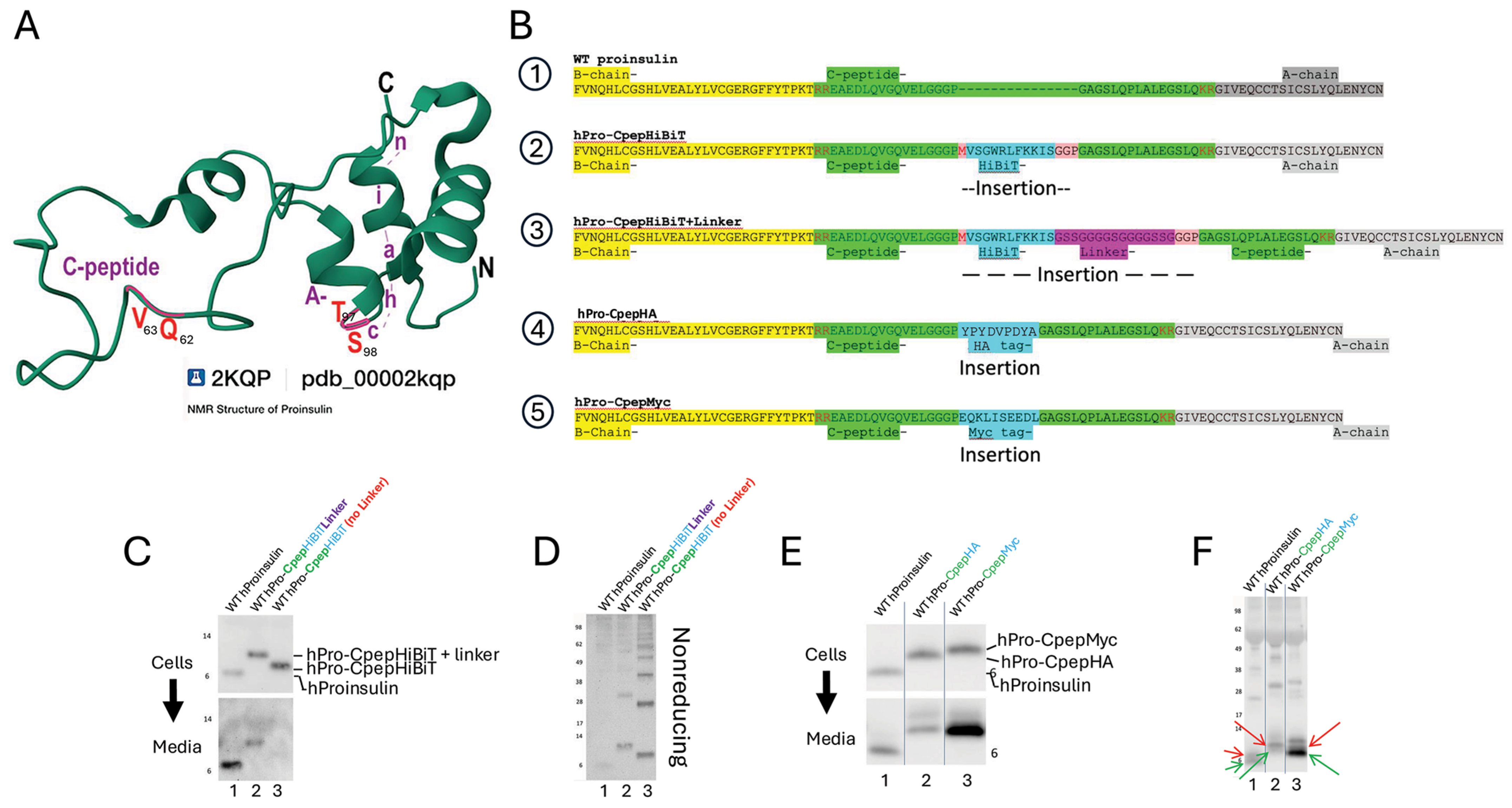
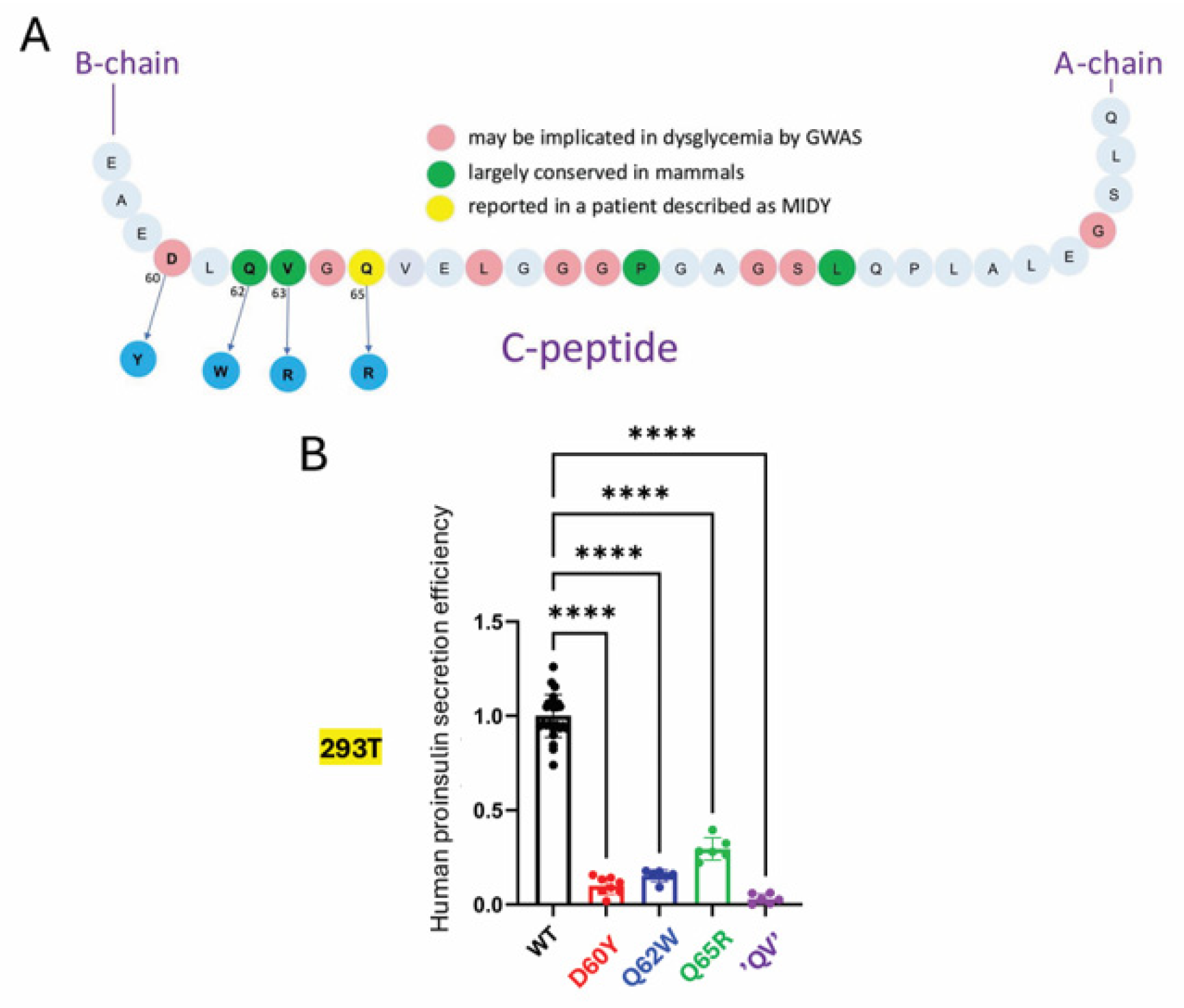
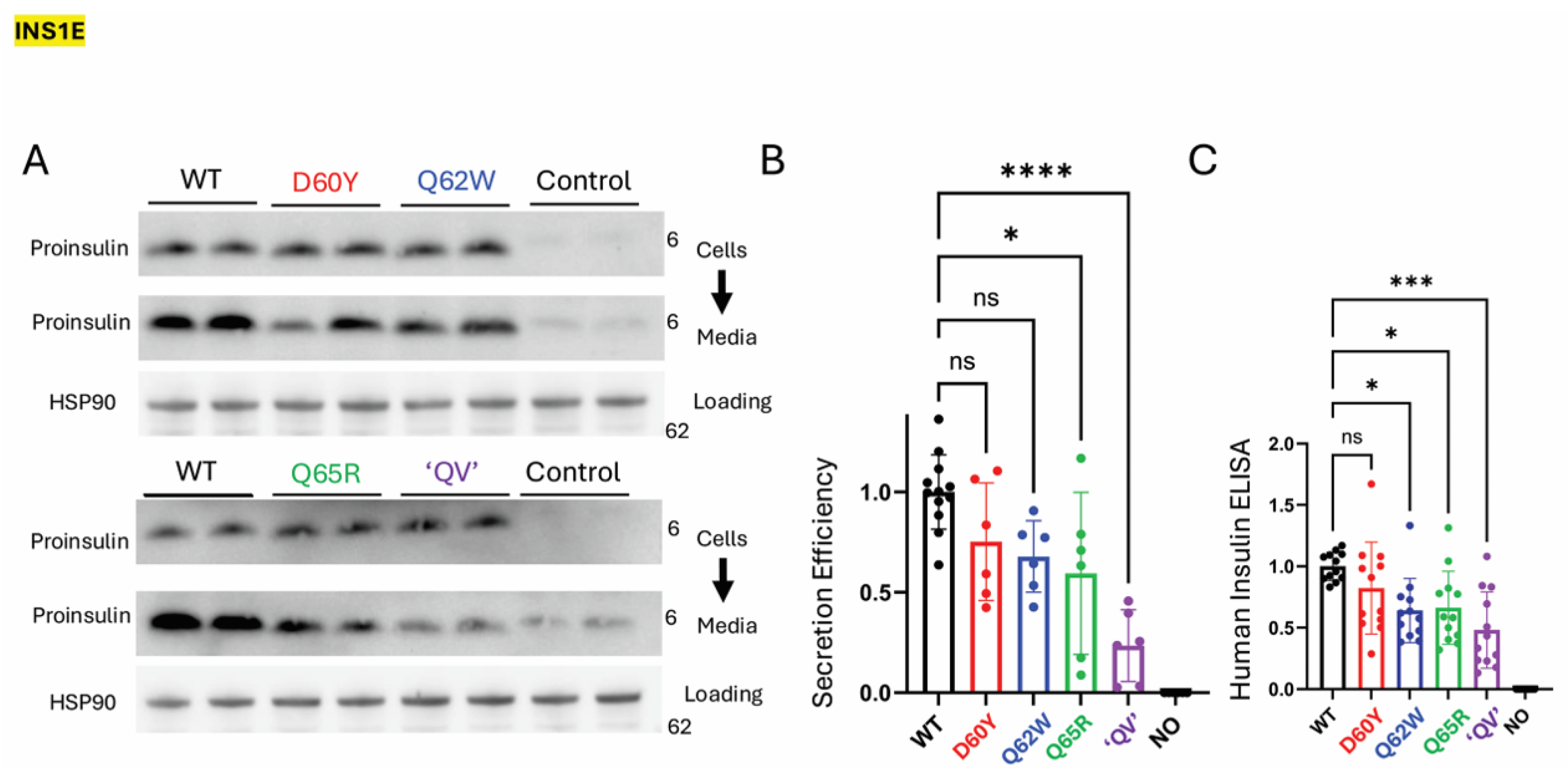
2.1. The Folding of Proinsulin Exhibits Sequence-Specific Sensitivity to Changes in C-Peptide Structure, Which Controls the Efficiency of Proinsulin Anterograde Trafficking
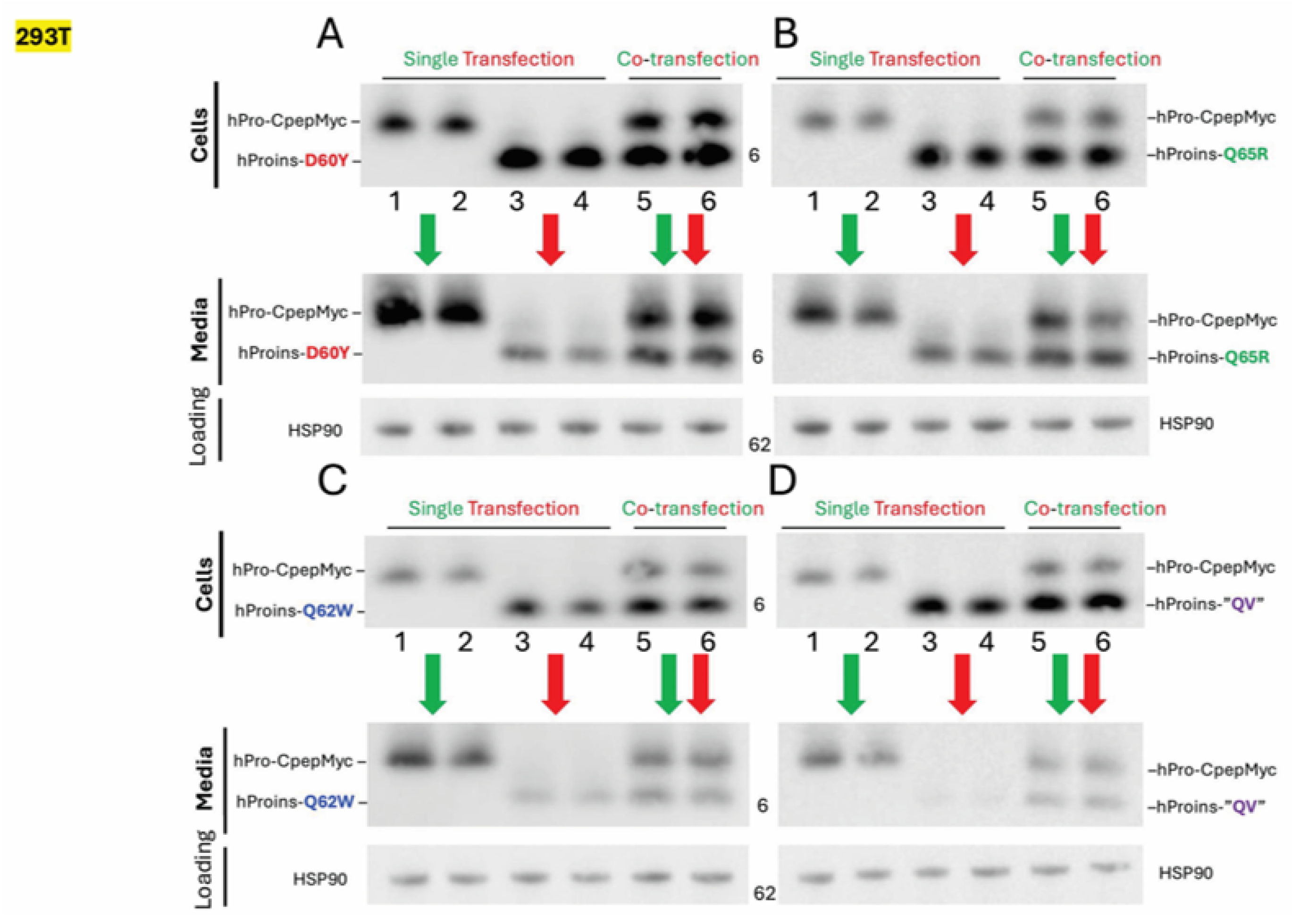
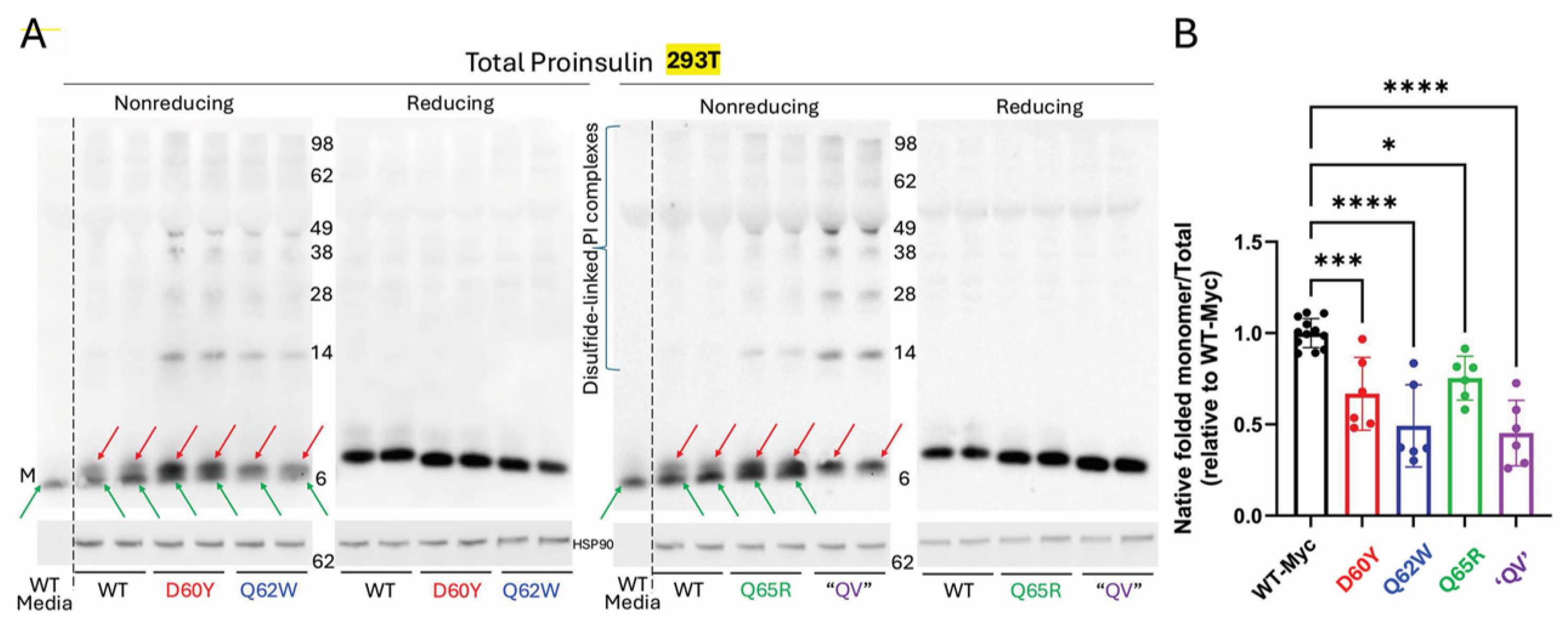
2.2. MIDY-like Behavior of Proinsulin C-Peptide Missense Variants
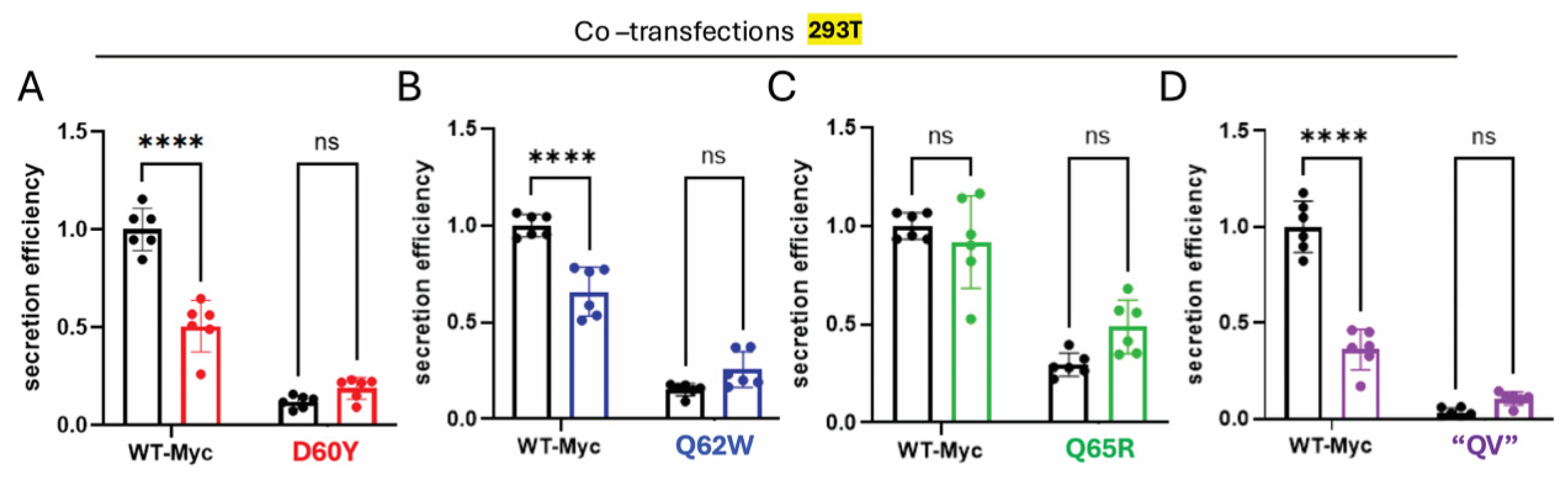
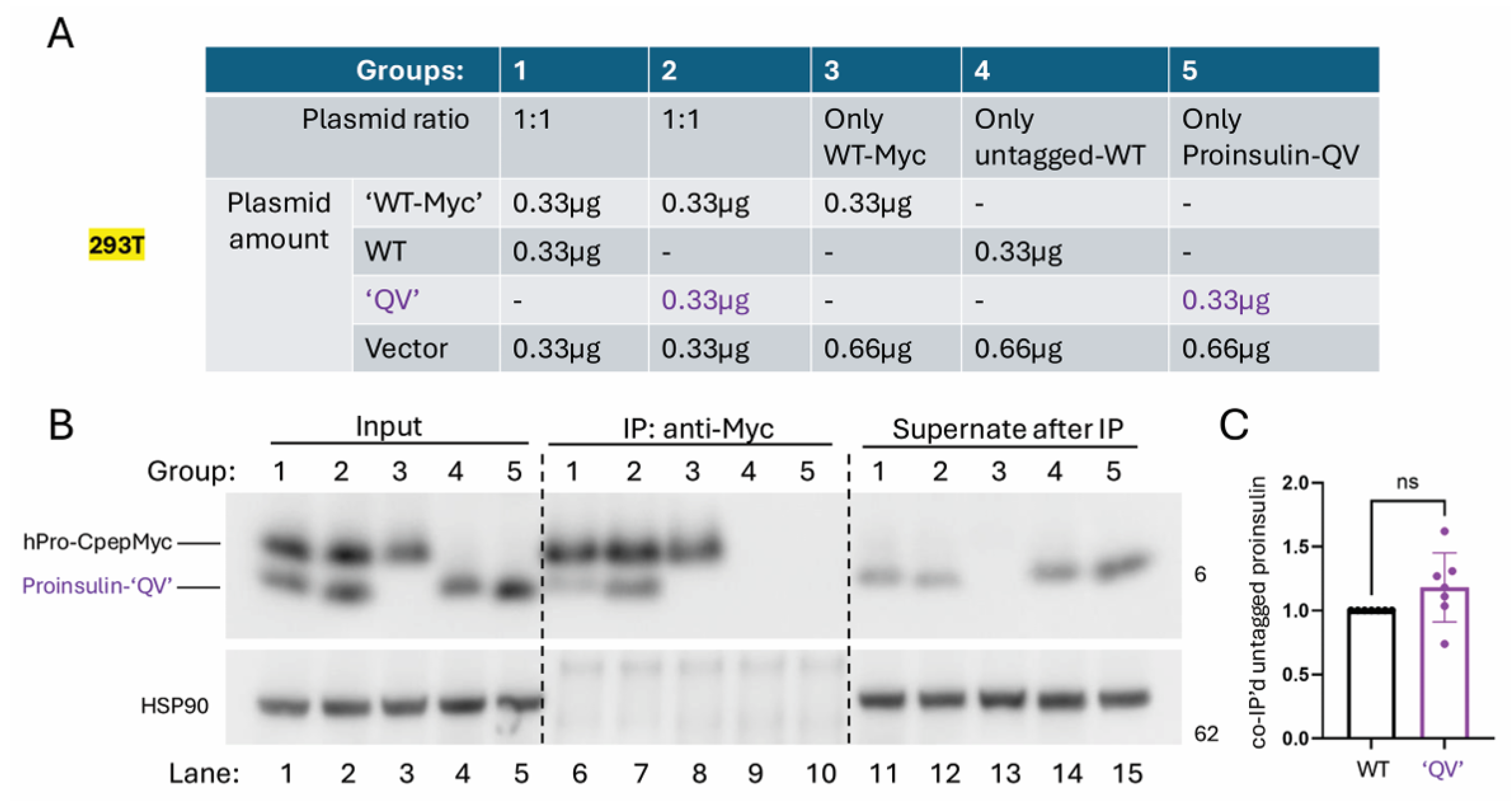
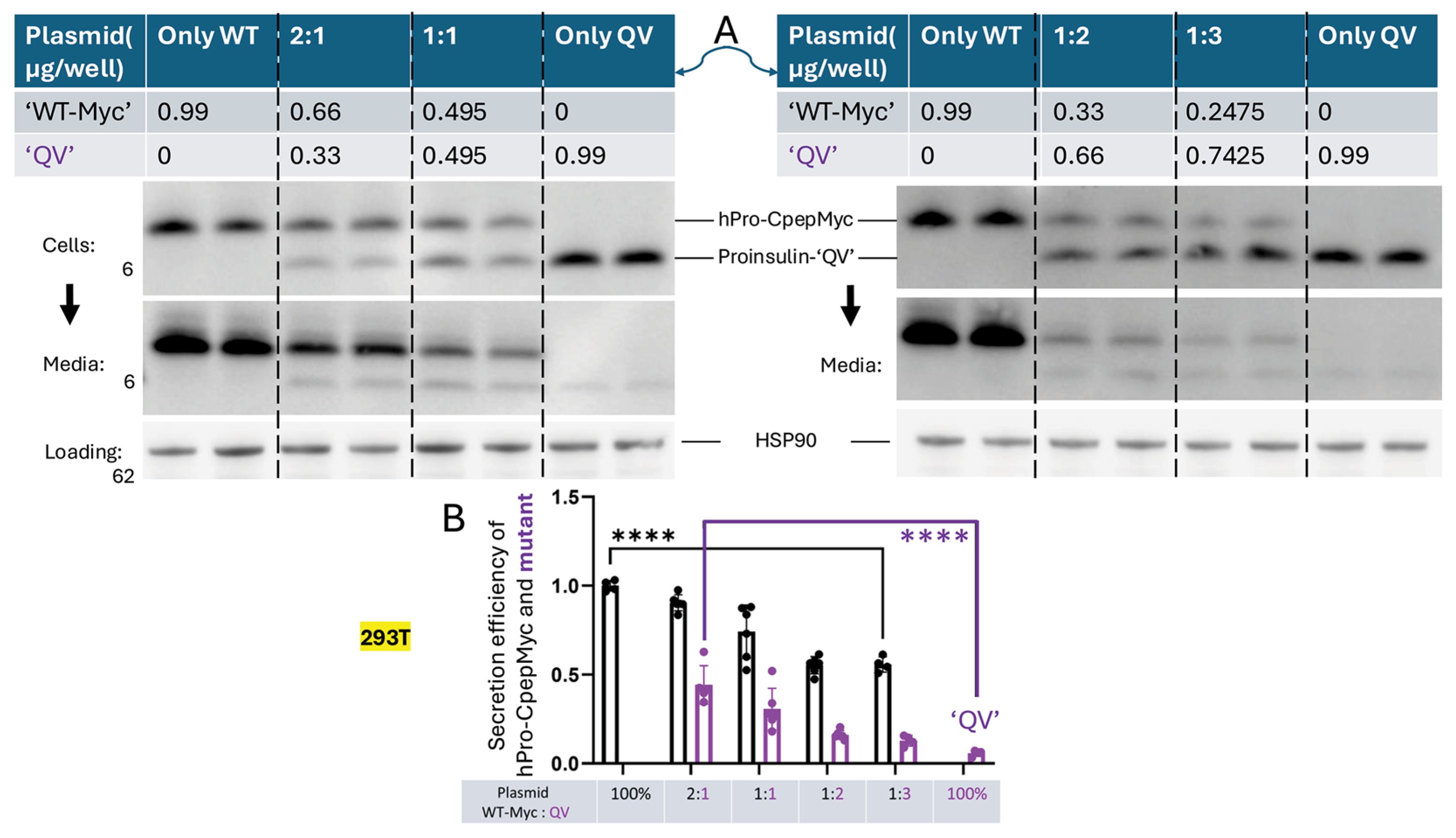
2.3. The Relative Protein Expression Ratio of WT to Variant Proinsulin Influences the Trafficking Phenotype
3. Discussion
4. Methods
4.1. Plasmids and Mutagenesis
4.2. Antibodies and Human Insulin ELISA
4.3. Cell Lines and Cell Transfections
4.4. RNA Isolation, Reverse Transcription and qPCR
4.5. Western Blotting
4.6. Immunoprecipitation from Cell Lysates
4.7. Immunofluorescence
4.8. Statistics
Supplementary Materials
Author Contributions
Funding
Institutional Review Board Statement
Informed Consent Statement
Data Availability Statement
Acknowledgments
Conflicts of Interest
Abbreviations
References
- Suzuki, K.; Hatzikotoulas, K.; Southam, L.; Taylor, H.J.; Yin, X.; Lorenz, K.M.; Mandla, R.; Huerta-Chagoya, A.; Melloni, G.E.M.; Kanoni, S.; et al. Genetic drivers of heterogeneity in type 2 diabetes pathophysiology. Nature 2024, 627, 347–357. [Google Scholar] [CrossRef] [Scilit]
- Smith, K.; Deutsch, A.J.; McGrail, C.; Kim, H.; Hsu, S.; Huerta-Chagoya, A.; Mandla, R.; Schroeder, P.H.; Westerman, K.E.; Szczerbinski, L.; et al. Multi-ancestry polygenic mechanisms of type 2 diabetes. Nat. Med. 2024, 30, 1065–1074, Correction in Nat. Med. 2024, 30, 2091. [Google Scholar] [CrossRef] [Scilit] [PubMed]
- Lyssenko, V.; Jonsson, A.; Almgren, P.; Pulizzi, N.; Isomaa, B.; Tuomi, T.; Berglund, G.; Altshuler, D.; Nilsson, P.; Groop, L. Clinical risk factors, DNA variants, and the development of type 2 diabetes. N. Engl. J. Med. 2008, 359, 2220–2232. [Google Scholar] [CrossRef] [Scilit] [PubMed]
- Costanzo, M.C.; von Grotthuss, M.; Massung, J.; Jang, D.; Caulkins, L.; Koesterer, R.; Gilbert, C.; Welch, R.P.; Kudtarkar, P.; Hoang, Q.; et al. The Type 2 Diabetes Knowledge Portal: An open access genetic resource dedicated to type 2 diabetes and related traits. Cell Metab. 2023, 35, 695–710.e6. [Google Scholar] [CrossRef] [Scilit] [PubMed]
- Garin, I.; Edghill, E.L.; Akerman, I.; Rubio-Cabezas, O.; Rica, I.; Locke, J.M.; Maestro, M.A.; Alshaikh, A.; Bundak, R.; del Castillo, G.; et al. Recessive mutations in the INS gene result in neonatal diabetes through reduced insulin biosynthesis. Proc. Natl. Acad. Sci. USA 2010, 107, 3105–3110. [Google Scholar] [CrossRef] [Scilit]
- Liu, M.; Sun, J.; Cui, J.; Chen, W.; Guo, H.; Barbetti, F.; Arvan, P. INS-gene mutations: From genetics and beta cell biology to clinical disease. Mol. Aspects Med. 2015, 42, 3–18. [Google Scholar] [CrossRef] [Scilit]
- Liu, M.; Hodish, I.; Haataja, L.; Lara-Lemus, A.R.; Rajpal, G.; Wright, J.; Arvan, P. Proinsulin misfolding and diabetes: Mutant INS gene-induced Diabetes of Youth. Trends Endocrinol. Metab. 2010, 21, 652–659. [Google Scholar] [CrossRef] [Scilit]
- Mazloum, A.; Feoktistova, S.G.; Gubaeva, A.; Alsalloum, A.; Mityaeva, O.N.; Kim, A.; Bodunova, N.A.; Woroncow, M.V.; Volchkov, P.Y. Maturity-Onset Diabetes of the Young 10 (MODY10): A Comprehensive Review of Genetics, Clinical Features, and Therapeutic Advances. Int. J. Mol. Sci. 2025, 26, 8110. [Google Scholar] [CrossRef] [Scilit]
- Rege, N.K.; Liu, M.; Yang, Y.; Dhayalan, B.; Wickramasinghe, N.P.; Chen, Y.-S.; Rahimi, L.; Guo, H.; Haataja, L.; Sun, J.; et al. Evolution of insulin at the edge of foldability and its medical implications. Proc. Natl. Acad. Sci. USA 2020, 117, 29618–29628, Correction in Proc. Natl. Acad. Sci. USA 2025, 122, e2519221122. [Google Scholar] [CrossRef] [Scilit]
- Arunagiri, A.; Haataja, L.; Pottekat, A.; Pamenan, F.; Kim, S.; Zeltser, L.M.; Paton, A.W.; Paton, J.C.; Tsai, B.; Itkin-Ansari, P.; et al. Proinsulin misfolding is an early event in the progression to type 2 diabetes. eLife 2019, 8, e44532. [Google Scholar] [CrossRef] [Scilit]
- Arunagiri, A.; Alam, M.; Haataja, L.; Draz, H.; Alasad, B.; Samy, P.; Sadique, N.; Tong, Y.; Cai, Y.; Shakeri, H.; et al. Proinsulin folding and trafficking defects trigger a common pathological disturbance of endoplasmic reticulum homeostasis. Protein Sci. 2024, 33, e4949. [Google Scholar] [CrossRef] [Scilit]
- Rohli, K.E.; Boyer, C.K.; Bearrows, S.C.; Moyer, M.R.; Elison, W.S.; Bauchle, C.J.; Blom, S.E.; Zhang, J.; Wang, Y.; Stephens, S.B. ER Redox Homeostasis Regulates Proinsulin Trafficking and Insulin Granule Formation in the Pancreatic Islet beta-Cell. Function 2022, 3, zqac051. [Google Scholar] [CrossRef] [Scilit] [PubMed]
- Rohli, K.E.; Stubbe, N.J.; Walker, E.M.; Pearson, G.L.; Soleimanpour, S.A.; Stephens, S.B. A metabolic redox relay supports ER proinsulin export in pancreatic islet beta cells. JCI Insight 2024, 9, e178725. [Google Scholar] [CrossRef] [Scilit] [PubMed]
- Brusco, N.; Sebastiani, G.; Di Giuseppe, G.; Licata, G.; Grieco, G.E.; Fignani, D.; Nigi, L.; Formichi, C.; Aiello, E.; Auddino, S.; et al. Intra-islet insulin synthesis defects are associated with endoplasmic reticulum stress and loss of beta cell identity in human diabetes. Diabetologia 2023, 66, 354–366. [Google Scholar] [CrossRef] [Scilit]
- Xue, Y.; Zhao, W.; Du, W.; Zhang, X.; Ji, G.; Ying, W.; Xu, T. Ultra-structural study of insulin granules in pancreatic beta-cells of db/db mouse by scanning transmission electron microscopy tomography. Protein Cell 2012, 3, 521–525. [Google Scholar] [CrossRef] [Scilit]
- Cinti, F.; Bouchi, R.; Kim-Muller, J.Y.; Ohmura, Y.; Sandoval, P.R.; Masini, M.; Marselli, L.; Suleiman, M.; Ratner, L.E.; Marchetti, P.; et al. Evidence of beta-Cell Dedifferentiation in Human Type 2 Diabetes. J. Clin. Endocrinol. Metab. 2016, 101, 1044–1154. [Google Scholar] [CrossRef] [Scilit]
- Dunseath, G.J.; Luzio, S.D.; Peter, R.; Owens, D.R. The pathophysiology of glucose intolerance in newly diagnosed, untreated T2DM. Acta Diabetol. 2022, 59, 207–215. [Google Scholar] [CrossRef] [Scilit]
- Huang, Y.; Zhen, J.; Liu, T.; Wang, J.; Li, N.; Yang, J.; Liang, R.; Wang, S.; Liu, M. Defective insulin maturation in patients with type 2 diabetes. Eur. J. Endocrinol. 2021, 185, 565–576. [Google Scholar] [CrossRef] [Scilit] [PubMed]
- Ishida, E.; Kim-Muller, J.Y.; Accili, D. Pair Feeding, but Not Insulin, Phloridzin, or Rosiglitazone Treatment, Curtails Markers of beta-Cell Dedifferentiation in db/db Mice. Diabetes 2017, 66, 2092–2101. [Google Scholar] [CrossRef] [Scilit]
- Stoy, J.; De Franco, E.; Ye, H.; Park, S.Y.; Bell, G.I.; Hattersley, A.T. In celebration of a century with insulin—Update of insulin gene mutations in diabetes. Mol. Metab. 2021, 52, 101280. [Google Scholar] [CrossRef] [Scilit]
- Alam, M.; Arunagiri, A.; Haataja, L.; Torres, M.; Larkin, D.; Kappler, J.; Jin, N.; Arvan, P. Predisposition to Proinsulin Misfolding as a Genetic Risk to Diet-Induced Diabetes. Diabetes 2021, 70, 2580–2594, Erratum in Diabetes 2022, 71, 870. [Google Scholar] [CrossRef] [Scilit]
- Schlegel, A.; Petersen, W.C.; Holbrook, A.A.; Iverson, L.K.; Graham, T.E. A Novel INS Mutation in the C-Peptide Region Causing Hyperproinsulinemic Maturity Onset Diabetes of Youth Type 10. Lab. Med. 2023, 54, 327–332. [Google Scholar] [CrossRef] [Scilit]
- Boesgaard, T.W.; Pruhova, S.; Andersson, E.A.; Cinek, O.; Obermannova, B.; Lauenborg, J.; Damm, P.; Bergholdt, R.; Pociot, F.; Pisinger, C.; et al. Further evidence that mutations in INS can be a rare cause of Maturity-Onset Diabetes of the Young (MODY). BMC Med. Genet. 2010, 11, 42. [Google Scholar] [CrossRef] [Scilit]
- Riar, S.S.; Toppings, N.B.; Donovan, L.E. Glycemic Impact of Metformin in Diabetes Caused by Heterozygous Insulin Gene Mutation R46Q. Can. J. Diabetes 2021, 45, 202–205. [Google Scholar] [CrossRef] [Scilit]
- Steiner, D.F. On the role of the proinsulin C-peptide. Diabetes 1978, 27, 145–158. [Google Scholar] [CrossRef] [Scilit] [PubMed]
- Qiao, Z.S.; Min, C.Y.; Hua, Q.X.; Weiss, M.A.; Feng, Y.M. In vitro refolding of human proinsulin: Kinetic intermediates, putative disulfide-forming pathway, folding initiation site and potential role of C-peptide in folding process. J. Biol. Chem. 2003, 278, 17800–17809. [Google Scholar] [CrossRef] [Scilit]
- Yang, Y.; Hua, Q.X.; Liu, J.; Shimizu, E.H.; Choquette, M.H.; Mackin, R.B.; Weiss, M.A. Solution structure of proinsulin: Connecting domain flexibility and prohormone processing. J. Biol. Chem. 2010, 285, 7847–7851. [Google Scholar] [CrossRef] [Scilit] [PubMed]
- Steiner, D.F.; Park, S.Y.; Stoy, J.; Philipson, L.H.; Bell, G.I. A brief perspective on insulin production. Diabetes Obes. Metab. 2009, 11, 189–196. [Google Scholar] [CrossRef] [Scilit]
- Cook, T.W.; Wilstermann, A.M.; Mitchell, J.T.; Arnold, N.E.; Rajasekaran, S.; Bupp, C.P.; Prokop, J.W. Understanding Insulin in the Age of Precision Medicine and Big Data: Under-Explored Nature of Genomics. Biomolecules 2023, 13, 257. [Google Scholar] [CrossRef] [Scilit]
- Goodge, K.A.; Hutton, J.C. Translational regulation of proinsulin biosynthesis and proinsulin conversion in the pancreatic beta-cell. Semin. Cell Dev. Biol. 2000, 11, 235–242. [Google Scholar] [CrossRef] [Scilit] [PubMed]
- Ramzy, A.; Asadi, A.; Kieffer, T.J. Revisiting Proinsulin Processing: Evidence That Human beta-Cells Process Proinsulin with Prohormone Convertase (PC) 1/3 But Not PC2. Diabetes 2020, 69, 1451–1462. [Google Scholar] [CrossRef] [Scilit]
- Naggert, J.K.; Fricker, L.D.; Varlamov, O.; Nishina, P.M.; Rouille, Y.; Steiner, D.F.; Carroll, R.J.; Paigen, B.J.; Leiter, E.H. Hyperproinsulinaemia in obese fat/fat mice associated with carboxypeptidase E mutation which reduces enzyme activity. Nature Genet. 1995, 10, 135–142. [Google Scholar] [CrossRef] [Scilit]
- Henriksson, M.; Shafqat, J.; Liepinsh, E.; Tally, M.; Wahren, J.; Jornvall, H.; Johansson, J. Unordered structured of proinsulin C-peptide in aqueous solution and in the presence of lipid vesicles. Cell Mol. Life Sci. 2000, 57, 337–342. [Google Scholar] [CrossRef] [Scilit] [PubMed]
- Unnerstale, S.; Maler, L. pH-Dependent Interaction between C-Peptide and Phospholipid Bicelles. J. Biophys. 2012, 2012, 185907. [Google Scholar] [CrossRef] [Scilit]
- Rajpal, G.; Liu, M.; Zhang, Y.; Arvan, P. Single-chain insulins as receptor agonists. Mol. Endocrinol. 2009, 23, 679–688. [Google Scholar] [CrossRef] [Scilit] [PubMed]
- Munte, C.E.; Vilela, L.; Kalbitzer, H.R.; Garratt, R.C. Solution structure of human proinsulin C-peptide. FEBS J. 2005, 272, 4284–4293. [Google Scholar] [CrossRef] [Scilit] [PubMed]
- Chen, L.M.; Yang, X.W.; Tang, J.G. Acidic residues on the N-terminus of proinsulin C-Peptide are important for the folding of insulin precursor. J. Biochem. 2002, 131, 855–859. [Google Scholar] [CrossRef] [Scilit]
- Haataja, L.; Arunagiri, A.; Hassan, A.; Regan, K.; Tsai, B.; Dhayalan, B.; Weiss, M.A.; Liu, M.; Arvan, P. Distinct states of proinsulin misfolding in MIDY. Cell Mol. Life Sci. 2021, 78, 6017–6031. [Google Scholar] [CrossRef] [Scilit]
- Haataja, L.; Manickam, N.; Soliman, A.; Tsai, B.; Liu, M.; Arvan, P. Disulfide mispairing during proinsulin folding in the endoplasmic reticulum. Diabetes 2016, 65, 1050–1060. [Google Scholar] [CrossRef] [Scilit]
- Edghill, E.L.; Flanagan, S.E.; Patch, A.M.; Boustred, C.; Parrish, A.; Shields, B.; Shepherd, M.H.; Hussain, K.; Kapoor, R.R.; Malecki, M.; et al. Insulin mutation screening in 1,044 patients with diabetes: Mutations in the INS gene are a common cause of neonatal diabetes but a rare cause of diabetes diagnosed in childhood or adulthood. Diabetes 2008, 57, 1034–1042. [Google Scholar] [CrossRef] [Scilit]
- Snell, C.R.; Smyth, D.G. Proinsulin: A proposed three-dimensional structure. J. Biol. Chem. 1975, 250, 6291–6295. [Google Scholar] [CrossRef] [Scilit]
- Wang, S.; Wei, W.; Zheng, Y.; Hou, J.; Dou, Y.; Zhang, S.; Luo, X.; Cai, X. The role of insulin C-peptide in the coevolution analyses of the insulin signaling pathway: A hint for its functions. PLoS ONE 2012, 7, e52847. [Google Scholar] [CrossRef] [Scilit]
- Watkins, S.; Geng, X.; Li, L.; Papworth, G.; Robbins, P.D.; Drain, P. Imaging secretory vesicles by fluorescent protein insertion in propeptide rather than mature secreted peptide. Traffic 2002, 3, 461–471. [Google Scholar] [CrossRef] [Scilit]
- Siehler, J.; Blochinger, A.K.; Akgun, M.; Wang, X.; Shahryari, A.; Geerlof, A.; Lickert, H.; Burtscher, I. Generation of a heterozygous C-peptide-mCherry reporter human iPSC line (HMGUi001-A-8). Stem Cell Res. 2020, 50, 102126. [Google Scholar] [CrossRef] [Scilit]
- Burns, S.M.; Vetere, A.; Walpita, D.; Dancik, V.; Khodier, C.; Perez, J.; Clemons, P.A.; Wagner, B.K.; Altshuler, D. High-throughput luminescent reporter of insulin secretion for discovering regulators of pancreatic Beta-cell function. Cell Metab. 2015, 21, 126–137. [Google Scholar] [CrossRef] [Scilit]
- White, C.W.; Kilpatrick, L.E.; Pfleger, K.D.G.; Hill, S.J. A nanoluciferase biosensor to investigate endogenous chemokine secretion and receptor binding. iScience 2021, 24, 102011. [Google Scholar] [CrossRef] [Scilit] [PubMed]
- Luis, R.; D’Uonnolo, G.; Palmer, C.B.; Meyrath, M.; Uchanski, T.; Wantz, M.; Rogister, B.; Janji, B.; Chevigne, A.; Szpakowska, M. Nanoluciferase-based methods to monitor activation, modulation and trafficking of atypical chemokine receptors. Methods Cell Biol. 2022, 169, 279–294. [Google Scholar] [PubMed]
- Wright, J.; Wang, X.; Haataja, L.; Kellogg, A.P.; Lee, J.; Liu, M.; Arvan, P. Dominant protein interactions that influence the pathogenesis of conformational diseases. J. Clin. Investig. 2013, 123, 3124–3134. [Google Scholar] [CrossRef] [Scilit]
- Liu, M.; Wright, J.; Guo, H.; Xiong, Y.; Arvan, P. Proinsulin entry and transit through the endoplasmic reticulum in pancreatic beta cells. Vitam. Horm. 2014, 95, 35–62. [Google Scholar] [PubMed]
- Weiss, M.A.; Frank, B.H.; Khait, I.; Pekar, A.; Heiney, R.; Shoelson, S.E.; Neuringer, L.J. NMR and photo-CIDNP studies of human proinsulin and prohormone processing intermediates with application to endopeptidase recognition. Biochemistry 1990, 29, 8389–8401. [Google Scholar] [CrossRef] [Scilit]
- Liu, M.; Weiss, M.A.; Arunagiri, A.; Yong, J.; Rege, N.; Sun, J.; Haataja, L.; Kaufman, R.J.; Arvan, P. Biosynthesis, structure, and folding of the insulin precursor protein. Diabetes Obes. Metab. 2018, 20, 28–50. [Google Scholar] [CrossRef] [Scilit]
- Meur, G.; Simon, A.; Harun, N.; Virally, M.; Dechaume, A.; Bonnefond, A.; Fetita, S.; Tarasov, A.I.; Guillausseau, P.J.; Boesgaard, T.W.; et al. Insulin gene mutations resulting in early-onset diabetes: Marked differences in clinical presentation, metabolic status, and pathogenic effect through endoplasmic reticulum retention. Diabetes 2010, 59, 653–661. [Google Scholar] [CrossRef] [Scilit] [PubMed]
- Landreh, M.; Jornvall, H. C-peptide evolution: Generation from few structural restrictions of bioactivities not necessarily functional. FEBS Lett. 2015, 589, 415–418. [Google Scholar] [CrossRef] [Scilit]
- Sun, J.; Xiong, Y.; Li, X.; Haataja, L.; Chen, W.; Mir, S.A.; Lv, L.; Madley, R.; Larkin, D.; Anjum, A.; et al. Role of proinsulin self-association in Mutant INS gene-induced Diabetes of Youth. Diabetes 2020, 69, 954–964. [Google Scholar] [CrossRef] [Scilit] [PubMed]
- Hodish, I.; Liu, M.; Rajpal, G.; Larkin, D.; Holz, R.W.; Adams, A.; Liu, L.; Arvan, P. Misfolded proinsulin affects bystander proinsulin in neonatal diabetes. J. Biol. Chem. 2010, 285, 685–694. [Google Scholar] [CrossRef] [Scilit] [PubMed]
- Arunagiri, A.; Haataja, L.; Cunningham, C.N.; Shrestha, N.; Tsai, B.; Qi, L.; Liu, M.; Arvan, P. Misfolded proinsulin in the endoplasmic reticulum during development of beta cell failure in diabetes. Ann. N. Y. Acad. Sci. 2018, 1418, 5–19. [Google Scholar] [CrossRef] [Scilit]
- Barbetti, F.; Colombo, C.; Haataja, L.; Cras-Meneur, C.; Bernardini, S.; Arvan, P. Hyperglucagonemia in an animal model of insulin- deficient diabetes: What therapy can improve it? Clin. Diabetes Endocrinol. 2016, 2, 11. [Google Scholar] [CrossRef] [Scilit]
- Hodish, I.; Absood, A.; Liu, L.; Liu, M.; Haataja, L.; Larkin, D.; Al-Khafaji, A.; Zaki, A.; Arvan, P. In vivo misfolding of proinsulin below the threshold of frank diabetes. Diabetes 2011, 60, 2092–2101. [Google Scholar] [CrossRef] [Scilit]
- Liu, M.; Lara-Lemus, R.; Shan, S.O.; Wright, J.; Haataja, L.; Barbetti, F.; Guo, H.; Larkin, D.; Arvan, P. Impaired cleavage of preproinsulin signal peptide linked to autosomal-dominant diabetes. Diabetes 2012, 61, 828–837. [Google Scholar] [CrossRef] [Scilit]
- Liu, M.; Hodish, I.; Rhodes, C.J.; Arvan, P. Proinsulin maturation, misfolding, and proteotoxicity. Proc. Natl. Acad. Sci. USA 2007, 104, 15841–15846. [Google Scholar] [CrossRef] [Scilit]
- Liu, S.; Li, X.; Yang, J.; Zhu, R.; Fan, Z.; Xu, X.; Feng, W.; Cui, J.; Sun, J.; Liu, M. Misfolded proinsulin impairs processing of precursor of insulin receptor and insulin signaling in beta cells. FASEB J. 2019, 33, 11338–11348. [Google Scholar] [CrossRef] [Scilit] [PubMed]


Disclaimer/Publisher’s Note: The statements, opinions and data contained in all publications are solely those of the individual author(s) and contributor(s) and not of MDPI and/or the editor(s). MDPI and/or the editor(s) disclaim responsibility for any injury to people or property resulting from any ideas, methods, instructions or products referred to in the content. |
© 2026 by the authors. Licensee MDPI, Basel, Switzerland. This article is an open access article distributed under the terms and conditions of the Creative Commons Attribution (CC BY) license.
Share and Cite
Shao, R.; Alam, M.; Haataja, L.; Arvan, P. Structural Communication Between C-Peptide and Insulin Within the Proinsulin Molecule. Int. J. Mol. Sci. 2026, 27, 483. https://doi.org/10.3390/ijms27010483
Shao R, Alam M, Haataja L, Arvan P. Structural Communication Between C-Peptide and Insulin Within the Proinsulin Molecule. International Journal of Molecular Sciences. 2026; 27(1):483. https://doi.org/10.3390/ijms27010483
Chicago/Turabian StyleShao, Rubing, Maroof Alam, Leena Haataja, and Peter Arvan. 2026. "Structural Communication Between C-Peptide and Insulin Within the Proinsulin Molecule" International Journal of Molecular Sciences 27, no. 1: 483. https://doi.org/10.3390/ijms27010483
APA StyleShao, R., Alam, M., Haataja, L., & Arvan, P. (2026). Structural Communication Between C-Peptide and Insulin Within the Proinsulin Molecule. International Journal of Molecular Sciences, 27(1), 483. https://doi.org/10.3390/ijms27010483