Article

GhmiR156-GhSPL2 Module Regulates Anthocyanin Biosynthesis of Ray Florets in Gerbera hybrida

1
Guangdong Provincial Key Laboratory of Biotechnology for Plant Development, School of Life Sciences, South China Normal University, Guangzhou 510631, China
2
Guangdong Provincial Key Laboratory of Utilization and Conservation of Food and Medicinal Resources in Northern Region, School of Biology and Agriculture, Shaoguan University, Shaoguan 512000, China
*
Author to whom correspondence should be addressed.
Int. J. Mol. Sci. 2026, 27(1), 318; https://doi.org/10.3390/ijms27010318 (registering DOI)
Submission received: 26 November 2025 / Revised: 19 December 2025 / Accepted: 24 December 2025 / Published: 27 December 2025
(This article belongs to the Special Issue Flowers: Molecular and Genetic Regulation of Growth and Development)

Abstract

Anthocyanins, biosynthesized through the flavonoid pathway, critically determine floral coloration and ornamental value in plants. While floral development has been extensively studied in Gerbera hybrida, the microRNA-mediated regulation of anthocyanin biosynthesis remains unclear. In this study, we identified and characterized the precursor of gerbera microRNA156 (GhmiR156), which exhibits a typical stem-loop secondary structure. The mature GhmiR156 sequence shows 93.65% similarity with miR156 from other plants. Through target prediction analysis, we identified five potential target genes of GhmiR156, all encoding SQUAMOSA Promoter-Binding Protein-Like (SPL) transcription factors. Among these, the gene c35442.graph_c0, which shares the highest similarity with AtSPL2 in Arabidopsis, was designated as GhSPL2. Expression analysis revealed an inverse correlation between GhmiR156 and GhSPL2 across different tissues and developmental stages of ray florets. This regulatory relationship was further validated by RLM-5′RACE, which showed that GhmiR156 directly targets and cleaves GhSPL2 mRNA, subsequently supported by dual-luciferase reporter assays and Western blotting analysis. Subcellular localization analysis indicated that GhSPL2 is a nuclear-localized protein, consistent with AtSPL2. Functional analyses revealed that overexpression of GhSPL2 suppressed anthocyanin accumulation by downregulating key biosynthetic genes GhPAL, GhF3H and GhUFGT. Conversely, overexpression of GhmiR156 represses GhSPL2 expression, thereby alleviating its inhibitory effect on anthocyanin accumulation in ray florets, and exhibits an increase in anthocyanin content. Collectively, our findings demonstrate that GhmiR156 fine-tunes the anthocyanin biosynthetic pathway through its target gene GhSPL2. This study provides new insights into the complex regulatory network governing anthocyanin biosynthesis in ornamental plants.

1. Introduction

Petals, as a central component of floral organs, serve as critical indicators for assessing the ornamental and economic value of plants. The morphological traits of flowers, including color and shape, play vital roles in protecting reproductive organs, attracting pollinators, and facilitating plant reproduction [1,2,3]. Among the factors influencing flower color, flavonoids, carotenoids and chlorophylls are recognized as the primary chemical pigments responsible for petal coloration [4,5,6,7]. Notably, anthocyanins, a class of flavonoids, are the major contributors to petal color [8,9,10]. The anthocyanin biosynthetic pathway involves two key groups of genes [11,12,13]. The first group comprises structural genes, such as chalcone synthase (CHS), chalcone isomerase (CHI), and flavanone-3-hydroxylase (F3H), which encode enzymes essential for anthocyanin production. The second group consists of regulatory factors, including MYB, basic helix-loop-helix (bHLH), and WD40 transcription factors; these proteins form the MYB-bHLH-WDR (MBW) complex to modulate the expression of structural genes. In addition, post-transcriptional regulation mediated by microRNAs (miRNAs) have been shown to significantly influence anthocyanin biosynthesis [14,15,16]. In Arabidopsis thaliana, miR156 targets AtSPL9, while miR828 targets MYB75, MYB82, MYB90 and MYB113, both playing roles in anthocyanin regulation [17,18]. Similarly, miR399d in Malus hybrid ‘Royalty’ has been implicated in anthocyanin accumulation under phosphorus-deficient conditions [19]. Furthermore, miR172b in purple potato (Solanum tuberosum L.) has been linked to the regulation of anthocyanin types through its target gene, an AP2-like factor [20].
miRNAs are endogenous non-coding RNAs, typically 20–24 nucleotides in length, that regulate gene expression by cleaving target mRNAs or inhibiting their translation [21]. miRNAs play pivotal roles in various aspects of plant development, including leaf growth, floral transition and floral organ formation [13,20,22,23,24]. Among the most conserved miRNAs, miR156 has been extensively studied for its role in plant development [13,25,26,27], particularly through its targeting of SPL transcription factors [28,29,30]. The miR156-SPL module has been shown to regulate diverse processes, including flowering time, plant morphology, and anthocyanin biosynthesis [31,32,33]. While the miR156-SPL module has been well-characterized in Arabidopsis and fruit crops, only a few flower plants have a potential link between miR156-SPL and anthocyanin biosynthesis [30,34,35]. However, the specific mechanisms underlying this regulation vary across species, as evidenced by differences in miR156-SPL interactions in yellow-flowered tree peony (Paeonia suffruticosa Andr.) and herbaceous peony (Paeonia lactiflora Pall.) [36,37]. Therefore, these findings highlight the need for further investigation into the miR156-SPL regulatory network in ornamental plants.
Gerbera hybrida, a perennial herbaceous plant in the Asteraceae family, is known for its diverse flower colors, varied forms, long blooming period, and extensive range of cultivars. The inflorescence of gerbera, a capitulum, is primarily composed of three morphologically distinct types of florets arranged from the periphery to the center: ray florets, trans florets, and disk florets. The ray florets, located at the outermost region of the capitulum, exhibit a rich diversity in color—including red, yellow, orange, pink, white, and more. And, according to the length and coloring of ray florets, the developmental stages of inflorescence were divided into six distinct stages (S1–S6) [38]. Previous studies mainly focused on the regulation of transcription factors on the elongation and coloring of ray florets in gerbera [39,40,41,42,43,44,45], while the molecular mechanisms underlying miRNA-mediated regulation of ray floret coloration remain poorly understood.
In this study, we cloned and characterized GhmiR156 and its target gene GhSPL2 in gerbera. Through bioinformatics analysis, RLM-5′RACE, dual-luciferase assay and Western blotting, we demonstrated that GhmiR156 targets and cleaves GhSPL2 mRNA, thereby suppressing its expression. Functional studies revealed that GhmiR156 alleviates the inhibitory effect of GhSPL2 on anthocyanin accumulation in ray florets. Collectively, our findings provide the first functional evidence for the miR156-GhSPL2 regulatory module in gerbera, offering new insights into its role in anthocyanin biosynthesis and contributing to a deeper understanding of the regulatory network governing petal coloration in gerbera.

2. Results

2.1. Identification and Characterization of miR156 in Gerbera

Through small RNA sequencing analysis of ray florets at three developmental stages in gerbera, 164 microRNA reads were identified. Comparative analysis with miRBase v22 revealed 24 known miRNAs and 140 novel miRNAs [46]. Based on these foundations and our laboratory’s research orientation, we focused on the putative function of GhmiR156 during the process of floral development. Firstly, we amplified its precursor sequence and predicted its secondary structure using RNAfold WebServer, and the analysis showed a stable hairpin structure with a minimum free energy (MFE) of −53.1 kcal/mol. Then, structural analysis found that pre-GhmiR156 forms a characteristic stem-loop configuration, with the mature GhmiR156 sequence positioned on the 5′ arm (Figure 1A).
Multiple sequence alignment of miR156 mature sequences across diverse plant species, including Arabidopsis thaliana, Oryza sativa, Helianthus annuus, Zea mays and Arabidopsis lyrata, revealed remarkable sequence conservation. DNAMAN software (version 7.0) analysis indicated 93.65% sequence similarity, with only a single base mismatch among the examined species (Figure 1B). This high degree of conservation suggests the evolutionary importance of miR156 in plant development. Moreover, expression profiling of GhmiR156 during different growth and development stages of ray florets showed an increased abundance (Figure 1C). The conserved nature of miR156, combined with its stage-specific expression profile, emphasizes its potential significance in gerbera floral development.

2.2. Identification of GhmiR156 Targets and Functional Characterization of GhSPL2

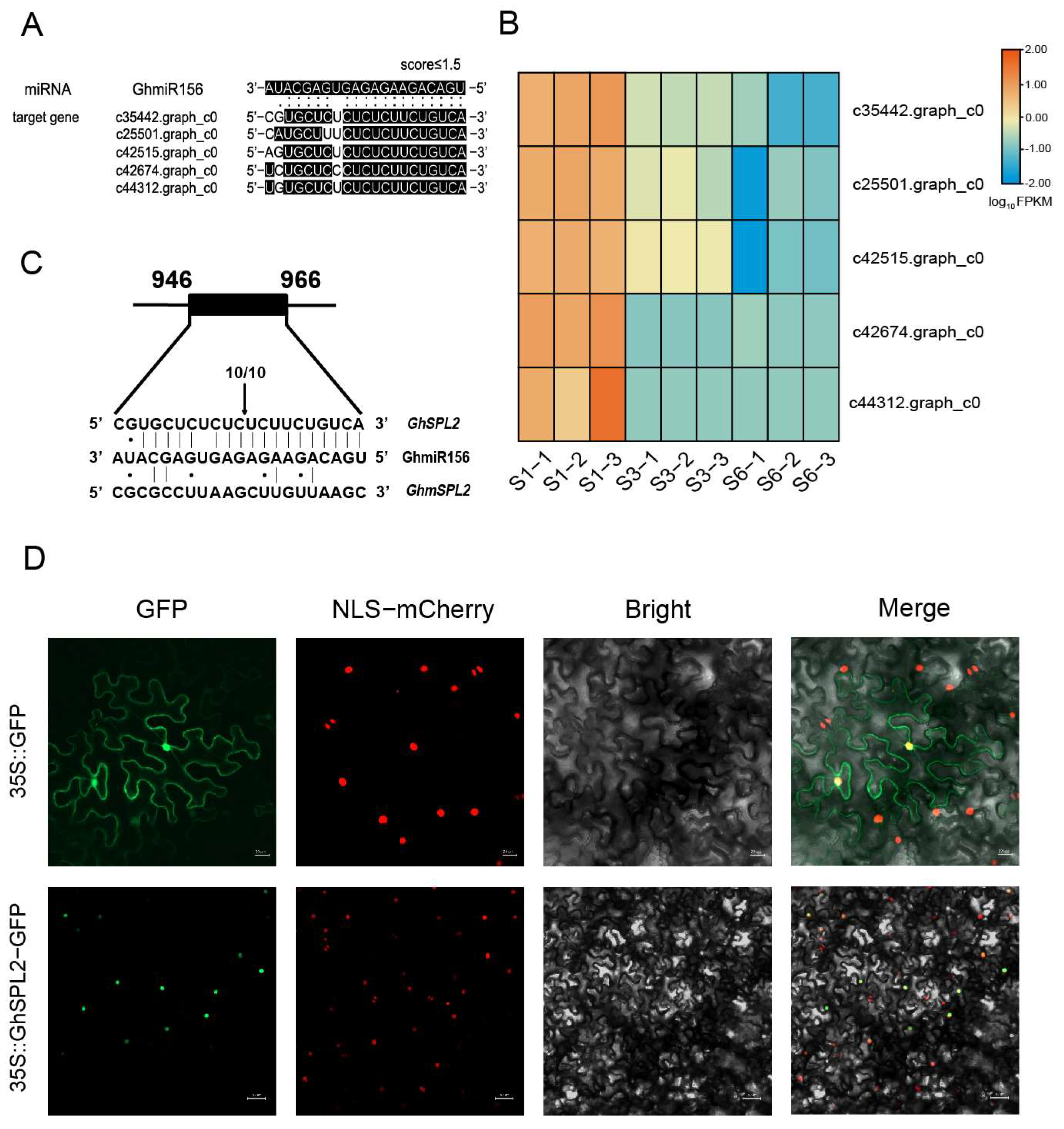
miRNAs regulate gene expression primarily through transcript cleavage of their target genes [47]. In this study, target gene prediction identified 5 potential targets of GhmiR156 (score ≤ 1.5) (Figure 2A). Expression profiling revealed an inverse correlation between GhmiR156 abundance and its predicted targets, with target gene expression progressively declining during ray floret development (Figure 1C and Figure 2B). This correlation was further demonstrated by qRT-PCR analysis across six developmental stages of ray florets (stages 1–6) (Supplementary Figure S1).
To validate the miRNA-target interaction, we performed RNA ligase-mediated (RLM)-5′RACE. The assay confirmed that GhmiR156 mediated the cleavage of c35442.graph_c0 (gerbera genome accession: Gh_000076.m1), with the cleavage site precisely mapped between nucleotides 12 (C) and 13 (U) within the GhmiR156 complementary region (Figure 2C). In contrast, no cleavage events were detected for the other four potential targets. Based on the cleavage relationship, c35442.graph_c0 was selected for further investigation. Phylogenetic analysis revealed that this protein shares the highest sequence similarity with AtSPL2, and thus was named GhSPL2 (Supplementary Figure S2). Subsequently, expression profiles across different tissues and organs showed GhmiR156 and GhSPL2 exhibited an opposite expression trend (Supplementary Figure S3). Furthermore, we also examined the subcellular localization of GhSPL2, revealing it to be a nuclear-localized protein (Figure 2D).

2.3. GhSPL2 Is a Direct Target of GhmiR156

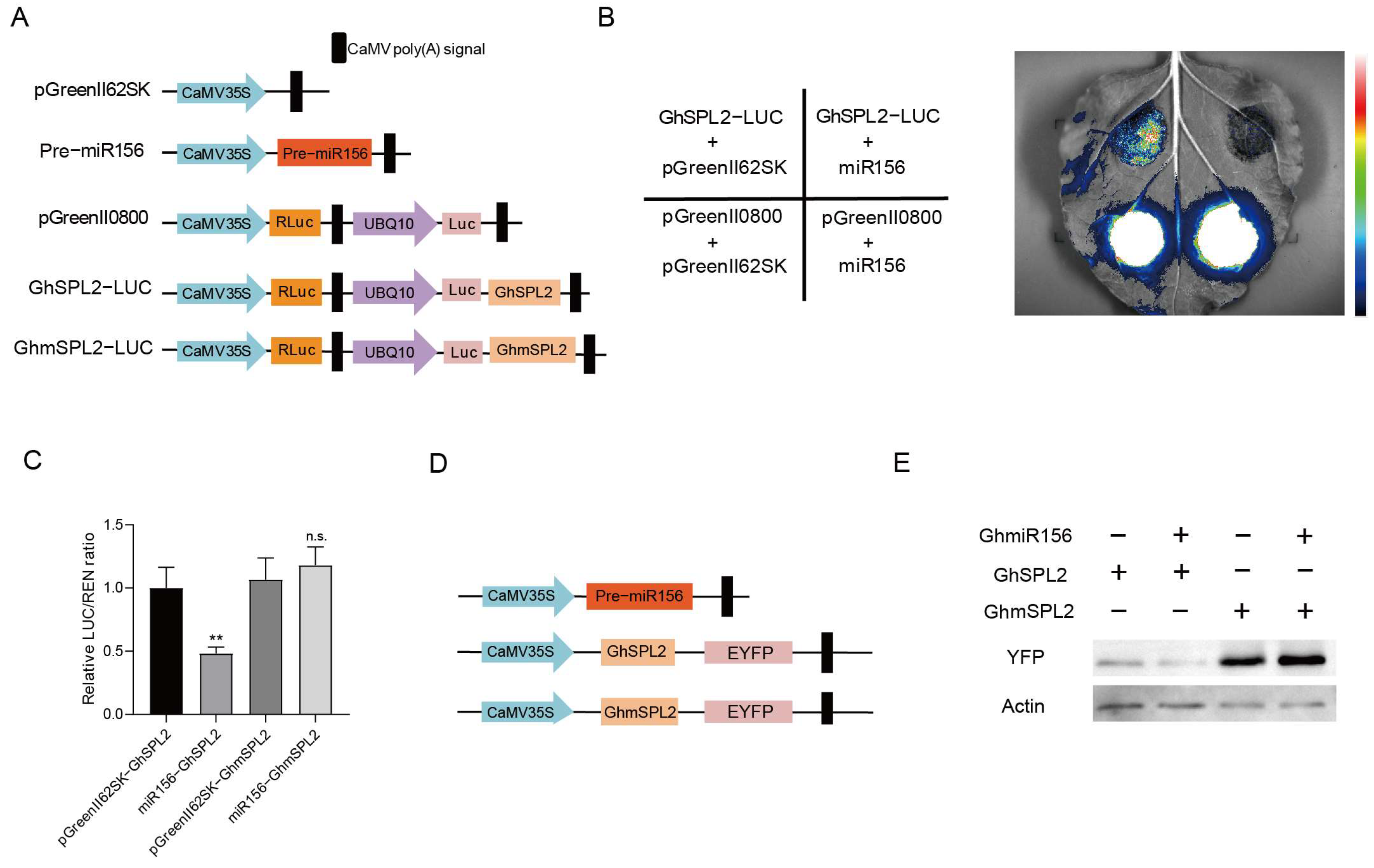
To confirm the target relationship between GhmiR156 and GhSPL2, we conducted dual-luciferase assays to quantitatively assess this regulatory interaction. The 102 bp GhmiR156 precursor was cloned into the GhmiR156-62SK expression vector, while GhSPL2-LUC and GhmSPL2-LUC reporter constructs were also generated (Figure 3A). The result showed significant suppression of luciferase activity when GhSPL2-LUC was co-expressed with GhmiR156-62SK, compared to controls (Figure 3B). This suppression was abolished in the GhmSPL2-LUC construct, demonstrating the specificity of the interaction (Figure 3C). The results demonstrate that GhmiR156 directly targets GhSPL2.
Western blotting analysis of GhSPL2-YFP and GhmSPL2-YFP fusion proteins in Arabidopsis protoplasts provided additional experimental evidence. Co-expression with GhmiR156 significantly reduced GhSPL2-YFP protein levels, while GhmSPL2-YFP accumulation remained unaffected (Figure 3D,E). Collectively, these experiments demonstrate that GhmiR156 specifically targets GhSPL2 through direct interaction at the predicted binding site, leading to transcript cleavage and subsequent protein degradation. The consistent results across multiple experimental systems provide compelling evidence for the target regulation of GhSPL2 by GhmiR156 in gerbera.

2.4. Overexpression of GhSPL2 Inhibits Anthocyanin Accumulation in Ray Florets

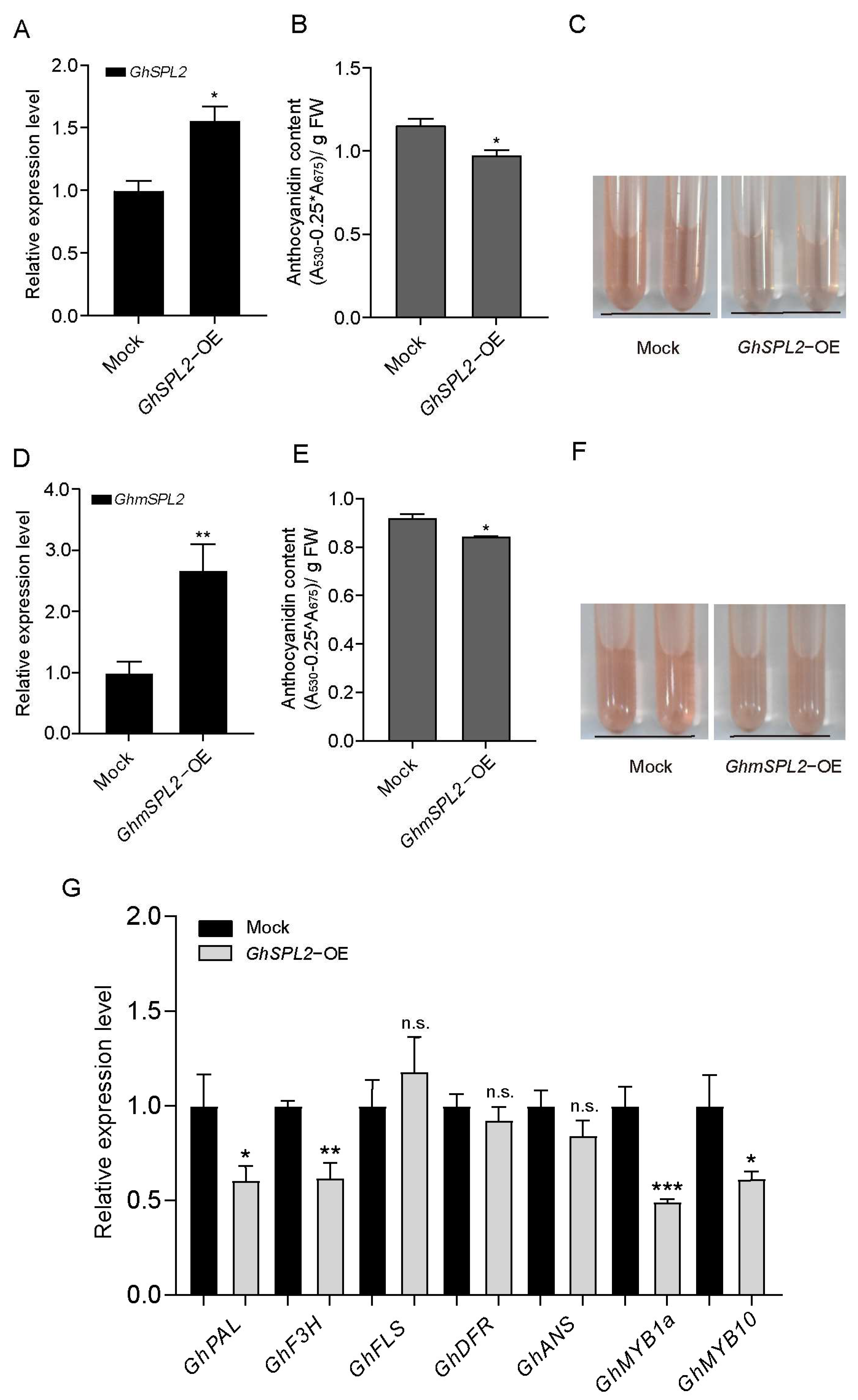
Previous research has shown that SPLs play crucial roles in the juvenile-to-adult growth phase transition, flower morphogenesis and secondary metabolism regulation [32,48,49]. However, whether GhSPL2 plays a similar role in gerbera remains unclear. To explore its function, we conducted transient overexpression of GhSPL2 (GhSPL2-OE) and GhmSPL2 (GhmSPL2-OE) in ray florets. qRT-PCR analysis showed successful overexpression of GhSPL2 or GhmSPL2 in transformed petals compared to mock (Figure 4A,D). Subsequent quantitative analysis of anthocyanin content revealed significantly lower anthocyanin accumulation in GhSPL2-OE petals compared to mocks (Figure 4B,C), providing crucial evidence that GhSPL2 functions as a negative regulator of anthocyanin biosynthesis in ray florets. Interestingly, overexpression of GhmSPL2 also leads to a decrease in anthocyanin content (Figure 4E,F). This suggests that the protein encoded by the synonymous mutation of GhSPL2 retains its original function and still reduces anthocyanin accumulation in gerbera.
To elucidate the molecular mechanism underlying this regulatory role, we analyzed the expression levels of key anthocyanin biosynthetic genes in GhSPL2-OE petals. The result showed significant downregulation of several critical pathway genes, including GhMYB10, GhMYB1a, GhPAL, GhF3H, and GhUFGT. While GhDFR and GhANS expression also decreased, these changes were not statistically significant (Figure 4G). These findings demonstrate that GhSPL2 may negatively regulate anthocyanin accumulation in gerbera ray florets through transcriptional repression of key biosynthetic genes.

2.5. GhmiR156 Relieves Negative Regulation by GhSPL2 in Ray Floret Anthocyanin Accumulation

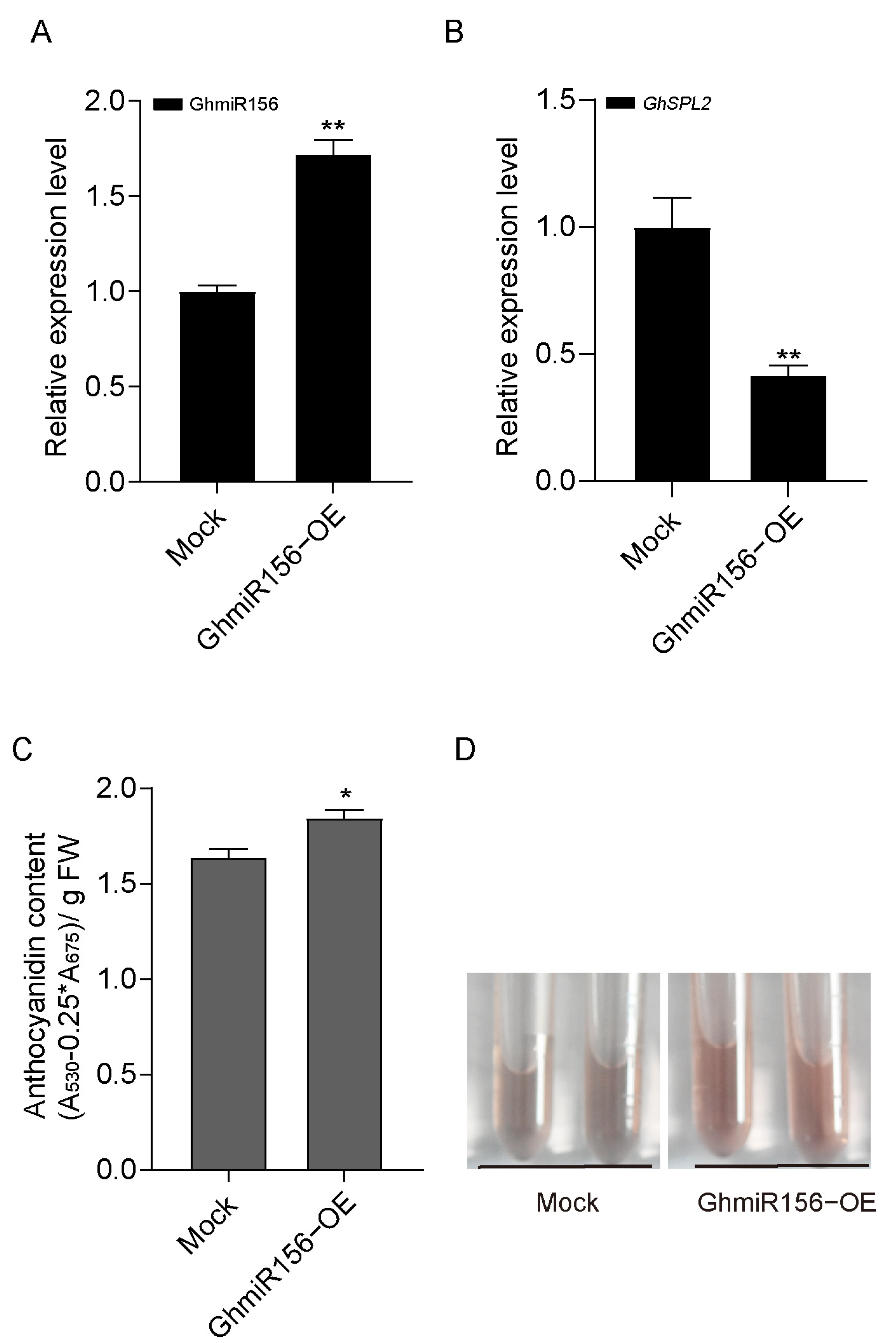
To establish the functional relationship between GhmiR156 and GhSPL2 in anthocyanin regulation, we conducted transient overexpression of GhmiR156 (GhmiR156-OE) in ray florets. Successful overexpression of GhmiR156 was confirmed by qRT-PCR (Figure 5A). Meanwhile, we found GhSPL2 transcript levels decreased in GhmiR156-OE petals (Figure 5B).
The physiological consequence of this regulatory role was evident in anthocyanin accumulation patterns. The result showed higher anthocyanin content in GhmiR156-OE petals compared to mock (Figure 5C,D). This finding establishes a clear functional link between GhmiR156 expression and enhanced anthocyanin accumulation in gerbera ray florets, demonstrating that GhmiR156 serves as a positive regulator of anthocyanin biosynthesis through its negative regulation of GhSPL2, which in turn alleviates the suppression of anthocyanin biosynthetic genes.

3. Discussion

Accumulating evidence suggests that the miR156-SPLs pathway plays a significant role in the biosynthesis of anthocyanins [14,15,17,20,34,50]. However, the function of miR156-SPLs in petal coloration of the Asteraceae family is still poorly understood. In our previous analysis, we examined small RNA sequencing and transcriptome data, which allowed us to identify this pathway’s relevant miRNAs and their target genes involved in the growth and development of ray florets [46]. Our current study reveals that GhmiR156 directly targets GhSPL2, demonstrating its primary regulatory role in petal color by influencing the expression of several key genes involved in anthocyanin synthesis. Collectively, these findings underscore the crucial functions of the miR156-GhSPL2 module in regulating anthocyanin biosynthesis in the ray florets of gerbera.

3.1. GhSPL2 Inhibits Anthocyanin Synthesis by Influencing the Expression of Anthocyanin-Related Genes

Previous studies have demonstrated that SPL transcription factors primarily suppress anthocyanin biosynthesis by downregulating the expression of key regulatory genes, such as MYB, bHLH, and WD40, which form the MYB-bHLH-WD40 (MBW) complex [13,17]. In this study, we observed that GhMYB1a and GhMYB10 were significantly downregulated in GhSPL2-OE ray florets (Figure 4G), suggesting that GhSPL2 may inhibit anthocyanin accumulation by repressing these MYB TFs. This finding aligns with reports in other plant species, where SPL TFs regulate MYB TFs to modulate anthocyanin biosynthesis. For instance, in litchi, LcSPL1, targeted by miR156, negatively regulates anthocyanin biosynthesis by interacting with LcMYB1 [51]. Similar regulatory mechanisms have been observed in red pear (Pyrus L.), grape (Vitis vinifera L.) and herbaceous peony [26,37,50], indicating that the function of GhSPL2 in regulating MYB TFs may be conserved across species. In addition to GhMYB1a and GhMYB10, other MYB TFs, such as MYB9 and MYB114, have also been implicated in anthocyanin accumulation [16,52]. Therefore, further investigation is needed to determine whether additional MYB TFs are involved in GhSPL2-mediated inhibition of anthocyanin biosynthesis in gerbera ray florets.
Besides the downregulation of GhMYB1a and GhMYB10, the expression of key structural genes in the anthocyanin biosynthetic pathway, including GhPAL, GhF3H, and GhUFGT, was also downregulated in GhSPL2-OE ray florets (Figure 4G). This suggests that GhSPL2 suppresses anthocyanin synthesis by directly or indirectly repressing the transcription of these structural genes. Previous studies have shown that the MBW complex or specific MYB TFs regulate anthocyanin biosynthesis by modulating the expression of structural genes [26,50,53]. Consequently, GhSPL2 might directly bind to the promoters of structural genes in the early stage of the anthocyanin biosynthetic pathway or interfere with the activity of the MBW complex, thereby inhibiting anthocyanin biosynthesis [17,54]. Further studies are required to elucidate the precise molecular mechanisms by which GhSPL2 regulates anthocyanin metabolism in gerbera ray florets.

3.2. GhmiR156 Targeting GhSPL2 Regulates Anthocyanin Biosynthesis in Gerbera

It is well known that various miRNAs regulate anthocyanin biosynthesis in various plant species, including miR858, miR828, miR156, miR399 and miR172 [17,19,55,56]. Among these, miR156 has been shown to play a significant role in fruit color changes in red pear, grape, and blueberry, as well as petal coloration in tree peony and lily [26,30,34,36,50]. However, the involvement of miR156 in anthocyanin biosynthesis of gerbera remains poorly understood. Building on our previous research, which identified differentially expressed miRNAs associated with the growth and development of ray petals [46], we investigated the expression pattern of GhmiR156 in this study (Supplementary Figure S1). We observed that the expression of GhmiR156 gradually increased during the developmental stages of ray florets, consistent with the predicted heatmap (Figure 1C). This suggests that GhmiR156 may play a critical role in the growth and development of ray florets.
The miR156-SPL module is known to play a pivotal role in regulating anthocyanin accumulation across various plant species [26,30,34]. For example, in Arabidopsis, miR156-regulated SPL suppresses anthocyanin accumulation [17,57,58]. Similarly, in blueberry, VcmiR156a targets VcSPL12 to regulate fruit coloration [30], while in Chinese sand pear (Pyrus spp.), miR156 and its target PpSPL genes modulate light-induced red peel coloration and anthocyanin accumulation [15]. Research on the miR156-SPL module in plants of the Asteraceae family elucidates its molecular mechanism related to bicolor petal formation [59,60]. In this study, we predicted GhSPL2 as a target of GhmiR156, and the RLM-5′RACE assay confirmed that GhmiR156 cleaves GhSPL2 mRNA (Figure 2C). Further validation through dual-luciferase assay and Western blotting confirmed the regulatory relationship between GhmiR156 and GhSPL2 (Figure 3). The overexpression of miR156 in GhmiR156-OE resulted in the degradation of GhSPL2 and an increase in anthocyanin content (Figure 5). This effect contrasted sharply with the reduced anthocyanin content observed in GhSPL2-OE (Figure 4). These findings demonstrate that GhmiR156 represses GhSPL2 expression, thereby alleviating its negative regulation on anthocyanin accumulation in gerbera ray florets. Furthermore, building upon previous functional research of transcription factors in anthocyanin biosynthesis in gerbera [59,60], our study provides the first mechanistic insight into how miR156 regulates this process, thereby contributing to a more refined molecular network connecting miRNAs, transcription factors and their target genes. Although studies in other plants have indicated SPLs might function redundantly [61,62,63], our study specifically focused on a subset of SPLs targeted by GhmiR156. Thus, it is plausible that other SPLs, beyond those regulated by miR156, contribute to flower color formation, which needs further investigation.

4. Materials and Methods

4.1. Plant Materials and Growth Conditions

In this study, Gerbera hybrida (G. jamesonii Bolus ex Adlam × G. viridifolia Schultz-Bip.) cultivars “Shenzhen No.5” and “Fenjiaren” were used. Seedlings were cultivated in a greenhouse with natural light (16 h light, 8 h dark), a temperature between 26 and 28 °C (day) and 18–20 °C (night), and relative humidity 65–80%. Ray florets at various developmental stages [38] were collected for experiments. Other plant samples were collected from various tissues at specific developmental stages. Root samples included old roots (brown, >15 cm in length) and young roots (white, newly formed, about 5 cm in length). Leaf samples comprised old leaves (fully expanded) and young leaves (newly grown, curly). For floral tissues, the receptacle, stem, and calyx were dissected from flowers at stage 2, while the ray florets, trans florets, and disk florets were collected from flowers at stage 5. Ray florets at stage 3 were used for transient transformation assays [43,45,64].
Arabidopsis thaliana (Columbia ecotype) seeds were surface-sterilized with 75% ethanol and 2% sodium hypochlorite, plated on Murashige and Skoog (MS) medium, and vernalized at 4 °C in the dark for 2 days. Plates were then transferred to a tissue culture room maintained at 22 ± 2 °C with a 16 h light/8 h dark cycle and 60–80% relative humidity. Seedlings were subsequently transplanted into soil and grown under the same conditions.

4.2. Bioinformatic Analysis

The precursor sequence of GhmiR156 was obtained from small RNA sequencing and transcriptome data [46], and its secondary structure was predicted using RNAfold WebServer (http://rna.tbi.univie.ac.at/cgi-bin/RNAWebSuite/RNAfold.cgi, accessed on 28 October 2021). Mature miR156 sequences from other species were downloaded from miRBase (https://www.mirbase.org/, accessed on 7 May 2023) and were aligned using DNAMAN 7.0. Target genes of GhmiR156 were predicted using psRNATarget (https://www.zhaolab.org/psRNATarget/, accessed on 4 September 2021) with gerbera transcriptome data. FPKM (fragments per kilobase of transcript per million mapped reads) and differential gene expression analyses were carried out following previously reported methods [65]. Heatmaps were generated using TBtools software (version 2.210).

4.3. Cloning and Bioinformatics Analysis of GhSPL2

The full-length coding sequence of GhSPL2 was amplified from gerbera cDNA using gene-specific primers (GhSPL2-F1/R1; Supplementary Table S1). Conserved domains were predicted using the NCBI database. Amino acid sequence alignment with SPL homologs from other plant species was performed using DNAMAN 7.0, and phylogenetic analysis was conducted using MEGA 7.0. A neighbor-joining phylogenetic tree was constructed with 1000 bootstrap replicates.

4.4. RNA Extraction and Quantitative RT-PCR (qRT-PCR)

Total RNA was extracted from ray florets and other tissues using Trizol reagent (Invitrogen (Carlsbad, CA, USA), Cat. No. 15596-026). First-strand cDNA was synthesized using the ReverTra Ace qPCR RT Kit (TOYOBO (Osaka, Japan), Cat. No. FSQ-301), following the manufacturer’s procedure. For miRNA quantification, the Mir-X miRNA First-Strand Synthesis Kit (Clontech (San Jose, CA, USA), Cat. No. 638315) was used. Quantitative real-time PCR (qRT-PCR) was performed on a CFX96 TouchTM Real-Time PCR Detection System (Bio-Rad Laboratories, Hercules, CA, USA) using 2× RealStar Green Fast Mixture (GenStar (San Francisco, CA, USA), Cat. No. A301-01). Primer pairs are listed in Supplementary Table S1. GhACTIN (AJ763915) and small nuclear RNA (snRNA) U6 served as internal controls for normalization [66]. Data were analyzed using the 2−∆∆Ct method [67], with three biological and technical replicates per sample.

4.5. Subcellular Localization of GhSPL2

The full coding sequence of GhSPL2 was cloned into the pCAMBIA 1301-GFP vector to generate the 35S::GhSPL2-GFP. This construct and the empty pCAMBIA 1301-GFP vector were separately introduced into tobacco (Nicotiana benthamiana) leaves expressing NLS-mCherry. Fluorescence signals were observed using a confocal laser-scanning microscope (LSM 710, Zeiss, Oberkochen, Germany) after 2 days of incubation.

4.6. Dual-Luciferase Reporter Assay

The dual-luciferase assay was performed as previously described [68,69]. The open reading frame (ORF) of GhSPL2 was cloned into the pGreenII 0800-LUC vector to generate GhSPL2-LUC. A synonymous mutation in GhSPL2 was introduced by PCR to create GhmSPL2 (GhmiR156 targeting sites in GhSPL2 were replaced with synonymous mutation bases, as shown in Figure 2C. These modifications preserved the amino acid sequence while disrupting the miRNA-target interaction, as confirmed by the inability of psRNATarget to predict the interaction post-mutation, which was also cloned into pGreenII 0800-LUC. The GhmiR156 precursor was inserted into pGreenII 62SK to produce GhmiR156-62SK. All constructs were co-transformed into tobacco leaves via Agrobacterium-mediated transformation. These plasmids were also co-transformed into Arabidopsis leaf protoplasts. Three biological replicates were performed for each experiment.

4.7. Western Blotting Analysis

To assess whether GhmiR156 inhibits GhSPL2 protein accumulation, the full-length coding sequences of GhSPL2 and GhmSPL2 were cloned into the pSAT6-YFP vector at EcoI/KpnI sites to generate GhSPL2-YFP and GhmSPL2-YFP constructs. These constructs were co-transformed with GhmiR156 into Arabidopsis leaf protoplasts, with GhSPL2-YFP or GhmSPL2-YFP alone serving as controls. Proteins were denatured, separated on a 7.5% SDS-PAGE gel, and transferred to a PVDF membrane. After blocking, anti-YFP antibodies (1:10,000 dilution) and goat anti-mouse secondary antibodies were used for detection. Immunoblots were visualized using chemiluminescence.

4.8. RNA Ligase-Mediated 5′ RACE(RLM-5′RACE)

RLM-5′RACE was conducted as previously described [46]. Total RNA from ray florets was ligated to a 5′ adapter sequence using T4 RNA ligase (Takara, Cat. No. 2050A). cDNA was synthesized using the ReverTra Ace qPCR RT Master Mix with gDNA Remover Kit (Toyobo, Cat. No. FSQ-301). PCR products were cloned into the pMD18-T vector (TaKaRa, Dalian, China), and 15 positive clones were sequenced.

4.9. Transient Transformation of Ray Florets

Transient transformation was performed as described [43,45]. The full coding sequences of GhSPL2 and GhmSPL2 were cloned into pCAMBIA1301 to generate overexpression vectors. The GhmiR156 precursor was also cloned into pCAMBIA1301. These constructs were introduced into the Agrobacterium tumefaciens strain C58C1. Cultures were grown in LB medium with 20 μM acetosyringone (AS) and resuspended in infiltration buffer (10 mM MES, 200 μM AS, 10 mM MgCl2, pH 5.6). Ray florets were vacuum-infiltrated and cultured under controlled conditions. Each treatment contained three biological replicates, and each replicate consisted of a pooled sample from five flowers, including approximately 80 petals.

4.10. Measurement of Total Anthocyanin Content

Anthocyanin content was measured as described [70]. Ray florets were weighed and extracted in a methanol-hydrochloric acid solution (99:1, v/v) at 4 °C for 48 h. Absorbance was measured at 530 nm (A530) and 657 nm (A657), and total anthocyanin content was calculated using the formula (A530 − 0.25 × A657)/g fresh weight.

4.11. Statistical Analysis

qRT-PCR data, LUC/REN ratio and anthocyanin content are presented using bar graphs. Data were analyzed using Student’s t-test in GraphPad Prism 9. Error bars represent standard deviation (SD). Significance levels are indicated as * p < 0.05, ** p < 0.01, and *** p < 0.001. All figures were assembled using Adobe Illustrator 2016 (Adobe Inc., San Jose, CA, USA).

5. Conclusions

In this study, we verified a molecular module, GhmiR156-GhSPL2, linked to anthocyanin biosynthesis from gerbera. Multiple results confirmed the regulatory relationship between GhmiR156 and GhSPL2. The overexpression of GhSPL2 in gerbera ray petals resulted in a decrease in anthocyanin content. However, the overexpression of GhmiR156 resulted in the degradation of GhSPL2 and an increase in anthocyanin content. These findings suggest that GhmiR156-GhSPL2 plays a pivotal role in petal coloration and lays the foundation for research on regulating flower color of ornamental plants.

Supplementary Materials

The following supporting information can be downloaded at: https://www.mdpi.com/article/10.3390/ijms27010318/s1.

Author Contributions

Y.W. designed the study and analyzed the data; M.L. and B.L. performed the experiments and wrote the manuscript; S.S. and Q.L. participated in the preparation of the experimental materials; Y.C. reviewed and revised the manuscript; X.W. and Y.W. supervised the research and revised the manuscript. All authors have read and agreed to the published version of the manuscript.

Funding

This work was supported by Guangdong Provincial Key Laboratory of Plant Adaptation and Molecular Design (2022B1212010013-7), Natural Science Foundation of Guangdong Province (2023A1515012864) and National Key R&D Program of China (2018YFD1000404).

Institutional Review Board Statement

Not applicable.

Informed Consent Statement

Not applicable.

Data Availability Statement

The original contributions presented in this study are included in the article/Supplementary Material. Further inquiries can be directed to the corresponding author.

Conflicts of Interest

The authors declare no conflicts of interest.

References

  1. Fan, Y.; Jin, X.; Wang, M.; Liu, H.; Tian, W.; Xue, Y.; Wang, K.; Li, H.; Wu, Y. Flower morphology, flower color, flowering and floral fragrance in Paeonia L. Front. Plant Sci. 2024, 15, 1467596. [Google Scholar] [CrossRef]
  2. LópezMartínez, A.; Magallón, S.; vonBalthazar, M.; Schönenberger, J.; Sauquet, H.; Chartier, M. Angiosperm flowers reached their highest morphological diversity early in their evolutionary history. New Phytol. 2023, 241, 1348–1360. [Google Scholar] [CrossRef]
  3. RomeroBravo, A.; Castellanos, M. Nectar and floral morphology differ in evolutionary potential in novel pollination environments. New Phytol. 2024, 243, 753–764. [Google Scholar] [CrossRef] [PubMed]
  4. Ke, Y.; Ashraf, U.; Wang, D.; Hassan, W.; Zou, Y.; Qi, Y.; Zhou, Y.; Abbas, F. Function of anthocyanin and chlorophyll metabolic pathways in the floral sepals color formation in different hydrangea cultivars. Plants 2025, 14, 742. [Google Scholar] [CrossRef]
  5. Wan, H.; Yu, C.; Han, Y.; Guo, X.; Luo, L.; Pan, H.; Zheng, T.; Wang, J.; Cheng, T.; Zhang, Q. Determination of flavonoids and carotenoids and their contributions to various colors of rose cultivars (Rosa spp.). Front. Plant Sci. 2019, 10, 123. [Google Scholar] [CrossRef]
  6. Wei, J.; Zeng, Z.; Song, C.; Lv, Q.; Chen, G.; Mo, G.; Gong, L.; Jin, S.; Huang, R.; Huang, B. Color-induced changes in Chrysanthemum morifolium: An integrative transcriptomic and metabolomic analysis of petals and non-petals. Front. Plant Sci. 2024, 15, 1498577. [Google Scholar] [CrossRef]
  7. Zhao, D.; Tao, J. Recent advances on the development and regulation of flower color in ornamental plants. Front. Plant Sci. 2015, 6, 261. [Google Scholar] [CrossRef]
  8. Cheng, Y.; Tian, Y.; Guo, P.; Luo, J.; Xu, C.; Zhang, Y.; Chen, G.; Xie, Q.; Hu, Z. Novel insights into pigment composition and molecular mechanisms governing flower coloration in rose cultivars exhibiting diverse petal hues. Plants 2024, 13, 3353. [Google Scholar] [CrossRef]
  9. Huang, X.; Liu, L.; Qiang, X.; Meng, Y.; Li, Z.; Huang, F. Integrated metabolomic and transcriptomic profiles provide insights into the mechanisms of anthocyanin and carotenoid biosynthesis in petals of Medicago sativa ssp. sativa and Medicago sativa ssp. falcata. Plants 2024, 13, 700. [Google Scholar] [CrossRef] [PubMed]
  10. Yoshida, K.; Miki, N.; Momonoi, K.; Kawachi, M.; Katou, K.; Okazaki, Y.; Uozumi, N.; Maeshima, M.; Kondo, T. Synchrony between flower opening and petal-color change from red to blue in morning glory, Ipomoea tricolor cv. Heavenly Blue. Proc. Jpn. Acad. 2009, 85, 187–197. [Google Scholar] [CrossRef] [PubMed]
  11. Cheynier, V.; Comte, G.; Davies, K.M.; Lattanzio, V.; Martens, S. Plant phenolics: Recent advances on their biosynthesis, genetics, and ecophysiology. Plant Physiol. Biochem. 2013, 72, 1–20. [Google Scholar] [CrossRef]
  12. Tanaka, Y.; Sasaki, N.; Ohmiya, A. Biosynthesis of plant pigments: Anthocyanins, betalains and carotenoids. Plant J. 2008, 54, 733–749. [Google Scholar] [CrossRef]
  13. Wang, Y.; Liu, W.; Wang, X.; Yang, R.; Wu, Z.; Wang, H.; Wang, L.; Hu, Z.; Guo, S.; Zhang, H.; et al. MiR156 regulates anthocyanin biosynthesis through SPL targets and other microRNAs in poplar. Hortic. Res. 2020, 7, 118. [Google Scholar] [CrossRef]
  14. Li, X.; Hou, Y.; Xie, X.; Li, H.; Li, X.; Zhu, Y.; Zhai, L.; Zhang, C.; Bian, S.; Hancock, R. A blueberry MIR156a–SPL12 module coordinates the accumulation of chlorophylls and anthocyanins during fruit ripening. J. Exp. Bot. 2020, 71, 5976–5989. [Google Scholar] [CrossRef]
  15. Qian, M.; Ni, J.; Niu, Q.; Bai, S.; Bao, L.; Li, J.; Sun, Y.; Zhang, D.; Teng, Y. Response of miR156-SPL module during the red peel coloration of bagging-treated Chinese sand pear (Pyrus pyrifolia Nakai). Front. Physiol. 2017, 8, 550. [Google Scholar] [CrossRef]
  16. Tirumalai, V.; Swetha, C.; Nair, A.; Pandit, A.; Shivaprasad, P.V. miR828 and miR858 regulate VvMYB114 to promote anthocyanin and flavonol accumulation in grapes. J. Exp. Bot. 2019, 70, 4775–4792. [Google Scholar] [CrossRef] [PubMed]
  17. Gou, J.; Felippes, F.F.; Liu, C.; Weigel, D.; Wang, J. Negative regulation of anthocyanin biosynthesis in Arabidopsis by a miR156-targeted SPL transcription factor. Plant Cell 2011, 23, 1512–1522. [Google Scholar] [CrossRef] [PubMed]
  18. Yang, F.; Cai, J.; Yang, Y.; Liu, Z. Overexpression of microRNA828 reduces anthocyanin accumulation in Arabidopsis. Plant Cell Tiss. Org. Cult. 2013, 115, 159–167. [Google Scholar] [CrossRef]
  19. Peng, Z.; Tian, J.; Luo, R.; Kang, Y.; Lu, Y.; Hu, Y.; Liu, N.; Zhang, J.; Cheng, H.; Niu, S.; et al. MiR399d and epigenetic modification comodulate anthocyanin accumulation in Malus leaves suffering from phosphorus deficiency. Plant Cell Environ. 2020, 43, 1148–1159. [Google Scholar] [CrossRef]
  20. Liu, F.; Zhao, P.; Chen, G.; Wang, Y.; Yang, Y. A comparative analysis of small RNA sequencing data in tubers of purple potato and its red mutant reveals small RNA regulation in anthocyanin biosynthesis. PeerJ 2023, 11, e15349. [Google Scholar] [CrossRef]
  21. Jodder, J. miRNA-mediated regulation of auxin signaling pathway during plant development and stress responses. J. Biosci. 2020, 45, 91. [Google Scholar] [CrossRef]
  22. GaeteLoyola, J.; Olivares, F.; Saavedra, G.; Zúñiga, T.; Mora, R.; Ríos, I.; Valdovinos, G.; Barrera, M.; Almeida, A.; Prieto, H. Artificial sweet cherry miRNA 396 promotes early flowering in vernalization-dependent Arabidopsis edi-0 Ecotype. Plants 2025, 14, 899. [Google Scholar] [CrossRef]
  23. Gattolin, S.; Cirilli, M.; Pacheco, I.; Ciacciulli, A.; Da Silva Linge, C.; Mauroux, J.B.; Lambert, P.; Cammarata, E.; Bassi, D.; Pascal, T.; et al. Deletion of the miR172 target site in a TOE-type gene is a strong candidate variant for dominant double-flower trait in Rosaceae. Plant J. 2018, 96, 358–371. [Google Scholar] [CrossRef]
  24. Yao, W.; Shen, P.; Yang, M.; Meng, Q.; Zhou, R.; Li, L.; Lin, S. Integrated analysis of microRNAs and transcription factor targets in floral transition of Pleioblastus pygmaeus. Plants 2024, 13, 3033. [Google Scholar] [CrossRef] [PubMed]
  25. Cheng, Y.-J.; Shang, G.-D.; Xu, Z.-G.; Yu, S.; Wu, L.-Y.; Zhai, D.; Tian, S.-L.; Gao, J.; Wang, L.; Wang, J.-W. Cell division in the shoot apical meristem is a trigger for miR156 decline and vegetative phase transition in Arabidopsis. Proc. Natl. Acad. Sci. USA 2021, 118, e2115667118. [Google Scholar] [CrossRef] [PubMed]
  26. Liu, H.; Shu, Q.; Lin, W.; Allan, A.; Espley, R.; Su, J.; Pei, M.; Wu, J. The PyPIF5-PymiR156a-PySPL9-PyMYB114/MYB10 module regulates light-induced anthocyanin biosynthesis in red pear. Mol. Hortic. 2021, 1, 14. [Google Scholar] [CrossRef]
  27. Sang, Q.; Fan, L.; Liu, T.; Qiu, Y.; Du, J.; Mo, B.; Chen, M.; Chen, X. MicroRNA156 conditions auxin sensitivity to enable growth plasticity in response to environmental changes in Arabidopsis. Nat. Commun. 2023, 14, 1449. [Google Scholar] [CrossRef]
  28. Feng, C.; Zhang, X.; Du, B.; Xiao, Y.; Wang, Y.; Sun, Y.; Zhou, X.; Wang, C.; Liu, Y.; Li, T. MicroRNA156ab regulates apple plant growth and drought tolerance by targeting transcription factor MsSPL13. Plant Physiol. 2023, 192, 1836–1857. [Google Scholar] [CrossRef]
  29. Yan, B.; Li, F.; Ma, Q.; Shen, T.; Jiang, J.; Li, H. The miR156-SPL4/SPL9 module regulates leaf and lateral branch development in Betula platyphylla. Plant Sci. 2024, 338, 111869. [Google Scholar] [CrossRef] [PubMed]
  30. Li, H.; Wang, S.; Zhai, L.; Cui, Y.; Tang, G.; Huo, J.; Li, X.; Bian, S. The miR156/SPL12 module orchestrates fruit colour change through directly regulating ethylene production pathway in blueberry. Plant Biotechnol. J. 2023, 22, 386–400. [Google Scholar] [CrossRef]
  31. Miao, C.; Wang, Z.; Zhang, L.; Yao, J.; Hua, K.; Liu, X.; Shi, H.; Zhu, J. The grain yield modulator miR156 regulates seed dormancy through the gibberellin pathway in rice. Nat. Commun. 2019, 10, 3822. [Google Scholar] [CrossRef]
  32. Wang, H.; Wang, H. The miR156/SPL module, a regulatory hub and versatile toolbox, gears up crops for enhanced agronomic traits. Mol. Plant 2015, 8, 677–688. [Google Scholar] [CrossRef]
  33. Yu, N.; Niu, Q.; Ng, K.; Chua, N. The role of miR156/SPLs modules in Arabidopsis lateral root development. Plant J. 2015, 83, 673–685. [Google Scholar] [CrossRef] [PubMed]
  34. Yin, X.; Gao, Z.; Sun, S.; Zhang, L.; Irfan, M.; Chen, L. Insights into microRNA regulation of flower coloration in a lily cultivar Vivian petal. Ornam. Plant Res. 2023, 3, 9. [Google Scholar] [CrossRef]
  35. Yue, J.; Liu, Z.; Zhao, C.; Zhao, J.; Zheng, Y.; Zhang, H.; Tan, C.; Zhang, Z.; Xue, L.; Lei, J. Comparative transcriptome analysis uncovers the regulatory roles of microRNAs involved in petal color change of pink-flowered strawberry. Front. Plant Sci. 2022, 13, 854508. [Google Scholar] [CrossRef] [PubMed]
  36. Luo, X.; Luo, S.; Fu, Y.; Kong, C.; Wang, K.; Sun, D.; Li, M.; Yan, Z.; Shi, Q.; Zhang, Y. Genome-wide identification and comparative profiling of microRNAs reveal flavonoid biosynthesis in two contrasting flower color cultivars of tree peony. Front. Plant Sci. 2022, 12, 797799. [Google Scholar] [CrossRef]
  37. Zhao, D.; Xia, X.; Wei, M.; Sun, J.; Meng, J.; Tao, J. Overexpression of herbaceous peony miR156e-3p improves anthocyanin accumulation in transgenic Arabidopsis thaliana lateral branches. 3 Biotech 2017, 7, 379. [Google Scholar] [CrossRef]
  38. Meng, X.; Wang, X. Regulation of fower development and anthocyanin accumulation in Gerbera hybrida. J. Hortic. Sci. Biotechnol. 2004, 79, 131–137. [Google Scholar] [CrossRef]
  39. Elomaa, P.; Uimari, A.; Mehto, M.; Albert, V.A.; Laitinen, R.A.E.; Teeri, T.H. Activation of anthocyanin biosynthesis in Gerbera hybrida (Asteraceae) suggests conserved protein-protein and protein-promoter interactions between the anciently diverged monocots and eudicots. Plant Physiol. 2003, 133, 1831–1842. [Google Scholar] [CrossRef]
  40. Laitinen, R.; Ainasoja, M.; Broholm, S.; Teeri, T.; Elomaa, P. Identification of target genes for a MYB-type anthocyanin regulator in Gerbera hybrida. J. Exp. Bot. 2008, 59, 3691–3703. [Google Scholar] [CrossRef]
  41. Zhong, C.; Tang, Y.; Pang, B.; Li, X.; Yang, Y.; Deng, J.; Feng, C.; Li, L.; Ren, G.; Wang, Y.; et al. The R2R3-MYB transcription factor GhMYB1a regulates flavonol and anthocyanin accumulation in Gerbera hybrida. Hortic. Res. 2020, 7, 78. [Google Scholar] [CrossRef]
  42. Lin, X.; Huang, S.; Huang, G.; Chen, Y.; Wang, X.; Wang, Y. 14-3-3 proteins are involved in BR-induced ray petal elongation in Gerbera hybrida. Front. Plant Sci. 2021, 12, 718091. [Google Scholar] [CrossRef] [PubMed]
  43. Xiao, N.; Lin, X.; Situ, S.; Wang, X.; Wang, Y. Pectin methylesterase inhibitor 58 negatively regulates ray petal elongation by inhibiting cell expansion in Gerbera hybrida. Plant Cell Rep. 2025, 44, 47. [Google Scholar] [CrossRef] [PubMed]
  44. Han, M.; Jin, X.; Yao, W.; Kong, L.J.; Huang, G.; Tao, Y.; Li, L.; Wang, X.J.; Wang, Y.Q. A Mini Zinc-Finger Protein (MIF) from activates the GASA protein family gene, GEG, to inhibit ray petal elongation. Front. Plant Sci. 2017, 8, 1649. [Google Scholar] [CrossRef]
  45. Jiang, R.; Yuan, W.; Yao, W.; Jin, X.; Wang, X.; Wang, Y. A regulatory GhBPE-GhPRGL module maintains ray petal length in Gerbera hybrida. Mol. Hortic. 2022, 2, 9. [Google Scholar] [CrossRef] [PubMed]
  46. Chen, Y.; Liao, B.; Lin, X.; Luo, Q.; Huang, X.; Wang, X.; Shan, Q.; Wang, Y. Integrative analysis of miRNAs and their targets involved in ray floret growth in Gerbera hybrida. Int. J. Mol. Sci. 2022, 23, 7296. [Google Scholar] [CrossRef]
  47. Xie, Y.; Zhou, Q.; Zhao, Y.; Li, Q.; Liu, Y.; Ma, M.; Wang, B.; Shen, R.; Zheng, Z.; Wang, H. FHY3 and FAR1 integrate light signals with the miR156-SPL module-mediated aging pathway to regulate Arabidopsis flowering. Mol. Plant 2020, 13, 483–498. [Google Scholar] [CrossRef]
  48. Feng, X.; Zhou, B.; Wu, X.; Wu, H.; Zhang, S.; Jiang, Y.; Wang, Y.; Zhang, Y.; Cao, M.; Guo, B.; et al. Molecular characterization of SPL gene family during flower morphogenesis and regulation in blueberry. BMC Plant Biol. 2023, 23, 40. [Google Scholar] [CrossRef]
  49. Zhang, Y.; Ni, X.; Fu, X.; Taheri, A.; Zhang, W.; Liu, P.; Liu, H.; Li, L.; Wang, Y.; Tang, K. Comprehensive analysis of SPL gene family and miR156a/SPLs in the regulation of terpenoid indole alkaloid biosynthesis in Catharanthus roseus L. BMC Plant Biol. 2025, 25, 817. [Google Scholar] [CrossRef]
  50. Su, Z.; Wang, X.; Xuan, X.; Sheng, Z.; Jia, H.; Emal, N.; Liu, Z.; Zheng, T.; Wang, C.; Fang, J. Characterization and action mechanism analysis of VvmiR156b/c/d-VvSPL9 module responding to multiple-hormone signals in the modulation of grape berry color formation. Foods 2021, 10, 896. [Google Scholar] [CrossRef]
  51. Liu, R.; Lai, B.; Hu, B.; Qin, Y.; Hu, G.; Zhao, J. Identification of microRNAs and their target genes related to the accumulation of anthocyanins in Litchi chinensis by high-throughput sequencing and degradome analysis. Front. Plant Sci. 2017, 7, 2059. [Google Scholar] [CrossRef]
  52. Li, S.; Zhang, Y.; Shi, L.; Cao, S.; Chen, W.; Yang, Z. Involvement of a MYB transcription factor in anthocyanin biosynthesis during chinese bayberry (Morella rubra) fruit ripening. Biology 2023, 12, 894. [Google Scholar] [CrossRef]
  53. He, G.; Zhang, R.; Jiang, S.; Wang, H.; Ming, F. The MYB transcription factor RcMYB1 plays a central role in rose anthocyanin biosynthesis. Hortic. Res. 2023, 10, uhad080. [Google Scholar] [CrossRef]
  54. Feyissa, B.A.; Arshad, M.; Gruber, M.; Kohalmi, S.; Hannoufa, A. The interplay between miR156/SPL13 and DFR/WD40–1 regulate drought tolerance in alfalfa. BMC Plant Biol. 2019, 19, 434. [Google Scholar] [CrossRef]
  55. Ding, T.; Tomes, S.; Gleave, A.; Zhang, H.; Dare, A.; Plunkett, B.; Espley, R.; Luo, Z.; Zhang, R.; Allan, A.; et al. microRNA172 targets APETALA2 to regulate flavonoid biosynthesis in apple (Malus domestica). Hortic. Res. 2022, 9, uhab007. [Google Scholar] [CrossRef] [PubMed]
  56. Li, Z.; Liu, W.; Chen, Q.; Zhang, S.; Mei, Z.; Yu, L.; Wang, C.; Mao, Z.; Chen, Z.; Chen, X.; et al. Mdm-miR858 targets MdMYB9 and MdMYBPA1 to participate anthocyanin biosynthesis in red-fleshed apple. Plant J. 2023, 113, 1295–1309. [Google Scholar] [CrossRef] [PubMed]
  57. Cui, L.; Shan, J.; Shi, M.; Gao, J.; Lin, H. The miR156-SPL9-DFR pathway coordinates the relationship between development and abiotic stress tolerance in plants. Plant J. 2014, 80, 1108–1117. [Google Scholar] [CrossRef]
  58. Lei, K.; Lin, Y.; Ren, J.; Bai, L.; Miao, Y.; An, G.; Song, C. Modulation of the phosphate-deficient responses by microRNA156 and its targeted SQUAMOSA PROMOTER BINDING PROTEIN-LIKE 3 in Arabidopsis. Plant Cell Physiol. 2016, 57, 192–203. [Google Scholar] [CrossRef]
  59. Li, H.; Qi, F.; Sun, D.; Cui, Y.; Huang, H. Integrated transcriptome and small RNA sequencing revealing miRNA-mediated regulatory network of bicolour pattern formation in Pericallis hybrida ray florets. Sci. Hortic. 2024, 326, 112765. [Google Scholar] [CrossRef]
  60. Zou, J.; Ran, L.; Zhou, R.; Wang, Z. The transcriptome of Dahlia pinnata provides comprehensive insight into the formation mechanism of polychromatic petals. Agronomy 2024, 14, 2748. [Google Scholar] [CrossRef]
  61. Manuela, D.; Du, L.; Zhang, Q.; Liao, Y.; Hu, T.; Fouracre, J.P.; Xu, M. Redundant functions of miR156-targeted SQUAMOSA PROMOTER BINDING PROTEIN-LIKE transcription factors in promoting cauline leaf identity. New Phytol. 2025, 247, 719–737. [Google Scholar] [CrossRef] [PubMed]
  62. Wang, J.; Ye, Y.; Xu, M.; Feng, L.; Xu, L. Roles of the SPL gene family and miR156 in the salt stress responses of tamarisk (Tamarix chinensis). BMC Plant Biol. 2019, 19, 370. [Google Scholar] [CrossRef]
  63. Xing, S.; Salinas, M.; Garcia-Molina, A.; Höhmann, S.; Berndtgen, R.; Huijser, P. SPL8 and miR156-targeted SPL genes redundantly regulate Arabidopsis gynoecium differential patterning. Plant J. 2013, 75, 566–577. [Google Scholar] [CrossRef]
  64. Pei, H.; Ma, N.; Tian, J.; Luo, J.; Chen, J.; Li, J.; Zheng, Y.; Chen, X.; Fei, Z.; Gao, J. An NAC transcription factor controls ethylene-regulated cell expansion in flower petals. Plant Physiol. 2013, 163, 775–791. [Google Scholar] [CrossRef]
  65. Trapnell, C.; Williams, B.; Pertea, G.; Mortazavi, A.; Kwan, G.; vanBaren, M.; Salzberg, S.; Wold, B.; Pachter, L. Transcript assembly and quantification by RNA-Seq reveals unannotated transcripts and isoform switching during cell differentiation. Nat. Biotechnol. 2010, 28, 511–515. [Google Scholar] [CrossRef] [PubMed]
  66. Herrera-Estrella, L.; Kuang, Q.; Li, L.; Peng, J.; Sun, S.; Wang, X. Transcriptome analysis of Gerbera hybrida ray florets: Putative genes associated with gibberellin metabolism and signal transduction. PLoS ONE 2013, 8, e57715. [Google Scholar]
  67. Livak, K.; Schmittgen, T. Analysis of relative gene expression data using Real-Time Quantitative PCR and the 2−ΔΔCT method. Methods 2001, 25, 402–408. [Google Scholar] [CrossRef]
  68. Hellens, R.; Allan, A.; Friel, E.; Bolitho, K.; Grafton, K.; Templeton, M.; Karunairetnam, S.; Gleave, A.; Laing, W. Transient expression vectors for functional genomics, quantification of promoter activity and RNA silencing in plants. Plant Methods 2005, 1, 13. [Google Scholar] [CrossRef] [PubMed]
  69. Sun, T.; Wang, C.; Liu, R.; Zhang, Y.; Wang, Y.; Wang, L. ThHSFA1 confers salt stress tolerance through modulation of reactive oxygen species scavenging by directly regulating ThWRKY4. Int. J. Mol. Sci. 2021, 22, 5048. [Google Scholar] [CrossRef]
  70. Chen, Y.; Wu, P.; Zhao, Q.; Tang, Y.; Chen, Y.; Li, M.; Jiang, H.; Wu, G. Overexpression of a phosphate starvation response AP2/ERF gene from physic nut in Arabidopsis alters root morphological traits and phosphate starvation-induced anthocyanin accumulation. Front. Plant Sci. 2018, 9, 1186. [Google Scholar] [CrossRef]
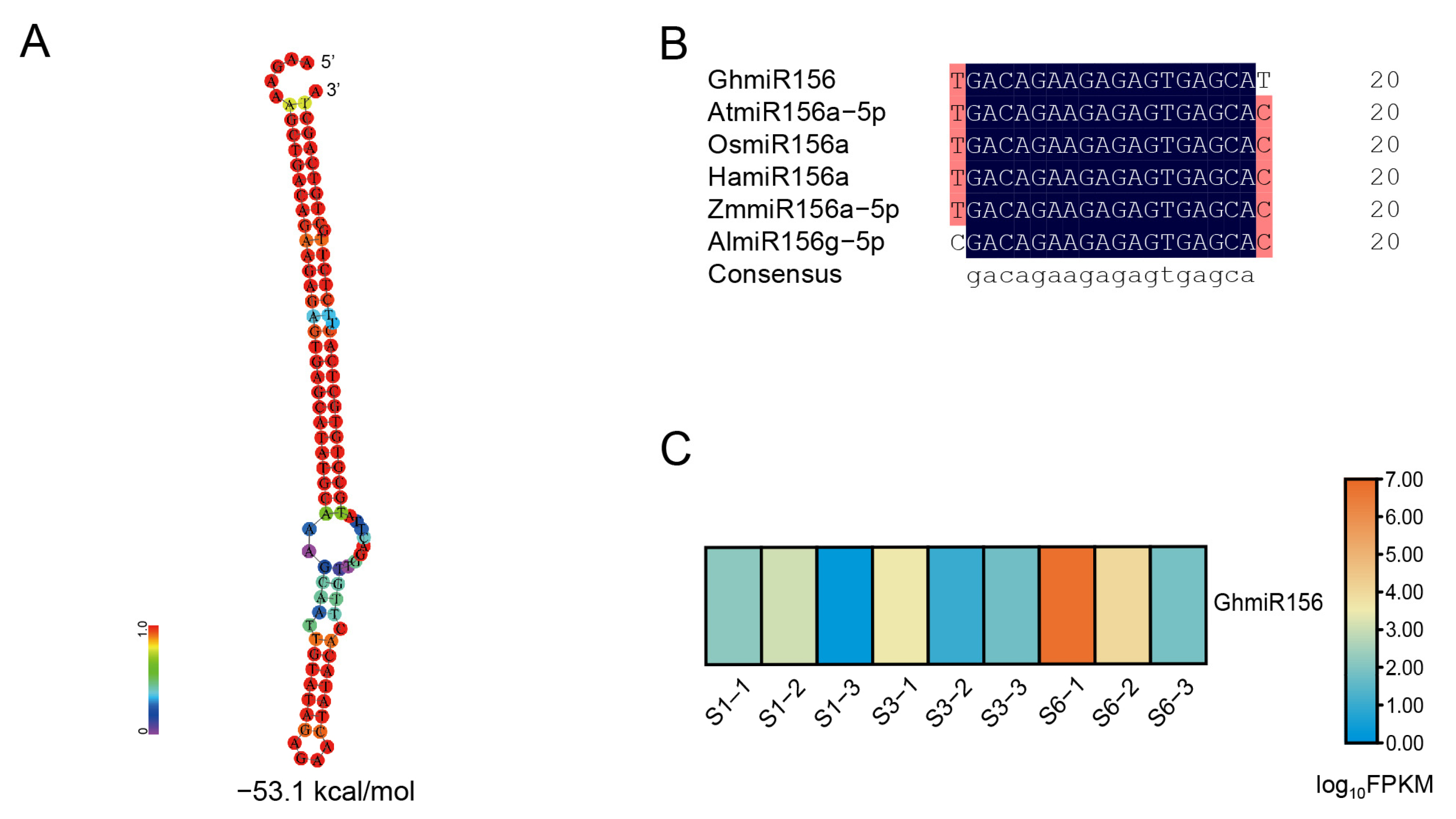
Figure 1. The identification of miR156 in gerbera. (A) Secondary structure of GhmiR156 precursor. The stem-loop structures are colored by base-pairing probabilities, red: high probability, purple: low probability. kcal/mol: the minimum free energy of the stem-loop structures. (B) Homology comparison of miR156s in gerbera and other plants. Gh, Gerbera hybrida; At, Arabidopsis thaliana; Os, Oryza sativa; Ha, Helianthus annuus; Zm, Zea mays; Al, Arabidopsis lyrata. (C) Heatmap shows the relative expression levels of GhmiR156 at three developmental stages of ray florets (S1, S3 and S6). FPKM: fragments per kilobase of transcript per million mapped reads. Data are derived from three biological replicates. Expression levels are represented by a color scale (red, upregulation; blue, downregulation).
Ijms 27 00318 g001
Figure 2. Prediction of the target relationship between GhSPLs and GhmiR156, identification and phylogenetic tree analysis of GhSPL2. (A) Predicted target sites of GhmiR156 in five genes. (B) Heatmap representation of the GhSPLs expression at three developmental stages of ray florets (S1, S3 and S6). FPKM: fragments per kilobase of transcript per million mapped reads. (C) Identification of the GhmiR156 target site with RLM-5′RACE. The cleaved site is marked with an arrow. The numbers above the arrow are the number of clones with an identified 5′ end detected in the total sequenced clones. (D) Subcellular localization of GhSPL2. GhSPL2 fused with GFP or GFP was transformed into tobacco leaves. Scale bar = 50 μm. Nuclei are represented by NLS-mCherry. Merged images show the co-localization of NLS and GFP signals.
Ijms 27 00318 g002
Figure 3. GhSPL2 is a direct target of GhmiR156. (A) Schematic diagram of the dual-luciferase reporter assay vectors for GhmiR156 targeting GhSPL2. (B) GhSPL2-LUC was co-transformed with GhmiR156 in tobacco leaves. GhSPL2-LUC + miR156 was the experimental group, and the rest were the control group. Black: low fluorescence intensity; white: high fluorescence intensity. (C) GhmiR156 cleaves the GhSPL2 mRNA by dual-luciferase reporter assay. Error bars represent the standard deviation of the three replicates (** p < 0.01; n.s., not significant). (D) Schematic diagram of the vector structure of the Western blotting assay. (E) Protein levels of GhSPL2 or GhmSPL2 during co-transforming with GhmiR156 by Western blotting.
Ijms 27 00318 g003
Figure 4. Overexpression of GhSPL2 suppresses anthocyanin accumulation of ray florets. The relative expression levels of GhSPL2 and GhmSPL2 in the mock and GhSPL2-OE (A) and the mock and GhmSPL2-OE (D), respectively. The total anthocyanin content of ray florets in GhSPL2-OE (B) and GhmSPL2-OE (E). Anthocyanins extracted from GhSPL2-OE and the mock (C) and GhmSPL2-OE and the mock (F) by 1% (v/v) HCl-methanol, respectively. (G) The effects of GhSPL2 overexpression on anthocyanin biosynthetic or regulatory genes were investigated using qRT-PCR analyses in stage 3 transient overexpression gerbera petals, with an empty vector used as the mock. Error bars represent the standard deviation of the three replicates (* p < 0.05, ** p < 0.01, *** p < 0.001; n.s., not significant).
Ijms 27 00318 g004
Figure 5. GhmiR156 relieves negative regulation by GhSPL2 in ray floret anthocyanin accumulation. The relative expression levels of GhmiR156 (A) and GhSPL2 (B) in GhmiR156-OE and the mock, respectively. (C) Total anthocyanin content in GhmiR156-OE and the mock. Error bars represent the standard deviation of the three replicates (* p < 0.05, ** p < 0.01; n.s., not significant). (D) Anthocyanins extracted from GhmiR156-OE and the mock by 1% (v/v) HCl-methanol.
Ijms 27 00318 g005
Disclaimer/Publisher’s Note: The statements, opinions and data contained in all publications are solely those of the individual author(s) and contributor(s) and not of MDPI and/or the editor(s). MDPI and/or the editor(s) disclaim responsibility for any injury to people or property resulting from any ideas, methods, instructions or products referred to in the content.