Unique RNA Gene Expression Profile Is Seen in Chronic Non-Specific Low Back Pain
 ,
,  ,
,  ,
,  ,
,
Abstract
1. Introduction
2. Results
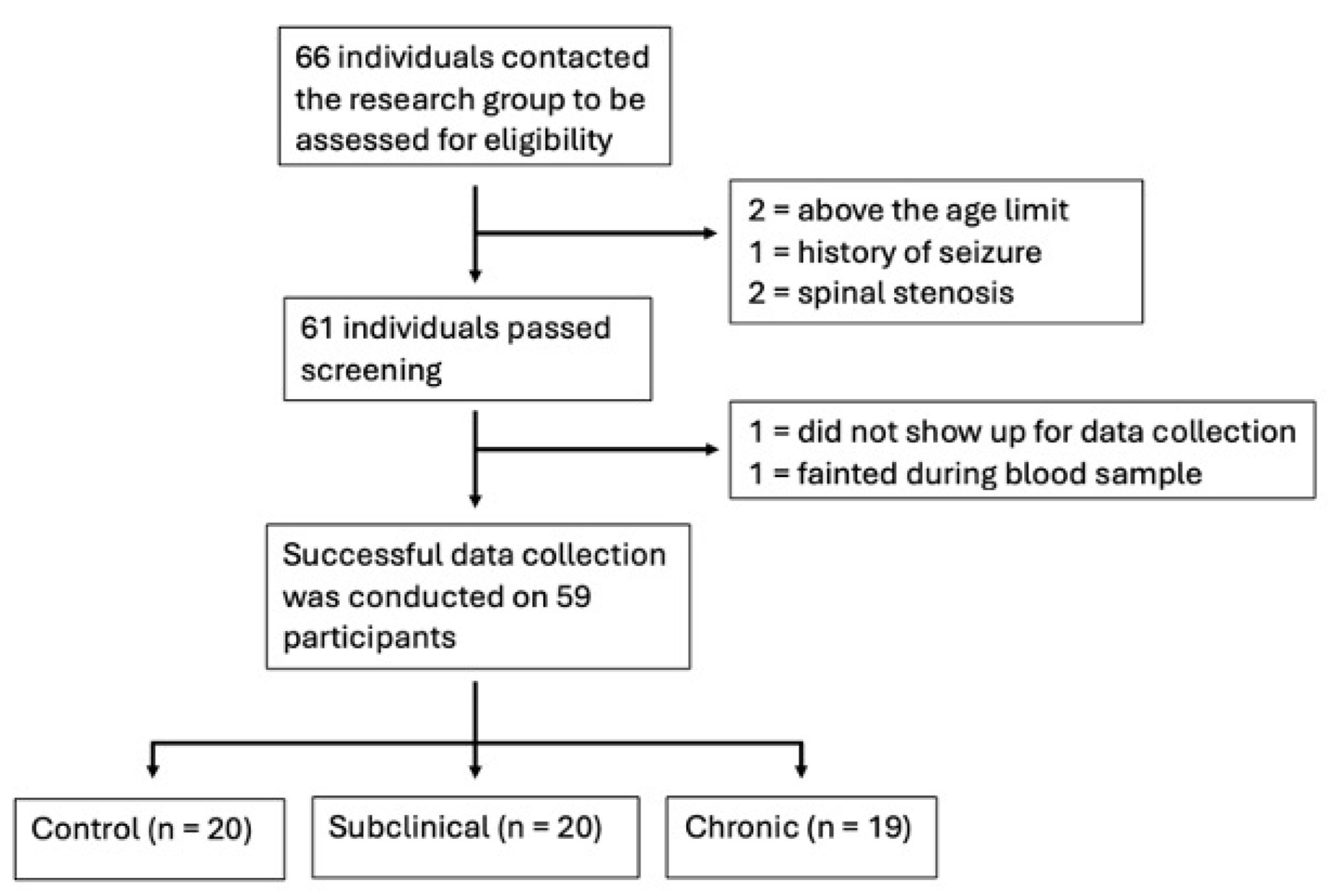
2.1. Participant Inclusion Characteristics
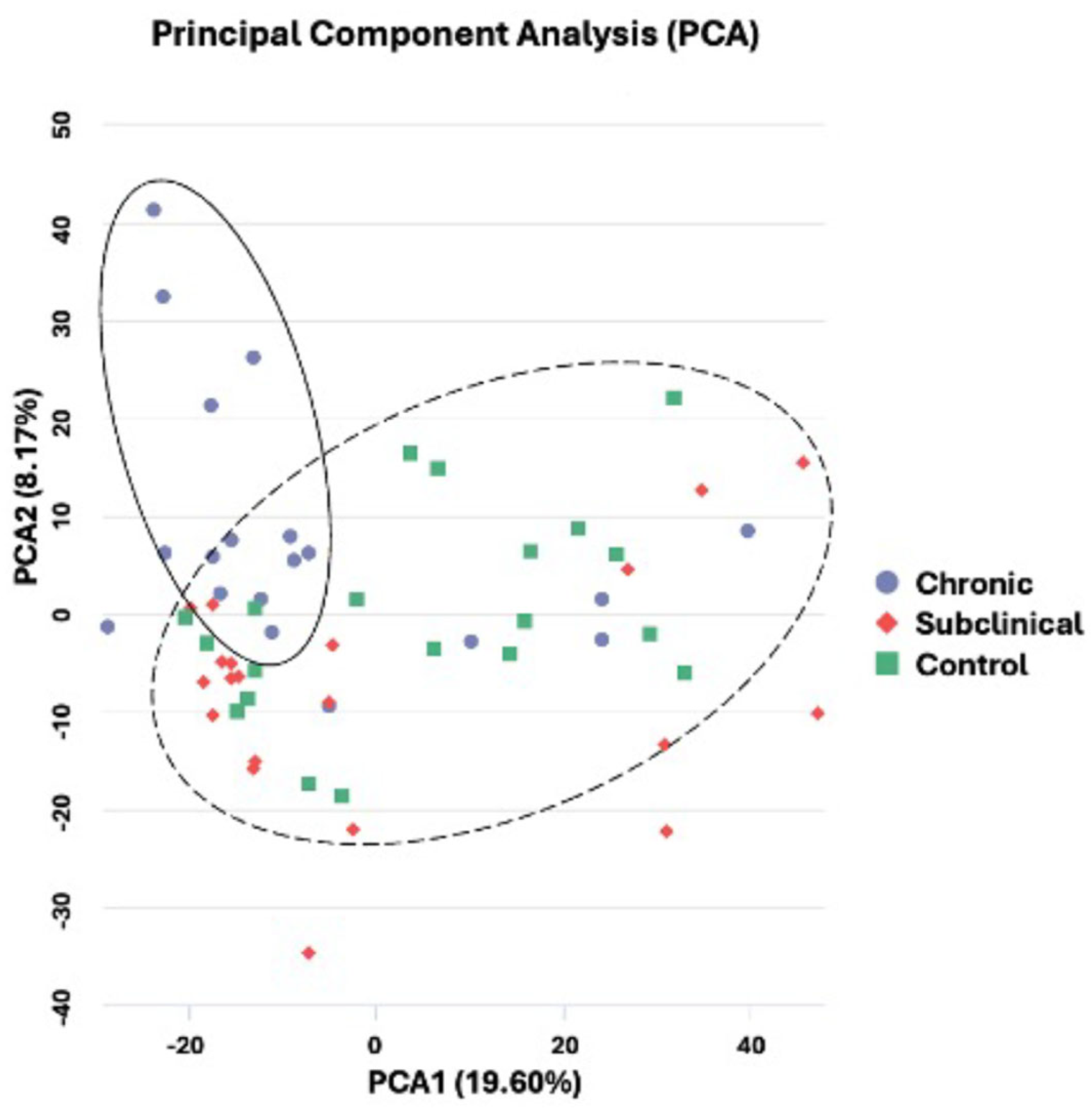
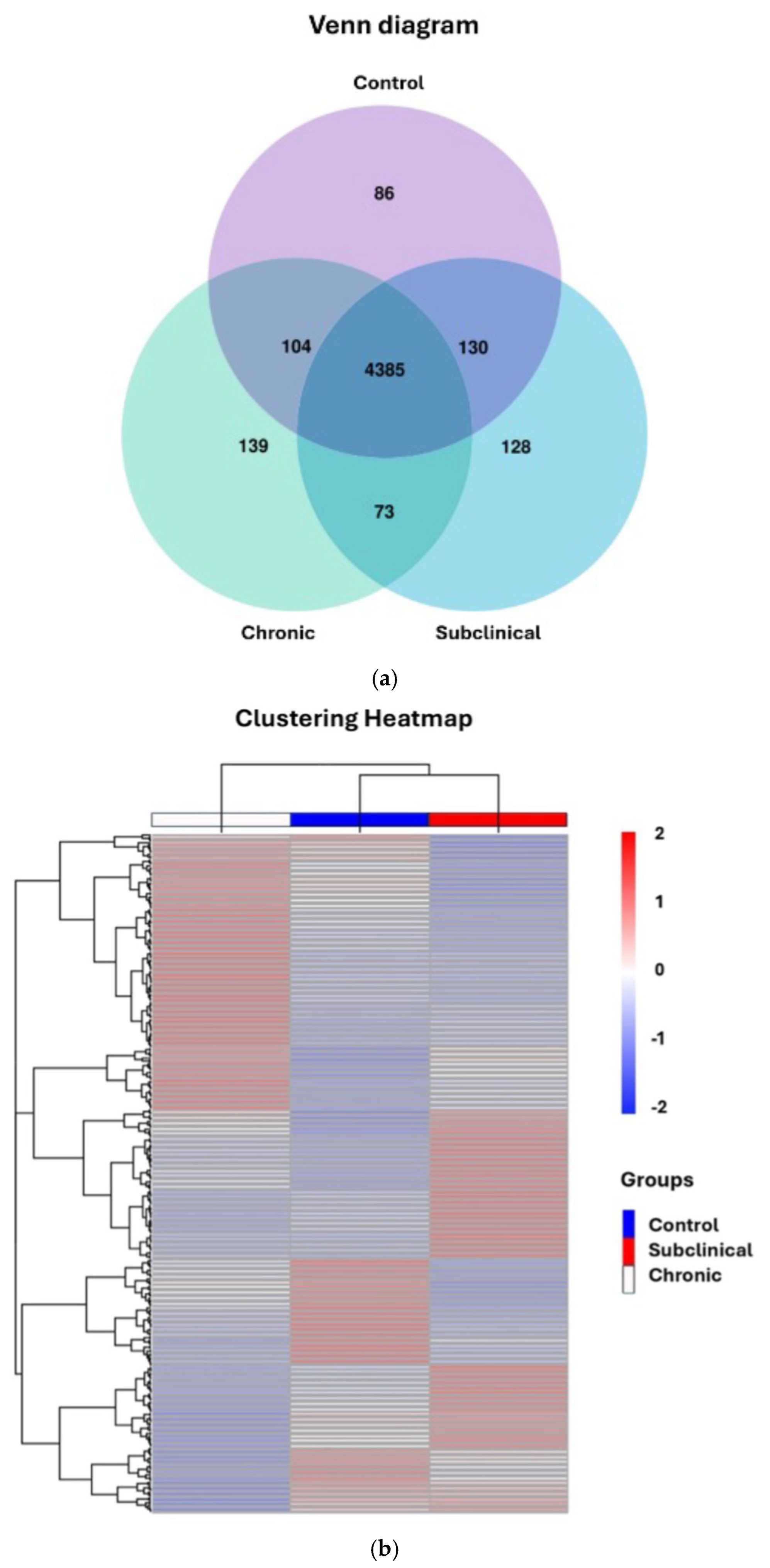
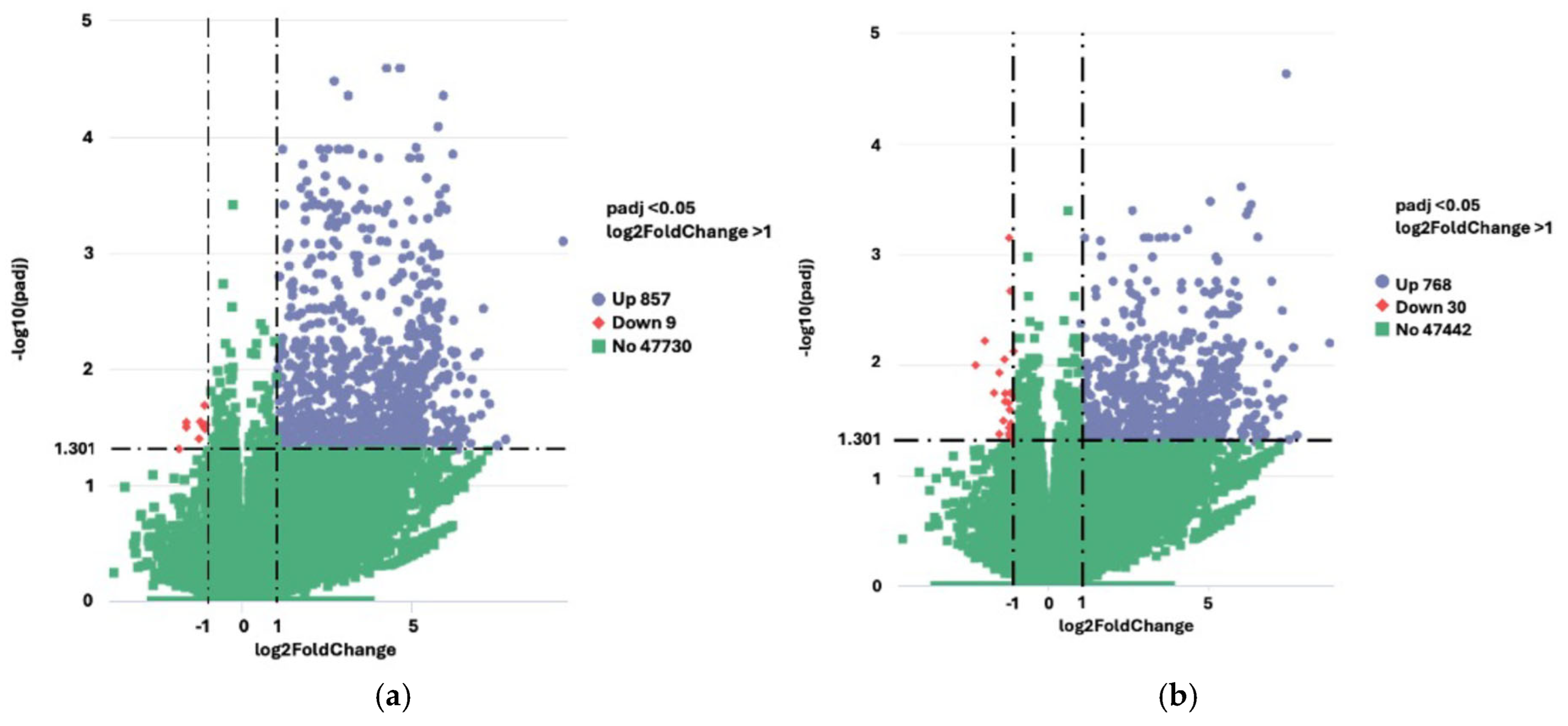
2.2. Gene Expression Analyses’ Results
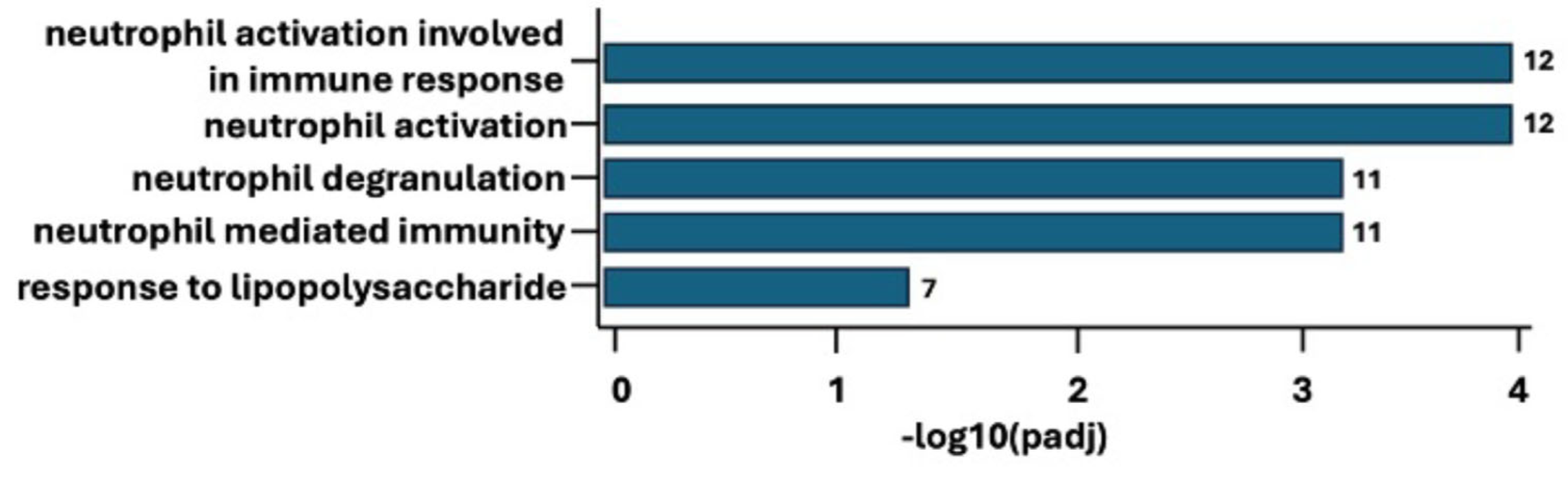
2.3. Gene Expression Analyses’ Results on Only nsLBP
2.4. Subsequent KEGG Pathway Analysis
3. Discussion
Strengths and Limitations
4. Materials and Methods
4.1. Participant Recruitment
4.2. Data Collection
4.3. Blood Sample Processing and Analyses
5. Conclusions
Supplementary Materials
Author Contributions
Funding
Institutional Review Board Statement
Informed Consent Statement
Data Availability Statement
Acknowledgments
Conflicts of Interest
References
- Koes, B.W.; van Tulder, M.W.; Thomas, S. Diagnosis and treatment of low back pain. BMJ 2006, 332, 1430–1434. [Google Scholar] [CrossRef]
- Ushida, K.; Akeda, K.; Momosaki, R.; Yokochi, A.; Shimada, T.; Ito, T.; Maruyama, K. Intermittent pain in patients with chronic low back pain is associated with abnormalities in muscles and fascia. Int. J. Rehabil. Res. 2022, 45, 33–38. [Google Scholar] [CrossRef]
- Niazi, I.K.; Navid, M.S.; Merkle, C.; Amjad, I.; Kumari, N.; Trager, R.J.; Holt, K.; Haavik, H. A randomized controlled trial comparing different sites of high-velocity low amplitude thrust on sensorimotor integration parameters. Sci. Rep. 2024, 14, 1159. [Google Scholar] [CrossRef] [PubMed]
- Axén, I.; Leboeuf-Yde, C. Trajectories of low back pain. Best Pr. Res. Clin. Rheumatol. 2013, 27, 601–612. [Google Scholar] [CrossRef]
- Dunn, K.M.; Campbell, P.; Jordan, K.P. Long-term trajectories of back pain: Cohort study with 7-year follow-up. BMJ Open 2013, 3, e003838. [Google Scholar] [CrossRef] [PubMed]
- Meucci, R.D.; Fassa, A.G.; Faria, N.M.X. Prevalence of chronic low back pain: Systematic review. Rev. Saúde Pública 2015, 49, 73. [Google Scholar] [CrossRef]
- Fan, N.J.; Chen, J.X.; Zhao, B.; Liu, L.Y.; Yang, W.Z.; Chen, X.; Lu, Z.B.; Wang, L.G.; Cao, H.C.; Ma, A.G. Neural correlates of central pain sensitization in chronic low back pain: A resting-state fMRI study. Neuroradiology 2023, 65, 1767–1776. [Google Scholar] [CrossRef]
- Pedersen, L.M.; Schistad, E.; Jacobsen, L.M.; Roe, C.; Gjerstad, J. Serum levels of the pro-inflammatory interleukins 6 (IL-6) and -8 (IL-8) in patients with lumbar radicular pain due to disc herniation: A 12-month prospective study. Brain Behav. Immun. 2015, 46, 132–136. [Google Scholar] [CrossRef] [PubMed]
- Sirucek, L.; De Schoenmacker, I.; Scheuren, P.S.; Lütolf, R.; Gorrell, L.M.; Langenfeld, A.; Baechler, M.; Rosner, J.; Wirth, B.; Hubli, M.; et al. Indication for spinal sensitization in chronic low back pain: Mechanical hyperalgesia adjacent to but not within the most painful body area. Pain Rep. 2024, 9, e1166. [Google Scholar] [CrossRef]
- Øverås, C.K.; Johansson, M.S.; de Campos, T.F.; Ferreira, M.L.; Natvig, B.; Mork, P.J.; Hartvigsen, J. Distribution and prevalence of musculoskeletal pain co-occurring with persistent low back pain: A systematic review. BMC Musculoskelet. Disord. 2021, 22, 91. [Google Scholar] [CrossRef]
- Øverås, C.K.; Nilsen, T.I.L.; Søgaard, K.; Mork, P.J.; Hartvigsen, J. Temporal stability in the prevalence and pattern of co-occurring musculoskeletal pain among people with persistent low back pain: Population-based data from the Norwegian HUNT Study, 1995 to 2019. Pain 2023, 164, 2812–2821. [Google Scholar] [CrossRef] [PubMed]
- Nordstoga, A.L.; Nilsen, T.I.L.; Vasseljen, O.; Unsgaard-Tøndel, M.; Mork, P.J. The influence of multisite pain and psychological comorbidity on prognosis of chronic low back pain: Longitudinal data from the Norwegian HUNT Study. BMJ Open 2017, 7, e015312. [Google Scholar] [CrossRef] [PubMed]
- Ji, R.R.; Chamessian, A.; Zhang, Y.Q. Pain Regulation by Non-neuronal Cells and Inflammation. Science 2016, 354, 572. [Google Scholar] [CrossRef]
- Hoover, D.B. Cholinergic Modulation of the Immune System Presents New Approaches for Treating Inflammation. Pharmacol. Ther. 2017, 179, 1–16. [Google Scholar] [CrossRef]
- Kavelaars, A.; Heijnen, C.J. Immune regulation of pain: Friend and Foe. Sci. Transl. Med. 2021, 13, eabj7152. [Google Scholar] [CrossRef]
- Blalock, J.E. The immune system as the sixth sense. J. Intern. Med. 2005, 257, 126–138. [Google Scholar] [CrossRef]
- Huang, S.; Ziegler, C.G.K.; Austin, J.; Mannoun, N.; Vukovic, M.; Ordovas-Montanes, J.; Shalek, A.K.; von Andrian, U.H. Lymph nodes are innervated by a unique population of sensory neurons with immunomodulatory potential. Cell 2021, 184, 441–459.e25. [Google Scholar] [CrossRef]
- Bortsov, A.V.; Parisien, M.; Khoury, S.; Martinsen, A.E.; Lie, M.U.; Heuch, I.; Hveem, K.; Zwart, J.-A.; Winsvold, B.S.; Diatchenko, L. Brain-specific genes contribute to chronic but not to acute back pain. Pain Rep. 2022, 7, e1018. [Google Scholar] [CrossRef]
- James, S. Human pain and genetics: Some basics. Br. J. Pain 2013, 7, 171. [Google Scholar] [CrossRef] [PubMed]
- Parisien, M.; Lima, L.V.; Dagostino, C.; El-Hachem, N.; Drury, G.L.; Grant, A.V.; Huising, J.; Verma, V.; Meloto, C.B.; Silva, J.R.; et al. Acute inflammatory response via neutrophil activation protects against the development of chronic pain. Sci. Transl. Med. 2022, 14, eabj9954. [Google Scholar] [CrossRef]
- Dorsey, S.G.; Renn, C.L.; Griffioen, M.; Lassiter, C.B.; Zhu, S.; Huot-Creasy, H.; McCracken, C.; Mahurkar, A.; Shetty, A.C.; Jackson-Cook, C.K.; et al. Whole blood transcriptomic profiles can differentiate vulnerability to chronic low back pain. PLoS ONE 2019, 14, e0216539. [Google Scholar] [CrossRef] [PubMed]
- Caxaria, S.; Bharde, S.; Fuller, A.M.; Evans, R.; Thomas, B.; Celik, P.; Dell’ACcio, F.; Yona, S.; Gilroy, D.; Voisin, M.-B.; et al. Neutrophils infiltrate sensory ganglia and mediate chronic widespread pain in fibromyalgia. Proc. Natl. Acad. Sci. USA 2023, 120, e2211631120. [Google Scholar] [CrossRef] [PubMed]
- Sahbaie, P.; Li, X.; Shi, X.; Clark, J.D. Roles of Gr-1+ Leukocytes in Postincisional Nociceptive Sensitization and Inflammation. Anesthesiology 2012, 117, 602–612. [Google Scholar] [CrossRef]
- Totsch, S.K.; Sorge, R.E. Immune system involvement in specific pain conditions. Mol. Pain 2017, 13, 1744806917724559. [Google Scholar] [CrossRef]
- Chiu, I.M.; von Hehn, C.A.; Woolf, C.J. Neurogenic Inflammation–The Peripheral Nervous System’s Role in Host Defense and Immunopathology. Nat. Neurosci. 2012, 15, 1063–1067. [Google Scholar] [CrossRef]
- Capuron, L.; Miller, A.H. Immune System to Brain Signaling: Neuropsychopharmacological Implications. Pharmacol. Ther. 2011, 130, 226–238. [Google Scholar] [CrossRef]
- D’Mello, C.; Le, T.; Swain, M.G. Cerebral Microglia Recruit Monocytes into the Brain in Response to Tumor Necrosis Factor? Signaling during Peripheral Organ Inflammation. J. Neurosci. 2009, 29, 2089–2102. [Google Scholar] [CrossRef]
- Marchand, F.; Perretti, M.; McMahon, S.B. Role of the immune system in chronic pain. Nat. Rev. Neurosci. 2005, 6, 521–532. [Google Scholar] [CrossRef]
- Ren, K.; Dubner, R. Interactions between the immune and nervous systems in pain. Nat. Med. 2010, 16, 1267–1276. [Google Scholar] [CrossRef] [PubMed]
- Talbot, S.; Foster, S.L.; Woolf, C.J. Neuroimmunity: Physiology and Pathology. Annu. Rev. Immunol. 2016, 34, 421–447. [Google Scholar] [CrossRef] [PubMed]
- Kalpachidou, T.; Kummer, K.K.; Kress, M. Non-coding RNAs in neuropathic pain. Neuronal Signal 2020, 4, NS20190099. [Google Scholar] [CrossRef]
- Chai, G.; Goffinet, A.M.; Tissir, F. Celsr3 and Fzd3 in axon guidance. Int. J. Biochem. Cell Biol. 2015, 64, 11–14. [Google Scholar] [CrossRef] [PubMed]
- Laws, K.M.; Bashaw, G.J. Diverse roles for axon guidance pathways in adult tissue architecture and function. Nat. Sci. 2022, 2, e20220021. [Google Scholar] [CrossRef] [PubMed]
- Schaeffer, J.; Vilallongue, N.; Belin, S.; Nawabi, H. Axon guidance in regeneration of the mature central nervous system: Step by step. Neural Regen. Res. 2023, 18, 2665–2666. [Google Scholar] [CrossRef]
- Vaikakkara Chithran, A.; Allan, D.W.; O’Connor, T.P. Adult expression of Semaphorins and Plexins is essential for motor neuron survival. Sci. Rep. 2023, 13, 5894. [Google Scholar] [CrossRef]
- Klein, R. Bidirectional modulation of synaptic functions by Eph/ephrin signaling. Nat. Neurosci. 2009, 12, 15–20. [Google Scholar] [CrossRef]
- Ding, Y.; Kastin, A.J.; Pan, W. Neural Plasticity After Spinal Cord Injury. Curr. Pharm. Des. 2005, 11, 1441–1450. [Google Scholar] [CrossRef] [PubMed]
- Nagappan, P.G.; Chen, H.; Wang, D.Y. Neuroregeneration and plasticity: A review of the physiological mechanisms for achieving functional recovery postinjury. Mil. Med. Res. 2020, 7, 30. [Google Scholar] [CrossRef]
- Damo, E.; Simonetti, M. Axon Guidance Molecules and Pain. Cells 2022, 11, 3143. [Google Scholar] [CrossRef]
- McLeod, F.; Salinas, P.C. Wnt proteins as modulators of synaptic plasticity. Curr. Opin. Neurobiol. 2018, 53, 90–95. [Google Scholar] [CrossRef]
- Wozniak, K.M.; Rojas, C.; Wu, Y.W.; Slusher, B.S. The Role of Glutamate Signaling in Pain Processes and its Regulation by GCP II Inhibition. Curr. Med. Chem. 2012, 19, 1323–1334. [Google Scholar] [CrossRef] [PubMed]
- Zhuo, M. Ionotropic glutamate receptors contribute to pain transmission and chronic pain. Neuropharmacology 2017, 112, 228–234. [Google Scholar] [CrossRef] [PubMed]
- Sandkühler, J.; Gruber-Schoffnegger, D. Hyperalgesia by synaptic long-term potentiation (LTP): An update. Curr. Opin. Pharmacol. 2012, 12, 18–27. [Google Scholar] [CrossRef]
- Wangzhou, A.; Paige, C.; Neerukonda, S.V.; Naik, D.K.; Kume, M.; David, E.T.; Dussor, G.; Ray, P.R.; Price, T.J. A ligand-receptor interactome platform for discovery of pain mechanisms and therapeutic targets. Sci. Signal. 2021, 14, eabe1648. [Google Scholar] [CrossRef] [PubMed]
- Radtke, F.; Wilson, A.; Mancini, S.J.C.; MacDonald, H.R. Notch regulation of lymphocyte development and function. Nat. Immunol. 2004, 5, 247–253. [Google Scholar] [CrossRef]
- Yuan, J.S.; Kousis, P.C.; Suliman, S.; Visan, I.; Guidos, C.J. Functions of notch signaling in the immune system: Consensus and controversies. Annu. Rev. Immunol. 2010, 28, 343–365. [Google Scholar] [CrossRef]
- Ables, J.L.; Breunig, J.J.; Eisch, A.J.; Rakic, P. Not(ch) just development: Notch signalling in the adult brain. Nat. Rev. Neurosci. 2011, 12, 269–283. [Google Scholar] [CrossRef]
- Alam, A.; Locher, K.P. Structure and Mechanism of Human ABC Transporters. Annu. Rev. Biophys. 2023, 52, 275–300. [Google Scholar] [CrossRef]
- Dean, M. The Human ATP-Binding Cassette (ABC) Transporter Superfamily; National Center for Biotechnology Information: Bethesda, MD, USA, 2002. [Google Scholar]
- Yang, J.; Reilly, B.G.; Davis, T.P.; Ronaldson, P.T. Modulation of Opioid Transport at the Blood-Brain Barrier by Altered ATP-Binding Cassette (ABC) Transporter Expression and Activity. Pharmaceutics 2018, 10, 192. [Google Scholar] [CrossRef]
- Radu, B.M.; Bramanti, P.; Osculati, F.; Flonta, M.L.; Radu, M.; Bertini, G.; Fabene, P.F. Neurovascular Unit in Chronic Pain. Mediat. Inflamm. 2013, 2013, 648268. [Google Scholar] [CrossRef]
- Montague-Cardoso, K.; Malcangio, M. Changes in blood–spinal cord barrier permeability and neuroimmune interactions in the underlying mechanisms of chronic pain. Pain Rep. 2021, 6, e879. [Google Scholar] [CrossRef] [PubMed]
- Sannes, A.C.; Ghani, U.; Niazi, I.K.; Moberget, T.; Jonassen, R.; Haavik, H.; Gjerstad, J. Investigating Whether a Combination of Electro-Encephalography and Gene Expression Profiling Can Predict the Risk of Chronic Pain: A Protocol for an Observational Prospective Cohort Study. Brain Sci. 2024, 14, 641. [Google Scholar] [CrossRef]
- Kleiveland, C.R. Peripheral Blood Mononuclear Cells. In The Impact of Food Bioactives on Health: In Vitro and Ex Vivo Models; Verhoeckx, K., Cotter, P., López-Expósito, I., Kleiveland, C., Lea, T., Mackie, A., Requena, T., Swiatecka, D., Wichers, H., Eds.; Springer: Cham, Switzerland, 2015. [Google Scholar]
- Liao, Y.; Smyth, G.K.; Shi, W. featureCounts: An efficient general purpose program for assigning sequence reads to genomic features. Bioinformatics 2014, 30, 923–930. [Google Scholar] [CrossRef] [PubMed]
- Mortazavi, A.; Williams, B.A.; McCue, K.; Schaeffer, L.; Wold, B. Mapping and quantifying mammalian transcriptomes by RNA-Seq. Nat. Methods 2008, 5, 621–628. [Google Scholar] [CrossRef] [PubMed]
- Love, M.I.; Huber, W.; Anders, S. Moderated estimation of fold change and dispersion for RNA-seq data with DESeq2. Genome Biol. 2014, 15, 550. [Google Scholar] [CrossRef]
- Liou, L.; Hornburg, M.; Robertson, D.S. Global FDR control across multiple RNAseq experiments. Bioinformatics 2023, 39, btac718. [Google Scholar] [CrossRef]
- Haghverdi, L.; Lun, A.T.L.; Morgan, M.D.; Marioni, J.C. Batch effects in single-cell RNA-sequencing data are corrected by matching mutual nearest neighbors. Nat. Biotechnol. 2018, 36, 421–427. [Google Scholar] [CrossRef]



| Control (n = 20) | Subclinical (n = 20) | Chronic (n = 19) | |
|---|---|---|---|
| Age, mean (SD) | 31.1 (8.4) | 30.2 (8.4) | 35.3 (10.0) |
| Female, n (%) | 9 (45) | 9 (45) | 10 (53) |
| Ethnicity, n (%) European Māori Pacific People Asian Middle Eastern/Latin America/Africa Other Ethnicity | 7 (35.0) - 2 (10.0) 7 (35.0) 3 (15.0) - | 12 (60.0) - - 1 (5.0) 2 (10.0) 5 (25.0) | 8 (42.1) - - 9 (47.4) - 2 (10.5) |
| Education, n (%) Primary School Secondary School Certificate/Diploma Higher Education (college/university < 4 years) Higher Education (college/university ≥ 4 years) | - 1 (5.0) 3 (15.0) 2 (10.0) 14 (70.0) | - 1 (5.0) 1 (5.0) 5 (25.0) 13 (65.0) | - 1 (5.3) 3 (15.8) 5 (26.3) 10 (52.6) |
| Average pain intensity last 7 days (NRS, 0–10), mean (SD) | - | 2.2 (1.5) | 4.4 (2.0) |
| Currently experiencing pain elsewhere, n (%) Yes No | 2 (10.0) 18 (90.0) | 9 (45.0) 11 (55.0) | 9 (47.4) 10 (52.6) |
| Duration of back pain, n (%) 0–2 weeks 2–4 weeks 1–3 months 3–6 months 6–12 months >12 months | 4 (28.6) 5 (35.7) - 2 (14.3) - 3 (21.4) | - - - - - 17 (89.4) | |
| Type of pain medication, n (%) Over the counter (e.g., Paracetamol, Ibuprofen etc) Prescription (e.g., Tramadol) A combination of over the counter and prescription | 3 (100.0) - - | 5 (28.6) - 2 (28.6) | |
| Disability (RMDQ, range 0–24), mean (SD) | 3.0 (2.0) | 4.9 (3.5) | |
| Kinesiophobia (FABQ-pa, range 0–24), mean (SD) | 4.8 (3.8) | 10.9 (7.0) | |
| Pain catastrophising (PCS, range 0–52), mean (SD) | 6.6 (9.3) | 15.5 (10.4) |
| Biological Process | Genes | p-adj. | Count | |
|---|---|---|---|---|
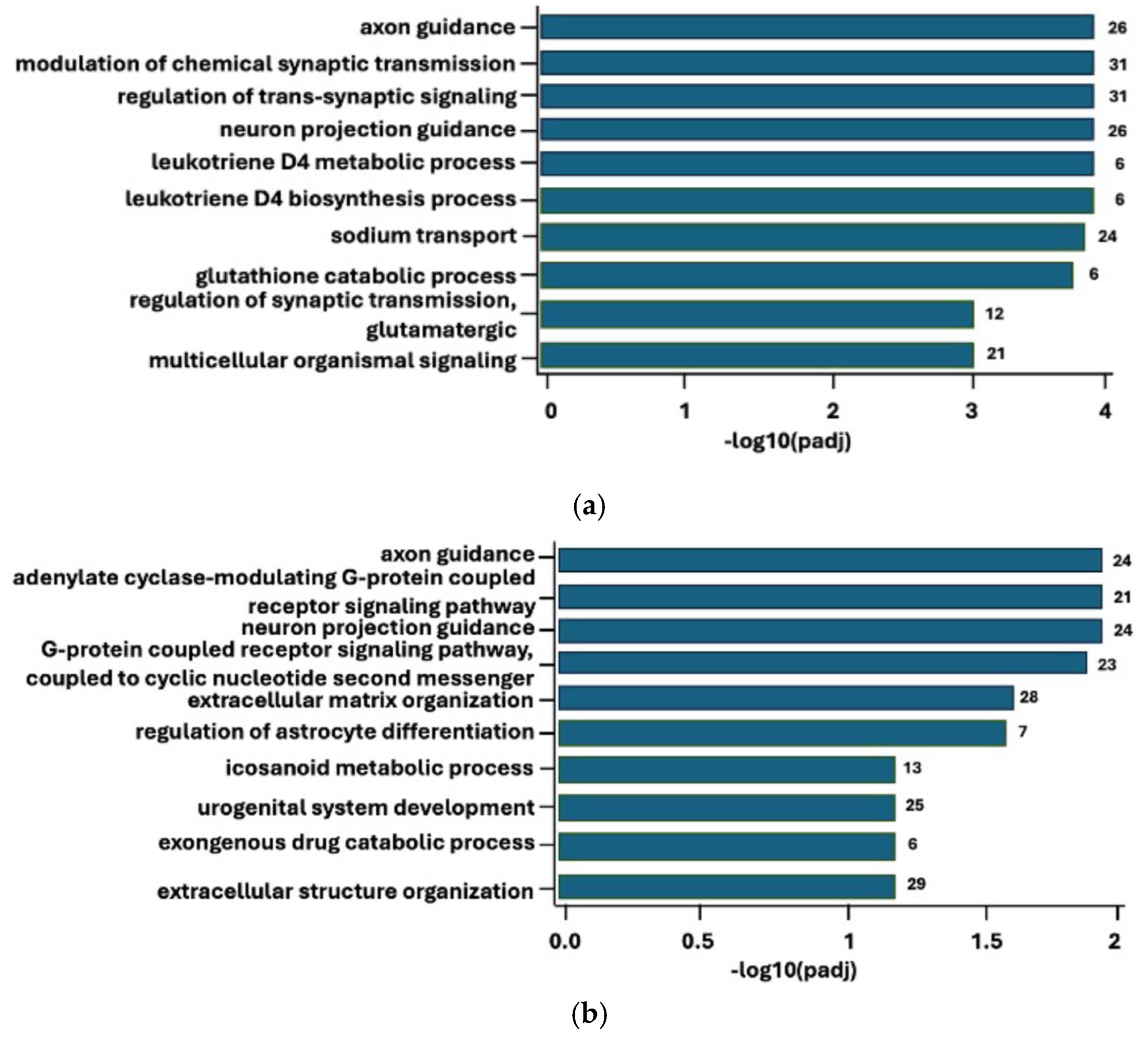
| Chronic vs. Control | Axon guidance | SPTBN4, NPHS1, CNTN2, RAP1GAP, KIRREL1, SEMA3B, EFNB3, EFNA2, SLIT3, NTN3, VAX1, RELN, SHANK3, PLXNB3, FGF8, EPHA8, SEMA3F, GBX1, GFRA1, SLIT2, NRXN3, GRB7, NFASC, NTRK1, UNC5C, BMP7 | 0.00014 | 26 |
| Regulation of trans-synaptic signaling | MAPK8IP2, GRM6, CNTN2, SLC6A9, CALB2, UNC13A, GRID1, GRID2IP, CA7, GRIN2D, ACHE, CHRNB4, SLC8A2, SYT12, ADRA1D, RELN, SYT7, CHRNB2, SHANK3, GRM4, ATP1A2, HAP1, GRIK3, CAMK2B, SHANK2, NTF4, NTRK1, SHISA7, CACNG5, SLC6A1, P2RX3 | 0.00014 | 31 | |
| Modulation of chemical synaptic transmission | MAPK8IP2, GRM6, CNTN2, SLC6A9, CALB2, UNC13A, GRID1, GRID2IP, CA7, GRIN2D, ACHE, CHRNB4, SLC8A2, SYT12, ADRA1D, RELN, SYT7, CHRNB2, SHANK3, GRM4, ATP1A2, HAP1, GRIK3, CAMK2B, SHANK2, NTF4, NTRK1, SHISA7, CACNG5, SLC6A1, P2RX3 | 0.00014 | 31 | |
| Neuron projection guidance | SPTBN4, NPHS1, CNTN2, RAP1GAP, KIRREL1, SEMA3B, EFNB3, EFNA2, SLIT3, NTN3, VAX1, RELN, SHANK3, PLXNB3, FGF8, EPHA8, SEMA3F, GBX1, GFRA1, SLIT2, NRXN3, GRB7, NFASC, NTRK1, UNC5C, BMP7 | 0.00014 | 26 | |
| Chronic vs. Subclinical | Axon guidance | BMP7, CNTN2, CYFIP1, EPHA8, FAM129B, FGF8, GBX1, GFRA1, KIRREL1, LGI1, LHX1, LHX3, NFASC, NPHS1, NTN3, PLXNB3, PLXND1, RAP1GAP, SEMA4A, SHANK3, SLIT2, SLIT3, SPTBN4, VAX1 | 0.01242 | 24 |
| Adenylate cyclase-modulating G-protein coupled receptor signaling pathway | APLP1, PTH1R, GRM6, GRIK3, CHGA, AVPR2, GLP2R, GNAT1, PTGER1, ADCY2, ADRA1D, GRM4, GPR176, GPR37L1, NOS1, GALR3, OPRD1, GALR2, GNA15, GPR78/FPR1 | 0.01242 | 21 | |
| Neuron projection guidance | BMP7, CNTN2, CYFIP1, EPHA8, FAM129B, FGF8, GBX1, GFRA1, KIRREL1, LGI1, LHX1, LHX3, NFASC, NPHS1, NTN3, PLXNB3, PLXND1, RAP1GAP, SEMA4A, SHANK3, SLIT2, SLIT3, SPTBN4, VAX1 | 0.01242 | 24 | |
| G-protein coupled receptor signaling pathway, coupled to cyclic nucleotide second messenger | APLP1, PTH1R, GRM6, GRIK3, CHGA, AVPR2, ANXA1, GLP2R, GNAT1, PTGER1, ADCY2, ADRA1D, GRM4, GPR176, GPR37L1, NOS1, GALR3, OR10H1, OPRD1, GALR2, GNA15, GPR78, FPR1 | 0.01282 | 23 |
| Pathway | Genes | p-adj. | Count | |
|---|---|---|---|---|
| Chronic vs. Control | Protein digestion and absorption | COL20A1, SLC9A3P3, COL16A1, COL22A1, COL2A1, SLC8A2, ELN, ATP1A2, CPA1, SLC15A1, COL5A2, COL4A5, CTRB1, COL4A2, COL27A1 | 7.5732 × 10⁻⁶ | 15 |
| Neuroactive ligand-receptor interaction | GRM6, NPW, CHRNA2, UTS2R, F2, PTH1R, OPRD1, GRID1, AVPR2, GALR3, GRIN2D, GLP2R, CHRNB4, PTGER1, GNRH2, PYY, ADRA1D, CHRNB2, GRM4, C3P1, GALR2, GRIK3, RXFP4, KISS1R, CHRND, P2RX3 | 1.0593 × 10⁻⁵ | 26 | |
| Cholinergic synapse | CREB3L3, ACHE, CHRNB4, CHRNB2, KCNJ4, KCNQ2, CACNA1A, GNG4, CAMK2B, CACNA1S, ADCY1, CACNA1B | 0.0012 | 12 | |
| Glutamatergic synapse | GRM6, GRIN2D, SLC1A6, PLA2G4F, SHANK3, GRM4, CACNA1A, GNG4, GRIK3, SHANK2, ADCY1, SLC38A3 | 0.0013 | 12 | |
| Axon guidance | SEMA3B, EFNB3, FNA2, SLIT3, NTN3, NGEF, AC097065.1, PLXNB3, EPHA8, SEMA3F, SEMA6B, SLIT2, CAMK2B, UNC5C, RGMA, BMP7 | 0.0031 | 16 | |
| Chronic vs. Subclinical | Neuroactive ligand-receptor interaction | GPR156, PTH1R, SSTR3, GRID1, GRM6, F2, NPW, CHRNB4, GRIK3, AVPR2, GLP2R, PTAFR, PTGER1, C3P1, ADRA1D, GRM4, NPFFR1, GRIN2D, UTS2R, GALR3, OPRD1, CHRNA2, GALR2, LEP, FPR1, GAL | 0.0004 | 26 |
| Notch signaling pathway | NOTCH3, NCOR2, RBPJL, CIR1, AC027279.1, AC105206.1, DLL3, DLL4, NOTCH1, HEY2, CATIP-AS2 | 0.0140 | 11 | |
| Protein digestion and absorption | COL4A2, ELN, CPA1, ATP1A2, SLC9A3P3, COL20A1, SLC15A1, COL4A1, COL22A1, COL16A1, COL2A1 | 0.0140 | 11 | |
| ABC transporters | ABCC6P1, ABCA11P, ABCD1P2, ABCC8, ABCA4, ABCG4, ABCB10P1 | 0.0484 | 7 |
Disclaimer/Publisher’s Note: The statements, opinions and data contained in all publications are solely those of the individual author(s) and contributor(s) and not of MDPI and/or the editor(s). MDPI and/or the editor(s) disclaim responsibility for any injury to people or property resulting from any ideas, methods, instructions or products referred to in the content. |
© 2025 by the authors. Licensee MDPI, Basel, Switzerland. This article is an open access article distributed under the terms and conditions of the Creative Commons Attribution (CC BY) license.
Share and Cite
Sannes, A.-C.; Amjad, I.; Duehr, J.; Ghani, U.; Rice, D.; Haavik, H.; Niazi, I.K.; Moberget, T.; Gjerstad, J. Unique RNA Gene Expression Profile Is Seen in Chronic Non-Specific Low Back Pain. Int. J. Mol. Sci. 2026, 27, 287. https://doi.org/10.3390/ijms27010287
Sannes A-C, Amjad I, Duehr J, Ghani U, Rice D, Haavik H, Niazi IK, Moberget T, Gjerstad J. Unique RNA Gene Expression Profile Is Seen in Chronic Non-Specific Low Back Pain. International Journal of Molecular Sciences. 2026; 27(1):287. https://doi.org/10.3390/ijms27010287
Chicago/Turabian StyleSannes, Ann-Christin, Imran Amjad, Jenna Duehr, Usman Ghani, David Rice, Heidi Haavik, Imran Khan Niazi, Torgeir Moberget, and Johannes Gjerstad. 2026. "Unique RNA Gene Expression Profile Is Seen in Chronic Non-Specific Low Back Pain" International Journal of Molecular Sciences 27, no. 1: 287. https://doi.org/10.3390/ijms27010287
APA StyleSannes, A.-C., Amjad, I., Duehr, J., Ghani, U., Rice, D., Haavik, H., Niazi, I. K., Moberget, T., & Gjerstad, J. (2026). Unique RNA Gene Expression Profile Is Seen in Chronic Non-Specific Low Back Pain. International Journal of Molecular Sciences, 27(1), 287. https://doi.org/10.3390/ijms27010287