Hybrid Nanocarriers for Cancer Therapy: Advancements in Co-Delivery of Gene Therapy and Immunotherapy

 , , , , , and
Abstract
1. Introduction
2. Types of Nanoparticles and Their Roles in Hybrid Nanocarriers
2.1. Lipid-Based Nanoparticles
2.2. Polymer-Based Nanoparticles
2.3. Inorganic Nanoparticles
2.4. Biomimetic and Cell-Derived Nanoparticles
3. Design and Properties of Hybrid Nanocarrier Systems
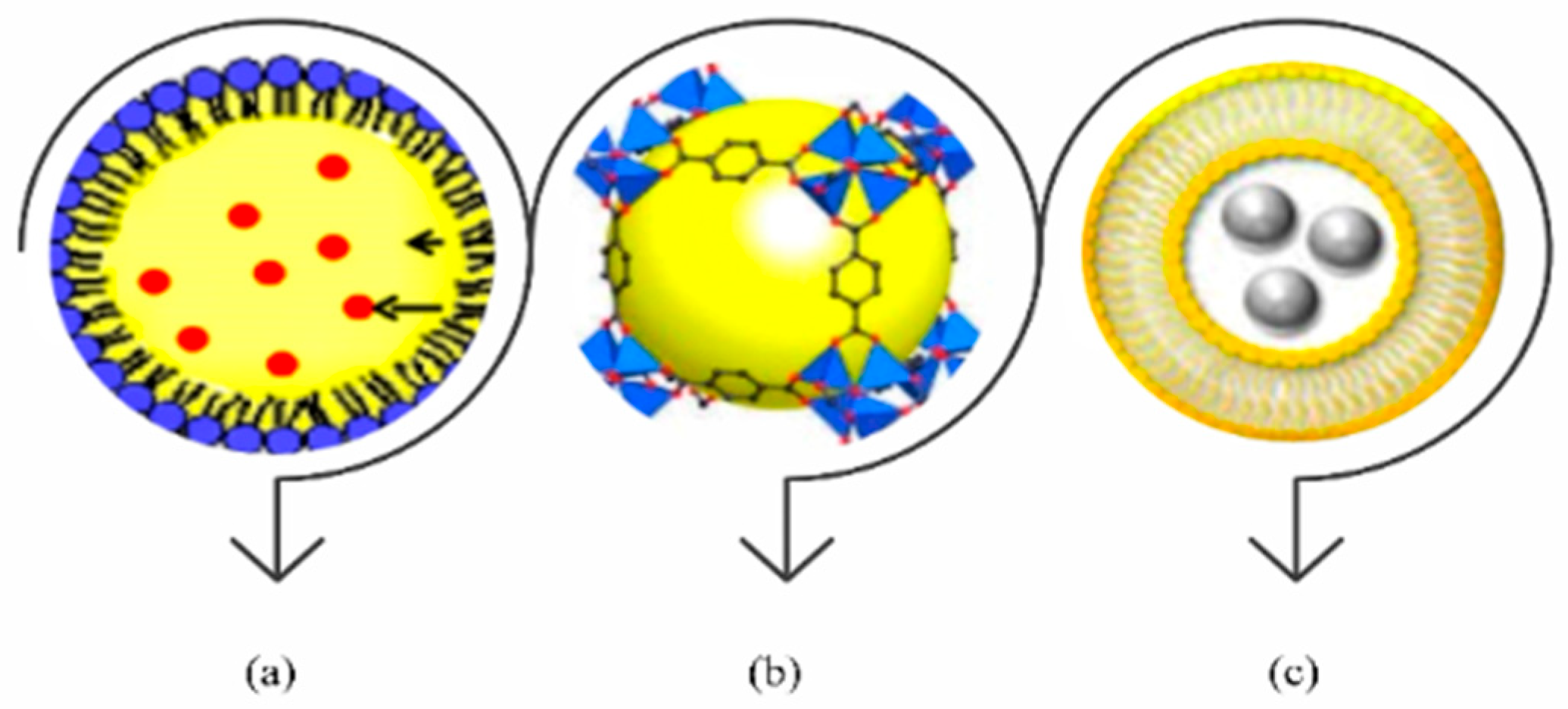
3.1. Lipid–Polymer Hybrid Nanoparticles (LPHNPs)
3.2. Metal–Organic Frameworks (MOFs)
3.3. Liposome–Inorganic Hybrids
3.4. Challenges and Translational Considerations
3.4.1. Scalability and Batch Consistency
3.4.2. Biological and Physiological Barriers
3.4.3. Immune-Related Adverse Events (IRAEs)
3.4.4. Stability and Release Kinetics Challenges
3.4.5. Future Directions to Mitigate Challenges in Hybrid Nanocarriers
4. Biological Barriers and How Hybrid Nanocarriers Overcome Them
5. Comparison Between Hybrid and Non-Hybrid Nanocarrier Systems
6. Translational Outlook: From Bench to Bedside
7. Gene Therapy in Cancer Treatment
8. Immunotherapy in Cancer Treatment
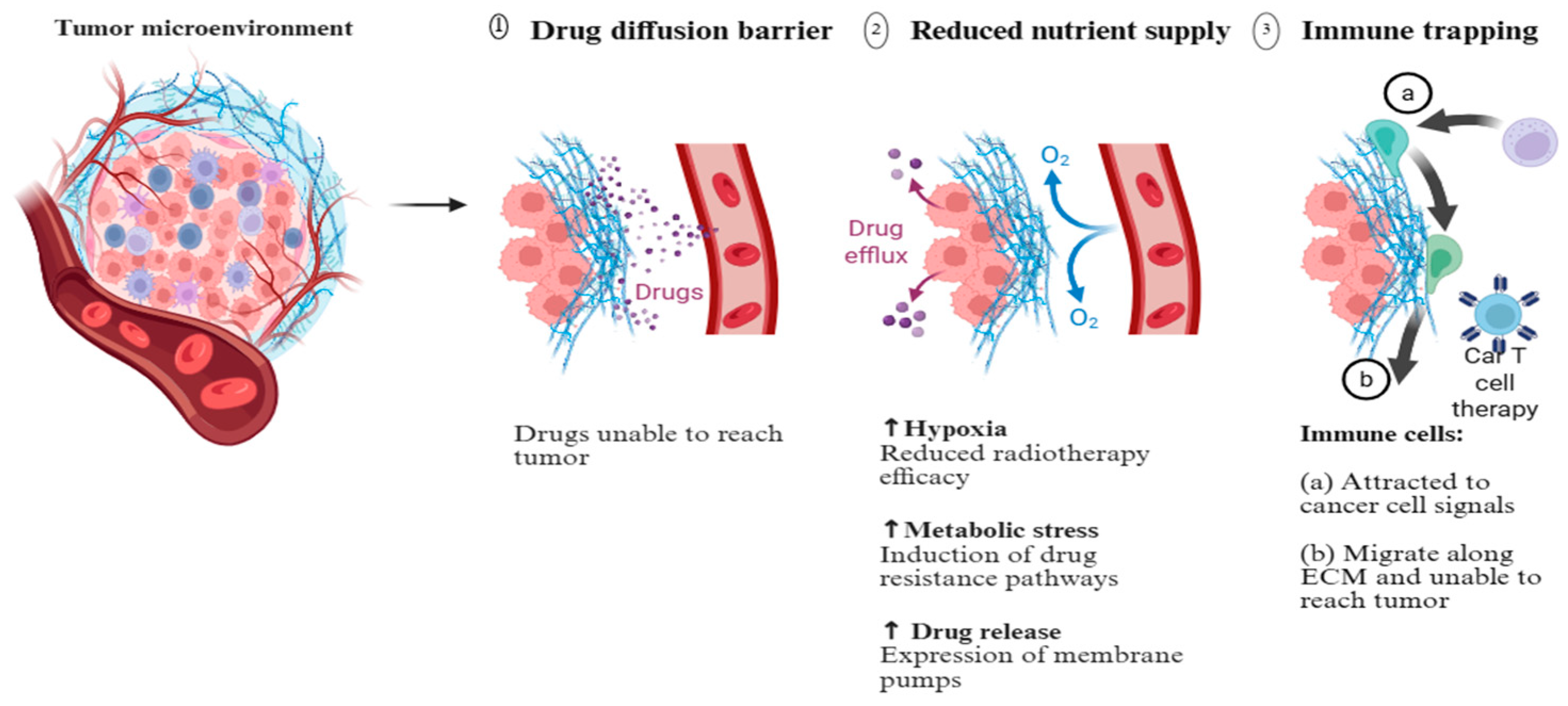
9. Immune Suppression and Tumor Microenvironment (TME)
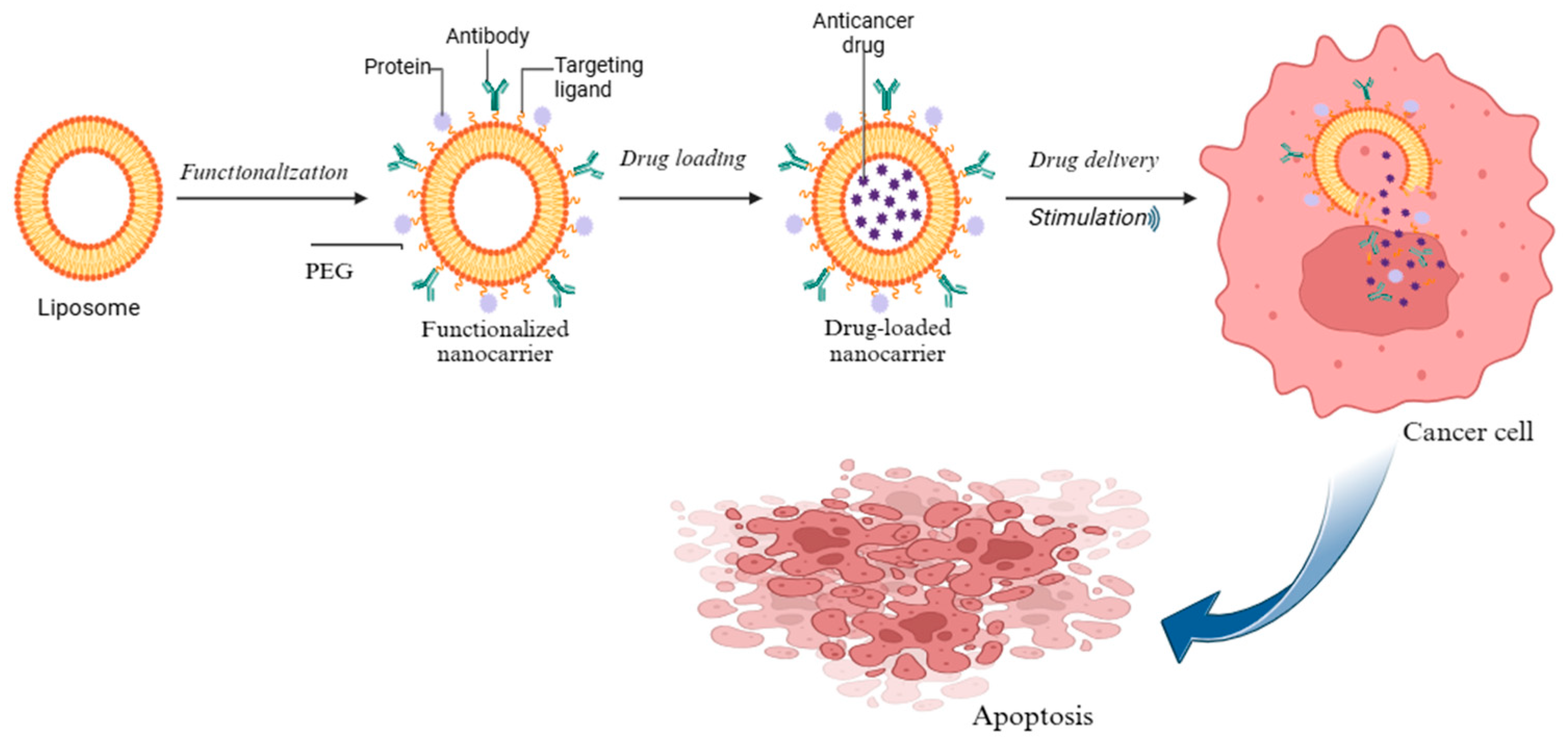
10. Co-Delivery of Gene Therapy and Immunotherapy
- Encapsulation of multiple therapeutic agents;
- Controlled and sequential release to optimize therapeutic effects;
- Targeted delivery to enhance precision and reduce off-target toxicity.
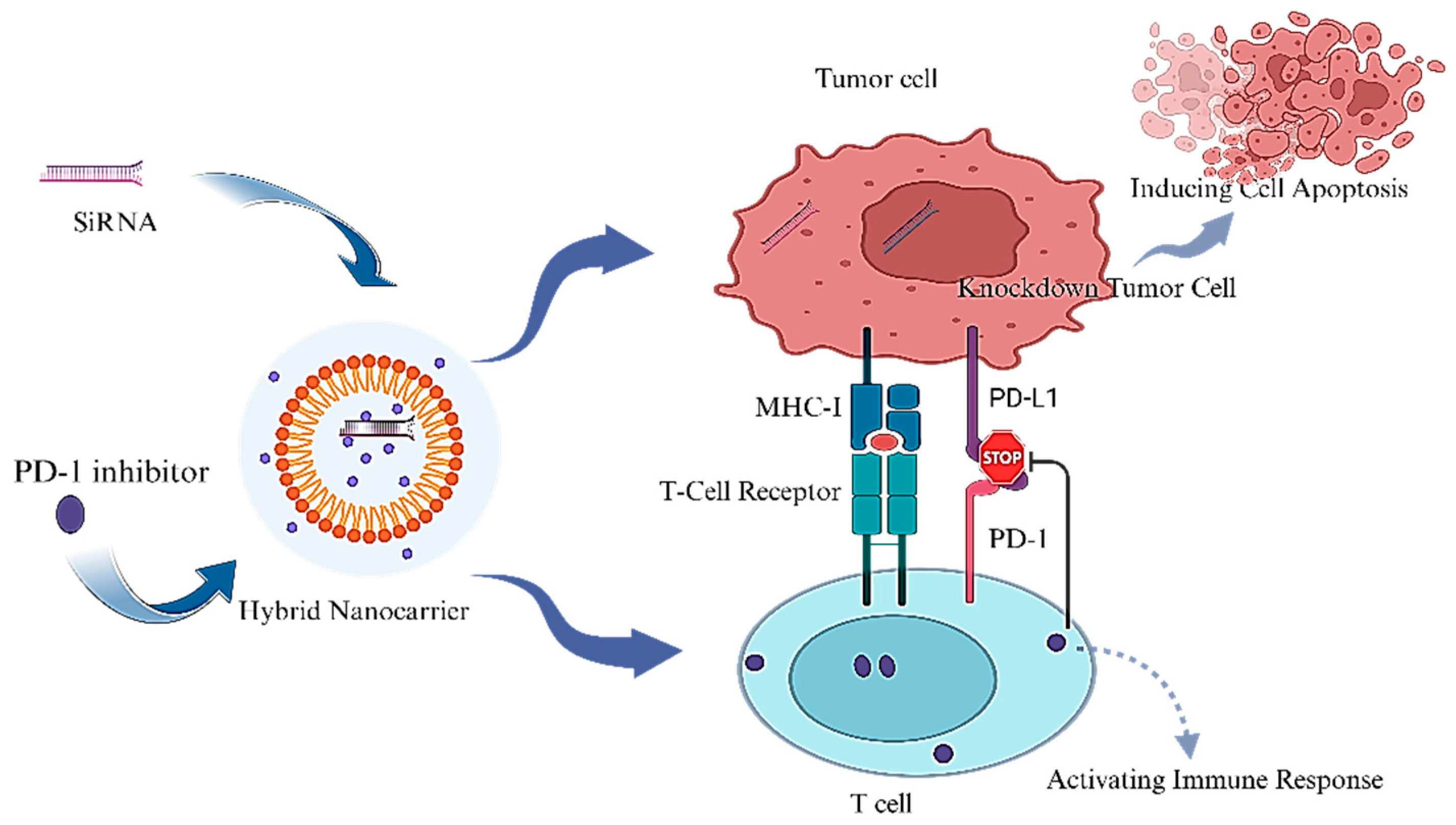
Combined Therapeutic Impact of Immunotherapy and Gene Therapy
11. Targeting the Tumor Microenvironment with Advanced Hybrid Nanocarriers
11.1. Heterogeneity of the Tumor Microenvironment and Implications for Drug Delivery
11.2. Active Targeting of TME-Specific Biomarkers
11.3. Reprogramming Immune Cell Dynamics
11.4. Overcoming Extracellular Matrix (ECM) Barriers
11.5. Considerations of Tumor Microenvironment–Targeted Strategies
11.6. Practical Framework for Selecting Hybrid Nanocarrier Platforms
12. Preclinical Applications in Gene and Immunotherapy Co-Delivery
12.1. CRISPR-Cas9 and Immune Checkpoint Inhibitors
12.2. siRNA and Cytokine Combinatorial Therapy
12.3. Antitumor Nanovaccines Enhanced by siRNAs
13. Future Perspectives
13.1. Advanced Biomimetic and Targeted Delivery Platforms
13.2. Multimodal Stimuli-Responsive Systems
13.3. Integrated Theranostic Platforms
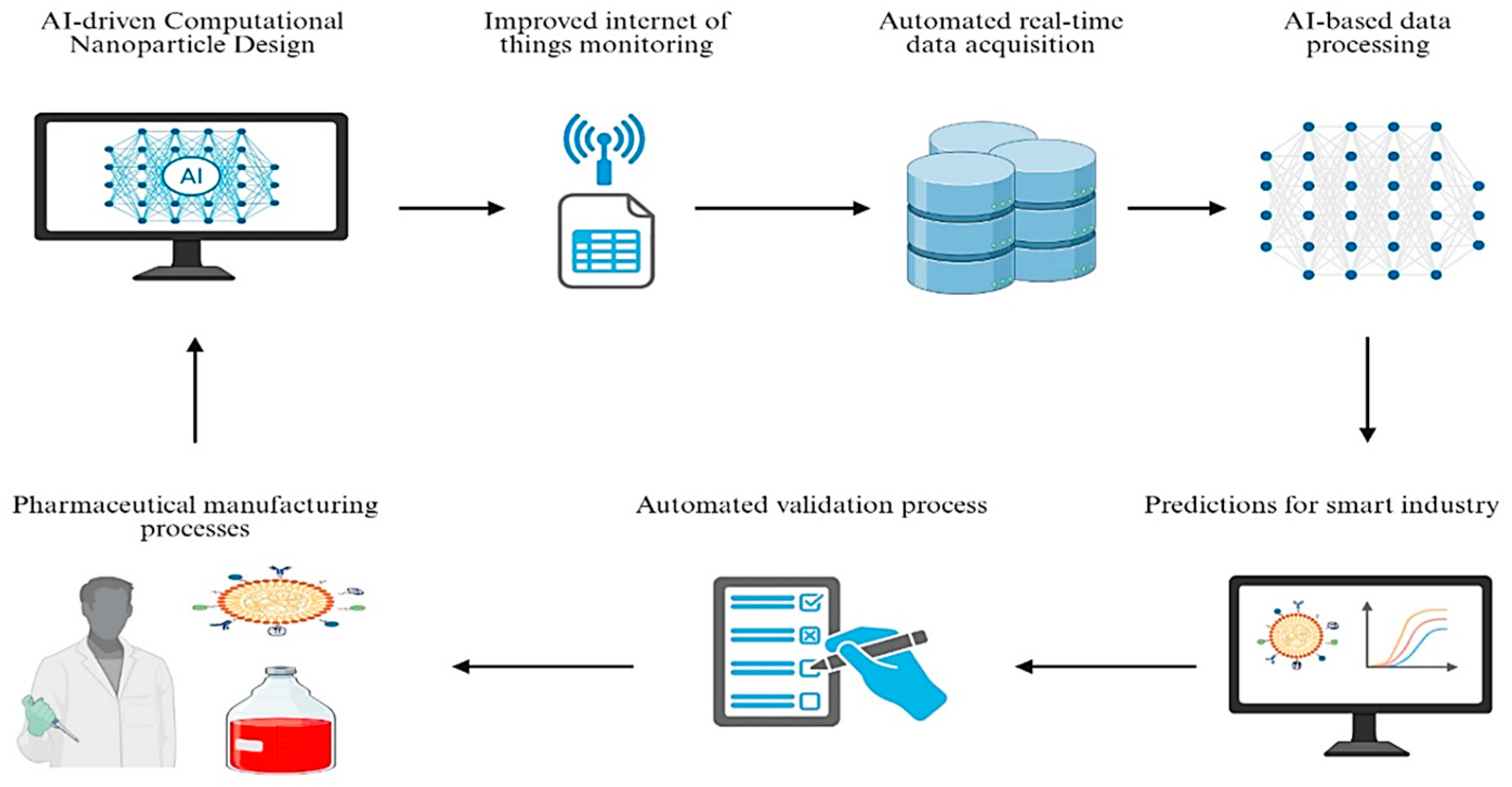
13.4. AI-Driven Computational Design and Personalization
13.5. Scalable Manufacturing and Toxicity Mitigation
14. Conclusions
Funding
Institutional Review Board Statement
Informed Consent Statement
Data Availability Statement
Conflicts of Interest
Abbreviations
| AI | Artificial intelligence |
| APC | Antigen-presenting cell |
| CAR | Chimeric Antigen Receptor |
| CAR-NK | Chimeric Antigen Receptor Natural Killer Cell |
| CAR-T | Chimeric Antigen Receptor T cell |
| CAF | Cancer-associated fibroblast |
| CDT | Chemodynamic therapy |
| CRISPR | Clustered regularly interspaced short palindromic repeats |
| CRS | Cytokine release syndrome |
| CT | Computed tomography |
| DC | Dendritic cell |
| ECM | Extracellular matrix |
| EPR | Enhanced permeability and retention |
| GMP | Good manufacturing practice |
| GSH | Glutathione |
| HCC | Hepatocellular carcinoma |
| ICI | Immune checkpoint inhibitor |
| ICANS | Immune effector cell–associated neurotoxicity syndrome |
| IL | Interleukin |
| LPHNP | Lipid–polymer hybrid nanoparticle |
| LNP | Lipid nanoparticle |
| MDSC | Myeloid-derived suppressor cell |
| MIL | Materials of Institute Lavoisier (metal–organic framework family) |
| MOF | Metal–organic framework |
| NIR | Near-infrared |
| NK | Natural Killer (cell) |
| NP | Nanoparticle |
| PDT | Photodynamic therapy |
| PEG | Polyethylene glycol |
| PSMA | Prostate-specific membrane antigen |
| RE-MOF | Rare-earth metal–organic framework |
| siRNA | Small interfering RNA |
| miRNA | microRNA |
| STING | Stimulator of interferon genes |
| TAM | Tumor-associated macrophage |
| TCR-T | T cell receptor–transduced T cell |
| TIL | Tumor-infiltrating lymphocyte |
| TLR | Toll-like-receptor |
| TME | Tumor microenvironment |
| RNPs | Ribonucleoprotein complexes |
| MDSCs | Myeloid-derived suppressor cells |
| ZnPP | Zinc protoporphyrin |
References
- Bray, F.; Laversanne, M.; Sung, H.; Ferlay, J.; Siegel, R.L.; Soerjomataram, I.; Jemal, A. Global cancer statistics 2022: GLOBOCAN estimates of incidence and mortality worldwide for 36 cancers in 185 countries. CA Cancer J. Clin. 2024, 74, 229–263. [Google Scholar] [CrossRef]
- Chakraborty, S.; Rahman, T. The difficulties in cancer treatment. Ecancermedicalscience 2012, 6, ed16. [Google Scholar] [CrossRef] [PubMed] [PubMed Central]
- Al Meslamani, A.Z. The future of precision medicine in oncology. Expert Rev. Precis. Med. Drug Dev. 2023, 8, 43–47. [Google Scholar] [CrossRef]
- Cesur-Ergün, B.; Demir-Dora, D. Gene therapy in cancer. J. Gene Med. 2023, 25, e3550. [Google Scholar] [CrossRef]
- Erebor, J.O.; Agboluaje, E.O.; Perkins, A.M.; Krishnakumar, M.; Ngwuluka, N. Targeted Hybrid Nanocarriers as Co-Delivery Systems for Enhanced Cancer Therapy. Adv. Pharm. Bull. 2024, 14, 558–573. [Google Scholar] [CrossRef] [PubMed]
- Katopodi, T.; Petanidis, S.; Floros, G.; Porpodis, K.; Kosmidis, C. Hybrid Nanogel Drug Delivery Systems: Transforming the Tumor Microenvironment through Tumor Tissue Editing. Cells 2024, 13, 908. [Google Scholar] [CrossRef] [PubMed]
- Parveen, S.; Gupta, P.; Kumar, S.; Banerjee, M. Lipid polymer hybrid nanoparticles as potent vehicles for drug delivery in cancer therapeutics. Med. Drug Discov. 2023, 20, 100165. [Google Scholar] [CrossRef]
- Gu, Z.; Da Silva, C.G.; Van der Maaden, K.; Ossendorp, F.; Cruz, L.J. Liposome-Based Drug Delivery Systems in Cancer Immunotherapy. Pharmaceutics 2020, 12, 1054. [Google Scholar] [CrossRef]
- Kimura, S.; Khalil, I.A.; Elewa, Y.H.; Harashima, H. Novel lipid combination for delivery of plasmid DNA to immune cells in the spleen. J. Control. Release 2021, 330, 753–764. [Google Scholar] [CrossRef]
- Albertsen, C.H.; Kulkarni, J.A.; Witzigmann, D.; Lind, M.; Petersson, K.; Simonsen, J.B. The role of lipid components in lipid nanoparticles for vaccines and gene therapy. Adv. Drug Deliv. Rev. 2022, 188, 114416. [Google Scholar] [CrossRef]
- Schlich, M.; Palomba, R.; Costabile, G.; Mizrahy, S.; Pannuzzo, M.; Peer, D.; Decuzzi, P. Cytosolic delivery of nucleic acids: The case of ionizable lipid nanoparticles. Bioeng. Transl. Med. 2021, 6, e10213. [Google Scholar] [CrossRef]
- Han, X.; Zhang, H.; Butowska, K.; Swingle, K.L.; Alameh, M.-G.; Weissman, D.; Mitchell, M.J. An ionizable lipid toolbox for RNA delivery. Nat. Commun. 2021, 12, 7233. [Google Scholar] [CrossRef]
- Suk, J.S.; Xu, Q.; Kim, N.; Hanes, J.; Ensign, L.M. PEGylation as a strategy for improving nanoparticle-based drug and gene delivery. Adv. Drug Deliv. Rev. 2016, 99, 28–51. [Google Scholar] [CrossRef]
- Shah, R.M.; Jadhav, S.R.; Bryant, G.; Kaur, I.P.; Harding, I.H. On the formation and stability mechanisms of diverse lipid-based nanostructures for drug delivery. Adv. Colloid Interface Sci. 2025, 338, 103402. [Google Scholar] [CrossRef]
- Han, J.P.; Kim, M.; Choi, B.S.; Lee, J.H.; Lee, G.S.; Jeong, M.; Lee, Y.; Kim, E.-A.; Oh, H.-K.; Go, N.; et al. In vivo delivery of CRISPR-Cas9 using lipid nanoparticles enables antithrombin gene editing for sustainable hemophilia A and B therapy. Sci. Adv. 2022, 8, eabj6901. [Google Scholar] [CrossRef]
- Mitchell, M.J.; Billingsley, M.M.; Haley, R.M.; Wechsler, M.E.; Peppas, N.A.; Langer, R. Engineering precision nanoparticles for drug delivery. Nat. Rev. Drug Discov. 2021, 20, 101–124. [Google Scholar] [CrossRef]
- Xu, Z.; Duan, H.; Shi, Y.; Zhou, Z.; Wei, Z.; Qian, X.; Lu, J.; Jiang, Y.; Mao, F.; Xue, N.; et al. Ultrasound-mediated paclitaxel-loaded EGFR nanoparticles for targeted therapy in breast cancer. RSC Adv. 2025, 15, 23136–23145, Erratum in RSC Adv. 2025, 15, 27923. [Google Scholar] [CrossRef] [PubMed]
- Gui, Z.; Zhao, L.; Liu, S.; Zhang, L. Tumor vascular disruption and cGAS–STING activation by gambogic amide-loaded nanomicelles for multiple synergistic treatment of triple-negative breast cancer. Cancer Nanotechnol. 2025, 16, 39. [Google Scholar] [CrossRef]
- Nabar, G.M.; Mahajan, K.D.; Calhoun, M.; Duong, A.D.; Souva, M.S.; Xu, J.; Czeisler, C.; Puduvalli, V.K.; Otero, J.J.; Wyslouzil, B.; et al. Micelle-templated, poly(lactic-co-glycolic acid) nanoparticles for hydrophobic drug delivery. Int. J. Nanomed. 2018, 13, 351–366. [Google Scholar] [CrossRef]
- Weissberger, D.; Stenzel, M.H.; Hunter, L. Precious Cargo: The Role of Polymeric Nanoparticles in the Delivery of Covalent Drugs. Molecules 2024, 29, 4949. [Google Scholar] [CrossRef] [PubMed]
- Piotrowski-Daspit, A.S.; Kauffman, A.C.; Bracaglia, L.G.; Saltzman, W.M. Polymeric vehicles for nucleic acid delivery. Adv. Drug Deliv. Rev. 2020, 156, 119–132. [Google Scholar] [CrossRef]
- Foroozandeh, P.; Aziz, A.A. Insight into Cellular Uptake and Intracellular Trafficking of Nanoparticles. Nanoscale Res. Lett. 2018, 13, 339. [Google Scholar] [CrossRef]
- Lu, H.; Zhang, S.; Wang, J.; Chen, Q. A Review on Polymer and Lipid-Based Nanocarriers and Its Application to Nano-Pharmaceutical and Food-Based Systems. Front. Nutr. 2021, 8, 783831. [Google Scholar] [CrossRef]
- del Rio, A.M.; Sánchez-García, D. An Orthogonally Clickable and Stimuli-Responsive Poly(β-amino ester) for the Co-delivery of Doxorubicin and BCL-2 siRNA. ACS Appl. Polym. Mater. 2025, 7, 7013–7024. [Google Scholar] [CrossRef] [PubMed]
- Ma, X.; Luan, Z.; Li, J. Inorganic Nanoparticles-Based Systems in Biomedical Applications of Stem Cells: Opportunities and Challenges. Int. J. Nanomed. 2023, 18, 143–182. [Google Scholar] [CrossRef]
- von Maltzahn, G.; Park, J.-H.; Agrawal, A.; Bandaru, N.K.; Das, S.K.; Sailor, M.J.; Bhatia, S.N. Computationally Guided Photothermal Tumor Therapy Using Long-Circulating Gold Nanorod Antennas. Cancer Res. 2009, 69, 3892–3900. [Google Scholar] [CrossRef]
- Li, Q.; Yang, M.; Sun, X.; Wang, Q.; Yu, B.; Gong, A.; Zhang, M.; Du, F. NIR responsive nanoenzymes via photothermal ablation and hypoxia reversal to potentiate the STING-dependent innate antitumor immunity. Mater. Today Bio 2023, 19, 100566. [Google Scholar] [CrossRef]
- Amaral, M.N.; Kumar, P.; Faísca, P.; Ferreira, H.A.; Coelho, J.M.; Gaspar, M.M.; Reis, C.P. Gold nanoparticle-mediated photothermal therapy: Expanding the frontiers of cancer treatment and theragnostics. Biomed. Pharmacother. 2025, 190, 118399. [Google Scholar] [CrossRef] [PubMed]
- Sergazy, S.; Berikkhanova, K.; Gulyayev, A.; Shulgau, Z.; Maikenova, A.; Bilal, R.; Terzic, M.; Zhumadilov, Z.; Aljofan, M. Cell-Based Drug Delivery Systems: Innovative Drug Transporters for Targeted Therapy. Int. J. Mol. Sci. 2025, 26, 8143. [Google Scholar] [CrossRef] [PubMed]
- Sundaram, V.; Aryal, S. Emerging Biomimetic Drug Delivery Nanoparticles Inspired by Extracellular Vesicles. WIREs Nanomed. Nanobiotechnol. 2025, 17, e70025. [Google Scholar] [CrossRef] [PubMed]
- He, Y.; Zhang, S.; She, Y.; Liu, Z.; Zhu, Y.; Cheng, Q.; Ji, X. Innovative utilization of cell membrane-coated nanoparticles in precision cancer therapy. Exploration 2024, 4, 20230164. [Google Scholar] [CrossRef] [PubMed]
- Yang, B.; Jiang, X.; Liu, Y.; Zheng, G.; Li, Y.; Xin, F.; Lu, F. Erythrocyte Membrane-Camouflaged Hemin-Based Nanoplatform for Radiotherapy of Glioblastoma. ACS Appl. Nano Mater. 2024, 7, 27005–27015. [Google Scholar] [CrossRef]
- Qi, M.; Sun, Y.; Zhao, Z.; Zhou, X.; Guo, J.; Liang, H.; Li, S.; Zhang, H.; Sun, Y.; Song, H.; et al. Cell membrane-coated nanoparticles: A biomimetic strategy for effective treatment of ischemic stroke. J. Drug Deliv. Sci. Technol. 2025, 108, 106966. [Google Scholar] [CrossRef]
- Zhang, S.; Zhang, X.; Gao, H.; Zhang, X.; Sun, L.; Huang, Y.; Zhang, J.; Ding, B. Cell Membrane-Coated Biomimetic Nanoparticles in Cancer Treatment. Pharmaceutics 2024, 16, 531. [Google Scholar] [CrossRef]
- Yu, Y.; Peng, Y.; Shen, W.; Zhou, Z.; Kai, M.; Gao, W.; Zhang, L. Hybrid Cell Membrane-Coated Nanoparticles for Biomedical Applications. Small Struct. 2024, 5, 2300473. [Google Scholar] [CrossRef]
- Zemanek, T.; Danisovic, L.; Nicodemou, A. Exosomes and solid cancer therapy: Where are we now? Med Oncol. 2025, 42, 77. [Google Scholar] [CrossRef]
- Li, J.; Wang, J.; Chen, Z. Emerging role of exosomes in cancer therapy: Progress and challenges. Mol. Cancer 2025, 24, 13. [Google Scholar] [CrossRef] [PubMed]
- Sha, M.; Gao, Y.; Yin, X.; Li, X.; Liu, C.; Li, S. Engineered exosomes: A promising approach for overcoming challenges in pancreatic cancer therapy. J. Nanobiotechnol. 2025, 23, 619. [Google Scholar] [CrossRef] [PubMed]
- Yang, Y.; Wu, Y. Potential of bacterial outer membrane vesicles in tumor vaccine: Characteristics, advancements, and future directions. Essays Biochem. 2025, 69, 181–193. [Google Scholar] [CrossRef]
- Garling, A.; Auvray, F.; Epardaud, M.; Oswald, É.; Branchu, P. Outer Membrane Vesicles as a Versatile Platform for Vaccine Development: Engineering Strategies, Applications and Challenges. J. Extracell. Vesicles 2025, 14, e70150. [Google Scholar] [CrossRef]
- Geng, J.-X.; Lu, Y.-F.; Zhou, J.-N.; Huang, B.; Qin, Y. Exosome technology: A novel and effective drug delivery system in the field of cancer therapy. World J. Gastrointest. Oncol. 2025, 17, 101857. [Google Scholar] [CrossRef]
- Lin, Y.-H.; Chen, C.-W.; Chen, M.-Y.; Xu, L.; Tian, X.; Cheung, S.-H.; Wu, Y.-L.; Siriwon, N.; Wu, S.-H.; Mou, K.Y. The Bacterial Outer Membrane Vesicle-Cloaked Immunostimulatory Nanoplatform Reinvigorates T Cell Function and Reprograms Tumor Immunity. ACS Nano 2025, 19, 19866–19889. [Google Scholar] [CrossRef]
- Wang, B.; Hu, S.; Teng, Y.; Chen, J.; Wang, H.; Xu, Y.; Wang, K.; Xu, J.; Cheng, Y.; Gao, X. Current advance of nanotechnology in diagnosis and treatment for malignant tumors. Signal Transduct. Target. Ther. 2024, 9, 200. [Google Scholar] [CrossRef]
- Mao, Y.; Xie, J.; Yang, F.; Luo, Y.; Du, J.; Xiang, H. Advances and prospects of precision nanomedicine in personalized tumor theranostics. Front. Cell Dev. Biol. 2024, 12, 1514399. [Google Scholar] [CrossRef] [PubMed]
- Zafar, A.; Khan, M.J.; Abu, J.; Naeem, A. Revolutionizing cancer care strategies: Immunotherapy, gene therapy, and molecular targeted therapy. Mol. Biol. Rep. 2024, 51, 219. [Google Scholar] [CrossRef]
- Yao, Y.; Zhou, Y.; Liu, L.; Xu, Y.; Chen, Q.; Wang, Y.; Wu, S.; Deng, Y.; Zhang, J.; Shao, A. Nanoparticle-Based Drug Delivery in Cancer Therapy and Its Role in Overcoming Drug Resistance. Front. Mol. Biosci. 2020, 7, 193. [Google Scholar] [CrossRef]
- Liang, L.; Yang, L.; Wang, W.; Ji, C.; Zhang, L.; Jia, Y.; Chen, Y.; Wang, X.; Tan, J.; Sun, Z.; et al. Calcium Phosphate-Reinforced Metal-Organic Frameworks Regulate Adenosine-Mediated Immunosuppression. Adv. Mater. 2021, 33, 2102271. [Google Scholar] [CrossRef]
- Tahir, N.; Madni, A.; Correia, A.; Rehman, M.; Balasubramanian, V.; Khan, M.M.; Santos, H.A. Lipid-polymer hybrid nanoparticles for controlled delivery of hydrophilic and lipophilic doxorubicin for breast cancer therapy. Int. J. Nanomed. 2019, 14, 4961–4974, Erratum in Int. J. Nanomed. 2020, 15, 839. [Google Scholar] [CrossRef]
- Shi, J.; Xiao, Z.; Votruba, A.R.; Vilos, C.; Farokhzad, O.C. Differentially Charged Hollow Core/Shell Lipid–Polymer–Lipid Hybrid Nanoparticles for Small Interfering RNA Delivery. Angew. Chem. Int. Ed. Engl. 2011, 50, 7027–7031. [Google Scholar] [CrossRef] [PubMed]
- Carter, D.; De La Rosa, G.; Garçon, N.; Moon, H.M.; Nam, H.J.; Skibinski, D.A. The success of toll-like receptor 4 based vaccine adjuvants. Vaccine 2025, 61, 127413. [Google Scholar] [CrossRef] [PubMed]
- Tsukidate, T.; Hespen, C.W.; Hang, H.C. Small molecule modulators of immune pattern recognition receptors. RSC Chem. Biol. 2023, 4, 1014–1036. [Google Scholar] [CrossRef]
- Eloy, J.O.; de Souza, M.C.; Petrilli, R.; Barcellos, J.P.A.; Lee, R.J.; Marchetti, J.M. Liposomes as carriers of hydrophilic small molecule drugs: Strategies to enhance encapsulation and delivery. Colloids Surf. B Biointerfaces 2014, 123, 345–363. [Google Scholar] [CrossRef]
- Mohanty, A.; Uthaman, S.; Park, I.-K. Utilization of Polymer-Lipid Hybrid Nanoparticles for Targeted Anti-Cancer Therapy. Molecules 2020, 25, 4377. [Google Scholar] [CrossRef]
- Mooney, K.L.; Choy, W.; Sidhu, S.; Pelargos, P.; Bui, T.T.; Voth, B.; Barnette, N.; Yang, I. The role of CD44 in glioblastoma multiforme. J. Clin. Neurosci. 2016, 34, 1–5. [Google Scholar] [CrossRef] [PubMed]
- Myrkhiyeva, Z.; Nurlankyzy, M.; Berikkhanova, K.; Baimagambet, Z.; Bissen, A.; Bikhanov, N.; Tan, C.K.L.; Tosi, D.; Ashikbayeva, Z.; Bekmurzayeva, A. Digging into the Solubility Factor in Cancer Diagnosis: A Case of Soluble CD44 Protein. Biosensors 2025, 15, 796. [Google Scholar] [CrossRef] [PubMed]
- Yusupov, M.; Privat-Maldonado, A.; Cordeiro, R.M.; Verswyvel, H.; Shaw, P.; Razzokov, J.; Smits, E.; Bogaerts, A. Oxidative damage to hyaluronan–CD44 interactions as an underlying mechanism of action of oxidative stress-inducing cancer therapy. Redox Biol. 2021, 43, 101968. [Google Scholar] [CrossRef] [PubMed] [PubMed Central]
- Della Rocca, J.; Liu, D.; Lin, W. Nanoscale Metal–Organic Frameworks for Biomedical Imaging and Drug Delivery. Accounts Chem. Res. 2011, 44, 957–968. [Google Scholar] [CrossRef] [PubMed]
- Horcajada, P.; Gref, R.; Baati, T.; Allan, P.K.; Maurin, G.; Couvreur, P.; Férey, G.; Morris, R.E.; Serre, C. Metal–Organic Frameworks in Biomedicine. Chem. Rev. 2012, 112, 1232–1268. [Google Scholar] [CrossRef]
- Férey, G. Hybrid porous solids: Past, present, future. Chem. Soc. Rev. 2008, 37, 191–214. [Google Scholar] [CrossRef] [PubMed]
- Özdemir, B.C.; Pentcheva-Hoang, T.; Carstens, J.L.; Zheng, X.; Wu, C.-C.; Simpson, T.R.; Laklai, H.; Sugimoto, H.; Kahlert, C.; Novitskiy, S.V.; et al. Depletion of Carcinoma-Associated Fibroblasts and Fibrosis Induces Immunosuppression and Accelerates Pancreas Cancer with Reduced Survival. Cancer Cell 2014, 25, 719–734, Erratum in Cancer Cell 2015, 28, 831–833. [Google Scholar] [CrossRef]
- Eddaoudi, M.; Sava, D.F.; Eubank, J.F.; Adil, K.; Guillerm, V. Zeolite-like metal–organic frameworks (ZMOFs): Design, synthesis, and properties. Chem. Soc. Rev. 2015, 44, 228–249. [Google Scholar] [CrossRef]
- Fernandes, P.D.; Magalhães, F.D.; Pereira, R.F.; Pinto, A.M. Metal-Organic Frameworks Applications in Synergistic Cancer Photo-Immunotherapy. Polymers 2023, 15, 1490. [Google Scholar] [CrossRef] [PubMed]
- Saeb, M.R.; Rabiee, N.; Mozafari, M.; Verpoort, F.; Voskressensky, L.G.; Luque, R. Metal–Organic Frameworks (MOFs) for Cancer Therapy. Materials 2021, 14, 7277. [Google Scholar] [CrossRef] [PubMed]
- Guo, Y.; Wu, H.; Mao, X.; Li, Y.; Zhu, W. Metal-Organic Frameworks as Advanced Gene Delivery Vectors: Mechanisms, Functionalization, and Biomedical Applications. Int. J. Nanomed. 2025, 20, 12939–12958. [Google Scholar] [CrossRef]
- Wang, Y.; Liu, Z.; Zhang, H.; Liu, J.; Dai, H.; Ji, T.; Liu, F.; Cao, P.; Zou, J.; Wang, S.; et al. MOF effectively deliver CRISPR and enhance gene-editing efficiency via MOF’s hydrolytic activity of phosphate ester bonds. Chem. Eng. J. 2022, 439, 134992. [Google Scholar] [CrossRef]
- Zhang, J.; Li, M.; Liu, M.; Yu, Q.; Ge, D.; Zhang, J. Metal–Organic Framework Nanomaterials as a Medicine for Catalytic Tumor Therapy: Recent Advances. Nanomaterials 2024, 14, 797. [Google Scholar] [CrossRef] [PubMed]
- Tran, V.A.; Le, V.T.; Doan, V.D.; Vo, G.N.L. Utilization of Functionalized Metal–Organic Framework Nanoparticle as Targeted Drug Delivery System for Cancer Therapy. Pharmaceutics 2023, 15, 931. [Google Scholar] [CrossRef]
- Liu, H.; Zhuang, F.; Zhang, C.; Ai, W.; Liu, W.; Zhou, X. Functionalized Organic–Inorganic Liposome Nanocomposites for the Effective Photo-Thermal Therapy of Breast Cancer. Front. Mater. 2021, 8, 710187. [Google Scholar] [CrossRef]
- Liang, P.; Mao, L.; Dong, Y.; Zhao, Z.; Sun, Q.; Mazhar, M.; Ma, Y.; Yang, S.; Ren, W. Design and Application of Near-Infrared Nanomaterial-Liposome Hybrid Nanocarriers for Cancer Photothermal Therapy. Pharmaceutics 2021, 13, 2070. [Google Scholar] [CrossRef]
- Lin, G.; Revia, R.A.; Zhang, M. Inorganic Nanomaterial-Mediated Gene Therapy in Combination with Other Antitumor Treatment Modalities. Adv. Funct. Mater. 2021, 31, 2007096. [Google Scholar] [CrossRef]
- Zhou, Z.; Liu, X.; Zhu, D.; Wang, Y.; Zhang, Z.; Zhou, X.; Qiu, N.; Chen, X.; Shen, Y. Nonviral cancer gene therapy: Delivery cascade and vector nanoproperty integration. Adv. Drug Deliv. Rev. 2017, 115, 115–154. [Google Scholar] [CrossRef] [PubMed]
- Xu, J.; Zhang, S.; Machado, A.; Lecommandoux, S.; Sandre, O.; Gu, F.; Colin, A. Controllable Microfluidic Production of Drug-Loaded PLGA Nanoparticles Using Partially Water-Miscible Mixed Solvent Microdroplets as a Precursor. Sci. Rep. 2017, 7, 4794. [Google Scholar] [CrossRef]
- Lin, H.; Leng, J.; Fan, P.; Xu, Z.; Ruan, G. Scalable production of microscopic particles for biological delivery. Mater. Adv. 2023, 4, 2885–2908. [Google Scholar] [CrossRef]
- McKinlay, C.J.; Benner, N.L.; Haabeth, O.A.; Waymouth, R.M.; Wender, P.A. Enhanced mRNA delivery into lymphocytes enabled by lipid-varied libraries of charge-altering releasable transporters. Proc. Natl. Acad. Sci. USA 2018, 115, E5859–E5866. [Google Scholar] [CrossRef]
- Date, T.; Nimbalkar, V.; Kamat, J.; Mittal, A.; Mahato, R.I.; Chitkara, D. Lipid-polymer hybrid nanocarriers for delivering cancer therapeutics. J. Control. Release 2018, 271, 60–73. [Google Scholar] [CrossRef]
- Guo, P.; Yang, J.; Huang, J.; Auguste, D.T.; Moses, M.A. Therapeutic genome editing of triple-negative breast tumors using a noncationic and deformable nanolipogel. Proc. Natl. Acad. Sci. USA 2019, 116, 18295–18303. [Google Scholar] [CrossRef]
- Prieložná, J.; Mikušová, V.; Mikuš, P. Advances in the delivery of anticancer drugs by nanoparticles and chitosan-based nanoparticles. Int. J. Pharm. X 2024, 8, 100281. [Google Scholar] [CrossRef] [PubMed]
- Rana, I.; Oh, J.; Baig, J.; Moon, J.H.; Son, S.; Nam, J. Nanocarriers for cancer nano-immunotherapy. Drug Deliv. Transl. Res. 2023, 13, 1936–1954. [Google Scholar] [CrossRef]
- Liu, J.; Miao, L.; Sui, J.; Hao, Y.; Huang, G. Nanoparticle cancer vaccines: Design considerations and recent advances. Asian J. Pharm. Sci. 2020, 15, 576–590. [Google Scholar] [CrossRef] [PubMed]
- Chen, Q.; Wang, N.; Zhu, M.; Lu, J.; Zhong, H.; Xue, X.; Guo, S.; Li, M.; Wei, X.; Tao, Y.; et al. TiO2 nanoparticles cause mitochondrial dysfunction, activate inflammatory responses, and attenuate phagocytosis in macrophages: A proteomic and metabolomic insight. Redox Biol. 2018, 15, 266–276. [Google Scholar] [CrossRef]
- Li, J.-H.; Liu, X.-R.; Zhang, Y.; Tian, F.-F.; Zhao, G.-Y.; Yu, Q.-L.; Jiang, F.-L.; Liu, Y. Toxicity of nano zinc oxide to mitochondria. Toxicol. Res. 2012, 1, 137–144. [Google Scholar] [CrossRef]
- Patrón-Romero, L.; Luque-Morales, P.A.; Loera-Castañeda, V.; Lares-Asseff, I.; Leal-Ávila, M.Á.; Alvelais-Palacios, J.A.; Plasencia-López, I.; Almanza-Reyes, H. Mitochondrial Dysfunction Induced by Zinc Oxide Nanoparticles. Crystals 2022, 12, 1089. [Google Scholar] [CrossRef]
- Zhuo, L.-B.; Liu, Y.-M.; Jiang, Y.; Yan, Z. Zinc oxide nanoparticles induce acute lung injury via oxidative stress-mediated mitochondrial damage and NLRP3 inflammasome activation: In vitro and in vivo studies. Environ. Pollut. 2024, 341, 122950. [Google Scholar] [CrossRef] [PubMed]
- Al-Zoubi, M.S.; Al-Zoubi, R.M. Nanomedicine tactics in cancer treatment: Challenge and hope. Crit. Rev. Oncol./Hematol. 2022, 174, 103677. [Google Scholar] [CrossRef] [PubMed]
- Gurunathan, S.; Thangaraj, P.; Wang, L.; Cao, Q.; Kim, J.-H. Nanovaccines: An effective therapeutic approach for cancer therapy. Biomed. Pharmacother. 2024, 170, 115992. [Google Scholar] [CrossRef]
- Soares, D.C.F.; Domingues, S.C.; Viana, D.B.; Tebaldi, M.L. Polymer-hybrid nanoparticles: Current advances in biomedical applications. Biomed. Pharmacother. 2020, 131, 110695. [Google Scholar] [CrossRef] [PubMed]
- Larrayoz, M.; Garcia-Barchino, M.J.; Celay, J.; Etxebeste, A.; Jimenez, M.; Perez, C.; Ordoñez, R.; Cobaleda, C.; Botta, C.; Fresquet, V.; et al. Preclinical models for prediction of immunotherapy outcomes and immune evasion mechanisms in genetically heterogeneous multiple myeloma. Nat. Med. 2023, 29, 632–645. [Google Scholar] [CrossRef]
- Debnath, S.K.; Debnath, M.; Ghosh, A.; Srivastava, R.; Omri, A. Targeting Tumor Hypoxia with Nanoparticle-Based Therapies: Challenges, Opportunities, and Clinical Implications. Pharmaceuticals 2024, 17, 1389. [Google Scholar] [CrossRef]
- Zhao, X.; Xiong, J.; Li, D.; Zhang, Y. Clinical trials of nanoparticle-enhanced CAR-T and NK cell therapies in oncology: Overcoming translational and clinical challenges—A mini review. Front. Med. 2025, 12, 1655693. [Google Scholar] [CrossRef]
- Haque, A.; Shrestha, A.; Mikelis, C.M.; Mattheolabakis, G. Comprehensive analysis of lipid nanoparticle formulation and preparation for RNA delivery. Int. J. Pharm. X 2024, 8, 100283. [Google Scholar] [CrossRef]
- Taghavimandi, F.; Kim, M.G.; Lee, M.; Shin, K. Beyond PEGylation: Nanoparticle surface modulation for enhanced cancer therapy. Health Nanotechnol. 2025, 1, 13. [Google Scholar] [CrossRef]
- Wang, J.; Chen, R.; Xie, Y.; Qin, X.; Zhou, Y.; Xu, C. Endo/Lysosomal-Escapable Lipid Nanoparticle Platforms for Enhancing mRNA Delivery in Cancer Therapy. Pharmaceutics 2025, 17, 803. [Google Scholar] [CrossRef] [PubMed]
- Yuan, L.; Chen, Q.; Riviere, J.E.; Lin, Z. Pharmacokinetics and tumor delivery of nanoparticles. J. Drug Deliv. Sci. Technol. 2023, 83, 104404. [Google Scholar] [CrossRef]
- Kim, M.; Hwang, Y.; Lim, S.; Jang, H.-K.; Kim, H.-O. Advances in Nanoparticles as Non-Viral Vectors for Efficient Delivery of CRISPR/Cas9. Pharmaceutics 2024, 16, 1197. [Google Scholar] [CrossRef] [PubMed]
- Moldavskii, D.; Gilazieva, Z.; Fattakhova, A.; Solovyeva, V.; Issa, S.; Sufianov, A.; Sufianova, G.; Rizvanov, A. AAV-Based Gene Therapy: Opportunities, Risks, and Scale-Up Strategies. Int. J. Mol. Sci. 2025, 26, 8282. [Google Scholar] [CrossRef]
- Seijas, A.; Cora, D.; Novo, M.; Al-Soufi, W.; Sánchez, L.; Arana, Á.J. CRISPR/Cas9 Delivery Systems to Enhance Gene Editing Efficiency. Int. J. Mol. Sci. 2025, 26, 4420. [Google Scholar] [CrossRef]
- Wang, S.; Xu, L.; Ma, F.; Xu, M.; Chen, G.; Wang, D.; Wu, X.; Wang, P.; Yu, J.; Shi, L. Recent advances and clinical prospects of non-viral brain-targeted gene delivery systems. Appl. Phys. Rev. 2025, 12, 041315. [Google Scholar] [CrossRef]
- Taghdiri, M.; Mussolino, C. Viral and Non-Viral Systems to Deliver Gene Therapeutics to Clinical Targets. Int. J. Mol. Sci. 2024, 25, 7333. [Google Scholar] [CrossRef]
- Akinc, A.; Maier, M.A.; Manoharan, M.; Fitzgerald, K.; Jayaraman, M.; Barros, S.; Ansell, S.; Du, X.; Hope, M.J.; Madden, T.D.; et al. The Onpattro story and the clinical translation of nanomedicines containing nucleic acid-based drugs. Nat. Nanotechnol. 2019, 14, 1084–1087. [Google Scholar] [CrossRef]
- Hou, X.; Zaks, T.; Langer, R.; Dong, Y. Lipid nanoparticles for mRNA delivery. Nat. Rev. Mater. 2021, 6, 1078–1094. [Google Scholar] [CrossRef]
- Rauf, M.A.; Rao, A.; Sivasoorian, S.S.; Iyer, A.K. Nanotechnology-Based Delivery of CRISPR/Cas9 for Cancer Treatment: A Comprehensive Review. Cells 2025, 14, 1136. [Google Scholar] [CrossRef] [PubMed]
- Sarmah, S.; Baidya, S.; De, M. Recent Advances in Lipid Nanoparticles: Nucleic Acid Therapeutics and Targeting Strategies. Small 2025, 21, e06812. [Google Scholar] [CrossRef]
- Qosa, H.; de Oliveira, C.H.M.C.; Cizza, G.; Lawitz, E.J.; Colletti, N.; Wetherington, J.; Charles, E.D.; Tirucherai, G.S. Pharmacokinetics, safety, and tolerability of BMS-986263, a lipid nanoparticle containing HSP47 siRNA, in participants with hepatic impairment. Clin. Transl. Sci. 2023, 16, 1791–1802. [Google Scholar] [CrossRef]
- Jung, H.N.; Lee, S.Y.; Lee, S.; Youn, H.; Im, H.J. Lipid nanoparticles for delivery of RNA therapeutics: Current status and the role of in vivo imaging. Theranostics 2022, 12, 7509–7531. [Google Scholar] [CrossRef]
- Rachamala, H.K. Translational Advances in Lipid Nanoparticle Drug Delivery Systems for Cancer Therapy: Current Status and Future Horizons. Pharmaceutics 2025, 17, 1315. [Google Scholar] [CrossRef]
- Abaza, T.; Mohamed, E.E.; Zaky, M.Y. Lipid nanoparticles: A promising tool for nucleic acid delivery in cancer immunotherapy. Med. Oncol. 2025, 42, 409. [Google Scholar] [CrossRef]
- Lee, Y.; Jeong, M.; Park, J.; Jung, H.; Lee, H. Immunogenicity of lipid nanoparticles and its impact on the efficacy of mRNA vaccines and therapeutics. Exp. Mol. Med. 2023, 55, 2085–2096. [Google Scholar] [CrossRef]
- Amor, N.P.; Guo, K.; Zhang, S.; Xia, J.; Yang, Y.; Lin, A. Lipid Nanoparticle: Beyond Delivery Vehicle—Unveiling Its Immunological Adjuvant Potential. FASEB J. 2025, 39, e70641. [Google Scholar] [CrossRef]
- Haghighi, E.; Abolmaali, S.S.; Dehshahri, A.; Shaegh, S.A.M.; Azarpira, N.; Tamaddon, A.M. Navigating the intricate in-vivo journey of lipid nanoparticles tailored for the targeted delivery of RNA therapeutics: A quality-by-design approach. J. Nanobiotechnol. 2024, 22, 710. [Google Scholar] [CrossRef] [PubMed]
- Wang, J.; Ding, Y.; Chong, K.; Cui, M.; Cao, Z.; Tang, C.; Tian, Z.; Hu, Y.; Zhao, Y.; Jiang, S. Recent Advances in Lipid Nanoparticles and Their Safety Concerns for mRNA Delivery. Vaccines 2024, 12, 1148. [Google Scholar] [CrossRef] [PubMed]
- Abegunde, S.M.; Alaka, M.O.; Awonyemi, O.I. Nanomaterial toxicity: A comprehensive review of mechanisms and mitigation strategies. Discov. Hazards 2025, 1, 3. [Google Scholar] [CrossRef]
- Sharma, S.; Parveen, R.; Chatterji, B.P. Toxicology of Nanoparticles in Drug Delivery. Curr. Pathobiol. Rep. 2021, 9, 133–144. [Google Scholar] [CrossRef] [PubMed]
- Qie, B.; Tuo, J.; Chen, F.; Ding, H.; Lyu, L. Gene therapy for genetic diseases: Challenges and future directions. MedComm 2025, 6, e70091. [Google Scholar] [CrossRef] [PubMed]
- El-Ghazzi, N.; Italiano, A.; Angeli, E. Gene expression silencing therapy in tumors, focus on gastrointestinal and genitourinary tumors. Front. Immunol. 2025, 16, 1657040. [Google Scholar] [CrossRef]
- Pandey, P.R.; Young, K.H.; Kumar, D.; Jain, N. RNA-mediated immunotherapy regulating tumor immune microenvironment: Next wave of cancer therapeutics. Mol. Cancer 2022, 21, 58. [Google Scholar] [CrossRef]
- Abdelhady, H.G.; Allen, S.; Davies, M.C.; Roberts, C.J.; Tendler, S.J.B.; Williams, P.M. Direct real-time molecular scale visualisation of the degradation of condensed DNA complexes exposed to DNase I. Nucleic Acids Res. 2003, 31, 4001–4005. [Google Scholar] [CrossRef][Green Version]
- Abdelaal, A.M.; Sohal, I.S.; Iyer, S.; Sudarshan, K.; Kothandaraman, H.; Lanman, N.A.; Low, P.S.; Kasinski, A.L. A first-in-class fully modified version of miR-34a with outstanding stability, activity, and anti-tumor efficacy. Oncogene 2023, 42, 2985–2999. [Google Scholar] [CrossRef]
- Abdelaal, A.M.; Sohal, I.S.; Iyer, S.G.; Sudarshan, K.; Orellana, E.A.; Ozcan, K.E.; dos Santos, A.P.; Low, P.S.; Kasinski, A.L. Selective targeting of chemically modified miR-34a to prostate cancer using a small molecule ligand and an endosomal escape agent. Mol. Ther. Nucleic Acids 2024, 35, 102193. [Google Scholar] [CrossRef]
- Hu, J.; Arvejeh, P.M.; Bone, S.; Hett, E.; Marincola, F.M.; Roh, K.-H. Nanocarriers for cutting-edge cancer immunotherapies. J. Transl. Med. 2025, 23, 447. [Google Scholar] [CrossRef]
- Hacein-Bey-Abina, S.; Von Kalle, C.; Schmidt, M.; McCormack, M.P.; Wulffraat, N.; Leboulch, P.; Lim, A.; Osborne, C.S.; Pawliuk, R.; Morillon, E.; et al. LMO2-Associated Clonal T Cell Proliferation in Two Patients after Gene Therapy for SCID-X1. Science 2003, 302, 415–419. [Google Scholar] [CrossRef]
- Sibbald, B. Death but one unintended consequence of gene-therapy trial. Can. Med. Assoc. 2001, 164, 1612. [Google Scholar] [PubMed] [PubMed Central]
- Raper, S.E.; Chirmule, N.; Lee, F.S.; Wivel, N.A.; Bagg, A.; Gao, G.-P.; Wilson, J.M.; Batshaw, M.L. Fatal systemic inflammatory response syndrome in a ornithine transcarbamylase deficient patient following adenoviral gene transfer. Mol. Genet. Metab. 2003, 80, 148–158. [Google Scholar] [CrossRef]
- Guo, Z.; Yu, J.; Chen, Z.; Chen, S.; Wang, L. Immunological Mechanisms behind Anti-PD-1/PD-L1 Immune Checkpoint Blockade: Intratumoral Reinvigoration or Systemic Induction? Biomedicines 2024, 12, 764. [Google Scholar] [CrossRef]
- Dagher, O.K.; Posey, A.D. Forks in the road for CAR T and CAR NK cell cancer therapies. Nat. Immunol. 2023, 24, 1994–2007. [Google Scholar] [CrossRef]
- Chan, C.J.; Smyth, M.J.; Martinet, L. Molecular mechanisms of natural killer cell activation in response to cellular stress. Cell Death Differ. 2014, 21, 5–14. [Google Scholar] [CrossRef]
- Riley, R.S.; June, C.H.; Langer, R.; Mitchell, M.J. Delivery technologies for cancer immunotherapy. Nat. Rev. Drug Discov. 2019, 18, 175–196. [Google Scholar] [CrossRef] [PubMed]
- Sun, Q.; Zhao, X.; Li, S.; Yang, F.; Wang, H.; Cui, F.; Huang, X. CSF Neurofilament Light Chain Elevation Predicts ALS Severity and Progression. Front. Neurol. 2020, 11, 919. [Google Scholar] [CrossRef] [PubMed]
- Orange, J.S. Formation and function of the lytic NK-cell immunological synapse. Nat. Rev. Immunol. 2008, 8, 713–725. [Google Scholar] [CrossRef] [PubMed]
- Peng, L.; Sferruzza, G.; Yang, L.; Zhou, L.; Chen, S. CAR-T and CAR-NK as cellular cancer immunotherapy for solid tumors. Cell. Mol. Immunol. 2024, 21, 1089–1108. [Google Scholar] [CrossRef] [PubMed]
- Frey, N.; Porter, D. Cytokine Release Syndrome with Chimeric Antigen Receptor T Cell Therapy. Biol. Blood Marrow Transplant. 2019, 25, e123–e127. [Google Scholar] [CrossRef] [PubMed]
- Zhang, X.; Guo, Y.; Ji, Y.; Gao, Y.; Zhang, M.; Liu, Y.; Zhu, W.; Lu, P. Cytokine Release Syndrome After Modified CAR-NK Therapy in an Advanced Non-small Cell Lung Cancer Patient: A Case Report. Cell Transplant. 2022, 31, 09636897221094244. [Google Scholar] [CrossRef]
- Barros, L.R.C.; Couto, S.C.F.; da Silva Santurio, D.; Paixão, E.A.; Cardoso, F.; da Silva, V.J.; Klinger, P.; Ribeiro, P.D.A.C.; Rós, F.A.; Oliveira, T.G.M.; et al. Systematic Review of Available CAR-T Cell Trials around the World. Cancers 2022, 14, 2667. [Google Scholar] [CrossRef]
- Del Bufalo, F.; De Angelis, B.; Caruana, I.; Del Baldo, G.; De Ioris, M.A.; Serra, A.; Mastronuzzi, A.; Cefalo, M.G.; Pagliara, D.; Amicucci, M.; et al. GD2-CART01 for Relapsed or Refractory High-Risk Neuroblastoma. N. Engl. J. Med. 2023, 388, 1284–1295. [Google Scholar] [CrossRef]
- Liu, E.; Marin, D.; Banerjee, P.; Macapinlac, H.A.; Thompson, P.; Basar, R.; Kerbauy, L.N.; Overman, B.; Thall, P.; Kaplan, M.; et al. Use of CAR-Transduced Natural Killer Cells in CD19-Positive Lymphoid Tumors. N. Engl. J. Med. 2020, 382, 545–553. [Google Scholar] [CrossRef]
- Smith, T.T.; Stephan, S.B.; Moffett, H.F.; McKnight, L.E.; Ji, W.; Reiman, D.; Bonagofski, E.; Wohlfahrt, M.E.; Pillai, S.P.S.; Stephan, M.T. In situ programming of leukaemia-specific T cells using synthetic DNA nanocarriers. Nat. Nanotechnol. 2017, 12, 813–820. [Google Scholar] [CrossRef]
- Billingsley, M.M.; Singh, N.; Ravikumar, P.; Zhang, R.; June, C.H.; Mitchell, M.J. Ionizable Lipid Nanoparticle-Mediated mRNA Delivery for Human CAR T Cell Engineering. Nano Lett. 2020, 20, 1578–1589. [Google Scholar] [CrossRef] [PubMed]
- Chen, L.; Wang, Y.; Hu, Q.; Liu, Y.; Qi, X.; Tang, Z.; Hu, H.; Lin, N.; Zeng, S.; Yu, L. Unveiling tumor immune evasion mechanisms: Abnormal expression of transporters on immune cells in the tumor microenvironment. Front. Immunol. 2023, 14, 1225948. [Google Scholar] [CrossRef]
- Tormoen, G.W.; Crittenden, M.R.; Gough, M.J. Role of the immunosuppressive microenvironment in immunotherapy. Adv. Radiat. Oncol. 2018, 3, 520–526. [Google Scholar] [CrossRef] [PubMed]
- Wan, P.K.-T.; Ryan, A.J.; Seymour, L.W. Beyond cancer cells: Targeting the tumor microenvironment with gene therapy and armed oncolytic virus. Mol. Ther. 2021, 29, 1668–1682. [Google Scholar] [CrossRef] [PubMed]
- Jinek, M.; Chylinski, K.; Fonfara, I.; Hauer, M.; Doudna, J.A.; Charpentier, E. A Programmable Dual-RNA-Guided DNA Endonuclease in Adaptive Bacterial Immunity. Science 2012, 337, 816–821. [Google Scholar] [CrossRef]
- Rupp, L.J.; Schumann, K.; Roybal, K.T.; Gate, R.E.; Ye, C.J.; Lim, W.A.; Marson, A. CRISPR/Cas9-mediated PD-1 disruption enhances anti-tumor efficacy of human chimeric antigen receptor T cells. Sci. Rep. 2017, 7, 737. [Google Scholar] [CrossRef]
- Mokhtari, R.B.; Homayouni, T.S.; Baluch, N.; Morgatskaya, E.; Kumar, S.; Das, B.; Yeger, H. Combination therapy in combating cancer. Oncotarget 2017, 8, 38022–38043. [Google Scholar] [CrossRef]
- Cai, H.; Ren, Y.; Chen, S.; Wang, Y.; Chu, L. Ferroptosis and tumor immunotherapy: A promising combination therapy for tumors. Front. Oncol. 2023, 13, 1119369. [Google Scholar] [CrossRef]
- Sun, L.; Li, Z.; Lan, J.; Wu, Y.; Zhang, T.; Ding, Y. Better together: Nanoscale co-delivery systems of therapeutic agents for high-performance cancer therapy. Front. Pharmacol. 2024, 15, 1389922. [Google Scholar] [CrossRef]
- Xia, W.; Tao, Z.; Zhu, B.; Zhang, W.; Liu, C.; Chen, S.; Song, M. Targeted Delivery of Drugs and Genes Using Polymer Nanocarriers for Cancer Therapy. Int. J. Mol. Sci. 2021, 22, 9118. [Google Scholar] [CrossRef] [PubMed]
- Hopkins, C.; Javius-Jones, K.; Wang, Y.; Hong, H.; Hu, Q.; Hong, S. Combinations of chemo-, immuno-, and gene therapies using nanocarriers as a multifunctional drug platform. Expert Opin. Drug Deliv. 2022, 19, 1337–1349. [Google Scholar] [CrossRef] [PubMed]
- Bartusik-Aebisher, D.; Rogóż, K.; Aebisher, D. STING-Activating Nanoparticles Combined with PD-1/PD-L1 Blockade: A Synergistic Approach in Cancer Immunotherapy. Biomedicines 2025, 13, 2160. [Google Scholar] [CrossRef]
- Ge, Y.; Zhou, Q.; Pan, F.; Wang, R. Utilizing Nanoparticles to Overcome Anti-PD-1/PD-L1 Immunotherapy Resistance in Non-Small Cell Lung cancer: A Potential Strategy. Int. J. Nanomed. 2025, 20, 2371–2394. [Google Scholar] [CrossRef]
- Xu, Y.; Chen, C.; Guo, Y.; Hu, S.; Sun, Z. Effect of CRISPR/Cas9-Edited PD-1/PD-L1 on Tumor Immunity and Immunotherapy. Front. Immunol. 2022, 13, 848327. [Google Scholar] [CrossRef] [PubMed]
- Cheng, Z.; Li, Y.; Zhao, D.; Zhao, W.; Wu, M.; Zhang, W.; Cui, Y.; Zhang, P.; Zhang, Z. Nanocarriers for intracellular co-delivery of proteins and small-molecule drugs for cancer therapy. Front. Bioeng. Biotechnol. 2022, 10, 994655. [Google Scholar] [CrossRef]
- Zou, J.; Jiang, C.; Hu, Q.; Jia, X.; Wang, S.; Wan, S.; Mao, Y.; Zhang, D.; Zhang, P.; Dai, B.; et al. Tumor microenvironment-responsive engineered hybrid nanomedicine for photodynamic-immunotherapy via multi-pronged amplification of reactive oxygen species. Nat. Commun. 2025, 16, 424. [Google Scholar] [CrossRef]
- Brudno, J.N.; Maus, M.V.; Hinrichs, C.S. CAR T Cells and T-Cell Therapies for Cancer. JAMA 2024, 332, 1924–1935. [Google Scholar] [CrossRef]
- Denlinger, N.; Bond, D.; Jaglowski, S. CAR T-cell therapy for B-cell lymphoma. Curr. Probl. Cancer 2022, 46, 100826. [Google Scholar] [CrossRef]
- Ong, M.Z.; Kimberly, S.A.; Lee, W.-H.; Ling, M.; Lee, M.; Tan, K.-W.; Foo, J.-B.; Yow, H.-Y.; Sellappans, R.; Hamzah, S. FDA-approved CAR T-cell Therapy: A Decade of Progress and Challenges. Curr. Pharm. Biotechnol. 2024, 25, 1377–1393. [Google Scholar] [CrossRef] [PubMed]
- Sherafat, N.S.; Keshavarz, A.; Mardi, A.; Mohammadiara, A.; Aghaei, M.; Aghebati-Maleki, L.; Mohammadi, M.H. Rationale of using immune checkpoint inhibitors (ICIs) and anti-angiogenic agents in cancer treatment from a molecular perspective. Clin. Exp. Med. 2025, 25, 238. [Google Scholar] [CrossRef]
- Bandopadhyay, S.; Patranabis, S. Mechanisms of HIF-driven immunosuppression in tumour microenvironment. J. Egypt. Natl. Cancer Inst. 2023, 35, 27. [Google Scholar] [CrossRef] [PubMed]
- Fretwell, E.C.; Houldsworth, A. Oncolytic Virus Therapy in a New Era of Immunotherapy, Enhanced by Combination with Existing Anticancer Therapies: Turn up the Heat! J. Cancer 2025, 16, 1782–1793. [Google Scholar] [CrossRef]
- Matsuzaka, Y.; Yashiro, R. Advances in Gene Therapy with Oncolytic Viruses and CAR-T Cells and Therapy-Related Groups. Curr. Issues Mol. Biol. 2025, 47, 268. [Google Scholar] [CrossRef] [PubMed]
- Xiong, Y.; Zhang, Z.; Liu, S.; Shen, L.; Zheng, L.; Ding, L.; Liu, L.; Wu, L.; Hu, Z.; Li, L.; et al. T Lymphocyte-Macrophage Hybrid Membrane-Coated Biomimetic Nanoparticles Alleviate Myocarditis via Suppressing Pyroptosis by Targeting Gene Silencing. Int. J. Nanomed. 2024, 19, 12817–12833. [Google Scholar] [CrossRef]
- Wang, J.; Liang, S.; Chen, S.; Ma, T.; Chen, M.; Niu, C.; Leng, Y.; Wang, L. Bacterial outer membrane vesicle-cancer cell hybrid membrane-coated nanoparticles for sonodynamic therapy in the treatment of breast cancer bone metastasis. J. Nanobiotechnol. 2024, 22, 328. [Google Scholar] [CrossRef]
- Shin, H.E.; Han, J.-H.; Shin, S.; Bae, G.-H.; Son, B.; Kim, T.-H.; Park, H.H.; Park, C.G.; Park, W. M1-polarized macrophage-derived cellular nanovesicle-coated lipid nanoparticles for enhanced cancer treatment through hybridization of gene therapy and cancer immunotherapy. Acta Pharm. Sin. B 2024, 14, 3169–3183. [Google Scholar] [CrossRef]
- Li, J.; Wu, T.; Wang, W.; Gong, Y.; Lu, M.; Zhang, M.; Lu, W.; Zhou, Y.; Yang, Y. Hybrid nanoparticle–mediated simultaneous ROS scavenging and STING activation improve the antitumor immunity of in situ vaccines. Sci. Adv. 2024, 10, eadn3002. [Google Scholar] [CrossRef] [PubMed]
- Xiong, J.; Wu, M.; Chen, J.; Liu, Y.; Chen, Y.; Fan, G.; Liu, Y.; Cheng, J.; Wang, Z.; Wang, S.; et al. Cancer-Erythrocyte Hybrid Membrane-Camouflaged Magnetic Nanoparticles with Enhanced Photothermal-Immunotherapy for Ovarian Cancer. ACS Nano 2021, 15, 19756–19770, Erratum in Acta Biomater. 2024, 18, 34420. [Google Scholar] [CrossRef] [PubMed]
- Ji, B.; Cai, H.; Yang, Y.; Peng, F.; Song, M.; Sun, K.; Yan, F.; Liu, Y. Hybrid membrane camouflaged copper sulfide nanoparticles for photothermal-chemotherapy of hepatocellular carcinoma. Acta Biomater. 2020, 111, 363–372. [Google Scholar] [CrossRef]
- Wang, H.; Rong, X.; Zhao, G.; Zhou, Y.; Xiao, Y.; Ma, D.; Jin, X.; Wu, Y.; Yan, Y.; Yang, H.; et al. The microbial metabolite trimethylamine N-oxide promotes antitumor immunity in triple-negative breast cancer. Cell Metab. 2022, 34, 581–594.e8. [Google Scholar] [CrossRef]
- Fallatah, M.M.; Alradwan, I.; Alfayez, N.; Aodah, A.H.; Alkhrayef, M.; Majrashi, M.; Jamous, Y.F. Nanoparticles for Cancer Immunotherapy: Innovations and Challenges. Pharmaceuticals 2025, 18, 1086. [Google Scholar] [CrossRef]
- Singh, S.K.; Singh, R. Nanotherapy: Targeting the tumour microenvironment. Nat. Rev. Cancer 2022, 22, 258. [Google Scholar] [CrossRef]
- Han, S.; Chi, Y.; Yang, Z.; Ma, J.; Wang, L. Tumor Microenvironment Regulation and Cancer Targeting Therapy Based on Nanoparticles. J. Funct. Biomater. 2023, 14, 136. [Google Scholar] [CrossRef]
- Rajana, N.; Mounika, A.; Chary, P.S.; Bhavana, V.; Urati, A.; Khatri, D.; Singh, S.B.; Mehra, N.K. Multifunctional hybrid nanoparticles in diagnosis and therapy of breast cancer. J. Control. Release 2022, 352, 1024–1047. [Google Scholar] [CrossRef]
- Amin, M.S.; Rahman, A.; Prapty, A.N.; Numan, A.A.; Rahman, M.M.; Ahmed, B.; Shabuj, M.M.H.; Aunni, S.A.A. Nanomedicine in Cancer Therapy: From Preclinical Promise to Clinical Applications. J. Precis. Biosci. 2024, 8, 1–14. [Google Scholar] [CrossRef]
- Wen, R.; Umeano, A.C.; Kou, Y.; Xu, J.; Farooqi, A.A. Nanoparticle Systems for Cancer Vaccine. Nanomedicine 2019, 14, 627–648. [Google Scholar] [CrossRef]
- Huang, K.-W.; Hsu, F.-F.; Qiu, J.T.; Chern, G.-J.; Lee, Y.-A.; Chang, C.-C.; Huang, Y.-T.; Sung, Y.-C.; Chiang, C.-C.; Huang, R.-L.; et al. Highly efficient and tumor-selective nanoparticles for dual-targeted immunogene therapy against cancer. Sci. Adv. 2020, 6, eaax5032. [Google Scholar] [CrossRef]
- Sancho-Albero, M.; Fenaroli, A.L.; Scaccaglia, M.; Matteo, C.; Grasselli, C.; Zucchetti, M.; Frapolli, R.; Nastasi, C.; De Cola, L. Two Different Responsive Organosilica Nanocarriers to Combine Chemo- and Immunotherapy against Cancer. ACS Omega 2024, 9, 41225–41235. [Google Scholar] [CrossRef] [PubMed]
- Shishparenok, A.N.; Furman, V.V.; Zhdanov, D.D. DNA-Based Nanomaterials as Drug Delivery Platforms for Increasing the Effect of Drugs in Tumors. Cancers 2023, 15, 2151. [Google Scholar] [CrossRef]
- Prajapati, A.; Rangra, S.; Patil, R.; Desai, N.; Jyothi, V.G.S.S.; Salave, S.; Amate, P.; Benival, D.; Kommineni, N. Receptor-Targeted Nanomedicine for Cancer Therapy. Receptors 2024, 3, 323–361. [Google Scholar] [CrossRef]
- Sitia, L.; Sevieri, M.; Signati, L.; Bonizzi, A.; Chesi, A.; Mainini, F.; Corsi, F.; Mazzucchelli, S. HER-2-Targeted Nanoparticles for Breast Cancer Diagnosis and Treatment. Cancers 2022, 14, 2424. [Google Scholar] [CrossRef]
- Theivendren, P.; Kunjiappan, S.; Pavadai, P.; Ravi, K.; Murugavel, A.; Dayalan, A.; Santhana Krishna Kumar, A. Revolutionizing Cancer Immunotherapy: Emerging Nanotechnology-Driven Drug Delivery Systems for Enhanced Therapeutic Efficacy. ACS Meas. Sci. Au 2024, 5, 31–55. [Google Scholar] [CrossRef]
- Zhou, L.; Zhang, P.; Wang, H.; Wang, D.; Li, Y. Smart Nanosized Drug Delivery Systems Inducing Immunogenic Cell Death for Combination with Cancer Immunotherapy. Acc. Chem. Res. 2020, 53, 1761–1772. [Google Scholar] [CrossRef] [PubMed]
- Liu, H.; Hu, Y.; Sun, Y.; Wan, C.; Zhang, Z.; Dai, X.; Lin, Z.; He, Q.; Yang, Z.; Huang, P.; et al. Co-delivery of Bee Venom Melittin and a Photosensitizer with an Organic–Inorganic Hybrid Nanocarrier for Photodynamic Therapy and Immunotherapy. ACS Nano 2019, 13, 12638–12652. [Google Scholar] [CrossRef] [PubMed]
- Lin, Z.; Chou, W.-C.; Cheng, Y.-H.; He, C.; Monteiro-Riviere, N.A.; Riviere, J.E. Predicting Nanoparticle Delivery to Tumors Using Machine Learning and Artificial Intelligence Approaches. Int. J. Nanomed. 2022, 17, 1365–1379. [Google Scholar] [CrossRef]
- Ozceylan, O.; Sezgin-Bayindir, Z. Current Overview on the Use of Nanosized Drug Delivery Systems in the Treatment of Neurodegenerative Diseases. ACS Omega 2024, 9, 35223–35242. [Google Scholar] [CrossRef]
- Singh, A.V.; Maharjan, R.-S.; Kanase, A.; Siewert, K.; Rosenkranz, D.; Singh, R.; Laux, P.; Luch, A. Machine-Learning-Based Approach to Decode the Influence of Nanomaterial Properties on Their Interaction with Cells. ACS Appl. Mater. Interfaces 2020, 13, 1943–1955. [Google Scholar] [CrossRef] [PubMed]
- Bonvalot, S.; Rutkowski, P.; Thariat, J.; Carrère, S.; Ducassou, A.; Sunyach, M.-P.; Agoston, P.; Hong, A.; Mervoyer, A.; Rastrelli, M.; et al. NBTXR3, a first-in-class radioenhancer hafnium oxide nanoparticle, plus radiotherapy versus radiotherapy alone in patients with locally advanced soft-tissue sarcoma (Act.In.Sarc): A multicentre, phase 2–3, randomised, controlled trial. Lancet Oncol. 2019, 20, 1148–1159, Erratum in Lancet Oncol. 2019, 20, e468. https://doi.org/10.1016/S1470-2045(19)30529-7. [Google Scholar] [CrossRef] [PubMed]
- Ashton, S.; Song, Y.H.; Nolan, J.; Cadogan, E.; Murray, J.; Odedra, R.; Foster, J.; Hall, P.A.; Low, S.; Taylor, P.; et al. Aurora kinase inhibitor nanoparticles target tumors with favorable therapeutic index in vivo. Sci. Transl. Med. 2016, 8, 325ra17. [Google Scholar] [CrossRef] [PubMed]





| Application Area | Payload Delivered by MOF Hybrids | Therapeutic Outcome | Reference(s) |
|---|---|---|---|
| Gene Therapy | siRNA (e.g., PD-L1, IDO1), CRISPR/Cas9 | Reduced immune suppression, enhanced tumor regression | [64,65] |
| Immuno- therapy | Cancer vaccines, anti-PD-L1 antibodies | Enhanced APC activation, improved T cell-mediated immunity | [62,66] |
| Combined Gene- Immuno- therapy | siRNA + cancer vaccines | Synergistic effects on tumor growth inhibition | [67] |
| Multimodal Therapy | PDT + gene therapy; CDT + immunotherapy | Immunogenic cell death, enhanced antigen presentation | [47] |
| Features | CAR-T | CAR-NK | References |
|---|---|---|---|
| Cell Type | T cells (adaptive immune system) | Natural Killer (NK) cells (innate immune system) | [125,126,127] |
| Mechanism of Action | CAR-T cells rely on CAR-specific recognition of tumor antigens for cytotoxicity | CAR-NK cells use both CAR-dependent and innate immune mechanisms to kill tumors | [128,129] |
| Cytokine Release Syndrome (CRS) | High risk of CRS due to excessive cytokine production during activation | Minimal or no CRS because NK cells produce fewer pro-inflammatory cytokines | [130,131] |
| Neurotoxicity | Associated with immune effector cell-associated neurotoxicity syndrome (ICANS) | Rare or absent neurotoxicity | [132] |
| Persistence in Body | Long persistence, which can lead to prolonged on-target off-tumor effects | Shorter lifespan, reducing risks of long-term toxicity but limiting durability | [133,134] |
| Efficacy Against Tumors | Highly effective in hematological malignancies but less so in solid tumors due to poor tumor infiltration and immunosuppressive microenvironments | Potential outcomes in both hematological and some solid tumors, with better tumor trafficking | [129] |
| Hybrid NP System | Key Components | Cargo | Target or Indication | Mode of Action | Reported Therapeutic Outcome | Reference |
|---|---|---|---|---|---|---|
| T cell–macrophage hybrid membrane-coated ZIF-8 | ZIF-8 core, T lymphocyte + macrophage hybrid membrane shell | siRNA against IRF1 | M1 macrophages, autoimmune myocarditis model | pH-responsive endo-lysosomal escape, IRF1 knockdown, inhibition of macrophage pyroptosis | Reduced myocarditis progression in EAM mice without evident side effects | [159] |
| OMV–cancer cell hybrid membrane-coated PLGA NPs | PLGA core, hybrid bacterial outer membrane vesicle + cancer cell membrane | IR780 photosensitizer | Breast cancer bone metastasis, sonodynamic therapy | Tumor targeting and immune stimulation from OMVs, ROS generation under ultrasound via IR780 | Inhibition of bone metastasis progression in mouse models | [160] |
| M1-polarized macrophage-derived cellular nanovesicle-coated LNPs (M1-C-LNPs) | Lipid nanoparticle (LNP) core, M1 macrophage-derived cellular nanovesicle (M1-NVs) shell | Bcl2-targeting siRNA, immune-modulating cytokines | Solid tumor, cancer immunotherapy and gene therapy | Bcl2 gene silencing and apoptosis induction in cancer cells, immune modulation via M1-NVs, tumor retention via adhesion molecules | Superior tumor growth inhibition, enhanced intratumoral immune response, granule-mediated tumor cell killing, effective gene-immunotherapy combination | [161] |
| Hybrid nanoparticle-based in situ vaccine (ISV) | Diselenide-bridged organosilica NP core, Mn2+-based metal–phenoc network shell | SN38 (chemodrug) | Dendritic cells in tumor microenvironment, cancer immunotherapy | Mn2+ and SN38 co-activate the STING pathway, diselenide + polyphenol scavenge ROS, protect DCs from oxidative damage | Activated DCs, enhanced T cell activation, induced systemic antitumor immunity, improved ISV efficacy | [162] |
| Platelet–glioma hybrid membrane-camouflaged nanoparticles | Hybrid membrane from platelets + glioma cells, polymeric NP core | Model anti-cancer payloads | Glioma targeting and immune evasion | Homotypic binding via glioma membrane proteins, immune escape via platelet markers | Enhanced tumor accumulation and antitumor efficacy in glioma models | [163] |
| Cancer cell–macrophage hybrid membrane-coated CuS NPs with anti-VEGFR | Hollow CuS core, hybrid CCM + macrophage membrane, anti-VEGFR antibody | Sorafenib | Hepatocellular carcinoma | Photothermal therapy plus chemotherapy plus anti-angiogenesis, immune evasion and homotypic targeting | Sustained tumor growth suppression and reduced metastasis in HCC models | [164] |
Disclaimer/Publisher’s Note: The statements, opinions and data contained in all publications are solely those of the individual author(s) and contributor(s) and not of MDPI and/or the editor(s). MDPI and/or the editor(s) disclaim responsibility for any injury to people or property resulting from any ideas, methods, instructions or products referred to in the content. |
© 2025 by the authors. Licensee MDPI, Basel, Switzerland. This article is an open access article distributed under the terms and conditions of the Creative Commons Attribution (CC BY) license.
Share and Cite
Berikkhanova, K.; Inuwa, I.; Jibo, A.G.; Berikkhanov, N.; Bikhanov, N.; Sultan, Y.; Omarbekov, A. Hybrid Nanocarriers for Cancer Therapy: Advancements in Co-Delivery of Gene Therapy and Immunotherapy. Int. J. Mol. Sci. 2026, 27, 248. https://doi.org/10.3390/ijms27010248
Berikkhanova K, Inuwa I, Jibo AG, Berikkhanov N, Bikhanov N, Sultan Y, Omarbekov A. Hybrid Nanocarriers for Cancer Therapy: Advancements in Co-Delivery of Gene Therapy and Immunotherapy. International Journal of Molecular Sciences. 2026; 27(1):248. https://doi.org/10.3390/ijms27010248
Chicago/Turabian StyleBerikkhanova, Kulzhan, Isah Inuwa, Abdulrahman Garba Jibo, Nurzhan Berikkhanov, Nurzhan Bikhanov, Yessenkhan Sultan, and Ardak Omarbekov. 2026. "Hybrid Nanocarriers for Cancer Therapy: Advancements in Co-Delivery of Gene Therapy and Immunotherapy" International Journal of Molecular Sciences 27, no. 1: 248. https://doi.org/10.3390/ijms27010248
APA StyleBerikkhanova, K., Inuwa, I., Jibo, A. G., Berikkhanov, N., Bikhanov, N., Sultan, Y., & Omarbekov, A. (2026). Hybrid Nanocarriers for Cancer Therapy: Advancements in Co-Delivery of Gene Therapy and Immunotherapy. International Journal of Molecular Sciences, 27(1), 248. https://doi.org/10.3390/ijms27010248