Adenosine Triggers an ADK-Dependent Intracellular Signaling Pathway Interacts PFKFB3-Mediated Glycolytic Metabolism to Promote Newly Formed Myofibers Development

Abstract
1. Introduction
2. Results
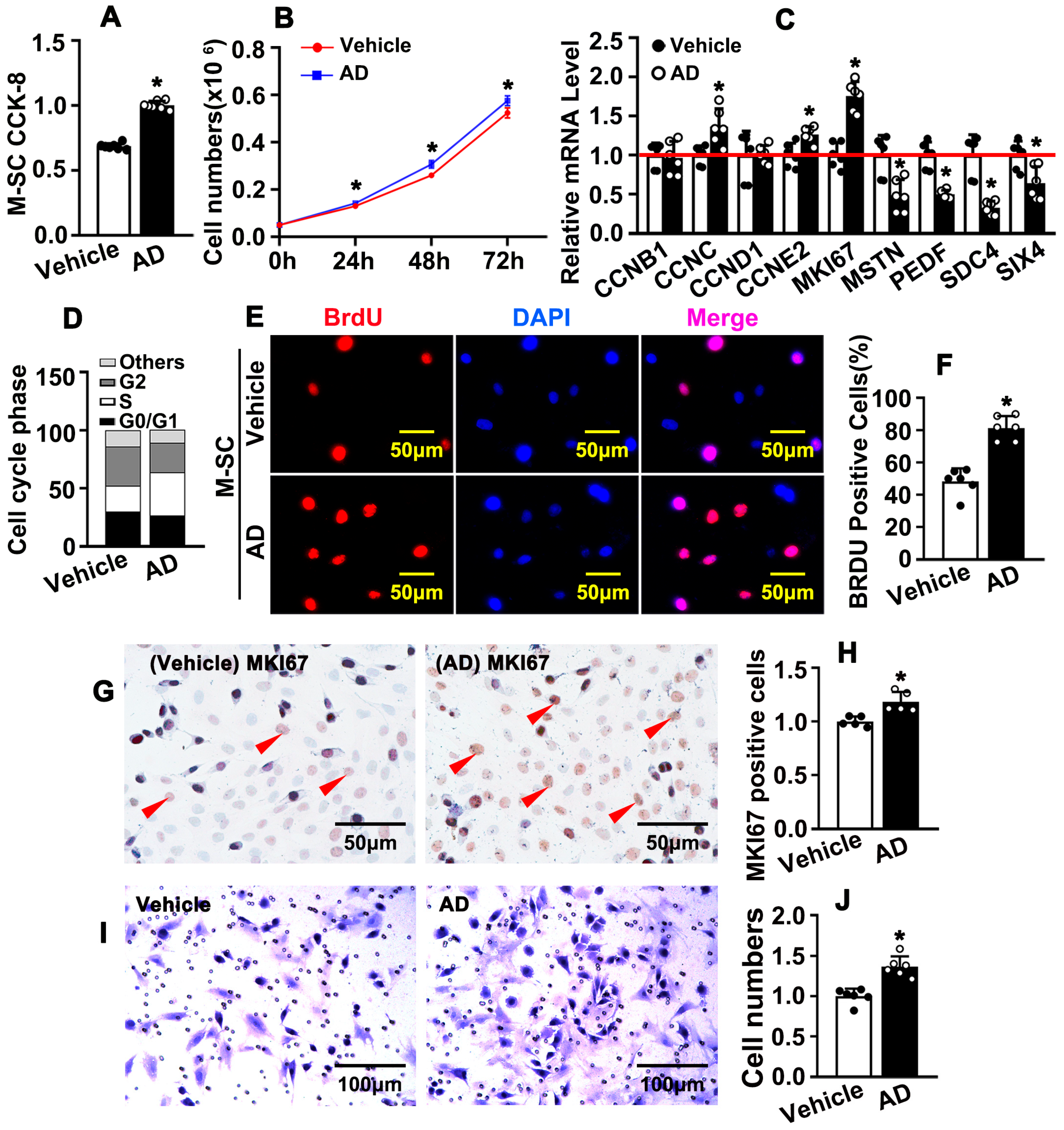
2.1. Adenosine Induces Satellite Cell Activation and Promotes Satellite Cell Proliferation and Migration

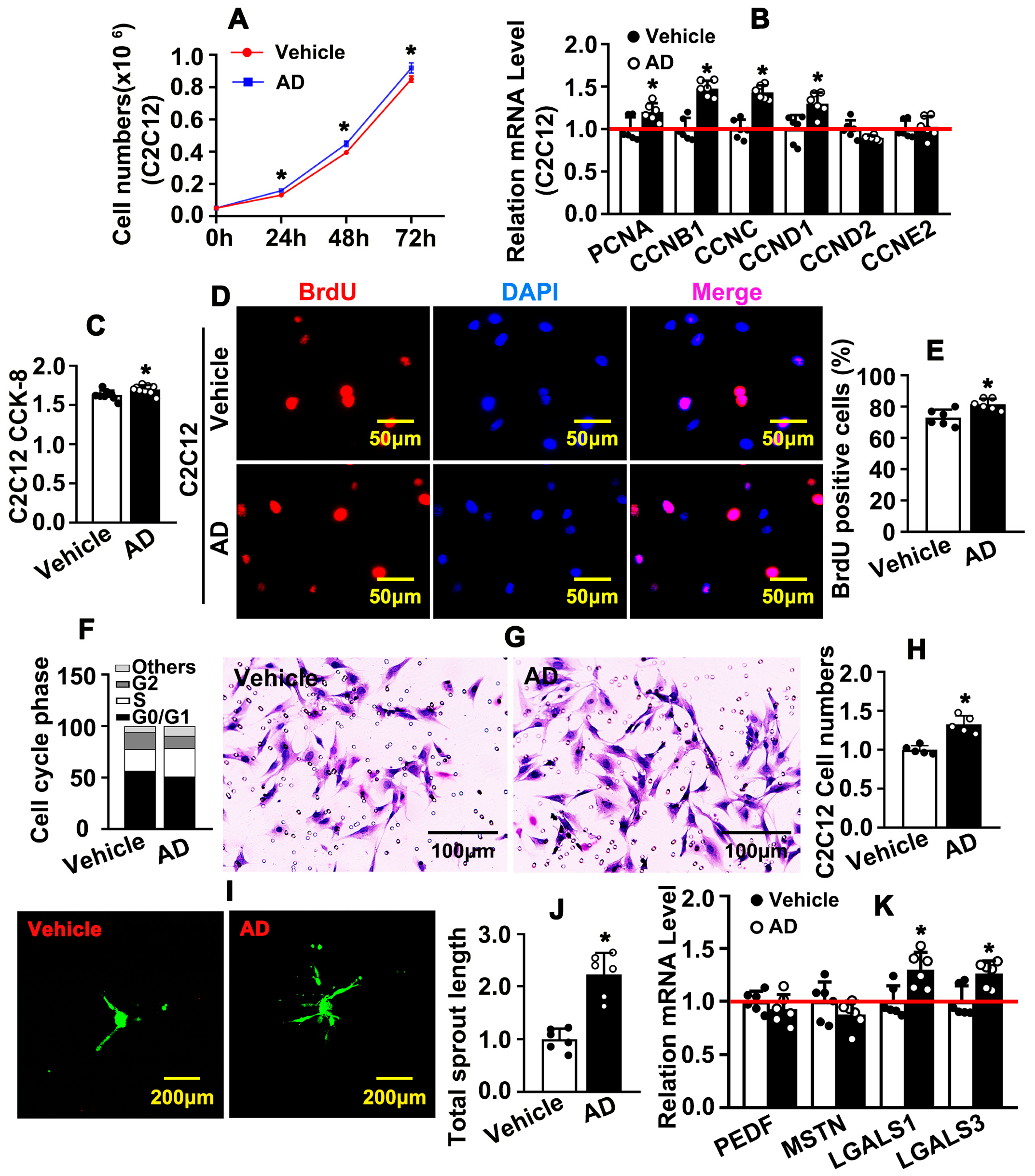
2.2. Adenosine Promotes C2C12 Cell Proliferation and Migration

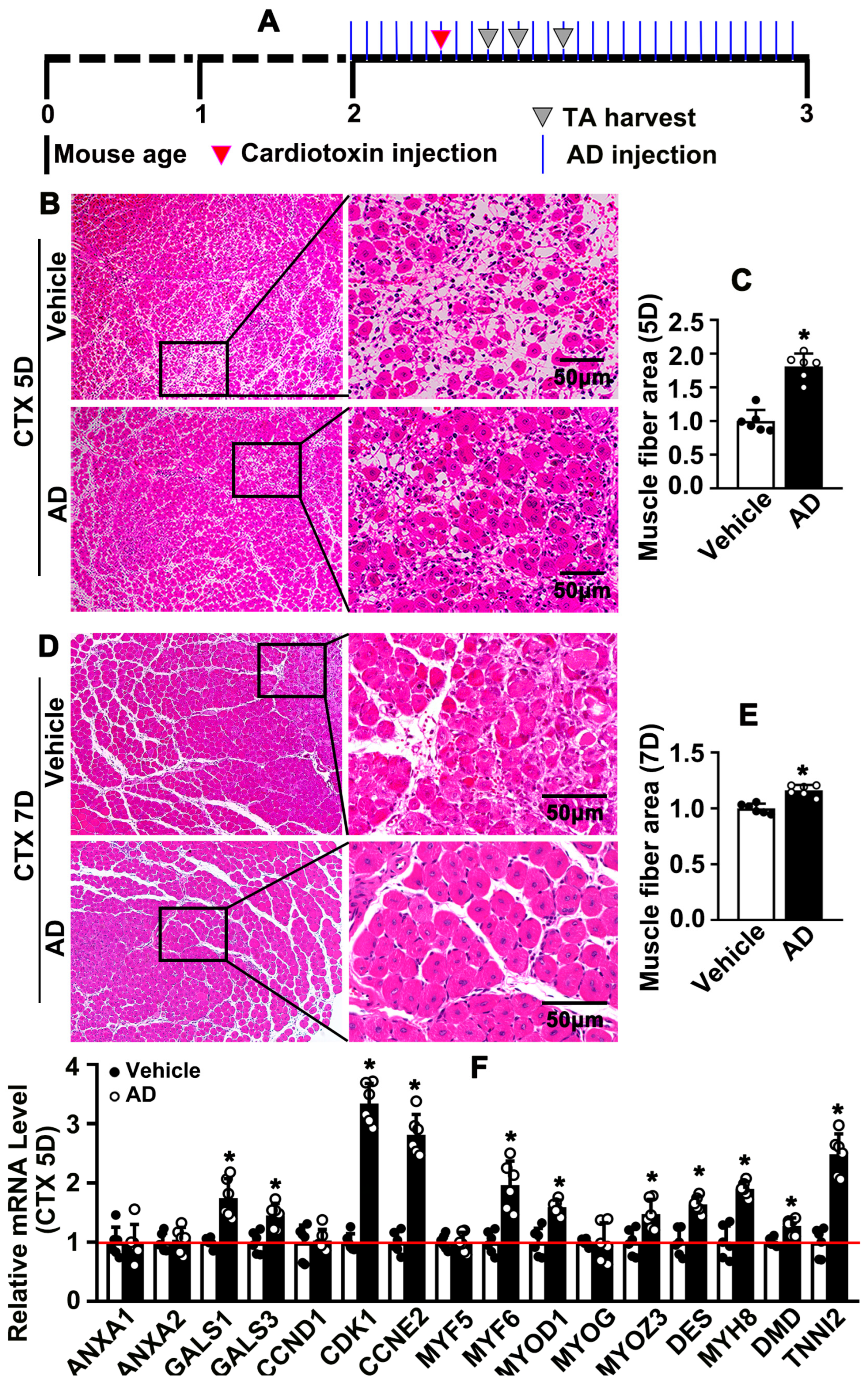
2.3. Adenosine Promotes Skeletal Muscle Regeneration Following Acute Injury

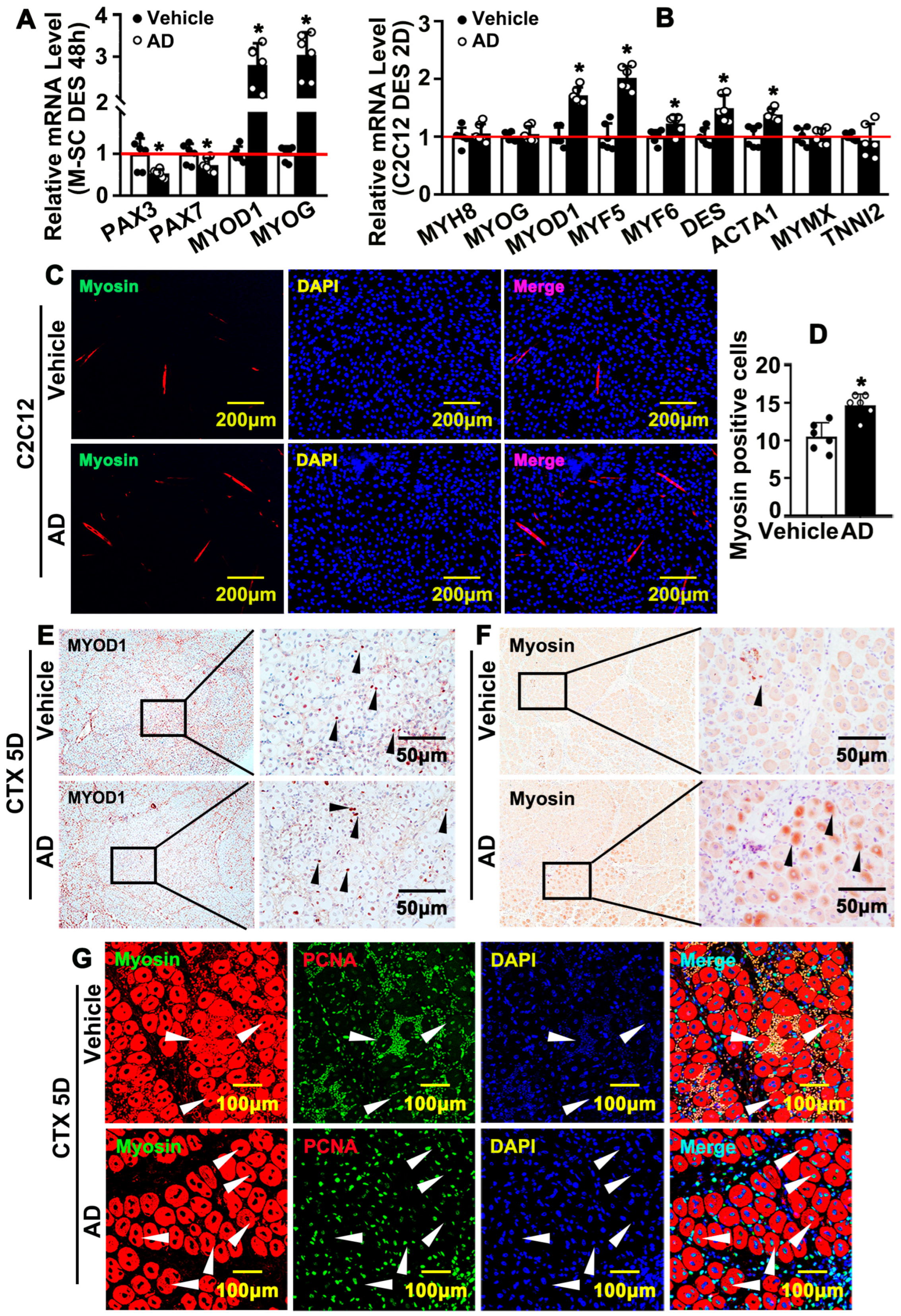
2.4. Adenosine Promotes Differentiation and Fusion of Newly Formed Myofibers
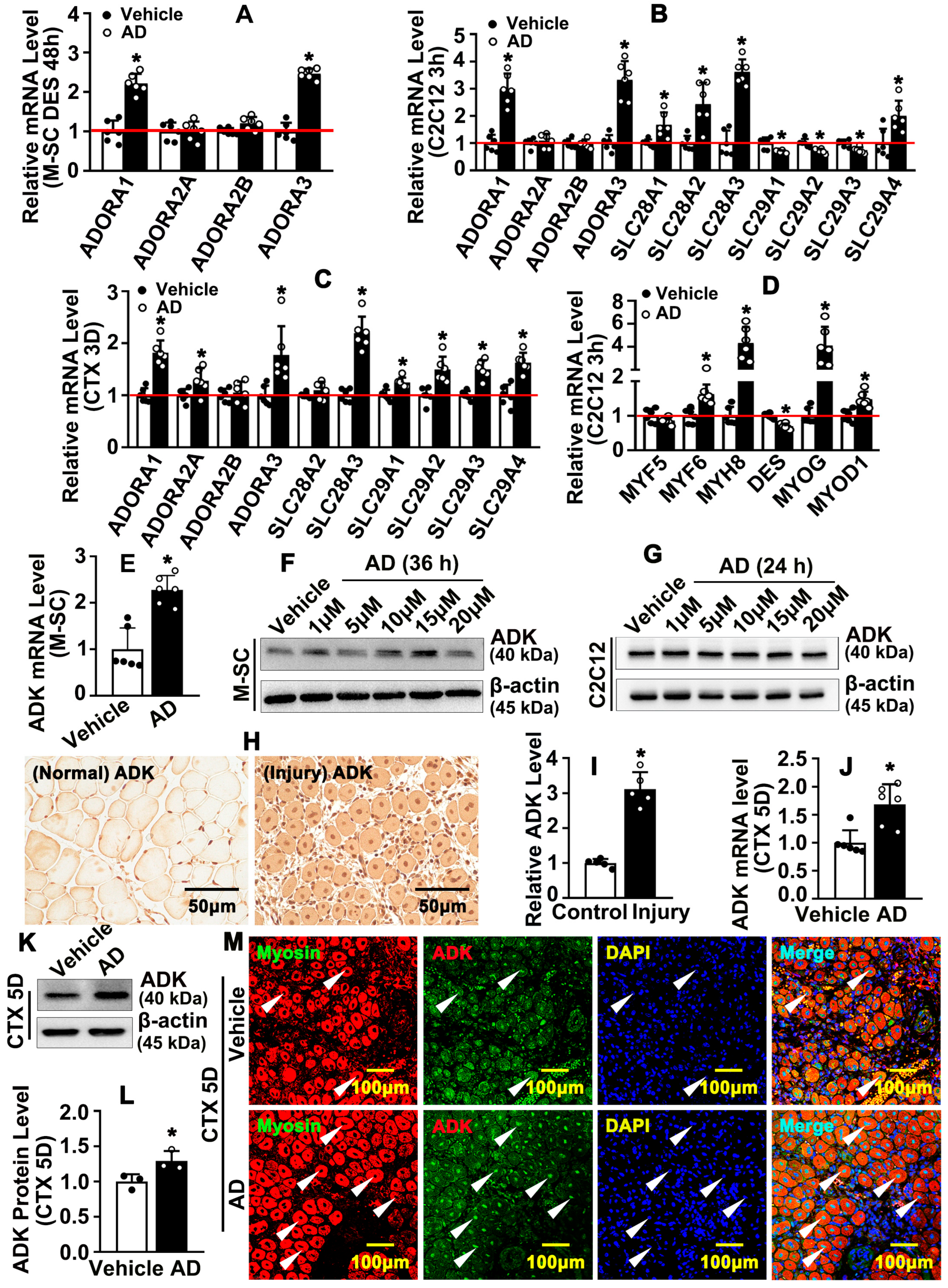
2.5. Adenosine Dynamically Distributes Between Extracellular and Intracellular, Which Triggers an ADK-Dependent Intracellular Signaling Pathway

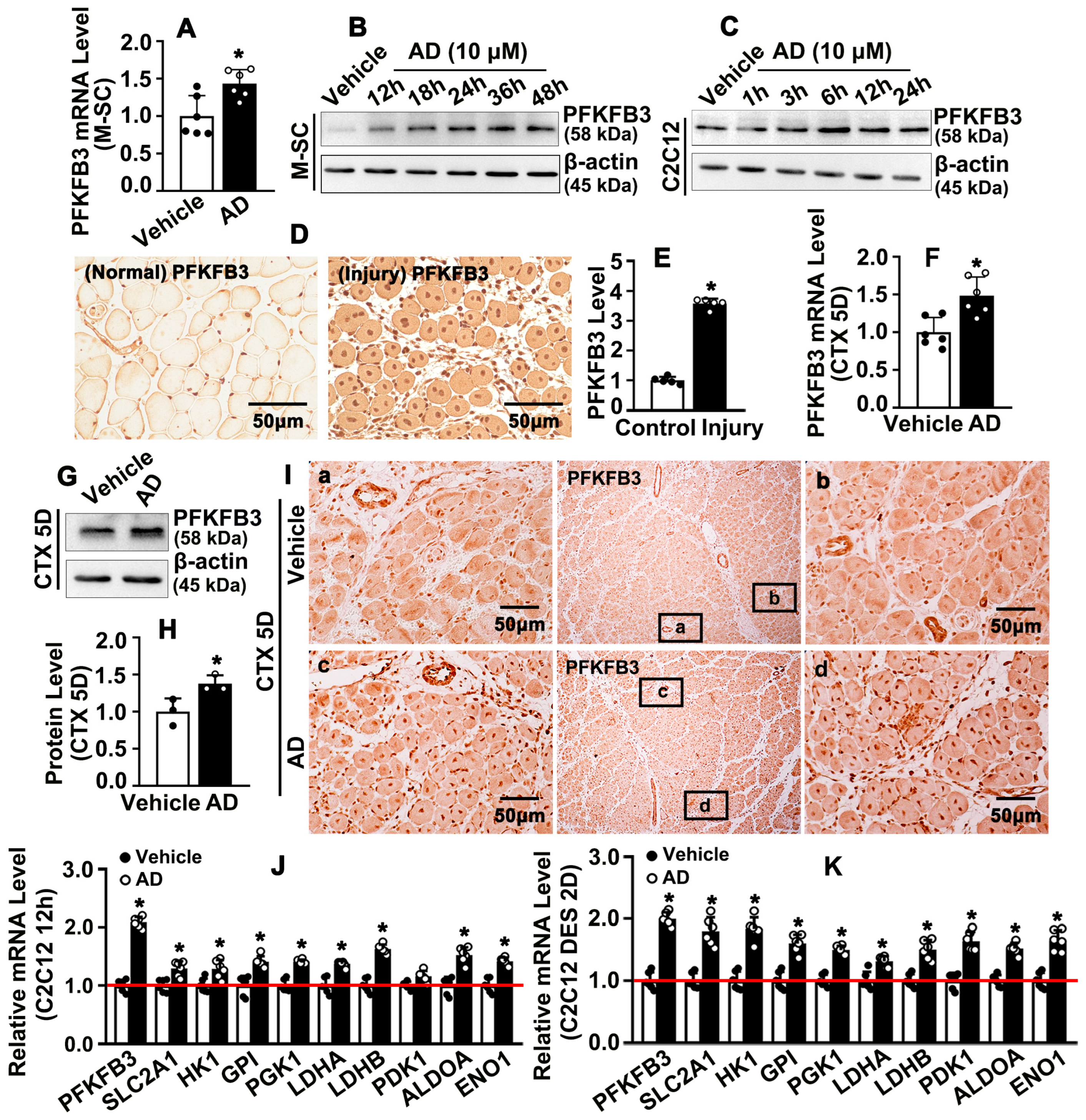
2.6. Adenosine Promotes PFKFB3-Mediated Glycolysis Metabolism During Skeletal Muscle Regeneration
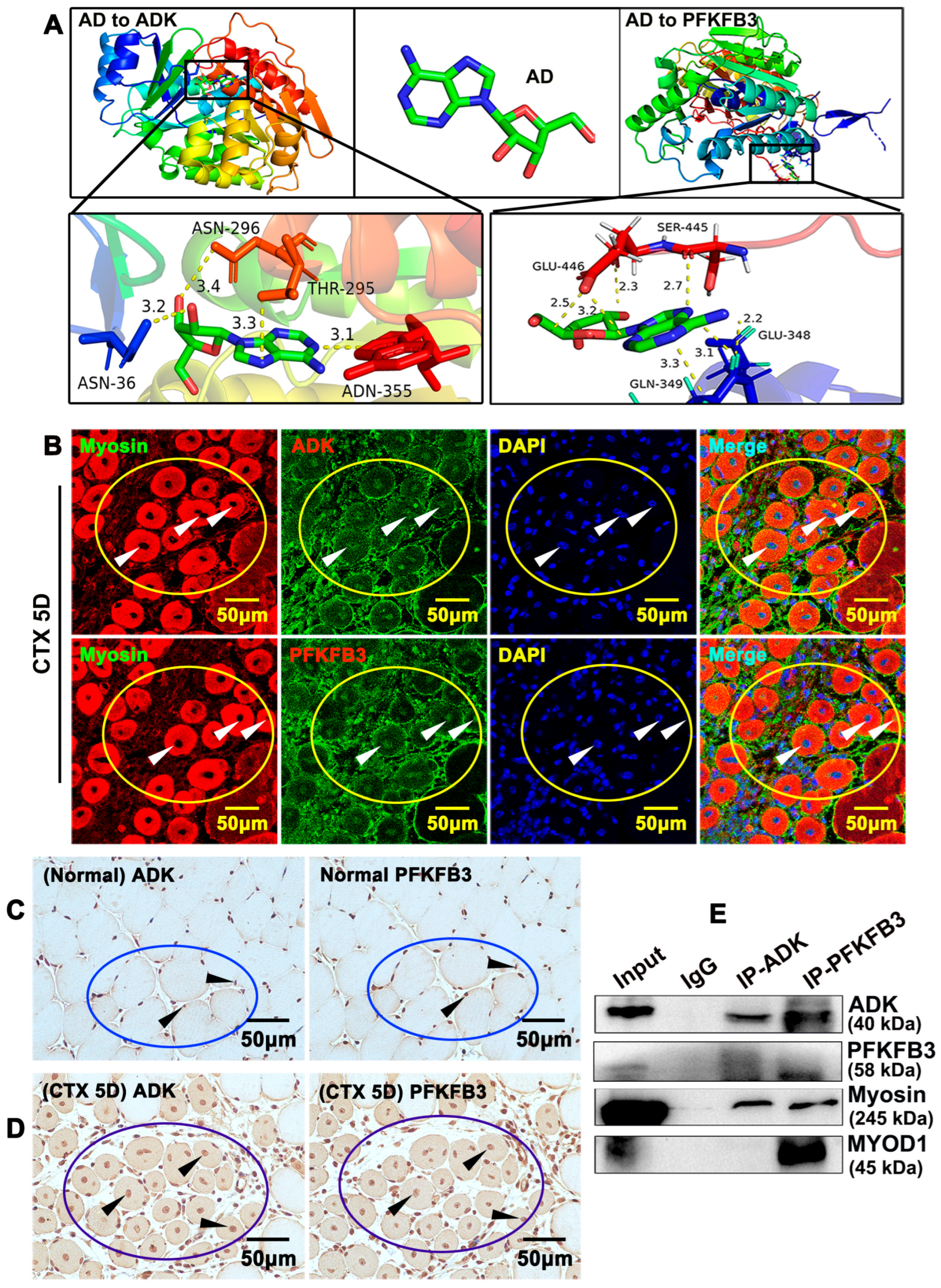
2.7. ADK Interacts with PFKFB3 During Skeletal Muscle Regeneration

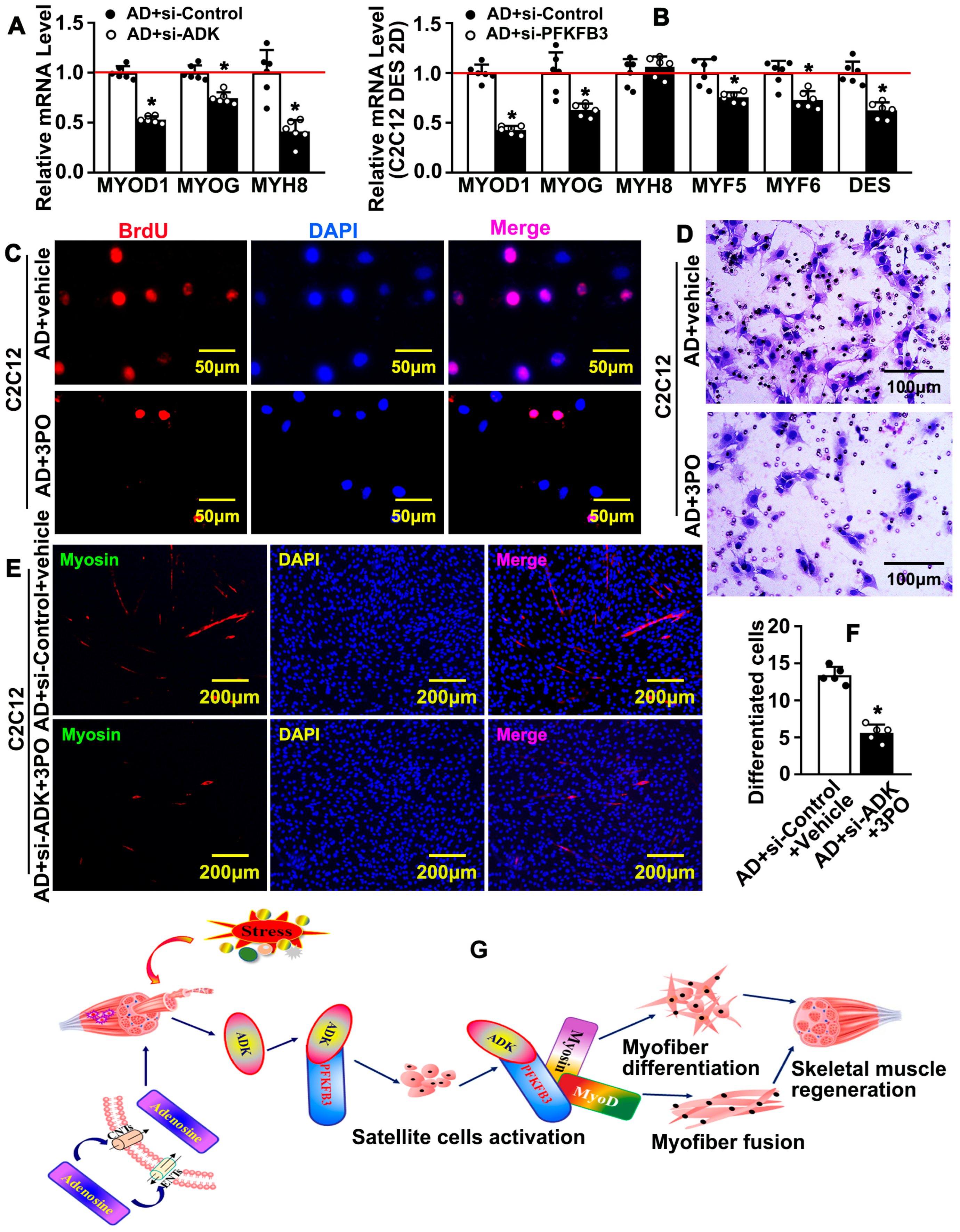
2.8. Interruption of the Interaction Between ADK-Dependent Intracellular Signaling Pathway and PFKFB3-Mediated Glycolytic Metabolism Can Attenuate Adenosine-Induced Skeletal Muscle Regeneration

3. Discussion
3.1. Multiple Cell Types Are Involved During Skeletal Muscle Regeneration
3.2. Some Other Mechanisms Besides Bioenergy Supplements Are Involved in Skeletal Muscle Regeneration
3.3. Adenosine-Triggered Intracellular Signaling Pathway Can Affect Multiple Skeletal Markers During Skeletal Muscle Regeneration
4. Materials and Methods
4.1. Murine Skeletal Satellite Cell Culture
4.2. C2C12 Cell Line Culture and Differentiation Induction
4.3. CCK8 Cell Proliferation Assay
4.4. BrdU Incorporation Assay
4.5. Spheroid Sprouting Assay
4.6. Boyden Chamber Migration Assay
4.7. Induction of Acute Skeletal Muscle Injury by Cardiotoxin Intramuscular Injection
4.8. Hematoxylin and Eosin (H&E) Staining, Immunohistochemistry (IHC), and Immunofluorescence Staining (IF)
4.9. Real-Time PCR Analysis
4.10. siRNA Transfection
4.11. Protein Extraction and Western Blotting Analysis
4.12. Protein-to-Protein Interaction (PPI) Network Analysis
4.13. Molecular Docking Simulation of Adenosine with ADK and PFKFB3
4.14. CO-Immunoprecipitation (CO-IP) Assay
4.15. Statistics
5. Conclusions
Supplementary Materials
Author Contributions
Funding
Institutional Review Board Statement
Informed Consent Statement
Data Availability Statement
Conflicts of Interest
Abbreviations
| AD | Adenosine |
| ADK | Adenosine kinase |
| PFKFB3 | 6-phosphofructo-2-kinase/fructose-2,6-biphosphatase 3 |
| CTX | Cardiotoxin |
| MYOG | Myogenin |
| MRFs | Myogenic regulatory factors |
| MDGF | Macrophage-derived growth factor |
| TA | Tibialis anterior |
| FBS | Fetal bovine serum |
| DES | Donor equine serum |
References
- Brown, L.D. Endocrine regulation of fetal skeletal muscle growth: Impact on future metabolic health. J. Endocrinol. 2014, 221, R13–R29. [Google Scholar] [CrossRef] [PubMed]
- Adler, M.; Shieh, P.B. Metabolic Myopathies. Semin. Neurol. 2015, 35, 385–397. [Google Scholar] [CrossRef] [PubMed]
- Carrizo, V.; Valenzuela, C.A.; Aros, C.; Dettleff, P.; Valenzuela-Muñoz, V.; Gallardo-Escarate, C.; Altamirano, C.; Molina, A.; Valdés, J.A. Transcriptomic analysis reveals a Piscirickettsia salmonis-induced early inflammatory response in rainbow trout skeletal muscle. Comp. Biochem. Physiol. Part D Genom. Proteom. 2021, 39, 100859. [Google Scholar] [CrossRef]
- Martín, A.I.; Priego, T.; López-Calderón, A. Hormones and Muscle Atrophy. Adv. Exp. Med. Biol. 2018, 1088, 207–233. [Google Scholar]
- Dowling, J.J.; Weihl, C.C.; Spencer, M.J. Molecular and cellular basis of genetically inherited skeletal muscle disorders. Nat. Rev. Mol. Cell Biol. 2021, 22, 713–732. [Google Scholar] [CrossRef]
- Ceafalan, L.C.; Popescu, B.O.; Hinescu, M.E. Cellular players in skeletal muscle regeneration. Biomed. Res. Int. 2014, 2014, 957014. [Google Scholar] [CrossRef]
- Paoni, N.F.; Peale, F.; Wang, F.; Errett-Baroncini, C.; Steinmetz, H.; Toy, K.; Bai, W.; Williams, P.M.; Bunting, S.; Gerritsen, M.E.; et al. Time course of skeletal muscle repair and gene expression following acute hind limb ischemia in mice. Physiol Genom. 2002, 11, 263–272. [Google Scholar] [CrossRef]
- Fang, J.; Sia, J.; Soto, J.; Wang, P.; Li, L.K.; Hsueh, Y.-Y.; Sun, R.; Faull, K.F.; Tidball, J.G.; Li, S. Skeletal muscle regeneration via the chemical induction and expansion of myogenic stem cells in situ or in vitro. Nat. Biomed. Eng. 2021, 5, 864–879. [Google Scholar] [CrossRef]
- Montarras, D.; Morgan, J.; Collins, C.; Relaix, F.; Zaffran, S.; Cumano, A.; Partridge, T.; Buckingham, M. Direct isolation of satellite cells for skeletal muscle regeneration. Science 2005, 309, 2064–2067. [Google Scholar] [CrossRef] [PubMed]
- Relaix, F.; Zammit, P.S. Satellite cells are essential for skeletal muscle regeneration: The cell on the edge returns centre stage. Development 2012, 139, 2845–2856. [Google Scholar] [CrossRef]
- Sambasivan, R.; Yao, R.; Kissenpfennig, A.; Van Wittenberghe, L.; Paldi, A.; Gayraud-Morel, B.; Guenou, H.; Malissen, B.; Tajbakhsh, S.; Galy, A. Pax7-expressing satellite cells are indispensable for adult skeletal muscle regeneration. Development 2011, 138, 3647–3656. [Google Scholar] [CrossRef]
- Cheung, T.H.; Rando, T.A. Molecular regulation of stem cell quiescence. Nat. Rev. Mol. Cell Biol. 2013, 14, 329–340. [Google Scholar] [CrossRef] [PubMed]
- Dumont, N.A.; Wang, Y.X.; Rudnicki, M.A. Intrinsic and extrinsic mechanisms regulating satellite cell function. Development 2015, 142, 1572–1581. [Google Scholar] [CrossRef]
- Guardiola, O.; Andolfi, G.; Tirone, M.; Iavarone, F.; Brunelli, S.; Minchiotti, G. Induction of Acute Skeletal Muscle Regeneration by Cardiotoxin Injection. J. Vis. Exp. 2017, 119, 54515. [Google Scholar]
- Zammit, P.S. Function of the myogenic regulatory factors Myf5, MyoD, Myogenin and MRF4 in skeletal muscle, satellite cells and regenerative myogenesis. Semin. Cell Dev. Biol. 2017, 72, 19–32. [Google Scholar] [CrossRef]
- Liu, Z.; Zhang, X.; Lei, H.; Lam, N.; Carter, S.; Yockey, O.; Xu, M.; Mendoza, A.; Hernandez, E.R.; Wei, J.S.; et al. CASZ1 induces skeletal muscle and rhabdomyosarcoma differentiation through a feed-forward loop with MYOD and MYOG. Nat. Commun. 2020, 11, 911. [Google Scholar] [CrossRef]
- Ma, J.; Chai, J.; Shang, Y.; Li, Y.; Chen, R.; Jia, J.; Jiang, S.; Peng, J. Swine PPAR-γ2 expression upregulated in skeletal muscle of transgenic mice via the swine Myozenin-1 gene promoter. Transgenic Res. 2015, 24, 409–420. [Google Scholar] [CrossRef]
- Millay, D.P.; O’Rourke, J.R.; Sutherland, L.B.; Bezprozvannaya, S.; Shelton, J.M.; Bassel-Duby, R.; Olson, E.N. Myomaker is a membrane activator of myoblast fusion and muscle formation. Nature 2013, 499, 301–305. [Google Scholar] [CrossRef] [PubMed]
- Arsic, N.; Zacchigna, S.; Zentilin, L.; Ramirez-Correa, G.; Pattarini, L.; Salvi, A.; Sinagra, G.; Giacca, M. Vascular endothelial growth factor stimulates skeletal muscle regeneration in vivo. Mol. Ther. 2004, 10, 844–854. [Google Scholar] [CrossRef] [PubMed]
- Zanou, N.; Gailly, P. Skeletal muscle hypertrophy and regeneration: Interplay between the myogenic regulatory factors (MRFs) and insulin-like growth factors (IGFs) pathways. Cell. Mol. Life Sci. CMLS 2013, 70, 4117–4130. [Google Scholar] [CrossRef]
- Ratnayake, D.; Nguyen, P.D.; Rossello, F.J.; Wimmer, V.C.; Tan, J.L.; Galvis, L.A.; Julier, Z.; Wood, A.J.; Boudier, T.; Isiaku, A.I.; et al. Macrophages provide a transient muscle stem cell niche via NAMPT secretion. Nature 2021, 591, 281–287. [Google Scholar] [CrossRef]
- Grounds, M.D. Towards understanding skeletal muscle regeneration. Pathol. Res. Pract. 1991, 187, 1–22. [Google Scholar] [CrossRef]
- Zheng, J.; Wang, R.; Zambraski, E.; Wu, D.; Jacobson, K.A.; Liang, B.T. Protective roles of adenosine A1, A2A, and A3 receptors in skeletal muscle ischemia and reperfusion injury. Am. J. Physiol. Heart Circ. Physiol. 2007, 293, H3685–H3691. [Google Scholar] [CrossRef]
- Warren, G.L.; Hulderman, T.; Liston, A.; Simeonova, P.P. Toll-like and adenosine receptor expression in injured skeletal muscle. Muscle Nerve 2011, 44, 85–92. [Google Scholar] [CrossRef]
- Urso, M.L.; Wang, R.; Zambraski, E.J.; Liang, B.T. Adenosine A3 receptor stimulation reduces muscle injury following physical trauma and is associated with alterations in the MMP/TIMP response. J. Appl. Physiol. 2012, 112, 658–670. [Google Scholar] [CrossRef] [PubMed][Green Version]
- Wang, R.; Urso, M.L.; Zambraski, E.J.; Rader, E.P.; Campbell, K.P.; Liang, B.T. Adenosine A(3) receptor stimulation induces protection of skeletal muscle from eccentric exercise-mediated injury. Am. J. Physiology Regul. Integr. Comp. Physiol. 2010, 299, R259–R267. [Google Scholar] [CrossRef]
- Haddad, M. Impact of Adenosine A2 Receptor Ligands on BCL2 Expression in Skeletal Muscle Cells. Appl. Sci. 2021, 11, 2272. [Google Scholar] [CrossRef]
- Hickey, M.J.; Knight, K.R.; Hurley, J.V.; Lepore, D.A. Phosphoenolpyruvate/adenosine triphosphate enhances post-ischemic survival of skeletal muscle. J. Reconstr. Microsurg. 1995, 11, 415–422. [Google Scholar] [CrossRef] [PubMed]
- Choi, J.S.; Berdis, A.J. Nucleoside transporters: Biological insights and therapeutic applications. Future Med. Chem. 2012, 4, 1461–1478. [Google Scholar] [CrossRef]
- Reiss, A.B.; Grossfeld, D.; Kasselman, L.J.; Renna, H.A.; Vernice, N.A.; Drewes, W.; Konig, J.; Carsons, S.E.; DeLeon, J. Adenosine and the Cardiovascular System. Am. J. Cardiovasc. Drugs 2019, 19, 449–464. [Google Scholar] [CrossRef] [PubMed]
- Theparambil, S.M.; Kopach, O.; Braga, A.; Nizari, S.; Hosford, P.S.; Sagi-Kiss, V.; Hadjihambi, A.; Konstantinou, C.; Esteras, N.; Del Arroyo, A.G.; et al. Adenosine signalling to astrocytes coordinates brain metabolism and function. Nature 2024, 632, 139–146. [Google Scholar] [CrossRef] [PubMed]
- Xu, Y.; Wang, Y.; Yan, S.; Zhou, Y.; Yang, Q.; Pan, Y.; Zeng, X.; An, X.; Liu, Z.; Wang, L.; et al. Intracellular adenosine regulates epigenetic programming in endothelial cells to promote angiogenesis. EMBO Mol. Med. 2017, 9, 1263–1278. [Google Scholar] [CrossRef]
- Xu, Y.; Wang, Y.; Yan, S.; Yang, Q.; Zhou, Y.; Zeng, X.; Liu, Z.; An, X.; Toque, H.A.; Dong, Z.; et al. Regulation of endothelial intracellular adenosine via adenosine kinase epigenetically modulates vascular inflammation. Nat. Commun. 2017, 8, 943. [Google Scholar] [CrossRef]
- Wang, Y.; Xu, Y.; Yan, S.; Cao, K.; Zeng, X.; Zhou, Y.; Liu, Z.; Yang, Q.; Pan, Y.; Wang, X.; et al. Adenosine kinase is critical for neointima formation after vascular injury by inducing aberrant DNA hypermethylation. Cardiovasc. Res. 2021, 117, 561–575. [Google Scholar] [CrossRef] [PubMed]
- Xu, J.; Liu, Z.; Yang, Q.; Ma, Q.; Zhou, Y.; Cai, Y.; Zhao, D.; Zhao, G.; Lu, T.; Ouyang, K.; et al. Adenosine kinase inhibition protects mice from abdominal aortic aneurysm via epigenetic modulation of VSMC inflammation. Cardiovasc. Res. 2024, 120, 1202–1217. [Google Scholar] [CrossRef]
- Godfrey, R.; Quinlivan, R. Skeletal muscle disorders of glycogenolysis and glycolysis. Nat. Rev. Neurol. 2016, 12, 393–402. [Google Scholar] [CrossRef]
- Herzig, S.; Shaw, R.J. AMPK: Guardian of metabolism and mitochondrial homeostasis. Nat. Rev. Mol. Cell Biol. 2018, 19, 121–135. [Google Scholar] [CrossRef] [PubMed]
- Fu, X.; Zhu, M.-J.; Dodson, M.V.; Du, M. AMP-activated protein kinase stimulates Warburg-like glycolysis and activation of satellite cells during muscle regeneration. J. Biol. Chem. 2015, 290, 26445–26456. [Google Scholar] [CrossRef]
- Chen, F.; Zhou, J.; Li, Y.; Zhao, Y.; Yuan, J.; Cao, Y.; Wang, L.; Zhang, Z.; Zhang, B.; Wang, C.C.; et al. YY1 regulates skeletal muscle regeneration through controlling metabolic reprogramming of satellite cells. EMBO J. 2019, 38, e99727. [Google Scholar] [CrossRef]
- Cao, Y.; Zhang, X.; Wang, L.; Yang, Q.; Ma, Q.; Xu, J.; Wang, J.; Kovacs, L.; Ayon, R.J.; Liu, Z.; et al. PFKFB3-mediated endothelial glycolysis promotes pulmonary hypertension. Proc. Natl. Acad. Sci. USA 2019, 116, 13394–13403. [Google Scholar] [CrossRef]
- Björkegren, J.L.M.; Lusis, A.J. Atherosclerosis: Recent developments. Cell 2022, 185, 1630–1645. [Google Scholar] [CrossRef]
- Sousa, N.S.; Brás, M.F.; Antunes, I.B.; Lindholm, P.; Neves, J.; Sousa-Victor, P. Aging disrupts MANF-mediated immune modulation during skeletal muscle regeneration. Nature Aging 2023, 3, 585–599. [Google Scholar] [CrossRef] [PubMed]
- Pasquini, S.; Contri, C.; Borea, P.A.; Vincenzi, F.; Varani, K. Adenosine and Inflammation: Here, There and Everywhere. Int. J. Mol. Sci. 2021, 22, 7685. [Google Scholar] [CrossRef]
- Barletta, K.E.; Ley, K.; Mehrad, B. Regulation of neutrophil function by adenosine. Arterioscler. Thromb. Vasc. Biol. 2012, 32, 856–864. [Google Scholar] [CrossRef]
- Ryan, T.E.; Schmidt, C.A.; Tarpey, M.D.; Amorese, A.J.; Yamaguchi, D.J.; Goldberg, E.J.; Iñigo, M.M.; Karnekar, R.; O’Rourke, A.; Ervasti, J.M.; et al. PFKFB3-mediated glycolysis rescues myopathic outcomes in the ischemic limb. JCI insight 2020, 5, e139628. [Google Scholar] [CrossRef]
- Haddad, M. Impact of Adenosine Analogue, Adenosine-5’-N-Ethyluronamide (NECA), on Insulin Signaling in Skeletal Muscle Cells. Biomed. Res. Int. 2021, 2021, 9979768. [Google Scholar] [CrossRef]
- Wu, Z.; Xu, H.; Xu, Y.; Fan, W.; Yao, H.; Wang, Y.; Hu, W.; Lou, G.; Shi, Y.; Chen, X.; et al. Andrographolide promotes skeletal muscle regeneration after acute injury through epigenetic modulation. Eur. J. Pharmacol. 2020, 888, 173470. [Google Scholar] [CrossRef]
- Sanders, T.J.; Nabel, C.S.; Brouwer, M.; Hermant, A.L.; Chaible, L.; Deglasse, J.P.; Rosewick, N.; Pabois, A.; Cathou, W.; Smets, A.; et al. Inhibition of ENT1 relieves intracellular adenosine-mediated T cell suppression in cancer. Nat. Immunol. 2025, 26, 854–865. [Google Scholar] [CrossRef]
- Xu, Y.; An, X.; Guo, X.; Habtetsion, T.G.; Wang, Y.; Xu, X.; Kandala, S.; Li, Q.; Li, H.; Zhang, C.; et al. Endothelial PFKFB3 plays a critical role in angiogenesis. Arterioscler. Thromb. Vasc. Biol. 2014, 34, 1231–1239. [Google Scholar] [CrossRef] [PubMed]
- Hu, W.; Wu, X.; Jin, Z.; Wang, Z.; Guo, Q.; Chen, Z.; Zhu, S.; Zhang, H.; Huo, J.; Zhang, L.; et al. Andrographolide Promotes Interaction Between Endothelin-Dependent EDNRA/EDNRB and Myocardin-SRF to Regulate Pathological Vascular Remodeling. Front. Cardiovasc. Med. 2021, 8, 783872. [Google Scholar] [CrossRef] [PubMed]
- Zhu, N.; Xiang, Y.J.; Zhao, X.Y.; Cai, C.H.; Chen, H.; Jiang, W.B.; Wang, Y.; Zeng, C.L. Thymoquinone suppresses platelet-derived growth factor-BB-induced vascular smooth muscle cell proliferation, migration and neointimal formation. J. Cell Mol. Med. 2019, 23, 8482–8492. [Google Scholar] [CrossRef]
- Seydyousefi, M.; Moghanlou, A.E.; Metz, G.A.S.; Gursoy, R.; Faghfoori, M.H.; Mirghani, S.J.; Faghfoori, Z. Exogenous adenosine facilitates neuroprotection and functional recovery following cerebral ischemia in rats. Brain Res. Bull. 2019, 153, 250–256. [Google Scholar] [CrossRef]
- Kaster, M.P.; Rosa, A.O.; Rosso, M.M.; Goulart, E.C.; Santos, A.R.; Rodrigues, A.L. Adenosine administration produces an antidepressant-like effect in mice: Evidence for the involvement of A1 and A2A receptors. Neurosci. Lett. 2004, 355, 21–24. [Google Scholar] [CrossRef] [PubMed]
- Wang, Y.; Hu, G.Q.; Liu, F.; Wang, X.B.; Wu, M.F.; Schwarz, J.J.; Zhou, J.L. Deletion of Yes-Associated Protein (YAP) Specifically in Cardiac and Vascular Smooth Muscle Cells Reveals a Crucial Role for YAP in Mouse Cardiovascular Development. Circ. Res. 2014, 114, 957–965. [Google Scholar] [CrossRef] [PubMed]
- Trott, O.; Olson, A.J. AutoDock Vina: Improving the speed and accuracy of docking with a new scoring function, efficient optimization, and multithreading. J. Comput. Chem. 2010, 31, 455–461. [Google Scholar] [CrossRef] [PubMed]
Disclaimer/Publisher’s Note: The statements, opinions and data contained in all publications are solely those of the individual author(s) and contributor(s) and not of MDPI and/or the editor(s). MDPI and/or the editor(s) disclaim responsibility for any injury to people or property resulting from any ideas, methods, instructions or products referred to in the content. |
© 2025 by the authors. Licensee MDPI, Basel, Switzerland. This article is an open access article distributed under the terms and conditions of the Creative Commons Attribution (CC BY) license (https://creativecommons.org/licenses/by/4.0/).
Share and Cite
Wu, X.; Zeng, D.; Wang, B.; Liu, J.; Zhang, Y.; Huang, C.; Nie, Q.; Shi, L.; Wang, Y. Adenosine Triggers an ADK-Dependent Intracellular Signaling Pathway Interacts PFKFB3-Mediated Glycolytic Metabolism to Promote Newly Formed Myofibers Development. Int. J. Mol. Sci. 2025, 26, 12184. https://doi.org/10.3390/ijms262412184
Wu X, Zeng D, Wang B, Liu J, Zhang Y, Huang C, Nie Q, Shi L, Wang Y. Adenosine Triggers an ADK-Dependent Intracellular Signaling Pathway Interacts PFKFB3-Mediated Glycolytic Metabolism to Promote Newly Formed Myofibers Development. International Journal of Molecular Sciences. 2025; 26(24):12184. https://doi.org/10.3390/ijms262412184
Chicago/Turabian StyleWu, Xiao, Dawei Zeng, Baojia Wang, Jie Liu, Yue Zhang, Cong Huang, Qian Nie, Liangqin Shi, and Yong Wang. 2025. "Adenosine Triggers an ADK-Dependent Intracellular Signaling Pathway Interacts PFKFB3-Mediated Glycolytic Metabolism to Promote Newly Formed Myofibers Development" International Journal of Molecular Sciences 26, no. 24: 12184. https://doi.org/10.3390/ijms262412184
APA StyleWu, X., Zeng, D., Wang, B., Liu, J., Zhang, Y., Huang, C., Nie, Q., Shi, L., & Wang, Y. (2025). Adenosine Triggers an ADK-Dependent Intracellular Signaling Pathway Interacts PFKFB3-Mediated Glycolytic Metabolism to Promote Newly Formed Myofibers Development. International Journal of Molecular Sciences, 26(24), 12184. https://doi.org/10.3390/ijms262412184