Ring-Finger Protein 126 (RNF126) Promotes Anoikis Resistance and Peritoneal Colonization in Ovarian Cancer


Abstract
1. Introduction
2. Results
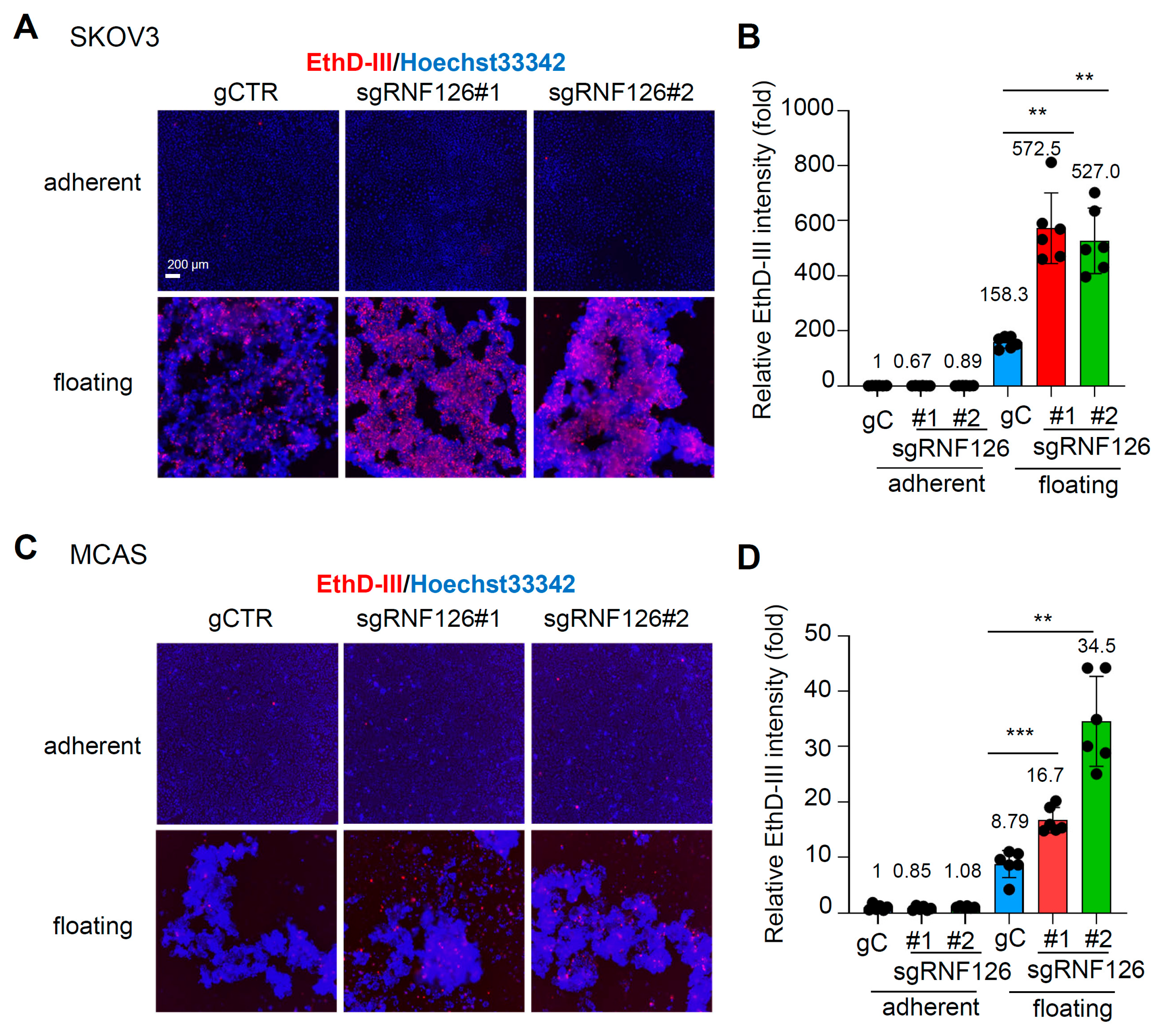
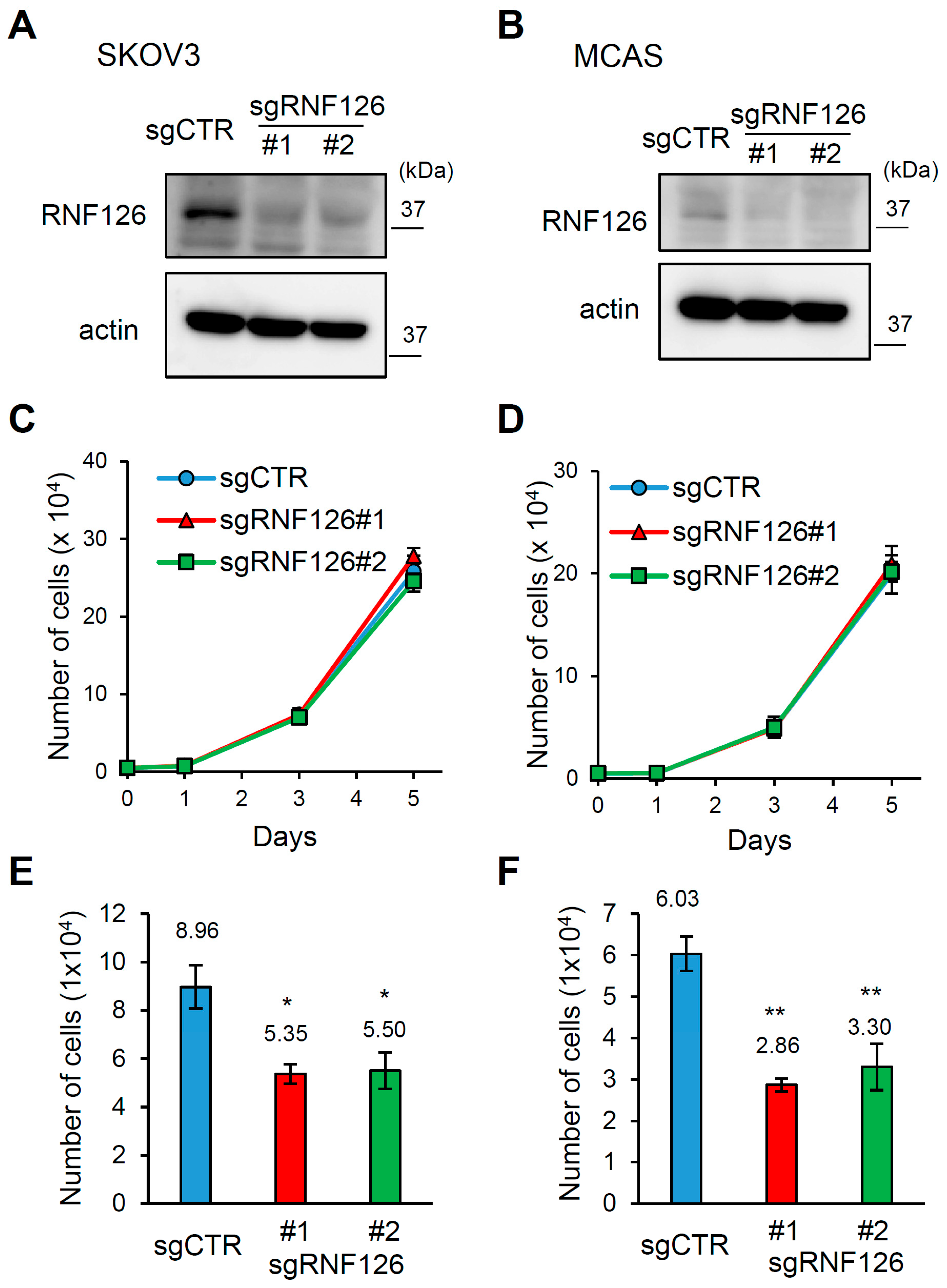
2.1. RNF126 Depletion Promotes Anoikis in OC Cells
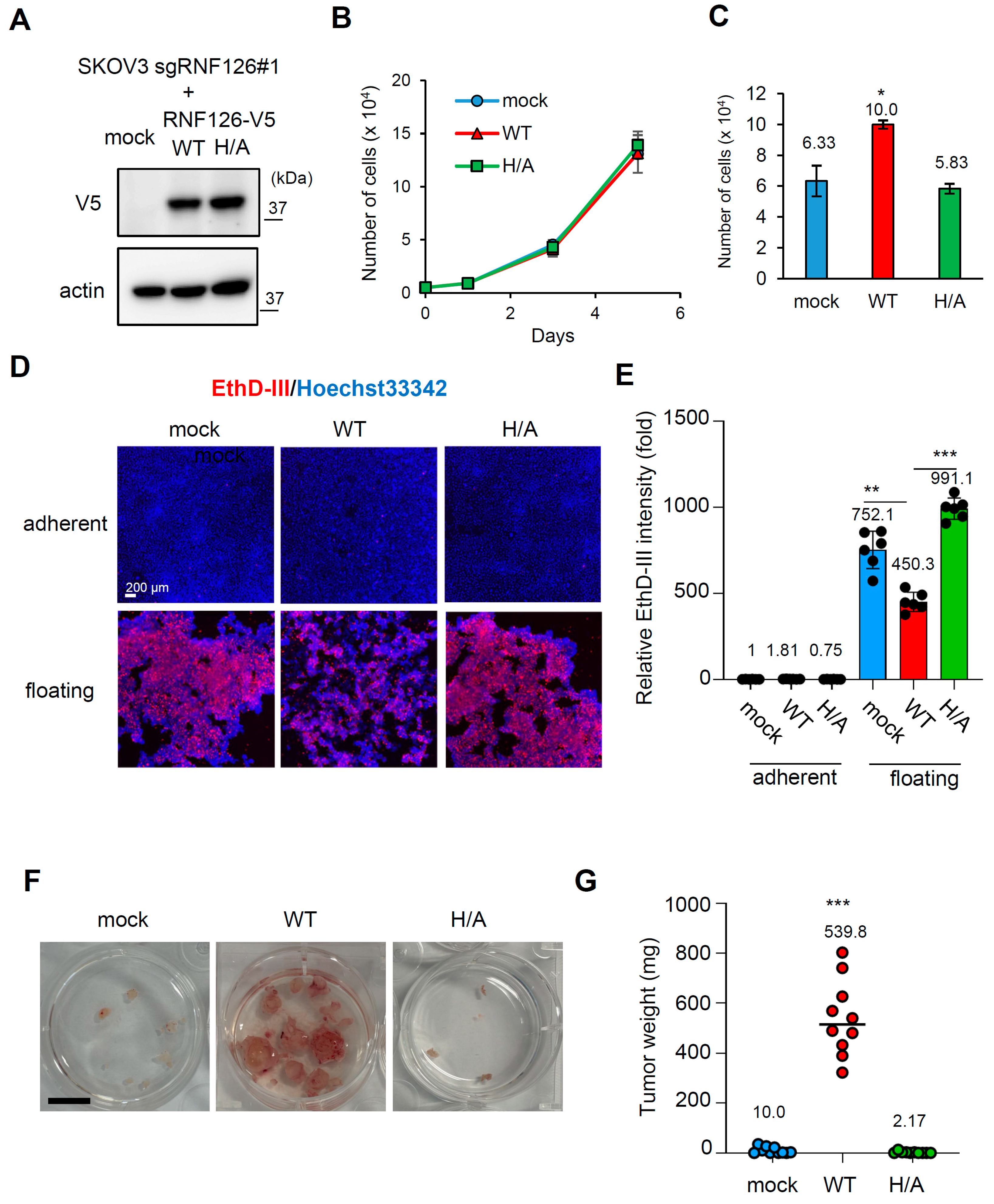
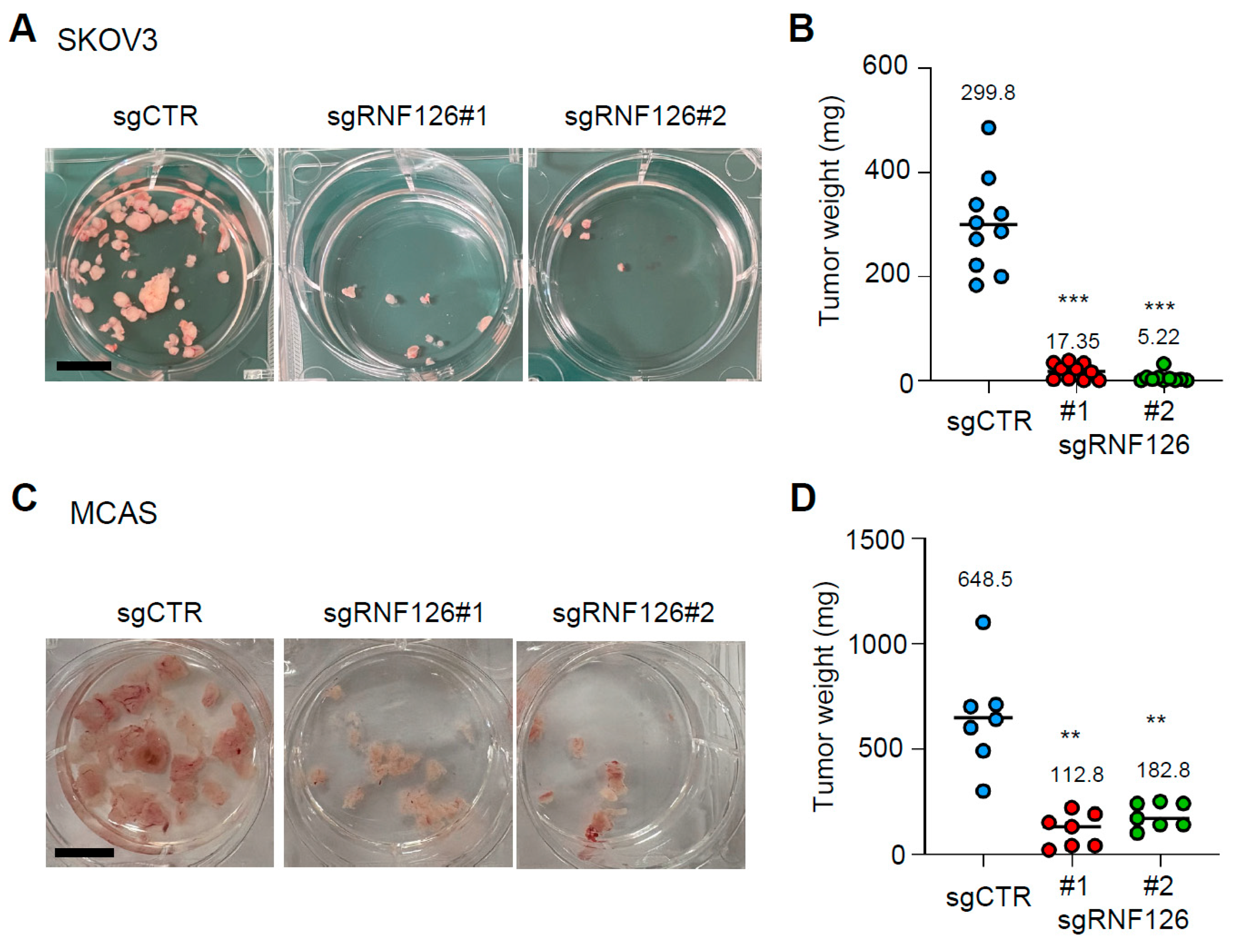
2.2. RNF126 Depletion Suppresses Peritoneal Colonization of OC
2.3. The Intact RING Domain Is Necessary for RNF126-Mediated Anoikis Resistance and Peritoneal Dissemination of Ovarian Cancer
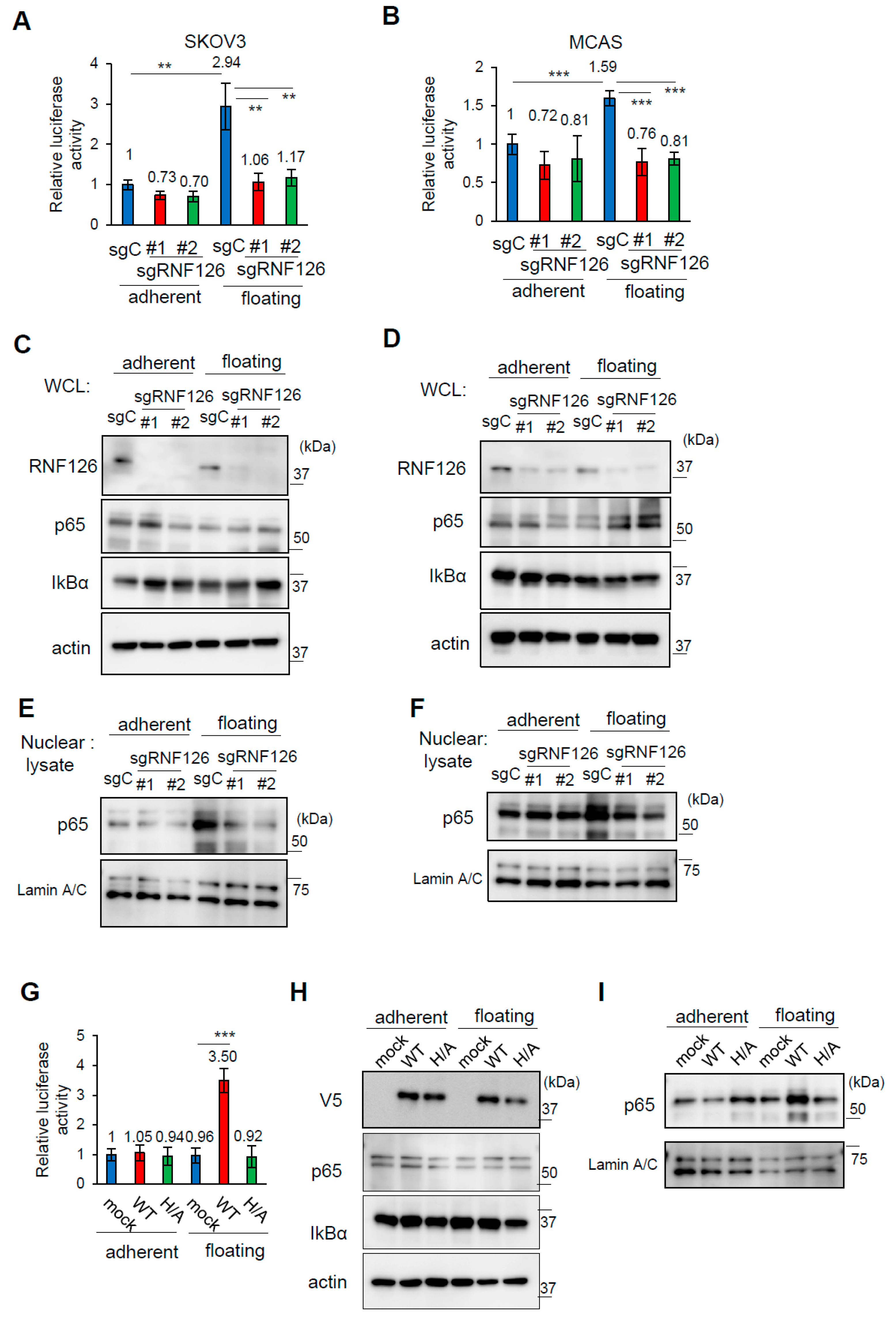
2.4. RNF126 Activates NF-κB in Floating OC Cells
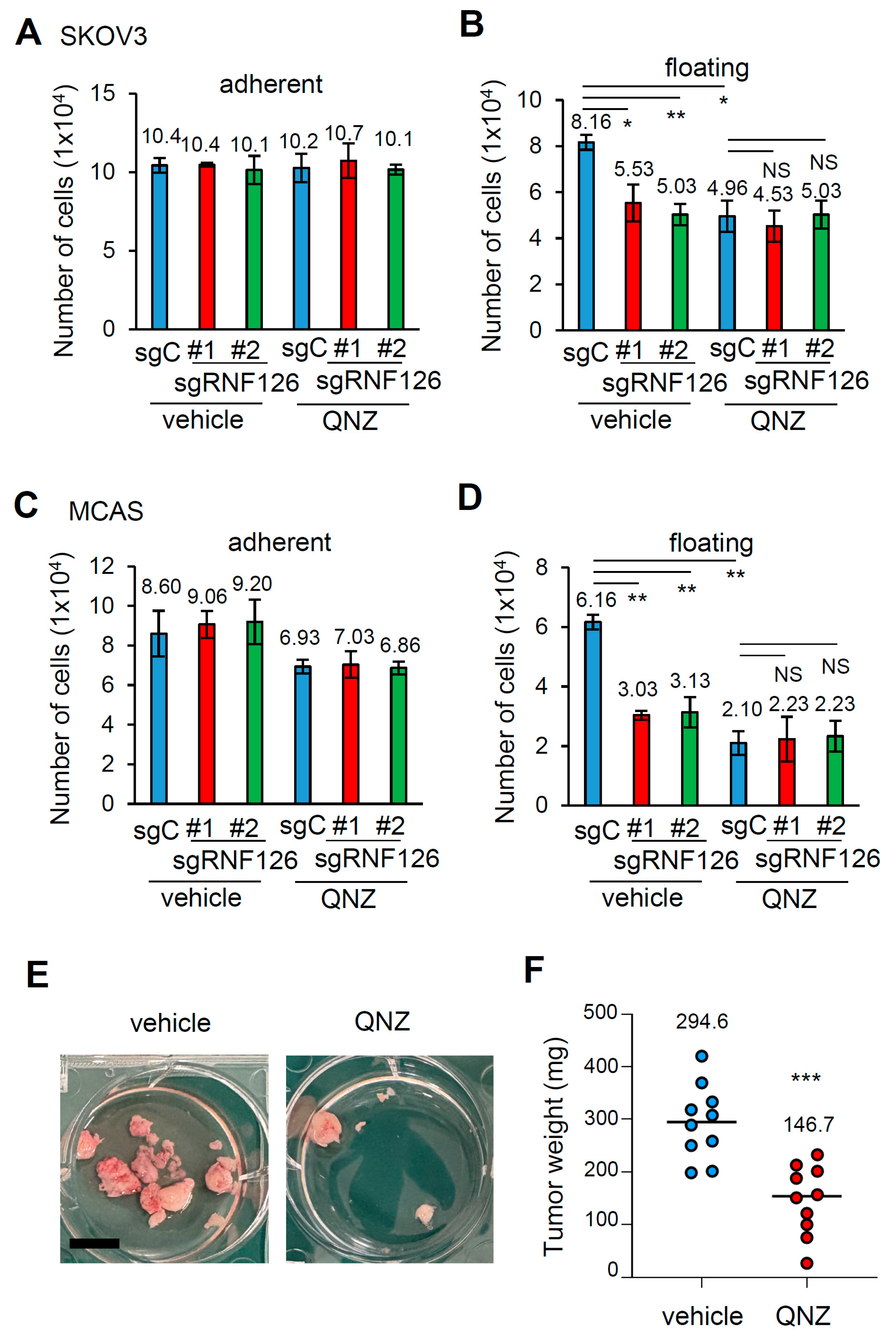
2.5. NF-κB Activity Is Essential for RNF126-Mediated Anchorage-Independent Growth and Peritoneal Colonization in Ovarian Cancer
3. Discussion
4. Materials and Methods
4.1. Cell Culture
4.2. Vector Construction
4.3. Cell Growth Assay and Ethidium Homodimer III (EthD-III) Staining
4.4. Western Blotting Analysis
4.5. Peritoneal Dissemination of Ovarian Cancer in Mice
4.6. RNA-Seq and Informatics Analysis
4.7. Reporter Assay
4.8. Statistics
Supplementary Materials
Author Contributions
Funding
Institutional Review Board Statement
Informed Consent Statement
Data Availability Statement
Acknowledgments
Conflicts of Interest
Abbreviations
| OC | Ovarian cancer |
| RNF126 | Ring-finger protein 126 |
| PDK | pyruvate dehydrogenase kinase |
| ACAP2 | ArfGAP with coiled-coil, ankyrin repeat, and PH domains 2 |
| EthD-III | Ethidium homodimer III |
| DEG | differentially expressed gene |
| FIGO | International Federation of Gynecology and Obstetrics |
References
- Mor-Hadar, D.; Wilailak, S.; Berek, J.; McNally, O.M.; The FIGO Committee on Women’s Cancer. FIGO position statement on opportunistic salpingectomy as an ovarian cancer prevention strategy. Int. J. Gynecol. Obstet. 2024, 167, 976–980. [Google Scholar] [CrossRef] [PubMed]
- Bray, F.; Laversanne, M.; Sung, H.; Ferlay, J.; Siegel, R.L.; Soerjomataram, I.; Jemal, A. Global cancer statistics 2022: GLOBOCAN estimates of incidence and mortality worldwide for 36 cancers in 185 countries. CA Cancer J. Clin. 2024, 74, 229–263. [Google Scholar] [CrossRef] [PubMed]
- Goff, B.A.; Mandel, L.; Muntz, H.G.; Melancon, C.H. Ovarian carcinoma diagnosis. Cancer 2000, 89, 2068–2075. [Google Scholar] [CrossRef] [PubMed]
- Moufarrij, S.; Dandapani, M.; Arthofer, E.; Gomez, S.; Srivastava, A.; Lopez-Acevedo, M.; Villagra, A.; Chiappinelli, K.B. Epigenetic therapy for ovarian cancer: Promise and progress. Clin. Epigenet. 2019, 11, 7. [Google Scholar] [CrossRef]
- Schoutrop, E.; Moyano-Galceran, L.; Lheureux, S.; Mattsson, J.; Lehti, K.; Dahlstrand, H.; Magalhaes, I. Molecular, cellular and systemic aspects of epithelial ovarian cancer and its tumor microenvironment. Semin. Cancer Biol. 2022, 86, 207–223. [Google Scholar] [CrossRef]
- Uno, K.; Iyoshi, S.; Yoshihara, M.; Kitami, K.; Mogi, K.; Fujimoto, H.; Sugiyama, M.; Koya, Y.; Yamakita, Y.; Nawa, A.; et al. Metastatic Voyage of Ovarian Cancer Cells in Ascites with the Assistance of Various Cellular Components. Int. J. Mol. Sci. 2022, 23, 4383. [Google Scholar] [CrossRef]
- Krysztofinska, E.M.; Martínez-Lumbreras, S.; Thapaliya, A.; Evans, N.J.; High, S.; Isaacson, R.L. Structural and functional insights into the E3 ligase, RNF126. Sci. Rep. 2016, 6, 26433. [Google Scholar] [CrossRef]
- Zhang, R.; Liu, W.; Sun, J.; Kong, Y.; Chen, C. Roles of RNF126 and BCA2 E3 ubiquitin ligases in DNA damage repair signaling and targeted cancer therapy. Pharmacol. Res. 2020, 155, 104748. [Google Scholar] [CrossRef]
- Yoshino, S.; Hara, T.; Nakaoka, H.J.; Kanamori, A.; Murakami, Y.; Seiki, M.; Sakamoto, T. The ERK signaling target RNF126 regulates anoikis resistance in cancer cells by changing the mitochondrial metabolic flux. Cell. Discov. 2016, 2, 16019. [Google Scholar] [CrossRef]
- Hu, B.; Shang, M.D.; Wang, X.; Zhang, X.G.; Dong, M.H.; Cao, Q.; Wei, X.D.; Han, Y.C.; Li, F.; Yang, Z.L.; et al. RNF126 suppresses amino acid-mediated mTORC1 signaling pathway by ubiquitinating ILF3 in HEK293T cells. Cell. Signal. 2025, 136, 112110. [Google Scholar] [CrossRef]
- Hu, X.; Wang, L.; Wang, Y.; Ji, J.; Li, J.; Wang, Z.; Li, C.; Zhang, Y.; Zhang, Z.R. RNF126-Mediated Reubiquitination Is Required for Proteasomal Degradation of p97-Extracted Membrane Proteins. Mol. Cell 2020, 79, 320–331.e329. [Google Scholar] [CrossRef]
- Muller, M.B.D.; Kasturi, P.; Jayaraj, G.G.; Hartl, F.U. Mechanisms of readthrough mitigation reveal principles of GCN1-mediated translational quality control. Cell 2023, 186, 3227–3244.e3220. [Google Scholar] [CrossRef] [PubMed]
- Rodrigo-Brenni, M.C.; Gutierrez, E.; Hegde, R.S. Cytosolic quality control of mislocalized proteins requires RNF126 recruitment to Bag6. Mol. Cell 2014, 55, 227–237. [Google Scholar] [CrossRef] [PubMed]
- Wang, S.; Qin, Z.; Liu, J.; Liu, J.; Xiong, Q.; Wei, Z.; Wang, L.; Cao, Y. Absence of Rnf126 causes male infertility with multiple morphological abnormalities of the sperm flagella. Cell Death Discov. 2025, 11, 251. [Google Scholar] [CrossRef] [PubMed]
- Xie, W.; Wang, J.; Tian, S.; Zhao, H.; Cao, L.; Liang, Z.; Yang, J.; Zhao, Y.; Wang, B.; Jiang, F.; et al. RNF126-mediated ubiquitination of FSP1 affects its subcellular localization and ferroptosis. Oncogene 2024, 43, 1463–1475. [Google Scholar] [CrossRef]
- Wang, C.; Wen, A.; Qiao, J.; Liu, Y.; Guo, Y.; Wang, W. High Expression of RING Finger Protein 126 Predicts Unfavorable Prognosis of Epithelial Ovarian Cancer. Med. Sci. Monit. 2020, 26, e921370. [Google Scholar] [CrossRef]
- Wang, H.; Yan, C.; Ye, H. RNF126 Promotes Ovarian Cancer Progression by Reprogramming Lipid Metabolism Through Degradation of ACAP2. Biochem. Genet. 2025, Online ahead of print. [Google Scholar] [CrossRef]
- Strilic, B.; Offermanns, S. Intravascular Survival and Extravasation of Tumor Cells. Cancer Cell 2017, 32, 282–293. [Google Scholar] [CrossRef]
- D’Amore, T.; Bravoco, D.; Di Paola, G.; Albano, F.; Brancaccio, M.; Sabato, C.; Cesta, G.; Zolfanelli, C.; Lauciello, V.; Falco, G.; et al. Anoikis resistance in gastric cancer: A comprehensive review. Cell Death Dis. 2025, 16, 528. [Google Scholar] [CrossRef]
- Delker, R.K.; Zhou, Y.; Strikoudis, A.; Stebbins, C.E.; Papavasiliou, F.N. Solubility-based genetic screen identifies RING finger protein 126 as an E3 ligase for activation-induced cytidine deaminase. Proc. Natl. Acad. Sci. USA 2013, 110, 1029–1034. [Google Scholar] [CrossRef]
- Zhi, X.; Zhao, D.; Wang, Z.; Zhou, Z.; Wang, C.; Chen, W.; Liu, R.; Chen, C. E3 ubiquitin ligase RNF126 promotes cancer cell proliferation by targeting the tumor suppressor p21 for ubiquitin-mediated degradation. Cancer Res. 2013, 73, 385–394. [Google Scholar] [CrossRef]
- Yan, S.R.; Joseph, R.R.; Rosen, K.; Reginato, M.J.; Jackson, A.; Allaire, N.; Brugge, J.S.; Jobin, C.; Stadnyk, A.W. Activation of NF-kappaB following detachment delays apoptosis in intestinal epithelial cells. Oncogene 2005, 24, 6482–6491. [Google Scholar] [CrossRef] [PubMed]
- Huan, Y.; Wu, D.; Zhou, D.; Sun, B.; Li, G. DBC1 promotes anoikis resistance of gastric cancer cells by regulating NF-κB activity. Oncol. Rep. 2015, 34, 843–849. [Google Scholar] [CrossRef] [PubMed]
- Lin, D.-C.; Zhang, Y.; Pan, Q.-J.; Yang, H.; Shi, Z.-Z.; Xie, Z.-H.; Wang, B.-S.; Hao, J.-J.; Zhang, T.-T.; Xu, X.; et al. PLK1 Is Transcriptionally Activated by NF-κB during Cell Detachment and Enhances Anoikis Resistance through Inhibiting β-Catenin Degradation in Esophageal Squamous Cell Carcinoma. Clin. Cancer Res. 2011, 17, 4285–4295. [Google Scholar] [CrossRef] [PubMed]
- Park, S.H.; Riley, P.t.; Frisch, S.M. Regulation of anoikis by deleted in breast cancer-1 (DBC1) through NF-κB. Apoptosis 2013, 18, 949–962. [Google Scholar] [CrossRef]
- Howe, E.N.; Cochrane, D.R.; Cittelly, D.M.; Richer, J.K. miR-200c targets a NF-κB up-regulated TrkB/NTF3 autocrine signaling loop to enhance anoikis sensitivity in triple negative breast cancer. PLoS ONE 2012, 7, e49987. [Google Scholar] [CrossRef]
- Aggarwal, B.B. Nuclear factor-kappaB: The enemy within. Cancer Cell 2004, 6, 203–208. [Google Scholar] [CrossRef]
- Chaturvedi, M.M.; Sung, B.; Yadav, V.R.; Kannappan, R.; Aggarwal, B.B. NF-kappaB addiction and its role in cancer: ‘one size does not fit all’. Oncogene 2011, 30, 1615–1630. [Google Scholar] [CrossRef]
- Bootsma, S.; Bijlsma, M.F.; Vermeulen, L. The molecular biology of peritoneal metastatic disease. EMBO Mol. Med. 2023, 15, e15914. [Google Scholar] [CrossRef]
- Yamaguchi, H.; Miyazaki, M. Cell Biology of Cancer Peritoneal Metastasis: Multiclonal Seeding and Peritoneal Tumor Microenvironment. Cancer Sci. 2025, 116, 1171–1180. [Google Scholar] [CrossRef]
- House, C.D.; Jordan, E.; Hernandez, L.; Ozaki, M.; James, J.M.; Kim, M.; Kruhlak, M.J.; Batchelor, E.; Elloumi, F.; Cam, M.C.; et al. NFkappaB Promotes Ovarian Tumorigenesis via Classical Pathways That Support Proliferative Cancer Cells and Alternative Pathways That Support ALDH(+) Cancer Stem-like Cells. Cancer Res. 2017, 77, 6927–6940. [Google Scholar] [CrossRef]
- Shao, M.; Cao, L.; Shen, C.; Satpathy, M.; Chelladurai, B.; Bigsby, R.M.; Nakshatri, H.; Matei, D. Epithelial-to-mesenchymal transition and ovarian tumor progression induced by tissue transglutaminase. Cancer Res. 2009, 69, 9192–9201. [Google Scholar] [CrossRef] [PubMed]
- Deshaies, R.J.; Joazeiro, C.A. RING domain E3 ubiquitin ligases. Annu. Rev. Biochem. 2009, 78, 399–434. [Google Scholar] [CrossRef] [PubMed]
- Smith, C.J.; Berry, D.M.; McGlade, C.J. The E3 ubiquitin ligases RNF126 and Rabring7 regulate endosomal sorting of the epidermal growth factor receptor. J. Cell Sci. 2013, 126, 1366–1380. [Google Scholar] [CrossRef] [PubMed]
- Wang, Y.; Deng, O.; Feng, Z.; Du, Z.; Xiong, X.; Lai, J.; Yang, X.; Xu, M.; Wang, H.; Taylor, D.; et al. RNF126 promotes homologous recombination via regulation of E2F1-mediated BRCA1 expression. Oncogene 2016, 35, 1363–1372. [Google Scholar] [CrossRef]
- Li, S.Z.; Shu, Q.P.; Zhou, H.M.; Liu, Y.Y.; Fan, M.Q.; Liang, X.Y.; Qi, L.Z.; He, Y.N.; Liu, X.Y.; Du, X.H.; et al. CLK2 mediates IkappaBalpha-independent early termination of NF-kappaB activation by inducing cytoplasmic redistribution and degradation. Nat. Commun. 2024, 15, 3901. [Google Scholar] [CrossRef]
- Bohuslav, J.; Chen, L.F.; Kwon, H.; Mu, Y.; Greene, W.C. p53 induces NF-kappaB activation by an IkappaB kinase-independent mechanism involving phosphorylation of p65 by ribosomal S6 kinase 1. J. Biol. Chem. 2004, 279, 26115–26125. [Google Scholar] [CrossRef]
- Imbert, V.; Rupec, R.A.; Livolsi, A.; Pahl, H.L.; Traenckner, E.B.; Mueller-Dieckmann, C.; Farahifar, D.; Rossi, B.; Auberger, P.; Baeuerle, P.A.; et al. Tyrosine phosphorylation of I kappa B-alpha activates NF-kappa B without proteolytic degradation of I kappa B-alpha. Cell 1996, 86, 787–798. [Google Scholar] [CrossRef]
- Yaginuma, Y.; Westphal, H. Abnormal structure and expression of the p53 gene in human ovarian carcinoma cell lines. Cancer Res. 1992, 52, 4196–4199. [Google Scholar]
- Sanjana, N.E.; Shalem, O.; Zhang, F. Improved vectors and genome-wide libraries for CRISPR screening. Nat. Methods 2014, 11, 783–784. [Google Scholar] [CrossRef]
- Shalem, O.; Sanjana, N.E.; Hartenian, E.; Shi, X.; Scott, D.A.; Mikkelson, T.; Heckl, D.; Ebert, B.L.; Root, D.E.; Doench, J.G.; et al. Genome-scale CRISPR-Cas9 knockout screening in human cells. Science 2014, 343, 84–87. [Google Scholar] [CrossRef]
- Ozato, Y.; Kojima, Y.; Kobayashi, Y.; Hisamatsu, Y.; Toshima, T.; Yonemura, Y.; Masuda, T.; Kagawa, K.; Goto, Y.; Utou, M.; et al. Spatial and single-cell transcriptomics decipher the cellular environment containing HLA-G+ cancer cells and SPP1+ macrophages in colorectal cancer. Cell Rep. 2023, 42, 111929. [Google Scholar] [CrossRef]
- Hashimoto, M.; Kojima, Y.; Sakamoto, T.; Ozato, Y.; Nakano, Y.; Abe, T.; Hosoda, K.; Saito, H.; Higuchi, S.; Hisamatsu, Y.; et al. Spatial and single-cell colocalisation analysis reveals MDK-mediated immunosuppressive environment with regulatory T cells in colorectal carcinogenesis. eBioMedicine 2024, 103, 105102. [Google Scholar] [CrossRef]
- Kanamori, A.; Matsubara, D.; Saitoh, Y.; Fukui, Y.; Gotoh, N.; Kaneko, S.; Seiki, M.; Murakami, Y.; Inoue, J.I.; Sakamoto, T. Mint3 depletion restricts tumor malignancy of pancreatic cancer cells by decreasing SKP2 expression via HIF-1. Oncogene 2020, 39, 6218–6230. [Google Scholar] [CrossRef]
- Yoshino, S.; Matsui, Y.; Fukui, Y.; Seki, M.; Yamaguchi, K.; Kanamori, A.; Saitoh, Y.; Shimamura, T.; Suzuki, Y.; Furukawa, Y.; et al. EXOSC9 depletion attenuates P-body formation, stress resistance, and tumorigenicity of cancer cells. Sci. Rep. 2020, 10, 9275. [Google Scholar] [CrossRef]
- Bray, N.L.; Pimentel, H.; Melsted, P.; Pachter, L. Near-optimal probabilistic RNA-seq quantification. Nat. Biotechnol. 2016, 34, 525–527, Erratum in Nat. Biotechnol. 2016, 34, 888.. [Google Scholar] [CrossRef]
- Zhou, Y.; Zhou, B.; Pache, L.; Chang, M.; Khodabakhshi, A.H.; Tanaseichuk, O.; Benner, C.; Chanda, S.K. Metascape provides a biologist-oriented resource for the analysis of systems-level datasets. Nat. Commun. 2019, 10, 1523. [Google Scholar] [CrossRef]



Disclaimer/Publisher’s Note: The statements, opinions and data contained in all publications are solely those of the individual author(s) and contributor(s) and not of MDPI and/or the editor(s). MDPI and/or the editor(s) disclaim responsibility for any injury to people or property resulting from any ideas, methods, instructions or products referred to in the content. |
© 2025 by the authors. Licensee MDPI, Basel, Switzerland. This article is an open access article distributed under the terms and conditions of the Creative Commons Attribution (CC BY) license (https://creativecommons.org/licenses/by/4.0/).
Share and Cite
Vu, A.D.; Mori, S.; Akamatsu, K.; Nakayama, J.; Sakamoto, T. Ring-Finger Protein 126 (RNF126) Promotes Anoikis Resistance and Peritoneal Colonization in Ovarian Cancer. Int. J. Mol. Sci. 2025, 26, 12183. https://doi.org/10.3390/ijms262412183
Vu AD, Mori S, Akamatsu K, Nakayama J, Sakamoto T. Ring-Finger Protein 126 (RNF126) Promotes Anoikis Resistance and Peritoneal Colonization in Ovarian Cancer. International Journal of Molecular Sciences. 2025; 26(24):12183. https://doi.org/10.3390/ijms262412183
Chicago/Turabian StyleVu, Anh Duc, Shiori Mori, Kanako Akamatsu, Jun Nakayama, and Takeharu Sakamoto. 2025. "Ring-Finger Protein 126 (RNF126) Promotes Anoikis Resistance and Peritoneal Colonization in Ovarian Cancer" International Journal of Molecular Sciences 26, no. 24: 12183. https://doi.org/10.3390/ijms262412183
APA StyleVu, A. D., Mori, S., Akamatsu, K., Nakayama, J., & Sakamoto, T. (2025). Ring-Finger Protein 126 (RNF126) Promotes Anoikis Resistance and Peritoneal Colonization in Ovarian Cancer. International Journal of Molecular Sciences, 26(24), 12183. https://doi.org/10.3390/ijms262412183