Article

Metabolic-Associated Steatotic Liver Disease and FGF21 Dysregulation in Seipin-Deficient and BSCL2-Associated Celia’s Encephalopathy Murine Models


by
Silvia Cobelo-Gómez
1,†,
Lía García-Formoso
1,†,
Antía Fernández-Pombo
1,
Héctor Lázare-Iglesias
2,
Everardo Díaz-López
1,
Teresa Prado-Moraña
1,
Laura Rodríguez-Sobrino
1,
Ana Senra
3,
David Araújo-Vilar
1,* and
Sofía Sánchez-Iglesias
1,*
1
UETeM-Molecular Pathology Group, Department of Psychiatry, Radiology, Public Health, Nursing and Medicine, Instituto de Investigación Sanitaria Santiago de Compostela—Center for Research in Molecular Medicine and Chronic Diseases (IDIS-CIMUS), University of Santiago de Compostela, 15782 Santiago de Compostela, Spain
2
Department of Pathology, University Clinical Hospital of Santiago de Compostela, 15706 Santiago de Compostela, Spain
3
CIMUS Biomedical Research Institute, University of Santiago de Compostela-IDIS, 15782 Santiago de Compostela, Spain
*
Authors to whom correspondence should be addressed.
These authors contributed equally to this manuscript.
Int. J. Mol. Sci. 2025, 26(24), 12037; https://doi.org/10.3390/ijms262412037 (registering DOI)
Submission received: 21 October 2025 / Revised: 9 December 2025 / Accepted: 12 December 2025 / Published: 14 December 2025
(This article belongs to the Special Issue Molecular Insights into Lipodystrophy)

Abstract

Seipin, a protein encoded by the BSCL2 gene, plays a crucial role in lipid metabolism, and some pathogenic biallelic variants cause lipodystrophy and associated metabolic disorders. This study investigates liver pathology and dysregulation of the FGF21 signalling pathway in two mouse models: Bscl2−/− (knock-out) and Bscl2Celia/Celia (knock-in). We evaluated liver histopathology using H&E and Oil red O staining, assessed hepatic triglyceride levels via enzymatic assays, and analyzed gene expression of key FGF21-related components (Fgf21, Ppargc1a, Fgfr1, and Klb) using quantitative real-time PCR. The liver histology was scored using the NAFLD activity score (NAS) system. Both models exhibited hepatic steatosis and inflammatory features. The Bscl2−/− mice showed more pronounced liver damage, including ballooning degeneration and fibrosis. Gene expression analysis revealed a significant increase in Fgf21 in both models, suggesting an adaptive response to liver injury. Notably, Fgfr1 and Ppargc1a expression was moderately elevated in severe neurologically affected mice showing less hepatic involvement, suggesting a potential adaptive or protective association of these genes with reduced steatosis. Seipin deficiency leads to metabolic-associated steatotic liver disease and dysregulated FGF21 signalling. These findings provide insight into the pathophysiological mechanisms of lipodystrophy and liver disease and suggest that the FGF21 pathway could be a therapeutic target for treating seipin-related metabolic disorders.

1. Introduction

Congenital generalized lipodystrophy type 2 (CGL2) is a very rare autosomal recessive disorder caused by pathogenic variants in the BSCL2 gene. Patients usually present with a generalized absence of adipose tissue that is evident from birth or during the first year of life [1]. These children have early hyperinsulinemia, hypoleptinemia, hypoadiponectinemia, and hypertriglyceridemia. In 2013, our group described a new neurodegenerative disease in children, Celia’s encephalopathy or progressive encephalopathy with or without lipodystrophy (PELD) [2] (MIM: #615924). This disease could be considered a specific variant of CGL2 with a devastating neurological picture. This extremely rare disease is due to different variants in the BSCL2 gene. The most common and first described was the variant c.985C>T, in exon 7, in homozygosity or compound heterozygosity. Homozygous patients may not show typical features of generalized lipodystrophy, while compound heterozygotes often show signs of CGL2 in early childhood.
These diseases represent an extreme model of ectopic fat accumulation, typically associated with the development of an exaggerated metabolic syndrome [3]. In these patients, reduced subcutaneous adipose tissue combined with leptin deficiency makes the liver the main store of triglycerides [3]. Leptin levels are directly proportional to adipose tissue mass [4], with hypoleptinemia characteristic of lipodystrophies and hyperleptinemia characteristic of obesity. In both situations, hepatic steatosis is associated with a decrease in leptin action [3] (either due to deficiency in the former case or resistance in the latter) and an increase in the flux of free fatty acids (FFA) to the liver (either due to the absence of sufficient adipose tissue for normal fat deposition or due to its expansion).
Clinically, liver involvement in congenital generalized lipodystrophy presents as hepatomegaly and often hypertransaminasemia [5]. In these patients, NAFLD, currently renamed metabolic dysfunction-associated steatotic liver disease (MASLD) [6], often fulfils the histological criteria for steatohepatitis, either borderline or definite [7]. It manifests as typical macrovesicular steatosis, zone 3 hepatocellular damage (with ballooning degeneration and Mallory–Denk bodies), predominantly lobular inflammation, and fibrosis [3,7]. Cirrhosis, liver failure, and hepatocellular carcinoma are potential outcomes of metabolic dysfunction-associated steatohepatitis (MASH) progression in these patients [4]. Notably, patients with CGL2 may develop extreme fibrosis (in the form of fibrosis bridging or already established cirrhosis) at an earlier age than patients with other forms of lipodystrophy [7].
In seipin knock-out mice (SKO), both reduced adipogenesis and increased lipolysis lead to a reduction in the number of adipocytes available for triglyceride storage and adipokine secretion [8]. This leads to ectopic lipid deposition, although it cannot be excluded that local loss of seipin in the liver may worsen the metabolic state in the presence of adipose tissue loss or dysfunction [9]. The development of hepatic steatosis in SKO mice has been attributed, at least in part, to increased hepatic lipoprotein uptake [10] and de novo lipogenesis, as well as activation of an alternative triglyceride synthesis pathway mediated by Mgat1 expression and decreased fatty acid oxidation. In these typically hyperphagic SKO mice, these mechanisms are enhanced by substrate excess [11].
The role of seipin in the liver is controversial. On the one hand, in vitro studies suggest that seipin deficiency in hepatocytes plays an autonomous role in the development of MASLD [12]. On the other hand, there are animal models for [13,14] and against this hypothesis [9,11,15,16]. Thus, the pathogenesis of MASLD in the context of GCL2 or PELD is not fully understood, and several explanations have been proposed to explain the link between seipin deficiency and ectopic lipid accumulation.
Fibroblast growth factor 21 (FGF21) is an endocrine regulator with key roles in lipid and glucose metabolism, mitochondrial function, and adaptive responses to metabolic stress. It is mainly secreted by the liver in response to fasting or lipotoxic stimuli and exerts its biological activity through binding to FGF receptors (primarily FGFR1) in the presence of the co-receptor β-Klotho (KLB). In metabolic-associated steatotic liver disease, elevated circulating and hepatic FGF21 levels have been interpreted as a compensatory response to hepatocellular injury. Given that FGF21 dysregulation has been described in lipodystrophic patients and in seipin-deficient mice [17,18,19], we aimed to characterize the hepatic FGF21 pathway in our models to better understand its potential role in the pathogenesis of seipin-related liver disease.
To date, most of the scientific literature on MASLD in SKO mice has focused on the pathophysiological mechanisms involved in the metabolic alterations and the changes induced by the therapies under investigation. References to the pathological anatomy of the liver are scarce, and long-term histological evolution has never been studied or assessed by a scoring system. Therefore, the present study details liver involvement in a murine model of CGL2 and in a unique model of Celia’s encephalopathy.

2. Results

2.1. Macroscropic Examination of the Liver

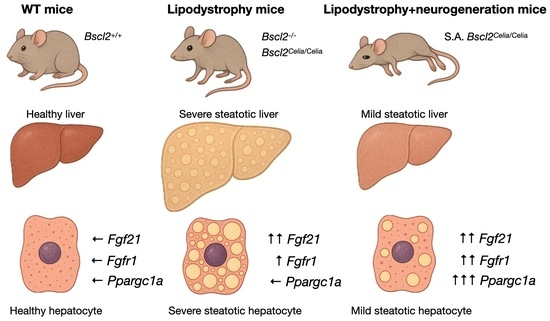
The livers of wild-type and heterozygous mice, Bscl2+/Celia and Bscl2+/−, appeared normal in terms of colour and size. In contrast, homozygous mice, Bscl2Celia/Celia and Bscl2−/− presented with an enlarged liver and hepatic pallor (Figure 1A), in some cases accounting for up to 25% of the animal’s body weight, which was significantly greater compared to wild-type, heterozygous, and severely affected animals (Figure 1B). The severely affected mice (S.A.) did not exhibit liver pallor, but they did show a greater liver weight compared to wild-type and heterozygous animals. However, no significant differences were found between the S.A. Bscl2Celia/Celia and Bscl2+/Celia animals, although the S.A. Bscl2Celia/Celia mice appeared to show a higher liver weight compared to the S.A. Bscl2+/Celia mice (Figure 1B). Furthermore, these S.A. Bscl2Celia/Celia mice had much smaller liver sizes compared to the non-S.A. homozygous animals (Bscl2Celia/Celia and Bscl2−/−), more closely resembling the liver characteristics of non-S.A. heterozygous (Bscl2+/Celia and Bscl2+/−) or wild-type mice. No differences in liver characteristics were found between sexes or between the knock-in and knock-out mouse models.

2.2. Histopathological Description of the Liver

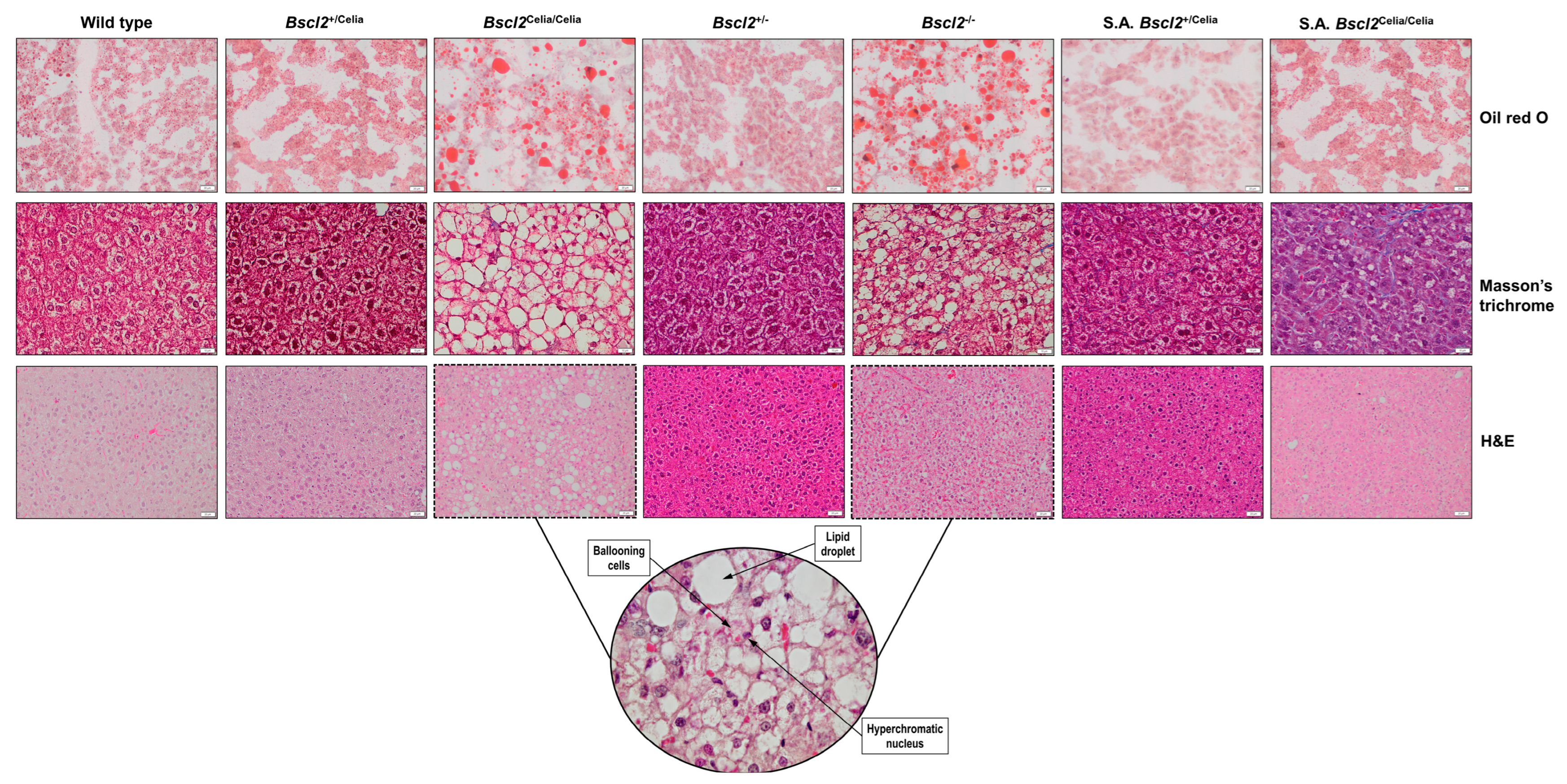
The liver histology of wild-type and heterozygous mice, Bscl2+/Celia and Bscl2+/−, was found to be normal. While the presence of minimal lobular infiltrates was observed in some cases, this was considered a non-specific finding that, in the absence of steatosis and ballooning degeneration, had no diagnostic implications (Figure 2).
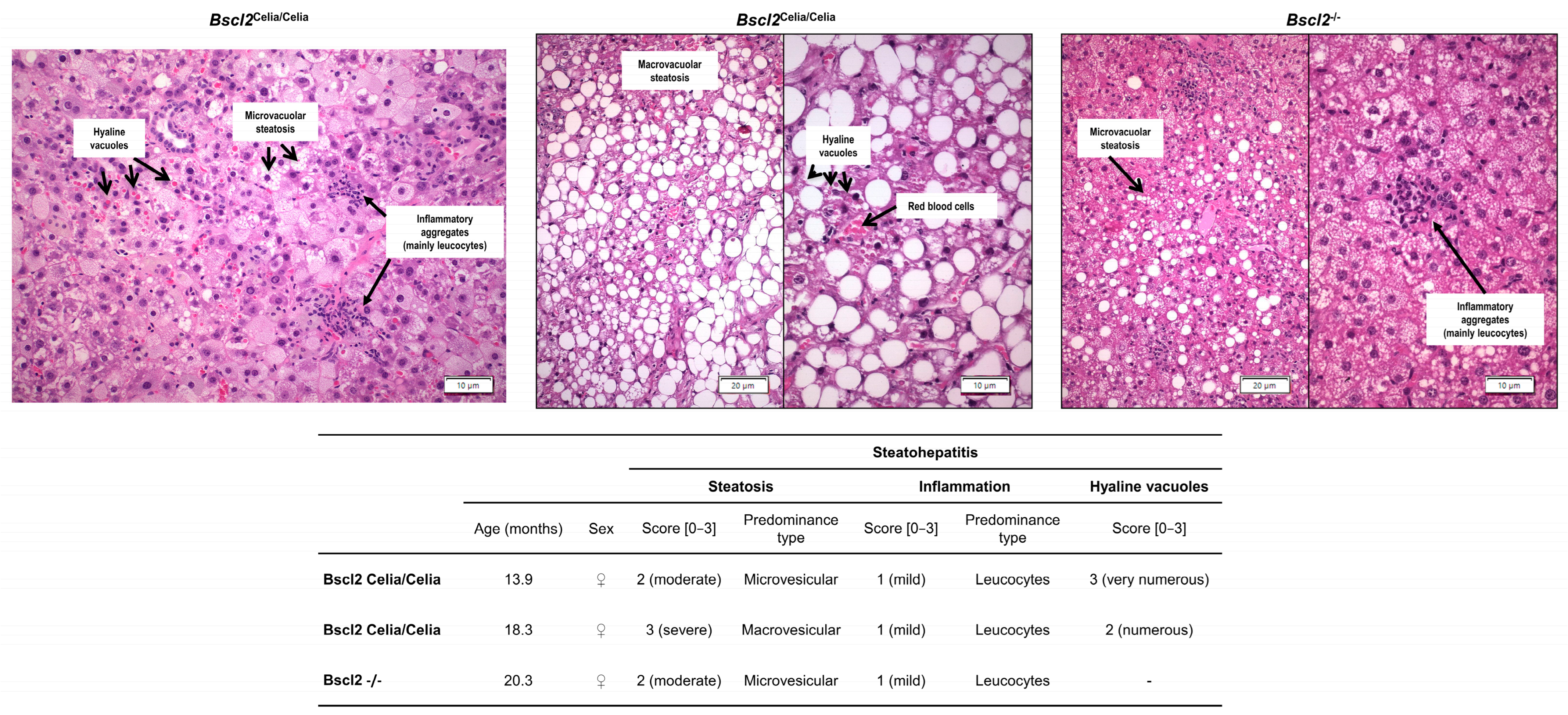
In contrast, the liver histology of homozygous mice, Bscl2Celia/Celia and Bscl2−/−, revealed the presence of hepatic steatosis as early as 3 months of age, which persisted as a consistent finding from 6 months onwards (Figure 2). This ectopic fat deposition (as shown by Oil red O staining in Figure 2) exhibited a mixed pathological pattern, comprising both macrovesicular steatosis, characterized by large lipid vacuoles that displaced the nucleus to the periphery, and microvesicular steatosis, characterized by small lipid droplets filling the cytoplasm without nuclear displacement (Figure 2 and Figure 3). However, the steatosis was predominantly macrovesicular, accompanied by the presence of ballooning cells with pale, feathery cytoplasms and small, hyperchromatic nuclei (as shown by H&E 10 µm staining in Figure 2).
Foci of lobular inflammation, composed predominantly of mononuclear cells, were also observed with some frequency (Figure 3). The histopathological analysis of Bscl2Celia/Celia mice further revealed the presence of intracytoplasmic hyaline bodies (IHBs), round or oval structures with a homogeneous, eosinophilic content, and a surrounding halo, indicative of cellular damage (Figure 3). These IHBs were not detected in the Bscl2−/− mice. Additionally, some cases showed a striking chronic perivascular infiltrate.
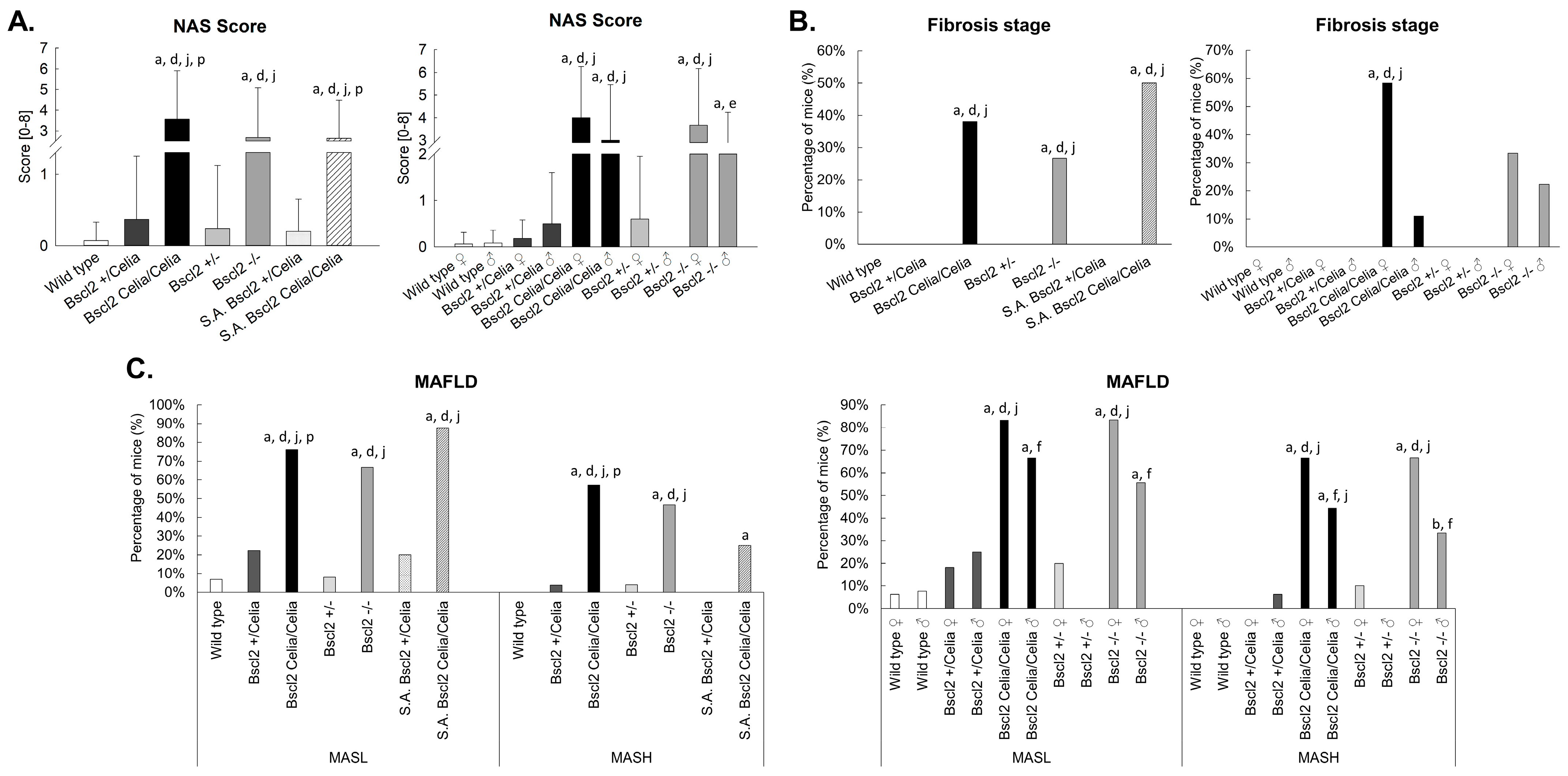
These histological characteristics were collectively grouped and evaluated using the NAFLD activity score (NAS) system to assess MASLD. Following these criteria, homozygous animals, Bscl2Celia/Celia and Bscl2−/−, demonstrated a significantly higher total score for MASLD compared to wild-type and heterozygous mice, Bscl2+/Celia and Bscl2+/− (Figure 4A). Specifically, the percentage of homozygous animals presenting both MASL (67–76%) and MASH (47–57%) was higher compared to wild-type and heterozygous mice (Figure 4C). Notably, the Bscl2Celia/Celia mice had a higher NAS score, and the percentage of animals with MASL and MASH was also higher compared to S.A. Bscl2+/Celia mice, a finding not replicated in Bscl2−/− mice. Moreover, fibrosis status analysis indicated that 27–38% of homozygous mice with marked active liver damage also developed mild pericellular fibrosis (as shown by Masson’s trichrome staining in Figure 2 and Figure 4B). No differences were observed between sexes, although in the case of homozygous Bscl2−/− and Bscl2Celia/Celia mice, females tended to have slightly higher hepatic involvement than males.
Furthermore, the S.A. Bscl2Celia/Celia mice presented mild hepatic steatosis (Figure 2). Similarly to the non-S.A. Bscl2Celia/Celia mice, the 50% of S.A. Bscl2Celia/Celia mice exhibited mild pericellular fibrosis (Figure 4B) with a higher total NAS score (Figure 4A) compared to wild-type, heterozygous (Bscl2+/Celia and Bscl2+/−), and S.A. Bscl2+/Celia mice. Additionally, 88% of S.A. Bscl2Celia/Celia mice showed MASL, of which 25% developed MASH, whereas only 20% of S.A. Bscl2+/Celia mice showed signs of MASL, never progressing to steatohepatitis (Figure 4C).
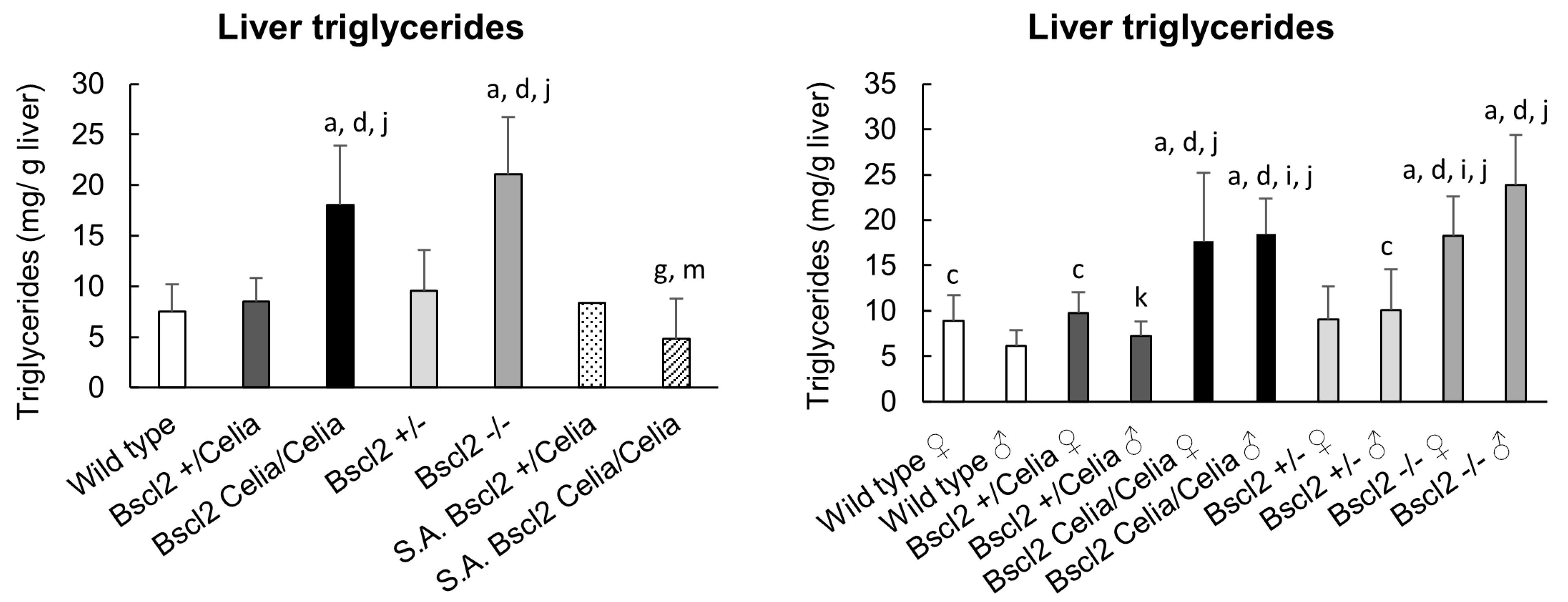
The analysis of triglyceride concentration in the liver of the homozygous animals, Bscl2Celia/Celia and Bscl2−/−, showed a significant accumulation of triglycerides (Figure 5). This finding is consistent with the previously described presence of a fatty liver and a marked hepatic steatosis in these animals. In contrast, despite the presence of mild steatosis in the severely affected mice, the concentration of triglycerides in their liver was similar to that of wild-type and heterozygous mice. No obvious differences were found between males and females. However, a higher concentration of triglycerides was observed in the liver of male Bscl2−/− mice compared to male Bscl2Celia/Celia mice (Figure 5).

2.3. Gene Expression in Hepatic Tissue

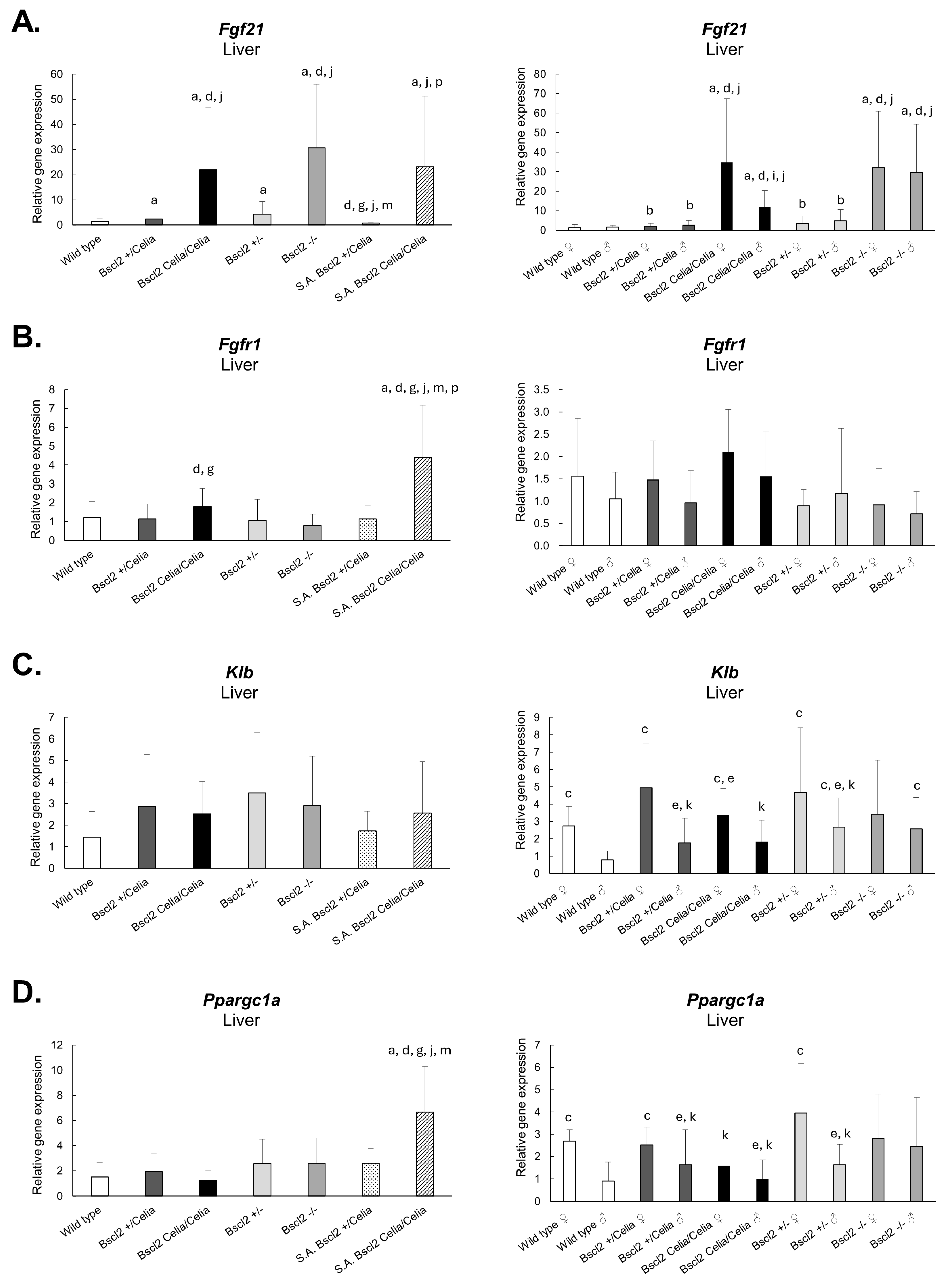
The hepatic expression of Fgf21, a protective cytokine against glucolipid metabolic disorders, as well as the expression of genes related to this FGF21 complex, such as Fgfr1, Klb, and Ppargc1a, were assessed (Figure 6; see Supplementary Table S3).
Non-S.A. heterozygous, Bscl2+/Celia and Bscl2+/− animals exhibited a 60–187% significative increase in the Fgf21 gene compared to wild-type animals. However, the increase in Fgf21 expression was significantly higher in non-S.A. homozygous animals, both Bscl2Celia/Celia and Bscl2−/− (1376–1953% compared to wild-type animals). Thus, non-S.A. Bscl2Celia/Celia mice showed an increase of 820% and 414% compared to Bscl2+/Celia and Bscl2+/− mice, while this increase in Bscl2−/− animals was 1179% and 614%, respectively. Likewise, the expression of Fgfr1 was found to be elevated in non-S.A. Bscl2Celia/Celia animals, showing a significative increase of 58% and 70% compared to Bscl2+/Celia and Bscl2+/− mice.
Furthermore, an increase in Fgf21 expression compared to wild-type and heterozygous Bscl2+/Celia and Bscl2+/− animals was evident in S.A. Bscl2Celia/Celia animals, at 1451%, 867%, and 440%, respectively. Moreover, S.A. Bscl2Celia/Celia animals showed a 3177% increase in Fgf21 compared to S.A. Bscl2+/Celia animals. No significant differences were found between severely affected and non-severely affected Bscl2Celia/Celia mice. However, differences were observed among Bscl2+/Celia mice, with severely affected animals showing a 70% decrease in Fgf21 compared to those non-severely affected. Additionally, both Fgfr1 and Ppargc1a were found to be significantly increased (approximately 1.5 to 4-fold) in S.A. Bscl2Celia/Celia compared to wild-type and non-S.A. homozygous and heterozygous mice. There was also an increase in expression in S.A. Bscl2Celia/Celia compared to S.A. Bscl2+/Celia, with a 285% increase in Fgfr1 and a 156% increase in Ppargc1a.
No statistically significant differences in the expression of Klb were found between genotypes.
Sex-based analysis revealed that the Fgf21 increase observed in heterozygous animals compared to wild-type ones was actually a difference relative to wild-type females. Additionally, Bscl2−/− male mice exhibited a greater increase in Fgf21 compared to Bscl2Celia/Celia males. However, Fgfr1 did not show significant differences between males and females. On the other hand, when considering both sexes separately, a greater increase in the expression of both Klb and Ppargc1a was observed in females compared to males.

3. Discussion

This study presents a detailed hepatic assessment of a humanized knock-in mouse model, which partially recapitulates PELD, previously generated by our group [20], as well as a murine model of CGL2, achieved for the first time by ubiquitous disruption of seipin via replacement of the start codon ATG with an inverted cassette. We confirm that the ectopic deposition of fat in the liver of the non-severely affected Bscl2Celia/Celia and Bscl2−/− mice leads to a pronounced hepatomegaly, with a mixed hepatic steatosis predominantly of the macrovesicular type, followed by the development of steatohepatitis and fibrosis. There is no literature on hepatic histopathology in PELD, which is limited in CGL2 and, more broadly, in any form of lipodystrophy. Some studies in CGL2 patients have reported the presence of advanced portal fibrosis [21], while others have described macrovesicular steatosis and advanced fibrosis that could progress to cirrhosis [4]. Javor et al. [3] showed a pattern of liver damage similar to that present in the current non-severely affected homozygous animals, with panacinar macrovesicular steatosis and ballooning degeneration of hepatocytes. To date, the histological analysis of the liver in lipodystrophic mice deficient in seipin has been limited to the study of isolated samples in mice at 8 weeks [22], 3 months [15,23], and 4 months [10] of age.
According to the authors of the previous studies, the SKO mice developed hepatic steatosis but not steatohepatitis or fibrosis. These findings contrast with the natural history of the disease in humans, where the development of MASH and fibrosis is a frequent and early occurrence. However, it should be noted that MASLD is a progressively evolving condition. This raises the possibility that the duration of disease progression in these earlier studies may not have been sufficient for the full spectrum of liver pathology to manifest. In support of this, Liu et al. [24] observed in 10-month-old Ad-B2(−/−) mice the presence of steatosis without signs of inflammation. On the other hand, in 2018, Liao et al. [25] described, for the first time, the presence of steatohepatitis in seipin-deficient and apolipoprotein E null (Seipin−/−apoE−/−) mice at 9 months of age. This discrepancy with previous studies could be explained in two ways. Firstly, the progression time in the Liao et al. [25] study was sufficient for the development of inflammation and the full spectrum of MASLD to occur. Secondly, both in this study and the study by Liu et al. [24], we must consider whether these mice are truly comparable to the traditional SKO models. Therefore, an alternative hypothesis would be to consider that, in Liao et al. [25]’s study, two factors contribute to the development of steatohepatitis: the deficiency of seipin and, additionally, the deficiency of apoE.
It should also be noted that the non-severely affected homozygous mice in the current study only developed stage 1a fibrosis, which is mild or perisinusoidal, detectable only by Masson’s trichrome staining. Therefore, we cannot rule out the possibility that previous studies overlooked this finding, as none of them confirmed the use of this specialized staining technique [10,22,23,26]. On the other hand, in the current study, hepatic steatosis was evident from three months of age, but it only became a constant finding from six months in the homozygous animals. This raises the possibility that the progression time in the Chen et al. [26] study may have been insufficient to observe the full spectrum of liver pathology. Furthermore, McIlroy et al. [9] described that Ad-B2(−/−) mice, as well as Ad-B2(−/−) mice with additional ablation of hepatic Bscl2, did not develop hepatic steatosis [16]. Both the Ad-B2(−/−) mice (studied up to 16 weeks of life) and the Ad-B2(−/−) mice with additional hepatic Bscl2 ablation (studied up to 32 weeks) showed discreet but significantly higher fat deposition and adipokine secretion capacity compared to SKO models.
According to the findings of McIlroy et al. [9], small amounts of metabolically active adipose tissue would be sufficient to prevent the development of metabolic abnormalities in SKO models. Based on this and on the fact that liver-specific SKO mice did not develop steatosis, the hepatic steatosis observed in the current study may not be directly related to the loss of a liver-specific seipin function but rather with the reduced amount of metabolically active adipose tissue [9,16], which was lower in the homozygous animals, potentially explaining the observed histopathological changes in the liver. On the other hand, Tian et al. [27], based on their observations on Drosophila, deficient in seipin, suggested that in tissues other than adipose, this protein promotes lipid deposition and therefore plays a tissue-specific role. The central region of seipin is proposed to control lipid homeostasis in non-adipocyte cells, being responsible for restricting lipogenesis and lipid accumulation in hepatocytes, as well as promoting adipogenesis in case of excess energy supply [13]. Therefore, the loss of seipin at the hepatic level could worsen the metabolic status in the absence or dysfunction of adipose tissue [9]. This suggests that seipin may have distinct, tissue-specific functions in regulating lipid metabolism and homeostasis, which could contribute to the complex metabolic phenotypes observed in seipin-deficient animal models and human seipinopathies.
In addition to this proposal is the observation of the FGF21 factor. In 2016, Miehle et al. [17] demonstrated for the first time a significantly higher concentration of circulating FGF21 in patients with non-HIV lipodystrophy. That same year, Dollet et al. [18] observed a marked overexpression of Fgf21 in adipose tissue of Bscl2−/− lipodystrophic mice at four weeks of age, which decreased at twelve weeks. In these mice, treatment with FGF21 appears to promote the maintenance of mature adipocytes by exerting an anti-stress cellular effect, improving metabolic profile. Furthermore, Softic et al. [19] noted that fat-specific insulin receptor knock-out mice (F-IRKO) exhibited increased hepatic expression of Fgf21. Since the accumulated fat in the livers of lipodystrophic mice is directed towards ketogenesis, the increase in this metabolic process would result from the higher hepatic expression of Fgf21 [19].
The elevation of Fgf21 levels observed in our homozygous Bscl2Celia/Celia and Bscl2−/− mice, as well as in those severely affected homozygous mice (S.A. Bscl2Celia/Celia), is consistent with previous studies and could be justified in multiple ways, although its pathogenesis remains uncertain. Upregulation of FGF21 could be considered a compensatory mechanism, yet it is insufficient to alleviate the metabolic consequences of lipodystrophy. This also applies to the increase in FGF21 in MASLD related to metabolic syndrome. Another possibility, related to circulating microRNAs (miRNAs) derived from adipose tissue, is that inhibiting gene expression acts as a posttranscriptional regulator. Thomou et al. [28], in 2017, proposed Fgf21 as a potential target of miRNAs contained in exosomes from brown adipose tissue. They demonstrated that both hepatic expression of Fgf21 and circulating FGF21 levels are decreased by the action of these microRNAs (primarily miR99a, miR99b, and miR100). Accordingly, the lower amount of brown adipose tissue [8] and the alteration of its function [29] in seipin-deficient mice would explain the increase in hepatic expression of Fgf21.
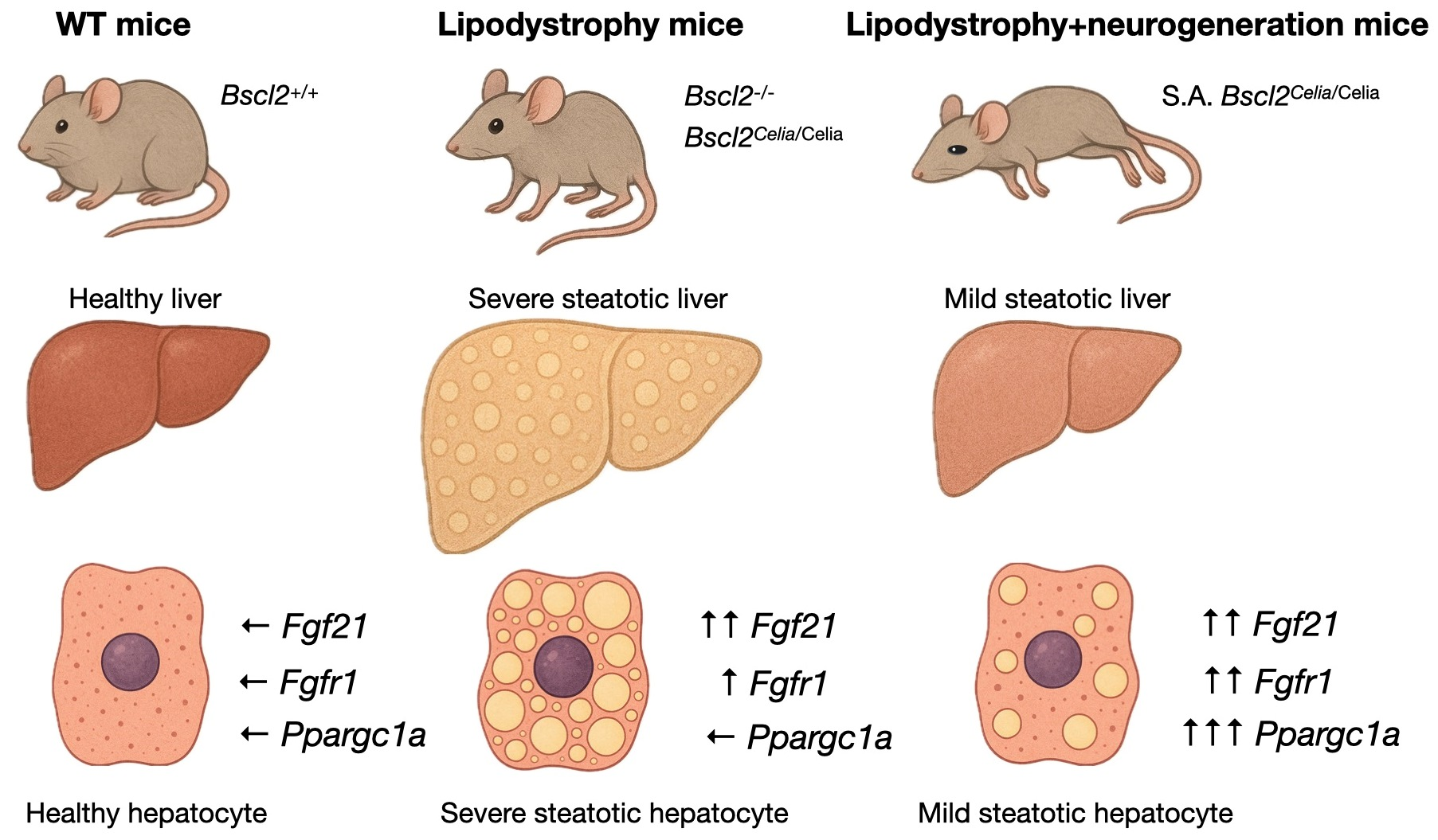
Furthermore, for FGF21 to exert its biological effects, it must interact with cell-surface FGF receptors, mainly FGFR1. Another requirement is the presence of KLB, an auxiliary protein indispensable for FGF21 to interact with FGFRs and trigger the intracellular signalling cascade that mediates biological effects of FGF21 [30,31,32,33]. However, in our study, Klb showed no differences in expression, while Fgfr1 showed an increase in both S.A. Bscl2Celia/Celia and non-S.A. Bscl2Celia/Celia animals, but much more in the first one. This suggests a complex regulatory mechanism in which the increase in FGFR1 could be compensating for the lack of changes in KLB. Additionally, the interaction between FGF21 and PPARGC1A pathways is crucial for understanding metabolic disorders. PPARGC1A coactivates various transcription factors that control cellular energy metabolism through direct protein–protein interactions. Although PPARGC1A is expressed at relatively low levels in the adult liver under normal conditions, its expression is markedly activated during fasting and diabetes, consistent with its role as an activator of genes involved in gluconeogenesis and fatty acid oxidation [34,35]. In our study, Ppargc1a was found to be increased in S.A. Bscl2Celia/Celia animals, reinforcing its role in the regulation of metabolic responses.
Beyond its hepatic actions, FGF21 also participates in immunometabolic regulation through the liver–spleen axis. β-Klotho is expressed in splenic resident macrophages and in RAW264.7 cells, where FGF21 has been shown to inhibit NF-κB activation, reduce oxi-dative stress, increase Nrf2 levels, and induce HO-1 expression [36]. Although spleen-derived macrophage responses were not evaluated in this study, these findings suggest that part of the systemic adaptation to seipin deficiency may involve FGF21-mediated modulation of inflammatory pathways beyond the liver, which warrants investigation in future work.
A limitation of the present study is that gene expression was not complemented by protein-level analysis. While the observed mRNA changes in Fgfr1 and Ppargc1a were above the 2-fold threshold generally considered biologically meaningful, we acknowledge that transcriptional data alone cannot confirm functional consequences. Future studies will include Western blot and immunohistochemical analyses to validate the protein expression and spatial distribution of FGF21 signalling components in hepatic tissue.
One surprising finding was that S.A. Bscl2Celia/Celia mice had only mild steatosis, with a quite normal liver weight. Although their food uptake was not quantified, given their severe neurological condition, the most parsimonious explanation would be that their food consumption was severely reduced. This would likely explain their lower liver weight, as well as the improvement in hepatic steatosis. In this regard, Chen et al. [11] demonstrated that prolonged fasting in SKO mice improved hepatic steatosis. This suggests that the reduced food intake in the severely affected Bscl2Celia/Celia mice may have played a protective role against the development of more severe liver pathology. In addition to reduced food intake, the elevated expression of FGFR1 and PPARGC1A genes could also help explain, at least in part, the reduced hepatic involvement of these animals. PPARGC1A overexpression in hepatocytes enhances mitochondrial function and lipid oxidation, thereby reducing triglyceride accumulation, as observed in this study, and acting as a protective factor against steatosis [37,38].
Taken together, these findings highlight the complex interplay between seipin deficiency, adipose tissue dysfunction, and liver pathology. The observed increase in Fgf21 levels in homozygous Bscl2Celia/Celia and Bscl2−/− mice, particularly in those severely affected, suggests the involvement of multiple potential mechanisms. The intricate regulatory network involving FGFR1 and KLB expression underscores the complexity of FGF21 signalling. The moderate but consistent upregulation of Fgfr1 and Ppargc1a observed in mice with less hepatic involvement supports the hypothesis that these genes may participate in adaptive metabolic pathways that mitigate steatosis. Whether these findings are a consequence of lower caloric intake is something that will need to be clarified in the future. Additionally, the influence of circulating microRNAs and the upregulation of PPARGC1A offer promising avenues for further understanding and therapeutic intervention in metabolic disorders. Moreover, while murine models exhibit prominent hepatic triglyceride accumulation, the absence of cirrhosis in our study and others suggest differences in disease progression and lipotoxicity of hepatocytes between mice and humans.
In contrast, the non-severely affected homozygous animals (both knock-in and knock-out) showed a high accumulation of triglycerides in the liver, as has been reported by other authors [9,15,22,23,39]. The precise mechanisms underlying these findings are not yet well understood, but it is evident that the liver of mice may differ from that of humans in terms of lipotoxicity in hepatocytes. It is possible that the mouse liver has a greater “buffer” capacity when dealing with the spillover of fat that cannot be adequately stored, which may contribute to the differences observed in the triglyceride profiles compared to the human condition.
It is also interesting to note that, despite the long follow-up of hepatic evolution in both murine models, up to 24 months (twice as long as in most previous studies), no evidence of cirrhosis was observed. This incomplete picture of MASDL is common to all murine lipodystrophic models studied to date [40]. In contrast, some non-lipoatrophic murine models do present cirrhosis [41,42], but in these cases, the liver damage was chemically induced (by carbon tetrachloride (CCl4) [43], streptozotocin (STZ) [44], or diethylnitrosamine (DEN) [45]) in combination with appropriate dietary measures. The pathophysiological mechanisms employed in these models do not necessarily match the development of MASDL in humans.
Clinical evidence suggests that gender differences frequently exist in genetic forms of lipodystrophy, such as CGL2 or familial partial lipodystrophy (Dunnigan type), where female patients often exhibit a more severe physical and metabolic phenotype than male patients [46,47,48]. However, in both the current knock-in and knock-out mouse models, clear sexual dimorphism was not found. Liao et al. [25] suggested that seipin deficiency led to a similar severity of adipose loss in both female and male apoE−/− mice, although females showed greater resistance to developing lipodystrophy-related metabolic consequences. These inconclusive data, inconsistent with the findings in clinical studies, were also reported by Chen. et al. [26] for their SKO murine model, where males were more affected than females. However, McIlroy et al. [49] found no major differences between genders in terms of metabolic dysfunction for the Ad-B2(−/−) mice, which was also the case in the current murine models.

4. Materials and Methods

4.1. Animals and Experimental Design

All animal experiments were conducted in accordance with the European Union Directive 2010/63/EU (Directive 2010/63/EU of the European Parliament and of the Council of 22 September 2010 on the protection of animals used for scientific purposes, L 276, 20.10.2010, pp. 33–79, EUR-Lex 32010L0063, European Union, 2010) and Spanish Royal Decree 53/2013 (Royal Decree 53/2013, of February 1, establishing the basic rules applicable to the protection of animals used for experimental and other scientific purposes, including teaching, BOE-A-2013-1337, Madrid, Spain, 2013) for the protection of animals used for scientific purposes. Experimental protocols were reviewed and approved by the Ethics Committee for Animal Experimentation of the Xunta de Galicia (approval numbers 15010/17/004, 15012/2021/014, and 15012/2024/011) and by the University of Santiago de Compostela. All procedures complied with the ARRIVE 2.0 guidelines for transparent reporting of animal research [50].

4.1.1. Generation of Bscl2Celia/Celia and Bscl2−/− Mice

For both murine models, knock-out (Bscl2−/−) and knock-in (Bscl2Celia/Celia), the ATG start codon in exon 2 of the Bscl2 gene was replaced with a reversely positioned cassette (LoxP-Lox2272-reverse His tag-Human BSCL2 CDS without exon7-reverse LoxP-Neo cassette-reverse Lox2272) in such a way that in the targeted allele the human transgene (3′-5′) was not transcribed before Cre mediated recombination, thus obtaining the knock-out murine model for seipin (Bscl2−/−). Upon the introduction of Cre recombinase, the inversion of the cassette facilitated the expression of His-tagged, aberrant human seipin, leading to the development of the knock-in murine model (Bscl2Celia/Celia) as described previously by our group [20].
The knock-in mice for the Celia seipin transgene that developed severe neurological alterations throughout their lives, as described by our group previously [20], were considered severely affected (S.A.) animals.

4.1.2. Maintenance and Care of Animals

The animals were housed in ventilated racks and cages under specific pathogen-free conditions. Room temperature (22 °C ± 1 °C), humidity (55% ± 2%), and light/dark rhythm (12:12) were all controlled. All mice had ad libitum access to water and standard feed (Teklad Global 18% Protein Rodent Diet, Envigo, Inotiv, Indianapolis, IN, USA). Mice were sacrificed at ages ranging from 1.7 to 14.7 months, depending on the specific experiment; detailed information is provided in the Supplementary Tables.

4.1.3. Genotyping Protocol

Isolation of genomic DNA was carried out using E.Z.N.A Tissue DNA Kit (#cat D3396-02, Omega Bio-Tek, Norcross, GA, USA). Eight specific primers were designed with the Primer3Plus software (https://www.primer3plus.com/ v.3.3.0) (last accessed on 13 December 2025)). For the seipin knock-out model genotyping strategy, three primers were combined which allowed us to distinguish between wild-type, heterozygous, and homozygous animals in one design, while for the Celia seipin knock-in model genotyping strategy, the combination of four different designs was necessary. PCR conditions and primers are available upon request. Samples were analyzed on 1% agarose gel.

4.2. Histology

4.2.1. Tissue Processing

The tissues were fixed in 10% m/v neutral buffered formalin (cat# 05-K01022, Bio-Optica, Milano, IT, USA) for 24 h at room temperature and subsequently paraffin-embedded using a standard procedure [51]. Liver samples were sectioned at a thickness of 4 µm and stained with hematoxylin and eosin (H&E) (cat# 05-06004/L, Bio-Optica, Milano, IT, USA) or Masson’s trichrome.
For lipid deposition analysis in liver using Oil red O staining, frozen liver tissue samples were cryosectioned at a thickness of 10 µm. The sections were then fixed with 10% m/v neutral buffered formalin (cat# 05-K01022, Bio-Optica, Milano, IT, USA) for 2 h. Next, the sections were stained with Oil red O colour solution (cat# 102419, Merck-Millipore, Burlington, MA, USA). Finally, the stained sections were mounted in an aqueous mounting medium (cat# 05-1740, Bio-Optica, Milano, IT, USA).

4.2.2. Imaging

The samples were observed using an Olympus BX51 microscope (Olympus, Tokyo, Japan) and captured with an Olympus DP72 digital camera. The images were acquired using the cellSens v.4.4.1 software from Olympus (Tokyo, Japan, https://www.olympus-lifescience.com/en/software/cellsens/#!cms[focus]=cmsContent6016 (last accessed on 13 December 2025)).

4.3. Total Non-Alcoholic Fatty Liver Disease Activity Score

The liver sections were scored blindly by two experienced pathologists using the Non-alcoholic Steatohepatitis Clinical Research Network (NASH CRN) scoring system [52]. The non-alcoholic fatty liver disease (NAFLD) activity score (NAS) ranged from 0 to 8, which was calculated as the sum of individual scores for steatosis (0–3), lobular inflammation (0–3), and hepatocyte ballooning degeneration (0–2). Moreover, the presence or absence of non-alcoholic steatohepatitis (NASH), currently known as MASLD [6], was assessed using a NAS value of ≥4 as a criterion. Non-alcoholic fatty liver (NAFL), now renamed as metabolic dysfunction-associated steatotic liver (MASL) [6], was identified if a value of ≥1 was present. Fibrosis evaluation was conducted following NASH CRN criteria, with 0 indicating the absence of fibrosis and 4 representing cirrhosis.

4.4. Triglyceride’s Analysis

Approximately 100 mg of liver tissue (wet weight) was homogenized in 1 mL of 2:1 (v/v) chloroform/methanol solution at 4 °C. Each liver sample was processed in duplicate. The homogenates were agitated overnight (12 rpm, 4 °C). Subsequently, 300 µL of milliQ water was added, and the samples were centrifuged (8600× g, 20 min, RT). The lower organic layer was collected and allowed to evaporate overnight at RT. The lipid pellets were resuspended in 900 µL (for wild-type and heterozygous samples) or 1400 µL (for homozygous samples, diluted 1:2) of chloroform [53]. Aliquots of 30 µL from each sample were evaporated (37 °C, 30–40 min). Triglyceride levels were determined using an enzymatic–colorimetric assay with the Spinreact GPO-POD kit (cat# 1001314, Spinreact, Girona, Spain). Measurements were obtained using a Multiskan™ GO Microplate Spectrophotometer (Thermo Fisher Scientific, Waltham, MA, USA).

4.5. RNA Isolation

Total RNA was extracted from liver using a single-step method of RNA isolation involving acid guanidinium thiocyanate–phenol–chloroform extraction and the ReliaPrepTM RNA Tissue Miniprep System kit (cat# Z6112, Promega, Fitchburg, WI, USA) [54]. RNA was reverse-transcribed using an M-MLV Reverse transcriptase kit (cat# 10338842, Invitrogen, Carlsbad, CA, USA), as previously described [55].

4.6. Quantitative Real-Time PCR Analysis

Specific primers and probes designed by the Universal ProbeLibrary (Roche Diagnostics, Sant Cugat del Valles, Spain) were used in a Light Cycler 2.0 (Roche Diagnostics) to determine the expression of the Fgf21, Fgfr1, Ppargc1a, and Klb genes (Table 1). Real-time qPCR analyses were performed in duplicate. Real-time PCR conditions are available upon request. Results were normalized to the Rn18S gene using the 2−ΔΔ CT method [56].

4.7. Statistical Analysis

Because data distribution did not meet the assumption of normality in all variables, and sample sizes per sex and genotype were relatively small (n = 4–6), non-parametric tests were applied. Overall group differences were evaluated using the Kruskal–Wallis test, and pairwise Mann–Whitney U tests were performed only when the Kruskal–Wallis test indicated significance (p < 0.05). Data are presented as mean ± SD to facilitate comparison among multiple experimental groups, a common descriptive approach in small-sample biological studies. Bonferroni correction was not applied, as this conservative adjustment markedly increases the probability of type II errors (false negatives) and may obscure biologically meaningful trends. Instead, results were interpreted with caution, considering both effect size and biological plausibility. All statistical analyses were performed using IBM SPSS Statistics (release 25.0; SPSS, Chicago, IL, USA).

5. Conclusions

In conclusion, our study provides a detailed evaluation of hepatic pathology in mouse models of seipinopathies, shedding light on the progression of liver disease in these conditions. The observed hepatomegaly, hepatic steatosis, steatohepatitis, and fibrosis in non-S.A. homozygous, Bscl2Celia/Celia, and Bscl2−/− mice align with clinical manifestations reported in patients with lipodystrophies, including CGL2. These results underscore the importance of comprehensive histopathological analysis to fully understand the spectrum of liver pathology associated with seipin deficiency. Our findings demonstrate that seipin loss leads to dysregulation of the FGF21 pathway, which likely reflects an adaptive response to metabolic stress rather than a primary pathogenic mechanism. The consistent upregulation of Fgf21, Fgfr1, and Ppargc1a in mice with limited hepatic involvement suggests their participation in protective metabolic adaptations.
Although protein-level validation remains to be performed, and the current murine models may not perfectly replicate human conditions, these results contribute valuable insight into the molecular mechanisms linking seipin dysfunction, lipid metabolism, and liver disease. They also represent significant advancements towards the development of preclinical tools for studying the pathogenesis and potential therapeutic interventions for seipinopathies, including Celia’s encephalopathy and congenital generalized lipodystrophy. Future studies integrating transcriptomic and proteomic data will further clarify the therapeutic potential of the FGF21 pathway in seipin-related disorders as continuous refinement and thorough characterization of these animal models will be pivotal in bridging the gap between murine and human manifestations of these rare genetic disorders.

Supplementary Materials

The following supporting information can be downloaded at: https://www.mdpi.com/article/10.3390/ijms262412037/s1.

Author Contributions

Conceptualization, S.S.-I. and D.A.-V.; investigation, S.S.-I., D.A.-V. and A.F.-P.; methodology, S.C.-G. and S.S.-I.; histological studies, A.S., L.G.-F. and H.L.-I.; molecular studies, S.C.-G. and L.R.-S.; supervision, S.S.-I.; writing: original draft, S.S.-I. and S.C.-G.; writing: review and editing, D.A.-V., S.C.-G., S.S.-I., A.F.-P., T.P.-M. and E.D.-L.; project administration, D.A.-V.; funding acquisition, D.A.-V. All authors have read and agreed to the published version of the manuscript.

Funding

This research was funded by the Instituto de Salud Carlos III, ISCIII (grant numbers PI18/01890 and PI22/00514) and the Fundación Mutua Madrileña (call 2015) and was co-funded by the European Union and an intramural grant from the Xunta de Galicia (grant numbers ED341b 2017/19 and ED431B 2020/37). At the time this study was carried out, S.S.-I. was awarded a Research Fellowship by the Asociación Internacional de Familiares y Afectados de Lipodistrofias (AELIP) and A.F.-P. was funded by a Juan Rodés research contract (JR23/00042) from the Instituto de Salud Carlos III (ISCIII), co-financed by the ERDF.

Institutional Review Board Statement

All animal work and procedures were approved by the institutional Ethics Committee of the Xunta de Galicia (15010/17/004 approval date: 19th February 2018, 15012/2021/014 approval date: 6th May 2021, and 15012/2024/011 approval date: 15th July 2024) and the University of Santiago and performed following the principles of laboratory animal care mandated by European Union Law (2010/63/UE) and the Spanish Government (RD 53/2013) on the protection of animals used for scientific purposes. All experimental procedures involving mice were performed in accordance with the ARRIVE 2.0 guidelines for the transparent reporting of animal research [50].

Informed Consent Statement

Not applicable.

Data Availability Statement

The original contributions presented in this study are included in the article/Supplementary Material. Further inquiries can be directed to the corresponding author.

Conflicts of Interest

D.A.-V. has received funding from Chiesi (Amryt Pharmaceuticals) and Regeneron Pharmaceuticals for scientific advice, travel, conference registration, and research grants. The rest of the authors declare no conflicts of interest.

Abbreviations

The following abbreviations are used in this manuscript:
CGL2Congenital generalized lipodystrophy type 2
FFAFree fatty acids
IHBsIntracytoplasmic hyaline bodies
MASLMetabolic dysfunction-associated steatotic liver
MASLDMetabolic dysfunction-associated steatotic liver disease
MASHMetabolic dysfunction-associated steatohepatitis
NAFLNon-alcoholic fatty liver
NAFLDNon-alcoholic fatty liver disease
NASNon-alcoholic fatty liver disease activity score
NASHNon-alcoholic steatohepatitis
PELDProgressive encephalopathy with or without lipodystrophy
RTRoom temperature
S.A.Severely affected
SKO Seipin knock-out mice

References

  1. Araujo-Vilar, D.; Santini, F. Diagnosis and treatment of lipodystrophy: A step-by-step approach. J. Endocrinol. Investig. 2019, 42, 62–73. [Google Scholar] [CrossRef]
  2. Guillen-Navarro, E.; Sanchez-Iglesias, S.; Domingo-Jimenez, R.; Victoria, B.; Ruiz-Riquelme, A.; Rabano, A.; Loidi, L.; Beiras, A.; Gonzalez-Mendez, B.; Ramos, A.; et al. A new seipin-associated neurodegenerative syndrome. J. Med. Genet. 2013, 50, 401–409. [Google Scholar] [CrossRef]
  3. Javor, E.D.; Ghany, M.G.; Cochran, E.K.; Oral, E.A.; DePaoli, A.M.; Premkumar, A.; Kleiner, D.E.; Gorden, P. Leptin reverses nonalcoholic steatohepatitis in patients with severe lipodystrophy. Hepatology 2005, 41, 753–760. [Google Scholar] [CrossRef]
  4. Ribeiro, A.; Brandao, J.R.; Cleto, E.; Santos, M.; Borges, T.; Santos Silva, E. Fatty Liver and Autoimmune Hepatitis: Two Forms of Liver Involvement in Lipodystrophies. GE Port. J. Gastroenterol. 2019, 26, 362–369. [Google Scholar] [CrossRef] [PubMed]
  5. Araújo-Vilar, D.; Iglesias, S.S.; Guillín-Amarelle, C.; Fernández-Pombo, A.; de Tudela Cánovas, N.E.P.; Tudela, J.C. Guía Práctica Para el Diagnóstico y Tratamiento de las Lipodistrofias Infrecuentes; AELIP: Totana, Spain, 2018. [Google Scholar]
  6. Rinella, M.E.; Lazarus, J.V.; Ratziu, V.; Francque, S.M.; Sanyal, A.J.; Kanwal, F.; Romero, D.; Abdelmalek, M.F.; Anstee, Q.M.; Arab, J.P.; et al. A multisociety Delphi consensus statement on new fatty liver disease nomenclature. J. Hepatol. 2023, 79, 1542–1556. [Google Scholar] [CrossRef] [PubMed]
  7. Safar Zadeh, E.; Lungu, A.O.; Cochran, E.K.; Brown, R.J.; Ghany, M.G.; Heller, T.; Kleiner, D.E.; Gorden, P. The liver diseases of lipodystrophy: The long-term effect of leptin treatment. J. Hepatol. 2013, 59, 131–137. [Google Scholar] [CrossRef]
  8. Dollet, L.; Magre, J.; Cariou, B.; Prieur, X. Function of seipin: New insights from Bscl2/seipin knockout mouse models. Biochimie 2014, 96, 166–172. [Google Scholar] [CrossRef]
  9. McIlroy, G.D.; Suchacki, K.; Roelofs, A.J.; Yang, W.; Fu, Y.; Bai, B.; Wallace, R.J.; De Bari, C.; Cawthorn, W.P.; Han, W.; et al. Adipose specific disruption of seipin causes early-onset generalised lipodystrophy and altered fuel utilisation without severe metabolic disease. Mol. Metab. 2018, 10, 55–65. [Google Scholar] [CrossRef]
  10. Prieur, X.; Dollet, L.; Takahashi, M.; Nemani, M.; Pillot, B.; Le May, C.; Mounier, C.; Takigawa-Imamura, H.; Zelenika, D.; Matsuda, F.; et al. Thiazolidinediones partially reverse the metabolic disturbances observed in Bscl2/seipin-deficient mice. Diabetologia 2013, 56, 1813–1825. [Google Scholar] [CrossRef] [PubMed]
  11. Chen, W.; Zhou, H.; Saha, P.; Li, L.; Chan, L. Molecular mechanisms underlying fasting modulated liver insulin sensitivity and metabolism in male lipodystrophic Bscl2/Seipin-deficient mice. Endocrinology 2014, 155, 4215–4225. [Google Scholar] [CrossRef]
  12. Lounis, M.A.; Lalonde, S.; Rial, S.A.; Bergeron, K.F.; Ralston, J.C.; Mutch, D.M.; Mounier, C. Hepatic BSCL2 (Seipin) Deficiency Disrupts Lipid Droplet Homeostasis and Increases Lipid Metabolism via SCD1 Activity. Lipids 2017, 52, 129–150. [Google Scholar] [CrossRef]
  13. Yang, W.; Thein, S.; Guo, X.; Xu, F.; Venkatesh, B.; Sugii, S.; Radda, G.K.; Han, W. Seipin differentially regulates lipogenesis and adipogenesis through a conserved core sequence and an evolutionarily acquired C-terminus. Biochem. J. 2013, 452, 37–44. [Google Scholar] [CrossRef]
  14. Ye, R.; Wang, Q.A.; Tao, C.; Vishvanath, L.; Shao, M.; McDonald, J.G.; Gupta, R.K.; Scherer, P.E. Impact of tamoxifen on adipocyte lineage tracing: Inducer of adipogenesis and prolonged nuclear translocation of Cre recombinase. Mol. Metab. 2015, 4, 771–778. [Google Scholar] [CrossRef] [PubMed]
  15. Gao, M.; Wang, M.; Guo, X.; Qiu, X.; Liu, L.; Liao, J.; Liu, J.; Lu, G.; Wang, Y.; Liu, G. Expression of seipin in adipose tissue rescues lipodystrophy, hepatic steatosis and insulin resistance in seipin null mice. Biochem. Biophys. Res. Commun. 2015, 460, 143–150. [Google Scholar] [CrossRef] [PubMed]
  16. McIlroy, G.D.; Mitchell, S.E.; Han, W.; Delibegovic, M.; Rochford, J.J. Ablation of Bscl2/seipin in hepatocytes does not cause metabolic dysfunction in congenital generalised lipodystrophy. Dis. Model. Mech. 2020, 13, dmm042655. [Google Scholar] [CrossRef]
  17. Miehle, K.; Ebert, T.; Kralisch, S.; Hoffmann, A.; Kratzsch, J.; Schlogl, H.; Stumvoll, M.; Fasshauer, M. Serum concentrations of fibroblast growth factor 21 are elevated in patients with congenital or acquired lipodystrophy. Cytokine 2016, 83, 239–244. [Google Scholar] [CrossRef] [PubMed]
  18. Dollet, L.; Levrel, C.; Coskun, T.; Le Lay, S.; Le May, C.; Ayer, A.; Venara, Q.; Adams, A.C.; Gimeno, R.E.; Magre, J.; et al. FGF21 Improves the Adipocyte Dysfunction Related to Seipin Deficiency. Diabetes 2016, 65, 3410–3417. [Google Scholar] [CrossRef]
  19. Softic, S.; Boucher, J.; Solheim, M.H.; Fujisaka, S.; Haering, M.F.; Homan, E.P.; Winnay, J.; Perez-Atayde, A.R.; Kahn, C.R. Lipodystrophy Due to Adipose Tissue-Specific Insulin Receptor Knockout Results in Progressive NAFLD. Diabetes 2016, 65, 2187–2200. [Google Scholar] [CrossRef]
  20. Cobelo-Gomez, S.; Sanchez-Iglesias, S.; Rabano, A.; Senra, A.; Aguiar, P.; Gomez-Lado, N.; Garcia-Varela, L.; Burgueno-Garcia, I.; Lampon-Fernandez, L.; Fernandez-Pombo, A.; et al. A murine model of BSCL2-associated Celia’s encephalopathy. Neurobiol. Dis. 2023, 187, 106300. [Google Scholar] [CrossRef]
  21. Gonzalo, M.M.; Estefania, C.V. Congenital Generalized Lipodystrophy Type 2 in a Patient from a High-Prevalence Area. J. Endocr. Soc. 2017, 1, 1012–1014. [Google Scholar] [CrossRef]
  22. Xu, P.; Wang, H.; Kayoumu, A.; Wang, M.; Huang, W.; Liu, G. Diet rich in Docosahexaenoic Acid/Eicosapentaenoic Acid robustly ameliorates hepatic steatosis and insulin resistance in seipin deficient lipodystrophy mice. Nutr. Metab. 2015, 12, 58. [Google Scholar] [CrossRef]
  23. Cui, X.; Wang, Y.; Tang, Y.; Liu, Y.; Zhao, L.; Deng, J.; Xu, G.; Peng, X.; Ju, S.; Liu, G.; et al. Seipin ablation in mice results in severe generalized lipodystrophy. Hum. Mol. Genet. 2011, 20, 3022–3030. [Google Scholar] [CrossRef]
  24. Liu, L.; Jiang, Q.; Wang, X.; Zhang, Y.; Lin, R.C.; Lam, S.M.; Shui, G.; Zhou, L.; Li, P.; Wang, Y.; et al. Adipose-specific knockout of SEIPIN/BSCL2 results in progressive lipodystrophy. Diabetes 2014, 63, 2320–2331. [Google Scholar] [CrossRef] [PubMed]
  25. Liao, J.; Liu, X.; Gao, M.; Wang, M.; Wang, Y.; Wang, F.; Huang, W.; Liu, G. Dyslipidemia, steatohepatitis and atherogenesis in lipodystrophic apoE deficient mice with Seipin deletion. Gene 2018, 648, 82–88. [Google Scholar] [CrossRef] [PubMed]
  26. Chen, W.; Chang, B.; Saha, P.; Hartig, S.M.; Li, L.; Reddy, V.T.; Yang, Y.; Yechoor, V.; Mancini, M.A.; Chan, L. Berardinelli-seip congenital lipodystrophy 2/seipin is a cell-autonomous regulator of lipolysis essential for adipocyte differentiation. Mol. Cell Biol. 2012, 32, 1099–1111. [Google Scholar] [CrossRef] [PubMed]
  27. Tian, Y.; Bi, J.; Shui, G.; Liu, Z.; Xiang, Y.; Liu, Y.; Wenk, M.R.; Yang, H.; Huang, X. Tissue-autonomous function of Drosophila seipin in preventing ectopic lipid droplet formation. PLoS Genet. 2011, 7, e1001364. [Google Scholar] [CrossRef]
  28. Thomou, T.; Mori, M.A.; Dreyfuss, J.M.; Konishi, M.; Sakaguchi, M.; Wolfrum, C.; Rao, T.N.; Winnay, J.N.; Garcia-Martin, R.; Grinspoon, S.K.; et al. Adipose-derived circulating miRNAs regulate gene expression in other tissues. Nature 2017, 542, 450–455. [Google Scholar] [CrossRef]
  29. Zhou, H.; Lei, X.; Benson, T.; Mintz, J.; Xu, X.; Harris, R.B.; Weintraub, N.L.; Wang, X.; Chen, W. Berardinelli-Seip congenital lipodystrophy 2 regulates adipocyte lipolysis, browning, and energy balance in adult animals. J. Lipid Res. 2015, 56, 1912–1925. [Google Scholar] [CrossRef]
  30. Moure, R.; Cairo, M.; Moron-Ros, S.; Quesada-Lopez, T.; Campderros, L.; Cereijo, R.; Hernaez, A.; Villarroya, F.; Giralt, M. Levels of beta-klotho determine the thermogenic responsiveness of adipose tissues: Involvement of the autocrine action of FGF21. Am. J. Physiol. Endocrinol. Metab. 2021, 320, E822–E834. [Google Scholar] [CrossRef]
  31. Adams, A.C.; Cheng, C.C.; Coskun, T.; Kharitonenkov, A. FGF21 requires betaklotho to act in vivo. PLoS ONE 2012, 7, e49977. [Google Scholar] [CrossRef]
  32. Ding, X.; Boney-Montoya, J.; Owen, B.M.; Bookout, A.L.; Coate, K.C.; Mangelsdorf, D.J.; Kliewer, S.A. betaKlotho is required for fibroblast growth factor 21 effects on growth and metabolism. Cell Metab. 2012, 16, 387–393. [Google Scholar] [CrossRef] [PubMed]
  33. Kharitonenkov, A.; Dunbar, J.D.; Bina, H.A.; Bright, S.; Moyers, J.S.; Zhang, C.; Ding, L.; Micanovic, R.; Mehrbod, S.F.; Knierman, M.D.; et al. FGF-21/FGF-21 receptor interaction and activation is determined by betaKlotho. J. Cell Physiol. 2008, 215, 1–7. [Google Scholar] [CrossRef]
  34. Yoon, J.C.; Puigserver, P.; Chen, G.; Donovan, J.; Wu, Z.; Rhee, J.; Adelmant, G.; Stafford, J.; Kahn, C.R.; Granner, D.K.; et al. Control of hepatic gluconeogenesis through the transcriptional coactivator PGC-1. Nature 2001, 413, 131–138. [Google Scholar] [CrossRef] [PubMed]
  35. Finck, B.N.; Gropler, M.C.; Chen, Z.; Leone, T.C.; Croce, M.A.; Harris, T.E.; Lawrence, J.C., Jr.; Kelly, D.P. Lipin 1 is an inducible amplifier of the hepatic PGC-1alpha/PPARalpha regulatory pathway. Cell Metab. 2006, 4, 199–210. [Google Scholar] [CrossRef]
  36. Yu, Y.; He, J.; Li, S.; Song, L.; Guo, X.; Yao, W.; Zou, D.; Gao, X.; Liu, Y.; Bai, F.; et al. Fibroblast growth factor 21 (FGF21) inhibits macrophage-mediated inflammation by activating Nrf2 and suppressing the NF-κB signaling pathway. Int Immunopharmacol 2016, 38, 144–152. [Google Scholar] [CrossRef]
  37. Morris, E.M.; Meers, G.M.; Booth, F.W.; Fritsche, K.L.; Hardin, C.D.; Thyfault, J.P.; Ibdah, J.A. PGC-1alpha overexpression results in increased hepatic fatty acid oxidation with reduced triacylglycerol accumulation and secretion. Am. J. Physiol. Gastrointest. Liver Physiol. 2012, 303, G979–G992. [Google Scholar] [CrossRef]
  38. Cheng, C.F.; Ku, H.C.; Lin, H. PGC-1alpha as a Pivotal Factor in Lipid and Metabolic Regulation. Int. J. Mol. Sci. 2018, 19. [Google Scholar] [CrossRef] [PubMed]
  39. Wang, H.; Xu, P.F.; Li, J.Y.; Liu, X.J.; Wu, X.Y.; Xu, F.; Xie, B.C.; Huang, X.M.; Zhou, Z.H.; Kayoumu, A.; et al. Adipose tissue transplantation ameliorates lipodystrophy-associated metabolic disorders in seipin-deficient mice. Am. J. Physiol. Endocrinol. Metab. 2019, 316, E54–E62. [Google Scholar] [CrossRef]
  40. Li, Y.; Yang, X.; Peng, L.; Xia, Q.; Zhang, Y.; Huang, W.; Liu, T.; Jia, D. Role of Seipin in Human Diseases and Experimental Animal Models. Biomolecules 2022, 12, 840. [Google Scholar] [CrossRef]
  41. Fang, T.; Wang, H.; Pan, X.; Little, P.J.; Xu, S.; Weng, J. Mouse models of nonalcoholic fatty liver disease (NAFLD): Pathomechanisms and pharmacotherapies. Int. J. Biol. Sci. 2022, 18, 5681–5697. [Google Scholar] [CrossRef]
  42. Van Herck, M.A.; Vonghia, L.; Francque, S.M. Animal Models of Nonalcoholic Fatty Liver Disease-A Starter’s Guide. Nutrients 2017, 9, 1072. [Google Scholar] [CrossRef]
  43. Kubota, N.; Kado, S.; Kano, M.; Masuoka, N.; Nagata, Y.; Kobayashi, T.; Miyazaki, K.; Ishikawa, F. A high-fat diet and multiple administration of carbon tetrachloride induces liver injury and pathological features associated with non-alcoholic steatohepatitis in mice. Clin. Exp. Pharmacol. Physiol. 2013, 40, 422–430. [Google Scholar] [CrossRef]
  44. Oniciu, D.C.; Hashiguchi, T.; Shibazaki, Y.; Bisgaier, C.L. Gemcabene downregulates inflammatory, lipid-altering and cell-signaling genes in the STAM model of NASH. PLoS ONE 2018, 13, e0194568. [Google Scholar] [CrossRef]
  45. Park, D.H.; Shin, J.W.; Park, S.K.; Seo, J.N.; Li, L.; Jang, J.J.; Lee, M.J. Diethylnitrosamine (DEN) induces irreversible hepatocellular carcinogenesis through overexpression of G1/S-phase regulatory proteins in rat. Toxicol. Lett. 2009, 191, 321–326. [Google Scholar] [CrossRef]
  46. Huang-Doran, I.; Sleigh, A.; Rochford, J.J.; O’Rahilly, S.; Savage, D.B. Lipodystrophy: Metabolic insights from a rare disorder. J. Endocrinol. 2010, 207, 245–255. [Google Scholar] [CrossRef] [PubMed]
  47. Raygada, M.; Rennert, O. Congenital generalized lipodystrophy: Profile of the disease and gender differences in two siblings. Clin. Genet. 2005, 67, 98–101. [Google Scholar] [CrossRef] [PubMed]
  48. Garg, A. Gender differences in the prevalence of metabolic complications in familial partial lipodystrophy (Dunnigan variety). J. Clin. Endocrinol. Metab. 2000, 85, 1776–1782. [Google Scholar] [CrossRef] [PubMed]
  49. McIlroy, G.D.; Mitchell, S.E.; Han, W.; Delibegovic, M.; Rochford, J.J. Female adipose tissue-specific Bscl2 knockout mice develop only moderate metabolic dysfunction when housed at thermoneutrality and fed a high-fat diet. Sci. Rep. 2018, 8, 17863. [Google Scholar] [CrossRef]
  50. Percie du Sert, N.; Hurst, V.; Ahluwalia, A.; Alam, S.; Avey, M.T.; Baker, M.; Browne, W.J.; Clark, A.; Cuthill, I.C.; Dirnagl, U.; et al. The ARRIVE guidelines 2.0: Updated guidelines for reporting animal research. BMJ Open Sci. 2020, 4, e100115. [Google Scholar] [CrossRef]
  51. Scudamore, C.L. A Practical Guide to the Histology of the Mouse; Wiley Blackwell: Chichester, UK, 2014. [Google Scholar]
  52. Kleiner, D.E.; Brunt, E.M.; Van Natta, M.; Behling, C.; Contos, M.J.; Cummings, O.W.; Ferrell, L.D.; Liu, Y.C.; Torbenson, M.S.; Unalp-Arida, A.; et al. Design and validation of a histological scoring system for nonalcoholic fatty liver disease. Hepatology 2005, 41, 1313–1321. [Google Scholar] [CrossRef]
  53. Folch, J.; Lees, M.; Sloane Stanley, G.H. A simple method for the isolation and purification of total lipides from animal tissues. J. Biol. Chem. 1957, 226, 497–509. [Google Scholar] [CrossRef] [PubMed]
  54. Sanchez-Iglesias, S.; Fernandez-Liste, A.; Guillin-Amarelle, C.; Rabano, A.; Rodriguez-Canete, L.; Gonzalez-Mendez, B.; Fernandez-Pombo, A.; Senra, A.; Araujo-Vilar, D. Does Seipin Play a Role in Oxidative Stress Protection and Peroxisome Biogenesis? New Insights from Human Brain Autopsies. Neuroscience 2018, 396, 119–137. [Google Scholar] [CrossRef] [PubMed]
  55. Victoria, B.; Cabezas-Agricola, J.M.; Gonzalez-Mendez, B.; Lattanzi, G.; Del Coco, R.; Loidi, L.; Barreiro, F.; Calvo, C.; Lado-Abeal, J.; Araujo-Vilar, D. Reduced adipogenic gene expression in fibroblasts from a patient with type 2 congenital generalized lipodystrophy. Diabet. Med. 2010, 27, 1178–1187. [Google Scholar] [CrossRef] [PubMed]
  56. Livak, K.J.; Schmittgen, T.D. Analysis of relative gene expression data using real-time quantitative PCR and the 2(-Delta Delta C(T)) Method. Methods 2001, 25, 402–408. [Google Scholar] [CrossRef]
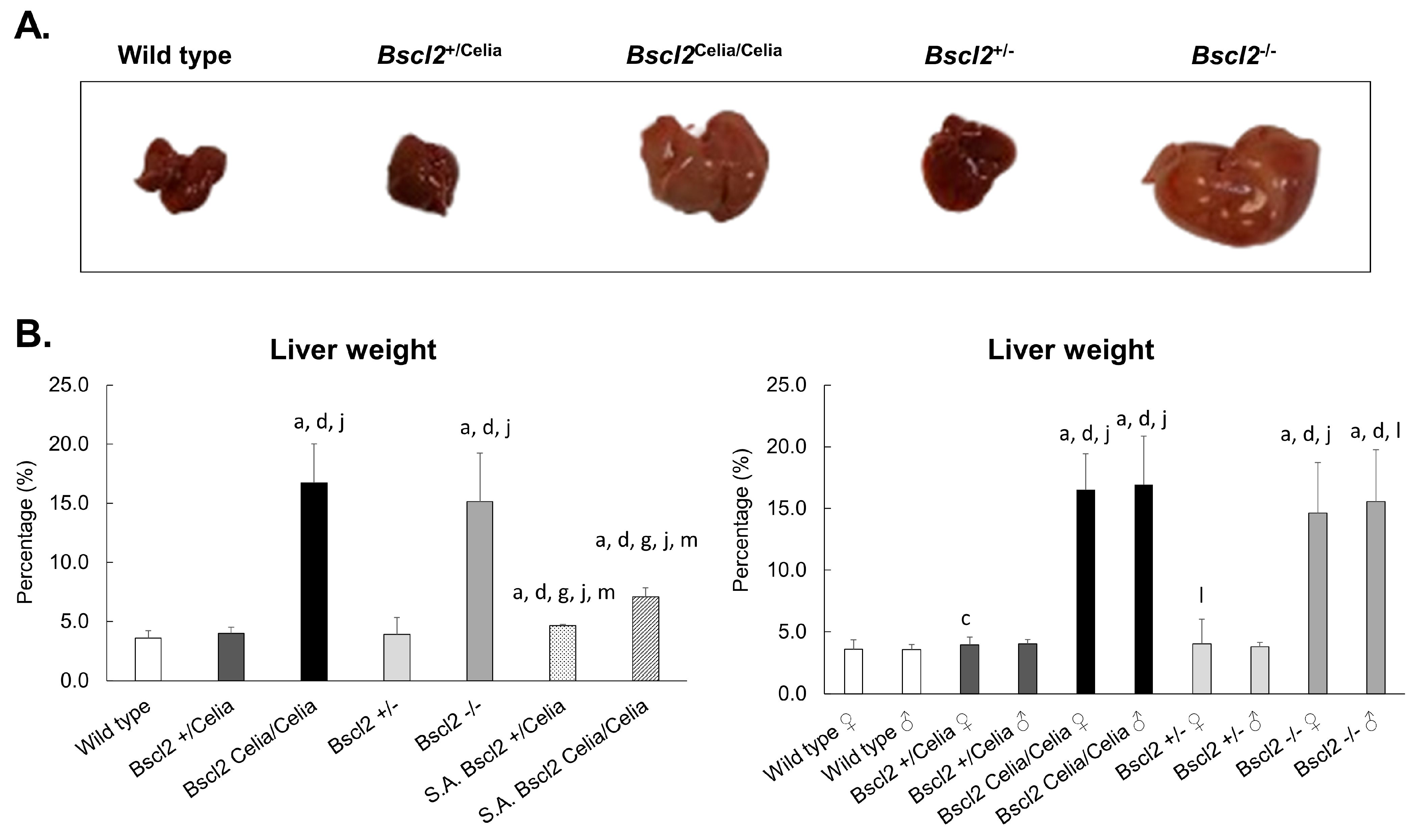
Figure 1. Analysis of the liver tissue. (A) Liver macroscopic appearances. 7.2-month-old Bscl2+/−and Bscl2−/−; 6.8-month-old wild-type, 6.8-month-old Bscl2+/Celia and 5.3-month-old Bscl2Celia/Celia ♂ mice. (B) Liver weight comparison in terms of percentage. Left panel: all studied animals. Right panel: sex-dependent analysis (males and females shown separately for clarity). For mean age and number of animals per genotype, see Supplementary Table S1. Data is presented as n (%) ± SD. a p < 0.05 vs. wild-type ♀/♂; c p < 0.05 vs. wild-type ♂; d p < 0.05 vs. Bscl2+/− ♀/♂; g p < 0.05 vs. Bscl2−/− ♀/♂; j p < 0.05 vs. Bscl2+/Celia ♀/♂; l p < 0.05 vs. Bscl2+/Celia ♂; m p < 0.05 vs. Bscl2Celia/Celia ♀/♂. Part of the data used in this study were previously published in [20].
Ijms 26 12037 g001
Figure 2. Histology of liver tissue. Oil red O, scale bar: 20 µm, mean age 6 months (wild-type ♀, Bscl2+/Celia ♂, Bscl2Celia/Celia ♂, Bscl2+/− ♂, Bscl2−/− ♂) except for S.A. Bscl2+/Celia ♂ (8.6-month-old) and S.A. Bscl2Celia/Celia ♂ (4-month-old) mice. Masson’s trichrome, scale bar: 10 µm, mean age 9 months (wild-type ♂, Bscl2+/Celia ♂, Bscl2Celia/Celia ♂, Bscl2−/− ♂ and S.A. Bscl2Celia/Celia ♂) except for Bscl2+/− ♂ (6.1-month-old) and S.A. Bscl2+/Celia ♂ (5.8-month-old) mice. H&E, scale bar: 20 µm and 10 µm (round shaped figure), wild-type ♂, Bscl2+/Celia ♂ and Bscl2−/− ♀ (12-month-old), Bscl2Celia/Celia ♀ (14-month-old), Bscl2+/− ♂ (6.1-month-old) and severely affected (S.A.) mice: Bscl2+/Celia ♂ (5.8-month-old), Bscl2Celia/Celia ♂ (19-month-old).
Ijms 26 12037 g002
Figure 3. Assessment of steatohepatitis in the liver of homozygous mice. Histological assessment of steatosis, inflammation, and hyaline vacuoles. Bscl2Celia/Celia (n = 2) and Bscl2−/− (n = 1). H&E.
Ijms 26 12037 g003
Figure 4. Assessment of liver involvement. (A) NAS Score. Degree of activity of non-alcoholic fatty liver disease calculated as the sum of scores for steatosis, ballooning degeneration, and lobular inflammation according to the NAS scoring system of the NASH CRN. Data is presented as mean ± SD. (B) Fibrosis stage. Percentage of animals with fibrosis stage 1a in the liver according to the NASH CRN System. (C) Evaluation of subtypes of metabolic dysfunction-associated steatotic liver disease (MASLD). Percentage of animals presenting metabolic dysfunction-associated steatotic liver (MASL) and/or metabolic dysfunction-associated steatohepatitis (MASH). For mean age and number of animals per genotype, see Supplementary Table S1. a p < 0.05 vs. wild-type ♀/♂; b p < 0.05 vs. wild-type ♀; d p < 0.05 vs. Bscl2+/− ♀/♂; e p < 0.05 vs. Bscl2+/− ♀; f p < 0.05 vs. Bscl2+/− ♂; j p < 0.05 vs. Bscl2+/Celia ♀/♂; p p < 0.05 vs. S.A. Bscl2+/Celia ♀/♂. Part of the data used in this study were previously published in [20].
Ijms 26 12037 g004
Figure 5. Liver triglycerides concentration for wild-type, Bscl2+/Celia, Bscl2Celia/Celia, Bscl2+/−, Bscl2−/−, and severely affected (S.A.) animals. Left panel: all animals. Right panel: sex-dependent analysis (male and female data shown separately). Wild-type, Bscl2+/Celia, Bscl2Celia/Celia, Bscl2+/−, n = 20 (10 ♀ and 10 ♂); S.A Bscl2+/Celia, n = 1 and S.A Bscl2Celia/Celia, n = 2 animals. Mean age: 9.5 months old. Data is presented as mean ± SD (see Supplementary Table S2). a p < 0.05 vs. wild-type ♀/♂; c p < 0.05 vs. wild-type ♂; d p < 0.05 vs. Bscl2+/− ♀/♂; g p < 0.05 vs. Bscl2−/− ♀/♂; i p < 0.05 vs. Bscl2−/− ♂; j p < 0.05 vs. Bscl2+/Celia ♀/♂; k p < 0.05 vs. Bscl2+/Celia ♀; m p < 0.05 vs. Bscl2Celia/Celia ♀/♂.
Ijms 26 12037 g005
Figure 6. Relative expression of (A) Fgf21, (B) Fgfr1, (C) Klb, and (D) Ppargc1a genes in liver. Wild-type, Bscl2+/Celia, Bscl2Celia/Celia, Bscl2+/−, Bscl2−/−, and severely affected (S.A) Bscl2Celia/Celia and Bscl2+/Celia animals. For mean age and number of animals per genotype, see Supplementary Table S3. Data is presented as mean ± SD. Results were normalized for the Rn18S gene and referred to wild-type. a p < 0.05 vs. wild-type ♀/♂; b p < 0.05 vs. wild-type ♀; c p < 0.05 vs. wild-type ♂; d p < 0.05 vs. Bscl2+/− ♀/♂; e p < 0.05 vs. Bscl2+/− ♀; g p < 0.05 vs. Bscl2−/− ♀/♂; i p < 0.05 vs. Bscl2−/− ♂; j p < 0.05 vs. Bscl2+/Celia ♀/♂; k p < 0.05 vs. Bscl2+/Celia ♀; m p < 0.05 vs. Bscl2Celia/Celia ♀/♂ and p p < 0.05 vs. S.A Bscl2+/Celia.
Ijms 26 12037 g006
Table 1. Primer and probe designs for the quantitative real-time PCR. Gene name and symbol; primer sequences (forward and reverse) and probe sequences.
GenePrimer Sequence (5′-3′)Probe
NameSymbolForwardReverseSequence (5′-3′)
18S ribosomal RNARn18sAAACGGCTACCACATCCAAGTACAGGGCCTCGAAAGAGTCCGCAAATTACCCACTCCCGACCCG
Fibroblast growth factor 21Fgf21AGCATACCCCATCCCTGACTGTACCTCTGCCGGACTTGACCTCCTCCA
Fibroblast growth factor receptor 1Fgfr1ATTGGAGGCTACAAGGTTCGGAAGGCACCACAGAATCCATCCTGGAGC
Klotho betaKlbCGAGCCCATTGTTACCTTGTTTTTCCAGCCCCCATATTCCCTGGAGC
Peroxisome proliferator-activated receptor, gamma, coactivator 1 alphaPpargc1aGAGAAGCTTGCGCAGGTAACTCCCATGAGGTATTGACCATCTCCTCAGC
Disclaimer/Publisher’s Note: The statements, opinions and data contained in all publications are solely those of the individual author(s) and contributor(s) and not of MDPI and/or the editor(s). MDPI and/or the editor(s) disclaim responsibility for any injury to people or property resulting from any ideas, methods, instructions or products referred to in the content.