TRPV1 Blocker, Peptide HCRG21 from Sea Anemone Heteractis magnifica, Exhibits Effectiveness in Psoriasis and Dermatitis in In Vivo Models

Abstract
1. Introduction
2. Results
2.1. The Efficacy of HCRG21 in Allergic Contact Dermatitis
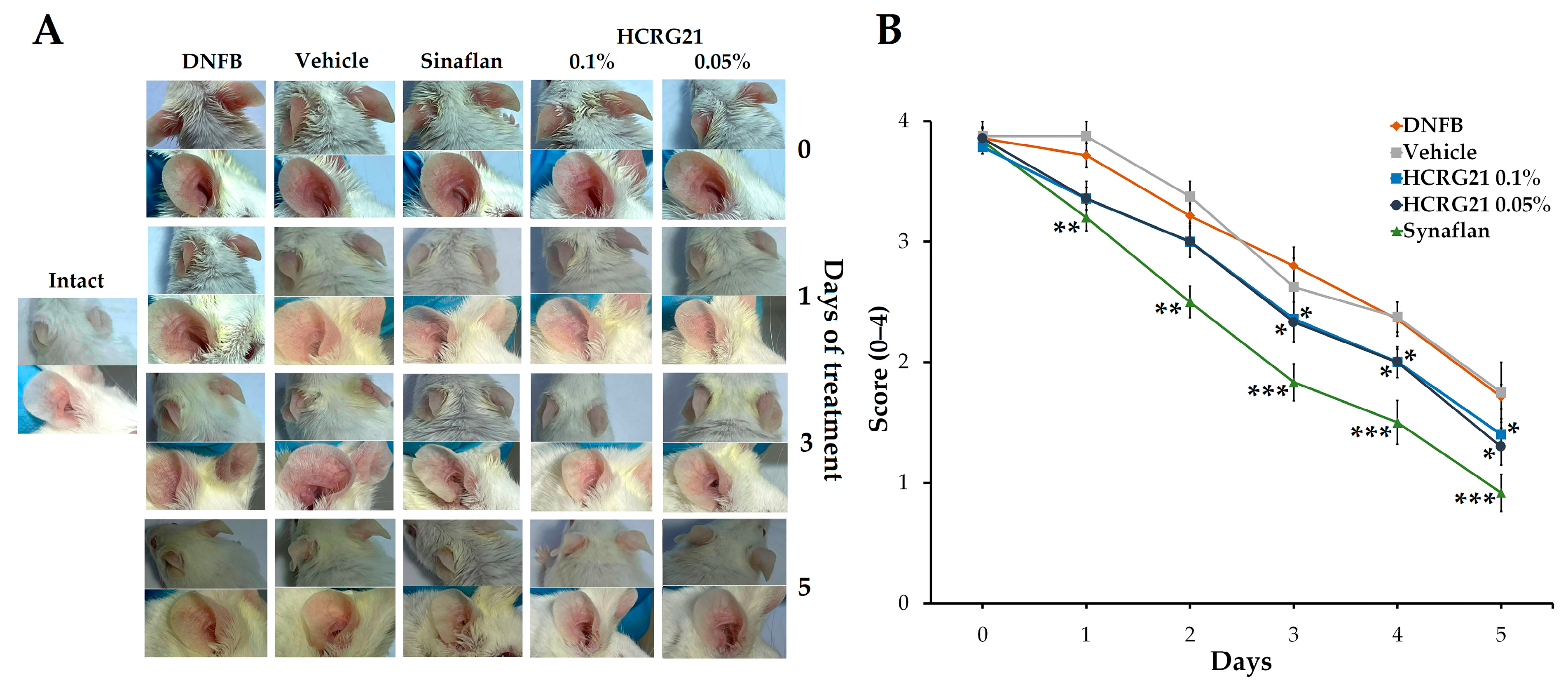
2.1.1. HCRG21 Reduces DNFB-Induced ACD-like Lesions in Mice
2.1.2. HCRG21 Normalizes Hematological Parameters in DNFB-Induced ACD-like Model
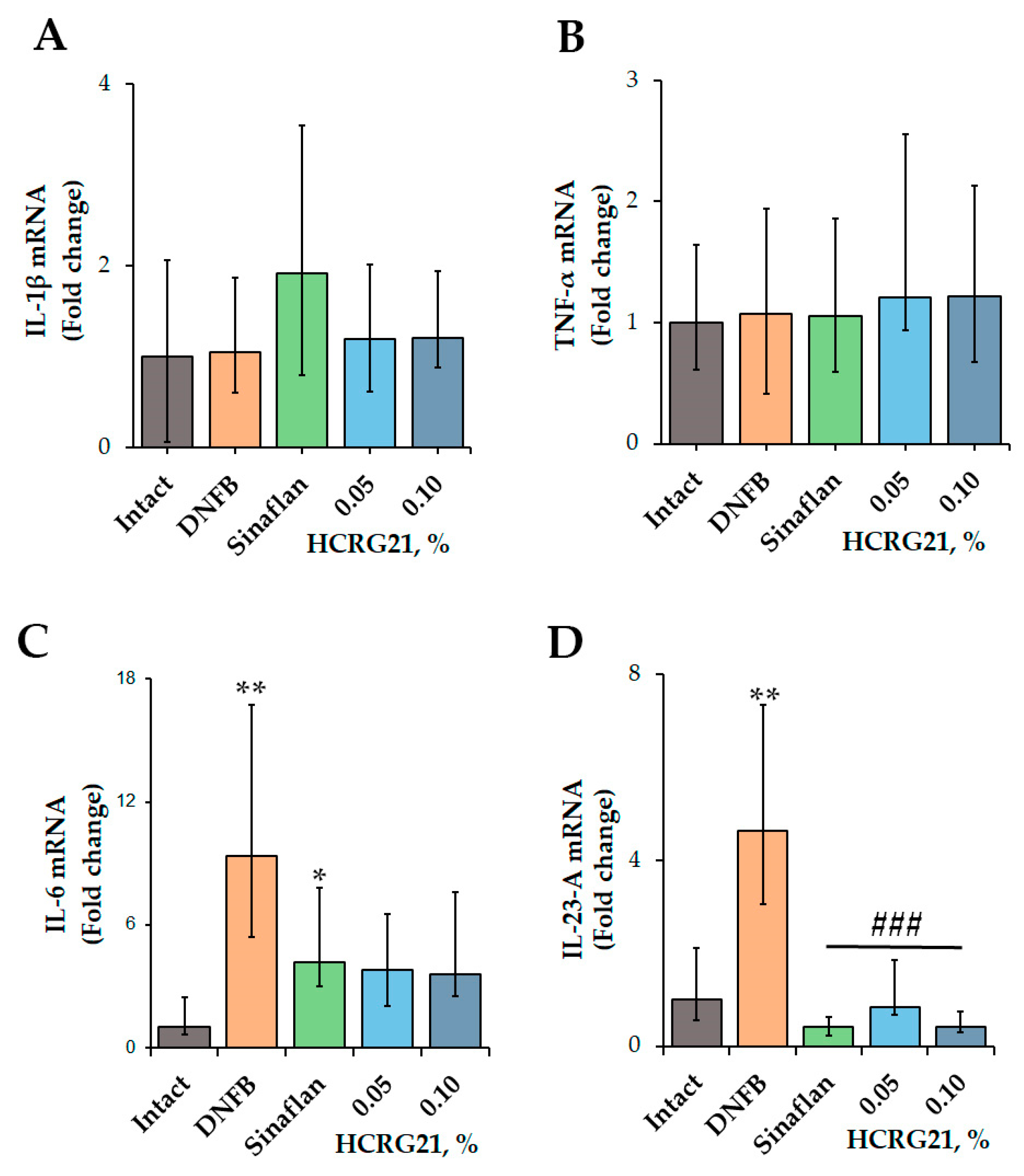
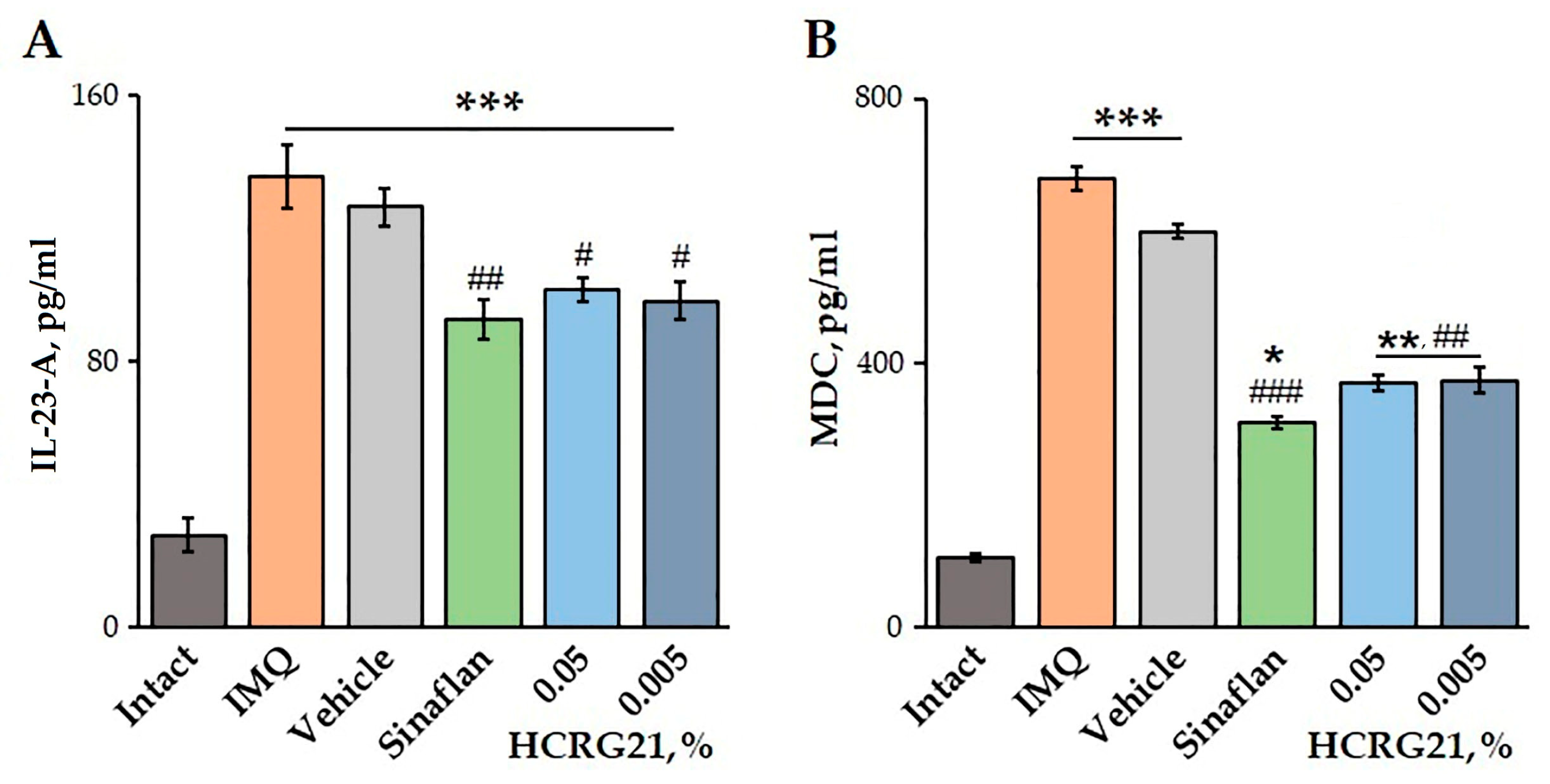
2.1.3. HCRG21 Suppresses the Production of Cytokines in DNFB-Induced ACD-like Skin Lesions
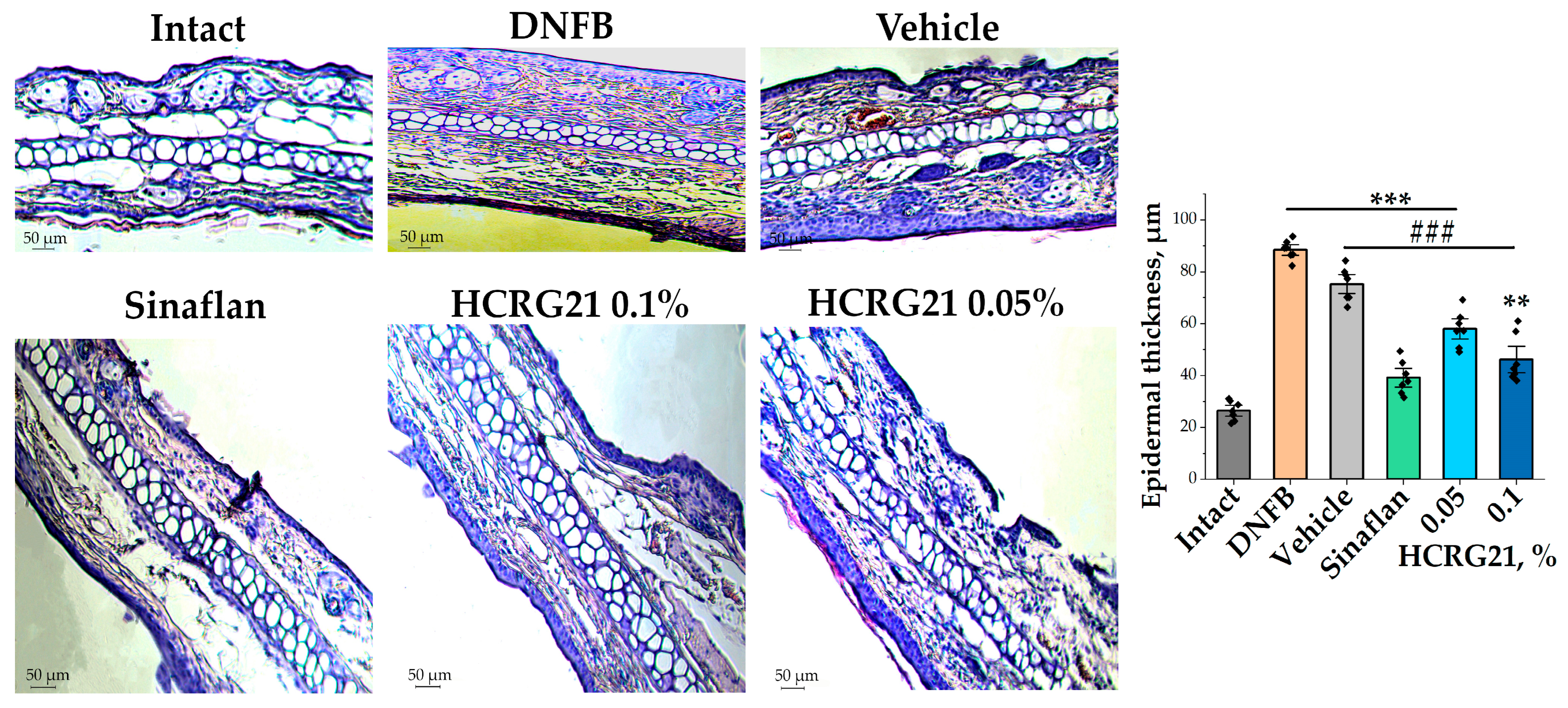
2.1.4. HCRG21 Facilitates the Correction of Pathomorphological Changes in DNFB-Induced ACD-like Skin
2.2. The Efficacy of HCRG21 in Psoriasis-like Disease
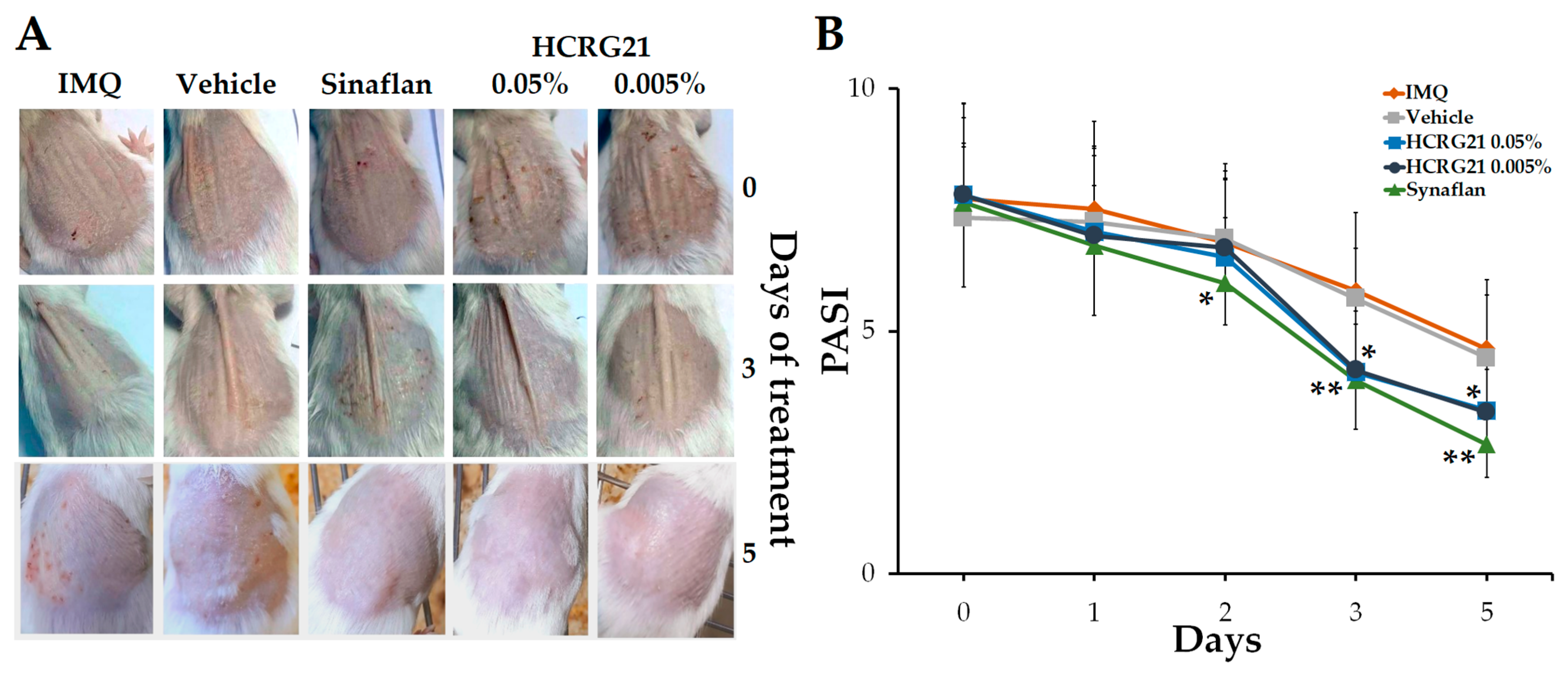
2.2.1. HCRG21 Alleviates IMQ-Induced Psoriasis-like Skin Lesions in Mice
2.2.2. HCRG21 Normalizes Hematological Blood Parameters in IMQ-Induced Psoriasis-like Model
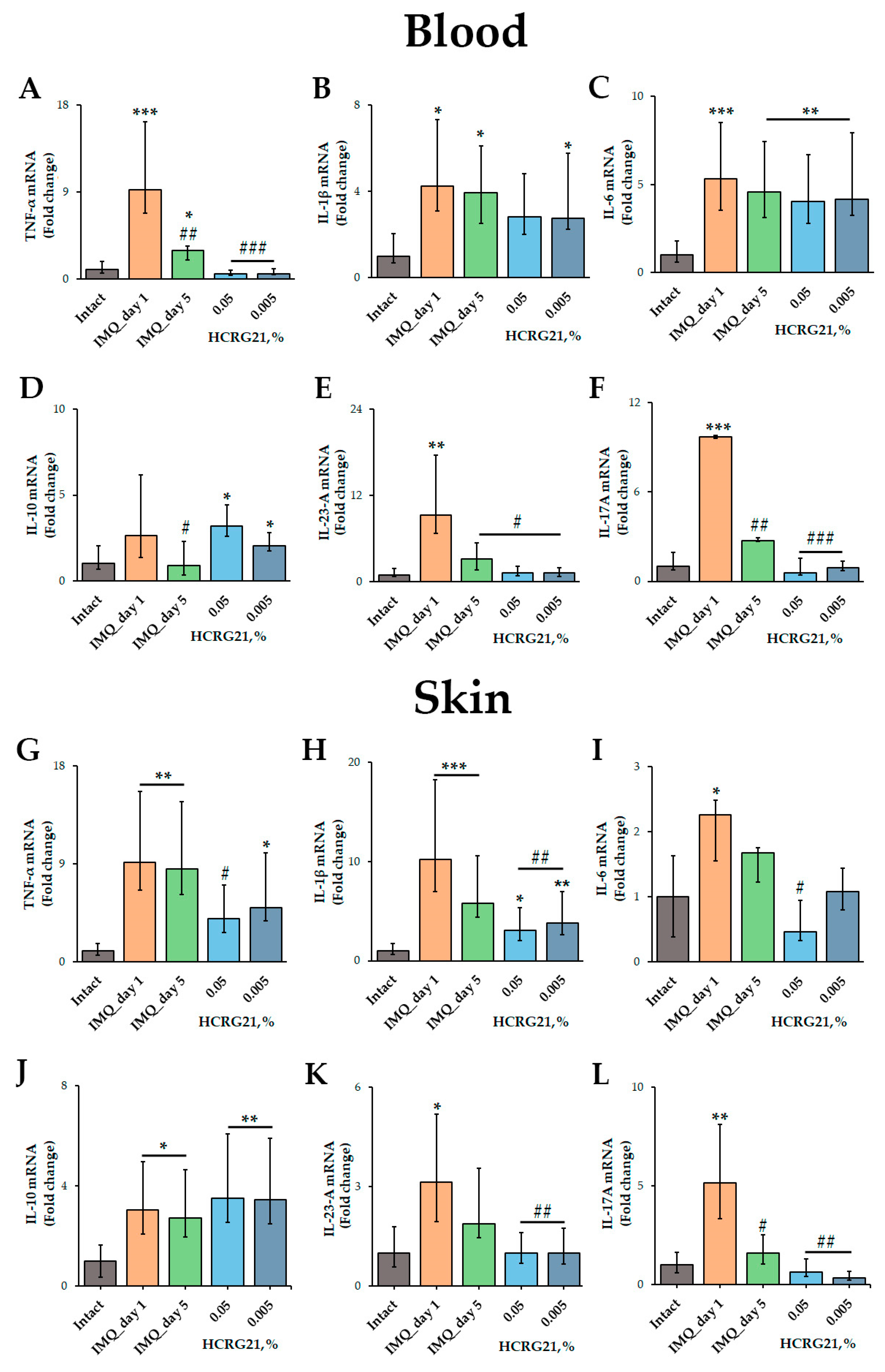
2.2.3. HCRG21 Suppresses the Production of Cytokines in IMQ-Induced Psoriasis-like Skin Lesions and Blood
3. Discussion
4. Materials and Methods
4.1. Preparation of Gel with HCRG21
4.2. Animals
4.3. Allergic Contact Dermatitis Model
4.4. IMQ-Induced Psoriasis-like Skin Damage Model
4.5. Blood and Tissue Sampling
4.6. Hematological and Immunological Assays
4.7. Histopathological Assays
4.8. Quantitative Real-Time PCR
4.9. Statistics
5. Conclusions
Author Contributions
Funding
Institutional Review Board Statement
Informed Consent Statement
Data Availability Statement
Acknowledgments
Conflicts of Interest
Abbreviations
| ACD | Allergic contact dermatitis |
| TRPV1 | Transient receptor potential vanilloid-1 |
| IMQ | Imiquimod |
| DNFB | 2,4-dinitrofluorobenzene |
| PLT | Platelets |
| WBCs | White blood cells |
| DDCs | Dermal dendritic cells |
References
- Cianciulli, A.; Calvello, R.; Porro, C.; Lofrumento, D.D.; Panaro, M.A. Inflammatory skin diseases: Focus on the role of suppressors of cytokine signaling (SOCS) proteins. Cells 2024, 13, 505. [Google Scholar] [CrossRef]
- Kaplan, D.H.; Igyártó, B.Z.; Gaspari, A.A. Early immune events in the induction of allergic contact dermatitis. Nat. Rev. Immunol. 2012, 12, 114–124. [Google Scholar] [CrossRef]
- Martin, S.F. Contact dermatitis: From pathomechanisms to immunotoxicology. Exp. Dermatol. 2012, 21, 382–389. [Google Scholar] [CrossRef]
- Martin, S.F. New concepts in cutaneous allergy. Contact Dermat. 2014, 72, 2–10. [Google Scholar] [CrossRef]
- Griffiths, C.E.; Barker, J.N. Pathogenesis and clinical features of psoriasis. Lancet 2007, 370, 263–271. [Google Scholar] [CrossRef]
- Griffiths, C.E.M.; Armstrong, A.W.; Gudjonsson, J.E.; Barker, J.N.W.N. Psoriasis. Lancet 2021, 397, 1301–1315. [Google Scholar] [CrossRef] [PubMed]
- Uppala, R.; Tsoi, L.C.; Harms, P.W.; Wang, B.; Billi, A.C.; Maverakis, E.; Michelle Kahlenberg, J.; Ward, N.L.; Gudjonsson, J.E. “Autoinflammatory psoriasis”—Genetics and biology of pustular psoriasis. Cell. Mol. Immunol. 2021, 18, 307–317. [Google Scholar] [CrossRef] [PubMed]
- Ogawa, E.; Sato, Y.; Minagawa, A.; Okuyama, R. Pathogenesis of psoriasis and development of treatment. J. Dermatol. 2018, 45, 264–272. [Google Scholar] [CrossRef] [PubMed]
- Zhang, Y.; Wang, Q.; Sun, S.; Jiang, L. The therapeutic effect of glycyrrhizic acid compound ointment on imiquimod-induced psoriasis-like disease in mice. PLoS ONE 2023, 18, e0290637. [Google Scholar] [CrossRef]
- Brar, K.K. A review of contact dermatitis. Ann. Allergy Asthma Immunol. 2021, 126, 32–39. [Google Scholar] [CrossRef]
- Lee, H.J.; Kim, M. Challenges and future trends in the treatment of psoriasis. Int. J. Mol. Sci. 2023, 24, 13313. [Google Scholar] [CrossRef]
- Kim, H.; Choi, M.R.; Jeon, S.H.; Jang, Y.; Yang, Y.D. Pathophysiological roles of ion channels in epidermal cells, immune cells, and sensory neurons in psoriasis. Int. J. Mol. Sci. 2024, 25, 2756. [Google Scholar] [CrossRef]
- Nattkemper, L.A.; Tey, H.L.; Valdes-Rodriguez, R.; Lee, H.; Mollanazar, N.K.; Albornoz, C.; Sanders, K.M.; Yosipovitch, G. The genetics of chronic itch: Gene expression in the skin of patients with atopic dermatitis and psoriasis with severe itch. J. Investig. Dermatol. 2018, 138, 1311–1317. [Google Scholar] [CrossRef]
- Olusegun, O.A.; Martincigh, B.S. Allergic contact dermatitis: A significant environmental and occupational skin disease. Int. J. Dermatol. 2021, 60, 1082–1091. [Google Scholar] [CrossRef]
- van Zuuren, E.J.; Arents, B.W.M.; van der Linden, M.M.D.; Vermeulen, S.; Fedorowicz, Z.; Tan, J. Rosacea: New Concepts in Classification and Treatment. Am. J. Clin. Dermatol. 2021, 22, 457–465. [Google Scholar] [CrossRef]
- Rosamilia, L.L. Herpes zoster presentation, management, and prevention: A modern case-based review. Am. J. Clin. Dermatol. 2020, 21, 97–107. [Google Scholar] [CrossRef] [PubMed]
- Williams, K.A.; Roh, Y.S.; Brown, I.; Sutaria, N.; Bakhshi, P.; Choi, J.; Gabriel, S.; Chavda, R.; Kwatra, S.G. Pathophysiology, diagnosis, and pharmacological treatment of prurigo nodularis. Expert Rev. Clin. Pharmacol. 2021, 14, 67–77. [Google Scholar] [CrossRef] [PubMed]
- Gouin, O.; L’Herondelle, K.; Lebonvallet, N.; Le Gall-Ianotto, C.; Sakka, M.; Buhé, V.; Plée-Gautier, E.; Carré, J.L.; Lefeuvre, L.; Misery, L.; et al. TRPV1 and TRPA1 in cutaneous neurogenic and chronic inflammation: Pro-inflammatory response induced by their activation and their sensitization. Protein Cell 2017, 8, 644–661. [Google Scholar] [CrossRef]
- Koivisto, A.P.; Belvisi, M.G.; Gaudet, R.; Szallasi, A. Advances in TRP channel drug discovery: From target validation to clinical studies. Nat. Rev. Drug Discov. 2022, 21, 41–59. [Google Scholar] [CrossRef]
- Gladkikh, I.N.; Sintsova, O.V.; Leychenko, E.V.; Kozlov, S.A. TRPV1 ion channel: Structural features, activity modulators, and therapeutic potential. Biochemistry 2021, 86, S50–S70. [Google Scholar] [CrossRef] [PubMed]
- Ho, J.C.; Lee, C.H. TRP channels in skin: From physiological implications to clinical significances. Biophysics 2015, 11, 17–24. [Google Scholar] [CrossRef]
- Xiao, T.; Sun, M.; Zhao, C.; Kang, J. TRPV1: A promising therapeutic target for skin aging and inflammatory skin diseases. Front. Pharmacol. 2023, 14, 1037925. [Google Scholar] [CrossRef]
- Zhou, Y.; Follansbee, T.; Wu, X.; Han, D.; Yu, S.; Domocos, D.T.; Shi, Z.; Carstens, M.; Carstens, E.; Hwang, S.T. TRPV1 mediates inflammation and hyperplasia in imiquimod (IMQ)-induced psoriasiform dermatitis (PsD) in mice. J. Dermatol. Sci. 2018, 92, 264–271. [Google Scholar] [CrossRef]
- Riol-Blanco, L.; Ordovas-Montanes, J.; Perro, M.; Naval, E.; Thiriot, A.; Alvarez, D.; Paust, S.; Wood, J.N.; von Andrian, U.H. Nociceptive sensory neurons drive interleukin-23 mediated psoriasiform skin inflammation. Nature 2014, 510, 157–161. [Google Scholar] [CrossRef]
- Monastyrnaya, M.; Peigneur, S.; Zelepuga, E.; Sintsova, O.; Gladkikh, I.; Leychenko, E.; Isaeva, M.; Tytgat, J.; Kozlovskaya, E. Kunitz-Type peptide HCRG21 from the sea anemone Heteractis crispa is a full antagonist of the TRPV1 receptor. Mar. Drugs 2016, 14, 229. [Google Scholar] [CrossRef] [PubMed]
- Sintsova, O.V.; Palikov, V.A.; Palikova, Y.A.; Klimovich, A.A.; Gladkikh, I.N.; Andreev, Y.A.; Monastyrnaya, M.M.; Kozlovskaya, E.P.; Dyachenko, I.A.; Kozlov, S.A.; et al. Peptide blocker of ion channel TRPV1 exhibits a long analgesic effect in the heat stimulation model. Dokl. Biochem. Biophys. 2020, 493, 215–217. [Google Scholar] [CrossRef] [PubMed]
- Sintsova, O.; Gladkikh, I.; Klimovich, A.; Palikova, Y.; Palikov, V.; Styshova, O.; Monastyrnaya, M.; Dyachenko, I.; Kozlov, S.; Leychenko, E. TRPV1 blocker HCRG21 suppresses TNF-α production and prevents the development of edema and hypersensitivity in carrageenan-induced acute local inflammation. Biomedicines 2021, 9, 716. [Google Scholar] [CrossRef]
- Fardet, L.; Fève, B. Systemic glucocorticoid therapy: A review of its metabolic and cardiovascular adverse events. Drugs 2014, 74, 1731–1745. [Google Scholar] [CrossRef]
- Žužul, K.; Kostović, K.; Čeović, R.; Ljubojević Hadžavdić, S. Contact hypersensitivity in patients with psoriasis. Contact Dermat. 2018, 78, 287–289. [Google Scholar] [CrossRef] [PubMed]
- Ni, X.; Lai, Y. Keratinocyte: A trigger or an executor of psoriasis? J. Leukoc. Biol. 2020, 108, 485–491. [Google Scholar] [CrossRef]
- Campanati, A.; Marani, A.; Martina, E.; Diotallevi, F.; Radi, G.; Offidani, A. Psoriasis as an immune-mediated and inflammatory systemic disease: From pathophysiology to novel therapeutic approaches. Biomedicines 2021, 9, 1511. [Google Scholar] [CrossRef] [PubMed]
- Yawalkar, N.; Hunger, R.E.; Buri, C.; Schmid, S.; Egli, F.; Brand, C.U.; Mueller, C.; Pichler, W.J.; Braathen, L.R. A comparative study of the expression of cytotoxic proteins in allergic contact dermatitis and psoriasis: Spongiotic skin lesions in allergic contact dermatitis are highly infiltrated by T cells expressing perforin and granzyme B. Am. J. Pathol. 2001, 158, 803–808. [Google Scholar] [CrossRef]
- Armstrong, A.W.; Read, C. Pathophysiology, Clinical Presentation, and Treatment of Psoriasis: A Review. JAMA 2020, 323, 1945–1960. [Google Scholar] [CrossRef]
- Bagood, M.D.; Isseroff, R.R. TRPV1: Role in skin and skin diseases and potential target for improving wound healing. Int. J. Mol. Sci. 2021, 22, 6135. [Google Scholar] [CrossRef]
- Ozcan, S.S.; Gürel, G.; Çakır, M. Gene expression profiles of transient receptor potential (TRP) channels in the peripheral blood mononuclear cells of psoriasis patients. Hum. Exp. Toxicol. 2021, 40, 1234–1240. [Google Scholar] [CrossRef]
- Yun, J.W.; Seo, J.A.; Jeong, Y.S.; Bae, I.H.; Jang, W.H.; Lee, J.; Kim, S.Y.; Shin, S.S.; Woo, B.Y.; Lee, K.W.; et al. TRPV1 antagonist can suppress the atopic dermatitis-like symptoms by accelerating skin barrier recovery. J. Dermatol. Sci. 2011, 62, 8–15. [Google Scholar] [CrossRef]
- Bonchak, J.G.; Swerlick, R.A. Emerging therapies for atopic dermatitis: TRPV1 antagonists. J. Am. Acad. Dermatol. 2018, 78, S63–S66. [Google Scholar] [CrossRef] [PubMed]
- van der Fits, L.; Mourits, S.; Voerman, J.S.A.; Kant, M.; Boon, L.; Laman, J.D.; Cornelissen, F.; Mus, A.-M.; Florencia, E.; Prens, E.P.; et al. Imiquimod-induced psoriasis-like skin inflammation in mice is mediated via the IL-23/IL-17 axis. J. Immunol. 2009, 182, 5836–5845. [Google Scholar] [CrossRef] [PubMed]
- Flutter, B.; Nestle, F.O. TLRs to cytokines: Mechanistic insights from the imiquimod mouse model of psoriasis. Eur. J. Immunol. 2013, 43, 3138–3146. [Google Scholar] [CrossRef]
- Bonneville, M.; Chavagnac, C.; Vocanson, M.; Rozieres, A.; Benetiere, J.; Pernet, I.; Denis, A.; Nicolas, J.F.; Hennino, A. Skin contact irritation conditions the development and severity of allergic contact dermatitis. J. Invest. Dermatol. 2007, 127, 1430–1435. [Google Scholar] [CrossRef]
- Röse, L.; Schneider, C.; Stock, C.; Zollner, T.M.; Döcke, W.D. Extended DNFB-induced contact hypersensitivity models display characteristics of chronic inflammatory dermatoses. Exp. Dermatol. 2011, 21, 25–31. [Google Scholar] [CrossRef] [PubMed]
- Takanami-Ohnishi, Y.; Amano, S.; Kimura, S.; Asada, S.; Utani, A.; Maruyama, M.; Osada, H.; Tsunoda, H.; Irukayama-Tomobe, Y.; Goto, K.; et al. Essential role of p38 mitogen-activated protein kinase in contact hypersensitivity. J. Biol. Chem. 2002, 277, 37896–37903. [Google Scholar] [CrossRef] [PubMed]
- Larsen, J.M.; Bonefeld, C.M.; Poulsen, S.S.; Geisler, C.; Skov, L. IL-23 and TH17-mediated inflammation in human allergic contact dermatitis. J. Allergy Clin. Immunol. 2009, 123, 486–493. [Google Scholar] [CrossRef]
- Dudeck, A.; Dudeck, J.; Scholten, J.; Petzold, A.; Surianarayanan, S.; Köhler, A.; Peschke, K.; Vöhringer, D.; Waskow, C.; Krieg, T.; et al. Mast cells are key promoters of contact allergy that mediate the adjuvant effects of haptens. Immunity 2011, 34, 973–984. [Google Scholar] [CrossRef]
- Hengge, U.R.; Ruzicka, T.; Schwartz, R.A.; Cork, M.J. Adverse effects of topical glucocorticosteroids. J. Am. Acad. Dermatol. 2006, 54, 1–15. [Google Scholar] [CrossRef]
- Kim, S.; Chaudhary, P.K.; Kim, S. Role of prednisolone in platelet activation by inhibiting TxA2 generation through the regulation of cPLA2 phosphorylation. Animals 2023, 13, 1299. [Google Scholar] [CrossRef]
- Perera, G.K.; Di Meglio, P.; Nestle, F.O. Psoriasis. Annu. Rev. Pathol. Mech. Dis. 2012, 7, 385–422. [Google Scholar] [CrossRef]
- Kanneganti, T.D.; Özören, N.; Body-Malapel, M.; Amer, A.; Park, J.H.; Franchi, L.; Whitfield, J.; Barchet, W.; Colonna, M.; Vandenabeele, P.; et al. Bacterial RNA and small antiviral compounds activate caspase-1 through cryopyrin/Nalp3. Nature 2006, 440, 233–236. [Google Scholar] [CrossRef]
- Lee, E.; Trepicchio, W.L.; Oestreicher, J.L.; Pittman, D.; Wang, F.; Chamian, F.; Dhodapkar, M.; Krueger, J.G. Increased expression of interleukin 23 p19 and p40 in lesional skin of patients with psoriasis vulgaris. J. Exp. Med. 2004, 199, 125–130. [Google Scholar] [CrossRef]
- Piskin, G.; Sylva-Steenland, R.M.R.; Bos, J.D.; Teunissen, M.B.M. In vitro and in situ expression of IL-23 by keratinocytes in healthy skin and psoriasis lesions: Enhanced expression in psoriatic skin. J. Immunol. 2006, 176, 1908–1915. [Google Scholar] [CrossRef] [PubMed]
- Li, Q.; Liu, W.; Gao, S.; Mao, Y.; Xin, Y. Application of imiquimod-induced murine psoriasis model in evaluating interleukin-17A antagonist. BMC Immunol. 2021, 22, 11. [Google Scholar] [CrossRef] [PubMed]
- Andreev, Y.A.; Kozlov, S.A.; Vassilevski, A.A.; Grishin, E.V. Cyanogen bromide cleavage of proteins in salt and buffer solutions. Anal. Biochem. 2010, 407, 144–146. [Google Scholar] [CrossRef]
- Klimovich, A.A.; Kvetkina, A.N.; Deryavko, Y.V.; Priymenko, N.A.; Leychenko, E.V. Peptide TRPV1 channel blocker, HCRG21, effectively suppresses inflammation in a calcipotriol-induced allergic dermatitis model. Biochem. Suppl. Ser. B Biomed. Chem. 2024, 18, S106–S113. [Google Scholar] [CrossRef]
- Livak, K.J.; Schmittgen, T.D. Analysis of relative gene expression data using real-time quantitative PCR and the 2−ΔΔCT method. Methods 2001, 25, 402–408. [Google Scholar] [CrossRef] [PubMed]


| Parameter | Animal Groups | |||||
|---|---|---|---|---|---|---|
| Intact | DNFB | Sinaflan | Vehicle | HCRG21 | ||
| 0.1% | 0.05% | |||||
| WBC, ×109/L | 4.17 ± 0.6 | 6.36 ± 0.38 * | 4.04 ± 1.06 # | 6.05 ± 0.77 * | 5.42 ± 0.24 # | 5.68 ± 0.20 # |
| NEU, % | 26.58 ± 1.62 | 31.82 ± 3.15 | 42.32 ± 5.44 # | 35.78 ± 1.01 | 32.40 ± 2.01 | 34.32 ± 1.29 |
| LYM, % | 64.08 ± 1.24 | 60.42 ± 4.31 | 48.98 ± 5.21 # | 57.38 ± 1.52 | 59.84 ± 2.28 | 58.42 ± 1.98 |
| MON, % | 5.38 ± 1.03 | 5.27 ± 1.30 | 4.47 ± 0.68 | 3.53 ± 0.34 | 4.46 ± 0.61 | 5.38 ± 0.46 |
| EOS, % | 3.74 ± 0.44 | 2.40 ± 0.44 | 4.22 ± 0.68 | 3.28 ± 0.56 | 3.30 ± 0.04 | 3.68 ± 0.32 |
| BAS, % | 0.22 ± 0.07 | 0.08 ± 0.03 | 0.02 ± 0.02 | 0.05 ± 0.03 | 0.10 ± 0.05 | 0.24 ± 0.2 |
| RBC, ×1012/L | 9.46 ± 0.07 | 9.42 ± 0.10 | 9.66 ± 0.14 | 9.35 ± 0.27 | 9.15 ± 0.26 | 9.56 ± 0.09 |
| HTC, % | 0.49 ± 0.01 | 0.45 ± 0.01 | 0.47 ± 0.01 | 0.45 ± 0.01 | 0.45 ± 0.01 | 0.46 ± 0.01 |
| PLT, ×109/L | 279.50 ± 73.53 | 439.00 ± 138.5 * | 441 ± 20.17 * | 385.33 ± 17.13 * | 350.83 ± 0.17 * | 350.67 ± 25.31 * |
| PCT, % | 1.94 ± 0.59 | 2.44 ± 0.74 * | 3.10 ± 0.92 * | 2.72 ± 0.53 * | 2.64 ± 0.26 * | 1.20 ± 0.28 |
| HGB, g/L | 155.20 ± 2.18 | 144.75 ± 2.06 | 149.2 ± 3.34 | 145.00 ± 3.81 | 145.80 ± 4.14 | 149.50 ± 1.26 |
| Parameter | Animal Groups | |||||
|---|---|---|---|---|---|---|
| Intact | IMQ | Sinaflan | Vehicle | HCRG21, % | ||
| 0.05 | 0.005 | |||||
| WBC, ×109/L | 3.48 ± 0.18 | 9.26 ± 1.82 *** | 6.30 ± 1.84 **,## | 8.47 ± 2.12 *** | 7.15 ± 0.97 ***,# | 7.66 ± 1.15 ***,# |
| NEU, % | 27.78 ± 1.63 | 44.67 ± 3.94 ** | 50.58 ± 4.38 * | 43.75 ± 3.53 ** | 36.05 ± 5.61 *,# | 31.84 ± 8.02 *,# |
| LYM, % | 65.44 ± 1.52 | 34.16 ± 7.29 *** | 29.14 ± 6.59 *,# | 38.72 ± 6.94 ** | 45.30 ± 6.85 **,# | 45.82 ± 9.33 |
| MON, % | 3.18 ± 0.20 | 24.86 ± 4.22 *** | 13.38 ± 3.74 ** | 10.90 ± 5.16 *** | 13.75 ± 6.13 ***,# | 17.90 ± 6.14 *** |
| EOS, % | 3.38 ± 0.60 | 9.06 ± 1.75 *** | 6.82 ± 1.72 **,# | 6.48 ± 1.89 ** | 5.38 ± 1.46 *,## | 4.42 ± 1.03 ## |
| BAS, % | 0.17 ± 0.06 | 0.20 ± 0.04 | 0.08 ± 0.04# | 0.15 ± 0.01 | 0.17 ± 0.02 # | 0.02 ± 0.02 # |
| RBC, ×1012/L | 9.30 ± 0.19 | 5.71 ± 0.80 ** | 7.11 ± 0.81 *,# | 7.78 ± 0.32 ** | 6.41 ± 0.44 * | 6.93 ± 1.16 * |
| HTC, % | 0.45 ± 0.01 | 0.34 ± 0.03 | 0.40 ± 0.04 | 0.44 ± 0.01 | 0.37 ± 0.01 | 0.39 ± 0.03 |
| PLT, ×109/L | 397.80 ± 42.15 | 470.28 ± 51.2 * | 470.60 ± 49.75 * | 476.66 ± 34.07 * | 342.33 ± 10.28 ## | 357.2 ± 25.59 # |
| PCT, % | 2.44 ± 0.26 | 1.75 ± 0.68 | 2.82 ± 0.23 | 2.53 ± 0.24 | 1.99 ± 0.26 | 2.17 ± 0.19 |
| HGB, g/L | 148.20 ± 3.8 | 113.57 ± 7.66 * | 131.20 ± 11.94 | 140.33 ± 2.23 * | 127.66 ± 5.69 | 127.00 ± 8.15 |
| Gene Name | Forward | Reverse | Annealing Temperature, °C | Fragment Length |
|---|---|---|---|---|
| Tnf | 5′-GTGGAACTGGCAGAAGA-3′ | 5′-ACTGATGAGAGGGAGGC-3′ | 59 | 192 |
| Il1β | 5′-AACCTTTGACCTGGGCTGTC-3′ | 5′-AAGGTCCACGGGAAAGACAC-3′ | 56 | 144 |
| Il6 | 5′-ATCCAGTTGCCTTCTTGGGA-3′ | 5′-GGTCTGTTGGGAGTGGTATCC-3′ | 55 | 103 |
| Il10 | 5′-CCCAGGCAGAGAAGCATGG-3′ | 5′-TCACTCTTCACCTGCTCCACTGC-3′ | 52 | 148 |
| Il17a | 5′-CTCAGACTACCTCAACCGTTCC-3′ | 5′-TCCCTCCGCATTGACACAG-3′ | 53 | 124 |
| Il23a | 5′-AGCCTGGAACGCACATGC-3′ | 5′-TGTTGTCCTTGAGTCCTTGTGGGT-3′ | 53 | 131 |
| Actb | 5′-AGGGAAATCGTGCGTGACAT-3′ | 5′-AACCGCTCGTTGCCAATAGT-3′ | 52–60 | 149 |
Disclaimer/Publisher’s Note: The statements, opinions and data contained in all publications are solely those of the individual author(s) and contributor(s) and not of MDPI and/or the editor(s). MDPI and/or the editor(s) disclaim responsibility for any injury to people or property resulting from any ideas, methods, instructions or products referred to in the content. |
© 2025 by the authors. Licensee MDPI, Basel, Switzerland. This article is an open access article distributed under the terms and conditions of the Creative Commons Attribution (CC BY) license (https://creativecommons.org/licenses/by/4.0/).
Share and Cite
Klimovich, A.; Kvetkina, A.; Deryavko, Y.; Priymenko, N.; Popkova, D.; Bystritskaya, E.; Isaeva, M.; Gladkikh, I.; Sintsova, O.; Leychenko, E. TRPV1 Blocker, Peptide HCRG21 from Sea Anemone Heteractis magnifica, Exhibits Effectiveness in Psoriasis and Dermatitis in In Vivo Models. Int. J. Mol. Sci. 2025, 26, 10644. https://doi.org/10.3390/ijms262110644
Klimovich A, Kvetkina A, Deryavko Y, Priymenko N, Popkova D, Bystritskaya E, Isaeva M, Gladkikh I, Sintsova O, Leychenko E. TRPV1 Blocker, Peptide HCRG21 from Sea Anemone Heteractis magnifica, Exhibits Effectiveness in Psoriasis and Dermatitis in In Vivo Models. International Journal of Molecular Sciences. 2025; 26(21):10644. https://doi.org/10.3390/ijms262110644
Chicago/Turabian StyleKlimovich, Anna, Aleksandra Kvetkina, Yulia Deryavko, Nadezhda Priymenko, Daria Popkova, Evgenia Bystritskaya, Marina Isaeva, Irina Gladkikh, Oksana Sintsova, and Elena Leychenko. 2025. "TRPV1 Blocker, Peptide HCRG21 from Sea Anemone Heteractis magnifica, Exhibits Effectiveness in Psoriasis and Dermatitis in In Vivo Models" International Journal of Molecular Sciences 26, no. 21: 10644. https://doi.org/10.3390/ijms262110644
APA StyleKlimovich, A., Kvetkina, A., Deryavko, Y., Priymenko, N., Popkova, D., Bystritskaya, E., Isaeva, M., Gladkikh, I., Sintsova, O., & Leychenko, E. (2025). TRPV1 Blocker, Peptide HCRG21 from Sea Anemone Heteractis magnifica, Exhibits Effectiveness in Psoriasis and Dermatitis in In Vivo Models. International Journal of Molecular Sciences, 26(21), 10644. https://doi.org/10.3390/ijms262110644