Abstract
Spodoptera exigua is a worldwide pest afflicting edible vegetables and has developed varying levels of resistance to insecticides. Methoxyfenozide (MET), an ecdysteroid agonist, is effective against lepidopteran pests such as S. exigua. However, the mechanism of MET to S. exigua remains unclear. In this study, we analyzed the expression patterns of genes related to the ecdysone signaling pathway in transcriptome data treated with sublethal doses of MET and analyzed how expression levels of key genes affect the toxicity of MET on S. exigua. Our results demonstrated that 2639 genes were up-regulated and 2512 genes were down-regulated in S. exigua treated with LC30 of MET. Of these, 15 genes were involved in the ecdysone signaling pathway. qPCR results demonstrated that ecdysone receptor A (EcRA) expression levels significantly increased in S. exigua when treated with different doses of MET, and that the RNAi-mediated silencing of EcRA significantly increased mortality to 55.43% at 72 h when L3 S. exigua larvae were exposed to MET at the LC30 dose. Additionally, knocking down EcRA suppressed the most genes expressed in the ecdysone signaling pathway. The combination of MET and dsEcRA affected the expression of E74 and enhanced the expression of TREA. These results demonstrate that the adverse effects of sublethal MET disturb the ecdysone signaling pathway in S. exigua, and EcRA is closely related to MET toxic effect. This study increases our collective understanding of the mechanisms of MET in insect pests.
Highlights
Five genes were up-regulated and 10 genes were down-regulated in Spodoptera exigua treated with LC30 of Methoxyfenozide, all of which were involved in the ecdysone signaling pathway.
The expression of EcRA was up-regulated as treatments of Methoxyfenozide on S. exigua increased.
Knockdown of EcRA expression by RNAi dramatically increases the sensitivity of S. exigua to Methoxyfenozide.
Knockdown of EcRA expression affects the expression of the ecdysone signaling pathway genes in Methoxyfenozide-treated S. exigua.
1. Introduction
Spodoptera exigua (Lepidoptera, Noctuidae) is a polyphagous pest. It attacks important cultivated and industrial crops, including cotton and sugar beets, resulting in significant losses [1]. Therefore, controlling S. exigua is important for agricultural production, and insecticides can be used for this purpose [2,3,4]. Traditional chemical insecticides are the primary method of controlling S. exigua [2,3,4]. However, the doses of traditional chemical controls increase with time and can damage the crops [5]. Integrated Pest Management (IPM) is a widely used method of controlling insect pests, while Insect Growth Regulators (IGRs) play a pivotal role in IPM [6]. Compared with traditional chemical controls, IGRs have specific advantages: they produce less residue, are easily degradable, and can induce insect molting which results in death [7].
IGRs contain Juvenile Hormone agonists (JH), ecdysteroid agonists (20E), and Chitin Biosynthesis Inhibitors (CSI). 20E is a molting hormone and combines with the ecdysone receptor (EcR) and ultraspiracle (USP), turning into a compound [8]. This compound triggers the expression of the 20E response gene. The research literature shows that ecdysone signaling pathway involves in EcR, USP, and several other ecdysone-responsive genes, including the ecdysone-induced protein 74EF (E74), nuclear hormone receptor HR3 (HR3), hormone receptor 4 (HR4), hormone receptor FTZ-F1 (FTZ-F1), hormone receptor HR38 (HR38), and chitin biosynthesis pathway genes [9,10,11,12]. The chitin biosynthesis pathway contains Trehalose 6-phosphate (TPS), Trehalase (TRE), Hexokinase (HK), Glucose-6-phosphate isomerase (G6PI), Glutamine fructose-6-phosphate aminotransferase (GFAT), Phosphoacetyl Glucosamine Mutase (PGM), N-acetyltransferase UDP-N-acetylglucosamine Pyrophosphorylase (UAP), and Chitin Synthase (CHS), all of which have been found in several insect species [13,14,15,16].
In Lepidoptera, the prothoracicotropic hormone (PTTH)-stimulated ecdysteroidogenesis and larval growth are involved in two ways, mitogen-activated protein kinase (MAPK) and phosphoinositide 3-kinase/protein kinase B/target of rapamycin (PI3K/Akt/TOR) pathways [14,17,18]. Ecdysone is subsequently activated to 20-OH-ecdysone in peripheral tissues [17]. 20E binds to a heterodimer of the EcR and USP, and the 20E-EcR/USP complex controls the transcription of target genes [8]. EcR is an ecdysone receptor and has been isolated from many insect species. Helicoverpa armigera that were fed Escherichia coli expressing amiRNA-HaEcR exhibited developmental defects and high rates of mortality [12]. The suppression of SeEcR influenced developmental duration, pupae formation, adult eclosion, and the chitin content of S. exigua [19]. To elucidate the role of EcR in physiological processes, the relationship between EcR and insecticides has been reported. In Conopomorpha sinensis, EcR expression was changed by chlorbenzuron [20]. Treating S. exigua with tebufenozide or RH-5849 demonstrated that ecdysone agonists binding with EcR [21]. After treatment with Methoxyfenozide (MET), EcR expression was enhanced, and subsequently impaired fecundity [22]. MET is an ecdysteroid agonist and can combine with EcR compounds, leading to lethal molting [23]. Therefore, some studies assessed the toxicity of S. exigua treated with MET [24,25]. However, few studies have assessed how MET affects the ecdysone signaling pathway genes and the mechanism for MET toxicity in S. exigua.
In this study, the transcriptome of S. exigua fed with MET were sequenced using an Illumina TruseqTM RNA Sample Prep Kit. We determined that the ecdysone signaling pathway genes associated with S. exigua fed with MET. Using quantitative real-time PCR (qPCR), identified the gene expression change and used RNAi to assess the role that EcRA involve in increasing S. exigua sensitivity to MET. We also assessed the expression patterns of ecdysone signaling pathway gene changes in MET and RNAi treated larvae. These results reveal different doses of MET affects gene expression on ecdysone signaling pathway, exhibiting that knocking down EcRA impacts mortality of MET and the expression of ecdysone signaling pathway genes of S. exigu. This study attempts to determine the interaction of EcRA and MET on S. exigua, and further explore the action mechanisms of MET.
2. Results
2.1. Transcriptome Data Analysis
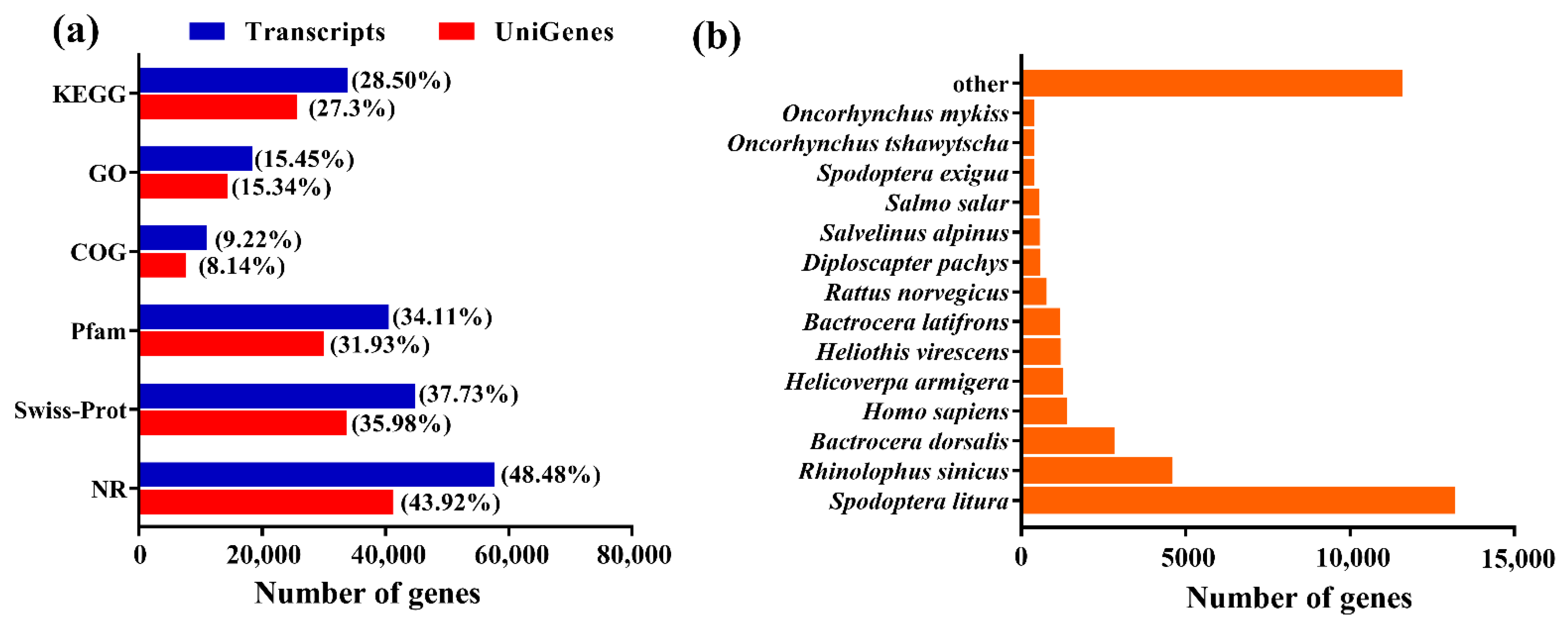
In order to identify the genes involved in the ecdysone signaling pathway, transcriptome sequencing analysis was used to sequence the transcriptomes of S. exigua larvae in MET and control groups. Quality control was performed on the original sequencing data to obtain high-quality data and conduct statistical analyses (Table 1). The transcriptome sequences were connected, filtered, and optimized using TransRate and Trinity. The two group transcriptome sequencing results were completed, after which the bioinformatics analysis was performed. The relativity of the sample data indicated that the results of the transcriptome sequencing were viable. The UniGenes and Transcripts number were successfully annotated in S. exigua (Figure 1a). Spodoptera litura had the highest homology compared with S. exigua (Figure 1b).
Table 1.
Date control statistics of transcriptome of S. exigua.
Figure 1.
Gene annotation and homology search. (a) The number of genes using six databases. NR, Swiss-Prot, Pfam, COG, GO, and KEGG. (b) Homology search of Illumina sequences matching with the NR database. 18,935 NR-annotated transcripts sequences were analyzed for species distribution.
The total number of transcripts and UniGenes were 118,834 and 93,874. After filtering, the average error rate located with 0.02~0.03%. The results show that >98% of each sample had a quality score of Q20, and >95% of each sample had a quality score of Q30. The GC content of the S. exigua were more than 49% (control group) and 49% (MET).
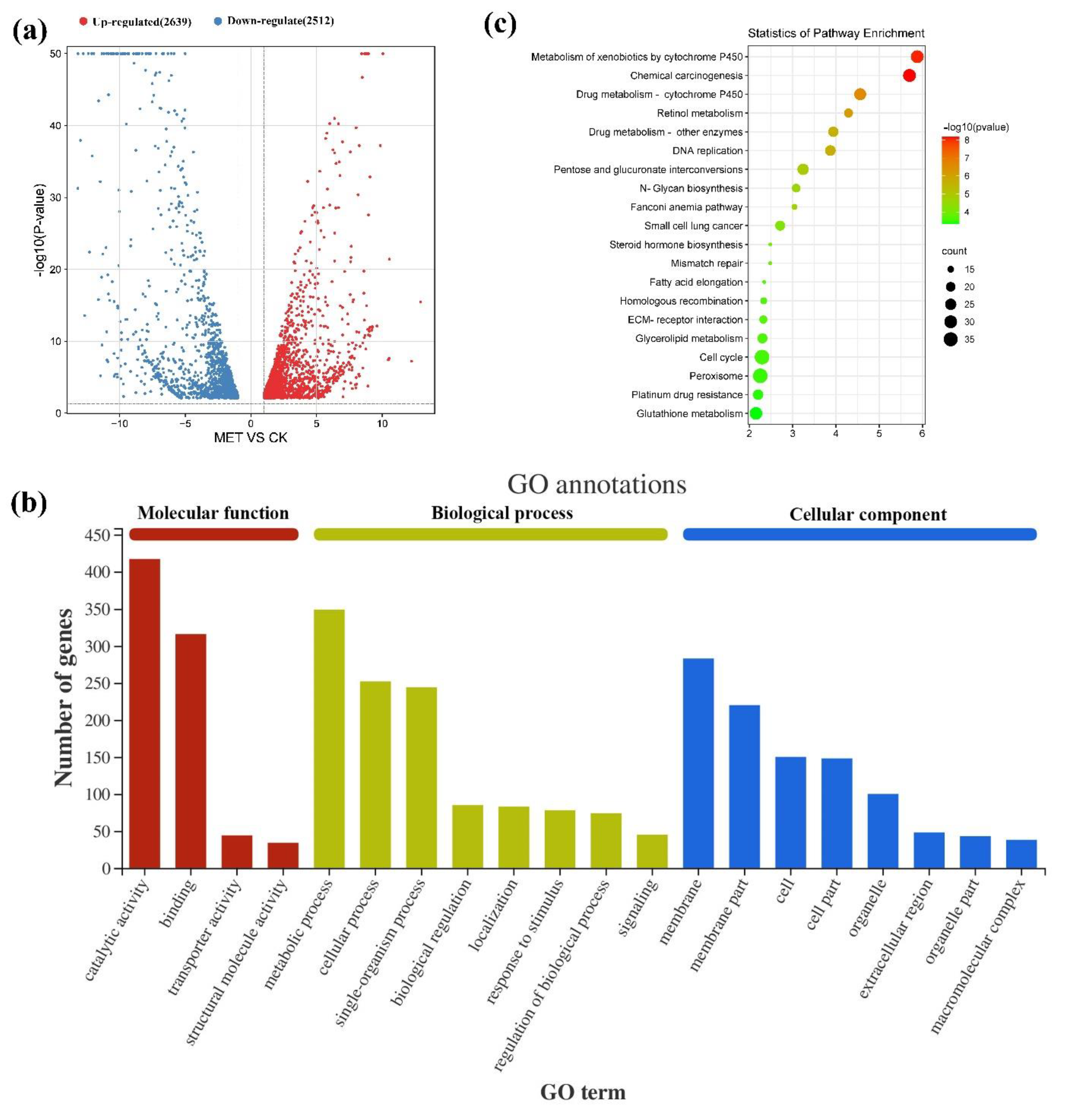
The functional distribution of differentially expressed genes (DEGs) in S. exigua was determined by comparing its transcriptomes in response to MET. Compared with the control group, 2639 genes were up-regulated and 2512 genes were down-regulated (Figure 2a). According to the GO terms, 3798 UniGenes were divided into three categories (biological processes, molecular functions, and cellular components) containing 20 variety classes. Catalytic activity (167), binding (104), and metabolic processes (88) contained the most UniGenes in the three categories (Figure 2b). By comparing the up-regulated and down-regulated GO enrichment, it was apparent that nearly all of them in S. exigua were more up-regulated than down-regulated after exposure to the sublethal dose of MET (Figure S1). KEGG enrichment showed that 20 KEGG pathways were assigned to signification enrichment (Figure 2c). There were 15 genes involved in the ecdysone signaling pathway (Table 2). In qPCR, EcRA, USP, and HR3 were up-regulated and E74, HR4, FTZ-F1, and HR38 were down-regulated. The qPCR results were compared with the RNA-seq analysis, indicating that the RNA-seq results were reliable (Figure S2).
Figure 2.
Function annotation and enrichment of DEGs. (a) Volcano plot of differentially expressed genes of S. exigua fed with MET (red spots represent significantly up-regulated genes; green spots represent significantly down-regulated genes). (b) GO function annotation analysis of S. exigua fed with MET (metabolic process under biological process had the primary number of UniGenes. The catalytic activity and binding under the molecular function were the most dominant. The membrane under the cellular component were the biggest group). (c) The most enriched KEGG pathways of S. exigua after exposure to a sublethal concentration of MET.
Table 2.
Ecdysone signaling pathway of DEGs.
2.2. Sublethal Doses of MET Induction on Ecdysone Signaling Pathway
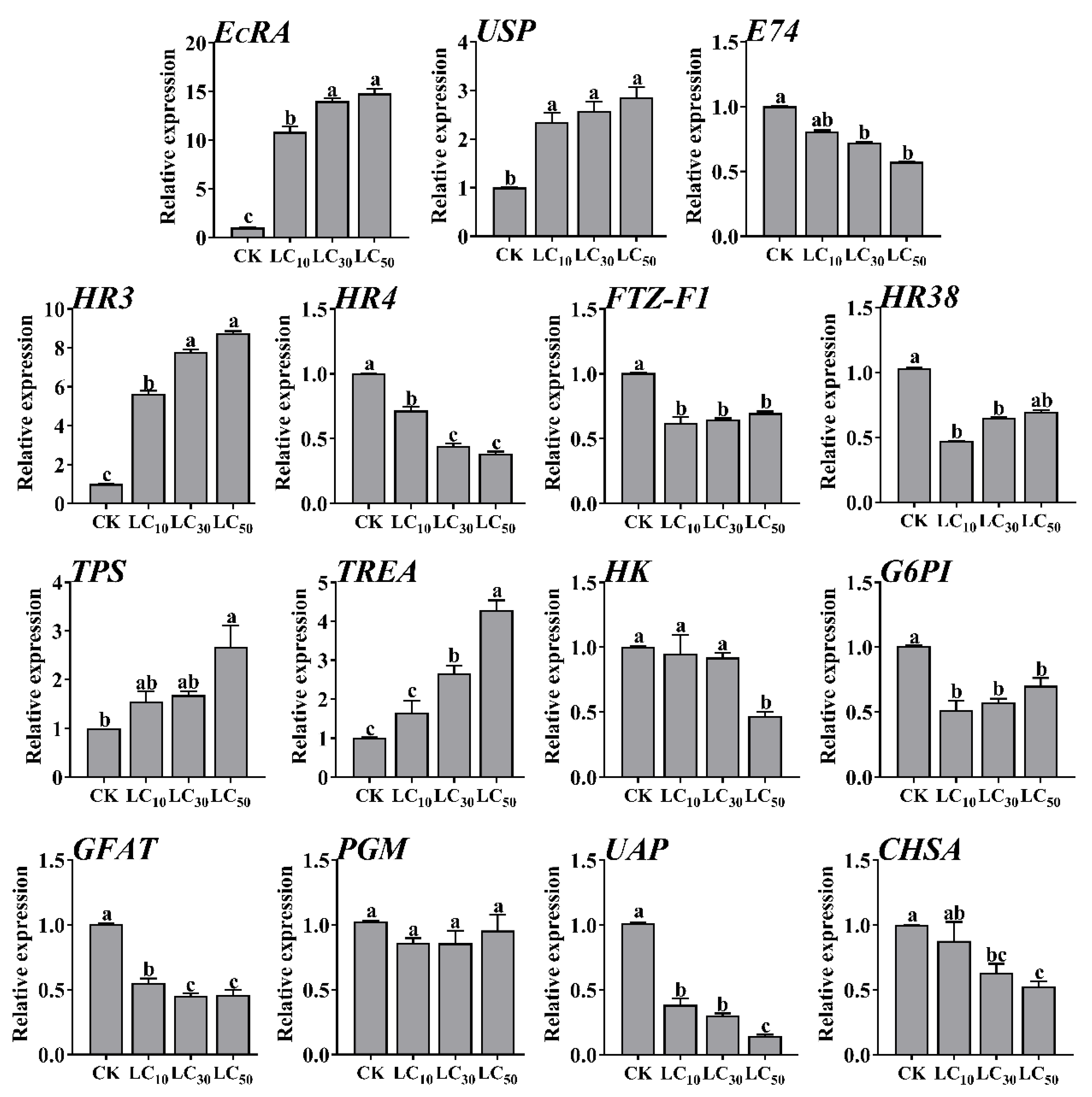
Different doses (LC10, LC30, and LC50) of MET were used to examine the dose-dependent effects in ecdysone signaling pathway gene expression in S. exigua. EcRA, USP, and HR3 were positively up-regulated and E74, HR4, FTZ-F1, and HR38 were down-regulated after the larvae were treated with different doses of MET. Notably, the up-regulation of EcRA increased to 10.85-fold under LC10 treatment, 14.02-fold under LC30 treatment, and 14.81-fold under LC50 treatment (Figure 3). TPS and TREA were up-regulated and HK, G6PI, GFAT, UAP, and CHSA were down-regulated after S. exigua were treated with different doses of MET. The up-regulation of TREA increased 1.65-fold under LC10 treatment, 2.66-fold under LC30 treatment, and 4.28-fold under LC50 treatment (Figure 3).
Figure 3.
Relative expression levels of ecdysone signaling pathway genes in S. exigua under MET treatment. Relative expression levels of ecdysone signaling pathway in L3 larvae were examined 72 h after exposure to the control treatment DEPC water (CK) or MET at three different dosages (LC10, LC30, and LC50). The bars represent the average (±SE) of biological repeats. Different letters above the bars indicate significant differences (p < 0.05), based on one-way ANOVA and at least significant difference test.
2.3. Down-Regulation of EcRA Increase the Mortality of MET to S. exigua
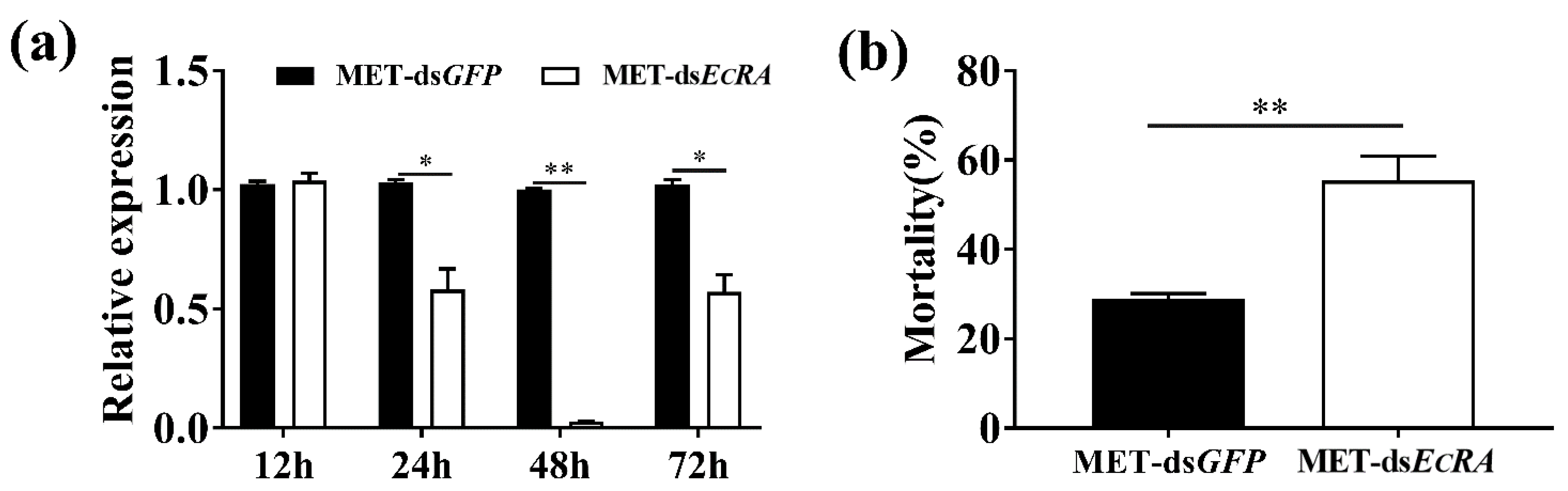
In order to explore the role of EcRA in toxicity of MET, we knocked down EcRA and interfering efficiency in epidermis was examined. Our results showed that the relative transcription levels of EcRA did not significantly change after treatment with MET at 12 h. However, the transcripts of EcRA were attenuated from 24 h to 72 h after RNAi (Figure 4a). The lowest expression level of EcRA was found at 48 h, with an 0.03-fold to the dsGFP. In addition, a nonsignificant benefit in mortality was observed when compared with dsGFP after the dsEcRA was injected at 24 h, 48 h, and 72 h (not shown). Knock down of EcRA in L3 larvae resulted in increased mortality. Approximately 55.43% of MET-dsEcRA treated larvae at the LC30 dose of MET (Figure 4b).
Figure 4.
Knockdown of EcRA increases the sensitivity of S. exigua to MET. (a) Relative expression of EcRA; (b) mortality (%) of the dsEcRA-treated S. exigua at 72 h after MET treatment. The columns represent averages, with vertical lines indicating SE. Significant differences were calculated by Student’s t-test (* p < 0.05; ** p < 0.01).
2.4. The Expression of Ecdysone Signaling Pathway Genes Are Regulated by MET-dsEcRA
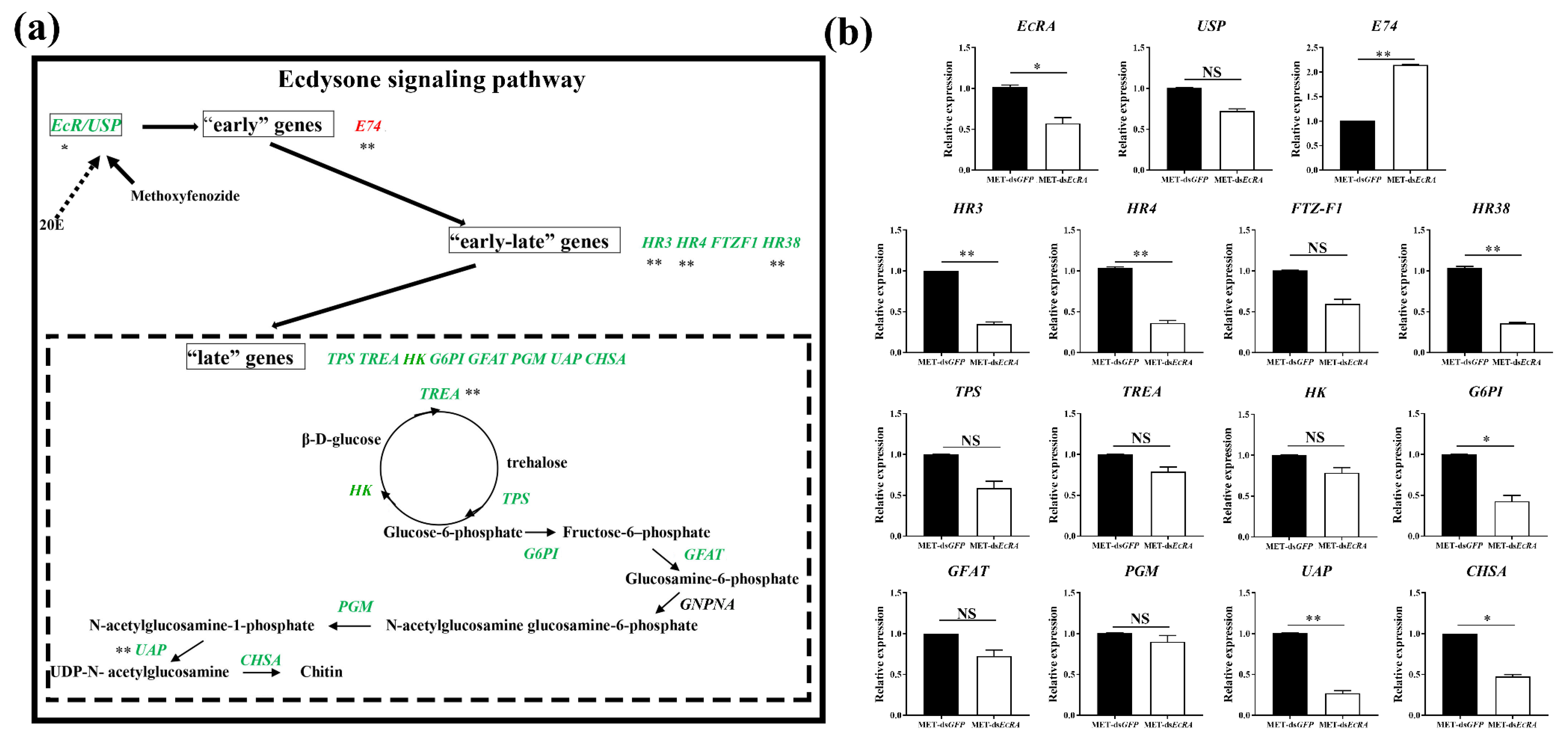
We collected the survival larvae treated with MET-dsEcRA at 72 h, the relative transcription levels of ecdysone signaling pathway genes were checked by qPCR. It was found that knock down of EcRA could influence other genes in the ecdysone signaling pathway of S. exigua (Figure 5a). The expression levels of HR3, HR4, and HR38 could be down-regulated by 0.34-fold, 0.36-fold, and 0.37-fold, respectively, after the larvae treated with MET-dsEcRA. The expression levels of E74 were up-regulated 2.15-fold, while there was no change in gene expression of USP and FTZ-F1. Moreover, down-regulation of EcRA affected expression of chitin biosynthesis pathway genes. The expression levels of G6PI, UAP, and CHSA were down-regulated by 0.42-fold, 0.26-fold, and 0.48-fold, respectively (Figure 5b).
Figure 5.
Ecdysone signaling pathway in insects. (a) 20E can bind to combine EcRA and USP, but MET can advance combination with EcRA and result in lethal molting. The compound could activate downstream genes. Downstream genes contain three category genes. The early genes contain E74, while early–late genes contain HR3, HR4, FTZ-F1, and HR38. Late genes contain chitin synthesis genes. Β-d-glucose is converted to Glucose-6-phosphate, Fructose-6-phosphate, Glucosamine-6-phosphate, N-acetylglucosamine glucosamine-6-phosphate, N-acetylglucosamine-1-phosphate, UDP-N- acetylglucosamine, and then to chitin. The activity of the enzymes encoded by TPS, TRE, HK, G6PI, GFAT, GNPNA, PGM, UAP, and CHSA. Significant differences were calculated by Student’s t-test (* p < 0.05; ** p < 0.01). (b) Relative expression of ecdysone signaling pathway genes after they were injected with dsEcRA in S. exigua under MET treatment. Columns represent averages, with vertical lines indicating SE. Significant differences were calculated by Student’s t-test (NS, p > 0.05; * p < 0.05; ** p < 0.01).
3. Discussion
S. exigua (Lepidoptera, Noctuidae) is a polyphagous pest. It attacks high value cultivated and industrial crops, including cotton and sugar beets [1]. Therefore, some studies assessed the toxicity of S. exigua treated with MET [24,25]. However, there are few studies assessing the relationship between MET toxicity and the role of genes in S. exigua. In this study, we analyzed S. exigua after it was treated with MET to assess the role of genes involved in the toxicity of MET. The result of the transcriptome sequencing, DEGs, qPCR, RNAi, and bioassay analysis exhibited that sublethal doses of MET could adversely affect the ecdysone signaling pathway, and knock down of EcRA increased the mortality of MET to S. exigua.
Transcriptome sequencing is used to identify the relationship between insecticides, pests, and key genes involved in pest control. Analysis of the transcriptome sequencing of Lufenuron against Spodoptera frugiperda provided several genes for defensive mechanisms [26]. We found 15 genes in the ecdysone signaling pathway of S. exigua using transcriptome sequencing. This lays a foundation for studying the relationship between insecticides and ecdysone signaling pathway genes. EcR and SfUSP-2 were significantly induced by the hormone agonist MET [27]. The expression of PxTre increased in flubendiamide [28]. The expression of HK, G6PI2, GFAT, PAGM1, and UAP genes decreased significantly after the injection of validamycin [29], while mRNA levels of ChsA dramatically decreased in response to chlorantraniliprole [30]. MET affects development and changes the expression of the ecdysone signaling pathway of S. exigua [25]. Previous studies also have demonstrated that MET affected the expression of H. armigera 20E-related genes [31]. Our results confirmed the inductive effect of MET on the ecdysone signaling pathway. This conclusion is similar to the effect that halofenozide has on 20E-response genes in Leptinotarsa decemlineata, as halofenozide can activate detoxification, and the ability of agonists to regulate the expression of the 20E-response genes [32]. It has been shown that sublethal doses of MET lowered the intrinsic 20E titer [31]; therefore, MET affects larval development due to the change it induces in the intrinsic 20E titer. In our research, EcRA was significantly regulated in three different sublethal doses. Interestingly, Plutella xylostella was treated with LC25 and LC50 of fufenozide for 48 h, and PxEcR-B expression was downregulated [33]. EcR expression trends in the two species of Lepidoptera differed following treatment with the same kind of insecticides. Hence, we identified the EcRA gene as the primary research objective after treating S. exigua with MET. However, little is known about the interaction relationship between EcRA and MET.
EcRA was an important gene in the ecdysone signaling pathway, and knock down of EcRA in S. exigua increased the sensitivity to MET. Similarly, miR-189942 suppressed PxEcR-B expression and influenced the tolerance of P. xylostella to fufenozide [33]. In this study, we used an injection RNAi technique to determine that the expression of EcRA significantly decreased after dsEcRA injection compared with the control. Moreover, we applied gene silencing followed bioassay to evaluate the role of EcRA in the MET toxicity to S. exigua. After the EcRA was knocked down, the results of the bioassay showed that mortality of S. exigua was increased when exposed to MET. It indicates that EcRA involves in the detoxification of MET. Overall, these findings indicate that EcRA plays an important role in regulating the toxicity of MET, but that crosstalk between the MET and dsEcRA treatments for the genes in the ecdysone signaling pathway requires further study.
In this study, knockdown of EcRA influenced the expression of genes in the ecdysone signaling pathway. Similarly, the mRNA level of 20E signaling genes was significantly changed after the knockdown of EcR [34,35,36,37,38]. However, the expression of E74 differed from previous research. There are two possible reasons for this. First, Leptinotarsa decemlineata and Henosepilachna vigintioctopunctata belong to the order Coleoptera, while S. exigua belongs to the order Lepidoptera, and the structure and composition could differ among the three pests. Second, MET affects the expression of E74. After the injection of dsEcRcom, the chitin contents in the cuticle significantly decreased [14]. In our research, the expressions of G6PI, UAP, and CHSA significantly changed in S. exigua treated with MET-dsEcRA. The expression levels of SeTre-1, SeG6PI, SeUAP, and SeCHSA were significantly reduced when dsEcRcom was injected at the larval stage of S. exigua [14].
Overall, our study reveals the gene expression of the ecdysone signaling pathway in S. exigua treated with different doses of MET, and that knocking down EcRA affects mortality of MET and the ecdysone signaling pathway. These results suggest that EcRA, as an important gene in ecdysone signaling pathway, plays an important role of totoxic process of MET to the target pest. Therefore, our findings offer a deep insight into interaction of EcRA and MET, and the action mechanisms of MET.
4. Materials and Methods
4.1. Chemicals
The insecticide used in this study was Methoxyfenozide (MET) (97% purity), which was provided by Anyang Quanfeng Biotechnology Co., Ltd. (Quanfeng Biotechnology Co., Ltd, Anyang, China). All compounds were technical grade materials, and stock solutions of 100 mg/L of technical grade materials were prepared using acetone as the solvent [23].
4.2. Insect Rearing
S. exigua larvae were collected from the cotton fields of Anyang, Henan, China, and had been raised for at least 30 generations in a greenhouse before the bioassay [39]. The larvae were maintained at (28 ± 1) °C with a photoperiod of 16:8 (L:D) H and 70% relative humidity. Adults were fed with a 10% (w/v) honey solution.
4.3. Sample Collection and RNA Isolation
The MET was dissolved in acetone and diluted with DEPC water to the desired concentration. L3 larvae were starved 4 h and placed into 24 orifice tissue culture plates, containing the artificial diet, via the drug–membrane method. A total of 100 μL different sublethal doses of MET (LC10 = 7.00 ng/cm2, LC30 = 21.00 ng/cm2, LC50 = 38.20 ng/cm2) was added to every orifice, and 100 μL of DEPC water was used as a control group [23]. The feed conditions of S. exigua were not changed.
After 72 h of MET induction, samples of the L4 larvae were taken from all treatments. Larvae were fixed and dissected, after which the cuticles were collected with tweezers. The cuticles were cleaned and placed in a 0.7% saline solution. The filter paper absorbed the residual saline from the cuticle. Biological samples were performed in triplicate, with each comprising one L4 larva cuticle that was released in a 1.5 mL tube. Total RNA (LC10, LC30, LC50, and DEPC water) was isolated from the cuticle tissues using TRIzol Reagent (Invitrogen, Carlsbad, CA, USA) according to the manufacturer’s instructions. Total RNA was stored at −80 °C.
4.4. Transcriptome Data Analysis
Approximately 1 μg of total RNA (LC30 and DEPC water), obtained as described above, were isolated using Poly (A) mRNA with poly-T oligo attached magnetic beads (Invitrogen). Total RNA was sent to MAJORBIO CLOUD for cDNA library construction and transcriptome sequencing. The library was constructed using an Illumina TruseqTM RNA sample prep kit and the software was used to assemble all of the clean data from scratch. The reads were decomposed, after which we built the k-mer (default k = 25), selected the seed k-mer, and extended both sides to form a contig. Overlapping contigs were clustered to form components, and each component became a set of possible representations of mutable shear isoforms or homologous genes. Each component had a corresponding DE Bruijn Graph. The DE Bruijn Graph of each component was simplified to output the full-length transcript of the variable-shear subtype, and the transcript corresponding to the homologous gene was combed to obtain the splicing result file. All UniGenes and transcripts obtained by transcriptome assembly were compared with six databases (NR, Swiss-prot, Pfam, COG, GO, and KEGG), with results providing statistics on the annotation and KEGG of each database.
The RSEM program is a tool used to estimate differentially expressed genes. The FPKM (Fragments per Kilobases per Million) method reduces the influence of differences in gene length and sequencing volume on the calculated gene expression, which can be directly used to compare differences in gene expression between different samples. Raw counts were statistically analyzed using the DESeq2 software to obtain the UniGenes and Transcripts, and compare differences in expression between the groups based on certain screening conditions.
To identify the ecdysone signaling pathway genes in S. exigua, we compiled all the known genes involved in this pathway based on reports on S. exigua and other insects and sequenced them based on their functional annotation in the transcriptome database [19,40,41]. Primers were designed according to homologous species sequences. The high amplification efficiency and melting curve are effective at confirming primers (Table S1).
4.5. Sublethal Doses of MET Induction
To investigate sublethal doses of MET induction, approximately 500 ng of total RNA (LC10, LC30, LC50, and DEPC water), prepared according to the above section, were selected to synthesize cDNA. The cDNA was synthesized from total RNA using Evo M-MLV Reverse Transcriptase Kit (AG, Changsha, China). The cDNA synthesized mixture (10 μL) contained 500 ng total RNA, 1 μL gDNA Clean Reagent, 2 μL 5× gDNA Clean Buffer, and RNase Free water to 10 μL. The reaction conditions were 42 °C for 2 min, and 4 °C for 10 min. The mix of step one contained 1 μL Evo M-MLV RTase Enzyme Mix, 5 μL 5× RTase Reaction Buffer Mix I, 1 μL RT Primer MIX, and 4 μL RNase Free water to 20 μL. The cDNA was synthesized following these cycling conditions: 15 min at 37 °C, 5 s at 85 °C, and 10 min at 4 °C. All cDNA was stored at −20 °C.
4.6. Double-Stranded RNA (dsRNA) Synthesis
The interference primers were subjected to biosynthesis according to the T7 RNA polymerase promoter (Table S1). The DNA templates for dsRNA synthesis were PCR-amplified using primer sets containing the T7 promoter sequence from previously mentioned cDNA. The interference primers were synthesized according to the T7 RNA polymerase promoter. Sequences of dsRNA were compared with sequences of the ecdysone signaling pathway genes in the transcriptome data. A 565 bp fragment of the target gene (EcRA, ADK66917.1) and a 467 bp fragment of the green fluorescent protein gene (GFP, ACY56286.1) were amplified using specific primers [42]. PCR products were analyzed on 1% agarose gel, after which the PCR products were cloned and sequenced to confirm their identities. The resulting PCR products were then purified with a DNA cleanup kit and used as templates for in vitro transcription using the Megascript T7 transcription kit (Invitrogen, Carlsbad, CA, USA) according to the manufacturer’s instructions. dsRNA was amplified using primers with the T7 RiboMAXTM Express RNAi system. The resulting dsRNA was dissolved in DEPC water and quantified at 260 nm using a spectrophotometer Nanodrop2000C (Thermo Fisher Scientific, Carlsbad, CA, USA). The diluted dsRNA was used immediately or stored in 10 μL aliquot at −80 °C.
4.7. RNA Interference (RNAi) and Bioassays
The one μg dsRNA was injected into L3 larva (molt < 3 h) using a microsyringe (Hamilton, Reno, NV, USA). After the injection, the L3 larvae were placed into 24 orifice tissue culture plates containing the artificial diet via the drug–membrane method; 100 μL of MET (LC30 = 21.00 ng/cm2) was added to each orifice. The control was injected with dsGFP. All treatments contained MET-dsGFP and MET-dsEcRA. Every treatment was replicated five times with 120 larvae, for a total of 240 treated larvae. After the successful knockdown of EcRA, the mortality of S. exigua larvae to MET was calculated after 72 h.
We collected the surviving L3 larvae following treatment at 12 h, 24 h, and 48 h, and the L4 larvae following treatment at 72 h. The larval cuticles were dissected, and total RNA extracted. The cDNA was synthesized from total RNA and stored at −20 °C.
4.8. Expression of Ecdysone Signaling Pathway Genes Regulated by MET-dsEcRA
In order to analyze the expression of ecdysone signaling pathway genes regulated by MET-dsEcRA, survival L4 larvae treated with MET-dsGFP or MET-dsEcRA, were collected in Section 4.7. Total RNA was extracted, cDNA was synthesized and stored at −20 °C.
4.9. qPCR Assays
The expression of EcRA, USP, E74, HR3, HR4, FTZ-F1, HR38, TPS, TREA, HK, G6PI, GFAT, PGM, UAP, and CHSA were analyzed after the larvae were treated with sublethal doses of MET and MET-dsRNA via qPCR. The interference efficiency of dsEcRA was performed by qPCR from 12 h to 72 h. The qPCR program was set to the following cycling conditions: 30 s at 95 °C, 40 cycles of 5 s at 95 °C, 10 s at 60 °C, and 25 s at 72 °C. The reference genes were the elongation factor (SeEF) and Glyceraldehyde-3-phosphate dehydrogenase (SeGAPDH) [43]. All samples were performed in triplicate. Target genes were calculated using the relative quantitative method (2−ΔΔCT).
4.10. Statistical Data Analysis
All the results in the experiment were presented as the mean ± standard error (SE). Significant differences were determined by Student’s t-test, or one-way ANOVA, followed by a least significant difference test for mean comparison. The bioassay data were analyzed using IBM SPSS Statistics 20 (SPSS, Chicago, IL, USA). The primers were designed in Beacon Designer 7.0 software (Premier Biosoft, Palo Alto, CA, USA) and the pictures were composite using GraphPad Prism 7.0 (GraphPad Software Inc., San Diego, CA, USA).
Supplementary Materials
The following are available online at https://www.mdpi.com/article/10.3390/ijms22169080/s1.
Author Contributions
Conceptualization, Z.Z. and Y.M. (Yajie Ma); Methodology, X.M. and H.H.; Validation, all the authors; Formal Analysis, D.W. and X.S.; Investigation, all the authors; Resources, all the authors; Data Curation, all the authors; Writing—Original Draft Preparation, Z.Z., Y.M. (Yajie Ma), D.W. and X.S.; Writing—Review and Editing, all the authors; Visualization, all the authors; Supervision, X.R. and Y.M. (Yan Ma); and Project Administration, Y.M. (Yan Ma) All authors have read and agreed to the published version of the manuscript.
Funding
This research was founded by the Agricultural Science and Technology Innovation Program of Chinese Academy of Agricultural Sciences and Central Public-interest Scientific Institution Basal Research Fund (No.1610162021029).
Institutional Review Board Statement
Not applicable.
Informed Consent Statement
Informed consent was obtained from all subjects involved in the study.
Data Availability Statement
The raw RNA-seq data are available in the National Center for Biotechnology Information (NCBI) under SRA accession number: PRJNA705838.
Conflicts of Interest
The authors declare no conflict of interest.
References
- Lai, T.; Li, J.; Su, J. Monitoring of beet armyworm Spodoptera exigua (Lepidoptera: Noctuidae) resistance to chlorantraniliprole in China. Pestic. Biochem. Physiol. 2011, 101, 198–205. [Google Scholar] [CrossRef]
- Ishtiaq, M.; Saleem, M.A.; Razaq, M. Monitoring of resistance in Spodoptera exigua (Lepidoptera: Noctuidae) from four districts of the Southern Punjab, Pakistan to four conventional and six new chemistry insecticides. Crop. Prot. 2012, 33, 13–20. [Google Scholar] [CrossRef]
- Su, J.; Sun, X.-X. High level of metaflumizone resistance and multiple insecticide resistance in field populations of Spodoptera exigua (Lepidoptera: Noctuidae) in Guangdong Province, China. Crop. Prot. 2014, 61, 58–63. [Google Scholar] [CrossRef]
- Ahmad, M.; Arif, M.I. Resistance of beet armyworm Spodoptera exigua (Lepidoptera: Noctuidae) to endosulfan, organophosphorus and pyrethroid insecticides in Pakistan. Crop. Prot. 2010, 29, 1428–1433. [Google Scholar] [CrossRef]
- Kumar, M.S.; Kabra, A.N.; Min, B.; El-Dalatony, M.M.; Xiong, J.; Thajuddin, N.; Lee, D.S.; Jeon, B.H. Insecticides induced biochemical changes in freshwater microalga Chlamydomonas mexicana. Environ. Sci. Pollut. Res. Int. 2016, 23, 1091–1099. [Google Scholar] [CrossRef] [PubMed]
- Osorio, A.; Martinez, A.M.; Schneider, M.I.; Diaz, O.; Corrales, J.L.; Aviles, M.C.; Smagghe, G.; Pineda, S. Monitoring of beet armyworm resistance to spinosad and methoxyfenozide in Mexico. Pest. Manag. Sci. 2008, 64, 1001–1007. [Google Scholar] [CrossRef] [PubMed]
- Jiang, B.; Guo, B.; Cui, J.; Dong, Y.; Cui, L.; Zhang, L.; Yang, Q.; Yang, X. New lead discovery of insect growth regulators based on the scaffold hopping strategy. Bioorg. Med. Chem. Lett. 2020, 30, 127500. [Google Scholar] [CrossRef]
- Petryk, A.; Warren, J.T.; Marqués, G.; Jarcho, M.P.; Gilbert, L.I.; Kahler, J.; Parvy, J.P.; Li, Y.; Dauphin-Villemant, C.; O’Connor, M.B. Shade is the Drosophila P450 enzyme that mediates the hydroxylation of ecdysone to the steroid insect molting hormone 20-hydroxyecdysone. Proc. Natl. Acad. Sci. USA 2003, 100, 13773–13778. [Google Scholar] [CrossRef] [PubMed] [Green Version]
- Guo, W.-C.; Liu, X.-P.; Fu, K.-Y.; Shi, J.-F.; Lü, F.-G.; Li, G.Q. Functions of nuclear receptor HR3 during larval-pupal molting in Leptinotarsa decemlineata (Say) revealed by in vivo RNA interference. Insect Biochem. Mol. Biol. 2015, 63, 22–33. [Google Scholar] [CrossRef]
- Xu, Q.-Y.; Meng, Q.; Deng, P.; Guo, W.-C.; Li, G.Q. Leptinotarsa hormone receptor 4 (HR4) tunes ecdysteroidogenesis and mediates 20-hydroxyecdysone signaling during larval-pupal metamorphosis. Insect Biochem. Mol. Biol. 2017, 94, 50–60. [Google Scholar] [CrossRef]
- Liu, X.-P.; Fu, K.-Y.; Lü, F.-G.; Meng, Q.; Guo, W.-C.; Li, G.Q. Involvement of FTZ-F1 in the regulation of pupation in Leptinotarsa decemlineata (Say). Insect Biochem. Mol. Biol. 2014, 55, 51–60. [Google Scholar] [CrossRef]
- Yogindran, S.; Rajam, M.V. Artificial miRNA-mediated silencing of ecdysone receptor (EcR) affects larval development and oogenesis in Helicoverpa armigera. Insect Biochem. Mol. Biol. 2016, 77, 21–30. [Google Scholar] [CrossRef]
- Chen, J.; Tang, B.; Chen, H.; Yao, Q.; Huang, X.; Chen, J.; Zhang, D.; Zhang, W. Different functions of the insect soluble and membrane-bound trehalase genes in chitin biosynthesis revealed by RNA interference. PLoS ONE 2010, 5, e10133. [Google Scholar] [CrossRef]
- Yao, Q.; Zhang, D.; Tang, B.; Chen, J.; Chen, J.; Lu, L.; Zhang, W. Identification of 20-hydroxyecdysone late-response genes in the chitin biosynthesis pathway. PLoS ONE 2010, 5, e14058. [Google Scholar] [CrossRef]
- Chen, J.; Li, T.; Pang, R. miR-2703 regulates the chitin biosynthesis pathway by targeting chitin synthase 1a in Nilaparvata lugens. Insect Mol. Biol. 2020, 29, 38–47. [Google Scholar] [CrossRef] [PubMed]
- Yang, M.; Zhao, L.; Shen, Q.; Xie, G.; Wang, S.; Tang, B. Knockdown of two trehalose-6-phosphate synthases severely affects chitin metabolism gene expression in the brown planthopper Nilaparvata lugens. Pest. Manag. Sci. 2017, 73, 206–216. [Google Scholar] [CrossRef]
- Gu, S.H.; Lin, J.L.; Lin, P.L. PTTH-stimulated ERK phosphorylation in prothoracic glands of the silkworm, Bombyx mori: Role of Ca(2+)/calmodulin and receptor tyrosine kinase. J. Insect Physiol. 2010, 56, 93–101. [Google Scholar] [CrossRef]
- Scieuzo, C.; Nardiello, M.; Salvia, R.; Pezzi, M.; Chicca, M.; Leis, M.; Bufo, S.A.; Vinson, S.B.; Rao, A.; Vogel, H.; et al. Ecdysteroidogenesis and development in Heliothis virescens (Lepidoptera: Noctuidae): Focus on PTTH-stimulated pathways. J. Insect Physiol. 2018, 107, 57–67. [Google Scholar] [CrossRef] [PubMed]
- Rybczynski, R.; Bell Sc Fau-Gilbert, L.I.; Gilbert, L.I. Activation of an extracellular signal-regulated kinase (ERK) by the insect prothoracicotropic hormone. Mol. Cell. Endocrinol. 2001, 184, 1–11. [Google Scholar] [CrossRef]
- Yao, Q.; Xu, S.; Dong, Y.; Quan, L.; Chen, B. Ecdysone Receptor (EcR) and Ultraspiracle Protein (USP) Genes From Conopomorpha sinensis Bradley Eggs: Identification and Expression in Response to Insecticides. Front. Physiol. 2020, 11, 851. [Google Scholar] [CrossRef]
- Smagghe, G.; Böhm, G.-A.; Richter, K.; Degheele, D. Effect of Nonsteroidal Ecdysteroid Agonists on Ecdysteroid Titer in Spodoptera exigua and Leptinotarsa decemlineata. J. Insect Physiol. 1995, 41, 971–974. [Google Scholar] [CrossRef]
- Sun, X.; Song, Q.; Barrett, B. Effects of ecdysone agonists on the expression of EcR, USP and other specific proteins in the ovaries of the codling moth (Cydia pomonella L.). Insect Biochem. Mol. Biol. 2003, 33, 829–840. [Google Scholar] [CrossRef]
- Chen, J.; Jiang, W.; Hu, H.; Ma, X.; Li, Q.; Song, X.; Ren, X.; Ma, Y. Joint toxicity of methoxyfenozide and lufenuron on larvae of Spodoptera exigua Hübner (Lepidoptera: Noctuidae). J. Asia-Pac. Entomol. 2019, 22, 795–801. [Google Scholar] [CrossRef]
- Aguirre, O.U.; Martinez, A.M.; Campos-Garcia, J.; Hernandez, L.A.; Figueroa, J.I.; Lobit, P.; Vinuela, E.; Chavarrieta, J.M.; Smagghe, G.; Pineda, S. Foliar persistence and residual activity of methoxyfenozide against beet armyworm (Lepidoptera: Noctuidae). Insect Sci. 2013, 20, 734–742. [Google Scholar] [CrossRef] [PubMed]
- Mosallanejad, H.; Soin, T.; Smagghe, G. Selection for resistance to methoxyfenozide and 20-hydroxyecdysone in cells of the beet armyworm, Spodoptera exigua. Arch. Insect Biochem. Physiol. 2008, 67, 36–49. [Google Scholar] [CrossRef] [PubMed]
- Do Nascimento, A.R.; Fresia, P.; Consoli, F.L.; Omoto, C. Comparative transcriptome analysis of lufenuron-resistant and susceptible strains of Spodoptera frugiperda (Lepidoptera: Noctuidae). BMC Genom. 2015, 16, 985. [Google Scholar] [CrossRef] [PubMed] [Green Version]
- Giraudo, M.; Audant, P.; Feyereisen, R.; Le Goff, G. Nuclear receptors HR96 and ultraspiracle from the fall armyworm (Spodoptera frugiperda), developmental expression and induction by xenobiotics. J. Insect Physiol. 2013, 59, 560–568. [Google Scholar] [CrossRef] [PubMed]
- Sun, S.Q.; Wang, N.M.; Li, J.J.; Jin, M.H.; Xue, C.B. Reduced fecundity and regulation of reproductive factors in flubendiamide-resistant strains of Plutella xylostella. Pestic. Biochem. Physiol. 2020, 169, 104668. [Google Scholar] [CrossRef]
- Tang, B.; Yang, M.; Shen, Q.; Xu, Y.; Wang, H.; Wang, S. Suppressing the activity of trehalase with validamycin disrupts the trehalose and chitin biosynthesis pathways in the rice brown planthopper, Nilaparvata lugens. Pestic. Biochem. Physiol. 2017, 137, 81–90. [Google Scholar] [CrossRef]
- Chen, J.; Lu, Z.; Li, M.; Mao, T.; Wang, H.; Li, F.; Sun, H.; Dai, M.; Ye, W.; Li, B. The mechanism of sublethal chlorantraniliprole exposure causing silkworm pupation metamorphosis defects. Pest. Manag. Sci. 2020, 76, 2838–2845. [Google Scholar] [CrossRef]
- Zhang, W.; Ma, L.; Liu, X.; Peng, Y.; Liang, G.; Xiao, H. Dissecting the roles of FTZ-F1 in larval molting and pupation, and the sublethal effects of methoxyfenozide on Helicoverpa armigera. Pest. Manag. Sci. 2021, 77, 1328–1338. [Google Scholar] [CrossRef] [PubMed]
- Shi, J.F.; Fu, J.; Mu, L.L.; Guo, W.C.; Li, G.Q. Two Leptinotarsa uridine diphosphate N-acetylglucosamine pyrophosphorylases are specialized for chitin synthesis in larval epidermal cuticle and midgut peritrophic matrix. Insect Biochem. Mol. Biol. 2016, 68, 1–12. [Google Scholar] [CrossRef] [PubMed]
- Li, X.; Ren, X.; Liu, Y.; Smagghe, G.; Liang, P.; Gao, X. MiR-189942 regulates fufenozide susceptibility by modulating ecdysone receptor isoform B in Plutella xylostella (L.). Pestic. Biochem. Physiol. 2020, 163, 235–240. [Google Scholar] [CrossRef]
- Xu, Q.-Y.; Deng, P.; Zhang, Q.; Li, A.; Fu, K.-Y.; Guo, W.-C.; Li, G.Q. Ecdysone receptor isoforms play distinct roles in larval-pupal-adult transition in Leptinotarsa decemlineata. Insect Sci. 2019, 27, 487–499. [Google Scholar] [CrossRef]
- Wu, J.J.; Mu, L.L.; Kang, W.N.; Ze, L.J.; Shen, C.H.; Jin, L.; Anjum, A.A.; Li, G.Q. RNA interference targeting ecdysone receptor blocks the larval-pupal transition in Henosepilachna vigintioctopunctata. Insect Sci. 2021, 28, 419–429. [Google Scholar] [CrossRef]
- Lenaerts, C.; Van Wielendaele, P.; Peeters, P.; Vanden Broeck, J.; Marchal, E. Ecdysteroid signalling components in metamorphosis and development of the desert locust, Schistocerca gregaria. Insect Biochem. Mol. Biol. 2016, 75, 10–23. [Google Scholar] [CrossRef]
- Shen, C.; Xu, Q.-Y.; Mu, L.-L.; Fu, K.-Y.; Guo, W.-C.; Li, G.Q. Involvement of Leptinotarsa hormone receptor 38 in the larval-pupal transition. Gene 2020, 751, 144779. [Google Scholar] [CrossRef] [PubMed]
- Xu, Q.-Y.; Deng, P.; Li, A.; Zhang, Q.; Mu, L.-L.; Fu, K.-Y.; Guo, W.-C.; Li, G.Q. Functional characterization of ultraspiracle in Leptinotarsa decemlineata using RNA interference assay. Insect Mol. Biol. 2019, 28, 676–688. [Google Scholar] [CrossRef]
- Ren, X.-L.; Chen, R.-R.; Zhang, Y.; Ma, Y.; Cui, J.-J.; Han, Z.-J.; Mu, L.-L.; Li, G.Q. A Spodoptera exigua Cadherin Serves as a Putative Receptor for Bacillus thuringiensis Cry1Ca Toxin and Shows Differential Enhancement of Cry1Ca and Cry1Ac Toxicity. Appl. Environ. Microbiol. 2013, 79, 5576–5583. [Google Scholar] [CrossRef] [Green Version]
- Luan, J.B.; Ghanim, M.; Liu, S.S.; Czosnek, H. Silencing the ecdysone synthesis and signaling pathway genes disrupts nymphal development in the whitefly. Insect Biochem. Mol. Biol. 2013, 43, 740–746. [Google Scholar] [CrossRef] [PubMed]
- Swevers, L.; Soin, T.; Mosallanejad, H.; Iatrou, K.; Smagghe, G. Ecdysteroid signaling in ecdysteroid-resistant cell lines from the polyphagous noctuid pest Spodoptera exigua. Insect Biochem. Mol. Biol. 2008, 38, 825–833. [Google Scholar] [CrossRef] [PubMed]
- Wang, L.X.; Niu, C.D.; Zhang, Y.; Jia, Y.L.; Zhang, Y.J.; Zhang, Y.; Zhang, Y.Q.; Gao, C.F.; Wu, S.F. The NompC channel regulates Nilaparvata lugens proprioception and gentle-touch response. Insect Biochem. Mol. Biol. 2019, 106, 55–63. [Google Scholar] [CrossRef] [PubMed]
- Zhu, X.; Yuan, M.; Shakeel, M.; Zhang, Y.-J.; Wang, S.; Wang, X.; Zhan, S.; Kang, T.; Li, J. Selection and Evaluation of Reference Genes for Expression Analysis Using qRT-PCR in the Beet Armyworm Spodoptera exigua (Hubner) (Lepidoptera: Noctuidae). PLoS ONE 2014, 9, e84730. [Google Scholar] [CrossRef] [PubMed]
Publisher’s Note: MDPI stays neutral with regard to jurisdictional claims in published maps and institutional affiliations. |
© 2021 by the authors. Licensee MDPI, Basel, Switzerland. This article is an open access article distributed under the terms and conditions of the Creative Commons Attribution (CC BY) license (https://creativecommons.org/licenses/by/4.0/).