Next Article in Journal
Complementary Role of P2 and Adenosine Receptors in ATP Induced-Anti-Apoptotic Effects Against Hypoxic Injury of HUVECs
Next Article in Special Issue
Involvement of p38 Activation and Mitochondria in Death of Human Leukemia Cells Induced by an Agonistic Human Monoclonal Antibody Fab Specific to TRAIL Receptor 1
Previous Article in Journal
Characterization of the High-Affinity Drug Ligand Binding Site of Mouse Recombinant TSPO
Previous Article in Special Issue
Involvement of Actin Cytoskeletal Components in Breast Cancer Cell Fusion with Human Mesenchymal Stroma/Stem-Like Cells
Review

Differential Regulation of Type I and Type III Interferon Signaling


by 1,2,*,†, 1,2,† and 1,2,*
1
Schaller Research Group at CellNetworks, Department of Infectious Diseases, Heidelberg University Hospital, 69120 Heidelberg, Germany
2
Research Group “Cellular Polarity and Viral Infection” (F140), German Cancer Research Center (DKFZ), 69120 Heidelberg, Germany
*
Authors to whom correspondence should be addressed.
These authors contributed equally to this work.
Int. J. Mol. Sci. 2019, 20(6), 1445; https://doi.org/10.3390/ijms20061445
Received: 21 February 2019 / Revised: 15 March 2019 / Accepted: 18 March 2019 / Published: 21 March 2019
(This article belongs to the Special Issue Signaling: From Past to Future)
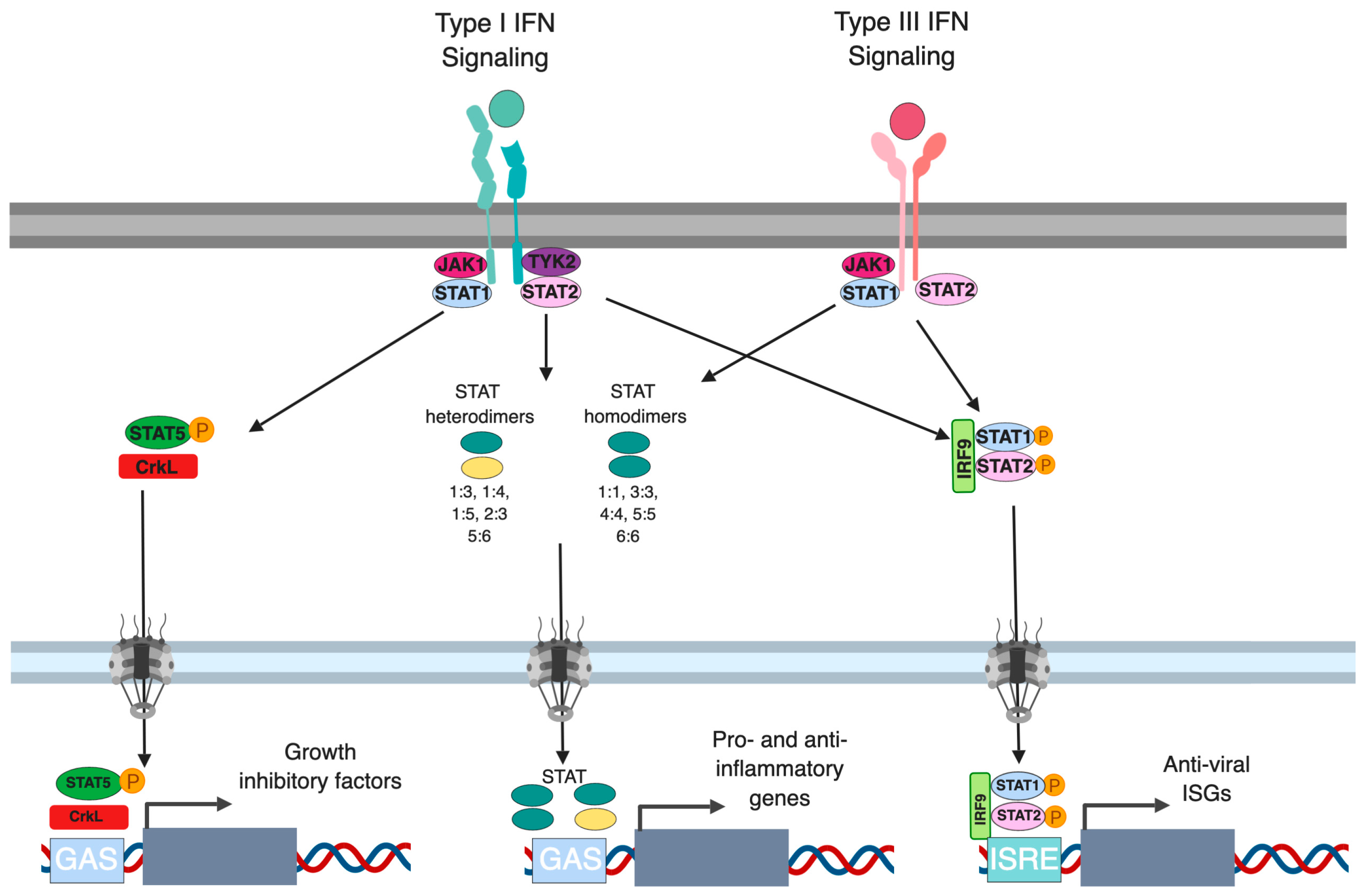
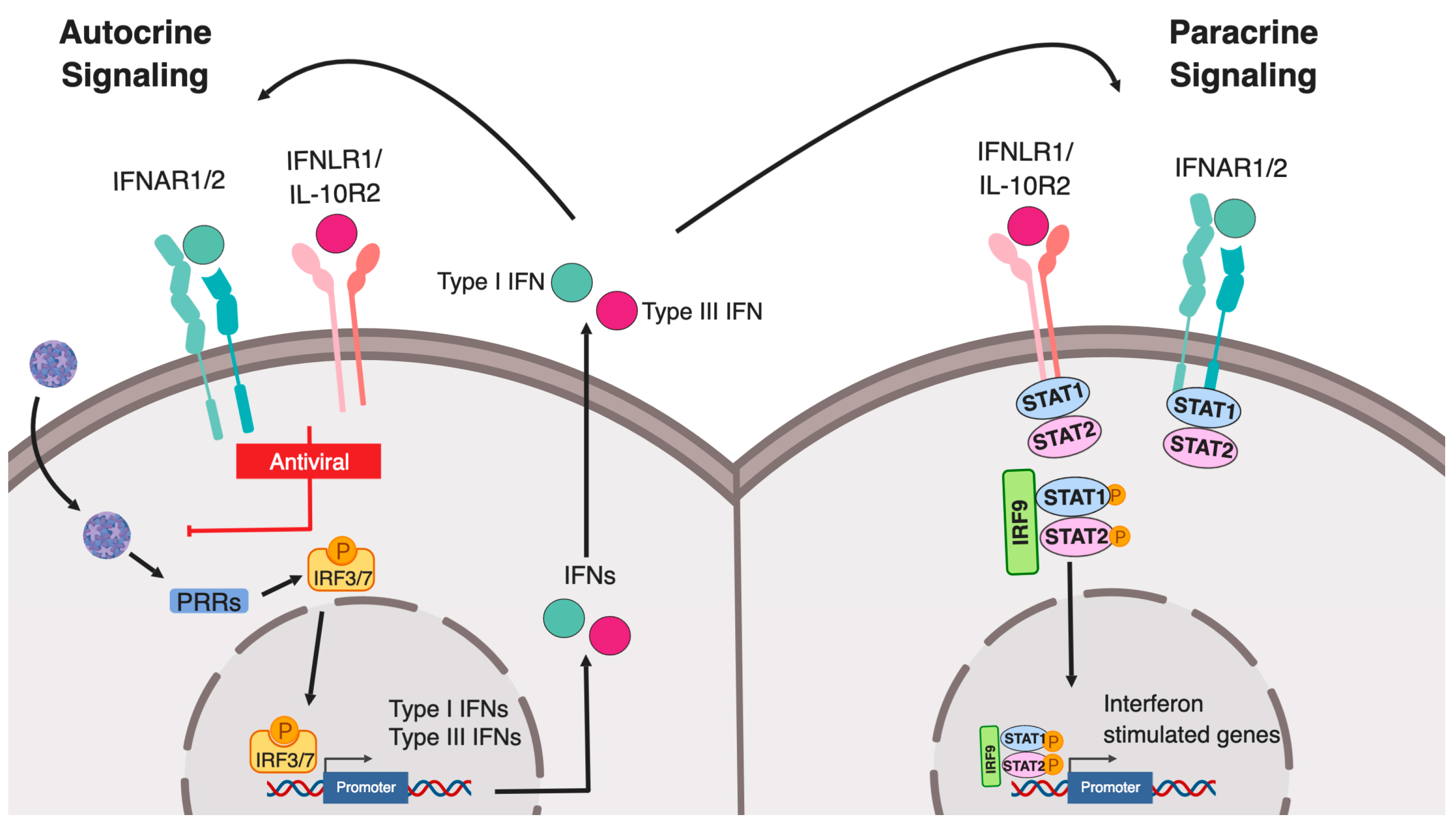
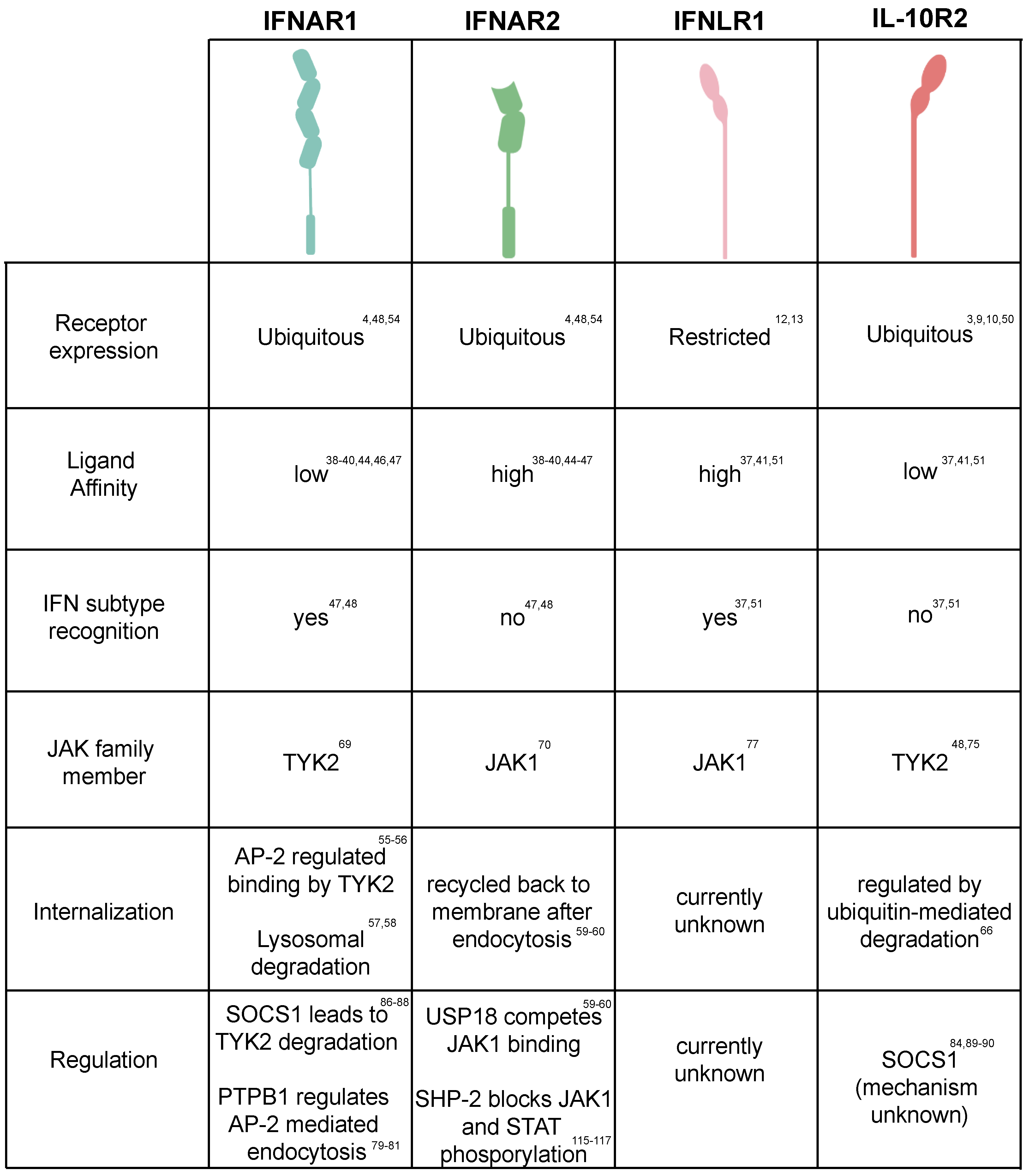
Interferons (IFNs) are very powerful cytokines, which play a key role in combatting pathogen infections by controlling inflammation and immune response by directly inducing anti-pathogen molecular countermeasures. There are three classes of IFNs: type I, type II and type III. While type II IFN is specific for immune cells, type I and III IFNs are expressed by both immune and tissue specific cells. Unlike type I IFNs, type III IFNs have a unique tropism where their signaling and functions are mostly restricted to epithelial cells. As such, this class of IFN has recently emerged as a key player in mucosal immunity. Since the discovery of type III IFNs, the last 15 years of research in the IFN field has focused on understanding whether the induction, the signaling and the function of these powerful cytokines are regulated differently compared to type I IFN-mediated immune response. This review will cover the current state of the knowledge of the similarities and differences in the signaling pathways emanating from type I and type III IFN stimulation. View Full-Text
Keywords: Interferon; type I IFN; type III IFN; interferon signaling; JAK-STAT; signal transduction Interferon; type I IFN; type III IFN; interferon signaling; JAK-STAT; signal transduction
Show Figures

Figure 1

MDPI and ACS Style

Stanifer, M.L.; Pervolaraki, K.; Boulant, S. Differential Regulation of Type I and Type III Interferon Signaling. Int. J. Mol. Sci. 2019, 20, 1445. https://doi.org/10.3390/ijms20061445

AMA Style

Stanifer ML, Pervolaraki K, Boulant S. Differential Regulation of Type I and Type III Interferon Signaling. International Journal of Molecular Sciences. 2019; 20(6):1445. https://doi.org/10.3390/ijms20061445
Chicago/Turabian Style

Stanifer, Megan L., Kalliopi Pervolaraki, and Steeve Boulant. 2019. "Differential Regulation of Type I and Type III Interferon Signaling" International Journal of Molecular Sciences 20, no. 6: 1445. https://doi.org/10.3390/ijms20061445
Find Other Styles
Note that from the first issue of 2016, MDPI journals use article numbers instead of page numbers. See further details here.

Article Access Map by Country/Region

1
Back to TopTop