Therapeutic Potential of Cysteine and Its Derivatives in Dermatology



Abstract
1. Introduction
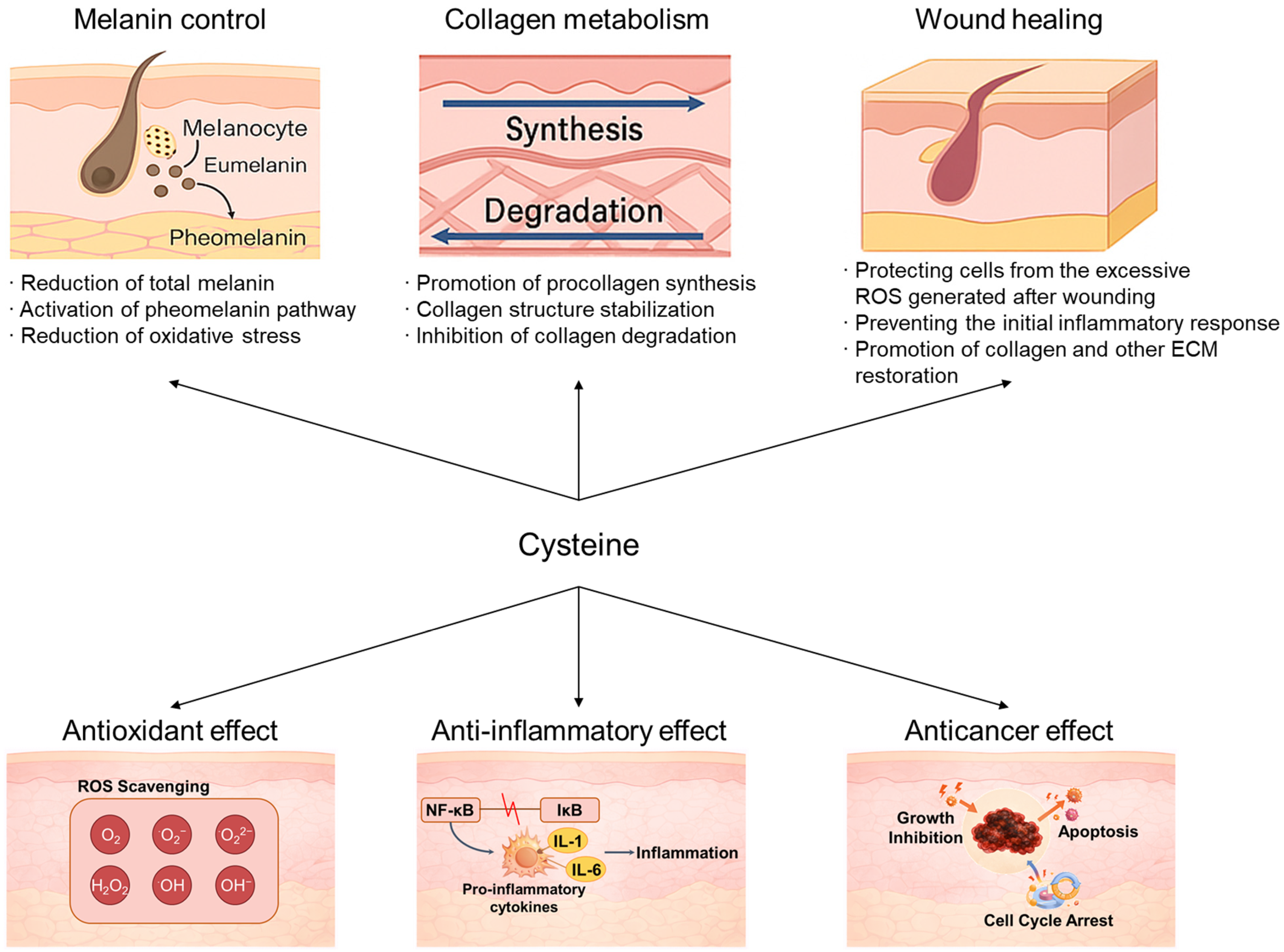
2. Dermatological Relevance of Cysteine
3. Limitations of Cysteine for Biological Applications
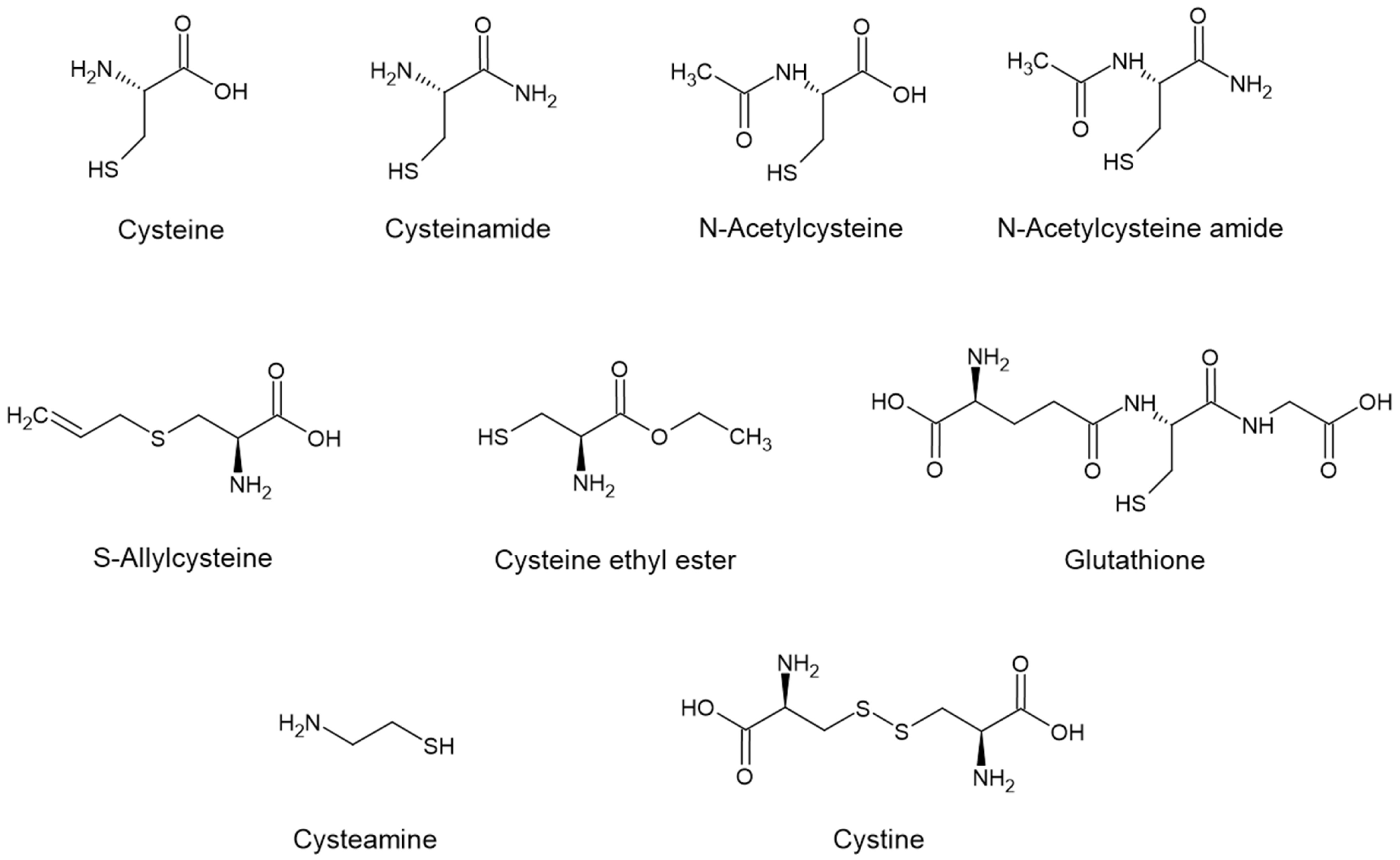
4. Types and Characteristics of Cysteine Derivatives
4.1. Acetylated Derivatives
4.2. Amidated Derivatives
4.3. Esterified Derivatives
4.4. Naturally Derived and Other Functional Analogs
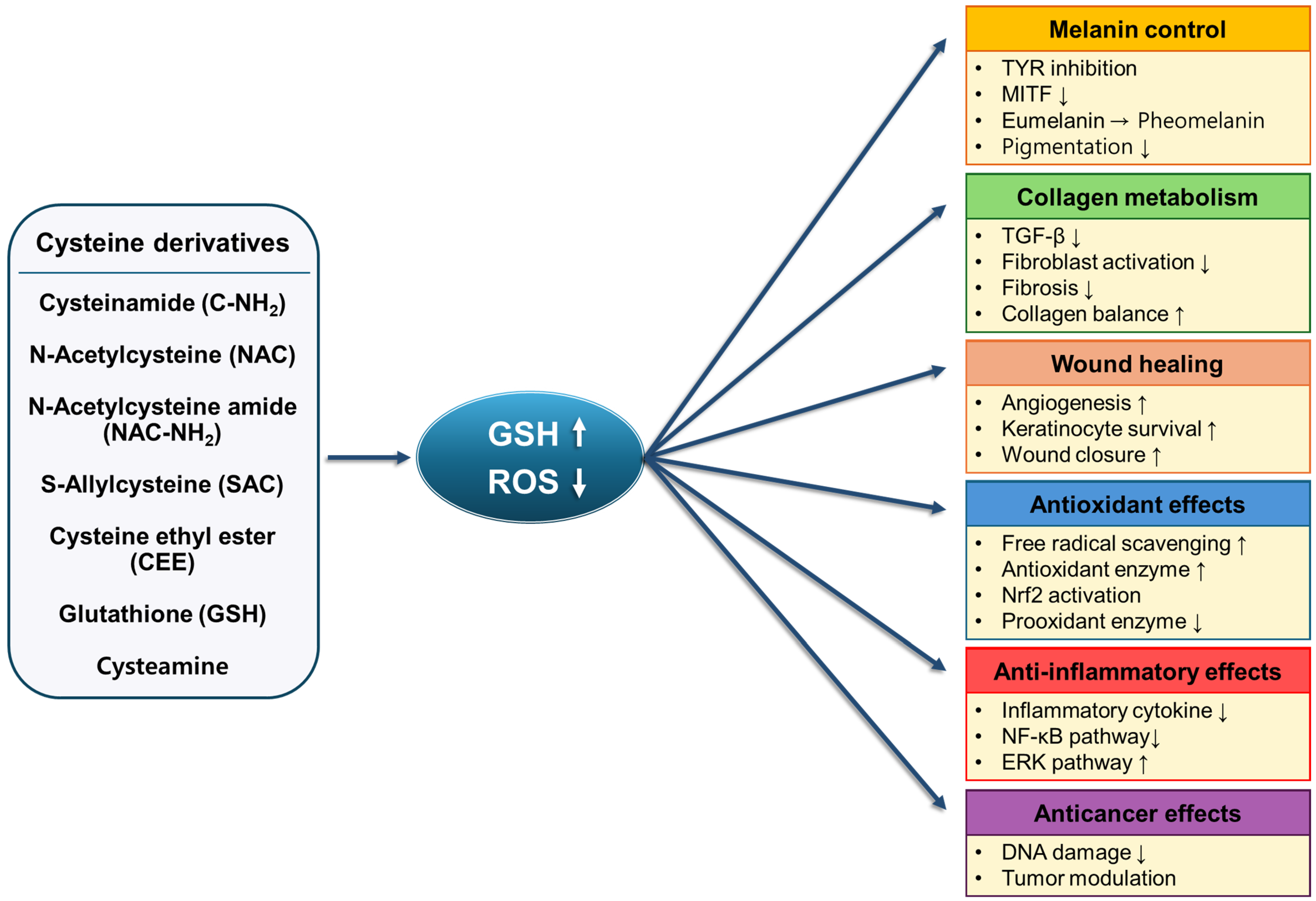
5. Dermatological Effects of Cysteine Derivatives
5.1. Effects of Cysteine Derivatives on Melanin Control
5.2. Effects of Cysteine Derivatives on Collagen Metabolism
5.3. Effects of Cysteine Derivatives on Wound Healing
5.4. Antioxidant Effects of Cysteine Derivatives
5.5. Anti-Inflammatory Effects of Cysteine Derivatives
5.6. Anticancer Effects of Cysteine Derivatives
6. Discussion
Author Contributions
Funding
Institutional Review Board Statement
Informed Consent Statement
Data Availability Statement
Conflicts of Interest
References
- Korkina, L.; Pastore, S. The role of redox regulation in the normal physiology and inflammatory diseases of skin. Front. Biosci. (Elite Ed.) 2009, 1, 123–141. [Google Scholar] [PubMed]
- Schalka, S.; Silva, M.S.; Lopes, L.F.; de Freitas, L.M.; Baptista, M.S. The skin redoxome. J. Eur. Acad. Dermatol. Venereol. 2022, 36, 181–195. [Google Scholar] [CrossRef] [PubMed]
- Rudolf, J.; Raad, H.; Taieb, A.; Rezvani, H.R. NADPH Oxidases and Their Roles in Skin Homeostasis and Carcinogenesis. Antioxid. Redox Signal 2018, 28, 1238–1261. [Google Scholar] [CrossRef]
- Chen, J.; Liu, Y.; Zhao, Z.; Qiu, J. Oxidative stress in the skin: Impact and related protection. Int. J. Cosmet. Sci. 2021, 43, 495–509. [Google Scholar] [CrossRef] [PubMed]
- Shroff, A.; Mamalis, A.; Jagdeo, J. Oxidative Stress and Skin Fibrosis. Curr. Pathobiol. Rep. 2014, 2, 257–267. [Google Scholar] [CrossRef]
- Deng, L.; Du, C.; Song, P.; Chen, T.; Rui, S.; Armstrong, D.G.; Deng, W. The Role of Oxidative Stress and Antioxidants in Diabetic Wound Healing. Oxid. Med. Cell Longev. 2021, 2021, 8852759. [Google Scholar] [CrossRef] [PubMed]
- Speeckaert, R.; Bulat, V.; Speeckaert, M.M.; van Geel, N. The Impact of Antioxidants on Vitiligo and Melasma: A Scoping Review and Meta-Analysis. Antioxidants 2023, 12, 2082. [Google Scholar] [CrossRef] [PubMed]
- Zaw, K.K.; Yokoyama, Y.; Abe, M.; Ishikawa, O. Catalase restores the altered mRNA expression of collagen and matrix metalloproteinases by dermal fibroblasts exposed to reactive oxygen species. Eur. J. Dermatol. 2006, 16, 375–379. [Google Scholar]
- Rittié, L.; Fisher, G.J. UV-light-induced signal cascades and skin aging. Ageing Res. Rev. 2002, 1, 705–720. [Google Scholar] [CrossRef] [PubMed]
- Wagener, F.A.; Carels, C.E.; Lundvig, D.M. Targeting the redox balance in inflammatory skin conditions. Int. J. Mol. Sci. 2013, 14, 9126–9167. [Google Scholar] [CrossRef]
- Lu, S.C. Glutathione synthesis. Biochim. Biophys. Acta 2013, 1830, 3143–3153. [Google Scholar] [CrossRef]
- Forman, H.J.; Zhang, H.; Rinna, A. Glutathione: Overview of its protective roles, measurement, and biosynthesis. Mol. Asp. Med. 2009, 30, 1–12. [Google Scholar] [CrossRef]
- Benathan, M.; Labidi, F. Cysteine-dependent 5-S-cysteinyldopa formation and its regulation by glutathione in normal epidermal melanocytes. Arch. Dermatol. Res. 1996, 288, 697–702. [Google Scholar] [CrossRef]
- Ito, S.; Wakamatsu, K. Chemistry of mixed melanogenesis—Pivotal roles of dopaquinone. Photochem. Photobiol. 2008, 84, 582–592. [Google Scholar] [CrossRef] [PubMed]
- Rzepka, Z.; Buszman, E.; Beberok, A.; Wrześniok, D. From tyrosine to melanin: Signaling pathways and factors regulating melanogenesis. Postep. Hig. Med. Dosw. 2016, 70, 695–708. [Google Scholar] [CrossRef] [PubMed]
- He, T.; Quan, T.; Shao, Y.; Voorhees, J.J.; Fisher, G.J. Oxidative exposure impairs TGF-β pathway via reduction of type II receptor and SMAD3 in human skin fibroblasts. Age 2014, 36, 9623. [Google Scholar] [CrossRef] [PubMed]
- Schäfer, M.; Werner, S. Oxidative stress in normal and impaired wound repair. Pharmacol. Res. 2008, 58, 165–171. [Google Scholar] [CrossRef]
- Seyedian, R.; Shabankareh Fard, E.; Najafiasl, M.; Assadi, M.; Zaeri, S. N-acetylcysteine-loaded electrospun mats improve wound healing in mice and human fibroblast proliferation in vitro: A potential application of nanotechnology in wound care. Iran. J. Basic Med. Sci. 2020, 23, 1590–1602. [Google Scholar]
- Kerksick, C.; Willoughby, D. The antioxidant role of glutathione and N-acetyl-cysteine supplements and exercise-induced oxidative stress. J. Int. Soc. Sports Nutr. 2005, 2, 38. [Google Scholar] [CrossRef]
- Atkuri, K.R.; Mantovani, J.J.; Herzenberg, L.A.; Herzenberg, L.A. N-Acetylcysteine—A safe antidote for cysteine/glutathione deficiency. Curr. Opin. Pharmacol. 2007, 7, 355–359. [Google Scholar] [CrossRef] [PubMed]
- Aoyama, K.; Nakaki, T. Impaired glutathione synthesis in neurodegeneration. Int. J. Mol. Sci. 2013, 14, 21021–21044. [Google Scholar] [CrossRef] [PubMed]
- Clemente Plaza, N.; Reig García-Galbis, M.; Martínez-Espinosa, R.M. Effects of the Usage of l-Cysteine (l-Cys) on Human Health. Molecules 2018, 23, 575. [Google Scholar] [CrossRef] [PubMed]
- Lin, Z.; Chen, Z.; Chen, Y.; Yang, N.; Shi, J.; Tang, Z.; Zhang, C.; Lin, H.; Yin, J. Hydrogenated silicene nanosheet functionalized scaffold enables immuno-bone remodeling. Exploration 2023, 3, 20220149. [Google Scholar] [CrossRef] [PubMed]
- Peng, Y.; Zhuang, Y.; Liu, Y.; Le, H.; Li, D.; Zhang, M.; Liu, K.; Zhang, Y.; Zuo, J.; Ding, J. Bioinspired gradient scaffolds for osteochondral tissue engineering. Exploration 2023, 3, 20210043. [Google Scholar] [CrossRef] [PubMed]
- Harati, J.; Wang, P. Leveraging integrative technologies to translate stem cell and cell reprogramming potential for neurodegenerative diseases. Eur. Cells Mater. 2024, 48, 151–155. [Google Scholar] [CrossRef]
- Zhang, D.; Wang, P. Intestinal stem cells (ISCs): ISCs-derived organoids for disease modeling and therapy. Eur. Cells Mater. 2025, 50, 84–86. [Google Scholar] [CrossRef]
- Li, X.; Li, J.; Wang, W.; Yue, Z.; Sun, T. Thermo-Oxidative Coupling Amplification Effect Unleashed by Tungsten-Based Polyoxometalate Nanoreactors Enables Synergistic Hyperthermia-Chemodynamic Therapy. Part. Part. Syst. Charact. 2026, 43, e00192. [Google Scholar] [CrossRef]
- Adil, M.; Amin, S.S.; Mohtashim, M. N-acetylcysteine in dermatology. Indian J. Dermatol. Venereol. Leprol. 2018, 84, 652–659. [Google Scholar] [CrossRef]
- Lee, H.K.; Ha, J.W.; Hwang, Y.J.; Boo, Y.C. Identification of L-Cysteinamide as a Potent Inhibitor of Tyrosinase-Mediated Dopachrome Formation and Eumelanin Synthesis. Antioxidants 2021, 10, 1202. [Google Scholar] [CrossRef]
- Choi, J.Y.; Ha, J.W.; Boo, Y.C. Multifaceted Effects of L-Cysteine, L-Ascorbic Acid, and Their Derivatives on the Viability and Melanin Synthesis of B16/F10 Cells under Different Conditions. Antioxidants 2024, 13, 330. [Google Scholar] [CrossRef] [PubMed]
- Rinnerthaler, M.; Bischof, J.; Streubel, M.K.; Trost, A.; Richter, K. Oxidative stress in aging human skin. Biomolecules 2015, 5, 545–589. [Google Scholar] [CrossRef] [PubMed]
- Schieber, M.; Chandel, N.S. ROS function in redox signaling and oxidative stress. Curr. Biol. 2014, 24, R453–R462. [Google Scholar] [CrossRef]
- Townsend, D.M.; Tew, K.D.; Tapiero, H. The importance of glutathione in human disease. Biomed. Pharmacother. 2003, 57, 145–155. [Google Scholar] [CrossRef] [PubMed]
- Jones, D.P. Redefining oxidative stress. Antioxid. Redox Signal 2006, 8, 1865–1879. [Google Scholar] [CrossRef] [PubMed]
- Lucas-Herald, A.K.; Hussain, S.; McGinley, K.; Alves-Lopes, R.; Amjad, S.B.; Flett, M.; Lee, B.; Steven, M.; O’Toole, S.; Ahmed, S.F. ROS scavengers and genital skin healing in boys with hypospadias. J. Pediatr. Urol. 2025, 21, 1170–1178. [Google Scholar] [CrossRef] [PubMed]
- Ito, S.; Wakamatsu, K. Quantitative analysis of eumelanin and pheomelanin in humans, mice, and other animals: A comparative review. Pigment Cell Res. 2003, 16, 523–531. [Google Scholar] [CrossRef]
- Land, E.J.; Ramsden, C.A.; Riley, P.A. Quinone chemistry and melanogenesis. Methods Enzymol. 2004, 378, 88–109. [Google Scholar]
- Wakamatsu, K.; Zippin, J.H.; Ito, S. Chemical and biochemical control of skin pigmentation with special emphasis on mixed melanogenesis. Pigment. Cell Melanoma Res. 2021, 34, 730–747. [Google Scholar] [CrossRef]
- Wakamatsu, K.; Ito, S. Recent advances in characterization of melanin pigments in biological samples. Int. J. Mol. Sci. 2023, 24, 8305. [Google Scholar] [CrossRef] [PubMed]
- Slominski, A.; Tobin, D.J.; Shibahara, S.; Wortsman, J. Melanin pigmentation in mammalian skin and its hormonal regulation. Physiol. Rev. 2004, 84, 1155–1228. [Google Scholar] [CrossRef]
- Boo, Y.C. Metabolic basis and clinical evidence for skin lightening effects of thiol compounds. Antioxidants 2022, 11, 503. [Google Scholar] [CrossRef] [PubMed]
- Cotter, M.A.; Thomas, J.; Cassidy, P.; Robinette, K.; Jenkins, N.; Florell, S.R.; Leachman, S.; Samlowski, W.E.; Grossman, D. N-acetylcysteine protects melanocytes against oxidative stress/damage and delays onset of ultraviolet-induced melanoma in mice. Clin. Cancer Res. 2007, 13, 5952–5958. [Google Scholar] [CrossRef]
- Perdomo, J.; Quintana, C.; González, I.; Hernández, I.; Rubio, S.; Loro, J.F.; Reiter, R.J.; Estévez, F.; Quintana, J. Melatonin induces melanogenesis in human SK-MEL-1 melanoma cells involving glycogen synthase kinase-3 and reactive oxygen species. Int. J. Mol. Sci. 2020, 21, 4970. [Google Scholar] [CrossRef] [PubMed]
- Manap, A.S.A.; Lum, Y.K.; Ong, L.H.; Tang, Y.-Q.; Gew, L.T.; Chia, A.Y.Y. Perspective approaches on melanogenesis inhibition. Dermatol. Sin. 2021, 39, 1–12. [Google Scholar] [CrossRef]
- Ito, S. High-performance liquid chromatography (HPLC) analysis of eu-and pheomelanin in melanogenesis control. J. Investig. Dermatol. 1993, 100, S166–S171. [Google Scholar] [CrossRef][Green Version]
- Vašková, J.; Kočan, L.; Vaško, L.; Perjési, P. Glutathione-related enzymes and proteins: A review. Molecules 2023, 28, 1447. [Google Scholar] [CrossRef]
- Aminzadehanboohi, M.; Makridakis, M.; Rasti, D.; Cambet, Y.; Krause, K.-H.; Vlahou, A.; Jaquet, V. Redox Mechanisms Driving Skin Fibroblast-to-Myofibroblast Differentiation. Antioxidants 2025, 14, 486. [Google Scholar] [CrossRef]
- Onursal, C.; Dick, E.; Angelidis, I.; Schiller, H.B.; Staab-Weijnitz, C.A. Collagen biosynthesis, processing, and maturation in lung ageing. Front. Med. 2021, 8, 593874. [Google Scholar] [CrossRef] [PubMed]
- Kumar, C.; Igbaria, A.; D’autreaux, B.; Planson, A.G.; Junot, C.; Godat, E.; Bachhawat, A.K.; Delaunay-Moisan, A.; Toledano, M.B. Glutathione revisited: A vital function in iron metabolism and ancillary role in thiol-redox control. EMBO J. 2011, 30, 2044–2056. [Google Scholar] [CrossRef]
- Pihlajaniemi, T.; Myllylä, R.; Kivirikko, K.I. Prolyl 4-hydroxylase and its role in collagen synthesis. J. Hepatol. 1991, 13, S2–S7. [Google Scholar] [CrossRef]
- Varela-Rey, M.; Fontán-Gabás, L.; Blanco, P.; López-Zabalza, M.J.; Iraburu, M.J. Glutathione depletion is involved in the inhibition of procollagen α1 (I) mRNA levels caused by TNF-α on hepatic stellate cells. Cytokine 2007, 37, 212–217. [Google Scholar] [CrossRef]
- Koide, T.; Nagata, K. Collagen biosynthesis. In Collagen: Primer in Structure, Processing and Assembly; Springer: Berlin/Heidelberg, Germany, 2005; pp. 85–114. [Google Scholar]
- Yammine, K.M.; Li, R.C.; Borgula, I.M.; Mirda Abularach, S.; DiChiara, A.S.; Raines, R.T.; Shoulders, M.D. An outcome-defining role for the triple-helical domain in regulating collagen-I assembly. Proc. Natl. Acad. Sci. USA 2024, 121, e2412948121. [Google Scholar] [CrossRef] [PubMed]
- Pei, P.; Horan, M.P.; Hille, R.; Hemann, C.F.; Schwendeman, S.P.; Mallery, S.R. Reduced nonprotein thiols inhibit activation and function of MMP-9: Implications for chemoprevention. Free Radic. Biol. Med. 2006, 41, 1315–1324. [Google Scholar] [CrossRef] [PubMed]
- Bogani, P.; Canavesi, M.; Hagen, T.M.; Visioli, F.; Bellosta, S. Thiol supplementation inhibits metalloproteinase activity independent of glutathione status. Biochem. Biophys. Res. Commun. 2007, 363, 651–655. [Google Scholar] [CrossRef] [PubMed]
- Romagnoli, C.; Marcucci, T.; Picariello, L.; Tonelli, F.; Vincenzini, M.T.; Iantomasi, T. Role of N-acetylcysteine and GSH redox system on total and active MMP-2 in intestinal myofibroblasts of Crohn’s disease patients. Int. J. Color. Dis. 2013, 28, 915–924. [Google Scholar] [CrossRef]
- Turk, V.; Stoka, V.; Vasiljeva, O.; Renko, M.; Sun, T.; Turk, B.; Turk, D. Cysteine cathepsins: From structure, function and regulation to new frontiers. Biochim. Biophys. Acta (BBA)-Proteins Proteom. 2012, 1824, 68–88. [Google Scholar] [CrossRef]
- Lalmanach, G.; Saidi, A.; Bigot, P.; Chazeirat, T.; Lecaille, F.; Wartenberg, M. Regulation of the proteolytic activity of cysteine cathepsins by oxidants. Int. J. Mol. Sci. 2020, 21, 1944. [Google Scholar] [CrossRef] [PubMed]
- Brem, H.; Tomic-Canic, M. Cellular and molecular basis of wound healing in diabetes. J. Clin. Investig. 2007, 117, 1219–1222. [Google Scholar] [CrossRef]
- Rebrin, I.; Sohal, R.S. Pro-oxidant shift in glutathione redox state during aging. Adv. Drug Deliv. Rev. 2008, 60, 1545–1552. [Google Scholar] [CrossRef] [PubMed]
- Singh, V.P.; Bali, A.; Singh, N.; Jaggi, A.S. Advanced glycation end products and diabetic complications. Korean J. Physiol. Pharmacol. Off. J. Korean Physiol. Soc. Korean Soc. Pharmacol. 2014, 18, 1. [Google Scholar] [CrossRef] [PubMed]
- Liu, R.-M.; Desai, L.P. Reciprocal regulation of TGF-β and reactive oxygen species: A perverse cycle for fibrosis. Redox Biol. 2015, 6, 565–577. [Google Scholar] [CrossRef] [PubMed]
- Thannickal, V.J.; Zhou, Y.; Gaggar, A.; Duncan, S.R. Fibrosis: Ultimate and proximate causes. J. Clin. Investig. 2014, 124, 4673–4677. [Google Scholar] [CrossRef]
- Iyer, S.S.; Ramirez, A.M.; Ritzenthaler, J.D.; Torres-Gonzalez, E.; Roser-Page, S.; Mora, A.L.; Brigham, K.L.; Jones, D.P.; Roman, J.; Rojas, M. Oxidation of extracellular cysteine/cystine redox state in bleomycin-induced lung fibrosis. Am. J. Physiol.-Lung Cell. Mol. Physiol. 2009, 296, L37–L45. [Google Scholar] [CrossRef] [PubMed]
- Ricard-Blum, S. The collagen family. Cold Spring Harb. Perspect. Biol. 2011, 3, a004978. [Google Scholar]
- Gurtner, G.C.; Werner, S.; Barrandon, Y.; Longaker, M.T. Wound repair and regeneration. Nature 2008, 453, 314–321. [Google Scholar] [CrossRef]
- Guo, S.a.; DiPietro, L.A. Factors affecting wound healing. J. Dent. Res. 2010, 89, 219–229. [Google Scholar] [CrossRef]
- Schreml, S.; Szeimies, R.-M.; Prantl, L.; Landthaler, M.; Babilas, P. Wound healing in the 21st century. J. Am. Acad. Dermatol. 2010, 63, 866–881. [Google Scholar] [CrossRef]
- Zhao, R.; Liang, H.; Clarke, E.; Jackson, C.; Xue, M. Inflammation in chronic wounds. Int. J. Mol. Sci. 2016, 17, 2085. [Google Scholar] [CrossRef]
- Salman, Z.K.; Refaat, R.; Selima, E.; El Sarha, A.; Ismail, M.A. The combined effect of metformin and L-cysteine on inflammation, oxidative stress and insulin resistance in streptozotocin-induced type 2 diabetes in rats. Eur. J. Pharmacol. 2013, 714, 448–455. [Google Scholar] [CrossRef] [PubMed]
- Xue, M.; Jackson, C.J. Extracellular Matrix Reorganization During Wound Healing and Its Impact on Abnormal Scarring. Adv. Wound Care 2015, 4, 119–136. [Google Scholar] [CrossRef]
- Ghanemi, A.; Yoshioka, M.; St-Amand, J. Secreted protein acidic and rich in cysteine: Metabolic and homeostatic properties beyond the extracellular matrix structure. Appl. Sci. 2020, 10, 2388. [Google Scholar] [CrossRef]
- McCurdy, S.; Baicu, C.F.; Heymans, S.; Bradshaw, A.D. Cardiac extracellular matrix remodeling: Fibrillar collagens and Secreted Protein Acidic and Rich in Cysteine (SPARC). J. Mol. Cell. Cardiol. 2010, 48, 544–549. [Google Scholar] [CrossRef] [PubMed]
- Jain, S.K.; Kanikarla-Marie, P.; Warden, C.; Micinski, D. L-cysteine supplementation upregulates glutathione (GSH) and vitamin D binding protein (VDBP) in hepatocytes cultured in high glucose and in vivo in liver, and increases blood levels of GSH, VDBP, and 25-hydroxy-vitamin D in Zucker diabetic fatty rats. Mol. Nutr. Food Res. 2016, 60, 1090–1098. [Google Scholar] [CrossRef] [PubMed]
- Pace, M.; Giorgi, C.; Lombardozzi, G.; Cimini, A.; Castelli, V.; d’Angelo, M. Exploring the Antioxidant Roles of Cysteine and Selenocysteine in Cellular Aging and Redox Regulation. Biomolecules 2025, 15, 1115. [Google Scholar] [CrossRef] [PubMed]
- Piste, P. Cysteine–master antioxidant. Int. J. Pharm. Chem. Biol. Sci. 2013, 3, 143–149. [Google Scholar]
- Hasegawa, S.; Ichiyama, T.; Sonaka, I.; Ohsaki, A.; Okada, S.; Wakiguchi, H.; Kudo, K.; Kittaka, S.; Hara, M.; Furukawa, S. Cysteine, histidine and glycine exhibit anti-inflammatory effects in human coronary arterial endothelial cells. Clin. Exp. Immunol. 2012, 167, 269–274. [Google Scholar] [CrossRef]
- Kato, M.; Kumasaka, M.Y.; Takeda, K.; Hossain, K.; Iida, M.; Yajima, I.; Goto, Y.; Ohgami, N. L-cysteine as a regulator for arsenic-mediated cancer-promoting and anti-cancer effects. Toxicol. Vitr. 2011, 25, 623–629. [Google Scholar] [CrossRef]
- Okano, Y.; Yamauchi, T.; Fukuzaki, R.; Tsuruta, A.; Yoshida, Y.; Tsurudome, Y.; Ushijima, K.; Matsunaga, N.; Koyanagi, S.; Ohdo, S. Oncogenic accumulation of cysteine promotes cancer cell proliferation by regulating the translation of D-type cyclins. J. Biol. Chem. 2024, 300, 107890. [Google Scholar] [CrossRef]
- Ruiz-Rodado, V.; Dowdy, T.; Lita, A.; Kramp, T.; Zhang, M.; Jung, J.; Dios-Esponera, A.; Zhang, L.; Herold-Mende, C.C.; Camphausen, K. Cysteine is a limiting factor for glioma proliferation and survival. Mol. Oncol. 2022, 16, 1777–1794. [Google Scholar] [CrossRef]
- Bannai, S. Transport of cystine and cysteine in mammalian cells. Biochim. Biophys. Acta (BBA)-Rev. Biomembr. 1984, 779, 289–306. [Google Scholar] [CrossRef]
- Bannai, S. Exchange of cystine and glutamate across plasma membrane of human fibroblasts. J. Biol. Chem. 1986, 261, 2256–2263. [Google Scholar] [CrossRef] [PubMed]
- Stipanuk, M.H. Sulfur amino acid metabolism: Pathways for production and removal of homocysteine and cysteine. Annu. Rev. Nutr. 2004, 24, 539–577. [Google Scholar] [CrossRef] [PubMed]
- Harris, I.S.; Treloar, A.E.; Inoue, S.; Sasaki, M.; Gorrini, C.; Lee, K.C.; Yung, K.Y.; Brenner, D.; Knobbe-Thomsen, C.B.; Cox, M.A.; et al. Glutathione and thioredoxin antioxidant pathways synergize to drive cancer initiation and progression. Cancer Cell 2015, 27, 211–222. [Google Scholar] [CrossRef] [PubMed]
- Koppula, P.; Zhuang, L.; Gan, B. Cystine transporter SLC7A11/xCT in cancer: Ferroptosis, nutrient dependency, and cancer therapy. Protein Cell 2021, 12, 599–620. [Google Scholar] [CrossRef] [PubMed]
- Giustarini, D.; Milzani, A.; Dalle-Donne, I.; Tsikas, D.; Rossi, R. N-Acetylcysteine ethyl ester (NACET): A novel lipophilic cell-permeable cysteine derivative with an unusual pharmacokinetic feature and remarkable antioxidant potential. Biochem. Pharmacol. 2012, 84, 1522–1533. [Google Scholar] [CrossRef] [PubMed]
- Zafarullah, M.; Li, W.Q.; Sylvester, J.; Ahmad, M. Molecular mechanisms of N-acetylcysteine actions. Cell Mol. Life Sci. 2003, 60, 6–20. [Google Scholar] [CrossRef] [PubMed]
- Samuni, Y.; Goldstein, S.; Dean, O.M.; Berk, M. The chemistry and biological activities of N-acetylcysteine. Biochim. Biophys. Acta 2013, 1830, 4117–4129. [Google Scholar] [CrossRef]
- Prescott, L.F.; Park, J.; Ballantyne, A.; Adriaenssens, P.; Proudfoot, A.T. Treatment of paracetamol (acetaminophen) poisoning with N-acetylcysteine. Lancet 1977, 2, 432–434. [Google Scholar] [CrossRef]
- Grinberg, L.; Fibach, E.; Amer, J.; Atlas, D. N-acetylcysteine amide, a novel cell-permeating thiol, restores cellular glutathione and protects human red blood cells from oxidative stress. Free Radic. Biol. Med. 2005, 38, 136–145. [Google Scholar] [CrossRef]
- Sunitha, K.; Hemshekhar, M.; Thushara, R.; Santhosh, M.S.; Yariswamy, M.; Kemparaju, K.; Girish, K. N-Acetylcysteine amide: A derivative to fulfill the promises of N-Acetylcysteine. Free Radic. Res. 2013, 47, 357–367. [Google Scholar] [CrossRef]
- Anderson, M.E.; Powrie, F.; Puri, R.N.; Meister, A. Glutathione monoethyl ester: Preparation, uptake by tissues, and conversion to glutathione. Arch. Biochem. Biophys. 1985, 239, 538–548. [Google Scholar] [CrossRef]
- Meister, A. Glutathione metabolism and its selective modification. J. Biol. Chem. 1988, 263, 17205–17208. [Google Scholar] [CrossRef]
- Colín-González, A.L.; Santana, R.A.; Silva-Islas, C.A.; Chánez-Cárdenas, M.E.; Santamaría, A.; Maldonado, P.D. The antioxidant mechanisms underlying the aged garlic extract-and S-allylcysteine-induced protection. Oxidative Med. Cell. Longev. 2012, 2012, 907162. [Google Scholar] [CrossRef] [PubMed]
- Iciek, M.; Kwiecień, I.; Włodek, L. Biological properties of garlic and garlic-derived organosulfur compounds. Environ. Mol. Mutagen. 2009, 50, 247–265. [Google Scholar] [CrossRef] [PubMed]
- Mansouri, P.; Farshi, S.; Hashemi, Z.; Kasraee, B. Evaluation of the efficacy of cysteamine 5% cream in the treatment of epidermal melasma: A randomized double-blind placebo-controlled trial. Br. J. Dermatol. 2015, 173, 209–217. [Google Scholar] [CrossRef] [PubMed]
- Conrad, M.; Sato, H. The oxidative stress-inducible cystine/glutamate antiporter, system xc−: Cystine supplier and beyond. Amino Acids 2012, 42, 231–246. [Google Scholar] [CrossRef]
- Alzahrani, T.F.; Alotaibi, S.M.; Alzahrani, A.A.; Alzahrani, A.F.; Alturki, L.E.; Alshammari, M.M.; Alharbi, R.A.; Alanazi, S.I.; Alshammari, W.Z.; Algarni, A.S. Exploring the safety and efficacy of glutathione supplementation for skin lightening: A narrative review. Cureus 2025, 17, e78045. [Google Scholar] [CrossRef] [PubMed]
- Khanna, R.; Rambhia, P.; Chapas, A. Systematic Review of the Efficacy and Safety of Topical Glutathione in Dermatology. J. Clin. Aesthetic Dermatol. 2025, 18, 51. [Google Scholar]
- Sato, N.; Ueno, T.; Kubo, K.; Suzuki, T.; Tsukimura, N.; Att, W.; Yamada, M.; Hori, N.; Maeda, H.; Ogawa, T. N-Acetyl cysteine (NAC) inhibits proliferation, collagen gene transcription, and redox stress in rat palatal mucosal cells. Dent. Mater. 2009, 25, 1532–1540. [Google Scholar] [CrossRef] [PubMed]
- Zhou, J.; Xu, J.; Sun, S.; Guo, M.; Li, P.; Cheng, A. N-Acetylcysteine Slows Down Cardiac Pathological Remodeling by Inhibiting Cardiac Fibroblast Proliferation and Collagen Synthesis. Dis. Markers 2021, 2021, 3625662. [Google Scholar] [CrossRef]
- Gong, Z.; Ye, H.; Huo, Y.; Wang, L.; Huang, Y.; Huang, M.; Yuan, X. S-allyl-cysteine attenuates carbon tetrachloride-induced liver fibrosis in rats by targeting STAT3/SMAD3 pathway. Am. J. Transl. Res. 2018, 10, 1337. [Google Scholar]
- Nie, Y.; Yu, K.; Li, B.; Hu, Y.; Zhang, H.; Xin, R.; Xiong, Y.; Zhao, P.; Chai, G. S-allyl-l-cysteine attenuates bleomycin-induced pulmonary fibrosis and inflammation via AKT/NF-κB signaling pathway in mice. J. Pharmacol. Sci. 2019, 139, 377–384. [Google Scholar] [CrossRef] [PubMed]
- Liu, R.-M.; Liu, Y.; Forman, H.J.; Olman, M.; Tarpey, M.M. Glutathione regulates transforming growth factor-β-stimulated collagen production in fibroblasts. Am. J. Physiol.-Lung Cell. Mol. Physiol. 2004, 286, L121–L128. [Google Scholar] [CrossRef] [PubMed]
- Oguz, A.; Uslukaya, O.; Alabalık, U.; Turkoglu, A.; Kapan, M.; Bozdag, Z. Topical N-acetylcysteine improves wound healing comparable to dexpanthenol: An experimental study. Int. Surg. 2015, 100, 656–661. [Google Scholar] [CrossRef] [PubMed]
- Stachura, A.; Sobczak, M.; Kędra, K.; Kopka, M.; Kopka, K.; Włodarski, P.K. The Influence of N-Acetylcysteine-Enriched Hydrogels on Wound Healing in a Murine Model of Type II Diabetes Mellitus. Int. J. Mol. Sci. 2024, 25, 9986. [Google Scholar] [CrossRef]
- Kopal, C.; Deveci, M.; Öztürk, S.; Sengezer, M. Effects of topical glutathione treatment in rat ischemic wound model. Ann. Plast. Surg. 2007, 58, 449–455. [Google Scholar] [CrossRef]
- Ahmed, R.; Elekhnawy, E. Unveiling the potential antibacterial action of acetylcysteine for managing Staphylococcus aureus wound infections: In vitro and in vivo study. World J. Microbiol. Biotechnol. 2025, 41, 134. [Google Scholar] [CrossRef]
- Mokhtari, V.; Afsharian, P.; Shahhoseini, M.; Kalantar, S.M.; Moini, A. A review on various uses of N-acetyl cysteine. Cell J. (Yakhteh) 2016, 19, 11. [Google Scholar]
- Sahasrabudhe, S.A.; Terluk, M.R.; Kartha, R.V. N-acetylcysteine pharmacology and applications in rare diseases—Repurposing an old antioxidant. Antioxidants 2023, 12, 1316. [Google Scholar] [CrossRef]
- Matthiesen, I.; Voulgaris, D.; Nikolakopoulou, P.; Winkler, T.E.; Herland, A. Continuous monitoring reveals protective effects of N-acetylcysteine amide on an isogenic microphysiological model of the neurovascular unit. Small 2021, 17, 2101785. [Google Scholar] [CrossRef] [PubMed]
- Orozco-Ibarra, M.; Muñoz-Sánchez, J.; Zavala-Medina, M.E.; Pineda, B.; Magaña-Maldonado, R.; Vázquez-Contreras, E.; Maldonado, P.D.; Pedraza-Chaverri, J.; Chánez-Cárdenas, M.E. Aged garlic extract and S-allylcysteine prevent apoptotic cell death in a chemical hypoxia model. Biol. Res. 2016, 49, 7. [Google Scholar] [CrossRef] [PubMed]
- Getsy, P.M.; Baby, S.M.; May, W.J.; Young, A.P.; Gaston, B.; Hodges, M.R.; Forster, H.V.; Bates, J.N.; Wilson, C.G.; Lewis, T.H. D-cysteine ethyl ester reverses the deleterious effects of morphine on breathing and arterial blood–gas chemistry in freely-moving rats. Front. Pharmacol. 2022, 13, 883329. [Google Scholar] [CrossRef] [PubMed]
- Lu, Y.; Tonissen, K.F.; Di Trapani, G. Modulating skin colour: Role of the thioredoxin and glutathione systems in regulating melanogenesis. Biosci. Rep. 2021, 41, BSR20210427. [Google Scholar] [CrossRef] [PubMed]
- Penabeï, S.; Meesungnoen, J.; Jay-Gerin, J.-P. Comparative Analysis of Cystamine and Cysteamine as Radioprotectors and Antioxidants: Insights from Monte Carlo Chemical Modeling under High Linear Energy Transfer Radiation and High Dose Rates. Int. J. Mol. Sci. 2024, 25, 10490. [Google Scholar] [CrossRef] [PubMed]
- Kaji, T.; Kuroishi, T.; Bando, K.; Takahashi, M.; Sugawara, S. N-acetyl cysteine inhibits IL-1α release from murine keratinocytes induced by 2-hydroxyethyl methacrylate. J. Toxicol. Sci. 2023, 48, 557–569. [Google Scholar] [CrossRef] [PubMed]
- Tenório, M.C.d.S.; Graciliano, N.G.; Moura, F.A.; Oliveira, A.C.M.d.; Goulart, M.O.F. N-acetylcysteine (NAC): Impacts on human health. Antioxidants 2021, 10, 967. [Google Scholar] [CrossRef]
- Santus, P.; Signorello, J.C.; Danzo, F.; Lazzaroni, G.; Saad, M.; Radovanovic, D. Anti-inflammatory and anti-oxidant properties of N-acetylcysteine: A fresh perspective. J. Clin. Med. 2024, 13, 4127. [Google Scholar] [CrossRef]
- Basu, C.; Chatterjee, A.; Bhattacharya, S.; Dutta, N.; Sur, R. S-allyl cysteine inhibits TNF-α-induced inflammation in HaCaT keratinocytes by inhibition of NF-κB-dependent gene expression via sustained ERK activation. Exp. Dermatol. 2019, 28, 1328–1335. [Google Scholar] [CrossRef]
- Mei-chin, M.; Mei-chin, Y. Nuclear Factor κB-Dependent Anti-inflammatory Effects of s-Allyl Cysteine and s-Propyl Cysteine in Kidney of Diabetic Mice. J. Agric. Food Chem. 2012, 60, 3158–3165. [Google Scholar]
- Limongi, D.; Baldelli, S.; Checconi, P.; Marcocci, M.E.; De Chiara, G.; Fraternale, A.; Magnani, M.; Ciriolo, M.R.; Palamara, A.T. GSH-C4 acts as anti-inflammatory drug in different models of canonical and cell autonomous inflammation through NFκB inhibition. Front. Immunol. 2019, 10, 155. [Google Scholar]
- Najafi-Fard, S.; Farroni, C.; Petrone, L.; Altera, A.M.G.; Salmi, A.; Vanini, V.; Cuzzi, G.; Alonzi, T.; Nicastri, E.; Gualano, G. Immunomodulatory effects of cysteamine and its potential use as a host-directed therapy for tuberculosis. Front. Immunol. 2024, 15, 1411827. [Google Scholar] [CrossRef]
- Kalyanaraman, B. NAC, NAC, Knockin’on Heaven’s door: Interpreting the mechanism of action of N-acetylcysteine in tumor and immune cells. Redox Biol. 2022, 57, 102497. [Google Scholar] [CrossRef] [PubMed]
- Ritter, A.; Hikri, E.; Li, H.; Markovsky, E.; Bachar, G.; Kurman, N.; Popovtzer, A.; Haimovitz-Friedman, A.; Mizrachi, A. N-Acetylcysteine Amide Is a Potential Novel Radioprotector of Salivary Gland Function. Cancers 2025, 17, 2902. [Google Scholar] [CrossRef]
- Ho, J.N.; Kang, M.; Lee, S.; Oh, J.J.; Hong, S.K.; Lee, S.E.; Byun, S.S. Anticancer effect of S-allyl-L-cysteine via induction of apoptosis in human bladder cancer cells. Oncol. Lett. 2018, 15, 623–629. [Google Scholar] [CrossRef] [PubMed]
- Xu, Y.-S.; Feng, J.-G.; Zhang, D.; Zhang, B.; Luo, M.; Su, D.; Lin, N.-M. S-allylcysteine, a garlic derivative, suppresses proliferation and induces apoptosis in human ovarian cancer cells in vitro. Acta Pharmacol. Sin. 2014, 35, 267–274. [Google Scholar] [CrossRef] [PubMed]
- Marini, H.R.; Facchini, B.A.; di Francia, R.; Freni, J.; Puzzolo, D.; Montella, L.; Facchini, G.; Ottaiano, A.; Berretta, M.; Minutoli, L. Glutathione: Lights and shadows in cancer patients. Biomedicines 2023, 11, 2226. [Google Scholar] [CrossRef]
- Lee, C.-M. A review on the antimutagenic and anticancer effects of cysteamine. Adv. Pharmacol. Pharm. Sci. 2023, 2023, 2419444. [Google Scholar] [CrossRef]
- Jung, J.; Celiku, O.; Rubin, B.I.; Gilbert, M.R. Cysteamine suppresses cancer cell invasion and migration in glioblastoma through inhibition of matrix metalloproteinase activity. Cancers 2024, 16, 2029. [Google Scholar] [CrossRef]
- Kleta, R.; Gahl, W.A. Pharmacological treatment of nephropathic cystinosis with cysteamine. Expert Opin. Pharmacother. 2004, 5, 2255–2262. [Google Scholar] [CrossRef]



| Dermatological Effects | Experimental Models | Evidence Level | Inducing Factors | Cysteine Derivatives | Outcomes | Primary Mechanism | Clinical Relevance | Limitations | Ref. |
|---|---|---|---|---|---|---|---|---|---|
| Melanin control | MNT-1 melanoma cells, human epidermal melanocytes (HEMs) | in vitro | C-NH2 | Total melanin ↓, eumelanin ↓ | Tyrosinase inhibition via TYR-Cu2+ chelation, pheomelanin pathway via DOPA-cysteinamide conjugate | Low (Only basic research) | Only in vitro evidence | [29] | |
| Patients with melasma, melanocytes | in vitro, clinical | GSH | Total melanin ↓, eumelanin ↓, MITF expression ↓ | Tyrosinase inhibition via TYR-Cu2+ chelation, pheomelanin pathway via DOPA-cysteine conjugate | High (Products available) | [98] | |||
| Patients with facial melasma | clinical | Cysteamine | Melasma improvement | High | Lack of histological assessments and assessment of systemic absorption | [96] | |||
| Collagen metabolism | Rat palatal tissue derived oral mucosal cells | in vitro | Hydrogen peroxide (H2O2) | NAC | Cell proliferation ↓, collagen production ↓ | Moderate (Preclinical research) | Research into the mechanism is required | [100] | |
| Sprague-Dawley rats | in vivo | Angiotensin II | NAC | Fibrosis area ↓, collagen I ↓, GPX1, GPX3, SOD1, and SOD 2 expression ↑, ROS generation ↓ | Increased expression of antioxidant-related genes | [101] | |||
| Rat cardiac fibroblasts (CFs) | in vitro | Proliferation ↓, collagen synthesis ↓ | Inhibition of the NF-κB pathway | ||||||
| Sprague-Dawley rats | in vivo | SAC | mRNA expression of inflammatory (IL-6, IFN-γ, TNF-α), fibrogenic (TGF-β) cytokines and liver fibrosis biomarkers (α-SMA, fibronectin, collagen I) ↓ | Moderate | Further clinical application is required | [102] | |||
| Pulmonary fibrosis induced C57BL/6 mice | in vivo | Bleomycin (BLM) | SAC | mRNA expression of fibrosis genes (α-SMA, fibronectin, collagen I, and collagen III) ↓, α-SMA protein level ↓ | [103] | ||||
| NIH 3T3 murine embryo fibroblasts | in vitro | TGF-β | GSH | Collagen accumulation ↓, normalization of collagen degradation | Low | Further clinical application is required | [104] | ||
| Wound healing | Wistar rats | in vivo | NAC | Angiogenesis ↑, wound healing rate ↑ | Moderate | Clinical trials are needed to assess the use of NAC | [105] | ||
| db/db mice | in vivo | NAC | Skin proliferation ↑, wound closure ↑ | [106] | |||||
| Sprague-Dawley rats | in vivo | Esterified GSH | Wound healing ↑, TIMP-1 level ↑ | Reduction in oxidative stress | Moderate | Clinical trials involving topical application are required | [107] | ||
| Antioxidant effects | PC12 cells | in vitro | Cobalt chloride (CoCl2) | SAC | ROS generation ↓, cell toxicity ↓ | Low | Research into the mechanism is required | [112] | |
| Sprague-Dawley rats | in vivo | CEE | GSH synthesis ↑, oxidative stress ↓, improvement of gas exchange abnormality | Cellular permeability via carboxylate ester, cysteine supplementation | Moderate | Research into the mechanism is required | [113] | ||
| Anti-inflammatory effects | Pam212 murine keratinocytes | in vitro | 2-hydroxyethyl methacrylate (HEMA) | NAC | Inhibition of HEMA-induced IL-1α release, inhibition of intracellular calpain activity and ROS production | Moderate | Inconsistent clinical outcomes | [116] | |
| IL-1 KO BALB/c mice | in vivo | Inhibition of IL-1α release | |||||||
| HaCaT keratinocytes | in vitro | TNF-α | SAC | Inhibition of the NF-κB pathway, activation of the ERK pathway | Moderate | Limited clinical dermatology data | [119] | ||
| Anticancer effects | Melan-a mouse melanocytes | in vitro | Irradiation | NAC | Protection from the production of intracellular peroxide, formation of DNA lesions such as 8-oxoguanine (8-OG) ↓, depletion of free reduced thiol ↓ | Moderate | Limited clinical dermatology data | [42] | |
| Hepatocyte growth factor (HGF)/Survivin-Tg mice | in vivo | Formation of DNA lesion 8-OG ↓, depletion of free reduced thiol in skin ↓, delay of the onset of UV-induced melanocytic tumors | |||||||
| B16 melanoma cells implanted mice | in vivo | Cysteamine | Reduction in tumor size through combined treatment with doxorubicin | Moderate | Limited clinical dermatology data | [128] |
Disclaimer/Publisher’s Note: The statements, opinions and data contained in all publications are solely those of the individual author(s) and contributor(s) and not of MDPI and/or the editor(s). MDPI and/or the editor(s) disclaim responsibility for any injury to people or property resulting from any ideas, methods, instructions or products referred to in the content. |
© 2026 by the authors. Licensee MDPI, Basel, Switzerland. This article is an open access article distributed under the terms and conditions of the Creative Commons Attribution (CC BY) license.
Share and Cite
Choi, J.Y.; Lee, W.-J.; Boo, Y.C. Therapeutic Potential of Cysteine and Its Derivatives in Dermatology. Molecules 2026, 31, 1277. https://doi.org/10.3390/molecules31081277
Choi JY, Lee W-J, Boo YC. Therapeutic Potential of Cysteine and Its Derivatives in Dermatology. Molecules. 2026; 31(8):1277. https://doi.org/10.3390/molecules31081277
Chicago/Turabian StyleChoi, Joon Yong, Weon-Ju Lee, and Yong Chool Boo. 2026. "Therapeutic Potential of Cysteine and Its Derivatives in Dermatology" Molecules 31, no. 8: 1277. https://doi.org/10.3390/molecules31081277
APA StyleChoi, J. Y., Lee, W.-J., & Boo, Y. C. (2026). Therapeutic Potential of Cysteine and Its Derivatives in Dermatology. Molecules, 31(8), 1277. https://doi.org/10.3390/molecules31081277