Review

Therapeutic Potential of Cysteine and Its Derivatives in Dermatology

1
Department of Biomedical Science, The Graduate School, Kyungpook National University, 680 Gukchaebosang-ro, Jung-gu, Daegu 41944, Republic of Korea
2
BK21 Plus KNU Biomedical Convergence Program, Kyungpook National University, 680 Gukchaebosang-ro, Jung-gu, Daegu 41944, Republic of Korea
3
Bio-Medical Research Institute, Kyungpook National University Hospital, 135 Dongdeok-ro, Jung-gu, Daegu 41940, Republic of Korea
4
Department of Dermatology, School of Medicine, Kyungpook National University, 130 Dongdeok-ro, Jung-gu, Daegu 41944, Republic of Korea
5
Department of Molecular Medicine, School of Medicine, Kyungpook National University, 680 Gukchaebosang-ro, Jung-gu, Daegu 41944, Republic of Korea
6
Cell and Matrix Research Institute, Kyungpook National University, 680 Gukchaebosang-ro, Jung-gu, Daegu 41944, Republic of Korea
*
Author to whom correspondence should be addressed.
Molecules 2026, 31(8), 1277; https://doi.org/10.3390/molecules31081277
Submission received: 24 February 2026 / Revised: 29 March 2026 / Accepted: 9 April 2026 / Published: 13 April 2026

Abstract

Cysteine is a sulfur-containing amino acid that plays a central role in skin physiology through thiol-mediated redox regulation and glutathione (GSH) synthesis. It critically influences melanogenesis, collagen homeostasis, and wound healing. However, its clinical application is limited by poor stability and bioavailability. In this review, we provide a mechanistic and comparative analysis of cysteine and its derivatives, including N-acetylcysteine (NAC), cysteinamide (C-NH2), GSH, and related compounds. These derivatives regulate melanogenesis by modulating dopaquinone pathways and tyrosinase activity, maintain collagen balance by preserving redox-sensitive enzymatic processes, and enhance wound healing through antioxidant and anti-inflammatory mechanisms. Importantly, chemical modifications such as acetylation, amidation, and esterification improve pharmacokinetic properties, enabling more effective intracellular delivery. Furthermore, different derivatives exhibit distinct advantages depending on biological context, highlighting the importance of compound selection. Overall, cysteine derivatives emerge as promising therapeutic candidates for dermatological applications, particularly in pigmentation disorders and impaired wound healing. Future studies should focus on in vivo validation and clinical translation.

1. Introduction

Skin physiology is maintained through tightly regulated processes including melanogenesis, collagen homeostasis, and wound healing. These processes are highly sensitive to intracellular redox balance, which governs cellular responses to oxidative stress, inflammation, and metabolic dysfunction [1,2,3]. Disruption of redox homeostasis is a common underlying feature in various dermatological conditions, such as hyperpigmentation, skin aging, fibrosis, and impaired wound healing, particularly in diabetic contexts [4,5,6]. Reactive oxygen species (ROS), when excessively accumulated, not only alter melanogenic pathways but also impair collagen synthesis and promote matrix degradation, ultimately leading to structural and functional deterioration of the skin [7,8,9]. Therefore, modulation of redox balance has emerged as a central therapeutic strategy in dermatology [10].
Among endogenous regulators of redox homeostasis, cysteine plays a pivotal role due to its thiol (-SH)-containing structure, which enables direct antioxidant activity and serves as a precursor for glutathione (GSH), the most abundant intracellular antioxidant [11,12]. Through these properties, cysteine contributes to the regulation of melanogenesis by influencing dopaquinone pathways [13,14,15], contributes to the maintenance of collagen homeostasis by regulating redox-sensitive pathways [8,9,16], and is implicated in wound healing processes through modulation of oxidative and inflammatory responses [6,17,18]. Despite its biological importance, the direct application of cysteine as a therapeutic agent is limited by its intrinsic instability, susceptibility to oxidation, and low bioavailability [19,20,21,22]. These limitations hinder its effective delivery and sustained activity in biological systems, restricting its clinical utility.
Accordingly, increasing attention has been directed toward strategies that modulate the redox and cellular microenvironment as a therapeutic approach to overcome such limitations. More broadly, recent advances in regenerative medicine and biomaterials have demonstrated that modulation of oxidative and cellular microenvironments can be achieved through ROS-responsive scaffolds, gradient biomaterial design, stem cell- and cell-reprogramming platforms, organoid-based disease models, and nanoreactor systems. These broader developments support the translational relevance of redox-oriented therapeutic strategies and provide an important conceptual backdrop for the development of cysteine-based interventions in dermatology [23,24,25,26,27].
To overcome these challenges, various cysteine derivatives have been developed through chemical modifications such as acetylation, amidation, and esterification, which enhance molecular stability, membrane permeability, and pharmacokinetic properties. Notably, these derivatives—including N-acetylcysteine (NAC), cysteinamide (C-NH2), GSH, and related compounds—exhibit distinct functional advantages depending on biological context, suggesting that derivative selection is a critical factor in therapeutic design [28,29,30]. In this review, we provide a mechanistic and comparative analysis of cysteine and its derivatives in dermatology, focusing on their roles in melanogenesis, collagen metabolism, and wound healing. Furthermore, we highlight their differential properties, therapeutic potential, and limitations to propose a strategic framework for future translational applications.

2. Dermatological Relevance of Cysteine

Skin physiology is governed by tightly coordinated biochemical processes, including melanogenesis, collagen homeostasis, and wound healing, all of which are highly dependent on intracellular redox balance [1,31]. ROS function as signaling molecules under physiological conditions but induce cellular dysfunction when excessively accumulated, contributing to pigmentation disorders, skin aging, fibrosis, and impaired wound repair [4,6,32]. As a thiol-containing amino acid, cysteine plays a central role in maintaining redox homeostasis through direct antioxidant activity and as a precursor of GSH, the major intracellular redox buffer [11,33,34]. Through these functions, cysteine integrates multiple regulatory pathways in the skin, acting as a key mediator that links oxidative stress to major dermatological processes [35].
Melanin synthesis begins when the enzyme tyrosinase converts L-tyrosine into L-DOPA and dopaquinone. At this point, the pathway for dopaquinone splits into two directions, and the presence or absence of cysteine is decisive [36,37]. If cysteine is deficient or absent, dopaquinone proceeds along the eumelanin synthesis pathway, producing black–brown pigment. Conversely, when sufficient cysteine is present, dopaquinone binds with cysteine to form cysteinyldopa, which then leads directly to the pheomelanin synthesis pathway [38]. Thus, cysteine redirects the reaction of dopaquinone during melanin synthesis, promoting the production of pheomelanin—a lighter-colored, yellow-red pigment—compared to eumelanin [39,40].
Additionally, cysteine alleviates oxidative stress in melanocytes by eliminating ROS generated during melanin synthesis through its own antioxidant effects. This can indirectly inhibit or regulate tyrosinase activity [41]. Indeed, cysteine and its derivative NAC have been reported to suppress melanin production and exhibit skin-whitening effects [42,43]. Consequently, cysteine induces pheomelanin production by directly binding to dopaquinone during melanin synthesis, while also influencing the activity of melanin synthesis enzymes through its antioxidant action. Thus, cysteine functions as a key factor determining not only the total amount of melanin but also its type (eumelanin to pheomelanin ratio) [44,45].
Cysteine acts as a crucial regulator in maintaining collagen homeostasis. Cysteine is not only an amino acid constituting proteins but also a precursor to GSH, a key metabolic product determining the intracellular redox state [46,47]. Therefore, alterations in cysteine metabolism directly impact collagen synthesis and degradation, and consequently, tissue homeostasis [48].
Cysteine plays two major roles in collagen synthesis. First, GSH derived from cysteine helps maintain the activity of enzymes necessary for procollagen synthesis. The hydroxylation reactions of proline and lysine residues in procollagen are mediated by iron ion (Fe2+)-dependent enzymes that are vulnerable to oxidation. GSH stabilizes the reduced state of iron ions, thereby preserving enzyme activity [49,50,51]. Second, at the C-terminus of procollagen, disulfide bonds form between cysteine residues, inducing the correct triple helix structure. Cysteine deficiency impairs these disulfide bond formations, leading to protein folding failure and consequently disrupting extracellular collagen secretion [52,53].
Conversely, cysteine metabolism also plays a crucial role in collagen degradation. Increased oxidative stress promotes the expression of matrix metalloproteinases (MMPs), accelerating collagen breakdown [54,55]. However, cysteine metabolites like GSH and hydrogen sulfide (H2S) mitigate this MMP activation by suppressing oxidative stress [54,56]. Furthermore, cathepsins, which directly participate in collagen degradation, are cysteine-dependent proteolytic enzymes [57,58]. Changes in cysteine metabolism also affect the expression and activity of these enzymes [58].
This regulation holds significant importance under both physiological and pathological conditions. In diabetes or aging, reduced cysteine and GSH concentrations coupled with ROS accumulation inhibit collagen synthesis and promote degradation, leading to delayed wound healing and decreased skin elasticity [59,60,61]. Conversely, in diseases like fibrosis, oxidative stress activates transforming growth factor-β (TGF-β) signaling, causing excessive collagen accumulation, so regulating cysteine metabolism can mitigate this pathological collagen deposition [62,63,64]. Therefore, cysteine metabolism transcends simple amino acid metabolism. By regulating the redox environment and enzyme activity, it plays a pivotal role in maintaining the balance between collagen synthesis and degradation—that is, preserving collagen homeostasis [46,65].
In this context, cysteine also aids in wound healing. Wound healing occurs through a sequential series of phases: the inflammatory phase, the proliferative phase, and the remodeling phase [66,67]. This process is closely associated with cell migration and proliferation, extracellular matrix (ECM) synthesis, and redox balance regulation [68]. Through its previously described role in maintaining redox balance, it protects cells from the excessive ROS generated after wounding, thereby preventing the initial inflammatory response from becoming overly prolonged [17,69,70]. Additionally, it influences collagen accumulation and ECM restoration by participating in collagen synthesis and ECM remodeling [65,71,72,73].
Consequently, cysteine performs multifaceted functions in the wound healing process: maintaining redox balance, promoting collagen synthesis, and enhancing tissue regeneration. Therefore, the homeostasis of cysteine metabolism is not only essential for normal wound healing but also represents a critical therapeutic target in pathological conditions where healing is delayed, such as diabetes or aging.
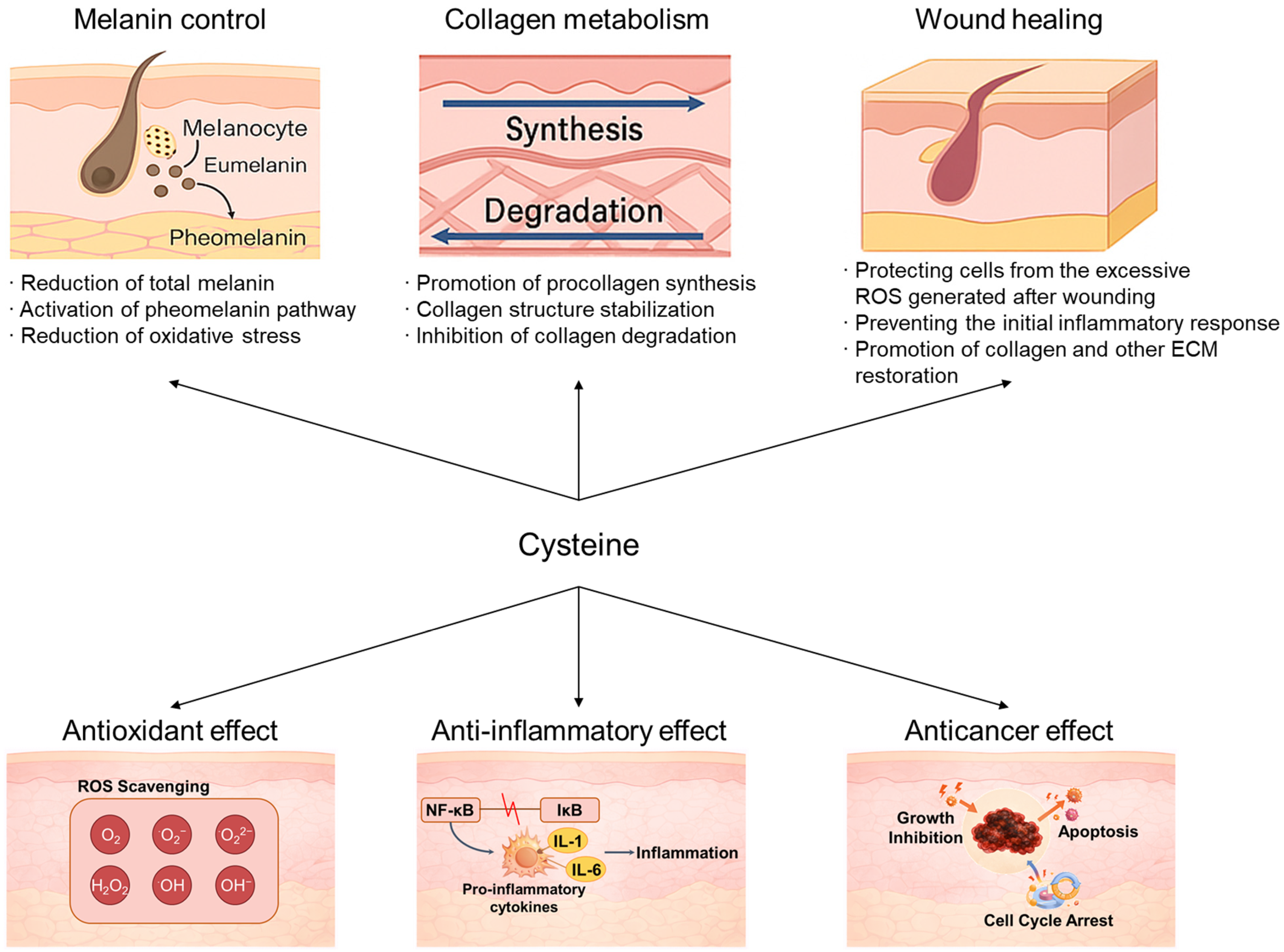
Additionally, cysteine has been reported to be involved in antioxidant, anti-inflammatory, and anticancer actions. Cysteine, as a glutathione precursor, increases GSH synthesis, thereby restoring the liver’s antioxidant capacity and enhancing antioxidant-defense capabilities in the high-oxidative-stress environment of diabetes [74]. Cysteine is not merely a ROS scavenger but a key antioxidant amino acid that regulates oxidative stress-based cellular aging processes by converting to GSH and maintaining cellular redox homeostasis [75,76]. Furthermore, cysteine was found to effectively suppress TNF-α-induced inflammatory responses in human coronary arterial endothelial cells (HCAECs), mediated through inhibition of NF-κB activation, IκBα degradation, CD62E expression, and IL-6 production [77]. Moreover, cysteine mitigates cancer progression by suppressing arsenic-mediated cancer promotion [78]. However, contrary to cysteine’s general recognition as an antioxidant protective molecule, excessive cysteine accumulation in cancer cells has been reported to promote the cell cycle alongside increased Cyclin D protein, accelerating cancer cell proliferation. Consequently, some cancer research utilizes an anticancer approach through cysteine-deficient diets (Figure 1) [79,80].

3. Limitations of Cysteine for Biological Applications

Despite its central role in redox regulation and skin physiology, the direct application of cysteine as a therapeutic agent is significantly limited by its intrinsic chemical instability and unfavorable physicochemical properties. The thiol group of cysteine is highly reactive and readily undergoes oxidation to form cystine under physiological and experimental conditions, leading to reduced bioavailability and inconsistent biological activity [12,20]. In aqueous environments and in vivo systems, this rapid oxidation impairs the ability to maintain effective intracellular concentrations of cysteine, thereby limiting its pharmacological utility [21]. Furthermore, cysteine exhibits poor membrane permeability due to its polar structure, restricting its efficient transport across lipid bilayers and reducing tissue distribution [81,82]. These limitations collectively hinder the direct use of cysteine in therapeutic formulations.
Beyond its physicochemical instability, cysteine also presents biological and pharmacological limitations that complicate its therapeutic application. The intracellular concentration of cysteine is tightly regulated, and excessive supplementation may disrupt redox homeostasis rather than restore it, potentially leading to adverse cellular effects [34,83]. In particular, while cysteine-derived antioxidants can protect normal cells from oxidative damage, elevated cysteine levels in certain pathological contexts, such as cancer, may enhance tumor cell survival and proliferation by supporting redox adaptation and metabolic activity [84,85]. Additionally, the rapid metabolism and short half-life of cysteine further limit its sustained biological activity, making it difficult to achieve controlled and targeted therapeutic effects [20]. These context-dependent and dose-sensitive effects underscore the challenges associated with using unmodified cysteine as a pharmacological agent.
To overcome these limitations, chemical modification of cysteine has emerged as a strategic approach to enhance its therapeutic potential. Structural modifications such as acetylation, amidation, and esterification can improve oxidative stability, increase lipophilicity, and facilitate cellular uptake, thereby enhancing bioavailability and pharmacokinetic profiles [57,61]. Importantly, these modifications not only address the limitations of native cysteine but also enable functional diversification, allowing specific derivatives to target distinct biological processes more effectively. As a result, cysteine derivatives offer improved stability, controlled delivery, and context-specific activity, making them more suitable candidates for dermatological applications. These advances provide the foundation for the development of next-generation redox-modulating therapeutics, which will be discussed in the following sections.

4. Types and Characteristics of Cysteine Derivatives

To overcome the intrinsic limitations of cysteine, a variety of chemically modified derivatives have been developed to improve stability, bioavailability, and functional specificity. These derivatives are designed to modulate key physicochemical properties, including resistance to oxidation, membrane permeability, and intracellular delivery efficiency [57,61]. Importantly, structural modifications such as acetylation, amidation, and esterification not only enhance pharmacokinetic properties but also influence biological activity by altering redox potential and molecular interactions [20,86]. Based on their chemical features and functional characteristics, cysteine derivatives can be broadly categorized into acetylated forms, amide derivatives, esterified compounds, and naturally occurring analogs. This classification provides a framework for understanding their differential roles and therapeutic relevance in dermatology.
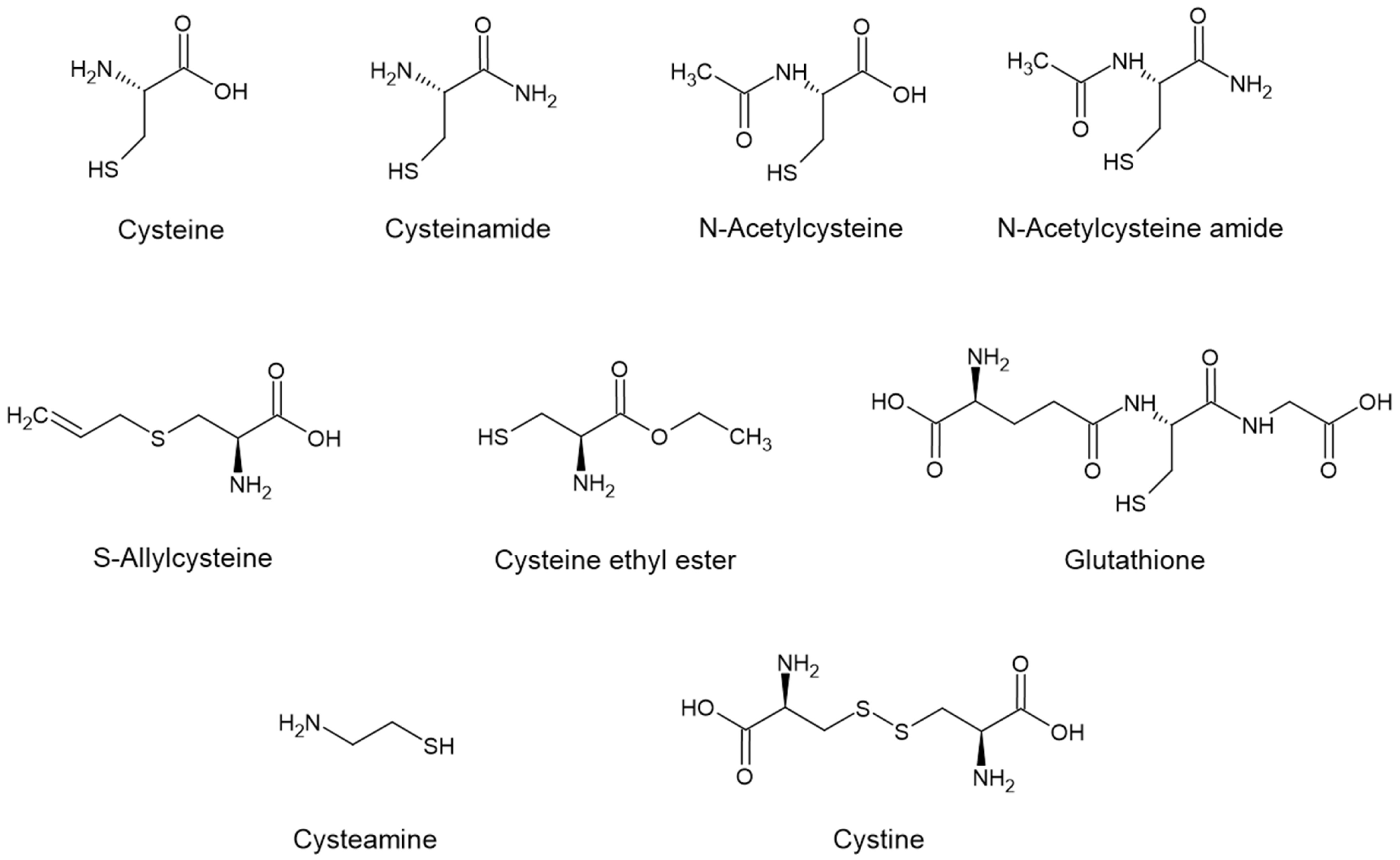
The chemical structures of cysteine and its derivatives are shown in Figure 2.

4.1. Acetylated Derivatives

Acetylated derivatives, particularly NAC, represent the most widely studied class of cysteine-based compounds. The introduction of an acetyl group reduces the reactivity of the amino group and enhances resistance to oxidation, thereby improving stability compared with native cysteine [57]. NAC is efficiently deacetylated intracellularly to release cysteine, serving as a precursor for GSH synthesis and exerting potent antioxidant effects [87,88]. Due to its favorable pharmacological profile, NAC has been extensively used in clinical settings, including as a mucolytic agent and an antidote for acetaminophen toxicity [89]. In dermatological contexts, NAC contributes to redox regulation, modulation of inflammatory responses, and improvement of wound healing processes [17,28]. However, its relatively limited membrane permeability and dependence on intracellular conversion may restrict its efficiency in certain applications [86].

4.2. Amidated Derivatives

Amidated derivatives of cysteine, such as C-NH2 and N-acetylcysteine amide (NAC-NH2), are designed to enhance lipophilicity and membrane permeability by replacing the carboxyl group with an amide moiety. This modification reduces ionization at physiological pH, facilitating cellular uptake and improving intracellular delivery [90,91]. C-NH2 has been reported to exhibit strong inhibitory effects on melanogenesis through direct interaction with dopaquinone and modulation of tyrosinase activity [29], making it particularly relevant for pigmentation control [63]. NAC-NH2, on the other hand, demonstrates superior antioxidant capacity and enhanced bioavailability compared with NAC, including improved penetration across biological barriers [88]. These properties suggest that amide derivatives may offer functional advantages in applications requiring efficient intracellular targeting and rapid redox modulation.

4.3. Esterified Derivatives

Esterified derivatives, such as cysteine ethyl ester (CEE), are developed to improve membrane permeability and facilitate rapid intracellular delivery of cysteine. The esterification of the carboxyl group increases lipophilicity, allowing these compounds to readily cross lipid bilayers and subsequently undergo intracellular hydrolysis to release cysteine [86,92]. As a result, esterified derivatives serve as effective cysteine donors, enhancing intracellular GSH levels and reducing oxidative stress [93]. These properties make them particularly useful in experimental models of oxidative injury and metabolic dysfunction [33]. However, the rapid hydrolysis and potential variability in esterase activity may influence their pharmacokinetics and limit precise control over cysteine release [86].

4.4. Naturally Derived and Other Functional Analogs

In addition to synthetic derivatives, several naturally occurring cysteine-related compounds exhibit significant biological activity. GSH, a tripeptide containing cysteine, is the most abundant intracellular antioxidant and plays a central role in redox homeostasis, detoxification, and cellular signaling [11,12]. S-allylcysteine (SAC), derived from aged garlic extract, is characterized by high stability and bioavailability, and exerts antioxidant and anti-inflammatory effects through mechanisms such as Nrf2 activation [94,95]. Cysteamine, a decarboxylated derivative of cysteine, exhibits strong reducing capacity and has been investigated for its skin-lightening and anti-inflammatory effects, as well as its clinical use in metabolic disorders [96]. Cystine, the oxidized dimer of cysteine, serves as a storage and transport form and contributes to redox buffering in biological systems [82,97]. These compounds highlight the diversity of cysteine-related molecules and their potential functional relevance in dermatology.
Collectively, cysteine derivatives exhibit distinct advantages depending on their chemical structure and biological context. Acetylated derivatives such as NAC provide stability and serve as efficient GSH precursors but may be limited by cellular uptake [20,28,86]. Amide derivatives offer enhanced membrane permeability and stronger intracellular activity, making them suitable for targeting specific cellular processes such as melanogenesis [29,90]. Esterified derivatives function as rapid cysteine donors, enabling efficient modulation of intracellular redox status, although their pharmacokinetics may be less controlled [86,92]. Naturally derived compounds such as GSH, SAC, and cysteamine provide additional functional diversity, including antioxidant, anti-inflammatory, and signaling-related effects [12,94,96]. Therefore, the selection of appropriate cysteine derivatives should be guided by their specific physicochemical properties and targeted biological functions, rather than a uniform application of all compounds. This comparative perspective is essential for the rational design of cysteine-based therapeutic strategies in dermatology.

5. Dermatological Effects of Cysteine Derivatives

5.1. Effects of Cysteine Derivatives on Melanin Control

Cysteine derivatives play a critical role in regulating melanogenesis through both chemical and redox-dependent mechanisms. A key mechanism involves the interaction of thiol groups with dopaquinone, redirecting the melanogenic pathway from eumelanin toward pheomelanin synthesis, thereby reducing overall pigmentation [14,15,16]. In addition, several derivatives directly modulate tyrosinase activity, the rate-limiting enzyme in melanin synthesis. Melanin plays a crucial role in protecting the skin from ultraviolet radiation, but excessive melanin causes dark pigmentation, making proper regulation essential. In MNT-1 human melanoma cells and normal human epidermal melanocytes (HEMs), C-NH2 reduced total melanin production without cytotoxicity, particularly decreasing eumelanin. C-NH2 inhibited enzyme activity via TYR-Cu2+ chelation and induced the conversion of dopaquinone into a DOPA-C-NH2 conjugate, thereby bypassing the dopachrome/eumelanin pathway to suppress eumelanin synthesis [29]. GSH binds to the copper active site of tyrosinase, a key enzyme in melanin synthesis, inhibiting its activity. It also promotes the binding of dopaquinone and cysteine, facilitating the conversion of eumelanin to the lighter-colored pheomelanin. Furthermore, GSH downregulates MITF, which controls tyrosinase expression and melanocyte proliferation [98]. Recent research further suggests that the route of administration critically influences both efficacy and safety, particularly in the case of GSH-based skin-lightening approaches [98,99]. Clinical studies on cysteamine report that daily application of 5% cysteamine cream to melasma lesions for 4 months resulted in greater improvement compared to a placebo group [96]. These findings indicate that cysteine derivatives not only alter melanin synthesis pathways but also regulate enzymatic and transcriptional processes involved in pigmentation.

5.2. Effects of Cysteine Derivatives on Collagen Metabolism

Cysteine derivatives contribute to the regulation of collagen metabolism by maintaining the balance between synthesis and degradation through redox control. Collagen constitutes the majority of the skin’s dermis layer and maintains skin elasticity and moisture. Therefore, a decrease in collagen easily leads to skin aging and wrinkles. To prevent this, it is essential to appropriately regulate collagen metabolism. When rat palatal tissue-derived oral mucosal cells are cultured and treated with hydrogen peroxide, cell proliferation and collagen production increase; however, NAC inhibits this increase [100]. In rat cardiac fibroblasts (CFs), NAC suppressed Angiotensin II-induced CF proliferation and collagen synthesis by inhibiting the activation of the NF-kB signaling pathway [101]. SAC, one of the major compounds in aged garlic extract, reduced the mRNA expression of inflammatory and fibrogenic cytokines, including interleukin 6, interferon γ, tumor necrosis factor α, and TGF-β, and also reduced mRNA expression of liver fibrosis biomarkers, including α-smooth muscle actin, fibronectin, and collagen I [102]. Furthermore, SAC reduced mRNA expression of fibrosis genes such as alpha smooth muscle actin (a-SMA), fibronectin, collagen I, and collagen III, as well as a-SMA protein levels in bleomycin (BLM)-induced pulmonary fibrosis in mice [103]. TGF-β depletes GSH in fibroblasts, increasing collagen I expression and accumulation. Supplementing GSH inhibits TGF-β-induced collagen accumulation and normalizes collagen degradation [104]. These findings highlight the dual role of cysteine derivatives in preventing both collagen deficiency and excessive fibrosis, depending on the pathological context.

5.3. Effects of Cysteine Derivatives on Wound Healing

Cysteine derivatives have demonstrated significant potential in promoting wound healing by modulating oxidative stress, inflammation, and tissue regeneration. The wound healing process is a sequence of various activities related to tissue restoration. When a skin wound was created in Wistar rats and treated with 3% NAC cream for 21 days, increased angiogenesis and wound healing rates were observed compared to the control group [105]. In db/db mice, a type 2 diabetes model, treatment with a hydrogel containing 5% NAC resulted in increased skin proliferation area and improved wound closure rate compared to the control group [106]. In a rat ischemic wound model, topical application of esterified GSH was confirmed to enhance wound healing by reducing oxidative stress through increased intracellular GSH, preventing keratinocyte apoptosis, and increasing fibroblast contractile capacity [107]. Importantly, these findings suggest that cysteine-based compounds may be particularly beneficial in pathological conditions characterized by impaired healing and chronic oxidative stress [108].

5.4. Antioxidant Effects of Cysteine Derivatives

The antioxidant activity of cysteine derivatives represents their most fundamental and widely recognized biological function. NAC acts as a precursor to GSH, promoting GSH biosynthesis and functioning as an antioxidant that scavenges free oxygen radicals. It is used as a therapeutic agent for certain conditions such as acetaminophen toxicity, chronic bronchitis, ulcerative colitis, liver cancer, hemodialysis, and asthma [20,109]. NAC-NH2, the amide form of NAC, exhibits high lipophilicity, resulting in superior cellular permeability and BBB penetration. This characteristic enables enhanced efficacy in GSH supplementation and ROS scavenging, leading to high bioavailability [110,111]. SAC possesses multiple antioxidant mechanisms, including free radical scavenging, antioxidant enzyme induction, Nrf2 factor activation, and prooxidant enzyme inhibition [94]. As a natural antioxidant with protective effects against cerebral ischemia or cancer, it reduced ROS generated under hypoxia induced by cobalt chloride (CoCl2) and protected cells from cell death [112]. CEE, a cell membrane-permeable carboxylate ester, rapidly enters tissues or the brain, where it is broken down by carboxylesterase to increase cysteine levels. This elevated cysteine promotes GSH synthesis. It also reduced oxidative stress and improved gas exchange abnormalities in opioid analgesic models, such as morphine and fentanyl [113]. GSH is an antioxidant involved in the primary cellular reduction system, eliminating ROS, regulating protein S-glutathionylation, and activating the Nrf2 antioxidant pathway to reduce oxidative damage [114]. Cysteamine demonstrated radiation protection and potent antioxidant properties when tissue was irradiated, confirming its efficacy as a radioprotective agent and antioxidant [115]. Collectively, these properties underscore the central role of cysteine derivatives in maintaining redox homeostasis and protecting cells from oxidative injury.

5.5. Anti-Inflammatory Effects of Cysteine Derivatives

Cysteine derivatives exert significant anti-inflammatory effects by modulating redox-sensitive signaling pathways. Oxidative stress is closely linked to the activation of inflammatory cascades, particularly through transcription factors such as NF-κB. In Pam212 murine keratinocytes, 2-hydroxyethyl methacrylate (HEMA) induced IL-1α secretion and cytotoxicity, which was associated with increased ROS production and elevated calpain enzyme activity. NAC inhibited HEMA-induced IL-1α secretion, ROS production, and calpain activity. Furthermore, NAC suppressed HEMA-induced increases in IL-1α secretion in IL-1 KO mice [116]. NAC exhibited anti-inflammatory effects by suppressing the secretion of inflammatory factors such as tumor necrosis factor alpha (TNF-α) and interleukins (IL-6 and IL-1) in LPS-treated macrophages through the inhibition of nuclear factor kappa B (NF-κB) activity [117,118]. SAC suppressed TNF-α-induced inflammatory cytokine expression in HaCaT keratinocytes. SAC inhibited TNF-α-induced activation of the NF-κB pathway and continuously activated the ERK pathway [119]. Furthermore, in a renal inflammation model of diabetic mice, SAC administration suppressed NF-κB and significantly reduced the expression of ROS, IL-6, TNF-α, and prostaglandin E2 [120]. In lipopolysaccharide (LPS)-stimulated murine RAW 264.7 macrophages and human macrophages, N-butanoyl GSH (GSH-C4) reduced the expression of pro-inflammatory cytokines such as IL-1β, IL-6, and TNF-α [121]. Cysteamine was confirmed to mitigate excessive immune responses by regulating inflammatory cytokines such as IFN-γ, TNF, and IL-2 [122]. These findings indicate that the anti-inflammatory effects of cysteine derivatives are closely linked to their antioxidant properties and play an important role in dermatological conditions characterized by persistent inflammation.

5.6. Anticancer Effects of Cysteine Derivatives

The role of cysteine derivatives in cancer biology is complex and context-dependent, reflecting the dual nature of redox regulation in tumor progression. NAC protected mouse melanocytes (melan-a cells) from UV-induced DNA lesions such as 8-oxoguanine (8-OG) induced by UV radiation and the depletion of free reduced thiols. In mice with induced melanoma, NAC administration reduced thiol depletion, inhibited 8-OG formation in the skin, and significantly delayed UV-induced melanocyte tumors compared to the control group [42]. ROS such as peroxides and hydrogen peroxide stimulate tumor cells and immune cells. In this regard, NAC could be utilized as an adjuvant to anticancer drugs by regulating oxidative stress and inflammatory responses in precancerous stages or tumor microenvironment metabolism. However, excessive antioxidant activity may adversely affect tumor immunity or ROS-dependent cell death, necessitating optimization [123]. Radiation causes microvascular damage and oxidative stress, damaging salivary glands. In bovine aortic endothelial cells (BAECs), NAC-NH2 reduced radiation-induced endothelial cell death. Furthermore, in a C3H mouse model, pre-treatment with NAC-NH2 before head and neck irradiation protected against radiation-induced salivary gland dysfunction and reduced microvascular loss, suggesting potential of NAC-NH2 as a radioprotective agent [124]. In bladder cancer cell lines, SAC inhibited cell proliferation and colony formation, induced apoptosis, and arrested the cell cycle at the S phase, thereby preventing bladder cancer cell growth [125]. In the human epithelial ovarian cancer cell line A2780, SAC also induced G1/S phase arrest and apoptosis, reduced cell migration, and decreased the expression of proteins involved in proliferation and metastasis, such as Wnt5a, p-AKT, and c-Jun [126]. In cases of cellular damage, reactive oxygen species (ROS) production increases. Excessive ROS production can lead to various diseases, including cancer. GSH can prevent this by maintaining redox homeostasis and can also serve as a useful protective factor by mitigating the toxicity of anticancer or radiation therapy [127]. Cysteamine, an amino thiol molecule produced by cells during the degradation of coenzyme A, is used in the treatment of various conditions such as cystinosis and neurodegenerative diseases. It has shown improved efficacy in the treatment of multiple cancers including gastrointestinal cancer, pancreatic cancer, sarcomas, hepatocellular carcinoma, and melanoma [128]. It has been suggested that cysteamine can be utilized in cancer treatment by inhibiting MMP activity in glioblastoma (GBM) cells, thereby suppressing tumor cell invasion and metastasis [129]. These findings highlight the need to carefully consider dose, context, and disease stage when applying cysteine derivatives in therapeutic strategies, particularly in oncology-related dermatological conditions.
Selected experimental and clinical studies on the dermatological effects of cysteine derivatives are summarized in Table 1.

6. Discussion

Cysteine plays a central role in skin physiology as a thiol-containing amino acid that governs redox homeostasis, GSH synthesis, and disulfide bond formation [11,12]. Through these mechanisms, cysteine is intricately involved in the regulation of melanogenesis, maintenance of collagen homeostasis, and promotion of wound healing [4,17]. However, despite its biological importance, the direct therapeutic application of native cysteine remains limited due to its intrinsic instability, rapid oxidation, poor membrane permeability, and short biological half-life [20,86]. These physicochemical and pharmacological constraints significantly restrict its clinical utility.
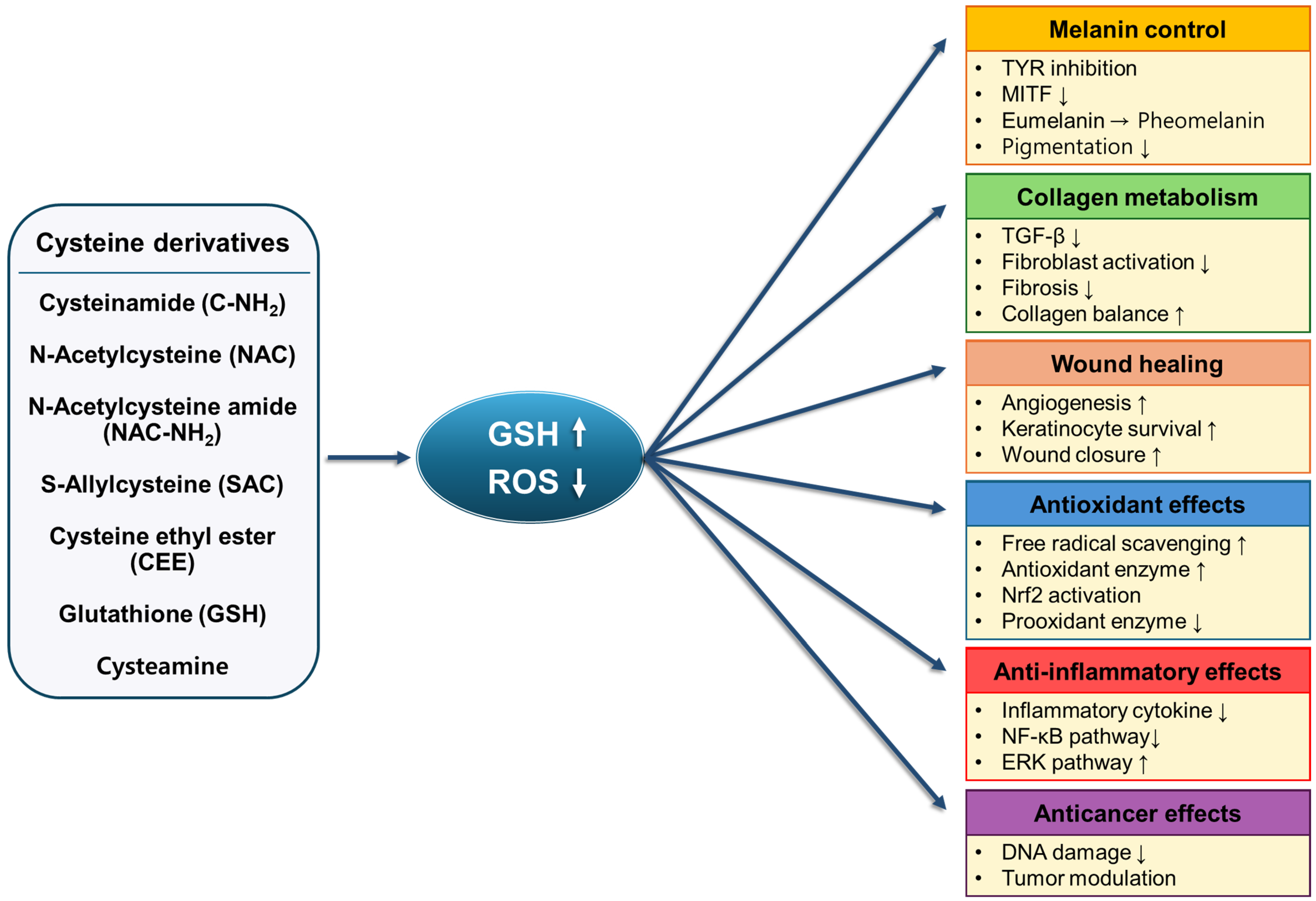
To address these limitations, a wide range of cysteine derivatives has been developed through chemical modifications such as acetylation, amidation, and esterification. These modifications enhance molecular stability, improve cellular uptake, and enable more efficient intracellular delivery [20,86,90]. Importantly, different derivatives exhibit distinct functional advantages depending on their structural properties and biological context [28,30]. For example, acetylated derivatives such as NAC primarily act as GSH precursors and antioxidants [88], while amide derivatives demonstrate enhanced membrane permeability and stronger intracellular activity [29,90], and esterified forms function as efficient cysteine donors [86,92]. In addition, naturally derived compounds such as GSH, SAC, and cysteamine further expand the functional diversity of cysteine-related molecules by providing antioxidant, anti-inflammatory, and signaling-related effects (Figure 3) [12,94,96,130].
Collectively, these findings highlight that cysteine derivatives are not merely substitutes for native cysteine but represent a strategically optimized class of redox-active compounds with improved pharmacological properties. Their ability to modulate key dermatological processes—including pigmentation, extracellular matrix remodeling, and tissue regeneration—positions them as promising candidates for therapeutic applications in hyperpigmentation disorders, skin aging, fibrosis, and chronic wounds such as diabetic ulcers. However, despite encouraging preclinical evidence, several challenges remain, including limited clinical validation, insufficient comparative studies between derivatives, and a lack of standardized criteria for compound selection based on specific pathological conditions.
Future research should focus on systematic comparative evaluations of different cysteine derivatives, with particular attention to their pharmacokinetics, tissue specificity, and long-term safety. In addition, well-designed in vivo and clinical studies are required to validate their therapeutic efficacy and to establish optimal dosing strategies. Furthermore, the integration of cysteine-based compounds into advanced delivery systems, such as nanocarriers or hydrogel platforms, may further enhance their clinical applicability. Ultimately, a deeper understanding of thiol-based redox regulation and its interaction with disease-specific pathways will be essential for the rational design of next-generation dermatological therapeutics based on cysteine derivatives.

Author Contributions

Conceptualization, Y.C.B.; investigation, J.Y.C.; writing—original draft preparation, J.Y.C. and Y.C.B.; supervision, W.-J.L. and Y.C.B.; writing—review and editing, W.-J.L. and Y.C.B.; funding acquisition, W.-J.L. and Y.C.B. All authors have read and agreed to the published version of the manuscript.

Funding

This research was supported by a grant from the Korea Health Technology R&D Project through the Korea Health Industry Development Institute (KHIDI), funded by the Ministry of Health & Welfare, Republic of Korea (grant number: RS-2024-00437643).

Institutional Review Board Statement

Not applicable.

Informed Consent Statement

Not applicable.

Data Availability Statement

The original contributions presented in the study are included in the article, and further inquiries can be directed to the corresponding author.

Conflicts of Interest

The authors declare no conflicts of interest.

References

  1. Korkina, L.; Pastore, S. The role of redox regulation in the normal physiology and inflammatory diseases of skin. Front. Biosci. (Elite Ed.) 2009, 1, 123–141. [Google Scholar] [PubMed]
  2. Schalka, S.; Silva, M.S.; Lopes, L.F.; de Freitas, L.M.; Baptista, M.S. The skin redoxome. J. Eur. Acad. Dermatol. Venereol. 2022, 36, 181–195. [Google Scholar] [CrossRef] [PubMed]
  3. Rudolf, J.; Raad, H.; Taieb, A.; Rezvani, H.R. NADPH Oxidases and Their Roles in Skin Homeostasis and Carcinogenesis. Antioxid. Redox Signal 2018, 28, 1238–1261. [Google Scholar] [CrossRef]
  4. Chen, J.; Liu, Y.; Zhao, Z.; Qiu, J. Oxidative stress in the skin: Impact and related protection. Int. J. Cosmet. Sci. 2021, 43, 495–509. [Google Scholar] [CrossRef] [PubMed]
  5. Shroff, A.; Mamalis, A.; Jagdeo, J. Oxidative Stress and Skin Fibrosis. Curr. Pathobiol. Rep. 2014, 2, 257–267. [Google Scholar] [CrossRef]
  6. Deng, L.; Du, C.; Song, P.; Chen, T.; Rui, S.; Armstrong, D.G.; Deng, W. The Role of Oxidative Stress and Antioxidants in Diabetic Wound Healing. Oxid. Med. Cell Longev. 2021, 2021, 8852759. [Google Scholar] [CrossRef] [PubMed]
  7. Speeckaert, R.; Bulat, V.; Speeckaert, M.M.; van Geel, N. The Impact of Antioxidants on Vitiligo and Melasma: A Scoping Review and Meta-Analysis. Antioxidants 2023, 12, 2082. [Google Scholar] [CrossRef] [PubMed]
  8. Zaw, K.K.; Yokoyama, Y.; Abe, M.; Ishikawa, O. Catalase restores the altered mRNA expression of collagen and matrix metalloproteinases by dermal fibroblasts exposed to reactive oxygen species. Eur. J. Dermatol. 2006, 16, 375–379. [Google Scholar]
  9. Rittié, L.; Fisher, G.J. UV-light-induced signal cascades and skin aging. Ageing Res. Rev. 2002, 1, 705–720. [Google Scholar] [CrossRef] [PubMed]
  10. Wagener, F.A.; Carels, C.E.; Lundvig, D.M. Targeting the redox balance in inflammatory skin conditions. Int. J. Mol. Sci. 2013, 14, 9126–9167. [Google Scholar] [CrossRef]
  11. Lu, S.C. Glutathione synthesis. Biochim. Biophys. Acta 2013, 1830, 3143–3153. [Google Scholar] [CrossRef]
  12. Forman, H.J.; Zhang, H.; Rinna, A. Glutathione: Overview of its protective roles, measurement, and biosynthesis. Mol. Asp. Med. 2009, 30, 1–12. [Google Scholar] [CrossRef]
  13. Benathan, M.; Labidi, F. Cysteine-dependent 5-S-cysteinyldopa formation and its regulation by glutathione in normal epidermal melanocytes. Arch. Dermatol. Res. 1996, 288, 697–702. [Google Scholar] [CrossRef]
  14. Ito, S.; Wakamatsu, K. Chemistry of mixed melanogenesis—Pivotal roles of dopaquinone. Photochem. Photobiol. 2008, 84, 582–592. [Google Scholar] [CrossRef] [PubMed]
  15. Rzepka, Z.; Buszman, E.; Beberok, A.; Wrześniok, D. From tyrosine to melanin: Signaling pathways and factors regulating melanogenesis. Postep. Hig. Med. Dosw. 2016, 70, 695–708. [Google Scholar] [CrossRef] [PubMed]
  16. He, T.; Quan, T.; Shao, Y.; Voorhees, J.J.; Fisher, G.J. Oxidative exposure impairs TGF-β pathway via reduction of type II receptor and SMAD3 in human skin fibroblasts. Age 2014, 36, 9623. [Google Scholar] [CrossRef] [PubMed]
  17. Schäfer, M.; Werner, S. Oxidative stress in normal and impaired wound repair. Pharmacol. Res. 2008, 58, 165–171. [Google Scholar] [CrossRef]
  18. Seyedian, R.; Shabankareh Fard, E.; Najafiasl, M.; Assadi, M.; Zaeri, S. N-acetylcysteine-loaded electrospun mats improve wound healing in mice and human fibroblast proliferation in vitro: A potential application of nanotechnology in wound care. Iran. J. Basic Med. Sci. 2020, 23, 1590–1602. [Google Scholar]
  19. Kerksick, C.; Willoughby, D. The antioxidant role of glutathione and N-acetyl-cysteine supplements and exercise-induced oxidative stress. J. Int. Soc. Sports Nutr. 2005, 2, 38. [Google Scholar] [CrossRef]
  20. Atkuri, K.R.; Mantovani, J.J.; Herzenberg, L.A.; Herzenberg, L.A. N-Acetylcysteine—A safe antidote for cysteine/glutathione deficiency. Curr. Opin. Pharmacol. 2007, 7, 355–359. [Google Scholar] [CrossRef] [PubMed]
  21. Aoyama, K.; Nakaki, T. Impaired glutathione synthesis in neurodegeneration. Int. J. Mol. Sci. 2013, 14, 21021–21044. [Google Scholar] [CrossRef] [PubMed]
  22. Clemente Plaza, N.; Reig García-Galbis, M.; Martínez-Espinosa, R.M. Effects of the Usage of l-Cysteine (l-Cys) on Human Health. Molecules 2018, 23, 575. [Google Scholar] [CrossRef] [PubMed]
  23. Lin, Z.; Chen, Z.; Chen, Y.; Yang, N.; Shi, J.; Tang, Z.; Zhang, C.; Lin, H.; Yin, J. Hydrogenated silicene nanosheet functionalized scaffold enables immuno-bone remodeling. Exploration 2023, 3, 20220149. [Google Scholar] [CrossRef] [PubMed]
  24. Peng, Y.; Zhuang, Y.; Liu, Y.; Le, H.; Li, D.; Zhang, M.; Liu, K.; Zhang, Y.; Zuo, J.; Ding, J. Bioinspired gradient scaffolds for osteochondral tissue engineering. Exploration 2023, 3, 20210043. [Google Scholar] [CrossRef] [PubMed]
  25. Harati, J.; Wang, P. Leveraging integrative technologies to translate stem cell and cell reprogramming potential for neurodegenerative diseases. Eur. Cells Mater. 2024, 48, 151–155. [Google Scholar] [CrossRef]
  26. Zhang, D.; Wang, P. Intestinal stem cells (ISCs): ISCs-derived organoids for disease modeling and therapy. Eur. Cells Mater. 2025, 50, 84–86. [Google Scholar] [CrossRef]
  27. Li, X.; Li, J.; Wang, W.; Yue, Z.; Sun, T. Thermo-Oxidative Coupling Amplification Effect Unleashed by Tungsten-Based Polyoxometalate Nanoreactors Enables Synergistic Hyperthermia-Chemodynamic Therapy. Part. Part. Syst. Charact. 2026, 43, e00192. [Google Scholar] [CrossRef]
  28. Adil, M.; Amin, S.S.; Mohtashim, M. N-acetylcysteine in dermatology. Indian J. Dermatol. Venereol. Leprol. 2018, 84, 652–659. [Google Scholar] [CrossRef]
  29. Lee, H.K.; Ha, J.W.; Hwang, Y.J.; Boo, Y.C. Identification of L-Cysteinamide as a Potent Inhibitor of Tyrosinase-Mediated Dopachrome Formation and Eumelanin Synthesis. Antioxidants 2021, 10, 1202. [Google Scholar] [CrossRef]
  30. Choi, J.Y.; Ha, J.W.; Boo, Y.C. Multifaceted Effects of L-Cysteine, L-Ascorbic Acid, and Their Derivatives on the Viability and Melanin Synthesis of B16/F10 Cells under Different Conditions. Antioxidants 2024, 13, 330. [Google Scholar] [CrossRef] [PubMed]
  31. Rinnerthaler, M.; Bischof, J.; Streubel, M.K.; Trost, A.; Richter, K. Oxidative stress in aging human skin. Biomolecules 2015, 5, 545–589. [Google Scholar] [CrossRef] [PubMed]
  32. Schieber, M.; Chandel, N.S. ROS function in redox signaling and oxidative stress. Curr. Biol. 2014, 24, R453–R462. [Google Scholar] [CrossRef]
  33. Townsend, D.M.; Tew, K.D.; Tapiero, H. The importance of glutathione in human disease. Biomed. Pharmacother. 2003, 57, 145–155. [Google Scholar] [CrossRef] [PubMed]
  34. Jones, D.P. Redefining oxidative stress. Antioxid. Redox Signal 2006, 8, 1865–1879. [Google Scholar] [CrossRef] [PubMed]
  35. Lucas-Herald, A.K.; Hussain, S.; McGinley, K.; Alves-Lopes, R.; Amjad, S.B.; Flett, M.; Lee, B.; Steven, M.; O’Toole, S.; Ahmed, S.F. ROS scavengers and genital skin healing in boys with hypospadias. J. Pediatr. Urol. 2025, 21, 1170–1178. [Google Scholar] [CrossRef] [PubMed]
  36. Ito, S.; Wakamatsu, K. Quantitative analysis of eumelanin and pheomelanin in humans, mice, and other animals: A comparative review. Pigment Cell Res. 2003, 16, 523–531. [Google Scholar] [CrossRef]
  37. Land, E.J.; Ramsden, C.A.; Riley, P.A. Quinone chemistry and melanogenesis. Methods Enzymol. 2004, 378, 88–109. [Google Scholar]
  38. Wakamatsu, K.; Zippin, J.H.; Ito, S. Chemical and biochemical control of skin pigmentation with special emphasis on mixed melanogenesis. Pigment. Cell Melanoma Res. 2021, 34, 730–747. [Google Scholar] [CrossRef]
  39. Wakamatsu, K.; Ito, S. Recent advances in characterization of melanin pigments in biological samples. Int. J. Mol. Sci. 2023, 24, 8305. [Google Scholar] [CrossRef] [PubMed]
  40. Slominski, A.; Tobin, D.J.; Shibahara, S.; Wortsman, J. Melanin pigmentation in mammalian skin and its hormonal regulation. Physiol. Rev. 2004, 84, 1155–1228. [Google Scholar] [CrossRef]
  41. Boo, Y.C. Metabolic basis and clinical evidence for skin lightening effects of thiol compounds. Antioxidants 2022, 11, 503. [Google Scholar] [CrossRef] [PubMed]
  42. Cotter, M.A.; Thomas, J.; Cassidy, P.; Robinette, K.; Jenkins, N.; Florell, S.R.; Leachman, S.; Samlowski, W.E.; Grossman, D. N-acetylcysteine protects melanocytes against oxidative stress/damage and delays onset of ultraviolet-induced melanoma in mice. Clin. Cancer Res. 2007, 13, 5952–5958. [Google Scholar] [CrossRef]
  43. Perdomo, J.; Quintana, C.; González, I.; Hernández, I.; Rubio, S.; Loro, J.F.; Reiter, R.J.; Estévez, F.; Quintana, J. Melatonin induces melanogenesis in human SK-MEL-1 melanoma cells involving glycogen synthase kinase-3 and reactive oxygen species. Int. J. Mol. Sci. 2020, 21, 4970. [Google Scholar] [CrossRef] [PubMed]
  44. Manap, A.S.A.; Lum, Y.K.; Ong, L.H.; Tang, Y.-Q.; Gew, L.T.; Chia, A.Y.Y. Perspective approaches on melanogenesis inhibition. Dermatol. Sin. 2021, 39, 1–12. [Google Scholar] [CrossRef]
  45. Ito, S. High-performance liquid chromatography (HPLC) analysis of eu-and pheomelanin in melanogenesis control. J. Investig. Dermatol. 1993, 100, S166–S171. [Google Scholar] [CrossRef][Green Version]
  46. Vašková, J.; Kočan, L.; Vaško, L.; Perjési, P. Glutathione-related enzymes and proteins: A review. Molecules 2023, 28, 1447. [Google Scholar] [CrossRef]
  47. Aminzadehanboohi, M.; Makridakis, M.; Rasti, D.; Cambet, Y.; Krause, K.-H.; Vlahou, A.; Jaquet, V. Redox Mechanisms Driving Skin Fibroblast-to-Myofibroblast Differentiation. Antioxidants 2025, 14, 486. [Google Scholar] [CrossRef]
  48. Onursal, C.; Dick, E.; Angelidis, I.; Schiller, H.B.; Staab-Weijnitz, C.A. Collagen biosynthesis, processing, and maturation in lung ageing. Front. Med. 2021, 8, 593874. [Google Scholar] [CrossRef] [PubMed]
  49. Kumar, C.; Igbaria, A.; D’autreaux, B.; Planson, A.G.; Junot, C.; Godat, E.; Bachhawat, A.K.; Delaunay-Moisan, A.; Toledano, M.B. Glutathione revisited: A vital function in iron metabolism and ancillary role in thiol-redox control. EMBO J. 2011, 30, 2044–2056. [Google Scholar] [CrossRef]
  50. Pihlajaniemi, T.; Myllylä, R.; Kivirikko, K.I. Prolyl 4-hydroxylase and its role in collagen synthesis. J. Hepatol. 1991, 13, S2–S7. [Google Scholar] [CrossRef]
  51. Varela-Rey, M.; Fontán-Gabás, L.; Blanco, P.; López-Zabalza, M.J.; Iraburu, M.J. Glutathione depletion is involved in the inhibition of procollagen α1 (I) mRNA levels caused by TNF-α on hepatic stellate cells. Cytokine 2007, 37, 212–217. [Google Scholar] [CrossRef]
  52. Koide, T.; Nagata, K. Collagen biosynthesis. In Collagen: Primer in Structure, Processing and Assembly; Springer: Berlin/Heidelberg, Germany, 2005; pp. 85–114. [Google Scholar]
  53. Yammine, K.M.; Li, R.C.; Borgula, I.M.; Mirda Abularach, S.; DiChiara, A.S.; Raines, R.T.; Shoulders, M.D. An outcome-defining role for the triple-helical domain in regulating collagen-I assembly. Proc. Natl. Acad. Sci. USA 2024, 121, e2412948121. [Google Scholar] [CrossRef] [PubMed]
  54. Pei, P.; Horan, M.P.; Hille, R.; Hemann, C.F.; Schwendeman, S.P.; Mallery, S.R. Reduced nonprotein thiols inhibit activation and function of MMP-9: Implications for chemoprevention. Free Radic. Biol. Med. 2006, 41, 1315–1324. [Google Scholar] [CrossRef] [PubMed]
  55. Bogani, P.; Canavesi, M.; Hagen, T.M.; Visioli, F.; Bellosta, S. Thiol supplementation inhibits metalloproteinase activity independent of glutathione status. Biochem. Biophys. Res. Commun. 2007, 363, 651–655. [Google Scholar] [CrossRef] [PubMed]
  56. Romagnoli, C.; Marcucci, T.; Picariello, L.; Tonelli, F.; Vincenzini, M.T.; Iantomasi, T. Role of N-acetylcysteine and GSH redox system on total and active MMP-2 in intestinal myofibroblasts of Crohn’s disease patients. Int. J. Color. Dis. 2013, 28, 915–924. [Google Scholar] [CrossRef]
  57. Turk, V.; Stoka, V.; Vasiljeva, O.; Renko, M.; Sun, T.; Turk, B.; Turk, D. Cysteine cathepsins: From structure, function and regulation to new frontiers. Biochim. Biophys. Acta (BBA)-Proteins Proteom. 2012, 1824, 68–88. [Google Scholar] [CrossRef]
  58. Lalmanach, G.; Saidi, A.; Bigot, P.; Chazeirat, T.; Lecaille, F.; Wartenberg, M. Regulation of the proteolytic activity of cysteine cathepsins by oxidants. Int. J. Mol. Sci. 2020, 21, 1944. [Google Scholar] [CrossRef] [PubMed]
  59. Brem, H.; Tomic-Canic, M. Cellular and molecular basis of wound healing in diabetes. J. Clin. Investig. 2007, 117, 1219–1222. [Google Scholar] [CrossRef]
  60. Rebrin, I.; Sohal, R.S. Pro-oxidant shift in glutathione redox state during aging. Adv. Drug Deliv. Rev. 2008, 60, 1545–1552. [Google Scholar] [CrossRef] [PubMed]
  61. Singh, V.P.; Bali, A.; Singh, N.; Jaggi, A.S. Advanced glycation end products and diabetic complications. Korean J. Physiol. Pharmacol. Off. J. Korean Physiol. Soc. Korean Soc. Pharmacol. 2014, 18, 1. [Google Scholar] [CrossRef] [PubMed]
  62. Liu, R.-M.; Desai, L.P. Reciprocal regulation of TGF-β and reactive oxygen species: A perverse cycle for fibrosis. Redox Biol. 2015, 6, 565–577. [Google Scholar] [CrossRef] [PubMed]
  63. Thannickal, V.J.; Zhou, Y.; Gaggar, A.; Duncan, S.R. Fibrosis: Ultimate and proximate causes. J. Clin. Investig. 2014, 124, 4673–4677. [Google Scholar] [CrossRef]
  64. Iyer, S.S.; Ramirez, A.M.; Ritzenthaler, J.D.; Torres-Gonzalez, E.; Roser-Page, S.; Mora, A.L.; Brigham, K.L.; Jones, D.P.; Roman, J.; Rojas, M. Oxidation of extracellular cysteine/cystine redox state in bleomycin-induced lung fibrosis. Am. J. Physiol.-Lung Cell. Mol. Physiol. 2009, 296, L37–L45. [Google Scholar] [CrossRef] [PubMed]
  65. Ricard-Blum, S. The collagen family. Cold Spring Harb. Perspect. Biol. 2011, 3, a004978. [Google Scholar]
  66. Gurtner, G.C.; Werner, S.; Barrandon, Y.; Longaker, M.T. Wound repair and regeneration. Nature 2008, 453, 314–321. [Google Scholar] [CrossRef]
  67. Guo, S.a.; DiPietro, L.A. Factors affecting wound healing. J. Dent. Res. 2010, 89, 219–229. [Google Scholar] [CrossRef]
  68. Schreml, S.; Szeimies, R.-M.; Prantl, L.; Landthaler, M.; Babilas, P. Wound healing in the 21st century. J. Am. Acad. Dermatol. 2010, 63, 866–881. [Google Scholar] [CrossRef]
  69. Zhao, R.; Liang, H.; Clarke, E.; Jackson, C.; Xue, M. Inflammation in chronic wounds. Int. J. Mol. Sci. 2016, 17, 2085. [Google Scholar] [CrossRef]
  70. Salman, Z.K.; Refaat, R.; Selima, E.; El Sarha, A.; Ismail, M.A. The combined effect of metformin and L-cysteine on inflammation, oxidative stress and insulin resistance in streptozotocin-induced type 2 diabetes in rats. Eur. J. Pharmacol. 2013, 714, 448–455. [Google Scholar] [CrossRef] [PubMed]
  71. Xue, M.; Jackson, C.J. Extracellular Matrix Reorganization During Wound Healing and Its Impact on Abnormal Scarring. Adv. Wound Care 2015, 4, 119–136. [Google Scholar] [CrossRef]
  72. Ghanemi, A.; Yoshioka, M.; St-Amand, J. Secreted protein acidic and rich in cysteine: Metabolic and homeostatic properties beyond the extracellular matrix structure. Appl. Sci. 2020, 10, 2388. [Google Scholar] [CrossRef]
  73. McCurdy, S.; Baicu, C.F.; Heymans, S.; Bradshaw, A.D. Cardiac extracellular matrix remodeling: Fibrillar collagens and Secreted Protein Acidic and Rich in Cysteine (SPARC). J. Mol. Cell. Cardiol. 2010, 48, 544–549. [Google Scholar] [CrossRef] [PubMed]
  74. Jain, S.K.; Kanikarla-Marie, P.; Warden, C.; Micinski, D. L-cysteine supplementation upregulates glutathione (GSH) and vitamin D binding protein (VDBP) in hepatocytes cultured in high glucose and in vivo in liver, and increases blood levels of GSH, VDBP, and 25-hydroxy-vitamin D in Zucker diabetic fatty rats. Mol. Nutr. Food Res. 2016, 60, 1090–1098. [Google Scholar] [CrossRef] [PubMed]
  75. Pace, M.; Giorgi, C.; Lombardozzi, G.; Cimini, A.; Castelli, V.; d’Angelo, M. Exploring the Antioxidant Roles of Cysteine and Selenocysteine in Cellular Aging and Redox Regulation. Biomolecules 2025, 15, 1115. [Google Scholar] [CrossRef] [PubMed]
  76. Piste, P. Cysteine–master antioxidant. Int. J. Pharm. Chem. Biol. Sci. 2013, 3, 143–149. [Google Scholar]
  77. Hasegawa, S.; Ichiyama, T.; Sonaka, I.; Ohsaki, A.; Okada, S.; Wakiguchi, H.; Kudo, K.; Kittaka, S.; Hara, M.; Furukawa, S. Cysteine, histidine and glycine exhibit anti-inflammatory effects in human coronary arterial endothelial cells. Clin. Exp. Immunol. 2012, 167, 269–274. [Google Scholar] [CrossRef]
  78. Kato, M.; Kumasaka, M.Y.; Takeda, K.; Hossain, K.; Iida, M.; Yajima, I.; Goto, Y.; Ohgami, N. L-cysteine as a regulator for arsenic-mediated cancer-promoting and anti-cancer effects. Toxicol. Vitr. 2011, 25, 623–629. [Google Scholar] [CrossRef]
  79. Okano, Y.; Yamauchi, T.; Fukuzaki, R.; Tsuruta, A.; Yoshida, Y.; Tsurudome, Y.; Ushijima, K.; Matsunaga, N.; Koyanagi, S.; Ohdo, S. Oncogenic accumulation of cysteine promotes cancer cell proliferation by regulating the translation of D-type cyclins. J. Biol. Chem. 2024, 300, 107890. [Google Scholar] [CrossRef]
  80. Ruiz-Rodado, V.; Dowdy, T.; Lita, A.; Kramp, T.; Zhang, M.; Jung, J.; Dios-Esponera, A.; Zhang, L.; Herold-Mende, C.C.; Camphausen, K. Cysteine is a limiting factor for glioma proliferation and survival. Mol. Oncol. 2022, 16, 1777–1794. [Google Scholar] [CrossRef]
  81. Bannai, S. Transport of cystine and cysteine in mammalian cells. Biochim. Biophys. Acta (BBA)-Rev. Biomembr. 1984, 779, 289–306. [Google Scholar] [CrossRef]
  82. Bannai, S. Exchange of cystine and glutamate across plasma membrane of human fibroblasts. J. Biol. Chem. 1986, 261, 2256–2263. [Google Scholar] [CrossRef] [PubMed]
  83. Stipanuk, M.H. Sulfur amino acid metabolism: Pathways for production and removal of homocysteine and cysteine. Annu. Rev. Nutr. 2004, 24, 539–577. [Google Scholar] [CrossRef] [PubMed]
  84. Harris, I.S.; Treloar, A.E.; Inoue, S.; Sasaki, M.; Gorrini, C.; Lee, K.C.; Yung, K.Y.; Brenner, D.; Knobbe-Thomsen, C.B.; Cox, M.A.; et al. Glutathione and thioredoxin antioxidant pathways synergize to drive cancer initiation and progression. Cancer Cell 2015, 27, 211–222. [Google Scholar] [CrossRef] [PubMed]
  85. Koppula, P.; Zhuang, L.; Gan, B. Cystine transporter SLC7A11/xCT in cancer: Ferroptosis, nutrient dependency, and cancer therapy. Protein Cell 2021, 12, 599–620. [Google Scholar] [CrossRef] [PubMed]
  86. Giustarini, D.; Milzani, A.; Dalle-Donne, I.; Tsikas, D.; Rossi, R. N-Acetylcysteine ethyl ester (NACET): A novel lipophilic cell-permeable cysteine derivative with an unusual pharmacokinetic feature and remarkable antioxidant potential. Biochem. Pharmacol. 2012, 84, 1522–1533. [Google Scholar] [CrossRef] [PubMed]
  87. Zafarullah, M.; Li, W.Q.; Sylvester, J.; Ahmad, M. Molecular mechanisms of N-acetylcysteine actions. Cell Mol. Life Sci. 2003, 60, 6–20. [Google Scholar] [CrossRef] [PubMed]
  88. Samuni, Y.; Goldstein, S.; Dean, O.M.; Berk, M. The chemistry and biological activities of N-acetylcysteine. Biochim. Biophys. Acta 2013, 1830, 4117–4129. [Google Scholar] [CrossRef]
  89. Prescott, L.F.; Park, J.; Ballantyne, A.; Adriaenssens, P.; Proudfoot, A.T. Treatment of paracetamol (acetaminophen) poisoning with N-acetylcysteine. Lancet 1977, 2, 432–434. [Google Scholar] [CrossRef]
  90. Grinberg, L.; Fibach, E.; Amer, J.; Atlas, D. N-acetylcysteine amide, a novel cell-permeating thiol, restores cellular glutathione and protects human red blood cells from oxidative stress. Free Radic. Biol. Med. 2005, 38, 136–145. [Google Scholar] [CrossRef]
  91. Sunitha, K.; Hemshekhar, M.; Thushara, R.; Santhosh, M.S.; Yariswamy, M.; Kemparaju, K.; Girish, K. N-Acetylcysteine amide: A derivative to fulfill the promises of N-Acetylcysteine. Free Radic. Res. 2013, 47, 357–367. [Google Scholar] [CrossRef]
  92. Anderson, M.E.; Powrie, F.; Puri, R.N.; Meister, A. Glutathione monoethyl ester: Preparation, uptake by tissues, and conversion to glutathione. Arch. Biochem. Biophys. 1985, 239, 538–548. [Google Scholar] [CrossRef]
  93. Meister, A. Glutathione metabolism and its selective modification. J. Biol. Chem. 1988, 263, 17205–17208. [Google Scholar] [CrossRef]
  94. Colín-González, A.L.; Santana, R.A.; Silva-Islas, C.A.; Chánez-Cárdenas, M.E.; Santamaría, A.; Maldonado, P.D. The antioxidant mechanisms underlying the aged garlic extract-and S-allylcysteine-induced protection. Oxidative Med. Cell. Longev. 2012, 2012, 907162. [Google Scholar] [CrossRef] [PubMed]
  95. Iciek, M.; Kwiecień, I.; Włodek, L. Biological properties of garlic and garlic-derived organosulfur compounds. Environ. Mol. Mutagen. 2009, 50, 247–265. [Google Scholar] [CrossRef] [PubMed]
  96. Mansouri, P.; Farshi, S.; Hashemi, Z.; Kasraee, B. Evaluation of the efficacy of cysteamine 5% cream in the treatment of epidermal melasma: A randomized double-blind placebo-controlled trial. Br. J. Dermatol. 2015, 173, 209–217. [Google Scholar] [CrossRef] [PubMed]
  97. Conrad, M.; Sato, H. The oxidative stress-inducible cystine/glutamate antiporter, system xc: Cystine supplier and beyond. Amino Acids 2012, 42, 231–246. [Google Scholar] [CrossRef]
  98. Alzahrani, T.F.; Alotaibi, S.M.; Alzahrani, A.A.; Alzahrani, A.F.; Alturki, L.E.; Alshammari, M.M.; Alharbi, R.A.; Alanazi, S.I.; Alshammari, W.Z.; Algarni, A.S. Exploring the safety and efficacy of glutathione supplementation for skin lightening: A narrative review. Cureus 2025, 17, e78045. [Google Scholar] [CrossRef] [PubMed]
  99. Khanna, R.; Rambhia, P.; Chapas, A. Systematic Review of the Efficacy and Safety of Topical Glutathione in Dermatology. J. Clin. Aesthetic Dermatol. 2025, 18, 51. [Google Scholar]
  100. Sato, N.; Ueno, T.; Kubo, K.; Suzuki, T.; Tsukimura, N.; Att, W.; Yamada, M.; Hori, N.; Maeda, H.; Ogawa, T. N-Acetyl cysteine (NAC) inhibits proliferation, collagen gene transcription, and redox stress in rat palatal mucosal cells. Dent. Mater. 2009, 25, 1532–1540. [Google Scholar] [CrossRef] [PubMed]
  101. Zhou, J.; Xu, J.; Sun, S.; Guo, M.; Li, P.; Cheng, A. N-Acetylcysteine Slows Down Cardiac Pathological Remodeling by Inhibiting Cardiac Fibroblast Proliferation and Collagen Synthesis. Dis. Markers 2021, 2021, 3625662. [Google Scholar] [CrossRef]
  102. Gong, Z.; Ye, H.; Huo, Y.; Wang, L.; Huang, Y.; Huang, M.; Yuan, X. S-allyl-cysteine attenuates carbon tetrachloride-induced liver fibrosis in rats by targeting STAT3/SMAD3 pathway. Am. J. Transl. Res. 2018, 10, 1337. [Google Scholar]
  103. Nie, Y.; Yu, K.; Li, B.; Hu, Y.; Zhang, H.; Xin, R.; Xiong, Y.; Zhao, P.; Chai, G. S-allyl-l-cysteine attenuates bleomycin-induced pulmonary fibrosis and inflammation via AKT/NF-κB signaling pathway in mice. J. Pharmacol. Sci. 2019, 139, 377–384. [Google Scholar] [CrossRef] [PubMed]
  104. Liu, R.-M.; Liu, Y.; Forman, H.J.; Olman, M.; Tarpey, M.M. Glutathione regulates transforming growth factor-β-stimulated collagen production in fibroblasts. Am. J. Physiol.-Lung Cell. Mol. Physiol. 2004, 286, L121–L128. [Google Scholar] [CrossRef] [PubMed]
  105. Oguz, A.; Uslukaya, O.; Alabalık, U.; Turkoglu, A.; Kapan, M.; Bozdag, Z. Topical N-acetylcysteine improves wound healing comparable to dexpanthenol: An experimental study. Int. Surg. 2015, 100, 656–661. [Google Scholar] [CrossRef] [PubMed]
  106. Stachura, A.; Sobczak, M.; Kędra, K.; Kopka, M.; Kopka, K.; Włodarski, P.K. The Influence of N-Acetylcysteine-Enriched Hydrogels on Wound Healing in a Murine Model of Type II Diabetes Mellitus. Int. J. Mol. Sci. 2024, 25, 9986. [Google Scholar] [CrossRef]
  107. Kopal, C.; Deveci, M.; Öztürk, S.; Sengezer, M. Effects of topical glutathione treatment in rat ischemic wound model. Ann. Plast. Surg. 2007, 58, 449–455. [Google Scholar] [CrossRef]
  108. Ahmed, R.; Elekhnawy, E. Unveiling the potential antibacterial action of acetylcysteine for managing Staphylococcus aureus wound infections: In vitro and in vivo study. World J. Microbiol. Biotechnol. 2025, 41, 134. [Google Scholar] [CrossRef]
  109. Mokhtari, V.; Afsharian, P.; Shahhoseini, M.; Kalantar, S.M.; Moini, A. A review on various uses of N-acetyl cysteine. Cell J. (Yakhteh) 2016, 19, 11. [Google Scholar]
  110. Sahasrabudhe, S.A.; Terluk, M.R.; Kartha, R.V. N-acetylcysteine pharmacology and applications in rare diseases—Repurposing an old antioxidant. Antioxidants 2023, 12, 1316. [Google Scholar] [CrossRef]
  111. Matthiesen, I.; Voulgaris, D.; Nikolakopoulou, P.; Winkler, T.E.; Herland, A. Continuous monitoring reveals protective effects of N-acetylcysteine amide on an isogenic microphysiological model of the neurovascular unit. Small 2021, 17, 2101785. [Google Scholar] [CrossRef] [PubMed]
  112. Orozco-Ibarra, M.; Muñoz-Sánchez, J.; Zavala-Medina, M.E.; Pineda, B.; Magaña-Maldonado, R.; Vázquez-Contreras, E.; Maldonado, P.D.; Pedraza-Chaverri, J.; Chánez-Cárdenas, M.E. Aged garlic extract and S-allylcysteine prevent apoptotic cell death in a chemical hypoxia model. Biol. Res. 2016, 49, 7. [Google Scholar] [CrossRef] [PubMed]
  113. Getsy, P.M.; Baby, S.M.; May, W.J.; Young, A.P.; Gaston, B.; Hodges, M.R.; Forster, H.V.; Bates, J.N.; Wilson, C.G.; Lewis, T.H. D-cysteine ethyl ester reverses the deleterious effects of morphine on breathing and arterial blood–gas chemistry in freely-moving rats. Front. Pharmacol. 2022, 13, 883329. [Google Scholar] [CrossRef] [PubMed]
  114. Lu, Y.; Tonissen, K.F.; Di Trapani, G. Modulating skin colour: Role of the thioredoxin and glutathione systems in regulating melanogenesis. Biosci. Rep. 2021, 41, BSR20210427. [Google Scholar] [CrossRef] [PubMed]
  115. Penabeï, S.; Meesungnoen, J.; Jay-Gerin, J.-P. Comparative Analysis of Cystamine and Cysteamine as Radioprotectors and Antioxidants: Insights from Monte Carlo Chemical Modeling under High Linear Energy Transfer Radiation and High Dose Rates. Int. J. Mol. Sci. 2024, 25, 10490. [Google Scholar] [CrossRef] [PubMed]
  116. Kaji, T.; Kuroishi, T.; Bando, K.; Takahashi, M.; Sugawara, S. N-acetyl cysteine inhibits IL-1α release from murine keratinocytes induced by 2-hydroxyethyl methacrylate. J. Toxicol. Sci. 2023, 48, 557–569. [Google Scholar] [CrossRef] [PubMed]
  117. Tenório, M.C.d.S.; Graciliano, N.G.; Moura, F.A.; Oliveira, A.C.M.d.; Goulart, M.O.F. N-acetylcysteine (NAC): Impacts on human health. Antioxidants 2021, 10, 967. [Google Scholar] [CrossRef]
  118. Santus, P.; Signorello, J.C.; Danzo, F.; Lazzaroni, G.; Saad, M.; Radovanovic, D. Anti-inflammatory and anti-oxidant properties of N-acetylcysteine: A fresh perspective. J. Clin. Med. 2024, 13, 4127. [Google Scholar] [CrossRef]
  119. Basu, C.; Chatterjee, A.; Bhattacharya, S.; Dutta, N.; Sur, R. S-allyl cysteine inhibits TNF-α-induced inflammation in HaCaT keratinocytes by inhibition of NF-κB-dependent gene expression via sustained ERK activation. Exp. Dermatol. 2019, 28, 1328–1335. [Google Scholar] [CrossRef]
  120. Mei-chin, M.; Mei-chin, Y. Nuclear Factor κB-Dependent Anti-inflammatory Effects of s-Allyl Cysteine and s-Propyl Cysteine in Kidney of Diabetic Mice. J. Agric. Food Chem. 2012, 60, 3158–3165. [Google Scholar]
  121. Limongi, D.; Baldelli, S.; Checconi, P.; Marcocci, M.E.; De Chiara, G.; Fraternale, A.; Magnani, M.; Ciriolo, M.R.; Palamara, A.T. GSH-C4 acts as anti-inflammatory drug in different models of canonical and cell autonomous inflammation through NFκB inhibition. Front. Immunol. 2019, 10, 155. [Google Scholar]
  122. Najafi-Fard, S.; Farroni, C.; Petrone, L.; Altera, A.M.G.; Salmi, A.; Vanini, V.; Cuzzi, G.; Alonzi, T.; Nicastri, E.; Gualano, G. Immunomodulatory effects of cysteamine and its potential use as a host-directed therapy for tuberculosis. Front. Immunol. 2024, 15, 1411827. [Google Scholar] [CrossRef]
  123. Kalyanaraman, B. NAC, NAC, Knockin’on Heaven’s door: Interpreting the mechanism of action of N-acetylcysteine in tumor and immune cells. Redox Biol. 2022, 57, 102497. [Google Scholar] [CrossRef] [PubMed]
  124. Ritter, A.; Hikri, E.; Li, H.; Markovsky, E.; Bachar, G.; Kurman, N.; Popovtzer, A.; Haimovitz-Friedman, A.; Mizrachi, A. N-Acetylcysteine Amide Is a Potential Novel Radioprotector of Salivary Gland Function. Cancers 2025, 17, 2902. [Google Scholar] [CrossRef]
  125. Ho, J.N.; Kang, M.; Lee, S.; Oh, J.J.; Hong, S.K.; Lee, S.E.; Byun, S.S. Anticancer effect of S-allyl-L-cysteine via induction of apoptosis in human bladder cancer cells. Oncol. Lett. 2018, 15, 623–629. [Google Scholar] [CrossRef] [PubMed]
  126. Xu, Y.-S.; Feng, J.-G.; Zhang, D.; Zhang, B.; Luo, M.; Su, D.; Lin, N.-M. S-allylcysteine, a garlic derivative, suppresses proliferation and induces apoptosis in human ovarian cancer cells in vitro. Acta Pharmacol. Sin. 2014, 35, 267–274. [Google Scholar] [CrossRef] [PubMed]
  127. Marini, H.R.; Facchini, B.A.; di Francia, R.; Freni, J.; Puzzolo, D.; Montella, L.; Facchini, G.; Ottaiano, A.; Berretta, M.; Minutoli, L. Glutathione: Lights and shadows in cancer patients. Biomedicines 2023, 11, 2226. [Google Scholar] [CrossRef]
  128. Lee, C.-M. A review on the antimutagenic and anticancer effects of cysteamine. Adv. Pharmacol. Pharm. Sci. 2023, 2023, 2419444. [Google Scholar] [CrossRef]
  129. Jung, J.; Celiku, O.; Rubin, B.I.; Gilbert, M.R. Cysteamine suppresses cancer cell invasion and migration in glioblastoma through inhibition of matrix metalloproteinase activity. Cancers 2024, 16, 2029. [Google Scholar] [CrossRef]
  130. Kleta, R.; Gahl, W.A. Pharmacological treatment of nephropathic cystinosis with cysteamine. Expert Opin. Pharmacother. 2004, 5, 2255–2262. [Google Scholar] [CrossRef]
Figure 1. Multifunctional roles of cysteine in skin. Abbreviations: ROS, reactive oxygen species; ECM, extracellular matrix.
Molecules 31 01277 g001
Figure 2. The chemical structures of cysteine (Cys), cysteinamide (C-NH2), N-acetylcysteine (NAC), N-acetylcysteine amide (NAC-NH2), S-allylcysteine (SAC), cysteine ethyl ester (CEE), glutathione (GSH), cysteamine, and cystine.
Molecules 31 01277 g002
Figure 3. Integrated mechanisms of cysteine derivatives in dermatological effects. Abbreviations: ROS, reactive oxygen species; TYR, tyrosinase; MITF, microphthalmia-associated transcription factor; TGF-β, transforming growth factor-β; Nrf2, nuclear factor erythroid-2-related factor 2; NF-κB, nuclear factor kappa-light-chain-enhancer of activated B cells; ERK, extracellular signal-regulated kinase. The symbol ↑ and ↓ denote increase and decrease, respectively.
Molecules 31 01277 g003
Table 1. Experimental and clinical studies on the dermatological effects of cysteine derivatives.
Dermatological
Effects
Experimental
Models
Evidence
Level
Inducing
Factors
Cysteine
Derivatives
OutcomesPrimary MechanismClinical
Relevance
LimitationsRef.
Melanin controlMNT-1 melanoma cells, human epidermal melanocytes (HEMs)in vitro C-NH2Total melanin ↓,
eumelanin ↓
Tyrosinase inhibition via TYR-Cu2+ chelation, pheomelanin pathway via DOPA-cysteinamide conjugateLow
(Only basic research)
Only in vitro evidence[29]
Patients with melasma, melanocytesin vitro,
clinical
GSHTotal melanin ↓,
eumelanin ↓,
MITF expression ↓
Tyrosinase inhibition via TYR-Cu2+ chelation, pheomelanin pathway via DOPA-cysteine conjugateHigh
(Products available)
[98]
Patients with facial melasmaclinical CysteamineMelasma improvement HighLack of histological assessments and assessment of systemic absorption[96]
Collagen
metabolism
Rat palatal tissue derived oral mucosal cellsin vitroHydrogen peroxide (H2O2)NACCell proliferation ↓,
collagen production ↓
Moderate
(Preclinical research)
Research into the mechanism is required[100]
Sprague-Dawley ratsin vivoAngiotensin IINACFibrosis area ↓,
collagen I ↓,
GPX1, GPX3, SOD1, and SOD 2 expression ↑,
ROS generation ↓
Increased expression of antioxidant-related genes[101]
Rat cardiac
fibroblasts (CFs)
in vitroProliferation ↓,
collagen synthesis ↓
Inhibition of the NF-κB pathway
Sprague-Dawley ratsin vivo SACmRNA expression of inflammatory (IL-6, IFN-γ, TNF-α), fibrogenic (TGF-β) cytokines and liver fibrosis biomarkers (α-SMA, fibronectin, collagen I) ↓ ModerateFurther clinical application is required[102]
Pulmonary fibrosis induced C57BL/6 micein vivoBleomycin (BLM)SACmRNA expression of fibrosis genes (α-SMA, fibronectin, collagen I, and collagen III) ↓, α-SMA protein level ↓ [103]
NIH 3T3 murine embryo fibroblastsin vitroTGF-βGSHCollagen accumulation ↓, normalization of collagen degradation LowFurther clinical application is required[104]
Wound healingWistar ratsin vivo NACAngiogenesis ↑,
wound healing rate ↑
ModerateClinical trials are needed to assess the use of NAC[105]
db/db micein vivo NACSkin proliferation ↑,
wound closure ↑
[106]
Sprague-Dawley ratsin vivo Esterified GSHWound healing ↑,
TIMP-1 level ↑
Reduction in oxidative stressModerateClinical trials involving topical application are required[107]
Antioxidant effectsPC12 cellsin vitroCobalt chloride (CoCl2)SACROS generation ↓,
cell toxicity ↓
LowResearch into the mechanism is required[112]
Sprague-Dawley ratsin vivo CEEGSH synthesis ↑, oxidative stress ↓, improvement of gas exchange abnormalityCellular permeability via carboxylate ester, cysteine supplementationModerateResearch into the mechanism is required[113]
Anti-inflammatory effectsPam212 murine keratinocytesin vitro2-hydroxyethyl methacrylate (HEMA) NACInhibition of HEMA-induced IL-1α release, inhibition of intracellular calpain activity and ROS production ModerateInconsistent clinical outcomes[116]
IL-1 KO BALB/c micein vivoInhibition of IL-1α release
HaCaT
keratinocytes
in vitroTNF-αSACInhibition of the NF-κB pathway, activation of the ERK pathway ModerateLimited clinical dermatology data[119]
Anticancer effectsMelan-a mouse
melanocytes
in vitroIrradiationNACProtection from the production of intracellular peroxide, formation of DNA lesions such as 8-oxoguanine (8-OG) ↓, depletion of free reduced thiol ↓ ModerateLimited clinical dermatology data[42]
Hepatocyte growth factor (HGF)/Survivin-Tg micein vivoFormation of DNA lesion 8-OG ↓, depletion of free reduced thiol in skin ↓, delay of the onset of UV-induced melanocytic tumors
B16 melanoma cells implanted micein vivo CysteamineReduction in tumor size through combined treatment with doxorubicin ModerateLimited clinical dermatology data[128]
Abbreviations: HEMs, human epidermal melanocytes; C-NH2, cysteinamide; TYR, tyrosinase; DOPA, 3,4-dihydroxyphenylalanine; GSH, glutathione; MITF, microphthalmia-associated transcription factor; H2O2, hydrogen peroxide; NAC, N-acetylcysteine; UV, ultraviolet; 8-OG, 8-oxoguanine; CFs, cardiac fibroblasts; NF-κB, nuclear factor kappa-light-chain-enhancer of activated B cells; SAC, S-allylcysteine; IL-6, interleukin-6; IFN-γ, interferon gamma; TNF-α, tumor necrosis factor α; TGF-β, transforming growth factor-β; α-SMA, alpha smooth muscle actin; BLM, bleomycin; TIMP-1, tissue inhibitor of metalloproteinase 1; CoCl2, cobalt chloride; ROS, reactive oxygen species; CEE, cysteine ethyl ester; HEMA, 2-hydroxyethyl methacrylate; ERK, extracellular signal-regulated kinase; 8-OG, 8-oxoguanine; HGF, hepatocyte growth factor; Tg, transgenic. The symbol ↑ and ↓ denote increase and decrease, respectively.
Disclaimer/Publisher’s Note: The statements, opinions and data contained in all publications are solely those of the individual author(s) and contributor(s) and not of MDPI and/or the editor(s). MDPI and/or the editor(s) disclaim responsibility for any injury to people or property resulting from any ideas, methods, instructions or products referred to in the content.