Synthesis and Biological Evaluation of Curvularin-Type Derivatives with Potential Anti-Inflammatory, Anticancer, and Antimicrobial Activities

 , , , , and
Abstract
1. Introduction
2. Results and Discussion
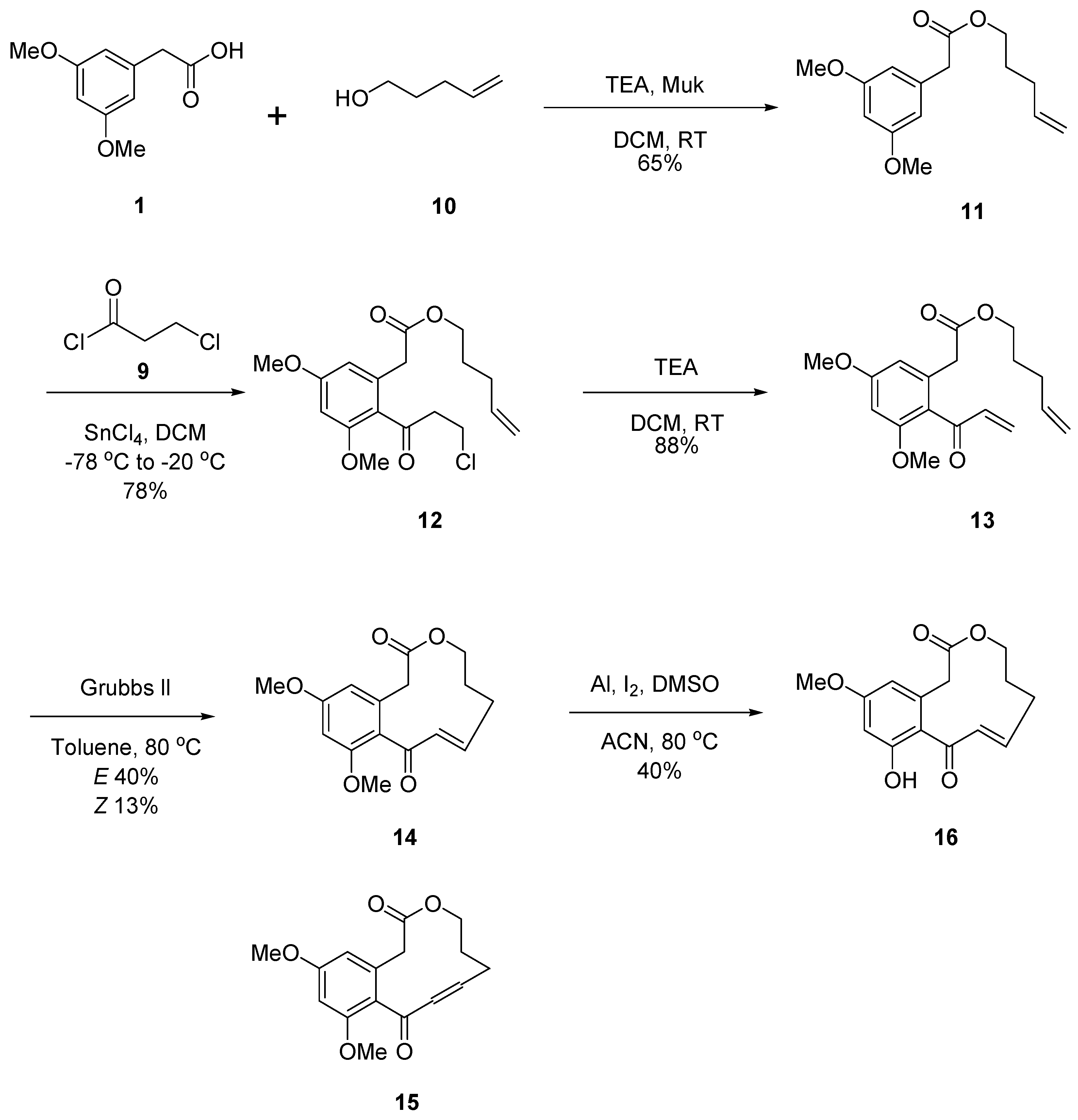
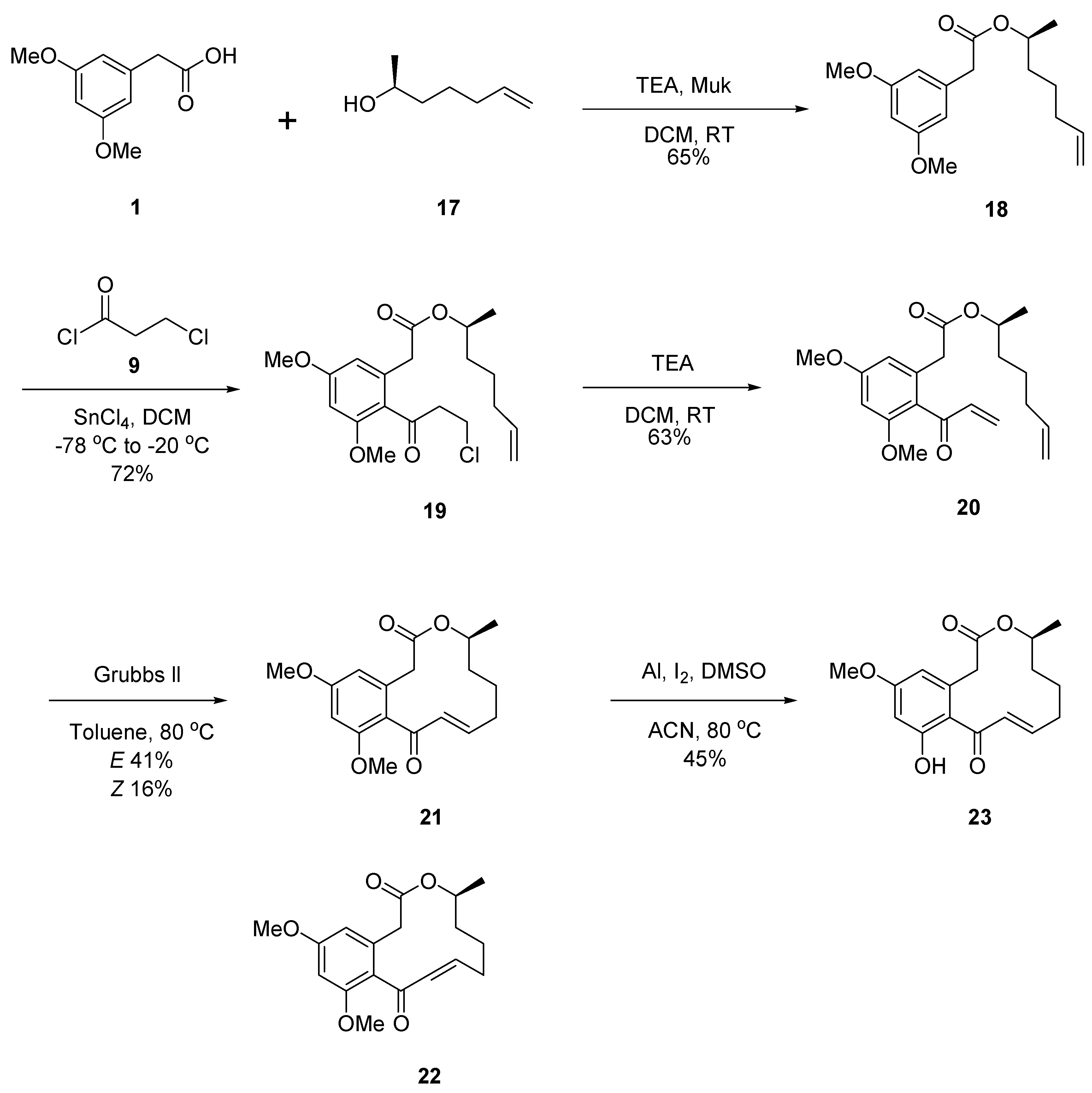
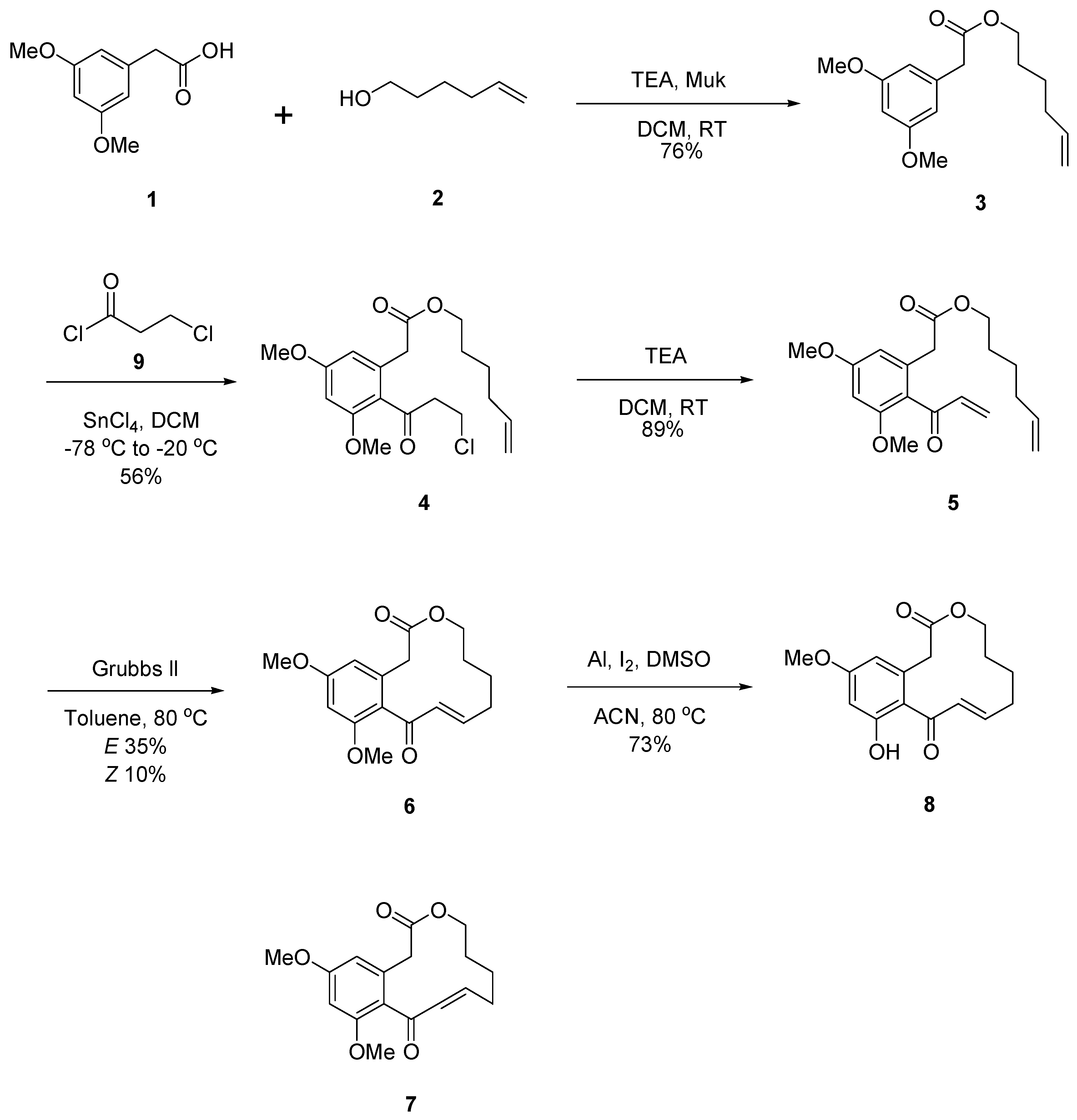
2.1. Synthesis of Curvularin Analogues
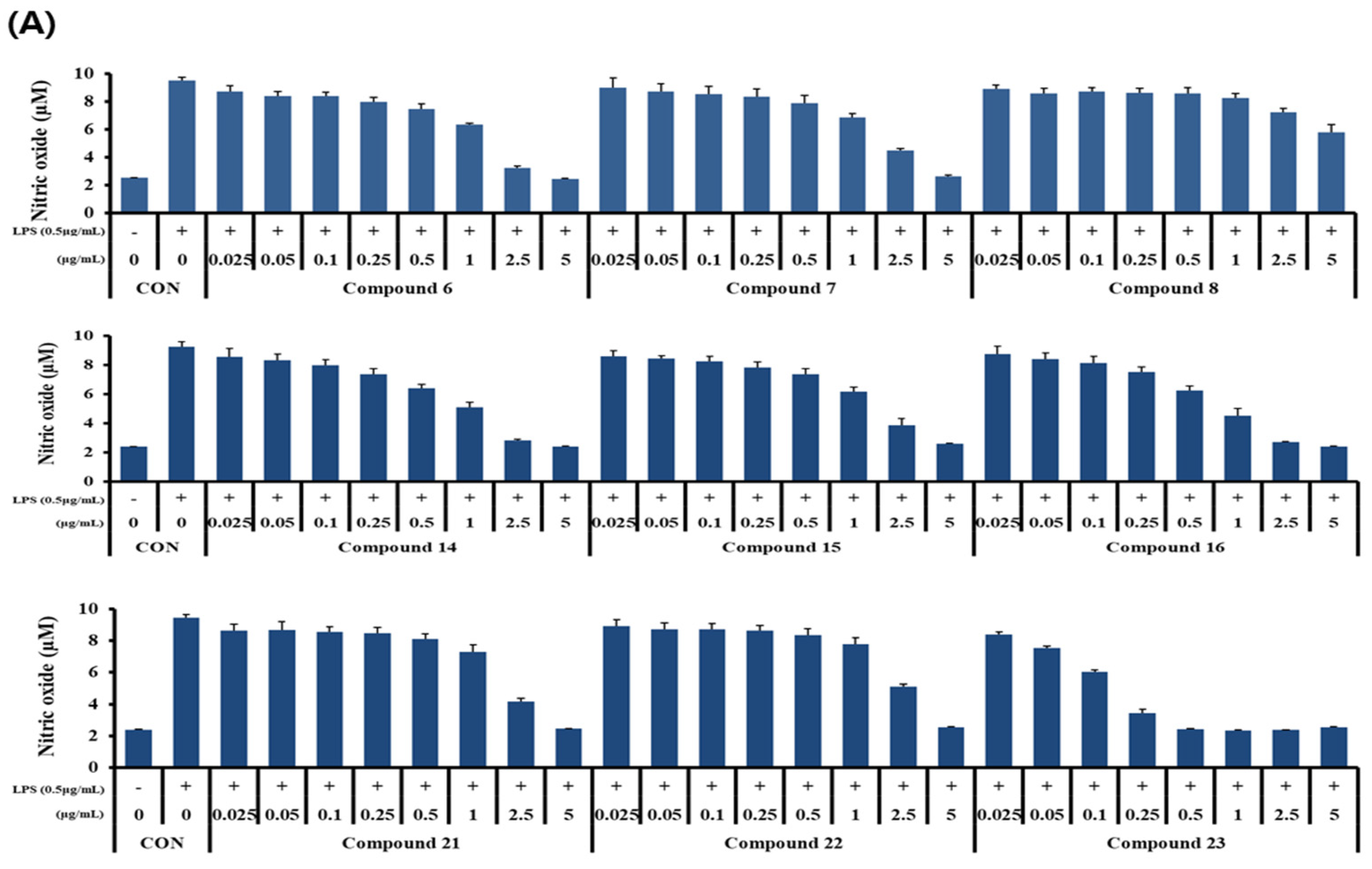
2.2. Anti-Inflammatory Activity
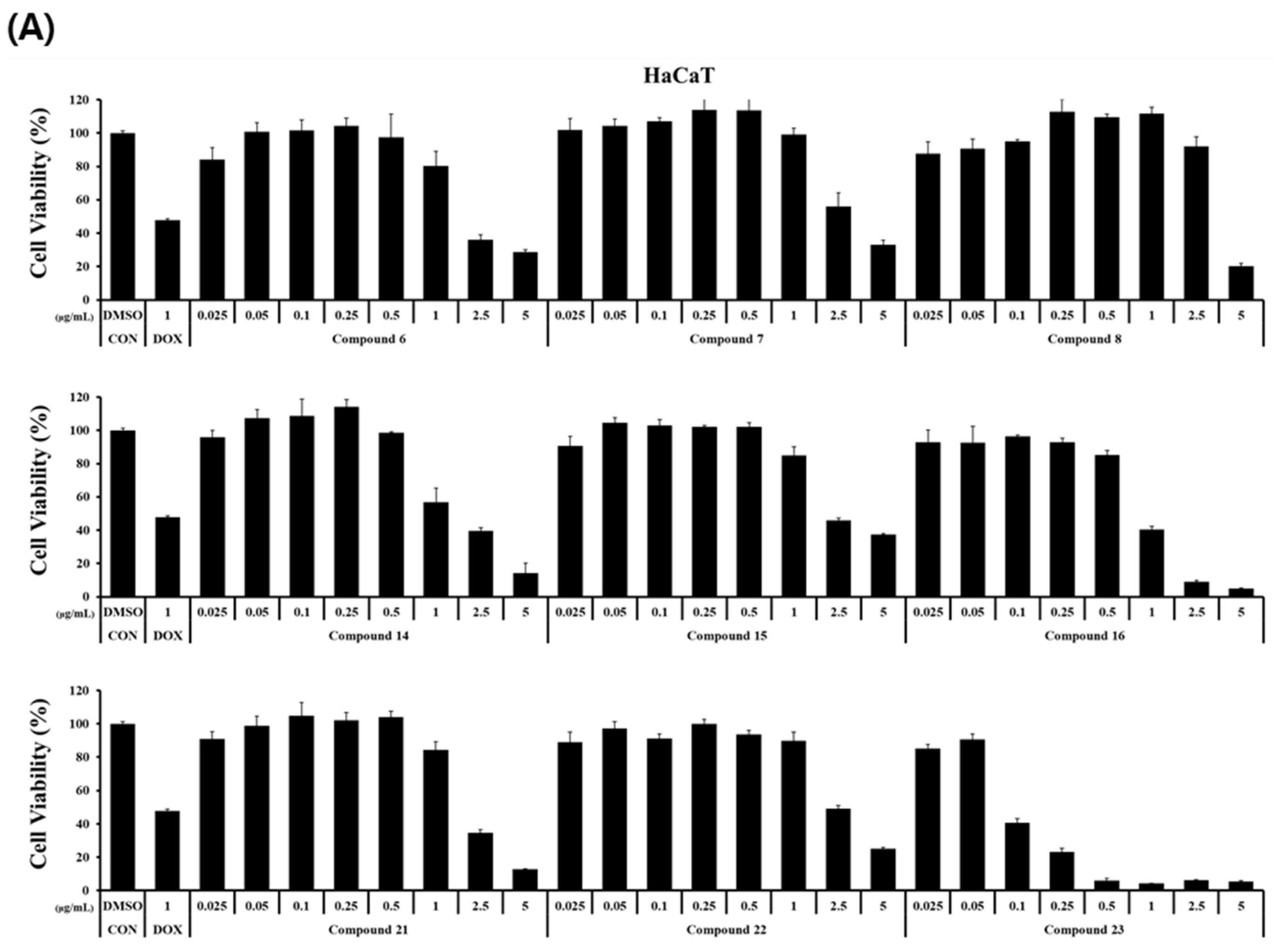
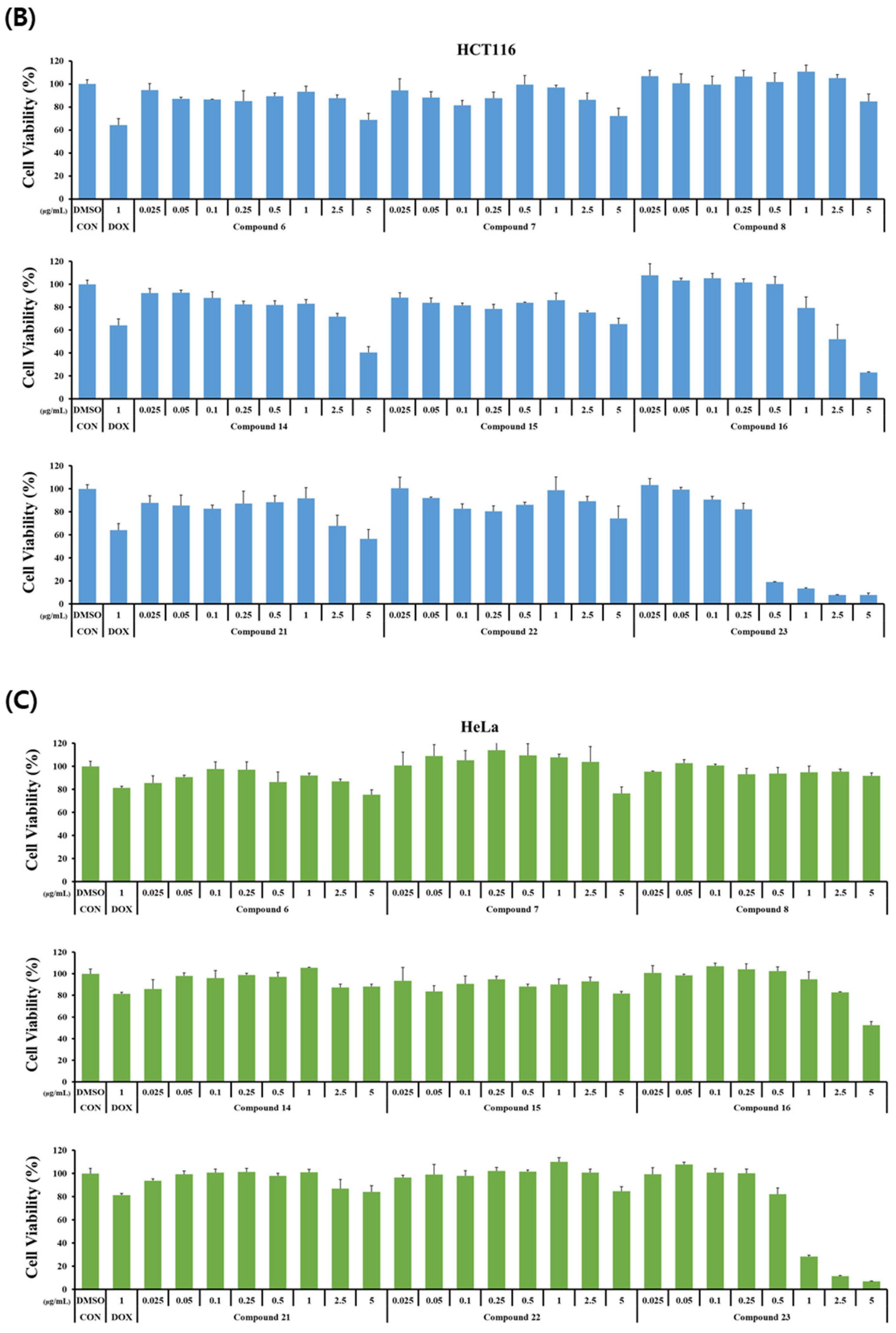
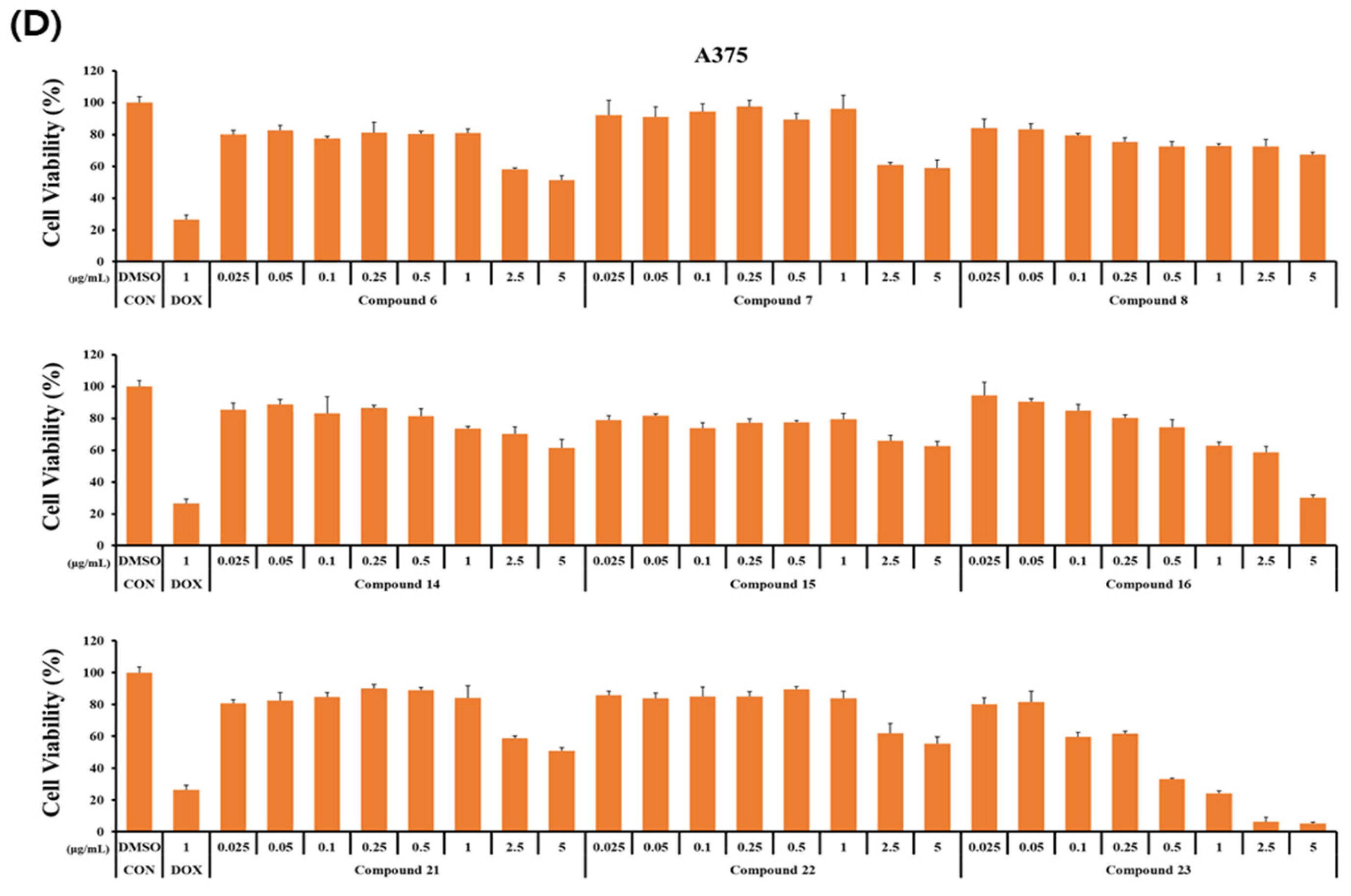
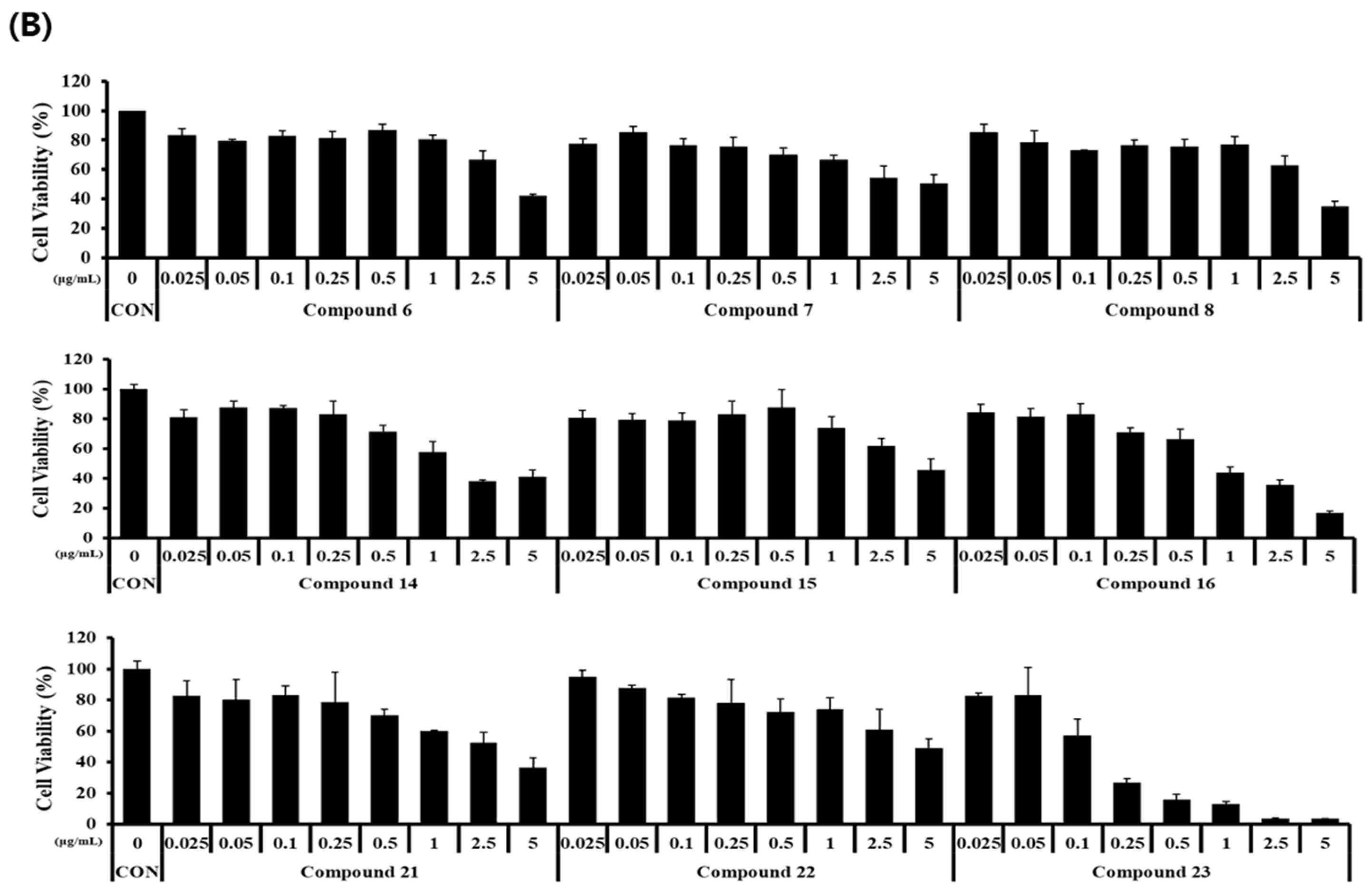
2.3. Anticancer Activity
2.4. Antibacterial and Antifungal Activity
2.5. Quantitative Comparison of Activities of Curvularin and Its Derivatives
3. Materials and Methods
3.1. General Experimental Information
3.2. General Procedures for the Synthesis of Curvularin Derivatives
3.2.1. General Procedure A: Esterification (Step 1)
3.2.2. General Procedure B: Friedel–Crafts Acylation (Step 2)
3.2.3. General Procedure C: Dehydrohalogenation (Step 3)
3.2.4. General Procedure D: Ring-Closing Metathesis (Step 4)
3.2.5. General Procedure E: Selective Demethylation (Step 5)
3.2.6. Synthesis of Hex-5-en-1-yl 2-(3,5-dimethoxyphenyl)acetate (3)
3.2.7. Synthesis of Hex-5-en-1-yl 2-(2-(3-chloropropanoyl)-3,5-dimethoxyphenyl)acetate (4)
3.2.8. Synthesis of Hex-5-en-1-yl 2-(2-acryloyl-3,5-dimethoxyphenyl)acetate (5)
3.2.9. Synthesis of (E)-11,13-Dimethoxy-4,5,6,7-tetrahydro-2H-benzo[d][1]oxacyclododecine-2,10(1H)-dione (6)
3.2.10. Synthesis of 11,13-Dimethoxy-4,5,6,7-tetrahydro-2H-benzo[d][1]oxacyclododecine-2,10(1H)-dione (7)
3.2.11. Synthesis of (E)-11-Hydroxy-13-methoxy-4,5,6,7-tetrahydro-2H-benzo[d][1]oxacyclododecine-2,10(1H)-dione (8)
3.2.12. Synthesis of Pent-4-en-1-yl 2-(3,5-dimethoxyphenyl)acetate (11)
3.2.13. Synthesis of Pent-4-en-1-yl 2-(2-(3-chloropropanoyl)-3,5-dimethoxyphenyl)acetate (12)
3.2.14. Synthesis of Pent-4-en-1-yl 2-(2-acryloyl-3,5-dimethoxyphenyl)acetate (13)
3.2.15. Synthesis of (E)-10,12-Dimethoxy-5,6-dihydrobenzo[d][1]oxacycloundecine-2,9(1H,4H)-dione (14)
3.2.16. Synthesis of 10,12-Dimethoxy-5,6-dihydrobenzo[d][1]oxacycloundecine-2,9(1H,4H)-dione (15)
3.2.17. Synthesis of (E)-10-Hydroxy-12-methoxy-5,6-dihydrobenzo[d][1]oxacycloundecine-2,9(1H,4H)-dione (16)
3.2.18. Synthesis of (S)-Hept-6-en-2-yl 2-(3,5-dimethoxyphenyl)acetate (18)
3.2.19. Synthesis of (S)-Hept-6-en-2-yl 2-(2-(3-chloropropanoyl)-3,5-dimethoxyphenyl)acetate (19)
3.2.20. Synthesis of (S)-Hept-6-en-2-yl 2-(2-acryloyl-3,5-dimethoxyphenyl)acetate (20)
3.2.21. Synthesis of (S,E)-11,13-Dimethoxy-4-methyl-4,5,6,7-tetrahydro-2H-benzo[d][1]oxacyclododecine-2,10(1H)-dione (21)
3.2.22. (S)-11,13-Dimethoxy-4-methyl-4,5,6,7-tetrahydro-2H-benzo[d][1]oxacyclododecine-2,10(1H)-dione (22)
3.2.23. Synthesis of (S,E)-11-Hydroxy-13-methoxy-4-methyl-4,5,6,7-tetrahydro-2H-benzo[d][1]oxacyclododecine-2,10(1H)-dione (23)
3.3. Measurement of NO Production
3.4. Cytotoxicity Measurement
3.5. Measurement of Antibiotic and Antibacterial Activity
4. Conclusions
Supplementary Materials
Author Contributions
Funding
Institutional Review Board Statement
Informed Consent Statement
Data Availability Statement
Conflicts of Interest
Abbreviations
| NO | Nitric oxide |
| RCM | Ring-closing metathesis |
| SAR | Structure–activity relationship |
| SI | Selectivity index |
| DMSO | Dimethyl sulfoxide |
| NMR | Nuclear magnetic resonance |
| TLC | Thin-layer chromatography |
| MTT | 3-(4,5-dimethyl-2-thiazolyl)-2,5-diphenyl-2H-tetrazolium bromide |
References
- Lund-Hansen, L.C.; Gradinger, R.; Hassett, B.; Jayasinghe, S.; Kennedy, F.; Martin, A.; McMinn, A.; Søgaard, D.H.; Sorrell, B.K. Sea ice as habitat for microalgae, bacteria, virus, fungi, meio- and macrofauna: A review of an extreme environment. Polar Biol. 2024, 47, 1275–1306. [Google Scholar] [CrossRef]
- Cao, S.; Zhang, W.; Ding, W.; Wang, M.; Fan, S.; Yang, B.; McMinn, A.; Wang, M.; Xie, B.B.; Qin, Q.L.; et al. Structure and function of the Arctic and Antarctic marine microbiota as revealed by metagenomics. Microbiome 2020, 8, 47. [Google Scholar] [CrossRef] [PubMed]
- Dickinson, I.; Goodall-Copestake, W.; Thorne, M.A.; Schlitt, T.; Avila-Jimenez, M.L.; Pearce, D.A. Extremophiles in an Antarctic marine ecosystem. Microorganisms 2016, 4, 8. [Google Scholar] [CrossRef] [PubMed]
- Fu, Z.; Gong, X.; Hu, Z.; Wei, B.; Zhang, H. Unveiling biosynthetic potential of an Arctic marine-derived strain Aspergillus sydowii MNP-2. BMC Genom. 2024, 25, 603. [Google Scholar] [CrossRef]
- Song, Y.P.; Ji, N.Y. Chemistry and biology of marine-derived Trichoderma metabolites. Nat. Prod. Bioprospect. 2024, 14, 14. [Google Scholar] [CrossRef]
- Arrieche, D.; Cabrera-Pardo, J.R.; San-Martin, A.; Carrasco, H.; Taborga, L. Natural products from Chilean and Antarctic marine fungi and their biomedical relevance. Mar. Drugs 2023, 21, 00098. [Google Scholar] [CrossRef]
- Cavalcante, S.B.; Dos Santos Biscaino, C.; Kreusch, M.G.; da Silva, A.F.; Duarte, R.T.D.; Robl, D. The hidden rainbow: The extensive biotechnological potential of Antarctic fungi pigments. Braz. J. Microbiol. 2023, 54, 1675–1687. [Google Scholar] [CrossRef]
- Jodłowska, I.; Białkowska, A.M. Cold-adapted fungi: Goldmine of biomolecules applicable in industry. Appl. Sci. 2024, 14, 11950. [Google Scholar] [CrossRef]
- Zhao, H.; Cai, C.; Liu, X.; Jiao, B.; Chen, B.; Cai, M.; He, P. Secondary metabolites of Antarctic fungi antagonistic to aquatic pathogenic bacteria. Open Life Sci. 2018, 13, 11–21. [Google Scholar] [CrossRef]
- Camacho, K.F.; de Melo Carlos, L.; Bernal, S.P.F.; de Oliveira, V.M.; Ruiz, J.L.M.; Ottoni, J.R.; Vieira, R.; Neto, A.; Rosa, L.H.; Passarini, M.R.Z. Antarctic marine sediment as a source of filamentous fungi-derived antimicrobial and antitumor compounds of pharmaceutical interest. Extremophiles 2024, 28, 21. [Google Scholar] [CrossRef]
- Ha, T.M.; Kim, D.C.; Sohn, J.H.; Yim, J.H.; Oh, H. Anti-inflammatory and protein tyrosine phosphatase 1B inhibitory metabolites from the Antarctic marine-derived fungal strain Penicillium glabrum SF-7123. Mar. Drugs 2020, 18, 247. [Google Scholar] [CrossRef]
- Hang, S.; Lu, H.; Jiang, Y. Marine-derived metabolites act as promising antifungal agents. Mar. Drugs 2024, 22, 180. [Google Scholar] [CrossRef] [PubMed]
- Deng, W.; Du, H.; Liu, D.; Ma, Z. Editorial: The role of natural products in chronic inflammation. Front. Pharmacol. 2022, 13, 901538. [Google Scholar] [CrossRef] [PubMed]
- Newman, D.J. Natural products and drug discovery. Natl. Sci. Rev. 2022, 9, nwac206. [Google Scholar] [CrossRef] [PubMed]
- Ahmad, M.; Tahir, M.; Hong, Z.; Zia, M.A.; Rafeeq, H.; Ahmad, M.S.; Rehman, S.U.; Sun, J. Plant and marine-derived natural products: Sustainable pathways for future drug discovery and therapeutic development. Front. Pharmacol. 2024, 15, 1497668. [Google Scholar] [CrossRef]
- Ha, T.M.; Ko, W.; Lee, S.J.; Kim, Y.C.; Son, J.Y.; Sohn, J.H.; Yim, J.H.; Oh, H. Anti-inflammatory effects of curvularin-type metabolites from a marine-derived fungal strain Penicillium sp. SF-5859 in lipopolysaccharide-induced RAW264.7 macrophages. Mar. Drugs 2017, 15, 282. [Google Scholar] [CrossRef]
- Valeur, E.; Bradley, M. Amide bond formation: Beyond the myth of coupling reagents. Chem. Soc. Rev. 2009, 38, 606–631. [Google Scholar] [CrossRef]
- Mukaiyama, T.; Usui, M.; Shimada, E.; Saigo, K. A convenient method for the synthesis of carboxylic esters. Chem. Lett. 1975, 4, 1045–1048. [Google Scholar] [CrossRef]
- Allu, S.R.; Banne, S.; Jiang, J.; Qi, N.; Guo, J.; He, Y. A unified synthetic approach to optically pure curvularin-type metabolites. J. Org. Chem. 2019, 84, 7227–7237. [Google Scholar] [CrossRef]
- Punch, K.A.; Piggott, M.J. Total synthesis of monosporascone and dihydromonosporascone. Org. Biomol. Chem. 2014, 12, 2801–2810. [Google Scholar] [CrossRef]
- Michaut, A.; Rodriguez, J. Selective construction of carbocyclic eight-membered rings by ring-closing metathesis of acyclic precursors. Angew. Chem. Int. Ed. Engl. 2006, 45, 5740–5750. [Google Scholar] [CrossRef]
- Deiters, A.; Martin, S.F. Synthesis of oxygen- and nitrogen-containing heterocycles by ring-closing metathesis. Chem. Rev. 2004, 104, 2199–2238. [Google Scholar] [CrossRef] [PubMed]
- Vougioukalakis, G.C.; Grubbs, R.H. Ruthenium-based heterocyclic carben-coordinated olefin metathesis catalyst. Chem. Rev. 2010, 110, 1746–1787. [Google Scholar] [CrossRef] [PubMed]
- Wang, Y.R.; Dong, Y.L.; Li, X.M.; Shi, X.S.; Li, H.L.; Meng, L.H.; Xu, R.; Wang, B.G. Curvularin derivatives from the marine mangrove derived fungus Penicillium sumatrense MA-325. Phytochemistry 2024, 220, 114000. [Google Scholar] [CrossRef] [PubMed]
- Xie, L.W.; Ouyang, Y.C.; Zou, K.; Wang, G.H.; Chen, M.J.; Sun, H.M.; Dai, S.K.; Li, X. Isolation and difference in anti-Staphylococcus aureus bioactivity of curvularin derivates from fungus Eupenicillium sp. Appl. Biochem. Biotechnol. 2009, 159, 284–293. [Google Scholar] [CrossRef]
- Yu, C.; Xia, Z.; Xu, Z.; Tang, X.; Ding, W.; Wei, J.; Tian, D.; Wu, B.; Tang, J. Curvularin derivatives from hydrothermal vent sediment fungus Penicillium sp. HL-50 guided by molecular networking and their anti-inflammatory activity. Chin. J. Nat. Med. 2025, 23, 119–128. [Google Scholar] [CrossRef]
- Yang, J.; Yao, F.H.; Xu, S.F.; Shi, J.Y.; Li, X.Y.; Yi, X.X.; Gao, C.H. Mauritone A, a new polyketide from a fungal-bacterial symbiont Aspergillus spelaeus GXIMD 04541/Sphingomonas echinoides GXIMD 04532. Nat. Prod. Res. 2025, 39, 6259–6264. [Google Scholar] [CrossRef]
- Santagata, S.; Xu, Y.M.; Wijeratne, E.M.; Kontnik, R.; Rooney, C.; Perley, C.C.; Kwon, H.; Clardy, J.; Kesari, S.; Whitesell, L.; et al. Using the heat-shock response to discover anticancer compounds that target protein homeostasis. ACS Chem. Biol. 2012, 7, 340–349. [Google Scholar] [CrossRef]
- Banala, R.R.; Vemuri, S.K.; Ev, S.; Av, G.R.; Gpv, S. The anti-inflammatory and cytoprotective efficiency of curvularin, a fungal macrolactone against lipopolysaccharide-induced inflammatory response in nucleus pulposus cells: An in vitro study. Asian Spine J. 2021, 15, 143–154. [Google Scholar] [CrossRef]
- Miyagi, T.; Kuwahara, S. A concise synthetic approach to β,γ-dehydrocurvularin: Synthesis of (±)-di-O-methyl-β,γ-dehydrocurvularin. Biosci. Biotechnol. Biochem. 2007, 71, 1592–1594. [Google Scholar] [CrossRef]
- Krishna, M.R.; Sridha, G.; Syed, T.; Jayaprakash, H.V. Stereoselective total synthesis of (-)-curvularin. Synth. Commun. 2022, 52, 37–42. [Google Scholar] [CrossRef]
- Zhao, Q.; Feng, M.; Jin, S.; Liu, X.; Li, S.; Guo, J.; Cheng, X.; Zhou, G.; Yu, X. 10,11-Dehydrocurvularin attenuates inflammation by suppressing NLRP3 inflammasome activation. Chin. J. Nat. Med. 2023, 21, 163–171. [Google Scholar] [CrossRef] [PubMed]
- Elzner, S.; Schmidt, D.; Schollmeyer, D.; Erkel, G.; Anke, T.; Kleinert, H.; Forstermann, U.; Kunz, H. Inhibitors of inducible NO synthase expression: Total synthesis of (S)-curvularin and its ring homologues. ChemMedChem 2008, 3, 924–939. [Google Scholar] [CrossRef] [PubMed]
- Mallinson, J.; Collins, I. Macrocycles in new drug discovery. Future Med. Chem. 2012, 4, 1409–1438. [Google Scholar] [CrossRef] [PubMed]
- Sun, S.; Fu, J. Methyl-containing pharmaceuticals: Methylation in drug design. Bioorg. Med. Chem. Lett. 2018, 28, 3283–3289. [Google Scholar] [CrossRef]
- Wang, C.; Zaman, K.; Sarotti, A.M.; Wu, X.; Zheng, S.L.; Cao, S. NF-κB inhibitory, antimicrobial and antiproliferative potentials of compounds from Hawaiian fungus Aspergillus polyporicola FS910. 3 Biotech 2021, 11, 391. [Google Scholar] [CrossRef]
- Greve, H.; Schupp, P.J.; Eguereva, E.; Kehraus, S.; Kelter, G.; Maier, A.; Fiebig, H.H.; Konig, G.M. Apralactone A and a new stereochemical class of curvularins from the marine fungus Curvularia sp. Eur. J. Org. Chem. 2008, 2008, 5085–5092. [Google Scholar] [CrossRef]
- Chang, C.F.; Ke, C.Y.; Wu, Y.C.; Chuang, T.H. Structure-Activity Relationship of Synthetic 2-Phenylnaphthalenes with Hydroxyl Groups that Inhibit Proliferation and Induce Apoptosis of MCF-7 Cancer Cells. PLoS ONE 2015, 10, e0141184. [Google Scholar] [CrossRef]
- Selassie, C.D.; Kapur, S.; Verma, R.P.; Rosario, M. Cellular apoptosis and cytotoxicity of phenolic compounds: A quantita-tive structure-activity relationship study. J. Med. Chem. 2005, 48, 7234–7242. [Google Scholar] [CrossRef]
- Zhang, A.Y.; Shi, X.S.; Wang, B.G.; Meng, L.H. New curvularin and norlignanolide derivatives from cocultures of marine mangrove endophytic fungus Penicillium brocae MA-231 and phytopathogen Curvularia spicifera QA-26. Chem. Biodivers. 2025, 22, e202500761. [Google Scholar] [CrossRef]
- Zhou, J.T.; Wu, Q.; Zhao, J.X.; Wu, L.L.; He, X.H.; Liang, L.Q.; Zhang, G.H.; Li, J.; Xu, W.F.; Yang, R.Y. Sucurchalasins A and B, sulfur-containing heterodimers of a cytochalasan and a macrolide from the endophytic fungus Aspergillus spelaeus GDGJ-286. J. Nat. Prod. 2024, 87, 2327–2334. [Google Scholar] [CrossRef]
- Busi, S.; Peddikotla, P.; Upadyayula, S.M.; Yenamandra, V. Secondary metabolites of Curvularia oryzae MTCC 2605. Rec. Nat. Prod. 2009, 3, 204–208. [Google Scholar]
- Dai, J.; Krohn, K.; Flörke, U.; Pescitelli, G.; Kerti, G.; Papp, T.; Kövér, K.E.; Bényei, A.C.; Draeger, S.; Schulz, B.; et al. Curvularin-type metabolites from the fungus Curvularia sp. isolated from a marine alga. Eur. J. Org. Chem. 2010, 2010, 6928–6937. [Google Scholar] [CrossRef]
- Huo, R.Y.; Zhang, J.X.; Jia, J.; Bi, H.K.; Liu, L. Alternarialone A, a new curvularin-type metabolite from the mangrove-derived fungus Alternaria longipes. J. Asian Nat. Prod. Res. 2023, 25, 610–616. [Google Scholar] [CrossRef]
- Mondol, M.A.; Farthouse, J.; Islam, M.T.; Schuffler, A.; Laatsch, H. Metabolites from the endophytic fungus Curvularia sp. M12 act as motility inhibitors against Phytophthora capsici zoospores. J. Nat. Prod. 2017, 80, 347–355. [Google Scholar] [CrossRef]
- Cadelis, M.M.; Li, S.A.; van de Pas, S.J.; Grey, A.; Mulholland, D.; Weir, B.S.; Copp, B.R.; Wiles, S. Antimicrobial natural products from plant pathogenic fungi. Molecules 2023, 28, 1142. [Google Scholar] [CrossRef]
- de Souza, A.O.; Galetti, F.; Silva, C.L.; Bicalho, B.; Parma, M.M.; Fonseca, S.F.; Marsaioli, A.J.; Trindade, A.C.L.B.; Freitas Gil, R.P.; Bezerra, F.S.; et al. Antimycobacterial and cytotoxicity activity of synthetic and natural compounds. Química Nova 2007, 30, 1563–1566. [Google Scholar] [CrossRef]





| Compounds | NO Inhibition | Cytotoxicity | SI (Selectivity Index) |
|---|---|---|---|
| IC50 Value (μg/mL) | (Cytotoxicity/ NO Inhibition) | ||
| 6 | 1.83 | 4.15 | 2.27 |
| 7 | 2.32 | 5.1 | 2.20 |
| 8 | >5.0 | 3.63 | <1.0 |
| 14 | 1.31 | 1.35 | 1.03 |
| 15 | 2.01 | 4.28 | 2.13 |
| 16 | 0.95 | 0.85 | 0.89 |
| 21 | 2.21 | 2.89 | 1.31 |
| 22 | 2.84 | 4.91 | 1.73 |
| 23 | 0.18 | 0.13 | 0.72 |
| Compounds | IC50 Value (μg/mL) | |||
|---|---|---|---|---|
| HaCaT | HCT116 | HeLa | A375 | |
| 6 | 2.02 | >5.0 | >5.0 | >5.0 |
| 7 | 3.16 | >5.0 | >5.0 | >5.0 |
| 8 | 3.97 | >5.0 | >5.0 | >5.0 |
| 14 | 1.59 | 4.25 | >5.0 | >5.0 |
| 15 | 2.34 | >5.0 | >5.0 | >5.0 |
| 16 | 0.89 | 2.68 | >5.0 | 3.25 |
| 21 | 2.03 | >5.0 | >5.0 | >5.0 |
| 22 | 2.47 | >5.0 | >5.0 | >5.0 |
| 23 | 0.09 | 0.38 | 0.79 | 0.35 |
| Compounds | Staphylococcus aureus | Escherichia coli | ||
|---|---|---|---|---|
| IC50 (μg/mL) | MIC (μg/mL) | IC50 (μg/mL) | MIC (μg/mL) | |
| Kanamycin a | 14.97 ± 6.17 | 29.18 ± 4.71 | 7.31 ± 2.61 | 26.32 ± 2.50 |
| 6 | >200 | - | >200 | - |
| 7 | 137.43 ± 27.62 | - | >200 | - |
| 8 | 49.94 ± 3.29 | 120.24 ± 6.60 | >200 | - |
| 14 | 90.56 ± 14.35 | 168.50 ± 42.88 | >200 | - |
| 15 | >200 | - | >200 | - |
| 16 | 39.04 ± 8.97 | 93.46 ± 15.59 | >200 | - |
| 21 | 192.99 ± 14.36 | - | >200 | - |
| 22 | 192.47 ± 5.30 | - | >200 | - |
| 23 | 8.90 ± 2.28 | 25.70 ± 1.34 | >200 | - |
| Compounds | Candida albicans | |
|---|---|---|
| IC50 (μg/mL) | MIC (μg/mL) | |
| Nystatin a | 0.83 ± 0.22 | 1.11 ± 0.07 |
| 6 | >200 | - |
| 7 | 116.10 ± 9.22 | - |
| 8 | 6.86 ± 0.59 | 57.36 ± 0.85 |
| 14 | >200 | - |
| 15 | 157.02 ± 7.53 | - |
| 16 | 32.25 ± 5.32 | 139.58 ± 12.21 |
| 21 | >200 | - |
| 22 | 133.30 ± 9.29 | - |
| 23 | 5.24 ± 0.02 | 10.48 ± 0.04 |
| Compound | Activity | Reference | |||
|---|---|---|---|---|---|
| Anti-Inflamatory (IC50) | Anti-Cancer (IC50) | Anti-Bacteria (MIC) | Anfi-Fungal (MIC) | ||
| Curvularin | 18.1 μM | [16] | |||
| Dehydrocurvularin | 0.44 μM | [26] | |||
| 10.56–29.17 μM (against HT1080, T46D, and A2780S) | 40 μg/mL (against S. aureus) | 40 (μg/mL) (against C. albicans) | [36] | ||
| 10.3 μg/mL (against HeLa) | 375 μg/mL (against S. aureus) | - | [25] | ||
| 1.25–30.06 μM (against human tumour cell lines) | [37] | ||||
| 1 μg/mL (against E. coli) | [40] | ||||
| 7.9 μM (against HeLa) | 2.5 μg/mL (against E. coli) | [41] | |||
| 11-α-methoxycurvularin | 50 μg/mL (against S. aureus) 50 μg/mL (against E. coli) | [42] | |||
| Compound 23 (S,E)-11-hydroxy-13-methoxy-4-methyl-4,5,6,7-tetrahydro-2H-benzo[d][1]oxacyclododecine-2,10(1H)-dione | 0.59 μM | 0.38 μM (HCT116), 0.79 μM (HeLa), 0.35 μM (A375) | 25.7 μg/mL (against S. aureus) | 10.48 μg/mL (against C. albicans) | This study |
Disclaimer/Publisher’s Note: The statements, opinions and data contained in all publications are solely those of the individual author(s) and contributor(s) and not of MDPI and/or the editor(s). MDPI and/or the editor(s) disclaim responsibility for any injury to people or property resulting from any ideas, methods, instructions or products referred to in the content. |
© 2026 by the authors. Licensee MDPI, Basel, Switzerland. This article is an open access article distributed under the terms and conditions of the Creative Commons Attribution (CC BY) license.
Share and Cite
Kim, K.H.; Kim, T.K.; Hong, J.-M.; Kim, J.A.; Kim, M.J.; Kim, J.-H.; Yim, J.H.; Kim, I.-C.; Han, S.J. Synthesis and Biological Evaluation of Curvularin-Type Derivatives with Potential Anti-Inflammatory, Anticancer, and Antimicrobial Activities. Molecules 2026, 31, 1061. https://doi.org/10.3390/molecules31061061
Kim KH, Kim TK, Hong J-M, Kim JA, Kim MJ, Kim J-H, Yim JH, Kim I-C, Han SJ. Synthesis and Biological Evaluation of Curvularin-Type Derivatives with Potential Anti-Inflammatory, Anticancer, and Antimicrobial Activities. Molecules. 2026; 31(6):1061. https://doi.org/10.3390/molecules31061061
Chicago/Turabian StyleKim, Kyung Hee, Tai Kyoung Kim, Ju-Mi Hong, Jin A Kim, Min Ju Kim, Jin-Hyoung Kim, Joung Han Yim, Il-Chan Kim, and Se Jong Han. 2026. "Synthesis and Biological Evaluation of Curvularin-Type Derivatives with Potential Anti-Inflammatory, Anticancer, and Antimicrobial Activities" Molecules 31, no. 6: 1061. https://doi.org/10.3390/molecules31061061
APA StyleKim, K. H., Kim, T. K., Hong, J.-M., Kim, J. A., Kim, M. J., Kim, J.-H., Yim, J. H., Kim, I.-C., & Han, S. J. (2026). Synthesis and Biological Evaluation of Curvularin-Type Derivatives with Potential Anti-Inflammatory, Anticancer, and Antimicrobial Activities. Molecules, 31(6), 1061. https://doi.org/10.3390/molecules31061061