Combined Effects of Low-Density Polyethylene (LDPE), Zn(II), Cu(II), and Metolachlor on Trichoderma harzianum Growth, Oxidative Stress Induction, and Herbicide Degradation
 , , ,
, , ,
Abstract
1. Introduction
2. Results
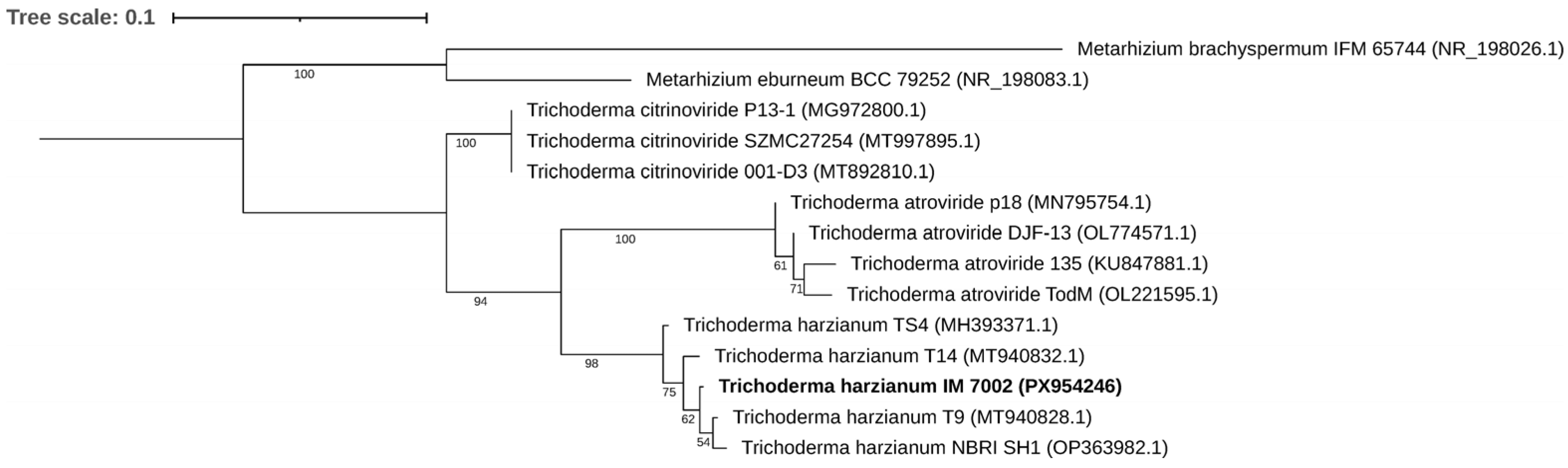
2.1. Isolation and Identification of a Metolachlor Degrading Fungal Strain
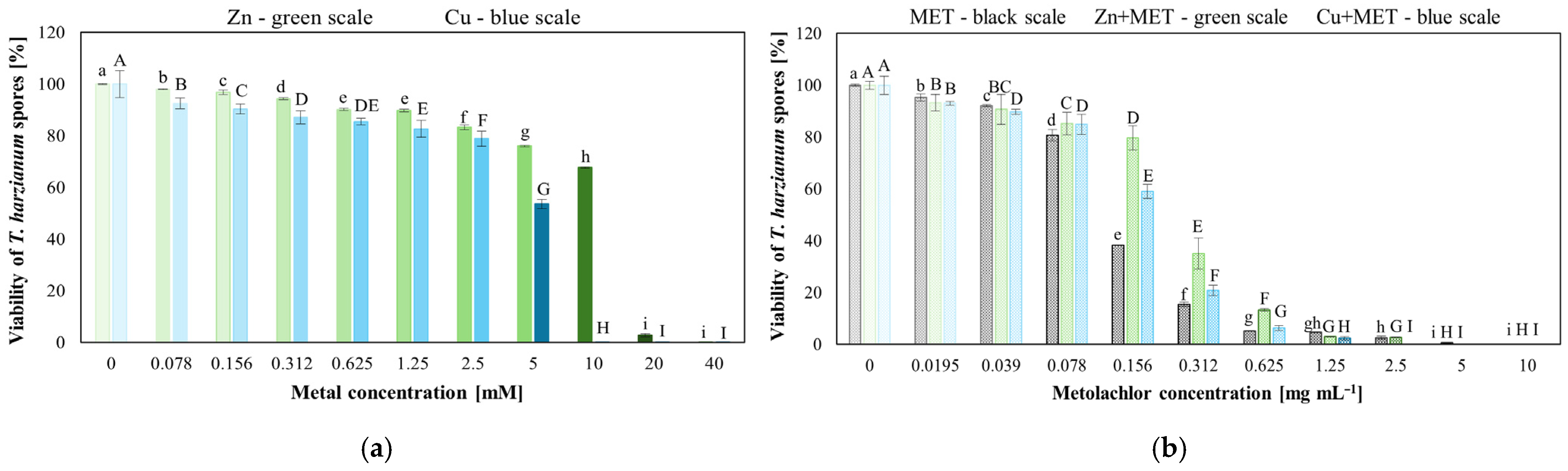
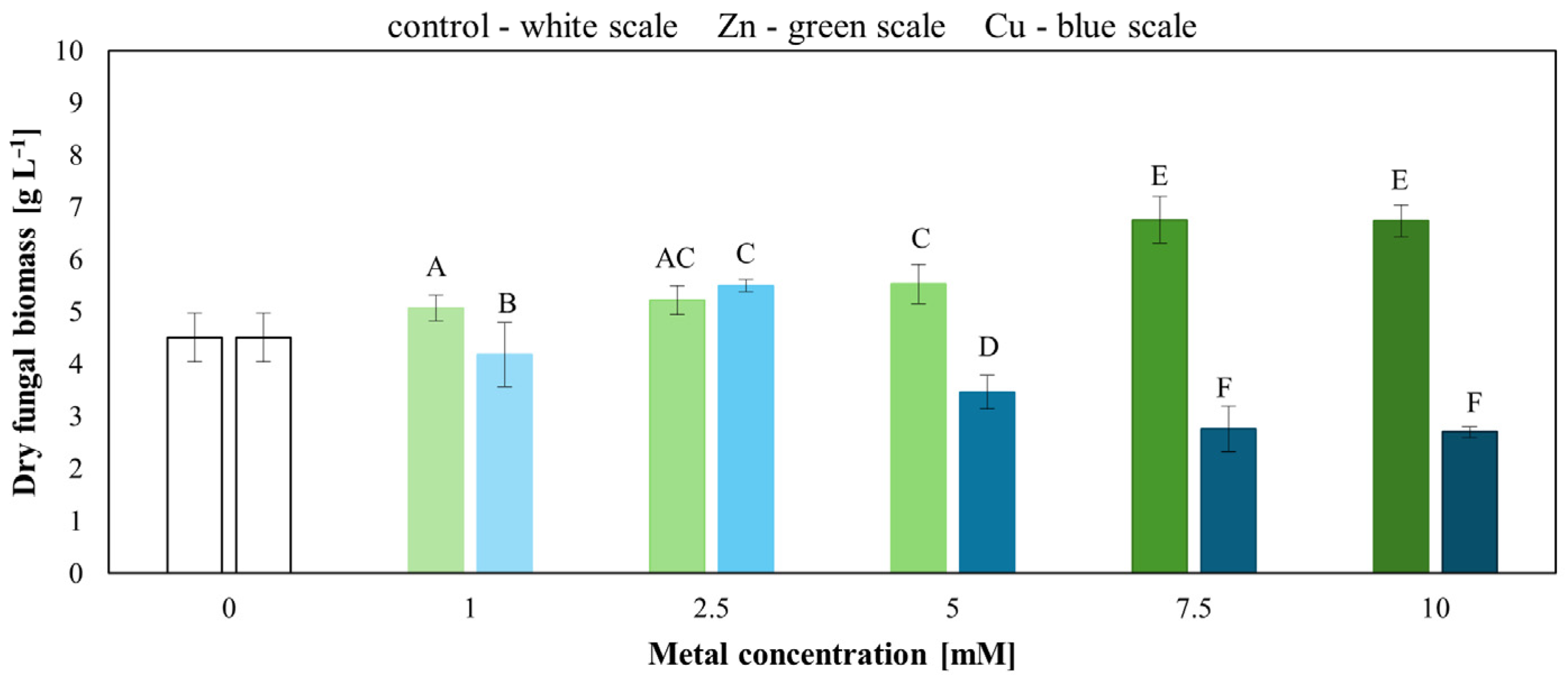
2.2. Effect of Metolachlor and Heavy Metals on Spore Viability and Biomass of T. harzianum
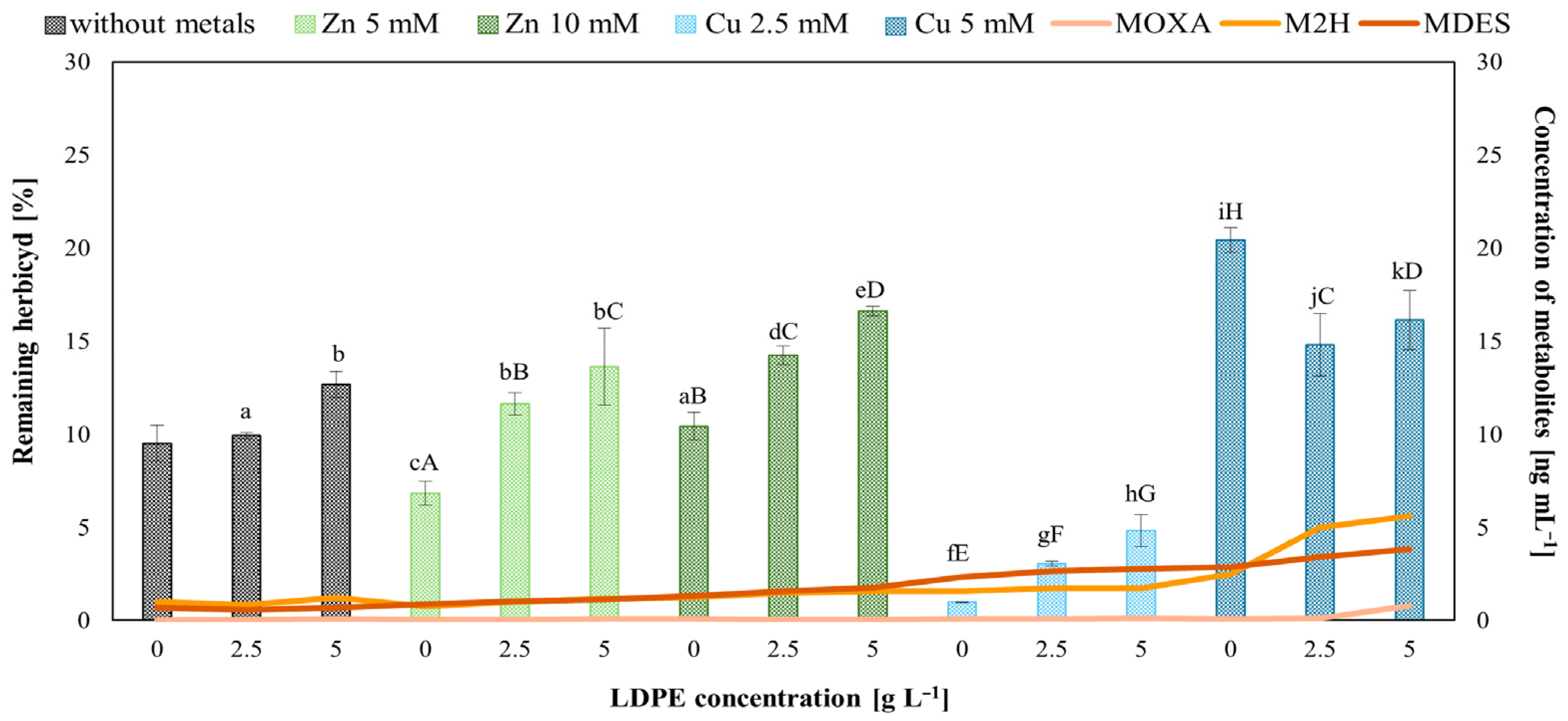
2.3. Degradation of Metolachlor by T. harzianum in the Presence of LDPE and Zn(II) or Cu(II)
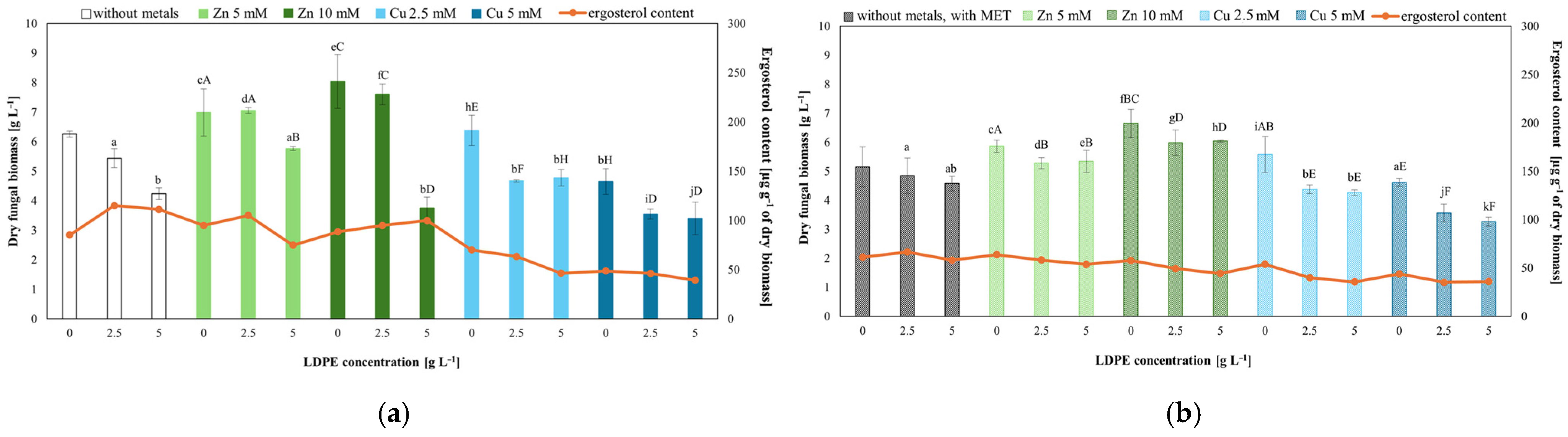
2.4. Mycelial Biomass and the Ergosterol Content of T. harzianum During Herbicide Degradation in the Presence of LDPE and Zn(II) or Cu(II)
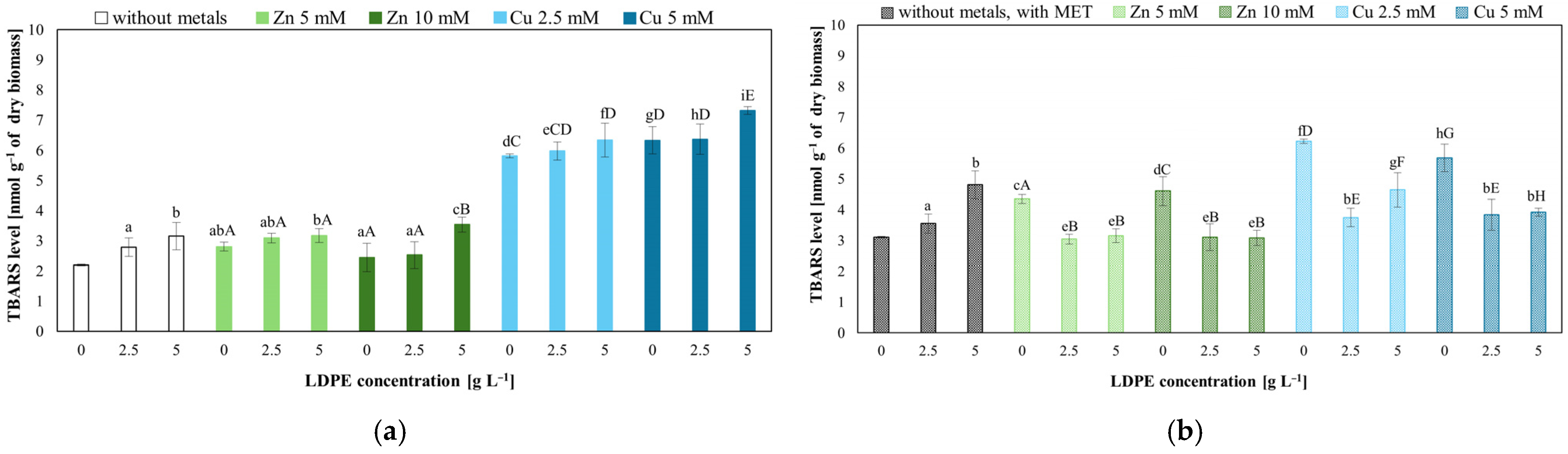
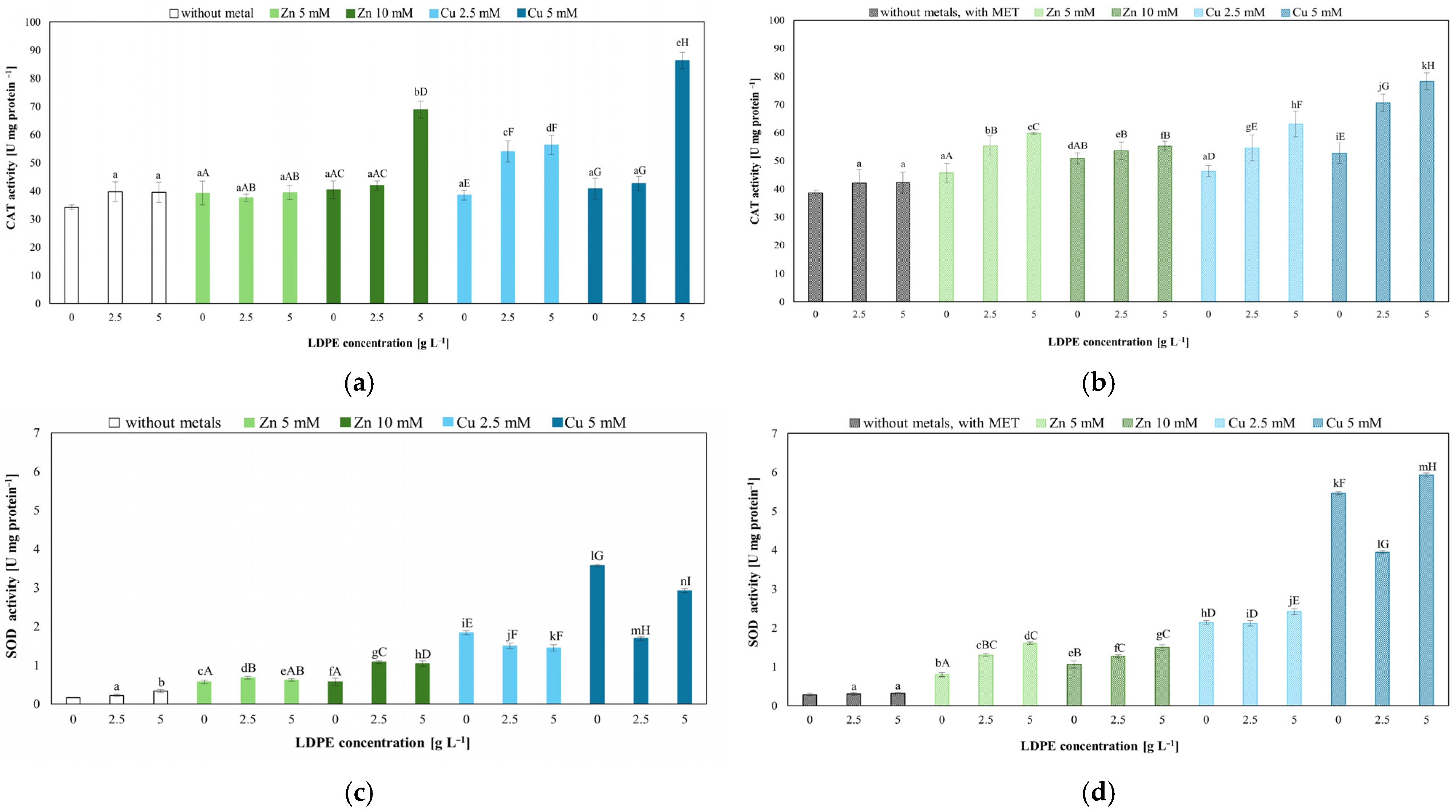
2.5. Oxidative Stress During MET Degradation by T. harzianum in the Presence of LDPE, and Zn(II) or Cu(II)
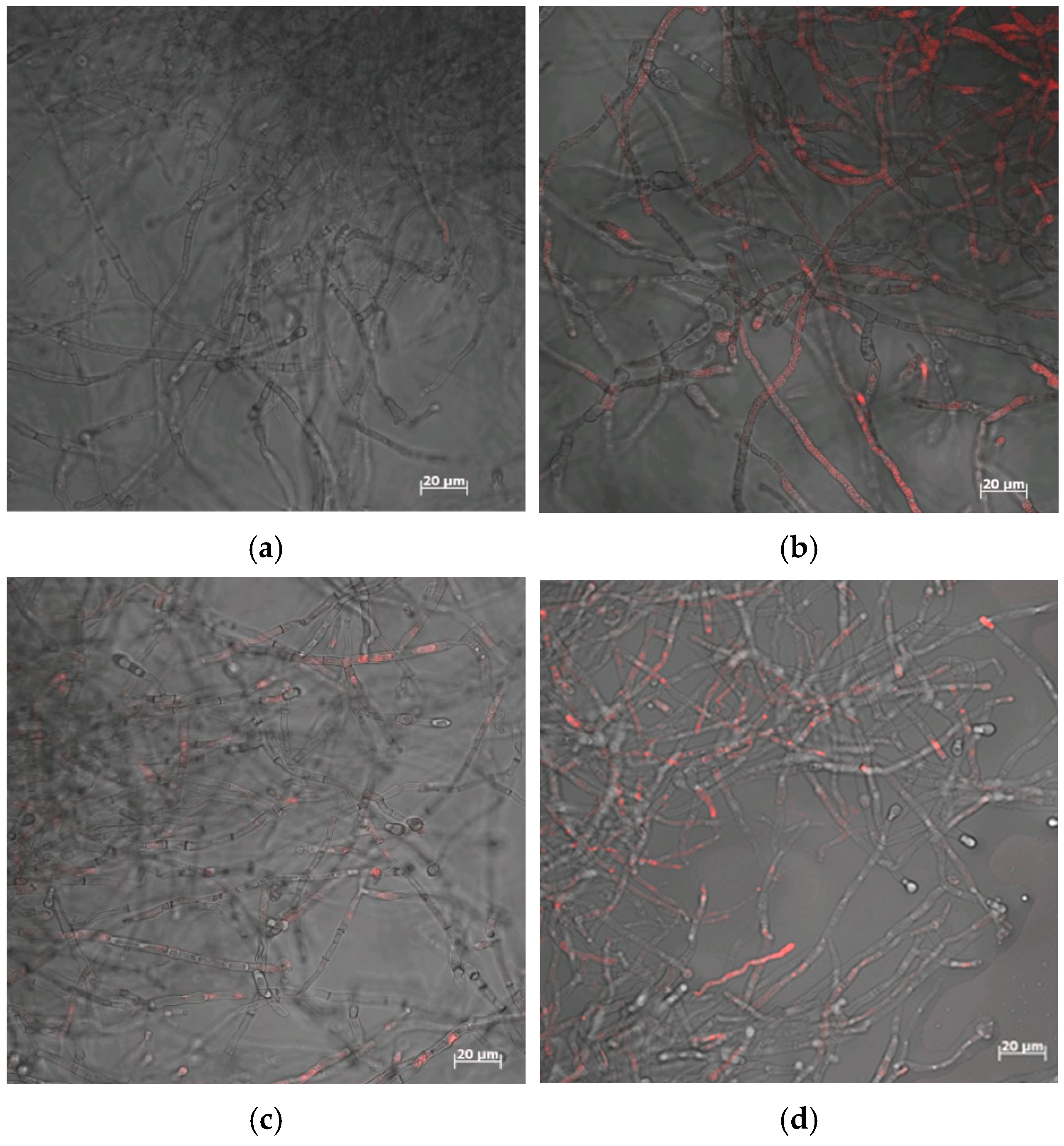
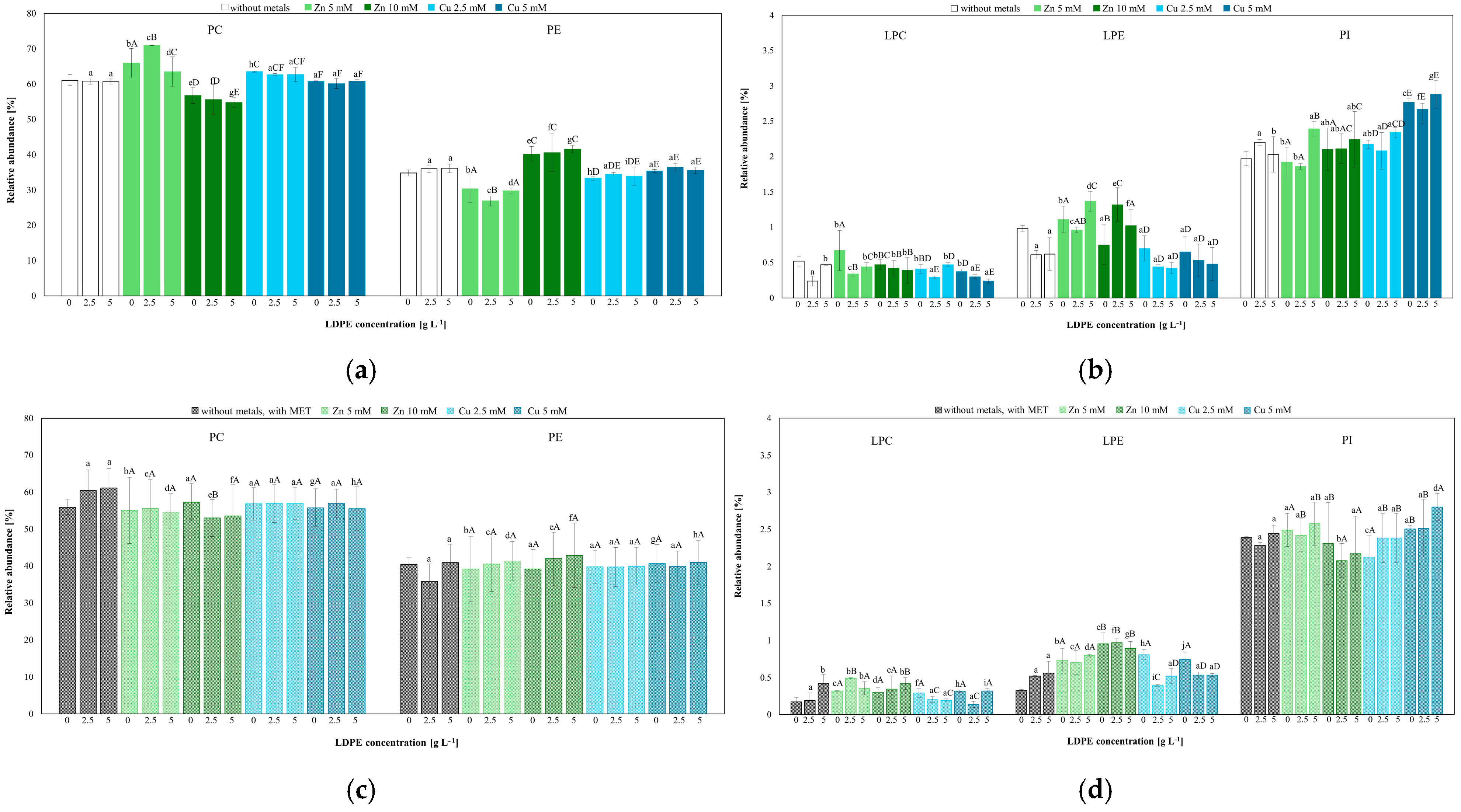
2.6. Impact of LDPE and Zn(II) or Cu(II) on Membrane Phospholipid Composition and Membrane Integrity During Metolachlor Degradation
3. Discussion
4. Materials and Methods
4.1. Microplastics
4.2. Strain and Experimental Design
- (i)
- Preliminary dose–response screening to assess fungal spores’ viability and mycelia tolerance to metals;
- (ii)
- MET degradation factorial experiments, metal concentration × MP concentration (2.5, 5 g L−1), performed separately for Zn(II) (5 and 10 mM) and Cu(II) (2.5 and 5 mM), resulting in a total of 15 systems;
- (iii)
- Assessment of fungal physiological and biochemical responses in 15 factorial systems without MET and 15 systems with MET, to evaluate the combined effects of MET, Cu(II)/Zn(II), and LDPE.
4.3. Molecular Identification of T. harzianum IM 7002
4.3.1. DNA Extraction
4.3.2. PCR and DNA Sequencing of T. harzianum IM 7002
4.3.3. Phylogenetic Placement of T. harzianum IM 7002
4.4. Spore Viability and Metal Tolerance of T. harzianum IM 7002
4.5. Analysis of Metolachlor Content
4.6. Enzyme Activity Determination
4.7. Determination of Phospholipids and Ergosterol
4.8. Lipid Peroxidation Assay
4.9. Membrane Permeability
4.10. Statistical Analysis
5. Conclusions
Supplementary Materials
Author Contributions
Funding
Institutional Review Board Statement
Informed Consent Statement
Data Availability Statement
Conflicts of Interest
Abbreviations
| MPs | Microplastics |
| MET | Metolachlor |
| LDPE | Low-Density Polyethylene |
| ROS | Reactive Oxygen Species |
| MDES | Metolachlor deschloro |
| M2H | Metolachlor-2-hydroxy |
| MOXA | Metolachlor oxanilic acid |
| CAT | Catalase |
| SOD | Superoxide dismutase |
| TIBARS | Thiobarbituric acid reactive substances |
| PE | Phosphatidylethanolamine |
| PC | Phosphatidylcholine |
| PI | Phosphatidylinositol |
| LPC | Lysophosphatidylcholine |
| LPE | Lysophosphatidylethanolamine |
| PE | Polyethylene |
References
- Chamas, A.; Moon, H.; Zheng, J.; Qiu, Y.; Tabassum, T.; Jang, J.H.; Abu-Omar, M.M.; Scott, S.L.; Suh, S. Degradation rates of plastics in the environment. ACS Sustain. Chem. Eng. 2020, 8, 3494–3511. [Google Scholar] [CrossRef]
- MacLeod, M.; Arp, H.P.H.; Tekman, M.B.; Jahnke, A. The global threat from plastic pollution. Science 2021, 373, 61–65. [Google Scholar] [CrossRef] [PubMed]
- Zhu, Y.-d.; Shao, T.-j.; Wang, Y.-h.; Wang, R.-y. Review and future trends of soil microplastics research: Visual analysis based on Citespace. Environ. Sci. Eur. 2022, 34, 122. [Google Scholar] [CrossRef]
- Cusworth, S.J.; Davies, W.J.; McAinsh, M.R.; Gregory, A.S.; Storkey, J.; Stevens, C.J. Agricultural fertilisers contribute substantially to microplastic concentrations in UK soils. Commun. Earth Environ. 2024, 5, 7. [Google Scholar] [CrossRef]
- Allen, S.; Allen, D.; Karbalaei, S.; Maselli, V.; Walker, T.R. Micro(nano)plastics sources, fate, and effects: What we know after ten years of research. J. Hazard. Mater. Adv. 2022, 6, 100057. [Google Scholar] [CrossRef]
- Tang, Y.; Li, G.; Iqbal, B.; Tariq, M.; Rehman, A.; Khan, I.; Du, D. Soil nutrient levels regulate the effect of microplastic contamination on microbial element metabolism and carbon use efficiency. Ecotoxicol. Environ. Saf. 2023, 267, 115640. [Google Scholar] [CrossRef] [PubMed]
- Bernat, P.; Różalska, S.; Jasińska, A.; Niedziałkowska, K.; Paraszkiewicz, K.; Sas-Paszt, L.; Słaba, M.; Heipieper, H.J. Adaptation of the metolachlor-degrading fungus Trichoderma harzianum to the simultaneous presence of low-density polyethylene (LDPE) microplastics. Ecotoxicol. Environ. Saf. 2023, 267, 115656. [Google Scholar] [CrossRef]
- Kublik, S.; Gschwendtner, S.; Magritsch, T.; Radl, V.; Rillig, M.C.; Schloter, M. Microplastics in soil induce a new microbial habitat, with consequences for bulk soil microbiomes. Front. Environ. Sci. 2022, 10, 98926. [Google Scholar] [CrossRef]
- Huang, Y.; Zhao, Y.; Wang, J.; Zhang, M.; Jia, W.; Qin, X. LDPE microplastic films alter microbial community composition and enzymatic activities in soil. Environ. Pollut. 2019, 254, 112983. [Google Scholar] [CrossRef]
- Yang, X.; Bento, C.P.M.; Chen, H.; Zhang, H.; Xue, S.; Lwanga, E.H.; Zomer, P.; Ritsema, C.J.; Geissen, V. Influence of microplastic addition on glyphosate decay and soil microbial activities in Chinese loess soil. Environ. Pollut. 2018, 242, 338–347. [Google Scholar] [CrossRef]
- Ju, H.; Yang, X.; Osman, R.; Geissen, V. Effects of microplastics and chlorpyrifos on earthworms (Lumbricus terrestris) and their biogenic transport in sandy soil. Environ. Pollut. 2023, 316, 120483. [Google Scholar] [CrossRef] [PubMed]
- Ramos, L.; Berenstein, G.; Hughes, E.A.; Zalts, A.; Montserrat, J.M. Polyethylene film incorporation into the horticultural soil of small periurban production units in Argentina. Sci. Total Environ. 2015, 523, 74–81. [Google Scholar] [CrossRef] [PubMed]
- Sunta, U.; Prosenc, F.; Trebse, P.; Bulc, T.G.; Kralj, M.B. Adsorption of acetamiprid, chlorantraniliprole and flubendiamide on different type of microplastics present in alluvial soil. Chemosphere 2020, 261, 127762. [Google Scholar] [CrossRef]
- Guo, B.; Meng, J.; Wang, X.; Yin, C.; Hao, W.; Ma, B.; Tao, Z. Quantification of pesticide residues on plastic mulching films in typical farmlands of the North China. Front. Enviro. Scie. Eng. 2020, 14, 2. [Google Scholar] [CrossRef]
- Stojić, N.; Pezo, L.; Lončar, B.; Pucarević, M.; Filipović, V.; Prokić, D.; Ćurčić, L.; Štrbac, S. Prediction of the impact of land use and soil type on concentrations of heavy metals and phthalates in soil based on model simulation. Toxics 2023, 15, 269. [Google Scholar] [CrossRef] [PubMed]
- Liu, S.; Shi, J.; Wang, J.; Dai, Y.; Li, H.; Li, J.; Liu, X.; Chen, X.; Wang, Z.; Zhang, P. Interactions between microplastics and heavy metals in aquatic environments: A review. Front. Microbiol. 2021, 12, 652520. [Google Scholar] [CrossRef]
- Chen, Q.; Zhao, H.; Liu, Y.; Jin, L.; Peng, R. Factors affecting the adsorption of heavy metals by microplastics and their toxic effects on fish. Toxics 2023, 11, 490. [Google Scholar] [CrossRef] [PubMed]
- Nykiel-Szymańska, J.; Bernat, P.; Słaba, M. Biotransformation and detoxification of chloroacetanilide herbicides by Trichoderma spp. with plant growth-promoting activities. Pestic. Biochem. Physiol. 2020, 163, 216–226. [Google Scholar] [CrossRef]
- Chang, X.; Liang, J.; Sun, Y.; Zhao, L.; Zhou, B.; Li, X.; Li, Y. Isolation, degradation performance and field application of the metolachlor-degrading fungus Penicillium oxalicum MET-F-1. Appl. Sci. 2020, 10, 8556. [Google Scholar] [CrossRef]
- Tian, L.; Cheng, J.; Ji, R.; Ma, Y.; Yu, X. Microplastics in agricultural soils: Sources, effects, and their fate. Cur. Opin. Environ. Sci. Health 2022, 25, 100311. [Google Scholar] [CrossRef]
- Chen, Z.; Carter, L.J.; Banwart, S.A.; Kay, P. Microplastics in soil–plant systems: Current knowledge, research gaps, and future directions for agricultural sustainability. Agronomy 2025, 15, 1519. [Google Scholar] [CrossRef]
- Noulas, C.; Tziouvalekas, M.; Karyotis, T. Zinc in soils, water and food crops. J. Trace Elem. Med. Biol. 2018, 49, 252–260. [Google Scholar] [CrossRef]
- Inigo, V.; Marín, A.; Andrades, M.; Jiménez-Ballesta, R. Evaluation of the Copper and Zinc Contents of Soils in the Vineyards of La Rioja (Spain). Environments 2020, 7, 55. [Google Scholar] [CrossRef]
- Ballabio, C.; Panagos, P.; Lugato, E.; Huang, J.-H.; Orgiazzi, A.; Jones, A.; Fernandez-Ugalde, O.; Borrello, P.; Montanarella, L. Copper distribution in European topsoils: An assessment based on LUCAS soil survey. Sci. Total Environ. 2018, 636, 282–298. [Google Scholar] [CrossRef]
- Minister of Environment, Poland. Regulation of the Minister of Environment of 1 September 2016; Journal of Laws 2016, Item 1395; Journal of Laws of the Republic of Poland: Warsaw, Poland, 2016.
- Jasińska, A.; Różalska, S.; Rusetskaya, V.; Słaba, M.; Bernat, P. Microplastic-induced oxidative stress in metolachlor-degrading filamentous fungus Trichoderma harzianum. Int. J. Mol. Sci. 2022, 23, 12978. [Google Scholar] [CrossRef] [PubMed]
- Zhang, P.; Yan, Z.; Lu, G.; Ji, Y. Single and combined effects of microplastics and roxithromycin on Daphnia magna. Environ. Sci. Pollut. Res. 2019, 26, 17010–17020. [Google Scholar] [CrossRef] [PubMed]
- Arif, I.; Shang, Y.; Zhang, C.; Khan, F.U.; Tan, K.A.; Waiho, K.; Wang, Y.; Kwan, K.Y.; Hu, M. Combined effects of nanoplastics and heavy metal on antioxidant parameters of juvenile tri-spine horseshoe crabs. Front. Mar. Sci. 2022, 9, 1005820. [Google Scholar] [CrossRef]
- Mafla-Endara, P.M.; Meklesh, V.; Beech, J.P.; Ohlsson, P.; Pucetaite, M.; Hammer, E.C. Exposure to polystyrene nanoplastics reduces bacterial and fungal biomass in microfabricated soil models. Sci. Total Environ. 2023, 904, 166503. [Google Scholar] [CrossRef] [PubMed]
- Rusetskaya, V.; Różalska, S.; Słaba, M.; Bernat, P. Degradation ability of Trichoderma spp. in the presence of poly(butylene adipate-co-terephthalate) microparticles. Int. Biodeterior. Biodegrad. 2024, 193, 105829. [Google Scholar] [CrossRef]
- Li, Y.; Hou, Y.; Hou, Q.; Long, M.; Wang, Z.; Rillig, M.C.; Liao, Y.; Yong, T. Soil microbial community parameters affected by microplastics and other plastic residues. Front. Microbiol. 2023, 14, 1258606. [Google Scholar] [CrossRef] [PubMed]
- Ayad, F.; Boutiba, A.M.; Hacene, O.R.; Bouderbala, M.; Boutiba, Z. Tolerance of Trichoderma sp. to heavy metals and its antifungal activity in Algerian marine environment. J. Pure Appl. Microbiol. 2018, 12, 855–870. [Google Scholar] [CrossRef]
- Słaba, M.; Bernat, P.; Różalska, S.; Nykiel, J.; Długoński, J. Comparative study of metal induced phospholipid modifications in the heavy metal tolerant filamentous fungus Paecilomyces marquandii and implications for the fungal membrane integrity. Acta Biochim. Pol. 2013, 60, 695–700. [Google Scholar] [CrossRef] [PubMed]
- Robinson, J.R.; Isikhuemhen, O.S.; Anike, F.N. Fungal–metal interactions: A review of toxicity and homeostasis. J. Fungi 2021, 7, 225. [Google Scholar] [CrossRef]
- Ghany, T.M.A.; Bakri, M.M.; Al-Rajhi, A.M.H.; Abboud, M.A.A.; Alawlaqi, M.M.; Shater, A.R.M. Impact of copper ant its nanoparticles on growth, ultrastructure, and laccase production of Aspergillus niger using corn cobs wastes. BioResources 2020, 15, 3289–3306. [Google Scholar] [CrossRef]
- Sutherland-Ashley, K.; Eya, B.; Lim, L. Public Health Concentrations for Metolachlor and Metolachlor Degradates Ethanesulfonic Acid and Oxanilic Acid in Groundwater; Pesticide and Environmental Toxicology Branch, Office of Environmental Health Hazard Assessment, California Environmental Protection Agency: Oakland, CA, USA, 2017. [Google Scholar]
- Zeng, Q.; Yang, Q.; Chai, Y.; Wei, W.; Luo, M.; Li, W. Polystyrene microplastics enhanced copper-induced acute immunotoxicity in red swamp crayfish (Procambarus clarkii). Ecotoxicol. Environ. Saf. 2023, 249, 114432. [Google Scholar] [CrossRef]
- Benhamdi, A.; Kandouli, C.; Cherfia, R.; Chelouche, S.; Boumissa, Z.; Benniou, M.E.; Hafdi, R.; Mechakra, A. Effect of zinc on the growth and the antioxidant system of lens culinaris cultivated on agar medium. J. Ecol. Eng. 2021, 22, 13–20. [Google Scholar] [CrossRef] [PubMed]
- Santos, D.; Luzio, A.; Felix, L.; Cabecinha, E.; Bellas, J.; Monteiro, S.M. Microplastics and copper induce apoptosis, alter neurocircuits, and cause behavioral changes in zebrafish (Danio rerio) brain. Ecotoxicol. Environ. Saf. 2022, 242, 113926. [Google Scholar] [CrossRef]
- Hamed, M.; Soliman, H.A.M.; Osman, A.G.M.; Sayed, A.E.H. Antioxidants and molecular damage in Nile Tilapia (Oreochromis niloticus) after exposure to microplastics. Environ. Sci. Pollut. Res. Int. 2020, 27, 14581–14588. [Google Scholar] [CrossRef] [PubMed]
- Barboza, L.G.A.; Vieira, L.R.; Branco, V.; Figueiredo, N.; Carvalho, F.; Carvalho, C.; Guilhermino, L. Microplastics cause neurotoxicity, oxidative damage and energy-related changes and interact with the bioaccumulation of mercury in the European seabass, Dicentrarchus labrax (Linnaeus, 1758). Aquat. Toxicol. 2018, 195, 49–57. [Google Scholar] [CrossRef]
- Eom, H.-J.; Haque, M.N.; Lee, S.; Rhee, J.-S. Exposure to metals premixed with microplastics increases toxicity through bioconcentration and impairs antioxidant defense and cholinergic response in a marine mysid. Comp. Biochem. Physiol. C Toxicol. Pharmacol. 2021, 249, 109142. [Google Scholar] [CrossRef] [PubMed]
- Yao, J.; Gao, Z.; Wang, Z.; Ge, Z.; Lin, Y.; Huang, L.; Liu, J.; Zou, H.; Yang, C.; Mkuye, R.; et al. The Combined Effects of Cadmium and Microplastic Mixtures on the Digestion, Energy Metabolism, Oxidative Stress Regulation, Immune Function, and Metabolomes in the Pearl Oyster (Pinctada fucata martensii). Fishes 2025, 10, 133. [Google Scholar] [CrossRef]
- Chen, C.; Wang, X.; Jin, Y.; Yao, Y.; Li, S.; Liao, Z.; Zhang, X.; Yan, X. Simultaneous exposure to microplastics and heavy metal lead induces oxidative stress, histopathological damage, and immune dysfunction in marine mussel Mytilus coruscus. Ecotoxicol. Environ. Saf. 2025, 289, 117493. [Google Scholar] [CrossRef] [PubMed]
- Santos, D.; Perez, M.; Perez, E.; Cabecinha, E.; Luzio, A.; Felix, L.; Monteiro, S.M.; Bellas, J. Toxicity of microplastics and copper, alone or combined, in blackspot seabream (Pagellus bogaraveo) larvae. Environ. Toxicol. Pharmacol 2022, 91, 103835. [Google Scholar] [CrossRef]
- Bakhasha, J.; Saxena, V.; Arya, N.; Kumar, P.; Srivastava, A.; Yadav, K.K.; Trivedi, A. Copper-loaded microplastics unleash endoplasmic reticulum stress-driven liver apoptosis in fish Channa punctatus. Emerg. Contam. 2025, 11, 100422. [Google Scholar] [CrossRef]
- Fleurya, J.-B.; Baulinc, V.A. Microplastics destabilize lipid membranes by mechanical stretching. Proc. Natl. Acad. Sci. USA 2021, 118, e2104610118. [Google Scholar] [CrossRef] [PubMed]
- Jarvenpaa, J.P.; Lahtela-Kakkonen, M.K. Dynamics behavior of PE and PET oligomers in lipid bilayer simulations. Microplast. Nanoplast. 2023, 3, 27. [Google Scholar] [CrossRef]
- Liu, H.; Huang, R.; Xie, F.; Zhang, S.; Shi, J. Enantioselective phytotoxicity of metolachlor against maize and rice roots. J. Hazard. Mater. 2012, 217–218, 330–337. [Google Scholar] [CrossRef] [PubMed]
- Liu, H.; Xia, Y.; Cai, W.; Zhang, Y.; Zhang, X.; Du, S. Enantioselective oxidative stress and oxidative damage caused by Rac- and S-metolachlor to Scenedesmus obliquus. Chemosphere 2017, 173, 22–30. [Google Scholar] [CrossRef] [PubMed]
- Shao, J.; Tang, W.; Huang, K.; Ding, C.; Wang, H.; Zhang, W.; Li, R.; Aamer, M.; Hassan, M.U.; Elnour, R.O.; et al. How Does zinc improve salinity tolerance? Mechanisms and future prospects. Plants 2023, 12, 3207. [Google Scholar] [CrossRef] [PubMed]
- Liu, J.J.; Wei, Z.; Li, J.H. Effects of copper on leaf membrane structure and root activity of maize seedling. Bot. Stud. 2014, 55, 47. [Google Scholar] [CrossRef]
- Mironenka, J.; Rożalska, S.; Soboń, A.; Bernat, P. Lipids, proteins and extracellular metabolites of Trichoderma harzianum modifications caused by 2,4-dichlorophenoxyacetic acid as a plant growth stimulator. Ecotoxicol. Environ. Saf. 2020, 194, 110383. [Google Scholar] [CrossRef]
- Davydova, L.; Bakholdina, S.; Barkina, M.; Velansky, P.; Bogdanov, M.; Sanina, N. Effects of elevated growth temperature and heat shock on the lipid composition of the inner and outer membranes of Yersinia pseudotuberculosis. Biochimie 2016, 123, 103–109. [Google Scholar] [CrossRef] [PubMed]
- Sayers, E.W.; Beck, J.; Bolton, E.E.; Brister, J.R.; Chan, J.; Comeau, D.C.; Connor, R.; DiCuccio, M.; Farrell, C.M.; Feldgarden, M.; et al. Database resources of the National Center for Biotechnology Information. Nucleic Acids Res. 2024, 52, D33–D34. [Google Scholar] [CrossRef]
- Altschul, S.F.; Gish, W.; Miller, W.; Myers, E.W.; Lipman, D.J. Basic local alignment search tool. J. Mol. Biol. 1990, 215, 403–410. [Google Scholar] [CrossRef]
- Katoh, K.; Misawa, K.; Kuma, K.; Miyata, T. MAFFT: A novel method for rapid multiple sequence alignment based on fast Fourier transform. Nucleic Acids Res. 2002, 30, 3059–3066. [Google Scholar] [CrossRef] [PubMed]
- Capella-Gutierrez, S.; Silla-Martinez, J.M.; Gabaldon, T. trimAl: A tool for automated alignment trimming in large-scale phylogenetic analyses. Bioinformatics 2009, 25, 1972–1973. [Google Scholar] [CrossRef] [PubMed]
- Darriba, D.; Posada, D.; Kozlov, A.M.; Stamatakis, A.; Morel, B.; Flouri, T. ModelTest-NG: A new and scalable tool for the selection of DNA and protein evolutionary models. Mol. Biol. Evol. 2020, 37, 291–294. [Google Scholar] [CrossRef]
- Nguyen, L.-T.; Schmidt, H.A.; Haeseler, A.; Minh, B.Q. IQ-TREE: A fast and effective stochastic algorithm for estimating maximum-likelihood phylogenies. Mol. Biol. Evol. 2014, 32, 268–274. [Google Scholar] [CrossRef] [PubMed]
- Letunic, I.; Bork, P. Interactive Tree of Life (iTOL) v5: An online tool for phylogenetic tree display and annotation. Nucleic. Acids Res. 2021, 49, W293–W296. [Google Scholar] [CrossRef] [PubMed]
- Bernat, P.; Nykiel-Szymańska, J.; Gajewska, E.; Różalska, S.; Stolarek, P.; Dackowa, J.; Słaba, M. Trichoderma harzianum diminished oxidative stress caused by 2,4-dichlorophenoxyacetic acid (2,4-D) in wheat, with insights from lipidomics. J. Plant. Physiol. 2018, 229, 158–163. [Google Scholar] [CrossRef] [PubMed]
- Jo, C.; Ahn, D.U. Fluorometric analysis of 2-thiobarbituric acid reactive substances in turkey. Poult. Sci. 1998, 77, 475–480. [Google Scholar] [CrossRef] [PubMed]






| Culture | Membrane Permeability [%] | |
|---|---|---|
| Without Metolachlor | with Metolachlor | |
| control | 0.000 ±0.000 | 2.623 ± 0.010 |
| LDPE 2.5 g L−1 | 1.224 ± 0.046 a | 1.560 ± 0.030 a |
| LDPE 5 g L−1 | 1.384 ± 0.030 a | 2.583 ± 0.035 b |
| Zn 5 mM | 0.000 ±0.000 bA | 0.635 ± 0.021 cA |
| Zn 5 mM + LDPE 2.5 g L−1 | 0.000 ± 0.000 cA | 0.831 ± 0.014 dA |
| Zn 5 mM + LDPE 5 g L−1 | 0.008 ± 0.001 dA | 0.957 ± 0.017 eA |
| Zn 10 mM | 0.000 ±0.000 eA | 0.643 ± 0.024 fA |
| Zn 10 mM + LDPE 2.5 g L−1 | 0.160 ± 0.030 fA | 0.904 ± 0.005 gA |
| Zn 10 mM + LDPE 5 g L−1 | 0.172 ± 0.002 gA | 1.005 ± 0.012 aA |
| Cu 2.5 mM | 1.482 ± 0.041 aB | 1.713 ± 0.009 aB |
| Cu 2.5 mM + LDPE 2.5 g L−1 | 1.668 ± 0.04 aB | 2.188 ± 0.059 aBC |
| Cu 2.5 mM + LDPE 5 g L−1 | 2.406 ± 0.018 hC | 3.120 ± 0.065 hD |
| Cu 5 mM | 1.632 ± 0.070 aB | 1.725 ± 0.03 aBE |
| Cu 5 mM + LDPE 2.5 g L−1 | 2.230 ± 0.051 iC | 2.453 ± 0.05 bCE |
| Cu 5 mM + LDPE 5 g L−1 | 2.572 ± 0.114 jC | 4.131 ± 0.04 iF |
Disclaimer/Publisher’s Note: The statements, opinions and data contained in all publications are solely those of the individual author(s) and contributor(s) and not of MDPI and/or the editor(s). MDPI and/or the editor(s) disclaim responsibility for any injury to people or property resulting from any ideas, methods, instructions or products referred to in the content. |
© 2026 by the authors. Licensee MDPI, Basel, Switzerland. This article is an open access article distributed under the terms and conditions of the Creative Commons Attribution (CC BY) license.
Share and Cite
Kubera, A.; Bernat, P.; Różalska, S.; Okrasińska, A.; Słaba, M. Combined Effects of Low-Density Polyethylene (LDPE), Zn(II), Cu(II), and Metolachlor on Trichoderma harzianum Growth, Oxidative Stress Induction, and Herbicide Degradation. Molecules 2026, 31, 1038. https://doi.org/10.3390/molecules31061038
Kubera A, Bernat P, Różalska S, Okrasińska A, Słaba M. Combined Effects of Low-Density Polyethylene (LDPE), Zn(II), Cu(II), and Metolachlor on Trichoderma harzianum Growth, Oxidative Stress Induction, and Herbicide Degradation. Molecules. 2026; 31(6):1038. https://doi.org/10.3390/molecules31061038
Chicago/Turabian StyleKubera, Anastasiia, Przemysław Bernat, Sylwia Różalska, Alicja Okrasińska, and Mirosława Słaba. 2026. "Combined Effects of Low-Density Polyethylene (LDPE), Zn(II), Cu(II), and Metolachlor on Trichoderma harzianum Growth, Oxidative Stress Induction, and Herbicide Degradation" Molecules 31, no. 6: 1038. https://doi.org/10.3390/molecules31061038
APA StyleKubera, A., Bernat, P., Różalska, S., Okrasińska, A., & Słaba, M. (2026). Combined Effects of Low-Density Polyethylene (LDPE), Zn(II), Cu(II), and Metolachlor on Trichoderma harzianum Growth, Oxidative Stress Induction, and Herbicide Degradation. Molecules, 31(6), 1038. https://doi.org/10.3390/molecules31061038