Exploring Microalgae as a Novel Resource for Hepatocellular Carcinoma Therapy

 ,
,  , and
, and
Abstract
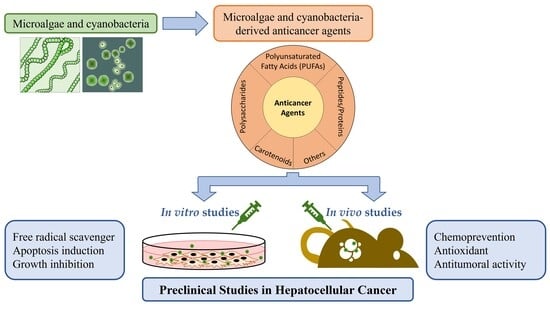
1. Introduction
1.1. Current Treatment Modalities for HCC
- (A)
- Surgery—Surgery may involve partial hepatectomy (partial resection of the liver) for HCC patients without cirrhosis, whereas liver transplantation is a potential option for patients with chronic liver disease and HCC [6].
- (B)
- Ablation—Ablative modalities, which are minimally invasive procedures, include heat-based radiofrequency (RFA) and microwave ablation (MWA), and non-heat-based methods such as cryoablation and chemical ablation, with MWA as the most commonly used thermal ablative modality to destroy liver tumors [6].
- (C)
- Intra-arterial therapies—Intra-arterial therapies involve the administration of vascular occlusive agents into the hepatic artery to cut off the blood supply of the hypervascular liver tumor tissues, thereby inducing hypoxia and necrosis, and include bland embolization (transarterial embolization or TAE), chemoembolization (transarterial chemoembolization or TACE) and radioembolization (transarterial radioembolization or TARE). TACE delivers chemotherapy directly into the liver tumor through the hepatic artery and then blocks the blood flow to the tumor. In contrast, TARE uses tiny radioactive beads instead of chemotherapy. These beads are delivered through the blood vessels directly into the tumor and emit radiation from inside [7,8].
- (D)
- Systemic therapies—For patients with advanced disease, targeted therapy and immune checkpoint inhibitor (ICI) therapy have been introduced [9]. Several multikinase inhibitors, including sorafenib, lenvatinib, regorafenib, and cabozantinib—which target multiple tyrosine kinases as well as VEGFR2—have been employed as targeted therapies [10]. Moreover, ICIs such as nivolumab, pembrolizumab, and tremelimumab have demonstrated survival benefits in clinical trials [11].
1.2. Challenges to the Management of HCC
2. Microalgae as Sources of Bioactive Compounds for Biomedical Applications
3. Microalgae-Derived Anticancer Agents
4. Microalgae-Based Anticancer Agents for Targeting HCC
4.1. In Vitro Studies
4.1.1. Microalgae-Derived Bioactive Compounds
Carotenoids
Proteins
Polysaccharide
Polyketides
4.1.2. Microalgae-Derived Crude Extracts
4.2. In Vivo Studies
- (A)
- Embolization agent for TACE in HCC therapy
- (B)
- Drug delivery system
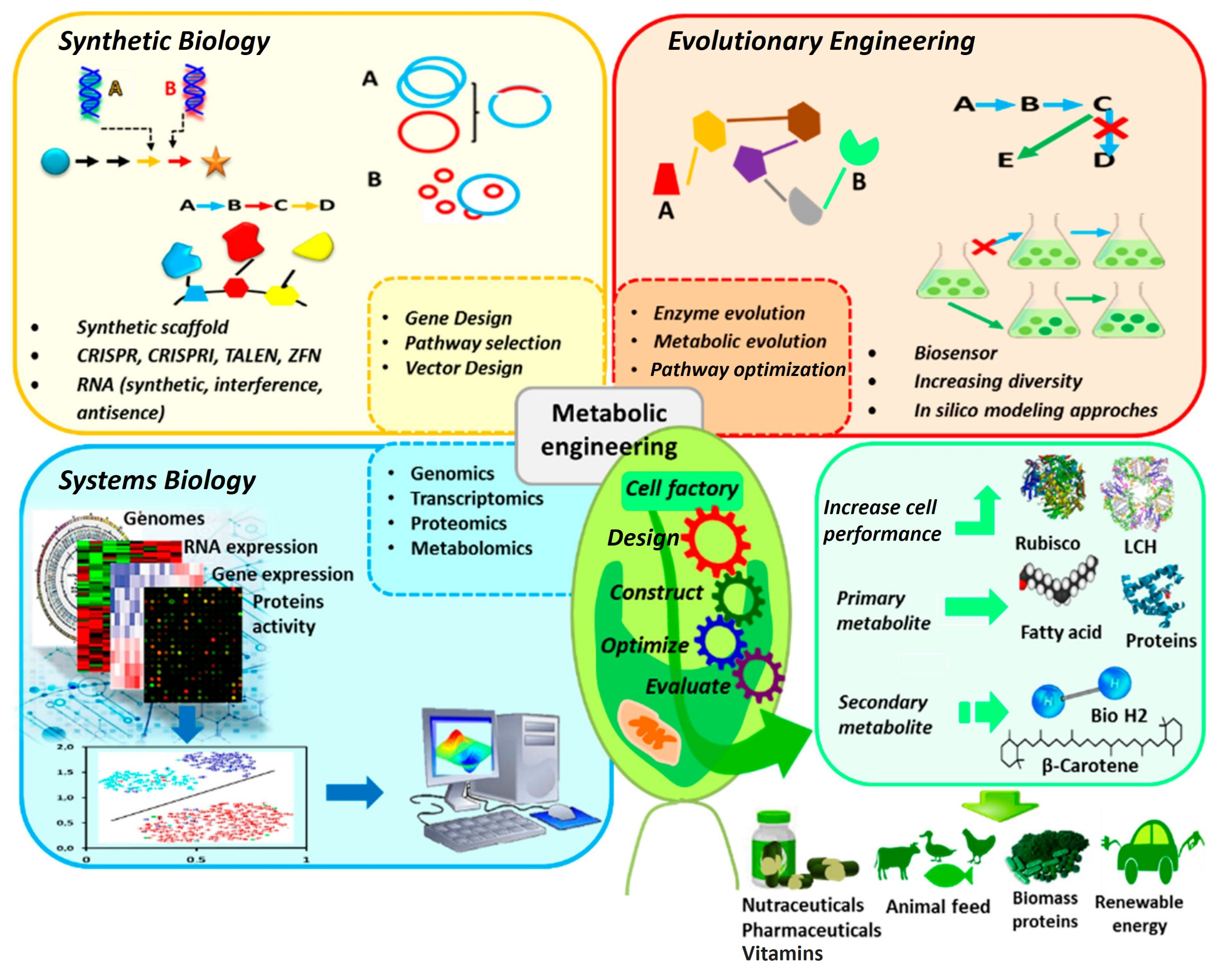
5. Future Perspectives
6. Conclusions
Author Contributions
Funding
Institutional Review Board Statement
Informed Consent Statement
Data Availability Statement
Acknowledgments
Conflicts of Interest
Abbreviations
| AFP | Alpha-fetoprotein |
| AgNPs | Silver nanoparticles |
| ALA | Alpha-linolenic acid |
| ALE | Adaptive laboratory evolution |
| BCLC | Barcelona Clinic of Liver Cancer |
| CAP | Cyanobacterium aponinum polysaccharide |
| CCl4 | Carbon tetrachloride |
| cTACE | Conventional transarterial chemoembolization |
| CDE | Choline-deficient diet supplemented with ethionine |
| CSC | Cancer stem cell |
| CV | Chlorella vulgaris |
| DBN | Dibutyl nitrosamine |
| DEB-TACE | Drug-eluting bead transarterial chemoembolization |
| DHA | Docosahexaenoic acid |
| DOX | Doxorubicin |
| DOX-SP | Doxorubicin-loaded Spirulina embolic agent |
| DPPH | 1,1-Diphenyl-2-picryl-hydrazyl |
| EMT | Epithelial–mesenchymal transition |
| EPA | Eicosapentaenoic acid |
| GMP | Good Manufacturing Practice |
| HCC | Hepatocellular carcinoma |
| IC50 | Half maximal inhibitory concentration |
| ICI | Immune checkpoint inhibitor |
| IRE | Irreversible electroporation |
| i.p. | Intraperitoneal |
| LPS | Lipopolysaccharide |
| MAPK | Mitogen-activated protein kinase |
| MWA | Microwave ablation |
| PDA | Polydopamine |
| PDA-CV@PI | Polydopamine-coated Chlorella vulgaris loaded with PD-1 inhibitor |
| PDT | Photodynamic therapy |
| PI | PD-1 inhibitor |
| PUFAs | Polyunsaturated fatty acids |
| RFA | Radiofrequency ablation |
| ROS | Reactive oxygen species |
| RTKs | Receptor tyrosine kinases |
| SD | Sprague Dawley |
| Se | Selenium-enriched |
| SP | Spirulina platensis |
| TAE | Transarterial embolization |
| TACE | Transarterial chemoembolization |
| TARE | Transarterial radioembolization |
| TLR4 | Toll-like Receptor 4 |
| TKI | Tyrosine kinase inhibitor |
| TUNEL | Terminal deoxynucleotidyl transferase dUTP nick end labeling |
References
- Sung, H.; Ferlay, J.; Siegel, R.L.; Laversanne, M.; Soerjomataram, I.; Jemal, A.; Bray, F. Global cancer statistics 2020: GLOBOCAN estimates of incidence and mortality worldwide for 36 cancers in 185 countries. CA Cancer J. Clin. 2021, 71, 209–249. [Google Scholar] [CrossRef] [PubMed]
- Rumgay, H.; Arnold, M.; Ferlay, J.; Lesi, O.; Cabasag, C.J.; Vignat, J.; Laversanne, M.; McGlynn, K.A.; Soerjomataram, I. Global burden of primary liver cancer in 2020 and predictions to 2040. J. Hepatol. 2022, 77, 1598–1606. [Google Scholar] [CrossRef] [PubMed]
- Reig, M.; Forner, A.; Rimola, J.; Ferrer-Fabrega, J.; Burrel, M.; Garcia-Criado, A.; Kelley, R.K.; Galle, P.R.; Mazzaferro, V.; Salem, R.; et al. BCLC strategy for prognosis prediction and treatment recommendation: The 2022 update. J. Hepatol. 2022, 76, 681–693. [Google Scholar] [CrossRef]
- Vutien, P.; Kim, N.J.; Nguyen, M.H. The diagnosis and staging of hepatocellular carcinoma: A review of current practices. Clin. Liver Dis. 2025, 29, 33–48. [Google Scholar] [CrossRef]
- Vogel, A.; Meyer, T.; Sapisochin, G.; Salem, R.; Saborowski, A. Hepatocellular carcinoma. Lancet 2022, 400, 1345–1362. [Google Scholar] [CrossRef]
- Moris, D.; Martinino, A.; Schiltz, S.; Allen, P.J.; Barbas, A.; Sudan, D.; King, L.; Berg, C.; Kim, C.; Bashir, M.; et al. Advances in the treatment of hepatocellular carcinoma: An overview of the current and evolving therapeutic landscape for clinicians. CA Cancer J. Clin. 2025, 75, 498–527. [Google Scholar] [CrossRef]
- Kim, H.C. Radioembolization for the treatment of hepatocellular carcinoma. Clin. Mol. Hepatol. 2017, 23, 109–114. [Google Scholar] [CrossRef]
- Choi, J.W.; Kim, H.C. Radioembolization for hepatocellular carcinoma: What clinicians need to know. J. Liver Cancer 2022, 22, 4–13. [Google Scholar] [CrossRef]
- Sangro, B.; Argemi, J.; Ronot, M.; Paradis, V.; Meyer, T.; Mazzaferro, V.; Jepsen, P.; Golfieri, R.; Galle, P.; Dawson, L.; et al. EASL clinical practice guidelines on the management of hepatocellular carcinoma. J. Hepatol. 2025, 82, 315–374. [Google Scholar] [CrossRef]
- Rinaldi, L.; Vetrano, E.; Rinaldi, B.; Galiero, R.; Caturano, A.; Salvatore, T.; Sasso, F.C. HCC and molecular targeting therapies: Back to the future. Biomedicines 2021, 9, 1345. [Google Scholar] [CrossRef] [PubMed]
- Ouyang, T.; Kan, X.; Zheng, C. Immune checkpoint inhibitors for advanced hepatocellular carcinoma: Monotherapies and combined therapies. Front. Oncol. 2022, 12, 898964. [Google Scholar] [CrossRef] [PubMed]
- Zhang, J.X.; Guo, L.B.; Zeng, C.S.; Huang, Q.Z.; Lai, Z.S.; Wu, M.M.; Chen, Q.J.; Lai, Y.P.; Qiu, X.F.; Zhang, B.; et al. Time to recurrence and BCLC stage at recurrence as critical variables in guiding treatment decisions for early-recurrent hepatocellular carcinoma after liver resection. Front. Oncol. 2025, 15, 1672696. [Google Scholar] [CrossRef] [PubMed]
- Marrone, G.; Leone, M.S.; Biolato, M.; Liguori, A.; Bianco, G.; Spoletini, G.; Gasbarrini, A.; Miele, L.; Pompili, M. Therapeutic approach to post-transplant recurrence of hepatocellular carcinoma: Certainties and open issues. Cancers 2023, 15, 5593. [Google Scholar] [CrossRef]
- Izzo, F.; Granata, V.; Grassi, R.; Fusco, R.; Palaia, R.; Delrio, P.; Carrafiello, G.; Azoulay, D.; Petrillo, A.; Curley, S.A. Radiofrequency ablation and microwave ablation in liver tumors: An update. Oncologist 2019, 24, e990–e1005. [Google Scholar] [CrossRef]
- Garg, T.; Shrigiriwar, A.; Habibollahi, P.; Cristescu, M.; Liddell, R.P.; Chapiro, J.; Inglis, P.; Camacho, J.C.; Nezami, N. Intraarterial therapies for the management of hepatocellular carcinoma. Cancers 2022, 14, 3351. [Google Scholar] [CrossRef]
- Shi, Y.; Cui, D.; Xia, L.; Shi, D.; Jin, G.; Wang, S.; Lin, Y.; Tang, X.; Chi, J.; Wang, T.; et al. Efficacy and safety of lenvatinib plus gefitinib in lenvatinib-resistant hepatocellular carcinomas: A prospective, single-arm exploratory trial. Signal Transduct. Target. Ther. 2024, 9, 359. [Google Scholar] [CrossRef]
- Jabbarzadeh Kaboli, P.; Roozitalab, G.; Farghadani, R.; Eskandarian, Z.; Zerrouqi, A. c-MET and the immunological landscape of cancer: Novel therapeutic strategies for enhanced anti-tumor immunity. Front. Immunol. 2024, 15, 1498391. [Google Scholar] [CrossRef]
- Tesfay, M.Z.; Cios, A.; Ferdous, K.U.; Shelton, R.S.; Mustafa, B.; Simoes, C.C.; Gokden, M.; Miousse, I.R.; Krager, K.J.; Boerma, M.; et al. Multimodal reprogramming of the tumor microenvironment by MMR and dual checkpoint blockade in hepatocellular carcinoma models. Front. Immunol. 2025, 16, 1679665. [Google Scholar] [CrossRef]
- Aggeletopoulou, I.; Pantzios, S.; Triantos, C. Personalized immunity: Neoantigen-based vaccines revolutionizing hepatocellular carcinoma treatment. Cancers 2025, 17, 376. [Google Scholar] [CrossRef]
- Liu, Z.L.; Liu, J.H.; Staiculescu, D.; Chen, J. Combination of molecularly targeted therapies and immune checkpoint inhibitors in the new era of unresectable hepatocellular carcinoma treatment. Ther. Adv. Med. Oncol. 2021, 13, 17588359211018026. [Google Scholar] [CrossRef]
- Carloni, R.; Sabbioni, S.; Rizzo, A.; Ricci, A.D.; Palloni, A.; Petrarota, C.; Cusmai, A.; Tavolari, S.; Gadaleta-Caldarola, G.; Brandi, G. Immune-based combination therapies for advanced hepatocellular carcinoma. J. Hepatocell. Carcinoma 2023, 10, 1445–1463. [Google Scholar] [CrossRef] [PubMed]
- Elisabeth, B.; Rayen, F.; Behnam, T. Microalgae culture quality indicators: A review. Crit. Rev. Biotechnol. 2021, 41, 457–473. [Google Scholar] [CrossRef] [PubMed]
- Hachicha, R.; Elleuch, F.; Ben Hlima, H.; Dubessay, P.; de Baynast, H.; Delattre, C.; Pierre, G.; Hachicha, R.; Abdelkafi, S.; Michaud, P.; et al. Biomolecules from microalgae and cyanobacteria: Applications and market survey. Appl. Sci. 2022, 12, 1924. [Google Scholar] [CrossRef]
- Thoré, E.S.J.; Muylaert, K.; Bertram, M.G.; Brodin, T. Microalgae. Curr. Biol. 2023, 33, R91–R95. [Google Scholar] [CrossRef]
- Luo, X.; Su, P.; Zhang, W. Advances in microalgae-derived phytosterols for functional food and pharmaceutical applications. Mar. Drugs 2015, 13, 4231–4254. [Google Scholar] [CrossRef]
- Wu, J.; Gu, X.; Yang, D.; Xu, S.; Wang, S.; Chen, X.; Wang, Z. Bioactive substances and potentiality of marine microalgae. Food Sci. Nutr. 2021, 9, 5279–5292. [Google Scholar] [CrossRef]
- Gamal, R.; Shreadah, M.A. Marine microalgae and their industrial biotechnological applications: A review. J. Genet. Eng. Biotechnol. 2024, 22, 100407. [Google Scholar] [CrossRef]
- Akmukhanova, N.R.; Seiilbek, S.N.; Zayadan, B.K.; Bolatkhan, K.; Bakytzhan, R.A.; Domash, G.S.; Bruce, B.D. Harnessing microalgae and cyanobacteria for sustainable pesticide biodegradation: Advances, challenges, and ecological benefits. Microorganisms 2025, 13, 2404. [Google Scholar] [CrossRef]
- Hosny, S.; Elshobary, M.E.; El-Sheekh, M.M. Unleashing the power of microalgae: A pioneering path to sustainability and achieving the sustainable development goals. Environ. Sci. Pollut. Res. Int. 2025, 32, 17312–17342. [Google Scholar] [CrossRef]
- Zhang, T.; Liu, D.; Zhang, Y.; Chen, L.; Zhang, W.; Sun, T. Biomedical engineering utilizing living photosynthetic cyanobacteria and microalgae: Current status and future prospects. Mater. Today Bio 2024, 27, 101154. [Google Scholar] [CrossRef]
- Romano, G.; Costantini, M.; Sansone, C.; Lauritano, C.; Ruocco, N.; Ianora, A. Marine microorganisms as a promising and sustainable source of bioactive molecules. Mar. Environ. Res. 2017, 128, 58–69. [Google Scholar] [CrossRef] [PubMed]
- Lu, Y.; Xu, J. Phytohormones in microalgae: A new opportunity for microalgal biotechnology? Trends Plant Sci. 2015, 20, 273–282. [Google Scholar] [CrossRef] [PubMed]
- Martinez-Ruiz, M.; Martinez-Gonzalez, C.A.; Kim, D.H.; Santiesteban-Romero, B.; Reyes-Pardo, H.; Villasenor-Zepeda, K.R.; Melendez-Sanchez, E.R.; Ramirez-Gamboa, D.; Diaz-Zamorano, A.L.; Sosa-Hernandez, J.E.; et al. Microalgae bioactive compounds to topical applications products—A review. Molecules 2022, 27, 3512. [Google Scholar] [CrossRef]
- Andrade, D.S.; Amaral, H.F.; Gavilanes, F.Z.; Morioka, L.R.I.; Nassar, J.M.; de Melo, J.M.; Silva, H.R.; Telles, T.S. Microalgae: Cultivation, biotechnological, environmental, and agricultural applications. In Advances in the Domain of Environmental Biotechnology; Maddela, N.R., García Cruzatty, L.C., Chakraborty, S., Eds.; Springer: Singapore, 2021; pp. 635–701. [Google Scholar]
- Tang, D.Y.Y.; Khoo, K.S.; Chew, K.W.; Tao, Y.; Ho, S.H.; Show, P.L. Potential utilization of bioproducts from microalgae for the quality enhancement of natural products. Bioresour. Technol. 2020, 304, 122997. [Google Scholar] [CrossRef]
- Sun, H.; Wang, Y.; He, Y.; Liu, B.; Mou, H.; Chen, F.; Yang, S. Microalgae-derived pigments for the food industry. Mar. Drugs 2023, 21, 82. [Google Scholar] [CrossRef]
- Capelli, B.; Bagchi, D.; Cysewski, G.R. Synthetic astaxanthin is significantly inferior to algal-based astaxanthin as an antioxidant and may not be suitable as a human nutraceutical supplement. Nutrafoods 2013, 12, 145–152. [Google Scholar] [CrossRef]
- Yang, S.; Zhao, W.; Mou, H.; Sun, H. Improving astaxanthin production of Haematococcus pluvialis by an efficient fed-batch strategy in a photobioreactor. Algal Res. 2021, 60, 102539. [Google Scholar] [CrossRef]
- Lu, X.; Zhao, W.; Wang, J.; He, Y.; Yang, S.; Sun, H. A comprehensive review on the heterotrophic production of bioactive compounds by microalgae. World J. Microbiol. Biotechnol. 2024, 40, 210. [Google Scholar] [CrossRef]
- Sun, H.; Yang, S.; Zhao, W.; Kong, Q.; Zhu, C.; Fu, X.; Zhang, F.; Liu, Z.; Zhan, Y.; Mou, H.; et al. Fucoxanthin from marine microalgae: A promising bioactive compound for industrial production and food application. Crit. Rev. Food Sci. Nutr. 2023, 63, 7996–8012. [Google Scholar] [CrossRef]
- Yang, S.; Wang, Y.; Wang, J.; Cheng, K.; Liu, J.; He, Y.; Zhang, Y.; Mou, H.; Sun, H. Microalgal protein for sustainable and nutritious foods: A joint analysis of environmental impacts, health benefits and consumer’s acceptance. Trends Food Sci. Technol. 2024, 143, 104278. [Google Scholar] [CrossRef]
- Qiu, T.; Li, X.; Sun, H.; Zhang, S.; An, Y.; Li, J.; Zhong, X. Advancements of algae-involved cancer treatment. Biophys. Rep. 2025, 11, 258–282. [Google Scholar] [CrossRef] [PubMed]
- Alves, C.; Silva, J.; Pinteus, S.; Gaspar, H.; Alpoim, M.C.; Botana, L.M.; Pedrosa, R. From marine origin to therapeutics: The antitumor potential of marine algae-derived compounds. Front. Pharmacol. 2018, 9, 777. [Google Scholar] [CrossRef] [PubMed]
- Abd El-Hack, M.E.; Abdelnour, S.; Alagawany, M.; Abdo, M.; Sakr, M.A.; Khafaga, A.F.; Mahgoub, S.A.; Elnesr, S.S.; Gebriel, M.G. Microalgae in modern cancer therapy: Current knowledge. Biomed. Pharmacother. 2019, 111, 42–50. [Google Scholar] [CrossRef]
- Sharma, R.; Mondal, A.S.; Trivedi, N. Anticancer potential of algae-derived metabolites: Recent updates and breakthroughs. Future J. Pharm. Sci. 2023, 9, 44. [Google Scholar] [CrossRef]
- Sayegh, F.; Elazzazy, A.; Bellou, S.; Moustogianni, A.; Elkady, A.I.; Baeshen, M.N.; Aggelis, G. Production of polyunsaturated single cell oils possessing antimicrobial and anticancer properties. Ann. Microbiol. 2016, 66, 937–948. [Google Scholar] [CrossRef]
- Kalampounias, G.; Dritsas, P.; Karayannis, D.; Androutsopoulou, T.; Gardeli, C.; Papanikolaou, S.; Aggelis, G.; Katsoris, P. Polyunsaturated fatty acids from Thamnidium elegans and Mortierella alpina suppress prostate cancer cell proliferation and migration. Fermentation 2024, 10, 578. [Google Scholar] [CrossRef]
- Lin, P.Y.; Tsai, C.T.; Chuang, W.L.; Chao, Y.H.; Pan, I.H.; Chen, Y.K.; Lin, C.C.; Wang, B.Y. Chlorella sorokiniana induces mitochondrial-mediated apoptosis in human non-small cell lung cancer cells and inhibits xenograft tumor growth in vivo. BMC Complement. Altern. Med. 2017, 17, 88. [Google Scholar] [CrossRef]
- Yu, Z.; Hong, Y.; Xie, K.; Fan, Q. Research progresses on the physiological and pharmacological benefits of microalgae-derived biomolecules. Foods 2022, 11, 2806. [Google Scholar] [CrossRef]
- Silva, M.; Avni, D.; Varela, J.; Barreira, L. The ocean’s pharmacy: Health discoveries in marine algae. Molecules 2024, 29, 1900. [Google Scholar] [CrossRef]
- Soliman, T.N.; Negm El-Dein, A.; Abd Al-Diam, S.; Allayeh, A.; Awad, H.; Flefil, N.S. Characterization of C-phycocyanin antioxidant, anti-inflammatory, anti-tumour, and anti-HCoV-229E activities and encapsulation for implementation in an innovative functional yogurt. Heliyon 2024, 10, e31642. [Google Scholar] [CrossRef]
- Wang, A.; Bai, F.; Hua, J. Microalgal bioactives as emerging nutritional regulators of apoptosis and neuroplasticity: Targeting metabolic dysfunction in aging, neurodegenerative diseases, and cancer. Front. Pharmacol. 2025, 16, 1643426. [Google Scholar] [CrossRef]
- Martinez Andrade, K.A.; Lauritano, C.; Romano, G.; Ianora, A. Marine microalgae with anti-cancer properties. Mar. Drugs 2018, 16, 165. [Google Scholar] [CrossRef] [PubMed]
- Konickova, R.; Vankova, K.; Vanikova, J.; Vanova, K.; Muchova, L.; Subhanova, I.; Zadinova, M.; Zelenka, J.; Dvorak, A.; Kolar, M.; et al. Anti-cancer effects of blue-green alga Spirulina platensis, a natural source of bilirubin-like tetrapyrrolic compounds. Ann. Hepatol. 2014, 13, 273–283. [Google Scholar] [CrossRef] [PubMed]
- Smieszek, A.; Giezek, E.; Chrapiec, M.; Murat, M.; Mucha, A.; Michalak, I.; Marycz, K. The influence of Spirulina platensis filtrates on Caco-2 proliferative activity and expression of apoptosis-related microRNAs and mRNA. Mar. Drugs 2017, 15, 65. [Google Scholar] [CrossRef]
- Ishiguro, S.; Robben, N.; Burghart, R.; Cote, P.; Greenway, S.; Thakkar, R.; Upreti, D.; Nakashima, A.; Suzuki, K.; Comer, J.; et al. Cell wall membrane fraction of Chlorella sorokiniana enhances host antitumor immunity and inhibits colon carcinoma growth in mice. Integr. Cancer Ther. 2020, 19, 1534735419900555. [Google Scholar] [CrossRef]
- Subramaiam, H.; Chu, W.L.; Radhakrishnan, A.K.; Chakravarthi, S.; Selvaduray, K.R.; Kok, Y.Y. Evaluating anticancer and immunomodulatory effects of Spirulina (Arthrospira) platensis and gamma-tocotrienol supplementation in a syngeneic mouse model of breast cancer. Nutrients 2021, 13, 2320. [Google Scholar] [CrossRef]
- Kim, J.H.; Kim, D.H.; Jo, S.; Cho, M.J.; Cho, Y.R.; Lee, Y.J.; Byun, S. Immunomodulatory functional foods and their molecular mechanisms. Exp. Mol. Med. 2022, 54, 1–11. [Google Scholar] [CrossRef]
- Liang, Z.; Xiong, L.; Zang, Y.; Tang, Z.; Shang, Z.; Zhang, J.; Jia, Z.; Huang, Y.; Ye, X.; Liu, H.; et al. Extraction optimization and anti-tumor activity of polysaccharides from Chlamydomonas reinhardtii. Mar. Drugs 2024, 22, 356. [Google Scholar] [CrossRef]
- Rungjiraphirat, R.; Cheepchirasuk, N.; Suriyaprom, S.; Tragoolpua, Y. Inhibitory efficacy of Arthrospira platensis extracts on skin pathogenic bacteria and skin cancer cells. Biology 2025, 14, 502. [Google Scholar] [CrossRef]
- Domínguez-Gámez, M.; Romo-Sáenz, C.; Gomez-Flores, R.; González-Ochoa, G.; García-Romero, A.; Orozco-Flores, A.; Rodríguez-Padilla, C.; Tamez-Guerra, P. In vitro antitumor, antioxidant, and hemolytic activities of Chlorella sorokiniana methanol extracts and collective fractions. Appl. Sci. 2024, 14, 9613. [Google Scholar] [CrossRef]
- Li, W.; Zhong, D.; Hua, S.; Du, Z.; Zhou, M. Biomineralized biohybrid algae for tumor hypoxia modulation and cascade radio-photodynamic therapy. ACS Appl. Mater. Interfaces 2020, 12, 44541–44553. [Google Scholar] [CrossRef]
- Qiao, Y.; Yang, F.; Xie, T.; Du, Z.; Zhong, D.; Qi, Y.; Li, Y.; Li, W.; Lu, Z.; Rao, J.; et al. Engineered algae: A novel oxygen-generating system for effective treatment of hypoxic cancer. Sci. Adv. 2020, 6, eaba5996. [Google Scholar] [CrossRef]
- Wang, H.; Guo, Y.; Wang, C.; Jiang, X.; Liu, H.; Yuan, A.; Yan, J.; Hu, Y.; Wu, J. Light-controlled oxygen production and collection for sustainable photodynamic therapy in tumor hypoxia. Biomaterials 2021, 269, 120621. [Google Scholar] [CrossRef]
- Zhong, D.; Li, W.; Hua, S.; Qi, Y.; Xie, T.; Qiao, Y.; Zhou, M. Calcium phosphate engineered photosynthetic microalgae to combat hypoxic-tumor by in-situ modulating hypoxia and cascade radio-phototherapy. Theranostics 2021, 11, 3580–3594. [Google Scholar] [CrossRef] [PubMed]
- Cui, H.; Su, Y.; Wei, W.; Xu, F.; Gao, J.; Zhang, W. How microalgae is effective in oxygen deficiency aggravated diseases? A comprehensive review of literature. Int. J. Nanomed. 2022, 17, 3101–3122. [Google Scholar] [CrossRef] [PubMed]
- Hong, L.; Li, J.; Luo, Y.; Guo, T.; Zhang, C.; Ou, S.; Long, Y.; Hu, Z. Recent advances in strategies for addressing hypoxia in tumor photodynamic therapy. Biomolecules 2022, 12, 81. [Google Scholar] [CrossRef]
- Ou, M.; Lin, C.; Wang, Y.; Lu, Y.; Wang, W.; Li, Z.; Zeng, W.; Zeng, X.; Ji, X.; Mei, L. Heterojunction engineered bioactive chlorella for cascade promoted cancer therapy. J. Control Release 2022, 345, 755–769. [Google Scholar] [CrossRef]
- Zhang, C.; Han, Z.Y.; Chen, K.W.; Wang, Y.Z.; Bao, P.; Ji, P.; Yan, X.; Rao, Z.Y.; Zeng, X.; Zhang, X.Z. In situ formed microalgae-integrated living hydrogel for enhanced tumor starvation therapy and immunotherapy through photosynthetic oxygenation. Nano Lett. 2024, 24, 3801–3810. [Google Scholar] [CrossRef]
- Liang, L.; Wang, W.; Li, M.; Xu, Y.; Lu, Z.; Wei, J.; Tang, B.Z.; Sun, F.; Tong, R. Cancer photodynamic therapy enabled by water-soluble chlorophyll protein. ACS Appl. Mater. Interfaces 2025, 17, 16668–16680. [Google Scholar] [CrossRef]
- Kumar, S.R.; Hosokawa, M.; Miyashita, K. Fucoxanthin: A marine carotenoid exerting anti-cancer effects by affecting multiple mechanisms. Mar. Drugs 2013, 11, 5130–5147. [Google Scholar] [CrossRef]
- Foo, S.C.; Yusoff, F.M.; Imam, M.U.; Foo, J.B.; Ismail, N.; Azmi, N.H.; Tor, Y.S.; Khong, N.M.H.; Ismail, M. Increased fucoxanthin in Chaetoceros calcitrans extract exacerbates apoptosis in liver cancer cells via multiple targeted cellular pathways. Biotechnol. Rep. 2019, 21, e00296. [Google Scholar] [CrossRef]
- Kawee-Ai, A.; Kim, S.M. Application of microalgal fucoxanthin for the reduction of colon cancer risk: Inhibitory activity of fucoxanthin against beta-glucuronidase and DLD-1 cancer cells. Nat. Prod. Commun. 2014, 9, 921–924. [Google Scholar] [PubMed]
- Wang, J.; Ma, Y.; Yang, J.; Jin, L.; Gao, Z.; Xue, L.; Hou, L.; Sui, L.; Liu, J.; Zou, X. Fucoxanthin inhibits tumour-related lymphangiogenesis and growth of breast cancer. J. Cell Mol. Med. 2019, 23, 2219–2229. [Google Scholar] [CrossRef] [PubMed]
- Meresse, S.; Fodil, M.; Fleury, F.; Chenais, B. Fucoxanthin, a marine-derived carotenoid from brown seaweeds and microalgae: A promising bioactive compound for cancer therapy. Int. J. Mol. Sci. 2020, 21, 9273. [Google Scholar] [CrossRef]
- Ahmed, S.A.; Mendonca, P.; Messeha, S.S.; Soliman, K.F.A. Anticancer effects of fucoxanthin through cell cycle arrest, apoptosis induction, and angiogenesis inhibition in triple-negative breast cancer cells. Molecules 2023, 28, 6536. [Google Scholar] [CrossRef]
- Calabrone, L.; Carlini, V.; Noonan, D.M.; Festa, M.; Ferrario, C.; Morelli, D.; Macis, D.; Fontana, A.; Pistelli, L.; Brunet, C.; et al. Skeletonema marinoi extracts and associated carotenoid fucoxanthin downregulate pro-angiogenic mediators on prostate cancer and endothelial cells. Cells 2023, 12, 1053. [Google Scholar] [CrossRef]
- Wu, H.L.; Fu, X.Y.; Cao, W.Q.; Xiang, W.Z.; Hou, Y.J.; Ma, J.K.; Wang, Y.; Fan, C.D. Induction of apoptosis in human glioma cells by fucoxanthin via triggering of ros-mediated oxidative damage and regulation of MAPKs and PI3K-AKT pathways. J. Agric. Food Chem. 2019, 67, 2212–2219. [Google Scholar] [CrossRef]
- Lopes, F.G.; Oliveira, K.A.; Lopes, R.G.; Poluceno, G.G.; Simioni, C.; Gabriel, D.S.P.; Bauer, C.M.; Maraschin, M.; Derner, R.B.; Garcez, R.C.; et al. Anti-cancer effects of fucoxanthin on human glioblastoma cell line. Anticancer. Res. 2020, 40, 6799–6815. [Google Scholar] [CrossRef]
- Ahmed, S.A.; Mendonca, P.; Elhag, R.; Soliman, K.F.A. Anticancer effects of fucoxanthin through cell cycle arrest, apoptosis induction, angiogenesis inhibition, and autophagy modulation. Int. J. Mol. Sci. 2022, 23, 16091. [Google Scholar] [CrossRef]
- Lee, J.; Kim, M.H.; Kim, H. Anti-oxidant and anti-inflammatory effects of astaxanthin on gastrointestinal diseases. Int. J. Mol. Sci. 2022, 23, 15471. [Google Scholar] [CrossRef]
- Sun, S.Q.; Zhao, Y.X.; Li, S.Y.; Qiang, J.W.; Ji, Y.Z. Anti-tumor effects of astaxanthin by inhibition of the expression of STAT3 in prostate cancer. Mar. Drugs 2020, 18, 415. [Google Scholar] [CrossRef]
- Erzurumlu, Y.; Catakli, D.; Dogan, H.K. Potent carotenoid astaxanthin expands the anti-cancer activity of cisplatin in human prostate cancer cells. J. Nat. Med. 2023, 77, 572–583. [Google Scholar] [CrossRef] [PubMed]
- Kim, M.S.; Ahn, Y.T.; Lee, C.W.; Kim, H.; An, W.G. Astaxanthin modulates apoptotic molecules to induce death of SKBR3 breast cancer cells. Mar. Drugs 2020, 18, 266. [Google Scholar] [CrossRef] [PubMed]
- Zeini, M.S.; Pakravesh, S.M.; Kolour, S.M.J.; Soghala, S.; Ohadi, M.A.D.; Akhavan, H.G.A.; Sayyahi, Z.; Mahya, L.; Jahani, S.; Baghini, S.S.; et al. Astaxanthin as an anticancer agent against breast cancer: An in vivo and in vitro investigation. Curr. Med. Chem. 2025, 32, 2598–2607. [Google Scholar] [CrossRef]
- Ren, P.; Yue, H.; Tang, Q.; Wang, Y.; Xue, C. Astaxanthin exerts an adjunctive anti-cancer effect through the modulation of gut microbiota and mucosal immunity. Int. Immunopharmacol. 2024, 128, 111553. [Google Scholar] [CrossRef]
- Yan, T.; Li, H.Y.; Wu, J.S.; Niu, Q.; Duan, W.H.; Han, Q.Z.; Ji, W.M.; Zhang, T.; Lv, W. Astaxanthin inhibits gemcitabine-resistant human pancreatic cancer progression through EMT inhibition and gemcitabine resensitization. Oncol. Lett. 2017, 14, 5400–5408. [Google Scholar] [CrossRef]
- Kowshik, J.; Nivetha, R.; Ranjani, S.; Venkatesan, P.; Selvamuthukumar, S.; Veeravarmal, V.; Nagini, S. Astaxanthin inhibits hallmarks of cancer by targeting the PI3K/NF-κΒ/STAT3 signalling axis in oral squamous cell carcinoma models. IUBMB Life 2019, 71, 1595–1610. [Google Scholar] [CrossRef]
- Kim, H.Y.; Kim, Y.M.; Hong, S. Astaxanthin suppresses the metastasis of colon cancer by inhibiting the MYC-mediated downregulation of microRNA-29a-3p and microRNA-200a. Sci. Rep. 2019, 9, 9457. [Google Scholar] [CrossRef]
- Aslanbay Guler, B.; Saglam-Metiner, P.; Deniz, I.; Demirel, Z.; Yesil-Celiktas, O.; Imamoglu, E. Aligned with sustainable development goals: Microwave extraction of astaxanthin from wet algae and selective cytotoxic effect of the extract on lung cancer cells. Prep. Biochem. Biotechnol. 2023, 53, 565–571. [Google Scholar] [CrossRef]
- Talero, E.; Garcia-Maurino, S.; Avila-Roman, J.; Rodriguez-Luna, A.; Alcaide, A.; Motilva, V. Bioactive compounds isolated from microalgae in chronic inflammation and cancer. Mar. Drugs 2015, 13, 6152–6209. [Google Scholar] [CrossRef]
- Palozza, P.; Torelli, C.; Boninsegna, A.; Simone, R.; Catalano, A.; Mele, M.C.; Picci, N. Growth-inhibitory effects of the astaxanthin-rich alga Haematococcus pluvialis in human colon cancer cells. Cancer Lett. 2009, 283, 108–117. [Google Scholar] [CrossRef] [PubMed]
- Ramamoorthy, K.; Raghunandhakumar, S.; Anand, R.S.; Paramasivam, A.; Kamaraj, S.; Nagaraj, S.; Ezhilarasan, D.; Lakshmi, T.; Dua, K.; Chellappan, D.K.; et al. Anticancer effects and lysosomal acidification in A549 cells by astaxanthin from Haematococcus lacustris. Bioinformation 2020, 16, 965–973. [Google Scholar] [CrossRef] [PubMed]
- Sheu, M.J.; Huang, G.J.; Wu, C.H.; Chen, J.S.; Chang, H.Y.; Chang, S.J.; Chung, J.G. Ethanol extract of Dunaliella salina induces cell cycle arrest and apoptosis in A549 human non-small cell lung cancer cells. In Vivo 2008, 22, 369–378. [Google Scholar] [PubMed]
- Emtyazjoo, M.; Moghadasi, Z.; Rabbani, M.; Emtyazjoo, M.; Samadi, S.; Mossaffa, N. Anticancer effect of Dunaliella salina under stress and normal conditions against skin carcinoma cell line A431 in vitro. Iran. J. Fish. Sci. 2012, 11, 283–293. [Google Scholar]
- Olmos, J.; Gomez, R.; Rubio, V.P. Apoptosis comparison effects between synthetic and natural B-carotene from Dunaliella salina on MDA-MB-231 breast cancer cells. J. Microb. Biochem. Technol. 2015, 7, 51–56. [Google Scholar]
- Khavari, F.; Saidijam, M.; Taheri, M.; Nouri, F. Microalgae: Therapeutic potentials and applications. Mol. Biol. Rep. 2021, 48, 4757–4765. [Google Scholar] [CrossRef]
- Juin, C.; Oliveira Junior, R.G.d.; Fleury, A.; Oudinet, C.; Pytowski, L.; Bérard, J.-B.; Nicolau, E.; Thiéry, V.; Lanneluc, I.; Beaugeard, L.; et al. Zeaxanthin from Porphyridium purpureum induces apoptosis in human melanoma cells expressing the oncogenic BRAF V600E mutation and sensitizes them to the BRAF inhibitor vemurafenib. Rev. Bras. Farmacogn. 2018, 28, 457–467. [Google Scholar] [CrossRef]
- Muthulakshmi, M.; Baskar, G. Extraction and multifunctional biological evaluation of natural bioactive zeaxanthin from Dunaliella salina. Prep. Biochem. Biotechnol. 2025, 1–14. [Google Scholar] [CrossRef]
- Montecillo-Aguado, M.; Tirado-Rodriguez, B.; Huerta-Yepez, S. The involvement of polyunsaturated fatty acids in apoptosis mechanisms and their implications in cancer. Int. J. Mol. Sci. 2023, 24, 11691. [Google Scholar] [CrossRef]
- Gurav, P.; Patade, T.; Hajare, S.; Kedar, R.N. N-3 PUFAs synergistically enhance the efficacy of doxorubicin by inhibiting the proliferation and invasion of breast cancer cells. Med. Oncol. 2023, 41, 2. [Google Scholar] [CrossRef]
- Jayathilake, A.G.; Luwor, R.B.; Nurgali, K.; Su, X.Q. Molecular mechanisms associated with the inhibitory role of long chain n-3 PUFA in colorectal cancer. Integr. Cancer Ther. 2024, 23, 15347354241243024. [Google Scholar] [CrossRef] [PubMed]
- Jayathilake, A.G.; Kadife, E.; Luwor, R.B.; Nurgali, K.; Su, X.Q. Krill oil extract suppresses the proliferation of colorectal cancer cells through activation of caspase 3/9. Nutr. Metab. 2019, 16, 53. [Google Scholar] [CrossRef]
- Siddiqui, R.A.; Harvey, K.A.; Xu, Z.; Bammerlin, E.M.; Walker, C.; Altenburg, J.D. Docosahexaenoic acid: A natural powerful adjuvant that improves efficacy for anticancer treatment with no adverse effects. Biofactors 2011, 37, 399–412. [Google Scholar] [CrossRef] [PubMed]
- Zhao, S.; Meng, Y.; Cai, W.; Luo, Q.; Gao, H.; Shen, Q.; Shi, D. Docosahexaenoic acid coordinating with sodium selenite promotes paraptosis in colorectal cancer cells by disrupting the redox homeostasis and activating the MAPK pathway. Nutrients 2024, 16, 1737. [Google Scholar] [CrossRef] [PubMed]
- Chiu, L.C.; Wong, E.Y.; Ooi, V.E. Docosahexaenoic acid from a cultured microalga inhibits cell growth and induces apoptosis by upregulating Bax/Bcl-2 ratio in human breast carcinoma MCF-7 cells. Ann. N. Y. Acad. Sci. 2004, 1030, 361–368. [Google Scholar] [CrossRef]
- Umemura, K.; Yanase, K.; Suzuki, M.; Okutani, K.; Yamori, T.; Andoh, T. Inhibition of DNA topoisomerases I and II, and growth inhibition of human cancer cell lines by a marine microalgal polysaccharide. Biochem. Pharmacol. 2003, 66, 481–487. [Google Scholar] [CrossRef]
- Sanniyasi, E.; Patrick, A.P.R.; Rajagopalan, K.; Gopal, R.K.; Damodharan, R. Characterization and in vitro anticancer potential of exopolysaccharide extracted from a freshwater diatom Nitzschia palea (Kutz.) W.Sm. 1856. Sci. Rep. 2022, 12, 22114. [Google Scholar] [CrossRef]
- Ai, X.; Yu, P.; Li, X.; Lai, X.; Yang, M.; Liu, F.; Luan, F.; Meng, X. Polysaccharides from Spirulina platensis: Extraction methods, structural features and bioactivities diversity. Int. J. Biol. Macromol. 2023, 231, 123211. [Google Scholar] [CrossRef]
- Sawasdee, N.; Jantakee, K.; Wathikthinnakon, M.; Panwong, S.; Pekkoh, J.; Duangjan, K.; Yenchitsomanus, P.T.; Panya, A. Microalga Chlorella sp. extract induced apoptotic cell death of cholangiocarcinoma via AKT/mTOR signaling pathway. Biomed. Pharmacother. 2023, 160, 114306. [Google Scholar] [CrossRef]
- Yang, S.; Li, D.; Liu, W.; Chen, X. Polysaccharides from marine biological resources and their anticancer activity on breast cancer. RSC Med. Chem. 2023, 14, 1049–1059. [Google Scholar] [CrossRef]
- Gardeva, E.; Toshkova, R.; Yossifova, L.; Minkova, K.; Gigova, L. Cytotoxic and apoptogenic potential of red microalgal polysaccharides. Biotechnol. Biotechnol. Equip. 2012, 26, 3167–3172. [Google Scholar] [CrossRef]
- Park, G.T.; Go, R.E.; Lee, H.M.; Lee, G.A.; Kim, C.W.; Seo, J.W.; Hong, W.K.; Choi, K.C.; Hwang, K.A. Potential anti-proliferative and immunomodulatory effects of marine microalgal exopolysaccharide on various human cancer cells and lymphocytes in vitro. Mar. Biotechnol. 2017, 19, 136–146. [Google Scholar] [CrossRef] [PubMed]
- Nikolova, B.; Semkova, S.; Tsoneva, I.; Antov, G.; Ivanova, J.; Vasileva, I.; Kardaleva, P.; Stoineva, I.; Christova, N.; Nacheva, L.; et al. Characterization and potential antitumor effect of a heteropolysaccharide produced by the red alga Porphyridium sordidum. Eng. Life Sci. 2019, 19, 978–985. [Google Scholar] [CrossRef]
- Parra-Riofrío, G.; García-Márquez, J.; Casas-Arrojo, V.; Uribe-Tapia, E.; Abdala-Díaz, R.T. Antioxidant and cytotoxic effects on tumor cells of exopolysaccharides from Tetraselmis suecica (Kylin) Butcher grown under autotrophic and heterotrophic conditions. Mar. Drugs 2020, 18, 534. [Google Scholar] [CrossRef]
- Casas-Arrojo, V.; Decara, J.; de Los Ángeles Arrojo-Agudo, M.; Pérez-Manríquez, C.; Abdala-Díaz, R.T. Immunomodulatory, antioxidant activity and cytotoxic effect of sulfated polysaccharides from Porphyridium cruentum. (S.F.Gray) Nägeli. Biomolecules 2021, 11, 488. [Google Scholar] [CrossRef]
- Yadav, K.; Saxena, A.; Gupta, M.; Saha, B.; Sarwat, M.; Rai, M.P. Comparing pharmacological potential of freshwater microalgae carotenoids towards antioxidant and anti-proliferative activity on liver cancer (Huh7) cell line. Appl. Biochem. Biotechnol. 2024, 196, 2053–2066. [Google Scholar] [CrossRef]
- Gangadhar, K.N.; Rodrigues, M.J.; Pereira, H.; Gaspar, H.; Malcata, F.X.; Barreira, L.; Varela, J. Anti-hepatocellular carcinoma (HepG2) activities of monoterpene hydroxy lactones isolated from the marine microalga Tisochrysis lutea. Mar. Drugs 2020, 18, 567. [Google Scholar] [CrossRef]
- Carrasco-Reinado, R.; Escobar-Nino, A.; Fajardo, C.; Morano, I.M.; Amil-Ruiz, F.; Martinez-Rodriguez, G.; Fuentes-Almagro, C.; Capilla, V.; Tomas-Cobos, L.; Soriano-Romani, L.; et al. Development of new antiproliferative compound against human tumor cells from the marine microalgae Nannochloropsis gaditana by applied proteomics. Int. J. Mol. Sci. 2020, 22, 96. [Google Scholar] [CrossRef]
- Roy, K.R.; Arunasree, K.M.; Reddy, N.P.; Dheeraj, B.; Reddy, G.V.; Reddanna, P. Alteration of mitochondrial membrane potential by Spirulina platensis c-phycocyanin induces apoptosis in the doxorubicinresistant human hepatocellular-carcinoma cell line HepG2. Biotechnol. Appl. Biochem. 2007, 47, 159–167. [Google Scholar] [CrossRef]
- Wang, C.Y.; Wang, X.; Wang, Y.; Zhou, T.; Bai, Y.; Li, Y.C.; Huang, B. Photosensitization of phycocyanin extracted from Microcystis in human hepatocellular carcinoma cells: Implication of mitochondria-dependent apoptosis. J. Photochem. Photobiol. B 2012, 117, 70–79. [Google Scholar] [CrossRef]
- Kunte, M.; Desai, K. The inhibitory effect of c-phycocyanin containing protein extract (C-PC Extract) on human matrix metalloproteinases (MMP-2 and MMP-9) in hepatocellular cancer cell line (HepG2). Protein J. 2017, 36, 186–195. [Google Scholar] [CrossRef] [PubMed]
- Chen, Z.; Wu, J.; Wang, N.; Li, T.; Wu, H.; Wu, H.; Xiang, W. Isolation, characterization, moisturization and anti-HepG2 cell activities of a novel polysaccharide from Cyanobacterium aponinum. Molecules 2024, 29, 4556. [Google Scholar] [CrossRef] [PubMed]
- Al-Badwy, A.H.; Khalil, A.M.; Bashal, A.H.; Kebeish, R. Polysaccharides from Spirulina platensis (PSP): Promising biostimulants for the green synthesis of silver nanoparticles and their potential application in the treatment of cancer tumors. Microb. Cell Fact. 2023, 22, 247. [Google Scholar] [CrossRef]
- Martínez, K.A.; Lauritano, C.; Druka, D.; Romano, G.; Grohmann, T.; Jaspars, M.; Martín, J.; Díaz, C.; Cautain, B.; de la Cruz, M.; et al. Amphidinol 22, a new cytotoxic and antifungal amphidinol from the dinoflagellate Amphidinium carterae. Mar. Drugs 2019, 17, 385. [Google Scholar] [CrossRef]
- Gkelis, S.; Panou, M.; Konstantinou, D.; Apostolidis, P.; Kasampali, A.; Papadimitriou, S.; Kati, D.; Di Lorenzo, G.M.; Ioakeim, S.; Zervou, S.K.; et al. Diversity, cyanotoxin production, and bioactivities of cyanobacteria isolated from freshwaters of Greece. Toxins 2019, 11, 436. [Google Scholar] [CrossRef]
- Hamouda, R.A.; Abd El Latif, A.; Elkaw, E.M.; Alotaibi, A.S.; Alenzi, A.M.; Hamza, H.A. Assessment of antioxidant and anticancer activities of microgreen alga Chlorella vulgaris and its blend with different vitamins. Molecules 2022, 27, 1602. [Google Scholar] [CrossRef]
- Ismail, M.F.; Ali, D.A.; Fernando, A.; Abdraboh, M.E.; Gaur, R.L.; Ibrahim, W.M.; Raj, M.H.; Ouhtit, A. Chemoprevention of rat liver toxicity and carcinogenesis by Spirulina. Int. J. Biol. Sci. 2009, 5, 377–387. [Google Scholar] [CrossRef]
- Wu, L.C.; Ho, J.A.; Shieh, M.C.; Lu, I.W. Antioxidant and antiproliferative activities of Spirulina and Chlorella water extracts. J. Agric. Food Chem. 2005, 53, 4207–4212. [Google Scholar] [CrossRef]
- Chang, Y.C.; Chu, T.H.; Yu, P.C.; Wang, E.M.; Huang, C.C.; Hu, T.H.; Wen, Z.H.; Ko, C.Y.; Chen, C.N.; Tai, M.H. Microalgal extract from thermotolerant Coelastrella sp. F50 retards the liver tumor progression by targeting hepatic cancer stem cells. Phytother. Res. 2021, 35, 3954–3967. [Google Scholar] [CrossRef]
- Tajul Arifin, K.; Sulaiman, S.; Md Saad, S.; Ahmad Damanhuri, H.; Wan Ngah, W.Z.; Mohd Yusof, Y.A. Elevation of tumour markers TGF-β, M(2)-PK, OV-6 and AFP in hepatocellular carcinoma (HCC)-induced rats and their suppression by microalgae Chlorella vulgaris. BMC Cancer 2017, 17, 879. [Google Scholar] [CrossRef]
- Mahmoud, Y.I.; Shehata, A.M.M.; Fares, N.H.; Mahmoud, A.A. Spirulina inhibits hepatocellular carcinoma through activating p53 and apoptosis and suppressing oxidative stress and angiogenesis. Life Sci. 2021, 265, 118827. [Google Scholar] [CrossRef] [PubMed]
- Osman, A.; Salama, A.; Emam Mahmoud, K.; Sitohy, M. Alleviation of carbon tetrachloride-induced hepatocellular damage and oxidative stress in rats by Anabaena oryzae phycocyanin. J. Food Biochem. 2021, 45, e13562. [Google Scholar] [CrossRef] [PubMed]
- Liu, Z.; Fu, X.; Huang, W.; Li, C.; Wang, X.; Huang, B. Photodynamic effect and mechanism study of selenium-enriched phycocyanin from Spirulina platensis against liver tumours. J. Photochem. Photobiol. B 2018, 180, 89–97. [Google Scholar] [CrossRef]
- Okuyama, H.; Tominaga, A.; Fukuoka, S.; Taguchi, T.; Kusumoto, Y.; Ono, S. Spirulina lipopolysaccharides inhibit tumor growth in a Toll-like receptor 4-dependent manner by altering the cytokine milieu from interleukin-17/interleukin-23 to interferon-gamma. Oncol. Rep. 2017, 37, 684–694. [Google Scholar] [CrossRef]
- Barkia, I.; Saari, N.; Manning, S.R. Microalgae for high-value products towards human health and nutrition. Mar. Drugs 2019, 17, 304. [Google Scholar] [CrossRef]
- Wang, K.; Zhong, D.; Yang, L.; Zeng, C.; Hu, Q.; Zhou, M.; Tang, Z. Microalgae-based biodegradable embolic agent for the treatment of hepatocellular carcinoma through transarterial embolization. J. Nanobiotechnol. 2025, 23, 234. [Google Scholar] [CrossRef]
- Zeng, C.; Hua, S.; Zhou, J.; Zeng, T.; Chen, J.; Su, L.; Jiang, A.; Zhou, M.; Tang, Z. Oral microalgae-based biosystem to enhance irreversible electroporation immunotherapy in hepatocellular carcinoma. Adv. Sci. 2025, 12, e2409381. [Google Scholar] [CrossRef]
- Lauritano, C.; De Luca, D.; Ferrarini, A.; Avanzato, C.; Minio, A.; Esposito, F.; Ianora, A. De novo transcriptome of the cosmopolitan dinoflagellate Amphidinium carterae to identify enzymes with biotechnological potential. Sci. Rep. 2017, 7, 11701. [Google Scholar] [CrossRef]
- Novoveska, L.; Nielsen, S.L.; Eroldogan, O.T.; Haznedaroglu, B.Z.; Rinkevich, B.; Fazi, S.; Robbens, J.; Vasquez, M.; Einarsson, H. Overview and challenges of large-scale cultivation of photosynthetic microalgae and cyanobacteria. Mar. Drugs 2023, 21, 445. [Google Scholar] [CrossRef]
- Mourelle, M.L.; Díaz-Seoane, F.; Inoubli, S.; Gómez, C.P.; Legido, J.L. Microalgae and cyanobacteria exopolysaccharides: An untapped raw material for cosmetic use. Cosmetics 2025, 12, 200. [Google Scholar] [CrossRef]
- Grama, S.B.; Liu, Z.; Li, J. Emerging trends in genetic engineering of microalgae for commercial applications. Mar. Drugs 2022, 20, 285. [Google Scholar] [CrossRef] [PubMed]
- Arora, N.; Philippidis, G.P. Microalgae strain improvement strategies: Random mutagenesis and adaptive laboratory evolution. Trends Plant Sci. 2021, 26, 1199–1200. [Google Scholar] [CrossRef] [PubMed]
- Mavrommati, M.; Daskalaki, A.; Papanikolaou, S.; Aggelis, G. Adaptive laboratory evolution principles and applications in industrial biotechnology. Biotechnol. Adv. 2022, 54, 107795. [Google Scholar] [CrossRef]
- Wang, X.; Liu, S.-F.; Wang, Z.-Y.; Hao, T.-B.; Balamurugan, S.; Li, D.-W.; He, Y.; Li, H.-Y.; Lin, C.S.K. A waste upcycling loop: Two-factor adaptive evolution of microalgae to increase polyunsaturated fatty acid production using food waste. J. Clean. Prod. 2022, 331, 130018. [Google Scholar] [CrossRef]
- Hu, X.; Tang, X.; Bi, Z.; Zhao, Q.; Ren, L. Adaptive evolution of microalgae Schizochytrium sp. under high temperature for efficient production of docosahexaeonic acid. Algal Res. 2021, 54, 102212. [Google Scholar] [CrossRef]
- Ding, X.; Zhu, X.; Zhao, Y.; Xie, N.; Wang, G. Multiple factors based adaptive laboratory evolution strategy enhances DHA production in Aurantiochytrium sp. PKU#Mn16 by rewiring key metabolic pathways. Microb. Cell Fact. 2025, 24, 169. [Google Scholar] [CrossRef]
- Ding, W.; Jin, W.; Zhou, X.; Kang, D.; Li, T.; Miao, Y.; Li, X. The CO2 gradient adaptive laboratory evolution of a self-flocculating Desertifilum sp. in wastewater for nutrient removal and phycocyanin production. Bioresour. Technol. Rep. 2026, 33, 102498. [Google Scholar] [CrossRef]
- Zhang, B.; Wu, J.; Meng, F. Adaptive laboratory evolution of microalgae: A review of the regulation of growth, stress resistance, metabolic processes, and biodegradation of pollutants. Front. Microbiol. 2021, 12, 737248. [Google Scholar] [CrossRef]
- Gachelin, M.; Boutoute, M.; Carrier, G.; Talec, A.; Pruvost, E.; Guihéneuf, F.; Bernard, O.; Sciandra, A. Enhancing PUFA-rich polar lipids in Tisochrysis lutea using adaptive laboratory evolution (ALE) with oscillating thermal stress. Appl. Microbiol. Biotechnol. 2021, 105, 301–312. [Google Scholar] [CrossRef]
- Cui, H.; Zhu, X.; Yu, X.; Li, S.; Wang, K.; Wei, L.; Li, R.; Qin, S. Advancements of astaxanthin production in Haematococcus pluvialis: Update insight and way forward. Biotechnol. Adv. 2025, 79, 108519. [Google Scholar] [CrossRef]
- Ayyub, J.; Dabhi, K.N.; Gohil, N.V.; Tanveer, N.; Hussein, S.; Pingili, S.; Makkena, V.K.; Jaramillo, A.P.; Awosusi, B.L.; Nath, T.S. Evaluation of the safety and efficacy of conventional transarterial chemoembolization (cTACE) and drug-eluting bead (DEB)-TACE in the management of unresectable hepatocellular carcinoma: A systematic review. Cureus 2023, 15, e41943. [Google Scholar] [CrossRef]
- Facciorusso, A.; Di Maso, M.; Muscatiello, N. Drug-eluting beads versus conventional chemoembolization for the treatment of unresectable hepatocellular carcinoma: A meta-analysis. Dig. Liver Dis. 2016, 48, 571–577. [Google Scholar] [CrossRef]
- Riemsma, R.P.; Bala, M.M.; Wolff, R.; Kleijnen, J. Transarterial (chemo)embolisation versus no intervention or placebo intervention for liver metastases. Cochrane Database Syst. Rev. 2013, CD009498. [Google Scholar] [CrossRef]
- Vogel, A.; Chan, S.L.; Dawson, L.A.; Kelley, R.K.; Llovet, J.M.; Meyer, T.; Ricke, J.; Rimassa, L.; Sapisochin, G.; Vilgrain, V.; et al. Hepatocellular carcinoma: ESMO clinical practice guideline for diagnosis, treatment and follow-up. Ann. Oncol. 2025, 36, 491–506. [Google Scholar] [CrossRef]
- Cai, W.; Chen, Q.Y.; Dang, L.H.; Luesch, H. Apratoxin S10, a dual inhibitor of angiogenesis and cancer cell growth to treat highly vascularized tumors. ACS Med. Chem. Lett. 2017, 8, 1007–1012. [Google Scholar] [CrossRef]
- Dhyani, P.; Sati, P.; Attri, D.C.; Sharma, E.; Campagna, E.; Atanassova, M.; Caruso, G.; Almarhoon, Z.M.; Calina, D.; Setzer, W.N.; et al. Apratoxin S10 as a dual-action modulator of receptor tyrosine kinases and tumor microenvironment: Emerging anticancer insights from marine-derived analogs. Med. Oncol. 2025, 42, 480. [Google Scholar] [CrossRef]



| Compound | Source Microalgae | Primary Anticancer Mechanisms | Cancer Models Studied | References |
|---|---|---|---|---|
| Carotenoids | ||||
| Fucoxanthin | Chaetoceros calcitrans, Phaeodactylum tricornutum, Nitzschia sp., Skeletonema marinoi | Apoptosis induction, cell-cycle arrest, inhibition of proliferation, migration, invasion, endothelial cell tube formation | Liver, prostate, glioblastoma, colon | [71,72,73,74,75,76,77,78,79,80] |
| Astaxanthin | Haematococcus pluvialis, Haematococcus lacustris | Apoptosis induction, cell-cycle arrest, reduced proliferation, chemosensitization | Colon, lung | [81,82,83,84,85,86,87,88,89,90,91,92,93] |
| β-Carotene | Dunaliella salina | Apoptosis induction, cytotoxicity, antiproliferative effects, cell-cycle arrest | Lung, skin | [91,94,95,96] |
| Lutein | Chlorella | Cytotoxicity | Colon | [91,97] |
| Zeaxanthin | Dunaliella salina, Porphyridium Purpureum | Apoptosis induction, antioxidant and antiproliferative effects, cytotoxicity | Breast, lung, melanoma | [91,97,98,99] |
| PUFAs | ||||
| EPA | Several sp. | Antiproliferative effects, apoptosis induction | Several cancer cell lines | [100,101,102,103] |
| DHA | Crypthecodinium cohnii | Apoptosis induction, cell-cycle arrest, antiproliferative effect | Breast | [104,105,106] |
| Polysaccharides | ||||
| GA3P | Gymnodinium sp. A3 | Inhibition of DNA topoisomerases I and II | Breast, glioblastoma, colon, lung, melanoma, ovary, renal, gastric | [107] |
| Exopolysaccharides | Porphyridium cruentum, Chlorella sp., Nitzschia palea, Arthrospira platensis, Tetraselmis suecica, Thraustochytriidae sp. | Cytotoxicity, apoptosis induction, antiproliferative effects | Lung, cervical, liver, breast, ovarian, colon, leukemia | [108,109,110,111,112,113,114,115,116] |
| Murine Species | Induction of HCC | Microalgae/Cyanobacteria Species and Dosing of Animals | Significant Findings | Mechanistic Insights | References |
|---|---|---|---|---|---|
| Male albino rats (Rattus rattus | Dibutyl nitrosamine (DBN) precursors in drinking water for 6 months | Spirulina platensis (SP) For DBN + SP-treated group, rats were fed on a standard diet mixed with 1% SP powder for 12 months. | SP treatment reduced liver tumor incidence to 20% in the DBN + SP group as compared to 80% in the control DBN group, suggesting that SP could prevent DBN-initiated tumor development in the rat liver. | 1. Cell-cycle inhibition 2. Induction of apoptosis. Potential pathways are p53/p21/Rb and p53/Bax/Bcl-2, respectively | [128] |
| Male Wistar rats | Choline-deficient diet supplemented with 0.1% ethionine in drinking water (CDE) | Chlorella vulgaris (CV) Rats were administered CDE + CV at 50, 150 and 300 mg/kg. Animals euthanized at 0, 4, 8, and 12 weeks. | Hepatoprotective effect of CV as evidenced by a significantly lower expression of liver tumor markers AFP (alpha-fetoprotein), TGF-β, M2-PK and OV-6 as compared to control animals. | 1. Scavenging ROS 2. Enhancing antiproliferative effect 3. Induction of apoptosis | [131] |
| Male CD1 albino mice (Mus musculus) | Single intraperitoneal (i.p) injection of diethylnitrosamine (100 mg/kg), followed by 22 weekly i.p injections of carbon tetrachloride (0.5 mg/kg) | Spirulina sp. HCC-induced mice were administered Spirulina (at doses of 250 and 500 mg/kg body weight, respectively) for 4 weeks, beginning from week 25 until week 28 of HCC induction. | Considerable regression of tumors with decreased number of hepatic nodules and reduction in expression of AFP tumor marker, together with an increased survival rate. | 1. Restoring antioxidant capacity and reducing oxidative stress 2. Inducing apoptosis by activating pro-apoptotic p53 and Bax, and suppressing anti-apoptotic Bcl-2. 3. Reducing tumor angiogenesis by inhibition of the angiogenic marker VEGF | [132] |
| Male Sprague Dawley (SD) rats | Rat hepatoma N1-S1 cells were implanted into liver lobes of SD rats under ultrasound guidance | Coelastrella sp. Coelastrella sp. F50 extract (300 mg/kg/day) was administered for 17 days. | Oral administration of the F50 extract impaired the progression of Novikoff hepatoma in experimental rats with significantly smaller tumors than those in the control group. Moreover, it was observed that expression of Ki-67 proliferative index was significantly reduced in F50-treated hepatoma tissues, together with increased apoptotic TUNEL (Terminal deoxynucleotidyl transferase dUTP nick end labeling) staining and downregulation of hepatic CSC markers CD133/ABCG2, with reduction in elevated serum aminotransferase/alanine transferase. | Inhibition of hepatic CSCs by blockade of cyclooxygenase-2/prostaglandin E2 axis | [130] |
| Male Wistar albino rats | Single i.p dose of carbon tetrachloride (CCl4) (0.5 mL/kg body weight) | Anabaena oryzae Gastric lavage of phycocyanin (isolated from Anabaena oryzae) at doses of 25, 50, and 100 mg/kg body weight/day for 14 days. | Anabaena oryzae phycocyanin when administered to CCl4-injured rats could mitigate CCl4-induced liver structural alterations induced by alleviating oxidative stress. | Antioxidant capacity | [133] |
| Male/ Female BALB/c mice | Subcutaneous injections of 1 × 10⁵ H22 murine hepatoma cells near the axilla | Spirulina platensis (SP) Fifteen days post-administration of H22 cells, mice were randomly divided into six groups: control group, SP phycocyanin—treated group, laser alone treated group, Selenium-enriched (Se)-phycocyanin treatment group given 0.2 mL Se-phycocyanin (10 mg/mL), phycocyanin PDT and Se-phycocyanin PDT treatment groups | Se-phycocyanin PDT group showed the strongest anticancer effect with 75.4% tumor inhibition rate followed by SE-phycocyanin (55.2%) and phycocyanin PDT group (52.6%). Glutathione peroxidase enzyme activity of Se-phycocyanin with or without laser treatment were higher than the phycocyanin PDT and control groups. | Antioxidant capacity | [134] |
| Female C3H/HeN and C3H/HeJ mice | Intradermal injection of 1 × 10⁶ MH134 murine HCC cells on the backs of C3H/HeN or C3H/HeJ mice | Spirulina pacifica Lipopolysaccharide (LPS) prepared from Spirulina, E. coli LPS, or saline was injected intraperitoneally on days 6, 13 and 20. | Administration of different doses of Spirulina LPS by injection suppressed tumor growth in C3H/HeN (which harbor the wild type toll-like receptor 4 (TLR4) gene) but not in C3H/HeJ mice (which has the mutated TLR4 gene). Serum levels of IL-17 and IL-23 decreased, whereas IFN-γ production by T cells increased in tumor-bearing C3H/HeN mice. | Because IL17/IL23 and IFN-γ levels are altered, it would appear that Spirulina LPS suppressed tumor growth by modifying the cytokine milieu in the tumor-bearing mice through the TLR4 pathway | [135] |
Disclaimer/Publisher’s Note: The statements, opinions and data contained in all publications are solely those of the individual author(s) and contributor(s) and not of MDPI and/or the editor(s). MDPI and/or the editor(s) disclaim responsibility for any injury to people or property resulting from any ideas, methods, instructions or products referred to in the content. |
© 2026 by the authors. Licensee MDPI, Basel, Switzerland. This article is an open access article distributed under the terms and conditions of the Creative Commons Attribution (CC BY) license.
Share and Cite
Yoon, S.; Tan, K.K.; Song, W.H.; Kim, C.W.; Bay, B.H.; Oh, S.-O. Exploring Microalgae as a Novel Resource for Hepatocellular Carcinoma Therapy. Molecules 2026, 31, 1033. https://doi.org/10.3390/molecules31061033
Yoon S, Tan KK, Song WH, Kim CW, Bay BH, Oh S-O. Exploring Microalgae as a Novel Resource for Hepatocellular Carcinoma Therapy. Molecules. 2026; 31(6):1033. https://doi.org/10.3390/molecules31061033
Chicago/Turabian StyleYoon, Sik, Kok Keong Tan, Won Hoon Song, Chang Won Kim, Boon Huat Bay, and Sae-Ock Oh. 2026. "Exploring Microalgae as a Novel Resource for Hepatocellular Carcinoma Therapy" Molecules 31, no. 6: 1033. https://doi.org/10.3390/molecules31061033
APA StyleYoon, S., Tan, K. K., Song, W. H., Kim, C. W., Bay, B. H., & Oh, S.-O. (2026). Exploring Microalgae as a Novel Resource for Hepatocellular Carcinoma Therapy. Molecules, 31(6), 1033. https://doi.org/10.3390/molecules31061033