Article

Pseudoacacia Honey of Hungarian and Slovak Origin: Selected Quality Parameters and Antioxidant Capacity


1
Department of Pharmacognosy and Botany, Faculty of Pharmacy, Comenius University Bratislava, Odbojárov 10, 832-32 Bratislava, Slovakia
2
Department of Pharmacognosy, Faculty of Pharmacy, University of Pécs, Rókus u. 2, 7624 Pécs, Hungary
*
Authors to whom correspondence should be addressed.
Molecules 2026, 31(5), 755; https://doi.org/10.3390/molecules31050755
Submission received: 15 December 2025 / Revised: 13 February 2026 / Accepted: 20 February 2026 / Published: 24 February 2026
(This article belongs to the Section Natural Products Chemistry)

Abstract

The pseudoacacia species (Robinia pseudoacacia L.) are flowering plants that produce nectar and can be the sources of unifloral honey. Robinia is native to North America and is invasive in several European countries. The aim of this work was to determine and compare the physicochemical parameters, proline content, and antioxidant capacity of pseudoacacia honey collected from different locations in two central European countries (Hungary and Slovakia). The botanical origin of each honey sample was verified by melissopalynological analysis. The color intensity was determined using the Pfund scale. The antioxidant activity was determined with different spectrophotometric methods (DPPH, ABTS, and FRAP). The content of the total polyphenols, flavonoids, phenolic acids, and proline was quantified using spectrophotometric methods. The electrical conductivity, refractive index, and optical rotation were analyzed according to European Pharmacopoeia, 12th edition. Our study shows that the antioxidant capacity, and proline and phenolic content of unifloral pseudoacacia honeys can vary according to the geographical origin, polyphenol content, and the pollen profile in honey samples.

1. Introduction

The black locust (Robinia pseudoacacia L.), also known in Europe as pseudoacacia (false acacia), is a tree species classified as an invasive alien species in Europe. It originates from North America and was first introduced to Europe at the beginning of the 17th century as an ornamental tree planted in parks and along streets [1,2]. It was also planted to strengthen the soil to build fortresses [1], to obtain decay-resistant wood suitable for building boats or for construction, and as a melliferous plant that provides a valuable source of nectar for bees [3]. Acacia/pseudoacacia honey is classified as high-quality honey typical of Europe and the eastern United States [2].
In Slovakia, the black locust is not officially classified as invasive, but as an alien species with invasive potential, most widespread in the southern and western regions of the country. It does not require specific climatic or soil conditions for growth; it can easily adapt to dry climate and thrives on poor degraded soils, such as destroyed forests, polluted suburbs, or uncultivated fields. The tree is capable of rapid regeneration, especially after damage [1,3].
The black locust belongs to the family Fabaceae, which is characterized by the symbiotic relationship between its roots and nitrogen-fixing soil bacteria (rhizobia) that convert atmospheric nitrogen into the soil. However, this modifies soil quality by increasing the level of soil nitrogen and organic carbon, and by altering the soil’s pH. It negatively affects biodiversity [4], as nitrophilous and ruderal plant species begin to grow in such habitats. For this reason, the black locust was classified as an invasive plant species in Europe approximately 400 years after its introduction [1].
The black locust is characterized by the presence of bioactive compounds typical of the species and it is also rich in polyphenols. In the wood, flavonoids such as robinetin and (+)-dihydrorobinetin were identified in the highest concentrations. Stilbenes, including piceatannol and trace amounts of resveratrol, were also detected in the wood. Lectins have been identified in seeds, bark, roots, and leaves. Their biological function is to store proteins in the plant, although they are toxic. The seeds also contain catechin, epicatechin, and rutin [5].
There is a difference between the composition of flavonoids in its leaves and flowers. Flavonol 3,7-di-O-glycosides are the most abundant in flowers, mainly represented by kaempferol glycosides such as the toxic and thermolabile robinin, while flavone 7-O-glycosides, including acacetin, luteolin and apigenin glycosides, are predominant in leaves [2,6]. Some sesquiterpenes—(Z)-β-farnesene and (E)-α-bergamotene—as well as monoterpenes, including linalool, δ-3-carene, geraniol, terpinene-4-ol, (E)-β-ocimene, have been identified in flower extracts. However, the composition of the essential oil can vary depending on the geographical origin of the plant. Moreover, diterpenes, triterpenes, and unsaturated fatty acids have also been reported. Flowers are an important source of vitamin C, containing up to 40 mg of vitamin C per 100 g of flowers [5,6,7]. The distinctive feature of pseudoacacia honey is the presence of flavonol rhamnosides, originating from the nectar of black locust flowers [2].
As mentioned above, the black locust is a toxic plant and only flowers/petals are edible [7]. Compounds responsible for its toxicity include the alcaloid robinine, the glycoside robitin, and lectins (also known as toxoalbumins and glycoproteins) such as robin, ricin, and phazin, which are toxic to humans and livestock. Lectins cause the agglutination of erythrocytes, and their toxic effect occurs when they bind to carbohydrate moieties on the intestinal walls of mammals and cause nonspecific interference with nutrient absorption. Horses are particularly susceptible to lectin poisoning. Within one hour of ingestion, the livestock begins to exhibit symptoms such as anorexia, general weakness, depression, loss of appetite, paralysis of hindlimbs, abdominal pain, abnormal pulse, and bloody diarrhea [8].
In Slovakia, the Slovak Pharmaceutical Codex (2007) contained a monograph of black locust flower (Robiniae flos) as an herbal drug. The drug was defined as the dried flowers of Robinia pseudoacacia L., almost tasteless and sweet, with a honey-like aroma. The indication of the drug was to increase diuresis and the use of an infusion prepared from 2 g of the drug was recommended [9]. However, the Slovak Pharmaceutical Codex (2007) is no longer valid in Slovakia. Currently, the valid regulations include the European Pharmacopoeia and the European Medicines Agency, neither of which contains a monograph for Robiniae flos.
As the only edible part of the plant, flowers have traditionally been used in folk medicine to alleviate inflammation of the urinary and biliary tracts due to their diuretic, cholagogic, and spasmolytic properties [2]. Other traditional uses included the relief of cold symptoms, such as cough and fever, as well as relief from gastric spasms, rheumatic pain, migraines, and certain skin disorders. Laxative effects and cholesterol-lowering activity have also been reported. The phenolic compounds present in Robiniae flos exhibit antioxidant and antimicrobial properties [6], while the O-methylated flavone acacetin has been studied for its anticancer, antimalarial, antiangiogenic, and anti-inflammatory effects [10].
In Slovakia, black locust is considered the most important melliferous plant. It blooms in May and June [11,12] with characteristic white inflorescences and an intense sweet, pleasant fragrance and a sweet taste [6,7]. The optimal conditions for nectar production include cloudy weather and temperatures between 20 and 26 °C. Bees typically collect nectar toward the end of the flowering period, when the corolla, formed of five petals, can be opened with less effort, allowing easier access to nectar. The black locust is sensitive to spring frosts and heavy rains, which may destroy flowers [11,12].
The black locust provides nectar for bees that results in the production of pseudoacacia honey (also known as acacia honey or black locust honey), one of the most valuable honey types on the European market due to its highly appreciated sensory and physicochemical properties. One of the most important characteristics of pseudoacacia honey is that it remains in a liquid state for up to 3–4 years, showing the slowest crystallization among honey types due to its high fructose content and the high fructose-to-glucose ratio (average F/G = 1.61) [13,14]. Other typical properties include its very light color, weak floral odor similar to Robinia flowers [13] (especially in fresh honey [15]), and its mild, sweet, floral taste with low acidity similar to fresh fruit. Pseudoacacia honey is characterized by low enzymatic activity, electrical conductivity, acidity, and proline content but, on the other hand, by high levels of fructose and sucrose [13]. It contains only small amounts of antioxidant polyphenols, in contrast to darker honeys such as buckwheat (Fagopyrum esculentum Moench) or heather (Calluna vulgaris (L.) Hull) honey [5]. The content of Robinia pollen grains in pseudoacacia honey is low, and therefore it is classified as honey with under-represented pollen [16,17].
The specific polyphenolic profile of pseudoacacia honey cannot be precisely established, as it varies according to the geographical origin of the honey and the extraction method used. The most abundant polyphenols include 4-hydroxybenzoic acid, caffeic acid, p-coumaric acid, ferulic acid, chrysin, syringic acid, and apigenin. These polyphenols originate from nectar, propolis, and pollen of black locust flowers [17,18]. Other bioactive compounds in pseudoacacia honey include vitamins (A, C, and E), and some amino acids such as arginine, cysteine, aspartic and glutamic acid, and proline [18].
The aim of this work was to determine and compare the physicochemical parameters, proline content, and antioxidant capacity of pseudoacacia honey collected from different locations in two central European countries (Hungary and Slovakia). Antioxidant activity was determined using three different spectrophotometric methods: 1,1-diphenyl-2-picrylhydrazyl (DPPH), 2,2-azinobis-(3-ethylbenzothiazoline-6-sulfonate) (ABTS), also known as Trolox equivalent antioxidant capacity (TEAC), and ferric reducing antioxidant power (FRAP). We were also interested in the congruence and discriminating power of the applied spectrophotometric methods, as well as a comparison with the content of phenolic compounds (total polyphenols, flavonoids, and phenolic acids).

2. Results

Generally, a minimum of 45% of the characteristic pollen type is required to classify a honey as unifloral, unless otherwise specified, as in the case of pseudoacacia honey, for which at least 20% of the Robinia pseudoacacia pollen grains are required to establish uniflorality [19]. The pollen analysis showed that in this study, 11 out of the 14 honey samples were dominated by Robinia pseudoacacia pollen (more than 20%) and could, therefore, be treated as unifloral pseudoacacia honeys. There were two exceptions amongst Hungarian samples (A05 and A10) and one Slovak sample (A11), in which Robinia pollen was presented as secondary and important minor pollen. The samples A05 and A10 were dominated by Brassica pollen because the plant blooms simultaneously with Robinia. Sample A11 was dominated by pollen from the Lamiaceae family (Table 1).
Comparison of our samples with the intensity of the color of the Pfund scale showed that pseudoacacia honeys from Hungary and Slovakia had a water white color (Table 2).
The combination of non-enzymatic antioxidant assays provides the most reliable results; therefore, three different methods of total antioxidant capacity (TAC) were used to determine the antioxidant behavior of the pseudoacacia honey samples —DPPH, ABTS, and FRAP.
For the DPPH and ABTS assays, the results were expressed as SC50—the concentration of the sample extract that provides 50% inhibition of a free radical. The lower the SC50 value, the higher the antioxidant activity. The results were compared with ascorbic acid and Trolox solutions. For the FRAP assay, the results were expressed as the analogical amount of ascorbic acid (AA) at the initial sample concentration of 150 mg/mL, as well as compared with hyperoside (at the initial sample concentration of 20 mg/mL). The higher the AA value, the higher the antioxidant activity. The SC50 and AA values are summarized in Table 3.
The antioxidant activities are SC50 = 954–1872 mg/mL (DPPH), SC50 = 1101–1987 mg/mL (ABTS), and AA = 2.12–7.50 µmol/L (FRAP) (Table 3).
The content of some biologically active compounds was quantified by spectrophotometric methods—the total polyphenols with the Folin–Ciocalteu reagent, flavonoids with the AlCl3 reagent and phenolic acids with the Arnow reagent.
The content of total polyphenols (expressed as gallic acid equivalent) in the honey samples ranged from 1.11 ± 0.11 to 2.61 ± 0.18% (Table 4).
The content of flavonoids (expressed as hyperoside equivalent) varied from 0.27 ± 0.04 to 2.21 ± 0.15% (Table 4).
Similarly to the content of polyphenols and flavonoids, the content of phenolic acids (expressed as caffeic acid equivalent) was significantly different within the countries 0.23 ± 0.01 to 1.76 ± 0.10% (Table 4).
Some of the physicochemical parameters of honey were analyzed according to Ph. Eur. 12 [22], which defines the requirements for the values obtained. The minimum limit for the refractive index is 1.487 (equivalent to a maximum water content of 20%), the maximum limit for electrical conductivity is 800 μS/cm, and the maximum limit for optical rotation is +0.6°.
The refractive index ranged from 1.487 ± 0.002 to 1.499 ± 0.000. The water content is closely related to the refractive index, and it ranged from 15.0 to 19.8%. Two out of the ten Hungarian samples were significantly different. (Table 5).
The optical rotation of the honey samples ranged from −2.9 ± 0.0 to 1.6 ± 0.0° (Table 5).
The electrical conductivity of pseudoacacia honey ranged from 125 ± 0.0 to 295 ± 0.0 μS/cm. The two previous parameters were significantly different within both countries. (Table 5).
All honey samples complied with Ph. Eur. 12 requirements.
The proline content was determined using the spectrophotometric method established by the International Honey Commission, in which ninhydrin was used as a reagent [23]. The content of proline in honey serves as a criterion for assessing its quality, ripeness, authenticity and also its freshness [24]. For honey to be considered of good quality and unadulterated, the content of proline must exceed the limit of 180 mg of proline per kilogram of honey [23].
The proline content ranged from 191.0 ± 19.0 to 513.3 ± 8.8 mg/kg (Table 6). All samples complied with the internationally recognized requirement.
A low correlation was observed between the color intensity and antioxidant assays, and between the phenolic content and the DPPH assay. No significant correlation was observed between other parameters (Table 7). A medium correlation was found between proline content and the DPPH assay. Lower correlations were found between other parameters (Table 8).

3. Discussion

This study involved a total of 14 pseudoacacia honey samples obtained directly from beekeepers from various regions of Hungary and Slovakia. In both countries, black locust (Robinia pseudoacacia L.) is a widely distributed alien species that forms rich vegetations capable of rapid regeneration. [1,3].
The pollen analysis showed that 11 out of the 14 samples were unifloral and dominated by Robinia pollen. Robinia pollen grains are medium sized (26–50 μm), isopolar, have a circular outline, occur as monads, and do not aggregate. Their shape is spheroidal with a tricolporate aperture, a psilate and perforate exine [25]. Melissopalynology is a time-consuming method used to identify pollen grains in honey [16] and determine its botanical origin. However, it has several limitations, and a reliable classification requires its combination with organoleptic and physicochemical analyses [26]. Generally, honey is considered unifloral when the dominant pollen reaches at least 45% [20]. However, certain plant species produce under- or over-represented pollen [17]. Pseudoacacia honey belongs to the honey type with an under-represented pollen category [13,14]; therefore, an exception is applied. The national regulations in Croatia and Serbia established the unifloral threshold at 20%, and since there is no international standard, this study adopted the criterion of 20% [26].
Previous studies show that the pollen content of pseudoacacia honey varies widely. In the comprehensive study by Oddo et al. [13], which analyzed 715 European pseudoacacia honey samples, Robinia pollen content ranged from 7.0% to 59.5% (mean: 28.1%). Other studies reported values of 11.1–16.4% in Poland [27], 2–83% in Hungary [17], 45.27% on average in another Hungarian dataset [16], 5–57.9% in Spain [28], 11–70% in Croatia [29], and 54–60% in India [30].
In recent years, several alternative methods have been proposed for determining botanical and geographical origin, including near-infrared spectroscopy, mineral and amino acid profiling, electronic tongue and electronic nose to distinguish honey types according to the content of volatile compounds, and nuclear magnetic resonance (NMR) to distinguish nectar from honeydew honey [18,31]. GS-MS is also used to identify the taxonomic origin of honey based on the content of the volatile and semi-volatile compounds characteristic of different species of plants [32,33].
Physicochemical parameters defined by the European Pharmacopoeia, such as electrical conductivity, the refractive index, and specific rotation, are used to characterize honey [22]. Electrical conductivity and specific rotation are useful to distinguish blossom from honeydew honeys. The refractive index is correlated with the water content in honey, a critical quality parameter that affects fermentation stability [34]. Electrical conductivity also depends on the content of ash, acid components, proteins, and minerals [23,35]. The pharmacopoeial limit is a maximum of 800 μS/cm [22], and all samples in this study fell below this threshold. As expected, pseudoacacia honey exhibited low conductivity, consistent with values in other studies. Oddo et al. [13] found a mean of 0.16 ± 0.04 mS/cm in European samples. Similar values were reported for samples from Serbia, Slovenia, Bosnia and Herzegovina, Hungary, Romania and Croatia (0.13–0.172 mS/cm) [14,29,34,35,36,37,38].
Moisture content influences viscosity, crystallization, color, solubility [28] and maturity [34]. In general, the Codex Alimentarius [39] and the European Directive [40] set the limits for the moisture content to a maximum of 20%. All samples met this requirement. The moisture values reported for pseudoacacia honey in several countries are comparable to those found in this study, e.g., 17.1 ± 1.3% in the large dataset analyzed by Oddo et al. [13], and 15 to 18% in samples from Serbia, Bosnia and Herzegovina, Spain, Romania, Hungary, India, Poland, and Croatia [14,27,28,29,30,34,37,38].
The proline content is widely used as an indicator of honey ripeness, maturity, and potential sugar adulteration. It is one of the most abundant amino acids in honey [23,24,36]. Since proline determination is not legally regulated in most countries, the widely accepted reference value issued by the International Honey Commission (minimum 180 mg/kg) was adopted [24,41]. All samples met this requirement. Pseudoacacia honey is characterized by one of the lowest levels of proline compared to the highest levels in honeydew, heather, or chestnut honey [24,42]. Oddo et al. [13] reported a mean of 222 ± 58 mg/kg in 715 European samples. Studies from Hungary, Serbia, France, Estonia, and Poland have reported values of 252 ± 38 [42], 165.67 ± 119.89, 273.0 ± 65.9, 223.0 ± 83.9 [43], and 225.74 ± 43.88 mg/kg [44], respectively. The samples analyzed in this study exhibited a similar or even higher proline content.
The proline in honey originates both from plant pollen and the secretion of the pharyngeal glands of honeybees [24]. Consequently, its concentration can vary considerably within the same honey type depending on pollen composition, maturity, quality, and geographical origin. For this reason, proline content alone is not sufficiently reliable for botanical origin determination and should be supported by additional methods [44]. Several studies (Da Costa et al. [45] and Meda et al. [46]) reported correlations between the contents of proline and phenolic compounds, which contribute significantly to antioxidant activity. Some amino acids also exhibit antioxidant properties, strengthening this relationship. Antioxidant activity is closely related to the color of honey, as darker honeys usually contain higher amounts of polyphenols [47]. All samples in this study had Pfund values below 9, classifying them as “water white”, the lightest color category. A moderate correlation was observed between the proline content and the DPPH assay, while the correlation between proline and other antioxidant assays as well as the color intensity was low. No significant correlation was found with the phenolic content of honey, although the highest correlation was observed within the phenolic content for phenolic acids.
As noted above, honeys possess antioxidant activity. Pseudoacacia honey demonstrates lower antioxidant activity due to its relatively low levels of polyphenols. Antioxidant activity depends on botanical origin, climatic conditions, and polyphenolic profile [48,49]. In this study, antioxidant activity was assessed using three standard in vitro assays: DPPH, ABTS, and FRAP. Aqueous solutions (30%) were used to determine this activity by DPPH and ABTS, and were expressed as a SC50 value (mg/mL), while the FRAP results were expressed as ascorbic acid equivalents (μg/mL). For SC50 values, lower numbers indicate a higher antioxidant activity. In the literature sources, the total phenolic content in pseudoacacia honey is commonly expressed as milligrams of gallic acid (GA) per kg, i.e., in ppm (m/m) units. Compared with the samples analyzed in this study, foreign samples showed lower phenolic contents. For example, Slovenian, Croatian, Italian, Indian, Polish and German pseudoacacia honeys analyzed with the Folin–Ciocalteu reagent exhibited values ranging from 22.68 ± 1.98 to 627.56 ± 44.03 mgGA/kg [27,30,38,48,49,50]. The variation between studies can be attributed to differences in the analytical methods, as there is no standardized procedure for the determination of antioxidant capacity and each assay detects different groups of antioxidants [47]. Hungarian samples showed a DPPH IC50 of 61.76 ± 2.85 mg/mL [16]. Slovenian, Croatian, and Italian pseudoacacia honeys had DPPH IC50 values of 53.8 [50], 125.48 ± 42.04 [38], and 45.44 ± 0.04 mg/mL [49], respectively, and FRAP values of 71.0 [50], 36.1 ± 18.6 [38], and 79.5 ± 3.7 µM Fe(II) [49], respectively. Pseudoacacia honey originating from India showed an antioxidant activity of 52.27 ± 1.42%, expressed as the % of inhibition determined by the DPPH assay [30]. Polish samples showed 00.3 ± 0.0 mmol of TEAC/kg (expressed as the Trolox equivalent antioxidant capacity per kilogram of honey) (DPPH) and 0.6 ± 0.1 mmol Fe2+/kg (FRAP) [27]. In the study by Hassan et al. [48], DPPH and ABTS were expressed as SC50 with values of 13.62 ± 0.054 mg/mL (DPPH) and 44.37 ± 0.790 mg/mL (ABTS), while the FRAP value (measured at λ = 700 nm) was 1.366 ± 0.06 ABS700. The samples analyzed in this study showed different values of antioxidant activities from those reported in the literature. As noted above, antioxidant activity is strongly influenced by geographical origin, and honey from different regions may contain pollen from various plant species, thus affecting their phenolic and antioxidant profiles [47]. A low correlation was observed between color intensity and antioxidant assays. No significant correlation was found with the phenolic content of honey and antioxidant methods, although the highest correlation was observed within the phenolic content for the DPPH assay.

4. Materials and Methods

4.1. Honey Samples

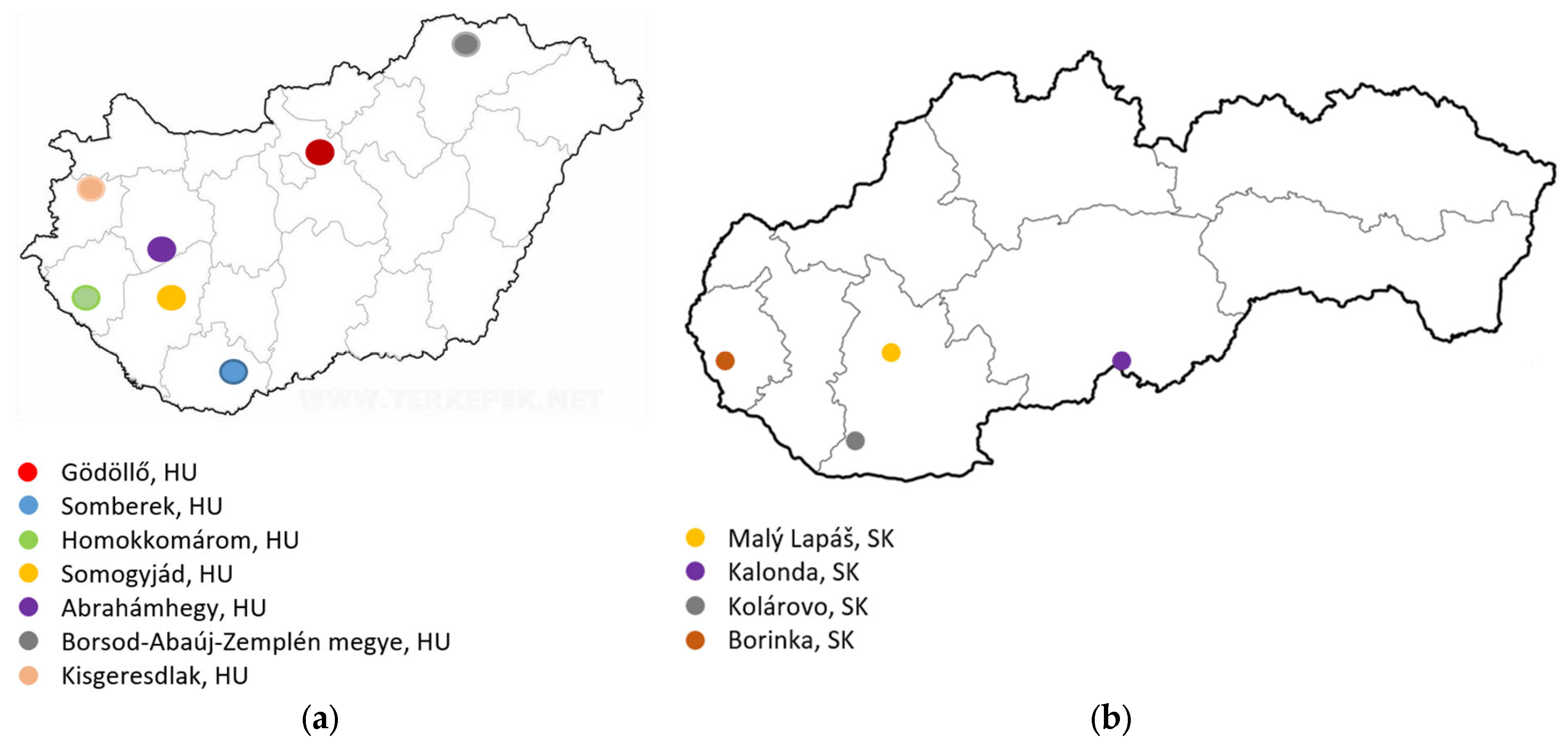
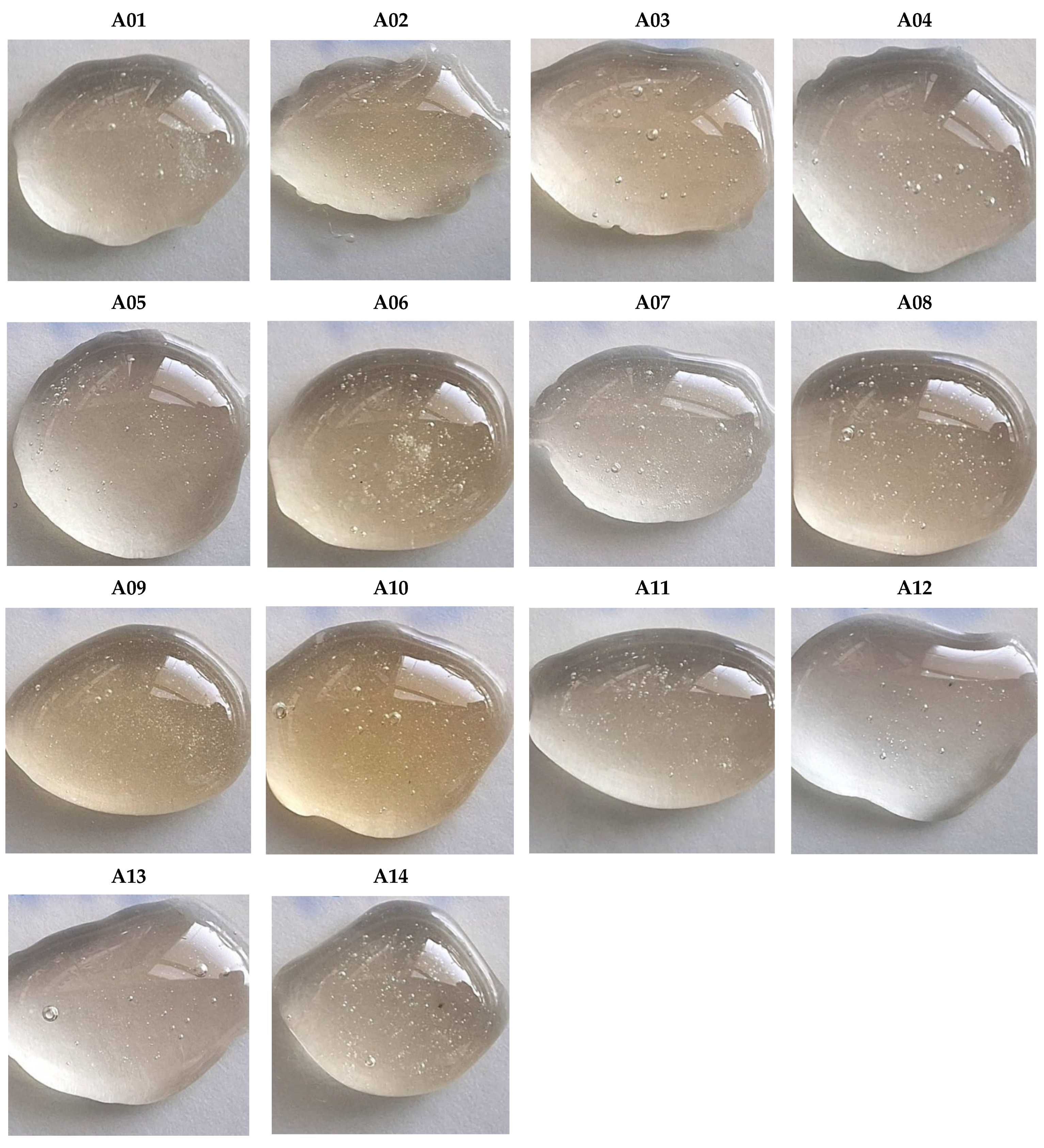
Pseudoacacia honeys were collected from various locations in both Hungary and Slovakia. Hungarian-origin pseudoacacia honeys were collected from Homokkomárom (A01), Ábrahámhegy (A02), Borsod-Abaúj-Zemplén megye (A03), Somogyjád (A04), Kisgeresdlak (A05), Gödöllő (A06), Ábrahámhely (A07), Somberek (A08), Somogyjád (A09), and Kisgeresdlak (A10). Slovak-origin pseudoacacia honeys were collected from Malý Lapáš (A11), Kalonda (A12), Kolárovo (A13), and Borinka (A14) (Figure 1 and Figure 2). The samples were harvested in May–June of 2018–2021 and stored at room temperature (21 °C) in the dark until analysis.

4.2. Melissopalynological Analysis

The honey samples were purchased in 2018–2021, directly from beekeepers, who identified the samples as pseudoacacia honey. The botanical origin of each honey sample was checked with microscopic pollen analysis. Honey samples, when fluid, were stirred thoroughly. In case they contained large crystals, they were heated in a 40 °C water bath, until fluid, then stirred. A total of 10 g of honey was measured into centrifuge tubes (50 mL volume); 20 mL of distilled water was added, and then it was vortexed with Combi-spin FVL-2400N (Biocenter Ltd., Szeged, Hungary). The solution was centrifuged at 3000 rpm for 10 min with a Neofuge 15R centrifuge (Lab-Ex Ltd., Budapest, Hungary). The supernatant was decanted, and then 10 mL of distilled water was added to the sediment; this mixture was centrifuged again at 3000 rpm for 10 min and decanted. Any remaining fluid was removed by setting the centrifuge tubes on filter paper. A frame, of the size of the cover glass, was drawn on each microscope slide with a paint marker (Edding 750, D. Ledermann & Co. GmbH, Bautzen, Germany); then, the microscope slides were placed on a heating plate (OTS 40, Tiba Ltd., Győr, Hungary) set at 40 °C. A total of 0.25 mL of distilled water was added to the sediment in the centrifuge tube, then vortexed. A volume of 20 μL of the pollen suspension was pipetted onto the microscope slide within the frame. The water was allowed to evaporate from the slide on the heating plate. The pollen preparation was mounted in fuchsine glycerol jelly (fuchsine was added to Kaiser’s glycerol jelly). Pollen preparations were studied with a Nikon Eclipse E200 microscope equipped with a Michrome 20 MP CMOS digital camera (Auro-Science Consulting Ltd., Budapest, Hungary), and microphotos were taken with the Capture 1.2 software at 400× magnification. At least 500 pollen grains per honey sample were counted and the source plants were identified at the species or at least at the family level. Identification was performed using a pollen atlas (Beekeeping Pollen Atlas, 1.0, 2017). The relative frequency for each type of pollen was calculated as a percentage of the total number of pollen grains [13].

4.3. Color Intensity

The color intensity was determined according to Ferreira et al. [51]. Pseudoacacia honey samples were diluted to 50% (m/v) with distilled water, mixed and centrifuged at 3200 rpm/5 min (centrifuge Hettich Universal 320 R, Hettich GmbH & Co.KG, Tuttlingen, Germany). The absorbance was measured at 635 nm using a SPECTRO-V/UV 1/2 spectrophotometer (MRC, Holon, Israel), and the color intensity was determined using the Pfund scale [21], using the following equation:
Pfund   scale = 38.70 + 371.39 × A
A = absorbance.

4.4. DPPH Method

The DPPH assay was performed according to the method reported by Vundać et al. [52]. A total of 1.8 mL of DPPH methanol solution was added to 0.2 mL of various concentrations of honey water dilutions, prepared from 30% water solutions of the honey samples. The solution was then thoroughly shaken and left to react in the dark at room temperature. The absorbance of the solution was measured after 30 min. Methanol (1.8 mL) and honey extracts (0.2 mL) were used as a blank; DPPH solution (1.8 mL) and methanol (0.2 mL) were used as the negative control. The positive control was 1.8 mL of DPPH solution and 0.2 mL of ascorbic acid/Trolox solution. The antioxidant activity (%) was calculated using the absorption values of the samples versus negative control at 517 nm (GenesysTM10 spectrophotometer, Thermo Electron Corporation, Cambridge, UK), and the results were expressed as SC50 (concentration of the sample dilution providing 50% inhibition of the DPPH radical) using linear regression for samples with a lower antioxidant capacity. The assay was carried out in triplicate (replicate sampling of each of the 14 honey samples) [53].

4.5. ABTS Method

The ABTS assay was performed according to the method reported by Re et al. [54]. A total of 2 mL of ABTS radical solution was added to 0.1 mL of various concentrations of honey water dilutions, prepared from 30% water solutions of the honey samples. The solution was then thoroughly shaken and left to react in the dark at room temperature. The absorbance of the solution was measured after 5 min. Ethanol (2 mL) and honey extracts (0.1 mL) were used as a blank; ABTS solution (2 mL) and methanol (0.1 mL) were used as the negative control. The positive control was 2 mL of ABTS solution and 0.1 mL of ascorbic acid/Trolox solution. The antioxidant activity (%) was calculated using the absorption values of the samples versus the negative control at 734 nm (GenesysTM10 spectrophotometer, Thermo Electron Corporation, Cambridge, UK), and the results were expressed as SC50 (concentration of the sample dilution providing 50% inhibition of the ABTS radical) using linear regression for samples with a lower antioxidant capacity. The assay was carried out in triplicate (replicate sampling of each of the 14 honey samples) [53].

4.6. FRAP Method

The FRAP assay was performed according to the method reported by Benzie and Strain [55]. A total of 3 mL of the FRAP reagent was added to 0.1 mL of various concentrations of honey water dilutions, prepared from 30% water solutions of the honey samples. The solution was then thoroughly shaken and left to react in the dark at room temperature. The absorbance of the solution was measured after 5 min. The FRAP reagent was used as a blank. Hyperoside was used as a positive control. The results were expressed as an analogical amount of ascorbic acid (μg/mL) and calculated using the absorption values of the samples at 593 nm (GenesysTM10 spectrophotometer, Thermo Electron Corporation, Cambridge, UK). The assay was carried out in triplicate (replicate sampling of each of the 14 honey samples) [53].

4.7. Quantification of Total Polyphenolic Compounds Expressed as Gallic Acid

The quantification of the total polyphenols was performed following the analytical procedure described by Singleton et al. [56]. This method is a modified spectrophotometric Folin–Ciocalteu method. Briefly, 5 g of honey was mixed with distilled water up to 10.0 mL. Then, 1.0 mL of the honey solution (50% m/v) was mixed with 1.0 mL of the Folin–Ciocalteu reagent. After 3 min, 1.0 mL of 10.0% sodium carbonate (m/v) solution was added to the mixture and adjusted to 10.0 mL with distilled water. The reaction was kept in the dark for 90 min, after which the absorbance was read at 725 nm using a GenesysTM10 spectrophotometer (Thermo Electron Corporation, Cambridge, UK). The results are reported as the mean ± standard deviation and expressed as the percentage of the total polyphenolic compounds expressed as gallic acid based on a calibration curve (k = 23.4, r2 = 0.9997). All the samples were analyzed in triplicate (replicate sampling of each of the 14 honey samples) [47].

4.8. Quantification of Flavonoids Expressed as Hyperoside

The quantification of flavonoids was performed following the modified spectrophotometric analytical procedure [57]. For the quantification of flavonoids, the honey samples were diluted to 50% (m/v) with distilled water. Firstly, 1.0 mL of the honey solution was mixed with 1.0 mL of a hexamethylenetetramine solution (5 g/L), 20.0 mL of acetone and 2.0 mL of hydrochloric acid, and the mixture was boiled for 30 min. After liquid–liquid extraction with ethyl acetate, 1.0 mL of the 10% (m/v) aluminum chloride reagent was added to the combined ethyl acetate extract and diluted to 25.0 mL with a 5% (v/v) solution of glacial acetic acid in methanol. After 30 min, the absorbance was measured at 425 nm using a GenesysTM10 spectrophotometer (Thermo Electron Corporation, Cambridge, UK). The results are reported as the mean ± standard deviation and expressed as the percentage of flavonoids expressed as hyperoside based on a calibration curve (k = 34.5, r2 = 0.998). All the samples were analyzed in triplicate (replicate sampling of each of the 14 honey samples) [47].

4.9. Quantification of Phenolic Acids Expressed as Caffeic Acid

For the quantification of phenolic acids expressed as caffeic acid, according to Arnow’s method [58], we used 50% ethanol to prepare diluted honey samples (50% m/v). First, 1.0 mL of the honey ethanolic solution was mixed with 2.0 mL of 0.5 M hydrochloric acid, 2.0 mL of Arnow’s reagent (containing sodium nitrite), and 2.0 mL of an 8.5% (m/v) sodium hydroxide solution. The volume was increased to 10.0 mL with distilled water. The mixture was shaken and the absorbance was read at 505 nm using a GenesysTM10 spectrophotometer (Thermo Electron Corporation, Cambridge, UK). The results are reported as the mean ± standard deviation and expressed as the percentage of phenolic acids expressed as caffeic acid based on a calibration curve (k = 44.5, r2 = 0.9998). All the samples were analyzed in triplicate (replicate sampling of each of the 14 honey samples) [47].

4.10. Refractive Index and Water Content

For the determination of the refractive index by Ph. Eur. 12 [22], we used homogenized honey samples (digital refractometer, ORM 1RS, Kern & Sohn, Balingen, Germany). All the samples were analyzed in triplicate (replicate sampling of each of the 14 honey samples). The water content was determined according to the table provided in the monograph of Ph. Eur. 12 [22] and expressed as a percentage (m/m).

4.11. Electrical Conductivity

For the determination of electrical conductivity by Ph. Eur. 12 [22], we used 20% (m/v) water solutions of honey samples (conductivity meter, OK 102/1, Radelkis, Hungary). All the samples were analyzed in triplicate (replicate sampling of each of the 14 honey samples).

4.12. Polarimetry

For the determination of the optical rotation by Ph. Eur. 12 [22], we used 20% (m/v) water solutions of honey samples (polarimeter, Zuzi 404-LED, Auxilab, Beriáin, Navarra, Spain). All the samples were analyzed in triplicate (replicate sampling of each of the 14 honey samples).

4.13. Quantification of Proline

The quantification of proline was carried out according to the procedure of the International Honey Commission [23]. For the quantification, we used 5% (m/v) water solutions of honey samples. In total, 0.5 mL of the sample solution, 0.5 mL of water (blank test) and 0.5 mL of proline standard solution were diluted with formic acid (1.0 mL), and ninhydrin solution (1.0 mL) and shaken vigorously for 15 min. For another 15 min, the samples were placed in a boiling water bath and then transferred to a hot water bath (70 °C) for 10 more minutes. An isopropyl alcohol water solution (50% v/v, 5.0 mL) was added, and the absorbance was measured using a SPECTRO-V/UV 1/2 spectrophotometer (MRC, Holon Israel) 45 min after removing from the hot water bath at 511 nm. All the samples were analyzed in triplicate (replicate sampling of each of the 14 honey samples) and the proline content was expressed as mg of proline per kg of honey [23].

4.14. Statistical Analysis

All measurements were performed in three replicates of 14 pseudoacacia honey samples. The data were analyzed using Welch’s t-test. Differences were considered statistically significant at p ≤ 0.05. The Holm method was applied as the multiple testing correction method to counteract the problem of multiple comparisons. Table 3, Table 4, Table 5 and Table 6 show the data with this correction applied. Statistical analyses were carried out using GraphPad Prism, version 10.6.1.
Pearson’s correlation coefficient was measured to find the association between color intensity, total polyphenolic content, flavonoid content, phenolic acid content, antioxidant activities and proline content using Microsoft Excel.

5. Conclusions

This study examined fourteen pseudoacacia honey samples from Hungary and Slovakia in terms of their botanical, physicochemical, and antioxidant properties. The melissopalynological analysis confirmed that 11 out of 14 samples were unifloral. The physicochemical parameters, including the refractive index, moisture, electrical conductivity, and optical rotation, were consistent with the international quality standards defined by Ph. Eur. 12. The proline content was relatively low, as is typical for pseudoacacia honey, yet it also met the international standards. The antioxidant activity was low, as expected for light-colored pseudoacacia honey, and showed a moderate correlation with the proline content and color intensity, while correlations with phenolic contents were low. These findings reveal the influence of botanical and geographical origin, the representation of different pollen types, and honey maturity on the quality and bioactive properties of pseudoacacia honey, emphasizing the need to combine multiple analytical methods for a reliable assessment of its characteristics.

Author Contributions

Conceptualization, J.T., S.C. and Á.F.; methodology, S.C.; validation, D.S., S.C. and R.F.; formal analysis, D.S., S.C., N.P. and D.P.; investigation, D.S., S.C., J.T. and R.F.; resources, R.F., S.C., Á.F. and J.T.; data curation, D.S., S.C., R.F., D.P. and J.T.; writing—original draft preparation, D.S., S.C. and J.T.; writing—review and editing, D.S., N.P., S.C., J.T. and Á.F.; visualization, D.S., S.C. and J.T.; supervision, S.C. and J.T.; project administration, J.T., S.C., R.F. and Á.F.; and funding acquisition, S.C. and Á.F. All authors have read and agreed to the published version of the manuscript.

Funding

This research was funded by a grant from the National Research, Development and Innovation Office NKFIH K 132044 and by the Faculty of Pharmacy, University of Pécs.

Institutional Review Board Statement

Not applicable.

Informed Consent Statement

Not applicable.

Data Availability Statement

The data presented in this study are available on request from the corresponding author.

Acknowledgments

This research was supported by ÚNKP-21-5 New National Excellence Program of the Ministry for Innovation and Technology from the source of the National Research, Development and Innovation Fund, the Bolyai Research Scholarship of the Hungarian Academy of Sciences BO/00701/19/4, and the Ministry of Education, Science, Research and Sport of the Slovak Republic grants (VEGA 1/0226/22).

Conflicts of Interest

The authors declare no conflicts of interest. The funders had no role in the design of the study; in the collection, analyses, or interpretation of data; in the writing of the manuscript, or in the decision to publish the results.

Abbreviations

The following abbreviations are used in this manuscript:
Ph. Eur. 12European Pharmacopoeia, 12th edition

References

  1. Uzelac, M.; Sladonja, B.; Šola, I.; Dudaš, S.; Bilić, J.; Famuyide, I.M.; McGaw, L.J.; Eloff, J.N.; Mikulic-Petkovsek, M.; Poljuha, D. Invasive Alien Species as a Potential Source of Phytopharmaceuticals: Phenolic Composition and Antimicrobial and Cytotoxic Activity of Robinia pseudoacacia L. Leaf and Flower Extracts. Plants 2023, 12, 2715. [Google Scholar] [CrossRef] [PubMed]
  2. Veitch, N.C.; Elliott, P.C.; Kite, G.C.; Lewis, G.P. Flavonoid Glycosides of the Black Locust Tree, Robinia Pseudoacacia (Leguminosae). Phytochemistry 2010, 71, 479–486. [Google Scholar] [CrossRef] [PubMed]
  3. Robinia pseodoacacia L.—Agát Biely. Available online: https://invaznedruhy.sopsr.sk/robinia-pseodoacacia-l-agat-biely/ (accessed on 10 September 2025).
  4. Sitzia, T.; Cierjacks, A.; de Rigo, D.; Caudullo, G. Robinia Pseudoacacia in Europe: Distribution, Habitat, Usage and Threats. In European Atlas of Forest Tree Species; Publication Office of the European Union: Luxembourg, 2016; ISBN 978-92-79-52833-0. [Google Scholar]
  5. Tyśkiewicz, K.; Konkol, M.; Kowalski, R.; Rój, E.; Warmiński, K.; Krzyżaniak, M.; Gil, Ł.; Stolarski, M.J. Characterization of Bioactive Compounds in the Biomass of Black Locust, Poplar and Willow. Trees 2019, 33, 1235–1263. [Google Scholar] [CrossRef]
  6. Savic Gajic, I.; Savic, I.; Boskov, I.; Žerajić, S.; Markovic, I.; Gajic, D. Optimization of Ultrasound-Assisted Extraction of Phenolic Compounds from Black Locust (Robiniae Pseudoacaciae) Flowers and Comparison with Conventional Methods. Antioxidants 2019, 8, 248. [Google Scholar] [CrossRef]
  7. Stankov, S.; Fidan, H.; Ivanova, T.; Stoyanova, A.; Damyanova, S.; Desyk, M. Chemical Composition and Application of Flowers of False Acacia (Robinia pseudoacacia L.). Ukr. Food J. 2018, 7, 577–588. [Google Scholar] [CrossRef]
  8. Martin, G.D. Addressing Geographical Bias: A Review of Robinia Pseudoacacia (Black Locust) in the Southern Hemisphere. S. Afr. J. Bot. 2019, 125, 481–492. [Google Scholar] [CrossRef]
  9. Liekopisná komisia Štátneho ústavu pre kontrolu liečiv v Bratislave. Slovenský Farmaceutický Kódex 2007; Slovenská lekárnická komora: Bratislava, Slovakia, 2007. [Google Scholar]
  10. Kandhari, K.; Mishra, J.; Singh, R. Acacetin Inhibits Cell Proliferation, Survival, and Migration in Human Breast Cancer Cells. Int. J. Pharm. Biol. Sci. 2019, 9, 443–452. [Google Scholar] [CrossRef]
  11. Jurík, A. Medonosné Rastliny; Vydavateľstvo Príroda: Bratislava, Slovakia, 1979. [Google Scholar]
  12. Haragsim, O.; Haragsimová, L. Včelařské dřeviny a byliny, 2nd ed.; Grada: Praha, Czech Republic, 2013; ISBN 978-80-247-4647-0. [Google Scholar]
  13. Persano Oddo, L.; Piro, R. Main European Unifloral Honeys: Descriptive Sheets. Apidologie 2004, 35, S38–S81. [Google Scholar] [CrossRef]
  14. Dominkó, E.; Németh, Z.I.; Rétfalvi, T. Classification of Acacia, Rape and Multifloral Hungarian Honey Types. Heliyon 2024, 10, e30498. [Google Scholar] [CrossRef]
  15. Farkas, A.; Zajácz, E. Nectar Production for the Hungarian Honey Industry. Eur. J. Plant Sci. Biotechnol. 2007, 1, 125–151. [Google Scholar]
  16. Bodó, A.; Radványi, L.; Kőszegi, T.; Csepregi, R.; Nagy, D.U.; Farkas, Á.; Kocsis, M. Quality Evaluation of Light- and Dark-Colored Hungarian Honeys, Focusing on Botanical Origin, Antioxidant Capacity and Mineral Content. Molecules 2021, 26, 2825. [Google Scholar] [CrossRef]
  17. Matkovits, A.; Nagy, K.; Fodor, M.; Jókai, Z. Analysis of Polyphenolic Components of Hungarian Acacia (Robinia pseudoacacia) Honey; Method Development, Statistical Evaluation. J. Food Compos. Anal. 2023, 120, 105336. [Google Scholar] [CrossRef]
  18. Muhammad, A. Potential Biological Activity of Acacia Honey. Front. Biosci. 2016, 8, 351–357. [Google Scholar] [CrossRef] [PubMed]
  19. Von Der Ohe, W.; Persano Oddo, L.; Piana, M.L.; Morlot, M.; Martin, P. Harmonized Methods of Melissopalynology. Apidologie 2004, 35, S18–S25. [Google Scholar] [CrossRef]
  20. Louveaux, J.; Maurizio, A.; Vorwohl, G. Methods of Melissopalynology. Bee World 1978, 59, 139–157. [Google Scholar] [CrossRef]
  21. Honey Colours. Pfund Scale. Available online: https://www.sizes.com/units/pfund_scale.htm (accessed on 25 November 2025).
  22. European Pharmacopoeia Commision. Mel (monograph 01/2008:2051). In European Pharmacopoeia, 12th ed.; EDQM: Strasburg, France, 2025; pp. 1–4. [Google Scholar]
  23. International Honey Commission. Harmonised Methods of the International Honey Commission. 2009. Available online: https://www.ihc-platform.net/ihcmethods2009.pdf (accessed on 19 November 2025).
  24. Machado De-Melo, A.A.; Almeida-Muradian, L.B.D.; Sancho, M.T.; Pascual-Maté, A. Composition and Properties of Apis Mellifera Honey: A Review. J. Apic. Res. 2018, 57, 5–37. [Google Scholar] [CrossRef]
  25. PalDat. Available online: https://www.paldat.org/pub/Robinia_pseudacacia/301261 (accessed on 19 November 2025).
  26. Thrasyvoulou, A.; Tananaki, C.; Goras, G.; Karazafiris, E.; Dimou, M.; Liolios, V.; Kanelis, D.; Gounari, S. Legislation of Honey Criteria and Standards. J. Apic. Res. 2018, 57, 88–96. [Google Scholar] [CrossRef]
  27. Kuś, P.M.; Congiu, F.; Teper, D.; Sroka, Z.; Jerković, I.; Tuberoso, C.I.G. Antioxidant Activity, Color Characteristics, Total Phenol Content and General HPLC Fingerprints of Six Polish Unifloral Honey Types. LWT Food Sci. Technol. 2014, 55, 124–130. [Google Scholar] [CrossRef]
  28. Escuredo, O.; Dobre, I.; Fernández-González, M.; Seijo, M.C. Contribution of Botanical Origin and Sugar Composition of Honeys on the Crystallization Phenomenon. Food Chem. 2014, 149, 84–90. [Google Scholar] [CrossRef]
  29. Uršulin-Trstenjak, N.; Puntarić, D.; Levanić, D.; Gvozdić, V.; Pavlek, Ž.; Puntarić, A.; Puntarić, E.; Puntarić, I.; Vidosavljević, D.; Lasić, D.; et al. Pollen, Physicochemical, and Mineral Analysis of Croatian Acacia Honey Samples: Applicability for Identification of Botanical and Geographical Origin. J. Food Qual. 2017, 2017, 8538693. [Google Scholar] [CrossRef]
  30. Nayik, G.A.; Suhag, Y.; Majid, I.; Nanda, V. Discrimination of High Altitude Indian Honey by Chemometric Approach According to Their Antioxidant Properties and Macro Minerals. J. Saudi Soc. Agric. Sci. 2018, 17, 200–207. [Google Scholar] [CrossRef]
  31. Puścion-Jakubik, A.; Borawska, M.H.; Socha, K. Modern Methods for Assessing the Quality of Bee Honey and Botanical Origin Identification. Foods 2020, 9, 1028. [Google Scholar] [CrossRef] [PubMed]
  32. Castell, A.; Arroyo-Manzanares, N.; Guerrero-Núñez, Y.; Campillo, N.; Viñas, P. Headspace with Gas Chromatography-Mass Spectrometry for the Use of Volatile Organic Compound Profile in Botanical Origin Authentication of Honey. Molecules 2023, 28, 4297. [Google Scholar] [CrossRef] [PubMed]
  33. Sotiropoulou, N.S.; Xagoraris, M.; Revelou, P.K.; Kaparakou, E.; Kanakis, C.; Pappas, C.; Tarantilis, P. The Use of SPME-GC-MS IR and Raman Techniques for Botanical and Geographical Authentication and Detection of Adulteration of Honey. Foods 2021, 10, 1671. [Google Scholar] [CrossRef]
  34. Vranic, D.; Petronijevic, R.; Koricanac, V.; Djinovic Stojanovic, J.; Lilic, S.; Borovic, B.; Lukic, M. Evaluation of Serbian Black Locust Honey Quality Parameters as a Contribution to Confirmation of Its Botanical Origin. IOP Conf. Ser. Earth Environ. Sci. 2019, 333, 012113. [Google Scholar] [CrossRef]
  35. Czipa, N.; Kovács, B. Electrical Conductivity of Hungarian Honeys. J. Food Phys. 2014, XXVII, 13–20. [Google Scholar]
  36. Kropf, U.; Korošec, M.; Bertoncelj, J.; Ogrinc, N.; Nečemer, M.; Kump, P.; Golob, T. Determination of the Geographical Origin of Slovenian Black Locust, Lime and Chestnut Honey. Food Chem. 2010, 121, 839–846. [Google Scholar] [CrossRef]
  37. Ciric, J.; Sando, D.; Spiric, D.; Janjic, J.; Boskovic, M.; Glisic, M.; Baltic, M.Z. Characterisation of Bosnia and Herzegovina Honeys According to Their Physico-Chemical Properties During 2016–2017. Meat Technol. 2018, 59, 46–53. [Google Scholar] [CrossRef]
  38. Flanjak, I.; Kenjerić, D.; Bubalo, D.; Primorac, L. Characterisation of Selected Croatian Honey Types Based on the Combination of Antioxidant Capacity, Quality Parameters, and Chemometrics. Eur. Food Res. Technol. 2016, 242, 467–475. [Google Scholar] [CrossRef]
  39. CXS 12-19811; Codex Alimentarius Standard for Honey. Codex Alimentarius: Rome, Italy, 2022.
  40. The Council of the European Union. Council Directive 2001/110/EC of 20 December 2001 Relating to Honey. Off. J. Eur. Communities 2002, L 10, 47–52. [Google Scholar]
  41. Bogdanov, S.; Lüllmann, C.; Martin, P.; Von Der Ohe, W.; Russmann, H.; Vorwohl, G.; Oddo, L.P.; Sabatini, A.-G.; Marcazzan, G.L.; Piro, R.; et al. Honey Quality and International Regulatory Standards: Review by the International Honey Commission. Bee World 1999, 80, 61–69. [Google Scholar] [CrossRef]
  42. Czipa, N.; Borbély, M.; Győri, Z. Proline Content of Different Honey Types. Acta Aliment. 2012, 41, 26–32. [Google Scholar] [CrossRef]
  43. Kečkeš, J.; Trifković, J.; Andrić, F.; Jovetić, M.; Tešić, Ž.; Milojković-Opsenica, D. Amino Acids Profile of Serbian Unifloral Honeys. J. Sci. Food Agric. 2013, 93, 3368–3376. [Google Scholar] [CrossRef] [PubMed]
  44. Janiszewska, K.; Aniołowska, M.; Nowakowski, P. Free Amino Acids Content of Honeys from Poland. Pol. J. Food Nutr. Sci. 2012, 62, 85–89. [Google Scholar] [CrossRef]
  45. Da Costa, I.F.; Toro, M.J.U. Evaluation of the Antioxidant Capacity of Bioactive Compounds and Determination of Proline in Honeys from Pará. J. Food Sci. Technol. 2021, 58, 1900–1908. [Google Scholar] [CrossRef]
  46. Meda, A.; Lamien, C.E.; Romito, M.; Millogo, J.; Nacoulma, O.G. Determination of the Total Phenolic, Flavonoid and Proline Contents in Burkina Fasan Honey, as Well as Their Radical Scavenging Activity. Food Chem. 2005, 91, 571–577. [Google Scholar] [CrossRef]
  47. Czigle, S.; Filep, R.; Balažová, E.; Szentgyörgyi, H.; Balázs, V.L.; Kocsis, M.; Purger, D.; Papp, N.; Farkas, Á. Antioxidant Capacity Determination of Hungarian-, Slovak-, and Polish-Origin Goldenrod Honeys. Plants 2022, 11, 792. [Google Scholar] [CrossRef]
  48. Alzahrani, H.A.; Boukraa, L.; Bellik, Y.; Abdellah, F.; Bakhotmah, B.A.; Kolayli, S.; Sahin, H. Evaluation of the Antioxidant Activity of Three Varieties of Honey from Different Botanical and Geographical Origins. Glob. J. Health Sci. 2012, 4, 191. [Google Scholar] [CrossRef]
  49. Beretta, G.; Granata, P.; Ferrero, M.; Orioli, M.; Maffei Facino, R. Standardization of Antioxidant Properties of Honey by a Combination of Spectrophotometric/Fluorimetric Assays and Chemometrics. Anal. Chim. Acta 2005, 533, 185–191. [Google Scholar] [CrossRef]
  50. Bertoncelj, J.; Dobersek, U.; Jamnik, M.; Golob, T. Evaluation of the Phenolic Content, Antioxidant Activity and Colour of Slovenian Honey. Food Chem. 2007, 105, 822–828. [Google Scholar] [CrossRef]
  51. Ferreira, I.C.F.R.; Aires, E.; Barreira, J.C.M.; Estevinho, L.M. Antioxidant Activity of Portuguese Honey Samples: Different Contributions of the Entire Honey and Phenolic Extract. Food Chem. 2009, 114, 1438–1443. [Google Scholar] [CrossRef]
  52. Bilušić Vundać, V.; Brantner, A.H.; Plazibat, M. Content of Polyphenolic Constituents and Antioxidant Activity of Some Stachys Taxa. Food Chem. 2007, 104, 1277–1281. [Google Scholar] [CrossRef]
  53. Barkociová, M.; Tóth, J.; Sutor, K.; Drobnicka, N.; Wybraniec, S.; Dudík, B.; Bilková, A.; Czigle, S. Betalains in Edible Fruits of Three Cactaceae Taxa—Epiphyllum, Hylocereus, and Opuntia—Their LC-MS/MS and FTIR Identification and Biological Activities Evaluation. Plants 2021, 10, 2669. [Google Scholar] [CrossRef]
  54. Re, R.; Pellegrini, N.; Proteggente, A.; Pannala, A.; Yang, M.; Rice-Evans, C. Antioxidant Activity Applying an Improved ABTS Radical Cation Decolorization Assay. Free Radic. Biol. Med. 1999, 26, 1231–1237. [Google Scholar] [CrossRef]
  55. Benzie, I.F.F.; Strain, J.J. The Ferric Reducing Ability of Plasma (FRAP) as a Measure of “Antioxidant Power”: The FRAP Assay. Anal. Biochem. 1996, 239, 70–76. [Google Scholar] [CrossRef]
  56. Singleton, V.L.; Orthofer, R.; Lamuela-Raventós, R.M. Analysis of Total Phenols and Other Oxidation Substrates and Antioxidants by Means of Folin-Ciocalteu Reagent. Methods Enzymol. 1999, 299, 152–178. [Google Scholar] [CrossRef]
  57. European Pharmacopoeia Commision. Betulae Folium (monograph 01/2017:1174). In European Pharmacopoeia, 12th ed.; EDQM: Strasburg, France, 2025; pp. 1–5. [Google Scholar]
  58. Petitjean-Freytet, C.; Carnat, A.; Lamaison, J.L. Teneurs En Flavonoides et En Dérivés Hydrocynnamiques de La Fleur de Sambucus Nigra L. J. Pharm. Belg. 1991, 46, 241–246. [Google Scholar]
Figure 1. Places of origin of Hungarian (a), and Slovak (b) pseudoacacia honey.
Molecules 31 00755 g001
Figure 2. Hungarian- (A01–A10), and Slovak-origin (A11–A14) pseudoacacia honey samples: drops of fresh honey illustrating their very light color. The color intensity is calculated based on the absorbance of water solutions and expressed based on the Pfund scale, which classified all samples as “water white” (Table 2) [21].
Molecules 31 00755 g002
Table 1. Pollen analysis of Hungarian- and Slovak-origin pseudoacacia honey.
Pollen Type—Relative Frequency (%) a
Sample Code Geographical Origin Date of
Collection
RobiniaBrassicaHelianthus Lamiaceae Castanea Other
A01Homokkomárom, HU201823.340.10.7-3.832.1
A02Ábrahámhegy, HU201835.57.10.1-3.553.8
A03B-A-Z megye, HU201841.219.30.1-4.534.9
A04Somogyjád, HU201933.126.3--7.533.1
A05Kisgeresdlak, HU201919.340.30.4-8.831.2
A06Gödöllő, HU201923.734.30.4-5.735.9
A07Ábrahámhely, HU202034.816.3--7.341.6
A08Somberek, HU202022.653.00.2-5.418.8
A09Somogyjád, HU202144.16.70.7-3.445.1
A10Kisgeresdlak, HU20216.944.4---48.7
A11Malý Lapáš, SK202112.512.4-38.05.531.6
A12Kalonda, SK202130.022.6--4.542.9
A13Kolárovo, SK202131.014.015.2-7.232.6
A14Borinka, SK202120.230.3--6.642.9
Hungarian- (A01–A10) and Slovak-origin (A11–A14) pseudoacacia honey samples. a Evaluation of pollen samples: predominant pollen: >45% of the pollen grains counted; secondary pollen: 16–45%; important minor pollen 3–15%; and minor pollen < 3% [20].
Table 2. Color intensity of Hungarian- and Slovak-origin pseudoacacia honey.
Sample Code Geographical Origin Date of Collection Absorbance a
(A)
Color Intensity
Pfund Scale (mm) a
Color Name a
A01Homokkomárom, HU20180.062−15.7water white
A02Ábrahámhegy, HU20180.1247.4water white
A03B-A-Z megye, HU20180.084−7.5water white
A04Somogyjád, HU20190.067−13.8water white
A05Kisgeresdlak, HU20190.051−19.9water white
A06Gödöllő, HU20190.042−23.3water white
A07Ábrahámhely, HU20200.060−16.4water white
A08Somberek, HU20200.104−0.1water white
A09Somogyjád, HU20210.078−8.8water white
A10Kisgeresdlak, HU20210.1082.3water white
A11Malý Lapáš, SK20210.090−4.4water white
A12Kalonda, SK20210.050−19.2water white
A13Kolárovo, SK20210.100−0.7water white
A14Borinka, SK20210.064−14.0water white
Hungarian- (A01–A10) and Slovak-origin (A11–A14) pseudoacacia honey samples. a Color intensity and color name calculated based on the absorbance (A) of 50% water solutions of honey samples (measured at λ = 635 nm) and expressed based on the Pfund scale (mm): water white < 9; extra white 9–17; white 18–34; extra-light amber 35–50; light amber 51–85; amber 86–114; and dark amber > 114 [21].
Table 3. Antioxidant activity of Hungarian- and Slovak-origin pseudoacacia honey.
Sample Code Geographical Origin Date of
Collection
DPPH a
SC50 (mg/mL)
ABTS b
SC50 (mg/mL)
FRAP c,d
(µg/mL)
A01Homokkomárom, HU20181428 ± 50 ns1312 ± 50 **3.43 ± 0.01 *
A02Ábrahámhegy, HU20181110 ± 48 **1336 ± 50 **4.95 ± 0.02 ns
A03B-A-Z megye, HU20181161 ± 46 *1101 ± 43 ***4.41 ± 0.02 ns
A04Somogyjád, HU20191286 ± 48 ns1401 ± 52 ns2.12 ± 0.01 ***
A05Kisgeresdlak, HU20191379 ± 50 ns1470 ± 54 ns2.54 ± 0.01 ***
A06Gödöllő, HU20191033 ± 41 ***1987 ± 57 ***2.54 ± 0.01 ***
A07Ábrahámhely, HU20201287 ± 45 ns1916 ± 58 ***5.81 ± 0.03 ***
A08Somberek, HU20201337 ± 50 ns1732 ± 57 *4.02 ± 0.02 ns
A09Somogyjád, HU20211377 ± 43 ns1825 ± 54 ***7.50 ± 0.04 ***
A10Kisgeresdlak, HU20211872 ± 52 ***1314 ± 50 **5.51 ± 0.03 **
A11Malý Lapáš, SK20211130 ± 45 ns1250 ± 46 ns5.30 ± 0.03 ns
A12Kalonda, SK20211430 ± 53 ###1569 ± 52 ###3.22 ± 0.02 ##
A13Kolárovo, SK2021954 ± 39 ##1112 ± 44 #3.72 ± 0.02 ns
A14Borinka, SK20211110 ± 42 ns1207 ± 52 ns6.40 ± 0.04 ###
ascorbic acid 0.02 ± 0.000.02 ± 0.00
Trolox 0.02 ± 0.000.28 ± 0.00
hyperoside 18.44 ± 1.425.44 ± 0.42 e
Hungarian- (A01–A10) and Slovak-origin (A11–A14) pseudoacacia honey samples. a DPPH—antiradical power; b ABTS—Trolox equivalent antioxidant capacity; and c FRAP—ferric reducing antioxidant power. Data are means ± standard deviations of three replicate samplings; data with superscripted symbols (*, **, and *** for ten Hungarian samples, and #, ##, and ### for four Slovak samples) mean significant differences among honeys within one country: *,# p < 0.05, **,## p < 0.01, and ***,### p < 0.001; and the superscripted symbol (ns) means non-significant difference among honeys within one country; d ascorbic acid (AA) value at the initial sample concentration of 150 mg/mL; e AA value at the initial sample concentration of 20 mg/mL; and standards (ascorbic acid, Trolox, and hyperoside).
Table 4. Content of total polyphenols, flavonoids, and phenolic acids of Hungarian- and Slovak-origin pseudoacacia honey.
Sample Code Geographical Origin Date of
Collection
Total Polyphenols
as Gallic Acid
(%)
Flavonoids
as Hyperoside
(%)
Phenolic Acids
as Caffeic Acid
(%)
A01Homokkomárom, HU20181.54 ± 0.12 ns1.07 ± 0.10 ns0.55 ± 0.04 ns
A02Ábrahámhegy, HU20181.18 ± 0.10 **0.88 ± 0.05 ns0.48 ± 0.04 ns
A03B-A-Z megye, HU20181.45 ± 0.11 ns0.86 ± 0.08 ns0.57 ± 0.04 ns
A04Somogyjád, HU20191.22 ± 0.11 *0.27 ± 0.04 ***0.46 ± 0.04 ns
A05Kisgeresdlak, HU20191.35 ± 0.14 ns0.36 ± 0.04 ***0.45 ± 0.04 ns
A06Gödöllő, HU20192.51 ± 0.12 ***1.63 ± 0.06 ***1.39 ± 0.04 ***
A07Ábrahámhely, HU20201.23 ± 0.11 *0.56 ± 0.04 **0.36 ± 0.03 **
A08Somberek, HU20202.12 ± 0.12 **1.53 ± 0.04 ***0.23 ± 0.01 ***
A09Somogyjád, HU20212.18 ± 0.16 **1.57 ± 0.04 ***1.26 ± 0.04 ***
A10Kisgeresdlak, HU20211.11 ± 0.11 **0.59 ± 0.06 **0.54 ± 0.04 ns
A11Malý Lapáš, SK20212.27 ± 0.17 ns1.66 ± 0.04 ns1.44 ± 0.10 ns
A12Kalonda, SK20212.02 ± 0.12 ns0.89 ± 0.07 ns1.32 ± 0.10 ns
A13Kolárovo, SK20212.61 ± 0.18 ##2.21 ± 0.15 ###1.76 ± 0.10 ##
A14Borinka, SK20211.12 ± 0.10 ###0.57 ± 0.04 ##0.52 ± 0.04 ###
Hungarian- (A01–A10) and Slovak-origin (A11–A14) pseudoacacia honey samples; data are means ± standard deviations of three replicate samplings; data with superscripted symbols (*, **, and *** for ten Hungarian samples, and ##, and ### for four Slovak samples) mean significant differences among honeys within one country: * p < 0.05, **,## p < 0.01, and ***,### p < 0.001; and the superscripted symbol (ns) means non-significant difference among honeys within one country.
Table 5. Refractive index, water content, polarimetry, and electrical conductivity of Hungarian- and Slovak-origin pseudoacacia honey.
Sample
Code
Geographical Origin Date of
Collection
Refractive Index Water
Content
(%)
Polarimetry
(α [°])
Electrical
Conductivity
(µS/cm)
A01Homokkomárom, HU20181.496 ± 0.002 ns16.2−2.3 ± 0.0 ns125 ± 0.0 ***
A02Ábrahámhegy, HU20181.499 ± 0.000 ***15.0−2.0 ± 0.0 ***295 ± 0.0 ***
A03B-A-Z megye,HU20181.490 ± 0.002 ns18.6−2.6 ± 0.0 ***225 ± 0.0 *
A04Somogyjád,HU20191.488 ± 0.003 ns19.4−2.3 ± 0.0 ns160 ± 0.0 **
A05Kisgeresdlak, HU20191.494 ± 0.004 ns17.0−2.7 ± 0.0 ***165 ± 0.0 **
A06Gödöllő, HU20191.495 ± 0.000 ns16.6−2.2 ± 0.0 ns160 ± 0.0 **
A07Ábrahámhely, HU20201.487 ± 0.002 ns19.8−2.6 ± 0.0 ***255 ± 0.0 ***
A08Somberek, HU20201.489 ± 0.006 ns19.0−1.8 ± 0.0 ***225 ± 0.0 *
A09Somogyjád, HU20211.490 ± 0.003 ns18.6−2.2 ± 0.0 ns144 ± 0.0 ***
A10Kisgeresdlak, HU20211.495 ± 0.001 ns16.4−2.1 ± 0.0 **245 ± 0.0 ***
A11Malý Lapáš, SK20211.495 ± 0.001 ns16.8−2.9 ± 0.0 ##190 ± 0.0 ns
A12Kalonda, SK20211.492 ± 0.004 ns17.8−2.8 ± 0.0 #128 ± 0.0 ###
A13Kolárovo, SK20211.490 ± 0.000 ns18.6−1.6 ± 0.0 ##260 ± 0.0 #
A14Borinka, SK20211.489 ± 0.006 ns19.0−1.8 ± 0.0 #250 ± 0.0 #
Hungarian- (A01–A10) and Slovak-origin (A11–A14) pseudoacacia honey samples; data are means ± standard deviations of three replicate samplings; data with superscripted symbols (*, **, and *** for ten Hungarian samples, and #, ##, and ### for four Slovak samples) mean significant differences among honeys within one country: *,# p < 0.05, **,## p < 0.01, and ***,### p < 0.001; and the superscripted symbol (ns) means non-significant difference among honeys within one country.
Table 6. Proline content of Hungarian- and Slovak-origin pseudoacacia honey.
Sample Code Geographical Origin Date of Collection Proline
(mg/kg)
A01Homokkomárom, HU2018191.0 ± 19.0 *
A02Ábrahámhegy, HU2018382.0 ± 11.7 ns
A03B-A-Z megye, HU2018259.6 ± 14.6 ns
A04Somogyjád, HU2019258.1 ± 13.1 *
A05Kisgeresdlak, HU2019326.6 ± 11.7 ns
A06Gödöllő, HU2019275.6 ± 24.8 ns
A07Ábrahámhely, HU2020438.9 ± 16.0 *
A08Somberek, HU2020447.7 ± 7.3 ***
A09Somogyjád, HU2021303.3 ± 11.7 ns
A10Kisgeresdlak, HU2021513.3 ± 8.8 ***
A11Malý Lapáš, SK2021240.6 ± 10.2 ns
A12Kalonda, SK2021306.2 ± 14.6 ns
A13Kolárovo, SK2021250.8 ± 23.3 ns
A14Borinka, SK2021298.9 ± 4.4 ns
Hungarian- (A01–A10) and Slovak-origin (A11–A14) pseudoacacia honey samples; data are means ± standard deviations of three replicate samplings; data with superscripted symbols (* and *** for ten Hungarian samples) mean significant differences among honeys within one country: * p < 0.05 and *** p< 0.001; and the superscripted symbol (ns) means non-significant difference among honeys within one country.
Table 7. Correlation between color intensity, total polyphenols, flavonoids, and phenolic acids content and antioxidant activities.
Pearson Correlation Coefficient (r) with
Antioxidant Methods Color Intensity Total Polyphenols
as Gallic Acid
(%)
Flavonoids
as Hyperoside
(%)
Phenolic Acids
as Caffeic Acid
(%)
DPPH0.055−0.404−0.446−0.379
ABTS−0.4230.2540.075−0.003
FRAP0.377−0.1340.090−0.012
Table 8. Correlation between color intensity, total polyphenols, flavonoids, and phenolic acids content and proline content.
Pearson Correlation Coefficient (r) with
Proline Content
(mg/kg)
DPPH ABTS FRAP Color
Intensity
Total Polyphenols
as Gallic Acid
(%)
Flavonoids
as Hyperoside
(%)
Phenolic Acids
as Caffeic Acid
(%)
−0.5340.320−0.3160.393−0.350−0.280−0.471
Disclaimer/Publisher’s Note: The statements, opinions and data contained in all publications are solely those of the individual author(s) and contributor(s) and not of MDPI and/or the editor(s). MDPI and/or the editor(s) disclaim responsibility for any injury to people or property resulting from any ideas, methods, instructions or products referred to in the content.